3,884 products added recently
Page 4 - Kindergarten Centers
Enhance your kindergarten classroom with centers designed specifically for young learners. These resources offer hands-on activities in literacy, math, science, and social studies, promoting exploration and discovery. Incorporating centers helps foster independence, collaboration, and a love for learning in your students. Keep your kindergarteners curious and engaged with these dynamic learning stations.
Guided Reading Level H - Clean Hands, Healthy Bodies
ELA, Resources for Teachers, Reading Comprehension, Reading, Health, P.E. & Health, Social Emotional Learning (SEL), Special Resources, Life Skills, Science, Kindergarten, Grade 1, 2, Worksheets & Printables, Worksheets, Teacher Tools, Centers, Activities, Literacy Readers, Quizzes, Quizzes and Tests, Assessments
This Guided Reading Book - Clean Hands, Healthy Bodies (Level H) includes: Guided Reading Color Label (front cover x1) This is a quick way to match the book’s demands to what students can generally handle.. The overall goal is to use the level/color to pick books for several smaller groups. To qualify for a certain level, a student is expected to read a book from that level with about 90–94% accuracy. If a student is consistently accurate and understands, move up a level. If the student is struggling at that level, drop down and add more support. Each student will improve at completely different rates, but it is generally one of the best ways to check progress across the class. DOWNLOAD THE CATALOG TO VIEW ALL GUIDED READING BOOKS AVAILABLE (SORTED LEVELS A-Z) Pre-Reading Question (x1) Teacher asks the prompt aloud, can be while showing the cover or first page. Students share what they already know, or make educated guesses from the cover. Prompt them to use the target vocabulary. Write some of their responses on the board to look back at during the reading. Vocabulary Words (x5) Introduce the five words, best doing it one at a time. Start by saying it, while students repeat and then see if anyone knows what it means before reading further. Read through the meaning and try to briefly connect each word to a picture or gesture so it’s meaningful. Ask students to flip through the book pages and point to where they see each of the vocabulary words. While reading the book pause upon coming across one of the vocab words or read the sentence twice to make sure students understand the word has appeared. Optional: Ask students to raise hands whenever they see/hear one of the new words. Guided Reading Pages (x10) Check the book snapshot (below) for: primary topic - do you need to prep extra reading or intro materials on this? what is taught best - decide on 1-2 bullets to focus on, use the prompt or words provided here for best results. learning goals - what you are checking for students to be able to do after the session, elicit answers using prompts or words provided. key vocabulary (see section above). questions overview - so you know what is coming up and if you need to prep extra materials to assist understanding. Run the lesson You may have already looked at a few of the pages together, but you can show them some of the pictures again first to set meaning. Depending on how much time you have and how familiar your students are with guided reading class, you may want to read the book aloud first with the group first. Students whisper or partner read, while you listen in. If time, do it as a group, one student reading a page each. Use the guided page’s prompts to coach: “Check the picture / does it make sense?” “Point under the words / try the first sound” “Reread the sentence smoothly”. Try to focus more on one student per session (rotating every time), so you can work out if they are ready to move up or need to move down a level. Comprehension Questions (back cover x3) This is your way to check that students didn’t just say the words, but actually understood the text. First, let students answer by pointing to the page/picture and saying a short sentence. After any answer, follow with: “Show me where you found that in the text.” In bigger groups, have partners answer first (10–20 seconds), then call on 2–3 students to share. Differentiation tips: Emerging speakers/struggling readers: oral + pointing On-level: oral in a full sentence Higher: one written sentence or draw + label Book Snapshot Title: Clean Hands, Healthy Bodies Genre: Nonfiction (informational) Subject: Health & Safety / Science Primary Topic: When and how to wash hands to stop germs Estimated Guided Reading Level (A–Z): H What This Book Teaches Best Why washing hands matters: it “keeps germs away” and helps prevent germs from spreading to other people. When to wash hands (before eating, after outdoor play, after using the toilet, after playing with a pet). How to wash hands step-by-step (wet with clean running water, use soap, scrub all areas, rinse, dry). A key procedure detail: scrubbing should last “twenty seconds” to remove germs. The idea of healthy habits: making handwashing a regular habit “protects everyone.” Learning Goals Students will explain one reason the book gives for washing hands, using a detail from the text. Students will identify at least two times the book says hands should be washed. Students will describe the steps for washing hands in order, based on the text. Students will state how long scrubbing should last, according to the book. Students will describe how handwashing helps other people, using the book’s words about spreading germs/protecting everyone. Key Vocabulary From the Text germs — tiny living things that can make you sick. contact — touching something. invisible — cannot be seen. scrub — rub hard to get something clean. protects — keeps safe from harm. Discussion Prompts Pre-reading question: When do you think it is most important to wash your hands? Comprehension questions: Name one time the book says you should wash your hands. How long should scrubbing last when you wash your hands? Why does washing your hands help other people? Printing Tips 1. Best Printing Method (Recommended) “Booklet” Printing (Best if Available) If your printer or PDF viewer supports Booklet Printing , use this. Settings to use: Print mode: Booklet Paper size: Letter or A4 (either works) Orientation: Landscape Print on both sides: Yes Flip on: Short edge Scaling: Fit to printable area Booklet subset: First test: Front sides only Then: Back sides only This will automatically: Pair pages correctly Put the cover on the outside Align everything for folding After printing, fold in half and staple along the spine . 2. If “Booklet” Printing Is NOT Available You can still print this correctly with manual duplex printing . Step-by-step: Open the PDF. Choose Print . Set: Orientation: Landscape Pages per sheet: 1 Print on both sides: Yes Flip on: Short edge Print all pages . Because each PDF page already contains two facing book pages, the result will still fold cleanly into a book. Thousands of Cored Education products are included with your TeachSimple membership. Download links and encyclopedia index available here.
Author Cored Education
Rating
Tags Vocabulary, Reading Comprehension, Reading Passages, Leveled Reading, Nonfiction, Reading, Guided Reading, Health, SEL, Life Skills
Grocery Store Dramatic Play Set for Kindergarten & Grade 1
Early Math, Math, ELA, Kindergarten, Grade 1, Centers, Activities, Worksheets & Printables
🛒 Grocery Store Dramatic Play Set for Kindergarten & First Grade Bring real-world learning into your classroom with this Grocery Store Dramatic Play Set , designed to build language, math, and social skills through hands-on pretend play. Perfect for Kindergarten and 1st grade , this low-prep dramatic play center transforms your classroom into an engaging grocery store experience students love. This grocery store dramatic play resource encourages meaningful learning through role play, collaboration, and everyday vocabulary. 📦 What’s Included Grocery lists Price tags Grocery discount coupons Store hours signs (Open / Closed) Role cards (Cashier, Customer, Buyer, Salesperson) Checkout sign Teacher's Notes 5 recommended classroom activities Food category labels: Fruits Vegetables Dairy Meat Frozen Food Bakery 🧑🏫 How It Works in the Classroom Use this grocery store dramatic play center during: Dramatic play / pretend play centers Literacy or math centers Morning tubs Small-group exploration Social skills practice Students take on real-life roles, write grocery lists, read signs, recognize prices, and communicate with peers in a natural, engaging way. 🎯 Standards & Learning Goals This resource supports: Oral language development Vocabulary building Early math skills (number recognition, prices, categories) Social-emotional learning and cooperation Real-world community awareness Aligned with early childhood learning goals for Kindergarten and Grade 1 . ⭐ Why Teachers Love It ✔️ Low-prep and easy to set up ✔️ Encourages meaningful student talk ✔️ Supports play-based learning ✔️ Builds independence and cooperation ✔️ Perfect for real-life themed classrooms Teachers love how this grocery store dramatic play set keeps students engaged while reinforcing essential early learning skills. 👉 Ready to Get Started? Add this Grocery Store Dramatic Play Set to your classroom centers today and watch your students learn through purposeful play!
Author Bright Classroom Ideas Marketplace
Rating
Tags Grocery, Store, Dramatic, Play, Pretend, Kindergarten, Math, Grade 1
Ways to Make 6 ,7, 8,9|Visual Addition Numbers Ways to Make Worksheet
Math, Addition and Subtraction, Algebra, Calculus, Early Math, Kindergarten, Preschool, Activities, Worksheets & Printables, Worksheets, Teacher Tools, Centers, Games
Using shapes to break the number is a creative and attractive way to help young students understand the concepts of fundamental mathematics, which makes 2,3,4,5, three different ways. Download preview to see each activity. Just print, cut, and laminate the activity you want to use Colorful shapes attract students' attention and make the concepts of abstract mathematics more solid and easier. Children allow to use physical size cut-outs to pull size or break individual numbers that make the text with touch and hands. Encourage students to form teams in pairs or small groups, to increase dialogue between number, teamwork and colleagues. This will be great activities for a teacher -led, small group text before going to an independent student -led center. Since activities do not require a recording sheet, they will also be great for morning tub or fast finisher activity.ways to Making 2,3,4,5 worksheets PDF Forma Printable and digital-friendly! Page 19
Author LAMO
Tags Numbers, Math, Games, Activities, Basic Operations, Worksheets, Centers, Lessons, Arithmetic, Printables
Train Alphabet Puzzles
ELA, Language Development, Phonics, Kindergarten, Preschool, Activities, Centers
Teach your preschool and kindergarten students the alphabet with these engaging trains alphabet puzzles. These letter matching puzzles are designed to help young learners practice letter identification, uppercase and lowercase letter recognition, and early phonics skills in a fun, hands on way. Each puzzle features a bright and colorful transportation themed image, making this activity perfect for seasonal learning centers, small groups, or independent literacy practice. What is Included: This resource contains 26 two-piece alphabet puzzles for matching capital and lowercase letters for each letter of the alphabet. The hands-on nature of these puzzles gives students a tactile way to practice matching uppercase and lowercase letters of the alphabet. Students can complete these puzzles independently or with a partner. When to Use Early Finishers - If students finish their work early, they can use these puzzles for extra practice. Small Group Work - Teachers can use these puzzles to target small groups of students who need more practice. Literacy Center - Students can practice building words individually or with a partner in a literacy center . Morning Tub or Basket - Students can work independently or with a partner to complete the puzzles while waiting on classmates to arrive at class. Tasks Boxes - These puzzles fit well in tasks boxes making literacy centers easy to set up and put away. Students will stay engaged and have fun completing these puzzles over and over to master letter recognition. Skills Assessed: Letter Recognition and Identification for Capital and Lowercase Letters Matching Capital Letters with their Corresponding Lowercase Letters Ability to place single letters in alphabetical order These train alphabet puzzles are a low prep option for teachers. They just need to be printed out and cut apart before being added to the desired activity location. The puzzles can be laminated for durability if desired.
Author The Connett Connection
Rating
Tags Alphabet Puzzles, Letter Recognition, Alphabet Activities
Guided Reading Level H - Snow, Sleet, and Hail
ELA, Resources for Teachers, Reading Comprehension, Reading, Science, Pre-Reading, Language Development, Earth and Environmental Sciences, Earth Sciences, Physics, Kindergarten, Grade 1, 2, Worksheets & Printables, Worksheets, Teacher Tools, Centers, Activities, Literacy Readers, Quizzes, Quizzes and Tests, Assessments
This Guided Reading Book - Snow, Sleet, and Hail (Level H) includes: Guided Reading Color Label (front cover x1) This is a quick way to match the book’s demands to what students can generally handle.. The overall goal is to use the level/color to pick books for several smaller groups. To qualify for a certain level, a student is expected to read a book from that level with about 90–94% accuracy. If a student is consistently accurate and understands, move up a level. If the student is struggling at that level, drop down and add more support. Each student will improve at completely different rates, but it is generally one of the best ways to check progress across the class. DOWNLOAD THE CATALOG TO VIEW ALL GUIDED READING BOOKS AVAILABLE (SORTED LEVELS A-Z) Pre-Reading Question (x1) Teacher asks the prompt aloud, can be while showing the cover or first page. Students share what they already know, or make educated guesses from the cover. Prompt them to use the target vocabulary. Write some of their responses on the board to look back at during the reading. Vocabulary Words (x5) Introduce the five words, best doing it one at a time. Start by saying it, while students repeat and then see if anyone knows what it means before reading further. Read through the meaning and try to briefly connect each word to a picture or gesture so it’s meaningful. Ask students to flip through the book pages and point to where they see each of the vocabulary words. While reading the book pause upon coming across one of the vocab words or read the sentence twice to make sure students understand the word has appeared. Optional: Ask students to raise hands whenever they see/hear one of the new words. Guided Reading Pages (x10) Check the book snapshot (below) for: primary topic - do you need to prep extra reading or intro materials on this? what is taught best - decide on 1-2 bullets to focus on, use the prompt or words provided here for best results. learning goals - what you are checking for students to be able to do after the session, elicit answers using prompts or words provided. key vocabulary (see section above). questions overview - so you know what is coming up and if you need to prep extra materials to assist understanding. Run the lesson You may have already looked at a few of the pages together, but you can show them some of the pictures again first to set meaning. Depending on how much time you have and how familiar your students are with guided reading class, you may want to read the book aloud first with the group first. Students whisper or partner read, while you listen in. If time, do it as a group, one student reading a page each. Use the guided page’s prompts to coach: “Check the picture / does it make sense?” “Point under the words / try the first sound” “Reread the sentence smoothly”. Try to focus more on one student per session (rotating every time), so you can work out if they are ready to move up or need to move down a level. Comprehension Questions (back cover x3) This is your way to check that students didn’t just say the words, but actually understood the text. First, let students answer by pointing to the page/picture and saying a short sentence. After any answer, follow with: “Show me where you found that in the text.” In bigger groups, have partners answer first (10–20 seconds), then call on 2–3 students to share. Differentiation tips: Emerging speakers/struggling readers: oral + pointing On-level: oral in a full sentence Higher: one written sentence or draw + label Book Snapshot Title: Snow, Sleet, and Hail Genre: Nonfiction (informational) Subject: Life Science / Earth Science Primary Topic: Types of frozen water from the sky Estimated Guided Reading Level (A–Z): H What This Book Teaches Best Introduces three kinds of frozen water that fall from the sky: snow, sleet, and hail. Explains simple conditions and traits: snow falls when air is cold and feels “soft and light.” Builds science vocabulary using clear examples (snowflakes as “tiny crystal,” sleet as rain that “freezes as it falls”). Describes how hail forms and changes size (“grows inside a tall cloud” and “gets bigger and bigger”). Learning Goals Identify snow, sleet, and hail as kinds of frozen water. Describe what the text says snow is like and when it falls. Explain what a snowflake is, using the book’s words. Explain how the book says sleet forms as it falls. Describe how the book says hail forms and grows before it falls. Tell how frozen water affects Earth in the book (it “covers the earth,” and cold weather “changes the land”). Key Vocabulary From the Text crystal — a hard, shiny shape. sleet — rain that freezes as it falls. freezes — turns from water into ice when very cold. bounces — jumps back up after it hits something. hail — hard ice that falls during a big storm. Discussion Prompts Pre-reading question: What kinds of frozen water have you seen fall from the sky? Comprehension questions: What does the book say snow is like when it falls? Comprehension questions: What does the book say sleet is made from as it falls? Comprehension questions: Where does the book say hail grows before it falls? Printing Tips 1. Best Printing Method (Recommended) “Booklet” Printing (Best if Available) If your printer or PDF viewer supports Booklet Printing , use this. Settings to use: Print mode: Booklet Paper size: Letter or A4 (either works) Orientation: Landscape Print on both sides: Yes Flip on: Short edge Scaling: Fit to printable area Booklet subset: First test: Front sides only Then: Back sides only This will automatically: Pair pages correctly Put the cover on the outside Align everything for folding After printing, fold in half and staple along the spine . 2. If “Booklet” Printing Is NOT Available You can still print this correctly with manual duplex printing . Step-by-step: Open the PDF. Choose Print . Set: Orientation: Landscape Pages per sheet: 1 Print on both sides: Yes Flip on: Short edge Print all pages . Because each PDF page already contains two facing book pages, the result will still fold cleanly into a book. Thousands of Cored Education products are included with your TeachSimple membership. Download links and encyclopedia index available here.
Author Cored Education
Rating
Tags Vocabulary, Reading Comprehension, Reading Passages, Leveled Reading, Nonfiction, Reading, Guided Reading, Earth Science, Weather, Physics
Space Alphabet Puzzles
ELA, Language Development, Phonics, Kindergarten, Preschool, Activities, Centers
Teach your preschool and kindergarten students the letters of the alphabet with a wonderful space themed activity with these letter puzzles. Designed to reinforce letter identification skills, these puzzles provide a fun and interactive way for students to practice recognizing and matching capital and lowercase letters. As students piece together the two halves of each space object, they will develop their letter recognition abilities. These alphabet puzzles are a great educational tool to enhance early literacy and also make learning the alphabet an enjoyable experience for young learners. What is Included: This resource contains 26 two-piece alphabet puzzles for matching capital and lowercase letters for each letter of the alphabet. The hands-on nature of these puzzles gives students a tactile way to practice matching uppercase and lowercase letters of the alphabet. Students can complete these puzzles independently or with a partner. When to Use Early Finishers - If students finish their work early, they can use these puzzles for extra practice. Small Group Work - Teachers can use these puzzles to target small groups of students who need more practice. Literacy Center - Students can practice building words individually or with a partner in a literacy center . Morning Tub or Basket - Students can work independently or with a partner to complete the puzzles while waiting on classmates to arrive at class. Tasks Boxes - These puzzles fit well in tasks boxes making literacy centers easy to set up and put away. Skills Assessed: Letter Recognition and Identification for Capital and Lowercase Letters Matching Capital Letters with their Corresponding Lowercase Letters Ability to place single letters in alphabetical order These space alphabet puzzles are a low prep option for teachers. They just need to be printed out and cut apart before being added to the desired activity location. The puzzles can be laminated for durability if desired.
Author The Connett Connection
Rating
Tags Alphabet Puzzles, Letter Recognition, Alphabet Activities
Letter G Counting to 10 Centers
Math, Early Math, Numbers, Kindergarten, Preschool, Centers, Activities
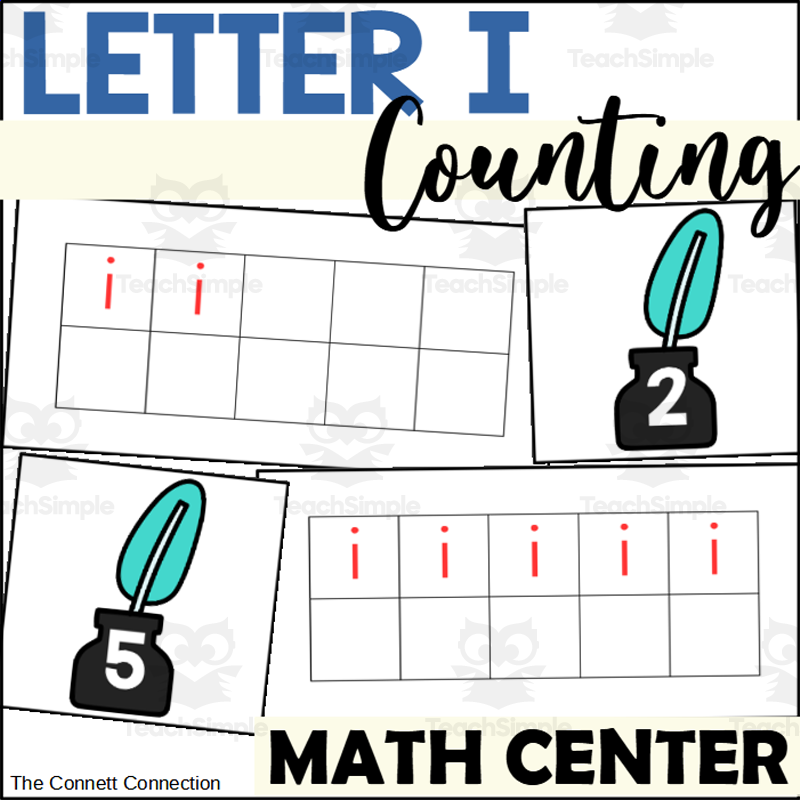
This Letter G Counting to 10 Center is a counting to 10 math matching center for the letter G. This resource is great for letter recognition practicing counting with tens frames. This is a quick and easy activity to give students who need practice with recognizing the lowercase form of the letter G, who need practice recognizing numbers up to 10, as well as for those students who need extra practice counting to 10. This counting math center can be used in the following ways * Math centers * Matching centers * Small group activities * Morning work * Emergency sub plans * Quick counting assessment * Quick number recognition assessment Skills assessed with this letter G counting activity * Lowercase letter G recognition * Ability to count to 10 * Recognizing amounts when represented in a tens frame * Ability to match numbers to the correct tens frame * Fine Motor Skills This counting math center is low prep. All that is required is for the teacher to print it out, cut it out and laminate if so desired. Once created, this counting center can be used over and over. The provide a great way for students to practice counting to 10 and practicing letter recognition at the same time. Students can work on this counting center independently, in pairs, or in small groups to complete. You can add manipulatives for students to cover each letter G as they count if they need a more hands on approach, or a more guided way to practice counting each letter G. For similar resources and more, visit my store!
Author The Connett Connection
Tags Letter G, Letter G Activities, Alphabet Activities, Counting To 10, Counting To Ten, Tens Frames, Alphabet Center, Counting Center, Preschool Math, Math Center
Guided Reading Level H - Gravity Made Simple
ELA, Resources for Teachers, Reading Comprehension, Reading, Science, Pre-Reading, Language Development, Vocabulary, Physics, Earth and Environmental Sciences, Kindergarten, Grade 1, 2, Worksheets & Printables, Worksheets, Teacher Tools, Centers, Activities, Literacy Readers, Quizzes, Quizzes and Tests, Assessments
This Guided Reading Book - Gravity Made Simple (Level H) includes: Guided Reading Color Label (front cover x1) This is a quick way to match the book’s demands to what students can generally handle.. The overall goal is to use the level/color to pick books for several smaller groups. To qualify for a certain level, a student is expected to read a book from that level with about 90–94% accuracy. If a student is consistently accurate and understands, move up a level. If the student is struggling at that level, drop down and add more support. Each student will improve at completely different rates, but it is generally one of the best ways to check progress across the class. DOWNLOAD THE CATALOG TO VIEW ALL GUIDED READING BOOKS AVAILABLE (SORTED LEVELS A-Z) Pre-Reading Question (x1) Teacher asks the prompt aloud, can be while showing the cover or first page. Students share what they already know, or make educated guesses from the cover. Prompt them to use the target vocabulary. Write some of their responses on the board to look back at during the reading. Vocabulary Words (x5) Introduce the five words, best doing it one at a time. Start by saying it, while students repeat and then see if anyone knows what it means before reading further. Read through the meaning and try to briefly connect each word to a picture or gesture so it’s meaningful. Ask students to flip through the book pages and point to where they see each of the vocabulary words. While reading the book pause upon coming across one of the vocab words or read the sentence twice to make sure students understand the word has appeared. Optional: Ask students to raise hands whenever they see/hear one of the new words. Guided Reading Pages (x10) Check the book snapshot (below) for: primary topic - do you need to prep extra reading or intro materials on this? what is taught best - decide on 1-2 bullets to focus on, use the prompt or words provided here for best results. learning goals - what you are checking for students to be able to do after the session, elicit answers using prompts or words provided. key vocabulary (see section above). questions overview - so you know what is coming up and if you need to prep extra materials to assist understanding. Run the lesson You may have already looked at a few of the pages together, but you can show them some of the pictures again first to set meaning. Depending on how much time you have and how familiar your students are with guided reading class, you may want to read the book aloud first with the group first. Students whisper or partner read, while you listen in. If time, do it as a group, one student reading a page each. Use the guided page’s prompts to coach: “Check the picture / does it make sense?” “Point under the words / try the first sound” “Reread the sentence smoothly”. Try to focus more on one student per session (rotating every time), so you can work out if they are ready to move up or need to move down a level. Comprehension Questions (back cover x3) This is your way to check that students didn’t just say the words, but actually understood the text. First, let students answer by pointing to the page/picture and saying a short sentence. After any answer, follow with: “Show me where you found that in the text.” In bigger groups, have partners answer first (10–20 seconds), then call on 2–3 students to share. Differentiation tips: Emerging speakers/struggling readers: oral + pointing On-level: oral in a full sentence Higher: one written sentence or draw + label Book Snapshot Title: Gravity Made Simple Genre: Nonfiction (informational) Subject: Science (Physical Science / Earth & Space Science) Primary Topic: How gravity works on Earth and in space Estimated Guided Reading Level (A–Z): H What This Book Teaches Best Gravity is a hidden, always-active force that pulls things toward Earth’s center. Gravity keeps objects on Earth’s surface—without it, things would float away. Gravity keeps the air close to Earth, forming the atmosphere that living things need to breathe. Gravity works in space too: Earth’s pull keeps the Moon in an orbit, and the Moon’s gravity affects ocean tides. Mass and gravity connect: more mass means a stronger gravitational pull, and weight measures gravity’s pull. Learning Goals Explain what gravity is and what it does to objects on Earth. Describe what happens when an object is dropped, according to the text. Tell how gravity helps keep objects (and air) close to Earth. Describe how Earth’s gravity affects the Moon’s orbit. Explain how the Moon’s gravity is connected to tides along the coast. Use the text to explain how mass relates to gravitational pull. Key Vocabulary From the Text gravity — a force that pulls things toward Earth. atmosphere — the thick layer of air around Earth. orbit — the path something takes around a planet. mass — how much matter is inside an object. tides — ocean water rising and falling along the coast. Discussion Prompts Pre-reading question: What do you think happens when you drop an object? Comprehension questions: What does the book say happens when an object is dropped? Comprehension questions: What does Earth’s pull do for the Moon’s path around Earth? Comprehension questions: What does the book say causes tides along the coast? Printing Tips 1. Best Printing Method (Recommended) “Booklet” Printing (Best if Available) If your printer or PDF viewer supports Booklet Printing , use this. Settings to use: Print mode: Booklet Paper size: Letter or A4 (either works) Orientation: Landscape Print on both sides: Yes Flip on: Short edge Scaling: Fit to printable area Booklet subset: First test: Front sides only Then: Back sides only This will automatically: Pair pages correctly Put the cover on the outside Align everything for folding After printing, fold in half and staple along the spine . 2. If “Booklet” Printing Is NOT Available You can still print this correctly with manual duplex printing . Step-by-step: Open the PDF. Choose Print . Set: Orientation: Landscape Pages per sheet: 1 Print on both sides: Yes Flip on: Short edge Print all pages . Because each PDF page already contains two facing book pages, the result will still fold cleanly into a book. Thousands of Cored Education products are included with your TeachSimple membership. Download links and encyclopedia index available here.
Author Cored Education
Rating
Tags Vocabulary, Reading Comprehension, Reading Passages, Leveled Reading, Nonfiction, Reading, Guided Reading, Gravity, Physics, Earth Science
Sight Word Worksheets| Sight Words Kindergarten Activities First Grade
ELA, Language Development, Vocabulary, Spelling, ESL, Kindergarten, Preschool, Grade 1, 2, 3, Activities, Centers, Workbooks, Worksheets & Printables, Worksheets
This interactive and attractive setSight Word Worksheets 60 Pages learners develop their original Sight Word Worksheets this set contains 38 pages in this set, each in each a different Digraphs Sight Word Worksheets of dedicated Sight Word Worksheets Pagesto ensure a fun and structured approach to using a fun and type of work that useful; Each card is fun this edited set of Sight Word Worksheets is built in an elegant style that attracts attention this interactive and attractive set of Sight Word Worksheets Worksheets designed to help young learners develop their original Sight Word Worksheets1st Grade Worksheets skills through Sight Word Worksheets 1st Grade Worksheets sexercises This set contains 60 pages. these printable Worksheets offer useful courses, this provides a useful course-rich practice, it is designed to help using resource grade 2 easily to learn about activities Sight Word Worksheets worksheets a fun and interactive manner. A collaborative learning activity added students. PDF format
Author LAMO
Rating
Tags English Language Arts, Sight Words, Reading, Activities, Worksheets, Homeschool, Printables
The Pull of Gravity: Guided Reading Level F with Lesson Plan
ELA, Resources for Teachers, Reading Comprehension, Reading, Science, Language Development, Vocabulary, Physics, Earth and Environmental Sciences, Pre-Reading, Kindergarten, Grade 1, 2, Worksheets & Printables, Worksheets, Teacher Tools, Centers, Activities, Literacy Readers, Quizzes, Quizzes and Tests, Assessments, Lesson Plans
This The Pull of Gravity (level f) guided reading book with lesson plan includes: Guided Reading Color Label (front cover x1) This is a quick way to match the book’s demands to what students can generally handle.. The overall goal is to use the level/color to pick books for several smaller groups. To qualify for a certain level, a student is expected to read a book from that level with about 90–94% accuracy. If a student is consistently accurate and understands, move up a level. If the student is struggling at that level, drop down and add more support. Each student will improve at completely different rates, but it is generally one of the best ways to check progress across the class. DOWNLOAD THE CATALOG TO VIEW ALL GUIDED READING BOOKS AVAILABLE (SORTED LEVELS A-Z) COMPANION VIDEO NOW AVAILABLE (EMBEDDED AFTER PREVIEW PICTURES IN PRODUCT DESCRIPTION) Pre-Reading Question (x1) The teacher says the question aloud, either while showing the cover or the first page. Students share what they already know or make sensible guesses based on the cover. Encourage them to use the target vocabulary where possible. Write a few of their ideas on the board so you can return to them during or after the reading. Vocabulary Words (x5) Introduce the five words one at a time. Say each word aloud, have students repeat it, and then ask if anyone already knows what it means. Read the meaning together and briefly connect each word to a picture, action, or gesture so it feels more memorable. Ask students to flip through the book and point to any pages where they spot the vocabulary words. While reading, pause when one of the words appears, or reread the sentence so students clearly notice and understand it in context. Optional: Ask students to raise their hands whenever they see or hear one of the new words. Guided Reading Pages (x10) Check the book snapshot below for: Primary topic — decide whether students need a quick introduction or extra background first. What this lesson teaches best — choose 1–2 key points to focus on during the session. Learning goals — keep in mind what students should be able to understand or say by the end. Key vocabulary — review and reinforce these throughout the lesson. Questions overview — look ahead so you know what students will be asked and whether any extra support is needed. Run the lesson You may already have looked at a few pages together, but it can help to revisit some of the pictures first to build meaning. Depending on your time and how confident the group is with guided reading, you may want to read the whole book aloud to them first. Students can then whisper-read or partner-read while you listen in. If time allows, you can also read as a group, with each student taking a page. Use the guided reading prompts to support them, such as: “Check the picture—does it make sense?” “Point under the words.” “Try the first sound.” “Reread the sentence smoothly.” It can be helpful to focus more closely on one student each session, rotating over time, so you can better judge whether they are ready to move up or may need more support at their current level. Comprehension Questions (back cover x3) This is where you check that students understood the text, not just the words on the page. Start by letting students answer by pointing to a page or picture and saying a short sentence. After they respond, follow up with: “Show me where you found that in the text.” In larger groups, let partners discuss their answer first for 10–20 seconds, then invite 2–3 students to share. Differentiation tips Emerging speakers / struggling readers: oral response + pointing On-level: oral response in a full sentence Higher: one written sentence or a drawing with labels Lesson Snapshot Title: The Pull of Gravity Genre: Nonfiction (informational) Subject: Science (Physical Science) Primary Topic: How gravity pulls things and helps keep them in place Estimated Guided Reading Level (A–Z): F What This Lesson Teaches Best Explains that gravity is a force and that it is all around us. Shows that gravity pulls things down and toward the Earth. Uses simple, everyday examples like a ball, leaves, water, rocks, sand, and air to show gravity in action. Helps students understand that larger objects, like Earth, have a stronger pull. Introduces the idea that gravity is also in space and helps pull the moon. Learning Goals Students will identify that gravity is a force found everywhere. Students will describe how gravity pulls things down and toward the Earth. Students will give examples from the text of things gravity pulls or keeps in place. Students will explain what the text says about Earth’s strong pull. Students will answer questions about gravity using details from the book. Key Vocabulary From the Text gravity — a pull that makes things go down force — a push or a pull toward — moving closer to something space — the place above Earth mountain — a very high hill of land Discussion Prompts Pre-reading question: What do you think makes things fall down to the ground? Comprehension question: What does the book say gravity is? Comprehension question: What does gravity pull things toward? Comprehension question: Name one thing the book says gravity keeps in place. 1. Best Printing Method (Recommended) Booklet printing is the best option if your printer or PDF viewer supports it. This method usually places the pages in the correct order automatically and makes folding much easier. Settings to use: Print mode: Booklet Paper size: Letter or A4 Orientation: Landscape Print on both sides: Yes Flip on: Short edge Scaling: Fit to printable area Booklet subset: First, print front sides only Then, print back sides only This will automatically: Pair the pages correctly Place the cover on the outside Help everything line up properly for folding After printing, fold the pages in half and staple along the spine. 2. If “Booklet” Printing Is Not Available You can still print the book correctly by using manual duplex printing . Step-by-step: Open the PDF. Click Print . Use these settings: Orientation: Landscape Pages per sheet: 1 Print on both sides: Yes Flip on: Short edge Print all pages. Since each PDF page already contains two facing book pages, the pages should still fold neatly into a book. Thousands of Cored Education products are included with your TeachSimple membership. Download links and encyclopedia index available here.
Author Cored Education
Rating
Tags Reading Comprehension, Reading Passages, Reading, Guided Reading, Guided Reading Lesson Plan, Guided Reading Activity, Pre-reading, Science Lesson Plans, Earth Science, Physics
Alphabet Posters | Boho Rainbow Neutral Classroom Decor
Language Development, ELA, Kindergarten, Preschool, Infant, Toddler, Grade 1, 2, Classroom Decor, Banners, Bulletin Boards, Door Decor, Posters, Word Walls, Flashcards, Worksheets & Printables, Centers, Activities
this file has a alphabet flash card with uppercase and lowercase letters and a picture you can use them in class and also send a copy home with a student, requiring additional practice i hope you find it useful each card has a bold uppercase and lowercase letter a fun the same image (an apple for B, B for B, etc.). These edited alphabet posters in Boho Rainbow subject are created using a stylish and modern, neutral color palette that is bound to catch the eye! This pack includes images and designs associated with different types of letters, including neutral boho rain for the upper primary and cute alphabet images for the lower primary the best alphabet poster pack of all primary teachers at all year level these spotted Boho Rainbow themed alphabet posters are using my stunning Boho Rainbowcolor palette. alphabet flash picture Boho Rainbow alphabet posters for kindergarten kindergarten
Author LAMO
Rating
Tags Classroom Decor
Dolch Noun Sight Words Freebie Coloring, Tracing, &Fill in the Vowels
ELA, Vocabulary, Language Development, Spelling, Kindergarten, Preschool, Grade 1, Activities, Centers, Coloring Pages, Worksheets, Worksheets & Printables
If you’re looking for a simple way to make sight word practice fun and engaging, this freebie is a great place to start! I created these pages with young learners in mind, so they can build confidence while working on important early literacy skills. What’s Included? 18 Dolch noun sight word pages (words like apple, bell, cake, door, and more) Black-and-white illustrations students can color Fill-in-the-blank vowel activity (example: _ ppl _ → apple ) Word tracing practice for every noun Easy Ways to Use These pages work well in literacy centers, as morning work, for early finishers, or even as homework. They’re also helpful in small group lessons when you want something hands-on and no prep just print and you’re ready to go. Why Teachers & Families Love It Keeps students engaged with coloring and interactive word-building activities Saves time for teachers with no-prep printables Gives homeschoolers a fun way to support sight word mastery at home Skills Students Will Practice Recognizing and reading Dolch nouns Identifying vowels and improving spelling Strengthening fine motor skills with tracing and coloring Building early reading fluency Perfect For Kindergarten 1st Grade ESL/EFL early learners
Author FlashKart
Rating
Tags Sight Words, Dolch Sight Words, Coloring, Kindergarten, First Grade, Free, Freebie, Free Resource, Esl, Language Arts
All About Insects: Guided Reading Level G with Lesson Plan
ELA, Resources for Teachers, Reading Comprehension, Reading, Science, Language Development, Vocabulary, Pre-Reading, Insects, Life Sciences, Kindergarten, Grade 1, 2, Worksheets & Printables, Worksheets, Teacher Tools, Centers, Activities, Literacy Readers, Quizzes, Quizzes and Tests, Assessments, Lesson Plans
This All About Insects (level g) guided reading book with lesson plan includes: Guided Reading Color Label (front cover x1) This is a quick way to match the book’s demands to what students can generally handle.. The overall goal is to use the level/color to pick books for several smaller groups. To qualify for a certain level, a student is expected to read a book from that level with about 90–94% accuracy. If a student is consistently accurate and understands, move up a level. If the student is struggling at that level, drop down and add more support. Each student will improve at completely different rates, but it is generally one of the best ways to check progress across the class. DOWNLOAD THE CATALOG TO VIEW ALL GUIDED READING BOOKS AVAILABLE (SORTED LEVELS A-Z) Pre-Reading Question (x1) Teacher asks the prompt aloud, can be while showing the cover or first page. Students share what they already know, or make educated guesses from the cover. Prompt them to use the target vocabulary. Write some of their responses on the board to look back at during the reading. Vocabulary Words (x5) Introduce the five words, best doing it one at a time. Start by saying it, while students repeat and then see if anyone knows what it means before reading further. Read through the meaning and try to briefly connect each word to a picture or gesture so it’s meaningful. Ask students to flip through the book pages and point to where they see each of the vocabulary words. While reading the book pause upon coming across one of the vocab words or read the sentence twice to make sure students understand the word has appeared. Optional: Ask students to raise hands whenever they see/hear one of the new words. Guided Reading Pages (x10) Check the book snapshot (below) for: primary topic - do you need to prep extra reading or intro materials on this? what is taught best - decide on 1-2 bullets to focus on, use the prompt or words provided here for best results. learning goals - what you are checking for students to be able to do after the session, elicit answers using prompts or words provided. key vocabulary (see section above). questions overview - so you know what is coming up and if you need to prep extra materials to assist understanding. Run the lesson You may have already looked at a few of the pages together, but you can show them some of the pictures again first to set meaning. Depending on how much time you have and how familiar your students are with guided reading class, you may want to read the book aloud first with the group first. Students whisper or partner read, while you listen in. If time, do it as a group, one student reading a page each. Use the guided page’s prompts to coach: “Check the picture / does it make sense?” “Point under the words / try the first sound” “Reread the sentence smoothly”. Try to focus more on one student per session (rotating every time), so you can work out if they are ready to move up or need to move down a level. Comprehension Questions (back cover x3) This is your way to check that students didn’t just say the words, but actually understood the text. First, let students answer by pointing to the page/picture and saying a short sentence. After any answer, follow with: “Show me where you found that in the text.” In bigger groups, have partners answer first (10–20 seconds), then call on 2–3 students to share. Differentiation tips: Emerging speakers/struggling readers: oral + pointing On-level: oral in a full sentence Higher: one written sentence or draw + label Book Snapshot Title: All About Insects Genre: Nonfiction (informational) Subject: Science (Life Science) Primary Topic: Insect body parts, features, and where they live Estimated Guided Reading Level (A–Z): G What This Book Teaches Best Explains what insects are by stating they are tiny animals that live in many places . Teaches basic insect anatomy: insects have six legs and three body parts (head, thorax, abdomen). Connects structures to functions: legs help the insect move and antennae are used to smell things . Describes common insect features: some have a hard shell that protects the body , and some have wings (dragonflies can fly fast ). Introduces early life stages: many insects come from eggs , and a larva hatches from an egg. Learning Goals Students will describe insects as tiny animals that live in many places. Students will identify that an insect has six legs that help it move. Students will name the three body parts of an insect: head, thorax, and abdomen. Students will explain that most insects have two antennae used to smell things. Students will describe details from the text about insect features (shells, wings) and how insects begin life (eggs, larva). Key Vocabulary From the Text thorax — the middle part of an insect’s body. abdomen — the back part of an insect’s body. antennae — body parts insects use to smell things. larva — a young insect that hatches from an egg. dragonflies — insects that can fly fast. Discussion Prompts Pre-reading question: Where have you seen insects living before? Comprehension questions: What does the book say insects are? Comprehension questions: How many legs does an insect have? Comprehension questions: Where does the book tell you to look to find an insect? Printing Tips 1. Best Printing Method (Recommended) “Booklet” Printing (Best if Available) If your printer or PDF viewer supports Booklet Printing , use this. Settings to use: Print mode: Booklet Paper size: Letter or A4 (either works) Orientation: Landscape Print on both sides: Yes Flip on: Short edge Scaling: Fit to printable area Booklet subset: First test: Front sides only Then: Back sides only This will automatically: Pair pages correctly Put the cover on the outside Align everything for folding After printing, fold in half and staple along the spine . 2. If “Booklet” Printing Is NOT Available You can still print this correctly with manual duplex printing . Step-by-step: Open the PDF. Choose Print . Set: Orientation: Landscape Pages per sheet: 1 Print on both sides: Yes Flip on: Short edge Print all pages . Because each PDF page already contains two facing book pages, the result will still fold cleanly into a book. Thousands of Cored Education products are included with your TeachSimple membership. Download links and encyclopedia index available here.
Author Cored Education
Rating
Tags Reading Comprehension, Reading Passages, Reading, Guided Reading, Guided Reading Lesson Plan, Guided Reading Activity, Pre-reading, Science Lesson Plans, Life Science, Insects
Guided Reading Level B: Clouds You Can Spot
ELA, Resources for Teachers, Reading Comprehension, Reading, Science, Language Development, Pre-Reading, Vocabulary, Earth and Environmental Sciences, Earth Sciences, Kindergarten, Preschool, Grade 1, Worksheets & Printables, Worksheets, Teacher Tools, Centers, Activities, Literacy Readers, Quizzes, Quizzes and Tests, Assessments
This Guided Reading Book - Clouds You Can Spot (Level B) includes: Guided Reading Color Label (front cover x1) This is a quick way to match the book’s demands to what students can generally handle.. The overall goal is to use the level/color to pick books for several smaller groups. To qualify for a certain level, a student is expected to read a book from that level with about 90–94% accuracy. If a student is consistently accurate and understands, move up a level. If the student is struggling at that level, drop down and add more support. Each student will improve at completely different rates, but it is generally one of the best ways to check progress across the class. DOWNLOAD THE CATALOG TO VIEW ALL GUIDED READING BOOKS AVAILABLE (SORTED LEVELS A-Z) Pre-Reading Question (x1) Teacher asks the prompt aloud, can be while showing the cover or first page. Students share what they already know, or make educated guesses from the cover. Prompt them to use the target vocabulary. Write some of their responses on the board to look back at during the reading. Vocabulary Words (x5) Introduce the five words, best doing it one at a time. Start by saying it, while students repeat and then see if anyone knows what it means before reading further. Read through the meaning and try to briefly connect each word to a picture or gesture so it’s meaningful. Ask students to flip through the book pages and point to where they see each of the vocabulary words. While reading the book pause upon coming across one of the vocab words or read the sentence twice to make sure students understand the word has appeared. Optional: Ask students to raise hands whenever they see/hear one of the new words. Guided Reading Pages (x10) Check the book snapshot (below) for: primary topic - do you need to prep extra reading or intro materials on this? what is taught best - decide on 1-2 bullets to focus on, use the prompt or words provided here for best results. learning goals - what you are checking for students to be able to do after the session, elicit answers using prompts or words provided. key vocabulary (see section above). questions overview - so you know what is coming up and if you need to prep extra materials to assist understanding. Run the lesson You may have already looked at a few of the pages together, but you can show them some of the pictures again first to set meaning. Depending on how much time you have and how familiar your students are with guided reading class, you may want to read the book aloud first with the group first. Students whisper or partner read, while you listen in. If time, do it as a group, one student reading a page each. Use the guided page’s prompts to coach: “Check the picture / does it make sense?” “Point under the words / try the first sound” “Reread the sentence smoothly”. Try to focus more on one student per session (rotating every time), so you can work out if they are ready to move up or need to move down a level. Comprehension Questions (back cover x3) This is your way to check that students didn’t just say the words, but actually understood the text. First, let students answer by pointing to the page/picture and saying a short sentence. After any answer, follow with: “Show me where you found that in the text.” In bigger groups, have partners answer first (10–20 seconds), then call on 2–3 students to share. Differentiation tips: Emerging speakers/struggling readers: oral + pointing On-level: oral in a full sentence Higher: one written sentence or draw + label Book Snapshot Title: Clouds You Can Spot Genre: Nonfiction (informational) Subject: Earth Science (Weather) / Early Literacy Primary Topic: Observing clouds using simple describing words Estimated Guided Reading Level (A–Z): B What This Book Teaches Best Builds early nonfiction observation language by naming what you can see in the sky (sun, clouds, sky). Teaches describing words (adjectives) for clouds: big/small, white/grey, high/low, and “rain clouds.” Supports patterned reading and fluency through repeated sentence structure: “See the ____.” Encourages compare/contrast thinking using paired opposites (big vs. small; high vs. low; white vs. grey). Learning Goals Students will identify things the book says you can see (sun, clouds, sky). Students will describe clouds using words from the text (big, small, white, grey, high, low, rain). Students will retell the book’s sequence using the repeated pattern “See the ____.” Students will compare two cloud descriptions from the book (such as high/low or big/small). Students will answer simple questions about what the book tells the reader to see. Key Vocabulary From the Text clouds — white or grey puffs you see in the sky grey — a color between white and black high — up far above you low — down close to the ground rain — water that falls from clouds Discussion Prompts Pre-reading question: What do you think you might see when you look up at the sky? Comprehension questions: What is the first thing the book says to see? Comprehension questions: What are two different kinds of clouds the book tells you to see? Comprehension questions: What is the last thing the book says to see? Printing Tips 1. Best Printing Method (Recommended) “Booklet” Printing (Best if Available) If your printer or PDF viewer supports Booklet Printing , use this. Settings to use: Print mode: Booklet Paper size: Letter or A4 (either works) Orientation: Landscape Print on both sides: Yes Flip on: Short edge Scaling: Fit to printable area Booklet subset: First test: Front sides only Then: Back sides only This will automatically: Pair pages correctly Put the cover on the outside Align everything for folding After printing, fold in half and staple along the spine . 2. If “Booklet” Printing Is NOT Available You can still print this correctly with manual duplex printing . Step-by-step: Open the PDF. Choose Print . Set: Orientation: Landscape Pages per sheet: 1 Print on both sides: Yes Flip on: Short edge Print all pages . Because each PDF page already contains two facing book pages, the result will still fold cleanly into a book. Thousands of Cored Education products are included with your TeachSimple membership. Download links and encyclopedia index available here.
Author Cored Education
Rating
Tags Vocabulary, Reading Comprehension, Reading Passages, Literacy Readers, Leveled Reading, Nonfiction, Reading, Guided Reading, Earth Science, Clouds
Color Pals Make the Match
Common Core, Kindergarten, Preschool, Toddler, Homeschool Templates, Activities, Centers, Workbooks, Worksheets & Printables
Color Pals Make the Match has been created to help young learner with developing their learning skills. Early learners can do so much more than we know. This booklet is filled with opportunities for parents and their children to practice colors with their child by reading sentences. When parents sit and work with their young learners, children feel so much more confident in what they are learning. Building basic color skills is essential for early leaners and it is never too early to work on reading and writing skills in school or at home. Homeschoolers can also benefit from working with new materials. This item has been designed by educators with years of experience working in the classroom with a number of young students. Color Pals is a fun and engaging way to motivate children to learn. Children can work on their own or with a friend! What’s included 9 pages Instruction · Print out pages · Laminate for longer use · Cut out pictures · Assemble using Velcro dots · Can also be used with Dry Erase markers Enjoy!
Author KD's Kids School Shop
Tags Colors, Reading , Writing, Problem-solving, Spelling, Matching, Skill Builder
Letter V Counting to 10 Center
ELA, Math, Early Math, Numbers, Language Development, Phonics, Kindergarten, Preschool, Centers, Activities
This Letter V Counting to 10 Center is a counting to 10 math matching center for the letter V. This resource is great for letter recognition and practicing counting with tens frames. This is a quick, easy, and engaging activity to give preschooler or kindergartener students who need practice with recognizing the lowercase form of the letter V, who need practice recognizing numbers up to 10, as well as for those students who need extra practice counting to 10. What is Included: A tens frame card for each number 1 to 10 with lowercase letter V as counters Vase themed number cards for 1 to 10 This counting math center can be used in the following ways Math centers Matching centers Small group activities Morning tubs or baskets Emergency sub plans Quick hands on counting assessment Quick number recognition assessment Skills assessed with this letter V counting activity Lowercase letter V recognition Ability to count to 10 Recognizing amounts when represented in a tens frame Ability to match numbers to the correct tens frame Fine Motor Skills This counting to 10 math center is low prep. All that is required is for the teacher to print it out, cut it out and laminate it if so desired. Once created, this counting center can be used over and over. The center provides a great way for students to practice counting to 10 and practicing letter recognition of lowercase letters at the same time. Students can work on this counting center independently, in pairs, or in small groups to complete. You can add manipulatives for students to cover each letter V as they count if they need a more hands on approach, or a more guided way to practice counting each letter V. For similar resources about the alphabet, visit my store!
Author The Connett Connection
Tags Counting To 10, Counting To Ten, Letter Recognition, Tens Frames, Counting With Tens Frames, Ladybug Counting, Preschool Math, Math Center, Letter V, Letter V Activities
Numbers Activity - Finding Numbers 1 - 10: The Great Number Hunt
Math, Early Math, Numbers, Basic Operations, Kindergarten, Preschool, Grade 1, 2, 3, 4, Activities, Centers, Worksheets & Printables
Get ready to turn your kids into mini number detectives! This Finding Numbers 1-10 activity is like a treasure hunt, but instead of gold, they’re searching for sneaky little numbers hiding in plain sight. Armed with their trusty crayons, students will circle the instructed number (e.g., “Find all the 3s!”) while feeling like they just cracked the Da Vinci Code of math. Ways to Use: Morning Work: Perfect for that quiet “let’s pretend we’re all awake” moment. Math Centers: Keeps kids busy, learning, and not trying to eat the glue. Homework: Fun enough that parents won’t side-eye you for assigning it. Substitute Plans: No complicated instructions, just numbers waiting to be circled. Advantages: Number Recognition Mastery: Kids will spot 7s in their sleep after this. Focus Training: Sharpens their eagle eyes for spotting details. Fine Motor Skills: All that circling is basically finger yoga. Zero Prep: Print, hand out, and sit back while the numbers take the spotlight. Your students will have so much fun, they might forget they’re learning. And you? You’ll feel like a teaching wizard. Win-win! Enjoy!
Author Ponder Palette Plazza
Tags Numbers, Numbers Activity, Finding Numbers, Math, Math Worksheets, First Grade Math, Math Activities, Numbers Worksheets, Numbers Activities
Oval Tracing & Coloring Worksheets for Kindergarten, Montessori & PreK
Math, Montessori, Shapes, Early Math, Kindergarten, Preschool, Toddler, Centers, Activities, Worksheets, Worksheets & Printables
Oval Tracing & Coloring Worksheets for Preschool, Montessori, & Kindergarten 2D Shape Center - All About Ovals (Oval Shape Tracing, Coloring & Scissor Skills) Help young learners discover the oval shape in a fun and hands-on way! I designed this oval tracing and coloring resource with toddlers, preschoolers, and kindergarten students in my mind who are just beginning to explore shapes. This resource is simple, engaging, and easy to use in classrooms, homeschools, or at home. This resource focuses on building early literacy, fine motor skills, shape recognition, and language development through playful and age-appropriate oval shape activities. What’s inside? A fun oval rhyme featuring an oval named “ Pearl ” to introduce shape vocabulary Oval tracing worksheets to support hand-eye coordination and early writing skills Oval coloring pages to encourage creativity while reinforcing shape recognition Simple question prompts on each worksheet to support language development and discussion (ESL/EFL friendly) A crown-cutting activity that gives children a fun and practical way to practice scissor skills I created each activity with young learners in mind. I have kept all the instructions clear and visuals simple so children can work with confidence and ease. Resource features: Fine motor development: Tracing and cutting activities will strengthen small hand muscles Shape recognition: This pack will help children identify ovals and spot them in everyday objects Language support: Built-in questions encourage vocabulary building and conversation Hands-on & fun: The crown-cutting craft adds excitement and movement to learning ESL/EFL friendly: Great for diverse classrooms and early language learners These worksheets are simple, child-friendly, and easy to use with young learners who are just beginning to recognize shapes. This resource helps toddlers, preschoolers, and kindergartners practice identifying the oval shape. These worksheets will also help them build fine motor skills. The activities inside include tracing, coloring, and cutting. All this makes this resource useful for centers, morning work, or quiet practice time. Inside the pack, you’ll find oval tracing and coloring pages that support pencil control and hand-eye coordination. I have also included a short and fun rhyme about an oval named “Pearl” to introduce the shape in a playful way. There are also simple question prompts that encourage children to talk, listen, and build vocabulary, which makes it helpful for ESL and EFL learners as well. In the end, there is also a crown-cutting activity that gives students a chance to practice using scissors in a fun and meaningful way. Many children enjoy wearing the finished crown, which adds a little excitement to the lesson. This resource works well for: Preschool and kindergarten shape lessons Fine motor skill practice ESL/EFL classrooms Homeschool activities Montessori-style learning Teachers can use these worksheets during a shape unit, as independent work, or in learning centers. Parents and homeschoolers can use them at their own pace for relaxed, hands-on learning at home. This is a no-prep resource .
Author FlashKart
Rating
Tags Shapes, Oval, Oval Shape, Math Resource, Esl, Efl, Oval Shape Things, Kindergarten Math, Preschool Centers, Montessori Centers
Dramatic Play 8-Set Bundle | Kindergarten & Grade 1
Language Development, ELA, Early Math, Math, Kindergarten, Grade 1, Centers, Activities, Games, Worksheets & Printables
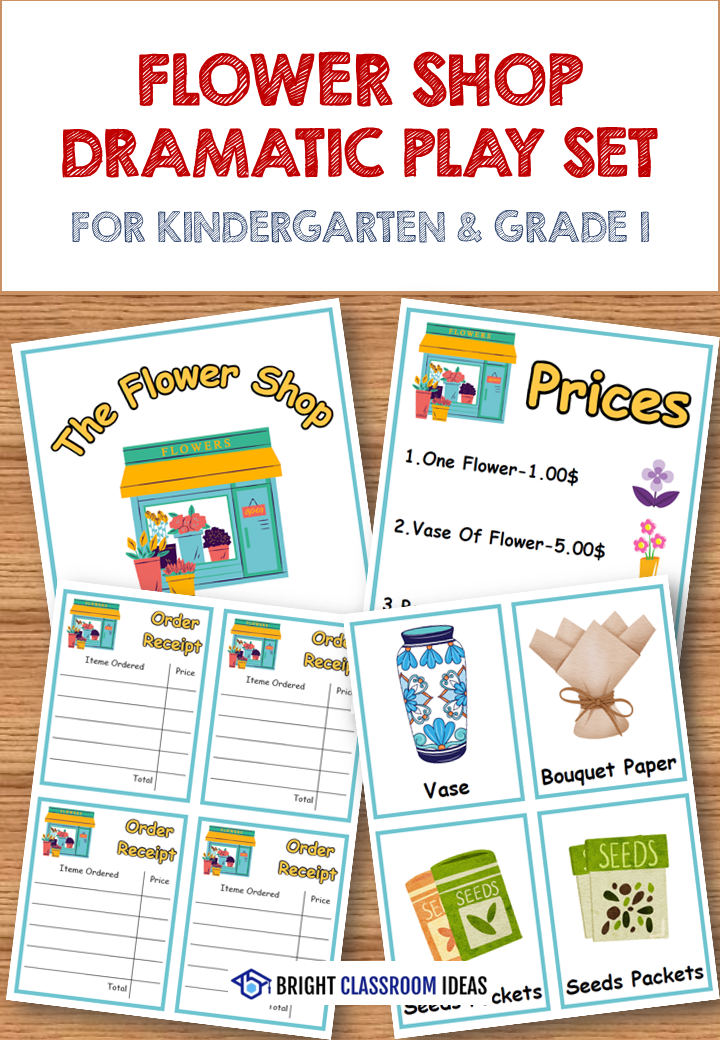
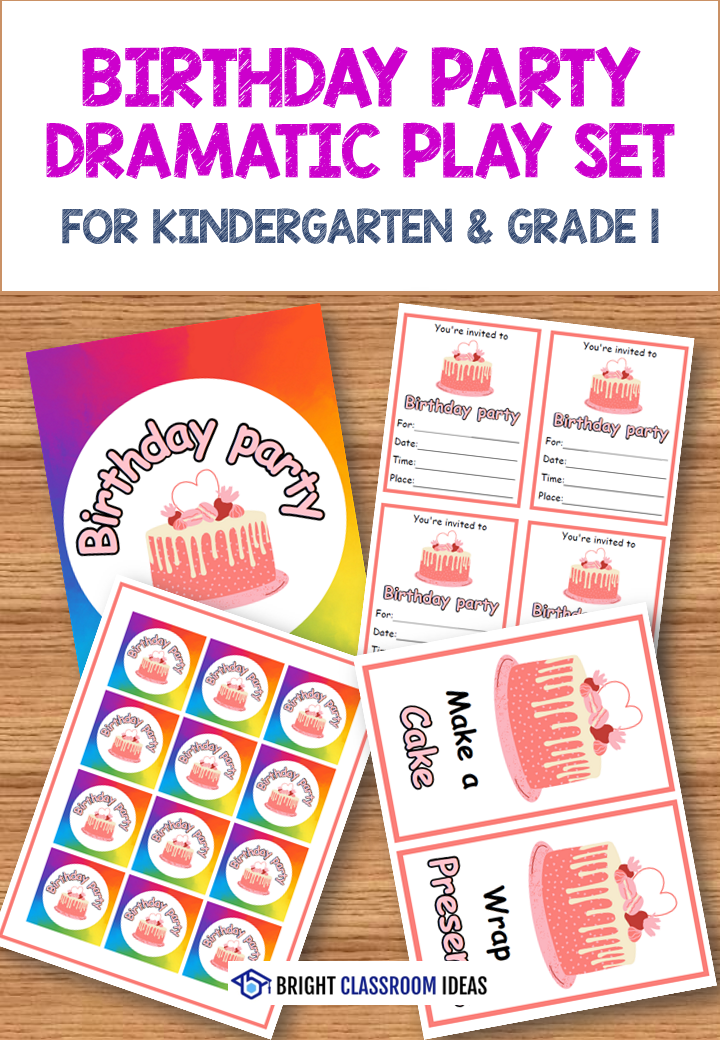
Fill your classroom with meaningful, hands-on learning all year long with this Dramatic Play Mega Bundle for Kindergarten and Grade 1 . This bundle includes 8 engaging real-world dramatic play sets that build language, social skills, and early math through purposeful pretend play. Each set transforms your dramatic play area into a new environment where students take on roles like manager, worker, cashier, and customer . Children practice speaking, listening, counting, problem-solving, and cooperation as they explore real-life scenarios through play. Themed signs, role cards, menus, order forms, receipts, real-world images, pretend money, and step-by-step activity cards are all included in the bundle. You don't need to do any more preparation to keep your centers intriguing and new because each set is print-and-go and simple to rotate. Use these dramatic play sets for center rotations, spoken language stations, math integration, social-emotional development, or choice time. They enable independent learning while fostering collaboration and creativity. This bundle helps students develop vocabulary, communication skills, number sense, sequencing, and teamwork in a natural, joyful way. One bundle. Eight centers. A whole year of joyful, intentional learning with minimal planning and maximum involvement.
Author Bright Classroom Ideas Marketplace
Rating
Tags Dramatic, Play, Pretend, Center, Kindergarten, Bundle, Set, Grade 1, Math, Ela
Zoo Alphabet Puzzles
ELA, Language Development, Phonics, Kindergarten, Preschool, Activities, Centers
Teach your preschool and kindergarten students the letters of the alphabet with a wonderful zoo themed activity with these letter puzzles. Designed to reinforce letter identification skills, these puzzles provide a fun and interactive way for students to practice recognizing and matching capital and lowercase letters. As students piece together the two halves of each animal, they will develop their letter recognition abilities. These alphabet puzzles are a great educational tool to enhance early literacy and also make learning the alphabet an enjoyable experience for young learners. What is Included: This resource contains 26 two-piece alphabet puzzles for matching capital and lowercase letters for each letter of the alphabet. The hands-on nature of these puzzles gives students a tactile way to practice matching uppercase and lowercase letters of the alphabet. Students can complete these puzzles independently or with a partner. When to Use Early Finishers - If students finish their work early, they can use these puzzles for extra practice. Small Group Work - Teachers can use these puzzles to target small groups of students who need more practice. Literacy Center - Students can practice building words individually or with a partner in a literacy center . Morning Tub or Basket - Students can work independently or with a partner to complete the puzzles while waiting on classmates to arrive at class. Tasks Boxes - These puzzles fit well in tasks boxes making literacy centers easy to set up and put away. Skills Assessed: Letter Recognition and Identification for Capital and Lowercase Letters Matching Capital Letters with their Corresponding Lowercase Letters Ability to place single letters in alphabetical order These zoo alphabet puzzles are a low prep option for teachers. They just need to be printed out and cut apart before being added to the desired activity location. The puzzles can be laminated for durability if desired.
Author The Connett Connection
Rating
Tags Alphabet Puzzles, Letter Recognition, Alphabet Activities
Forward And Backward Counting Game (0-150) for Kindergarten and 1st
Montessori, Math, Kindergarten, Grade 1, Centers, Activities, Games
Forward & Backward Counting (Count and Stack) Game | Kindergarten to 1st Grade | Montessori Inspired Make counting practice hands-on and engaging! This printable game helps young learners build confidence with number sequencing by stacking number tokens on forward and backward counting boards. Students will actively practice counting, recognize number patterns, and strengthen early math skills in a fun, interactive way. This resource is perfect For: Kindergarten and 1st Grade classrooms Montessori learning environments Math centers and small group lessons Independent practice or early finishers What’s Inside: 1 Forward Counting Game Board 1 Backward Counting Game Board Number Token Cutouts (0-150) Simple teacher setup and usage instructions How It Works: Students place number tokens on the board in order. All the usage instructions are provided in this resource. The game can be customized by choosing a specific number range - great for differentiation! Teacher Tips: Print this game on card stock and laminate it for long-term classroom use. Encourage students to say the numbers aloud as they stack. Use in pairs or small groups to promote cooperation and turn-taking. This activity offers a hands-on, visual approach to counting that keeps kids engaged and excited about math. It’s easy to prep and easy to reuse. This count and stack game is a great addition to any classroom math routine. forward counting game backward counting game number sequencing game counting beyond 50 printable Count from 0 to 150 kindergarten counting activity early elementary math centres math game number tokens reusable counting board print & laminate counting resource small group counting game
Author FlashKart
Rating
Tags Math, Kindergarten, Games, Math Game, First Grade, First Grade Math, Count, Counting, Centers, Math Class
Letter B Beginning Sound Sort - Bakery Themed
ELA, Language Development, Phonics, Kindergarten, Preschool, Activities, Centers
This beginning sound sort for the letter B is a great hands on activity for recognizing the most common sound of the letter B. This is an easy and fun activity to give students who need practice with recognizing the letter B sound from amongst other letter sounds or for those students who need extra practice distinguishing between the initial sounds in words. To complete this sorting activity , students will look at a picture on a baked good to determine if the picture begins with the letter B or does not begin with the letter B, and then the students will place the baked good on the correct bakery mat. This sorting activity includes 3 pages that contains One bakery mat for pictures that begin with the letter B One bakery mat for pictures that do not begin with the letter B Baked good pictures that begin with B Baked good pictures that do not begin with B This beginning sound sort can be used in the following ways Literacy centers Fine motor centers File folder activity Add magnets to the picture cards for a baking tray activity Small group activities Morning work Emergency sub plans If making a file folder game, the teacher will place the mats on either side of the folder and use hook and loop fasteners to sort the snowflake pictures. Skills assessed with these letter B initial sound sort Initial Sound of the letter B Distinguishing between words that begin with B and do not begin with B Ability to sort the picture cards on to the correct mat This beginning sounds sorting activity is a low prep activity . All a teacher needs to do is to print the three pages, cut out the picture cards and laminate the pages and cards if desired. The activity is easy to set up and to put away and store. This download includes a PDF with 3 usable pages.
Author The Connett Connection
Tags Letter Of The Week, Alphabet Activities, Alphabet Centers, Beginning Sounds, Literacy Center, Preschool Literacy Center, Initial Sounds, Letter B Activity, Letter B, Community Helpers
Letter P Phonics and Writing Centers with Real Photographs
ELA, Writing, Handwriting, Language Development, Phonics, Kindergarten, Preschool, Centers, Activities
This letter P beginning sounds and handwriting activity includes real photographs to practice learning to recognize, write and identify the sound of the letter P. Each picture has bold colors and includes easily recognized pictures. Each activity can be used in a literacy center for students to practice letter recognition. What is Included: There is an instructional page with printing instructions. There are letter P posters with various letter P words. There are handwriting task cards that allow students to practice writing the letter P as well as words that begin with the letter P. There are beginning sound clip cards that allow students to practice clipping the images that begin with the letter P. There is a sorting activity where you sort pictures that begins with P from words that do not begin with P. The letter P sorting cards that can also be used to play memory, matching, or concentration games. These cards can also be used during a lesson in a pocket chart as well as for a center display. When to Use: All of the activities make great literacy centers, by placing each set of activities in the center and letting students complete activities alone or with a partner. These activities make great morning tub activities. Just place these activities in morning bins for students to complete as their classmates arrive to class. Skills Assessed: These activities assess letter recognition skills, beginning sounds, handwriting, and sorting skills. Each activity in this set is low prep. Each activity just needs to be printed out, cut apart, and laminated if desired. When you laminate the writing cards, you can create a writing center activity that is reusable is you add dry erase markers. The handwriting cards and beginning sound clip cards can be turned into task box activities.
Author The Connett Connection
Tags Phonics, Writing Centers, Real Photographs, Early Literacy, Letter P
Letter V Phonics and Writing Centers with Real Photographs
ELA, Language Development, Phonics, Writing, Handwriting, Kindergarten, Preschool, Centers, Activities
This letter V beginning sounds and handwriting activity includes real photographs to practice learning to recognize, write and identify the sound of the letter V. Each picture has bold colors and includes easily recognized pictures. Each activity can be used in a literacy center for students to practice letter recognition. What is Included: There is an instructional page with printing instructions. There are letter V posters with various letter V words. There are handwriting task cards that allow students to practice writing the letter V as well as words that begin with the letter V. There are beginning sound clip cards that allow students to practice clipping the images that begin with the letter V. There is a sorting activity where you sort pictures that begins with V from words that do not begin with V. The letter V sorting cards that can also be used to play memory, matching, or concentration games. These cards can also be used during a lesson in a pocket chart as well as for a center display. When to Use: All of the activities make great literacy centers, by placing each set of activities in the center and letting students complete activities alone or with a partner. These activities make great morning tub activities. Just place these activities in morning bins for students to complete as their classmates arrive to class. Skills Assessed: These activities assess letter recognition skills, beginning sounds, handwriting, and sorting skills. Each activity in this set is low prep. Each activity just needs to be printed out, cut apart, and laminated if desired. When you laminate the writing cards, you can create a writing center activity that is reusable is you add dry erase markers. The handwriting cards and beginning sound clip cards can be turned into task box activities.
Author The Connett Connection
Tags Phonics, Writing Centers, Real Photographs, Early Literacy, Letter V