3,890 products added recently
Page 3 - High School Experiments
Provide your high school students with experiments that offer in-depth exploration of complex scientific concepts. This collection includes lab investigations in chemistry, physics, and biology. By integrating these high school experiments into your teaching, you can prepare students for college-level science and inspire future careers in STEM fields.
Atomic Theory, Structure and Isotopes – Lab Station Activity
Science, Chemistry, Grade 7, 8, 9, 10, Labs, Experiments, Activities
Atomic Theory, Structure and Isotopes Lab Stations Engage students in learning atomic theory, atomic structure, and isotopes with this interactive lab station activity. Students move through nine stations, including drawing atoms, watching expert videos, completing knowledge checks, reading real-life applications, and formulating their own questions.recording answers on a passport worksheet. This resource requires almost no teacher prep - just print the self-explanatory station cards with detailed student directions. The activity works well for whole group or independent work, covers core topics, and aligns to grades 7-10 science standards. Assessment at multiple stations allows students to exhibit understanding in various ways while staying focused and challenged. Extend student learning by pairing the lab stations with the included word scramble and word search.
Author Teach With Fergy
Tags Atoms, Atomic, Theory, Structure, Isotopes
Types of Bonds – Lab Station Activity
Science, Chemistry, Grade 9, 10, 11, 12, Labs, Experiments, Activities
Types of Bonds – Lab Station Activity Types of Bonds – Lab Station Activity is a dynamic learning resource designed for educators teaching Grades 9 to 12 Chemistry. It offers an engaging approach to educating students about various types of bonds through hands-on exploration and active participation. About The Activity Rather than standard one-dimensional lessons, this activity prompts students to move around the room, visiting different stations. Each station provides a unique method for understanding the topic. These methods include: Drawing or constructing models, Researching specific questions related to electricity production sources, Forming opinions on pertinent issues and expressing them in writing, Reading articles that link theory with real-world applications, and Finding answers through multiple-choice questions. The main aspects considered during this activity encompass these eight critical themes: Reweable Sources; Non-renewable Sources; Fossil Fuels; Nuclear Power; Solar Power; ;nd; > fully chosen tongetsumontextualize whatuir Learing in a tangible manner ensures no student energy is wasted but continually augmented. Conclusion Therefore,, integrate Type of Bonds – Lab Statio Activity iy your eaching, tt’sthan efrectve nedhod o addressing scientific facts about bonds with a kyeyemphasis on independent thinking creative exploration and collaborative learning.
Author Teach With Fergy
Tags Bonds, Chemistry, Lab Activity, Renewable Sources, Energy Production
Muscular and Skeletal System – Lab Station Activity
Science, Life Sciences, Human Body, Grade 7, 8, 9, 10, 11, 12, Labs, Experiments, Activities
Muscular and Skeletal System Lab Station Activity Dive deep into the muscular and skeletal system with this engaging lab station activity . Specifically designed for middle and high school students, it gets learners up and active while assessing knowledge. The 9 unique stations offer a variety of learning modalities, including building models, conducting research, answering discussion questions, and more. Questions and activities focus on key concepts like muscle growth, bone structure and function, homeostasis, and real-world connections. With minimal prep required and an included answer key, this resource is teacher-approved and student-tested. Use it to complement your unit on body systems or as a review before exams. Modify it to fit any schedule and customize it to various ability levels. This interactive approach keeps students engaged as they learn about this essential bodily system.
Author Teach With Fergy
Tags Muscular, Skeletal, System, Joints, Lab Station, Activities For Skeletal System, Skeletal System Activities For High School Students, Skeletal System Lesson Plans High School, Skeletal System Lab, Skeletal System Activity, Skeletal System Activities
Energy Flow In Ecosystems – Lab Station Activity
Science, Life Sciences, Biology, Grade 8, 9, 10, Labs, Experiments, Activities
Energy Flow In Ecosystems Lab Station Activity Students get hands-on with the flow of energy through ecosystems in this engaging lab station activity. As they rotate through 9 stations, learners strengthen their understanding of topics like photosynthesis, cellular respiration, food chains and webs, ecological pyramids, and more. The activity covers producers, consumers, herbivores, carnivores and omnivores while connecting concepts to real-world applications. With a variety of learning modes including drawing, research, assessment , reading passages, and video, the stations offer something for all types of learners. The activity comes with station description cards, student recording sheets, word scrambles and searches to prevent downtime, and answer keys for the teacher. This versatile resource works for whole group, small group, or independent learning structures.
Author Teach With Fergy
Tags Scavenger, Food Chain, Energy, Flow, Ecosystems
Plant Sexual and Asexual Reproduction – Lab Station Activity
Science, Life Sciences, Biology, Grade 8, 9, 10, 11, 12, Labs, Experiments, Activities
Plant Sexual and Asexual Reproduction Lab Stations provide educators with a hands-on learning activity to engage students on plant reproduction concepts. Learners rotate through nine stations, each offering a unique way to assess and build knowledge on reproduction methods, the role of bees, and plant growth. The activity comes with station description cards, questions, articles, video clips, creative drawing prompts, and more to suit various learning styles. Easy to implement with no prep work required, just print and distribute the cards. The lab also includes bonus vocabulary boosters like word scrambles and searches so students stay actively learning. This versatile resource works for whole class, small groups, or independent work.
Author Teach With Fergy
Tags Plants, Reproduction, Pollination, Photosynthesis, Lab Station, Asexual Reproduction Answer Key
Chemical Reactions and Balancing Equations – Lab Station Activity
Science, Chemistry, Grade 9, 10, 11, 12, Labs, Experiments, Activities
Chemical Reactions and Balancing Equations Lab Station Activity This editable lab station activity covers describing chemical reactions, balancing chemical equations, and types of chemical reactions. Students rotate through 9 stations, including getting hands-on to draw models, researching topics, writing explanations, answering questions based on videos, and more. It is designed to engage students in the content in a fun and meaningful way. Use it to complement your chemistry curriculum as an in-class lab or review activity before tests. With minimal prep required and an answer key provided, implementing this activity into your chemistry lesson plans is seamless. Your students will love moving through the stations while solidifying their understanding of chemical reactions and balancing equations.
Author Teach With Fergy
Tags Ionic, Forces, Reactions, Chemical, Lab Stations, Balancing Equations, Describing Chemical Reactions Lab Answer Key
Thermoregulation – Lab Station Activity
Science, Life Sciences, Biology, Grade 8, 9, 10, Labs, Experiments, Activities
Thermoregulation – Lab Station Activity : Interactive Teaching Resource The primary objective of this multifaceted and fully editable Lab Station activity is to foster student engagement and create an interactive learning atmosphere. It uses several instructional methods, providing a dynamic approach to learning the critical subject of thermoregulation. This comprehensive Lab activity covers: Maintenance of body temperature Ectotherms and endotherms Metabolic responses to external temperatures Hibernation and cold conditions responses Torpor periods Estivation during hot weather scenarios etc. The lab showcases seven participatory stations along with two resting stations for reflection or preparation. Bonus activities such as word scrambles or searches further reinforce essential vocabulary associated with thermoregulation. An Organized Layout for Seamless Learning: All teachers need to do is print out the cards and arrange them throughout their classroom. The structured layout allows students an effortless transition between different activities, enhancing productivity while minimizing prep work on your end! Included Answer Key & Flexible Use Advantage: •An available answer key enhances this lab station's usability. •This thermoregulation resource can be used not only for lab activities but also as a performance assessment tool or revision resource. •Catering predominantly to Grade 8 – Grade 10 students studying Biology, it can be implemented in diverse educational settings ranging from whole-group instruction to small cluster teaching or even home assignments. Thermoregulation – Lab Station Activity not only makes learning about body temperature regulation engaging and impactful but is also versatile, catering to different teaching strategies and student learning styles.
Author Teach With Fergy
Tags Thermoregulation, Lab Activity, Interactive Learning, Body Temperature Regulation, Biology
Easter Chemistry Bunting – Color, Decorate & Learn Chemical Elements
STEM, Science, Chemistry, Physics, Life Sciences, Biology, Grade 6, 7, 8, 9, 10, 11, 12, Activities, Worksheets & Printables, Banners, Classroom Decor, Bulletin Boards, Door Decor, Posters, Labs, Experiments, Drawing Templates & Outlines
Easter Chemistry Bunting A Creative Way to Learn the Periodic Table! 🐰🔬🎨 Every year, I like to add a bit of seasonal fun to my classroom. But instead of just decorating, why not make it educational too? That’s why I created this Easter-themed chemistry bunting—a simple but effective way to help students get familiar with the periodic table while being creative. Each pennant features an element’s symbol, name, and atomic number. Instead of memorizing, students color and decorate while naturally recognizing the elements they see every day. It’s low prep for you, fun for them, and adds a nice science-themed touch to your classroom! 🌟 What Makes This So Useful? ✔ Students are learning without even realizing it – They’ll see the elements daily, making them easier to remember. ✔ A great mix of science and creativity – Not just a decoration, but also an interactive classroom activity. ✔ No complicated prep – Just print, color, cut, and hang. ✔ Works for different ages – Ideal for chemistry, STEM, or general science. ✔ Perfect for individual or group work – Let students personalize their elements! 📌 What’s Included? 📜 127 Printable Pennants, featuring: ✔ All 118 main group elements ✔ Element name, symbol, and atomic number 🎨 Bonus: Extra Easter-Themed Pennants – Just for fun! 🖨 Black-and-White Format – Great for coloring and personalizing. 🎨 How to Use It 1️⃣ Print the pennants. 2️⃣ Let students color & decorate their element. 3️⃣ Cut them out and decide how to display them. 4️⃣ Hang them up – either as a bunting or pinned to the board. 💡 Try this: Assign each student an element and have them share one cool fact about it with the class! 🐣 Why Teachers Love It ✔ "I love that it gets students involved in decorating the classroom while reinforcing chemistry!" ✔ "They actually asked about elements while coloring – win-win!" ✔ "Easy to set up, fun, and looks great in my lab!" 🔬 A Simple Way to Make Chemistry Fun! Want to add some springtime energy to your science lessons without extra work? This bunting is an easy way to mix creativity with learning—perfect for chemistry labs, classrooms, and bulletin boards. 🚀 Print, color, and hang—it’s that easy! 📍 Best wishes, Heike from Lernfitness Did You Know? I teach with a certified therapy dog, and together we create a positive and inspiring learning environment. 🐶✨
Author Lernfitness
Tags Chemistry, Lab, Biology, Laboratory Equipment, Lab Tools, Physics, Bunting, Pennant Banner, Classroom Banner, Chemical Elements
Particle Theory and Matter Classification – Lab Station Activity
Science, Chemistry, Grade 8, 9, 10, 11, Labs, Experiments, Activities
This fully editable Lab Station on The Particle Theory and the Classification of Matter is meant to get your students out of their seats and engaged in the content. Each station not only offers a unique opportunity to test your students' knowledge (offer an opinion, answer questions based on a video or reading, draw, etc.), but also provides a fantastic learning opportunity where your kids are learning through assessment. Each station comes with a description card while some also contain more detailed instructions, a reading, questions to answer, etc. Students are equipped with a recording sheet (passport) to write their answers. There is almost no prep for you. Simply print the cards, lay them out around the room and you're all set. An answer key is also provided where applicable. This lab activity covers: - The particle theory - Matter classification - Mixtures --> Homogeneous (solutions) --> Heterogeneous (mechanical mixtures) - Pure substances --> Elements --> Compounds How do the Lab Stations work? Each station is specially designed to be a unique complement to the material while at the same time, provide a valuable learning experience. Below is an overview of how each station works. In your activity , each will be tailored to the specific content. Station 1: Get Hands-On – using their creative skills, students are required to draw or build. Station 2: Research – using a classroom computer or their own device, students must research a specific question/issue surrounding the topic. Station 3: Explain yourself – students write down an opinion to a question in paragraph form. Station 4: Rest Station - students can use this time to catch up on work they didn't have time to complete at a previous station or prepare themselves for an upcoming one. Station 5 - Applicability reading – students read a short passage from an article, website, etc. which directly connects the classroom content to a real life application. Station 6: Test your knowledge – students answer 5 multiple choice questions then provide a written explanation for how/why they came to their conclusions. Station 7: Learn from the expert – using a classroom computer or their own device, students must watch a short video clip and answer the associated questions. They may stop, rewind and restart as often as they like during the time frame. Station 8 - Rest Station. Station 9: Become the question master – Students must create 2 multiple-choice questions, 2 true/false questions and 1 short answer question. Students must also supply the answers. ------------------------------- You might also be interested in my other lab station activities Physics: • Newton's Three Laws of Motion • Kinetic and Gravitational Potential Energy • Current Electricity and Circuit Diagrams • Static Electricity • Light Optics and the Production of Light • Sound, Sound Energy and Speed • One and Two-Dimensional Motion • Uniform Acceleration • How Planes Fly • Refraction • Friction • Energy and Its Forms • Density and Buoyancy • Electricity Production Coming Soon: - Calculating average speed, velocity, and displacement - Work = F x d - Renewable energy sources - Nonrenewable energy sources Space Science: • The Life and Death of Stars • The Moon and its Phases • Life In Space • Our Solar System • Solar and Lunar Eclipse • Earth's Seasons • Asteroids, Comets and Meteors Ecology and the Environment: • Ecosystems • The Classification of Living Things • Biodiversity and Invasive Species • The Carbon and Water Cycle • Climate Change • Photosynthesis • Cellular Respiration and Photosynthesis • Ecological Succession • Plant Sexual and Asexual Reproduction • Earth's Seasons • Interactions Within Ecosystems Biology: • Cell and the Cell Theory • The Human Digestive System • The Circulatory System • The Human Respiratory System • Mitosis and the Cell Cycle • Cellular Respiration and Photosynthesis • Photosynthesis • Cancer: Cell Division Gone Wrong - Volume I • Cancer: Cell Division Gone Wrong - Volume II • Cell Membrane and Transport • Hearing and the Human Ear • The Human Eye • Genetic Material: DNA and RNA • The Nervous System • Energy Flow In Ecosystems Coming Soon: - Excretory system - Endocrine system Chemistry: • Atomic Model, Notation and Atoms • Chemical Reactions and Balancing Equations • Molecular and Ionic Compounds • Physical and Chemical Properties & Changes • Acids, Bases, and Neutralization Reactions • The Periodic Table • Single and Double Displacement Reactions • Balancing Chemical Equations • Synthesis, Decomposition and Combustion Reactions • Atomic Theory, Atomic Structure and Isotopes • Types of Bonds and Intermolecular Forces • The Mole/Avogadro's Number • Density and Buoyancy • The Particle Theory and the Classification of Matter Coming Soon: - Counting atoms - Periodic table group properties These station cards are meant to be used as a lab activity but can also be utilized in a review task before a test or a quiz. Used either way, your students will love it! I know mine do and I'm telling you from first-hand experience as I've used this activity in my own class. Thank you for your interest in my products. If you have any questions, please send me an email - devon@teachwithfergy.com
Author Teach With Fergy
Tags Particles, Classification, Matter, Lab Station, Chemistry
Scientific Method Interactive Foldable Booklets – EBOOK
, Grade 2, 3, 4, 5, 6, 7, 8, 9, 10, 11, 12, Activities, Experiments, Worksheets & Printables, Worksheets
Looking for a creative way to not only TEACH the Scientific Method, but also a fun way for the students to DOCUMENT the Scientific Method while conducting an investigation or doing an experiment? Look no further! Inside, you will find 5 interactive foldables that you may use for this purpose! There are both color and black & white versions of 2 of the foldables. These 5 foldables cover: •Title/Purpose •Hypothesis •Research •Materials •Procedures •Results •Data •Conclusion This product is downloadable as a PDF file. Print, cut, fold, and create! Keywords: scientific method, hypothesis, research, materials, procedure, results, data, analysis, conclusion, experiment, investigation, interactive foldable, interactive notebook
Author Knowledge Box Central
Tags Scientific Method, Science, Research, Experiment, Conclusion
Energy and its forms – Lab Station Activity
Science, Physics, Grade 8, 9, 10, 11, Labs, Experiments, Activities
Energy and its forms – Lab Station Activity is an immersive learning experience designed to demystify the complex world of energy, its types, sources, and transformations. A blend of science education and kinetic learning allows students to garner knowledge through hands-on activities. Each lab station has unique descriptions with some having intricate instructions to test knowledge comprehension. The provided 'passport' or recording sheet enables students to record their answers for assessment. Topics Covered: Different Types of Energy Understand Convection, Conduction & Radiation The origin of Everyday Energy Use In-depth Insights into Electricity Generation All about Thermodynamics- heat & temperature introduction for eighth graders! Bonus Activities Included: An engaging ten word scramble game and a word-search challenge designed for different learning abilities while maintaining high pedagogical momentum. This product uses innovative educational techniques like integrating diverse formats at each 'learning station'. These opportunities include creative tasks like model building related to the discussion topics; research-based quests; writing assignments; multiple-choice questionnaires supplemented by reasoning ability checks among other challenges inspired by reading materials. All aim at fostering the development of critical thinking skills in learners. In-built Rest Stations: Rejuvenating spots intended either as recuperation areas between station hops or revisiting previously covered material catered flexibility inside classrooms while considering students’ varying pace & focus levels simultaneously. This comprehensive lab activity serves as an excellent teaching aid that brings authenticity and excitement into science education - suitable not only as a regular lab activity but also doubles effectively as preparatory review methods prior exams or quizzes. Complete Package includes: Applicability Reading Lab Station Cards Lab Station Passport "Learn from the Expert" "Test Your Knowledge" sessions Bonus: Additional Answer Keys
Author Teach With Fergy
Tags Energy Types, Lab Activity, Science Education, Hands-on Learning, Critical Thinking
Hearing and the Human Ear – Lab Station Activity
Science, Life Sciences, Human Body, Grade 7, 8, 9, 10, Labs, Experiments, Activities
Hearing and the Human Ear – Lab Station Activity : An Engaging Teaching Resource 📌Interactive resource: This activity offers interactive lab stations that keep students engaged and involved in their learning process. It's a refreshing shift from traditional methods of instruction. 📌Versatile application: This station-based activity can be used for classroom sessions, homeschooling, small study groups, individual assignments or even as supplemental homework tasks. Suitable for Grades 7 to 10. 📌Multifaceted learning approaches: Students get involved in varied tasks at each station such as conducting research using devices, writing their opinions or answering questions related to short videos. Leveraging Creativity & Understanding Real-Life Applications Drawing activities nurture creativity amongst learners. Crafting multiple-choice questions makes learning an interactive exchange. "Apply reading" sections help understand real-life situations around hearing loss and vertigo. Bonus Activities & Answer Keys For seamless Transitions In between transitions, bonus activities provide consistent engagement. Stronger classes can enjoy word scramble games whereas weaker ones can stay productive with a simple word search game. All Cards come with comprehensive answer keys easing educators' evaluation process! No Prep Required! Just Print & Place The Cards' Apart from core content around human hearing - educators also have the freedom to introduce additional biology related themes as broad as Energy Flow In Ecosystems and as specialized topics like Mitosis or Cancer Cell Division making it an infinite source of knowledge extension paths. The Hearing and the Human Ear – Lab Station Activity not only provides factual content on a central theme but ensures fun learning experience akin to mini field trips while in a classroom or at home.
Author Teach With Fergy
Tags Interactive Learning, Human Ear, Lab Activity, Station-based, Biology
XL Domino – Chemical Elements 1–118 | exploring element names + symbol
STEM, Science, Chemistry, Physics, Life Sciences, Montessori, Basic Science, Grade 7, 8, 9, 10, 11, 12, Activities, Games, Worksheets & Printables, Task Cards, Quizzes and Tests, Teacher Tools, Word Problems, Flashcards, Escape Room, Experiments
XL Domino – Chemical Elements 1–118 An interactive domino game for exploring element names and symbols 🧪🎲 This printable XL domino game offers a fun and flexible way for students to practice the names and symbols of all 118 chemical elements. Designed for use in grades 7–10, this resource supports both introductory lessons and ongoing review in chemistry class. Whether used in small groups, as a full-class activity, or even spread out along the hallway floor, it encourages active learning and collaboration. Each card features either the name or the symbol of a chemical element. By matching these correctly, students build a long domino chain – all while reinforcing their knowledge of atomic numbers, symbols, and the layout of the periodic table. What’s included: 238 printable domino cards (PDF format) Two complete versions of the game (119 cards each): – Beginner version: element names on both sides – Advanced version: name on one side, symbol on the other Covers all elements from hydrogen (1) to oganesson (118) Tips for setup and gameplay included How I’ve used it: This game works well before introducing the periodic table in depth. It gives students time to get comfortable with element names and symbols in a low-pressure setting. The larger card format makes it ideal for group work or movement-based activities, such as arranging the cards on the floor or in the hallway. Why it works: The visual repetition and active gameplay help students internalize key facts more effectively than passive memorization. Group dynamics also support peer learning – students naturally help each other recall unfamiliar elements. And because it feels like a game, students stay engaged longer and show more willingness to participate. The material is easy to prepare: print, laminate if you like, and cut out the cards. From there, you can adapt it for differentiated learning levels or turn it into a competitive classroom challenge. This is not just a game – it’s a versatile teaching tool that brings the periodic table to life. 📍 Best wishes, Heike from @Lernfitness Did You Know? I teach with a certified therapy dog, and together we create a positive and welcoming learning environment. 🐶
Author Lernfitness
Rating
Tags Educational Card Games, Chemistry, Physics, STEM Science Matching Game, Chemical Elements, Periodic Table Matching Game, Game, Domino, Differentiation
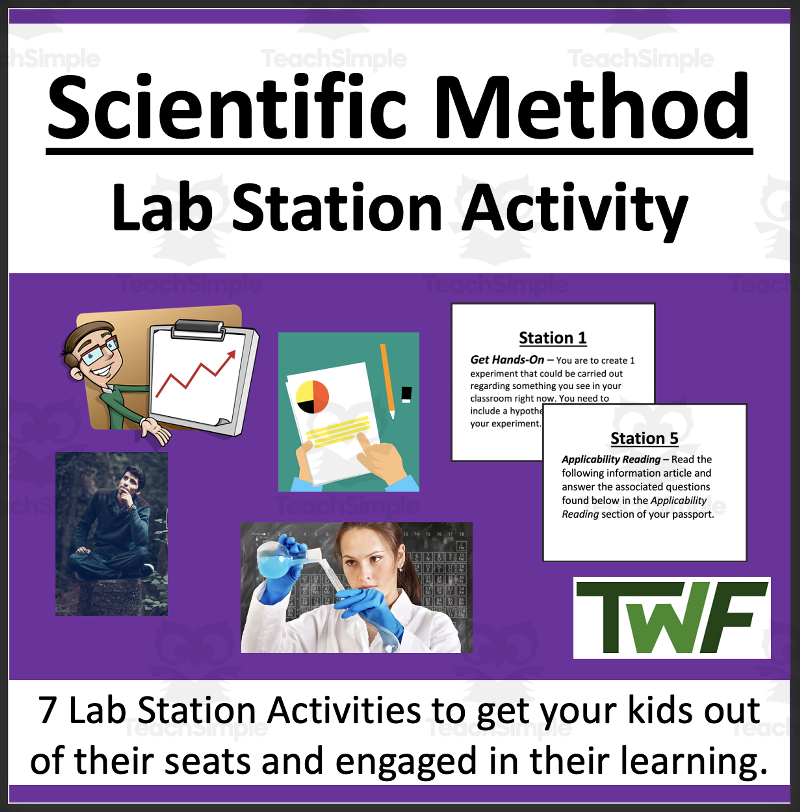
Scientific Method - Lab Station Activity
Science, Basic Science, Grade 6, 7, 8, 9, Labs, Experiments, Activities
Scientific Method - Lab Station Activity This lab station activity allows students to apply their understanding of the scientific method by moving around the classroom and working with peers. Stations focus on creating hypotheses and procedures, identifying variables, analyzing data and drawing conclusions, and formulating testable questions. The varied format facilitates unique learning and assessment opportunities. Typically 2-3 stations are graded per group in a 30-minute timeframe. Stations work well for introducing or reviewing the scientific method in middle and high school science classrooms. This general science resource can be adapted for use in chemistry, physics, biology, and other branches when customized hypotheses and testable questions are generated.
Author Teach With Fergy
Tags Lab Safety, Science Safety, Classroom Lab Safety, Lab Safety Lab Station, Lab Station Activity
GHS Pictogram Clipart – Glitter Design for Chemistry Classrooms & Craf
Common Core, Science, STEM, Chemistry, Physics, Life Sciences, Earth and Environmental Sciences, Technology, Basic Science, Resources for Teachers, Homeschool Templates, Homeschool Curriculum, Grade 10, 11, 12, Classroom Decor, Bulletin Boards, Posters, Teacher Tools, Word Walls, Door Decor, Experiments, Activities, Labs, Worksheets & Printables
GHS Pictogram Cliparts Glitter Design for Chemistry Classrooms, Crafts and Materials PNG If you’ve ever found the standard GHS (Globally Harmonized System) pictograms a bit too plain or uninspiring for your teaching materials, you’re not alone. That’s exactly why I decided to redesign them with a fresh twist. These 18 cliparts—9 in portrait and 9 in landscape format—combine the clarity of the official hazard symbols with a visually striking glitter effect. The colors remain true to the original system (red border, black symbol), but the glitter gives them a unique and eye-catching feel. I created each of these cliparts by hand in Procreate, with the classroom in mind. They’re still clearly recognizable as hazard pictograms, but they add a touch of design that fits beautifully into worksheets, posters, or digital resources. Ways you might use these in your classroom or materials: – Labeling chemical containers in a more engaging way – Gluing into student chemistry notebooks to support safety topics – Decorating posters or bulletin boards about lab safety rules – Enhancing worksheets or lab instructions visually – Adding to PowerPoint, Keynote, or Genially presentations – Integrating into digital learning platforms or safety training resources – Using them in flashcards for visual reinforcement Since you’ll receive both portrait and landscape versions (in PNG format with transparent backgrounds), you can easily adjust them to your layout or format. Whether you're printing or working digitally, the designs remain sharp and flexible. These glitter-style symbols were made to support safety awareness while also respecting visual design preferences—especially for teachers or students who appreciate a bit more flair in their materials. Usage rights: You may use the cliparts both privately and commercially within educational content, as long as your own contribution is clearly visible. Please do not resell the graphics individually. Wishing you lots of creativity while designing your materials, – Heike from @Lernfitness Did You Know? I teach with a certified therapy dog, and together we create a positive and welcoming learning environment. 🐶
Author Lernfitness
Rating
Tags Teaching Materials, Classroom Decorations, Decorative Elements, Cliparts, Illustrations, GHS, Science, Lab, Chemistry, Pictograms
Paper Towel Absorbency Test – Scientific Method Lesson
Science, Grade 6, 7, 8, 9, Experiments, Lesson Plans, Presentations, Activities
Paper Towel Absorbency Test - Scientific Method Lesson Included This engaging activity introduces students to the scientific method through an experiment involving a common household material - paper towels. Students will form a hypothesis about which paper towel will be the most absorbent. They will then collect data by placing different paper towel brands into a liquid to see the effect. Your students are provided with clear procedures that will guide them to record their results in a well-organized data table and graph. As a class, data can be compiled and percentages calculated to identify trends. Students learn important data analysis skills as they create graphs to visually represent the results. Educators will appreciate the post-experiment reflection questions that reinforce the purpose and process of the scientific method. This hands-on lab nurtures students' natural curiosity while teaching fundamental experimental design. With its real-world topic and tactile investigation, it motivates learners across various grades and learning styles. After completing the activity, students will better understand how to use observation, critical thinking, and representation of evidence to answer a testable question. Additionally, this resource includes my lesson on the Scientific Method. The lesson includes a detailed overview of what the scientific method is as well as how to implement it.
Author Teach With Fergy
Rating
Tags Scientific Method, Graphing, Test
Drone Data Detectives:Mastering UAVs for Environmental Mapping
Research, Community Building, Resources for Teachers, Science, Earth and Environmental Sciences, Earth Sciences, Environmental Science, Geology, Space, Life Sciences, Grade 2, 3, 4, 5, 9, 10, 11, 12, Activities, Centers, Experiments, Labs, Assessments, Teacher Tools, Graphic Organizers, Lesson Plans, Outlines, Literacy Readers
Get ready for the ultimate in drones and environmental science with "Drone Data Detectives: Mastering UAVs for Environmental Mapping & Climate Monitoring." The comprehensive high school STEM book on drones deepens the knowledge of teens into the world of Unmanned Aerial Vehicles, making them drone pilots, data analysts, and environmental stewards. This key resource covers everything needed to take raw drone data and develop actional insights in support of climate change monitoring, conservation, agriculture, and disaster response-from the basics in drone piloting and safety regulations to planning flights, and from the advanced sensors that capture aerial data, such as thermal imaging and multispectral cameras, to LiDAR. Packed full of real-world missions, ethical considerations, GIS analysis techniques, machine learning applications, and project-based learning, it is a no-brainer for aspiring scientists interested in remote sensing, photogrammetry, vegetation health metrics, and sustainable technology. This is an ideal textbook for grades 9-12 classrooms, great for homeschooling, or self-study, this book aims to fire up the theoretical teaching with practical skills in order to inspire the next generation of eco-innovators. Keywords: drone education for teens, UAV environmental mapping, climate monitoring drones, STEM books high school, data analysis environmental science, drone piloting guide, remote sensing technology, Why Parents/Schools Love It: Hands-On STEM Activities: Blends theoretical concepts with hands-on drone operations, developing critical thinking and real-world problem-solving capabilities, especially in environmental sectors such as climate change and biodiversity. Future Ready Career Preparation: It delves into areas such as conservation using drones, data science, which matches global career requirements in the field of Green Technology, sustainable development, among others. Encourages Environmental Awareness: Emphasizes responsible use of drones and awareness of global issues that encourage teens to play a role in protecting the planet with technology. Thorough and Readily Available: This text consists of 100 chapters perfectly suited for a classroom setting as it covers topics ranging from fundamental to advanced levels. Safe & Responsible Focus: It is more bent on rules, safety, and risk management, offering reassurance for educational UAV operations. Target Audience : After analyzing the content of the book in entirety—right from the introduction about basic components of drones to aerodynamics, followed by intermediate levels of topics such as sensors and data acquisition, advanced topics of machine learning and analysis of space, to practical implementations in conservation and climate observation—the book has been written for students in grades 9-12 (14-18 years of age), aiming at students expressing interest in the science of tech but gradually increasing in content across: For grade 9 and 10 students, one may focus on the fundamental chapters related to the history of drones, its parts, and the basics of piloting a drone. Grade 11/12 students: Engage with advanced topics such as multi-spectral indices, GIS integration, and photogrammetry. Designed for students who are deeply interested in environment/earth science, technology, and data sciences, and for students of STEM streams such as those in robotics and science clubs. Not designed for middle-school students due to technical complexity such as operations in the electromagnetic spectrum and calculations for NDVI, and nor for college students who would be doing research and hence would require research detail. Copyright/Terms of Use : This book is copied and adapted from Syed Hammad Rizvi. This Work/Way is intended Solely for Private Use. Neither the text nor any part of this Work/Way shall be copied, distributed, or sold. This means that no part of this Work/Way shall be placed on the Internet where it could be publicly accessed. If you want to Share it with your fellow teachers, you can buy additional licenses from Teachsimple. Thank you for Using Responsibly. “This product is happily brought to you by Syed Hammad Rizvi”
Author Creative Book Store
Rating
Tags DroneDataDetectives, MasteringUAVs, EnvironmentalMapping, ClimateMonitoring, UAVTechnology, DroneEducation, STEMBooks, HighSchoolSTEM, EnvironmentalScience, DronePiloting
Scientific Revolution Experiments Lesson
Social Studies, History, History: USA, Grade 9, 10, Activities, Experiments, Teacher Tools, Lesson Plans
Unlock the power of hands-on learning with our Scientific Revolution Experiments Lesson! This unique and engaging lesson is designed to help students grasp the significance of the scientific method and its role in shaping the Scientific Revolution. Carefully aligned with history and science national curriculum standards, students will participate in several experiments that took place during this transformative era. Provided in a comprehensive 19-page editable Word document, we offer an extensive lesson plan, objectives, worksheets, and clear directions for setting up each experiment . Students will step into the shoes of scientists as they investigate historical research questions utilizing real-world empirical methods. The required materials are common items that can be quickly borrowed from your school's science department. This lesson easily adapts to both block and regular class schedules while offering a dynamic alternative to traditional lectures on the subject matter. By emphasizing experiential learning over memorizing facts or relying on ancient sources like Aristotle, our effective approach sparks curiosity among learners while cultivating their appreciation for history's breakthrough moments. Cultivate your students' critical thinking skills by guiding them through an unforgettable journey into our fascinating past! Don't let this valuable educational resource slip away - visit TeachSimple.com to get your copy today!
Author Creative Educator
Tags Science Experiments, Scientific Revolution, Whole Group Experiments, Cross Curricular, Philosophies, Social Studies Stations, Observation, Notes
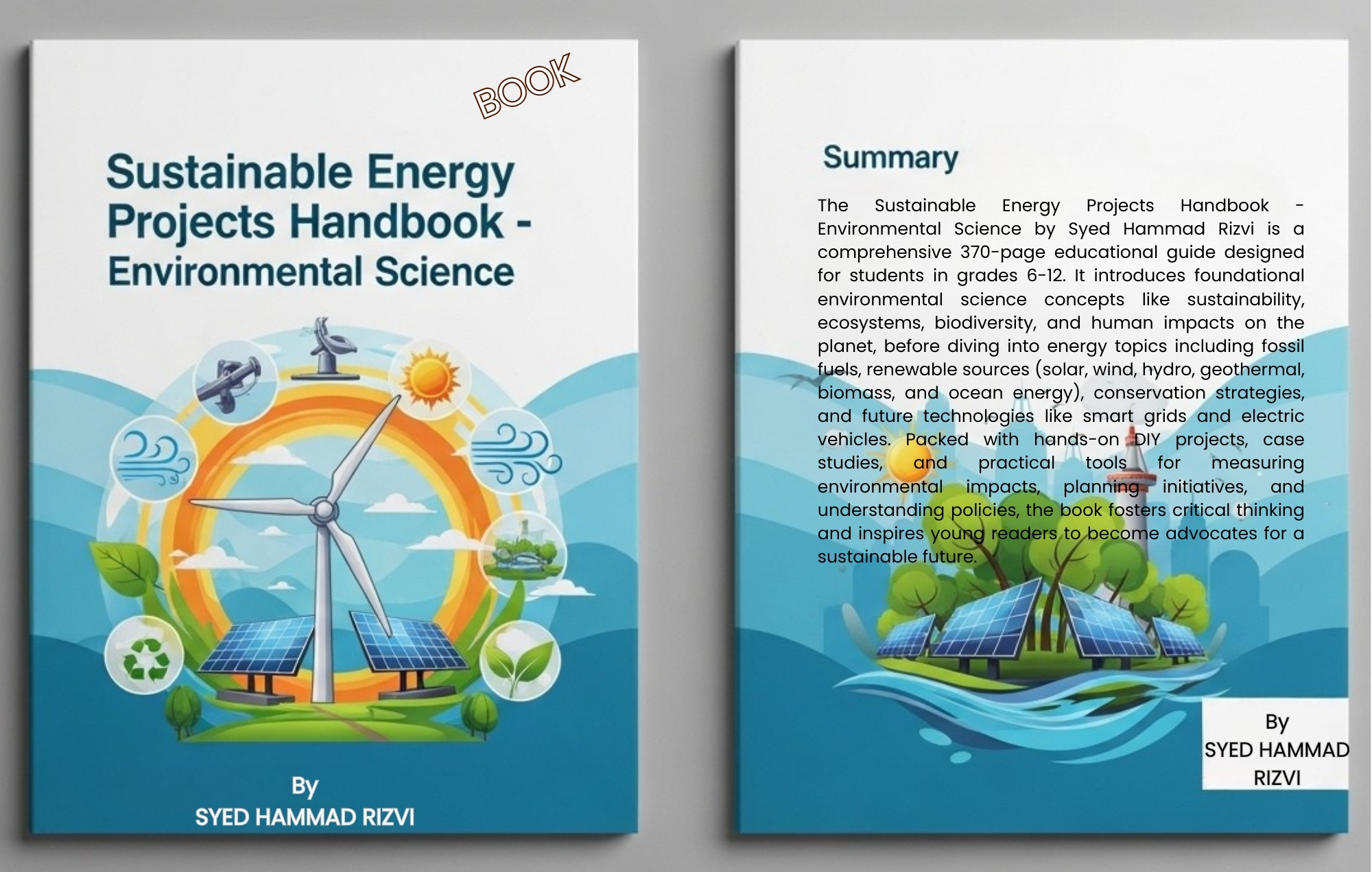
Sustainable Energy Projects Handbook - Environmental Science Book
Earth and Environmental Sciences, Science, Earth Sciences, Environmental Science, Geology, Space, Life Sciences, Human Body, Nature & Plants, Physics, Grade 6, 7, 8, 9, 10, 11, 12, Experiments, Activities, Projects, Lesson Plans, Teacher Tools, Workbooks, Worksheets & Printables
Explore the realm of environmental science and sustainable energies with the “Sustainable Energy Projects Handbook - Environmental Science” authored by Syed Hammad Rizvi - an essential handbook that must be present in every school library or educational institution offering environmental science courses for middle school and high school students interested in renewable energies and environmental conservation. This comprehensive 370-page handbook specifically written with grades 6-12 in mind addresses tough subject matters related to ecosystems, natural resources, water & carbon cycle processes, biodiversity conservation, fossil fuels effects, and developing contemporary renewable sources of solar photovoltaics, wind turbines, hydroelectricity, geothermal power, biomass biofuels, and ocean tidal power. Jam-packed with do-it-yourself projects (including solar oven designs & DIY models of wind turbines), case studies of successful community sustainable initiatives all over the world, as well as useful guides in project planning & budgeting analysis, risk assessment & management, product life cycle assessment & carbon footprint calculations, & methods of air & water pollutants control strategies included in this handbook encourage critical thinking & environmental education. It is STEM & SDGs compatible & suitable for teachers or parents looking for hands-on environmental science & sustainable education projects. Keywords: environmental science middle school textbook, sustainable energy projects for middle school students, renewable energy resource for teenagers, climate change lesson plans grades 6-12, environmental education book on STEM and environment, biodiversity and conservation guide, homemade solar wind hydro energy projects for kids, energy conservation education resource, eco-friendly ideas for a science project, environmental energy advocacy for a high school. Why Parents/Schools Love It : Comprehensive and Curriculum-Aligned: It encompasses a broad array of environmental science-related subjects from basic to advanced level projects, aligning perfectly and facilitating a complete understanding of sustainability and renewable energy. Hands-on Learning Activities: It includes various DIY and case studies that help students take part in hands-on learning by making difficult concepts such as solar and wind power more interesting and accessible to them. Fosters Environmental Responsibility: Equips young learners with knowledge about climate change, biodiversity, and values for preparing environmentally responsible global citizens for the future. Engaging and Accessible Language: Presented in clear, technical writing style that appeals to teens, with cross-discipline knowledge from biology, physics, as well as ethics. Adaptive to Various Settings: Designed to fit a multitude of settings, including educational use in the classroom, homeschooling, science fairs, or even clubs, offering tools for measuring the impact of the project. Target Students/Classes : On the basis of a comprehensive assessment of the material, structure, and language of the book, which varies from the basic notions of sustainability, ecosystems, energy fundamentals, renewables, and reaches its climax with the advanced notions of project development, assessment of the environmental implications of such projects (LCA, footprints, etc.), policies, to action, the intended recipients of the material’s scope and focus can be determined to be students between the ages of 11-18, i.e. from grades 6 to 12. Grades 6-8 (Middle School): Best for introductory classes for environmental science, basic cycles, human effects, biodiversity, and simple energy principles, with the goal of creating engagement through DIY projects. Grades 9-12 (High School): More suited for advanced classes in environmental science, earth science, or AP environmental science, focusing on renewable technologies, integration, feasibility analysis, risk analysis, and goals for sustainability in more real-world examples and discussions. Again, this would correlate with the intended audience of grades 6-12 and the progressive level of complexity from the book. Copyright/Terms of Use : This book has been copyrighted by Syed Hammad Rizvi. This educational resource may be used for personal and single class use. You may not, under any circumstances, reproduce, distribute, and sell any part of this resource. This means you may not post this resource on the Internet so it could be downloaded from anywhere. If you would like to share this resource with others, you can purchase more licenses through Teachsimple. Thank you for following the guidelines for use! It is all happily offered by Syed Hammad Rizvi
Author Creative Book Store
Rating
Tags SustainableEnergy, EnvironmentalScience, RenewableEnergy, SolarEnergy, WindEnergy, HydroPower, GeothermalEnergy, BiomassEnergy, OceanEnergy, ClimateChange
Nonrenewable Energy Sources Lab Station Activity
Science, Chemistry, Grade 5, 6, 7, 8, 9, 10, 11, Labs, Experiments, Activities
Nonrenewable Energy Sources Lab Station Activity An expressive teaching resource fashioned to infuse active, hands-on learning in your science classroom. This Lab Station Activity is an engaging, interactive dive into nonrenewable energy sources and their impacts. It is tailored for grades 5 to 11, aligning with the NGSS standards MS-ESS3-4, MS-ESS3-5, and HS-ESS3-4.. Educational Approach The activity embraces a diversified approach, integrating multiple modes of learning at each stage. This not only ensures student involvement but also caters for all kinds of learners regardless of their strength or preferred style. Fields covered include biomass, fossil fuels, and nuclear energy among other topics; along with electricity generation and global warming aspects that highlight real-world application. The Stations Set Up: Drawing/Building: Students engage in creative processes at this station. Tutorial Hunt: Here, students find answers to specific questions surrounding non-renewable energy. Perspective Sharing:Socratic-style interaction where students give written opinions/thoughts on certain issues mentioned in prompts given. Literacy Appraisal: Hones reading comprehension as students explore topical news about real life implications of non-renewable energy sources. Knowledge Test : Learners assess self-understanding through multiple choice questions related to the subject matter . Exciting Multimedia : Students engage with short, educational video clips about non-renewable energy sources and try to answer questions based on these Additional Complementary Activities : To ensure the energetic tempo is unbroken while transitioning between stations, this activity includes: word searches and word scrambles. User-Friendly Format : The product comes in an easy-to-use format that requires minimal prep—just print out the cards and distribute them around your classroom! It's fully editable so you have leeway to make it relatable to your teaching style or class needs. An answer key likewise avails a compact verifying tool for responses when needed. Pedagogical Flexibility : This active learning tool provides flexibility by catering for large-group instruction during class time as well as small collaborative groups. It can also be given as homework for individual students .
Author Teach With Fergy
Tags Nonrenewable Energy, Lab Station Activity, Hands-on Learning, NGSS-aligned, Interactive, Energy Labs Middle School
Nervous System – Lab Station Activity
Science, Life Sciences, Biology, Grade 8, 9, 10, 11, 12, Labs, Experiments, Activities
This fully editable Lab Station on The Nervous System is meant to get your students out of their seats and engaged in the content. Each station not only offers a unique opportunity to test your students knowledge (offer an opinion, answer questions based on a video or reading, draw, etc.), but also provides a fantastic learning opportunity where your kids are learning through assessment. Each station comes with a description card while some also contain more detailed instructions, a reading, questions to answer, etc. Students are equipped with a recording sheet (passport) to write their answers. There is almost no prep for you. Simply print the cards, lay them out around the room and you're all set. An answer key is also provided where applicable. This lab activity covers: - Structure, Parts and Functions of the Nervous System - Structure, Types and Functions of the Neuron - Reflex Arc - Nerve Signal Transmission and Action Potential - The Schwann Cell and Action Potential - Sodium-Potassium Pump - Neurotransmitters and its Functions ---------------------------------------------- Bonus Activities: To ensure your students don’t have any downtime between stations, your lab also includes a 10-word word scramble and word search, both with an answer key. You can use them as part of their mark, as a bonus so it’s not mandatory, etc. However you choose to use it, it will ensure that your students are always busy and never idle. Note: For stronger classes, I give the word scramble and for weaker ones, the word search. ----------------------------------------------- How do the Lab Stations work? Each station is specially designed to be a unique complement to the material while at the same time, provide a valuable learning experience. Below is an overview of how each station works. In your activity , each will be tailored to the specific content. Station 1: Get Hands-On – using their creative skills, students are required to draw or build. Station 2: Research – using a classroom computer or their own device, students must research a specific question/issue surrounding the topic. Station 3: Explain yourself – students write down an opinion to a question in paragraph form. Station 4: Rest Station - students can use this time to catch up on work they didn't have time to complete at a previous station or prepare themselves for an upcoming one. Station 5 - Applicability reading – students read a short passage from an article, website, etc. which directly connects the classroom content to a real life application. Station 6: Test your knowledge – students answer 5 multiple choice questions then provide a written explanation for how/why they came to their conclusion. Station 7: Learn from the expert – using a classroom computer or their own device, students must watch a short video clip and answer the associated questions. They may stop, rewind and restart as often as they like during the time frame. Station 8 - Rest Station. Station 9: Become the question master – Students must create 2 multiple-choice questions, 2 true/false questions and 1 short answer question. Students must also supply the answers. ------------------------------- You might also be interested in my other lab station activities Biology: • Cell and the Cell Theory • The Human Digestive System • The Circulatory System • The Human Respiratory System • Mitosis and the Cell Cycle • Cellular Respiration and Photosynthesis • Photosynthesis • Cancer: Cell Division Gone Wrong - Volume I • Cancer: Cell Division Gone Wrong - Volume II • Cell Membrane and Transport • Hearing and the Human Ear • The Human Eye • Genetic Material: DNA and RNA • The Nervous System • Energy Flow In Ecosystems Ecology and the Environment: • Ecosystems • The Classification of Living Things • Biodiversity and Invasive Species • The Carbon and Water Cycle • Climate Change • Photosynthesis • Cellular Respiration and Photosynthesis • Ecological Succession • Plant Sexual and Asexual Reproduction • Earth's Seasons • Interactions Within Ecosystems Physics: • Newton's Three Laws of Motion • Kinetic and Gravitational Potential Energy • Current Electricity and Circuit Diagrams • Static Electricity • Light Optics and the Production of Light • Sound, Sound Energy and Speed • One and Two-Dimensional Motion • Uniform Acceleration • How Planes Fly • Refraction • Friction • Energy and Its Forms • Density and Buoyancy Space Science: • The Life and Death of Stars • The Moon and its Phases • Life In Space • Our Solar System • Solar and Lunar Eclipse • Earth's Seasons • Asteroids, Comets and Meteors Chemistry: • Atomic Model, Notation and Atoms • Chemical Reactions and Balancing Equations • Molecular and Ionic Compounds • Physical and Chemical Properties & Changes • Acids, Bases, and Neutralization Reactions • The Periodic Table • Single and Double Displacement Reactions • Balancing Chemical Equations • Synthesis, Decomposition and Combustion Reactions • Atomic Theory, Atomic Structure and Isotopes • Types of Bonds and Intermolecular Forces • The Mole/Avogadro's Number • Density and Buoyancy These station cards are meant to be used as a lab activity but can also be utilized in a review task before a test or a quiz. Used either way, your students will love it! I know mine do and I'm telling you from first-hand experience as I've used this activity in my own class. Thank you for your interest in my products. If you have any questions, please send me an email - devon@teachwithfergy.com
Author Teach With Fergy
Tags Nervous, System, Neurons, Disorders, Lab Station, Nervous System Activity, Nervous System Lab, Nervous System Activities, Nervous System Activities Middle School
Chemistry Binder Covers – Templates for Classroom Use
Life Sciences, Science, STEM, Inventors, Basic Science, Chemistry, Special Resources, Montessori, Classroom Management, Resources for Teachers, Homeschool Templates, Grade 7, 8, 9, 10, 11, 12, Worksheets, Worksheets & Printables, Teacher Tools, Projects, Activities, Workbooks, Drawing Templates & Outlines, Templates, Graphic Organizers, Experiments
Chemistry Binder Covers – Templates for Classroom Use Organize your chemistry handouts, notes, and units with visual clarity Simple and flexible templates to help organize your chemistry materials In my chemistry classes, it can be a challenge to keep things organized - especially when it comes to multiple units, lab notes, worksheets and review materials. To make it easier for my students and myself, I designed these simple binder sleeves. There are 12 different pages. The covers have a clean, colorful blob layout that is friendly but not distracting. I usually print them out and use them as cover sheets or as dividers in folders for students or teachers. They also work well for digital learning environments, e.g. as section covers in PDF files or on classroom platforms. I like that the color scheme allows students to quickly find what they are looking for, and it brings a little more structure to a subject that is often riddled with formulas and technical terms. When used as cover sheets, students can choose their favorite color for their cover sheet. This resource is handy - and has saved me a lot of time in lesson preparation and follow-up. What’s included: 12 chemistry-themed cover pages different colors zu choose as a cover sheet as a divider between the individual chemistry topics I've printed these on colored paper for my own binder and also used them digitally in student notebooks. Works well for both teacher organization and student-facing materials. 📍 Best wishes, Heike from Lernfitness Chemistry teacher (Biology teacher, Math teacher) in Germany Did You Know? I teach with a certified therapy dog, and together we create a positive and inspiring learning environment. 🐶✨
Author Lernfitness
Rating
Tags Science, STEM, Chemistry, Binder, Template, Cover Sheet, Organizer, Organize, GoodNotes, PDF
Periodic Table – Lab Station Activity
Science, Chemistry, Grade 9, 10, 11, 12, Labs, Experiments, Activities
This fully editable Lab Station Activity on the Periodic Table is meant to get your students out of their seats and engaged in the content. Each station not only offers a unique opportunity to test your students' knowledge (offer an opinion, answer questions based on a video or reading, draw, etc.), but also provides a fantastic learning opportunity where your kids are learning through assessment. Each station comes with a description card while some also contain more detailed instructions, a reading, questions to answer, etc. Students are equipped with a recording sheet (passport) to write their answers. There is almost no prep for you. Simply print the cards, lay them out around the room and you're all set. An answer key is also provided where applicable. This lab activity covers: - The Periodic Table - The History behind its creation ---------------------------------------------- Bonus Activities: To ensure your students don’t have any downtime between stations, your lab also includes a 10-word word scramble and word search, both with an answer key. You can use them as part of their mark, as a bonus so it’s not mandatory, etc. However you choose to use it, it will ensure that your students are always busy and never idle. Note: For stronger classes, I give the word scramble and for weaker ones, the word search. ----------------------------------------------- ---------------------------------------------- How do the Lab Stations work? Each station is specially designed to be a unique complement to the material while at the same time, provide a valuable learning experience. Below is an overview of how each station works. In your activity , each will be tailored to the specific content. Station 1: Get Hands-On – using their creative skills, students are required to draw or build. Station 2: Research – using a classroom computer or their own device, students must research a specific question/issue surrounding the topic. Station 3: Explain yourself – students write down an opinion to a question in paragraph form. Station 4: Rest Station - students can use this time to catch up on work they didn't have time to complete at a previous station or prepare themselves for an upcoming one. Station 5 - Applicability reading – students read a short passage from an article, website, etc. which directly connects the classroom content to a real life application. Station 6: Test your knowledge – students answer 5 multiple choice questions then provide a written explanation for how/why they came to their conclusions. Station 7: Learn from the expert – using a classroom computer or their own device, students must watch a short video clip and answer the associated questions. They may stop, rewind and restart as often as they like during the time frame. Station 8 - Rest Station. Station 9: Become the question master – Students must create 2 multiple-choice questions, 2 true/false questions and 1 short answer question. Students must also supply the answers. ------------------------------- You might also be interested in my other lab station activities Biology: • Cell and the Cell Theory • The Human Digestive System • The Circulatory System • The Human Respiratory System • Mitosis and the Cell Cycle • Cellular Respiration and Photosynthesis • Photosynthesis • Cancer: Cell Division Gone Wrong - Volume I • Cancer: Cell Division Gone Wrong - Volume II • Cell Membrane and Transport • Hearing and the Human Ear • The Human Eye • Genetic Material: DNA and RNA • The Nervous System • Energy Flow In Ecosystems Ecology and the Environment: • Ecosystems • The Classification of Living Things • Biodiversity and Invasive Species • The Carbon and Water Cycle • Climate Change • Photosynthesis • Cellular Respiration and Photosynthesis • Ecological Succession • Plant Sexual and Asexual Reproduction • Earth's Seasons • Interactions Within Ecosystems Physics: • Newton's Three Laws of Motion • Kinetic and Gravitational Potential Energy • Current Electricity and Circuit Diagrams • Static Electricity • Light Optics and the Production of Light • Sound, Sound Energy and Speed • One and Two-Dimensional Motion • Uniform Acceleration • How Planes Fly • Refraction • Friction • Energy and Its Forms • Density and Buoyancy Space Science: • The Life and Death of Stars • The Moon and its Phases • Life In Space • Our Solar System • Solar and Lunar Eclipse • Earth's Seasons • Asteroids, Comets and Meteors Chemistry: • Atomic Model, Notation and Atoms • Chemical Reactions and Balancing Equations • Molecular and Ionic Compounds • Physical and Chemical Properties & Changes • Acids, Bases, and Neutralization Reactions • The Periodic Table • Single and Double Displacement Reactions • Balancing Chemical Equations • Synthesis, Decomposition and Combustion Reactions • Atomic Theory, Atomic Structure and Isotopes • Types of Bonds and Intermolecular Forces • The Mole/Avogadro's Number • Density and Buoyancy These station cards are meant to be used as a lab activity but can also be utilized in a review task before a test or a quiz. Used either way, your students will love it! I know mine do and I'm telling you from first-hand experience as I've used this activity in my own class. Thank you for your interest in my products. If you have any questions, please send me an email - devon@teachwithfergy.com
Author Teach With Fergy
Tags Chemistry, Periodic Table, Elements, Metals, Lab Station, The Periodic Table Lab, The Periodic Table Lab Answers, Periodic Table Activities, Periodic Table Lab Answer Key
Ecological Succession – Lab Station Activity
Science, Life Sciences, Biology, Grade 6, 7, 8, 9, 10, Labs, Experiments, Activities
This fully editable Lab Station on Ecological Succession is meant to get your students out of their seats and engaged in the content. Each station not only offers a unique opportunity to test your students' knowledge (offer an opinion, answer questions based on a video or reading, draw, etc.), but also provides a fantastic learning opportunity where your kids are learning through assessment. Each station comes with a description card while some also contain more detailed instructions, a reading, questions to answer, etc. Students are equipped with a recording sheet (passport) to write their answers. There is almost no prep for you. Simply print the cards, lay them out around the room and you're all set. An answer key is also provided where applicable. This lab activity covers: - Primary Succession - Secondary Succession - The Role of Forest Fires in an Ecosystem - Pond Succession ---------------------------------------------- Bonus Activities: To ensure your students don’t have any downtime between stations, your lab also includes a 10-word word scramble and word search, both with an answer key. You can use them as part of their mark, as a bonus so it’s not mandatory, etc. However you choose to use it, it will ensure that your students are always busy and never idle. Note: For stronger classes, I give the word scramble and for weaker ones, the word search. ---------------------------------------------- How do the Lab Stations work? Each station is specially designed to be a unique complement to the material while at the same time, provide a valuable learning experience. Below is an overview of how each station works. In your activity , each will be tailored to the specific content. Station 1: Get Hands-On – using their creative skills, students are required to draw or build. Station 2: Research – using a classroom computer or their own device, students must research a specific question/issue surrounding the topic. Station 3: Explain yourself – students write down an opinion to a question in paragraph form. Station 4: Rest Station - students can use this time to catch up on work they didn't have time to complete at a previous station or prepare themselves for an upcoming one. Station 5 - Applicability reading – students read a short passage from an article, website, etc. which directly connects the classroom content to a real life application. Station 6: Test your knowledge – students answer 5 multiple choice questions then provide a written explanation for how/why they came to their conclusions. Station 7: Learn from the expert – using a classroom computer or their own device, students must watch a short video clip and answer the associated questions. They may stop, rewind and restart as often as they like during the time frame. Station 8 - Rest Station. Station 9: Become the question master – Students must create 2 multiple-choice questions, 2 true/false questions and 1 short answer question. Students must also supply the answers. ------------------------------- You might also be interested in my other lab station activities Ecology and the Environment: • Ecosystems • The Classification of Living Things • Biodiversity and Invasive Species • The Carbon and Water Cycle • Climate Change • Photosynthesis • Cellular Respiration and Photosynthesis • Ecological Succession • Plant Sexual and Asexual Reproduction • Earth's Seasons • Interactions Within Ecosystems Biology: • Cell and the Cell Theory • The Human Digestive System • The Circulatory System • The Human Respiratory System • Mitosis and the Cell Cycle • Cellular Respiration and Photosynthesis • Photosynthesis • Cancer: Cell Division Gone Wrong - Volume I • Cancer: Cell Division Gone Wrong - Volume II • Cell Membrane and Transport • Hearing and the Human Ear • The Human Eye • Genetic Material: DNA and RNA • The Nervous System • Energy Flow In Ecosystems Physics: • Newton's Three Laws of Motion • Kinetic and Gravitational Potential Energy • Current Electricity and Circuit Diagrams • Static Electricity • Light Optics and the Production of Light • Sound, Sound Energy and Speed • One and Two-Dimensional Motion • Uniform Acceleration • How Planes Fly • Refraction • Friction • Energy and Its Forms • Density and Buoyancy Space Science: • The Life and Death of Stars • The Moon and its Phases • Life In Space • Our Solar System • Solar and Lunar Eclipse • Earth's Seasons • Asteroids, Comets and Meteors Chemistry: • Atomic Model, Notation and Atoms • Chemical Reactions and Balancing Equations • Molecular and Ionic Compounds • Physical and Chemical Properties & Changes • Acids, Bases, and Neutralization Reactions • The Periodic Table • Single and Double Displacement Reactions • Balancing Chemical Equations • Synthesis, Decomposition and Combustion Reactions • Atomic Theory, Atomic Structure and Isotopes • Types of Bonds and Intermolecular Forces • The Mole/Avogadro's Number • Density and Buoyancy These station cards are meant to be used as a lab activity but can also be utilized in a review task before a test or a quiz. Used either way, your students will love it! I know mine do and I'm telling you from first-hand experience as I've used this activity in my own class. Thank you for your interest in my products. If you have any questions, please send me an email - devon@teachwithfergy.com
Author Teach With Fergy
Tags Forest, Fire, Ecosystem, Soil, Ecology, Ecological Succession Lesson Plan