



3,926 products added recently
Page 4 - Preschool Grade Science Projects
Introduce your preschool students to the world of science with activities designed for their developmental level. This collection includes exploring textures, color mixing, and observing weather changes. By integrating these projects into your lessons, you can encourage natural curiosity and foundational scientific thinking.

 Show filters


Photosynthesis Lesson | Middle School Lesson and Infographic Activity
Science, Basic Science, Earth and Environmental Sciences, Life Sciences, Nature & Plants, Biology, Grade 6, 7, 8, Activities, Projects, Lesson Plans, Teacher Tools, Presentations, Worksheets
Introduce students to the essentials of Photosynthesis and its connection to Cellular Respiration with this ready-to-use science lesson designed for Grades 6–8. This middle school resource provides both foundational knowledge and opportunities for scientific discussion and inquiry-based learning. ✅ Covers Photosynthesis and Cellular Respiration using interactive slides and critical thinking questions ✅ Includes Editable Presentations, Auto-Graded Exit Ticket , Infographic Task, and Student Notes ✅ Aligned to NGSS Standards MS-LS1-5, MS-LS1-6, MS-LS1-7, and MS-LS2-3 ✅ No-Prep Resource with built-in videos and fill-in-the-blank guided notes to support active learning This lesson package is comprehensive and student-friendly. It includes everything needed for a full class session or more, offering a smooth and engaging way to teach key life science concepts. Students will explore how energy from the sun drives life on Earth, how plants process that energy, and how it's transferred through ecosystems. Topics covered in the lesson include: The sun as Earth’s energy source Distribution of energy on Earth The structure and role of chloroplasts The function of chlorophyll Why leaves change color The processes of Photosynthesis and Cellular Respiration ATP as a cellular energy carrier How Photosynthesis supports all life on Earth What’s inside the download: A teacher slideshow with full content and answers A student version of the slideshow with fill-in-the-blank sections An auto-graded 4-question Exit Ticket for quick assessment Two instructional videos embedded within the presentation An infographic-based activity to reinforce learning A printable student worksheet to guide note-taking and discussion Standards alignment: MS-LS1-5 : Students examine how plants rely on air and water to build materials needed for growth, tying into carbon dioxide and water’s role in photosynthesis. MS-LS1-6 : Learners explain how photosynthesis drives the flow of matter and energy in living systems. MS-LS1-7 : The lesson supports modeling how food undergoes chemical reactions in cellular respiration to release energy and support growth. MS-LS2-3 : Students explore how energy and matter cycle between organisms and their environment. The student notes are designed to maximize participation without overwhelming learners with too much writing. Strategic fill-in-the-blank prompts help students focus on key vocabulary and ideas while leaving time for group discussion, exploration, and deeper analysis. These prompts are clearly marked in the teacher copy to make instruction seamless. Whether you’re teaching in person or online, this lesson gives you everything you need to introduce photosynthesis and cellular respiration in a clear, structured, and student-centered way.
Author Teach With Fergy
Rating
Tags Photosynthesis, Cellular Respiration, Biology Lesson, Chloroplast, Plants

The Electric Home - Electricity PBL Project
Science, Physics, Grade 8, 9, 10, Activities, Projects
I created this unit because I wanted to inject some real-life information into our electricity unit which is usually just filled with notes, worksheets, and other activities. I decided instead to do a flipped unit whereby I'd provide my students with all their notes ahead of time then use our class time to work on our project. This project will work very well for a wide range of grades as it can be easily tailored to fit your class. It's fully editable so you can add, remove, or change anything that you don't think will fit well with your class. To ensure it meets your classroom needs, I've included two different submission and marking criteria. One pair for lower levels and one for higher-level learners. Furthermore, this project can be given to different grade levels and all that needs to be altered are the teacher's expectations and standards while marking. Myinspirationfor this unit is the company, Tesla. I'm a self-proclaimed fanboy of the company and love their innovations and their desire for a greener future. However, as your students progress through this unit, they will discover other means of energy production, storage, and use. The project is broken down into two parts. The first part has the students researching the creation, use, and storage of solar energy. This should take between 8-12 days. The second part involves them putting that knowledge to use as they create a tangible representation of what they've learned. For this portion of the project, I gave them 3 class periods plus 10 days at home for a total of 11-15 class periods plus 10 additional days at home. This project covers the following NGSS: • MS-PS3-2 • MS-PS3-3 • HS-PS3-1 • HS-PS3-2 • HS-PS3-3 • HS-PS3-5 • MS-ESS3-3 • HS-ESS3-4 I also require that they share their Google Drive Project folder with me so that I could periodically check in on their progress. You may want to assign a grade for this as well. Their Unit This electricity unit is a mix of content and project-based learning (PBL) with an emphasis on PBL. Students will get the majority of class time to work on their project. During this time, you will have access to Chromebooks (netbooks,ipads, etc.) and will be given time to design and think about their model. You may also build during this time as well. Project Marks: - Poster - Model Research Component - ONE component will be looked at every 2 to 3 days. - If they finish before the allocated time ends, encourage them to keep working - Dive deeper into their research - Find pictures and paste them into their Doc - Find relevant videos and include them in their Doc I hosted this project on myGoogle Classroom site. If you're not familiar with Google Classroom, check out my post where I show you how to get your Google Classroom set up in 3 minutes . I highly recommend Google Classroom plus, it's free! For this project, I have my students working in groups of 2. If they miss a day, it's very easy to stay up-to-date via our Google Classroom site. To ensure students weren't rushing ahead, I would only upload the files below when we were ready to move on. I allocated between 2-3 days per "Day" below depending on the speed my students were working. • The Electric Home - Overview and Day 1 • The Electric Home - Day 2 • The Electric Home - Day 3 • The Electric Home - Day 4 • The Electric Home - Final Submission • The Electric Home - Rubric Each file is fully editable and is included in your download. This project will provide your students with a real-life example of green electricity use that they will keep with them after they leave your class.
Author Teach With Fergy
Tags Electric House, PBL Project, Electricity Project, Physical Science, Group Projects, Electric House Project, Electricity Project Ideas, Teach Electricity, Project On Electricity, Teaching Electricity, 4th Grade Electricity Projects, Electric House Project Ideas
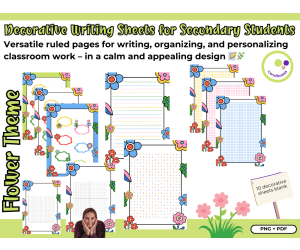
Decorative Writing Sheets for Secondary Students
Science, Seasons, Holiday & Seasonal, Summer, Spring, Common Core, Handwriting, Writing, ELA, Math, Homeschool Templates, Activities, Worksheets & Printables, Worksheets, Projects, Classroom Decor, Bulletin Boards, Posters, Teacher Tools, Templates, Coloring Pages
Decorative Writing Sheets for Secondary Students Versatile ruled pages for writing, organizing, and personalizing classroom work – in a calm and appealing design 📝🌿 PNG + PDF These decorative worksheets were created with older students in mind. They combine a clean, thoughtful layout with subtle design elements that make them suitable for many classroom contexts – from creative writing to structured math problems. Each page features light, subject-neutral decorations and matching rulings. The rulings are clearly visible but not too dominant, and their colors are coordinated with the overall design. This small detail gives the pages a more polished, motivating look – without distracting from the actual task. What’s included: A selection of printable decorative writing sheets with lines All designs with age-appropriate, calm visuals Rulings in matched color tones for a cohesive appearance PDF format – great for print or digital notebooks (e.g. GoodNotes, Notability) PNG Format Ideas for classroom use: I’ve used these kinds of pages in various ways – for summaries, vocabulary practice, reflections, and even small-scale presentations. Some students appreciate having a “special” page to write on for final drafts or project titles. They’re also useful for open tasks: students might choose how to use the space, which supports creative thinking and independence. Because the sheets are not content-bound, they work well across subjects. Whether you’re teaching language arts, science, or social studies, you can adapt them to your lesson. I’ve even let students use them for personal notes or as covers for their portfolios. They also serve well during quieter phases, in tutoring settings, or as part of personalized learning folders. And for digital classrooms, students can fill them out using a stylus or keyboard. A simple, flexible resource – and a small visual upgrade that shows students their work matters. Best, Heike from Lernfitness Did You Know? I teach with a certified therapy dog, and together we create a positive and welcoming learning environment. 🐶
Author Lernfitness
Rating
Tags Blank Writing, Activity Sheets, Spring, Summer, Decorative Pages, Writing, Drawing, Custom Classroom Materials, Seasonal, Worksheets
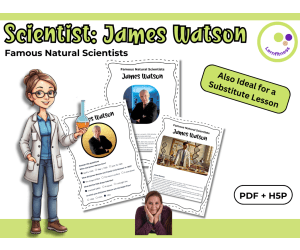
Scientist James Watson – Fact Sheet, Quiz & Interactive PDF incl. H5P
Life Sciences, Science, STEM, History, Social Studies, Biographies, Inventors, Basic Science, Physics, Biology, Grade 6, 7, 8, 9, 10, 11, Worksheets, Worksheets & Printables, Quizzes, Quizzes and Tests, Teacher Tools, Projects, Activities
Scientist James Watson - Fact Sheet, Quiz & Interactive Version (PDF & H5P) James Watson – Discovering the DNA Double Helix Fact Sheet, Quiz & Interactive Exercises (PDF + H5P) This 45-minute resource introduces students in grades 7–10 to James Watson and his role in one of the most important scientific discoveries of the 20th century: the structure of DNA. Most students have heard of DNA, but they often don’t know much about how its double helix structure was uncovered – or who was involved in the process. Together with Francis Crick, and building on key work by Rosalind Franklin, Watson helped lay the groundwork for modern genetics. To make this big topic more manageable in class, I’ve put together a short, ready-to-use lesson. It includes an informational text, a fact sheet, quiz questions with answers, and a few creative tasks that get students thinking and engaging with the content. All materials are included in both color and black-and-white versions for flexible use – whether printed or on-screen. What’s included: A short, accessible text on James Watson and the discovery of DNA A fact sheet to help students organize and reflect on the key ideas Quiz questions (with solutions) to check understanding A creative task where students come up with their own questions and discuss them in pairs Formats: PDF for printing or digital use, plus an H5P version for interactive learning Answer key included I’ve used this in biology lessons as part of a genetics unit, but it also works well when exploring the history of science or how scientific discoveries are made. It’s especially helpful when time is short and you want something that’s both informative and easy to implement – no extra prep needed. 🚀 Download now and bring the legacy of James Watson into your biology lessons today! 📍 Best wishes, Heike from Lernfitness Did You Know? I teach with a certified therapy dog, and together we create a positive and inspiring learning environment. 🐶✨
Author Lernfitness
Tags Science, Biology, Famous Scientists Lesson, H5P, Interactive Science Exercises, STEM, History, Scientists, Physiology, James Watson
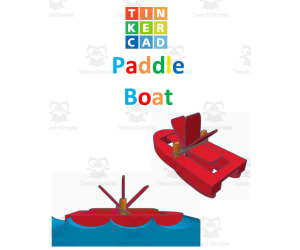
TinkerCAD step-by-step instructions for Paddle Boat
Special Resources, Science, Technology, Engineering, Grade 5, 6, 7, 8, 9, 10, 11, 12, Activities, Projects
TinkerCAD step-by-step instructions for Paddle Boat. Students only need to know the bare basics to complete this. I tested this with a fifth-grade class and most could complete it with no help. Designed to print with no supports for easy printing. Include TinkerCAD tool guide! Has a content page. Great beginners’ tool for learning to make 3D models and learn TinkerCAD. TinkerCAD is a free online program that makes 3D model that work on 3D printers, laser etching machines, water jets, plasma cutters and many more!! Tinkercad is an easy-to-use, browser-based computer-aided design (CAD) software developed by Autodesk. It is primarily used for creating and designing 3D models, particularly in the field of 3D printing. Tinkercad is popular among beginners and hobbyists due to its intuitive interface and simplified tools. Here are some key features and uses of Tinkercad: 1) 3D Modeling: Tinkercad allows users to create 3D models by combining basic shapes and manipulating them using tools such as scaling, rotating, and moving. It provides a wide range of primitive shapes like cubes, spheres, cylinders, and more, which can be customized to create complex designs. 2) Design Customization: Users can apply various modifications to their designs, including resizing, rounding edges, adding text, creating holes, and aligning objects. These tools help in refining the models and making them suitable for specific purposes or fitting them with other components. 3)Import and Export: Tinkercad supports the import of existing 3D models in STL and OBJ formats, allowing users to modify and incorporate them into their designs. It also offers export options to save the designs as STL files, which are widely used in 3D printing. 4) Collaboration and Sharing: Tinkercad provides features for collaboration, allowing multiple users to work on the same project simultaneously. It enables real-time sharing and editing, making it convenient for team projects or educational purposes. 5) Electronics Integration: One notable aspect of Tinkercad is its integration with electronics. It offers a range of electronic components, including resistors, LEDs, motors, and microcontrollers, which can be used to create interactive models and prototypes. Users can simulate circuit connections and test their designs before implementation. 6) Educational Tool: Tinkercad is widely used in educational settings, particularly for teaching students about 3D design, modeling, and prototyping. Its simple interface and beginner-friendly tools make it accessible to users of all ages and skill levels. Overall, Tinkercad is a versatile and user-friendly CAD software that allows individuals to create and customize 3D models. Whether you're a hobbyist, student, or professional, Tinkercad provides a valuable platform for designing, prototyping, and exploring the world of 3D printing and modeling. Total pages: 30 pages Commands to be learned: Group Ungroup Align Mirror Duplicate Holes Solids Rotate Move Drop Subjects: Geometry Engineering Career and technical education Types: Projects Handouts Printables
Author MontyWorks
Tags TinkerCAD, 3D Printing, 3D Printer, Projects

Theodor Schwann – Fact Sheet, Quiz & Interactive PDF (incl. H5P)
Life Sciences, Science, Biology, STEM, History, Social Studies, Biographies, Inventors, Basic Science, Nature & Plants, Grade 6, 7, 8, 9, Worksheets, Worksheets & Printables, Quizzes, Quizzes and Tests, Teacher Tools, Projects, Activities
Theodor Schwann – Fact Sheet, Quiz & Interactive Version (PDF & H5P) This lesson-ready material introduces students to Theodor Schwann 🧪 and his contribution to one of the most important concepts in biology: the cell theory 🔬. While many students in grades 7 to 10 already know that all living things are made of cells, they often don’t know where this insight comes from – or who helped uncover it. In this lesson, students explore the work of Theodor Schwann, who, together with Matthias Schleiden, laid the foundation for modern cell biology. The materials are designed to fit into a 45-minute session ⏱️ and work well in both print and digital formats. I’ve used them in regular biology lessons as well as for independent learning phases or when a quick but meaningful sub plan was needed. The resource includes a short, accessible reading passage about Schwann’s scientific discoveries. After reading, students fill in a fact sheet 📝 to summarize key information, and then answer quiz questions to check their understanding. What worked really well in my class was the final task: students created their own questions based on the material and exchanged them with a partner. It led to some thoughtful discussions and helped them reflect on what they had actually learned 💬. You’ll find two versions of the printable PDFs – one in color 🎨 and one in black and white. The included H5P version offers a digital alternative for interactive use, especially useful on learning platforms or digital boards (note: the H5P version contains no design elements, just the interactive tasks). Included: Informational text about Theodor Schwann Fact sheet task Quiz questions with answer key Creative student task (write your own questions) Printable PDFs (color & B/W) H5P interactive version The materials are self-explanatory and suitable for classroom use, homework, or digital learning 💻. 🚀 Download now and bring the legacy of Theodor Schwann into your biology lessons today! 📍 Best wishes, Heike from Lernfitness Did You Know? I teach with a certified therapy dog, and together we create a positive and inspiring learning environment. 🐶✨
Author Lernfitness
Tags Science, Biology, Famous Scientists Lesson, H5P, Interactive Science Exercises, STEM, History, Scientists, Cytology, Theodor Schwann

AI Ethics for Young Learners - Artificial Intelligence Book
Strategies, Reading, ELA, Reading Comprehension, Research, Technology, Science, Computer Science, Engineering, STEM, Grade 3, 4, 5, 9, 10, 11, 12, Activities, Projects, Teacher Tools, Assessments, Lesson Plans, Literacy Readers, Outlines, Rubrics, Writing Prompts, Worksheets & Printables
Unravel the fascinating realm of artificial intelligence through "AI Ethics for Young Learners - Artificial Intelligence," an all-inclusive textbook crafted to inculcate AI concepts and ethical values in young minds in an interesting and young-friendly manner. Offering in-depth information starting from AI in daily life examples such as assistants and video games to more complex topics such as biased computer algorithms, issues of data privacy, fundamental concepts of cybersecurity, and AI use, this SEO-friendly kids’ book is most suited to class 4 to class 12 settings, providing young minds with empowerment to learn AI basics, identify ethical issues, and become responsible digital participants. With 90 chapters spread throughout AI learning patterns in young minds, ethical issues in decision-making algorithms, robot AI while maintaining system security, program accountability in AI, and AI in the coming age of medicine, creativity, and environmental protection, this AI book by subject experts is ideal to disrupt young minds with AI-related critical thinking skills through practical AI examples and ethical tales of AI adventures in society. Tags: AI ethics education in kids, AI textbook in classroom education, AI education in teen brains, ethical AI learning book, classroom learning books in grade 4 to grade12 levels. Why Parents/Schools Love It: Engaging and Age-Appropriate Content: Reduces complex AI and ethics topics to simple and relatable stories and examples that hold the attention of young learners without causing an overload. Encourages Critical Thinking and Responsibility: Students learn to second-guess AI decisions, to perceive bias, and to claim responsibility for their actions as advocates for the appropriate use of technology in daily life. Comprehensive Curriculum Support: With 90 chapters, it leads the students from the basics of AI through advanced ethical dilemmas; perfect for STEM lessons, homeschooling, or classroom discussions. Values and Safety: Stressing the importance of privacy, fairness, and human judgment in AI-all important to giving parents peace of mind that aligns with family values. Inspires Innovation: This lets the kids come up with their own ethical AI ideas and concepts, which can trigger their innovative thinking to make them future-ready in the tech arena. Targeted Classes for Students : It can be seen from the thorough evaluation of the contents and suitability of the material in the book that it is ideally suited for students from grades 4 through 12 as mentioned in the title page. The contents begin with explanatory pieces that are simple and accessible in terms of the examples they use such as “What is Artificial Intelligence?" and examples such as smart assistants in basic forms for earlier grades (4-6), then move into advanced examples such as bias in algorithms, the issue of privacy laws and cybersecurity threats and ethical problem-solving for advanced students from grades 7-12. The text is written in simple sentences and analogies (as in the explanation given in “How A.I. Learns Like Playing a Game"), and sophisticated technical terms are avoided in this manner and can be suited for the entire spectrum mentioned. Copyright/Terms of Use : This Book was copyrighted by Syed Hammad Rizvi. Please do not give out or sell copies of this resource or any part of it. Furthermore, do not post this resource on the Internet in such a way that people can download this resource. By the way, you can modify this resource, but only for your personal or school-class usage. Please note that if you would like to share this resource with your peers, licensing options for additional copies are available via Teachsimple. Thank you for your compliance with this usage agreement. This product is delightedly presented to you by Syed Hammad Rizvi
Author Creative Book Store
Rating
Tags AIEthicsForKids, ArtificialIntelligenceBook, AIEducationForTeens, EthicalAIForYoungLearners, STEMBooksForStudents, AIBasicsForGrades4to12, DataPrivacyForKids, BiasInAIExplained, ResponsibleTechForYouth, AIAndEthicsCurriculum
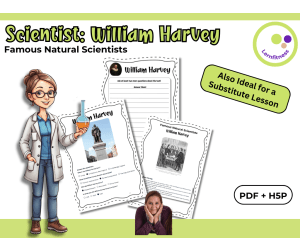
Scientist: William Harvey Fact Sheet, Quiz, and Interactive Exercises
Life Sciences, Science, Biology, Physics, STEM, Human Body, History, Social Studies, Grade 7, 8, 9, Worksheets, Worksheets & Printables, Quizzes, Quizzes and Tests, Teacher Tools, Projects, Activities
Discover William Harvey – The Scientist Who Unveiled the Circulatory System William Harvey is best known as the physician who discovered the circulation of blood, revolutionizing our understanding of the human body and laying the groundwork for modern physiology. This comprehensive teaching resource introduces your students in grades 6–8 to Harvey’s groundbreaking contributions to biology and medicine. Designed for a 45-minute lesson, it combines engaging informational content with interactive and creative tasks to ensure a memorable and educational experience. What’s Included: Concise Informational Text: A clear and engaging overview of William Harvey’s role in science. Fact Sheet Activity: Encourages students to organize knowledge and work creatively. Quiz with Solutions: Promotes fun, interactive learning and self-assessment. Additional Exercises: Students can create their own questions and collaborate in pairs to deepen their understanding. Flexible Formats: Includes a color and black-and-white printable PDF, as well as interactive H5P tasks for digital learning. Why You’ll Love This Resource: Time-Saving: Perfect for teachers who need a ready-to-go, well-structured lesson. Versatile Use: Ideal for biology, history of science, or cross-curricular lessons in English and science classes. Promotes Independence: Solutions are included, allowing students to check their work and explore the topic at their own pace. Interactive and Engaging: Tasks are designed to keep students actively involved while learning about William Harvey’s legacy. Whether you use it for a regular lesson, substitute teaching, or as part of a digital learning activity, this resource will make William Harvey’s contributions come alive for your students. Bring William Harvey’s fascinating world of science and medicine into your classroom and inspire your students to see history and science in a whole new light! Have fun exploring the world of science with your students! Warmly, Lernfitness Did You Know? I teach with a certified therapy dog, and together we focus on creating a positive and inspiring learning environment.
Author Lernfitness
Tags Science, Biology, Famous Scientists Lesson, H5P, Interactive Science Exercises, STEM, William Harvey, Circulatory System, Medicine, Physician

Therapy Dog Introduction Presentation – Editable PowerPoint & Keynote
Social Emotional Learning (SEL), Special Resources, Social Skills, Special Education Needs (SEN), Life Skills, Animals, Life Sciences, Science, Classroom Management, Resources for Teachers, High School, Middle School, Elementary, Early Learning, Pre-K, Adult Education, Not Grade Specific, Projects, Activities, Teacher Tools, Presentations, Graphic Organizers
Bringing a School Dog to Your Classroom? This Editable Presentation Makes It Easy! 🐶📚 Are you planning to introduce a school dog but not sure how to get started? Getting approval from administrators, staff, and parents can feel overwhelming—but don’t worry, you don’t have to figure it all out on your own. When I introduced my own school dog, I needed a way to clearly explain the benefits, answer concerns, and outline how everything would work. So, I created this editable presentation to help structure the conversation. It worked so well that I’m now sharing it with you—so you don’t have to start from scratch! This customizable PowerPoint & Keynote presentation gives you a solid foundation to introduce your school dogin a professional, structured, and engaging way. 🐾 Why This Presentation Will Help You ✔ Saves You Time – A structured presentation is already made—you just add your own details! ✔ Fully Editable – Customize it with your dog’s name, photos, and school-specific policies. ✔ Helps You Get Approval – Use it in meetings with teachers, administrators, parents, and school boards. ✔ Addresses Common Concerns – Covers allergies, student interactions, safety, and daily routines. ✔ Perfect for New Handlers – If this is your first time introducing a school dog, this will guide you through the process. 📌 What’s Included? 📜 Editable Presentation in Two Formats: 🎞 PowerPoint (PPTX) & Keynote (Mac) – Choose the format that works best for you. 📌 Topics Covered in the Slides: 🐶 Why Have a School Dog? – The benefits for students, teachers, and the school environment. 🐶 Rules & Responsibilities – What staff and students need to know. 🐶 Safety Considerations – Managing allergies, fears, and interactions. 🐶 Daily Routine & Expectations – How the school dog fits into everyday learning. 🐶 Steps for Getting Approval – A structured way to present your plan. 💡 How to Use This Presentation 📍 Step 1: Edit the Slides – Add your school dog’s details, school policies, and any specific requirements. 📍 Step 2: Present to Staff & Administrators – Use it at teacher meetings, school board discussions, or parent Q&A sessions. 📍 Step 3: Prepare for Questions – The slides cover all key concerns, so you’ll feel confident presenting. 📍 Step 4: Introduce It to Students – Once approved, use the slides to help students understand how to behave around the dog. 🌟 What Teachers Are Saying ✔ “This made introducing our school dog so much easier! It gave me a clear plan and professional slides to support my proposal.” ✔ “I was nervous about getting approval, but this presentation covered everything I needed to explain.” ✔ “It saved me so much time! I just added my dog’s name and our school’s info, and I was ready to go.” 🐶 Make Your School Dog Introduction a Success! Bringing a school dog into the classroom is a wonderful opportunity—but proper planning is essential. This ready-to-use, editable presentation will help you explain everything clearly, gain approval, and ensure that your school dog is welcomed into the community in the best way possible. 📥 Download it now and take the first step toward making your school dog a reality! 🐾✨ 📍 Best wishes, Heike from Lernfitness Did You Know? I teach with a certified therapy dog, and together we create a positive and inspiring learning environment. 🐶✨
Author Lernfitness
Tags Therapy Dog, Animal-assisted Learning, Inclusive Education Tools, Therapy Dog Rules, Classroom Pet Guidelines, Therapy Dog In School, Social-emotional Learning, SEL, Therapy Dog Introduction

Who Has It? – Chemical Elements Game (1–118) – 3 Levels of Differentia
STEM, Science, Chemistry, Physics, Life Sciences, Earth and Environmental Sciences, Basic Science, Special Resources, Social Emotional Learning (SEL), Special Education Needs (SEN), Homeschool Templates, Grade 6, 7, 8, 9, 10, 11, Activities, Games, Worksheets & Printables, Task Cards, Quizzes and Tests, Teacher Tools, Quizzes, Worksheets, Projects, Flashcards
Who Has It? – Chemical Elements Game (1–118) – 3 Levels of Differentiation A cooperative chemistry card game for grades 7–10 to review atomic numbers, element names, and symbols 🧪🎯 This resource is a classroom game that helps students become more confident with the chemical elements – from hydrogen to oganesson. The game follows the well-known “I have… who has?” format and is designed to reinforce students’ understanding of element names, symbols, and atomic numbers in a playful and interactive way. To support different learning levels, the material includes three differentiated versions of the full game, each with 118 element cards: With element names for both question and answer (beginner level) Only the “I have…” part includes the name , the question uses the symbol/number (intermediate level) Without element names – players must match based on symbol and atomic number alone (advanced level) Each version builds on the last and can be used flexibly depending on students' prior knowledge. The game works best with medium to large groups and encourages students to listen carefully, stay engaged, and support one another. What’s included: 3 full card sets (118 cards per set = 354 total) Differentiated by content and level of language support Clear instructions for printing, laminating, and use Ideal for individual, pair, or group work How I use it in class: I’ve played this game both at the end of a chemistry unit and as a fun opener when starting the periodic table. It’s also perfect for substitute lessons or for classes with mixed ability levels. Since each student needs to be ready when their card comes up, it fosters attention and collaboration. This is one of those games where learning happens almost by accident – students are so focused on playing that they internalize atomic numbers and symbols without even noticing. A simple, engaging way to bring structure, repetition, and movement into chemistry class – no extra prep needed. If you're looking for an easy way to help students become more confident with the periodic table, this might be worth trying in your classroom. Best, Heike from Lernfitness Did You Know? I teach with a certified therapy dog, and together we create a positive and welcoming learning environment. 🐶
Author Lernfitness
Rating
Tags Game, Educational Card Games, Chemistry, Physics, STEM Science Matching Game, Chemical Elements, Periodic Table Matching Game, Who Has It, STEM, Who Has It?
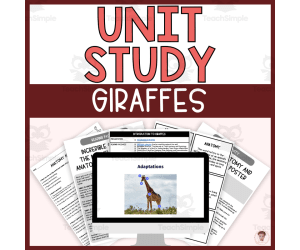
Giraffe Unit Study
Creative Arts, Art, ELA, Reading, Reading Comprehension, Grammar, Language Development, Vocabulary, Spelling, Writing, Science, Life Sciences, Animals, Human Body, Biology, Grade 3, 4, 5, Activities, Crafts, Teacher Tools, Lesson Plans, Presentations, Graphic Organizers, Projects, Assessments, Worksheets & Printables, Worksheets
Giraffe Unit Study The Giraffe Unit Study presents a captivating method to both introduce and expand students' understanding about giraffes. This ready-to-go unit study is structured primarily for elementary teachers and homeschooling parents, enhancing students' knowledge of giraffes through interactive activities. Targeted Learning Styles & Diverse Topics The unit throws light on varied topics such as interactions between giraffes and other species, human impact on their population, scientific research etc which in turn nurtures curiosity in kids. Online presentations with pre-recorded voiceovers for visual and auditory learners Reading passages for bookworms Note-taking pages integrated with graphic organizers for the writers at heart are some of the formats used. Crafting sessions encourage creativity while learning about these fascinating creatures. Inclusive Lessons & Additional Resources All lessons are shaped keeping differential learning styles in mind therefore increasing inclusivity among all students irrespective of their cognitive abilities. The curriculum is further enriched with: Vocabulary word cards paired with dictionary work, Comprehension worksheets from various reading passages, Discussion questions following each lesson as well as regular assessments to keep track of student's comprehension skills. Cross-Curricular Subjects & Scientific Insights Included! The hands-on activities like crafting not only demand active participation but also creatively connect Art (drawing), English language arts along with geography - all seamlessly woven together! It also introduces key scientific topics such as anatomy & physiology providing valuable insights into giraffe adaptations because every learner deserves to know how unique these grassland inhabitants are! The exploration into conservation and scientific research is a cherry on top! Fuel for Imagination & Independent Thinking The avenues of usage include group exploration outdoors, small group discussions, individual homework assignments or even co-reading sessions. The possibilities are limitless! With the Giraffe Unit Study, every aspect has been carefully planned out with each young learner's academic journey at the heart because education should never be mundane and it won't be, thanks to this unit.
Author Heather Huhman
Tags Giraffes, Unit Study, Interactive Activities, Science Education, Conservation Efforts

Terrestrial and Aquatic Biomes Research Project 4th 5th 6th 7th Grade
Research, ELA, Writing, Formal Writing, Science, Earth and Environmental Sciences, Environmental Science, Grade 4, 5, 6, 7, Worksheets & Printables, Worksheets, Writing Prompts, Drawing Templates & Outlines, Teacher Tools, Rubrics, Activities, Projects
Here is a ready-to-go terrestrial and aquatic biomes science research project for your students in 4th, 5th, 6th or 7th grade. Each student will choose a terrestrial or aquatic biome, complete focused research about it, and create an organized project with paragraphs and visuals to share their learning. How to Use: •Print pages 2-13 for each student. •Page 2 has clear instructions for the project including a website students can use to select their biome, places to write due dates, and a checklist to keep students on track. •Page 3 has seven different prompts for students to research. Each student needs to pick at least four prompts to include in their unique project. •Pages 4-6 are graphic organizers for your students to use as they take notes and record their research sources (page 6 is optional). •Pages 7-9 are templates for students to use to write at least four paragraphs about their biome (page 9 is optional). They could also type and print these paragraphs instead. •Page 10 is for students to draw plants that are found in their biome. •Page 11 is for students to draw animals that are found in their biome. •Page 12 is a title page for the project. •Page 13 is a rubric you can use to assess the project. Let students see it at the beginning of the project so they know what the expectations are. Over several weeks, your students can complete research on their biome, write and proofread their paragraphs, and draw the visual components of their project. They can present their projects to each other, and you can use the rubric to assess them. Grades to Use With: This project is designed for middle grades students in 4th, 5th, 6th or 7th grade who are learning about biodiversity and biomes, library research skills and expository writing- specifically expository paragraphs. It could also be used in high school special education classes where appropriate. What's Included: 13-Page PDF: Ready to Print and Use! Complete Teacher Instructions 2 Pages of Student Instructions & Writing Topics 6 Student Graphic Organizers for Note-Taking & Paragraph Writing 2 Student Templates for Biome Plant and Animal Drawings Project Title Page Marking Rubric
Author Grace Under Pressure
Rating
Tags Biomes, Terrestrial Biomes, Aquatic Biomes, Biome Project, Biome Research Project, Terrestrial Biome Research Project, Aquatic Biome Project, 5th Grade Research Project, 6th Grade Project

Star Constellations Art Activity: Animal Constellations Art Project
Creative Arts, Earth and Environmental Sciences, Science, Art, Grade 1, 2, 3, 4, Activities, Crafts, Projects
Learn all about 4 of the animal constellations through this easy to make art activity. This hands-on activity works great for elementary-aged kids in the classroom or at home. Step 1: Gather supplies. This includes printed worksheets, art supplies, tape, scissors, and straws. Feel free to use recycled straws to make this art activity more eco-friendly! Step 2: Color or draw, The beginner level worksheets have pre-drawn image of Leo the Lion, Ursa Major the Bear, Cygnus the Swan, and Scorpius the Scorpion. Kids can choose to color them in, or draw their own following the intermediate level guide. Step 3: Cut out the animals. Step 4: Tape straws to the back of animals. Step 5: Head outside and look up into the night sky. Find the constellations! Not sure how to find the constellations? There are loads of apps that you can download to your phone and start using! Happy ARTventuring :) -Abbey Allen ARTventurous Animals
Author ARTventurousanimals
Rating
Tags Constellation, Stars, Star Activity, Free, Art Activity, Constellation Art, Star Art, Star Art Activity
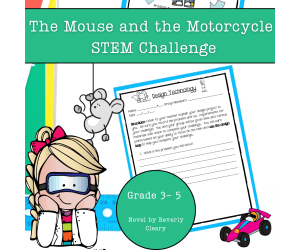
The Mouse and the Motorcycle STEM Experiment + STEM Project
Science, Technology, Engineering, STEM, Grade 3, 4, 5, Experiments, Activities, Projects, Diagrams, Teacher Tools, Graphic Organizers, Rubrics
Help design and build a four-wheeled car for Ralph, the adventurous mouse, from The Mouse and the Motorcycle. Perfect for integrating literature and science, this challenge guides students to apply engineering principles using simple materials while fostering teamwork and critical thinking. What’s Inside This Resource: Student Letter: A fun letter from Ralph introduces the challenge, linking the story to a real-world engineering task. Design Loop Graphic: A visual students can attach to their science journals, serving as a step-by-step guide throughout the activity. Detailed Instructions: Choose to print the guide as a packet or have students record each stage in their journals for an interactive experience. Teacher Tips: Practical guidance for crafting a clear problem statement with time constraints, materials, and success criteria tailored to your classroom. Skills Your Students Will Build: ✔ Problem-Solving: Identify obstacles and create inventive solutions. ✔ Engineering Design: Navigate the design loop—plan, construct, test, and refine. This page can easily be enlarged for a classroom poster. ✔ Critical Thinking: Assess their prototype’s performance and pinpoint ways to enhance it. ✔ Teamwork: Collaborate effectively to accomplish shared goals. Versatile Classroom Application: Whether as guided instruction or part of an integrated literature and science unit, this STEM activity encourages students to think creatively, document their process, and meet science and engineering standards. The rubric included is based on engineering concepts, but can also be used as a nonfiction writing rubric for cross-curricular options. Why Educators Love This Resource: ⭐ “My students were fully engaged, combining their passion for reading with STEM!” ⭐ “Simple to set up and encourages creativity and teamwork.” ⭐ “A seamless connection between literature and science for cross-curricular learning!” Inspire your students to solve Ralph’s problem and discover the joy of engineering with this fun, standards-aligned STEM challenge!
Author Kel's Klass
Tags 4th Grade Science Project, 4th Grade Science Experiment, 5th Grade Science Project, 5th Grade Science Experiment, Engineering Diagram, Science Graphic Organizer, Science Rubric, 3rd Grade Science Project, 3rd Grade Science Experiment, The Mouse And The Motorcycle
AI Productivity Workflows for Specific Professions Book
Science, Technology, Computer Science, Engineering, Research, Resources for Teachers, Classroom Management, Community Building, Life Studies, Business, Grade 6, 7, 8, 9, 10, 11, 12, Activities, Projects, Teacher Tools, Assessments, Lesson Plans, Outlines, Literacy Readers, Presentations, Workbooks, Worksheets & Printables
The Complete Guide To Using AI In Your Job AI Productivity Workflows for Specific Professions is a more than 394-page, professional resource that includes 90-plus role-specific prompts, templates and step-by-step workflows – all designed to give you the tools needed as a mid-career professional/freelancer working in a high-opportunity, low-competition niche to unlock the potential of AI in your career. AI Productivity Workflows provides practical and professional AI solutions for you in the following professions: - For Teachers: Use AI to create efficiently designed curriculum and personalize instruction. - For Real Estate Agents: Use AI to create search-engine-optimized property listing descriptions and develop virtual tours of properties, helping speed up property sales. - For Freelancers: Use AI to dramatically accelerate the pace at which you can create content and acquire new clients. - For Lawyers: Use AI to virtually automate the majority of your contract drafting and compliance process. - For Creative Professionals: Use generative AI to create amazing designs and branding for your products. Written by Syed Hammad Rizvi (AI Application Architect and AI Product Management Expert at Microsoft), this practical resource contains a wealth of information on key topics, including: - Basics of AI prompt engineering - Ethical use of AI in business - Advanced applications of AI in marketing, finance, HR, project management, data analysis and - Monetizing your AI expertise. This resource is ideal for gig economy and creative professionals who are ready to gain a competitive advantage in their professions starting in and beyond. Reasons Why Parents/Schools Appreciate It: 1) It gives teachers the ability to create adaptive lessons and resources for each individual child by personalizing their education at an increased rate with scalability. 2) It allows teachers to focus on building meaningful relationships with their students and being highly effective teachers by utilizing AI for administrative tasks creating more time in their day. 3) It prepares students for an automated future by providing teachers with tools to assist in classroom instruction as well as provide them with prompt guidance based on student need. 4) It provides measurable school-wide efficiency gains while upholding ethics in artificial intelligence, ensuring the protection of student data, and maintaining academic integrity. 5) It provides schools with affordable and immediately available professional development that enables school personnel to remain competitive without incurring significant costs for outside training. Intended Audience (Level and Age of Students/Class) : This book is geared more towards professional development for teachers than basic beginner students. It has been written as a resource for: Teachers in grades 6-12 who teach Computer Science, Business, Career and Technical Education (CTE), English/Language Arts and more; or any other subject area that includes Artificial Intelligence/digital literacy Higher Education Instructors/ADE Facilitators who teach AI skills, digital entrepreneurship or professional growth and development courses School Administrators & Instructional Coaches - to assist with a school-wide plan for implementing Artificial Intelligence Each chapter that discusses how to use Artificial Intelligence in Education such as curriculum design, personalized learning, assessment and feedback, creating educational content, administrative automation and engaging students has been included to provide teachers with ideas on how they can help their students become proficient as well as knowledgeable about using Artificial Intelligence so they can spend less time teaching and more time helping students achieve success in the classroom. Terms of Use/Copyright: This book is under copyright and ownership of Syed Hammad Rizvi. This resource can only be used in its entirety or in part for a single personal class, including no alterations, redistributing, or selling any part of this resource. This means that you cannot place this resource on the internet where it can be searched/pulled and downloaded by the public. You may wish to share this resource with your colleagues; however, you will need to obtain additional Teachsimple licenses to do so. Thank you for respecting the copyright and terms of use. Syed Hammad Rizvi presents this product with joy.
Author Creative Book Store
Rating
Tags AIForTeachers, AIForRealEstate, AIForFreelancers, AIForLawyers, AIForEducators, AIForMarketers, AIForDesigners, AIForRealEstateAgents, AIForContentCreators, TeacherAI
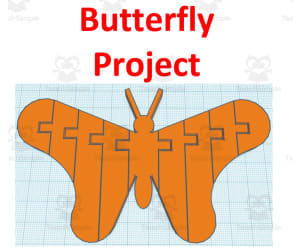
TinkerCAD step-by-step instructions for Articulated Butterfly
Special Resources, Science, Technology, Engineering, Grade 5, 6, 7, 8, 9, 10, 11, 12, Activities, Projects
TinkerCAD step-by-step instructions for Articulated Butterfly. Students only need to know the bare basics to complete this. I tested this with a fifth-grade class and most could complete it with no help. Designed to print with no supports for easy printing. Include TinkerCAD tool guide! Has a content page. Great beginners’ tool for learning to make 3D models and learn TinkerCAD. TinkerCAD is a free online program that makes 3D model that work on 3D printers, laser etching machines, water jets, plasma cutters and many more!! Tinkercad is an easy-to-use, browser-based computer-aided design (CAD) software developed by Autodesk. It is primarily used for creating and designing 3D models, particularly in the field of 3D printing. Tinkercad is popular among beginners and hobbyists due to its intuitive interface and simplified tools. Here are some key features and uses of Tinkercad: 1) 3D Modeling: Tinkercad allows users to create 3D models by combining basic shapes and manipulating them using tools such as scaling, rotating, and moving. It provides a wide range of primitive shapes like cubes, spheres, cylinders, and more, which can be customized to create complex designs. 2) Design Customization: Users can apply various modifications to their designs, including resizing, rounding edges, adding text, creating holes, and aligning objects. These tools help in refining the models and making them suitable for specific purposes or fitting them with other components. 3)Import and Export: Tinkercad supports the import of existing 3D models in STL and OBJ formats, allowing users to modify and incorporate them into their designs. It also offers export options to save the designs as STL files, which are widely used in 3D printing. 4) Collaboration and Sharing: Tinkercad provides features for collaboration, allowing multiple users to work on the same project simultaneously. It enables real-time sharing and editing, making it convenient for team projects or educational purposes. 5) Electronics Integration: One notable aspect of Tinkercad is its integration with electronics. It offers a range of electronic components, including resistors, LEDs, motors, and microcontrollers, which can be used to create interactive models and prototypes. Users can simulate circuit connections and test their designs before implementation. 6) Educational Tool: Tinkercad is widely used in educational settings, particularly for teaching students about 3D design, modeling, and prototyping. Its simple interface and beginner-friendly tools make it accessible to users of all ages and skill levels. Overall, Tinkercad is a versatile and user-friendly CAD software that allows individuals to create and customize 3D models. Whether you're a hobbyist, student, or professional, Tinkercad provides a valuable platform for designing, prototyping, and exploring the world of 3D printing and modeling. Total pages: 33 pages Commands to be learned: Group Ungroup Align Mirror Duplicate Holes Solids Rotate Move Drop Subjects: Geometry Engineering Career and technical education Types: Projects Handouts Printables
Author MontyWorks
Tags TinkerCAD, 3D Printing, 3D Printer, Projects, Tinkercad Castle

SUPER FREE PACK | Only Animals Activities FOR KIDS!
Creative Arts, Animals, Life Sciences, Science, Vocabulary, Language Development, ELA, Early Learning, Elementary, Homeschool Resources, Not Grade Specific, Pre-K, Workbooks, Worksheets & Printables, Word Problems, Worksheets, Crafts, Activities, Games, Projects
SUPER FREE PACK | Only Animals Activities FOR KIDS! INFORMATION OF THE AUTHOR: At EDITORIAL ARENAS EDUCATIVAS, we work every day to create educational materials that turn learning into a fun game. Our mission is for every child to enjoy the process of learning. Visit my educational store and discover all the resources we have ready for you. MAIN DESCRIPTION OF THIS PRODUCT: What is the name of the product? Hello! Thank you so much for being interested in this beautiful and fabulous product that you can use with your children, both at school and at home. The name of this fabulous product is: SUPER PACK OF FREE ACTIVITIES FOR KIDS How many pages does it include? This educational document, carefully created and in some cases compiled, has the following number of pages: 320 What format is it in (A4, letter, digital, printable)? This educational resource is designed in A4 format and PDF, so you will have no difficulties printing it and it will also stay well-protected. PDF A4 SECONDARY AND COMPLEMENTARY INFORMATION: For what age, grade, or school level is it ideal? I usually create resources for early grades (children ages 3–5), but I also design for primary students (ages 7–12). My priority is to make children’s learning creative. What learning area does it focus on? This and all my resources focus on children’s essential learning, such as math and literacy. Occasionally, I also create resources for Spanish. What will students learn or practice with it? With this educational resource, children will be able to practice basic skills in math and literacy. Teachers can also adapt it to other learning areas, since learning is multidisciplinary. SUMMARY OF THIS BUNDLE: · What is its name?: SUPER BUNDLE OF ANIMALS ACTIVITIES · How many pages does it have?: 320 PAGES · What format is it in (PDF, Word, PPT)?: PDF A4 · Is it colorful, black & white, or both?: BOTH
Author EDITORIAL LAURA EDUCA
Rating
Tags FREE, FREE RESOURCES, BUNDLE, PACK, VACATION, ANIMALS, ACTIVITIES, PRINTABLES

Famous Women in Science | An Inquiry Based Project
Science, Inventors, Grade 5, 6, 7, 8, 9, 10, 11, 12, Projects, Activities
Famous Women in Science | An Inquiry Based Project Welcome to the realm of an enriching and inspirational classroom experience that enhances your students' understanding of STEM (Science, Technology, Engineering and Math) subjects. The Famous Women in Science| An Inquiry-Based Project sheds light on the remarkable accomplishments and contributions of women in science from the past till today. Inspiring stories The project starts with a recounting of womankind’s important milestones in science - from innovative inventions to groundbreaking discoveries forming a solid basis for productive classroom discussions. An overview of tasks After the inspiring beginning we provide an overview that guides learners step by step through their exploration process. This project's design offers flexibility and can accommodate different education levels ranging from grade 3 up to senior physics class. It fits perfectly into various curriculum scopes including homework assignments or small group activities. Versatile rubrics for assessment : Peer review: A specialized rubric designed for student-peer based evaluation. Teacher Assessment : A detailed marking scheme intended for teachers. The documents are fully editable so you can adjust them according to your specific classroom needs. With this inquiry-based project, students gain essential skills like intensive research capabilities and constructive presentation talents. The impact: The Famous Women in Science | An Inquiry-Based Project offers more than just academic merits—it provides inspiration. Using it as an educational tool can: Increase representation especially engaging female students towards male-dominated fields like physical sciences Show boys that girls too excel within these spheres paving a path free from outdated stereotypes – empowering all learners within your educational environment! Start the movement today for a gender-balanced STEM education landscape. Let's offer that encouragement to all our learners and let them know they have every right to succeed in their learning pursuits.
Author Teach With Fergy
Tags Women In Science, STEM Education, Gender Stereotypes, Inquiry-based Learning, Female Representation

Research Organizer & Essay Assignment: Thomas Edison
Social Studies, History, History: USA, Science, Technology, Grade 8, 9, 10, 11, 12, Activities, Projects, Worksheets & Printables, Worksheets
There are few inventors and businessmen more significant to the modern world than Thomas Edison. This resource provides your students with the opportunity to independently learn about and summarize the life of the "patent-king" with this engaging research planner and essay assignment. This carefully scaffolded and easy-to-assign-AND-assess resource has been designed to guide student learning from Thomas Edison fact-collection to the careful development of a five-paragraph research essay. Teaching this resource could not be easier! Start by handing out the background research and note-taking worksheet (you could also ONLY hand this out if you want a shorter lesson!). Once students have found their facts and sources, provide them with the essay outline activity, which guides them step-by-step through the requirements of a short research essay. From there, drafting their essay, using the provided peer review checklist, and submitting their final draft will be no problem at all. And then you can assess their work with the provided Common Core rubric! Use this entire resource as a complete research lesson or just part of it as a short research activity or sub plan! This TeachSimple download includes: - A Thomas Edison essay writing assignment with directions, requirements, research essay writing tips, a peer review checklist, and Common Core-tied grading rubric - An editable rubric, provided as a link, that lets you make adjustments to the grade values and guidelines. This link is provided as as Google Sheet specifically built for integration into Google Classroom, although you can also modify it for use in other Learning Management Systems (LMSs) - A Thomas Edison biography and note-taking worksheet that will guide your students through information gathering. This straightforward two-page handout includes instructions for background research, a fun drawing section, and an area to cite quality sources and organize conducted research - A research essay outlining worksheet, so students build on their Thomas Edison notes in a clear and simple manner as they build their work towards a draft and final paper - All 6-pages of this lesson are provided in full-color and B&W versions Although this resource can be fitted for any secondary Language Arts classroom, it has been carefully designed to work best in grades 8 through 11. The included rubric is subtly but specifically tied to Common Core ELA Standards for Language (3) and Writing (2 and 7). This resource is provided as a print-ready, bookmarked, and adjustable PDF file. The rubric is also included as an editable Google Sheet. This resource contains 6 pages and 1 Google Sheet.
Author The Language of Educational Art, LLC
Tags Essay, Rubric, Notetaking, Research, Outlining, Thomas Edison

Blank Writing & Activity Sheets – Spring Theme
Science, Life Sciences, Seasons, Holiday & Seasonal, Summer, Spring, Common Core, Handwriting, Writing, ELA, Homeschool Templates, Activities, Worksheets & Printables, Worksheets, Projects, Classroom Decor, Bulletin Boards, Posters, Teacher Tools, Templates, Coloring Pages
Blank Writing & Activity Sheets – Spring Theme Flexible, decorative pages for writing, drawing, music, or custom classroom materials 🌸✏️ PNG + PDF These printable pages are designed to bring a little seasonal color and calm into your classroom. With soft spring-themed decorations and no pre-set lines, you can use them in almost any subject or context. Whether your students are writing stories, solving math problems, or composing short pieces of music, these sheets give them a gentle, creative frame to work within. What I appreciate about using open-format pages like these is the flexibility. Sometimes, we just need something that’s visually appealing but still leaves space for our own content – and that’s exactly what this resource offers. What’s included: A selection of blank decorative worksheets in a spring design No lines, so you can add your own structure (or none at all) Soft seasonal visuals – not too distracting, but motivating PDF format – for printing or digital notebooks (GoodNotes, Notability, etc.) PNG Format Ideas for classroom use: I’ve used these sheets in many ways over the years – as writing paper for creative assignments, as a quiet-time drawing prompt, or even for student-made math problems. Some students enjoy using them for reflection journals or personal check-in pages. They're also great for differentiated use: students can write a paragraph, draw a process, list keywords, or create a mind map – all on the same page layout. If you’re working in a digital environment, the files can easily be inserted into apps like GoodNotes and filled in with a stylus. Sometimes it’s the small details – like giving students a beautiful sheet of paper – that makes an activity feel more special and worth their time. Best, Heike from Lernfitness Did You Know? I teach with a certified therapy dog, and together we create a positive and welcoming learning environment. 🐶
Author Lernfitness
Rating
Tags Blank Writing, Activity Sheets, Spring, Summer, Decorative Pages, Writing, Drawing, Custom Classroom Materials, Seasonal, Worksheets
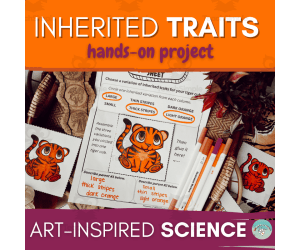
Inherited Traits, Variation of Traits, and Mutations in a Third Grade Science Project
Science, Life Sciences, Biology, Grade 3, Projects, Activities
Stop avoiding teaching heredity and genetics. Grab this NGSS Inherited Traits Project instead! Your students will LOVE discovering variations of traits and mutations with this hands-on tiger project! STORY: Meet Morty the Tiger and his brand new baby sister, who was born with a special mutation (white stripes). He looks a lot like his mother, his older two siblings look like their dad, but why does this new baby look so different? SCIENCE: Deep-dive into traits with definitions and examples in the animal and plant world. PROJECT: Then play around with stripes, color, and size of the cubs and figure out what the parents must have looked like. Experimenting with an abstract concept like genetics is best done through hands-on projects. ART: Design and draw your tiger cub with directed drawing pages and prompts. What's included? -1 NGSS-aligned project -3 Learning Pages -2 Exit Tickets (animal and plants) -Teacher Guide -Student Guide -Project Explanation -Answer Keys -Directed Drawing Pages What standard is completed? -NGSS 3-LS3-1 -Analyze and interpret data to provide evidence that plants and animals have traits inherited from parents and that variation of these traits exists in a group of similar organisms. Hope you enjoy! -Abbey Allen Owner & Designer of ARTventurous Animals
Author ARTventurousanimals
Tags Third Grade Science, Ngss, Inherited Traits, Science, Genetics, Variations Of Traits, Science Project, Genetics Project, Inherited Traits Project, Tiger Project, Animals Inherited Traits, Inheritance And Traits 3rd Grade, Animal Projects For Third Grade, Tiger Inherited Traits, Mutations Lesson Plans, Inherited Traits Of A Tiger

Unit of Study all about New Zealand
Social Studies, ELA, Economics, History, History: British, History: World, First Peoples (Native), Government, Geography, Reading, Reading Comprehension, Grammar, Language Development, Vocabulary, Spelling, Writing, Science, Life Sciences, Animals, Basic Science, Grade 4, 5, 6, Teacher Tools, Lesson Plans, Worksheets & Printables, Flashcards, Activities, Projects, Assessments, Worksheets
There's something magical about being able to bring the world into our classrooms. I'm excited to share with you a comprehensiveUnit of Study all about New Zealand. This resource is filled with meticulously designed tools to help our students journey into the vibrant heart of this incredible country. New Zealand, with its stunning landscapes and layered history, offers a world of exploration. Through this unit, our students will unravel tales, traditions, and truths that form the fabric of this nation. Designed with versatility in mind, we can shape the content to fit our students’ unique needs - be it age, reading proficiency, interests, or learning preferences. Here's a Glimpse of What's Inside: Lesson Plans: Flexible and adjustable, we can spread these out to suit our classroom pace and scheduling. Reading Passages: Each lesson is complemented by a passage, giving students a deep textual insight into New Zealand's many aspects. Videos: Handpicked to align with the readings, these videos provide a multisensory experience. Discussion Avenues: Thought-provoking prompts to foster classroom discussions and encourage student reflections. Vocabulary Boosters: Clear, defined vocabulary cards for every lesson. Additionally, dedicated dictionary activity pages will help our students enrich their lexicons. Note-taking & Graphic Organizers: Available in three formats, ensuring each student can comfortably document their learnings. Assessment Tools: Comprehensive tests, in both short answer and multiple-choice formats, come with ready answer keys for our convenience. Writing Opportunities: Every lesson comes with a structured prompt, allowing students to articulate their understanding. Hands-on Activities: Perfect for our kinesthetic learners, these activities are interactive and engaging. Designed with 4th to 6th graders in mind and spanning 345 pages, this PDF resource is ready to be printed and integrated into our lesson plans. It offers a rich, in-depth view of New Zealand, from its breathtaking nature to its societal structures. Whether you've been teaching for years in a school or are homeschooling, thisUnit of Study on New Zealandis a treasure trove. Together, let's embark on this enlightening journey and bring a slice of New Zealand to our eager learners. Happy teaching!
Author Heather Huhman
Tags New Zealand, Unit Study, Maori, Geography, History, James Cook, Ernest Rutherford, Auckland, Christchurch, Treaty Of Waitangi

Coding with Python: Storing Information Project
Science, Technology, Computer Science, Grade 6, 7, 8, 9, 10, 11, 12, Projects, Activities
Coding with Python: Storing Information Project A comprehensive teaching resource designed explicitly for educators teaching grades 6 through 12. It is a richly detailed and functional material that targets essential computer science standards and easily integrates into daily instruction, thus ensuring the comprehension and application of the Python programming language. The use of this resource in your educational settings will enrich the students' understanding as they journey from grassroots levels to sophisticated concepts. It has thoughtfully been scaffolded, starting with fundamental topics up until complex ones such as dictionaries in Python. Considering reinforcement learning theory, students would appreciate multiple activities each day that reinforce previously learned knowledge progressively. Key Learning Areas This project enables students to master several key areas with precision and clarity: Data types Variables Functions loops Lists & slicing routines All these are fundamental building blocks towards becoming proficient coders, which eventually lead to dictionaries - a pivotal attribute that further sharpens their coding skills. Packed For Various Instruction Methods This project is ideal for whole group instruction due to its engaging content structure but also proves valuable for small targeted groups or individualized home assignments due to its adaptability and contextual approach. The material comes well-organized as an easy-to-navigate PDF file type assisting both hardcopy production or device screen viewing without compromising on quality. It professionally prepares pupils by giving them hands-on coding experience used heavily across technology-focused industries today. Benefits Beyond Classroom Confines: By integrating Coding with Python: Storing Information Project into your curriculum_, you are equipping learners not only for successful task completion but fostering foundation-building skills required in higher-level programming disciplines such as Computer Science. These are benefits universally appreciated beyond classroom confines. Teachers can be assured that this resource complies even when introducing STEM concepts at primary stages or promoting Advanced Placement participation at maturing academic phases.
Author WhyMaker
Tags Python Programming, Data Types, Variables, Functions, Loops

STEM Project: Climate Change Solutions with Assessment Rubric
Science, Technology, Earth and Environmental Sciences, Earth Sciences, Engineering, Environmental Science, STEM, Research, Grade 6, 7, 8, 9, Projects, Activities
STEM Project: Climate Change Solutions with Assessment Rubric is designed for middle school students from Grades 6 to 9. It's a real-world resource designed to deepen student understanding of climate change and stimulate critical thinking skills while brainstorming and researching viable solutions based on current and future technologies. This resource can be used in subjects such as Science, Environmental Science, Technology, Engineering and Earth Sciences classes. The hands-on approach in this project fosters active participation among students. They'll start by learning about the root cause of climate change and carbon cycles through online resources before proceeding towards a brainstorming session in order to think of solutions that could help rebalance our planet's atmospheric CO2 levels. Their ideas for technologies or inventions can fall into several categories like reducing greenhouse gases produced by human activities; enhancing photosynthesis to absorb more CO2; reflecting the sun's rays away from Earth; storing excess carbon emissions; or using chemistry principles to transform surplus CO2 into other forms. After choosing their solution concept within their groups or pairs, students delve deep into researching their unique idea. They will attempt to explain how their idea works, what materials are needed, and the optimal locations of implementation. For presentation purposes, students have creative control over whether to choose a poster layout or digital methods like PowerPoint slideshows and video compilations. To help keep things organized throughout the project, there’s an inclusive graphic organizer for note-taking. Additionally, an assessment rubric is provided for grading purposes and to guide the students throughout. Grades to Use With: This project is designed for middle grades students in grades 6-9 or high school special education students. What's Included: A total of 6 pages in PDF Format: Title Page Teacher Instructions 3 Page Graphic Organizer for Students Rubric If you enjoy this project, check out other climate change items in my store. Climate Change Handout: Simple Explanation with Visuals Personal Carbon Emissions: Integrated Math and Science
Author Grace Under Pressure
Tags Climate Change, STEM Project, Solutions, Assessment Rubric, Research, Global Warming, STEM, Earth Science, Technology, Science Project, Rubric For Stem Projects