Ancient Greece Activity Pack - VA SOL Aligned
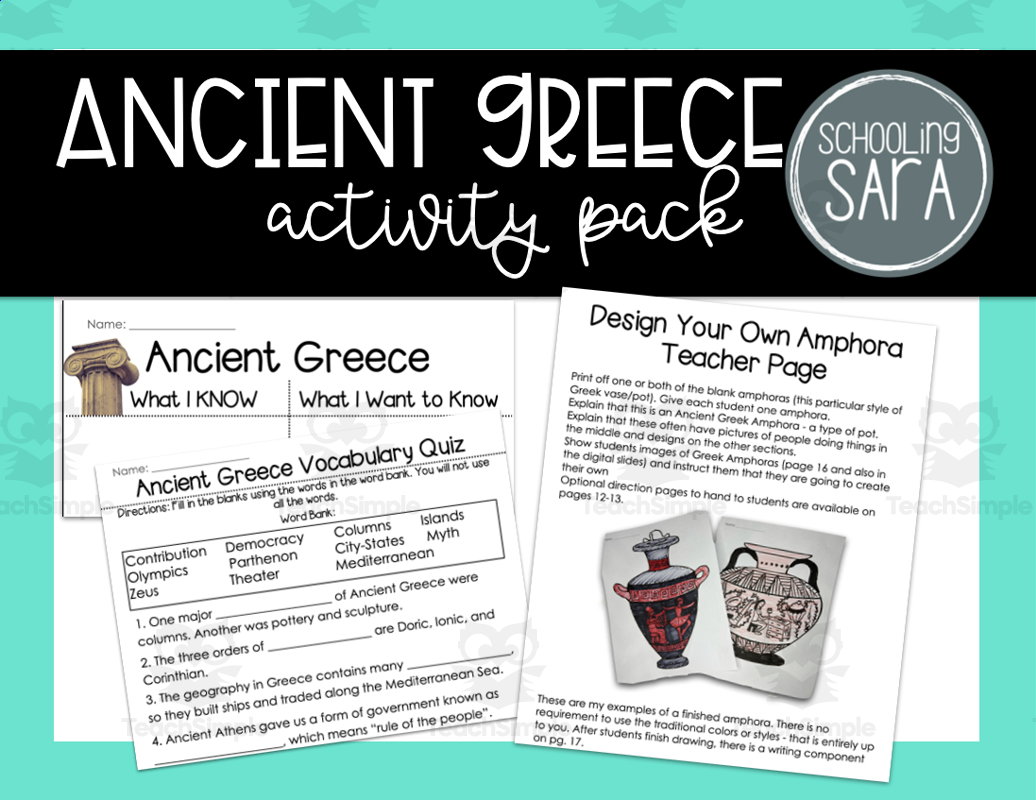
A multi-activity pack for a 3rd-grade Ancient Greece unit, aligned to Virginia SOL, covering vocabulary, reading comprehension, a craft, and math word problems.
Classroom resources
Browse by lesson focus
Choose the topic or kind of practice you need.
A multi-activity pack for a 3rd-grade Ancient Greece unit, aligned to Virginia SOL, covering vocabulary, reading comprehension, a craft, and math word problems.
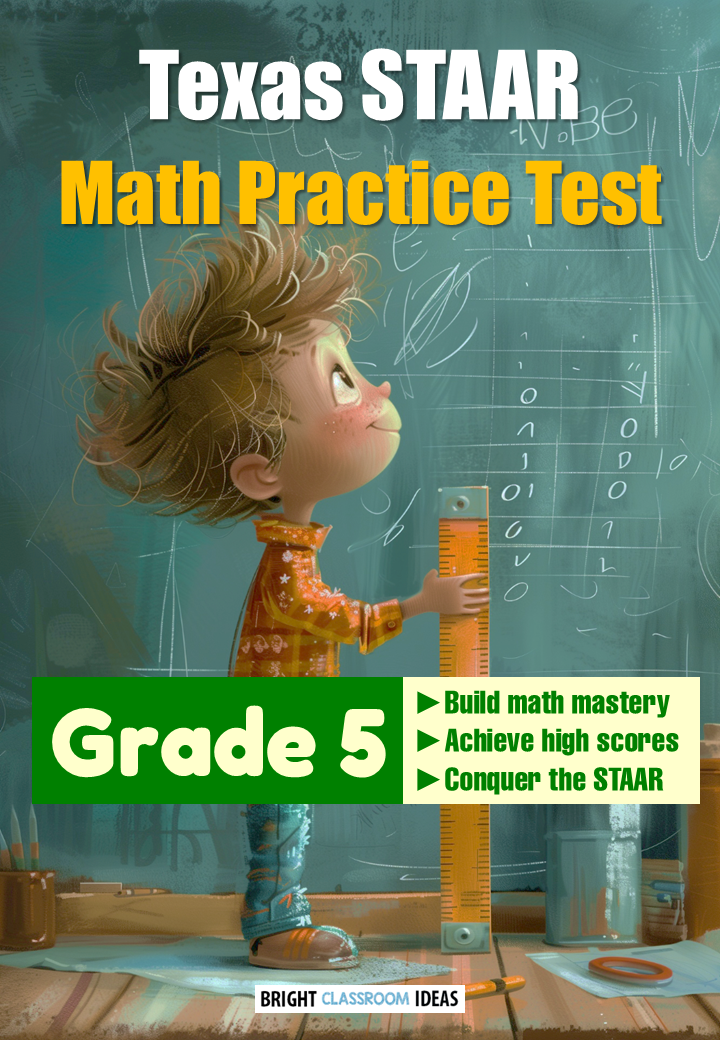
Use selected questions from a thirty-four-item math practice test to review decimal and fraction operations, expressions, volume, coordinates, data and financial calculations. Twenty-six multiple-choice items carry one point each and eight written responses carry two, for forty-two possible points. A separate answer guide supplies explanations and rubrics, and the teacher guide includes administration ideas and a class tracker. Select questions for the curriculum taught and use the specific scoring clarifications below before assigning them.
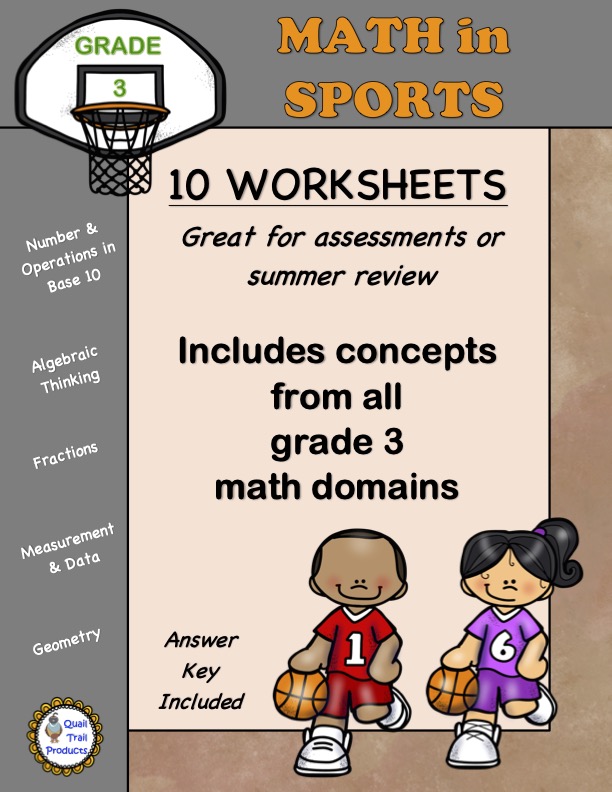
Solve multiplication and division fact problems themed around sports (court, field, water sports, football), complete commutative/associative property equations, fill in input/output tables, and solve sports-scenario word problems.
Students read fiction, nonfiction, and poetry/fable passages across 3 separate 40-question tests and answer multiple-choice comprehension/vocabulary questions for each test.
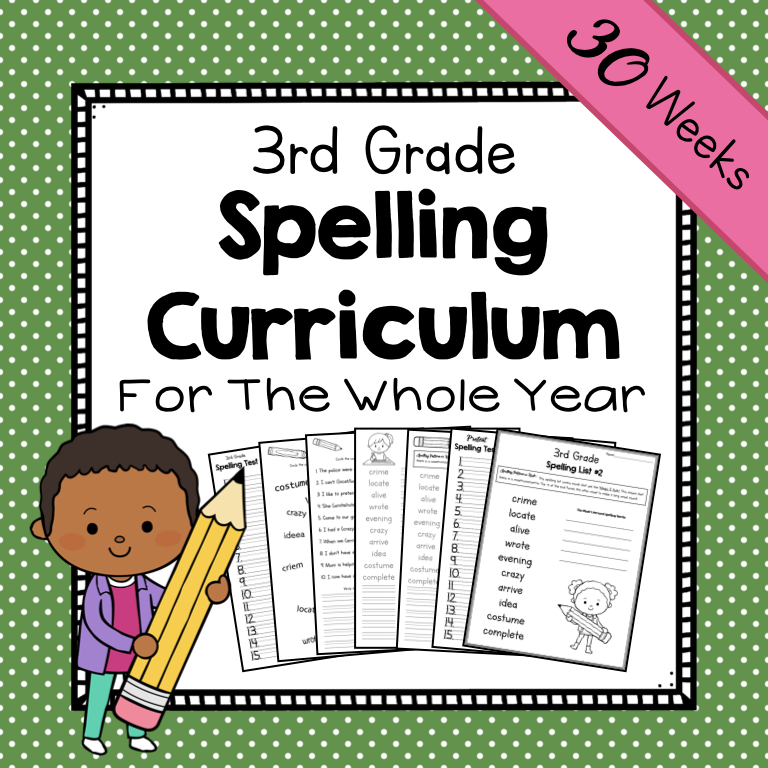
Each week students receive a set of spelling words tied to a specific spelling rule/pattern (e.g. long vowel patterns, plurals, contractions, compound words), practice them through weekly activity pages, and take a spelling test where the teacher reads each word (and a sentence) from a call-out sheet.
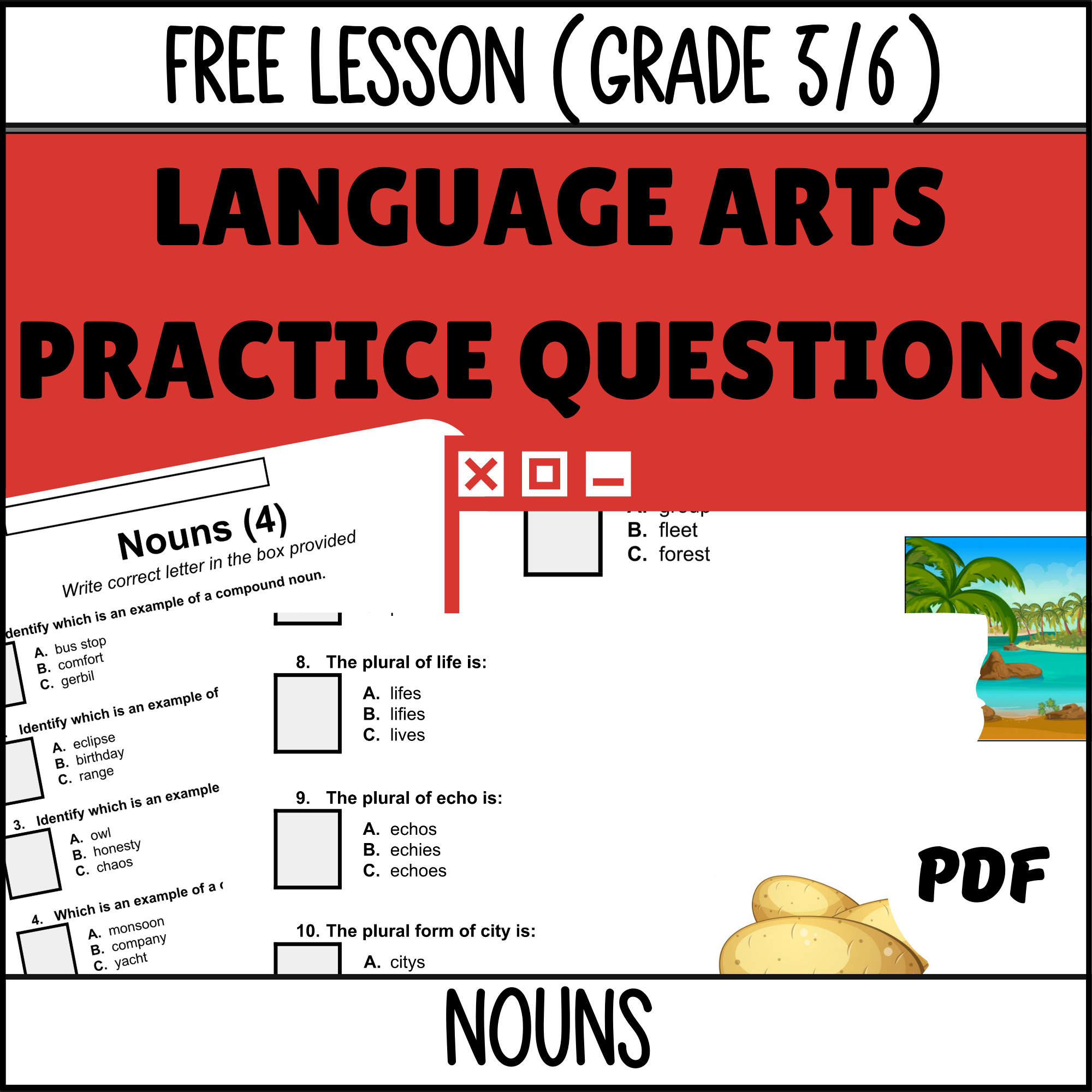
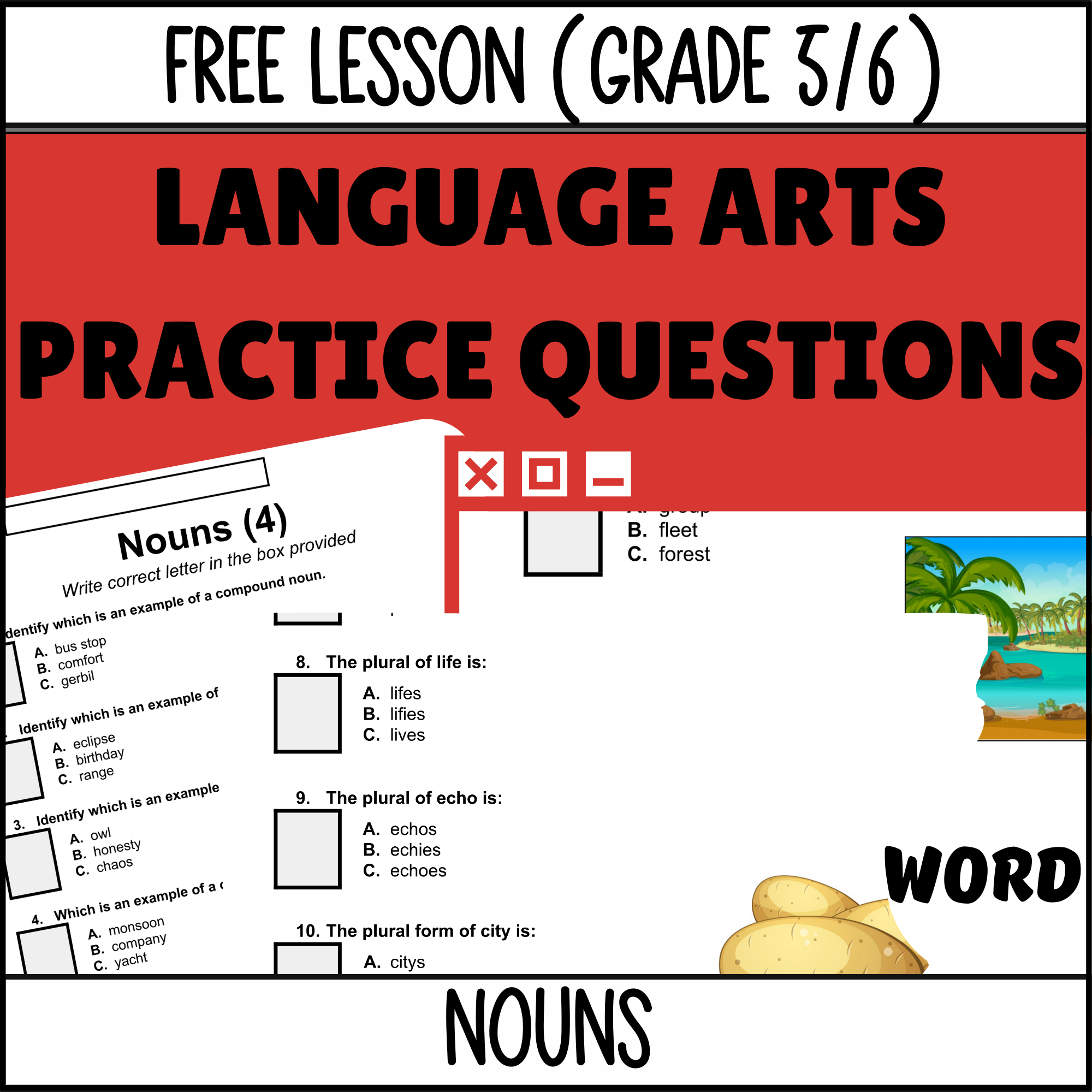
Select the correct letter answer for each of 25 multiple-choice questions identifying noun types (common, proper, concrete, abstract, collective, compound) and correct plural forms of nouns.
Students read one or more of the five assigned novels (individually, in small groups, whole class, or as a listening test) and complete multiple-choice/true-false comprehension questions for each title, then check answers against the answer key.
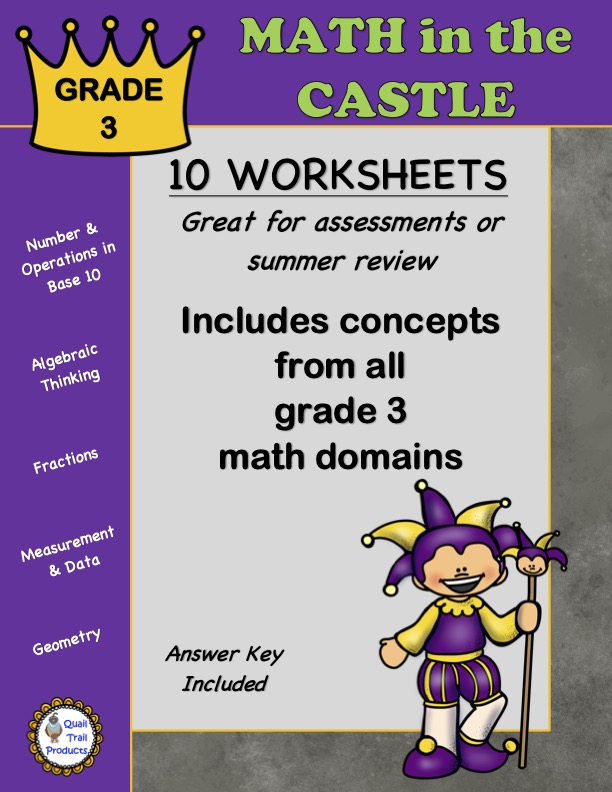
Solve multiplication and division fact problems embedded in a castle storyline, round numbers to the nearest ten/hundred, identify numbers from place-value clues, check and correct addition/subtraction answers, and complete story-based word problems.
Students view one question per slide and select the correct answer for sentence type, sentence classification (simple/compound/complex), or a named sentence part; a printable bubble-style answer sheet is provided for recording answers.
Provide a diagnostic toolkit to screen and assess a child's phonics knowledge (initial sounds, CVC words, consonant blends) and reading/writing difficulties, in order to identify a starting point for remedial instruction.
Select or write the correct answer for each of 25 multiple-choice/fill-in questions identifying noun types (common, proper, concrete, abstract, collective, compound) and correct plural forms of nouns.
Students read one or more of the five assigned novels (individually, in small groups, whole class, or as a listening test) and complete multiple-choice comprehension questions for each title, then check answers against the answer key.
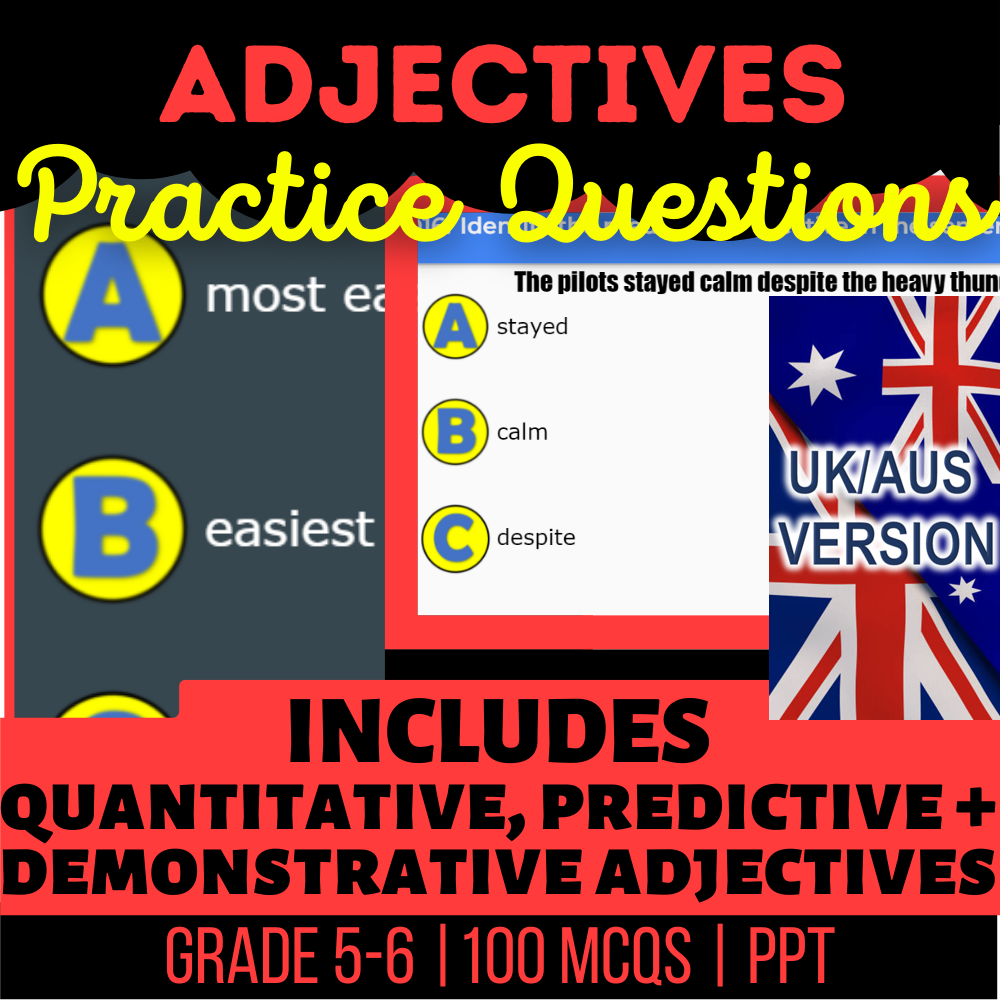
Answer a series of MCQ items presented on slides (e.g., choose the correct comparative form, identify the adjective in a sentence, pick the correct determiner) with three answer options each.
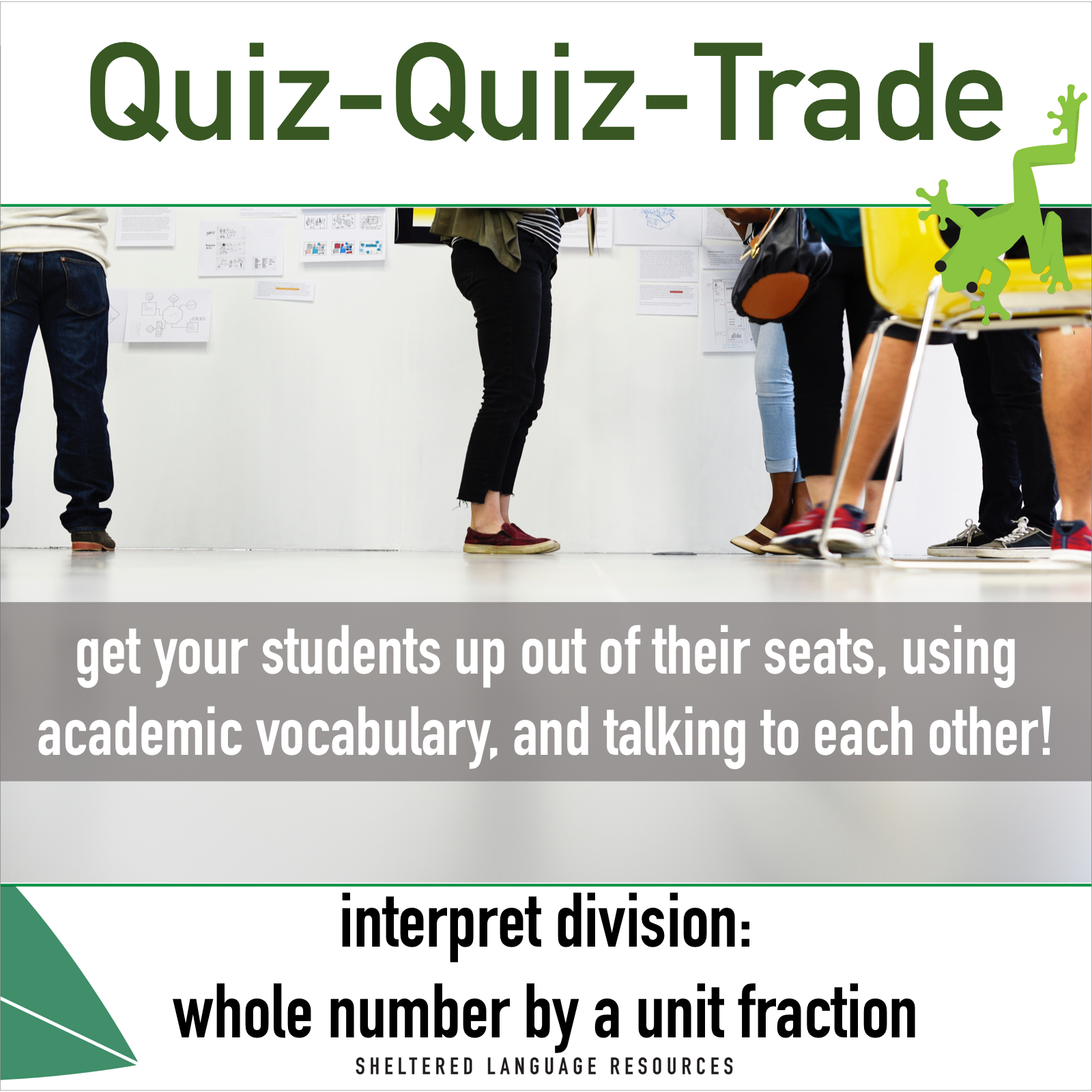
Each student holds a card with a sentence-frame question on one side (Quiz Side) and the answer on the other (Answer Side); partners take turns reading the sentence frame aloud, filling in the blank verbally, checking each other's answers, then trade cards and find a new partner to repeat.
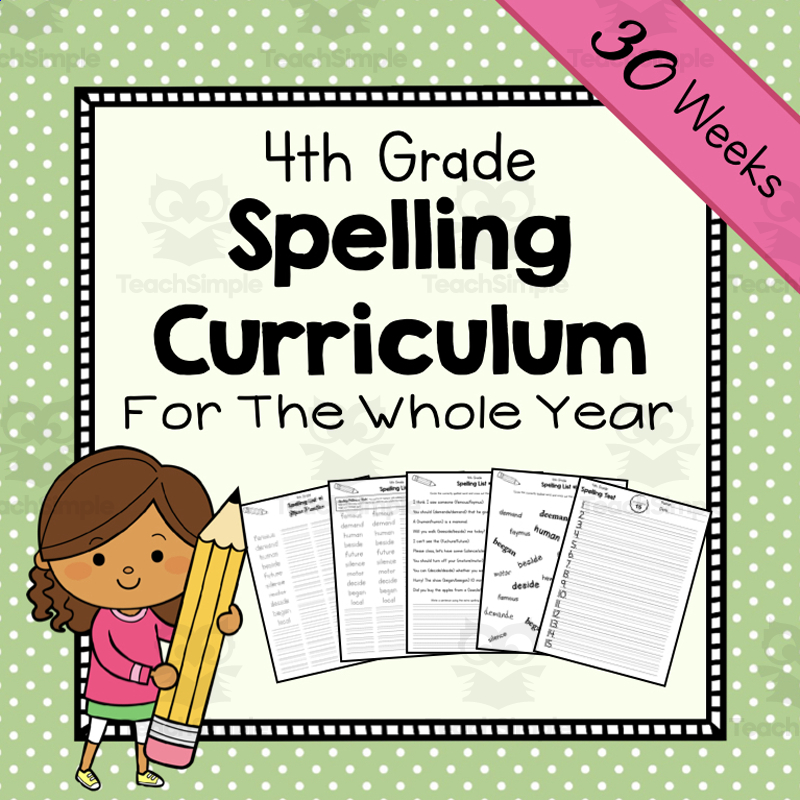
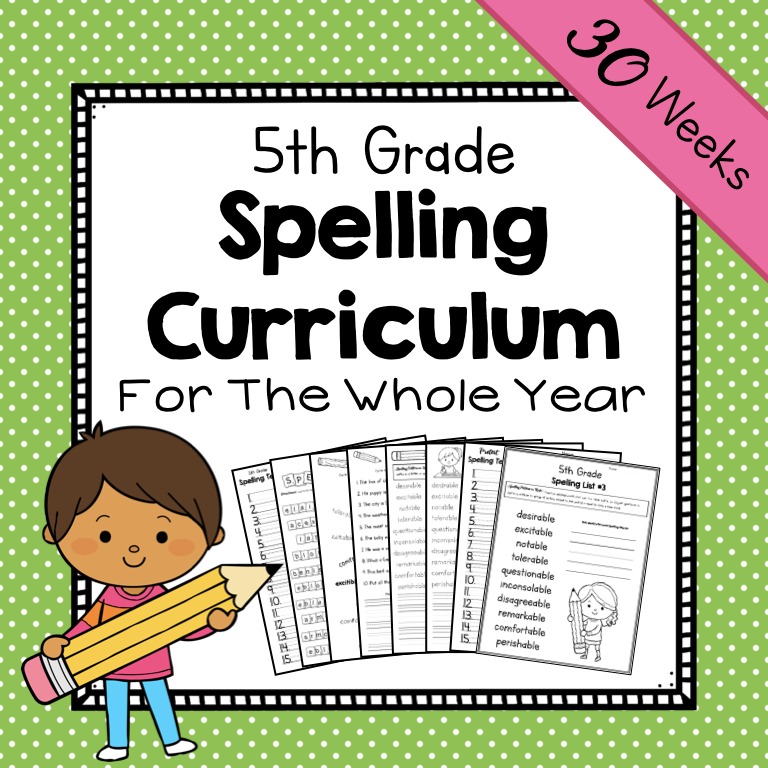
Practice weekly spelling word lists (10 words plus 5 personalized words), complete practice pages, and take weekly spelling tests read aloud by the teacher.
Complete the blank review vocabulary checklists with students, using the key to model clear transformation descriptions. Then assess how students draw, label and explain the changes on the test.
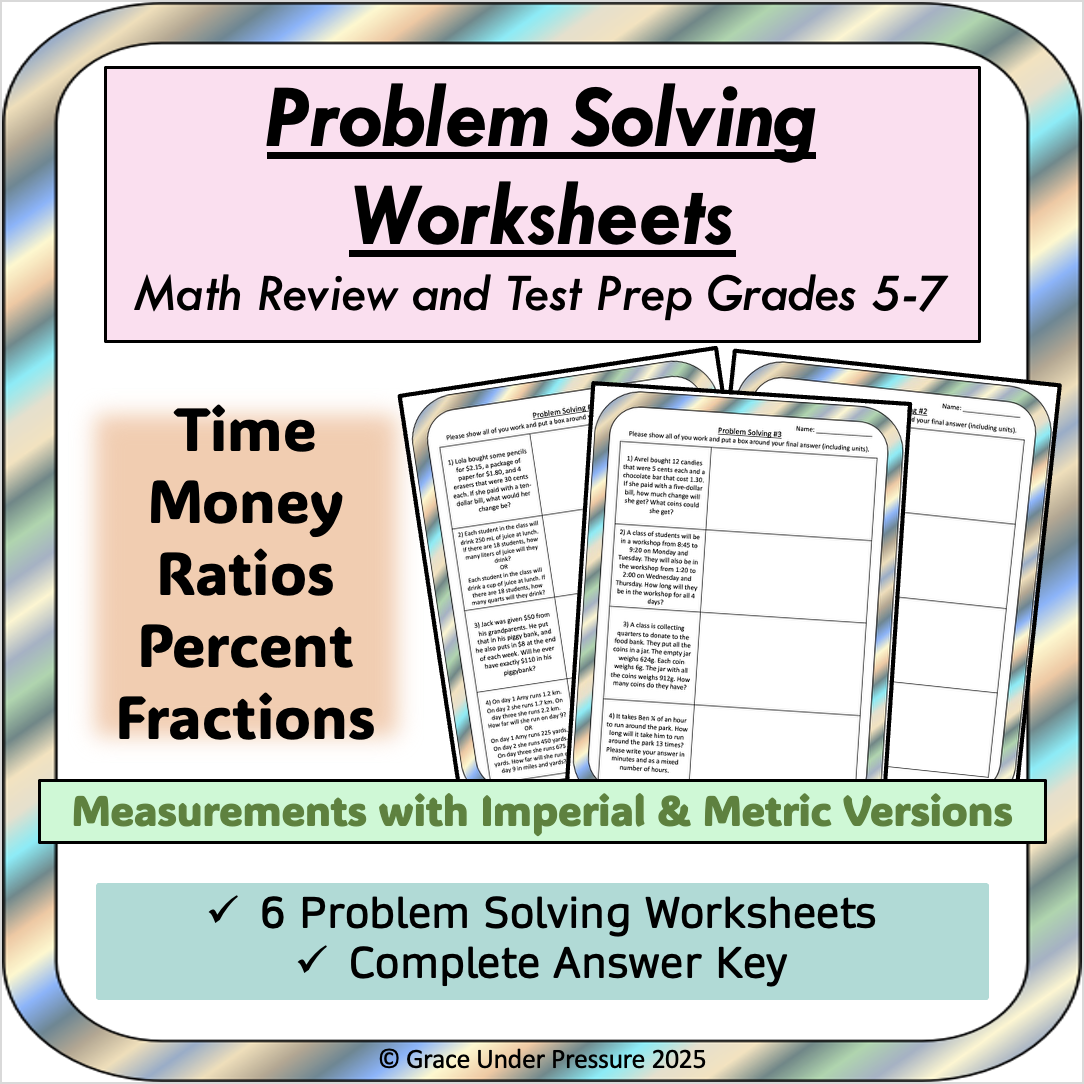
Read each word problem, show all work, and solve, boxing the final answer including units; problems are offered in both imperial and metric versions for measurement topics.
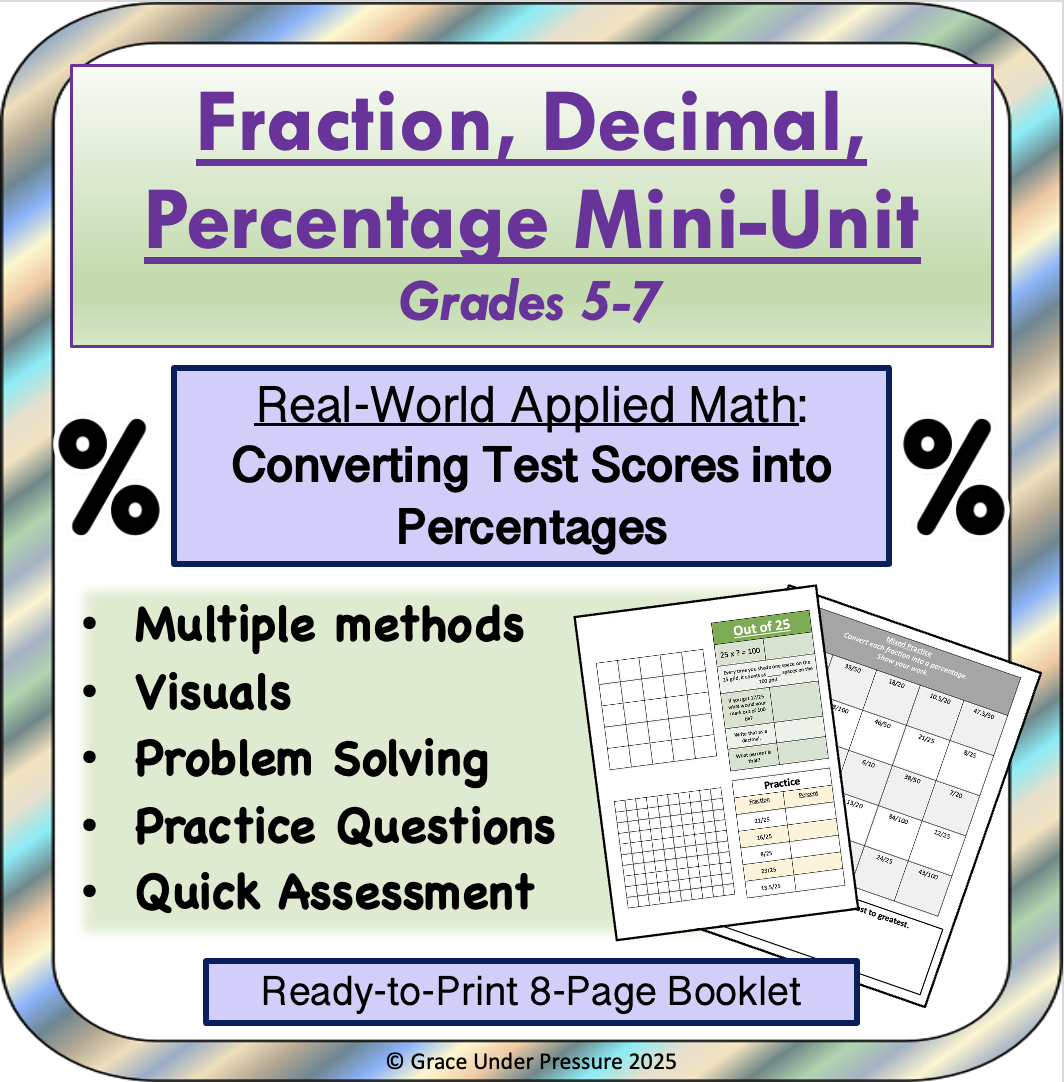
Convert given fraction scores (e.g., out of 50, 25, 20, 10) into percentages and decimals by shading grids, finding equivalent fractions with denominator 100, and using long division for harder denominators; complete practice and mixed-practice problem sets, including a partner problem-solving task and a…
For each of the 10 reading skills, read a short leveled passage (three versions at increasing Lexile/complexity, e.g. Level 2/3/4 of a 'Spring has arrived' poem for the Author's Purpose section) and complete three response formats per skill: a graphic organizer, open-ended written responses, and standardized-test-style multiple choice…
Students study a weekly list of 10 spelling words (plus up to 5 personal words), complete practice/tracing pages, identify correctly vs. incorrectly spelled words, and take a pretest and test administered by the teacher from a provided call-out script.
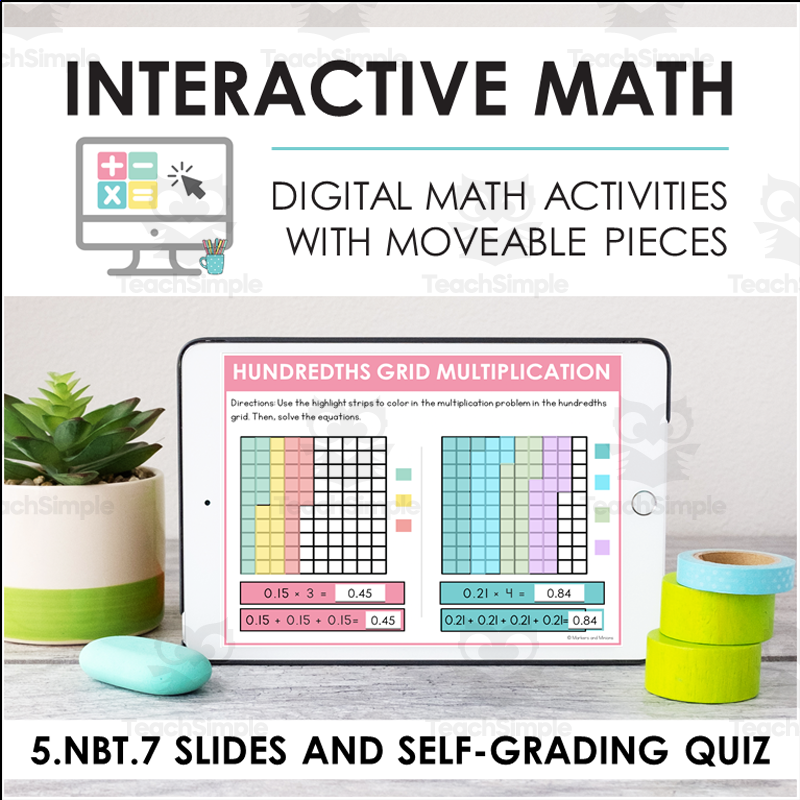
Interactive Decimal Operations for 5th Grade Math This engaging 5th grade math resource teaches students how to add, subtract, multiply, and divide decimals. The interactive slides represent decimal concepts visually, allowing students to actively practice decimal operations by sorting, dragging, and dropping images.…
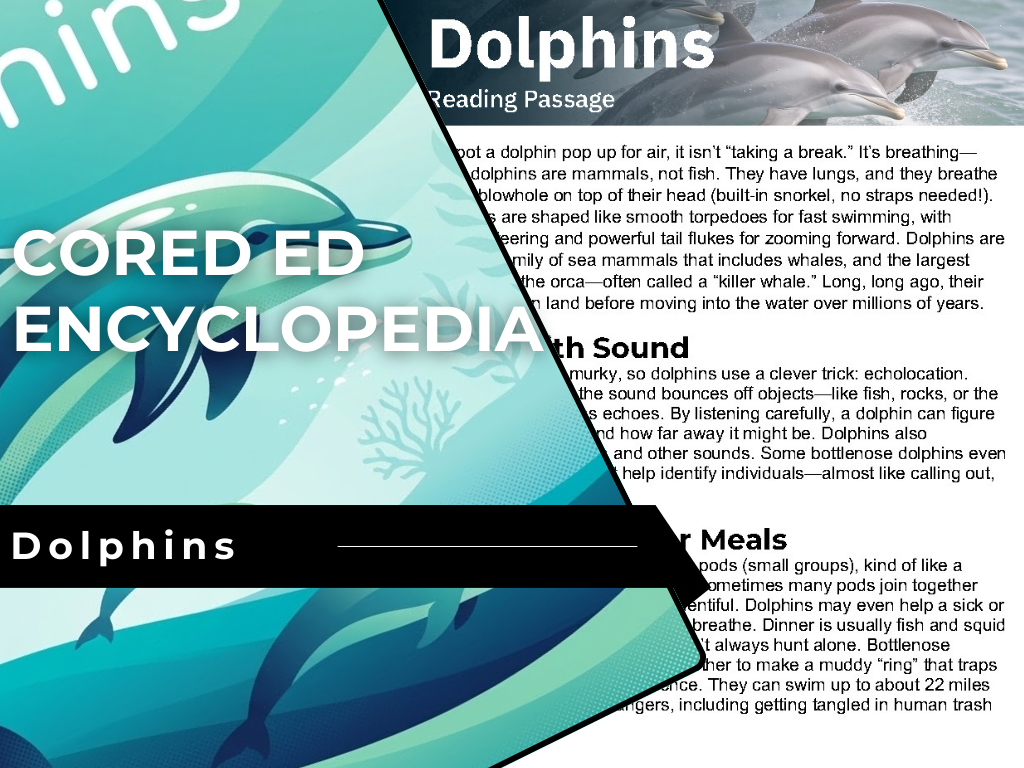
Discuss pre-reading trivia facts, read an informational passage about dolphins, answer multiple-choice and short-answer comprehension questions, write a short creative story, and complete one of three extension activities (echo test, pod team chart, or trash trouble mini-poster).
A chapter slice from a larger essay-writing workbook, covering prewriting and graphic-organizer strategies as part of a five-step writing model, with a critical-thinking (Bloom's Taxonomy) skills chart and an assessment rubric for evaluating student writing.
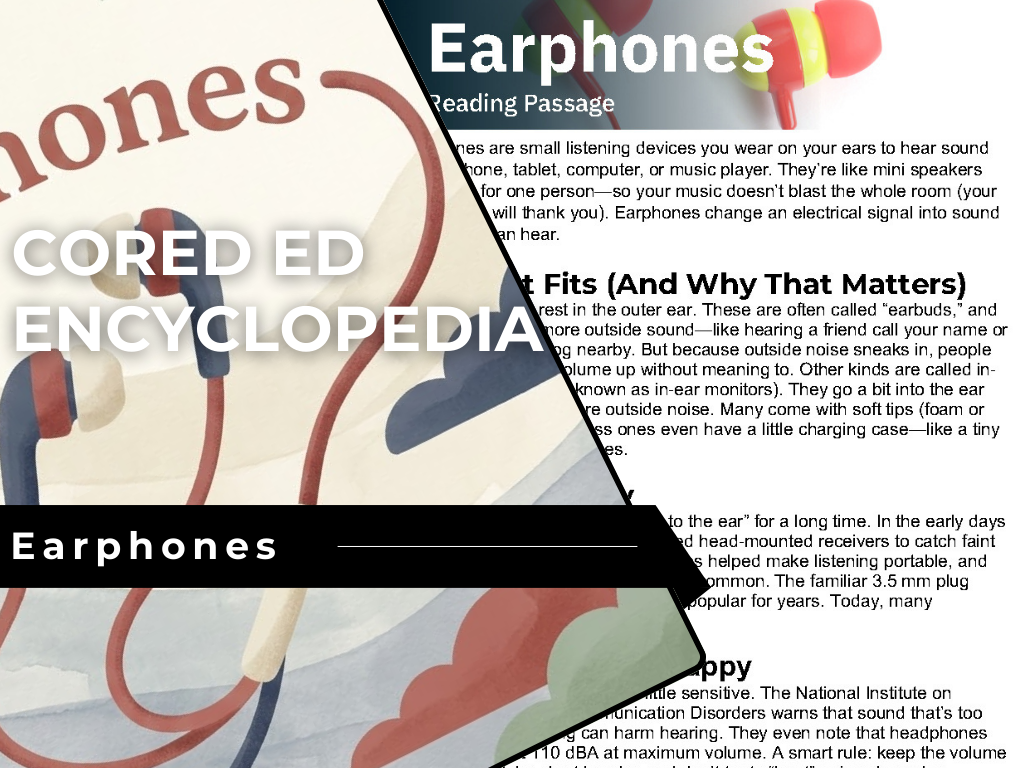
Answer pre-reading trivia, read a nonfiction passage about earphones, answer multiple-choice and short-answer comprehension questions, write a 5-8 sentence creative story imagining being an early-1900s radio listener, and choose one extension activity (make a safe-listening poster, build an earphone holder, or run a sound-distance test).