Events of the Revolutionary War Reading Packet + Distance Learning
A grade 4 differentiated reading packet teaching key events of the American Revolutionary War (1775-1783), with distance-learning/Google Slides versions at two reading levels.


1,072 resources
Explore sub-categories
7 sub-categories · 1,072 resources
A grade 4 differentiated reading packet teaching key events of the American Revolutionary War (1775-1783), with distance-learning/Google Slides versions at two reading levels.
A reading-and-writing activity that teaches students to explain citizen participation in autocratic versus democratic governments, using the United Kingdom, Germany, and Russia as case studies.

Teach middle school students about capital investment and GDP per capita using a European economics context.

A differentiated reading packet teaching the Reconstruction era in Georgia, including the three Reconstruction plans and the 13th, 14th, and 15th Amendments.

A reading passage and question packet teaching how physical geography shaped the economic activities of the Northern, Mid-Atlantic, and Southern American colonies.

Teach students about specialization and trade in Latin America (Mexico/petroleum, Cuba/sugar, Argentina/beef and leather examples) through a nonfiction reading passage on specialization and trade/economics.
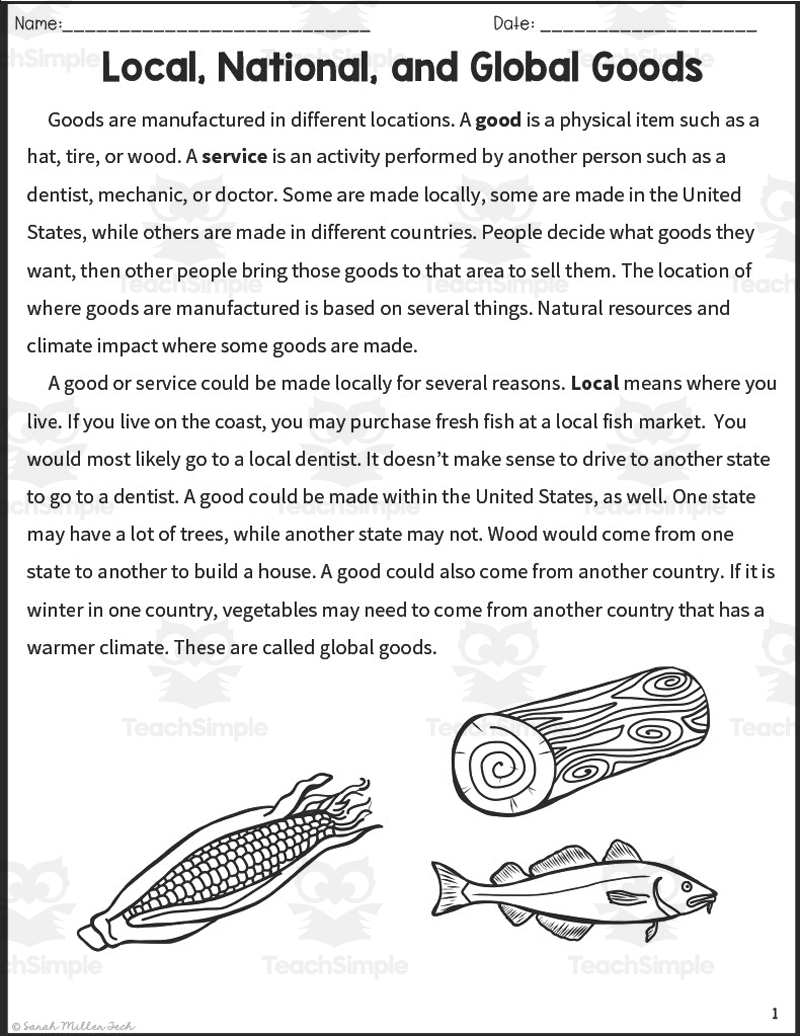
Informational reading passage and activities teaching 3rd-grade economics concepts of where goods are manufactured (locally, nationally, and globally) and why.
6th-grade-level reading passage and activities on the causes and effects of air pollution and acid rain in Canada.

A differentiated reading and comprehension packet about Georgia's role in the signing of the Declaration of Independence, for use in social studies or reading instruction.

A reading packet teaching elementary students about representative democracy, paired with a Google Slides/Google Forms digital version for distance learning.

A reading-and-writing activity teaching students to compare citizen participation in the governments of Brazil, Mexico (democratic) and Cuba (autocratic).
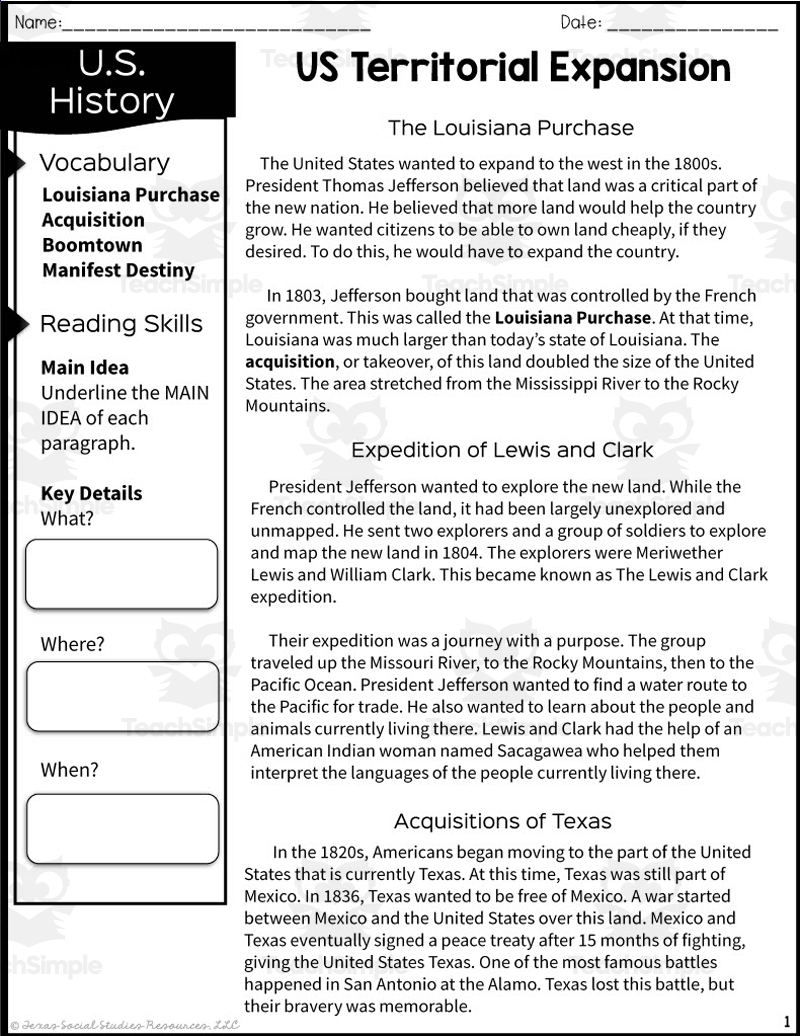
A 5th-grade social studies reading packet on U.S. territorial expansion in the 1800s (Louisiana Purchase, Lewis & Clark, Texas annexation, Oregon Trail, California Gold Rush, Manifest Destiny).
Teach 6th-grade-level students about medieval Europe's economic history, specifically how specialization of labor and trade networks developed during the Middle Ages, through a nonfiction reading passage written at a 1000 Lexile level.

An informational reading packet teaching the structure of Georgia's state government (executive, legislative, and judicial branches, including the governor's role), for 3rd-grade social studies/government instruction.
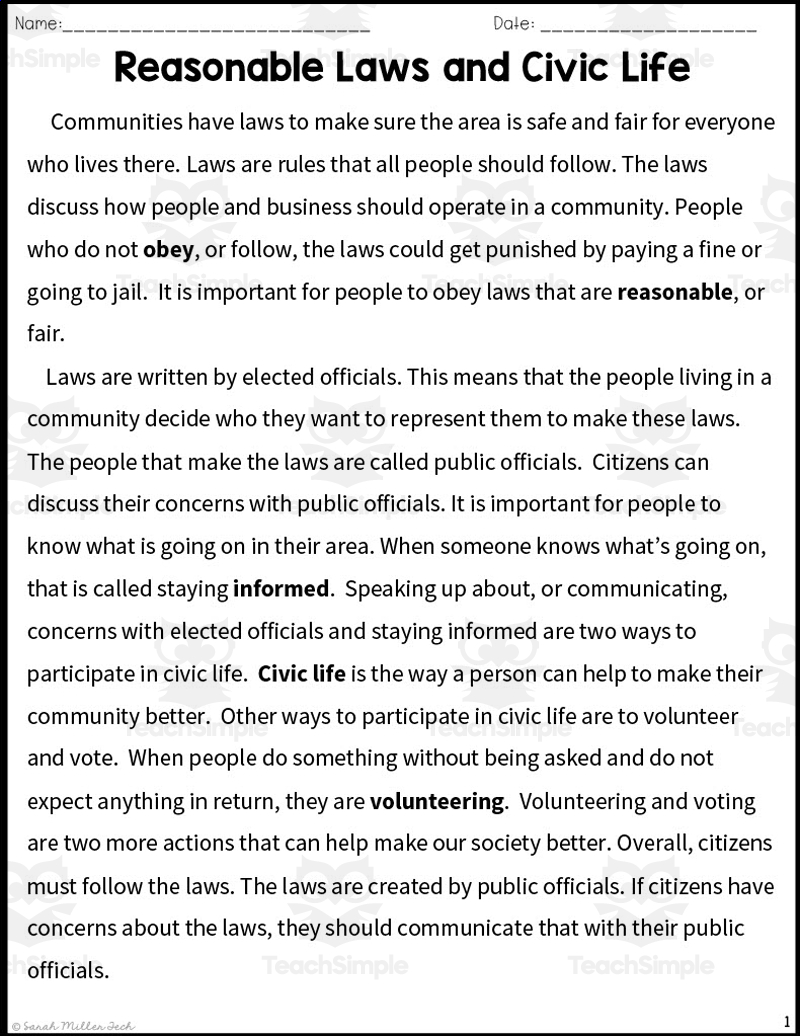
Teach 3rd-grade social studies students about laws, public officials, and ways to participate in civic life (communicating with officials, staying informed, volunteering, voting).

Reading packet teaching 8th-grade household budgeting concepts (income, expenses, savings) through an expanded informational passage and related activities.

Read about six physical features of Georgia using two versions of the passage, including a version with side prompts. Students complete matching and comprehension tasks, write about economic importance, complete a chart and label a map. Exit tickets and supplied answer pages support checking. The included chart supports graphic organizers work. The packet fits a middle-school Georgia studies lesson; preview the reading demands before assigning it.

Teach the causes and outcomes of the 1787 Constitutional Convention, including the Great Compromise and 3/5ths Compromise.

Reading passage and activities teaching entrepreneurship and the public/private economic sectors using Canada as a case study, aligned to Georgia standard SS6E6e (6th grade Social Studies/Economics).

A 5th-grade social studies reading packet with an informational passage on Theodore Roosevelt's life and presidency, paired with comprehension worksheets and an answer key.

Teach students the three basic economic models (traditional, command, market) and mixed economies, then apply that framework to Latin American economies (Cuba, Brazil, Mexico).
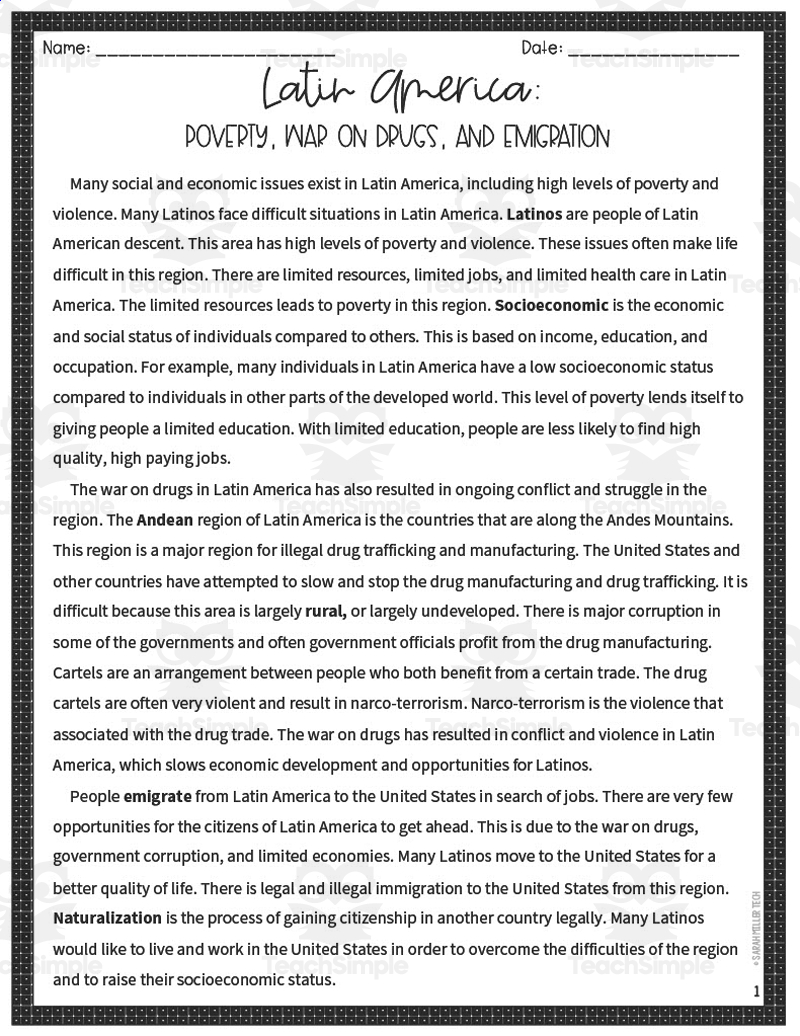
Teach 6th-grade social studies students about poverty, the war on drugs, and emigration to the U.S. as social/economic issues affecting Latin America.
 Free download
A bundle of short original English fables/moral stories paired with a main-idea-and-details reading-comprehension anchor chart for each text.
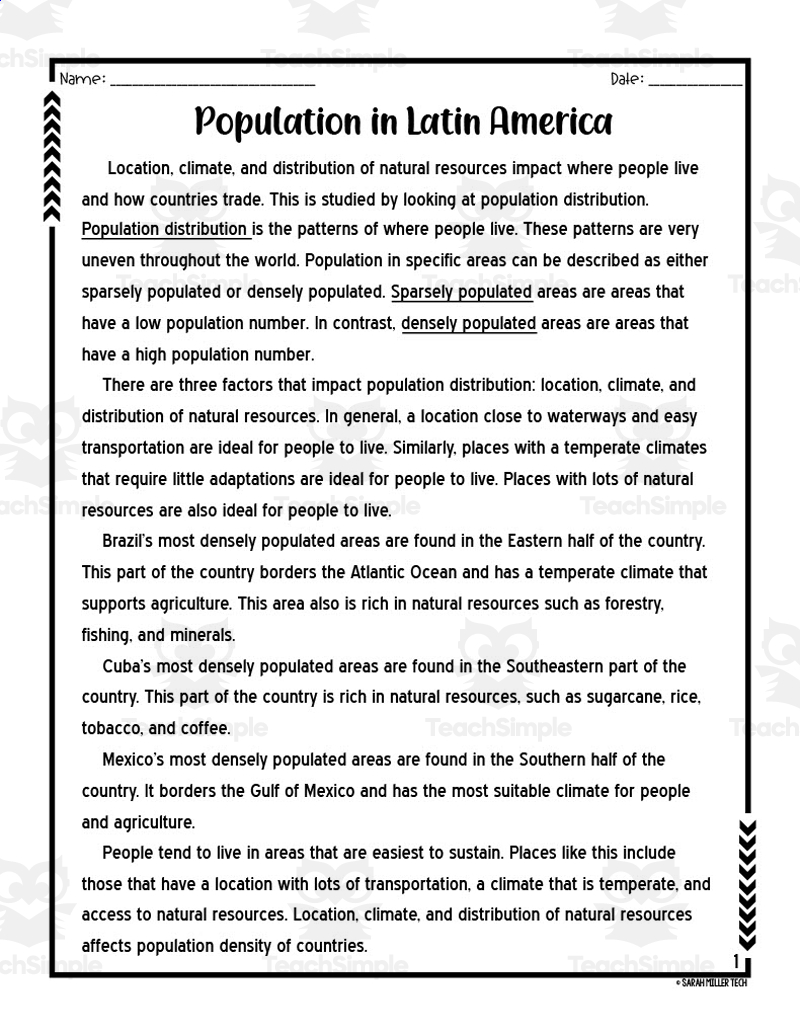
A reading passage and activity packet teaching sixth-grade social studies students about population distribution patterns in Latin America (location, climate, natural resources).