resources by type
resources by grade
resources by subject
other resources

3,950 products added recently

Page 10 - Graphic Organizers

Incorporate graphic organizers into your teaching to help students organize information visually. This collection includes mind maps, Venn diagrams, flowcharts, and more, suitable for various subjects and grade levels. By using graphic organizers, you can aid comprehension, facilitate critical thinking, and improve retention.

Relevant
alt down
Any Time
alt down
filter by
alt down
All File Types
alt down
filter nav Show filters
Sort by: Relevant
CLEAR
resources by type
Activities
down arrow
Classroom Decor
down arrow
Teacher Tools
up arrow
Anchor Charts
Assessments
Charts
DBQ's
Diagrams
Graphic Organizers
Lesson Plans
Literacy Readers
Outlines
Presentations
Quizzes and Tests
down arrow
Rubrics
Templates
Worksheets & Printables
down arrow
resources by grade
Early Learning
down arrow
Pre-K
down arrow
Elementary
down arrow
Middle School
down arrow
High School
down arrow
Adult Education
Not Grade Specific
resources by subject
Creative Arts
down arrow
ELA
down arrow
Holiday & Seasonal
down arrow
Life Studies
down arrow
Math
down arrow
P.E. & Health
down arrow
Social Studies
down arrow
Special Resources
down arrow
Science
down arrow
Foreign Languages
down arrow
Resources for Teachers
down arrow
other resources
Common Core
Homeschool Resources
down arrow
Montessori
Research
STEM
Thomas Jefferson Interactive Notebook | SS1H1a, SS1H1b, SS1G1a, SS1CG1

Thomas Jefferson Interactive Notebook | SS1H1a, SS1H1b, SS1G1a, SS1CG1
Social Studies, Biographies, Preschool, Grade 1, 2, Teacher Tools, Graphic Organizers

Thomas Jefferson Interactive Notebook Bring Thomas Jefferson and early American history to life for students with this engaging social studies resource. This interactive notebook invites kids to immerse themselves in Jefferson's world through 17 skill-building activities. Learners will create timelines, map Jefferson's travels, analyze famous speeches and documents he authored, and more. The notebook covers key first grade social studies topics like basic economics and American symbols and holidays. Use it to teach standards SS1H1a, SS1H1b, SS1G1a, and SS1CG1. This printable packet allows students to actively process new information on Jefferson. Pair these materials with a biography and primary sources on America's third president. Differentiate instruction by using the notebook for whole-class learning, small groups, or independent practice. Get creative - the possibilities are endless!

Author Sarah Miller Tech

Tags Social Studies, Thomas Jefferson, Graphic Organizers, Venn Diagram, Presidents

"Zane and the Hurricane" Novel Study Figurative Language Activities

"Zane and the Hurricane" Novel Study Figurative Language Activities
ELA, Reading, Reading Comprehension, Literature, Grade 4, 5, 6, Worksheets & Printables, Novel Studies, Teacher Tools, Graphic Organizers, Activities, Assessments, Worksheets

Figurative language generates emotion, sets the tone and mood, and reflects subtle connotational nuances. These are crucial cues that assist readers in making inferences and comprehending the author's purpose. Students should be aware of this type of language. This figurative language study provides an abundance of figurative language examples from the novel Zane and the Hurricane by Rodman Philbrick that students can analyze. ⭐️This resource includes:⭐️ Figurative Language Posters: Simile, Metaphor, Hyperbole, Personification, Idiom (definition, why authors use it, examples, & non-examples) Figurative Language Practice Sheets: Students will identify figurative language in passages taken from the novel and determine the type, meaning, and author’s purpose for including the figurative language identified in each passage. This activity can be divided up by splitting the class into groups and having each group work on different pages for a section of chapters. It could also be divided up and assigned as a bell ringer, warm-up activity, or exit ticket. Includes a total of 20 pages and is broken into the following sections: Ch. 1–5, Ch. 6–10, Ch. 11–15, Ch. 16–20, Ch. 21–25, and Ch. 26–end (INCLUDES ANSWER KEY). Finding Figurative Language Chart : As students read the novel, they fill out the chart with examples of figurative language they come across while reading. Students should provide the quote from the text, page numbers, type of figurative language used, meaning, and why the author included it. The figurative language chart is not specific to this particular novel and can be used with any text. ⭐ You may also like: ⭐ https://teachsimple.com/product/inside-out-and-back-again-vocabulary-study https://teachsimple.com/product/a-sweet-smell-of-roses-picture-book-read-aloud https://teachsimple.com/product/let-the-children-march-picture-book-read-aloud https://teachsimple.com/product/file-folder-game-honey-bee-vowel-teams Be sure to check out my storefront here: https://teachsimple.com/contributor/creatively-gifted

Author Creatively Gifted

Tags Literature, Literature Circles, Zane And The Hurricane, Reader Response, Open-ended Questions, Homework, Figurative Language, Novel Study, Reading Comprehension, Literary Analysis, Figurative Language Study Guide

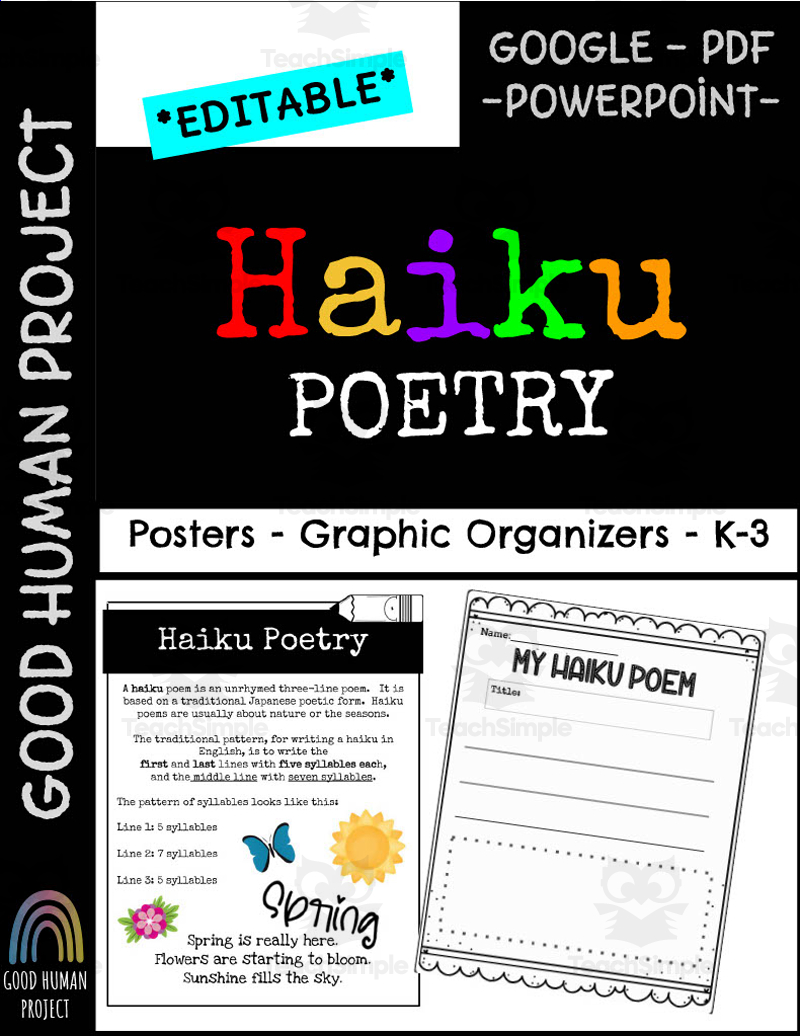
Bio Poetry Writing | Posters & Graphic Organizers

Bio Poetry Writing | Posters & Graphic Organizers
ELA, Literature, Poetry, Grade 1, 2, 3, Graphic Organizers, Teacher Tools

This resource is a set of templates for bio poem writing. This pairs well with your poetry unit in English class. You may also love to print these off and use in a center activity. This resource can be accessed through: PowerPoint Google slides PDF

Author Good Human Project

Tags Bio Poems, Poetry Lesson, Poetry Writing, Graphic Organizers, Posters

Comparing Characters Worksheet

Comparing Characters Worksheet
ELA, Reading, Preschool, Grade 1, 2, Teacher Tools, Graphic Organizers, Worksheets & Printables, Worksheets

This worksheet is a great way for students to compare two characters from a story. It is a simple and effective way to determine how characters are alike and different.

Author Have Fun Teaching

Tags Compare And Contrast

CHARACTER: The FIVE Elements of a Story Graphic Organizers

CHARACTER: The FIVE Elements of a Story Graphic Organizers
ELA, Reading, Reading Comprehension, Language Development, Pre-Reading, Writing, Not Grade Specific, Teacher Tools, Graphic Organizers

This is our CHARACTER section of our Graphic Organizers Series: The FIVE Elements of a Story. In this set, you can enjoy 10 custom graphic organizers for Character. These graphic organizers can be used in any classroom, for any grade, and with any student. Included in this set are: - Character Map - Character Trait Chart - Character Feelings - Relationship Web - Character Comparison - Character Scrapbook - Character Analysis - Character Development - Character Cluster - Character Sketch Use these graphic organizers to help students gain an understanding of Character in a story. Each graphic organizer comes with instructions on how to use them. Character Graphic Organizers: Character Map - Write the name of the character in the middle circle. Then, describe the character’s actions in the top left square; what the character says and how they speak in the top right square; the character’s feelings in the bottom left square; and what the character looks like in the bottom right square. Character Trait Chart - Choose a character from the story. In the first column, write down any traits that your character has. Include physical features, personality, feelings, and anything else that describes your character. In the second column, provide evidence from the story to support your chosen trait. Character Feelings - In the top box, describe the character’s feelings at the beginning of the story. In the next series of boxes, describe an event that has an effect on the character, then how this character feels as a result of this event. In the last box, describe the character’s feelings at the end of the story. Relationship Web - Write the name of the main character in the story in the middle circle. In the circles branching out from the middle one, write down the relationships the character has. Include whether you think this is a good relationship or a bad one. Do the same for any other character in the story. Character Comparison - Use the Venn Diagram to compare two characters from the story. Write the names of each character in the overlapping circles. Write any differences the characters have with one another in the outside circles. Write any similarities the characters have in the middle of both circles. Character Scrapbook - Create a scrapbook for one of the characters in the story. Choose a character from the story. Choose some important events that happen in the story that shapes the character. Draw pictures of these events and explain what happened and how it affected the character. Character Analysis - Keep track of every character in the story and their traits. Write the name of each character in the story in the first column. Write a trait that the character has in the second column. In the third column, write down the page and paragraph number of a quote that proves this trait. Character Development - Choose a character from the story. Write down their initial thought on a topic or situation in the first column. In the second column, write down the event that has an effect on that character’s thoughts. Then, write down the character’s new thoughts on the topic or situation in the third column. Character Cluster - is Cluster Map can be completed in many different ways. Start with a character in the middle triangle. Then, branch out from the character with related topics in the circles. Expand on those topics in the rectangles. Suggestions include: relationship web, traits web, feelings web. Character Sketch - Complete this Character Sketch of any character in the story by writing what the character says, thinks, hates, loves, owns, does or uses. Also include the characters strengths and weaknesses, and where the character has come from in the story, and where the character is going.

Author Ibby Resources

Rating

Tags Study, Skills, Character, Literary, Device

Worldle Country of the Day – Geography Routine

Worldle Country of the Day – Geography Routine
Social Studies, Geography, Grade 4, 5, 6, 7, 8, 9, Teacher Tools, Graphic Organizers

Here's an easy way to incorporate world geography into your classroom routine! How to Use: Play WORLDLE with your class: https://worldle.teuteuf.fr/ It's a game inspired by WORDLE but using images of countries instead. It's a great way to also practice, percentages, compass directions and distances, as incorrect guesses are given information about how far they are from the actual country, in what direction, and what percentage accuracy your guess had. After you have determined the country of the day, students can spend a few minutes learning about it and recording basic facts on the handout (you can print it double-sided, so 12 countries fit on a sheet). Students need to identify which continent the country is part of, find its current population, the capital city, countries that are neighbours, the official language or languages, and two fun facts. This website is a great resource for learning about each country: https://www.kids-world-travel-guide.com/ If you play for a whole school year, you should have time to learn about most of the countries in the world! You could also let students choose different countries from the game to research more in depth and present to one another. Grades to Use With: This is an easy routine to use in your grades 4-9 classrooms. It could be a morning homeroom activity as kids arrive each day or something to help the class settle after lunch. You could also use it during social studies or geography lessons as a quick break or reward. If you enjoy this social studies product, check out others in my store: United Nations Declaration on the Rights of Indigenous Peoples Political Spectrum: Handout, Sorting Task, Local Research and Reflection Critical Thinking: Income Inequality: An Integrated Math and Social Studies Lesson

Author Grace Under Pressure

Rating

Tags Worldle, World Geography, Daily, Routine, Countries, Map, Earth, Social Studies, Homeroom, Morning Routine, What Is Today's Worldle Country, Worldle Country Today, Worldle Geography Today, World.teuteuf.fr, Worldle Geography Website, Worldle Today Country, What Is The Worldle Country Today, What Is Todays Worldle Country, Worldle Countey, Worldle World Map Game, Worldle Countrie, Worldle Country Wordle, World Teuf Teuf, Worldel Country, Worldle County, Worldle World Map, World. Teuteuf. Fr, Wordle Geography Website, Worldle World Wordle, World Teuteuf Fr

Personality Traits in Spanish – Bilingual Word Lists

Personality Traits in Spanish – Bilingual Word Lists
ELA, Language Development, ESL, Grade 3, 4, 5, Teacher Tools, Graphic Organizers

This resource is a Bilingual Physical & Character Traits Packet. This packet comes equipped with word lists and graphic organizers offered in English and Spanish. This is a great way for students to explore and practice new vocabulary. Students can use these lists and graphic organizers to help them alongside reading assignments when they are identifying traits!

Author Creatively Mrs. B

Rating

Tags ESL, Bilingual, Spanish, Word Lists, Character Traits, Character Traits Word List, Graphic Organizers

Insect Beginning, Middle, End Worksheet

Insect Beginning, Middle, End Worksheet
ELA, Reading, Preschool, Grade 1, 2, 3, 4, Teacher Tools, Graphic Organizers, Worksheets & Printables, Worksheets

The Insect Beginning, Middle, End Worksheet helps students in grades K-4 improve their reading comprehension by identifying key story elements. Students read a passage about the life cycle of an insect, then fill out a graphic organizer worksheet labeling the major events that occur in the beginning, middle, and end. Educators can use this resource in small groups or for independent practice to reinforce literacy skills. Students will learn how to analyze a text and understand story structure. This worksheet integrates science content on insects with essential reading skills. Adaptable across elementary grade levels, it provides a creative approach to building comprehension. Use this engaging resource to help students grasp plot, sequence events logically, and become more thoughtful readers.

Author Have Fun Teaching

Tags Sequencing, Summarizing

History Vertical Timeline of Events Graphic Organizer

History Vertical Timeline of Events Graphic Organizer
Social Studies, History, History: World, Not Grade Specific, Graphic Organizers, Teacher Tools

This graphic organizer is perfect for helping students build their sequencing skills. With space to record three events, it's a great tool for any history lesson.

Author Have Fun Teaching

Tags Note Taking, Summarizing, History, A Timeline Is Not A Graphic Organizer., Graphic Organizer Timeline

AAC | Picture Description Short Story | Visual Guide Resource 5

AAC | Picture Description Short Story | Visual Guide Resource 5
Special Resources, ELA, Special Education Needs (SEN), Speech Therapy, Language Development, Pre-Reading, Vocabulary, Writing, Kindergarten, Preschool, Grade 1, 2, Teacher Tools, Graphic Organizers

AAC Picture Description Short Story Visual Guide Resource 5 is an educational resource designed specifically for educators and therapists. Its main goal is improving the language development, communication, and early literacy skills of children with special education needs (SEN), speech therapy patients, as well as mainstream classroom students primarily from preschool through grade two. This resource combines various teaching aids including: Real-life pictures Color-coded sentence strips Familiar themes like WHO / WHAT DOING / WHERE / WHEN / WEATHER / SURROUNDINGS/ THOUGHTS represented on separate pages Description of clothes or individual's appearance etc. The learning journey begins with a real-life photo that serves as the basis for all ensuing activities then leverages color-coded sentence strips to help children formulate narratives around familiar themes. Additional features include descriptions of clothing worn by individuals in photos and sequential answer boards that allow narrative formation through randomized questioning. An added attribute of this resource pack is the inclusion of blank colour coded pages which invite learners to contribute creatively- customizing stories in their unique way thus strengthening their communication roots further. The AAC Picture Description Short Story Visual Guide Resource 5 offers immense flexibility - use it en masse during whole-group instruction sessions or divide it among smaller groups; distribute it for homework assignments enhancing independent thinking; make use of task cards material available within; or even creating minibooks complete with descriptive strips and boards! This package comprises 16 printable PDFs each equipped with: Sentence construction strips Narration boards & Answer cards aiming at improving children's verbal abilities+ Note: The downloaded file can be printed and laminated for use. While this tool is designed primarily for use in educational environments, it can be equally beneficial during one-on-one learning or therapy sessions at home facilitated by parents/guardians and is thus an excellent asset towards children's verbal, cognitive, social and emotional development.

Author WORDS ASIDE

Tags AAC, Picture Description, Short Story, Visual Guide, Communication Skills

Summarizing Organizer Worksheet

Summarizing Organizer Worksheet
ELA, Writing, Reading, Grade 2, 3, 4, 5, Teacher Tools, Graphic Organizers, Worksheets & Printables, Worksheets

Better description: The Summarizing Organizer Worksheet helps students break down larger ideas by underlining key words and phrases. This is a great tool for students who need help summarizing texts.

Author Have Fun Teaching

Tags Summarizing

42 Editable Bookmarks for teachers and students - Nature #5

42 Editable Bookmarks for teachers and students - Nature #5
, Not Grade Specific, Teacher Tools, Graphic Organizers

Nature-Themed Editable Bookmarks for Educators This editable bookmark set allows teachers to create customized bookmarks for students. The PowerPoint file includes 42 nature-themed bookmark templates with multiple layouts that can be edited with text, images, and more before printing. These bookmarks can be used for reading incentives, reminders, or student creation. Students will enjoy personalizing bookmarks for themselves, friends, family, and teachers. This adaptable resource is useful for any grade level or subject. Teachers can provide vocabulary words, reading tips, website links, QR codes, or inspiration quotes on the bookmark templates. The possibilities are endless for these editable bookmarks that can be tailored to any educational need and printed year after year. This set offers a creative way for teachers to engage students while encouraging reading.

Author Pick'n Teach

Tags Graphics, Bookmarks, Editable, Nature, Reading

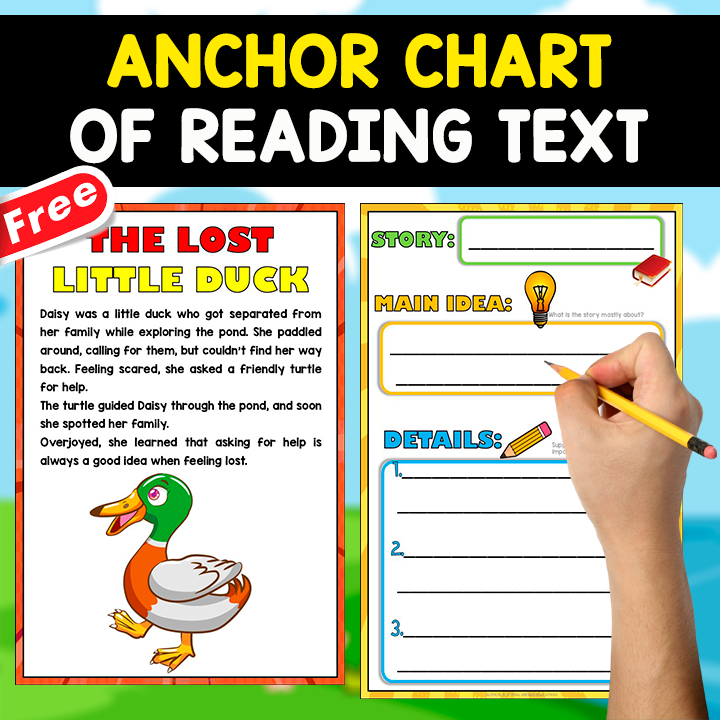
Main Idea and Details Graphic Organizer

Main Idea and Details Graphic Organizer
ELA, Reading, Grade 2, 3, 4, 5, 6, Teacher Tools, Graphic Organizers, Worksheets & Printables, Worksheets

This graphic organizer will help your students to independently read and determine the main idea by organizing details. This is a great tool to use in order to improve reading comprehension.

Author Have Fun Teaching

Tags Main Idea

FREE: The FIVE Elements of a Story Graphic Organizers
Free Download

FREE: The FIVE Elements of a Story Graphic Organizers
ELA, Reading, Reading Comprehension, Language Development, Pre-Reading, Writing, Not Grade Specific, Teacher Tools, Graphic Organizers

This is a FREE sample of our Graphic Organizers Series: The FIVE Elements of a Story. In this sample, you can enjoy a selection of 10 custom graphic organizers for Character, Setting, Plot, Theme, and Conflict. These graphic organizers can be used in any classroom, for any grade, and with any student. Use these graphic organizers to help students gain an understanding of the five elements of a story. Each graphic organizer comes with instructions on how to use them. Character Graphic Organizers: Character Map - Write the name of the character in the middle circle. Then, describe the character’s actions in the top left square; what the character says and how they speak in the top right square; the character’s feelings in the bottom left square; and what the character looks like in the bottom right square. Character Comparison - Use the Venn Diagram to compare two characters from the story. Write the names of each character in the overlapping circles. Write any differences the characters have with one another in the outside circles. Write any similarities the characters have in the middle of both circles. Setting Graphic Organizers: Setting Stage - Draw the setting that the story takes place in on the stage in this graphic organizer. Be sure to illustrate the time and place that the story takes place in. Also include the environment of the story, and try to show the tone or mood that the setting creates for the story. Elements of Setting - Place + Time + Environment + Mood = Setting in this Graphic Organizer. Describe the Place that the story takes place in the top left box. Then, describe the Time in the top right box. Then, describe the Environment in the bottom left box. Finally, describe the Mood in the bottom right box. Plot Graphic Organizers: Plot Pyramid – Complete this classic Plot Pyramid graphic organizer by writing the Introduction of the story in the bottom left box. Then, describe the Rising Action, followed by the Climax of the story. Finish up with the Falling Action and the Resolution or Conclusion of the story. Storyboard – Illustrate the plot or an event from the story. Draw or describe in detail each stage in the plot or in an event that takes place in the story. Remember, the order of plot development is: Introduction, Rising Action, Climax, Falling Action, and Resolution/Conclusion. Theme Graphic Organizers: Theme Chart – First identify the main characters, main conflict, and theme of the story. Then, breakdown the theme of the story by first writing down the beginning of the theme. Follow this by writing the development of the theme, then the climax of the theme. Finish off with the resolution of the theme. Theme Identifier – Get help identifying the Theme of a story by answering the questions. Start off by describing what happens in the story. Then, identify the most important event in the story. Explore the characters by identifying how they change and what they learn. Finally, determine what the author is trying to tell you. Conflict Graphic Organizers: Conflict Dissection – Complete this graphic organizer by filling in each quadrant. In the first box, identify the characters of the story. In the next box, identify the time and place of the story. In the third box, identify the problem that takes place in the story. In the last box, identify the solution to the problem. Conflict Type Chart – In the first column, find examples from the story that shows Character against Character. In the second column, find examples of Character against Nature. In the third column, find examples of Character against Self. And finally, in the fourth column, find examples of Character against Society.

Author Ibby Resources

Tags Study, Skills, Character, Setting, Plot, Theme, Conflict, Literary, Device

Progressive Era Muckrakers Reading & Graphic Organizer

Progressive Era Muckrakers Reading & Graphic Organizer
Social Studies, History, History: USA, Grade 6, 7, 8, 9, 10, 11, 12, Teacher Tools, Graphic Organizers

This is a set of readings on the leading "muckrakers" of the Progressive Era. This resource includes a corresponding graphic organizer . I suggest to finish the lesson with an excerpt from Upton Sinclair’s The Jungle—a big hit with the high school set.

Author Exa's Excellent Social Studies Lessons

Tags Progressive Era, Muckrakers, The Jungle, Ida Tarbell, Theodore Roosevelt, Progressive Era Muckrakers Answer Key, Progressive Era Muckrakers Worksheet Answers, Modern Day Muckrakers

Cause and Effect Graphic Organizer

Cause and Effect Graphic Organizer
ELA, Reading, Grade 2, 3, 4, Teacher Tools, Graphic Organizers, Worksheets & Printables, Worksheets

This graphic organizer can help your students organize the effects of a given cause. It's a great tool to use in any cause and effect lesson.

Author Have Fun Teaching

Tags Cause And Effect, Cause And Effect Organizers, Cause/effect Graphic Organizer, Cause And Effect Essay Graphic Organizer

Note Taking Worksheet

Note Taking Worksheet
ELA, Reading, Grade 2, 3, 4, 5, Teacher Tools, Graphic Organizers, Worksheets & Printables, Worksheets

This Note Taking Worksheet is a great way for students to take notes and summarize a book or story. This graphic organizer is simple and easy to use, and it will help students to understand the story better.

Author Have Fun Teaching

Tags Note Taking, Summarizing

Reading Comprehension What I Read What I Saw Graphic Organizer Worksheet

Reading Comprehension What I Read What I Saw Graphic Organizer Worksheet
ELA, Reading, Grade 1, 2, 3, 4, Teacher Tools, Graphic Organizers, Worksheets & Printables, Worksheets

This graphic organizer is a great way for your students to practice reading comprehension. By having them pick a book and write down what they read and saw, they will be able to better understand the material. This is a great resource for any teacher looking to help their students improve their reading comprehension skills.

Author Have Fun Teaching

Tags Reading Comprehension, What Is A Graphic Organizer For Reading, Graphic Organizer Reading Comprehension, Reading Graphic Organizer, Graphic Organizer For Reading, Reading Comprehension Graphic Organizers, Comprehension Graphic Organizers

33  editable BOOKMARKS for students and teachers "Nature"

33 editable BOOKMARKS for students and teachers "Nature"
, Not Grade Specific, Teacher Tools, Graphic Organizers

33 editable BOOKMARKS They were designed for ANY CLASS, ANY SUBJECT, ANY GRADE, ANY LANGUAGE. These 33 BOOKMARK templates can be used by the teacher and the students. My students really love to create their own bookmarks ! All you have to do is edit the bookmarks with text, links, QR codes, photos, clipart, graphics and more - and then print ! Content: 33 templates to use year after year 11 slides with different layouts for each bookmark 3 bookmarks / slide Lines for easy cutting The text boxes were already made for you - you can add more and move them where needed. How to use: Use them as presents for Christmas, Easter, Back to school, spring, Earth Day, Thanksgiving, birthdays, school trips, parents, night... for ANY OCCASION ! Provide reading tips, useful expressions... punchcard bookmarks, library bookmarks, vocabulary, grammar, operation, revision bookmarks... Have your students write or type poems, notes... for their classmates, parents, teachers... The possibilities are endless ! Format: PowerPoint Add text, clip art images, shapes, photos, drawings, charts , graphics, QR codes, tables… Copy / paste your notes, lessons, directions, activities… or type original text. Choose your fonts, your colors, your sizes… Save as pdf and print the size you like Please note: The clip art images used in this resource belong to their owners and are not editable (background, frames and clip art images). For similar resources and engaging activities for your students, visit my page HERE !

Author Pick'n Teach

Tags Graphics, Editable, Nature, Bookmarks, Reading

Chinese History Review Sheets

Chinese History Review Sheets
Social Studies, History, History: Asian, Grade 9, 10, 11, 12, Teacher Tools, Graphic Organizers

These Chinese History Review Sheets will make great study guides for your history students. Students will use the charts to learn about China's: - Belief systems - Foreign influence downfall - Achievements - Historical eras & so much more!

Author Cogjogger

Tags Chinese, History, Review Sheets, Study Guide, Vocabulary

Sentences to Infer

Sentences to Infer
ELA, Strategies, Reading, Grade 2, 3, Worksheets & Printables, Worksheets, Graphic Organizers

This is a 4-page printable with Sentences to Infer. On each page, there is a different sentence. Students will complete the graphic organizer with questions to help them infer.

Author Elementary Resources 4 U

Tags Infer Sentence, Making Inferences, Reading, Strategies, Reading Strategies, Language Skills, Literacy Centers, Making Predictions, Sentence Using Infer, What Can You Infer From This Sentence, Sentences, Inference

Paperless Lecture Notes

Paperless Lecture Notes
, Grade 9, 10, 11, 12, Teacher Tools, Graphic Organizers

This resource is a Paperless Lecture Notes. This is a very thorough and structured template to provide your students with a concise note-taking routine. They will be able to detail key terms, important dates and so much more. This paperless option allows students to type into the boxes when opened as a PDF. Notes can be saved or printed.

Author Creating History

Tags Paperless, Lecture Notes, Note Taking, Graphic Organizers, Current Events

Graphic Organizers Simplified A - Reading, Writing & Thinking Skills

Graphic Organizers Simplified A - Reading, Writing & Thinking Skills
ELA, Reading, Writing, Grade 2, 3, Graphic Organizers, Teacher Tools

This graphic organizer -based resource is designed for grades 2 to 3. The graphic organizers included in this resource helps students organize their thoughts to be successful in reading, writing and thinking. Graphic organizers are used to help students become better readers, writers and thinkers. This is the first book in a series of four that provides ready-to-use content. The lessons within this resource are made up of three sections: a reading section, a graphic organizer , and comprehension-style worksheets. Aligned to the International Reading Association and National Council of Teachers of English Standards 1, 3, 6, and 12.

Author Classroom Complete Press

Tags Graphic Organizers, Comprehension, Answers, Primary, Elementary

Adapted Math Binder: Symmetry

Adapted Math Binder: Symmetry
Math, Geometry, Grade 3, 4, Teacher Tools, Graphic Organizers

The Adapted Math Binder: Symmetry - Grade 3 and 4 The Adapted Math Binder: Symmetry is a comprehensive and user-friendly teaching resource specifically designed for helping grade 3 and grade 4 students who are on an adapted Individualized Education plan. The emphasis is on making the subject of symmetry both engaging and accessible, ensuring that students can progress at their own pace. Diverse Learning Styles To ensure diverse learning styles are well-represented, the binder packs in: An assortment of visually appealing worksheets, Hands-on activities as well as strategic assessments. This tool is meticulously designed to bolster the understanding of symmetry among students. A significant part of its focus is on identifying lines of symmetry and facilitating the creation of symmetrical shapes. Versatile Tool This versatile tool aligns seamlessly with Pearson Number Math Program but isn't limited by it; any child requiring additional support—in terms of graphic organizers or extra workspace—will find this binder beneficial for achieving independent study targets or when taking assistance from a tutor/parent. Binder Highlights: Addresses challenging symmetry concepts for grades 3 & 4 Inclusive of all necessary resources such as graphic organizers Fuss-free usability A key usability feature that educators will appreciate considerably: just print off the pages, place them in designated page protectors inside a binder along with dice markers —and start using it! For added convenience, every file included comes in easy-to-use PDF format. Evaluation and Reporting Another notable inclusion within this comprehensive file is an evaluation grid alongside rubrics—that can facilitate easy assessment while making reporting to parents more streamlined & comprehensible. Looking Forward: Users can also look forward to more such Adapted Math Binders soon—each aiming to simplify different conceptual areas within mathematics education effectively. The Adapted Math Binder: Symmetry- An Essential Tool The Adapted Math Binder: Symmetry truly encapsulates essential elements required by educators. Its well-organised, intuitive layout combined with a strong content strategy ensures that it can be used in different educational setups – from public schools to homeschoolers, for whole group teaching sessions, small focus groups or even as homework assignments.

Author I Heart Grade 3

Tags Adapted Math, Symmetry, Teaching Resource, Visual Learning, Hands-on Activities