3,950 products added recently
Page 12 - Graphic Organizers
Incorporate graphic organizers into your teaching to help students organize information visually. This collection includes mind maps, Venn diagrams, flowcharts, and more, suitable for various subjects and grade levels. By using graphic organizers, you can aid comprehension, facilitate critical thinking, and improve retention.
Fire KWL Graphic Organizer
ELA, Reading, Special Resources, Life Skills, Grade 2, 3, 4, 5, 6, Teacher Tools, Graphic Organizers, Worksheets & Printables, Worksheets
The Fire KWL Graphic Organizer is a great way for students to learn about firehouses. They can record what they know, want to know, and then learn about firehouses. This is a great resource for teachers who want to help their students learn about firehouses.
Author Have Fun Teaching
Tags KWL And KWHL
French Revolution: Complete Graphic Organizer
Social Studies, History, History: Europe, History: World, Grade 8, 9, 10, 11, Teacher Tools, Graphic Organizers
The French Revolution was a period of radical social and political upheaval in France from 1789 to 1799. It began with the storming of the Bastille prison in Paris on July 14, 1789, and ended with the rise of Napoleon Bonaparte as Emperor in 1799. The French Revolution was sparked by a combination of economic, social, and political factors. France was facing a financial crisis due to its involvement in the American Revolution and the extravagant spending of King Louis XVI and his queen, Marie Antoinette. Meanwhile, the majority of the French population, particularly the lower classes, were suffering from poverty, starvation, and inequality. The revolution began with the Estates-General, a meeting of representatives from the three social classes in France, which had not been convened since 1614. The Third Estate, which represented the common people, demanded more representation and greater political power. When the king refused, the Third Estate declared itself the National Assembly and began drafting a new constitution. The revolution quickly turned violent, as crowds of angry Parisians stormed the Bastille and other symbols of the monarchy. In August 1789, the National Assembly abolished feudalism and established the Declaration of the Rights of Man and of the Citizen, which asserted the equality of all citizens before the law and guaranteed individual rights such as freedom of speech, press, and religion. The revolution continued with the Reign of Terror, a period of mass executions and political repression led by radical Jacobin leader Maximilien Robespierre. The Reign of Terror was brought to an end with the execution of Robespierre in 1794. In 1795, a new constitution was established, creating a Directory government. However, the Directory was plagued by corruption and instability, leading to the rise of Napoleon Bonaparte, who seized power in a coup d'état in 1799. The French Revolution had a profound impact on world history, inspiring political and social revolutions in Europe and beyond. Its legacy includes the spread of revolutionary ideals such as liberty, equality, and fraternity, the emergence of nationalism, and the transformation of Europe's political and social order. Teacher-prepared notes show students what is important and how ideas relate, and offer a model for how students should take notes themselves (Marzano et al., 2001). This graphic organizer helps students understand the underlining causes and effects of the French Revolution. The notes go over The Tennis Court Oath, the Bastille, and The Great Fear. These notes also cover the start and end of the Reign of Terror, and conclude with an overview of the rise and fall of Napoleon. Ready to print and ready to use! Clipart credit: By PrincePadania and byDandy Doodles
Author EduPal Learning
Tags Graphic Organizer, World History, European History, Cause And Effect
Trigonometry Cheat Sheet – Identities, Formulas and Unit Circle
Math, Trigonometry, Grade 9, 10, 11, 12, Teacher Tools, Graphic Organizers
Eleven pages compile trigonometric formulas by topic rather than presenting practice problems: the six ratio definitions (sin, cos, tan, csc, sec, cot) given twice, once in terms of a right triangle's opposite/adjacent/hypotenuse and once generalized to any angle using x, y, and a unit radius, followed by the Law of Sines, Law of Cosines, and Law of Tangents. Later pages cover domains, ranges, and periods of each trig function, double-angle, half-angle, cofunction, sum-and-difference, product-to-sum, and sum-to-product identities, inverse trig function definitions and properties, and a full table of exact sine, cosine, and tangent values for every special angle from 0° to 360°. No worked examples, explanatory text, or practice problems appear anywhere in the file - it is formula reference only, meant to sit beside separately assigned problems rather than teach a concept on its own.
Author educ_project
Tags Math, Trigonometry, Cheat Sheet, Formulas, Reference Tool
Truman and the Dropping of the Atomic Bomb: Graphic Organizer
Social Studies, History, History: USA, Grade 8, 9, 10, 11, Teacher Tools, Graphic Organizers
Harry S. Truman, the 33rd President of the United States, played a pivotal role in the development and use of atomic bombs during World War II. Truman assumed the presidency on April 12, 1945, following the death of President Franklin D. Roosevelt. At that time, the Manhattan Project , a secret research program focused on developing atomic weapons, was already underway. As President, Truman was faced with a difficult decision regarding the use of atomic bombs against Japan. The Manhattan Project had successfully created two atomic bombs, and Truman had to decide whether to deploy them as a means to end the war. After the war, Truman focused on preventing the spread of nuclear weapons. He supported the creation of the United Nations and played a key role in establishing the Baruch Plan, which proposed international control of atomic energy to prevent further proliferation. Truman's decision to use atomic bombs on Hiroshima and Nagasaki remains one of the most consequential actions of his presidency. It ushered in the nuclear age, shaped the course of history, and sparked ongoing discussions about the use and ethics of atomic weapons. Teacher-prepared notes show students what is important and how ideas relate, and offer a model for how students should take notes themselves (Marzano et al., 2001). This graphic organizer gives students two primary source quotes regarding Truman's use of the bomb. The notes then explain some pro/con arguments about the use of the bomb. Lastly, the notes give students a chance to look at the six immediate effects of the bomb. Comes with a fill-in-the-blank version. Clipart Credit: By PrincePadania
Author EduPal Learning
Tags World War II, Truman, Atomic Bomb, Manhattan Project, Japan, Cold War, Graphic Organizer, Pro Con Graphic Organizer
Greece and Rome Sort
Social Studies, History, History: Ancient, Grade 9, 10, 11, 12, Teacher Tools, Graphic Organizers
If your history students are studying ancient civilizations, this is a great resource that will help students organize their thoughts, take notes, and review their learning in engaging ways. This is aGreece and Rome Sort. This was designed for your high school history students. It is a 1-page resource that is composed of a graphic organizer for students to complete. This is a digital resource that can easily be accessed in Google Slides or Microsoft PowerPoint. If you access it through Google Slides , you can assign it to students’ classrooms for them to complete on their devices. You may also choose to project it onto your smartboard and have it completed as a whole group. Another alternative would be to project it onto your smartboard and have students write their answers on notebook paper independently. Then you could go over the answers as a whole group and students can check their work. Students will put the image or statement under the correct classical civilization. There are 16 statements and 5 images to sort. This is a great introduction or review activity. An answer key is included. I hope you enjoy! Take A Look at My Best Sellers: Reformation Book Cover World History II Remediation Packet Modern World People Foldable The World in 1500 AD Cheat Sheet Explorer Project Genocide Worksheet You can find more resources at my storefront here: https://teachsimple.com/contributor/history-with-delong
Author History with DeLong
Tags Social Studies Graphic Organizer, Ancient History, Greece, Rome, Sorting Activity, Vocabulary Terms, History Images, Picture Sorting, Partner Work
Rate A Poem
ELA, Literature, Poetry, Grade 1, 2, 3, Graphic Organizers, Worksheets, Worksheets & Printables
This is a fun resource to implement within your poetry unit or any time students are reading a poem. This is a Rate A Poem activity that can be completed independently, in centers or small groups. Students will rate the poem by giving it stars, discussing the rhyming, illustrate for the poem and much more. This resource can be accessed through: -Google slides -PDF -PowerPoint
Author Good Human Project
Tags Language Arts Activity , Graphic Organizer, Reading Response
Elegy Poetry Writing – Posters & Graphic Organizers
ELA, Literature, Poetry, Grade 1, 2, 3, Graphic Organizers, Teacher Tools
Elegy Poetry Writing posters and graphic organizers introduce students to elegy poetry in a creative way. With informative posters , students explore features, famous examples, and tips for writing their own elegy poems. Then, they use the graphic organizers to brainstorm and draft original elegies. This resource covers elegy poetry comprehensively, from understanding the conventions to publishing a polished piece. It can be used in language arts classes, reading groups, or writing workshops for independent practice. Students gain literacy skills as they read and analyze sample elegies. By the end, they feel equipped to write personal and emotive elegies. This versatile resource has engaging visuals suitable for whole-class instruction, small groups, or individual work. Offered as a PowerPoint, Google slides , or printable PDF, it integrates smoothly into diverse learning environments.
Author Good Human Project
Rating
Tags Posters, Graphic Organizers, Elegy, Poetry Writing, Poems, How To Write Elegy Poem, Elegy Poetry, Elegy Poem Format, Famous Elegy Poems, How To Write An Elegy Poem, How To Write An Elegy, How To Write A Elegy, How To Write A Elegy Poem
Brown v. Board of Education – 1954 Case Brief
Social Studies, Government, History, History: USA, Grade 8, 9, 10, 11, Graphic Organizers
Brown v. Board of Education is a landmark United States Supreme Court case that was decided in 1954. The case involved the issue of racial segregation in public schools and had a profound impact on the civil rights movement. The case originated from several lawsuits filed by African American families challenging the segregation of public schools based on race. At the time, racial segregation was widespread in many areas of the United States, and public schools were often segregated, with African American students attending separate schools that were unequal in terms of resources and quality of education. In Brown v. Board of Education, the Supreme Court unanimously ruled that segregation in public schools violated the Fourteenth Amendment's Equal Protection Clause, which guarantees equal treatment under the law. The Court concluded that separate educational facilities for white and African American students were inherently unequal and that racial segregation in public education had a detrimental impact on African American children, damaging their self-esteem and denying them equal educational opportunities. The decision in Brown v. Board of Education overturned the "separate but equal" doctrine established in the 1896 case Plessy v. Ferguson, which had allowed for racial segregation as long as the separate facilities were equal in quality. The Brown decision declared that separate educational facilities were inherently unequal and ordered the desegregation of public schools. However, the implementation of the Brown decision faced significant resistance in many printables/parts-of-and-anatomy-of">parts of the country. Some states and localities resisted desegregation efforts, leading to years of legal battles and social upheaval. It wasn't until years later, through further court rulings, federal legislation, and the efforts of civil rights activists, that significant progress was made in desegregating schools and advancing equal educational opportunities for all students. Overall, Brown v. Board of Education was a pivotal case in the civil rights movement, challenging the legal foundation of segregation and setting the stage for subsequent efforts to end racial discrimination in various aspects of American society. Teacher-prepared notes show students what is important and how ideas relate, and offer a model for how students should take notes themselves (Marzano et al., 2001). These teacher-created notes will help your students grasp the major impact of the Brown v. Board of Education 1954 case. These notes come with a student version and a completed teacher version. These notes work well as a supplement to class readings! Product clipart credit: by Clip Art Emporium
Author EduPal Learning
Rating
Tags Brown V. Board Of Education, Civil Rights Movement, Supreme Court, 1954, Case Brief, Education
Historical Fiction Genre Study Book Report
Social Studies, ELA, Reading, Reading Comprehension, Literature, Research, Grade 6, 7, 8, 9, Worksheets & Printables, Novel Studies, Teacher Tools, Graphic Organizers, Activities, Projects, Lesson Plans, Assessments, Worksheets
The 34-page Historical Fiction Genre Study Book Report is designed for grades 6th, 7th, 8th, and 9th, but it can easily be modified for lower or higher grades. This book report is an excellent supplement to a unit on a particular historical period. Through reading historical fiction, students can gain a deeper appreciation for historical periods and how they relate to the present day. The goal of this lesson is to introduce students to the genre of historical fiction and to help them understand its importance and significance. By the end of the lesson, students should have a good understanding of what historical fiction is. Students will read a historical fiction novel, analyze its characters, plot, and author's craft , and present their findings to a small group. The book report includes a detailed lesson plan on the historical fiction genre, objectives and learning targets aligned to the Common Core standards, directions for the book report with handouts and worksheets for students, a student self-evaluation, and a grading sheet for teachers. Many students enjoy reading historical fiction, especially if they are learning about the period in their History/Social Studies class. If you do the genre study component of this resource, the book report offers a high-quality culminating project. In addition, if you teach a Language Arts/History Core or plan with a History/Social Studies partner-teacher, this is an excellent resource for both classes and provides students with a different way to engage with history. Historical fiction is an essential genre for students for a variety of reasons because it makes the study of history more engaging and interesting and it brings the past to life. Students gain a deeper appreciation for historical periods and how they relate to the present day, It also improves critical thinking skills by giving students opportunities tothink critically about the events and people from the past, analyze and interpret historical events, understand different perspectives,and it encourages empathy, tolerance, and respect because students learn to see history through the eyes of characters from different time periods and cultures Historical Fiction Genre Study Book Report includes the following: 2 comprehensive and interactive lesson plans: Book Browse lesson plan Historical Fiction Genre lesson plan with common core standards, objectives, and learning targets easy-to-follow student directions Note taking Guide Note taking Guide Chart Spoke Diagram Plot Diagram Character Chart Sensory Description Chart Other Elements in Historical Fiction Chart Storyboard Presentation in Small Groups Directions Self-Evaluation of Historical Fiction Book Report Check-Off and Grading Sheet Other Resources You Might Be Interested In: Book Reports: Autobiography/Biography Genre Study Book Report and Speech Book into Movie Project: Compare and Contrast Book Report and Essay Book Jacket Book Report Character Analysis Essay, Gift for a Character Book Report, and Oral Presentation Historical Fiction Genre Study Book Report Historical Fiction Genre Study Literature Circle Project Poetry Book Report Mini-Reviews Book Report Mystery, Thriller, Horror, and Suspense Genre Study Book Report Narrative Nonfiction Genre Study Book Report Project Poetry Book Report Dystopian. Science Fiction, and Fantasy Genre Study Game Board Project Reading Units: Creating Independent Readers in your Middle School Classroom which is available as 1 unit or as individual resources Part 1: What We Do When We Read: Part 2: Reading Logs, Setting Goals, and Reflection Part 3: Summary Writing for Short Stories Part 4: Metacognitive Logs: Reading Response Bonus: How to Set Up An Amazing Classroom Library (without Spending Much Money): Google Slide Shows: Characterization: What It Is and How to Develop It Writing with Suspense If you have any questions, please email me at gruenwaldy1@gmail.com
Author Intentional Teaching and Learning
Tags Historical Fiction, Book Report, Research, Assessment, Story Elements, Analysis, History, Author's Craft, Critical Thinking, Self-evaluation
Beginning Writer Story Board
ELA, Writing, Creative Writing, Preschool, Grade 1, 2, 3, Teacher Tools, Graphic Organizers, Activities, Worksheets & Printables, Worksheets
The Beginning Writer Story Board: An Innovative Teaching Tool Constructed meticulously with the younger writer's mind in sight, this storyboard set caters specifically to those taking their first steps into narrative story writing. The Beginner Writer Story Board is a versatile teaching resource that provides an engaging and interactive way for young students (kindergarten-grade 3) to express their thoughts, ideas, and experiences. Building Creative Narratives 108 thematic story cards featuring characters, items, settings and other diverse elements act as unique puzzle pieces for creative storytelling. Students are encouraged to construct narratives by selectively piecing together these cards onto a storyboard. This empowers learners as they become the architects of their own narratives. Versatile Storyboard Options The set comes with ten distinct storyboard options where students can arrange chosen story cards on laminated boards using reusable Velcro dots. With an easy interchangeability option if they decide to redirect their creative storyline. Other Key Features: Fosters independent thinking skills. Promotes decision making process during narrative creation. Aids struggling writers by providing visual cues throughout drafting process. Suitably crafted for classroom material during language arts lessons or exciting homework exercise promoting narrative skills outside regular school hours! Inspire creativity in your students with the Beginner Writer Story Boards! Let them uncover captivating tales lying ahead!
Author Simply Schoolgirl
Tags Creativity, Narrative Writing, Story Cards, Independent Thinking, Visual Aids
Main Idea Spider Graphic Organizer
ELA, Reading, Grade 2, 3, 4, 5, 6, Teacher Tools, Graphic Organizers, Worksheets & Printables, Worksheets
This Main Idea Spider Graphic Organizer is a great tool for students to use as they read independently. It will help them to organize details and determine the main idea.
Author Have Fun Teaching
Tags Main Idea, Idea Graphic
The Antebellum South: Graphic Organizer
Social Studies, History, History: USA, Grade 7, 8, 9, 10, Teacher Tools, Graphic Organizers
The Antebellum South: Graphic Organizer The Antebellum South: Graphic Organizer is a vital teaching resource designed to aid educators in imparting students with an intuitive understanding of the complex societal, economic, and cultural facets of the pre-Civil War era in the Southern United States. This tool proves particularly beneficial for Grade 7 to Grade 10 educators dealing with social studies. Key Features: Insightful Understanding: Alongside explaining topics like slavery and socio-economic division prevalent in the antebellum south, this resource also provides insights into cotton and tobacco - cash crops extensively farmed on plantation farms using enslaved Africans. All-encompassing narrative: This graphic organizer weaves together crucial events such as Nat Turner's rebellion while tracing debates sparked by southern leaders justifying slavery based on economic compulsions which simultaneously raised discussions around racial hierarchy and states' rights.(Refer to appended teacher notes) Versatility: Suitable for whole-class discussions, group activities or assigned as individual research work due to its self-explanatory design. Tailored Resources: Presented in PDF format, The Antebellum South: Graphic Organizer includes both a teacher-prepared notes variant complete with comprehensive explanations and a student variant that promotes self-learning. Note:The uniqueness lies in this tool's succinct yet informative approach – allowing grades 7-10 students to effectively grasp historical contexts without compromising on factual integrity solely aimed at enhancing their educational pursuits. As an added bonus, thumbnail clipart supplied by Clip Art Emporium makes it visually engaging. Not requiring additional software or resources adds icing on the cake – just print it out and you're all set! Encoded with rich education values, this ready-to-use tool indisputably becomes a wonderful addition to any classroom.
Author EduPal Learning
Tags Antebellum South, Graphic Organizer, Social Studies, Slavery, Plantation Farms
Digital Graphic Organizers: Constructed Response
ELA, Writing, Grade 6, 7, 8, 9, 10, 11, 12, Graphic Organizers, Teacher Tools
Product Overview: The focus is on an educational instrument known as Digital Graphic Organizers : Constructed Response. Particularly effective with any constructed response writing section, this product has broad applicability across all subjects. This renders it fitting for both public school textbooks and homeschooling resources. Audience and Scope: This primary audience is middle school students, applicable from grades 6-12. The broad applicability extends to non-traditional education environments, including advanced young learners or adult education classes seeking to refine their language arts skills. Versatility in Learning Styles: A distinguishing feature of this product is that it accommodates students' unique needs via its multiple organizer styles. It allows for self-exploration and promotes independent learning in their academic pursuit. Digital Availability and Usage: The Digital Graphic Organizers : Constructed Response caters to both physical and digital use cases, enabling educators to print the sheets or edit them using applications such as PowerPoint or Google Slides directly. The templates are stored in one file for digital usage—ideal for directly sharing with students or organizing separate files by dragging individual organizers. Variety in Teaching Applications: The flexibility of these organizers facilitates their usage across whole group teachings sessions, targeted small group break out sessions, home-based directed study guides for individual learners. Educators can also incorporate them within homework assignments that reinforce classroom teachings – offering reliable value when teaching language arts writing specifically. In Summary: This extensive educational tool notably excels at fostering interactive learning experiences and adapting the lessons based on differing student learning styles. Digital Graphic Organizers : Constructed Response empowers teachers to diversify their teaching approaches while simultaneously engaging their students.
Author Fairways and Chalkboards
Tags Educational Tool, Graphic Organizers, Constructed Response, Language Arts, Student Engagement
Narrative Writing Graphic Organizer
ELA, Writing, Creative Writing, Not Grade Specific, Teacher Tools, Graphic Organizers
Narrative Writing Graphic Organizer Support your students’ learning with this Narrative Writing Graphic Organizer . This resource was specifically designed to provide students with an interactive and engaging way to learn more about the writing process. This resource was crafted for students of most any age. How to Use the Narrative Writing Graphic Organizer : This Narrative Writing Graphic Organizer can (and should) be used any time students are about to dive into a writing task. This is meant to help students lay out their thoughts in an organized way. This is a digital graphic organizer that has 10 slides for students to work through. The slides included in the Narrative Writing Graphic Organizer are as follows: 1. Brainstorm ideas 2. Planning a. Exposition b. Developing Great Characters c. Conflict d. Rising Action e. Climax f. Falling Action g. Resolution Each slide will have space for students to type ideas for their narrative. When students have completed this Narrative Writing Graphic Organizer , they should be ready to complete their writing piece! I hope you enjoy! Here are links to similar resources in my store: Choosing Reliable Sources Lesson One Point Perspective Art Lesson Friendly Letter Writing Template Google Classroom Etiquette Rules Presentation Positive Self-Affirmations Lesson Fluids Unit Check Out More Resources from My Store: Resource Garden
Author Resource Garden
Tags Narrative Writing, Creative Writing, Graphic Organizer, Digital Graphic Organizer, Writing Unit, Brainstorm Page, Independent Activity
Main Idea Graphic Organizer
ELA, Reading, Grade 2, 3, 4, 5, Teacher Tools, Graphic Organizers, Worksheets & Printables, Worksheets
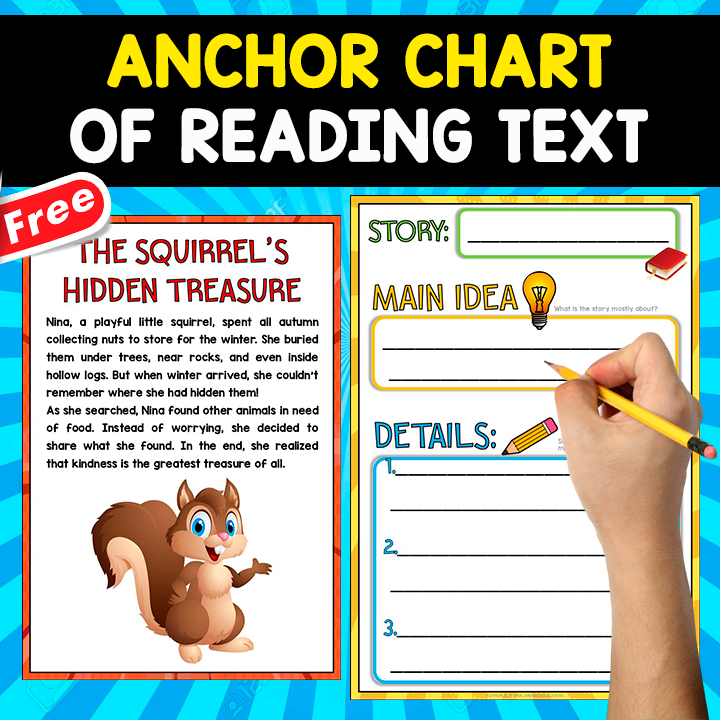
This Main Idea Graphic Organizer is a great way for students to organize details and determine the main idea as they read independently. This will be a great help for teachers who want their students to be successful readers.
Author Have Fun Teaching
Tags Main Idea, Note Taking, Summarizing, Main Ideas Graphic Organizer
Questions Details and Setting Graphic Organizer Worksheet
ELA, Reading, Grade 2, 3, 4, Teacher Tools, Graphic Organizers, Worksheets & Printables, Worksheets
This graphic organizer worksheet is a great way for your students to read a text and identify any questions they have. This will help them to better understand the text and improve their comprehension skills.
Author Have Fun Teaching
Tags Story Elements, Music Graphic Organizers, Music Graphic Organizer, Setting Graphic Organizer Pdf
Story Elements Network Tree Graphic Organizer
ELA, Reading, Grade 2, 3, 4, 5, 6, Teacher Tools, Graphic Organizers, Worksheets & Printables, Worksheets
This graphic organizer is perfect for helping students to remember the important story elements in any story. This will help to ensure that your students are able to remember the important details in any story that they read.
Author Have Fun Teaching
Tags Story Elements, Graphic Organizer Tree
Comparing Four Texts Graphic Organizer Worksheet
ELA, Reading, Grade 4, 5, 6, Teacher Tools, Graphic Organizers, Worksheets & Printables, Worksheets
This graphic organizer will help your students compare four texts they are reading. By summarizing each text, your students will be able to see the similarities and differences between the texts. This is a great way to help your students engage with the texts they are reading.
Author Have Fun Teaching
Tags Compare And Contrast, Genres
Resource Analysis Bundle
ELA, Reading, Reading Comprehension, Grade 9, 10, 11, 12, Teacher Tools, Graphic Organizers
This resource is a Resource Analysis Bundle. It comes with an activity template and an evaluation rubric. In order to understand an event or development more deeply it is vital to evaluate both primary and secondary sources. This activity will help in that process. Students will be choosing an event relevant to what is being studied in class and then find both primary and secondary sources to gain a more comprehensive understanding of that particular event. Both resources are offered as a printable or paperless.
Author Creating History
Tags Resource Analysis, Templates, Evaluation, Rubric, Graphic Organizers
Graphic Organizers Packet
ELA, Writing, Preschool, Teacher Tools, Graphic Organizers
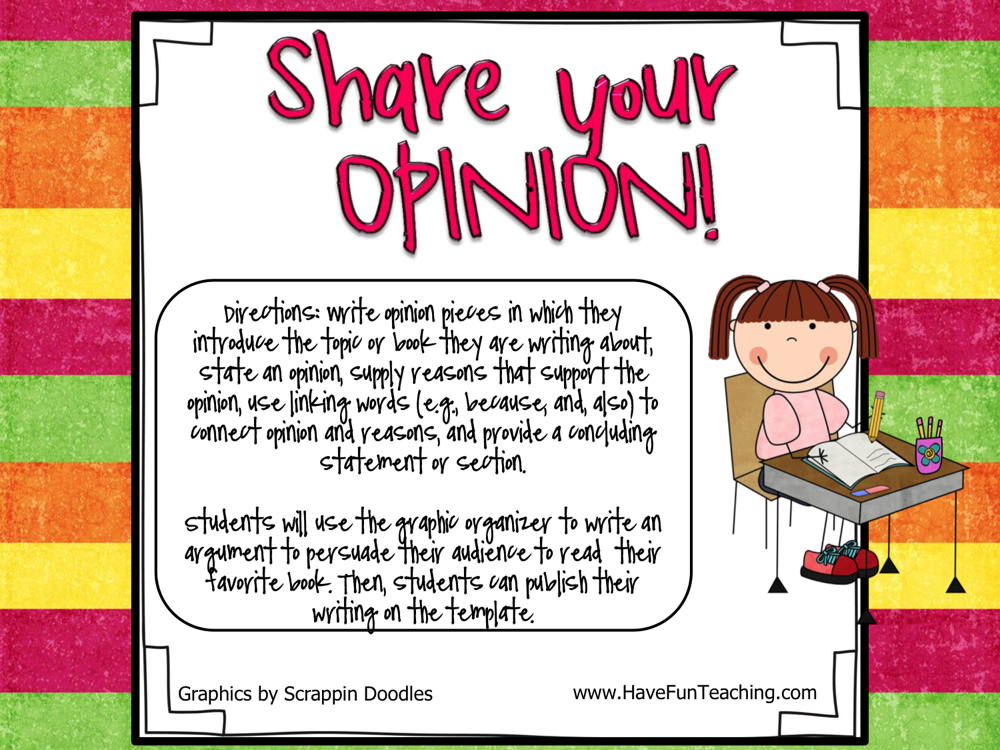
This Graphic Organizers Packet is filled with blank charts for you to print for your students. Graphic organizers help students organize and remember information more effectively. These graphic organizers are perfect to use alongside any fiction or nonfiction you may be reading or studying. The graphic organizers are simple and easy for younger students to record information themselves. The prompts use words that younger students will be able to read themselves. The design in simple but fun. This is targeted to the lower grades K-2. The packet includes: - A book review where students can report on their opinion of a book - A writing prompt that states "My favorite Book is ________ because_____" - A simple animal report that includes blanks to write in facts and a place to color a picture of the animal - A template for recording facts and drawing pictures about a non-fiction topic - My Favorite Character is... - Recording information in a sequential order The graphic organizers could be used as group or individual reports, whole class projects or individual work. It could also be perfect for students to do with their "Book Buddies". The reports could also be used as a formative assessment. Graphic Organizers are a 14-page PDF that is black and white for easy printing
Author Katie Maurice
Tags Writing, Fiction Text, Reading, Literacy Station, Graphic Organizers, Blank Templates, Writing Prompts, Kindergarten
Narrative Poetry – Posters & Graphic Organizers
ELA, Literature, Poetry, Grade 1, 2, 3, Graphic Organizers, Teacher Tools
This resource is a set of learning posters and graphic organizers for narrative poetry writing. There are a variety of posters that teach about narrative poetry. Students will explore features, how to write a narrative poem and so much more. They will use the graphic organizers to brainstorm ideas and then write a narrative poem. This pairs well with your poetry unit in English class. You may also love to print these off and use in a center activity. This resource can be accessed through: PowerPoint Google slides PDF
Author Good Human Project
Rating
Tags Posters, Poetry Unit, Narrative, Writing Poems, Graphic Organizers, Narrative Writing Posters
Main Idea Graphic Organizers
ELA, Reading, Reading Comprehension, Not Grade Specific, Graphic Organizers
This is a set of 5 different graphic organizers that would work well for outlining the main idea and supporting details of any text read.
Author DrDrew
Tags Main Idea, Supporting Details, Comprehension, Reading Chart, Graphic Organizers
Digital Graphic Organizers Pack
ELA, Strategies, Not Grade Specific, Graphic Organizers, Teacher Tools
This resource is a Digital Graphic Organizers Pack. There are 5 graphic organizers included that can be used for any book. These are great for distance learning or hybrid learning. Included: - Cause and effect - Main idea and details - Character descriptions - Plotline - Vocabulary
Author Creativity Overload
Tags Digital, Graphic Organizers, Fiction Books, Strategies, Vocabulary
First Next Last Graphic Organizer Worksheet
ELA, Reading, Grade 2, 3, 4, Teacher Tools, Graphic Organizers, Worksheets & Printables, Worksheets
This First Next Last Graphic Organizer Worksheet is a great way for students to sequence events in a text. This worksheet will help students discuss what happened and why it happened.
Author Have Fun Teaching
Tags Sequencing