



3,890 products added recently
Page 16 - 3rd Grade Lesson Plans
Support your third graders' expanding abilities with lesson plans that encourage exploration and deeper understanding. Covering a range of subjects, these resources offer hands-on activities and discussions. Use them to create a vibrant learning atmosphere that fosters enthusiasm.

 Show filters


I WONDER - What Do Animals Use Bioluminescence For | Animated Video
STEM, Animals, Life Sciences, Science, Biology, Grade 1, 2, 3, 4, 5, 6, 7, 8, Lesson Plans, Teacher Tools
Video Introduction Animal kingdoms are full of fascinating wonders to learn. This video is designed for the students to learn more about animals in different countries. I WONDER - What Do Animals Use Bioluminescence For | Animated Video Lesson Do you like animals? what is your favorite one? Do you own a pet? If yes, tell us more about it, like what its name? And what do you like most about it? What are the animal kingdoms? Can you write down the characteristics of each animal class like mammals, birds, reptiles, amphibian, fish and mollusks. Do you know that some animals can sing, can you name any of them? What is the largest and the smallest mammal in the world? What is the largest and the smallest bird in the world? What is the largest and the smallest fish in the world? I WONDER - What Do Animals Use Bioluminescence For | Animated Video Lesson The video is perfect for encouraging the researching skills for the students, while learning more about these fantastic animals. I WONDER - What Do Animals Use Bioluminescence For | Animated Video Lesson This friendly designed video is suitable for students at school, homeschooling, and as a group activity. Format Available in MP4 format.
Author Educational Voice
Tags What Do Animals Use Bioluminescence For, What Do Animals Use Bioluminescence For Video, Bioluminescent Animals, Bioluminescent Animals Facts, Bioluminescent Animals Video, Bioluminescent Animals Video For Kids

I WONDER - Where Do Biofuels Come From | Animated Video Lesson
Environmental Science, Earth and Environmental Sciences, Science, Earth Sciences, STEM, Grade 3, 4, 5, 6, 7, 8, 9, Lesson Plans, Teacher Tools
Video Introduction An amazing video designed for the students to learn more about STEM. I WONDER - Where Do Biofuels Come From | Animated Video Lesson Do you like STEM subjects? what is your favorite one? Have you ever tried to plant a seed? If yes, tell us more about it. Or have you ever tried to invent something? If yes, tell us more about it. And how do you think it will help us? Have you ever seen a microorganism under a microscope? What was it? And how it looked like? Mathematics is a marvelous subject. Let' sharpen our brains and solve some equations. Do you like timetable tricks? What is your favorite one? Do you know how to code? Have you ever created an app or a game before? If yes, how was it like? I WONDER - Where Do Biofuels Come From | Animated Video Lesson The video is perfect for encouraging the researching skills for the students, while learning more about this fantastic topic. I WONDER - Where Do Biofuels Come From | Animated Video Lesson This friendly designed video is suitable for students at school, homeschooling, and as a group activity. Format Available in MP4 format.
Author Educational Voice
Tags Where Do Biofuels Come From, Where Do Biofuels Come From Video, Biofuels, Biofuel, Biofuels Facts, Biofuels Facts For Kids, Biofuels Video, Biofuels Video For Kids, Science, Science Facts
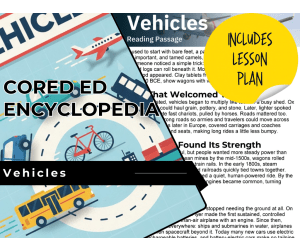
Vehicles Reading Comprehension Passage - Cored Ed Encyclopedia
ELA, Language Development, Reading Comprehension, Reading, Pre-Reading, Science, Technology, Engineering, History, Social Studies, Grade 2, 3, 4, 5, Worksheets & Printables, Worksheets, Teacher Tools, Centers, Activities, Writing Prompts, Assessments, Quizzes and Tests, Quizzes, Lesson Plans
This vehicles reading comprehension with lesson plan includes: Visualization (on the front cover) Start your lesson by taking a minute to think and share something about the topic. Read the script aloud (slowly), perhaps prepare some music or sound effects. Student close their eyes and let their imaginations wander. Students open their eyes, read the question aloud and give them a few minutes to complete. Ask a few students to share or keep answers until the end to compare with what they learn in the passage. Quick pause—thousands of Cored Education products are included with your TeachSimple membership. Download links and encyclopedia index available here. Pre-Reading Trivia Students will write down one thing they already know about the subject and then read five more facts and discuss. These facts are fun, and the students will enjoy learning about the subject before reading more. Give 1 minute for students to write what they already know (no pressure—best guess is fine). Read the five facts together. After each fact, do ask a student for their opinion, was it surprising? Set a purpose by asking students to highlight/underline one fact they want to learn more about during the reading. Reading Passage The text is a high-interest reading passage with set paragraphs, roughly three to four paragraphs long. It contains a variety of themes about the topic, anywhere from history to technology. The passage is between 250 and 350 words in length. First, ask students to look at the headings and see what they’ll learn about today. What do they know about the topic/heading? First read options: Teacher read-aloud (best for support). Partner reading (paragraph by paragraph). While reading, students underline important details, and vocabulary words they think may come up in the questions section. Mixed Questions The first question page contains four multiple-choice questions, each with a choice of four answers, and three written response questions that require a sentence or two from the student. Students complete the mcqs first independently, then review quickly as a class. For the 3 written responses, try to get students giving the answer with some form of evidence: “I think ___ because the text says ___.” If students get stuck, send them back to check the passage. Vocabulary Questions Practice seven key words from the text in this section across two activities. First section is scrambled words where students will unscramble three words given a clue for each. The second section is a word to meaning matching activity. Before starting, have some students read out words they underlined in the passage. Ask students to say the word and read aloud the sentence(s) around each word. Ask students to do scrambled words and the matching exercise in pairs then go through answers as a class. For the scrambled spelling task, get four pairs to come up to the board and write the words for extra practice with the other student reading out the clue. For the matching task, prompt students to give full sentences: “I matched ___ with ___ because ___.” Creative Writing In this question, the student will be required to write a five to eight sentence paragraph on a question related to the topic. Before starting, ask students write down 3 key ideas they are going to include in their piece. Ask students for ideas to share around the class to help those struggling. Pro writing expectations: 5–8 sentences At least 2 facts or details from the passage At least 2 vocabulary words from the previous page Students read their paragraphs while classmates listen for facts and vocabulary words. Extension Activities This page is optional for fast finishers or to take home. There are several activities, each one requiring a different skill. Do some, do none, do all, completely optional - but you will feel reassured knowing every possibility is planned for. Includes summary writting question. Answer Key There are answers for the multiple-choice questions, written response questions have sample answers, vocabulary answers and if there is a summary question then a sample summary will be provided as well. Lesson Plan Included Customized lesson plan for this lesson is included. Lesson Snapshot Title: Vehicles Genre: Nonfiction (Informational text) Subject: Social Studies / Science & Technology Primary Topic: How transportation changed from wheels to flight Estimated Guided Reading Level (A–Z): P Support pages: Pre-reading trivia, mixed questions, vocabulary practice, creative writing, extension activities, and an answer key. Support-page QA check: Some vocab items don’t match the exact word forms in the passage (e.g., chariot vs chariots , battery vs batteries , submarine vs submarines , locomotive vs locomotives ). What This Lesson Teaches Best Sequence of transportation changes over time: Moves from walking/animals, to logs/sledges, to wooden wheels and wagons, to roads and coaches, to steam locomotives, motor vehicles, and airplanes. How inventions improved travel and hauling: Explains how wheels, roads, tracks/railroads, and engines made travel smoother, faster, and able to carry heavier loads. Using headings to organize information: Section headings (“Roads…,” “When Steam…,” “A Lift Into the Air”) help readers track time periods and big shifts. Key historical details in an informational text: Includes dates and examples such as Uruk clay tablets (3700–3500 BCE) and the Wright Flyer flight (December 17, 1903). Modern tech and environmental impact: Notes electric motors, rechargeable batteries, and “no tailpipe exhaust,” ending with a question about helping the planet. Learning Goals Students will describe how people traveled and carried loads before wheels, using details from the passage. Students will identify how wheels changed what vehicles could do (hauling goods and moving more easily). Students will explain how roads and railroads affected travel and connected places, based on the text. Students will summarize the “biggest leap” in travel described in the passage and name the example given. Students will use headings and key details to retell the passage’s main changes in transportation in order. Key Vocabulary From the Text sledge — a sled that helps heavy things slide. Mesopotamia — an ancient region where Uruk was located. spoked — having thin supports connecting wheel center to rim. locomotives — train engines that pull cars on tracks. rechargeable — can be filled with power again. FULL CATALOG OF DOWNLOAD LINKS AND ENCYCLOPEDIA INDEX HERE
Author Cored Education
Rating
Tags Vocabulary, Reading Comprehension, Reading Passages, Lesson Plans, Ela Lesson Plans, Reading Comprehension Lesson Plans, Pre-reading, Science Lesson Plans, Technology, History Lesson Plans

I WONDER - What Is Continental Drift | Animated Video Lesson
Geography, Social Studies, Grade 2, 3, 4, 5, 6, 7, 8, Lesson Plans, Teacher Tools
Video Introduction An amazing video designed for the students to learn more about famous places in different countries. I WONDER - What Is Continental Drift | Animated Video Lesson What do you know about this place? Do you know in which part of the world it is? Have you ever visited this place? If yes, can you tell us more about your adventure, and what do you like the most about this place? Do you like reading about Geography? What is your favorite country in the whole world? If you are going on a trip where it will be? Which country? What you are going to see there? Does this country has a famous place to visit? I WONDER - What Is Continental Drift | Animated Video Lesson The activity is perfect for encouraging the researching skills for the students, while learning more about this fantastic place. I WONDER - What Is Continental Drift | Animated Video Lesson This friendly designed video is suitable for students at school, homeschooling, and as a group activity. Format Available in MP4 format.
Author Educational Voice
Tags What Is Continental Drift, What Is Continental Drift Video, Continental Drift, Continental Drift Video, Continental Drift Facts, Continental Drift Facts For Kids, Continental Drift Video For Kids

Wool Reading Comprehension Passage - Cored Ed Encyclopedia
ELA, Language Development, Reading Comprehension, Reading, Pre-Reading, Science, Technology, Physics, History, Social Studies, Grade 2, 3, 4, 5, Worksheets & Printables, Worksheets, Teacher Tools, Centers, Activities, Writing Prompts, Assessments, Quizzes and Tests, Quizzes, Lesson Plans
This wool reading comprehension with lesson plan includes: Visualization (on the front cover) Start your lesson by taking a minute to think and share something about the topic. Read the script aloud (slowly), perhaps prepare some music or sound effects. Student close their eyes and let their imaginations wander. Students open their eyes, read the question aloud and give them a few minutes to complete. Ask a few students to share or keep answers until the end to compare with what they learn in the passage. Quick pause—thousands of Cored Education products are included with your TeachSimple membership. Download links and encyclopedia index available here. Pre-Reading Trivia Students will write down one thing they already know about the subject and then read five more facts and discuss. These facts are fun, and the students will enjoy learning about the subject before reading more. Give 1 minute for students to write what they already know (no pressure—best guess is fine). Read the five facts together. After each fact, do ask a student for their opinion, was it surprising? Set a purpose by asking students to highlight/underline one fact they want to learn more about during the reading. Reading Passage The text is a high-interest reading passage with set paragraphs, roughly three to four paragraphs long. It contains a variety of themes about the topic, anywhere from history to technology. The passage is between 250 and 350 words in length. First, ask students to look at the headings and see what they’ll learn about today. What do they know about the topic/heading? First read options: Teacher read-aloud (best for support). Partner reading (paragraph by paragraph). While reading, students underline important details, and vocabulary words they think may come up in the questions section. Mixed Questions The first question page contains four multiple-choice questions, each with a choice of four answers, and three written response questions that require a sentence or two from the student. Students complete the mcqs first independently, then review quickly as a class. For the 3 written responses, try to get students giving the answer with some form of evidence: “I think ___ because the text says ___.” If students get stuck, send them back to check the passage. Vocabulary Questions Practice seven key words from the text in this section across two activities. First section is scrambled words where students will unscramble three words given a clue for each. The second section is a word to meaning matching activity. Before starting, have some students read out words they underlined in the passage. Ask students to say the word and read aloud the sentence(s) around each word. Ask students to do scrambled words and the matching exercise in pairs then go through answers as a class. For the scrambled spelling task, get four pairs to come up to the board and write the words for extra practice with the other student reading out the clue. For the matching task, prompt students to give full sentences: “I matched ___ with ___ because ___.” Creative Writing In this question, the student will be required to write a five to eight sentence paragraph on a question related to the topic. Before starting, ask students write down 3 key ideas they are going to include in their piece. Ask students for ideas to share around the class to help those struggling. Pro writing expectations: 5–8 sentences At least 2 facts or details from the passage At least 2 vocabulary words from the previous page Students read their paragraphs while classmates listen for facts and vocabulary words. Extension Activities This page is optional for fast finishers or to take home. There are several activities, each one requiring a different skill. Do some, do none, do all, completely optional - but you will feel reassured knowing every possibility is planned for. Includes summary writting question. Answer Key There are answers for the multiple-choice questions, written response questions have sample answers, vocabulary answers and if there is a summary question then a sample summary will be provided as well. Lesson Plan Included Customized lesson plan for this lesson is included. Lesson Snapshot Title: Wool Genre: Nonfiction (informational text) Subject: Life Science / Informational Reading Primary Topic: How wool works, history, and uses Estimated Guided Reading Level (A–Z): R Support pages present: Pre-reading trivia, mixed questions, vocabulary activities, creative writing, extension activities, and an answer key (all match the passage’s ideas and terms). What This Lesson Teaches Best Explains what wool is made of (tiny protein fibers) and how a natural wave called crimp helps fibers cling when spun into yarn. Teaches a clear cause-and-effect science idea : wool cloth traps air pockets, and trapped air helps keep warmth close. Builds understanding of how humans and sheep changed over time , including breeding for thicker coats, learning to shear, and wool becoming valuable through trade. Describes the process from fleece to finished materials , including shearing, lanolin in fresh wool, washing/sorting, spinning into yarn, and rubbing fibers into felt. Highlights real-world uses and properties of wool , including moisture handling and resistance to melting/dripping in fire because it chars instead. Learning Goals Students will explain how crimp helps wool fibers cling together when making yarn. Students will describe how wool cloth keeps warmth close using details about trapped air. Students will identify two ways people have used wool, based on examples in the text. Students will sequence key steps from fleece to yarn or felt that are stated in the passage. Students will describe why freshly shorn wool is called “greasy,” using evidence from the passage. Key Vocabulary From the Text fleece — a sheep’s coat that can be sheared off. protein — a natural building block that wool fibers are made of. crimp — a natural wave in each wool fiber. lanolin — a waxy substance from a sheep’s skin. felt — thick material made when fibers lock together. FULL CATALOG OF DOWNLOAD LINKS AND ENCYCLOPEDIA INDEX HERE
Author Cored Education
Rating
Tags Vocabulary, Reading Comprehension, Reading Passages, Lesson Plans, Ela Lesson Plans, Reading Comprehension Lesson Plans, Pre-reading, Science Lesson Plans, History Lesson Plans, Wool
I WONDER - What Is A Javan Rhino | Animated Video Lesson
STEM, Animals, Life Sciences, Science, Biology, Grade 1, 2, 3, 4, 5, 6, 7, 8, Lesson Plans, Teacher Tools
Video Introduction Animal kingdoms are full of fascinating wonders to learn. This video is designed for the students to learn more about animals in different countries. I WONDER - What Is A Javan Rhino | Animated Video Lesson Do you like animals? what is your favorite one? Do you own a pet? If yes, tell us more about it, like what its name? And what do you like most about it? What are the animal kingdoms? Can you write down the characteristics of each animal class like mammals, birds, reptiles, amphibian, fish and mollusks. Do you know that some animals can sing, can you name any of them? What is the largest and the smallest mammal in the world? What is the largest and the smallest bird in the world? What is the largest and the smallest fish in the world? I WONDER - What Is A Javan Rhino | Animated Video Lesson The video is perfect for encouraging the researching skills for the students, while learning more about these fantastic animals. I WONDER - What Is A Javan Rhino | Animated Video Lesson This friendly designed video is suitable for students at school, homeschooling, and as a group activity. Format Available in MP4 format.
Author Educational Voice
Tags What Is A Javan Rhino, What Is A Javan Rhino Video, Javan Rhino, Javan Rhino Facts, Javan Rhino Facts For Kids, Javan Rhino Video, Javan Rhino Video For Kids, Rhino, Rhino Video, Rhino Facts
Geometry: Polygons - Learn the Skill - FLASH-PC
Math, Geometry, Common Core, Grade 3, 4, 5, Teacher Tools, Lesson Plans
Geometry: Polygons - Learn the Skill - FLASH-PC Instructional Tool The Geometry: Polygons - Learn the Skill - FLASH-PC is an optimal learning resource developed to strengthen understanding of polygons through grade 3-5 geometry instruction. This tool iteratively introduces and reinforces concepts via real-world word problems , applicable in familiar contexts. Main Features: Interactive learning: Through its interactive nature, this educational software encourages active engagement, backing hands-on exploration of fundamental geometric principles while promoting consistent academic advancement. Bilingual approach: Designed with accessibility at heart, it comes equipped with English and Spanish voice over options alongside corresponding text ensuring inclusiveness regarding learners’ linguistic backgrounds. Versatile Integration: This tool can be effectively used for whole or small group lessons; as a handy independent study instrument or homework assignment material, enhancing its utility in diverse educational settings. Educational Alignment & Accessibility: Specially tailored for Grades 3 – 5 students; the FLASH-PC prioritizes instilling foundational knowledge pivotal for advanced future learning. The robust content aligns conveniently with Common Core State Standards and also effectively complements STEM initiatives while adhering to National Council of Teachers Mathematics (NCTM) guidelines facilitating quality education delivery standardized globally. As a ready-to-use PC-software product, all data is available digitally. This feature eases integration into online platforms which might be especially vital during remote-based instructional arrangements like homeschooling. In summation, "Geometry: Polygons – Learn the Skill – FLASH-PC", enables instructors across various setups optimize student comprehension around pivotal elementary geometry curriculums by engaging learners using real-world problems thus deepening overall understanding.
Author Classroom Complete Press
Tags Software (PC)

I WONDER - What Is Uluru | Animated Video Lesson
Economics, Social Studies, Grade 3, 4, 5, 6, 7, 8, 9, Lesson Plans, Teacher Tools
Video Introduction An amazing video designed for the students to learn more about famous places in different countries. I WONDER - What Is Uluru | Animated Video Lesson What do you know about this place? Do you know in which part of the world it is? Have you ever visited this place? If yes, can you tell us more about your adventure, and what do you like the most about this place? Do you like reading about Geography? What is your favorite country in the whole world? If you are going on a trip where it will be? Which country? What you are going to see there? Does this country has a famous place to visit? I WONDER - What Is Uluru | Animated Video Lesson The activity is perfect for encouraging the researching skills for the students, while learning more about this fantastic place. I WONDER - What Is Uluru | Animated Video Lesson This friendly designed video is suitable for students at school, homeschooling, and as a group activity. Format Available in MP4 format.
Author Educational Voice
Tags What Is Uluru, What Is Uluru Video, Uluru, Uluru Facts, Uluru Facts For Kids, Uluru Video, Uluru Video For Kids, Geography, Geography Facts, Geography Video

Measurement - Digital Lesson Plan Gr. 3-5 - FLASH-MAC
Math, Measurements, Grade 3, 4, Teacher Tools, Lesson Plans
Measurement - Digital Lesson Plan Gr. 3-5 - FLASH-MAC The Measurement digital lesson plan is a thoroughly designed tool for teachers, fashioned specifically for students in grades 3 to 5. This program contains more than 230 individual activities spread across over eighty interactive screen pages aimed at facilitating understanding and mastery of all expectations within the NCTM and State Curriculum Math Strand of Measurements. Core Features: Task Activities Section: Provides hands-on learning opportunities intended to foster cognitive skill-building in students. Drills Emphasis:: Enhance procedural proficiency skills by providing up-to 150 problem-solving opportunities. Real-world relevance:: Makes word problems relatable by tying them to everyday experiences. Bilingual Support : Serves both English-speakers and Spanish-speaking learners through the Text-to-Speech feature. Showcases math tools available in both Imperial and Metric systems suitable for international use. Add-ons Features: Packed with exciting printables that help augment comprehension alongside memory match games responsible for stimulating critical thinking skills. Inclusive of homework assignments derived from our battery of drill problems readily available while embedding board games usable during free periods or group work sessions at school. Note: An encompassing assessment module is incorporated into the plan provided quizzes after every chapter, thus enabling teachers to understand cumulative comprehension levels effectively. Absolutely teacher-friendly; this innovative program ties perfectly into any education schema deploying modern-day technology giving Mathematics instruction right on your MAC software without extra hassle making day-by-day instruction seamless within any chosen schedule. In a nutshell, the Measurement - Digital Lesson Plan Gr 3-5 - FLASH MAC is that essential teaching tool offering flexibility, effectiveness and simplicity to enhance constructivist teaching within third to fifth-grade measurements in mathematics.
Author Classroom Complete Press
Tags Software (Mac)
I WONDER - Who Was Alfred The Great | Animated Video Lesson
History: Ancient, History, Social Studies, History: British, History: Europe, Grade 3, 4, 5, 6, 7, 8, 9, Lesson Plans, Teacher Tools
Video Introduction An amazing video designed for the students to learn more about history. I WONDER - Who Was Alfred The Great | Animated Video Lesson Do you like history? Which topic do you really enjoy about history? Have you ever read an interesting fact about the Vikings? If yes, can you mention them? What do you like most about the Victorian era? Can you name all the Tudors? Have you ever wondered how people used to live in ancient Japan and ancient China? Do you know any interesting facts about ancient Egyptians and the Pharaohs? Have you ever visited South America? What do you know about Incas and Aztecs? Celtic culture was really one of a kind, can you name any of the places that Celts used to live in? Imagine yourself living during the ancient Roman empire, how your life will look like? Ancient Greece was an amazing place to live in. What do you know about ancient Greek life? I WONDER - Who Was Alfred The Great | Animated Video Lesson The video is perfect for encouraging the researching skills for the students, while learning more about history. I WONDER - Who Was Alfred The Great | Animated Video Lesson This friendly designed video is suitable for students at school, homeschooling, and as a group activity. Format Available in MP4 format.
Author Educational Voice
Tags Who Was Alfred The Great, Who Was Alfred The Great Video, Alfred The Great, Alfred The Great Facts, Alfred The Great Facts For Kids, Alfred The Great Video, Alfred The Great Video For Kids, History

I WONDER - What Food Is France Famous for | Animated Video Lesson
Geography, Social Studies, Grade 1, 2, 3, 4, 5, 6, 7, 8, Lesson Plans, Teacher Tools
Video Introduction An amazing video designed for the students to learn more about famous places in different countries. I WONDER - What Food Is France Famous for | Animated Video Lesson What do you know about this place? Do you know in which part of the world it is? Have you ever visited this place? If yes, can you tell us more about your adventure, and what do you like the most about this place? Do you like reading about Geography? What is your favorite country in the whole world? If you are going on a trip where it will be? Which country? What you are going to see there? Does this country has a famous place to visit? I WONDER - What Food Is France Famous for | Animated Video Lesson The activity is perfect for encouraging the researching skills for the students, while learning more about this fantastic place. I WONDER - What Food Is France Famous for | Animated Video Lesson This friendly designed video is suitable for students at school, homeschooling, and as a group activity. Format Available in MP4 format.
Author Educational Voice
Tags What Food Is France Famous For, What Food Is France Famous For Video, France, France Facts, France Facts For Kids, France Video, France Video For Kids, French Food, French Food Video

I WONDER - What Is Online Safety | Animated Video Lesson
Life Skills, Special Resources, Social Emotional Learning (SEL), Social Skills, Computer Science, Technology, Science, Grade 3, 4, 5, 6, 7, 8, 9, Lesson Plans, Teacher Tools
Video Introduction An amazing video designed for the students to learn more about social and soft skills in our daily life. I WONDER - What Is Online Safety | Animated Video Lesson Have you ever read about soft skills or social skills? If yes, can you tell us more about them? Body language is so important for us to learn about, as it teaches us how to deliver the correct message to the people we are talking to, and get the right message from the people who talk to us, by simply reading their body language. What do you know about etiquette? Do you know that every country has got its unique etiquette? What do you know about online etiquette? What is your strongest soft/social skill? Can you name other social or soft skills? Do you think we should be always nice to our friends and family? Do you think we should be kind with animals? Have you ever read about online etiquette? If yes, tell us more about it. What are the essential skills that we should have while dealing with people online? I WONDER - What Is Online Safety | Animated Video Lesson The video is perfect for encouraging the researching skills for the students, while learning more about these fantastic social and soft skills in our daily life. I WONDER - What Is Online Safety | Animated Video Lesson This friendly designed video is suitable for students at school, homeschooling, and as a group activity. Format Available in MP4 format.
Author Educational Voice
Rating
Tags What Is Online Safety, What Is Online Safety Video, Online Safety, Online Safety Video, Online Safety Facts, Online Safety Video For Kids, Online Safety Facts For Kids, Life Skills, Life Skills For Kids
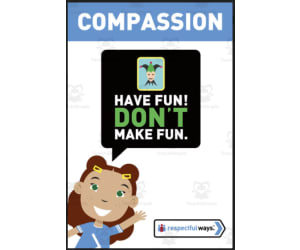
Let's Chat Conversation Cards | "Have Fun, Don't Make Fun"
Special Resources, Social Emotional Learning (SEL), Grade 2, 3, 4, 5, 6, Teacher Tools, Lesson Plans
Let's Chat Conversation Cards for "Have Fun, Don't Make Fun." The “Let’s Chat Conversation Cards is a wonderful resource to help students build a positive mindset. This resource is part of a whole program that works towards having students believe they can be compassionate, have perseverance, respect, and responsibility and through it all, achieve great things! Let’s Chat Conversation Cards allows for real conversations through which students may learn of different perspectives and strengthen friendships through truly understanding each other. This resource is a set of Let's Chat Conversation Cards for "Have Fun, Don't Make Fun." There are 57 other Let's Chat resources available, along with matching Respectful Signage listed under "graphics". The "Home Connects" for families is available in English and Spanish. Meridian MS Public Schools has been a partner district of Respectful Ways since October of 2020 and they shared this year’s Panorama Data with us. Meridian students who are utilizing Respectful Ways and PBIS showed great improvements in these 3 key areas: 12% higher GPAs 37% attendance improvements 93% less referrals Respectful Ways is a trauma-informed program: Assessment: Take our survey to assess your school climate. Targeted Results: Your survey identifies modules that meet your students' social and emotional needs. Our trauma-informed online curriculum has been vetted by the Attachment & Trauma Network. Custom Professional Development: We offer workshops with subject-matter experts who use your data to address student behavioral needs and educator wellness needs. Blended Education Interventions: Respectful Ways (RW) integrates seamlessly with different instructional frameworks such as PBIS and MTSS, using evidence and research-based practices. For more information email Pam@RespectfulWays.com or call 404-955-8882.
Author Respectful Ways
Tags Conversation Cards, Spanish, Respectful Ways, Don't Make Fun, Bullying, Compassion, Sel, Let's Chat, Character Education, Social Emotional Learning
I WONDER - How Tall Is The Eiffel Tower | Animated Video Lesson
History: Ancient, History, Social Studies, History: Europe, Geography, Grade 2, 3, 4, 5, 6, 7, 8, Lesson Plans, Teacher Tools
Video Introduction An amazing video designed for the students to learn more about history. I WONDER - How Tall Is The Eiffel Tower | Animated Video Lesson Do you like history? Which topic do you really enjoy about history? Have you ever read an interesting fact about the Vikings? If yes, can you mention them? What do you like most about the Victorian era? Can you name all the Tudors? Have you ever wondered how people used to live in ancient Japan and ancient China? Do you know any interesting facts about ancient Egyptians and the Pharaohs? Have you ever visited South America? What do you know about Incas and Aztecs? Celtic culture was really one of a kind, can you name any of the places that Celts used to live in? Imagine yourself living during the ancient Roman empire, how your life will look like? Ancient Greece was an amazing place to live in. What do you know about ancient Greek life? I WONDER - How Tall Is The Eiffel Tower | Animated Video Lesson The video is perfect for encouraging the researching skills for the students, while learning more about history. I WONDER - How Tall Is The Eiffel Tower | Animated Video Lesson This friendly designed video is suitable for students at school, homeschooling, and as a group activity. Format Available in MP4 format.
Author Educational Voice
Tags How Tall Is The Eiffel Tower, How Tall Is The Eiffel Tower Video, The Eiffel Tower, The Eiffel Tower Facts, The Eiffel Tower Video, The Eiffel Tower Video For Kids, The Eiffel Tower Facts For Kids, Paris

Whales Reading Comprehension Passage - Cored Ed Encyclopedia
ELA, Language Development, Reading Comprehension, Reading, Pre-Reading, Science, Animals, Life Sciences, Vocabulary, Writing, Grade 2, 3, 4, 5, Worksheets & Printables, Worksheets, Teacher Tools, Centers, Activities, Writing Prompts, Assessments, Quizzes and Tests, Quizzes, Lesson Plans
This whales reading comprehension with lesson plan includes: Visualization (on the front cover) Start your lesson by taking a minute to think and share something about the topic. Read the script aloud (slowly), perhaps prepare some music or sound effects. Student close their eyes and let their imaginations wander. Students open their eyes, read the question aloud and give them a few minutes to complete. Ask a few students to share or keep answers until the end to compare with what they learn in the passage. Quick pause—thousands of Cored Education products are included with your TeachSimple membership. Download links and encyclopedia index available here. Pre-Reading Trivia Students will write down one thing they already know about the subject and then read five more facts and discuss. These facts are fun, and the students will enjoy learning about the subject before reading more. Give 1 minute for students to write what they already know (no pressure—best guess is fine). Read the five facts together. After each fact, do ask a student for their opinion, was it surprising? Set a purpose by asking students to highlight/underline one fact they want to learn more about during the reading. Reading Passage The text is a high-interest reading passage with set paragraphs, roughly three to four paragraphs long. It contains a variety of themes about the topic, anywhere from history to technology. The passage is between 250 and 350 words in length. First, ask students to look at the headings and see what they’ll learn about today. What do they know about the topic/heading? First read options: Teacher read-aloud (best for support). Partner reading (paragraph by paragraph). While reading, students underline important details, and vocabulary words they think may come up in the questions section. Mixed Questions The first question page contains four multiple-choice questions, each with a choice of four answers, and three written response questions that require a sentence or two from the student. Students complete the mcqs first independently, then review quickly as a class. For the 3 written responses, try to get students giving the answer with some form of evidence: “I think ___ because the text says ___.” If students get stuck, send them back to check the passage. Vocabulary Questions Practice seven key words from the text in this section across two activities. First section is scrambled words where students will unscramble three words given a clue for each. The second section is a word to meaning matching activity. Before starting, have some students read out words they underlined in the passage. Ask students to say the word and read aloud the sentence(s) around each word. Ask students to do scrambled words and the matching exercise in pairs then go through answers as a class. For the scrambled spelling task, get four pairs to come up to the board and write the words for extra practice with the other student reading out the clue. For the matching task, prompt students to give full sentences: “I matched ___ with ___ because ___.” Creative Writing In this question, the student will be required to write a five to eight sentence paragraph on a question related to the topic. Before starting, ask students write down 3 key ideas they are going to include in their piece. Ask students for ideas to share around the class to help those struggling. Pro writing expectations: 5–8 sentences At least 2 facts or details from the passage At least 2 vocabulary words from the previous page Students read their paragraphs while classmates listen for facts and vocabulary words. Extension Activities This page is optional for fast finishers or to take home. There are several activities, each one requiring a different skill. Do some, do none, do all, completely optional - but you will feel reassured knowing every possibility is planned for. Includes summary writting question. Answer Key There are answers for the multiple-choice questions, written response questions have sample answers, vocabulary answers and if there is a summary question then a sample summary will be provided as well. Lesson Plan Included Customized lesson plan for this lesson is included. Lesson Snapshot Title: Whales Genre: Nonfiction (informational text) Subject: Life Science / Informational Reading Primary Topic: Whales as mammals, feeding types, fossils, human impacts Estimated Guided Reading Level (A–Z): Q What This Lesson Teaches Best Whales are mammals that breathe air with lungs through blowholes , so they must surface as part of everyday life. Whales can have two different feeding tools : baleen plates that strain food like krill, or sharp teeth used to grab fish or squid. Fossils provide evidence that early whale relatives were land mammals and changed over millions of years to live in the ocean. Human activity affects whales today (fishing gear tangles, ships strike, and loud noise can fill the water where whales communicate), and scientists use tracking tools to help protect them. Learning Goals Students will explain why whales rise to the surface using details about breathing and blowholes. Students will compare how baleen whales and toothed whales get food, using evidence from the text. Students will describe what fossils show about where whales came from long ago. Students will identify one modern problem that can make whale communication harder, based on the passage. Students will describe at least one way scientists track whales to protect them, using details from the text. Key Vocabulary From the Text blowholes — nostrils on top of a whale’s head. baleen — mouth plates that strain tiny food from water. krill — tiny sea creatures baleen whales hold onto. streamlined — shaped to move smoothly through water. fossils — old remains in rock that give clues. FULL CATALOG OF DOWNLOAD LINKS AND ENCYCLOPEDIA INDEX HERE
Author Cored Education
Rating
Tags Vocabulary, Reading Comprehension, Reading Passages, Lesson Plans, Ela Lesson Plans, Reading Comprehension Lesson Plans, Pre-reading, Science Lesson Plans, Life Science, Animals

Galaxies & The Universe - Digital Lesson Plan Gr. 5-8 | PC Software
Science, Earth and Environmental Sciences, Space, Grade 3, 4, 5, 6, 7, 8, Teacher Tools, Lesson Plans
Galaxies & The Universe - Digital Lesson Plan Gr. 5-8 | PC Software This is an intriguing teaching software that navigates the thrilling terrain of galaxies and the universe, catering to students from Grade 3 through 8. Content: This multimedia resource divides its content into an interactive digital lesson plan with 80 pages. It traverses topics from particles of matter to complex star systems in our universe. Intriguing subjects covered include: Black Holes and Gravity Nebulae Pulsars Educational Features: The software provides rich reading passages for each topic, supplemented by "Before and After" reading activities. Test preps are provided to reinforce various lessons. Interactive Learning: Each lesson includes entertaining games such as memory match games or crosswords, amplifying student engagement and transforming learning into a fun-filled experience. Resources: Printable resources are included in the package, supporting different learning styles & offering convenient options for additional study or homework. Assessments : Comprehension quizzes assist instructors in assessing student understanding after each topic covered. This fosters real-time adjustments needed in instructional delivery whenever miscomprehensions arise. Linguistic Inclusion: The software also offers English & Spanish Text-to-Speech features which promote inclusivity for classrooms with diverse linguistic backgrounds. Bloom's Taxonomy Alignment & Curriculum Standards: Designed with careful consideration of Bloom's Taxonomy principles, this product seamlessly aligns within your school's curriculum standards. All these features make Galaxies & The Universe - Digital Lesson Plan Gr. 5-8 | PC Software an excellent resource in any classroom setting from whole class instructions to small group workspaces assignments or homework. It simplifies scientific complexities, enabling a mesmerizing journey through the universe thereby fostering interest in young astronomers.
Author Classroom Complete Press
Tags Astronomy Lesson Plan, Science Reading Passage, Universe Lesson, Galaxies Activity, Science Activity
Cored Education TeachSimple Catalog, Guided Reading and Lesson Plans
ELA, Science, Social Studies, Resources for Teachers, Math, Creative Arts, Special Resources, P.E. & Health, Life Studies, Common Core, Grade 1, 2, 3, 4, 5, 6, 7, 8, Teacher Tools, Worksheets & Printables, Activities, Classroom Decor, Centers, Lesson Plans, Literacy Readers, Worksheets, Quizzes and Tests, Games
Dear Valued Customer, At this time, we do not have plans to add any new products to the Cored Education catalog on TeachSimple. We are incredibly grateful for your continued support. To keep up with our latest updates and find out more about what we have planned moving forward, follow us on social media at @corededucation. All the best, Rich Cored Education A TeachSimple subscription currently includes the following Cored Education items: •Over $1,000 worth of content in the Original Cored Education Catalog. •170 Reading Comprehension Lessons with lesson plans in the Encyclopedia Index. •95 Guided Reading Books with lesson plans in the Guided Reading Catalog. •Cored Middle and High Science and Social Studies individual catalogs. PAST UPDATES JUNE '26 Week 1 UK/Aus Spelling Word Grammar Sets Years 2–7 Week 2 UK/Aus Spelling Word Grammar Sets Years 2–7 Cored Middle and High adding free reading passage products. Week 3 UK/Aus Spelling Word Grammar Sets Nearly Finished! Years 2–7 Week 4 UK/Aus Spelling Word Grammar Sets Finished! Started Uploading Google Drive Versions. Years 2–7 MAY Week 1 25 UK/Aus Spelling PPT Grammar Sets Years 2–7 Week 2 10 UK/Aus Spelling PPT Grammar Sets Years 2–7 Week 3 Finished UK/Aus Spelling PPT Grammar Sets Started Word Document Sets Years 2–7 Week 4 UK/Aus Spelling Continued Word Document Sets Years 2–7 Coming soon: free reading series similar to encyclopedia passages but smaller. APRIL Week 1 25 Presentable PDF Reading Comprehension and Grammar Sets Grades 1–6 Week 2 25 Presentable PDF Grammar Sets Grades 3–6 Week 3 25 UK/Aus Spelling PDF Grammar Sets Years 2–7 Week 4 25 UK/Aus Spelling PPT Grammar Sets Years 2–7 Also Added Videos have now started being added to Guided Reading products. You can find them in the product description, after the preview pictures. MARCH Week 1 25 Fillable Reading Comprehension Sets Grades 2–7 Week 2 25 Fillable Reading Comprehension Sets and Grammar Packs Grades 1–7 Week 3 25 Fillable Grammar Packs Grades 3–6 Week 4 25 Presentable PDF Reading Comprehension Sets Grades 2–7 Also Added Videos have now started being added to Encyclopedia products. You can find them in the product description, after the preview pictures. FEBRUARY Week 1 17 Encyclopedia Entries: U–Z 12 Guided Reading Books: K–P 2 Grade 6–8 Social Studies Reading Comprehension Passages Week 2 20 Encyclopedia Entries: A–D 30 Guided Reading Books: G–Q 2 Grade 6–8 Social Studies Reading Comprehension Passages Week 3 20 Encyclopedia Entries: E–H 25 Guided Reading Books: F–R 2 Grade 6–8 Social Studies Reading Comprehension Passages Week 4 10 Encyclopedia Entries: I–J 10 Guided Reading Books: N–S 2 Grade 6–8 Social Studies Reading Comprehension Passages JANUARY Week 1 Cinco de Mayo Reading Comprehension Grades 2–5 Week 2 35 Encyclopedia Entries: A–G 2 Grade 6–8 Social Studies Reading Comprehension Passages Week 3 45 Encyclopedia Entries: H–P 2 Grade 6–8 Social Studies Reading Comprehension Passages Week 4 23 Encyclopedia Entries: Q–U 18 Guided Reading Books: B–L 2 Grade 6–8 Social Studies Reading Comprehension Passages 2025 RELEASES Reading Comprehension Birthdays Reading Comprehension Grades 2–5 Candy Reading Comprehension Grades 2–5 Science Reading Comprehension Grades 6–8 Fillable PDFs Fillable PDF versions have been added for the Grades 6–8 science series. Leveled Readers 2 new Level D books added. Mini Units 7 new mini units released. Designed for Grades 2–5. Themed Skill Packs 44 Themed Mazes 44 Themed Word List Posters 44 Themed Word Searches 44 Themed Crosswords Vowels PPT Games Designed for Kindergarten–Grade 1. Interactive, teacher-friendly, and easy to use in class. ELA Practice MCQs Grades 1–2 Grades 3–4 Grades 5–6 Reading Passages + Activities Grades 2–3 Grades 4–5 Grades 6–7 Guided Reading Activities 4,000+ pages of guided reading activities and lesson plans. Science Reading Grades 3–4 Grades 5–6 Supplementary questions included. Accompanying videos included. OVERVIEWS Grades 5–6 Science Reading Comprehension Written for Grade 5–6 students. Includes clear, age-appropriate science passages. Visuals help students follow the ideas more easily. Simple graphs are included where they support the topic. Common Core aligned. Ready to print, share, and use in the classroom. Grades 3–4 Science Reading Comprehension Written for Grade 3–4 students. Uses clear, student-friendly science text. Illustrations and graphs help support comprehension. Common Core aligned. Designed to be easy to prepare and simple to teach. Grades 2–3 Reading Passages Written for Grades 2–3. Includes modern, high-interest topics. Comprehension questions are included. Vocabulary or spelling activities are included. Short writing tasks give students a chance to respond in their own words. Grades 4–5 Reading Passages Written for Grades 4–5. Includes age-appropriate vocabulary. Covers a wide range of engaging topics across the series. Colorful graphics help make the passages more inviting and easier to follow. Grades 6–7 Reading Passages Written for Grades 6–7. Key vocabulary is included. Topics vary across the series. Visual support is included throughout. Many stories include a clear message, theme, or takeaway. Useful for reflection, discussion, and written response. Grade 1–2 ELA Practice MCQs Grammar-focused practice for Grades 1–2. Short, clear multiple-choice tasks. Supports sentence understanding and early grammar skills. Free supplementary materials included. Grade 3–4 ELA Practice MCQs Grammar practice for Grades 3–4. Uses a simple multiple-choice format. Helps students build pattern recognition and correct usage. Free supplementary materials included. Grade 5–6 ELA Practice MCQs Language conventions practice for Grades 5–6. Focuses on grammar, vocabulary, and punctuation. Multiple-choice practice is used throughout. Free supplementary materials included. Kindergarten–Grade 2 PowerPoint Games Interactive phonics games. Short games with clear instructions included. Difficulty increases gradually. Teacher-controlled pacing makes the games easy to manage. Suitable for teams, small groups, or independent play. Grade 2–5 Themed Crosswords Theme-based vocabulary practice. Designed for Grades 2–5. Supports word recognition and topic knowledge. Classroom-ready layout. Grade 2–5 Themed Word Searches Theme-based word searches for Grades 2–5. Supports spelling, scanning, and vocabulary recognition. Hidden shape challenge included. Useful for warm-ups, early finishers, and quick practice. Grade 2–5 Themed Mazes Scene mazes with vocabulary follow-up. Gradual difficulty progression. Optional coloring included on many pages. Some themes include quick math extensions. Ideal for centers, sub plans, and low-prep activities. Grade 2–5 Themed Word List Posters One theme per poster. 8 focus words per printable. Short meanings or fun facts included. Works well as an anchor chart, display page, or student reference sheet. Grade 2–5 Mini Units Five-day unit structure. Includes cultural, seasonal, and subject-based themes. Vocabulary, reading, and writing tasks are included. Act It Out scripts are included. Discussion questions and descriptive language practice are included. Grade 6–8 Science Reading Comprehension Middle school science reading passages. Strong ELA skill integration. Standards-aligned science content. Suitable for both ELA and Science classes. Grade 2–5 Themed Reading Comprehension Passages One topic per title. Two differentiated passages included. Grade band 2–3 version included. Grade band 4–5 version included. MCQs, short responses, and skills pages included. Answer keys included. Grade 1–5 Guided Reading Series Separate PDF Fiction and nonfiction readers included. Color-coded leveling system. Pre-reading prompt included. Vocabulary pulled directly from the text. Writing questions included. Suitable for guided reading, small groups, and take-home practice. Grade 2–5 Cored Ed Encyclopedia Separate PDF The Cored Ed Encyclopedia is a weekly lesson series designed to be simple, flexible, and ready to use. Each lesson includes: A warm-up A short reading A set of questions Teachers can use the lessons in whatever way best fits the class: Complete the full lesson Use only the reading Skip the writing section when needed Each lesson focuses on one clear topic, so students can stay focused without feeling overloaded. The writing is clear and age-appropriate, while still feeling respectful and not too childish. The lessons are ideal for students in Grades 2–5. Topics include: Animals Science History Inventions Everyday objects and ideas Each lesson is designed so that every student can come away with at least one new fact, idea, or connection. The materials are: Easy to print Easy to explain Simple to use with no setup needed These lessons work well for: Whole-class teaching Partner work Independent study Grade 6–8 Social Studies Reading Comprehension Each passage includes: 5 multiple-choice questions targeting: Main idea Key details Inference Vocabulary in context Use of evidence 5 vocabulary matching items with clear, student-friendly definitions. 5 text-based questions that ask students to use specific lines, facts, or details from the passage. 1 summary prompt that helps students condense the central ideas accurately. Full answer key included for every section.
Author Cored Education
Rating 5
Tags Reading, Reading Comprehension, Reading Passages, Reading Comprehension Lesson Plans, History Lesson Plans, Social Studies Lesson Plans, Ela Lesson Plans, Writing Prompts, Science Lesson Plans, Ela
I WONDER - What Are The Different Parts Of The Colon | Animated Video
Human Body, Life Sciences, Science, Biology, STEM, Grade 3, 4, 5, 6, 7, 8, 9, Lesson Plans, Teacher Tools
Video Overview The human body is full of fascinating wonders to learn. This video is created to help the students recognize the anatomy and the job of the human body. I WONDER - What Are The Different Parts Of The Colon | Animated Video Lesson Every part and organ in our human body is vital so let's see how important they are. Have you ever imagined how we look like if we didn't have a skeleton? Did you know that because we have our amazing muscles we can stand! Do you know how many teeth do we have? Have you ever wondered about the food journey inside our body? Can you name all the glands in our body? Why do we have skin? Our nervous system is really good at sending signals. Can you tell us more about it? Are you really good at Mathematics, painting, or any other thing? You should really thank your brain about it! The famous five senses are really doing a great work? Can you explain how every sense works? I WONDER - What Are The Different Parts Of The Colon | Animated Video Lesson The video is perfect for encouraging the researching skills for the students, while learning more about our fantastic human body. I WONDER - What Are The Different Parts Of The Colon | Animated Video Lesson This friendly designed video is suitable for students at school, homeschooling, and as a group activity. Format Available in MP4 format.
Author Educational Voice
Tags What Are The Different Parts Of The Colon, What Are The Different Parts Of The Colon Video, Different Parts Of The Colon, Different Parts Of The Colon Facts, Different Parts Of The Colon Facts For Kids, Different Parts Of The Colon Video
Nonfiction Text Features: Captions and Labels Lesson
ELA, Reading, Preschool, Grade 1, 2, 3, Lesson Plans, Teacher Tools
Nonfiction Text Features: Captions and Labels Lesson Plan This interactive Google Slides resource teaches students about captions and labels, two key text features found in nonfiction books. Through discussions, activities, and practice exercises, students will learn how to identify captions and labels and apply them in their own writing. Animated slides, speaker notes, and student task slides allow flexibility to use this resource for whole-group instruction, small-group work, or independent practice during class or as homework. This concise yet engaging lesson plan aims to deepen third graders' understanding of nonfiction text structures. It can serve as an introduction or refresher on this topic. Check out other nonfiction text features lessons from this shop covering glossaries, tables of contents, titles, title pages, and indexes.
Author Ezee 101
Tags Nonfiction, Text Features, Reading, Strategies, Captions, Labels, Lesson, Activities
I WONDER - Why Do Reptiles Have Scales | Animated Video Lesson
STEM, Animals, Life Sciences, Science, Biology, Grade 1, 2, 3, 4, 5, 6, 7, 8, Lesson Plans, Teacher Tools
Video Introduction Animal kingdoms are full of fascinating wonders to learn. This video is designed for the students to learn more about animals in different countries. I WONDER - Why Do Reptiles Have Scales | Animated Video Lesson Do you like animals? what is your favorite one? Do you own a pet? If yes, tell us more about it, like what its name? And what do you like most about it? What are the animal kingdoms? Can you write down the characteristics of each animal class like mammals, birds, reptiles, amphibian, fish and mollusks. Do you know that some animals can sing, can you name any of them? What is the largest and the smallest mammal in the world? What is the largest and the smallest bird in the world? What is the largest and the smallest fish in the world? I WONDER - Why Do Reptiles Have Scales | Animated Video Lesson The video is perfect for encouraging the researching skills for the students, while learning more about these fantastic animals. I WONDER - Why Do Reptiles Have Scales | Animated Video Lesson This friendly designed video is suitable for students at school, homeschooling, and as a group activity. Format Available in MP4 format.
Author Educational Voice
Tags Why Do Reptiles Have Scales, Why Do Reptiles Have Scales Video, Reptiles Scales, Reptiles Scales Facts, Reptiles Scales Facts For Kids, Reptiles Scales Video, Reptiles Scales Video For Kids, Reptiles

Number & Operations: Decimals - Addition & Subtraction - Learn the Skill - FLASH-PC
Math, Decimals, Common Core, Grade 3, 4, 5, Teacher Tools, Lesson Plans
Number & Operations: Decimals - Addition & Subtraction - Learn the Skill - FLASH PC This product is an exemplary teaching resource, designed to educate students in grades 3-5 on the quintessential skills of adding and subtracting decimals, a critical component in Number and Operations of Math. About The Product: The product provides a comprehensive chapter mini that presents curriculum-based content in a user-friendly format primarily focusing on real-world word problems to reinforce practical learning experiences. In addition to conventional teaching methods, it consists of supportive math tools that help teachers and homeschoolers intensify the learning objectives using interactive components. To ensure no learner is left behind due to language constraints, this tool not only offers English voice over and text but also Spanish equivalents thus making itself universally accessible. Educational Standards Alignment: The educational content snugly aligns with internationally accredited standards hence confidently meeting the Common Core State Standards (CCSS) demands. Favoring STEM Initiatives: Beyond aligning with CCSS, this technology-enhanced tool supports STEM initiatives by constructing its detailed content according to National Council of Teachers of Mathematics (NCTM), thereby ensuring holistic coverage from every angle. This product takes the form as software for PCs—accentuating usability by adapting user-friendly digital implementation bearing today's technological ambiance into consideration. Its flexibility enables use as part of whole-group instruction or division into smaller study circles or even assignment as individual homework tasks—an absolute fit for every teaching strategy. In summary; Number & Operations: Decimals - Addition & Subtraction - Learn the Skill amalgamates engaging curriculum content with an intuitive digital platform—the essential companion for successful academic progression for learners within grades 3-5.
Author Classroom Complete Press
Tags Software (PC)

I WONDER - How Can Insects Camouflage | Animated Video Lesson
STEM, Animals, Life Sciences, Science, Biology, Grade 1, 2, 3, 4, 5, 6, 7, 8, Lesson Plans, Teacher Tools
Video Introduction Animal kingdoms are full of fascinating wonders to learn. This video is designed for the students to learn more about animals in different countries. I WONDER - How Can Insects Camouflage | Animated Video Lesson Do you like animals? what is your favorite one? Do you own a pet? If yes, tell us more about it, like what its name? And what do you like most about it? What are the animal kingdoms? Can you write down the characteristics of each animal class like mammals, birds, reptiles, amphibian, fish and mollusks. Do you know that some animals can sing, can you name any of them? What is the largest and the smallest mammal in the world? What is the largest and the smallest bird in the world? What is the largest and the smallest fish in the world? I WONDER - How Can Insects Camouflage | Animated Video Lesson The video is perfect for encouraging the researching skills for the students, while learning more about these fantastic animals. I WONDER - How Can Insects Camouflage | Animated Video Lesson This friendly designed video is suitable for students at school, homeschooling, and as a group activity. Format Available in MP4 format.
Author Educational Voice
Tags How Can Insects Camouflage, How Can Insects Camouflage Video, Insects, Insect, Insects Facts, Insects Facts For Kids, Insects Video, Insects Video For Kids, Insects Camouflage, Insects Camouflage Video

Year 3 End-of-Term English Review Pack | Australian Curriculum
ELA, Grade 3, Assessments, Teacher Tools, Lesson Plans, Worksheets & Printables
Year 3 End-of-Term English Review Workbook Pack | Australian Curriculum Looking for a comprehensive Year 3 English review that builds reading, grammar, vocabulary, and writing skills in one easy-to-use resource? This Year 3 End-of-Term English Review Workbook gives students meaningful literacy practice while saving teachers valuable planning time. Aligned with Australian Curriculum v9.0, this engaging resource helps students strengthen comprehension, vocabulary, grammar, sentence structure, paragraph writing, and editing skills through structured activities and high-interest texts. Perfect for end-of-term review, intervention, homework, literacy rotations, or Year 4 readiness practice. ✅ What’s Included 70-page Year 3 English Workbook 14-page Answer Key 21-page Teacher’s Guide Australian Curriculum v9.0 alignment Reading comprehension across 4 text types Narrative, informative, persuasive, and poetry activities Main idea and supporting detail practice Inference and summarising tasks Vocabulary activities with prefixes, suffixes, roots, and figurative language Grammar review and sentence structure practice Direct speech and paragraph organisation Narrative and informative writing tasks TEEL paragraph framework activities Mixed review assessment section Writing rubrics and editing checklists Extension activities and differentiation support ✨ How It Works in the Classroom This Year 3 English Review resource is flexible and classroom-friendly: Use for end-of-term literacy review Perfect for literacy rotations and centers Great for homework and independent work Supports intervention and revision groups Excellent for relief teacher plans Works as a Year 4 readiness check Use across 3 weeks for manageable review sessions Students work through comprehension, vocabulary, grammar, writing, and mixed review sections while building confidence and independence. 🎯 Standards & Learning Goals Students will strengthen skills in: Reading comprehension and inference Main idea and supporting details Vocabulary development Prefixes, suffixes, and word roots Grammar and punctuation Direct speech Complex sentences TEEL paragraph writing Narrative and informative writing Editing and proofreading Aligned Australian Curriculum v9.0 codes include: AC9E3LA03 AC9E3LA05 AC9E3LA06 AC9E3LA08 AC9E3LA09 AC9E3LY03 AC9E3LY05 AC9E3LY06 AC9E3LY11 AC9E3LY12 💛 Why Teachers Love It Combines multiple Year 3 literacy skills in one resource Includes explicit comprehension strategy instruction Supports independent learning and confidence Low-prep and easy to print Includes answer keys, rubrics, and teacher support Strong focus on reading comprehension and writing growth Encourages higher-order thinking and inference Australian spelling and curriculum aligned Teachers especially love the TEEL paragraph and writing sections because they give students clear scaffolds for stronger written responses and Year 4 preparation. 📌 Perfect For Year 3 English review Australian Curriculum literacy practice End-of-term revision Reading comprehension practice Vocabulary and grammar review Writing intervention Homework and take-home learning Fast finisher literacy work Year 4 transition support ⭐ Skills Covered Main idea and supporting details Inference Summarising Vocabulary in context Prefixes and suffixes Word roots Figurative language Grammar and punctuation Direct speech TEEL paragraphs Narrative writing Informative writing Editing and proofreading
Author Bright Classroom Ideas Marketplace
Rating
Tags Australia, Review, Ela, English, End-of-term

Droughts Reading Comprehension Passage - Cored Ed Encyclopedia
ELA, Reading Comprehension, Reading, Science, Technology, Social Studies, History, Earth and Environmental Sciences, Life Sciences, Geography, Grade 2, 3, 4, 5, Worksheets & Printables, Worksheets, Teacher Tools, Centers, Activities, Writing Prompts, Assessments, Quizzes and Tests, Quizzes, Lesson Plans
This droughts reading comprehension with lesson plan includes: Visualization (on the front cover) Start your lesson by taking a minute to think and share something about the topic. Read the script aloud (slowly), perhaps prepare some music or sound effects. Student close their eyes and let their imaginations wander. Students open their eyes, read the question aloud and give them a few minutes to complete. Ask a few students to share or keep answers until the end to compare with what they learn in the passage. Quick pause—thousands of Cored Education products are included with your TeachSimple membership. Download links and encyclopedia index available here. Pre-Reading Trivia Students will write down one thing they already know about the subject and then read five more facts and discuss. These facts are fun, and the students will enjoy learning about the subject before reading more. Give 1 minute for students to write what they already know (no pressure—best guess is fine). Read the five facts together. After each fact, do ask a student for their opinion, was it surprising? Set a purpose by asking students to highlight/underline one fact they want to learn more about during the reading. Reading Passage The text is a high-interest reading passage with set paragraphs, roughly three to four paragraphs long. It contains a variety of themes about the topic, anywhere from history to technology. The passage is between 250 and 350 words in length. First, ask students to look at the headings and see what they’ll learn about today. What do they know about the topic/heading? First read options: Teacher read-aloud (best for support). Partner reading (paragraph by paragraph). While reading, students underline important details, and vocabulary words they think may come up in the questions section. Mixed Questions The first question page contains four multiple-choice questions, each with a choice of four answers, and three written response questions that require a sentence or two from the student. Students complete the mcqs first independently, then review quickly as a class. For the 3 written responses, try to get students giving the answer with some form of evidence: “I think ___ because the text says ___.” If students get stuck, send them back to check the passage. Vocabulary Questions Practice seven key words from the text in this section across two activities. First section is scrambled words where students will unscramble three words given a clue for each. The second section is a word to meaning matching activity. Before starting, have some students read out words they underlined in the passage. Ask students to say the word and read aloud the sentence(s) around each word. Ask students to do scrambled words and the matching exercise in pairs then go through answers as a class. For the scrambled spelling task, get four pairs to come up to the board and write the words for extra practice with the other student reading out the clue. For the matching task, prompt students to give full sentences: “I matched ___ with ___ because ___.” Creative Writing In this question, the student will be required to write a five to eight sentence paragraph on a question related to the topic. Before starting, ask students write down 3 key ideas they are going to include in their piece. Ask students for ideas to share around the class to help those struggling. Pro writing expectations: 5–8 sentences At least 2 facts or details from the passage At least 2 vocabulary words from the previous page Students read their paragraphs while classmates listen for facts and vocabulary words. Extension Activities This page is optional for fast finishers or to take home. There are several activities, each one requiring a different skill. Do some, do none, do all, completely optional - but you will feel reassured knowing every possibility is planned for. Includes summary writting question and additional facts. Answer Key There are answers for the multiple-choice questions, written response questions have sample answers, vocabulary answers and if there is a summary question then a sample summary will be provided as well. Lesson Plan Included Customized lesson plan for this lesson is included. Lesson Snapshot Title: Droughts Genre: Nonfiction (informational text with headings) Subject: Earth Science / Life Science / Reading (Informational Text) Primary Topic: What drought is, types, effects, and tracking Estimated Guided Reading Level (A–Z): Q What This Lesson Teaches Best Defines drought as a stretch of time when a region is drier than normal and can last from days to years. Explains types of drought (meteorological vs. hydrological) and describes what changes in streams, reservoirs, and groundwater. Uses concrete signs/evidence of drought (no puddles, dull grass, cracked ground, animals traveling farther, rivers showing more rocks). Connects history to learning: the Dust Bowl in the 1930s and how it led to soil-saving methods and drought indices. Introduces modern monitoring and responses (rain gauges, river sensors, satellites; fixing leaks, reusing water, collecting rain). Learning Goals Students will define drought using the book’s description and time frames. Students will identify signs of drought described in the passage (e.g., puddles, grass, cracked ground, rivers). Students will explain the difference between meteorological drought and hydrological drought using text evidence. Students will describe what happened during the Dust Bowl and why it mattered for tracking dryness. Students will describe ways droughts are monitored today and one way communities can respond. Key Vocabulary From the Text meteorological — related to weather and rainfall or snow. hydrological — related to water in rivers, reservoirs, and underground. groundwater — water stored under the ground. indices — numbers used to compare and track dryness. evapotranspiration — water moving from land and plants into air. FULL CATALOG OF DOWNLOAD LINKS AND ENCYCLOPEDIA INDEX HERE
Author Cored Education
Rating
Tags Vocabulary, Reading Comprehension, Reading Passages, Lesson Plans, Ela Lesson Plans, Reading Comprehension Lesson Plans, Pre-reading, Science Lesson Plans, Geography, Earth Science