
Reading & language arts
Ancient Civilizations: Indus Valley Unit Study
A multi-resource unit study packet to teach elementary/middle grades about the Ancient Indus Valley (Harappan) civilization: geography, daily life, inventions, and key sites.




Classroom resources
Browse by lesson focus
Choose the topic or kind of practice you need.
Showing 385–408 of 526 resources

 Show filters
 A multi-resource unit study packet to teach elementary/middle grades about the Ancient Indus Valley (Harappan) civilization: geography, daily life, inventions, and key sites.

Teach students why Columbus believed he could reach Asia by sailing west, using the historical example of Martin Behaim's 1492 globe (the 'Erdapfel'), and have them build a replica globe craft.
None; this is a teacher/administrative organizational tool used by the classroom teacher and substitute, not a student-facing task.
Read a fictional dialogue passage in which a girl tells her mother facts about the Aztec/Spanish/European history of chocolate; sequence five historical events from the story in correct order; write a short story about a favorite food after researching it; solve math word problems about chocolate consumption/production (fractions,…

A multi-resource unit study packet to teach elementary/middle grades about Ancient Mesopotamia: geography, key figures/places, innovations (writing, wheel, law code), and daily life.
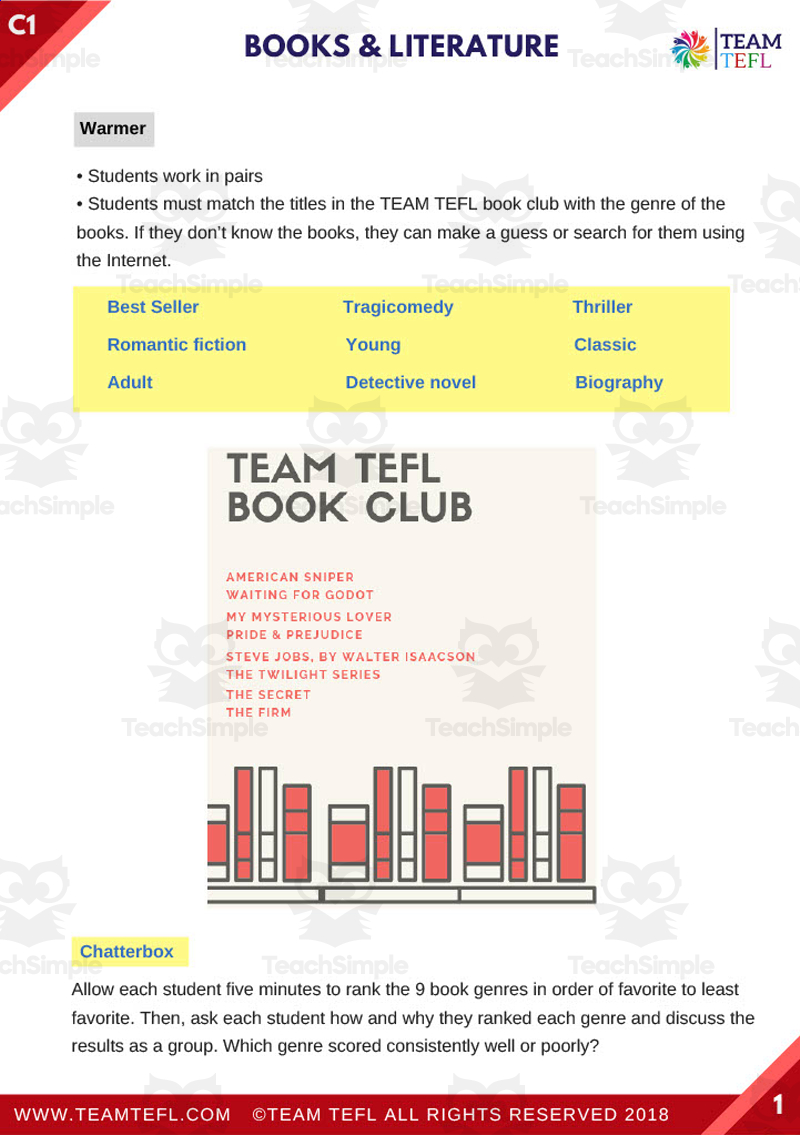
An advanced (C1-level) ESL/EFL lesson plan on books and literature, teaching literary terminology (genre, protagonist, antagonist, theme, narrative, plot twist, foreshadowing, cliffhanger, symbolism) through flash cards, listening comprehension, reading/vocabulary exercises, and an extra-study writing/cloze activity, with full answer…

None; this is a teacher/administrative organizational tool used by the classroom teacher and substitute, not a student-facing task.
Read the narrative passage 'Our Best Friend' about the family dog Trooper, then complete a true/false-correction comprehension exercise, write an original pet story, complete an antonym vocabulary exercise, solve a set of dog-themed math word problems (ratios, unit rates, graphing), and complete a dog-breed word-search puzzle.
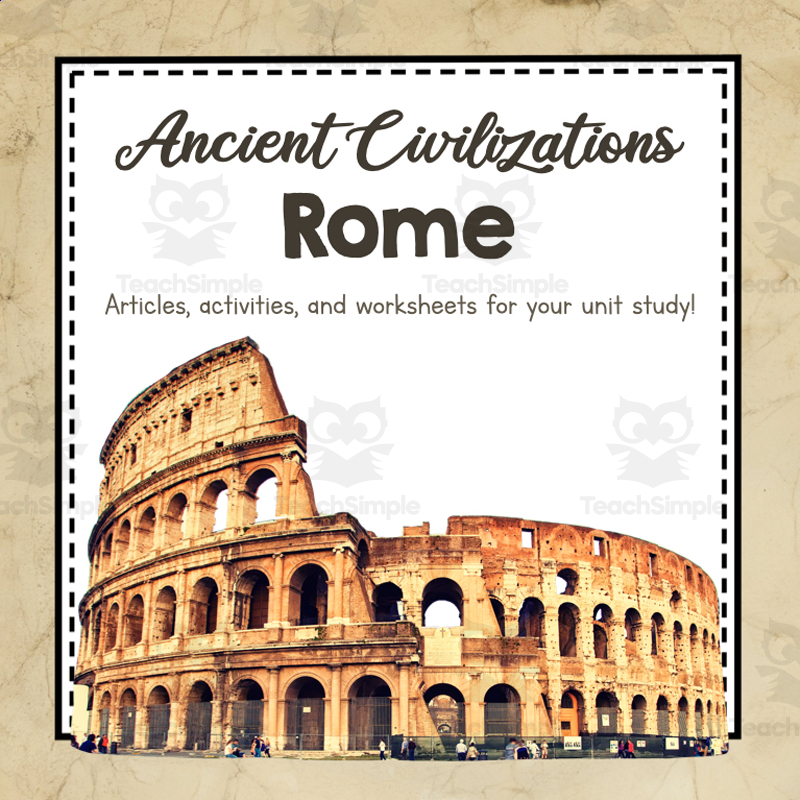
A multi-resource unit study packet to teach elementary/middle grades about Ancient Rome: geography, key figures, daily life, mythology, and the rise/fall of the empire.
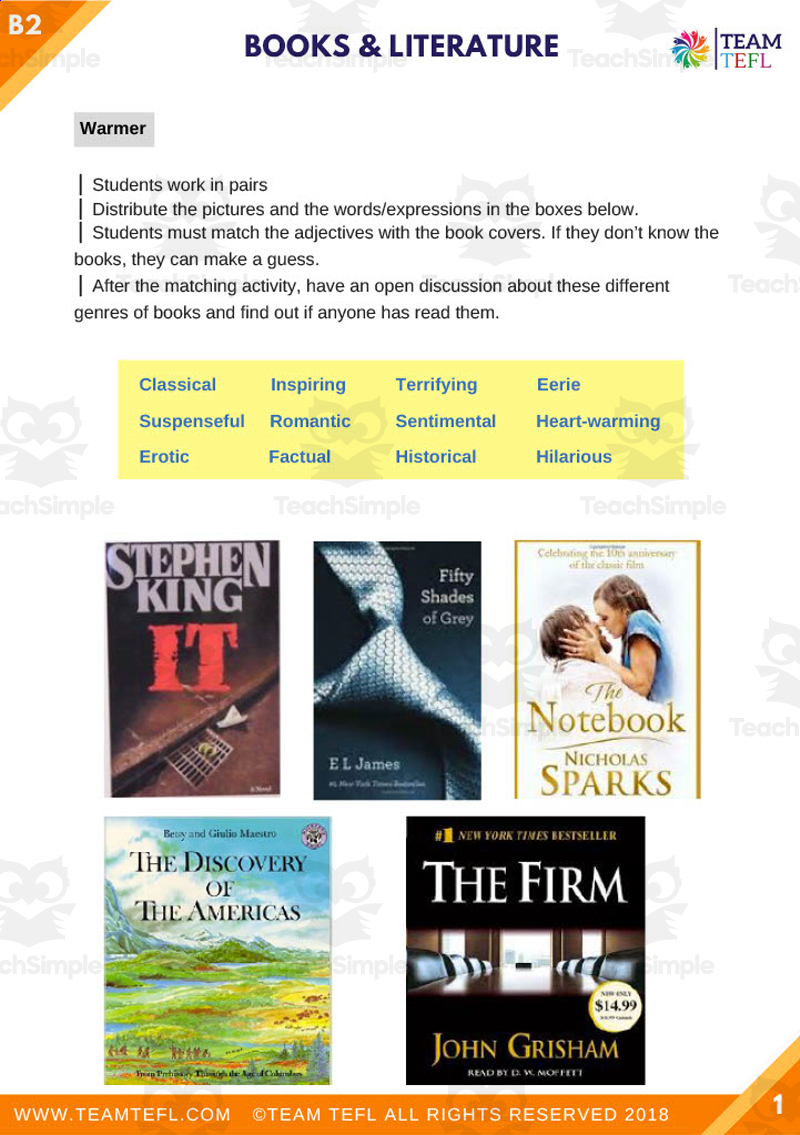
An upper-intermediate (B2-level) ESL/EFL lesson plan on books and literature, teaching genre vocabulary, plot/character description, and discussion skills through flash cards, listening comprehension, reading exercises, and an extra-study cloze/narrative-tense writing activity, with full answer keys for teachers.
Students discuss when they think slavery ended, watch a video and take notes, participate in guided discussion, review lecture notes on key facts, complete a worksheet (short-answer comprehension, true/false, vocabulary matching, chronological timeline ordering, reflection question), and share responses in a wrap-up discussion.
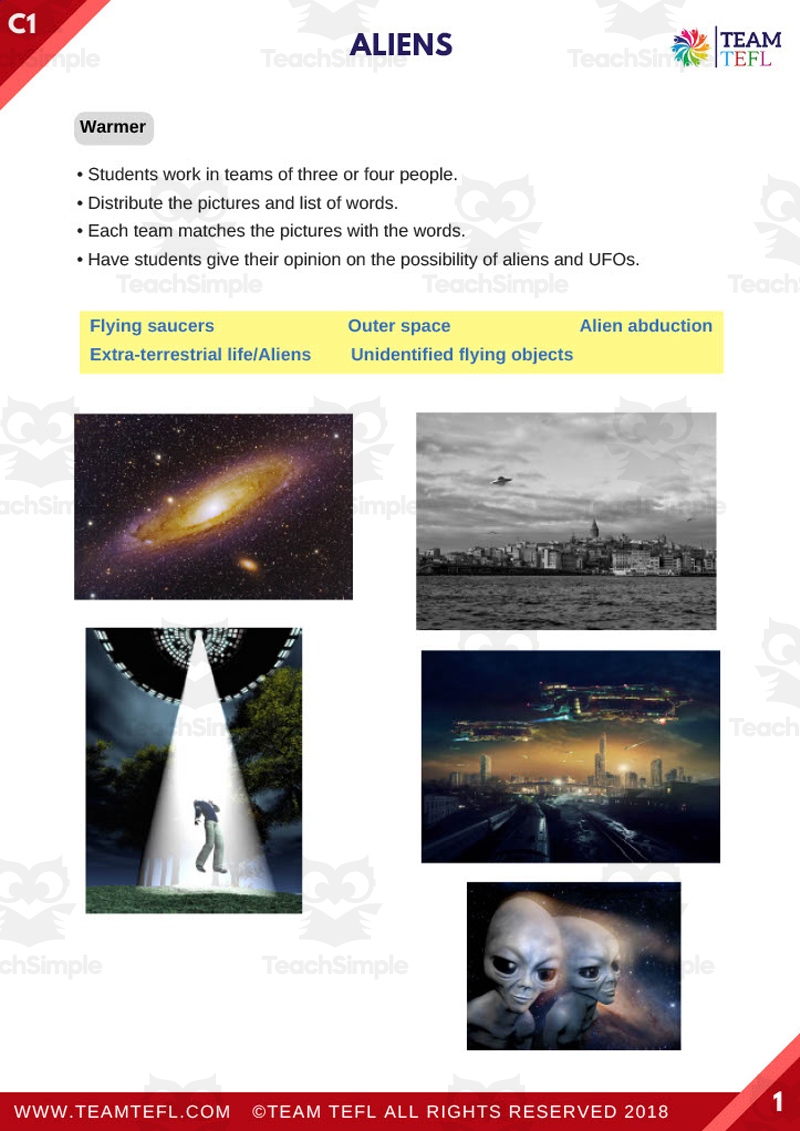
Match vocabulary pictures to words; read a dialogue/interview about an alleged alien encounter; complete vocabulary gap-fill and synonym-matching exercises; participate in a two-team debate on whether UFOs exist; listen to an audio recording of UFO sighting accounts and fill in missing words plus answer comprehension questions; complete…
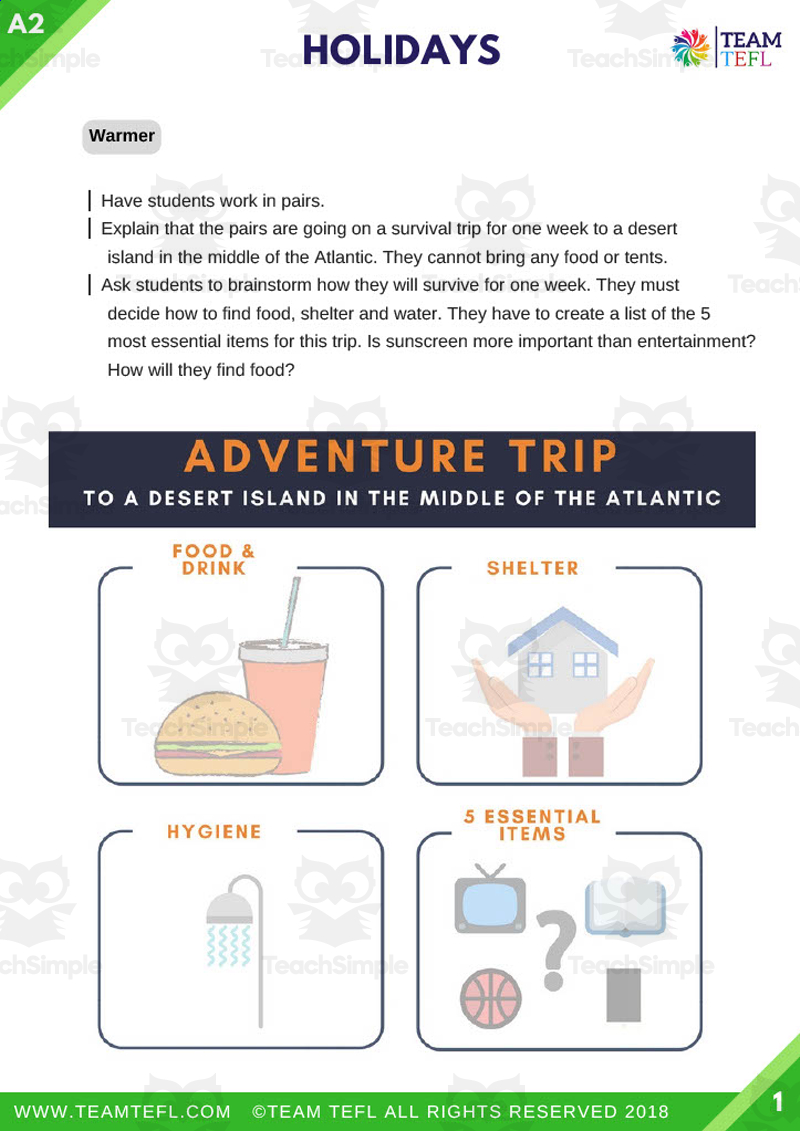
An ESL/ELL lesson plan bundle (CEFR level A2, 'pre-intermediate') teaching vacation/travel and accommodation vocabulary plus gerund grammar, through flash cards, a fill-in-the-blank narrative exercise, and a writing task.
Read a nonfiction article, answer true/false comprehension questions, write antonyms for listed words, solve math word problems, write a short descriptive narrative, and complete a word search.
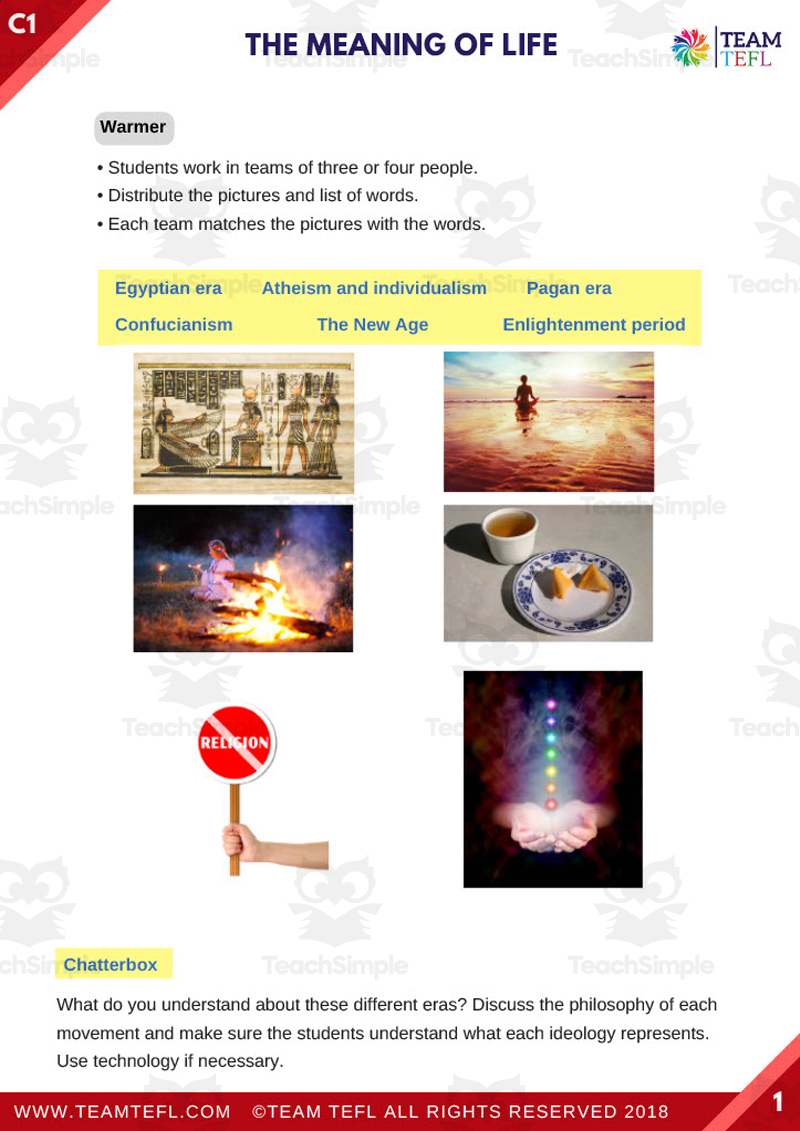
Match pictures to era/philosophy terms, learn vocabulary (humanist, virtue, divine, atheist, fatalist, etc.), read a scripted classroom debate on the meaning of life, complete fill-in-the-blank and synonym-matching exercises, participate in an immortality debate activity in teams, listen to an audio recording about philosophical ideas…

Students follow a substitute-led gym routine: walk/run warm-up, then play one of three tag-style games - '1-2-3-4 Tag' (avoid being tagged by 4 designated taggers, re-enter by doing 10 jumping jacks), 'Cheetahs and Gazelles' (agility game crossing zones without being tagged by 'cheetahs,' plus learning an animal fact from a fact card in…
Students match characters to descriptions, use context clues to determine word meanings, read a bar graph and a pie chart, fill in a story map, analyze unfair scenarios and propose fair responses, answer reflection questions, and write the opening of an original story.
Students read the biographical passage, then complete a fact-vs-opinion identification exercise, a first-person journal-entry writing task imagining being on the 1909 expedition, a geography/map short-answer exercise, a vocabulary exercise on prefixes, math word problems based on facts from the passage, and a themed crossword puzzle.

For each of the three topics, take part in a before-reading warm-up/discussion activity, read a short informational article, answer 'first reading' and 'after reading' comprehension questions, complete a vocabulary exercise (dictionary lookup or synonym matching), and complete an independent/extra research or creative extension task…
Participate in pre-viewing discussion and vocabulary preview, watch the film taking notes, engage in guided post-viewing discussion, then independently complete a multi-part worksheet: recall prior knowledge, build a character profile of young M.L. King, take notes on key scenes (the friendship lost to segregation, the shoe store…
After watching (or having seen) the film, students complete activities across five parts: a warm-up/vocabulary section (word web, word sort, crossword, word search), understanding-the-story tasks (complete-the-sentences, matching heroes to powers, a mission map, a comparison chart, describing senses, analyzing a plot twist, drawing…
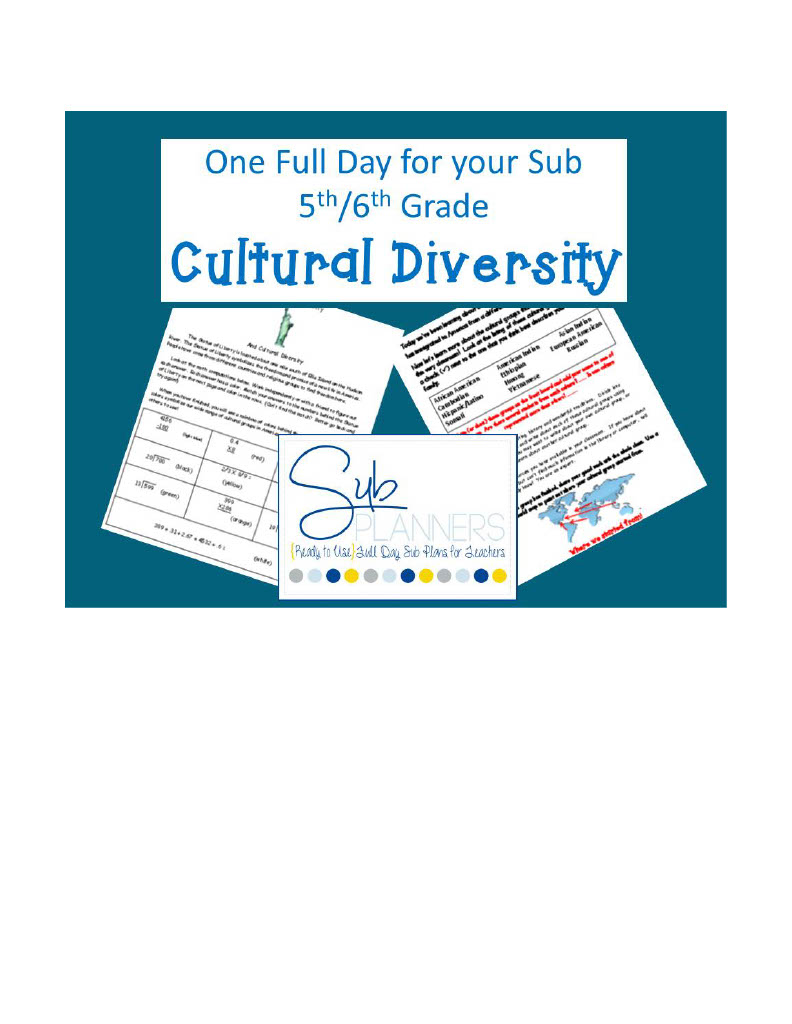
Complete morning/afternoon message activities, independent reading with reader-response papers, math computation and graphing tied to a Statue of Liberty picture and fictional demographic data, and reading/writing/social-studies activities on cultural diversity (reading passages, research report on a cultural group, vocabulary practice,…

Read information sheets/text sections and answer embedded questions, complete graphic organizers on each topic, do crossword/flashcard/sudoku activities, complete a review sheet, and take a unit test.

Students view and compare two Albrecht Dürer flower paintings, discuss elements of art (color, line, shape), arrange flower photographs into a composition, trace it onto acetate with a nib pen, transfer the ink to watercolor paper to make a monoprint, add watercolor paint, and write a reflective artist statement.