



3,906 products added recently
Page 52 - Elementary Lesson Plans
Support your elementary students with lesson plans that cover a broad range of subjects and skills. These resources are designed to promote cognitive, social, and emotional growth. Incorporate them into your teaching to provide a well-rounded education that meets the needs of all your students.

 Show filters


I WONDER - How Can I Recycle | Animated Video Lesson
Environmental Science, Earth and Environmental Sciences, Science, Earth Sciences, Grade 6, 7, 8, 9, 10, 11, 12, Lesson Plans, Teacher Tools
Video Introduction An amazing video designed for the students to learn more about STEM. I WONDER - How Can I Recycle | Animated Video Lesson Do you like STEM subjects? what is your favorite one? Have you ever tried to plant a seed? If yes, tell us more about it. Or have you ever tried to invent something? If yes, tell us more about it. And how do you think it will help us? Have you ever seen a microorganism under a microscope? What was it? And how it looked like? Mathematics is a marvelous subject. Let' sharpen our brains and solve some equations. Do you like timetable tricks? What is your favorite one? Do you know how to code? Have you ever created an app or a game before? If yes, how was it like? I WONDER - How Can I Recycle | Animated Video Lesson The video is perfect for encouraging the researching skills for the students, while learning more about this fantastic topic. I WONDER - How Can I Recycle | Animated Video Lesson This friendly designed video is suitable for students at school, homeschooling, and as a group activity. Format Available in MP4 format.
Author Educational Voice
Tags How Can I Recycle, How Can I Recycle Video, Recycle, Recycling, Recycling Facts, Recycling Facts For Kids, Recycling Video, Recycling Video For Kids, Recycling Tips, Recycling Tips For Kids

Virtual Reality World History Tours - History Book
Social Studies, History, History: African, History: Ancient, History: Asian, History: British, History: Canada, History: Europe, History: World, History: USA, Grade 2, 3, 4, 5, 9, 10, 11, 12, Activities, Games, Projects, Word Walls, Classroom Decor, Teacher Tools, Assessments, Diagrams, Graphic Organizers, Lesson Plans
Uncover the most exhilarating educational experience in “Virtual Reality World History Tours - History” by Syed Hammad Rizvi, a full-fledged worldwide history textbook created specifically for deeply submerging middle school and high school-level students in the most excitingly unfolding narrative of human history. Boasting a total of 360 pages in ebook version, this exciting global history educational ebook embarks on a dynamically interactive journey spanning all eras, from the emergence of hominids right up until the age of globalization, global ecology, and the computer age. Featuring all major global histories such as Mesopotamia, Ancient Egypt, Greece, Romans, Byzantine Empire, the Islamic Golden Age, the Medieval History of Europe, the Renaissance, the Industrial Revolution, both World Wars, the Cold War, and many more, this global history textbook for 6th-12th grade levels uniquely combines traditional educational narratives with their most attractive Virtual Reality-inspired alternatives, all uniquely intermixed for maximizing overall educational effectiveness. Perfectly suited for all homeschool, supplemental, as well as independent educational utilization, this fully Search Engine Optimization-optimized educational resource textbook consists of multiple editions including, but not limited to, chapters like histories on African Kingdoms, History on Major Asian Empires, History on Ancient, Medieval, or Present American Civilizations, or worldwide. Why Parents/Schools Love It: Global Coverage: It covers history from prehistory to current events with a total of 152 chapters, which helps to offer a complete curriculum through a single book rather than through various textbooks. Engaging Virtual Reality Theme: Frames history as immersion “tours,” exciting students and bringing concrete events alive for them so that they may be the best learning experience for visual learners or homeschoolers. Inclusive and Diverse Perspectives: Emphasizes the overlooked history of African empires, indigenous cultures, the role of women, and non-European empires, which enhances cultural knowledge. Adaptable For Every Learning Environment: Due to its easy-to-read format, the book is suited for the classroom or individual studies and is easily accessible online through SEO search capabilities. Educational Value at an Affordable Cost: Affordable ebook formats offer high-quality content that corresponds to Common Core Standards at an unbeatable price for time-sensitive parents and educators. Target Classes/Students : On the basis of a comprehensive analysis of the material presented in the book and the level at which the treatment is/DD: Introductory chapters about prehistoric mankind and the first civilizations through more sophisticated topics such as totalitarianism, decolonization, human rights, and future historical perspectives. Grade 6-8 (MS - Middle School Level) The first few chapters covering the early topics such as the Stone Age, the Neolithic Revolution, the early civilizations (Mesopotamia, Egypt, or the Indus Valley civilization), as well as the classical empires, can all be understood in simple terms. Grades 9-12 (High School): The later sections would encompass more complex topics like imperialism, world wars, the Cold War, globalization, and more recent matters like terrorism and sustainability, as would an AP World History course for seniors in high school. The progressive structure of the book constructs knowledge over time and by theme in a way that allows for differentiated instruction within these grades. Copyright/Terms of Use: This Book was copyrighted by Syed Hammad Rizvi. This resource is for personal and single classroom use only. You may not alter, redistribute, or sell any part of this resource. In other words, you may not put it on the Internet where it could be publicly found and downloaded. This resource is for personal use in one classroom only. If you want to share this resource with colleagues, please purchase additional licenses from Teachsimple. Thank you for respecting these terms of use. This product is brought to you happy by Syed Hammad Rizvi
Author Creative Book Store
Rating
Tags WorldHistory, HistoryBook, VirtualReality, VRHistory, HistoryTours, MiddleSchoolHistory, HighSchoolHistory, HistoryCurriculum, EducationalEbook, StudentHistory

Force - Digital Lesson Plan Gr. 5-8 - FLASH-PC
Science, Physics, Grade 3, 4, 5, 6, 7, 8, Teacher Tools, Lesson Plans
The Force - Digital Lesson Plan Gr. 5-8 - FLASH-PC A comprehensive, engaging teaching resource designed to simplify the concept of forces for students in grade 5 to 8. Main Features: An assortment of 80 interactive screen-pages encouraging a deep dive into Physics. Incorporates varying instructional techniques for an effective learning experience. Includes theoretical content backed with practical application-based activities. 'Before' & 'after you read' interactives for reinforced understanding. Test preparation materials to stimulate learners analytical thinking power. Joyful learning: achieved through memory match game, crossword puzzles and word searches. This tool supports video & audio synchronized with the textual content – promoting multisensory learning approaches. The detailed lesson plan aligns well within standard state curriculums and encompasses Bloom's Taxonomy levels within its structure – proving its immersive, high-value educational approach. Suitable for implementation in wide-ranging academic environments like whole class instruction, smaller group sessions or even as homework assignments - creating sustained scholastic advancement outside classrooms too! Ease Of Use: This product comes as a PC Software file type ensuring easy usage across standard computer setups irrespective of users’ tech-savviness level — guaranteeing seamless incorporation into daily Physical Science lessons without any added complications recycldimgfhgrlffkkkkkk! Educational Benefits: An exquisite resource adapting physical science education into an intriguing exploration avenue aiding evolvement of young students' transient curiosity into substantial scientific knowledge acquisition! +
Author Classroom Complete Press
Tags Software (PC)

I WONDER - Were Ancient Greek Girls Educated | Animated Video Lesson
History: Ancient, History, Social Studies, History: Europe, Grade 4, 5, 6, 7, 8, 9, 10, Lesson Plans, Teacher Tools
Video Introduction An amazing video designed for the students to learn more about history. I WONDER - Were Ancient Greek Girls Educated | Animated Video Lesson Do you like history? Which topic do you really enjoy about history? Have you ever read an interesting fact about the Vikings? If yes, can you mention them? What do you like most about the Victorian era? Can you name all the Tudors? Have you ever wondered how people used to live in ancient Japan and ancient China? Do you know any interesting facts about ancient Egyptians and the Pharaohs? Have you ever visited South America? What do you know about Incas and Aztecs? Celtic culture was really one of a kind, can you name any of the places that Celts used to live in? Imagine yourself living during the ancient Roman empire, how your life will look like? Ancient Greece was an amazing place to live in. What do you know about ancient Greek life? I WONDER - Were Ancient Greek Girls Educated | Animated Video Lesson The video is perfect for encouraging the researching skills for the students, while learning more about history. I WONDER - Were Ancient Greek Girls Educated | Animated Video Lesson This friendly designed video is suitable for students at school, homeschooling, and as a group activity. Format Available in MP4 format.
Author Educational Voice
Tags Were Ancient Greek Girls Educated, Were Ancient Greek Girls Educated Video, Ancient Greek Girls, Ancient Greek Girls Facts, Ancient Greek Girls Facts For Kids, Ancient Greek Girls Video, Ancient Greek Girls Video For Kids

All About Insects | Animated Animals Video Lesson
Science, Life Sciences, Insects, Grade 3, 4, 5, 6, 7, Lesson Plans, Teacher Tools
All About Insects | Animated Animals Video Lesson Product Description: A comprehensive educational resource specifically designed for science educators and homeschoolers to offer an interactive, immersive learning experience. The tool caters to learners between Grade 3 and Grade 7. This five-minute-long animated video format presents easy-to-understand and accurate scientific information about insects. This digital tool is a valuable addition to any teaching content, from being used as an illustrative aid during lessons or as a resource for homework assignments. Features: Focused animated content on various insect-related topics like life systems, habitats, adaptation mechanisms etc. Intricate animation design for enhanced learner engagement. Pairs visual information with auditory explanations to create multiple learning touchpoints. The product is available in MP4 file format making it compatible across different digital devices - laptops, tablets and even smartphones. Advancements in technology have made any space a potential classroom offering flexible learning scenarios based on each learner's requirements. Potential Usage Scenarios: Educators: A perfect introductory video before starting any new chapter related to animals or insects. Alternatively can be used as review material upon completion of the topic. Homeschoolers/Tutors: Ideal during scheduled science time promoting self-learning methods. Asynchronous learning can be encouraged allowing students learn at their own pace outside typical classroom timings at home leveraging blended education benefits substantially. To conclude, All About Insects | Animated Animals Video Lesson is an adaptable supplemental addition sure to enrich your teaching repertoire providing scientifically accurate data compactly within innovative technology-enhanced education methods.
Author Educational Voice
Tags Insects, Animated Video, Science Education Resource, Homeschooling, Blended Learning, Animated Animals Word Search

I WONDER - What Did Ancient People Think Of The Aurora Borealis
Geography, Social Studies, Earth Sciences, Earth and Environmental Sciences, Science, Grade 4, 5, 6, 7, 8, 9, 10, Lesson Plans, Teacher Tools
Video Introduction An amazing video designed for the students to learn more about famous places in different countries. I WONDER - What Did Ancient People Think Of The Aurora Borealis | Animated Video Lesson What do you know about this place? Do you know in which part of the world it is? Have you ever visited this place? If yes, can you tell us more about your adventure, and what do you like the most about this place? Do you like reading about Geography? What is your favorite country in the whole world? If you are going on a trip where it will be? Which country? What you are going to see there? Does this country has a famous place to visit? I WONDER - What Did Ancient People Think Of The Aurora Borealis | Animated Video Lesson The activity is perfect for encouraging the researching skills for the students, while learning more about this fantastic place. I WONDER - What Did Ancient People Think Of The Aurora Borealis | Animated Video Lesson This friendly designed video is suitable for students at school, homeschooling, and as a group activity. Format Available in MP4 format.
Author Educational Voice
Tags What Did Ancient People Think Of The Aurora Borealis, What Did Ancient People Think Of The Aurora Borealis Video, Aurora Borealis, Aurora Borealis Facts, Aurora Borealis Video, Aurora Borealis Video For Kids
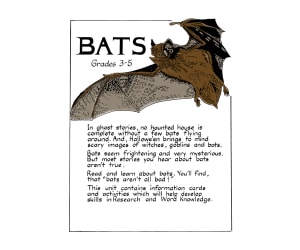
BATS Gr. 3-5
Science, Life Sciences, Animals, Grade 3, 4, Teacher Tools, Lesson Plans
BATS Gr. 3-5: A Dynamic Teaching Resource The BATS Gr. 3-5 product is a dynamic teaching resource created to shed light on the often misunderstood world of bats, debunk common myths, and promote curiosity about these unique creatures. Ideally suited for Grade 3 and Grade 4 Science students, this unit focuses on the Zoology subfield and uses bats as its framework. Eliminating misconceptions and emphasizing factual understanding is essential when teaching young learners about nature's diversity. Pack Components: Information Cards: These include facts designed to provoke thought, stimulate discussion, and elicit analysis among students. They guide learners towards independent research. Vocabulary Activities: The pack enhances Word Knowledge skills through engaging vocabulary activities related to bat biology, habituation and more. A total of 36 ready-to-print pages are provided in one handy PDF file format making it an easily accessible resource for any educator or homeschooling parent. Teaching Methods Supported: Whole-group discussions: Focused on shared readings of the fact cards. SAM activities: The deconstructive examination of materials. Solo assignments: Promoting self-study skills. In summary: informative yet entertaining; flexible in execution; beneficial for learning multiple subject areas simultaneously – highlighting why our friendly nocturnal critters "bats aren't all bad", BATS Gr 3.-5 helps enrich your science curriculum while providing a memorable study experience filled with enlightening discoveries! >
Author Classroom Complete Press
Tags Bats, Reading Passage, True Or False, Research, Comprehension Questions

Classification & Adaptation: A Case Study: The Koala and Its Adaptations Gr. 5-8
Science, Life Sciences, Biology, Grade 5, 6, 7, 8, Teacher Tools, Lesson Plans
Classification & Adaptation: A Case Study: The Koala and Its Adaptations Gr. 5-8 This engaging teaching resource is tailored for students in grades 5 to 8. It delves into the captivating world of biology, specifically focusing on the sphere of animal adaptation through an intimate exploration of the survival mechanisms adopted by the koala bear. This teaching aid encourages students to consider pressing questions such as: What distinguishes warm-blooded and cold-blooded animals? How are vertebrates different from invertebrates? BLOOM's Taxonomy Concepts In trying to answer these fundamental scientific inquiries, students will come face-to-face with concepts that make up BLOOM's taxonomy like comprehension, application, analysis and synthesis. The Core Subject – The Koala Bear The core of this resource a detailed case study about one of Australia's most iconic fauna – The Koala Bear. Students learn about this unique creature and its remarkable adaptations for survival in intricate environmental conditions. Educational Activities Included "How Important Are Thumbs?" "The Lake Habitat Thermometer" "A Day in the Life of a Paleontologist!" Apart from enlightening reading passages that simplify complex scientific concepts, this valuable resource also contains hands-on activities that facilitate practical understanding application. Educational Standards Alignment & Student Guide Additions This bundle conforms with your State’s educational standards ensuring relevance while aligning with STEM initiatives guarantees rigor in critical thinking and problem-solving skills development. Its simplified language makes learning enjoyable even to remedial students. Instruction Modes Educators can utilize this vital source material for various instruction modes including: Whole-class teaching Small group sessions Homework assignments fostering independent thought processes among learners. The addition of a student guide adds flexibility into usage possibilities. For educators keen on enhancing their grade 5-8 wards' scientific acumen, "Classification & Adaptation: A Case Study: The Koala and Its Adaptations Gr. 5-8" is an invaluable partner for the journey of comprehension, analysis, synthesis and evaluation of every learning endeavor.
Author Classroom Complete Press
Tags PDF

Geometry: Spatial Relationships - Practice the Skill 2 - MAC Software
Math, Geometry, Common Core, Kindergarten, Preschool, Grade 1, 2, Teacher Tools, Lesson Plans
Geometry: Spatial Relationships - Practice the Skill 2 - MAC Software This interactive geometry learning software caters to students from preschool, kindergarten, and grades 1-2. It is primarily focused on teaching spatial relationships in Geometry, a fundamental concept in math education. An interactive Approach to Learning The software stimulates critical thinking by encouraging students to recognize and identify the correct placements of diverse animal or figure images. Timed drill activities with real-world imagery are employed, making learning more relatable and engaging for students. Language Compatibility Features In the interest of inclusivity, this software defaults to English text but also includes optional Spanish voice-over and text features. Educational Guidelines Alignment This resource aligns with recognized educational guidelines such as Common Core State Standards (CCSS), STEM initiatives, or National Council of Teachers of Mathematics (NCTM). Versatility for Educators The user-friendly design is accessible even to educators who do not frequently use technology in their teaching. It can be used across whole group lessons or smaller study circles; it can even be used as homework material catering uniquely to each learner’s pace. Simplified Implementation All essential Mac software elements are included in a single zip file upon purchase making implementation into your curriculum a smooth process. Try out Geometry: Spatial Relationships - Practice the Skill 2 – MAC Software today! .
Author Classroom Complete Press
Tags Geometry, Spatial, Relationships, Math Skills, Geometry Practice

5th Grade Science Diagnostic Assessment & Review System
Science, Grade 5, Assessments, Teacher Tools, Lesson Plans, Worksheets & Printables
Start the year with a clear picture of what students know using this 5th grade beginning of year science assessment and targeted skills system. With a 48-question diagnostic worth 121 points , teacher scoring and analysis tools, instructional grouping support, 11 targeted follow-up practice pages , and complete explained answer keys, this resource helps you move from assessment results to focused instruction without piecing together separate materials. Designed as a complete Assess → Analyze → Group → Review → Reteach system, this Grade 5 science resource checks readiness across Life Science, Earth & Space Science, Physical Science, and Scientific Practices using cells, food webs, Earth systems, solar system models, energy chains, graphs, data tables, scenarios, and Claim-Evidence-Reasoning tasks. What’s Included This 5th grade science assessment and review system includes: ✅ 48-question beginning-of-year science diagnostic ✅ 121 total assessment points ✅ 4 major science strands ✅ Life Science questions ✅ Earth & Space Science questions ✅ Physical Science questions ✅ Scientific Practices questions ✅ Multiple-choice questions ✅ Short-answer questions ✅ Labeling activities ✅ Matching questions ✅ Diagram interpretation ✅ Data tables ✅ Graph reading ✅ Scientific scenarios ✅ Vocabulary-in-context questions ✅ Claim-Evidence-Reasoning (CER) tasks ✅ 10 labeling and diagram-interpretation items ✅ Animal cell labeling ✅ Plant and animal cell comparison ✅ Marine food web interpretation ✅ Earth systems model ✅ Solar system diagram ✅ Physical and chemical change analysis ✅ Conservation of matter model ✅ Energy transformation chain ✅ Forces and motion model ✅ Variables and fair-test setup ✅ Answer recording sheet ✅ Quick-reference answer key ✅ Skill-by-skill scoring chart ✅ Strand analysis tool ✅ Secure, Developing, and Needs Support performance bands ✅ Individual Student Performance Profile ✅ Whole-class data tracker ✅ Suggested instructional groups ✅ Group planning sheet ✅ 11 targeted follow-up science practice pages ✅ “Remember” reteaching box on every follow-up page ✅ “Apply It” challenge on every follow-up page ✅ All-new follow-up practice with no repeated assessment questions ✅ Complete answer keys ✅ Suggested short-answer responses ✅ Completed visual and diagram answers ✅ Sample CER responses ✅ Short “why” explanation for every assessment item ✅ Partial-credit guidance ✅ CER scoring rubric Part 1 contains 48 mixed-format questions worth 121 total points across four science strands. The Teacher Guide recommends two 40–50 minute sessions and explains that the diagnostic is intended as a planning tool to reveal what fifth graders retained and where instruction should begin. Part 2 turns student responses into actionable data with an answer recording sheet, quick-reference key, skill-by-skill scoring, strand analysis, performance bands, individual student profiles, a whole-class data tracker, suggested instructional groups, and a group planning sheet. Part 3 includes 11 ready-to-assign targeted follow-up pages , each with fresh practice, a short Remember reteach box, and an Apply It challenge for students ready to extend their thinking. Part 4 provides correct answers for all 48 questions, explanations of why answers are correct, suggested open-response answers, completed diagrams, sample CER responses, partial-credit guidance, and a CER scoring rubric. How It Works in the Classroom Use this 5th grade beginning of year science assessment during the first weeks of school to identify what students retained from earlier science learning and where instruction should begin. The resource follows a practical five-step system: 🔎 Assess — Students complete the 48-item mixed-format science diagnostic 📊 Analyze — Score by skill and strand to identify patterns and gaps 👥 Group — Sort students into instructional groups based on shared needs 📝 Review — Assign only the targeted follow-up pages students need 🎯 Reteach — Use complete explanations, worked visuals, and sample CER responses to support next steps The 5-Step System chart on page 2 of Part 1 connects each stage directly to the matching part of the resource, creating a clear workflow from initial diagnostic assessment to targeted reteaching. The same page also summarizes the 48 items, 121 points, mixed formats, four strands, diagram focus, and suggested timing. Use this resource for: ⭐ Beginning-of-year science assessment ⭐ 5th grade science diagnostic ⭐ Back-to-school science review ⭐ Science pre-assessment ⭐ Science readiness check ⭐ Formative assessment ⭐ Small-group planning ⭐ Science intervention ⭐ Targeted reteaching ⭐ Data-driven instruction ⭐ Skill-based grouping ⭐ Independent follow-up practice ⭐ Science centers ⭐ CER practice ⭐ Graph and data interpretation review The Scoring at a Glance chart on page 2 of Part 2 breaks the assessment into four strand totals: Life Science /34, Earth & Space Science /31, Physical Science /35, and Scientific Practices /21 , for 121 total points . It also defines three performance bands: Secure (80%–100%) , Developing (50%–79%) , and Needs Support (below 50%) . The Class Data Tracker on page 15 of Part 2 provides a whole-class view of strand percentages and total performance, while the Suggested Instructional Groups on page 16 help teachers group students according to shared needs and connect those groups to matching Part 3 review pages. Standards & Learning Goals This fifth grade science diagnostic assessment reviews foundational concepts and scientific reasoning across four major strands: 🌱 Life Science — cells and organisms, animal cell structures, plant and animal cell differences, organelle functions, levels of organization, food webs, energy flow, ecosystems, producers, consumers, decomposers, population data, photosynthesis, and organism survival 🌎 Earth & Space Science — Earth’s four systems, system interactions, solar system order and models, day and night, seasons, planet data, climate graphs, Earth’s water, condensation, water cycle interactions, renewable resources, space objects, and conditions needed for life ⚡ Physical Science — properties of matter, physical and chemical changes, signs of chemical change, conservation of matter, energy transformations, forms of energy, potential and kinetic energy, gravity, friction, forces on a ramp, force-and-motion data, and balanced and unbalanced forces 🔬 Scientific Practices — scientific method, independent and dependent variables, controlled variables, fair tests, interpreting data tables, graph reading, drawing conclusions, and Claim-Evidence-Reasoning from data Students demonstrate understanding through varied science tasks rather than one question type. The assessment includes a five-part animal cell labeling task , plant-cell interpretation, a marine food web, ocean population data, Earth’s four systems, a solar system model, a monthly climate graph, physical and chemical change comparisons, conservation of matter in a sealed jar, an energy transformation chain, force arrows on a ramp, force-and-speed data, an experimental variables setup, line graph reading, bar graph reading, and CER tasks. The Skill-by-Skill Scoring Chart on pages 10–12 of Part 2 helps teachers pinpoint specific gaps rather than relying only on one total score. Skills include cell basics, cell structure, plant versus animal cells, organelle function, food webs, energy flow, ecosystems, Earth systems, solar system concepts, seasons, climate graphs, physical and chemical changes, conservation of matter, energy transformations, forces, variables, data interpretation, graph reading, conclusions, and CER reasoning. Why Teachers Love It ✨ Move beyond a single test score. Results can be analyzed by strand and individual skill, helping teachers see exactly where students are secure and where review is needed. ✨ Turn assessment data into an instructional plan. The scoring tools connect results to performance bands, student profiles, grouping, and targeted follow-up practice instead of leaving teachers with a stack of completed tests. ✨ Use visual, model-based questions to see student thinking. Students work with cell diagrams, food webs, Earth systems, solar system models, energy chains, force diagrams, data tables, graphs, experimental setups, and CER tasks. ✨ Assess fifth-grade science reasoning through mixed formats. The diagnostic includes multiple choice, short answer, labeling, matching, diagram interpretation, data tables, graph reading, scientific scenarios, vocabulary in context, and Claim-Evidence-Reasoning. ✨ Include 10 labeling and diagram-interpretation items. Visual tasks address cells, a marine food web, Earth systems, the solar system, physical and chemical changes, conservation of matter, energy transformations, forces, and experimental variables. ✨ Support data-driven small groups. The Suggested Instructional Groups tool organizes students around shared needs in Life Science, Earth Science, Physical Science, or Scientific Practices and connects each group to matching Part 3 practice. ✨ Differentiate with clear performance bands. Use Secure, Developing, and Needs Support ranges to guide enrichment, targeted practice, or foundational small-group reteaching. ✨ Assign only the review students need. The 11 targeted follow-up pages include: Cells & Organisms Review Food Webs & Energy Review Ecosystems Review Earth’s Systems Review Water Cycle & Weather Review The Solar System Review Matter & Changes Review Energy Review Forces & Motion Review Scientific Method & Variables Review Science Data & Graphs Review The Practice Page Menu on page 2 of Part 3 directly matches common student difficulties to specific follow-up pages, making targeted assignment faster. ✨ Reteach before students practice. Every targeted page includes a concise Remember box that reviews the essential concept before students begin. ✨ Challenge students who are already secure. Every follow-up page includes an Apply It task designed to extend thinking beyond basic recall. ✨ Use fresh follow-up practice instead of repeating the diagnostic. Part 3 explicitly provides all-new practice, allowing students to demonstrate understanding on new examples and situations. ✨ Build Claim-Evidence-Reasoning skills. Students complete CER tasks connected to marine food webs, conditions for life on Earth, physical versus chemical changes, and plant-growth data. Part 4 includes sample CER responses and scoring guidance. ✨ Make grading more manageable. Part 4 includes a correct answer, a short explanation of why, suggested responses for writing tasks, completed visual items, and partial-credit guidance for multi-part questions. ✨ Use completed diagrams for faster checking. Part 4 provides fully worked visual support for challenging items such as the animal cell, plant cell, marine food web, Earth’s four systems, solar system, and energy transformation chain. ✨ Track individual student needs. The Student Performance Profile on page 14 of Part 2 includes a strand snapshot, strengths, focus areas, assigned Part 3 pages, and group placement. ✨ See class-wide patterns quickly. The Class Data Tracker on page 15 lets teachers scan columns for whole-class strand gaps and rows for individual grouping needs. ✨ Keep the instructional loop connected. Assessment, analysis, grouping, targeted review, reteaching, and answer support are designed as one coordinated system rather than disconnected activities. Start the year knowing what students understand and what they need next with this 5th grade beginning of year science assessment . Download this complete diagnostic and targeted review system to assess readiness, analyze results by strand and skill, create focused instructional groups, assign specific follow-up practice, and support reteaching with complete explained answer keys. Perfect for teachers searching for a 5th grade science diagnostic assessment , beginning-of-year science review, back-to-school science assessment, fifth grade science pre-assessment, Life Science review, Earth and Space Science review, Physical Science review, Scientific Practices assessment, cells and organisms, food webs, Earth systems, solar system review, physical and chemical changes, conservation of matter, energy transformations, forces and motion, scientific method, variables, CER practice, science intervention, small-group science planning, data-driven instruction, or targeted science reteaching.
Author Bright Classroom Ideas Marketplace
Rating
Tags Science, Back To School, Worksheet, Lesson, Assessment
I WONDER - Who Was Violet Jessop | Animated Video Lesson
Biographies, Social Studies, History: British, History, History: Ancient, Grade 4, 5, 6, 7, 8, 9, 10, Lesson Plans, Teacher Tools
Video Introduction An amazing video designed for the students to learn more about history. I WONDER - Who Was Violet Jessop | Animated Video Lesson Do you like history? Which topic do you really enjoy about history? Have you ever read an interesting fact about the Vikings? If yes, can you mention them? What do you like most about the Victorian era? Can you name all the Tudors? Have you ever wondered how people used to live in ancient Japan and ancient China? Do you know any interesting facts about ancient Egyptians and the Pharaohs? Have you ever visited South America? What do you know about Incas and Aztecs? Celtic culture was really one of a kind, can you name any of the places that Celts used to live in? Imagine yourself living during the ancient Roman empire, how your life will look like? Ancient Greece was an amazing place to live in. What do you know about ancient Greek life? I WONDER - Who Was Violet Jessop | Animated Video Lesson The video is perfect for encouraging the researching skills for the students, while learning more about history. I WONDER - Who Was Violet Jessop | Animated Video Lesson This friendly designed video is suitable for students at school, homeschooling, and as a group activity. Format Available in MP4 format.
Author Educational Voice
Tags Who Was Violet Jessop, Who Was Violet Jessop Video, Violet Jessop, Violet Jessop Facts, Violet Jessop Facts For Kids, Violet Jessop Video, Violet Jessop Video For Kids, History, History Video
Data Analysis & Probability: Circle Graphs - Practice the Skill 3 - MAC Software
Math, Graphing, Common Core, Kindergarten, Preschool, Grade 1, 2, Teacher Tools, Lesson Plans
Data Analysis & Probability: Circle Graphs - Practice the Skill 3 - MAC Software is an acclaimed teaching resource that is tailored to support math-focused subjects. It is developed for grades ranging from preschool through to grade 2 and offers a curriculum-based approach. The software features timed drill activities that challenge students' understanding and interpretation of circle graphs related to data analysis and probability. Each activity poses a series of questions based on the respective circle graph, thus promoting active learning and engaging interaction with key mathematical concepts. To enhance comprehension, this educational tool equips learners with specialized math tools that empower their learning journey. A unique aspect of this teaching resource is its inclusion of bilingual (English and Spanish) voice-over themes. This exciting feature makes it ideal for multilingual classrooms or English as Second Language (ESL) learners, ensuring inclusivity in modern global classroom settings while also driving up student engagement levels. Teachers can employ this valuable tool during whole group instruction or use it to curate differentiated activities tailored for small ability-diverse groups—making its potential application in the classroom limitless! The rich variety of exercises can also work perfectly as homework assignments or quick assessments, granting students an opportunity for independent skills refinement at home. No More Storage Woes: All content sits snugly within a zip file that installs smoothly onto any MAC computer system without straining your storage capacity—a practical solution engineered around your technology needs . Main Benefits: The software aligns cohesively with Common Core State Standards, STEM initiatives, & NCTM principles—thus laying down a solid foundation for imparting complex mathematical concepts later in higher grade levels. Its application extends beyond classrooms to also serve homeschooling setups—the Data Analysis & Probability: Circle Graphs - Practice the Skill 3- MAC Software is a valuable addition to your educational toolkit that combines convenience with in-depth learning outcomes. To conclude, the Data Analysis & Probability: Circle Graphs - Practice the Skill 3 - MAC Software steps up as an indispensable supplement that enriches your educational toolkit by balancing ease and deep-routed learning results.
Author Classroom Complete Press
Tags Digital Math, Digital Graphs, Circle Graphs, Probability, Math Skills
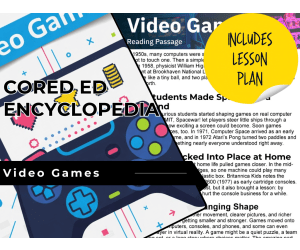
Video Games Reading Comprehension Passage - Cored Ed Encyclopedia
ELA, Language Development, Reading Comprehension, Reading, Pre-Reading, Science, Technology, Engineering, History, Social Studies, Grade 2, 3, 4, 5, Worksheets & Printables, Worksheets, Teacher Tools, Centers, Activities, Writing Prompts, Assessments, Quizzes and Tests, Quizzes, Lesson Plans
This video games reading comprehension with lesson plan includes: Visualization (on the front cover) Start your lesson by taking a minute to think and share something about the topic. Read the script aloud (slowly), perhaps prepare some music or sound effects. Student close their eyes and let their imaginations wander. Students open their eyes, read the question aloud and give them a few minutes to complete. Ask a few students to share or keep answers until the end to compare with what they learn in the passage. Quick pause—thousands of Cored Education products are included with your TeachSimple membership. Download links and encyclopedia index available here. Pre-Reading Trivia Students will write down one thing they already know about the subject and then read five more facts and discuss. These facts are fun, and the students will enjoy learning about the subject before reading more. Give 1 minute for students to write what they already know (no pressure—best guess is fine). Read the five facts together. After each fact, do ask a student for their opinion, was it surprising? Set a purpose by asking students to highlight/underline one fact they want to learn more about during the reading. Reading Passage The text is a high-interest reading passage with set paragraphs, roughly three to four paragraphs long. It contains a variety of themes about the topic, anywhere from history to technology. The passage is between 250 and 350 words in length. First, ask students to look at the headings and see what they’ll learn about today. What do they know about the topic/heading? First read options: Teacher read-aloud (best for support). Partner reading (paragraph by paragraph). While reading, students underline important details, and vocabulary words they think may come up in the questions section. Mixed Questions The first question page contains four multiple-choice questions, each with a choice of four answers, and three written response questions that require a sentence or two from the student. Students complete the mcqs first independently, then review quickly as a class. For the 3 written responses, try to get students giving the answer with some form of evidence: “I think ___ because the text says ___.” If students get stuck, send them back to check the passage. Vocabulary Questions Practice seven key words from the text in this section across two activities. First section is scrambled words where students will unscramble three words given a clue for each. The second section is a word to meaning matching activity. Before starting, have some students read out words they underlined in the passage. Ask students to say the word and read aloud the sentence(s) around each word. Ask students to do scrambled words and the matching exercise in pairs then go through answers as a class. For the scrambled spelling task, get four pairs to come up to the board and write the words for extra practice with the other student reading out the clue. For the matching task, prompt students to give full sentences: “I matched ___ with ___ because ___.” Creative Writing In this question, the student will be required to write a five to eight sentence paragraph on a question related to the topic. Before starting, ask students write down 3 key ideas they are going to include in their piece. Ask students for ideas to share around the class to help those struggling. Pro writing expectations: 5–8 sentences At least 2 facts or details from the passage At least 2 vocabulary words from the previous page Students read their paragraphs while classmates listen for facts and vocabulary words. Extension Activities This page is optional for fast finishers or to take home. There are several activities, each one requiring a different skill. Do some, do none, do all, completely optional - but you will feel reassured knowing every possibility is planned for. Includes summary writting question. Answer Key There are answers for the multiple-choice questions, written response questions have sample answers, vocabulary answers and if there is a summary question then a sample summary will be provided as well. Lesson Plan Included Customized lesson plan for this lesson is included. Lesson Snapshot Title: Video Games Genre: Nonfiction (Informational text) Subject: Science & Technology / Media Literacy Primary Topic: How video games changed from dots to VR Estimated Guided Reading Level (A–Z): P Story text location: Reading Passage on page 3. Support pages included: Visualization prompt (p.1), Pre-Reading Trivia (p.2), Mixed Questions (p.4), Vocabulary (p.5), Creative Writing (p.6), Extension Activities (p.7), Answers (p.8). Support-page QA check: The questions, vocabulary tasks, and answer key match the passage’s details (dates, examples, and key terms). What This Lesson Teaches Best Early video games grew from science tools and big computers: Describes room-sized computers and a “game screen” idea using an oscilloscope. Timeline of key early games and places: Connects Tennis for Two (1958), Spacewar! at MIT (1962), Computer Space (1971), and Atari’s Pong (1972). How cartridges changed home gaming: Explains that swapping cartridges let one system play many different games, and names early cartridge consoles (Fairchild system, Atari 2600). Technology improvements changed how games look, sound, and where they are played: Notes smoother movement, clearer pictures, richer sound, and games moving to handheld screens, computers, consoles, and phones. Games became many types of experiences: Lists examples like puzzles, team sports, building sets, long stories with choices, and virtual reality. Learning Goals Students will describe how Tennis for Two worked and what device showed the moving dot. Students will identify major milestones in early video game history by placing key examples in order. Students will explain how cartridges helped video games spread at home. Students will summarize how video games changed as computers became smaller and stronger. Students will give examples of different kinds of games mentioned in the passage. Key Vocabulary From the Text oscilloscope — a screen tool that can show moving signals. physicist — a scientist who studies matter and energy. arcades — public places where people play games. cartridges — plastic game boxes you swap into a system. virtual — computer-made, not physically real. FULL CATALOG OF DOWNLOAD LINKS AND ENCYCLOPEDIA INDEX HERE
Author Cored Education
Rating
Tags Vocabulary, Reading Comprehension, Reading Passages, Lesson Plans, Ela Lesson Plans, Reading Comprehension Lesson Plans, Pre-reading, Science Lesson Plans, Technology, History Lesson Plans
I WONDER - How Can Birds Sit On Power Lines | Animated Video Lesson
Physics, Science, Life Sciences, Animals, Grade 4, 5, 6, 7, 8, 9, 10, Lesson Plans, Teacher Tools
Video Introduction An amazing activity designed for the students to learn more about STEM. I WONDER - How Can Birds Sit On Power Lines | Animated Video Lesson Do you like STEM subjects? what is your favorite one? Have you ever tried to plant a seed? If yes, tell us more about it. Or have you ever tried to invent something? If yes, tell us more about it. And how do you think it will help us? Have you ever seen a microorganism under a microscope? What was it? And how it looked like? Mathematics is a marvelous subject. Let' sharpen our brains and solve some equations. Do you like timetable tricks? What is your favorite one? Do you know how to code? Have you ever created an app or a game before? If yes, how was it like? I WONDER - How Can Birds Sit On Power Lines | Animated Video Lesson The video is perfect for encouraging the researching skills for the students, while learning more about this fantastic topic. I WONDER - How Can Birds Sit On Power Lines | Animated Video Lesson This friendly designed video is suitable for students at school, homeschooling, and as a group activity. Format Available in MP4 format.
Author Educational Voice
Tags How Can Birds Sit On Power Lines, How Can Birds Sit On Power Lines Video, Power Lines, Power Lines Facts, Power Lines Facts For Kids, Power Lines Facts Video, Birds, Birds Facts, Birds Facts For Kids
I WONDER - Do You Need To Close Your Eyes To Meditate | Animated Video
Special Resources, Life Skills, Social Emotional Learning (SEL), Mindfulness, Mental Health, P.E. & Health, Grade 4, 5, 6, 7, 8, 9, 10, Lesson Plans, Teacher Tools
Video Introduction An amazing video designed for the students to have fun learning about our daily activities or even to have fun learning more about our mental health. I WONDER - Do You Need To Close Your Eyes To Meditate | Animated Video Lesson Our mental health is a crucial aspect nowadays for everyone. Do you know how to keep our mind and soul healthy? Have you ever practice gratitude? If yes, tell us what are you thankful for? Have you ever practiced meditation? If yes, can you share with us the steps you have done? Do you like group activities or crafts that you can enjoy with your friends and family? Which one makes you feel better? Yoga is really good for our mental health, have you tried it before? I WONDER - Do You Need To Close Your Eyes To Meditate | Animated Video Lesson The activity is perfect for encouraging us to have a better way of life and thinking for the students, while having fun with our cool activities and crafts that let students learn more about our mental health. I WONDER - Do You Need To Close Your Eyes To Meditate | Animated Video Lesson This friendly designed video is suitable for students at school, homeschooling, and as a group activity. Format Available in MP4 format.
Author Educational Voice
Rating
Tags Do You Need To Close Your Eyes To Meditate, Do You Need To Close Your Eyes To Meditate Video, Meditation, Meditation Video, Meditation Facts, Meditation Video For Kids, Meditation Facts For Kids
I WONDER - What Is Tundra | Animated Video Lesson
Environmental Science, Earth and Environmental Sciences, Science, Grade 6, 7, 8, 9, 10, 11, 12, Lesson Plans, Teacher Tools
Video Introduction An amazing video designed for the students to learn more about STEM. I WONDER - What Is Tundra | Animated Video Lesson Do you like STEM subjects? what is your favorite one? Have you ever tried to plant a seed? If yes, tell us more about it. Or have you ever tried to invent something? If yes, tell us more about it. And how do you think it will help us? Have you ever seen a microorganism under a microscope? What was it? And how it looked like? Mathematics is a marvelous subject. Let' sharpen our brains and solve some equations. Do you like timetable tricks? What is your favorite one? Do you know how to code? Have you ever created an app or a game before? If yes, how was it like? I WONDER - What Is Tundra | Animated Video Lesson The video is perfect for encouraging the researching skills for the students, while learning more about this fantastic topic. I WONDER - What Is Tundra | Animated Video Lesson This friendly designed video is suitable for students at school, homeschooling, and as a group activity. Format Available in MP4 format.
Author Educational Voice
Tags What Is Tundra, What Is Tundra Video, Tundra, Tundra Facts, Tundra Facts For Kids, Tundra Video, Tundra Video For Kids, Educational Video, Educational Video For Kids, Science
I WONDER - What Did Vikings Give Their Brides | Animated Video Lesson
History: Ancient, History, Social Studies, History: British, History: Europe, Grade 3, 4, 5, 6, 7, 8, 9, Lesson Plans, Teacher Tools
Video Introduction An amazing video designed for the students to learn more about mythological creatures in different cultures. I WONDER - What Did Vikings Give Their Brides | Animated Video Lesson Do you know who are mermaids and what they look like? How do you think they have been created and in which mythology we can find them? Have you ever read about Cerberus the dog with three faces? If yes, tell us where it lived and what was its job? How did Minotaur look like? Did it has a unique story to tell from the Greek mythology? Why do people love to put gnomes in their gardens? In which mythology we can find them? Do you know that not all dragons are same some dragons are really scary and some can bring good luck. So let's discover the difference between the western dragons and Chinese dragons. Tell us which ones do you prefer? I WONDER - What Did Vikings Give Their Brides | Animated Video Lesson The video is perfect for encouraging the creativity skills for the students, while learning more about this fantastic mythical creature. I WONDER - What Did Vikings Give Their Brides | Animated Video Lesson This friendly designed video is suitable for students at school, homeschooling, and as a group activity. Format Available in MP4 format.
Author Educational Voice
Rating
Tags What Did Vikings Give Their Brides, Vikings, Vikings Facts, Vikings Video, Vikings Facts For Kids, Vikings Video For Kids, Viking Brides, Facts About Viking Brides, Viking Brides Video For Kids
I WONDER - Did Viking Children Do Sports | Animated Video Lesson
History: Ancient, History, Social Studies, History: British, History: Canada, History: Europe, History: USA, History: World, Sports, P.E. & Health, Grade 2, 3, 4, 5, 6, 7, 8, Lesson Plans, Teacher Tools
Video Introduction An amazing video designed for the students to learn more about history. I WONDER - Did Viking Children Do Sports | Animated Video Lesson Do you like history? Which topic do you really enjoy about history? Have you ever read an interesting fact about the Vikings? If yes, can you mention them? What do you like most about the Victorian era? Can you name all the Tudors? Have you ever wondered how people used to live in ancient Japan and ancient China? Do you know any interesting facts about ancient Egyptians and the Pharaohs? Have you ever visited South America? What do you know about Incas and Aztecs? Celtic culture was really one of a kind, can you name any of the places that Celts used to live in? Imagine yourself living during the ancient Roman empire, how your life will look like? Ancient Greece was an amazing place to live in. What do you know about ancient Greek life? I WONDER - Did Viking Children Do Sports | Animated Video Lesson The video is perfect for encouraging the researching skills for the students, while learning more about history. I WONDER - Did Viking Children Do Sports | Animated Video Lesson This friendly designed video is suitable for students at school, homeschooling, and as a group activity. Format Available in MP4 format.
Author Educational Voice
Tags Did Viking Children Do Sports, Did Viking Children Do Sports Video, Viking Children, Viking Children Facts, Viking Children Facts For Kids, Viking Children Video, Viking Children Video For Kids, Vikings

I WONDER - What Are Fingernails Made From | Animated Video Lesson
Human Body, Life Sciences, Science, Biology, Grade 3, 4, 5, 6, 7, 8, 9, Lesson Plans, Teacher Tools
Video Overview The human body is full of fascinating wonders to learn. This video is created to help the students recognize the anatomy and the job of the human body. I WONDER - What Are Fingernails Made From | Animated Video Lesson Every part and organ in our human body is vital so let's see how important they are. Have you ever imagined how we look like if we didn't have a skeleton? Did you know that because we have our amazing muscles we can stand! Do you know how many teeth do we have? Have you ever wondered about the food journey inside our body? Can you name all the glands in our body? Why do we have skin? Our nervous system is really good at sending signals. Can you tell us more about it? Are you really good at Mathematics, painting, or any other thing? You should really thank your brain about it! The famous five senses are really doing a great work? Can you explain how every sense works? I WONDER - What Are Fingernails Made From | Animated Video Lesson The video is perfect for encouraging the researching skills for the students, while learning more about our fantastic human body. I WONDER - What Are Fingernails Made From | Animated Video Lesson This friendly designed video is suitable for students at school, homeschooling, and as a group activity. Format Available in MP4 format.
Author Educational Voice
Tags What Are Fingernails Made From, What Are Fingernails Made From Video, Fingernails, Fingernail, Fingernails Facts, Fingernails Facts For Kids, Fingernails Video, Fingernails Video For Kids
I WONDER - What Are The Different Parts Of The Colon | Animated Video
Human Body, Life Sciences, Science, Biology, STEM, Grade 3, 4, 5, 6, 7, 8, 9, Lesson Plans, Teacher Tools
Video Overview The human body is full of fascinating wonders to learn. This video is created to help the students recognize the anatomy and the job of the human body. I WONDER - What Are The Different Parts Of The Colon | Animated Video Lesson Every part and organ in our human body is vital so let's see how important they are. Have you ever imagined how we look like if we didn't have a skeleton? Did you know that because we have our amazing muscles we can stand! Do you know how many teeth do we have? Have you ever wondered about the food journey inside our body? Can you name all the glands in our body? Why do we have skin? Our nervous system is really good at sending signals. Can you tell us more about it? Are you really good at Mathematics, painting, or any other thing? You should really thank your brain about it! The famous five senses are really doing a great work? Can you explain how every sense works? I WONDER - What Are The Different Parts Of The Colon | Animated Video Lesson The video is perfect for encouraging the researching skills for the students, while learning more about our fantastic human body. I WONDER - What Are The Different Parts Of The Colon | Animated Video Lesson This friendly designed video is suitable for students at school, homeschooling, and as a group activity. Format Available in MP4 format.
Author Educational Voice
Tags What Are The Different Parts Of The Colon, What Are The Different Parts Of The Colon Video, Different Parts Of The Colon, Different Parts Of The Colon Facts, Different Parts Of The Colon Facts For Kids, Different Parts Of The Colon Video
I WONDER - How Does Japan Deal With Floods | Animated Video Lesson
Geography, Social Studies, Earth Sciences, Earth and Environmental Sciences, Science, Environmental Science, Grade 4, 5, 6, 7, 8, 9, 10, Lesson Plans, Teacher Tools
Video Introduction An amazing video designed for the students to learn more about natural disasters in different countries. I WONDER - How Does Japan Deal With Floods | Animated Video Lesson What do you know about this natural disaster? Do you know in which part of the world this could happen? Have you ever read about the safety misusers that we could have to protect ourselves from this natural disaster? If yes, can you tell us more about them? Can you name other natural disasters? If yes, tell us more about where they are likely to happen? And how frequently? Do you like reading about Geography? What is your favorite country in the whole world? If you are going on a trip where it will be? Which country? What you are going to see there? Does this country has a famous place to visit? Do you like reading about Geology? If yes, what is your favourite topic? I WONDER - How Does Japan Deal With Floods | Animated Video Lesson The video is perfect for encouraging the researching skills for the students, while learning more about this fantastic phenomenon. I WONDER - How Does Japan Deal With Floods | Animated Video Lesson This friendly designed video is suitable for students at school, homeschooling, and as a group activity. Format Available in MP4 format.
Author Educational Voice
Tags How Does Japan Deal With Floods, How Does Japan Deal With Floods Video, Floods, Floods Facts, Floods Facts For Kids, Floods Video, Floods Video For Kids, Japan, Japan Facts, Japan Video
I WONDER - How Do Nocturnal Animals Communicate | Animated Video
STEM, Animals, Life Sciences, Science, Biology, Grade 4, 5, 6, 7, 8, 9, 10, Lesson Plans, Teacher Tools
Video Introduction Animal kingdoms are full of fascinating wonders to learn. This video is designed for the students to learn more about animals in different countries. I WONDER - How Do Nocturnal Animals Communicate | Animated Video Lesson Do you like animals? what is your favorite one? Do you own a pet? If yes, tell us more about it, like what its name? And what do you like most about it? What are the animal kingdoms? Can you write down the characteristics of each animal class like mammals, birds, reptiles, amphibian, fish and mollusks. Do you know that some animals can sing, can you name any of them? What is the largest and the smallest mammal in the world? What is the largest and the smallest bird in the world? What is the largest and the smallest fish in the world? I WONDER - How Do Nocturnal Animals Communicate | Animated Video Lesson The video is perfect for encouraging the researching skills for the students, while learning more about these fantastic animals. I WONDER - How Do Nocturnal Animals Communicate | Animated Video Lesson This friendly designed video is suitable for students at school, homeschooling, and as a group activity. Format Available in MP4 format.
Author Educational Voice
Tags How Do Nocturnal Animals Communicate, How Do Nocturnal Animals Communicate Video, Nocturnal Animals, Nocturnal Animals Facts, Nocturnal Animals Facts For Kids, Nocturnal Animals Video, Nocturnal Animals Video For Kids

Johnny Tremain: Exploring Literature Teaching Unit
ELA, Literature, Grade 5, 6, 7, 8, 9, Teacher Tools, Lesson Plans
Johnny Tremain: Exploring Literature Teaching Unit This is a comprehensive educational resource which enables teachers to deliver engrossing and effective literature lessons. The teaching unit, comprising 66 ready-to-print pages, facilitates real comprehension and appreciation of quality literary works. Contents: A variety of dynamic classroom activities tested in real classrooms Available in an accessible PDF format allowing for easy discussion on topics like literature Saving the teacher valuable preparation time, this thoughtfully curated collection of education materials promotes enhanced student learning experiences. Versatility: Ideally suited for students within Grade levels 5 to 9, this all-inclusive lesson plan complements various learning situations: Can be used as material for whole group instruction or in a small group setting for targeted interventions. The pages can also be partitioned and handed out as individual homework assignments ensuring regular reinforcement outside the classroom atmosphere. In summary,the comprehensiveness yet compactness in design makes this teaching unit indispensable, greatly assisting educators aiming towards enhancing their language arts repertoire while journeying through literature with their students.
Author Classroom Complete Press
Tags Literature, Writing Project, Johnny Tremain, Character Development, Pre-reading
I Wonder - How Are Our Senses Connected To The Brain | Animated Video
Human Body, Life Sciences, Science, Biology, STEM, Grade 3, 4, 5, 6, 7, 8, 9, Lesson Plans, Teacher Tools
Video Overview The human body is full of fascinating wonders to learn. This video is created to help the students recognize the anatomy and the job of the human body. I WONDER - How Are Our Senses Connected To The Brain | Animated Video Lesson Every part and organ in our human body is vital so let's see how important they are. Have you ever imagined how we look like if we didn't have a skeleton? Did you know that because we have our amazing muscles we can stand! Do you know how many teeth do we have? Have you ever wondered about the food journey inside our body? Can you name all the glands in our body? Why do we have skin? Our nervous system is really good at sending signals. Can you tell us more about it? Are you really good at Mathematics, painting, or any other thing? You should really thank your brain about it! The famous five senses are really doing a great work? Can you explain how every sense works? I WONDER - How Are Our Senses Connected To The Brain | Animated Video Lesson The video is perfect for encouraging the researching skills for the students, while learning more about our fantastic human body. I WONDER - How Are Our Senses Connected To The Brain | Animated Video Lesson This friendly designed video is suitable for students at school, homeschooling, and as a group activity. Format Available in MP4 format.
Author Educational Voice
Tags How Are Our Senses Connected To The Brain, How Are Our Senses Connected To The Brain Video, Our Sense, Our Five Sense, Our Five Sense Facts, Our Five Sense Facts For Kids, Our Five Sense Video