Verbs & tenses
L.1.4 First Grade Common Core Lesson
This lesson is great for helping students understand verbs and tenses. It is simple and easy to follow, and it is a great way to introduce the concept of tenses to young learners.


Classroom resources
Browse by lesson focus
Choose the topic or kind of practice you need.
Showing 97–120 of 245 resources

 Show filters
This lesson is great for helping students understand verbs and tenses. It is simple and easy to follow, and it is a great way to introduce the concept of tenses to young learners.
This product can help teachers by providing a well-organized and effective lesson on sorting Past, Present, and Future examples. The lesson is based on the Third Grade Common Core standards and can help students demonstrate a command of…
This L.4.2 Fourth Grade Common Core Lesson will help your students correctly use quotation marks in their writing to share their character's thoughts and feelings effectively.
This product can help teachers by providing a lesson that follows the L.K.2 Kindergarten Common Core. The lesson will help students to recognize and use end punctuation correctly in order to complete sentences.

Lay v. Lie | Advanced Lesson Plan This advanced English lesson plan helps students master the tricky "lay versus lie" grammar concept.
A bundled teacher's guide of hands-on phonics and literacy activities using physical letter tiles (for alphabet/phonics skills) and word tiles (for sentence building and grammar).
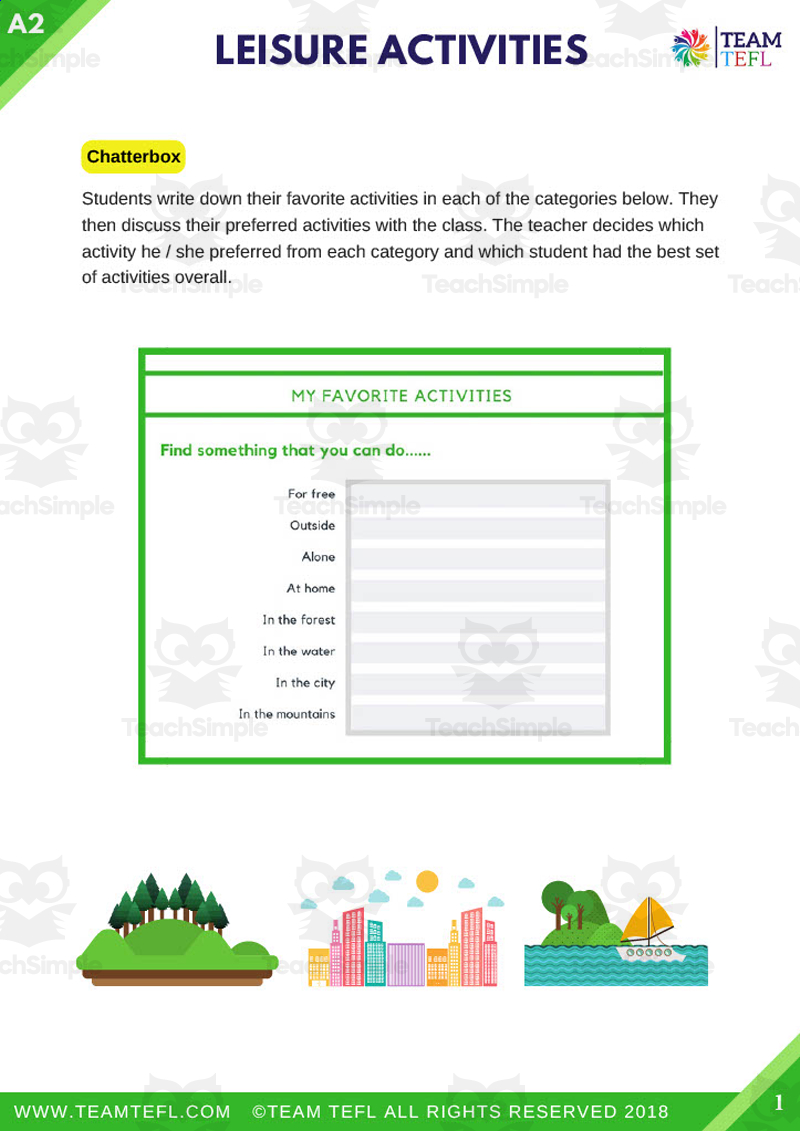
ESL/EFL lesson plan teaching vocabulary and grammar related to leisure activities for A2 pre-intermediate learners, including a reading passage on types of leisure activities (team sports, solo activities, group activities, board games) and dialogue-based exercises

ESL/EFL lesson plan teaching vocabulary and grammar related to leisure activities for B1 intermediate learners, including a warmer bingo game, a snorkelling-themed dialogue reading, and a comprehension/culture reading comparing leisure habits in Denmark, Ireland, France and Italy
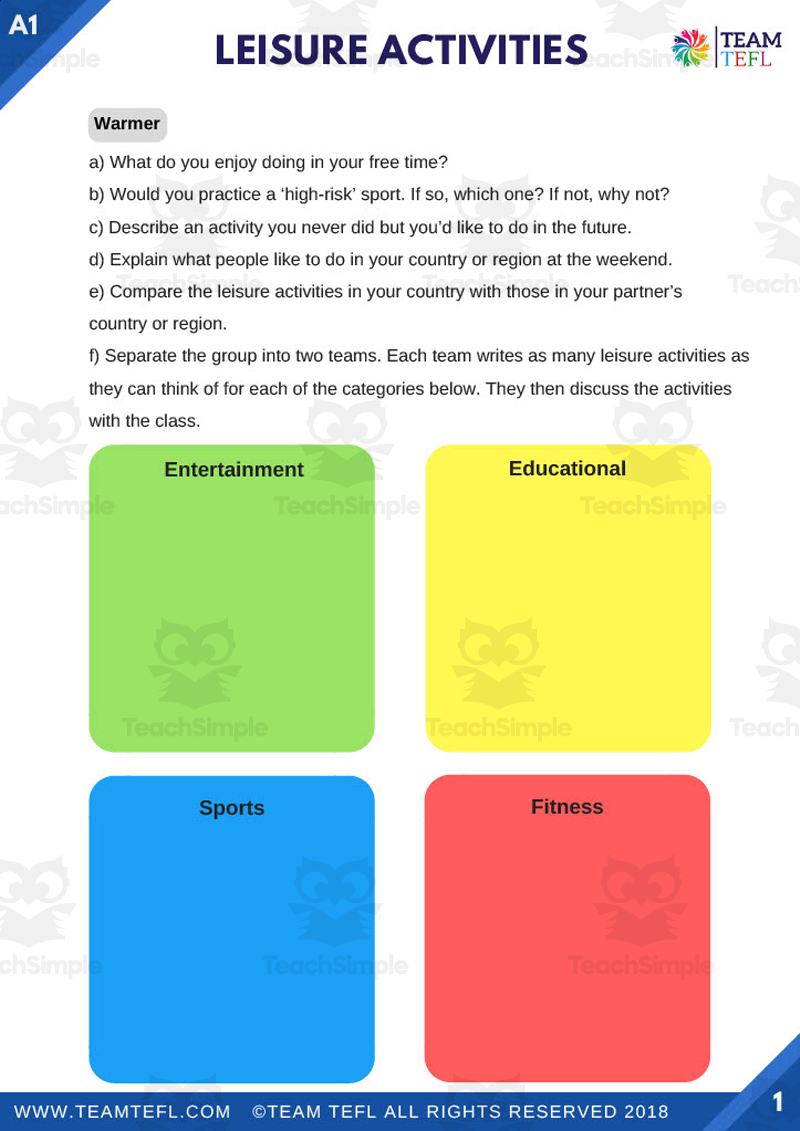
ESL/EFL lesson plan teaching vocabulary and grammar (gerunds after verbs like enjoy/like) related to leisure activities, for A1 beginner learners

This lesson breaks down the use of prepositional phrases into easy-to digest chunks that kids can easily understand. Comes with a poster to show how prepositional phrases work.
Teaches the categories of nouns (concrete vs. abstract, common vs. proper, singular vs. plural including regular -s/-es rules, y-ending rules, and irregular plurals) and how to recognize nouns using noun-signal articles (a/an/the), through a narrative dialogue plus a passage-identification exercise.
Teaches how and when to replace proper nouns with pronouns for clarity (subject pronouns, object pronouns, plural pronouns, and possessive pronouns) through a story-editing exercise and a fill-in-the-blank narrative, plus a story-based teaching dialogue.
Teaches how adjectives (including possessive adjectives) describe nouns, how to find adjectives that aren't right next to the noun they modify, and how changing adjectives changes a character's personality, mood, or occupation in writing, using picture-description, passage-finding, and fill-in-the-blank story exercises.

Interjections: Wow! Interjections! A great tool for your writing toolbox. Each lesson contains a story that illustrates the concept being taught.

Students learn about the different kinds of verbs and how to use them to write with active voice. Each lesson contains a story that illustrates the concept being taught.

Lesson 5: Adverbs and Noisy-Know-Nothings - How to Use Adverbs and Make Sounds the Right Way - A Zombie Wrote my Narrative Essay with Mr.

Lesson 6 - Past Present and Future: How Verb Tenses Work - A Visit to Grammar’s House with Mr. Butt and Bonefish - How to Use the Eight Parts of Speech This innovative teaching resource is available to educators, focusing on teaching…

Lesson 7: Interjections – When to Use Interjections! - A Visit to Grammer's House with Mr. Butt and Bonefish - How to Use the Eight Parts of Speech This resource is an innovative teaching tool designed for educators of Grade 3-6 students.

About this product: The whys and ways students can connect their thoughts in their writing. Each lesson contains a story that illustrates the concept being taught.

Lesson 9: Adverbs - When and When Not to Use Adverbs - A Visit to Grammer's House with Mr. Butt and Bonefish - How to Use the Eight Parts of Speech This must-have teaching resource for educators in grades 3 through 6, focuses on the…
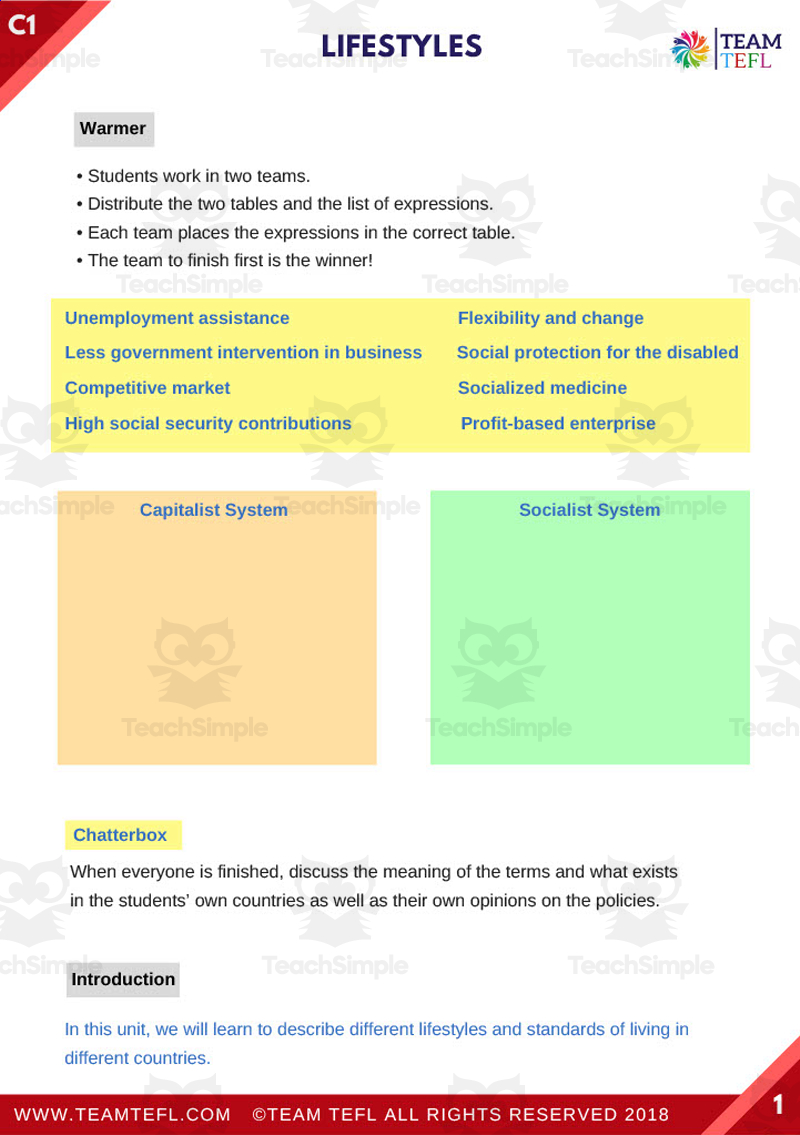
Teach advanced (C1-level) ESL students vocabulary, reading, listening, and writing skills around the topic of lifestyles (e.g. urban, rural, sustainable, minimalist, nomadic, healthy, sedentary, self-sufficient, luxury) and related socio-economic/political systems.

Teach upper-intermediate (B2-level) ESL students vocabulary, grammar, reading, listening, and writing skills around the topic of lifestyles (e.g. healthy, minimalist, sustainable, digital nomad, sedentary, luxury, urban).

A Rainbow Horizons novel study for 'Little House on the Prairie' by Laura Ingalls Wilder, integrating reading comprehension, vocabulary/language, spelling, grammar, and creative writing across chapter-grouped assignments.

An advanced (CEFR C1) ESL grammar resource teaching the distinction between and correct usage of 'loan,' 'lend,' and 'borrow.'