3,899 products added recently
Page 15 - Reading Lesson Plans
Inspire your students with reading lesson plans that incorporate a variety of genres and interactive activities. These resources aim to improve fluency, vocabulary, and comprehension. Use these plans to create an engaging reading environment where students develop a lifelong love for literature.
Guided Reading Activities and Lesson Plans Fiction Set 2 - Family
ELA, Reading, Reading Comprehension, Common Core, ESL, Language Development, Pre-Reading, Vocabulary, Resources for Teachers, Grade 4, 5, Worksheets & Printables, Worksheets, Lesson Plans, Teacher Tools
Guided Reading Activities with Lesson Plans Fiction Set 2 Note: This download DOES NOT include the passages themselves. If you have not already done so, download in a format of your choice in the "reading links" section below. Overview The perfect companion materials for Cored Education reading comprehension downloads. This collection provides structured lessons designed to enhance students' reading, comprehension, vocabulary, and creative thinking. Each lesson follows a consistent format that includes pre-reading activities to engage students, vocabulary-building exercises, comprehension checks, creative writing prompts, and discussion topics that promote critical thinking. The lessons are designed to foster active participation, encourage reflection, and develop key literacy skills through interactive and immersive learning experiences. The series is ideal for guided reading sessions, providing teachers with a comprehensive toolkit to engage students in both individual and group activities, enhancing their understanding of text and expanding their language skills. Includes Guided Reading Materials For: 1.Birthday Lessons 2.Funny Cousin 3.Favorite Aunt 4.Grandma Can Dance 5.Sisterly Love 6.A Not So Relaxing Hike 7.On the Coaster 8.Grandma's Tulips 9.Father's Day 10.Healthier Lifestyle Reading Links: This is the guided reading materials version and DOES NOT include the passages themselves. The passages related to this download are available here in GOOGLE Docs, GOOGLE Forms, GOOGLE Slides. PDF, PPT, WORD. Google Docs Google Forms Google Slides PDF PPT Word Key Features: Engaging Lesson Structure: Each lesson follows a clear and predictable format, which includes pre-reading discussions, vocabulary exercises, reading activities, and creative tasks to maintain student engagement. Vocabulary Development: Focus on introducing and applying new vocabulary in context, helping students internalize new words and use them effectively. Comprehension and Reflection: The lessons include comprehension questions and reflective prompts that encourage students to think critically about the text and its themes. Creative Writing and Discussion: Opportunities for students to express themselves through writing and group discussions, reinforcing their understanding while fostering creativity. Interactive and Student-Centered: The activities are designed to be interactive, allowing students to engage directly with the content and each other, promoting active learning. Browse the Complete Cored Catalog — 2,000+ Resources Included Reading Passages Each reading passage has been written specifically for students in Grades 4–5, using vocabulary and language that match their age and ability level. The collection covers a wide range of engaging topics, supported by colorful visuals that help bring the content to life. Every lesson is designed to build knowledge while keeping students interested and motivated to read. These resources are also designed with flexibility in mind. Unlike traditional textbooks that can quickly become outdated, lessons can be updated over time to reflect changes in technology, discoveries, and the world around us. Mixed Questions Every lesson includes a variety of questions that help students think more deeply about what they have read. The question section combines reading comprehension, vocabulary, and math skills, while also regularly reinforcing important reading strategies such as cause and effect, summarizing, compare and contrast, and drawing conclusions. Most lessons include a mix of multiple-choice and written-response questions, giving students opportunities to explain their thinking as well as select answers. Complete answer keys and sample responses are provided at the end of each lesson for quick and easy reference. Spelling & Vocabulary Each passage introduces students to useful words and phrases appropriate for Grades 4–5. To help build confidence and word knowledge, every lesson includes a spelling or vocabulary activity. Rather than repeating the same task throughout the collection, activities vary from lesson to lesson to keep practice fresh and engaging. Activities may include spelling challenges, sentence matching, decoding activities, mixed-up text exercises, and other vocabulary-building tasks connected directly to the reading. Writing Prompts Each lesson includes a writing activity that extends the ideas, themes, or topics explored in the passage. Students are encouraged to write in a variety of formats, with prompts providing helpful guidance and ideas to get them started. Writing tasks vary throughout the collection and may include creative writing, research activities, personal responses, poetry, opinion writing, and other engaging assignments. Full Answer Keys Complete answer keys and sample responses are included with every lesson, making planning and marking quicker and easier. Reading comprehension answers include evidence and support from the text, while math-based questions show the relevant working where appropriate. The answer keys are designed primarily for teachers but can also be shared with students when needed. Just for Fun Each lesson finishes with an optional extension activity called Just for Fun . These bonus activities provide an enjoyable way to extend learning beyond the main lesson and often encourage creativity, discussion, or independent thinking. They are completely optional, giving you the flexibility to use the activities that best suit your students and classroom needs. For similar downloads and other frees, do check out Cored Group on TeachSimple.
Author Cored Education
Rating
Tags Elementary, Reading, Comprehension, Vocabulary, Answers, Ccss, Guided Reading, Guided Reading Activity, Guided Reading Lesson Plans, Guided Reading Lesson Plan
To the Future, Ben Franklin (Magic Tree House #32 Lesson Plan, Activities)
Social Studies, ELA, Government, History, History: USA, Reading, Reading Comprehension, Grammar, Literature, Language Development, Vocabulary, Spelling, Writing, Grade 1, 2, 3, Lesson Plans, Teacher Tools
To the Future, Ben Franklin (Magic Tree House #32 Lesson Plan, Activities) This all-inclusive teaching resource is designed to enhance students' learning experience in first to third-grade classrooms. It operates as a 'No Prep' routine for five days and caters to various teaching environments like public schools, homeschooling families, and cooperative learning groups. Versatility: The crux of this resource is its adaptability - lessons can be modified according to students' age groups, comprehension levels and unique learning styles. Subject Areas Covered: Art: Drawing and crafts activities. Geography & History: Interactive explorations of subjects. English Language Arts:Focused on grammar, spelling and reading skills enhancement Main Components include: - Daily Chapter Comprehension Quizzes : Tailored specifically for each day's lesson. - Vocabulary Exercises : Two different versions promoting flexibility. - Diverse Task Types : Pre-& during –Reading tasks prime learners for new topics while post–reading activities consolidate concepts learned. This guide simplifies the planning process by providing: A thorough 5-day lesson plan with an easy-to-follow format. A detailed list of required materials for each day's sessions. Carefully curated videos for maintaining student interest and reinforcing lessons learnt. For teachers opting less paper dependency: - The package includes interactive notebook components. - Verbal discussions are encouraged instead of printed questions. - Book review reports help children verbalize about readings. - Creative assignments enhance students' writing skills. This resource comes as a downloadable PDF file of 112 pages, packed for maximum usage over five days. This product provides teaching-learning material that bridges the gap between educators and students, fostering diverse study areas from Social Studies to Language Arts. Subtopics essential for grasping core subjects include USA History under Social Studies and Literature under Language Arts. This dynamic package is offered as a ready-to-use PDF file.
Author Heather Huhman
Tags Teaching Resource, Lesson Plan, Activities, Interdisciplinary Learning, Book Companion
Louisa May Alcott: Writing from Her Life: A Cross-Curricular Unit
ELA, Reading, Grade 3, 4, Teacher Tools, Lesson Plans
Louisa May Alcott: Writing from Her Life: A Cross-Curricular Unit Delving deep into the dynamic correlations between an author's life and their literature, this teaching resource titled "Louisa May Alcott: Writing from Her Life" presents a fascinating exploration of how one writer's personal experiences reflect in her works. This cross-curricular unit is uniquely designed to be suitable for learners in Grade 3 and Grade 4 who are keen to deepen their understanding in language arts and reading. The key feature of this unit is a non-fiction article that draws enlightening comparisons between Louisa May Alcott – best renowned as the author of 'Little Women' – and the characters within her narrative. By engaging with this text, students find themselves immersed not only in Alcott's world but also understand how authors often draw from their personal realm to create compelling stories. A Comprehensive Unit Eight Meticulously Prepared PDF Worksheets: Encourage students to apply what they've learned, ensuring better retention while amplifying understanding. An array of related Activities : Invites learners to extend beyond conventional surfaces, boosting creativity and critical thinking skills. Teachers have extensive flexibility as they leverage this resource; it can be adapted for different learning scenarios whether it be whole group sessions or smaller cohorts. Assignments can even be enlisted as homework tasks —ideal for reinforcing knowledge acquisition outside of school hours. "Harnessing historical references while promoting literary appreciation, "Louisa May Alcott - From her life" is more than just another language arts tool; it's an innovative gateway enabling deeper insights into remarkable wordsmiths like Louisa May Alcott". This multi-faceted approach ensures students learn not just about literature but draw connections with real-life experiences too—transforming a regular class into an exciting journey across the vast landscape that is literacy education.
Author Classroom Complete Press
Tags Louisa May Alcott, Creative Writing, Biographies, Graphic Organizers, Nonfiction Articles
Reading Well - Grades 5-6
ELA, Reading, Grade 5, 6, Teacher Tools, Lesson Plans
Reading Well - Grades 5-6 is a comprehensive teaching resource indispensable to both public school educators and homeschoolers alike. This material falls under Language Arts, with a specific focus on Reading. Originating from the recommended Reading Well! series by Milliken, it's designed to amplify reading programs effectively. Inclusive design A key element of this resource is that it includes activities catering to an extensive range of writing styles and materials: Realistic fiction, Biography, Poetry, Fantasy, Informational articles, Myths and legends, Tall tales as well as skits or plays—offering a rich blend of literary genres for discerning students in grades 5-6. Comprehension Activities Included are various comprehension activities that target different reading skills—aiding teachers' purposeful pursuit of actively involving students similarly at home or in the classroom context. These handpicked activities enable ample chances for learners to practice crucial reading skills; aiding significantly in their language arts development journey. Easily Assessable A practical list detailing comprehension skills suitable for all grade levels found on the accessible Reading Comprehension Chart on page one—an asset to any educator assessing skill level growth areas. With this feature at your fingertips educators will find progress tracking more manageable; thanks to several assessment rubrics integrated within>/em>.> In terms of practicality, it comes in an ease-of-use format: Upon purchase downloading one PDF gives access to 47 printer-friendly pages ready for immediate use; presented conveniently whatever your preferred modus operandi—be it whole group instruction sessions or small group exercises—even flexible enough as homework assignments too! Conclusion To conclude successfully employing 'Reading Well - Grades 5-6' affords an enriching learning experience honed according to individual or class needs—courtesy of the flexibility, scope encompassed and sequential learning framework it offers. This carefully crafted teaching resource becomes essential in constructing robust language arts and reading proficiencies specifically designed for Grade 5 and Grade 6 learners.
Author Classroom Complete Press
Tags Myths, Legends, Tall Tales, Realistic Fiction, Literature
"Cinderella" | Fairy Tale Early Reader Unit
ELA, Reading, Grade 1, 2, 3, 4, Lesson Plans, Teacher Tools
Cinderella Fairy Tale Early Reader Unit The Cinderella Fairy Tale Early Reader Unit is a comprehensive teaching tool designed for students of varying reading competencies. This educational journey, based on the classic tale of Cinderella, is ideally suited for grades 1 to 4. Adaptability This resource is presented in four different reading levels; each comes with a student booklet, a teacher booklet, and full-page versions. These formats make it suitable for each student's individual capabilities and accommodate diverse teaching styles. Inclusion of Other Language-Art Resources Besides standardized reader booklets, this package also contains: Fairy tales posters to help students understand essential features in such narratives. Articles about Charles Perrault, known as the author of 'Cinderella', that give learners contextual background information about fairy tales' history and evolution across ages and cultures. Creativity Enhancement Tools This unit provides various tools to develop creativity among learners: Writing booklets: This exercise enables students to craft their unique renditions of 'Cinderella' while showing off their artistic flair. Sounding-out cards:Promoting phonemic awareness, these cards make literacy learning accessible even for struggling readers among pupils. The vocabulary building activities further improve their expressiveness stage by stage. An all-in-one Literature-Based Study Tool-kit All these ingredients transform this fairy-tale themed unit into an effective literature-based study tool-kit that allows young learners to explore and appreciate this literary classic. Readers' theatre scripts to help kids embody characters vocally. Partitioned spelling lists:This feature is designed on a complexity basis, accommodating all levels of learners. A proofreading practice session:This facilitates the perfection of writing skills among students. Descriptive writing exercises: The descriptive writing practices ensure comprehensive development in language arts for your wards. Learners can enjoy constructing their understanding of tales while polishing their foundational language skills with this complete resource pack.
Author Simply Schoolgirl
Tags Cinderella, Fairy Tale, Reading Levels, Comprehension Skills, Vocabulary Building
Nonfiction Text Features: Table of Contents Lesson
ELA, Reading, Grade 1, 2, 3, 4, Teacher Tools, Lesson Plans
Nonfiction Text Features: Table of Contents Lesson Plan This interactive Google Slides resource teaches students about the table of contents nonfiction text feature. Through discussions and activities, students will learn how to identify, understand, and apply tables of contents. The resource includes animated lesson slides with speaking notes to introduce or recap the key concepts. Student slides provide opportunities for practice during or after the lesson. Students will apply reading, critical thinking, and problem solving skills as they work. The slides aim to actively engage students using a variety of learning modalities. They can be presented to the whole class or assigned to small groups or individual students. The resource is designed for grades 1-4 language arts or reading classes, but could be adapted for other grades and subjects.
Author Ezee 101
Tags Nonfiction, Text Features, Table Of Contents, Lesson Plans, Student Activities, Interactive, Engaged
Lesson Plan on An Inspector Calls
Drama, Creative Arts, Reading, ELA, Elementary, High School, Middle School, Homeschool Resources, Lesson Plans, Teacher Tools
A thorough lesson plan on the well-known drama "An Inspector Calls" by J.D. Priestley. The play's action takes place in an industrial city in England, where a young girl kills herself and a well-known British family is routinely investigated in relation to the death. All of the family members are either directly or indirectly implicated in the girl's downfall. As a result, an inspector calls to investigate the family. Before the evening is done, the close-knit and amiable family is revealed to be cowardly, selfish, or self-centered, its good humor turning to sour, and its pleasant fellowship to despised. Every step of the 90-minute lesson is included in the lesson plan. It includes the 'An Inspector Calls || 7 Minute Summary' YouTube video from the Easy as GCSE channel. A student worksheet that may be printed has a lot of activities and answers at the end. Enjoy teaching classic literature to your students!
Author Bright Classroom Ideas Marketplace
Rating
Tags Inspector, Priestley, Literature, Classic, Drama, English, Language, Reading, Elt, Efl
Go With the Flow | Figurative Language Activity | Micro-Learning Deck
ELA, Reading, Reading Comprehension, Grade 4, 5, 6, 7, Teacher Tools, Lesson Plans
Go With the Flow | Figurative Language Activity helps students explore figurative language in an engaging way. This resource focuses on the term "Go With the Flow" to build comprehension of figurative language concepts. Through close reading of a passage with accompanying audio, 4th-7th grade students reinforce their understanding of language devices. The deck includes a short video lesson explaining "Go With the Flow" and how it is used in writing. Learners then read or listen to a passage containing examples of the figurative term. Finally, students complete a quick write activity to practice using "Go With the Flow" in their own writing. This activity can be used for whole group instruction, small group work, or independent practice to bolster figurative language skills.
Author Teach Me This
Tags Go With The Flow, Figurative, Language, Learning Deck, Digital Lesson
Writing Our Lives: A Memoir Unit
ELA, Reading, Reading Comprehension, Writing, Creative Writing, Grade 6, 7, 8, 9, 10, 11, 12, Teacher Tools, Lesson Plans
Introduction Middle school and high school students are at the age where they are changing rapidly, entering new phases in their growing up. They are beginning to reflect on their past as they look toward the future. They are ripe for writing a memoir or a personal narrative. "Writing Our Lives: A Memoir Unit" is a 65-page standards-aligned unit that provides teachers with a four or five-week unit (depending on whether you use all the mentor texts) that includes daily lessons to help students delve deeply into memoir reading and writing. This unit is appropriate for all students in grades 6-12 who are ELD, ESL students, General Ed students, RSP students, and even GATE students. The unit includes the following --Detailed lesson plansthat take students through the process of writing a memoir, including mining their memories for ideas, teaching points for teachers to make charts and conduct mini-lessons, writing prompts, writing practice, developing a whole memoir, revision, and publication. --Standards, Objectives, and Teaching Points --Seven mentor texts(with links to the texts online) which students will read twice, as readers and as writers, along with activities and questions. --Group, partner, and individual activitiesto learn the skills, techniques, and strategies of writing a memoir. --Built-in time for writingshorter and longer pieces --Revision strategies --Peer response and editing --Memoir Rubric Mentor Texts include:"Fish Cheeks," by Amy Tan; "Somebody's Fool," by Susan Bennett; "Beating a Bully," by Ibtisam Barakat; "The Pie," by Gary Soto; "How to be Black," by Baratunde Thurston; "Superman and Me," by Sherman Alexie; "Everything will be Okay," by James Howe. Mentor texts include guiding questions for students to discuss the stories as readers and as writers. Mini-Lessons include:Mining my Memories; Noticing the Craft of Writing; Characterization; Overcoming an Obstacle; Characterization with Dialogue; Stretching out your Story with Details and Action; Using Descriptive and Figurative Language; Flashbacks; First Times List; Foreshadowing; Lessons from Mentor Narratives; Elements of a Memoir; Writing an Effective Hook or Lead; Writing Prompts include:Embarrassment; Tricked, Lied, Mean Joke; Overcoming an Obstacle; Incorporating Dialogue; Listing all the Details; Making a Difficult Choice or Decision; Using Descriptive and Figurative Language; Flashbacks; First Time (Flashback); Quick Write on Confidence Level; Final Draft of a Complete Memoir
Author Intentional Teaching and Learning
Tags Writing, Memoir, Creative Writing, Mentor Texts, Rubric, Reading As A Reader, Reading As A Writer, Writing Practice, Teaching Points, Writing Lessons, Teaching Memoir, Memoir Prompts For High School, Elements Of A Memoir, Memoir Topics For High School, Memoir Ideas High School
Fly by the Seat of One's Pants | Figurative Language Activity | Micro-Learning Deck
ELA, Reading, Reading Comprehension, Grade 2, 3, 4, 5, Teacher Tools, Lesson Plans
This resource allows students to explore figurative learning in a fun way. The figurative language term for this learning deck is "Fly By the Seat of One's Pants." Through close reading and a reading passage with audio, your students will better comprehend figurative language! Included: -Video lesson on language concept -Reading passage w/ audio Comprehension -Quick write
Author Teach Me This
Tags Figurative, Activity, Learning Deck, Writing Template
Reading Well - Grades 1-2
ELA, Reading, Grade 1, 2, Teacher Tools, Lesson Plans
Reading Well - Grades 1-2 The Reading Well - Grades 1-2 is cautiously fabricated as an enhancement tool for a home or classroom reading curriculum. Designed primarily for grade one and two pupils, this learning tool comprises of activities meant to stimulate interest and enhance reading comprehension abilities. Equipped with a wide range of materials that adhere to various styles of writing such as realistic fiction, biographies, poetry, fantasy, informational pieces, myths and legends among others – this resource plays a significant role in covering all facets of written communication. Furthermore, the inclusion of play scripts coerces learners to apply their reading capabilities to multiple formats. Versatile Approach Uniquely flexible in its methodology towards developing comprehension skills; the series is filled with tasks allowing learners numerous opportunities for practice while simultaneously fostering an understanding towards various aspects of reading. A Reading Comprehension Chart is incorporated into page one enabling easy navigation through different comprehension skills imparted across all grades. Rubrics And Performance Tracking An integral aspect about this product lies not only in its pedagogical value but also its potential for progression monitoring after assessing student's development using provided rubrics. Over time this has proven beneficial assisting you map each student’s journey while acquiring these capabilities. Cumulative Knowledge Building This series stands out due to the fact that each book builds progressively on previously acquired knowledge ensuring constant advancement and reinforcement throughout grades one and two concluding every unit with adequate assimilation. Adaptability: The series gracefully adapts whether it's employed on an individual learner or implemented across entire classrooms due its versatile content accommodating distinct learning preferences & abilities effectively fostering inclusion amongst all students irrespective their proficiency levels. Practicability: Easy accessibility given its PDF format accompanied by comprehensible lesson plans ready for immediate usage. The Role of Language Arts The pivotal role language arts play in shaping communicative competence cannot be stressed enough thus Reading Well champions this cause advancing even further by embedding a strong focus on reading skills, emphatically playing its part in creating a generation of skilled readers.
Author Classroom Complete Press
Tags PDF
Bottlenose Dolphin Unit Study (Ocean Animals Lesson Plan, Videos, Activities)
ELA, Grammar, Reading, Language Development, Spelling, Writing, Science, Life Sciences, Animals, Grade 1, 2, 3, Lesson Plans, Teacher Tools
Bottlenose Dolphin Unit Study This is a comprehensive and simple-to-follow teaching resource that focuses on the bottlenose dolphin. It offers an in-depth exploration of this intriguing marine mammal over a course of five days. The resource has been designed for various learning spaces such as public or private classrooms, homeschool environments, or cooperative learning groups and is best suited for grade 1-3 level students. Material Included: Art: Drawing and Coloring materials English Language Arts: Grammar, Reading, Spelling lessons Research Skills: Optional supplemental reading for detailed research Science The unit study includes project-based activities to foster creativity among students alongside reinforcing the lesson content. Daily worksheets exploring different aspects like description, diet, habitat life cycle are also part of the package along with interactive notebook pieces—promoting active engagement from all learners. Digital-Age Teaching Approach: Videos curated within this package harness technology's power to engage visual learners better while enhancing their memory retention capabilities. Nurturing Written Expression Skills: The educational benefits extend far beyond marine biology alone with activities that touch upon writing lessons/ centers —a critical component nurturing written expression skills amongst young learners. Add-ons Included: Coloring Pages: Aids psychomotor skill development Motivational Bookmarks: Encourages consistent reading habits! In summary - This Bottlenose Dolphin Unit Study packs in all the necessary tools required to make learning 'a deep dive into oceanic life'—an immersive, enjoyable and a thoroughly enriching journey!
Author Heather Huhman
Tags Dolphins, Marine Mammals, Ocean Animals, Unit Study, Interactive Notebook
Jaguar Unit Study (Rainforest Animals Lesson Plan, Videos, Activities)
ELA, Grammar, Reading, Language Development, Spelling, Writing, Science, Life Sciences, Animals, Grade 1, 2, 3, Lesson Plans, Teacher Tools
A 5-day NO PREP unit study of the jaguar, a rainforest animal. This comprehensive resource includes a lesson plan, videos, daily worksheets and activities, interactive notebook pieces, and more. It makes a great addition to your jaguar or rainforest animals unit study; writing lessons or centers ; or science class. Perfect for first grade, second grade, and third grade classrooms, homeschool families, and cooperatives. You can easily customize lessons based on student age, reading and comprehension level, interests, and learning style! Additionally, all worksheets can be completed in an interactive notebook or simply discussed aloud if you desire to reduce the number of pages you print. THIS RESOURCE COVERS: Art (drawing and coloring) English language arts Grammar Reading Research Science Spelling Writing
Author Heather Huhman
Tags Jaguars, Rainforest Animals, Zoology, Science, South America, Unit Study, Rainforest, Rain Forest, Rainforest Animals Jaguar, Rainforest Lesson Plan, Rainforest Video For First Graders, Rainforest Animals Jaguars, Rainforest Video For First Grade
Jails Reading Comprehension Passage - Cored Ed Encyclopedia
ELA, Reading Comprehension, Reading, Pre-Reading, Language Development, Vocabulary, History, Social Studies, Law, Spelling, Grade 2, 3, 4, 5, Worksheets & Printables, Worksheets, Teacher Tools, Centers, Activities, Writing Prompts, Assessments, Quizzes and Tests, Quizzes, Lesson Plans
This Jails reading comprehension with lesson plan includes: Visualization (on the front cover) Start your lesson by taking a minute to think and share something about the topic. Read the script aloud (slowly), perhaps prepare some music or sound effects. Student close their eyes and let their imaginations wander. Students open their eyes, read the question aloud and give them a few minutes to complete. Ask a few students to share or keep answers until the end to compare with what they learn in the passage. Quick pause—thousands of Cored Education products are included with your TeachSimple membership. Download links and encyclopedia index available here. Pre-Reading Trivia Students will write down one thing they already know about the subject and then read five more facts and discuss. These facts are fun, and the students will enjoy learning about the subject before reading more. Give 1 minute for students to write what they already know (no pressure—best guess is fine). Read the five facts together. After each fact, do ask a student for their opinion, was it surprising? Set a purpose by asking students to highlight/underline one fact they want to learn more about during the reading. Reading Passage The text is a high-interest reading passage with set paragraphs, roughly three to four paragraphs long. It contains a variety of themes about the topic, anywhere from history to technology. The passage is between 250 and 350 words in length. First, ask students to look at the headings and see what they’ll learn about today. What do they know about the topic/heading? First read options: Teacher read-aloud (best for support). Partner reading (paragraph by paragraph). While reading, students underline important details, and vocabulary words they think may come up in the questions section. Mixed Questions The first question page contains four multiple-choice questions, each with a choice of four answers, and three written response questions that require a sentence or two from the student. Students complete the mcqs first independently, then review quickly as a class. For the 3 written responses, try to get students giving the answer with some form of evidence: “I think ___ because the text says ___.” If students get stuck, send them back to check the passage. Vocabulary Questions Practice seven key words from the text in this section across two activities. First section is scrambled words where students will unscramble three words given a clue for each. The second section is a word to meaning matching activity. Before starting, have some students read out words they underlined in the passage. Ask students to say the word and read aloud the sentence(s) around each word. Ask students to do scrambled words and the matching exercise in pairs then go through answers as a class. For the scrambled spelling task, get four pairs to come up to the board and write the words for extra practice with the other student reading out the clue. For the matching task, prompt students to give full sentences: “I matched ___ with ___ because ___.” Creative Writing In this question, the student will be required to write a five to eight sentence paragraph on a question related to the topic. Before starting, ask students write down 3 key ideas they are going to include in their piece. Ask students for ideas to share around the class to help those struggling. Pro writing expectations: 5–8 sentences At least 2 facts or details from the passage At least 2 vocabulary words from the previous page Students read their paragraphs while classmates listen for facts and vocabulary words. Extension Activities This page is optional for fast finishers or to take home. There are several activities, each one requiring a different skill. Do some, do none, do all, completely optional - but you will feel reassured knowing every possibility is planned for. Includes summary writting question and additional facts. Answer Key There are answers for the multiple-choice questions, written response questions have sample answers, vocabulary answers and if there is a summary question then a sample summary will be provided as well. Lesson Plan Included Customized lesson plan for this lesson is included. Lesson Snapshot Title: Jails Genre: Nonfiction (informational text) Subject: Social Studies (Civics) / Reading (Informational Text) Primary Topic: What jails are and how they differ from prisons Estimated Guided Reading Level (A–Z): S What This Lesson Teaches Best Explains what a jail is and why people may be there for a short time (waiting for a court date or serving short sentences). Uses history to show how jails were used long ago (England, 1166) and why the spelling “gaol” appeared. Clarifies the difference between “jail” and “prison” in formal American and Canadian English (pretrial custody/shorter sentences vs. longer sentences). Connects jails to community routines and civic values (rules, safety checks, fairness, harm prevention, justice). Builds understanding of how word choice and definitions matter when discussing systems and government roles (counties vs. state/federal). Learning Goals Describe what a jail is and give two reasons people may be held there. Explain how early jails in England were used and what “gaol” means in the passage. Explain what changed in the 1790s in the United States, according to the text. Compare a jail and a prison using details from the passage. Identify examples of routines and rules in jails and explain why they matter. Key Vocabulary From the Text booking — recording a new person in jail. cells — small rooms where people are held. trial — a court process to decide a case. convicted — found guilty of a crime. reform — help someone change for the better. FULL CATALOG OF DOWNLOAD LINKS AND ENCYCLOPEDIA INDEX HERE
Author Cored Education
Rating
Tags Vocabulary, Reading Comprehension, Reading Passages, Lesson Plans, Ela Lesson Plans, Reading Comprehension Lesson Plans, Pre-reading, Social Studies Lesson Plans, History, Jails
Guided Reading Activities and Lesson Plans Fiction Set 1
ELA, Reading, Reading Comprehension, Common Core, ESL, Language Development, Pre-Reading, Vocabulary, Resources for Teachers, Grade 6, 7, Worksheets & Printables, Worksheets, Lesson Plans, Teacher Tools
Guided Reading Activities with Lesson Plans Fiction Set 1 Note: This download DOES NOT include the passages themselves. If you have not already done so, download in a format of your choice in the "reading links" section below. Overview The perfect companion materials for Cored Education reading comprehension downloads. Each lesson is centered around a particular theme or story, with accompanying activities designed to deepen understanding and engage students. The lesson plans include pre-reading questions to stimulate thought, reading activities to keep students engaged, vocabulary exercises to build language skills, and creative writing prompts to foster imagination. Additionally, there are discussion topics that encourage students to think critically and reflect on the themes presented in the text. Includes Guided Reading Materials For: 1.Champion 2.Basketball 3.The Coaster 4.Sister Sister 5.New Surroundings 6.In the Pool Reading Links: This is the guided reading materials version and DOES NOT include the passages themselves. The passages related to this download are available here in GOOGLE Docs, GOOGLE Forms, GOOGLE Slides. PDF, PPT, WORD. Google Docs Google Forms Google Slides PDF PPT Word FULL CATALOG OF DOWNLOAD LINKS HERE Grade 6/7 Links Fiction Set 1 Google Docs Google Forms Google Slides PDF PPT Word Guided Reading Materials Fiction Set 2 Google Docs Google Forms Google Slides PDF PPT Word Guided Reading Materials Nonfiction Set 1 Google Docs Google Forms Google Slides PDF PPT Word Guided Reading Materials Nonfiction Set 2 Google Docs Google Forms Google Slides PDF PPT Word Guided Reading Materials Outline: Pre-reading Questions: These are designed to activate prior knowledge, stimulate curiosity, and encourage predictions about the story. They help set the stage for the reading and engage students from the start. Reading Activities: During the reading, students are prompted to focus on key elements such as character development, emotions, relationships, and the main message of the story. These activities guide students through the text and allow them to track changes in characters’ thoughts and feelings. Vocabulary Development: Each lesson introduces new words and clarifies their meanings through examples. The vocabulary section includes activities that help students apply the terms in context, reinforcing their understanding and expanding their vocabulary. Comprehension and Reflection: After reading, students are asked reflective questions about the text. These questions help assess their understanding and deepen their connection to the material by encouraging them to think critically about the story’s themes and characters. Creative Writing Prompts: These exercises encourage students to use their imagination and write creatively, often asking them to relate the story to their own experiences or to invent new scenarios based on the lesson’s theme. Discussion Topics: At the end of each lesson, discussion topics allow students to share their thoughts, consider different viewpoints, and engage in meaningful conversations. This encourages social learning and reinforces the themes of the lesson. Additional Activities: Some lessons include supplementary activities like role-plays or debates that help students apply what they've learned in a practical, hands-on way. These activities promote collaboration, problem-solving, and public speaking skills. For More Like This For similar downloads and other frees, do check out Cored Group on TeachSimple.
Author Cored Education
Tags Elementary, Reading, Comprehension, Vocabulary, Answers, Ccss, Guided Reading, Guided Reading Activity, Guided Reading Lesson Plans, Guided Reading Lesson Plan
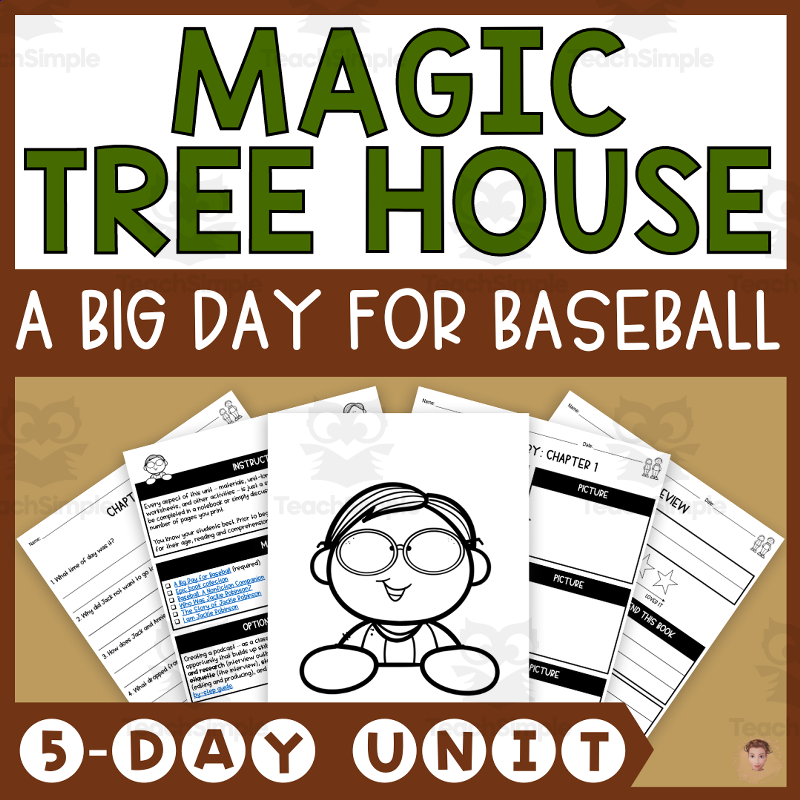
Lions at Lunchtime (Magic Tree House #11 Lesson Plan, Videos, Activities)
ELA, Social Studies, Literature, Reading, Science, Life Sciences, Animals, Geography, Grade 1, 2, 3, Lesson Plans, Teacher Tools
Lions at Lunchtime (Magic Tree House #11 Lesson Plan, Videos, Activities) The package is a comprehensive teaching resource which is perfect for first to third-grade classrooms as well as homeschooling and teaching cooperatives. It saves valuable preparation time by providing ready-to-use and engaging materials. Five days of immersive learning are assured with this kit. The notable features of this package includes: No teacher or parent preparation required: The story breakdown into easy chapters comes with comprehension questions to analyse student's understanding. Vocabulary development: Each chapter introduces new words and terminologies which students can practice for better language skills. Three-tier worksheet approach: Educators can choose from pre-reading, during reading and post-reading worksheets designed according to different age groups and reading levels. Cross-curricular learning opportunities: The package extends its reach beyond literature into geography, social studies etc. It also accommodates creative writing which helps in reinforcing spelling and grammar knowledge among students. Differentiation amongst your learners would be a breeze too; notebook piece alternatives provided will not only support effective note-taking but aid in brainstorming ideas too. Going the extra mile, book review reports presented in six formats prompts the development of critical thinking abilities amongst your pupils.A project-based activity involving art components intensifies cognitive development whilst maintaining room for artistic talents. In terms of convenience all these facilities are available in pdf format making it flexible choice for teachers or parents alike either wanting use it as part of whole group discussions or small group activities alternatively even serving as a dependable resource for homework assignments ensuring learning continuity wherever your learner may be.. </ul
Author Heather Huhman
Tags Lions, Lunchtime, Magic Tree House, Lesson Plan, Activities
Under the Sea Curriculum Pack
ELA, Creative Arts, Art, Reading, Science, Life Sciences, Animals, Kindergarten, Lesson Plans, Teacher Tools
If your students are studying the environment or are about to begin a sea animals unit, I have just the resource to provide you with everything you need and more! This is anUnder the Sea Curriculum Packcomplete with an abundance of printable resources and engaging activities for students to complete. This curriculum was designed for your preschool students. The Under the Sea Curriculum Pack's goal is to enrich the children’s knowledge and understanding of the world around them, and instill a sense of wonder for the natural environment – while building upon skills. The vocabulary that students will focus on issea, ocean, waves, tide, plankton, seaweed, coral, aquarium, marine biologist, and oceanography. This curriculum will come with a letter of the week(S) and color of the week (blue). This Under the Sea Curriculum Pack includes: --Sensory Table Ideas --Art Activities --Cooking Experience --Community Time --Math Activities --Home/School Connection Ideas --Science Table Enrichments --Science Concepts/Activities --Prop Box Ideas/Dramatic Play Enrichments --Movement and Motor --Playground/Walk Activities --Transition/Waiting Ideas --Block Area Enrichments --Flannel Board --Teacher Made Enrichment Ideas --Field Trip Ideas --Supplemental Learning Ideas/Activities At the start of this pack, you will receive a list of supplies needed for activities and projects. The worksheets, activities, and tasks included in this Under the Sea Curriculum Pack are intended to be completed in a variety of formats – whole group, small group, and independent work. I hope you enjoy! Take A Look At More Of My Best Sellers: Dental Health Curriculum Pack Memorial or Veteran’s Day Curriculum Pack Butterflies Curriculum Pack At the Grocery Store Curriculum Pack Pirate Fun Curriculum Pack Fire Safety Curriculum Pack Enjoy More From My Store Here: https://teachsimple.com/contributor/learning-foundations
Author Learning Foundations
Tags Preschool Curriculum, Under The Sea, Animal Habitats, Science Activities, Sea Animals, Art Activities, Sensory Table Ideas, Counting Activity
Vegetables Reading Comprehension Passage - Cored Ed Encyclopedia
ELA, Language Development, Reading Comprehension, Reading, Pre-Reading, Science, Life Sciences, Health, P.E. & Health, Nature & Plants, Grade 2, 3, 4, 5, Worksheets & Printables, Worksheets, Teacher Tools, Centers, Activities, Writing Prompts, Assessments, Quizzes and Tests, Quizzes, Lesson Plans
This vegetables reading comprehension with lesson plan includes: Visualization (on the front cover) Start your lesson by taking a minute to think and share something about the topic. Read the script aloud (slowly), perhaps prepare some music or sound effects. Student close their eyes and let their imaginations wander. Students open their eyes, read the question aloud and give them a few minutes to complete. Ask a few students to share or keep answers until the end to compare with what they learn in the passage. Quick pause—thousands of Cored Education products are included with your TeachSimple membership. Download links and encyclopedia index available here. COMPANION VIDEO NOW AVAILABLE (EMBEDDED AFTER PREVIEW PICTURES IN PRODUCT DESCRIPTION) Pre-Reading Trivia Students will write down one thing they already know about the subject and then read five more facts and discuss. These facts are fun, and the students will enjoy learning about the subject before reading more. Give 1 minute for students to write what they already know (no pressure—best guess is fine). Read the five facts together. After each fact, do ask a student for their opinion, was it surprising? Set a purpose by asking students to highlight/underline one fact they want to learn more about during the reading. Reading Passage The text is a high-interest reading passage with set paragraphs, roughly three to four paragraphs long. It contains a variety of themes about the topic, anywhere from history to technology. The passage is between 250 and 350 words in length. First, ask students to look at the headings and see what they’ll learn about today. What do they know about the topic/heading? First read options: Teacher read-aloud (best for support). Partner reading (paragraph by paragraph). While reading, students underline important details, and vocabulary words they think may come up in the questions section. Mixed Questions The first question page contains four multiple-choice questions, each with a choice of four answers, and three written response questions that require a sentence or two from the student. Students complete the mcqs first independently, then review quickly as a class. For the 3 written responses, try to get students giving the answer with some form of evidence: “I think ___ because the text says ___.” If students get stuck, send them back to check the passage. Vocabulary Questions Practice seven key words from the text in this section across two activities. First section is scrambled words where students will unscramble three words given a clue for each. The second section is a word to meaning matching activity. Before starting, have some students read out words they underlined in the passage. Ask students to say the word and read aloud the sentence(s) around each word. Ask students to do scrambled words and the matching exercise in pairs then go through answers as a class. For the scrambled spelling task, get four pairs to come up to the board and write the words for extra practice with the other student reading out the clue. For the matching task, prompt students to give full sentences: “I matched ___ with ___ because ___.” Creative Writing In this question, the student will be required to write a five to eight sentence paragraph on a question related to the topic. Before starting, ask students write down 3 key ideas they are going to include in their piece. Ask students for ideas to share around the class to help those struggling. Pro writing expectations: 5–8 sentences At least 2 facts or details from the passage At least 2 vocabulary words from the previous page Students read their paragraphs while classmates listen for facts and vocabulary words. Extension Activities This page is optional for fast finishers or to take home. There are several activities, each one requiring a different skill. Do some, do none, do all, completely optional - but you will feel reassured knowing every possibility is planned for. Includes summary writting question. Answer Key There are answers for the multiple-choice questions, written response questions have sample answers, vocabulary answers and if there is a summary question then a sample summary will be provided as well. Lesson Plan Included Customized lesson plan for this lesson is included. Lesson Snapshot Title: Vegetables Genre: Nonfiction (Informational text) Subject: Science (Life Science: plants, nutrition) / Reading (informational text) Primary Topic: What vegetables are and why they matter Estimated Guided Reading Level (A–Z): N What This Lesson Teaches Best What counts as a vegetable (in this text): Defines vegetables as edible parts of plants people choose to eat, including roots (carrot), leaves (spinach), and flower buds (broccoli). Plant parts and categories: Explains that many vegetables come from soft-stemmed, herbaceous plants rather than woody trees, and that vegetables come in many shapes because plants have many useful parts. Early farming and seed-saving: Describes how people once gathered edible plants from the wild, then began planting and saving seeds (about 10,000–7,000 BC), keeping and sharing plants that tasted better or grew bigger. Science vs. everyday language (tomato debate): Contrasts the botanical definition of “fruit” (seed-bearing part formed from a flower’s ovary) with how “vegetable” often means a savory plant food served with meals, noting a U.S. court decision in 1893 calling tomatoes vegetables for a tax rule. Nutrition and food preservation: States vegetables are usually low in fat and calories, filling because they bring water and fiber, and may contain vitamins/minerals (examples include vitamin A and vitamin C); also notes chilling, freezing, or canning to keep vegetables longer. Learning Goals Students will define a vegetable using examples from the text (root, leaf, bud). Students will describe where many vegetables come from (soft-stemmed, herbaceous plants) and explain what that means. Students will explain how seed-saving helped wild plants become “garden favorites,” using details from the passage. Students will compare the botanical meaning of fruit with the cooking meaning of vegetable, using the tomato example. Students will identify two reasons vegetables can be filling and healthy (water, fiber, vitamins/minerals) based on the text. Key Vocabulary From the Text edible — safe and good to eat. herbaceous — soft-stemmed; not woody. botanists — scientists who study plants. ovary — flower part that can form fruit. fiber — nutrient that helps you feel full. FULL CATALOG OF DOWNLOAD LINKS AND ENCYCLOPEDIA INDEX HERE
Author Cored Education
Rating
Tags Vocabulary, Reading Comprehension, Reading Passages, Lesson Plans, Ela Lesson Plans, Reading Comprehension Lesson Plans, Pre-reading, Science Lesson Plans, Nature And Plants, Health
Icebergs Reading Comprehension Passage - Cored Ed Encyclopedia
ELA, Reading Comprehension, Reading, Language Development, History, Social Studies, Science, Physics, Earth and Environmental Sciences, Pre-Reading, Grade 2, 3, 4, 5, Worksheets & Printables, Worksheets, Teacher Tools, Centers, Activities, Writing Prompts, Assessments, Quizzes and Tests, Quizzes, Lesson Plans
This Icebergs reading comprehension with lesson plan includes: Visualization (on the front cover) Start your lesson by taking a minute to think and share something about the topic. Read the script aloud (slowly), perhaps prepare some music or sound effects. Student close their eyes and let their imaginations wander. Students open their eyes, read the question aloud and give them a few minutes to complete. Ask a few students to share or keep answers until the end to compare with what they learn in the passage. Quick pause—thousands of Cored Education products are included with your TeachSimple membership. Download links and encyclopedia index available here. Pre-Reading Trivia Students will write down one thing they already know about the subject and then read five more facts and discuss. These facts are fun, and the students will enjoy learning about the subject before reading more. Give 1 minute for students to write what they already know (no pressure—best guess is fine). Read the five facts together. After each fact, do ask a student for their opinion, was it surprising? Set a purpose by asking students to highlight/underline one fact they want to learn more about during the reading. Reading Passage The text is a high-interest reading passage with set paragraphs, roughly three to four paragraphs long. It contains a variety of themes about the topic, anywhere from history to technology. The passage is between 250 and 350 words in length. First, ask students to look at the headings and see what they’ll learn about today. What do they know about the topic/heading? First read options: Teacher read-aloud (best for support). Partner reading (paragraph by paragraph). While reading, students underline important details, and vocabulary words they think may come up in the questions section. Mixed Questions The first question page contains four multiple-choice questions, each with a choice of four answers, and three written response questions that require a sentence or two from the student. Students complete the mcqs first independently, then review quickly as a class. For the 3 written responses, try to get students giving the answer with some form of evidence: “I think ___ because the text says ___.” If students get stuck, send them back to check the passage. Vocabulary Questions Practice seven key words from the text in this section across two activities. First section is scrambled words where students will unscramble three words given a clue for each. The second section is a word to meaning matching activity. Before starting, have some students read out words they underlined in the passage. Ask students to say the word and read aloud the sentence(s) around each word. Ask students to do scrambled words and the matching exercise in pairs then go through answers as a class. For the scrambled spelling task, get four pairs to come up to the board and write the words for extra practice with the other student reading out the clue. For the matching task, prompt students to give full sentences: “I matched ___ with ___ because ___.” Creative Writing In this question, the student will be required to write a five to eight sentence paragraph on a question related to the topic. Before starting, ask students write down 3 key ideas they are going to include in their piece. Ask students for ideas to share around the class to help those struggling. Pro writing expectations: 5–8 sentences At least 2 facts or details from the passage At least 2 vocabulary words from the previous page Students read their paragraphs while classmates listen for facts and vocabulary words. Extension Activities This page is optional for fast finishers or to take home. There are several activities, each one requiring a different skill. Do some, do none, do all, completely optional - but you will feel reassured knowing every possibility is planned for. Includes summary writting question and additional facts. Answer Key There are answers for the multiple-choice questions, written response questions have sample answers, vocabulary answers and if there is a summary question then a sample summary will be provided as well. Lesson Plan Included Customized lesson plan for this lesson is included. Lesson Snapshot Title: Icebergs Genre: Nonfiction (informational passage) Subject: Reading (Informational Text) / Earth Science Primary Topic: How icebergs form, drift, and change Estimated Guided Reading Level (A–Z): R What This Lesson Teaches Best Key facts about iceberg floating: ice is lighter than seawater and most of an iceberg is below the surface (about 90% underwater). How icebergs form from glaciers on land, including the process called calving when a piece breaks away at the sea. Human safety and history connections: the Titanic tragedy and how the International Ice Patrol began sending warnings to ships. How icebergs change shape over time (waves at the waterline, meltwater weakening from above) and why scientists track them (ocean currents, changing polar ice). Using headings to organize information into focused sections (formation, safety/history, observation/science clues). Learning Goals Explain why most of an iceberg is hidden under the ocean’s surface. Describe how snow becomes hard glacier ice and how a new iceberg forms. Define calving using details from the passage. Identify what happened in 1912 and how it led to safer travel for ships. Describe two ways an iceberg can change shape and one reason scientists watch iceberg paths. Key Vocabulary From the Text seawater — ocean water with salt in it. surface — the top layer of something. glacier — a huge, slow-moving river of ice. calving — when a piece breaks off a glacier. currents — moving flows of ocean water. FULL CATALOG OF DOWNLOAD LINKS AND ENCYCLOPEDIA INDEX HERE
Author Cored Education
Rating
Tags Vocabulary, Reading Comprehension, Reading Passages, Lesson Plans, Ela Lesson Plans, Reading Comprehension Lesson Plans, Pre-reading, History, Science Lesson Plans, Earth Science
Phonics: R-Controlled Words for 1st and 2nd Grade and Early Readers
ELA, Reading, Reading Comprehension, Grammar, Language Development, Phonics, Strategies, Pre-Reading, Grade 1, 2, Literacy Readers, Teacher Tools, Lesson Plans, Worksheets, Worksheets & Printables
This Phonics: R-Controlled Words for 1st and 2nd Grade and Early Readers is so HELPFUL! Help your student's phonics skills grow to a new level with this Phonics: R-Controlled Words for 1st and 2nd Grade and Early Readers. These engaging worksheets require very little prep work, making it a breeze for your student to conquer the ER, IR, UR, AR, and OR R-Controlled words. These easy and engaging activities can be used in a whole group setting, for individual work, used in centers, and will help your students master these difficult sounds as they effortlessly match, read, write, and identify the r-controlled sounds in words. In this unit, students will read easy passages that require comprehension as they will answer several questions about what they read and highlight or color the r-controlled words in the passage. They will identify at least 5 words that have these sounds from the passage. Furthermore, they will expand their knowledge even more by filling in the blank of words from a word bank in sentences that are missing the r-controlled word sounds. On another worksheet, students will spin a paperclip and fill in the missing words. They will also complete a word search of r-controlled words, and lastly, students will cut, sort, and paste pictures of r-controlled words to the correct written word. There are also worksheets that are differentiated to help all young learners with these sounds. What a great way to help young readers conquer their reading skills with these fun and engaging activities! Get your copy of this Phonics: R-Controlled Words: 1st & 2nd Grade Phonics Worksheets for Early Readers and get ready to be amazed with the skills as they master these words that are so difficult to master! For a list of other phonics and grammar activities, click on the following links:
Author K-5 Treasures
Rating
Tags Phonics, Reading, R-controlled Words, Er Words, Or Words, Ar Words, Early Reading Worksheets, R-controlled Worksheets, Phonics Practice, Phonics Worksheets
Zebra Unit Study (Endangered Animals Lesson Plan, Videos, Activities)
ELA, Grammar, Reading, Language Development, Spelling, Writing, Science, Life Sciences, Animals, Grade 1, 2, 3, Lesson Plans, Teacher Tools
Zebra Unit Study (Endangered Animals Lesson Plans for Elementary Students) This 5-day NO PREP cross-curricular unit study teaches students about the endangered zebra through reading passages, videos, worksheets, spelling lists, writing prompts, coloring pages, and more. It covers language arts, science, research skills, and art. Teachers can easily customize the self-contained lesson plans for various ages, reading levels, and learning styles. Use it for whole class instruction, small groups, homework, or independent learning centers . The comprehensive unit engages students while teaching them about zebra conservation. It works well for grades 1-3 classrooms, homeschools, and cooperatives studying endangered species or African wildlife.
Author Heather Huhman
Tags Zebras, Africa, Grasslands, Savanna, Endangered Animals, Science, Zoology, Unit Study, Zebra Activities, Zebra Habitat School Project
Japan The Island Nation: Guided Reading Level Q with Lesson Plan
ELA, Resources for Teachers, Reading Comprehension, Reading, Science, Geography, Social Studies, History, Earth and Environmental Sciences, Technology, Grade 3, 4, 5, Worksheets & Printables, Worksheets, Teacher Tools, Centers, Activities, Literacy Readers, Quizzes, Quizzes and Tests, Assessments, Lesson Plans
This Japan: The Island Nation (level q) guided reading book with lesson plan includes: Guided Reading Color Label (front cover x1) This is a quick way to match the book’s demands to what students can generally handle.. The overall goal is to use the level/color to pick books for several smaller groups. To qualify for a certain level, a student is expected to read a book from that level with about 90–94% accuracy. If a student is consistently accurate and understands, move up a level. If the student is struggling at that level, drop down and add more support. Each student will improve at completely different rates, but it is generally one of the best ways to check progress across the class. DOWNLOAD THE CATALOG TO VIEW ALL GUIDED READING BOOKS AVAILABLE (SORTED LEVELS A-Z) Pre-Reading Question (x1) Teacher asks the prompt aloud, can be while showing the cover or first page. Students share what they already know, or make educated guesses from the cover. Prompt them to use the target vocabulary. Write some of their responses on the board to look back at during the reading. Vocabulary Words (x5) Introduce the five words, best doing it one at a time. Start by saying it, while students repeat and then see if anyone knows what it means before reading further. Read through the meaning and try to briefly connect each word to a picture or gesture so it’s meaningful. Ask students to flip through the book pages and point to where they see each of the vocabulary words. While reading the book pause upon coming across one of the vocab words or read the sentence twice to make sure students understand the word has appeared. Optional: Ask students to raise hands whenever they see/hear one of the new words. Guided Reading Pages (x10) Check the book snapshot (below) for: primary topic - do you need to prep extra reading or intro materials on this? what is taught best - decide on 1-2 bullets to focus on, use the prompt or words provided here for best results. learning goals - what you are checking for students to be able to do after the session, elicit answers using prompts or words provided. key vocabulary (see section above). questions overview - so you know what is coming up and if you need to prep extra materials to assist understanding. Run the lesson You may have already looked at a few of the pages together, but you can show them some of the pictures again first to set meaning. Depending on how much time you have and how familiar your students are with guided reading class, you may want to read the book aloud first with the group first. Students whisper or partner read, while you listen in. If time, do it as a group, one student reading a page each. Use the guided page’s prompts to coach: “Check the picture / does it make sense?” “Point under the words / try the first sound” “Reread the sentence smoothly”. Try to focus more on one student per session (rotating every time), so you can work out if they are ready to move up or need to move down a level. Comprehension Questions (back cover x3) This is your way to check that students didn’t just say the words, but actually understood the text. First, let students answer by pointing to the page/picture and saying a short sentence. After any answer, follow with: “Show me where you found that in the text.” In bigger groups, have partners answer first (10–20 seconds), then call on 2–3 students to share. Differentiation tips: Emerging speakers/struggling readers: oral + pointing On-level: oral in a full sentence Higher: one written sentence or draw + label Book Snapshot Title: Japan: The Island Nation Genre: Nonfiction Subject: Social Studies (Geography/Culture) Primary Topic: Japan’s islands, cities, traditions, and modern innovations Estimated Guided Reading Level (A–Z): Q What This Book Teaches Best Explains Japan’s geography as an archipelago , naming the four main islands and describing its location off East Asia. Highlights Tokyo as a major metropolitan area , describing its role and features of city life. Describes transportation and technology through the Shinkansen (bullet train), including its speed, safety, and punctuality. Connects landforms and natural features to Japan’s identity by describing Mount Fuji, snow cover, and spring sakura blossoms. Builds understanding of culture and history through Shinto and Buddhism, matsuri festivals, and the Edo period (shoguns, samurai, and castles like Himeji). Learning Goals Students will explain what an archipelago is and name Japan’s four main islands. Students will describe Tokyo’s importance and identify details the text gives about the city. Students will explain how the Shinkansen helps people travel and identify key features the text highlights (such as speed or punctuality). Students will describe Mount Fuji using details from the text, including its height and volcanic history. Students will identify key ideas about Japanese traditions from the text (religions, shrines/torii, cuisine, or festivals). Students will explain how Japan’s climate varies and describe the text’s example of the “snow monkey” in winter. Key Vocabulary From the Text archipelago — a group of islands. metropolitan — related to a very large city area. punctuality — being on time. terraced — built in step-like levels on a hillside. geothermal — heat that comes from inside the Earth. Discussion Prompts Pre-reading question: What places, traditions, or inventions do you expect to learn about in Japan? Comprehension questions: What four main islands does the text name as part of Japan? Comprehension questions: What does the text say the Shinkansen is known for? Comprehension questions: How does the text say the “snow monkey” adapts to cold winters? Printing Tips 1. Best Printing Method (Recommended) “Booklet” Printing (Best if Available) If your printer or PDF viewer supports Booklet Printing , use this. Settings to use: Print mode: Booklet Paper size: Letter or A4 (either works) Orientation: Landscape Print on both sides: Yes Flip on: Short edge Scaling: Fit to printable area Booklet subset: First test: Front sides only Then: Back sides only This will automatically: Pair pages correctly Put the cover on the outside Align everything for folding After printing, fold in half and staple along the spine . 2. If “Booklet” Printing Is NOT Available You can still print this correctly with manual duplex printing . Step-by-step: Open the PDF. Choose Print . Set: Orientation: Landscape Pages per sheet: 1 Print on both sides: Yes Flip on: Short edge Print all pages . Because each PDF page already contains two facing book pages, the result will still fold cleanly into a book. Thousands of Cored Education products are included with your TeachSimple membership. Download links and encyclopedia index available here.
Author Cored Education
Rating
Tags Reading Comprehension, Reading Passages, Reading, Guided Reading, Guided Reading Lesson Plan, Guided Reading Activity, Pre-reading, Social Studies, Geography, History
For the Love of Books & Stories
ELA, Reading, Grade 3, 4, 5, 6, Teacher Tools, Lesson Plans
For the Love of Books & Stories Unlock the world of enchanting tales and narratives with 'For the Love of Books & Stories’. This meticulously designed teaching resource focuses on fostering a love for books in your students while advancing their literacy skills across grades 3 to 6. The core essence of this collection lies in its wide array of versatile activities, revolving around Language Arts and more specifically, Reading. Each activity draws upon a student's unique reading experiences, regardless of proficiency level. This approach enables learners to deeply relate to their regular reading habits and couple them with academic insights to enhance understanding. Versatile Settings & Homework Adaptability Designed expertly for both small and large group settings, the activities can be effortlessly adapted across various classroom situations. These activities make splendid additions to homework assignments as well - encouraging learners to groom their readership independently at home as well. Featuring full background information for each activity enlisted in this tool-kit helps teachers tread confidently while introducing or explaining tasks to students. In this manner, educators are also groomed into becoming each student's most effective literacy mentor - preparing themselves first before guiding young learners towards a love-filled journey into books. A Resource That Complements Lesson Plans Too! 'For The Love Of Books & Stories' is an incredible resource that complements Lesson Plans too. Incorporated within are lessons that aim at enhancing both reading capabilities and written expressions; thus covering overall Literacy learning objectives with precision. This product file comes as a PDF document ensuring easy downloadability and convenience when it comes making copies for appropriate use across diverse teaching scenarios encompassing classrooms or homeschooling setups alike. In summary, whether you're an educator looking for fresh resources or a homeschooler seeking out innovative ways by which you can instill love for stories in your child— For The Love Of Books & Stories serves as trusted companion bridging dreams with knowledge through books.
Author Classroom Complete Press
Tags PDF
The First 21 Days | Day 4: Making Predictions | Reading Instruction
ELA, Reading, Preschool, Grade 1, 2, 3, Teacher Tools, Lesson Plans
This resource is Day 4: Making Predictions in the First 21 Days lesson set. This presentation is full of comprehension and reading strategies, anchor charts , interactive activities and so much more.
Author First in Line
Tags Reading Books, Reading Instruction, Making Predictions, Anchor Chart, Sequencing