



3,926 products added recently
Page 17 - Reading Lesson Plans
Inspire your students with reading lesson plans that incorporate a variety of genres and interactive activities. These resources aim to improve fluency, vocabulary, and comprehension. Use these plans to create an engaging reading environment where students develop a lifelong love for literature.

 Show filters

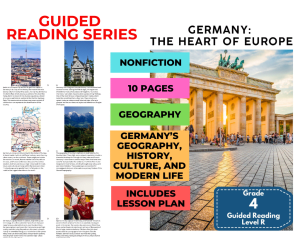
Germany: The Heart of Europe: Guided Reading Level R with Lesson Plan
ELA, Resources for Teachers, Reading Comprehension, Reading, Science, Geography, Social Studies, History, Earth and Environmental Sciences, Technology, Grade 3, 4, 5, Worksheets & Printables, Worksheets, Teacher Tools, Centers, Activities, Literacy Readers, Quizzes, Quizzes and Tests, Assessments, Lesson Plans
This Germany: The Heart of Europe (level r) guided reading book with lesson plan includes: Guided Reading Color Label (front cover x1) This is a quick way to match the book’s demands to what students can generally handle.. The overall goal is to use the level/color to pick books for several smaller groups. To qualify for a certain level, a student is expected to read a book from that level with about 90–94% accuracy. If a student is consistently accurate and understands, move up a level. If the student is struggling at that level, drop down and add more support. Each student will improve at completely different rates, but it is generally one of the best ways to check progress across the class. DOWNLOAD THE CATALOG TO VIEW ALL GUIDED READING BOOKS AVAILABLE (SORTED LEVELS A-Z) Pre-Reading Question (x1) Teacher asks the prompt aloud, can be while showing the cover or first page. Students share what they already know, or make educated guesses from the cover. Prompt them to use the target vocabulary. Write some of their responses on the board to look back at during the reading. Vocabulary Words (x5) Introduce the five words, best doing it one at a time. Start by saying it, while students repeat and then see if anyone knows what it means before reading further. Read through the meaning and try to briefly connect each word to a picture or gesture so it’s meaningful. Ask students to flip through the book pages and point to where they see each of the vocabulary words. While reading the book pause upon coming across one of the vocab words or read the sentence twice to make sure students understand the word has appeared. Optional: Ask students to raise hands whenever they see/hear one of the new words. Guided Reading Pages (x10) Check the book snapshot (below) for: primary topic - do you need to prep extra reading or intro materials on this? what is taught best - decide on 1-2 bullets to focus on, use the prompt or words provided here for best results. learning goals - what you are checking for students to be able to do after the session, elicit answers using prompts or words provided. key vocabulary (see section above). questions overview - so you know what is coming up and if you need to prep extra materials to assist understanding. Run the lesson You may have already looked at a few of the pages together, but you can show them some of the pictures again first to set meaning. Depending on how much time you have and how familiar your students are with guided reading class, you may want to read the book aloud first with the group first. Students whisper or partner read, while you listen in. If time, do it as a group, one student reading a page each. Use the guided page’s prompts to coach: “Check the picture / does it make sense?” “Point under the words / try the first sound” “Reread the sentence smoothly”. Try to focus more on one student per session (rotating every time), so you can work out if they are ready to move up or need to move down a level. Comprehension Questions (back cover x3) This is your way to check that students didn’t just say the words, but actually understood the text. First, let students answer by pointing to the page/picture and saying a short sentence. After any answer, follow with: “Show me where you found that in the text.” In bigger groups, have partners answer first (10–20 seconds), then call on 2–3 students to share. Differentiation tips: Emerging speakers/struggling readers: oral + pointing On-level: oral in a full sentence Higher: one written sentence or draw + label Book Snapshot Title: Germany: The Heart of Europe Genre: Nonfiction Subject: Social Studies (Geography/Culture/History) Primary Topic: Germany’s geography, history, culture, and modern life Estimated Guided Reading Level (A–Z): R What This Book Teaches Best Germany’s central location in Europe and how that makes it a crossroads for trade, travel, and cultural exchange. Physical geography and waterways , including the Bavarian Alps and the Rhine River’s role in transportation. History meeting modern life through Berlin’s past division (Berlin Wall) and the Brandenburg Gate as a symbol of reunification. Cultural traditions , including long-held festivals, music (Bach and Beethoven), and traditional clothing like lederhosen and dirndls. Modern strengths and priorities , such as engineering/technology, renewable energy, public transportation, and environmental conservation. Learning Goals Students will describe where Germany is located in Europe and explain why its location matters in the text. Students will identify major physical features of Germany (plains, mountains, or the Bavarian Alps) using details from the text. Students will explain why the text says rivers like the Rhine are important for moving goods between cities. Students will describe Berlin as the capital and explain one way the text shows history and modern life together there. Students will describe what the text says about castles from the Middle Ages and what they are used for today. Students will identify examples of Germany today (technology/engineering, renewable energy, conservation, education, or democracy) using text evidence. Key Vocabulary From the Text crossroads — central meeting place where routes and people connect. metropolis — a very large, busy city. reunification — joining back together after being separated. renewable — energy source replaced naturally, like wind or sun. conservation — protecting nature so it stays healthy for the future. Discussion Prompts Pre-reading question: What kinds of facts do you think a book about Germany might teach you? Comprehension questions: Why does the text say Germany is a major crossroads within the European Union? Comprehension questions: What does the text say the Brandenburg Gate represents today? Comprehension questions: What is one way the text says Germany works to protect the climate? Printing Tips 1. Best Printing Method (Recommended) “Booklet” Printing (Best if Available) If your printer or PDF viewer supports Booklet Printing , use this. Settings to use: Print mode: Booklet Paper size: Letter or A4 (either works) Orientation: Landscape Print on both sides: Yes Flip on: Short edge Scaling: Fit to printable area Booklet subset: First test: Front sides only Then: Back sides only This will automatically: Pair pages correctly Put the cover on the outside Align everything for folding After printing, fold in half and staple along the spine . 2. If “Booklet” Printing Is NOT Available You can still print this correctly with manual duplex printing . Step-by-step: Open the PDF. Choose Print . Set: Orientation: Landscape Pages per sheet: 1 Print on both sides: Yes Flip on: Short edge Print all pages . Because each PDF page already contains two facing book pages, the result will still fold cleanly into a book. Thousands of Cored Education products are included with your TeachSimple membership. Download links and encyclopedia index available here.
Author Cored Education
Rating
Tags Reading Comprehension, Reading Passages, Reading, Guided Reading, Guided Reading Lesson Plan, Guided Reading Activity, Pre-reading, Social Studies, Geography, History
Character Development Digital Lesson
ELA, Reading, Grade 6, 7, 8, Teacher Tools, Lesson Plans
Character Development Digital Lesson Plans for Middle School ELA These digital interactive lesson plans focus on building students' understanding of literary character development. Created for grades 6-8 ELA classes, the scaffolded Google slide decks allow teachers to differentiate instruction. The resource includes 4 interactive slide decks that guide students to analyze how fictional characters change and grow. A PDF provides an overview of each lesson's structure and objectives. Easy-to-follow directions help teachers access and utilize the Google slide materials. A self-grading quiz lets students check their comprehension. These engaging activities can be used for whole-class instruction, small group work, or independent assignments. The materials aim to boost critical analysis skills and appreciation of literature.
Author Mrs. Spangler in the Middle
Tags Character Development, Digital Lesson, Informational Text, Fiction, Back To School

The Phone Call Short Story | Pre-Intermediate Lesson Plan
ELA, Reading, Grade 10, 11, 12, Teacher Tools, Lesson Plans
The Phone Call Short Story | Pre-Intermediate Lesson Plan This pre-intermediate English lesson plan helps students improve their reading comprehension and grammar skills. Educators can implement it in various settings like whole group instruction, small reading groups, or as a homework assignment. The resource is based on the short story "The Phone Call" and includes reading passages and exercises that assess students' understanding of the story while letting them practice grammar concepts. Answer keys are provided for educators. By engaging with this practical lesson plan, students will boost their reading proficiency and grammar knowledge. It is designed to be an asset for any English or language arts educator teaching middle school or high school students. The material is delivered in a PDF format that is easy to distribute in print or digitally. Includes an answer key Makes it easier than ever for educators to evaluate student responses accurately Eases manual workload on teachers when assessing responses delivered using traditional or conventional methods. The package consists of three PDFs with four ready-to-print pages along with one digital access file. With its emphasis on adoption and lost families, it injects a dose of reality into everyday schooling while imparting valuable educational content. In terms of implementation, there's room for flexibility depending on class size or individual learner preferences: whole group setting inclusion, where all learners navigate through collectively; small-sized subsection utilization, allowing more intimate discussion amongst peers; traditional homework assignments that encourage independence in learning.
Author TEAM TEFL
Tags Short Story, Vocabulary Words, ESL Lesson, Comprehension, Reading Story

Interactive Big Books Gr. PK-K
ELA, Reading, Kindergarten, Preschool, Teacher Tools, Lesson Plans
Interactive Big Books Gr. PK-K A reliable teaching resource, Interactive Big Books Gr. PK-K is designed for hands-on, creative and engaging learning experiences in language arts for preschool and kindergarten settings. Wide-ranged Application This product can be integrated into various classroom environments such as: Whole group instruction Small groups work Take-home assignments Nurturing Active Engagement through Storytelling The resource includes stories like "The Big Pysanka", "One, Two", "Ice-Cream Cones" that allow students to experiment with plot and imagery from their narrative comprehension. User-friendly Resource Prepared by Educators for Educators This tool comes with clear instructions on compiling these big books using common classroom materials such as Bristol board, scissors, glue 9 x 12" Kraft envelopes, wax crayons and markers. Easily Accessible Formats & Hands-on Support for Teachers Interactive Big Books Gr. PK-K offers a generous fifty-five ready-to-print pages in an easily accessible PDF format.Additionally,a dedicated 'teacher section' provides comprehensive assistance with useful tips on optimal usage of these materials. Tips include: - Techniques for flannelboard story presentation & clip art usage ideas. Fostering Tactile Experiences Whilst Building Literacy Competence: This resource aims to make reading enjoyable and encourage creativity among your youngest learners – all within a pedagogically sound, teacher-friendly format
Author Classroom Complete Press
Tags Language Arts, Reading Lesson Plan, Interactive Reading, Interactive Stories, Big Books

CVC Word Families for Beginning Readers: Stamp it, Make it, Trace it, and Write it
ELA, Language Development, Pre-Reading, Phonics, Reading, Kindergarten, Grade 1, Teacher Tools, Centers, Activities, Lesson Plans, Worksheets, Worksheets & Printables
This CVC unit is engaging for students as they practice reading and learning the short vowel sounds while students cut and make the words, trace the words, write the words, and stamp out the words. Reading short vowel / rhyming words is an introduction to reading. Repetitive practice of reading these words is also another fundamental practice to help students read. In this unit, students will practice word families that have the same ending. Teach students that word families rhyme and only have a different beginning sound. For each word family, students will practice making, tracing, writing, or stamping six different words. Some of the words are proper nouns or names given to people or pets. There are also nonsensical words that are not real. The purpose of these words is to teach how to sound out words only within the same word family. File contains the following word family worksheets : ad, an, at, ed, en, et, in, ip, it, og, op, ot, ug, un, ut. It also includes all the letters needed to cut out for the "make it" worksheets . What's included for the word families: Short a at family (mat, fat, cat, sat, hat, and pat) an family (fan, ran, man, can, tan, and pan) ad family (mad, sad, bad, dad, had, and pad) Short e ed family (Ned, bed, Ted, red, ped, and ded) en family (ten, men, den, Ben, hen, and pen) et family (set, met, bet, let, get, and pet) Short i in family (bin, win, sin, fin, tin, and pin) ip family (hip, rip, tip, lip, zip, and sip) it family (bit, kit, fit, sit, hit, and pit) Short o og family (log, hog, dog, bog, fog, and jog) op family (hop, top, pop, cop, bop, and mop) ot family (lot, hot, rot, dot, pot, and got) Short u ug family (dug, rug, bug, hug, mug, and jug) un family (run, sun, nun, fun, pun, and bun) ut family (but, cut, nut, hut, rut, and gut) For a list of other phonics and grammar activities, click on the following links: CVC Word Families for Beginning Readers: Stamp it, Make it, Trace it, and Write it CVC Words | Short Vowel Phonics | Word Families for K- 2nd Grade Phonics for 1st and 2nd Grade: Help Students Learn Long A Words: AY, AI, A_E, EIGH, EY, and EA Phonics for 1st and 2nd Grade: Help Students Learn Long E Words: EE, EA, E_E, and Y Phonics for 1st and 2nd Grade: Help Students Learn Long I Words: I_E, IE, IGH, and Y Phonics for 1st and 2nd Grade: Help Students Learn Long O Words: O_E, OA, OW, OE, and OUGH Phonics for 1st and 2nd Grade: Help Students Learn Long U Words: U_E, EW, OO, UE, UI and OU Phonics / Digraphs for 1st and 2nd Grade: Beginning, Middle, and Ending Sounds Phonics / Digraphs for 1st -2nd: Ending Sounds: CK, NG, SH, TH, and NK Phonics / Digraphs for 1st and 2nd Grade: Beginning Sounds: SH, TH, WH and PH Phonics: R-Controlled Words for 1st and 2nd Grade and Early Readers
Author K-5 Treasures
Tags Word Families, Phonics, Beginning Reading, Rhyming Words, Short Vowel Words, Short Vowels, Reading Strategies, Word Family, Cvc Words, Cvc Activities

Get Out of Town | Figurative Language Activity | Micro-Learning Deck
ELA, Reading, Reading Comprehension, Grade 4, 5, 6, 7, Teacher Tools, Lesson Plans
Get Out of Town | Figurative Language Activity | Micro-Learning Deck This is a unique resource designed to bolster students' comprehension skills in figurative language, focusing on the phrase Get Out of Town. Suitable for grade levels four through seven, it can be used as an introduction tool, reinforcement instrument or extension activity for language arts instruction. With its interactive nature, it's adaptable to diverse learners and education settings. The Unique Features: Mix of teaching techniques: video lessons, reading passages with audio support, writing activities and comprehension tasks. Akin to different learning styles: auditory learners can utilize sound clips while visual learners have text available. Strays from rote learning and encourages creativity with quick writing tasks. At the core lies a 13-slide PowerPoint presentation, suitable for whole-group lessons or individual use on students' devices. Each slide is crafted to stimulate thinking and curiosity about the topic without overwhelming cognitive load. Hallmarks: Narrow focus contents ensuring deeper understanding of figurative language A variety of tasks like close reading exercises that enhance literacy skills and vocabulary expansion 'Get Out Of Town' , an idiomatic expression being the highlight here - best understood via these focused exercises. The concise nature ensures no unnecessary information that typically tends a busy teacher towards skimming behaviour! Presents enough flexibility so educators may choose how they want to incorporate parts or entire module into lesson plans – suited for homework assignments or self-paced learning plans. ; "A flawless teaching aid promoting higher-order thinking skills without fuss.";
Author Teach Me This
Tags Figurative Language, Comprehension Skills, Idiomatic Expressions, Literacy Skills, Interactive Resource
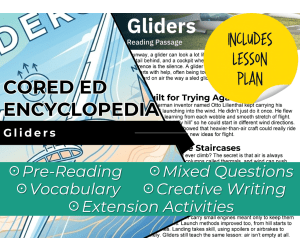
Gliders Reading Comprehension Passage - Cored Ed Encyclopedia
ELA, Reading Comprehension, Reading, Science, Technology, Pre-Reading, Language Development, Physics, History, Social Studies, Grade 2, 3, 4, 5, Worksheets & Printables, Worksheets, Teacher Tools, Centers, Activities, Writing Prompts, Assessments, Quizzes and Tests, Quizzes, Lesson Plans
This gliders reading comprehension with lesson plan includes: Visualization (on the front cover) Start your lesson by taking a minute to think and share something about the topic. Read the script aloud (slowly), perhaps prepare some music or sound effects. Student close their eyes and let their imaginations wander. Students open their eyes, read the question aloud and give them a few minutes to complete. Ask a few students to share or keep answers until the end to compare with what they learn in the passage. Quick pause—thousands of Cored Education products are included with your TeachSimple membership. Download links and encyclopedia index available here. Pre-Reading Trivia Students will write down one thing they already know about the subject and then read five more facts and discuss. These facts are fun, and the students will enjoy learning about the subject before reading more. Give 1 minute for students to write what they already know (no pressure—best guess is fine). Read the five facts together. After each fact, do ask a student for their opinion, was it surprising? Set a purpose by asking students to highlight/underline one fact they want to learn more about during the reading. Reading Passage The text is a high-interest reading passage with set paragraphs, roughly three to four paragraphs long. It contains a variety of themes about the topic, anywhere from history to technology. The passage is between 250 and 350 words in length. First, ask students to look at the headings and see what they’ll learn about today. What do they know about the topic/heading? First read options: Teacher read-aloud (best for support). Partner reading (paragraph by paragraph). While reading, students underline important details, and vocabulary words they think may come up in the questions section. Mixed Questions The first question page contains four multiple-choice questions, each with a choice of four answers, and three written response questions that require a sentence or two from the student. Students complete the mcqs first independently, then review quickly as a class. For the 3 written responses, try to get students giving the answer with some form of evidence: “I think ___ because the text says ___.” If students get stuck, send them back to check the passage. Vocabulary Questions Practice seven key words from the text in this section across two activities. First section is scrambled words where students will unscramble three words given a clue for each. The second section is a word to meaning matching activity. Before starting, have some students read out words they underlined in the passage. Ask students to say the word and read aloud the sentence(s) around each word. Ask students to do scrambled words and the matching exercise in pairs then go through answers as a class. For the scrambled spelling task, get four pairs to come up to the board and write the words for extra practice with the other student reading out the clue. For the matching task, prompt students to give full sentences: “I matched ___ with ___ because ___.” Creative Writing In this question, the student will be required to write a five to eight sentence paragraph on a question related to the topic. Before starting, ask students write down 3 key ideas they are going to include in their piece. Ask students for ideas to share around the class to help those struggling. Pro writing expectations: 5–8 sentences At least 2 facts or details from the passage At least 2 vocabulary words from the previous page Students read their paragraphs while classmates listen for facts and vocabulary words. Extension Activities This page is optional for fast finishers or to take home. There are several activities, each one requiring a different skill. Do some, do none, do all, completely optional - but you will feel reassured knowing every possibility is planned for. Includes summary writting question and additional facts. Answer Key There are answers for the multiple-choice questions, written response questions have sample answers, vocabulary answers and if there is a summary question then a sample summary will be provided as well. Lesson Plan Included Customized lesson plan for this lesson is included. Lesson Snapshot Title: Gliders Genre: Nonfiction (informational text) Subject: Science (flight/engineering) Primary Topic: How gliders fly using lift and launch methods Estimated Guided Reading Level (A–Z): Q What This Lesson Teaches Best Explains what makes a glider different from a small airplane (no motor; quiet flight; “trade height for distance”). Describes how gliders get into the sky (help at the start, including being towed; later mentions aerotows and winches). Teaches how moving air helps a glider climb—especially rising warm air (“thermals”) and wind pushed upward at a ridge or hill. Shows how design features support gliding (long, narrow wings; smooth body; low drag to lose little energy). Connects gliders to early flight experiments through Otto Lilienthal’s repeated testing and “fly hill.” Learning Goals Students will describe how a glider is similar to and different from a small airplane. Students will explain how a glider usually starts flying using details from the text. Students will identify two kinds of lift described in the passage and tell how each helps a glider climb. Students will explain why long, narrow wings and low drag help a glider glide efficiently. Students will describe how gliders and launch methods changed over time, using examples from the text. Students will explain how spoilers or airbrakes help with landing safely. Key Vocabulary From the Text cockpit — where the pilot sits and reads instruments. thermals — rising columns of warm air. drag — air resistance that slows motion. aerotows — launches where an airplane tows the glider. spoilers — panels that help a glider slow down and descend. FULL CATALOG OF DOWNLOAD LINKS AND ENCYCLOPEDIA INDEX HERE
Author Cored Education
Rating
Tags Vocabulary, Reading Comprehension, Reading Passages, Lesson Plans, Ela Lesson Plans, Reading Comprehension Lesson Plans, Pre-reading, Science Lesson Plans, Physics, History
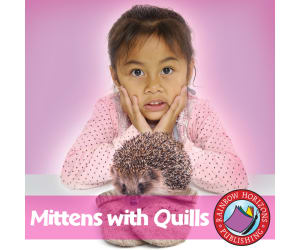
Mittens With Quills Gr. K-2
ELA, Reading, Grade 1, Teacher Tools, Lesson Plans
Mittens With Quills Gr. K-2: A Unique and Engaging Resource for K-2 Students As an educator, this resource provides a refreshing take on imparting traditional art forms such as quillwork to young learners. 'Mittens With Quills Gr. K-2' enriches your classroom with its compelling storytelling platform, delivered through a 'Big Book'. The Educational Benefits The incorporation of Circle of Life traditions underpinning the invaluable role of Elders as resources. Inclusion of a flannel board story for experiential learning. A focus on improving reading proficiency in Grade 1 students via curated reading passages. What's inside? 'The Art of Quiltwork' informational cards and patterns for Jacket and Moccasins aimed at enhancing fine motor skills. The pack comes with the rhythmical "Mittens with Quills" song appropriate for whole group or smaller sessions conducted by homeschoolers. The engaging tale of "Nosisimis and the Porcupine" can accommodate varied learner needs regardless whether they prefer isolated desk work or peer group collaborations. This can also be assigned as advanced reading material or homework depending on student competence levels. Expectedly, this beneficial teacher resource houses word search activities incidental to lesson content to further improve problem-solving abilities amongst early learners. Note: This resource is provided in PDF format ensuring easy accessibility for educators. Incorporate ‘Mittens with Quills Gr. K-2’ into your teaching routine today! Offer your students not just an education but intrigue their curious minds into appreciating cultural heritage while enhancing their intellectual curiosity.
Author Classroom Complete Press
Tags PDF

Reader's Workshop Kindergarten Lesson Calendar
ELA, Reading, Preschool, Lesson Plans, Teacher Tools
This is a Reader's Workshop Kindergarten Lesson Calendar. It will cover all of the mini lessons for an entire year. This calendar will display 5 days of lesson across 5 weeks for every unit of study. This is a great way to keep up with the lessons you are teaching.
Author Lauren DeSantis
Tags Mini Lesson, Reader's Workshop, Calendar, Unit Of Study, Spelling Patterns, Readers Workshop For Kindergarten, Readers Workshop In Kindergarten, Kindergarten Reading Workshop Mini Lessons Unit 2

Batteries Reading Comprehension Passage - Cored Ed Encyclopedia
ELA, Language Development, Reading Comprehension, Reading, Social Studies, Writing, History, Pre-Reading, Physics, Science, Grade 2, 3, 4, 5, Worksheets & Printables, Worksheets, Teacher Tools, Centers, Activities, Writing Prompts, Assessments, Quizzes and Tests, Quizzes, Lesson Plans
This batteries reading comprehension with lesson plan includes: Visualization (on the front cover) Start your lesson by taking a minute to think and share something about the topic. Read the script aloud (slowly), perhaps prepare some music or sound effects. Student close their eyes and let their imaginations wander. Students open their eyes, read the question aloud and give them a few minutes to complete. Ask a few students to share or keep answers until the end to compare with what they learn in the passage. COMPANION VIDEO NOW AVAILABLE (EMBEDDED AFTER PREVIEW PICTURES IN PRODUCT DESCRIPTION) Quick pause—thousands of Cored Education products are included with your TeachSimple membership. Download links and encyclopedia index available here. Pre-Reading Trivia Students will write down one thing they already know about the subject and then read five more facts and discuss. These facts are fun, and the students will enjoy learning about the subject before reading more. Give 1 minute for students to write what they already know (no pressure—best guess is fine). Read the five facts together. After each fact, do ask a student for their opinion, was it surprising? Set a purpose by asking students to highlight/underline one fact they want to learn more about during the reading. Reading Passage The text is a high-interest reading passage with set paragraphs, roughly three to four paragraphs long. It contains a variety of themes about the topic, anywhere from history to technology. The passage is between 250 and 350 words in length. First, ask students to look at the headings and see what they’ll learn about today. What do they know about the topic/heading? First read options: Teacher read-aloud (best for support). Partner reading (paragraph by paragraph). While reading, students underline important details, and vocabulary words they think may come up in the questions section. Mixed Questions The first question page contains four multiple-choice questions, each with a choice of four answers, and three written response questions that require a sentence or two from the student. Students complete the mcqs first independently, then review quickly as a class. For the 3 written responses, try to get students giving the answer with some form of evidence: “I think ___ because the text says ___.” If students get stuck, send them back to check the passage. Vocabulary Questions Practice seven key words from the text in this section across two activities. First section is scrambled words where students will unscramble three words given a clue for each. The second section is a word to meaning matching activity. Before starting, have some students read out words they underlined in the passage. Ask students to say the word and read aloud the sentence(s) around each word. Ask students to do scrambled words and the matching exercise in pairs then go through answers as a class. For the scrambled spelling task, get four pairs to come up to the board and write the words for extra practice with the other student reading out the clue. For the matching task, prompt students to give full sentences: “I matched ___ with ___ because ___.” Creative Writing In this question, the student will be required to write a five to eight sentence paragraph on a question related to the topic. Before starting, ask students write down 3 key ideas they are going to include in their piece. Ask students for ideas to share around the class to help those struggling. Pro writing expectations: 5–8 sentences At least 2 facts or details from the passage At least 2 vocabulary words from the previous page Students read their paragraphs while classmates listen for facts and vocabulary words. Extension Activities This page is optional for fast finishers or to take home. There are several activities, each one requiring a different skill. Do some, do none, do all, completely optional - but you will feel reassured knowing every possibility is planned for. Includes summary writting question and additional facts. Answer Key There are answers for the multiple-choice questions, written response questions have sample answers, vocabulary answers and if there is a summary question then a sample summary will be provided as well. Lesson Plan Included Customized lesson plan for this lesson is included. Lesson Snapshot Title: Batteries Genre: Nonfiction (informational passage) Subject: Science (Physical Science / Electricity) Primary Topic: How batteries store energy and changed over time Estimated Guided Reading Level (A–Z): T What This Lesson Teaches Best Explains what a battery does and how it powers devices when connected in a circuit (electrons moving through a wire to light a bulb or spin a motor). Introduces key electricity ideas in context (plus/minus ends guiding the “flow” the right way; current moving for a while). Gives a clear mini-history of batteries, from 1800’s “voltaic pile” to later “wet cells,” “dry cells,” and rechargeable batteries. Connects science to real-world uses, from small watch batteries to lithium-ion packs and room-size battery banks for the power grid. Highlights responsible use: batteries don’t last forever, so careful charging and recycling can help protect people and the planet. Learning Goals Identify what the passage says is stored inside a battery and what makes electricity move in a circuit. Explain, using the text, how electrons help a flashlight make a bright beam. Describe what Alessandro Volta built in 1800 and what materials were stacked. Compare “wet cells” and “dry cells” using details from the passage about carrying and spilling. Explain what makes a rechargeable battery different, based on how the passage describes “pushing” chemical changes backward. Describe how batteries are used today, including small devices and large battery banks on the power grid. Key Vocabulary From the Text electrons — tiny particles that can move through a wire. circuit — a path electricity travels through to do work. current — electricity moving steadily in a path. rechargeable — able to be filled up again with electricity. recycling — using materials again instead of throwing them away. FULL CATALOG OF DOWNLOAD LINKS AND ENCYCLOPEDIA INDEX HERE
Author Cored Education
Rating
Tags Vocabulary, Reading Comprehension, Reading Passages, Lesson Plans, Ela Lesson Plans, Reading Comprehension Lesson Plans, Pre-reading, History, Science Lesson Plans, Physics

Guided Reading Lesson Plan & Activities for Grade 12
Reading, ELA, Grade 12, Activities, Lesson Plans, Teacher Tools
Guided reading allows teachers to monitor students while they read texts appropriate to their instructional reading levels. It typically includes these standard components: - Collaborating in small teams - Aligning student reading skills with text difficulty levels - Providing each individual in the group with identical text - Presenting the text - Hearing people read - Encouraging students to unify their reading strategies - Involving students in discussions regarding the text. The objective is to assist Grade 12 students in creating strategies for independent application. Work emphasizes processes essential for proficient reading, like cross-referencing print with meaning, instead of memorizing the definitions of words from a specific book. In guided reading, educators observe student reading behaviors and ensure that texts are accessible to them, enabling learners to combine their newly learned skills into a cohesive, integrated reading system. This ebook will assist you in practicing guided reading with your 12th-grade classes. It includes a complete lesson plan with activities and recommended answers that takes about 90 minutes.
Author Bright Classroom Ideas Marketplace
Tags Guided, Reading, Lesson, Plan, Activities, Grade 12, Language

Story Squares for Grades 3-4: Multiple Learning Styles for Reading Comprehension
ELA, Reading, Reading Comprehension, Grade 3, 4, Teacher Tools, Lesson Plans
Story Squares for Grades 3-4: Multiple Learning Styles for Reading Comprehension Story Squares for Grades 3-4: Multiple Learning Styles for Reading Comprehension is a captivating teaching resource that metamorphoses reading comprehension into an interactive and exciting journey. This unique tool beautifully integrates Language Arts, Writing, Higher-Order Thinking, and Creative Arts methods. Exclusively crafted keeping third and fourth-grade students in mind who ready to explore deeper levels of reading and critical thinking; this product cultivates a bridge between text analysis and innovative responses. Its goal being to help students comprehend concepts effortlessly while still maintaining their curiosities. Complete with content specifically centered around six famous children's novels "Class President," "Charlotte’s Web," "How to Eat Fried Worms," “The Hundred Dress,” “Bunnicula,” and "The Whipping Boy.” This product accompanies each story with 20 activity alternatives that stimulate multiple learning styles. This resource goes beyond simply supplying lesson plans —it includes essential teacher hints aiding educators to enhance their approach during lessons based on best practices. An easy-to-comprehend rubric is provided – allowing teachers individually measure student work based on objective grading standards while promoting learner progression. Incorporated within the package you also find a glossary of terms - removing language arts instruction barriers by simplifying vocabulary-related doubts. Story Squares™ excels at adaptability— it can fit effortlessly into either large group formats or small focused groups urging collaborative learning efforts or one-on-one focuses respectively. It affirms itself when designated as homework—supplying chances for ongoing parental involvement in monitoring their child's educational progression. The resource file comes in a PDF format, ensuring effortless download on any device. In conclusion, Story Squares introduces innovation into your classrooms by implementing a novel yet highly-effective approach towards developing reading comprehension skills amongst learners.
Author Classroom Complete Press
Tags PDF
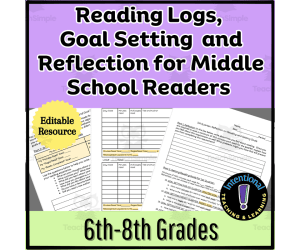
Reading Logs, Goal-Setting, and Reflection for Middle School Readers
ELA, Reading, Reading Comprehension, Grade 6, 7, 8, Teacher Tools, Lesson Plans
This 47-page editable resource, Reading Logs, Goal-Setting, and Reflection for Middle School Readers is a how-to lesson to help teachers center the importance of reading (and independent reading) in their 6th, 7th, and 8th grade Language Arts classrooms by having students be accountable for their reading. Students establish goals for their reading: the number of pages, minutes, and books they would like to read over the course of a grading period (quarter, trimester, or semester). They initially reflect on their feelings about reading, then establish goals for the first marking period. (The resource offers a step-by-step instruction for teachers to help students set reasonable and realistic goals for how much they want to read.) Each grading period, they review their goals to see if they achieved, surpassed, or fell short of achieving them. They reflect on their successes and challenges, and then. establish new goals. This resource offers teachers the following: a hyperlinked Table of Contents About this Resource- a handy guide with everything you need for this resource in one place a detailed lesson plan that includes how students can determine their reading goals Essential and Guiding Questions Standards, Objectives, and Learning Targets a sample Reading Requirements handout for a typical classroom which is easily editable to fit your needs a self-reflection as readers, before they establish goals the first time Reading Goals for each marking period (Quarters and Trimesters are included) which contain self-reflections for students to complete in which they celebrate their successes, identify their challenges, offer solutions for these challenges, and set new goals for the next grading period. Reading Log Template for Quarters or Trimesters for students to complete Reflections for each marking period End-of-Year Reflection with guiding questions for them to think about their goals, their successes, their challenges, what they learned about themselves as readers, favorite books or authors, etc. 6 Sample Student End-of-Year Reflections Most students don't read enough and many of our students read below grade level. As English teachers, we struggle with providing our students enough in-class time for reading, whether it's through SSR (Sustained Silent Reading) or DEAR (Drop Everything and Read) or some other carved out time for reading. Many teachers will tell you that they have tried reading logs, and students often cheat on them or don't turn them in. My experience has been different. By building in student accountability by having them establish reading goals, in addition to giving them 10-15 minutes of silent reading in class twice a week (or however much time you have dedicated to it), and by checking in with them regularly on their reading practice, students turn in their reading logs. Of course there has to be follow-through on the teacher's part by contacting parents, discussing with students how to choose the just-right book, making sure books are available, talking about reading, doing book talks, or having them do book talks, etc. You might be interested in the following resources that pair nicely with Reading Logs, Goal Setting, and Reflection for Middle School Readers. Part 1: What We Do When We Read: Teach or Review Reading Strategies for Middle School, When we read, our brain is engaging in subconscious activities related to what we are reading. In this lesson, students complete a reading survey, write a personal reading history, and through the poem, "The Voice You Hear When You Read Silently," by Thomas Lux, identify reading strategies we use subconsciously. Part 2: Reading Logs and Goal Setting for Middle School Readers, in this how-to lesson, teachers introduce what they expect from their students in terms of their accountability for their reading. Students have handouts to help them establish goals for their reading for each grading period: how many books they want to finish and how many pages they want to read, and a self-reflection on their accomplishments. Part 4: Summary Writing for Short Stories in your Middle School Classroom : A step-by-step lesson to teach students write a summary of a short story by completing a graphic organizer. Includes links to several stories. Also includes an optional group summary project In addition, using Chris Van Allsburg picture books. Part 5: Metacognitive Logs: Reading Response (Strategies to Teach) : Provides teachers with detailed lessons to teach students how to respond to literature by analyzing and interpreting their thoughts while reading. This process trains students to focus on their reading. There are many student examples and opportunities for interactive activities. I also offer a number of book reports that help students stay accountable to their reading. Character Analysis Essay, Gift for a Character Book Report, and Oral Presentation Book into Movie Project: Comparing and Contrasting Poetry Book Report Mini-Reviews Book Report Mystery, Thriller, Horror, and Suspense Book Report Book Jacket Book Report Historical Fiction Book Report Historical Fiction Literature Circle Project
Author Intentional Teaching and Learning
Tags Independent Reading, Middle School Reading, Reading Logs, Goal-setting, Self-reflection, Accountability, Reading Goals, Student Accountability, Middle School Readers

Viking Ships at Sunrise (Magic Tree House #15 Lesson Plan, Videos, Activities)
ELA, Social Studies, Reading, Reading Comprehension, Grammar, Literature, Language Development, Spelling, Vocabulary, Writing, History, History: Europe, Grade 1, 2, 3, Lesson Plans, Teacher Tools
Magic Tree House #15: Viking Ships at Sunrise Lesson Plans and Activities This comprehensive 5-day novel study for Viking Ships at Sunrise guides students through reading comprehension, writing, grammar, vocabulary, art, and more. Through engaging activities like comprehension questions, read-alouds, crafts , and videos, students will strengthen literacy skills while learning about Viking history and culture. Teachers can easily customize or scaffold lessons for different ages, reading levels, and learning styles. This versatile resource can be used for whole group instruction, small groups, independent work, or homework. With cross-curricular connections to social studies, geography, spelling, and language arts, these lesson plans turn independent reading into meaningful learning experiences.
Author Heather Huhman
Tags Viking Ships At Sunrise, Magic Tree House, Book Companion, Novel Study, Vikings

Big Books For Tots Gr. PK-1
ELA, Reading, Preschool, Kindergarten, Grade 1, Teacher Tools, Lesson Plans
Big Books for Tots Gr. PK-1 The Big Books for Tots Gr. PK-1 is a comprehensive resource designed to address the needs of preschool, kindergarten, and Grade 1 educators. Covering a wide range of topics from colour recognition to seasonal awareness, it serves as an excellent addition to the preset curriculum . This resource includes patterns and text compiled into three distinctively themed big books that perfectly cater for budding readers. It offers flexibility in usage – they can be employed as individual reading resources or paired with thematic studies across multiple subjects. 'Big Bear's Balloons': Through this book, young learners grasp concepts of color identification and counting skills along with sequence recognition abilities. 'Dana Banana': Kids are subtly introduced into understanding nutrition while discovering vibrant colors and days of the week wrapped up in an entertaining narrative. 'Twelve Hats for Tina': This story revolves around Tina’s fondness for hats expanding through each month's holidays and occasions resulting not just an engaging tale but also a crucial introduction into comprehending time-related concepts. Format: Laid out in a PDF format spanning over 94 pages ready for printing at your convenience; these interactive tools come complete with reading passages and activities such as compiling their own big book which enhances creativity along with literacy skills while providing teachers numerous opportunities to assess progress implicitly via tasks like word searches making them an ideal pre-packaged learning module suitable both within homeschooling setups or traditional classroom settings whether tackling whole-group instructions or small-group learning sessions.
Author Classroom Complete Press
Tags Big Books, Toddler Books, Early Learning Books, Reading Lesson, Reading Stories
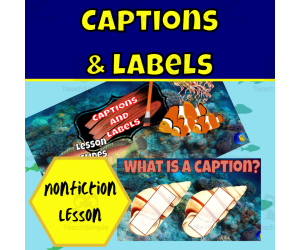
Nonfiction Text Features: Captions and Labels Lesson
ELA, Reading, Preschool, Grade 1, 2, 3, Lesson Plans, Teacher Tools
Nonfiction Text Features: Captions and Labels Lesson Plan This interactive Google Slides resource teaches students about captions and labels, two key text features found in nonfiction books. Through discussions, activities, and practice exercises, students will learn how to identify captions and labels and apply them in their own writing. Animated slides, speaker notes, and student task slides allow flexibility to use this resource for whole-group instruction, small-group work, or independent practice during class or as homework. This concise yet engaging lesson plan aims to deepen third graders' understanding of nonfiction text structures. It can serve as an introduction or refresher on this topic. Check out other nonfiction text features lessons from this shop covering glossaries, tables of contents, titles, title pages, and indexes.
Author Ezee 101
Tags Nonfiction, Text Features, Reading, Strategies, Captions, Labels, Lesson, Activities

Guided Reading Lesson Plan & Activities for Grade 7
Reading, ELA, Grade 7, Activities, Lesson Plans, Teacher Tools
Seventh graders can concentrate better on enhancing the skills they started to cultivate in 6th grade without the extra pressure of adapting to the new middle school setting. By 7th grade, it is anticipated that students have adjusted to middle school life and are thus expected to operate more autonomously while managing their time and schedules with diminished (but still some) support. Typically, in 7th grade, students expand upon the abilities they acquired in 6th grade by engaging with more intricate and lengthy texts and essays in both writing and reading. This effort will equip them for 8th grade, where they will solidify and enhance their skills, ultimately positioning them for success in high school. In 7th grade, learners enhance their skills in analyzing the texts they read and supporting their analysis with evidence from the text. In particular, 7th grade students focus on scrutinizing texts more thoroughly and utilizing details from the text to formulate ideas, conduct analysis, and draw inferences. This ebook contains a comprehensive 90-minute lesson plan, featuring activities and suggested answers.
Author Bright Classroom Ideas Marketplace
Tags Guided, Reading, Lesson, Plan, Activities, Grade 7, Language
Rikki-tikki-tavi: Full Lesson Plan w/ PowerPoints & Graphic Organizers
ELA, Reading, Grade 5, 6, 7, 8, Lesson Plans, Teacher Tools
Rikki-tikki-tavi Full Lesson Plan Bundle This comprehensive reading lesson plan bundle for the short story Rikki-tikki-tavi by Rudyard Kipling provides educators with everything they need to teach the text. Includes a complete lesson plan, worksheet with answer key, and 15 customizable graphic organizers covering topics like author's purpose, characterization, historical analysis, plot structure, theme interpretation, and more. Also includes 8 PowerPoint slide decks exploring literary concepts like narrator and voice, irony and ambiguity, symbolism and allegory. Perfect for whole-class instruction, small group discussions, or independent analysis. This diverse teaching resource allows flexibility to approach the story from different angles and levels for students grade 5-8. Files provided in editable PDF and Word document formats.
Author Quality Teaching Products
Tags Short Story, Fiction Text, Graphic Organizer, Reading Powerpoint, Reading Lesson Plan, Rikki-tikki-tavi Worksheets Answers, Rikki-tikki-tavi Answer Key, Rikki Tikki Tavi Answer Key
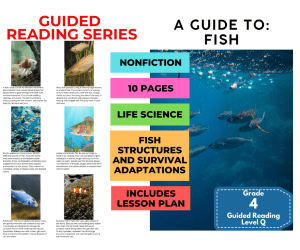
A Guide to Fish: Guided Reading Level Q with Lesson Plan
ELA, Resources for Teachers, Reading Comprehension, Reading, Science, Language Development, Life Sciences, Earth and Environmental Sciences, Pre-Reading, Vocabulary, Grade 3, 4, 5, Worksheets & Printables, Worksheets, Teacher Tools, Centers, Activities, Literacy Readers, Quizzes, Quizzes and Tests, Assessments, Lesson Plans
This A Guide to Fish (level q) guided reading book with lesson plan includes: Guided Reading Color Label (front cover x1) This is a quick way to match the book’s demands to what students can generally handle.. The overall goal is to use the level/color to pick books for several smaller groups. To qualify for a certain level, a student is expected to read a book from that level with about 90–94% accuracy. If a student is consistently accurate and understands, move up a level. If the student is struggling at that level, drop down and add more support. Each student will improve at completely different rates, but it is generally one of the best ways to check progress across the class. DOWNLOAD THE CATALOG TO VIEW ALL GUIDED READING BOOKS AVAILABLE (SORTED LEVELS A-Z) Pre-Reading Question (x1) Teacher asks the prompt aloud, can be while showing the cover or first page. Students share what they already know, or make educated guesses from the cover. Prompt them to use the target vocabulary. Write some of their responses on the board to look back at during the reading. Vocabulary Words (x5) Introduce the five words, best doing it one at a time. Start by saying it, while students repeat and then see if anyone knows what it means before reading further. Read through the meaning and try to briefly connect each word to a picture or gesture so it’s meaningful. Ask students to flip through the book pages and point to where they see each of the vocabulary words. While reading the book pause upon coming across one of the vocab words or read the sentence twice to make sure students understand the word has appeared. Optional: Ask students to raise hands whenever they see/hear one of the new words. Guided Reading Pages (x10) Check the book snapshot (below) for: primary topic - do you need to prep extra reading or intro materials on this? what is taught best - decide on 1-2 bullets to focus on, use the prompt or words provided here for best results. learning goals - what you are checking for students to be able to do after the session, elicit answers using prompts or words provided. key vocabulary (see section above). questions overview - so you know what is coming up and if you need to prep extra materials to assist understanding. Run the lesson You may have already looked at a few of the pages together, but you can show them some of the pictures again first to set meaning. Depending on how much time you have and how familiar your students are with guided reading class, you may want to read the book aloud first with the group first. Students whisper or partner read, while you listen in. If time, do it as a group, one student reading a page each. Use the guided page’s prompts to coach: “Check the picture / does it make sense?” “Point under the words / try the first sound” “Reread the sentence smoothly”. Try to focus more on one student per session (rotating every time), so you can work out if they are ready to move up or need to move down a level. Comprehension Questions (back cover x3) This is your way to check that students didn’t just say the words, but actually understood the text. First, let students answer by pointing to the page/picture and saying a short sentence. After any answer, follow with: “Show me where you found that in the text.” In bigger groups, have partners answer first (10–20 seconds), then call on 2–3 students to share. Differentiation tips: Emerging speakers/struggling readers: oral + pointing On-level: oral in a full sentence Higher: one written sentence or draw + label Book Snapshot Title: A Guide to: Fish Genre: Nonfiction (informational) Subject: Life Science Primary Topic: Fish structures and survival adaptations Estimated Guided Reading Level (A–Z): Q What This Book Teaches Best Explains how gills help fish breathe by extracting oxygen from water and releasing carbon dioxide. Describes how a fish’s streamlined shape and fins support efficient movement, stability, steering, and turning. Introduces the lateral line as a sensory system that detects vibrations and pressure changes to help fish navigate and find prey. Compares freshwater and saltwater habitats and explains how fish maintain the right internal balance of salt and water. Shows multiple survival strategies such as bioluminescence, camouflage, cartilaginous skeletons, and schooling (“safety in numbers”). Learning Goals Explain how fish breathe using gills and what happens as water passes over gill filaments. Describe how fins and a streamlined body shape help fish move, steer, and turn in water. Identify what the lateral line does and how it helps fish survive (navigation and finding prey). Compare how freshwater fish and saltwater fish manage water and salt in their bodies. Explain at least two survival adaptations described in the text (camouflage, bioluminescence, schooling). Describe what “cartilaginous fish” are and what the text says cartilage allows them to do. Key Vocabulary From the Text vertebrates — animals that have a backbone. specialized — made for a specific job or purpose. filaments — thin, threadlike parts of the gills. bioluminescence — the ability to make your own light. cartilaginous — having a skeleton made of cartilage, not hard bone. Discussion Prompts Pre-reading question: What body parts or behaviors might help fish survive in different kinds of water? Comprehension questions: What does the text explain that gills do for a fish? Comprehension questions: How does the lateral line help fish, according to the text? Comprehension questions: Why does the text say swimming in a school can help fish survive? Printing Tips 1. Best Printing Method (Recommended) “Booklet” Printing (Best if Available) If your printer or PDF viewer supports Booklet Printing , use this. Settings to use: Print mode: Booklet Paper size: Letter or A4 (either works) Orientation: Landscape Print on both sides: Yes Flip on: Short edge Scaling: Fit to printable area Booklet subset: First test: Front sides only Then: Back sides only This will automatically: Pair pages correctly Put the cover on the outside Align everything for folding After printing, fold in half and staple along the spine . 2. If “Booklet” Printing Is NOT Available You can still print this correctly with manual duplex printing . Step-by-step: Open the PDF. Choose Print . Set: Orientation: Landscape Pages per sheet: 1 Print on both sides: Yes Flip on: Short edge Print all pages . Because each PDF page already contains two facing book pages, the result will still fold cleanly into a book. Thousands of Cored Education products are included with your TeachSimple membership. Download links and encyclopedia index available here.
Author Cored Education
Rating
Tags Reading Comprehension, Reading Passages, Reading, Guided Reading, Guided Reading Lesson Plan, Guided Reading Activity, Pre-reading, Science Lesson Plans, Life Science, Earth Science
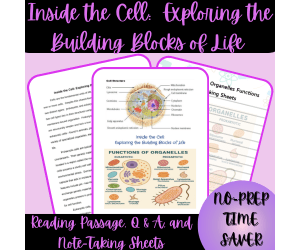
HIgh School Cell Structure & Organelles Functions Reading Passage
ELA, Reading, Writing, Research, Resources for Teachers, Science, Life Sciences, Biology, High School, Homeschool Resources, Teacher Tools, Lesson Plans, Assessments, Quizzes and Tests, Worksheets & Printables, Writing Prompts
This Inside the Cell: Exploring the Building Blocks of Life Reading Passage, Q & A, and Note-Taking Sheets resource is a thoughtfully designed resource created to help students/homeschoolers truly understand the fascinating world of cells. As a homeschool mom guiding my own ninth grader, I know how challenging it can be to find materials that are both engaging and thorough. This Inside the Cell: Exploring the Building Blocks of Life Reading Passage, Q & A, and Note-Taking Sheets resource brings together a detailed reading passage, critical thinking Q & A, and five versatile note-taking sheets to support deep comprehension. Whether you are teaching in a classroom or around the kitchen table, this set will help your learners grasp the essential differences between eukaryotic and prokaryotic cells and the remarkable functions of their organelles. INCLUDED IN THIS RESOURCE: Comprehensive reading passage on cell structure and organelle function 20 higher-order, research-based Q & A prompts Guided answer key for all questions Five note-taking sheets TOPICS COVERED: Differences between prokaryotic and eukaryotic cells Structure and function of major cell organelles Specialized features of plant and animal cells Cellular adaptations and ecological roles This Inside the Cell: Exploring the Building Blocks of Life Reading Passage, Q & A, and Note-Taking Sheets resource is a complete package for teaching and learning about the building blocks of life. It is designed to inspire curiosity, build confidence, and equip students/homeschoolers with the knowledge and skills they need to succeed in biology. As a mom and homeschool educator, I believe this resource will make your science lessons more meaningful and enjoyable for everyone involved. If you and your students/homeschoolers enjoyed this resource, please leave a review. Thank you for your support! Tina - Big Easy Homeschooling Mom
Author Homeschool with Big Easy Homeschooling Mom
Rating
Tags Cell Structure And Function Reading Passage, Eukaryotic And Prokaryotic Cell Comparison, Homeschool Cell Biology Resource, Homeschool Biology, High School Biology, Comprehensive Cell Biology Lesson, Cell Structure And Organelle Teaching Materials, Homeschool Science, High School Science, Eukaryotic And Prokaryotic Cells

Day of the Dragon King (Magic Tree House #14 Lesson Plan, Videos, Activities)
ELA, Social Studies, Reading, Reading Comprehension, Grammar, Literature, Language Development, Spelling, Vocabulary, Writing, History, History: Asian, Geography, Grade 1, 2, 3, Lesson Plans, Teacher Tools
Day of the Dragon King (Magic Tree House #14 Lesson Plan, Videos, Activities) A comprehensive NO PREP novel study designed for first through third grade classrooms which robustly covers Language Arts and seamlessly extends into Social Studies too. About the Resource Focused on the Day of the Dragon King from the popular Magic Tree House series, this resource constructs a 5-day lesson plan that cultivates students' comprehension and vocabulary through situations which engage them in activities within multiple subjects. The interactive format of exercises help reinforce understanding and appreciation for literature among students. What it Includes? Reading Skills: This is nurtured with chapter-wise comprehension quizzes. Vocabulary Building: Mastery is promoted via two distinct options to cater different learning styles. Writing Abilities: Capacities are sharpened as students get involved in writing craftivity expressions post reading sessions. Students also demonstrate their learnings via book review reports. Beyond Language Art's reach expands into Social Studies with compelling content: Geography-related tasks arouse curiosity about Asian locations central to this story; History-focused activities that impel research and exploration regarding fascinating elements from past-times related to China. The resource includes all essential worksheets required across course duration, . All interactive note-book pieces can be easily tweaked if tutors prefer reducing paper usage without hampering valuable discussions these segments instigate. Limited Paper Usage Option The planning emphasizes an interesting narrative experience fostering independent thought paired with a structured pattern ensuring retention amongst Grade 1-3 learners. All materials required are detailed, along with optional supplements so teachers have an effortless guided journey from preparation through closure of each chapter - viewed via videos leading towards suggested project-based activities. Summary Day of The Dragon King (Magic Tree House #14 Lesson Plan, Videos & Activities) is a comprehensive package that includes: language arts elevation via creative sentence construction opportunities; cultural exposure via Geography & Asian History lessons; and also cross-disciplinary integration fostering holistic knowledge acquisition among young learners.
Author Heather Huhman
Tags Magic Tree House, Comprehension, Vocabulary Enrichment, Writing Skills, Social Studies
Critical Thinking - Digital Lesson Plan Gr. 5-8 | PC Software
ELA, Reading, Grade 3, 4, 5, 6, 7, 8, Teacher Tools, Lesson Plans
Critical Thinking - Digital Lesson Plan Gr. 5-8 | PC Software This interactive software provides a comprehensive approach to enhance the critical thinking abilities of students in grade levels 5 through 8, guiding them on an enlightening journey towards independent thinking. Contains an impressive 80 screen-pages of content that steadily nurture students' comprehension and problem-solving skills. Incorporates activities designed to stimulate organization and inquiry-based tasks. Leverages graphic organizers as effective tools for assimilating foundational skills vital for critical thinking progression. Variety & Adaptability The diversity and flexibility differentiate this digital lesson plan from others. Each screen page offers reading materials synched with before-and-after interactive activities aimed at progressively solidifying learning outcomes. Integrated test preparations aid learners holistically for academic evaluation scenarios. Comprehension quizzes enable immediate reflection on each subject or concept within the course material. crossword puzzles and word search activities keep learners challenged while promoting vocabulary building alongside cognitive development. Pedagogical Efficacy & Flexibility>/h4 Aligned with state standards and based on Bloom's Taxonomy principles ensuring instructional robustness focusing on Reading subsubjects as part of English language arts curriculum. Suitable for both classroom or individual homeschool setups considering diverse teaching styles preference or student learner styles variation - flexible options extend its versatility for varying educational settings. As part of your teaching strategy, this digital lesson plan shapes learners for their current academic stages and beyond, preparing them for progressively complex thought-processes as they ascend towards higher education.
Author Classroom Complete Press
Tags Interactive Reading Activity, Graphic Organizer, Critical Thinking Lesson, Digital Lesson Plan, Reading Comprehension

"Cinderella" | Fairy Tale Early Reader Unit
ELA, Reading, Grade 1, 2, 3, 4, Lesson Plans, Teacher Tools
Cinderella Fairy Tale Early Reader Unit The Cinderella Fairy Tale Early Reader Unit is a comprehensive teaching tool designed for students of varying reading competencies. This educational journey, based on the classic tale of Cinderella, is ideally suited for grades 1 to 4. Adaptability This resource is presented in four different reading levels; each comes with a student booklet, a teacher booklet, and full-page versions. These formats make it suitable for each student's individual capabilities and accommodate diverse teaching styles. Inclusion of Other Language-Art Resources Besides standardized reader booklets, this package also contains: Fairy tales posters to help students understand essential features in such narratives. Articles about Charles Perrault, known as the author of 'Cinderella', that give learners contextual background information about fairy tales' history and evolution across ages and cultures. Creativity Enhancement Tools This unit provides various tools to develop creativity among learners: Writing booklets: This exercise enables students to craft their unique renditions of 'Cinderella' while showing off their artistic flair. Sounding-out cards:Promoting phonemic awareness, these cards make literacy learning accessible even for struggling readers among pupils. The vocabulary building activities further improve their expressiveness stage by stage. An all-in-one Literature-Based Study Tool-kit All these ingredients transform this fairy-tale themed unit into an effective literature-based study tool-kit that allows young learners to explore and appreciate this literary classic. Readers' theatre scripts to help kids embody characters vocally. Partitioned spelling lists:This feature is designed on a complexity basis, accommodating all levels of learners. A proofreading practice session:This facilitates the perfection of writing skills among students. Descriptive writing exercises: The descriptive writing practices ensure comprehensive development in language arts for your wards. Learners can enjoy constructing their understanding of tales while polishing their foundational language skills with this complete resource pack.
Author Simply Schoolgirl
Tags Cinderella, Fairy Tale, Reading Levels, Comprehension Skills, Vocabulary Building

Nonfiction Text Features: Title Lesson
ELA, Reading, Grade 1, 2, 3, 4, Teacher Tools, Lesson Plans
Nonfiction Text Features: Title Lesson Plan This engaging Google Slides resource teaches students about the key nonfiction text feature - the title. Through class discussions and practice activities, students will learn how to identify titles and apply this knowledge. Animated slides explain what a title is and how it is used in nonfiction texts. Additional student slides provide opportunities for further practice. This resource can be used to introduce or review the concept of titles in an interactive small group or whole class setting. Extend student learning by using the additional nonfiction text features lessons linked at the end, covering topics like captions, glossaries, and more. This reading resource helps build nonfiction comprehension in grades 1-4.
Author Ezee 101
Tags Title, Text Features, Nonfiction, Interactive Reading