



3,910 products added recently
Page 60 - Science Lesson Plans
Bring science to life with lesson plans that cover biology, chemistry, physics, and more. These resources offer experiments and interactive lessons to stimulate curiosity. Implement them to foster a deep understanding of scientific principles and a passion for discovery.

 Show filters

Dyslexia-Friendly Visual Phonics Decoding
Classroom Management, Resources for Teachers, Community Building, Life Skills, Special Resources, Social Emotional Learning (SEL), Social Skills, Special Education Needs (SEN), Speech Therapy, Science, Kindergarten, Preschool, Grade 1, 2, 3, 4, 5, Worksheets & Printables, Workbooks, Worksheets, Word Searches, Teacher Tools, Lesson Plans, Quizzes and Tests, Quizzes, Tests, Assessments
If your students have difficulty with b/d reversals, visual crowding, or reading anxiety, phonics worksheets often do not work for kids who are neurodivergent because they create a cognitive overload situation. The Visual Phonics Decoding Program is a complete no-frills paradigm shift in reading interventions. Using the proprietary Visuo-Phonological Anchor Model (VPAM), this program creates a connection between auditory processing and the visual-spatial pathways, enabling students (first, second and third graders) to develop automaticity when decoding. The Visual Phonics Decoding packet also follows the principles of the Science of Reading and the cognitive principle of Orthographic Mapping and removes unnecessary visual distractions and replaces them with structured visual anchors. What’s Being Offered In Our 25 Page Complete PDF? Educator Theory and Implementation Manual: A deep dive into the Neurological Structure of Dyslexic Reading, Double-Deficit Hypothesis, and Orthographic Mapping with practical application chapters. Actual Case Studies with Practical Application: Profiles to show how to use these methods with Early Elementary School-Aged Children. Intervention Worksheet Series: Intervention worksheets have been developed utilizing Typographic Grounding, Chromatic Categorization and Spatial Bounding principles. Medial Short Vowels (CVC orthography), Consonant Digraphs (sh, ch, th, wh, ck), Initial Consonant Blends. Teacher Reference Materials/Visual Aids: Contains Visual Aids for Cognitive Orthographic Mapping Protocol and the anatomy of a Dyslexic Friendly Worksheet. Complete Answer Keys and Formative Assessment Protocols. Great For Special Education (SPED) Tier II and Tier III Reading Intervention, Home Schooling & Orton Gillingham Compatible Teaching Methods. Help struggling readers to stop guessing and to have the confidence to code words correctly using decoding! Reasons that Parents/Schools Appreciate It: Elimination of Visual Clutter: Heavy bottom, sans serif fonts, and greater spacing are used strategically to help identify and prevent visual representation of b, d, p, q from being represented as flipping or floating through space. Working Memory Limitations are Bypassed: Students are able to visually lock into a vowel team or digraph without being overwhelmed by using the use of Chromatic Anchor System and bounding boxes. No Fluff & No Distractions: All worksheets were specifically created to conserve as much of a dyslexic child's cognitive energy as possible. Therefore, no clip art, decorative art, or unnecessary instructions are contained to help conserve any cognitive energy from teaching a child to read. Creates Teacher and Parent Power: Also, all worksheets have a clear and complete "Educator Rationales" so parents and teachers can better understand the rationale and methodology for teaching their children. Gives Children the opportunity to Create True Orthographic Mapping: Children are prevented from memorizing and guessing from the visual image or picture, therefore, they are developing the skills to accurately map sounds to letters, which is the basis for long-term efficiency when it comes to reading. Target Audiences: Identify your target audience based on the curriculum's own Tiered Decoding Progression Model (pg. 22) and Introduction (pg. 1). Target Specifically: Grade Levels: 1st, 2nd, and 3rd. Audience: Students with a diagnosis of Dyslexia, students exhibiting signs of reading anxiety, children who are guessing at reading, children struggling with traditional written Phonics, as well as neurodivergent children from all backgrounds. Skills: Students needing support with CVC (consonant-vowel-consonant) words, students needing support with consonant digraphs (sh, ch, th) and students needing support with initial consonant blends. Buyers: Special Education Teachers, Reading Interventionists, Parents Home Schooling, General Education/Primary School Teachers. Terms of Use/Copyright: This Book is the copyright property of Syed Hammad Rizvi. You may only use this resource personally and within a single classroom. You are prohibited from altering, selling, or otherwise distributing any part of this resource. You may not post the entire resource or any part of it on the Internet for access or for download by the general public. If you would like to share this resource with your fellow teachers, you must purchase additional licenses through Teachsimple. Thank you for your support of these terms of use. Syed Hammad Rizvi would like to thank you for using this product.
Author Creative Book Store
Rating
Tags ScienceOfReading, SoR, StructuredLiteracy, OrthographicMapping, Phonics, PhonicsInstruction, PhonemicAwareness, Decoding, ReadingFluency, LiteracyMatters

Beginner AI Chatbot Safety & Prompt Practice Worksheets
Resources for Teachers, Classroom Management, Community Building, Technology, Science, Computer Science, Engineering, Research, Special Resources, Social Emotional Learning (SEL), Preschool, Grade 1, 2, 3, 4, 5, 6, Teacher Tools, Lesson Plans, Presentations, Assessments, Worksheets & Printables, Flashcards, Worksheets, Word Searches, Writing Prompts, Workbooks
This professionally designed 36-page AI Chatbot Safety and Prompt Practice Workbook provides educators and parents with the comprehensive guidance needed to help their 6–9 year-old students develop literacy skills while learning how to safely work with AI chatbots as powerful tools rather than friends, maintain safe digital boundaries, protect their personal identifiable information (PII), create clear and effective prompts using the “Three-Part Recipe”, practice digital kindness, verify the accuracy of AI-generated content, and develop strong literacy skills through the use of iterative questioning. This resource can be used in any learning environment including traditional classrooms, homeschooling, after-school programs, or family time on electronics. Key features include: - Aligned with the Piaget and Vygotsky constructivist theory and early literacy standards - Ten printable worksheets (e.g. fill-in-the-blank, matching, true/false, scenario) - Teacher/parent guide with theory, case studies, and strategies for implementation - Visual aids (e.g. mind maps, flowcharts), and the "Digital Safety Ecosystem" infographic - Complete answer key for easy assessment - No-prep, print-and-go format (PDF) - Ideal for introducing safe use of ChatGPT/AI tools, prompt engineering, and digital citizenship prior to students' access to full AI tools. Why Parents and Schools Are Interested To Use It : -Creates a lifetime of Real World safety habits around Digital use by teaching children to never share names, addresses, schools or emotions with AI preventing privacy issues before they happen. -Allows for Literacy development through AI use. Making writing Prompts fun iterative writing exercises will enhance vocabulary, specificity, sentence structure and critical thinking. -Cost effective for busy parents and teachers who can print everything out with a simple to follow directions, pictures and answer key - great for morning work, tech centers S.E.L. lessons or home school tech units. -Removes worries about AI in the classroom by providing a structured researched based blueprint for educators and families to use to introduce chat-bots without the fear of misuse or becoming overly reliant upon. -Fun and easy for children to learn about safety through stories, fun Prompts and activities, "Digital Detective" activity, so they will actually look forward to learning and following safe and responsible use of digital technology. Target Audience / Students Grades : Kindergarten & 4th/5th Grades are not targeted (English). The curriculum is developed with 1st through 3rd grade (ages 6-9) only - early elementary children who are in the concrete operational cognitive development stage; therefore, the curriculum utilizes concrete metaphors (e.g.; recipe, blueprint, vault, shield), large print for worksheets, and has scenarios appropriate for a given age, such as bats/frogs/knights/dinosaurs. This is not appropriate for kindergarten or 4th grade and beyond as the language and activity levels are too elementary for 4th and older students, and also too advanced for pre-k. Copyright/Terms and Use : The content of these pages is under copyright by Syed Hammad Rizvi, and it is for your personal use or classroom use only (meaning only one person will use it) You may not change or share any portion of these pages with anyone else or post them online for others to find and download. If you would like to share this resource with someone else or would like to share it with your colleagues, please purchase an additional license from Teachsimple. Your compliance with this Copyright/Terms of Use will greatly help us in continuing to provide content/resources. Syed Hammad Rizvi would like to express his thanks for purchasing these products.
Author Creative Book Store
Rating
Tags Ages6to9, Grades1to3, AISafetyForKids, ChatGPTForKids, AIForElementary, PromptEngineeringForKids, KidsAged6to9, AIForAges6to9, EarlyElementaryAI, DigitalLiteracyWorksheets
I WONDER - What is the Safest Part of a Hurricane | Animated Video
Geography, Social Studies, Earth Sciences, Earth and Environmental Sciences, Science, Environmental Science, Grade 3, 4, 5, 6, 7, 8, 9, Lesson Plans, Teacher Tools
Video Introduction An amazing video designed for the students to learn more about natural disasters in different countries. I WONDER - What is the Safest Part of a Hurricane | Animated Video Lesson What do you know about this natural disaster? Do you know in which part of the world this could happen? Have you ever read about the safety misusers that we could have to protect ourselves from this natural disaster? If yes, can you tell us more about them? Can you name other natural disasters? If yes, tell us more about where they are likely to happen? And how frequently? Do you like reading about Geography? What is your favorite country in the whole world? If you are going on a trip where it will be? Which country? What you are going to see there? Does this country has a famous place to visit? Do you like reading about Geology? If yes, what is your favourite topic? I WONDER - What is the Safest Part of a Hurricane | Animated Video Lesson The video is perfect for encouraging the researching skills for the students, while learning more about this fantastic phenomenon. I WONDER - What is the Safest Part of a Hurricane | Animated Video Lesson This friendly designed video is suitable for students at school, homeschooling, and as a group activity. Format Available in MP4 format.
Author Educational Voice
Tags What Is The Safest Part Of A Hurricane, What Is The Safest Part Of A Hurricane Video, The Safest Part Of A Hurricane, The Safest Part Of A Hurricane Video, The Safest Part Of A Hurricane Facts, The Safest Part Of A Hurricane Video For Kids

I WONDER - Where Do Foxes Live | Animated Video Lesson
STEM, Animals, Life Sciences, Science, Biology, Grade 1, 2, 3, 4, 5, 6, 7, 8, Lesson Plans, Teacher Tools
Video Introduction Animal kingdoms are full of fascinating wonders to learn. This video is designed for the students to learn more about animals in different countries. I WONDER - Where Do Foxes Live | Animated Video Lesson Do you like animals? what is your favorite one? Do you own a pet? If yes, tell us more about it, like what its name? And what do you like most about it? What are the animal kingdoms? Can you write down the characteristics of each animal class like mammals, birds, reptiles, amphibian, fish and mollusks. Do you know that some animals can sing, can you name any of them? What is the largest and the smallest mammal in the world? What is the largest and the smallest bird in the world? What is the largest and the smallest fish in the world? I WONDER - Where Do Foxes Live | Animated Video Lesson The video is perfect for encouraging the researching skills for the students, while learning more about these fantastic animals. I WONDER - Where Do Foxes Live | Animated Video Lesson This friendly designed video is suitable for students at school, homeschooling, and as a group activity. Format Available in MP4 format.
Author Educational Voice
Tags Where Do Foxes Live, Where Do Foxes Live Video, Foxes, Fox, Foxes Facts, Foxes Facts For Kids, Foxes Video, Foxes Video For Kids, Fox Facts, Foxes Home

I WONDER - Why Do We Need To Eat Fruit And Vegetables | Animated Video
Human Body, Life Sciences, Science, Biology, STEM, Grade 1, 2, 3, 4, 5, 6, 7, 8, Lesson Plans, Teacher Tools
Video Overview The human body is full of fascinating wonders to learn. This video is created to help the students recognize the anatomy and the job of the human body. I WONDER - Why Do We Need To Eat Fruit And Vegetables | Animated Video Lesson Every part and organ in our human body is vital so let's see how important they are. Have you ever imagined how we look like if we didn't have a skeleton? Did you know that because we have our amazing muscles we can stand! Do you know how many teeth do we have? Have you ever wondered about the food journey inside our body? Can you name all the glands in our body? Why do we have skin? Our nervous system is really good at sending signals. Can you tell us more about it? Are you really good at Mathematics, painting, or any other thing? You should really thank your brain about it! The famous five senses are really doing a great work? Can you explain how every sense works? I WONDER - Why Do We Need To Eat Fruit And Vegetables | Animated Video Lesson The video is perfect for encouraging the researching skills for the students, while learning more about our fantastic human body. I WONDER - Why Do We Need To Eat Fruit And Vegetables | Animated Video Lesson This friendly designed video is suitable for students at school, homeschooling, and as a group activity. Format Available in MP4 format.
Author Educational Voice
Tags Why Do We Need To Eat Fruit And Vegetables, Why Do We Need To Eat Fruit And Vegetables Video, Fruit And Vegetables, Fruit And Vegetables Facts, Fruit And Vegetables Facts For Kids, Fruit And Vegetables Video

I WONDER - How Many Legs Do Arachnids Have | Animated Video Lesson
STEM, Biology, Life Sciences, Science, Animals, Grade 4, 5, 6, 7, 8, 9, 10, Lesson Plans, Teacher Tools
Video Introduction Animal kingdoms are full of fascinating wonders to learn. This video is designed for the students to learn more about animals in different countries. I WONDER - How Many Legs Do Arachnids Have | Animated Video Lesson Do you like animals? what is your favorite one? Do you own a pet? If yes, tell us more about it, like what its name? And what do you like most about it? What are the animal kingdoms? Can you write down the characteristics of each animal class like mammals, birds, reptiles, amphibian, fish and mollusks. Do you know that some animals can sing, can you name any of them? What is the largest and the smallest mammal in the world? What is the largest and the smallest bird in the world? What is the largest and the smallest fish in the world? I WONDER - How Many Legs Do Arachnids Have | Animated Video Lesson The video is perfect for encouraging the researching skills for the students, while learning more about these fantastic animals. I WONDER - How Many Legs Do Arachnids Have | Animated Video Lesson This friendly designed video is suitable for students at school, homeschooling, and as a group activity. Format Available in MP4 format.
Author Educational Voice
Tags How Many Legs Do Arachnids Have, How Many Legs Do Arachnids Have Video, Arachnids, Arachnids Legs, Arachnids Legs Facts, Arachnids Legs Facts For Kids, Arachnids Legs Video, Arachnids Legs Video For Kids
Cells: Plant and Animal Cells
Science, Life Sciences, Biology, Grade 5, 6, 7, 8, Teacher Tools, Lesson Plans
Cells: Plant and Animal Cells Educational Resource Cells: Plant and Animal Cells is a comprehensive educational resource ideal for grade 5 through 8 science educators. This resource simplifies the intricacies of cell biology, focusing on cells as life's fundamental building blocks. The product zeroes in on plant and animal cells, with its language going easy on students within said grades, enabling them understand complex concepts like cellular structures and their respective roles. A distinctive feature of this resource breaks down understanding human cell reproduction—a generally challenging topic for young learners. Diversity in Learning Engineered with academic diversity in mind, Cells: Plant and Animal Cells, includes reading passages specifically tailored with simple vocabulary fit for remedial students ensuring all students within varying comprehension levels are catered to. This product boasts rich applications—impressive not only for classroom discussions but also for smaller group discourses or independent study projects. Presents educators an opportunity to implement various teaching strategies including peer-to-peer learning fostering greater classroom engagement. The mini-posters provided enrich visual learning effectively nurturing an interactive environment favorable across diverse learner types present in typical classrooms. Educational Standards Alignment The module seamlessly aligns with the Common Core Standards complying with national curriculum requirements preferred by public educators while simultaneously incorporating Bloom's Taxonomy elements to foster higher-order thinking skills among learners—all desired by home schoolers aiming at high-standard education at home. Its content is coherent with current STEM initiatives nudging your teaching objectives towards nurturing future leaders in Science, Technology, Engineering Mathematics endeavors. The module comes as a single PDF file guaranteeing quick downloads alongside seamless integration into existing lesson plans —furthermore streamlining lesson planning processes irrespective of whether you are an experienced educator or a new homeschooling parent in search of resources that will provide comprehensive yet digestible coverage of plant and animal cells.
Author Classroom Complete Press
Tags PDF

Podcast Interview Question Outlines
Technology, Science, Computer Science, Engineering, Special Resources, Life Skills, Social Emotional Learning (SEL), Special Education Needs (SEN), Reading, ELA, Grade 6, 7, 8, 9, 10, 11, 12, Worksheets & Printables, Workbooks, Worksheets, Word Searches, Teacher Tools, Assessments, Lesson Plans, Quizzes and Tests, Quizzes, Tests
Transform your students from passive listeners into masterful storytellers with this complete, no-prep Podcasting Interview Skills Unit! Are you looking for an engaging, real-world project that goes beyond the traditional essay or book report? This comprehensive resource is designed to teach middle school students the sophisticated art of conducting powerful podcast interviews. Students will move beyond simple Q&A and learn to become architects of inquiry, crafting open-ended questions, listening actively, and unearthing compelling narratives. This is more than just a set of worksheets; it's a full-fledged pedagogical journey into the heart of communication, critical thinking, and media literacy. Perfect for your ELA, Journalism, Public Speaking, or Media Studies class, this unit equips students with the 21st-century skills they need to succeed. What's Included in this 48-Page Resource? This unit is meticulously structured into three phases to ensure student success and make implementation a breeze for you: Part 1: The Methodology & Theory (10 Pages) Deep dive into the "Architecture of Inquiry." Clear explanations of open-ended vs. closed questions, active listening, and structuring a narrative arc. Engaging case studies and examples that illustrate core concepts like "Narrative Anchors" and "Thematic Buckets." Strategies for troubleshooting common interview problems like reluctant guests or tangents. Part 2: The Student Workbook (19 Pages) 10 scaffolded, high-interest worksheets that move students from theory to practice. Exercises on identifying and transforming weak questions, drafting powerful follow-ups, spotting "the drop," using the "5 Whys" technique, structuring a narrative, navigating emotion, and more. A final "Master Blueprint" worksheet that guides students in creating a full interview outline from start to finish. Part 3: Visuals & Teacher Resources (19 Pages) Classroom-Ready Visual Aids: Three clear, printable anchor charts/visual frameworks explaining the core concepts (Anatomy of a Question, Active Listening Funnel, Interview Flow). Comprehensive Answer Key: Detailed, exemplar answers and pedagogical notes for all 10 student worksheets to make grading easy and effective. A Complete Teacher Implementation Guide: A 5-day+ lesson plan that walks you through direct instruction, modeling, guided practice, role-playing activities, and a final audio documentary project. Assessment Rubric: A clear, 4-point rubric for grading the final student interview project, focusing on question quality, narrative structure, follow-up agility, and audio professionalism. This isn't just a project; it's an experience. Watch your students' confidence soar as they learn to listen with empathy, think on their feet, and curate truth through the power of the human voice. Why Parents/Schools Love It: Develops Core Critical Thinking Skills: This curriculum explicitly teaches students how to move beyond surface-level facts and analyze information, synthesize ideas, and construct logical inquiries—skills essential for academic and life success. Builds 21st-Century Communication Skills: In an age of digital distraction, this program cultivates the "soft skills" that are most in demand: active listening, empathetic conversation, public speaking, and clear articulation of thought. Promotes Media & Digital Literacy: Instead of just consuming media, students become thoughtful creators. They learn the process behind the podcasts they listen to, gaining a deeper understanding of narrative construction and journalistic ethics. Provides Authentic, Real-World Application: Students are highly motivated by this project because it feels relevant and real. They are not just learning for a test; they are creating a tangible product (an audio documentary) that they can be proud of. Comprehensive and Teacher-Friendly: This is a complete, "plug-and-play" unit. The detailed teacher's guide, answer keys, and rubric save educators dozens of hours of prep time, making it easy for schools to implement a high-quality, engaging curriculum. Target Student Classes : Based on the explicit text in the PDF ("sixth-grade scholar," "Target Audience: Grade 6 Educators"), the primary target is 6th Grade . However, the material is sophisticated and rigorous enough to be highly effective for a broader range. I would recommend it for: Middle School ELA (Grades 6-8): As an alternative to traditional research papers or oral presentations. It hits standards for speaking, listening, writing, and critical analysis. Middle School Journalism or Media Studies Electives (Grades 7-9): This is a perfect foundational unit for any introductory journalism course. High School (Grades 9-10): Excellent for remedial or introductory communications, public speaking, or journalism classes. Gifted and Talented Programs (Grades 5-6): Ideal for younger, advanced learners who are ready for a challenging, project-based learning experience. Copyright/Terms of Use: This Book was copyrighted by Syed Hammad Rizvi. This resource is for personal and single classroom use only. You may not alter, redistribute, or sell any part of this resource. In other words, you may not put it on the Internet where it could be publicly found and downloaded. If you want to share this resource with colleagues, please purchase additional licenses from Teachsimple. Thank you for respecting these terms of use. This product is happily brought to you by Syed Hammad Rizvi
Author Creative Book Store
Rating
Tags Podcasting, CriticalThinking, ActiveListening, ProjectBasedLearning, PBL, DigitalStorytelling, MediaLiteracy, PublicSpeaking, CommunicationSkills, 21stCenturySkills

Lesson 4.2 - Conservation of Energy
Science, Chemistry, Physics, Grade 6, 7, 8, 9, 10, 11, 12, Lesson Plans, Teacher Tools
Lesson 4.2 - Conservation of Energy Take your teaching experience to the next level with our expertly created resource, designed specifically for Integrated Chemistry & Physics education. This extensive digital package provides a multitude of materials that explain the concept of energy conservation and its real-world application. This comprehensive resource includes: Educational notes addressing energy conservation in systems, available in an interactive fill-in-the-blank version (A version) and completed version (B version). A captivating Energy Skate Park Simulation for displaying the transformative process encompassing various forms of energy. Intriguing activities to encourage students' creativity by finding tangible examples of energy conservation within their daily life, backed up by a lab activity focusing on kinetic and potential energies. A structured PowerPoint known as Objectives & Starter Questions to effectively spark class discussions or quizzes. Detailed PowerPoint Notes for presenting material to students smoothly. The aforementioned contents are designed in accordance with 2016 Indiana State Standards ICP.4.2 and ICP.4.3, suiting different learning environments including full-class instruction, small group work, or individual assignments. The files included come in .docx (editable), .pptx (editable PowerPoint), and .pdf (non-editable) formats, compatible with popular software like Microsoft Word & PowerPoint or Adobe Reader. Note: All editable materials can be adjusted to fit your teaching preferences with the right software. Non-editable .pdf files, however, require a PDF viewer like Adobe Reader. It's recommended to check software compatibility before purchase and download. Ideal for Grade 6 to 12 students, this one-stop solution in the realms of Chemistry and Physics education combines comprehensive theoretical input with practical activities. Introduce Lesson 4 - Conservation of Energy in your curriculum today! Reference: The pronouns 'you', 'your' are intended for educators or teachers.
Author Integrated Chemistry and Physics
Tags Energy Conservation, Systems, Interactive Simulation, Lab Activity, Classroom Discussion
I WONDER - Are Icebergs Important For Animals | Animated Video Lesson
STEM, Animals, Life Sciences, Science, Biology, Earth Sciences, Earth and Environmental Sciences, Geology, Grade 1, 2, 3, 4, 5, 6, 7, 8, Lesson Plans, Teacher Tools
Video Introduction Animal kingdoms are full of fascinating wonders to learn. This video is designed for the students to learn more about animals in different countries. I WONDER - Are Icebergs Important For Animals | Animated Video Lesson Do you like animals? what is your favorite one? Do you own a pet? If yes, tell us more about it, like what its name? And what do you like most about it? What are the animal kingdoms? Can you write down the characteristics of each animal class like mammals, birds, reptiles, amphibian, fish and mollusks. Do you know that some animals can sing, can you name any of them? What is the largest and the smallest mammal in the world? What is the largest and the smallest bird in the world? What is the largest and the smallest fish in the world? I WONDER - Are Icebergs Important For Animals | Animated Video Lesson The video is perfect for encouraging the researching skills for the students, while learning more about these fantastic animals. I WONDER - Are Icebergs Important For Animals | Animated Video Lesson This friendly designed video is suitable for students at school, homeschooling, and as a group activity. Format Available in MP4 format.
Author Educational Voice
Tags Are Icebergs Important For Animals, Are Icebergs Important For Animals Video, Icebergs, Iceberg, Icebergs Facts, Icebergs Video, Animals, Animal, Animals Facts, Animals Video

Electricity Unit Study | What is Electricity?
Science, Physics, Grade 3, 4, 5, Teacher Tools, Lesson Plans
Electricity Unit Study | What is Electricity? This is a robust teaching resource for 3rd, 4th and 5th grade educators and dedicated to furthering understanding of electricity. This 35-page PDF illuminates the intricate fundamentals of energy in a comprehensible way for young learners. Engaging Learning The resource integrates fascinating details about particles - protons, neutrons, electrons into guided note booklet discussions. Digging deep into aspects such as charge carriers and flowing charges all align with your typical electricity unit study in schools. Eponymous scientist information that discovered electrons & protons infuses history into science lessons. Included are four different booklet options ensuring flexibility during small-group readings or individual assignments. Hands-on experiments offering enriching practical complementing theoretical knowledge intake. Worksheets facilitating creation of atom models along with Printable Periodic Table Elements access provided! Brief Summary: The Electricity Unit Study | What is Electricity? offers a comprehensive yet digestible exploration balancing theory reading with intuitive interactive activities making teaching electricity both straightforward and exciting! Perfect for use in classrooms or within homework assignments; group projects or individual studies– it’s sure to spark excitement towards physical sciences! This is also a great way to cover some ELA standards during science class! This Electricity Unit Study | What is Electricity? is a ready to go resource!
Author Simply Schoolgirl
Tags Electricity, Energy, Particles, Experiments, Atoms

I WONDER - What Is A Conductor | Animated Video Lesson
Physics, Science, Chemistry, Basic Science, Grade 4, 5, 6, 7, 8, 9, 10, Lesson Plans, Teacher Tools
Video Introduction An amazing activity designed for the students to learn more about STEM. I WONDER - What Is A Conductor | Animated Video Lesson Do you like STEM subjects? what is your favorite one? Have you ever tried to plant a seed? If yes, tell us more about it. Or have you ever tried to invent something? If yes, tell us more about it. And how do you think it will help us? Have you ever seen a microorganism under a microscope? What was it? And how it looked like? Mathematics is a marvelous subject. Let' sharpen our brains and solve some equations. Do you like timetable tricks? What is your favorite one? Do you know how to code? Have you ever created an app or a game before? If yes, how was it like? I WONDER - What Is A Conductor | Animated Video Lesson The video is perfect for encouraging the researching skills for the students, while learning more about this fantastic topic. I WONDER - What Is A Conductor | Animated Video Lesson This friendly designed video is suitable for students at school, homeschooling, and as a group activity. Format Available in MP4 format.
Author Educational Voice
Tags What Is A Conductor, What Is A Conductor Video, Conductor, Conductors, Conductors Facts, Conductors Facts For Kids, Conductors Facts Video, Conductors Video For Kids, Stem, Stem Video

I WONDER - How Fast Can Giraffes Run | Animated Video Lesson
Life Sciences, Science, Biology, Animals, STEM, Grade 1, 2, 3, 4, 5, 6, 7, 8, Lesson Plans, Teacher Tools
Video Introduction Animal kingdoms are full of fascinating wonders to learn. This video is designed for the students to learn more about animals in different countries. I WONDER - How Fast Can Giraffes Run | Animated Video Lesson Do you like animals? what is your favorite one? Do you own a pet? If yes, tell us more about it, like what its name? And what do you like most about it? What are the animal kingdoms? Can you write down the characteristics of each animal class like mammals, birds, reptiles, amphibian, fish and mollusks. Do you know that some animals can sing, can you name any of them? What is the largest and the smallest mammal in the world? What is the largest and the smallest bird in the world? What is the largest and the smallest fish in the world? I WONDER - How Fast Can Giraffes Run | Animated Video Lesson The video is perfect for encouraging the researching skills for the students, while learning more about these fantastic animals. I WONDER - How Fast Can Giraffes Run | Animated Video Lesson This friendly designed video is suitable for students at school, homeschooling, and as a group activity. Format Available in MP4 format.
Author Educational Voice
Tags How Fast Can Giraffes Run, How Fast Can Giraffes Run Video, Giraffes, Giraffe, Giraffes Facts, Giraffes Facts For Kids, Giraffes Video, Giraffes Video For Kids, Animal, Animals

I WONDER - What Is Lymph | Animated Video Lesson
Human Body, Life Sciences, Science, Biology, STEM, Grade 6, 7, 8, 9, 10, 11, 12, Lesson Plans, Teacher Tools
Video Overview The human body is full of fascinating wonders to learn. This video is created to help the students recognize the anatomy and the job of the human body. I WONDER - What Is Lymph | Animated Video Lesson Every part and organ in our human body is vital so let's see how important they are. Have you ever imagined how we look like if we didn't have a skeleton? Did you know that because we have our amazing muscles we can stand! Do you know how many teeth do we have? Have you ever wondered about the food journey inside our body? Can you name all the glands in our body? Why do we have skin? Our nervous system is really good at sending signals. Can you tell us more about it? Are you really good at Mathematics, painting, or any other thing? You should really thank your brain about it! The famous five senses are really doing a great work? Can you explain how every sense works? I WONDER - What Is Lymph | Animated Video Lesson The video is perfect for encouraging the researching skills for the students, while learning more about our fantastic human body. I WONDER - What Is Lymph | Animated Video Lesson This friendly designed video is suitable for students at school, homeschooling, and as a group activity. Format Available in MP4 format.
Author Educational Voice
Tags What Is Lymph, What Is Lymph Video, Lymph, Lymph Facts, Lymph Facts For Kids, Lymph Video, Lymph Video For Kids, Lymphatic System, Lymphatic System Facts, Lymphatic System Video
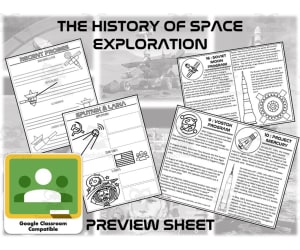
The History of Space Exploration - Complete Unit
Social Studies, Science, Technology, Engineering, Earth and Environmental Sciences, Space, Not Grade Specific, Lesson Plans, Teacher Tools
The History of Space Exploration - Complete Unit A comprehensive teaching resource designed to immerse students in the world of space exploration. This course traces the roots of rocket science and space travel from early stages to future plans for the 21st century, making it an ideal tool for educators planning semester-long courses or even year-round elective studies. This complete unit comprises: 27 carefully planned lessons that cover a range of themes Exploration into basic physics principles behind rockets and spaceflight Detailed biographies on key figures like Robert H. Goddard and Wernher Von Braun An analysis on leaps made by USSR and USA in launching their first satellites Case studies about significant milestones like Sergei Korolev's efforts with the R-7 Rocket, Sputnik's historic launch, Laika’s journey etc, An insight into more recent achievements such as Space Shuttles history or Mars rovers discoveries etc, Each lesson is thoughtfully arranged; along with reading material, question sheets to reinforce understanding. It also guides on how PowerPoint can be used effectively are provided making teaching tech-savvy. Suitable across varied grades, this package could be used in subjects such as Social Studies & Science focusing on Technology Engineering & Astronomy as well..It could be applied in whole group exercises, one-on-one sessions or even homework assignments to cater all educational needs In conclusion The History of Space Exploration - Complete Unit promotes:/p In-depth learning while keeping students engaged, Adventure through cosmos' mysteries, Alliances & rivalries created during this exploration, Strides we as humankind have made towards mapping the stars.
Author Mr Gray History
Tags Space Exploration, Rockets, History, Astronauts, Future Plans

All About Invertebrates | Animated Animals Video Lesson
Science, Life Sciences, Animals, Grade 3, 4, 5, 6, 7, Lesson Plans, Teacher Tools
All About Invertebrates | Animated Animals Video Lesson This product is an engaging and educational tool suitable for students from grade 3 to grade 7 (ages 8-12). It focuses on the exciting domain of invertebrates, beautifully merging zoology and animal science. The package includes one MP4 video file. The video lesson aims at stimulating interest and creating understanding among students about animals without backbones. Its creative animations offer a captivating journey into the lives of these diverse organisms, providing both education and entertainment over a duration of six minutes. Application and Versatility A Solution for Various Learning Environments or Teaching Strategies: It can be integrated seamlessly into different teaching scenarios - whole-group instruction, independent study periods etc. An Aid for Homeschoolers or Remote Learners: Serves as a visual aid simplifying complex topics like animal classification at manageable lengths. A Tool for Small Group Sessions: Can be used by teachers focusing on proficiency areas with particular groups of pupils. Creative Homework Material Contribution: An effective resource to review learned materials outside the classroom setting. Beyond Ordinary Understanding This resource exceeds just a basic understanding, it stimulates real-world application thereby significantly increasing relevance. 'All About Invertebrates | Animated Animals Video Lesson' offers deep insight with special emphasis on keeping learning fun – an indispensable asset beyond standard textbooks but still within curriculum mandates! Whether you happen to be an educator or homeschooling parent aiming at creating engaging ways to teach scientific concepts then this lesson is perfect!
Author Educational Voice
Tags Invertebrates, Zoology, Animal Science, Animated Video Lesson, Engaging Content

Global Warming REDUCTION: Lowering Your Greenhouse Gas Emissions - FLASH-PC
Science, Earth and Environmental Sciences, Environmental Science, Common Core, Grade 5, 6, 7, 8, Teacher Tools, Lesson Plans
Global Warming REDUCTION: Lowering Your Greenhouse Gas Emissions - FLASH-PC An insightful resource that empowers educators in teaching their students a vital aspect of our world's current environmental circumstances. This chapter mini focuses on the understanding of the essential practices to lower greenhouse gas emissions as part of global warming reduction measures. Aligned specifically to Grades 5 to 8, it focuses attention towards environmental science. This teaching toolbox encompasses: Reading passages Comprehension activities for use both before and after reading Vocabulary flash cards Interactive elements such as video and audio materials. CATAPULT prepares supplementary printables that can be utilized for either on-site learning sessions such as whole class or small group activities or off-site reinforcements through homework assignments, allowing teachers to tailor-fit instructions based on the students' diverse learning needs and styles. The inclusion of vocabulary flash cards aids in simplifying complex terms into an approachable lexicon, fostering a higher level understanding while nurturing better information recall ability among students. Awareness towards global events In summary, 'Global Warming REDUCTION: Lowering Your Greenhouse Gas Emissions - FLASH-PC', harnesses 21st-century pedagogy; immerses students into valid societal discussions about environmental preservation stimulating not only academic growth but also awareness appreciation towards staying connected with the world's current events. Adherence ardently to Common Core State Standards leveraging Bloom's Taxonomy’s model propelling higher-order thinking skills helps educators design effective instructional strategies appropriating this software-based product onto their lesson plans effectively. .
Author Classroom Complete Press
Tags Software (PC)

I WONDER - Are There Different Types Of Volcanoes | Animated Video
Geography, Social Studies, Environmental Science, Earth and Environmental Sciences, Science, Earth Sciences, Grade 3, 4, 5, 6, 7, 8, 9, Lesson Plans, Teacher Tools
Video Introduction An amazing video designed for the students to learn more about natural disasters in different countries. I WONDER - Are There Different Types Of Volcanoes | Animated Video Lesson What do you know about this natural disaster? Do you know in which part of the world this could happen? Have you ever read about the safety misusers that we could have to protect ourselves from this natural disaster? If yes, can you tell us more about them? Can you name other natural disasters? If yes, tell us more about where they are likely to happen? And how frequently? Do you like reading about Geography? What is your favorite country in the whole world? If you are going on a trip where it will be? Which country? What you are going to see there? Does this country has a famous place to visit? Do you like reading about Geology? If yes, what is your favourite topic? I WONDER - Are There Different Types Of Volcanoes | Animated Video Lesson The video is perfect for encouraging the researching skills for the students, while learning more about this fantastic phenomenon. I WONDER - Are There Different Types Of Volcanoes | Animated Video Lesson This friendly designed video is suitable for students at school, homeschooling, and as a group activity. Format Available in MP4 format.
Author Educational Voice
Tags Are There Different Types Of Volcanoes, Are There Different Types Of Volcanoes Video, Different Types Of Volcanoes, Different Types Of Volcanoes Facts, Different Types Of Volcanoes Video, Different Types Of Volcanoes Video For Kids

Dinosaur Activities - Are Dinosaurs and Birds Related?
Research, Science, Life Sciences, Animals, Biology, Elementary, High School, Homeschool Resources, Middle School, Centers, Activities, Projects, Lesson Plans, Teacher Tools
Are Birds and Dinosaurs Related? This activity pack helps students explore the scientific evidence behind the connection between birds and dinosaurs. Instead of simply presenting one viewpoint, this resource encourages students to analyze the evidence and form their own conclusions. I developed this project with my son, who has Autism, in mind. He struggles with writing and organizing his thoughts on paper. Using sorting mat activities reduced frustration and made learning more engaging. As a result, I began creating similar resources to help other teachers and parents make learning more interactive and enjoyable. What’s Included in This Activity Pack? Sorting Activities – Helps students categorize and compare information. Research and Writing Assignments – Encourages deeper exploration and evidence-based conclusions. Critical Thinking Development – Supports analytical thinking skills. Dinosaur Recognition Practice – Reinforces knowledge of different dinosaur types. Comparison of Bird-Hipped vs. Lizard-Hipped Dinosaurs – Explores their significance in relation to evolutionary theory. Bonus Activities: Realistic Dinosaur Coloring Pages Dinosaur Information Sheets for guided research Total: 41 Pages Learning Objectives By completing all activities, students will: Identify and describe at least one difference between bird-hipped and lizard-hipped dinosaurs. Name at least two bird-hipped and two lizard-hipped dinosaurs. List at least two facts about Archaeopteryx. Compare feathers and scales by identifying at least two key differences. Explain the difference between cold-blooded and warm-blooded animals. Research both sides of the "birds from dinosaurs" debate and write a five-paragraph report comparing bird-hipped and lizard-hipped dinosaurs. Analyze whether the evidence logically supports the idea that birds evolved from dinosaurs. This resource provides structured, hands-on learning that supports student inquiry and engagement.
Author Homeschooling Dietitian Mom
Tags Dinosaurs, Evolution, Birds, Hands-on Activities, Critical Thinking, Creation, Dinosaur, Dinosaur Activities, Dinosaur To Bird Evolution

I WONDER - What Industries Use Lasers | Animated Video Lesson
Physics, Science, Grade 6, 7, 8, 9, 10, 11, 12, Lesson Plans, Teacher Tools
Video Introduction An amazing activity designed for the students to learn more about STEM. I WONDER - What Industries Use Lasers | Animated Video Lesson Do you like STEM subjects? what is your favorite one? Have you ever tried to plant a seed? If yes, tell us more about it. Or have you ever tried to invent something? If yes, tell us more about it. And how do you think it will help us? Have you ever seen a microorganism under a microscope? What was it? And how it looked like? Mathematics is a marvelous subject. Let' sharpen our brains and solve some equations. Do you like timetable tricks? What is your favorite one? Do you know how to code? Have you ever created an app or a game before? If yes, how was it like? I WONDER - What Industries Use Lasers | Animated Video Lesson The video is perfect for encouraging the researching skills for the students, while learning more about this fantastic topic. I WONDER - What Industries Use Lasers | Animated Video Lesson This friendly designed video is suitable for students at school, homeschooling, and as a group activity. Format Available in MP4 format.
Author Educational Voice
Tags What Industries Use Lasers, What Industries Use Lasers Video, Industries, Laser Industries, Laser Industries Facts, Laser Industries Facts For Kids, Laser Industries Video, Laser Industries Video For Kids

I WONDER - How Do You Know When Your Stomach Is Full | Animated Video
Human Body, Life Sciences, Science, Biology, STEM, Grade 1, 2, 3, 4, 5, 6, 7, 8, Lesson Plans, Teacher Tools
Video Overview The human body is full of fascinating wonders to learn. This video is created to help the students recognize the anatomy and the job of the human body. I WONDER - How Do You Know When Your Stomach Is Full | Animated Video Lesson Every part and organ in our human body is vital so let's see how important they are. Have you ever imagined how we look like if we didn't have a skeleton? Did you know that because we have our amazing muscles we can stand! Do you know how many teeth do we have? Have you ever wondered about the food journey inside our body? Can you name all the glands in our body? Why do we have skin? Our nervous system is really good at sending signals. Can you tell us more about it? Are you really good at Mathematics, painting, or any other thing? You should really thank your brain about it! The famous five senses are really doing a great work? Can you explain how every sense works? I WONDER - How Do You Know When Your Stomach Is Full | Animated Video Lesson The video is perfect for encouraging the researching skills for the students, while learning more about our fantastic human body. I WONDER - How Do You Know When Your Stomach Is Full | Animated Video Lesson This friendly designed video is suitable for students at school, homeschooling, and as a group activity. Format Available in MP4 format.
Author Educational Voice
Tags How Do You Know When Your Stomach Is Full, How Do You Know When Your Stomach Is Full Video, Stomach, Stomach Facts, Stomach Facts For Kids, Stomach Video, Stomach Video For Kids, Stomach Is Full
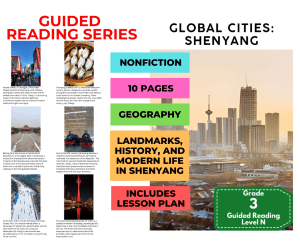
Guided Reading Level N - Shenyang (with Lesson Plan)
ELA, Resources for Teachers, Reading Comprehension, Reading, Social Studies, Geography, History, Earth and Environmental Sciences, Science, Economics, Grade 2, 3, 4, Worksheets & Printables, Worksheets, Teacher Tools, Centers, Activities, Literacy Readers, Quizzes, Quizzes and Tests, Assessments, Lesson Plans
This Guided Reading Book - Shenyang (Level N) with lesson plan includes: Guided Reading Color Label (front cover x1) This is a quick way to match the book’s demands to what students can generally handle.. The overall goal is to use the level/color to pick books for several smaller groups. To qualify for a certain level, a student is expected to read a book from that level with about 90–94% accuracy. If a student is consistently accurate and understands, move up a level. If the student is struggling at that level, drop down and add more support. Each student will improve at completely different rates, but it is generally one of the best ways to check progress across the class. DOWNLOAD THE CATALOG TO VIEW ALL GUIDED READING BOOKS AVAILABLE (SORTED LEVELS A-Z) Pre-Reading Question (x1) Teacher asks the prompt aloud, can be while showing the cover or first page. Students share what they already know, or make educated guesses from the cover. Prompt them to use the target vocabulary. Write some of their responses on the board to look back at during the reading. Vocabulary Words (x5) Introduce the five words, best doing it one at a time. Start by saying it, while students repeat and then see if anyone knows what it means before reading further. Read through the meaning and try to briefly connect each word to a picture or gesture so it’s meaningful. Ask students to flip through the book pages and point to where they see each of the vocabulary words. While reading the book pause upon coming across one of the vocab words or read the sentence twice to make sure students understand the word has appeared. Optional: Ask students to raise hands whenever they see/hear one of the new words. Guided Reading Pages (x10) Check the book snapshot (below) for: primary topic - do you need to prep extra reading or intro materials on this? what is taught best - decide on 1-2 bullets to focus on, use the prompt or words provided here for best results. learning goals - what you are checking for students to be able to do after the session, elicit answers using prompts or words provided. key vocabulary (see section above). questions overview - so you know what is coming up and if you need to prep extra materials to assist understanding. Run the lesson You may have already looked at a few of the pages together, but you can show them some of the pictures again first to set meaning. Depending on how much time you have and how familiar your students are with guided reading class, you may want to read the book aloud first with the group first. Students whisper or partner read, while you listen in. If time, do it as a group, one student reading a page each. Use the guided page’s prompts to coach: “Check the picture / does it make sense?” “Point under the words / try the first sound” “Reread the sentence smoothly”. Try to focus more on one student per session (rotating every time), so you can work out if they are ready to move up or need to move down a level. Comprehension Questions (back cover x3) This is your way to check that students didn’t just say the words, but actually understood the text. First, let students answer by pointing to the page/picture and saying a short sentence. After any answer, follow with: “Show me where you found that in the text.” In bigger groups, have partners answer first (10–20 seconds), then call on 2–3 students to share. Differentiation tips: Emerging speakers/struggling readers: oral + pointing On-level: oral in a full sentence Higher: one written sentence or draw + label Book Snapshot Title: Global Cities: Shenyang Genre: Nonfiction (informational text) Subject: Social Studies (Geography/Culture) Primary Topic: Landmarks, history, and modern life in Shenyang Estimated Guided Reading Level (A–Z): N What This Book Teaches Best Identifies Shenyang’s location and role (largest city in Northeast China; capital of Liaoning province) and connects it to major waterways in the Liaohe River Basin. Highlights historical heritage through major sites like the Shenyang Imperial Palace (built in 1625; early residence for Qing emperors) and Beiling Park/Northern Mausoleum. Explains how Shenyang developed as an industrial powerhouse , including the Tiexi District’s factory history and preserved museum sites. Shows how a city can blend old and new (Middle Street’s long history alongside modern malls; modern landmarks like the TV Tower and lit-up riverfront). Describes how climate shapes culture , including long, snowy winters and yearly ice-sculpture displays in parks. Learning Goals Identify what the text says Shenyang is the capital of. Describe how rivers and basins are connected to Shenyang’s location and development in the text. Explain what the Shenyang Imperial Palace was used for in the past, based on the text. Describe one way Shenyang’s industry shaped the city in the 20th century. Describe how Shenyang’s winters influence activities and traditions mentioned in the book. Identify one modern landmark or development in Shenyang and tell what the text says about it. Key Vocabulary From the Text situated — located in a certain place. heritage — important history and traditions remembered and protected. mausoleum — a large building where someone is buried. powerhouse — a place important for producing something. metropolitan — connected to a big city and nearby areas. Printing Tips 1. Best Printing Method (Recommended) “Booklet” Printing (Best if Available) If your printer or PDF viewer supports Booklet Printing , use this. Settings to use: Print mode: Booklet Paper size: Letter or A4 (either works) Orientation: Landscape Print on both sides: Yes Flip on: Short edge Scaling: Fit to printable area Booklet subset: First test: Front sides only Then: Back sides only This will automatically: Pair pages correctly Put the cover on the outside Align everything for folding After printing, fold in half and staple along the spine . 2. If “Booklet” Printing Is NOT Available You can still print this correctly with manual duplex printing . Step-by-step: Open the PDF. Choose Print . Set: Orientation: Landscape Pages per sheet: 1 Print on both sides: Yes Flip on: Short edge Print all pages . Because each PDF page already contains two facing book pages, the result will still fold cleanly into a book. Thousands of Cored Education products are included with your TeachSimple membership. Download links and encyclopedia index available here.
Author Cored Education
Rating
Tags Reading Comprehension, Reading Passages, Reading, Guided Reading, Guided Reading Lesson Plan, Guided Reading Activity, Pre-reading, Social Studies Lesson Plans, Geography, History

I WONDER - When Does Wind Occur | Animated Video Lesson
Earth Sciences, Earth and Environmental Sciences, Science, Grade 4, 5, 6, 7, 8, 9, 10, Lesson Plans, Teacher Tools
Video Introduction An amazing video designed for the students to learn more about famous phenomena in different countries. I WONDER - When Does Wind Occur | Animated Video Lesson What do you know about this phenomenon? Where it happens? When it happens? What are the safety measures that we should take to be safe during this phenomenon? Are there any other places in the world that experienced this phenomenon? If yes, tell us more about them. Why do you think it happens? Do you like reading about Geography? What is your favorite country in the whole world? I WONDER - When Does Wind Occur | Animated Video Lesson The video is perfect for encouraging the researching skills for the students, while learning more about this fantastic phenomenon. I WONDER - When Does Wind Occur | Animated Video Lesson The video is perfect for encouraging the researching skills for the students, while learning more about this fantastic phenomenon. Format Available in a PDF format.
Author Educational Voice
Rating
Tags When Does Wind Occur, When Does Wind Occur Video, Wind, Wind Facts, Wind Video, Wind Facts For Kids, Wind Video For Kids, Winds, Winds Facts, Winds Video

History of the Domestic Dog: Guided Reading Level R with Lesson Plan
ELA, Resources for Teachers, Reading Comprehension, Reading, Science, Language Development, Life Sciences, Vocabulary, History, Social Studies, Grade 3, 4, 5, Worksheets & Printables, Worksheets, Teacher Tools, Centers, Activities, Literacy Readers, Quizzes, Quizzes and Tests, Assessments, Lesson Plans
This History of the Domestic Dog (level r) guided reading book with lesson plan includes: Guided Reading Color Label (front cover x1) This is a quick way to match the book’s demands to what students can generally handle.. The overall goal is to use the level/color to pick books for several smaller groups. To qualify for a certain level, a student is expected to read a book from that level with about 90–94% accuracy. If a student is consistently accurate and understands, move up a level. If the student is struggling at that level, drop down and add more support. Each student will improve at completely different rates, but it is generally one of the best ways to check progress across the class. DOWNLOAD THE CATALOG TO VIEW ALL GUIDED READING BOOKS AVAILABLE (SORTED LEVELS A-Z) Pre-Reading Question (x1) Teacher asks the prompt aloud, can be while showing the cover or first page. Students share what they already know, or make educated guesses from the cover. Prompt them to use the target vocabulary. Write some of their responses on the board to look back at during the reading. Vocabulary Words (x5) Introduce the five words, best doing it one at a time. Start by saying it, while students repeat and then see if anyone knows what it means before reading further. Read through the meaning and try to briefly connect each word to a picture or gesture so it’s meaningful. Ask students to flip through the book pages and point to where they see each of the vocabulary words. While reading the book pause upon coming across one of the vocab words or read the sentence twice to make sure students understand the word has appeared. Optional: Ask students to raise hands whenever they see/hear one of the new words. Guided Reading Pages (x10) Check the book snapshot (below) for: primary topic - do you need to prep extra reading or intro materials on this? what is taught best - decide on 1-2 bullets to focus on, use the prompt or words provided here for best results. learning goals - what you are checking for students to be able to do after the session, elicit answers using prompts or words provided. key vocabulary (see section above). questions overview - so you know what is coming up and if you need to prep extra materials to assist understanding. Run the lesson You may have already looked at a few of the pages together, but you can show them some of the pictures again first to set meaning. Depending on how much time you have and how familiar your students are with guided reading class, you may want to read the book aloud first with the group first. Students whisper or partner read, while you listen in. If time, do it as a group, one student reading a page each. Use the guided page’s prompts to coach: “Check the picture / does it make sense?” “Point under the words / try the first sound” “Reread the sentence smoothly”. Try to focus more on one student per session (rotating every time), so you can work out if they are ready to move up or need to move down a level. Comprehension Questions (back cover x3) This is your way to check that students didn’t just say the words, but actually understood the text. First, let students answer by pointing to the page/picture and saying a short sentence. After any answer, follow with: “Show me where you found that in the text.” In bigger groups, have partners answer first (10–20 seconds), then call on 2–3 students to share. Differentiation tips: Emerging speakers/struggling readers: oral + pointing On-level: oral in a full sentence Higher: one written sentence or draw + label Book Snapshot Title: The Science and History of the Domestic Dog Genre: Nonfiction (informational) Subject: Life Science Primary Topic: Domestication, traits, and roles of dogs Estimated Guided Reading Level (A–Z): R What This Book Teaches Best Explains dogs’ biological connection to gray wolves , including shared DNA and instincts tied to social behavior and communication. Describes the history of domestication and how human artificial selection led to many distinct dog breeds. Uses specific evidence to show why dogs have exceptional smell and hearing (brain structures, scent receptors, and hearing frequencies). Shows how selective breeding creates specialists for different jobs (speed, herding, cold-weather survival, and service work). Teaches how to read dog communication signals (tail wag speed/height, ear position, facial muscles, back posture). Learning Goals Explain how the text connects domestic dogs to gray wolves using specific evidence (classification and DNA). Describe how domestication began and how humans’ breeding choices created many breeds over time. Identify details that show why dogs can smell better than humans (olfactory bulb and scent receptors). Identify details that show why dogs can hear better than humans (frequencies and ear muscles). Compare at least two breeds in the text by explaining how traits match their work or environment (speed, herding, cold climate, service). Describe what the text says people can look for to understand a dog’s emotional state. Key Vocabulary From the Text subspecies — a smaller group within a kind of animal. domestication — animals becoming used to living with people. olfactory — having to do with smell. frequencies — how high or low a sound is. resilient — able to handle hard conditions and keep going. Discussion Prompts Pre-reading question: What jobs or tasks have you seen dogs do for people? Comprehension questions: According to the text, how are domestic dogs connected to gray wolves? Comprehension questions: What evidence does the text give to show how powerful a dog’s sense of smell is? Comprehension questions: What signs does the text say people can look for to understand a dog’s emotional state? Printing Tips 1. Best Printing Method (Recommended) “Booklet” Printing (Best if Available) If your printer or PDF viewer supports Booklet Printing , use this. Settings to use: Print mode: Booklet Paper size: Letter or A4 (either works) Orientation: Landscape Print on both sides: Yes Flip on: Short edge Scaling: Fit to printable area Booklet subset: First test: Front sides only Then: Back sides only This will automatically: Pair pages correctly Put the cover on the outside Align everything for folding After printing, fold in half and staple along the spine . 2. If “Booklet” Printing Is NOT Available You can still print this correctly with manual duplex printing . Step-by-step: Open the PDF. Choose Print . Set: Orientation: Landscape Pages per sheet: 1 Print on both sides: Yes Flip on: Short edge Print all pages . Because each PDF page already contains two facing book pages, the result will still fold cleanly into a book. Thousands of Cored Education products are included with your TeachSimple membership. Download links and encyclopedia index available here.
Author Cored Education
Rating
Tags Reading Comprehension, Reading Passages, Reading, Guided Reading, Guided Reading Lesson Plan, Guided Reading Activity, Pre-reading, Science Lesson Plans, Life Science, History