



3,924 products added recently
Page 76 - Science Lesson Plans
Bring science to life with lesson plans that cover biology, chemistry, physics, and more. These resources offer experiments and interactive lessons to stimulate curiosity. Implement them to foster a deep understanding of scientific principles and a passion for discovery.

 Show filters

I WONDER - Why Is It Important To Recycle Aluminum | Animated Video
Environmental Science, Earth and Environmental Sciences, Science, Grade 4, 5, 6, 7, 8, 9, 10, Lesson Plans, Teacher Tools
Video Introduction An amazing video designed for the students to learn more about STEM. I WONDER - Why Is It Important To Recycle Aluminum | Animated Video Lesson Do you like STEM subjects? what is your favorite one? Have you ever tried to plant a seed? If yes, tell us more about it. Or have you ever tried to invent something? If yes, tell us more about it. And how do you think it will help us? Have you ever seen a microorganism under a microscope? What was it? And how it looked like? Mathematics is a marvelous subject. Let' sharpen our brains and solve some equations. Do you like timetable tricks? What is your favorite one? Do you know how to code? Have you ever created an app or a game before? If yes, how was it like? I WONDER - Why Is It Important To Recycle Aluminum | Animated Video Lesson The video is perfect for encouraging the researching skills for the students, while learning more about this fantastic topic. I WONDER - Why Is It Important To Recycle Aluminum | Animated Video Lesson This friendly designed video is suitable for students at school, homeschooling, and as a group activity. Format Available in MP4 format.
Author Educational Voice
Tags Why Is It Important To Recycle Aluminum, Why Is It Important To Recycle Aluminum Video, Recycling Aluminum, Recycling Aluminum Facts, Aluminum Recycling, Aluminum Recycling Video, Aluminum Recycling Facts
I WONDER - How Are Cells Structured | Animated Video Lesson
STEM, Human Body, Life Sciences, Science, Biology, Grade 6, 7, 8, 9, 10, 11, 12, Lesson Plans, Teacher Tools
Video Overview The human body is full of fascinating wonders to learn. This video is created to help the students recognize the anatomy and the job of the human body. I WONDER - How Are Cells Structured | Animated Video Lesson Every part and organ in our human body is vital so let's see how important they are. Have you ever imagined how we look like if we didn't have a skeleton? Did you know that because we have our amazing muscles we can stand! Do you know how many teeth do we have? Have you ever wondered about the food journey inside our body? Can you name all the glands in our body? Why do we have skin? Our nervous system is really good at sending signals. Can you tell us more about it? Are you really good at Mathematics, painting, or any other thing? You should really thank your brain about it! The famous five senses are really doing a great work? Can you explain how every sense works? I WONDER - How Are Cells Structured | Animated Video Lesson The video is perfect for encouraging the researching skills for the students, while learning more about our fantastic human body. I WONDER - How Are Cells Structured | Animated Video Lesson This friendly designed video is suitable for students at school, homeschooling, and as a group activity. Format Available in MP4 format.
Author Educational Voice
Tags How Are Cells Structured, How Are Cells Structured Video, Cells Structure, Cells Structure Facts, Cells Structure Facts For Kids, Cells Structure Video, Cells Structure Video For Kids, Cell, Cells

Cosmic Quest A Middle Schooler's Journey into Space Exploration, Alien
Life Skills, Special Resources, Social Emotional Learning (SEL), Science, Research, Space, Earth and Environmental Sciences, Environmental Science, Earth Sciences, Geology, Grade 6, 7, 8, 9, 10, 11, 12, Lesson Plans, Teacher Tools, Assessments, Experiments, Activities, Labs
Embark on an extraordinary travel through the cosmos with `` Cosmic Quest, '' the ultimate middle school guide to space geographic expedition, alien living search, and the universe 's deepest mysteries. Written specifically for class 6-9 ( ages 11-15 ), this thorough 338-page resource transforms composite astronomical concepts into engaging, accessible knowledge. Usually, from our solar system 's fiery planets to distant galaxies, from the Big Bang to the hunting for extraterrestrial life, `` Cosmic Quest '' covers everything a Young space enthusiast needs to know. Frankly, with 90 meticulously organized chapters, students will explore planetary science, astrobiology, NASA 's Artemis program, Mars rover discoveries, exoplanet research, and future space technologies. Perfect for classroom use, homeschool curricula, or independent study, this volume aligns with Next Generation skill Standards ( NGSS ) while sparking genuine curiosity about STEM fields. Now, here's where it gets good: each chapter includes clear explanations, stunning cosmic phenomena, and real-world connections to current infinite mission happening right now. Whether your student dreams of becoming an astronaut, astronomer, or simply gazes at the stars with wonder, `` Cosmic Quest '' provides the foundational noesis and inspiration for their scientific journey. The volume also includes essential career guidance for space-related professions, making it both educational and aspirational. Why Parents/Schools Love It: • detailed & Curriculum-Aligned: Covers 90 essential infinite science topics matching center schoolhouse standards, saving teachers planning time while ensuring complete coverage • Future-Focused & stream: Includes NASA missions ( Artemis, Mars exploration ), James Webb Telescope discoveries, and private space industry developments • Career-Inspiring: Dedicated chapters on space careers ( astronauts, engineers, scientists ) connect learning to real-world opportunities • Accessible Yet Rigorous: Makes complex concepts like dark matter, exoplanet detection, and exobiology understandable without `` dumbing down '' the science • Multi-Platform Ready: Perfect for classroom instruction, independent assess, homeschool curricula, and science fair project brainchild mark Audience Analysis: Primary Target: Grades 6-9 ( Ages 11-15 ) centre school science classrooms Homeschool students Gifted and talented programs for grades 5-7 Science club resources Library collections for young adults Secondary Target: Advanced elementary students ( grades 4-5 ) with strong reading skills High schoolhouse student ( grades 9-10 ) postulate foundational astronomy review Parents seeking educational enrichment materials instructor needing supplemental infinite skill resource Copyright/Terms of Use: This Book was copyrighted by Syed Hammad Rizvi. Often, this resource is for personal and single classroom use only. You may not alter, redistribute, or sell any part of this resource. In other words, you may not put it on, kind of, the Internet where it could be publicly found and downloaded. Also, if you want to share this resource with colleagues, please purchase additional licenses from Teachsimple. Thank you for respecting these terms of use. This product is happily brought to you by Syed Hammad Rizvi
Author Creative Book Store
Rating
Tags CosmicQuest, SpaceScienceBook, MiddleSchoolSTEM, AstronomyForKids, ScienceEducation, HomeschoolResources, NGSS, SpaceExploration, AlienLifeSearch, STEMBooks
I WONDER - What Is Tundra | Animated Video Lesson
Environmental Science, Earth and Environmental Sciences, Science, Grade 6, 7, 8, 9, 10, 11, 12, Lesson Plans, Teacher Tools
Video Introduction An amazing video designed for the students to learn more about STEM. I WONDER - What Is Tundra | Animated Video Lesson Do you like STEM subjects? what is your favorite one? Have you ever tried to plant a seed? If yes, tell us more about it. Or have you ever tried to invent something? If yes, tell us more about it. And how do you think it will help us? Have you ever seen a microorganism under a microscope? What was it? And how it looked like? Mathematics is a marvelous subject. Let' sharpen our brains and solve some equations. Do you like timetable tricks? What is your favorite one? Do you know how to code? Have you ever created an app or a game before? If yes, how was it like? I WONDER - What Is Tundra | Animated Video Lesson The video is perfect for encouraging the researching skills for the students, while learning more about this fantastic topic. I WONDER - What Is Tundra | Animated Video Lesson This friendly designed video is suitable for students at school, homeschooling, and as a group activity. Format Available in MP4 format.
Author Educational Voice
Tags What Is Tundra, What Is Tundra Video, Tundra, Tundra Facts, Tundra Facts For Kids, Tundra Video, Tundra Video For Kids, Educational Video, Educational Video For Kids, Science
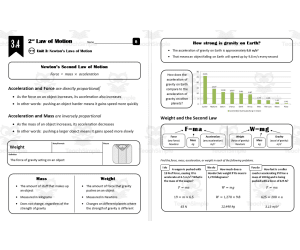
Lesson 3.4 - Newton's 2nd Law of Motion (F=ma)
Science, Chemistry, Physics, Grade 6, 7, 8, 9, 10, 11, 12, Lesson Plans, Teacher Tools
Lesson 3.4 - Newton's 2nd Law of Motion (F=ma) This comprehensive teaching resource is perfect for educators teaching physics to students between grades six through twelve. The lesson introduces the relationship and concepts between force, mass, and acceleration (F=ma), while also elaborating on the connection to the equation W = mg. Included Materials: Lecture notes Practice sheets Activities PowerPoint presentations prepared for classroom use. The package extends beyond theoretical knowledge, helping learners develop practical skills with engaging activities such as F=ma practice stations where group-based learning is encouraged. Fundamental Product Features: The lecture notes cover Newton's Second Law and its applications in solving problems relating to motion. Its easy-to-understand explanation fits into any curriculum or homeschooling module dedicated to introducing physics. Note Worksheets: A version with fill-in-the-blanks for class participation. An alternate completed version catering specifically for absentees or learners needing extra help. Creative Activities: Inclusive are collaborative exercises like calculating one's weight on moon using given formulas provided within classroom settings guiding curiosity-led exploration aiding understanding beyond books' boundaries. Supplementary materials include Weight Practice cards represented as playful riddles stimulating learner engagement enhancing critical thinking abilities severely. Provided also are PowerPoint Notes structured facilitatively serving error-free content delivery during classes framing science picturesquely nurturing students' Physics interest contributing towards understanding abstract scientific phenomena emphatically supporting classroom varied learning styles therefore enabling differentiated instruction within traditional schooling establishments or home-school set-ups alike. The academic resources comply with many requirements of the Indiana State Standards encapsulating modern pedagogical methodologies. All files are readily available in .docx or .pptx formats ensuring easy customization, while non-editable versions are preserved in universally accessible PDF format for straightforward usage.
Author Integrated Chemistry and Physics
Tags Newton's Laws, Force And Motion, F=ma, Weight Practice, Physics
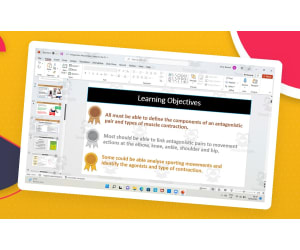
Antagonistic Muscle Pairs
Science, Life Sciences, Human Body, Grade 9, 10, Lesson Plans, Presentations
Antagonistic Muscle Pairs is a resource developed for educators who are reaching beyond the boundaries of their teaching strategies in human body science, specifically on the topic of antagonistic muscle pairs. The Primary Learning Objective This learning tool aims to assist students in understanding and defining the complex mechanisms involved within an antagonistic pair and the types of muscle contractions. As learners explore this resource further, they'll gain mastery in linking antagonistic pairs with movement actions at various parts of our bodies including: The elbow Knee Ankle shoulder and hip. Inquisitive or advanced learners can extend their understanding by analyzing different sporting movements and identifying agonists as well as contraction types. User-Friendly Format for Seamless Absorption of Information Our material comprises 31 meticulously crafted slides bundled into an easy-to-understand PowerPoint presentation suitable for screen-sharing during online sessions or projected onto whiteboards in classic classroom settings. What's more? Within seconds, your entire lesson plan stands prepared with this download. Tailored to Suit Different Educational Levels & Settings The primary target audience involves Grade 9-10 level science education concerning human body studies; however, educators can easily adjust the difficulty level to suit different grading standards. Whether you wish to use it during smaller work groups or wider scale general class discussions—you have multiple choices whether your preferred medium is traditional classrooms or distance learning setups online. Gearing Towards A Dynamic Learning Environment Coupled with In-depth Science Education In conclusion, Antagonistic Muscle Pairs PowerPoint presentation guarantees a dynamic learning coupled with scientific depth that caters both beginners & intermediate-level students alike without compromising complexity essential in understanding crucial components of the human body sciences curriculum objectives.
Author The PE Tutor
Tags Antagonistic Muscle Pairs, Human Body Science, Muscle Contractions, Movement Actions, Anatomy

I WONDER - What Is A Space Probe | Animated Video Lesson
Space, Earth and Environmental Sciences, Science, Grade 6, 7, 8, 9, 10, 11, 12, Lesson Plans, Teacher Tools
Video Introduction An amazing video designed for the students to learn more about space facts. I WONDER - What Is A Space Probe | Animated Video Lesson Do you like reading about space? If yes, what is your favorite topic? What do you know about our solar system? What is the smallest planet in our solar system? What is the biggest planet in our solar system? What is the hottest planet in our solar system? And what is the coldest one? Do you think there are aliens? If yes, what do you think they look like? What do they eat and how they speak to each other? Where do they live? What is a galaxy? And what is a milky way? Have you recently saw a shooting star? If yes, tell us more about it, like when did it happen and where? What is a blackhole? Can a blackhole gets bigger by time? Do you like counting the stars? What do you think a star is made of? I WONDER - What Is A Space Probe | Animated Video Lesson The video is perfect for encouraging the researching skills for the students, while learning more about the fantastic space. I WONDER - What Is A Space Probe | Animated Video Lesson This friendly designed video is suitable for students at school, homeschooling, and as a group activity. Format Available in MP4 format.
Author Educational Voice
Tags What Is A Space Probe, What Is A Space Probe Video, Space Probe, Space Probes, Space Probe Facts, Space Probe Facts For Kids, Space Probe Video, Space Probe Video For Kids, Space Probes Video

Climate Change: Effects: Climate and Human Health Gr. 5-8
Science, Earth and Environmental Sciences, Environmental Science, Grade 5, 6, 7, 8, Teacher Tools, Lesson Plans
Introduction Climate Change: Effects: Climate and Human Health Gr. 5-8 is an enlightening teaching resource appropriate for fifth to eighth graders. The material helps students comprehend the nuanced relationship between climate change, the environment, and human life. This teaching resource emphasizes both the scientific aspects of climate change as well as its wider implications. Historical Analysis An exciting feature of this instructional tool is its exploration of Earth's historical ice ages and how they have influenced early human societies' movements and lifestyles, offering learners a comprehensive view of how our collective past was shaped by shifting climates. Laboratory Experiments A unique attribute of this teaching aid is its hands-on laboratory-style experiments that use everyday items to demonstrate complex ideas simply and practically. For example, with a homemade melting ice sheet model, students can watch first-hand the effects on sea level rise—a hotly debated impact of climate change. Rising Sea Level Display Activity : This activity engages students visually as well as scientifically—an approach that suits various types of learners in both large class settings or smaller study groups. The lesson can be easily adapted either for classroom learning or homework assignments. This study material also examines contemporary issues tied up with earth's changing weather patterns—such as increase in extreme weather events due to atmospheric changes induced by global warming—an important concern that merits attention. Moreover,this material also explores health problems due to prevalent environmental changes—for instance, increase in mosquito-borne diseases because warm temperatures quicken mosquito reproduction cycles—an often overlooked aspect concerning cost associated with climate disruption caused by climatic changes. Economic Impacts And Concerns This resource also discusses economic impacts that can be caused by irregular climatic patterns which seriously harm agriculture—the major industry for many nations worldwide—providing critical insights towards understanding widespread sustainability concerns. Singular Ecosystem Scenario Finally, this tool zeroes in on a single ecosystem scenario—allowing students to dissect how climate change is interfering with its stability, a technique that promotes deeper learning as well as development of critical thinking skills. Fun Supplemental Activities Crossword puzzles, Word search activities, Comprehensive quizzes and , An answer key are included. , All these elements align with Bloom’s Taxonomy and STEAM initiatives standards —thus aiding learning retention while introducing a fun element to these serious topics. To sum up, the Climate Change: Effects: Climate and Human Health Gr. 5-8 teaching resource excels as being a versatile instructional tool for students in grades five through eight studying Environmental Science
Author Classroom Complete Press
Tags PDF
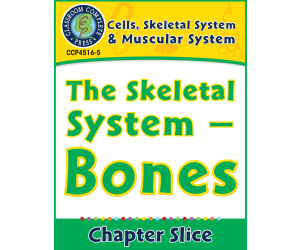
Cells, Skeletal & Muscular Systems: The Skeletal System - Bones Gr. 5-8
Science, Life Sciences, Human Body, Grade 5, 6, 7, 8, Teacher Tools, Lesson Plans
Cells, Skeletal & Muscular Systems: The Skeletal System - Bones Gr. 5-8 An instructive teaching resource, Cells, Skeletal & Muscular Systems: The Skeletal System - Bones Gr. 5-8 brings the human body to life in your classroom. Designed for students in grades 5 to 8, this science tool dives into detailed investigations of cells, tissues, organs and organ systems and provides both foundational and remedial understanding. In this lesson plan chapter, there's a special focus on the skeletal system, which functions as the supporting structure providing form and function to our bodies. Students will discover fascinating insights about bones, their composition and how they interconnect within the human structure. Table of Contents: The Comprehensive Analysis of Cells: This journey to acquaint with biology begins with a comprehensive analysis of cells—including their structures, functions and types expedition into specialized cells. The formation of Tissues from Individual Cells: Pupils will gain an enriched understanding about how individual cells form tissues which collectively create organs that work harmoniously within organ systems. An Understanding of Major Body Systems: Embedding aspects from eight major body systems-circulatory,respiratory,nervous,digestive excretory and reproductive. Tactile Learning Approach This resource includes specially-designed hands-on activities for tactile learners along with reading exercises strategically positioned before and after every core concept presentation that reinforces comprehension. Dedicated Teaching Resources To aid educators like you in various settings be it group lessons or small group discussions; homework tasks or test preparations, this package also provides a color mini poster visual aid. Each segment is followed by conversation points for intensifying the learning process. Compatibility and Conformance to Standards Thoughtfully sequenced according to Bloom's Taxonomy model using elements from STEM initiatives (Science Technology Engineering Mathematics), this comprehensive resource is compatible with state standards. In conclusion, Cells Skeletal & Muscular Systems: The Skeletal System - Bones Gr 5-8 doesn't just teach, it brings the microscopic world of cells and complexities of the human skeletal system into focus. It's more than just a teaching aide—it's an immersive journey of discovery within biology and human anatomy.
Author Classroom Complete Press
Tags PDF

I WONDER - What Foods Contain Protein | Animated Video Lesson
STEM, Biology, Life Sciences, Science, Human Body, Grade 3, 4, 5, 6, 7, 8, 9, Lesson Plans, Teacher Tools
Video Overview The human body is full of fascinating wonders to learn. This video is created to help the students recognize the anatomy and the job of the human body. I WONDER - What Foods Contain Protein | Animated Video Lesson Every part and organ in our human body is vital so let's see how important they are. Have you ever imagined how we look like if we didn't have a skeleton? Did you know that because we have our amazing muscles we can stand! Do you know how many teeth do we have? Have you ever wondered about the food journey inside our body? Can you name all the glands in our body? Why do we have skin? Our nervous system is really good at sending signals. Can you tell us more about it? Are you really good at Mathematics, painting, or any other thing? You should really thank your brain about it! The famous five senses are really doing a great work? Can you explain how every sense works? I WONDER - What Foods Contain Protein | Animated Video Lesson The video is perfect for encouraging the researching skills for the students, while learning more about our fantastic human body. I WONDER - What Foods Contain Protein | Animated Video Lesson This friendly designed video is suitable for students at school, homeschooling, and as a group activity. Format Available in MP4 format.
Author Educational Voice
Tags What Foods Contain Protein, What Foods Contain Protein Video, Foods That Contain Protein, Foods That Contain Protein Facts, Foods That Contain Protein Facts For Kids, Foods That Contain Protein Video
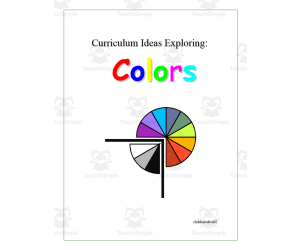
Colors Curriculum Pack
Creative Arts, Art, Social Studies, ELA, Language Development, Vocabulary, Math, Early Math, Science, Basic Science, Kindergarten, Lesson Plans, Teacher Tools
If your students are studying colors or are about to begin a colors unit, I have just the resource to provide you with everything you need and more! This is a Colors Curriculum Pack complete with an abundance of printable resources and engaging activities for students to complete. This curriculum was designed for your preschool students. The curriculum goal is to identify colors and explore and expand upon their knowledge of the concepts associated with the properties of, and creating different colors. The vocabulary that students will focus on is primary, secondary, diffused, light, opaque, translucent, dark, shades, rainbow, and spectrum. This curriculum will come with colors of the week (all colors) and a letter of the week (C). This curriculum pack includes: --Sensory Table Ideas --Art Activities --Cooking Experience --Community Time --Math Activities --Home/School Connection Ideas --Science Table Enrichments --Science Concepts/Activities --Prop Box Ideas/Dramatic Play Enrichments --Movement and Motor --Playground/Walk Activities --Transition/Waiting Ideas --Block Area Enrichments --Flannel Board --Teacher Made Enrichment Ideas --Field Trip Ideas --Supplemental Learning Ideas/Activities At the start of this pack, you will receive a list of supplies needed for activities and projects. The worksheets, activities, and tasks included in this pack are intended to be completed in a variety of formats – whole group, small group, and independent work. I hope you enjoy!
Author Learning Foundations
Tags Colors, Color Of The Week, Letter Of The Week, Math Activity, Sensory Table Ideas, Learning Foundations, Math Curriculum, Flannel Board, Art

I WONDER - What Is Pollination | Animated Video Lesson
Nature & Plants, Life Sciences, Science, Insects, STEM, Grade 5, 6, 7, 8, 9, 10, Lesson Plans, Teacher Tools
Video Introduction An amazing activity designed for the students to learn more about STEM. I WONDER - What Is Pollination | Animated Video Lesson Do you like STEM subjects? what is your favorite one? Have you ever tried to plant a seed? If yes, tell us more about it. Or have you ever tried to invent something? If yes, tell us more about it. And how do you think it will help us? Have you ever seen a microorganism under a microscope? What was it? And how it looked like? Mathematics is a marvelous subject. Let' sharpen our brains and solve some equations. Do you like timetable tricks? What is your favorite one? Do you know how to code? Have you ever created an app or a game before? If yes, how was it like? I WONDER - What Is Pollination | Animated Video Lesson The video is perfect for encouraging the researching skills for the students, while learning more about this fantastic topic. I WONDER - What Is Pollination | Animated Video Lesson This friendly designed video is suitable for students at school, homeschooling, and as a group activity. Format Available in MP4 format.
Author Educational Voice
Tags What Is Pollination, What Is Pollination Video, Pollination, Pollination Facts, Pollination Facts For Kids, Pollination Video, Pollination Video For Kids, Pollination Facts Video For Kids, Stem

Free Science Human Microbiome Vocabulary Interactive Review
Science, Life Sciences, Human Body, Basic Science, Grade 7, Teacher Tools, Lesson Plans
Human Microbiome Vocabulary Words to Review and Reinforce Definitions of the 7TH Grade Science curriculum . Students will learn and practice terms through definitions and characteristics. The engaging activity promotes collaboration and class discussion as students review terms definitions, and more with multiple visuals and learning formats like multiple choice questions, memory games, hang-man, and others. This versatile resource can be used for whole-group instruction, small-group practice, or independent work, just practice the words and then review them by choosing the correct one, it will self-correct you until you choose the correct answer Practice your Vocabulary with this Free Interactive Game Introduce young learners to a variety of visuals with this entertaining digital game. Students will see the names and images of different words and definitions; exercising visual memory and concentration. This self-checking activity can be played independently or as a whole class game projected on a smartboard. The vibrant slideshow stimulates engagement while building construction classification skills. students will build their knowledge of important terms and definitions while having fun playing games. This activity stimulates intelligence, builds concentration, reinforces letter recognition, improves spelling and pronunciation, and engagingly expands vocabulary. It's a perfect supplement for your lesson. Check our shop, material, and products for more interactive construction vocabulary reviews covering other topics like human microbiome, metabolism, and more grade levels in science and Spanish language arts. Download this versatile 32-slide PowerPoint today!
Author ShapeUp-N-Matematicas y Lenguaje
Tags SCIENCE, Human Microbiome, Bacteria, Infection, Microbiome , Microorganism, Cells, Antibiotic, Cell, Scientific Argument
I WONDER - What Is Special About A Peregrine | Animated Video Lesson
STEM, Biology, Life Sciences, Science, Animals, Grade 1, 2, 3, 4, 5, 6, 7, 8, Lesson Plans, Teacher Tools
Video Introduction Animal kingdoms are full of fascinating wonders to learn. This video is designed for the students to learn more about animals in different countries. I WONDER - What Is Special About A Peregrine | Animated Video Lesson Do you like animals? what is your favorite one? Do you own a pet? If yes, tell us more about it, like what its name? And what do you like most about it? What are the animal kingdoms? Can you write down the characteristics of each animal class like mammals, birds, reptiles, amphibian, fish and mollusks. Do you know that some animals can sing, can you name any of them? What is the largest and the smallest mammal in the world? What is the largest and the smallest bird in the world? What is the largest and the smallest fish in the world? I WONDER - What Is Special About A Peregrine | Animated Video Lesson The video is perfect for encouraging the researching skills for the students, while learning more about these fantastic animals. I WONDER - What Is Special About A Peregrine | Animated Video Lesson This friendly designed video is suitable for students at school, homeschooling, and as a group activity. Format Available in MP4 format.
Author Educational Voice
Tags What Is Special About A Peregrine, What Is Special About A Peregrine Video, Peregrine, Peregrine Facts, Peregrine Facts For Kids, Peregrine Video, Peregrine Video For Kids, Animal, Animals

Labelling Bones
Science, Life Sciences, Human Body, Grade 9, 10, Teacher Tools, Lesson Plans
Labelling Bones: A Teaching Resource Labelling Bones is an educational resource tailored for Grade 9 and Grade 10 Science educators, primarily focusing on the study of Anatomy. It provides an interactive learning approach to the intricate subject of the human skeletal system. A Comprehensive PowerPoint Lesson: This comprehensive PowerPoint lesson carefully details various significant bones in the human body. Spread across 30 well-planned slides, it offers a walkthrough of every major bone, highlighting each one's role in different sport functions. Main Learning Goals: The lesson starts by outlining the essential learning objectives, such as identifying major bones, accurately locating them on a skeleton, and relating bones to their functions in sports. These objectives allow students to assess their progress as they move along each slide. Versatile Teaching Tool: Labelling Bones is suitable for whole-class discussions where teachers guide students through each slide. However, it can also work efficiently when incorporated into small group activities or assigned as homework or individual study tasks—making it adaptable for multiple educational contexts. Presentation and Comprehension: The Labelling Bones lesson presents scientific knowledge using clear images combined with straightforward language—an approach particularly fitting for Grade 9-10 comprehension level. This clarity ensures that information is readily digestible while being thorough enough to instil fundamental anatomical concepts in students’ minds. The Value: In conclusion, this instructional resource equips teachers with a novel way to teach anatomy effectively and offers students an enriched understanding of the human skeletal system—facilitating deeper interaction between course content and learners towards lasting educational value.
Author The PE Tutor
Tags Bones, Anatomy, Skeletal System, Interactive Learning, Sports

I WONDER - How Many Bones Are There In The Body | Animated Video
Biology, Life Sciences, Science, Human Body, Grade 2, 3, 4, 5, 6, 7, 8, Lesson Plans, Teacher Tools
Video Overview The human body is full of fascinating wonders to learn. This video is created to help the students recognize the anatomy and the job of the human body. I WONDER - How Many Bones Are There In The Body | Animated Video Lesson Every part and organ in our human body is vital so let's see how important they are. Have you ever imagined how we look like if we didn't have a skeleton? Did you know that because we have our amazing muscles we can stand! Do you know how many teeth do we have? Have you ever wondered about the food journey inside our body? Can you name all the glands in our body? Why do we have skin? Our nervous system is really good at sending signals. Can you tell us more about it? Are you really good at Mathematics, painting, or any other thing? You should really thank your brain about it! The famous five senses are really doing a great work? Can you explain how every sense works? I WONDER - How Many Bones Are There In The Body | Animated Video Lesson The video is perfect for encouraging the researching skills for the students, while learning more about our fantastic human body.. I WONDER - How Many Bones Are There In The Body | Animated Video Lesson This friendly designed video is suitable for students at school, homeschooling, and as a group activity. Format Available in MP4 format.
Author Educational Voice
Tags How Many Bones Are There In The Body, How Many Bones Are There In The Body Video, Bones, Bone, Bones Facts, Bones Facts For Kids, Bones Video, Bones Video For Kids, Human Body
I WONDER - How Does A Water Wheel Work | Animated Video Lesson
Environmental Science, Earth and Environmental Sciences, Science, Grade 6, 7, 8, 9, 10, 11, 12, Lesson Plans, Teacher Tools
Video Introduction An amazing video designed for the students to learn more about STEM. I WONDER - How Does A Water Wheel Work | Animated Video Lesson Do you like STEM subjects? what is your favorite one? Have you ever tried to plant a seed? If yes, tell us more about it. Or have you ever tried to invent something? If yes, tell us more about it. And how do you think it will help us? Have you ever seen a microorganism under a microscope? What was it? And how it looked like? Mathematics is a marvelous subject. Let' sharpen our brains and solve some equations. Do you like timetable tricks? What is your favorite one? Do you know how to code? Have you ever created an app or a game before? If yes, how was it like? I WONDER - How Does A Water Wheel Work | Animated Video Lesson The video is perfect for encouraging the researching skills for the students, while learning more about this fantastic topic. I WONDER - How Does A Water Wheel Work | Animated Video Lesson This friendly designed video is suitable for students at school, homeschooling, and as a group activity. Format Available in MP4 format.
Author Educational Voice
Tags How Does A Water Wheel Work, How Does A Water Wheel Work Video, Water Wheel, Water Wheel Facts, Water Wheel Facts For Kids, Water Wheel Video, Water Wheel Video For Kids, Water

Breeding and Development | Animated Birds Video Lesson
Science, Life Sciences, Animals, Not Grade Specific, Lesson Plans, Teacher Tools
Breeding and Development | Animated Birds Video Lesson: A Teaching Resource The Breeding and Development | Animated Birds Video Lesson is a valuable teaching resource designed to broaden students' understanding of nature - focusing specifically on bird breeding and development. This resourceful 14-minute MP4 video captures the interest of learners across various age groups, emphasizing its versatility. Integrating Dynamic Learning Tools into Curriculum: Pulling this animated science video lesson into your curriculum can supplement traditional classroom sessions, fostering a more dynamic learning environment. The visual medium used in this video facilitates better comprehension among students. Tuning Science Education with Animation: The lessons are centered around Zoology, combining vital information with animation to create an 'edutaining' experience for the students. Teachers can utilise this tool in different ways including whole-group studies, small-group discussions, or even homework assignments betokening an innovative approach to home-study practices. Fostering Interests via Multimedia Learning: The combined appeal of extensive utility and appealing animation makes for a comprehensive learning environment. Vibrant visuals are cleverly interspersed with nuggets about avian cultures which foster comprehensive learning experiences above textbook confines. Reinventing Conventional Teaching Methods: This tool provides educators not just an opportunity to clarify complex biological processes but also boost student interest in biology-related academics. With accurately researched facts presented alongside eye-catching animations, it makes the perfect fit for different types of learners across varying age/grade-levels. Elevate Your Teaching Techniques Today! Revolutionize your teaching techniques with this engaging animated video lesson covering every aspect related to bird breeding and development - a surefire way of instilling not just knowledge but also enthusiasm in young, curious minds ready to navigate the expansive world of Science.
Author Educational Voice
Tags Bird Breeding, Development, Animated Video, Zoology, Science

Elephants: Guided Reading Level Q with Lesson Plan
ELA, Resources for Teachers, Reading Comprehension, Reading, Science, Language Development, Life Sciences, Earth and Environmental Sciences, Geography, Social Studies, Grade 3, 4, 5, Worksheets & Printables, Worksheets, Teacher Tools, Centers, Activities, Literacy Readers, Quizzes, Quizzes and Tests, Assessments, Lesson Plans
This Elephants (level q) guided reading book with lesson plan includes: Guided Reading Color Label (front cover x1) This is a quick way to match the book’s demands to what students can generally handle.. The overall goal is to use the level/color to pick books for several smaller groups. To qualify for a certain level, a student is expected to read a book from that level with about 90–94% accuracy. If a student is consistently accurate and understands, move up a level. If the student is struggling at that level, drop down and add more support. Each student will improve at completely different rates, but it is generally one of the best ways to check progress across the class. DOWNLOAD THE CATALOG TO VIEW ALL GUIDED READING BOOKS AVAILABLE (SORTED LEVELS A-Z) Pre-Reading Question (x1) Teacher asks the prompt aloud, can be while showing the cover or first page. Students share what they already know, or make educated guesses from the cover. Prompt them to use the target vocabulary. Write some of their responses on the board to look back at during the reading. Vocabulary Words (x5) Introduce the five words, best doing it one at a time. Start by saying it, while students repeat and then see if anyone knows what it means before reading further. Read through the meaning and try to briefly connect each word to a picture or gesture so it’s meaningful. Ask students to flip through the book pages and point to where they see each of the vocabulary words. While reading the book pause upon coming across one of the vocab words or read the sentence twice to make sure students understand the word has appeared. Optional: Ask students to raise hands whenever they see/hear one of the new words. Guided Reading Pages (x10) Check the book snapshot (below) for: primary topic - do you need to prep extra reading or intro materials on this? what is taught best - decide on 1-2 bullets to focus on, use the prompt or words provided here for best results. learning goals - what you are checking for students to be able to do after the session, elicit answers using prompts or words provided. key vocabulary (see section above). questions overview - so you know what is coming up and if you need to prep extra materials to assist understanding. Run the lesson You may have already looked at a few of the pages together, but you can show them some of the pictures again first to set meaning. Depending on how much time you have and how familiar your students are with guided reading class, you may want to read the book aloud first with the group first. Students whisper or partner read, while you listen in. If time, do it as a group, one student reading a page each. Use the guided page’s prompts to coach: “Check the picture / does it make sense?” “Point under the words / try the first sound” “Reread the sentence smoothly”. Try to focus more on one student per session (rotating every time), so you can work out if they are ready to move up or need to move down a level. Comprehension Questions (back cover x3) This is your way to check that students didn’t just say the words, but actually understood the text. First, let students answer by pointing to the page/picture and saying a short sentence. After any answer, follow with: “Show me where you found that in the text.” In bigger groups, have partners answer first (10–20 seconds), then call on 2–3 students to share. Differentiation tips: Emerging speakers/struggling readers: oral + pointing On-level: oral in a full sentence Higher: one written sentence or draw + label Book Snapshot Title: Elephants Genre: Nonfiction (informational) Subject: Life Science Primary Topic: Elephant species, adaptations, behavior, and threats Estimated Guided Reading Level (A–Z): Q What This Book Teaches Best Explains that scientists recognize three distinct species of elephants and describes physical differences (like ear shape and head shape) that fit their environments. Describes key body structures and functions (trunk muscles and “fingers,” tusks as elongated incisor teeth, sensitive skin). Shows behavioral adaptations for survival , including how elephants protect themselves from heat and insects by using water or mud. Highlights social organization and communication , including matriarchal herds and vocalizations such as trumpets, rumbles, and infrasound. Connects elephants to their ecosystems and conservation by explaining seed dispersal (African Forest elephants) and current threats like habitat loss and poaching for ivory. Learning Goals Describe the three elephant species named in the text and one physical difference mentioned between African and Asian elephants. Explain how elephants use their skin and what they do to protect themselves from heat and insects. Identify how the text describes an elephant’s trunk and list at least three things elephants use it to do. Explain what tusks are and give examples from the text of how tusks help elephants survive. Describe how elephants live in groups and how a matriarch helps keep a herd safe. Explain how African Forest elephants help plant new trees in the forest, according to the text. Key Vocabulary From the Text distinct — clearly different from something else. characteristic — an important feature that helps describe something. matriarchal — led by a female (mother) in the group. vocalizations — animal sounds used to communicate. endangered — in danger of disappearing because there are not many left. Discussion Prompts Pre-reading question: What do you already know about how elephants live and survive in their habitats? Comprehension questions: What are the three species of elephants that scientists recognize in the text? Comprehension questions: What does the text say elephants do to protect themselves from heat and insects? Comprehension questions: How do African Forest elephants help plant the next generation of trees in the forest? Printing Tips 1. Best Printing Method (Recommended) “Booklet” Printing (Best if Available) If your printer or PDF viewer supports Booklet Printing , use this. Settings to use: Print mode: Booklet Paper size: Letter or A4 (either works) Orientation: Landscape Print on both sides: Yes Flip on: Short edge Scaling: Fit to printable area Booklet subset: First test: Front sides only Then: Back sides only This will automatically: Pair pages correctly Put the cover on the outside Align everything for folding After printing, fold in half and staple along the spine . 2. If “Booklet” Printing Is NOT Available You can still print this correctly with manual duplex printing . Step-by-step: Open the PDF. Choose Print . Set: Orientation: Landscape Pages per sheet: 1 Print on both sides: Yes Flip on: Short edge Print all pages . Because each PDF page already contains two facing book pages, the result will still fold cleanly into a book. Thousands of Cored Education products are included with your TeachSimple membership. Download links and encyclopedia index available here.
Author Cored Education
Rating
Tags Reading Comprehension, Reading Passages, Reading, Guided Reading, Guided Reading Lesson Plan, Guided Reading Activity, Pre-reading, Science Lesson Plans, Life Science, Geography

Introduction to Gases - Senior Chemistry lesson
Science, Chemistry, Grade 10, 11, 12, Teacher Tools, Lesson Plans
This chemistry lesson walks Grade 12 students through the properties, mechanics, and measurement of gases. Students will learn about characteristics of gases, kinetic molecular theory, pressure units such as Pascals and atmospheres, temperature scales, and more. The lesson incorporates two videos and an exit ticket. Educators receive a teacher presentation , student presentation with fill-in-the-blanks for engagement, and student handouts. Whether teaching virtually or in-person, this resource seamlessly fits into lesson plans. Learning is interactive yet teacher-guided. Reduce grading time with the auto-graded exit ticket. This lesson comes in Office and Google Drive formats.
Author Teach With Fergy
Tags Chemistry Lesson, Gases, Particles, Kinetic Energy Theory, Molecular Theory, Pressure, Pascals, Bars, Atmospheres, Barometer
I WONDER - How Many Games Are On Roblox | Animated Video for Kids
Computer Science, Technology, Science, Grade 4, 5, 6, 7, 8, 9, 10, Lesson Plans, Teacher Tools
Video Introduction An amazing video designed for the students to learn more about STEM. I WONDER - How Many Games Are On Roblox | Animated Video Lesson Plants world is really fascinating! Do you know that some flowers eat insects? Some other plants like to grow on walls can you mention any? Do you know what is the difference between fungicide and pesticide? If yes, Can you tell us more about it? What is nuclear energy? Is it safe to use it? Do you think it is a clean energy? Have you ever read about potential energy? If yes, tell us what it is? Do you think that potential energy can be converted into another form of energy? How it happens? I WONDER - How Many Games Are On Roblox | Animated Video Lesson The video is perfect for encouraging the researching skills for the students, while learning more about this fantastic topic. I WONDER - How Many Games Are On Roblox | Animated Video Lesson This friendly designed video is suitable for students at school, homeschooling, and as a group activity. Format Available in MP4 format.
Author Educational Voice
Rating
Tags How Many Games Are On Roblox, Roblox, Roblox Facts, Roblox Video, Roblox Facts For Kids, Roblox Video For Kids, Roblox Games, Roblox Games Facts, Roblox Games Video, Roblox Games Video For Kids

Great Blue Heron | Interactive Science Lesson | Micro-Learning Deck
Science, Life Sciences, Animals, Grade 4, 5, 6, 7, 8, Teacher Tools, Lesson Plans
This micro-learning deck is the perfect accessory to your Science instruction! This digital slideshow presents Great Blue Heron. Within this slideshow, you will receive: -Video Lesson -Reading Passage w/ Audio -Close Reading -Quick Write The informational texts included in this resource alongside the informal assessments will keep your students engaged from beginning to end.
Author Teach Me This
Tags Great Blue Heron, Interactive Science, Informational Text, Summarizing, Migrating Birds

I WONDER - How Are Molecules Held Together | Animated Video Lesson
Chemistry, Science, Grade 6, 7, 8, 9, 10, 11, 12, Lesson Plans, Teacher Tools
Video Introduction An amazing video designed for the students to learn more about STEM. I WONDER - How Are Molecules Held Together | Animated Video Lesson Do you like STEM subjects? what is your favorite one? Have you ever tried to plant a seed? If yes, tell us more about it. Or have you ever tried to invent something? If yes, tell us more about it. And how do you think it will help us? Have you ever seen a microorganism under a microscope? What was it? And how it looked like? Mathematics is a marvelous subject. Let' sharpen our brains and solve some equations. Do you like timetable tricks? What is your favorite one? Do you know how to code? Have you ever created an app or a game before? If yes, how was it like? I WONDER - How Are Molecules Held Together | Animated Video Lesson The video is perfect for encouraging the researching skills for the students, while learning more about this fantastic topic. I WONDER - How Are Molecules Held Together | Animated Video Lesson This friendly designed video is suitable for students at school, homeschooling, and as a group activity. Format Available in MP4 format.
Author Educational Voice
Tags How Are Molecules Held Together, How Are Molecules Held Together Video, Molecules, Molecules Facts, Molecules Facts For Kids, Molecule, Molecules Video, Molecules Video For Kids, Chemistry

I WONDER - How Did The Planet Mercury Get Its Name | Animated Video
Space, Earth and Environmental Sciences, Science, Grade 6, 7, 8, 9, 10, 11, 12, Lesson Plans, Teacher Tools
Video Introduction An amazing video designed for the students to learn more about space facts. I WONDER - How Did The Planet Mercury Get Its Name | Animated Video Lesson Do you like reading about space? If yes, what is your favorite topic? What do you know about our solar system? What is the smallest planet in our solar system? What is the biggest planet in our solar system? What is the hottest planet in our solar system? And what is the coldest one? Do you think there are aliens? If yes, what do you think they look like? What do they eat and how they speak to each other? Where do they live? What is a galaxy? And what is a milky way? Have you recently saw a shooting star? If yes, tell us more about it, like when did it happen and where? What is a blackhole? Can a blackhole gets bigger by time? Do you like counting the stars? What do you think a star is made of? I WONDER - How Did The Planet Mercury Get Its Name | Animated Video Lesson The video is perfect for encouraging the researching skills for the students, while learning more about the fantastic space. I WONDER - How Did The Planet Mercury Get Its Name | Animated Video Lesson This friendly designed video is suitable for students at school, homeschooling, and as a group activity. Format Available in MP4 format.
Author Educational Voice
Tags How Did The Planet Mercury Get Its Name, How Did The Planet Mercury Get Its Name Video, Planet Mercury's Name, Planet Mercury's Name Video, Planet Mercury's Name Video For Kids, Planet Mercury's Name Facts