



3,931 products added recently
Page 89 - Science Lesson Plans
Bring science to life with lesson plans that cover biology, chemistry, physics, and more. These resources offer experiments and interactive lessons to stimulate curiosity. Implement them to foster a deep understanding of scientific principles and a passion for discovery.

 Show filters

I WONDER - What Ocean Animals Are Endangered | Animated Video Lesson
STEM, Biology, Life Sciences, Science, Animals, Grade 3, 4, 5, 6, 7, 8, 9, Lesson Plans, Teacher Tools
Video Introduction Animal kingdoms are full of fascinating wonders to learn. This video is designed for the students to learn more about animals in different countries. I WONDER - What Ocean Animals Are Endangered | Animated Video Lesson Do you like animals? what is your favorite one? Do you own a pet? If yes, tell us more about it, like what its name? And what do you like most about it? What are the animal kingdoms? Can you write down the characteristics of each animal class like mammals, birds, reptiles, amphibian, fish and mollusks. Do you know that some animals can sing, can you name any of them? What is the largest and the smallest mammal in the world? What is the largest and the smallest bird in the world? What is the largest and the smallest fish in the world? I WONDER - What Ocean Animals Are Endangered | Animated Video Lesson The video is perfect for encouraging the researching skills for the students, while learning more about these fantastic animals. I WONDER - What Ocean Animals Are Endangered | Animated Video Lesson This friendly designed video is suitable for students at school, homeschooling, and as a group activity. Format Available in MP4 format.
Author Educational Voice
Tags What Ocean Animals Are Endangered, What Ocean Animals Are Endangered Video, Ocean Animals, Ocean Animals Facts, Ocean Animals Video, Ocean Animal, Endangered Animals, Endangered Animals Video
Hands-On - Life Science: Adaptations Gr. 1-5
Science, Life Sciences, Biology, Grade 1, 2, 3, 4, 5, Teacher Tools, Lesson Plans
Hands-On Life Science: Adaptations Gr. 1-5 A comprehensive teaching resource designed to attract and maintain the curiosity of young learners from grades 1 to 5. This tool adheres to STEAM (Science, Technology, Engineering, Art, Math) guidelines and aligns with the Next Generation Science Standards. Constructively put together for educators like public school teachers and homeschoolers alike; this product aims to provoke inquisitiveness about the magnificent tapestry that is our world. It encourages students to unravel how every organism coexists on this planet through engaging interactive activities propelling life science lessons beyond textbook theory. Main Focus Areas The core content revolves around exploring inherited traits and various adaptational dynamics at play in biology. A substantial part of understanding these concepts involves experimentation; hence various hands-on experiments are incorporated throughout the material for an immersive learning experience. Pedagogical Methods Employed: Inclusive of reading passages - perfectly suited for whole-group or individual study session forming an integral part of conceptual comprehension. The use of graphic organizers custom-built for easy visual storage and pullout of information – well-tailored during small group instruction or as a collaborative classroom activity . The integration of 'Before you read' activities within the educational product making it versatile enough for homework assignments or as stimulating classroom training promoting active learning that fosters higher order thinking skills. Note: An important element built into this teaching plan is accuarate assessment; judiciously curated evaluation activities are included in subsequent sessions paving way for formative assessments gauging iterative student’s progress . This structured resource, maintaining succinctness throughout its presentation, fitting perfectly across a range of domains including comprehensive lesson plans. Overall, this hands-on life science tool aids teachers to effectively shape future scientists by simplifying comprehension of complex biological processes. Delivered as a PDF file, this resource brings flexibility and ease of access at the fingertips of educators striving for quality instruction in contemporary science education scenery.
Author Classroom Complete Press
Tags Adaptations, Traits, Life Science, Experiments, Hands-on
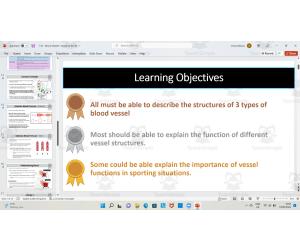
Blood Vessels (Veins, Arteries, Capillaries)
Science, Life Sciences, Human Body, Grade 9, 10, Teacher Tools, Lesson Plans
Blood Vessels (Veins, Arteries, Capillaries) Blood Vessels (Veins, Arteries, Capillaries) is an educational resource that focuses on imparting knowledge about various types of blood vessels in the human body. This detailed PowerPoint presentation primarily targets Grade 9 and Grade 10 students studying Science with a specific focus on the Human Body. The content of this resource aims towards helping students grasp and understand the structures and functionalities of three significant types of blood vessels; veins, arteries, and capillaries. By incorporating well-organized information presented via 25 slides, it facilitates learning outcomes critical to their curriculum needs. This teaching resource is more than mere facts; it goes further by explaining how these vessel formations prove essential during certain situations such as sports events where improved bodily functions play critical roles. In doing so, it instills in learners an appreciation for practical applications beyond theoretical understanding. Striking a balance between informative yet engaging content delivery within a classroom can be challenging notwithstanding crucial as it significantly impacts student engagement levels. Please note: Any educator can make use of this resource effectively across different teaching methods - be it whole class instruction or smaller focused group activities or even set as homework assignment taking due consideration to individual learner capacities. A notable advantage: A notable advantage of this Microsoft PowerPoint file format is its inherent flexibility to adapt for modifications convenient to each instructor's unique teaching style while accommodating pertinent updates driven by constant advancements in biomedical research findings. In summary: Blood Vessels (Veins, Arteries, Capillaries) provides educators with an invaluable tool fostering knowledge about intricate bodily systems in students while stirring their curiosity about the phenomenal biology that governs their everyday lives - truly indispensable for today's aspiring young scientists' toolkit!
Author The PE Tutor
Tags Blood Vessels, Veins, Arteries, Capillaries, Human Body

I WONDER - How Are Sound Effects Added To Movies | Animated Video
Physics, Science, STEM, Grade 4, 5, 6, 7, 8, 9, 10, Lesson Plans, Teacher Tools
Video Introduction An amazing video designed for the students to learn more about STEM. I WONDER - How Are Sound Effects Added To Movies | Animated Video Lesson Plants world is really fascinating! Do you know that some flowers eat insects? Some other plants like to grow on walls can you mention any? Do you know what is the difference between fungicide and pesticide? If yes, Can you tell us more about it? What is nuclear energy? Is it safe to use it? Do you think it is a clean energy? Have you ever read about potential energy? If yes, tell us what it is? Do you think that potential energy can be converted into another form of energy? How it happens? I WONDER - How Are Sound Effects Added To Movies | Animated Video Lesson The video is perfect for encouraging the researching skills for the students, while learning more about this fantastic topic. I WONDER - How Are Sound Effects Added To Movies | Animated Video Lesson This friendly designed video is suitable for students at school, homeschooling, and as a group activity. Format Available in MP4 format.
Author Educational Voice
Rating
Tags How Are Sound Effects Added To Movies, Sound Effects, Sound Effects Facts, Sound Effects Video, Sound Effects Video For Kids, Movies Sound Effects, Movies Sound Effects Facts, Movies Sound Effects Video For Kids
I WONDER - How Do Plants Prevent Soil Erosion | Animated Video Lesson
Earth Sciences, Earth and Environmental Sciences, Science, Environmental Science, Nature & Plants, Life Sciences, Grade 6, 7, 8, 9, 10, 11, 12, Lesson Plans, Teacher Tools
Video Introduction An amazing video designed for the students to learn more about STEM. I WONDER - How Do Plants Prevent Soil Erosion | Animated Video Lesson Do you like STEM subjects? what is your favorite one? Have you ever tried to plant a seed? If yes, tell us more about it. Or have you ever tried to invent something? If yes, tell us more about it. And how do you think it will help us? Have you ever seen a microorganism under a microscope? What was it? And how it looked like? Mathematics is a marvelous subject. Let' sharpen our brains and solve some equations. Do you like timetable tricks? What is your favorite one? Do you know how to code? Have you ever created an app or a game before? If yes, how was it like? I WONDER - How Do Plants Prevent Soil Erosion | Animated Video Lesson The video is perfect for encouraging the researching skills for the students, while learning more about this fantastic topic. I WONDER - How Do Plants Prevent Soil Erosion | Animated Video Lesson This friendly designed video is suitable for students at school, homeschooling, and as a group activity. Format Available in MP4 format.
Author Educational Voice
Tags How Do Plants Prevent Soil Erosion, How Do Plants Prevent Soil Erosion Video, Soil Erosion, Soil Erosion Facts, Soil Erosion Facts For Kids, Soil Erosion Video, Soil Erosion Video For Kids, Plants
I WONDER - Do Parrots Have Unique Features | Animated Video Lesson
STEM, Biology, Life Sciences, Science, Animals, Grade 1, 2, 3, 4, 5, 6, 7, 8, Lesson Plans, Teacher Tools
Video Introduction Animal kingdoms are full of fascinating wonders to learn. This video is designed for the students to learn more about animals in different countries. I WONDER - Do Parrots Have Unique Features | Animated Video Lesson Do you like animals? what is your favorite one? Do you own a pet? If yes, tell us more about it, like what its name? And what do you like most about it? What are the animal kingdoms? Can you write down the characteristics of each animal class like mammals, birds, reptiles, amphibian, fish and mollusks. Do you know that some animals can sing, can you name any of them? What is the largest and the smallest mammal in the world? What is the largest and the smallest bird in the world? What is the largest and the smallest fish in the world? I WONDER - Do Parrots Have Unique Features | Animated Video Lesson The video is perfect for encouraging the researching skills for the students, while learning more about these fantastic animals. I WONDER - Do Parrots Have Unique Features | Animated Video Lesson This friendly designed video is suitable for students at school, homeschooling, and as a group activity. Format Available in MP4 format.
Author Educational Voice
Tags Do Parrots Have Unique Features, Do Parrots Have Unique Features Video, Parrots Features, Parrots Features Facts, Parrots Features Facts For Kids, Parrots Features Video, Parrots Features Video For Kids

I WONDER - What Food Are Carbohydrates | Animated Video Lesson
Human Body, Life Sciences, Science, Biology, STEM, Grade 1, 2, 3, 4, 5, 6, 7, 8, Lesson Plans, Teacher Tools
Video Overview The human body is full of fascinating wonders to learn. This video is created to help the students recognize the anatomy and the job of the human body. I WONDER - What Food Are Carbohydrates | Animated Video Lesson Every part and organ in our human body is vital so let's see how important they are. Have you ever imagined how we look like if we didn't have a skeleton? Did you know that because we have our amazing muscles we can stand! Do you know how many teeth do we have? Have you ever wondered about the food journey inside our body? Can you name all the glands in our body? Why do we have skin? Our nervous system is really good at sending signals. Can you tell us more about it? Are you really good at Mathematics, painting, or any other thing? You should really thank your brain about it! The famous five senses are really doing a great work? Can you explain how every sense works? I WONDER - What Food Are Carbohydrates | Animated Video Lesson The video is perfect for encouraging the researching skills for the students, while learning more about our fantastic human body. I WONDER - What Food Are Carbohydrates | Animated Video Lesson This friendly designed video is suitable for students at school, homeschooling, and as a group activity. Format Available in MP4 format.
Author Educational Voice
Tags What Food Are Carbohydrates, What Food Are Carbohydrates Video, Carbohydrates, Carbohydrate, Carbohydrates Facts, Carbohydrates Facts For Kids, Carbohydrates Video, Carbohydrates Video For Kids

Lions | Interactive Science Lesson | Micro-Learning Deck
Science, Life Sciences, Animals, Grade 5, 6, 7, 8, Teacher Tools, Lesson Plans
Lions | Interactive Science Lesson | Micro-Learning Deck This science resource teaches students about the lion, the King of the Jungle. Through an engaging slideshow presentation, students will watch an informative video, read a passage with audio support, analyze the text closely, and complete a quick write activity to demonstrate comprehension. Educators can utilize this resource in a variety of ways - as a whole class lesson to introduce the lion, a small group activity to build background knowledge, or as an independent learning task for students to complete at their own pace. With multiple modalities integrated, this micro-learning deck keeps learners actively engaged from the first slide to the last. Easy to implement and full of essential information, it makes an excellent addition to any middle school science curriculum covering zoology.
Author Teach Me This
Tags Lions Reading Passage, Comprehension, Science Lesson, Zoology, Interactive
Reducing Your Community's Carbon Footprint: Reduce, Reuse, Recycle, and Plant Gr. 5-8
Science, Earth and Environmental Sciences, Environmental Science, Grade 5, 6, 7, 8, Teacher Tools, Lesson Plans
Reducing Your Communitys Carbon Footprint: Reduce, Reuse, Recycle and Plant Gr. 5-8 An engaging educational resource, designed primarily for grades 5 to 8 students. It aims to enhance environmental consciousness by offering profound insights into the community's carbon footprint and its effect on global climate change. Evaluation of cause-and-effect incidents: The resource encourages learners to assess the sequence of events that stem from simple routines like commuting to work or substantial implications like reducing island size. Versatile usage: This material is adaptable across different learning environments - ideal not only for whole-group instructions in conventional classrooms but also for small group activities, homework assignments and interactive online sessions. Inspiring transformations: Beyond highlighting the adverse consequences of climate change, this curriculum narrates how Cubans adopted a completely fossil fuel-free farming system within a decade and discusses urban heat island effects caused by urbanization with fact-based analyses. Bloom’s Taxonomy and STEAM initiatives guidelines compliance: This resource marries enlightenment with engagement through crossword puzzles, quizzes which offer self- assessment opportunities with carbon footprint calculators as per Bloom’s Taxonomy guidelines. The curriculum is available as a downloadable PDF format file ensuring easy access and adaptable printing choices whether you wish to use it remotely or in a physical classroom environment. Specially formulated for Environmental Science subject under Science courses, Reducing Your Communitys Carbon Footprint: Reduce, Reuse, Recycle, and Plant Gr. 5-8 offers an intriguing yet pragmatic perspective on environmental conservation promoting sustainable lifestyle habits ensuring us all a healthier future.
Author Classroom Complete Press
Tags PDF

I WONDER - How Heavy Is Saturn | Animated Video Lesson
Space, Earth and Environmental Sciences, Science, Grade 3, 4, 5, 6, 7, 8, 9, Lesson Plans, Teacher Tools
Video Introduction An amazing video designed for the students to learn more about space facts. I WONDER - How Heavy Is Saturn | Animated Video Lesson Have you ever thought about travelling to space?! Join us with this amazing video about Saturn. Do you think we can visit Saturn some day? How amazing is space! Let's discover some amazing facts about planets, asteroids, our solar system and the milky way! Do you know that we have two kinds of planets in our solar system? Can you name the planets based upon their core type? I WONDER - How Heavy Is Saturn | Animated Video Lesson The video is perfect for encouraging the researching skills for the students, while learning more about the fantastic space. I WONDER - How Heavy Is Saturn | Animated Video Lesson This friendly designed video is suitable for students at school, homeschooling, and as a group activity. Format Available in MP4 format.
Author Educational Voice
Rating
Tags How Heavy Is Saturn, Saturn, Saturn Facts For Kids, Saturn Video, Saturn Facts, Saturn Video For Kids, Space, Space Facts, Space Facts For Kids, Space Video

Climate Change: Causes: Greenhouse Gases: Synthetic Gases Gr. 5-8
Science, Earth and Environmental Sciences, Environmental Science, Grade 5, 6, 7, 8, Teacher Tools, Lesson Plans
Climate Change: Causes: Greenhouse Gases: Synthetic Gases Gr. 5-8 This resource offers an in-depth exploration of the natural and human-made factors influencing our atmosphere and becoming catalysts for climate change, with a specific focus on synthetic gases, a type of greenhouse gas. A Comprehensive Tool for Science Educators Designed to aid grade 5 - 8 Science educators, it helps students differentiate between myths and factual science regarding this critical topic while strengthening their knowledge in environmental studies. Atmospheric Exploration: Students will examine the different layers of our atmosphere. Radiation Absorption Rate Activities: Engaging hands-on opportunities where students investigate how object colors impact radiation absorption rates. The Carbon Cycle Model: Practical activity where students create a model of the carbon cycle—a component influencing global warming. Oceanic Changes study:: Exploring real-world Climate change implications such as fluctuations in temperature causing oceanic changes. Methane's residence time concept:: An illustrative module on another potent greenhouse gas with suggested measures to counteract climate change effectively. ' Nitrogen-fixing Bacteria & Environmental Conservation Efforts The material covers nitrogen-fixing bacteria's role in replacing nitrogen fertilizers - offering intriguing links between biology and conservation efforts. Synthetic Gases' Discussion And Global Phenomena Perspective Building' An expansive look at synthetic gases—their ban due to harmful atmospheric impacts, along with their persistent presence despite such actions is covered in detail to ignite interest and foster a broader perspective on human activity 's influence on global phenomena like climate change. Aligning With Bloom's Taxonomy & Promoting STEAM Initiatives This tool aligns with Bloom's Taxonomy principles and promotes Science, Technology, Engineering Arts & Math (STEAM) initiatives too. It offers reinforcement tools such as crossword puzzles; word searches alongside comprehension quizzes complete with answer keys for self-evaluation purposes. Flexible Utilisation For Various Learning Environments Suitable for use in-class lectures, small group discussions or assigned as homework. The resource file type is PDF making it easy to distribute digitally or printed if required. 'Climate Change: Causes: Greenhouse Gases: Synthetic Gases Gr. 5-8': A Significant Addition To Science Curriculums This resource promises significant addition to grade level science curriculums focused on fostering environmentally conscious learners armed with scientific facts rather than fallacies.
Author Classroom Complete Press
Tags PDF

Lesson 4.2 - Conservation of Energy
Science, Chemistry, Physics, Grade 6, 7, 8, 9, 10, 11, 12, Lesson Plans, Teacher Tools
Lesson 4.2 - Conservation of Energy Take your teaching experience to the next level with our expertly created resource, designed specifically for Integrated Chemistry & Physics education. This extensive digital package provides a multitude of materials that explain the concept of energy conservation and its real-world application. This comprehensive resource includes: Educational notes addressing energy conservation in systems, available in an interactive fill-in-the-blank version (A version) and completed version (B version). A captivating Energy Skate Park Simulation for displaying the transformative process encompassing various forms of energy. Intriguing activities to encourage students' creativity by finding tangible examples of energy conservation within their daily life, backed up by a lab activity focusing on kinetic and potential energies. A structured PowerPoint known as Objectives & Starter Questions to effectively spark class discussions or quizzes. Detailed PowerPoint Notes for presenting material to students smoothly. The aforementioned contents are designed in accordance with 2016 Indiana State Standards ICP.4.2 and ICP.4.3, suiting different learning environments including full-class instruction, small group work, or individual assignments. The files included come in .docx (editable), .pptx (editable PowerPoint), and .pdf (non-editable) formats, compatible with popular software like Microsoft Word & PowerPoint or Adobe Reader. Note: All editable materials can be adjusted to fit your teaching preferences with the right software. Non-editable .pdf files, however, require a PDF viewer like Adobe Reader. It's recommended to check software compatibility before purchase and download. Ideal for Grade 6 to 12 students, this one-stop solution in the realms of Chemistry and Physics education combines comprehensive theoretical input with practical activities. Introduce Lesson 4 - Conservation of Energy in your curriculum today! Reference: The pronouns 'you', 'your' are intended for educators or teachers.
Author Integrated Chemistry and Physics
Tags Energy Conservation, Systems, Interactive Simulation, Lab Activity, Classroom Discussion
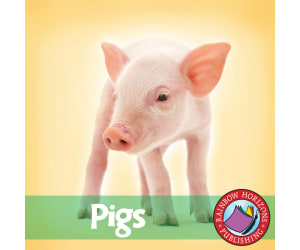
Pigs Gr. K-2
Science, Life Sciences, Animals, Grade 1, Teacher Tools, Lesson Plans
Pigs Gr. K-2 Teaching Resource The Pigs Gr. K-2 teaching resource is an excellent addition to any public school or homeschool Science curriculum , expanding traditional farm themes with an emphasis on pigs. Developed for Grade 1, this comprehensive package includes: Literature enhancement activities, Captivating rebus stories, A wealth of facts about pigs aimed at fostering curiosity among young learners. Integration of Science and Language Arts This versatile tool actively integrates Science with Language Arts, immersing children into the fascinating world of pigs through individual study, small group study sessions and whole-class activities. It includes: Songs presenting learning in a fun manner, Creative book-making activities for interactive studying. An Additional Feature: Centre Book Pages The resource also provides Centre Book Pages which aid in practical applications through projects or displays. To further encourage student engagement, there are contracts and certificates serving as motivational rewards. Beyond The Classroom Subjects A distinguishing factor about this product is its interdisciplinary approach that goes beyond Science to include subjects like Math, Art, Health and Gym - creating realistic learning experiences akin to real-world scenarios. To help you formulate your ideal lesson plan effortlessly we've incorporated: Hands-on pig anatomy-based activities, Linguistic-improving word searches even while increasing general knowledge. Purchase & Usage Information Note that all these educational platforms have been conveniently amalgamated into one downloadable PDF file, ready for instant use after purchase from our secure online platform by passionate educators across the globe. With Pigs Gr.K-2, let's undertake enriching educational journeys that combine knowledge with fun - creating unforgettable teaching moments!
Author Classroom Complete Press
Tags PDF

I WONDER - How Many Scents Can Nose Smell | Animated Video Lesson
STEM, Biology, Life Sciences, Science, Human Body, Grade 2, 3, 4, 5, 6, 7, 8, Lesson Plans, Teacher Tools
Video Overview The human body is full of fascinating wonders to learn. This video is created to help the students recognize the anatomy and the job of the human body. I WONDER - How Many Scents Can Nose Smell | Animated Video Lesson Every part and organ in our human body is vital so let's see how important they are. Have you ever imagined how we look like if we didn't have a skeleton? Did you know that because we have our amazing muscles we can stand! Do you know how many teeth do we have? Have you ever wondered about the food journey inside our body? Can you name all the glands in our body? Why do we have skin? Our nervous system is really good at sending signals. Can you tell us more about it? Are you really good at Mathematics, painting, or any other thing? You should really thank your brain about it! The famous five senses are really doing a great work? Can you explain how every sense works? I WONDER - How Many Scents Can Nose Smell | Animated Video Lesson The video is perfect for encouraging the researching skills for the students, while learning more about our fantastic human body. I WONDER - How Many Scents Can Nose Smell | Animated Video Lesson This friendly designed video is suitable for students at school, homeschooling, and as a group activity. Format Available in MP4 format.
Author Educational Voice
Tags How Many Scents Can Nose Smell, How Many Scents Can Nose Smell Video, Nose, Nose Facts, Nose Facts For Kids, Nose Video, Nose Video For Kids, Smell, Smelling, Smelling Facts
I WONDER - What Did Dinosaurs Eat | Animated Video Lesson
Animals, Life Sciences, Science, Grade 1, 2, 3, 4, 5, 6, 7, 8, Lesson Plans, Teacher Tools
Video Introduction An amazing video designed for the students to learn more about dinosaurs in different countries. I WONDER - What Did Dinosaurs Eat | Animated Video Lesson Do you like dinosaurs? what is your favorite one? Do you own a pet? If yes, tell us more about it, like what its name? And what do you like most about it? Do you think that your pet has been evolved from a dinosaur? Can you write down the characteristics of your favourite dinosaur like it's shape, their rivals, where did it use to live and what was their favourite food? What is the largest and the smallest dinosaur that ever found? Why is the T-rex is so famous? Have you ever read any interesting facts about it? Can you name any of the carnivores or herbivores dinosaurs? I WONDER - What Did Dinosaurs Eat | Animated Video Lesson The video is perfect for encouraging the researching skills for the students, while learning more about dinosaurs. I WONDER - What Did Dinosaurs Eat | Animated Video Lesson This friendly designed video is suitable for students at school, homeschooling, and as a group activity. Format Available in MP4 format.
Author Educational Voice
Rating
Tags What Did Dinosaurs Eat, What Did Dinosaurs Eat Video, Dinosaurs, Dinosaurs Facts, Dinosaur, Dinosaurs Video, Dinosaurs Facts For Kids, Dinosaurs Video For Kids, Dinosaur Video, Dinosaur Facts

I WONDER - Why Do Rhinos Love Mud | Animated Video Lesson
STEM, Animals, Life Sciences, Science, Biology, Grade 1, 2, 3, 4, 5, 6, 7, 8, Lesson Plans, Teacher Tools
Video Introduction Animal kingdoms are full of fascinating wonders to learn. This video is designed for the students to learn more about animals in different countries. I WONDER - Why Do Rhinos Love Mud | Animated Video Lesson Do you like animals? what is your favorite one? Do you own a pet? If yes, tell us more about it, like what its name? And what do you like most about it? What are the animal kingdoms? Can you write down the characteristics of each animal class like mammals, birds, reptiles, amphibian, fish and mollusks. Do you know that some animals can sing, can you name any of them? What is the largest and the smallest mammal in the world? What is the largest and the smallest bird in the world? What is the largest and the smallest fish in the world? I WONDER - Why Do Rhinos Love Mud | Animated Video Lesson The video is perfect for encouraging the researching skills for the students, while learning more about these fantastic animals. I WONDER - Why Do Rhinos Love Mud | Animated Video Lesson This friendly designed video is suitable for students at school, homeschooling, and as a group activity. Format Available in MP4 format.
Author Educational Voice
Tags Why Do Rhinos Love Mud, Why Do Rhinos Love Mud Video, Rhinos Love Mud, Rhinos Love Mud Facts, Rhinos Love Mud Facts For Kids, Rhinos Love Mud Video, Rhinos Love Mud Video For Kids, Rhino
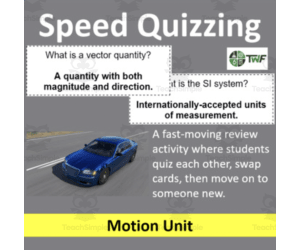
Speed Quizzing – Motion Unit
Science, Physics, Grade 8, 9, 10, Lesson Plans, Teacher Tools
Speed Quizzing – Motion Unit is an engaging activity to review key concepts in a unit on motion. Students are out of their seats and moving around the classroom, discussing questions on topics like one-dimensional motion, two-dimensional motion and vectors, frames of reference, uniform acceleration, and projectile motion. The resource includes 32 high-quality, editable questions that can be used for the activity or as a question bank. Teachers implement the activity by printing and cutting out flashcards, then having students pair up, ask and answer questions, switch cards and partners, and repeat. It's a lively way to prompt conversation, check understanding, remediate skills, and gather formative assessment data. Alternate group structures are provided to ensure students work with new partners each round. With little prep required, this customizable resource sparks student discussion, keeps kids engaged, and helps teachers check comprehension on a motion unit. It's perfect for middle and high school physical science classes.
Author Teach With Fergy
Tags Projectile Motion, Frames Of Reference, Speed Quizzing, Motion Unit, Physical Science Quiz
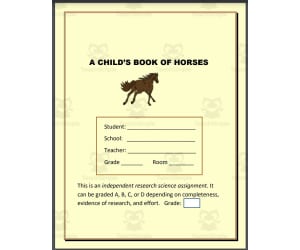
A Child's Book of Horses: The Complete Unit
Science, Life Sciences, Biology, Grade 5, 6, 7, 8, Lesson Plans, Teacher Tools
This A Child's Book of Horses: The Complete Unit will help students learn everything there is to learn about horses in an interesting way. This resource includes the horse's historical background including within mythology! The table of content for this resource includes the following: Introduction: The Horse, Mythology & A Blessing 1 Terminology 2 History of the horse 3 What is an Equestrian? 3a Types of breeds 3b Anatomy of a horse 3c Life cycle of a horse 4 Appaloosa- Charting facts activity 4-9 5 Morgan horse 6 American Paint horse 7 Clydesdale horse 8 Arabian horse 9 Friesian horse 10 Compare 2 different horse breeds Related quadrupeds: 10a Compare a horse & a mule 10b Compare a horse & a donkey 10c Compare a horse & a zebra 11 Essay #1 Taking a look at the Icelandic Horse 12 Essay #2 The Horse & The Pony 13 Art Activity: Draw 3 horses, coloring 14 Word Search: World of Horses 15 Stem/Science: Vocabulary Word Jumble 16 Answer key: Word Jumble 17 Quiz: Facts about horses 18 Answer key: Quiz 19 Can you identify this mystery horse #1 20 Can you identify this mystery horse #2 21 Answer key: Mystery horse #1, and #2 22 Cartoon Activity: Paul Revere 23 Two Horses of the American Revolution Each of these informative and engaging sections will contribute for students increased knowledge about horses!
Author THE LANTERN OF KNOWLEDGE
Tags Horses, Book Of Horses, Unit Of Horses, Biology, The Lantern Of Knowledge
I WONDER - What Is AI | Animated Video Lesson
STEM, Computer Science, Technology, Science, Grade 2, 3, 4, 5, 6, 7, 8, Lesson Plans, Teacher Tools
Video Introduction An amazing video designed for the students to learn more about STEM. I WONDER - What Is AI | Animated Video Lesson Do you like STEM subjects? what is your favorite one? Have you ever tried to plant a seed? If yes, tell us more about it. Or have you ever tried to invent something? If yes, tell us more about it. And how do you think it will help us? Have you ever seen a microorganism under a microscope? What was it? And how it looked like? Mathematics is a marvelous subject. Let' sharpen our brains and solve some equations. Do you like timetable tricks? What is your favorite one? Do you know how to code? Have you ever created an app or a game before? If yes, how was it like? I WONDER - What Is AI | Animated Video Lesson The video is perfect for encouraging the researching skills for the students, while learning more about this fantastic topic. I WONDER - What Is AI | Animated Video Lesson This friendly designed video is suitable for students at school, homeschooling, and as a group activity. Format Available in MP4 format.
Author Educational Voice
Tags What Is AI, What Is AI Video, Artificial Intelligence , AI Facts, AI Facts For Kids, AI Video, AI Video For Kids, Artificial Intelligence Facts, Artificial Intelligence Video, Artificial Intelligence Video For Kids
Motion: Velocity and Speed - FLASH-PC
Science, Physics, Common Core, Grade 5, 6, 7, 8, Teacher Tools, Lesson Plans
Motion: Velocity and Speed - FLASH-PC A meticulously crafted teaching resource for students in grades 5 through 8, focusing on the fundamental principles of physics including velocity and speed. Primarily designed as a supplementary tool for science educators' lesson plan. Common Core State Standards Integration The resource plays a pivotal role in helping teachers firmly embed complex scientific concepts into comprehensible lessons, supporting the Common Core State Standards educational initiative. Informative Reading Passages: Well-curated content not only promotes knowledge recollection, but also deepens subject matter understanding. Targeted Questions: Skillfully positioned both pre and post-reading, these inquiries activate prior knowledge while sharpening comprehension skills. Versatility & Engagement This digital package shatters conventional worksheet boundaries to encourage diverse learning approaches by offering the following interactive multimedia aids: Educational Videos: Visually convey motion's core principles for visual learners. Audiobooks Adaptation: An inclusive measure accommodating auditory learners. Vocabulary Enhancement & Flexible Application A special focus is placed on fostering vocabulary retention through accessible digital flashcards featuring crucial scientific terms tied to each topic discussed, thus bolstering students' language acquisition regarding critical scientific terminology. Taking into account varying classroom environments, selective strategies are available including: Rousing whole-group discussions to uncover layers of speed, Distributing velocity-focused tasks among smaller clusters for greater engagement and nuanced understanding. With qualities allowing it to serve as additional homework material or even an independent study aid, Motion: Velocity and Speed - FLASH PC projects a sublime blend of comprehensive physics instruction with digital convenience. Every learner, regardless of their individual paths, can harness the power to grasp challenging concepts like velocity and speed with ease.
Author Classroom Complete Press
Tags Software (PC)
I WONDER - How Do Nocturnal Animals Catch Their Prey | Animated Video
STEM, Biology, Life Sciences, Science, Animals, Grade 4, 5, 6, 7, 8, 9, 10, Lesson Plans, Teacher Tools
Video Introduction Animal kingdoms are full of fascinating wonders to learn. This video is designed for the students to learn more about animals in different countries. I WONDER - How Do Nocturnal Animals Catch Their Prey | Animated Video Lesson Do you like animals? what is your favorite one? Do you own a pet? If yes, tell us more about it, like what its name? And what do you like most about it? What are the animal kingdoms? Can you write down the characteristics of each animal class like mammals, birds, reptiles, amphibian, fish and mollusks. Do you know that some animals can sing, can you name any of them? What is the largest and the smallest mammal in the world? What is the largest and the smallest bird in the world? What is the largest and the smallest fish in the world? I WONDER - How Do Nocturnal Animals Catch Their Prey | Animated Video Lesson The video is perfect for encouraging the researching skills for the students, while learning more about these fantastic animals. I WONDER - How Do Nocturnal Animals Catch Their Prey | Animated Video Lesson This friendly designed video is suitable for students at school, homeschooling, and as a group activity. Format Available in MP4 format.
Author Educational Voice
Tags How Do Nocturnal Animals Catch Their Prey, How Do Nocturnal Animals Catch Their Prey Video, Nocturnal Animals, Nocturnal Animal, Nocturnal Animals Facts, Nocturnal Animals Facts For Kids, Nocturnal Animals Video

Reducing Your Own Carbon Footprint: Your Slice Of The Shared Footprint Gr. 5-8
Science, Earth and Environmental Sciences, Environmental Science, Grade 5, 6, 7, 8, Teacher Tools, Lesson Plans
Reducing Your Own Carbon Footprint: Your Slice Of The Shared Footprint Gr. 5-8 This is a custom-designed teaching resource aimed at creating awareness among students about global climate change and its underlying causes. Targeted primarily towards Grade 5 to 8 educators specializing in Science, particularly Environmental Science, it provides versatile implementation options - usable for group lectures, small group discussions, and homework assignments. About the Material The teaching material comes as an exhaustive PDF file with 29 ready-to-print pages dissecting how individual actions contribute to the overall carbon footprint. It ranges from an intricate study of the greenhouse effect to understanding energy consumption in our kitchens. An intimate illustration of farm-to-table procedures helps identify carbon contributions at each stage. Engaging activities like travel footprint calculations guide students towards minimizing their personal impact on global climate change. A deep dive into post-consumption responsibility encourages thinking beyond mere waste disposal leading up to more responsible behaviors. Broader consideration on how individual carbon footprints contribute collectively within community settings is initiated too. Educational Value This valuable material promotes constructive brainstorming sessions for creating eco-friendly rules potentially assimilable into societal contracts. Bonus features include Bloom's Taxonomy and STEAM inputs which emphasizes academic rigor while ensuring retention among students. Additional Tools Data visualization via graphic organizers along with practical tools such as a carbon footprint calculator boost learning outcomes profoundly. To support evaluation, crossword puzzles combined with comprehension quizzes boasting word-search facilities are provided along with answer keys maximizing utility for instructors looking for contemporary ways of enlightening young brains about our environmental future." Bottom Line In conclusion, this fully loaded resource not only makes learning about the environment simple but converts it into an engaging trip where every student becomes part of the solution. It upholds its essence as an educational tool triggering behavioral change while making sure appropriate educational standards are met.
Author Classroom Complete Press
Tags Carbon Footprint, Environment, Science Workbook, Hands-on Activity

I WONDER - What Is An LED Lightbulb | Animated Video Lesson
Physics, Science, Grade 6, 7, 8, 9, 10, 11, 12, Lesson Plans, Teacher Tools
Video Introduction An amazing activity designed for the students to learn more about STEM. I WONDER - What Is An LED Lightbulb | Animated Video Lesson Do you like STEM subjects? what is your favorite one? Have you ever tried to plant a seed? If yes, tell us more about it. Or have you ever tried to invent something? If yes, tell us more about it. And how do you think it will help us? Have you ever seen a microorganism under a microscope? What was it? And how it looked like? Mathematics is a marvelous subject. Let' sharpen our brains and solve some equations. Do you like timetable tricks? What is your favorite one? Do you know how to code? Have you ever created an app or a game before? If yes, how was it like? I WONDER - What Is An LED Lightbulb | Animated Video Lesson The video is perfect for encouraging the researching skills for the students, while learning more about this fantastic topic. I WONDER - What Is An LED Lightbulb | Animated Video Lesson This friendly designed video is suitable for students at school, homeschooling, and as a group activity. Format Available in MP4 format.
Author Educational Voice
Tags What Is An LED Lightbulb, What Is An LED Lightbulb Video, LED Lightbulb, LED Lightbulb Facts, LED Lightbulb Facts For Kids, LED Lightbulb Video, LED Lightbulb Facts Video, LED Lightbulb Facts Video For Kids

Unique Oceans | Animated Ocean Video Lesson
Science, Earth and Environmental Sciences, Earth Sciences, Not Grade Specific, Lesson Plans, Teacher Tools
Unique Oceans | Animated Ocean Video Lesson Transport students into an underwater world with this 14-minute animated video that explores the uniqueness of Earth's oceans. Through captivating visuals and informative narration, learners dive deep to discover how oceans differ in location, plant and animal life, weather, and more. Educators can utilize this engaging science lesson to introduce or review key ocean concepts with individuals, small groups, or the entire class. By sparking curiosity about the planet's watery realms, this video aims to inspire students' appreciation for the diversity and interconnectedness of ocean ecosystems across the globe. With vivid imagery and compelling storytelling, it promises to hold students' attention while building their knowledge about the precious resource oceans provide.
Author Educational Voice
Tags Arctic Oceans, Science Lesson, Earth, Science Video, Polar Bears