Forces, light & electricity
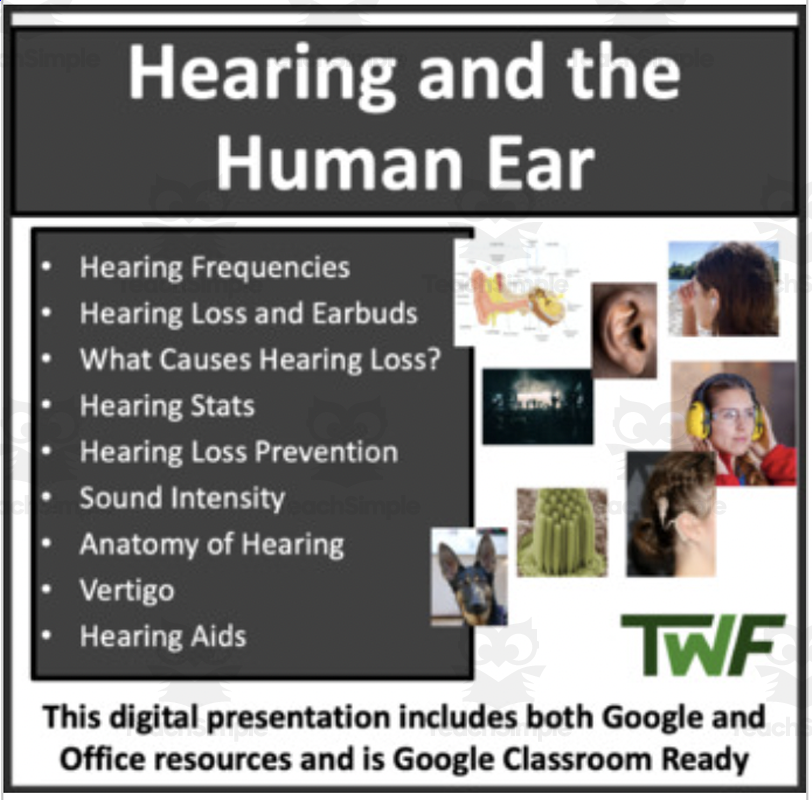
Hearing and the Human Ear - Lesson Bundle
A 1-2 day lesson package covering the physics and biology of hearing: frequencies, hearing loss causes/prevention, sound intensity, and ear anatomy.
Editable




Classroom resources
Browse by lesson focus
Choose the topic or kind of practice you need.
Showing 169–192 of 272 resources

 Show filters
 A 1-2 day lesson package covering the physics and biology of hearing: frequencies, hearing loss causes/prevention, sound intensity, and ear anatomy.
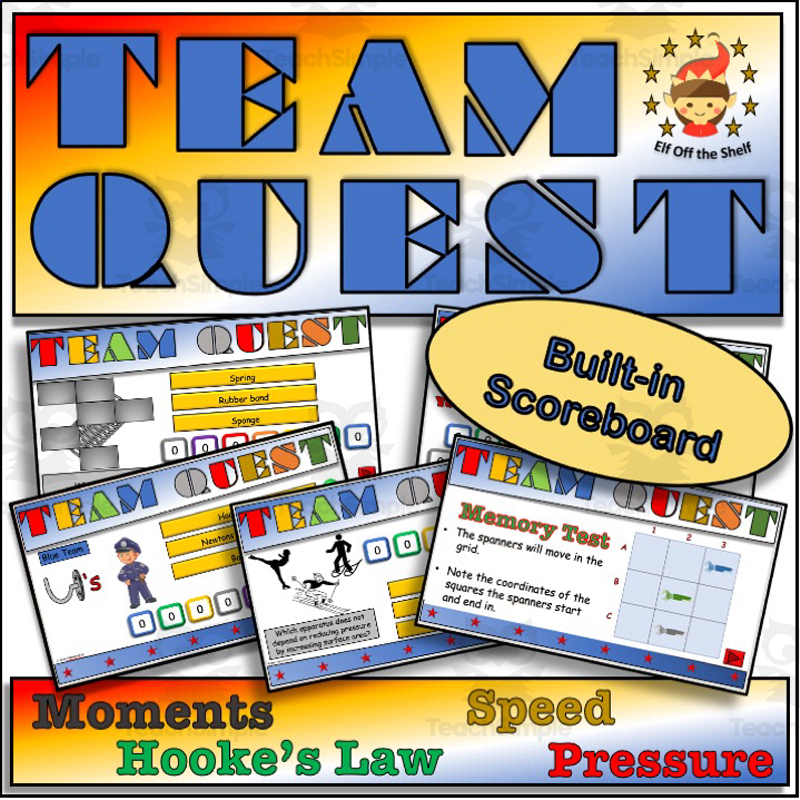
Working in teams (and individually for some rounds), students answer pictorial questions across several themed rounds (e.g., a memory test identifying objects that briefly appear, an unscramble round identifying cut-up images, a cryptic-clue guessing round), competing for points on a built-in scoreboard for up to…

Complete a Planetary Comparison Chart for the 8 planets (order from sun, composition, diameter, density, surface features, moons, atmosphere, temperature range, day/year length); create a planet infographic (individually, using a tool such as Canva); work in groups to compare planets via Venn diagram/table and…
Review slides organized into chapters on fire science, prevention, school drills, emergency response (including Stop-Drop-Roll), firefighters, escape planning, smoke/carbon monoxide safety, and outdoor fire safety; complete suggested activities (draw the fire triangle, create a fire escape map, write firefighter…

A supplemental Grade 4 NGSS resource providing lesson plan outlines, guided activities, and resource links (e.g. videos, PowerPoint) for teaching all Grade 4 Next Generation Science Standards, meant to accompany (not replace) a core science curriculum.
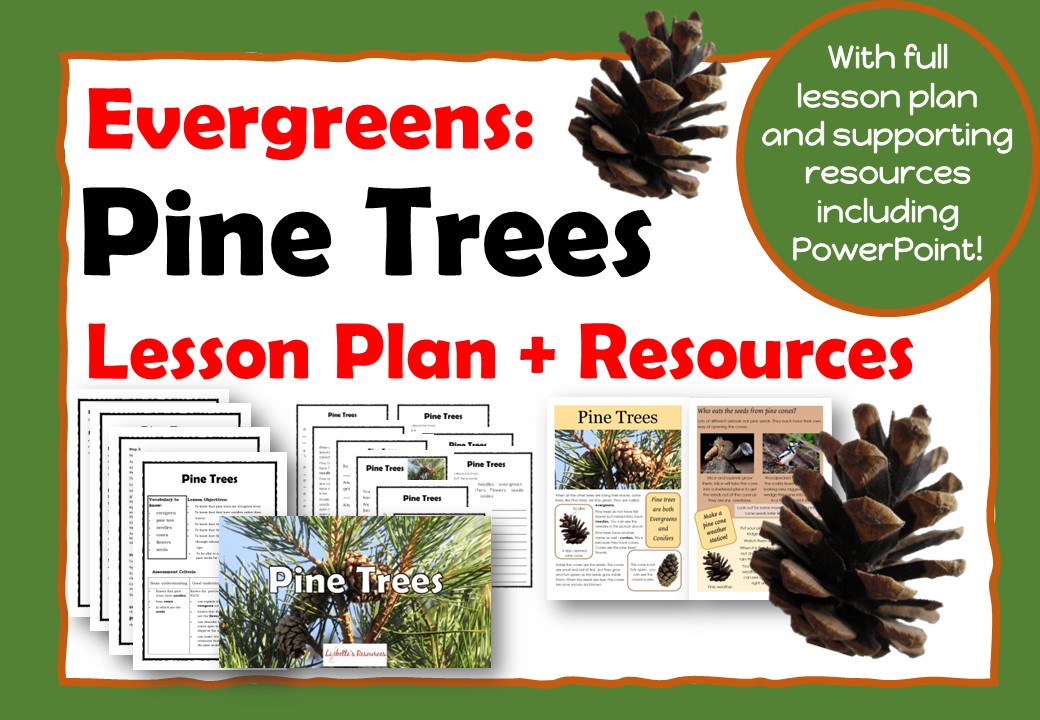
Read three levelled/differentiated decodable passages about pine trees (fill-in-the-blank vocabulary style, e.g. completing words like 'needles', 'cones', 'seed'), participate in a teacher-led science lesson (observe cones/leaves, answer questions), and complete comprehension worksheets.
View a teacher- or student-led slideshow, follow along with a printed/digital lesson outline, and fill in guided-notes blanks while working through concepts like nucleosynthesis, angular momentum, and the nebular hypothesis.
Review a fact sheet independently or with the teacher, then answer a 54-question slideshow quiz (identifying symbols, formulae, and molecule/compound classifications) on a personal answer sheet, checking answers against the included answer slideshow.

A 2-day slideshow-based lesson package introducing middle/early-high-school students to the science of climate change: the greenhouse effect, greenhouse gases and their sources, the carbon cycle and carbon sinks, and the effects and history of climate change.
Preview the lesson, watch an embedded/linked video, read a reading passage with audio support, annotate text, complete vocabulary and comprehension activities ('Play on Words', 'What's Missing'), write a quick response, and complete an exit ticket.
Watch a randomly generated numbered question on the smart board / interactive whiteboard, find the matching number on their bingo card, and write in the answer; the teacher checks card winners against an answer sheet, and students self-check with an answers slideshow at the end.
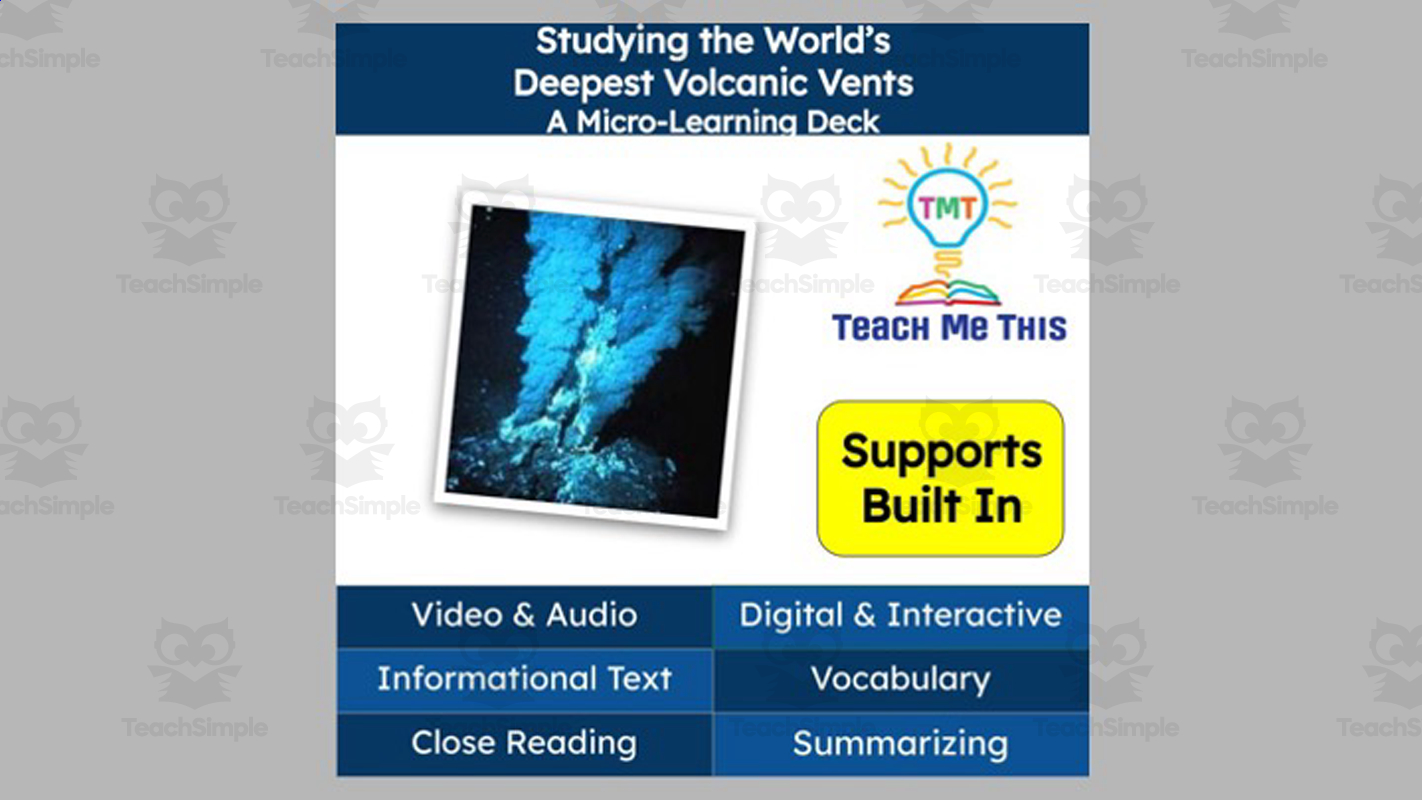
Students read/listen to an informational passage about deep-sea volcanic vents and the scientists who study them, fill in missing vocabulary words from a word bank, match key terms to their definitions, and write a summary of the article using sentence starters.

Students follow along with a teacher-led slideshow (with 7 embedded videos to stop and discuss at marked timestamps) and complete a parallel student outline/fill-in version of the material.
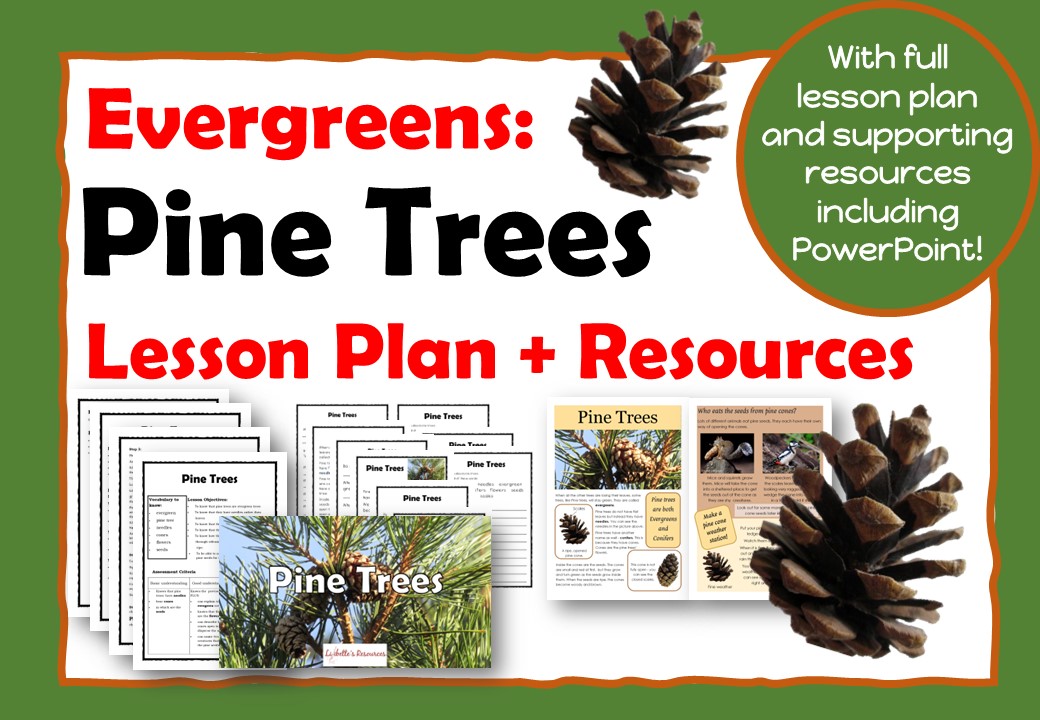
Read leveled comprehension passages about pine trees/cones/seeds, participate in a hands-on lesson (examine real pine cones and pictures), answer fill-in-the-blank/true-false/short-answer worksheet questions, write sentences using target vocabulary, and optionally complete a salt-painting art activity of an evergreen…

Watch/read the 'Understanding Lunar Eclipses' content, complete a 'What's Missing?' vocabulary activity, match key terms to their definitions, and write a summary ('Quick Write') of what was learned.
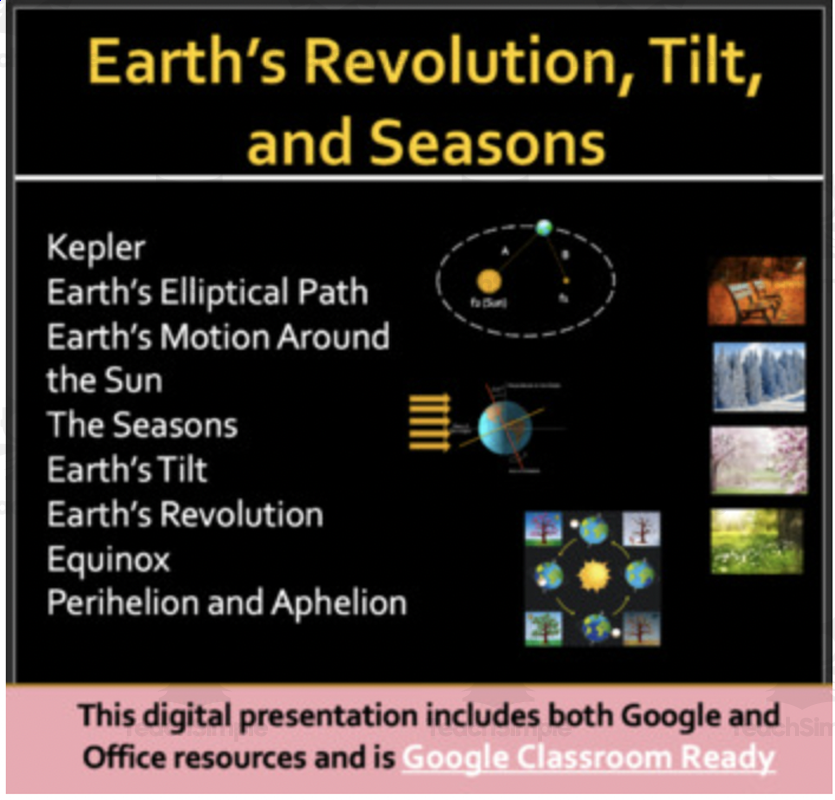
View a teacher- or student-led slideshow, follow a lesson outline, answer 'Think About It' discussion questions, sketch diagrams in notes, and complete an exit ticket covering the causes of the seasons.

Put scientific-method ideas into practice by comparing how much water different paper towels absorb. Students plan a controlled comparison, record measurements, calculate averages and use a graph to support their conclusion. Student notes and matched completed slides introduce variables and hypotheses beforehand, while an extension sheet suggests changing the liquid or measuring absorption time for a later investigation.
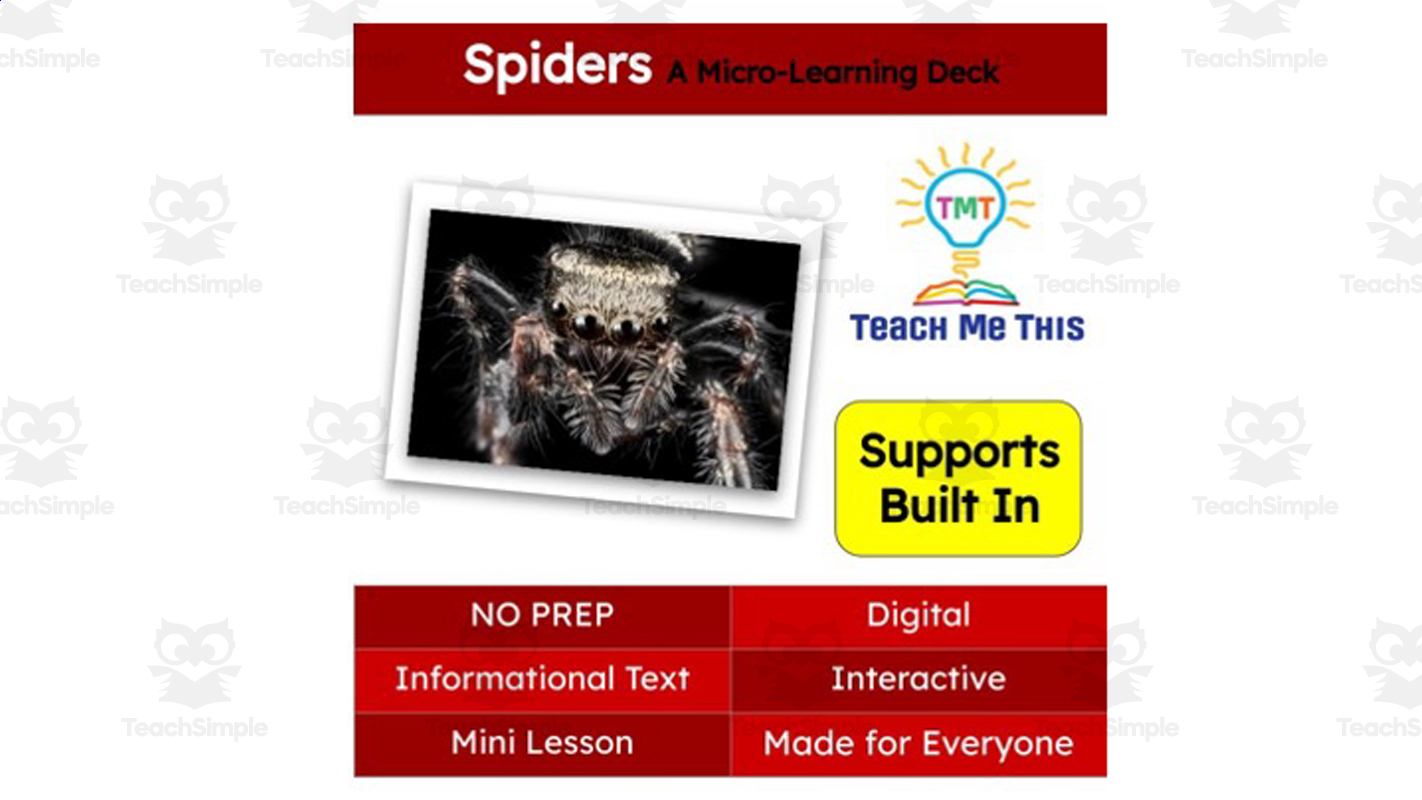
Preview the deck, watch/read the informational passage on spiders, learn key vocabulary, complete a quick write, and respond to an exit ticket.
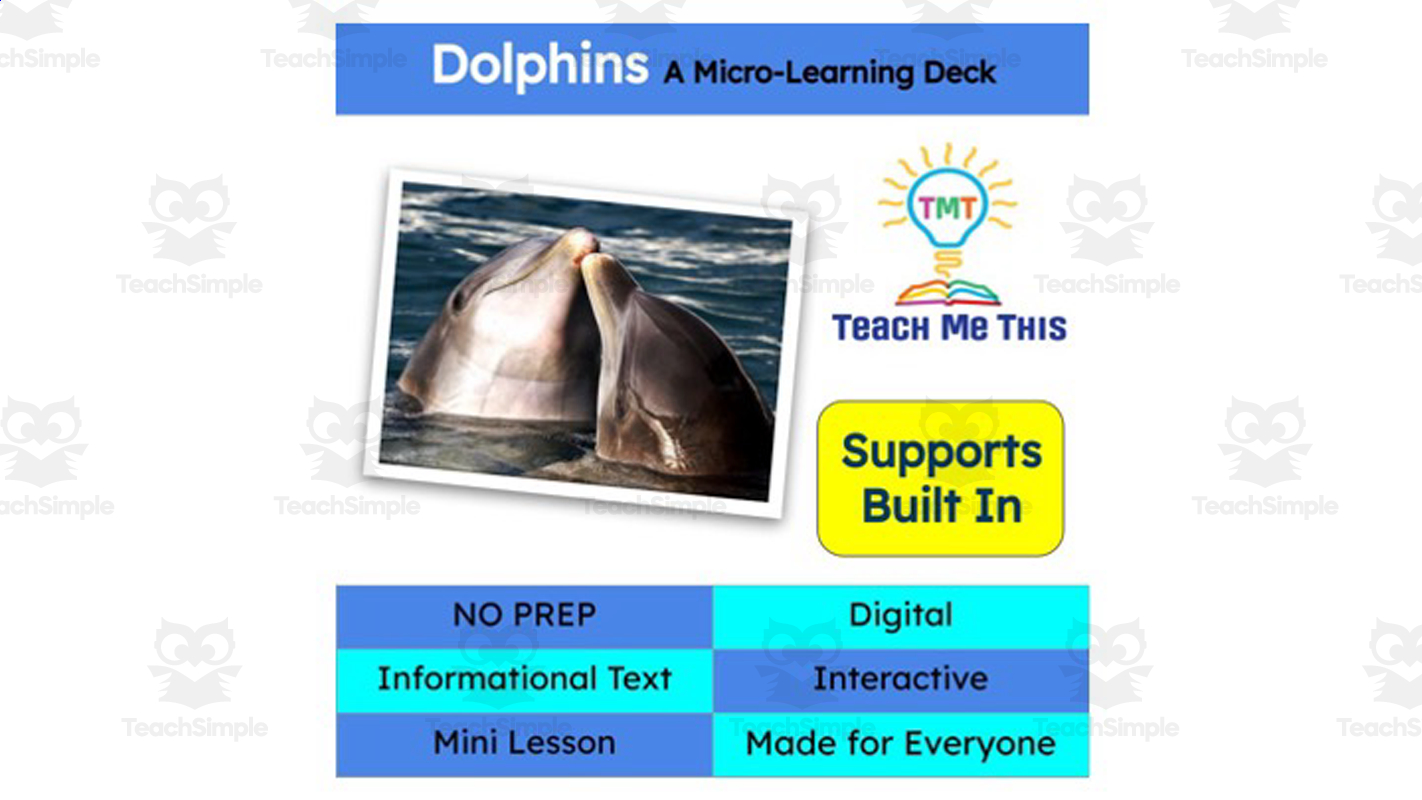
Watch a linked video, read an informational passage about dolphins (sleep habits, communication, naming behavior), respond to chat/quick-write prompts, complete a fill-in-the-blank vocabulary activity, and engage with dolphin-themed jokes/wordplay.
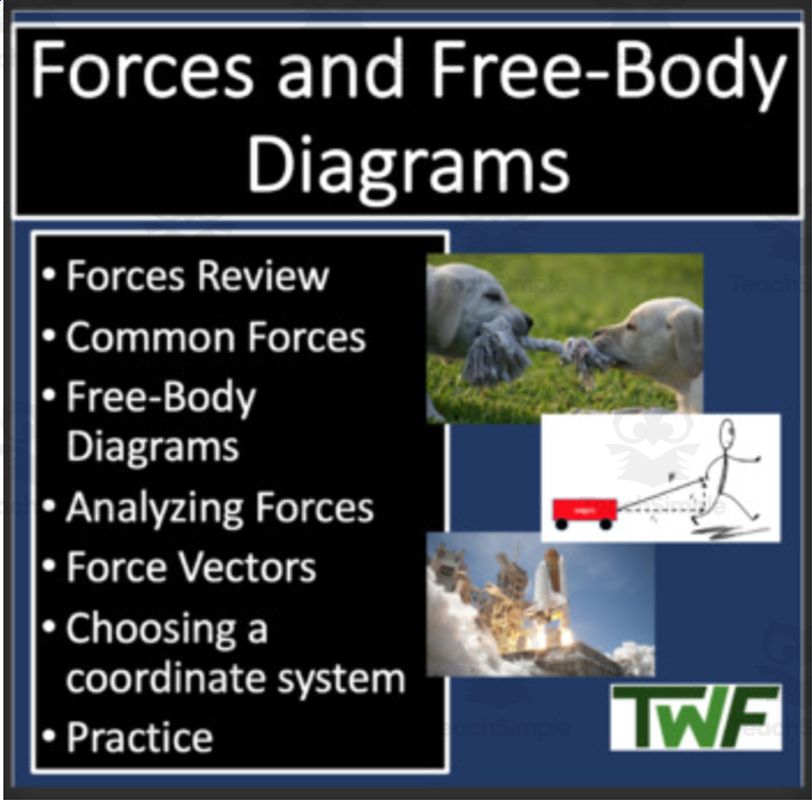
Students review force types (gravity, normal, tension, friction/kinetic/static), draw free-body diagrams for given scenarios (a tossed ball, a pushed chair, a sleigh pulled up a hill), resolve force vectors into x/y components, and solve numeric net-force problems (e.g. volleyball strike, boat tethered by two ropes…
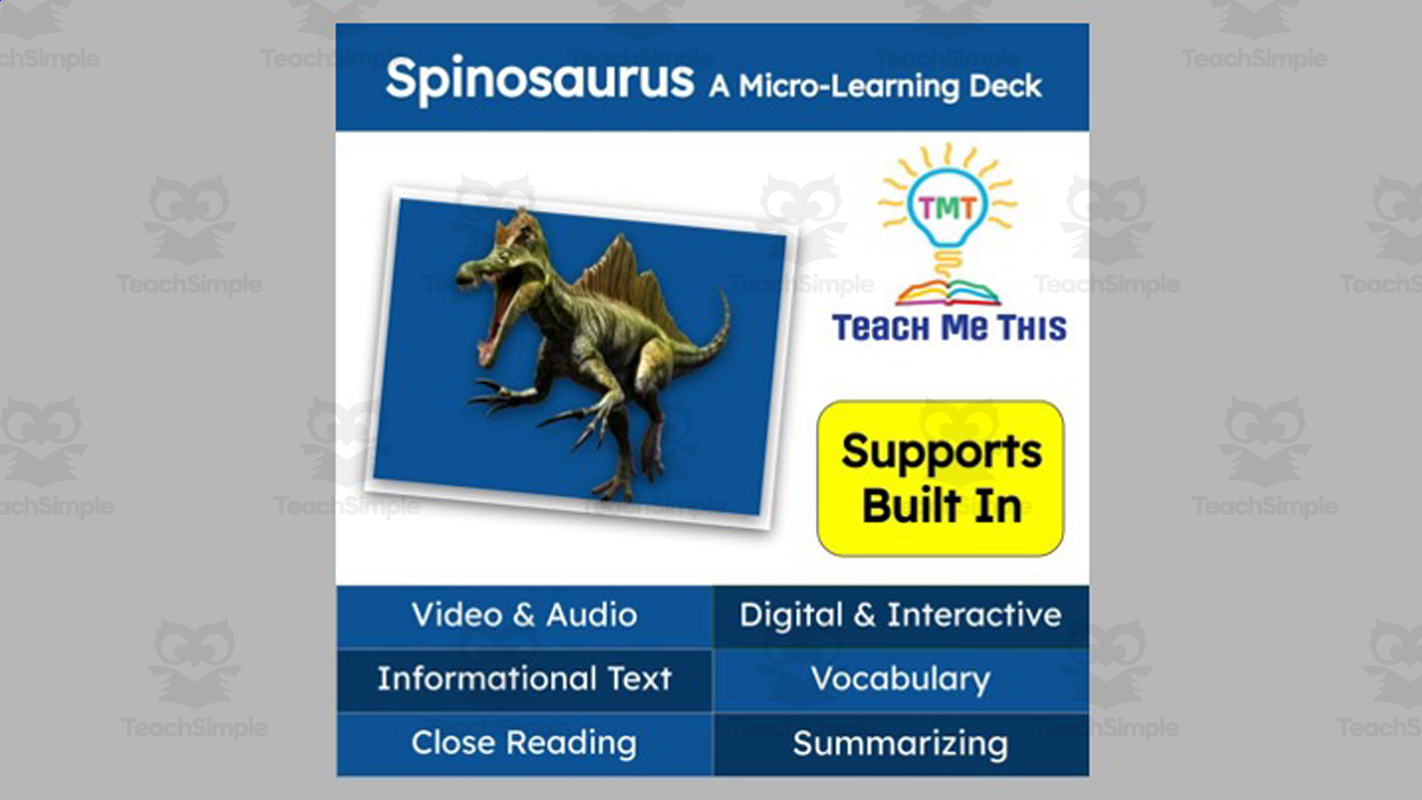
Notice and wonder about Spinosaurus, view facts about what it means, ate, and how big/heavy it was, learn key vocabulary, complete a quick write/draw and 'show our learning' activity, and optionally do a 3D-printing extension activity of a Spinosaurus skull.

Answer short-answer, fill-in-the-blank, opinion, and drawing questions tied to each day's biology lesson; on other days, read and respond to a quote or watch and summarize a short video.
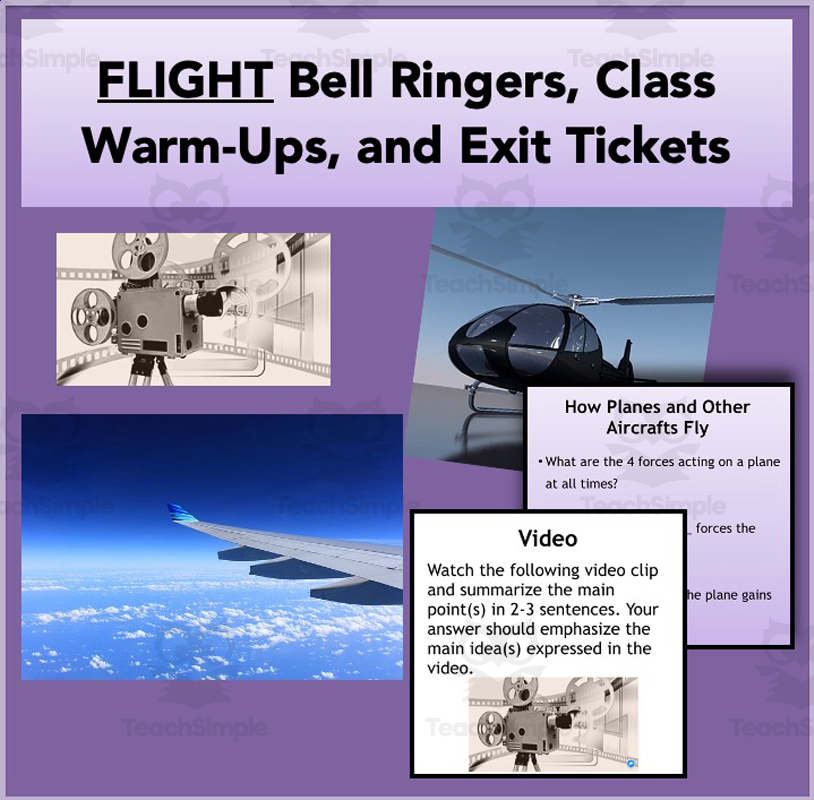
Answer short questions (fill-in-the-blank, short answer, opinion, drawing) about flight topics such as forces on a plane, lift, helicopters, bird flight, air properties, and environmental effects of airlines; record answers on a provided student answer sheet or in a Google Sheets tracker.
Read a nonfiction science passage presented slide-by-slide, then answer multiple-choice comprehension questions and reorder a 'mixed-up text' set of jumbled paragraph excerpts back into the passage's original order