3,926 products added recently
Page 41 - Quizzes by Subject
Quizzes By Subject provide targeted assessments aligned with specific areas of study. Whether you teach math, science, language arts, social studies, or other subjects, you'll find quizzes designed to evaluate key concepts and skills within your curriculum. These specialized quizzes allow for precise measurement of student understanding, enabling you to tailor your teaching strategies accordingly. Incorporating subject-specific quizzes ensures that your assessments are relevant and supportive of your educational objectives.
Insects, Animals, & Ecosystems: Reading Comprehension passages (Word)
Science, ELA, Reading, Reading Comprehension, Strategies, Resources for Teachers, Life Sciences, Animals, Insects, Nature & Plants, Grade 6, 7, 8, 9, Writing Prompts, Worksheets & Printables, Centers, Activities, Teacher Tools, Assessments, Quizzes and Tests, Quizzes, Tests
Insects, Animals, & Ecosystems: Reading Comprehension Passages (Word) This engaging collection of life science reading passages about Insects, Animals, & Ecosystems is designed to bridge the gap between science and literacy through strengthening reading comprehension and sparking scientific curiosity in middle school students. Each passage blends English Language Arts skills with accurate science content that supports NGSS classroom practice. Ideal for interdisciplinary learning in ELA and Science. Suitable for Grade 9 review, too! What Is Included? There are (3) informational passages: Ecosystems: Webs of Life and Change See how living things and their surroundings fit together. Follow energy from producers to consumers to decomposers, and notice how fires, floods, or people can disturb a system and how it can recover. Insects: Small Creatures, Giant Impact Meet the helpers that pollinate, recycle waste, and feed countless animals. Learn how simple body parts and smart behaviors let insects thrive almost everywhere. Unique Animals of the Rainforest Visit a forest bursting with life, from Hyacinth Macaws and pink river dolphins to golden lion tamarins and poison dart frogs. Understand why protecting habitats keeps these remarkable species alive. Student Tasks for Each Passage: 5 multiple-choice questions targeting main idea, key details, inference, vocabulary in context, and use of evidence 5 vocabulary matching items with clear, student-friendly definitions 5 text-based questions that require citing specific lines or facts 1 summary prompt that asks students to condense central ideas accurately Full answer key for every section Available Formats for this Resource PDF Google Docs FULL CATALOG OF DOWNLOADING LINKS HERE Other Science Reading Collections you May find in the store: 1. Astronomy & Space Science 2. Volcanoes, Rocks, & Mountains 3. Rock Cycle, Soil, & Sinkholes 4. Mars, Glaciers, & Antarctica 5. Water Cycle, Acid Rain, & Wastewater 6. Insects, Animals, & Ecosystems 7. Bioluminescence & Insects 8. Animal Skin, Cats, & T. Rex 9. Human Body and Senses 10. Health & Applied Bioscience 11. Waves, Light, & Imaging 12. Electricity & Energy 13. Motion & Materials 14. Chemistry and Materials Science Product Details Length: 14 pages total Grades: 6–8, also suitable for Grade 9 review Use cases: close reading, stations, homework, intervention, test prep, and sub plans Standards support: reinforces informational-text skills and supports NGSS-style sense making through observation, modeling, and clear use of claim, evidence, and reasoning Why Teachers Choose This Set Authentic science content paired with rigorous literacy practice Consistent task structure across all passages for easier planning and smoother student routines Clear, age-appropriate writing that builds confidence without oversimplifying Use this set to reinforce ELA skills in science, to add literacy to your lessons, or to support independent work. The passages strengthen main idea, evidence use, vocabulary in context, inference, cause and effect, and summary writing. With ready-to-use assessments and complete answer keys, you can provide focused practice that is simple to run and fast to review.
Author Middle & High School - CORED Education
Rating
Tags Middle School, Reading Comprehension, Reading Strategies, ELA, Centers, Reading Passage, Assessments, Vocabulary, Life Science, Insects
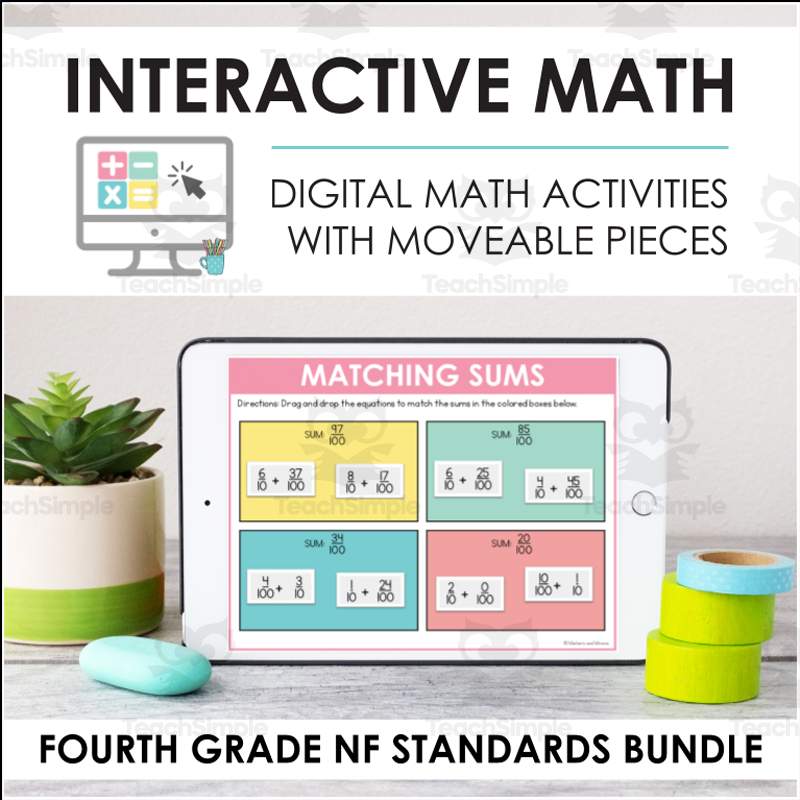
Digital Math for 4.NF.2 - Fraction Equivalence and Ordering (Slides + Self-Grading Quiz)
Math, Fractions, Grade 4, Quizzes, Quizzes and Tests, Teacher Tools
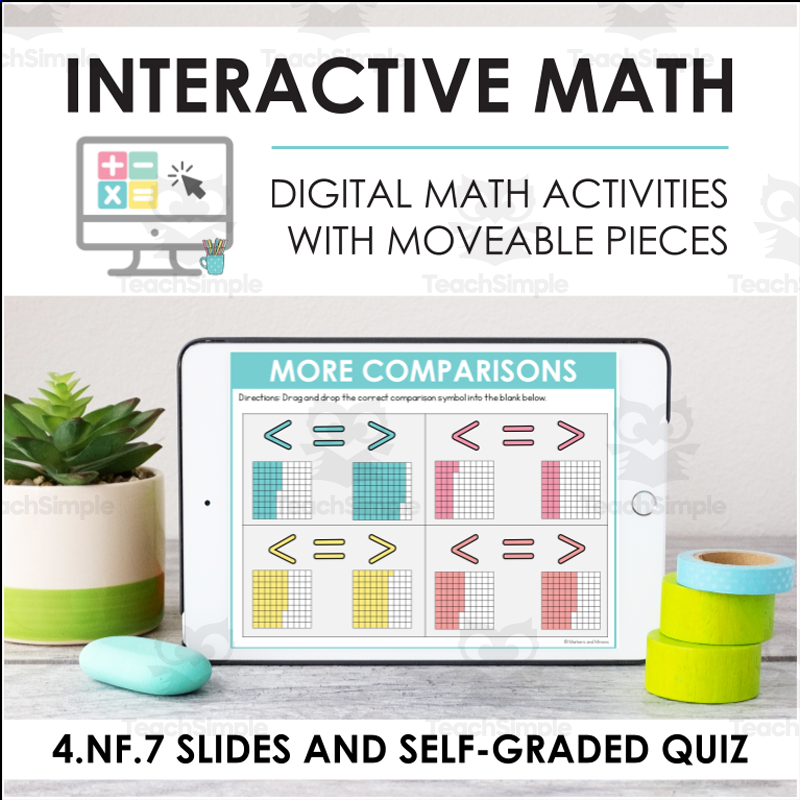
Product: Digital Math for 4.NF.2 - Fraction Equivalence and Ordering (Slides + Self-Grading Quiz) Delving into the fascinating world of fractions, this digital math resource designed specifically for Grade 4 students offers a dynamic and engaging method to review and practice concepts related to fraction equivalence and ordering. Bundled with an interactive session encompassing slides with visuals further simplifying the mathematical principles, it proffers an opportunity for students to learn in a fun-filled environment by dragging, dropping, and sorting images. The product comes in multiple file types including both PowerPoint and Google Slides formats making it flexible enough to suit varied classroom realms whether traditional or virtual via platforms like Google Classroom. The included guide eases the process of assigning either the entire file or selected slides at a time, enabling teachers to customize lessons based on individual needs. Inclusive Features: An Interactive session comprising well-curated slides with simplified visuals. Multiplicity in file types - PowerPoint & Google Slides Note:The interactive feature allows tasks like drag&drop; sort images enhancing practical learning. A self-grading quiz built-in Google Forms This quiz acts as an effective teaching accessory bestowing instant feedback on students' progress while simultaneously collecting valuable data that can be used to enhance future instruction. Specifically catering towards strengthening understanding of benchmark standard 4.NF.2 under fractions you will find : 20 student-friendly interactive slides. A self-grading quiz. Versatility of Use: This resource can seamlessly fit in various teaching methods such as distance learning assignments for those who teach remotely; center-based activities ideal for active-learning classrooms; or small group instruction augmenting collaborative work skills amongst pupils. Enjoy a multi-faceted appeal with our comprehensive offering that not only enhances your pedagogical repertoire but also simplifies the student assessment process!
Author Markers and Minions
Tags Fraction Equivalence, Fraction Ordering, Interactive Slides, Self-grading Quiz, Digital Math
Digital Math for 5.NBT.5 - Multiply Multi-Digit Whole Numbers (Slides + Self-Grading Quiz)
Math, Multiplication and Division, Division, Grade 5, Quizzes, Quizzes and Tests, Teacher Tools
Digital Math for 5.NBT.5 - Multiply Multi-Digit Whole Numbers (Slides + Self-Grading Quiz) An engaging and dynamic teaching resource developed with instructional best practices in mind. This educational tool harnesses the power of digital technology to make learning multiplication more interactive and enjoyable, instantly evaluating student progress. A Multifaceted Teaching Resource Provides review, practice, and enhancement opportunities through interactive digital math slides. Facilitates visualization of mathematical concepts by involving students in tasks such as dragging, dropping, and sorting images digitally – an excellent tool for scaffolding understanding. Can be seamlessly integrated into any virtual classroom setup using PowerPoint or Google Slides ; accommodates various teaching styles including whole class instruction as well as small group workstations. FLEXIBILITY: This robust tool offers personalized lesson delivery; teachers can assign either the entire file or specific slides at a time depending on individual learner needs or pedagogical goals. Self-Grading Google Forms Quiz Alignment The unique self-grading Google Forms quiz feature provides real-time data about each student's understanding of multiplying multi-digit whole numbers. Learners are also given immediate feedback on their performance. Included In This Package: 20 Interactive Student-Friendly Slides: Engaging distance learning assignment that is effective when utilised during small-group instruction or independently at centres. Digital Math for 5.NBT.5 - Multiply Multi-Digit Whole Numbers beautifully combines compelling visuals with meaningful substance—"promoting deeper commonsensical conceptualization while accurately gauging skill acquisition simultaneously—all packaged conveniently within a user-friendly digital format."
Author Markers and Minions
Tags Multiplication, Digital Slides, Self-grading Quiz, Interactive Learning, Multi-digit Numbers, Nbt.5, 5.nbt.5 Word Problems, 5 Nbt 5 Word Problems
Astronomy & Space Science: Reading Comprehension Passages (Docs)
Science, Space, Earth and Environmental Sciences, ELA, Reading, Reading Comprehension, Strategies, Resources for Teachers, Grade 6, 7, 8, 9, Writing Prompts, Worksheets & Printables, Centers, Activities, Teacher Tools, Assessments, Quizzes and Tests, Quizzes, Tests
Astronomy & Space Science: Reading Comprehension Passages & Questions (Docs) - Editable and Fillable This engaging collection of science reading passages about Astronomy and Space Science is designed to bridge the gap between science and literacy through strengthening reading comprehension and sparking scientific curiosity in middle school students. Each passage blends English Language Arts skills with accurate science content that supports NGSS classroom practice. Ideal for interdisciplinary learning in ELA and Science. Suitable for Grade 9 review, too! What Is Included? There are (3) informational passages: The Solar System: A Neighborhood in Motion Understand orbits, the Sun’s role, the differences between inner and outer planets, and where asteroids and comets fit in the system. The Story of Space Science Trace the path from early skywatching to telescopes, satellites, exploration missions, and the ISS, with practical links to GPS, communications, and weather forecasting. Stars of Many Sizes: Dwarfs, Giants, and Neutrons Explore stellar types and life cycles, including our Sun, red giants, supernovas, neutron stars, and pulsars. Student Tasks for Each Passage 5 multiple-choice questions targeting main idea, key details, inference, vocabulary in context, and use of evidence 5 vocabulary matching items with clear, student-friendly definitions 5 text-based questions that require citing specific lines or facts 1 summary prompt that asks students to condense central ideas accurately Full answer key for every section Available Formats for this Resource: PDF Word Docs FULL CATALOG OF DOWNLOADING LINKS HERE Other Science Reading Collections you May find in the store: 1. Astronomy & Space Science 2. Volcanoes, Rocks, & Mountains 3. Rock Cycle, Soil, & Sinkholes 4. Mars, Glaciers, & Antarctica 5. Water Cycle, Acid Rain, & Wastewater 6. Insects, Animals, & Ecosystems 7. Bioluminescence & Insects 8. Animal Skin, Cats, & T. Rex 9. Human Body and Senses 10. Health & Applied Bioscience 11. Waves, Light, & Imaging 12. Electricity & Energy 13. Motion & Materials 14. Chemistry and Materials Science Product Details Length: 14 pages total Grades: 6–8, also suitable for Grade 9 review Use cases: close reading, stations, homework, intervention, test prep, and sub plans Standards support: reinforces informational-text skills and supports NGSS-style sense making through observation, modeling, and clear use of claim, evidence, and reasoning Why Teachers Choose This Set Authentic science content paired with rigorous literacy practice Consistent task structure across all passages for easier planning and smoother student routines Clear, age-appropriate writing that builds confidence without oversimplifying Use this set to reinforce ELA skills in science, to add literacy to your lessons, or to support independent work. The passages strengthen main idea, evidence use, vocabulary in context, inference, cause and effect, and summary writing. With ready-to-use assessments and complete answer keys, you can provide focused practice that is simple to run and fast to review.
Author Middle & High School - CORED Education
Rating
Tags Middle School, Reading Comprehension, Reading Strategies, Reading Passages, ELA, Centers, Reading Passage, Assessments, Vocabulary, Earth Science
Caps Reading Comprehension Passage - Cored Ed Encyclopedia
ELA, Language Development, Resources for Teachers, Reading Comprehension, Reading, Pre-Reading, Creative Writing, Writing, Strategies, Common Core, Grade 2, 3, 4, 5, Worksheets & Printables, Worksheets, Teacher Tools, Centers, Activities, Writing Prompts, Assessments, Tests, Quizzes and Tests, Quizzes
This caps reading comprehension contains the following: Pre-Reading Trivia Students will write down one thing they already know about the subject and then read five more facts and discuss. These facts are fun, and the students will enjoy learning about the subject before reading more. Reading Passage The text is a high-interest reading passage with set paragraphs, roughly three to four paragraphs long. It contains a variety of themes about the topic, anywhere from history to technology. The passage is between 250 and 350 words in length. Mixed Questions The first question page contains four multiple-choice questions, each with a choice of four answers, and three written response questions that require a sentence or two from the student. Creative Writing In this question, the student will be required to write a five to eight sentence paragraph on a question related to the topic. Extension Activities This page is optional for fast finishers. If there are five to ten minutes left at the end of the lesson, the student can choose one of three activities, each one requiring a different skill. Answer Key There are answers for the multiple-choice questions and three written response questions have sample answers. FULL CATALOG OF DOWNLOAD LINKS AND ENCYCLOPEDIA INDEX HERE Cored Ed Encyclopedia Overview The Cored Ed Encyclopedia is a weekly series of lessons that you can pick up and use right away. These short readings fit into whatever time you have available. Each one includes a warm-up, a reading, and a set of questions, but it’s flexible — you can do just the reading, the full lesson, or skip the writing section if you need to. Each lesson focuses on a single topic so students don’t get lost. The writing is clear but never childish, making it perfect for grades two through five. Topics range from animals and science to history, inventions, and everyday things. No matter the level of the student, everyone should take away at least one new idea or fact from each lesson. The materials are easy to print, easy to explain, and require no setup. They work well for whole-class teaching, partner work, or independent study.
Author Cored Education
Rating
Tags Vocabulary, Spelling, Reading Comprehension, Reading Passages, Cored Encyclopedia, Facts, Reading, Creative Writing, Caps, Pre-reading
Social Studies SAMPLE Reading Passage: Food in South America (Word)
ELA, Reading, Reading Comprehension, Strategies, Resources for Teachers, Social Studies, Sociology, Grade 6, 7, 8, 9, Writing Prompts, Worksheets & Printables, Centers, Activities, Teacher Tools, Assessments, Quizzes and Tests, Quizzes, Tests
This is a ONE PASSAGE SAMPLE. The following is the description of the FULL resource and the downloading links: Social Studies Reading Comprehension Passages and Questions: Food and Culture (Word) This resource introduces a collection of Social Studies reading comprehension passages with questions about Food, Culture, and Preservation. The passages are carefully designed to bridge the gap between social studies and literacy through strengthening reading comprehension and sparking knowledge curiosity in middle school students. Each passage blends English Language Arts skills with accurate social studies content . Ideal for interdisciplinary learning in ELA and Social Studies. Suitable for Grade 9 review, too! What Is Included in this Collection? There are three informational passages (with full answer keys): Homemade Cottage Cheese: Food, Family, and Local Trade Salty Traditions: How Salami and Kimchi Stay Safe to Eat From Grasslands to Grill: The Foods of South America For Each Passage, students will have multiple tasks to complete as follow: 5 multiple-choice questions targeting main idea, key details, inference, vocabulary in context, and use of evidence 5 vocabulary matching items with clear, student-friendly definitions 5 text-based questions that require citing specific lines or facts 1 summary prompt that asks students to condense central ideas accurately Available Formats for this Resource PDF Fillable PDF Google Docs FULL CATALOG OF DOWNLOADING LINKS HERE For more Social Studies Reading Passages, check the following Links: Ancient Civilizations PDF Fillable PDF Word Docs Google Docs Early Empires and Trade Networks PDF Fillable PDF Word Docs Google Docs The Founding of the United States PDF Fillable PDF Word Docs Google Docs Language, Culture, and Meaning PDF Fillable PDF Word Docs Google Docs Psychology and Society PDF Fillable PDF Word Docs Google Docs Global Festivals and Traditions PDF Fillable PDF Word Docs Google Docs Extreme Environments and People PDF Fillable PDF Word Docs Google Docs Food, Culture, and Preservation PDF Fillable PDF Word Docs Google Docs Global Food Customs PDF Fillable PDF Word Docs Google Docs Media, Communication, and Popular Culture PDF Fillable PDF Word Docs Google Docs Human Impact on the Environment PDF Fillable PDF Word Docs Google Docs Civic Action and Social Change PDF Fillable PDF Word Docs Google Docs Fashion, Society, and Power PDF Fillable PDF Word Docs Google Docs People, Places, and Unusual Histories PDF Fillable PDF Word Docs Google Docs Product Details Length: 14 pages total Grades: 6–8, also suitable for Grade 9 review Use cases: close reading, stations, homework, intervention, test prep, and sub plans Why Teachers Choose This Set Authentic social studies content paired with rigorous literacy practice Consistent task structure across all passages for easier planning and smoother student routines Clear, age-appropriate writing that builds confidence without oversimplifying Use this set to reinforce ELA skills in social studies, to add literacy to your lessons, and to support independent work. The passages strengthen main idea, evidence use, vocabulary in context, inference, cause and effect, and summary writing. With ready-to-use assessments and complete answer keys, you can provide focused practice that is simple to run and fast to review.
Author Middle & High School - CORED Education
Rating
Tags Middle School, Reading Comprehension, Reading Strategies, ELA, Centers, Reading Passage, Assessments, Vocabulary, Social Studies, Food And Culture
Digital Math for 2.OA.1 - Addition and Subtraction Within 100 (Slides + Self-Grading Quiz)
Math, Algebra, Grade 2, Quizzes, Quizzes and Tests, Teacher Tools
Digital Math for 2.OA.1 - Addition and Subtraction Within 100 This is a groundbreaking teaching resource tailored to inculcate math concepts for Grade 2 students. It merges interactive slides with a self-grading quiz, focusing on addition and subtraction within 100. Interactive Slides The digital-based slides present a review, practice, and enhancement of mathematical concepts attractively. They streamline learning efficacy while also reducing paper waste. Dragging images Sorting graphics Solidifying understanding through diverse interactions Google Forms Quiz- A True Gamechanger! The unique grading feature of the Google Forms quiz eradicates the burden of manual marking while fetching useful data on student comprehension levels. Pivotal Compatibility Features (Included are PowerPoint and Google Slides versions) This adaptable resource allows the use across various platforms used by both schools or homeschoolers. The ease with which assignments can be assigned has been made super easy, especially on platforms like Google Classroom. Users can pick from assigning either the whole file or select specific portions according to their lesson plan requirements. Included in Package: "twenty captivating interactive slides stimulating active learning from students." This handy educational tool suits different methods of implementation whether used as distance learning material (owing to global remote schooling) or assimilated into routine classroom events such as small group tasks. Digital Math for 2.OA1: "supports effective mathematics education covering today's varied teaching-learning realities." . Note that this tool gets perfectly aligned with Algebra course work meant for Grade two-level math learners providing complementation to their existing curriculum++, enhancing better teaching, and improving academic outcomes!
Author Markers and Minions
Tags Interactive Slides, Self-grading Quiz, Addition And Subtraction, Digital Math, Active Learning
Remaking Plastic: Social Studies Reading Passage (Fillable PDF)
ELA, Reading, Reading Comprehension, Strategies, Resources for Teachers, Social Studies, Sociology, Grade 6, 7, 8, 9, Writing Prompts, Worksheets & Printables, Centers, Activities, Teacher Tools, Assessments, Quizzes and Tests, Quizzes, Tests
Remaking Plastic: Social Studies Reading Comprehension Passage (Fillable PDF) This resource introduces a unique Social Studies reading comprehension passage with questions about Recycling and Remaking Plastic. The passage is carefully designed to bridge the gap between social studies and literacy through strengthening reading comprehension and sparking knowledge curiosity in middle school students. Each passage blends English Language Arts skills with accurate social studies content . Ideal for interdisciplinary learning in ELA and Social Studies. Suitable for Grade 9 review, too! These worksheets are designed as fillable PDFs , which means students can type their answers directly into the document on any computer or tablet . Each page includes highlighted text fields that show them exactly where to type! Student Tasks throughout the passage: 5 multiple-choice questions targeting the following skills: main idea, key details, inference, vocabulary in context, and use of evidence 5 vocabulary matching items with clear, student-friendly definitions 5 text-based questions that require citing specific lines or facts 1 summary prompt that asks students to condense central ideas accurately Full answer key for every section Available Formats for this Resource: PDF Word Docs Google Docs FULL CATALOG OF DOWNLOADING LINKS HERE Social Studies Reading Comprehension Collection Links: 1. Ancient Civilizations PDF Fillable PDF Word Docs Google Docs 2. Early Empires and Trade Networks PDF Fillable PDF Word Docs Google Docs 3. The Founding of the United States PDF Fillable PDF Word Docs Google Docs 4. Language, Culture, and Meaning PDF Fillable PDF Word Docs Google Docs 5. Psychology and Society PDF Fillable PDF Word Docs Google Docs 6. Global Festivals and Traditions PDF Fillable PDF Word Docs Google Docs 7. Extreme Environments and People PDF Fillable PDF Word Docs Google Docs 8. Food, Culture, and Preservation PDF Fillable PDF Word Docs Google Docs 9. Global Food Customs PDF Fillable PDF Word Docs Google Docs 10. Media, Communication, and Popular Culture PDF Fillable PDF Word Docs Google Docs 11. Human Impact on the Environment PDF Fillable PDF Word Docs Google Docs 12. Civic Action and Social Change PDF Fillable PDF Word Docs Google Docs 13. Fashion, Society, and Power PDF Fillable PDF Word Docs Google Docs 14. People, Places, and Unusual Histories PDF Fillable PDF Word Docs Google Docs Product Details: Length: 5 pages Grades: 6–8, also suitable for Grade 9 review Use cases: close reading, stations, homework, intervention, test prep, and sub plans Why Teachers Choose This Passage: Authentic social studies content paired with rigorous literacy practice Consistent task structure for easier planning and smoother student routines Clear, age-appropriate writing that builds confidence without oversimplifying Use this passage to reinforce ELA skills in social studies, to add literacy to your lessons, and to support independent work. The passage strengthens main idea, evidence use, vocabulary in context, inference, cause and effect, and summary writing. With ready-to-use assessments and complete answer keys, you can provide focused practice that is simple to run and fast to review.
Author Middle & High School - CORED Education
Rating
Tags Middle School, Reading Comprehension, Reading Strategies, ELA, Centers, Reading Passage, Assessments, Vocabulary, Social Studies, Sociology
Guided Reading Level H - Snow, Sleet, and Hail
ELA, Resources for Teachers, Reading Comprehension, Reading, Science, Pre-Reading, Language Development, Earth and Environmental Sciences, Earth Sciences, Physics, Kindergarten, Grade 1, 2, Worksheets & Printables, Worksheets, Teacher Tools, Centers, Activities, Literacy Readers, Quizzes, Quizzes and Tests, Assessments
This Guided Reading Book - Snow, Sleet, and Hail (Level H) includes: Guided Reading Color Label (front cover x1) This is a quick way to match the book’s demands to what students can generally handle.. The overall goal is to use the level/color to pick books for several smaller groups. To qualify for a certain level, a student is expected to read a book from that level with about 90–94% accuracy. If a student is consistently accurate and understands, move up a level. If the student is struggling at that level, drop down and add more support. Each student will improve at completely different rates, but it is generally one of the best ways to check progress across the class. DOWNLOAD THE CATALOG TO VIEW ALL GUIDED READING BOOKS AVAILABLE (SORTED LEVELS A-Z) Pre-Reading Question (x1) Teacher asks the prompt aloud, can be while showing the cover or first page. Students share what they already know, or make educated guesses from the cover. Prompt them to use the target vocabulary. Write some of their responses on the board to look back at during the reading. Vocabulary Words (x5) Introduce the five words, best doing it one at a time. Start by saying it, while students repeat and then see if anyone knows what it means before reading further. Read through the meaning and try to briefly connect each word to a picture or gesture so it’s meaningful. Ask students to flip through the book pages and point to where they see each of the vocabulary words. While reading the book pause upon coming across one of the vocab words or read the sentence twice to make sure students understand the word has appeared. Optional: Ask students to raise hands whenever they see/hear one of the new words. Guided Reading Pages (x10) Check the book snapshot (below) for: primary topic - do you need to prep extra reading or intro materials on this? what is taught best - decide on 1-2 bullets to focus on, use the prompt or words provided here for best results. learning goals - what you are checking for students to be able to do after the session, elicit answers using prompts or words provided. key vocabulary (see section above). questions overview - so you know what is coming up and if you need to prep extra materials to assist understanding. Run the lesson You may have already looked at a few of the pages together, but you can show them some of the pictures again first to set meaning. Depending on how much time you have and how familiar your students are with guided reading class, you may want to read the book aloud first with the group first. Students whisper or partner read, while you listen in. If time, do it as a group, one student reading a page each. Use the guided page’s prompts to coach: “Check the picture / does it make sense?” “Point under the words / try the first sound” “Reread the sentence smoothly”. Try to focus more on one student per session (rotating every time), so you can work out if they are ready to move up or need to move down a level. Comprehension Questions (back cover x3) This is your way to check that students didn’t just say the words, but actually understood the text. First, let students answer by pointing to the page/picture and saying a short sentence. After any answer, follow with: “Show me where you found that in the text.” In bigger groups, have partners answer first (10–20 seconds), then call on 2–3 students to share. Differentiation tips: Emerging speakers/struggling readers: oral + pointing On-level: oral in a full sentence Higher: one written sentence or draw + label Book Snapshot Title: Snow, Sleet, and Hail Genre: Nonfiction (informational) Subject: Life Science / Earth Science Primary Topic: Types of frozen water from the sky Estimated Guided Reading Level (A–Z): H What This Book Teaches Best Introduces three kinds of frozen water that fall from the sky: snow, sleet, and hail. Explains simple conditions and traits: snow falls when air is cold and feels “soft and light.” Builds science vocabulary using clear examples (snowflakes as “tiny crystal,” sleet as rain that “freezes as it falls”). Describes how hail forms and changes size (“grows inside a tall cloud” and “gets bigger and bigger”). Learning Goals Identify snow, sleet, and hail as kinds of frozen water. Describe what the text says snow is like and when it falls. Explain what a snowflake is, using the book’s words. Explain how the book says sleet forms as it falls. Describe how the book says hail forms and grows before it falls. Tell how frozen water affects Earth in the book (it “covers the earth,” and cold weather “changes the land”). Key Vocabulary From the Text crystal — a hard, shiny shape. sleet — rain that freezes as it falls. freezes — turns from water into ice when very cold. bounces — jumps back up after it hits something. hail — hard ice that falls during a big storm. Discussion Prompts Pre-reading question: What kinds of frozen water have you seen fall from the sky? Comprehension questions: What does the book say snow is like when it falls? Comprehension questions: What does the book say sleet is made from as it falls? Comprehension questions: Where does the book say hail grows before it falls? Printing Tips 1. Best Printing Method (Recommended) “Booklet” Printing (Best if Available) If your printer or PDF viewer supports Booklet Printing , use this. Settings to use: Print mode: Booklet Paper size: Letter or A4 (either works) Orientation: Landscape Print on both sides: Yes Flip on: Short edge Scaling: Fit to printable area Booklet subset: First test: Front sides only Then: Back sides only This will automatically: Pair pages correctly Put the cover on the outside Align everything for folding After printing, fold in half and staple along the spine . 2. If “Booklet” Printing Is NOT Available You can still print this correctly with manual duplex printing . Step-by-step: Open the PDF. Choose Print . Set: Orientation: Landscape Pages per sheet: 1 Print on both sides: Yes Flip on: Short edge Print all pages . Because each PDF page already contains two facing book pages, the result will still fold cleanly into a book. Thousands of Cored Education products are included with your TeachSimple membership. Download links and encyclopedia index available here.
Author Cored Education
Rating
Tags Vocabulary, Reading Comprehension, Reading Passages, Leveled Reading, Nonfiction, Reading, Guided Reading, Earth Science, Weather, Physics
Salami and Kimchi: Social Studies Reading Comprehension Passage (PDF)
ELA, Reading, Reading Comprehension, Strategies, Resources for Teachers, Social Studies, Sociology, Grade 6, 7, 8, 9, Writing Prompts, Worksheets & Printables, Centers, Activities, Teacher Tools, Assessments, Quizzes and Tests, Quizzes, Tests
Salami and Kimchi: Social Studies Reading Comprehension Passage (PDF) This resource introduces a unique Social Studies reading comprehension passage with questions about Salami and Kimchi: Salty Traditions. The passage is carefully designed to bridge the gap between social studies and literacy through strengthening reading comprehension and sparking knowledge curiosity in middle school students. Each passage blends English Language Arts skills with accurate social studies content . Ideal for interdisciplinary learning in ELA and Social Studies. Suitable for Grade 9 review, too! Student Tasks throughout the passage: 5 multiple-choice questions targeting the following skills: main idea, key details, inference, vocabulary in context, and use of evidence 5 vocabulary matching items with clear, student-friendly definitions 5 text-based questions that require citing specific lines or facts 1 summary prompt that asks students to condense central ideas accurately Full answer key for every section Available Formats for this Resource: Fillable PDF Word Docs Google Docs FULL CATALOG OF DOWNLOADING LINKS HERE Social Studies Reading Comprehension Collection Links: 1. Ancient Civilizations PDF Fillable PDF Word Docs Google Docs 2. Early Empires and Trade Networks PDF Fillable PDF Word Docs Google Docs 3. The Founding of the United States PDF Fillable PDF Word Docs Google Docs 4. Language, Culture, and Meaning PDF Fillable PDF Word Docs Google Docs 5. Psychology and Society PDF Fillable PDF Word Docs Google Docs 6. Global Festivals and Traditions PDF Fillable PDF Word Docs Google Docs 7. Extreme Environments and People PDF Fillable PDF Word Docs Google Docs 8. Food, Culture, and Preservation PDF Fillable PDF Word Docs Google Docs 9. Global Food Customs PDF Fillable PDF Word Docs Google Docs 10. Media, Communication, and Popular Culture PDF Fillable PDF Word Docs Google Docs 11. Human Impact on the Environment PDF Fillable PDF Word Docs Google Docs 12. Civic Action and Social Change PDF Fillable PDF Word Docs Google Docs 13. Fashion, Society, and Power PDF Fillable PDF Word Docs Google Docs 14. People, Places, and Unusual Histories PDF Fillable PDF Word Docs Google Docs Product Details: Length: 5 pages Grades: 6–8, also suitable for Grade 9 review Use cases: close reading, stations, homework, intervention, test prep, and sub plans Why Teachers Choose This Passage: Authentic social studies content paired with rigorous literacy practice Consistent task structure for easier planning and smoother student routines Clear, age-appropriate writing that builds confidence without oversimplifying Use this passage to reinforce ELA skills in social studies, to add literacy to your lessons, and to support independent work. The passage strengthens main idea, evidence use, vocabulary in context, inference, cause and effect, and summary writing. With ready-to-use assessments and complete answer keys, you can provide focused practice that is simple to run and fast to review.
Author Middle & High School - CORED Education
Rating
Tags Middle School, Reading Comprehension, Reading Strategies, ELA, Centers, Reading Passage, Assessments, Vocabulary, Social Studies, Sociology
Digital Math for 4th Grade MD Standards - (BUNDLE of Slides + Self-Grading Quiz)
Math, Measurements, Grade 4, Quizzes, Quizzes and Tests, Teacher Tools
Digital Math for 4th Grade MD Standards - (BUNDLE of Slides + Self-Grading Quiz) This comprehensive teaching resource aligns with4.MD.1 - 4.MD.7 standards. It's designed to facilitate interactive math experiences focused on measurements. Interactive Learning Experiences This bundle comprises digital elements such as interactive slides that enable review, practice, and enrichment of mathematical concepts via activities like dragging and dropping images or visually sorting them. Digital Efficiency The entirely digital nature eliminates physical paperwork, providing you with ready-to-use materials for your virtual classroom. Interactive Slides:The bundle includes slides available in both PowerPoint and Google Slids formats tailored to each specific standard being taught. Self-grading Quizzes:Incorporates a handy self-grading Google Forms quiz per standard, allowing quick understanding gauge without having to manually score each response individually. Versatility in Usage This product offers flexibility regarding its use; it can be utilized as a standalone distance learning assignment—as well as incorporated into small group instruction or utilized as an activity within a center during normal classroom activities. Ease of Use: Google Workspace Compatible b The product's compatibility with Google Workspace allows straightforward assignment through Google Classroom. Included instructions guide educators about how they can assign either whole files or select individual slides at any particular time along with corresponding quizzes through their preferred platform. In Conclusion: The Digital Math for 4th Grade MD Standards serves many purposes simultaneously – reinforcing measurements education in mathematics while promoting student engagement through hands-on digital tasks – a staple in today's technologically advanced classrooms. It is, without a doubt, an indispensable teaching resource for educators and homeschoolers.
Author Markers and Minions
Tags Interactive Slides, Self-grading Quiz, Measurements Education, Digital Math, Distance Learning
Digital Math for 4.OA.4 - Factors and Multiples (Slides + Self-Grading Quiz)
Math, Algebra, Grade 4, Quizzes, Quizzes and Tests, Teacher Tools
Digital Math for 4.OA.4 - Factors and Multiples (Slides + Self-Grading Quiz) is a dynamic teaching resource that proves indispensable when it comes to reinforcing, practicing, and enhancing students' understanding of mathematical concepts. This engaging means of instruction not only liberates you from the painstaking chores of paper trails but also allows for a no-prep approach towards teaching. Strategically Targeting the 4.OA.4 Standard Our highly interactive package expertly introduces learners to factors and multiples using visual representation which offers an easier grasp of these concepts through features like drag and drop for images. The package is in both PowerPoint and Google Slides formats facilitating smooth assignment on platforms such as Google Classroom. Includes 20 student slides rich in content tackling several aspects related to factors and multiples suitable for any fourth-grade curriculum needs in both algebra studies and general mathematics lessons. Provides educators with room to select specific slides suitable for particular lessons without necessarily having to use the entire file at once—a flexibility enabled by inclusive instructions within the setup. Gauging Comprehension: The tool comes equipped with a self-grading Google Forms quiz perfect as an assessment tool aiding in data collection related to student progress on the given standard. Versatility: This versatile resource proves useful across multiple scenarios—it might be applied during distance learning sessions or serve as a homework assignment tool owing its digital nature. Its suitability is not limited digitally; it can be optimally deployed during physical interaction periods like small group discussions or instruction sessions at centers making it versatile enough across different teaching styles. So why wait? Leverage this Digital Math asset today! Empower your fourth graders' understanding of factors and multiples in an engaging, flexible, and highly effective instructional digital platform.
Author Markers and Minions
Tags Factors, Multiples, Interactive Slides, Self-grading Quiz, Digital Learning
Julius Lothar Meyer – A Lesser-Known Pioneer of the Periodic Table
Life Sciences, Science, STEM, Social Studies, Biographies, Inventors, Basic Science, Physics, Chemistry, Technology, Grade 6, 7, 8, 9, 10, 11, Worksheets, Worksheets & Printables, Quizzes, Quizzes and Tests, Teacher Tools, Projects, Activities
Julius Lothar Meyer – A Lesser-Known Pioneer of the Periodic Table Comprehension Activities A flexible science resource for grades 7–10 (PDF + H5P) 🧪📖 A printable and digital resource science and cross-curricular teaching 🧪🧠 This resource introduces students to Julius Lothar Meyer, a chemist who developed one of the earliest versions of the periodic table—independently of Mendeleev. While Mendeleev is often more widely recognized, Meyer’s work also played a crucial role in organizing chemical elements and identifying patterns that shaped how we understand atomic structure today. The material offers a short, readable text that gives students an overview of Meyer’s scientific contributions. It’s supported by a set of structured activities that encourage reflection and comprehension. The format is ideal for both subject-specific lessons and non-specialist substitute teaching. What’s included: Informational text about Julius Lothar Meyer Profile worksheet for summarizing key facts Quiz questions with a complete solution key Two optional follow-up tasks: – Students create their own questions – Peer exchange and answer activity File formats: – PDF (for print or digital use) – Editable DOCX (text only) – H5P version (interactive and text-based, no images) How it’s used in the classroom: This resource fits well into a chemistry unit on the history of the periodic table, scientific discovery, or atomic theory. I’ve also used it as an extra reading task for early finishers or as a way to bring biographical context into more abstract content. The H5P version is a helpful option for students working online or independently. It supports self-checking and can be easily uploaded to learning platforms. With no extra prep required, the lesson can be used right away—whether printed, projected, or assigned digitally. A thoughtful way to highlight a scientist whose name isn’t always in the spotlight—but whose impact on chemistry is worth exploring. Have fun exploring the world of science with your students! Warmly, Lernfitness Did You Know? I teach with a certified therapy dog, and together we focus on creating a positive and inspiring learning environment.
Author Lernfitness
Rating
Tags Science, Famous Scientists Lesson, H5P, Interactive Science Exercises, STEM, Scientists, Chemistry, Periodic Table, Julius Lothar Meyer, Mendeleev
UK/Aus English Prefixes and Suffixes Practice Year 6-7 (PPT)
ELA, Language Development, ESL, Grammar, Common Core, Resources for Teachers, Grade 5, 6, 7, Quizzes and Tests, Teacher Tools, Tests, Assessments, Activities, Presentations, Quizzes
THIS IS THE UK/AUS ENGLISH SPELLING VERSION. CHECK THE CATALOG FOR THE ORIGINAL AMERICAN ENGLISH VERSION. Prefixes and Suffixes Grammar Practice MCQS ELA MCQS Overview: In this series of lessons, students will embark on an engaging journey to explore the grammar skills that make our language vibrant and expressive. These lessons are crafted to help students identify, comprehend, and effectively apply language arts skills in both writing and speech. This UK/Aus English version is especially useful for schools, teachers, and families working with British-based spelling and language conventions. It is a helpful option for classrooms using UK curriculum expectations, international programmes influenced by British English, or any setting where learners need to practise the correct capitalisation and punctuation forms for that version of English. Prefixes and Suffixes Overview: Match Affix to Meaning Match Meaning to Affix Forming Affixes Fill the Gaps Additional Affix Practice PPT Version This is the PPT editable and interactive version. There is a fillable answer sheet at the end. This download is available in GOOGLE Docs, GOOGLE Forms, GOOGLE Slides. PDF, PPT, WORD, check the links below for more details. FULL CATALOG OF DOWNLOAD LINKS HERE ELA Review Questions Overview Each review test includes three answer choices for every question, which helps keep things simple and manageable for students. The layout is clear and easy to follow, so students can focus on the questions instead of figuring out what to do. A few pictures are included on each test to make the pages feel a little more inviting and less overwhelming. A review sheet is also included, giving students a chance to go back over many of the main skills covered in the resource. Introduction or Example Sheet Each topic comes with an introduction or example sheet to look at before students begin. This gives students a clear starting point and helps them feel more prepared. It also lets them see what to expect before moving into the main work. For many students, it is a helpful way to quickly refresh the key ideas before they start practicing on their own. Full Answer Keys Full answer keys are included to make marking and checking work faster and easier. Sample responses are also provided where needed, especially for open-ended tasks. This can be a real time-saver on busy days and makes the resource more practical to use. Everything is there to help make planning, teaching, and checking student work feel a little more straightforward. For More Like This For similar downloads and other frees, do check out Cored Group on TeachSimple.
Author Cored Education
Rating
Tags Elementary, Answers, Ccss, Common Core, Grammar, Tests, Test Prep, Assessment, Grade 5, Grade 6
Reindeer Reading Comprehension Passage - Cored Ed Encyclopedia
ELA, Language Development, Reading Comprehension, Reading, Pre-Reading, Science, Writing, Strategies, Animals, Life Sciences, Grade 2, 3, 4, 5, Worksheets & Printables, Worksheets, Teacher Tools, Centers, Activities, Writing Prompts, Assessments, Quizzes and Tests, Quizzes, Lesson Plans
This reindeer reading comprehension includes: Visualization (on the front cover) Start your lesson by taking a minute to think and share something about the topic. Read the script aloud (slowly), perhaps prepare some music or sound effects. Student close their eyes and let their imaginations wander. Students open their eyes, read the question aloud and give them a few minutes to complete. Ask a few students to share or keep answers until the end to compare with what they learn in the passage. Quick pause—thousands of Cored Education products are included with your TeachSimple membership. Download links and encyclopedia index available here. COMPANION VIDEO NOW AVAILABLE (EMBEDDED AFTER PREVIEW PICTURES IN PRODUCT DESCRIPTION) Pre-Reading Trivia Students will write down one thing they already know about the subject and then read five more facts and discuss. These facts are fun, and the students will enjoy learning about the subject before reading more. Give 1 minute for students to write what they already know (no pressure—best guess is fine). Read the five facts together. After each fact, do ask a student for their opinion, was it surprising? Set a purpose by asking students to highlight/underline one fact they want to learn more about during the reading. Reading Passage The text is a high-interest reading passage with set paragraphs, roughly three to four paragraphs long. It contains a variety of themes about the topic, anywhere from history to technology. The passage is between 250 and 350 words in length. First, ask students to look at the headings and see what they’ll learn about today. What do they know about the topic/heading? First read options: Teacher read-aloud (best for support). Partner reading (paragraph by paragraph). While reading, students underline important details, and vocabulary words they think may come up in the questions section. Mixed Questions The first question page contains four multiple-choice questions, each with a choice of four answers, and three written response questions that require a sentence or two from the student. Students complete the mcqs first independently, then review quickly as a class. For the 3 written responses, try to get students giving the answer with some form of evidence: “I think ___ because the text says ___.” If students get stuck, send them back to check the passage. Vocabulary Questions Practice seven key words from the text in this section across two activities. First section is scrambled words where students will unscramble three words given a clue for each. The second section is a word to meaning matching activity. Before starting, have some students read out words they underlined in the passage. Ask students to say the word and read aloud the sentence(s) around each word. Ask students to do scrambled words and the matching exercise in pairs then go through answers as a class. For the scrambled spelling task, get four pairs to come up to the board and write the words for extra practice with the other student reading out the clue. For the matching task, prompt students to give full sentences: “I matched ___ with ___ because ___.” Creative Writing In this question, the student will be required to write a five to eight sentence paragraph on a question related to the topic. Before starting, ask students write down 3 key ideas they are going to include in their piece. Ask students for ideas to share around the class to help those struggling. Pro writing expectations: 5–8 sentences At least 2 facts or details from the passage At least 2 vocabulary words from the previous page Students read their paragraphs while classmates listen for facts and vocabulary words. Extension Activities This page is optional for fast finishers or to take home. There are several activities, each one requiring a different skill. Do some, do none, do all, completely optional - but you will feel reassured knowing every possibility is planned for. Includes summary writting question. Answer Key There are answers for the multiple-choice questions, written response questions have sample answers, vocabulary answers and if there is a summary question then a sample summary will be provided as well. Lesson Plan Included Customized lesson plan for this lesson is included. Lesson Snapshot Title: Reindeer Genre: Nonfiction (informational text) Subject: Life Science (Animals & Habitats) Primary Topic: Reindeer adaptations, migration, and human connections Estimated Guided Reading Level (A–Z): R What This Lesson Teaches Best How reindeer are adapted for cold places (thick coat; wide hooves for soft snow and soggy tundra). How reindeer find food when conditions are harsh (digging through snow to reach lichen). Migration and seasonal movement (some herds travel long journeys; more than 600 miles north in summer, then south again). How people and reindeer have influenced each other (communities watching hoofprints, herding partnerships, reindeer helping with travel and providing resources). A conservation-style question about changing winters (warming turning soft snow into hard ice that seals food away). Learning Goals Students will describe where reindeer live using details from the text (Arctic and subarctic lands). Students will explain two body features that help reindeer in winter conditions. Students will describe how reindeer get food when it is scarce, using the text’s example. Students will explain how long journeys relate to seasons and survival in the passage. Students will describe one way people have interacted with or depended on reindeer in the text. Key Vocabulary From the Text subarctic — very cold region just below the Arctic. tundra — open, cold land with few trees. hoofprints — marks left by hooves in the ground or snow. lichen — crusty plantlike growth on rocks and ground. Vulnerable — at risk of harm or shrinking in number. FULL CATALOG OF DOWNLOAD LINKS AND ENCYCLOPEDIA INDEX HERE
Author Cored Education
Rating
Tags Vocabulary, Reading Comprehension, Reading Passages, Reading, Creative Writing, Reading Strategies, Writing Prompts, Lesson Plans, Reindeer, Life Science
SAMPLE Social Studies Reading Comprehension Passage: Tea Customs
ELA, Reading, Reading Comprehension, Strategies, Resources for Teachers, Social Studies, Sociology, Grade 6, 7, 8, 9, Writing Prompts, Worksheets & Printables, Centers, Activities, Teacher Tools, Assessments, Quizzes and Tests, Quizzes, Tests
This is a free passage sample from the complete resource. The full version includes everything needed for a complete reading comprehension activity: the passage, multiple-choice questions, short-answer questions, vocabulary matching, a summary-writing task, and a detailed answer key. Download the complete passage resource by clicking on the following links: PDF Fillable PDF Word Docs Google Docs Tea Customs: Social Studies Reading Comprehension Passage (PDF) This resource introduces a unique Social Studies reading comprehension passage with questions about Tea Drinking Customs The passage is carefully designed to bridge the gap between social studies and literacy through strengthening reading comprehension and sparking knowledge curiosity in middle school students. Each passage blends English Language Arts skills with accurate social studies content . Ideal for interdisciplinary learning in ELA and Social Studies. Suitable for Grade 9 review, too! Student Tasks throughout the passage: 5 multiple-choice questions targeting the following skills: main idea, key details, inference, vocabulary in context, and use of evidence 5 vocabulary matching items with clear, student-friendly definitions 5 text-based questions that require citing specific lines or facts 1 summary prompt that asks students to condense central ideas accurately Full answer key for every section FULL CATALOG OF DOWNLOADING LINKS HERE Other Social Studies Reading Comprehension Collections You May Find in the Store: 1. Ancient Civilizations 2. Early Empires and Trade Networks 3. The Founding of the United States 4. Language, Culture, and Meaning 5. Psychology and Society 6. Global Festivals and Traditions 7. Extreme Environments and People 8. Food, Culture, and Preservation 9. Global Food Customs 10. Media, Communication, and Popular Culture 11. Human Impact on the Environment 12. Civic Action and Social Change 13. Fashion, Society, and Power 14. People, Places, and Unusual Histories Product Details: Length: 4 pages Grades: 6–8, also suitable for Grade 9 review Use cases: close reading, stations, homework, intervention, test prep, and sub plans Why Teachers Choose This Passage: Authentic social studies content paired with rigorous literacy practice Consistent task structure for easier planning and smoother student routines Clear, age-appropriate writing that builds confidence without oversimplifying Use this passage to reinforce ELA skills in social studies, to add literacy to your lessons, and to support independent work. The passage strengthens main idea, evidence use, vocabulary in context, inference, cause and effect, and summary writing. With ready-to-use assessments and complete answer keys, you can provide focused practice that is simple to run and fast to review.
Author Middle & High School - CORED Education
Rating
Tags Middle School, Reading Comprehension, Reading Strategies, ELA, Centers, Reading Passage, Assessments, Vocabulary, Social Studies, Sociology
Text Structure Digital Quiz
ELA, Reading, Grade 6, 7, 8, Quizzes, Quizzes and Tests, Teacher Tools
This is a Text Structure Digital Quiz. It is a text-based quiz that has 5 questions that ask students to analyze the structure of the text. Answer key included. There are directions to assist you with accessing and assigning the quiz to students.
Author Mrs. Spangler in the Middle
Tags Text Structure, Digital Quiz, Google Classroom, Reading Strategies, Making Inferences, Text Structure Quiz
Basketball Reading Comprehension Passage - Cored Ed Encyclopedia
ELA, Language Development, Resources for Teachers, Reading Comprehension, Reading, Pre-Reading, Creative Writing, Writing, Sports, P.E. & Health, Grade 2, 3, 4, 5, Worksheets & Printables, Worksheets, Teacher Tools, Centers, Activities, Writing Prompts, Assessments, Tests, Quizzes and Tests, Quizzes
This basketball reading comprehension contains the following: Pre-Reading Trivia Students will write down one thing they already know about the subject and then read five more facts and discuss. These facts are fun, and the students will enjoy learning about the subject before reading more. Reading Passage The text is a high-interest reading passage with set paragraphs, roughly three to four paragraphs long. It contains a variety of themes about the topic, anywhere from history to technology. The passage is between 250 and 350 words in length. Mixed Questions The first question page contains four multiple-choice questions, each with a choice of four answers, and three written response questions that require a sentence or two from the student. Creative Writing In this question, the student will be required to write a five to eight sentence paragraph on a question related to the topic. Extension Activities This page is optional for fast finishers. If there are five to ten minutes left at the end of the lesson, the student can choose one of three activities, each one requiring a different skill. Answer Key There are answers for the multiple-choice questions and three written response questions have sample answers. FULL CATALOG OF DOWNLOAD LINKS AND ENCYCLOPEDIA INDEX HERE Cored Ed Encyclopedia Overview The Cored Ed Encyclopedia is a weekly series of lessons that you can pick up and use right away. These short readings fit into whatever time you have available. Each one includes a warm-up, a reading, and a set of questions, but it’s flexible — you can do just the reading, the full lesson, or skip the writing section if you need to. Each lesson focuses on a single topic so students don’t get lost. The writing is clear but never childish, making it perfect for grades two through five. Topics range from animals and science to history, inventions, and everyday things. No matter the level of the student, everyone should take away at least one new idea or fact from each lesson. The materials are easy to print, easy to explain, and require no setup. They work well for whole-class teaching, partner work, or independent study.
Author Cored Education
Rating
Tags Vocabulary, Spelling, Reading Comprehension, Reading Passages, Cored Encyclopedia, Facts, Reading, Creative Writing, Basketball, Sports
Newspapers Reading Comprehension Passage - Cored Ed Encyclopedia
ELA, Language Development, Resources for Teachers, Reading Comprehension, Reading, Pre-Reading, Writing, History, Social Studies, Strategies, Grade 2, 3, 4, 5, Worksheets & Printables, Worksheets, Teacher Tools, Centers, Activities, Writing Prompts, Assessments, Tests, Quizzes and Tests, Quizzes
This newspapers reading comprehension contains the following: COMPANION VIDEO NOW AVAILABLE (EMBEDDED AFTER PREVIEW PICTURES IN PRODUCT DESCRIPTION) Visualize on the Cover (Teacher Read Aloud Script) Start your lesson by taking a few moments to visualize the topic and share thoughts or feelings about it. Pre-Reading Trivia Students will write down one thing they already know about the subject and then read five more facts and discuss. These facts are fun, and the students will enjoy learning about the subject before reading more. Reading Passage The text is a high-interest reading passage with set paragraphs, roughly three to four paragraphs long. It contains a variety of themes about the topic, anywhere from history to technology. The passage is between 250 and 350 words in length. Mixed Questions The first question page contains four multiple-choice questions, each with a choice of four answers, and three written response questions that require a sentence or two from the student. Vocabulary Questions Practice seven key words from the text in this section across two activities. First section is scrambled words where students will unscramble three words given a clue for each. The second section is a word to meaning matching activity. Creative Writing In this question, the student will be required to write a five to eight sentence paragraph on a question related to the topic. Extension Activities This page is optional for fast finishers or to take home. There are several activities, each one requiring a different skill. Do some, do none, do all, completely optional - but you will feel reassured knowing every possibility is planned for. Includes summary writting question. Answer Key There are answers for the multiple-choice questions, written response questions have sample answers, vocabulary answers and if there is a summary question then a sample summary will be provided as well. FULL CATALOG OF DOWNLOAD LINKS AND ENCYCLOPEDIA INDEX HERE Lesson Snapshot Title: Newspapers Genre: Nonfiction Subject: Reading (Informational Text / Media Literacy) Primary Topic: What newspapers are, how they work, and why they matter Estimated Guided Reading Level (A–Z): N What This Lesson Teaches Best Explains what a newspaper is (a bundle of pages on a schedule) and what it contains (stories, photos, advertisements, and sometimes opinions). Teaches how newspapers are organized, including narrow columns, headlines, sections, and an editorial page with editorials and op-eds (opinions, not straight news). Builds understanding of how newspapers developed over time, including printing presses spreading and a 1605 paper from Strasbourg that is often recognized as the first newspaper. Describes how newspapers are made: reporting, interviewing, checking records, editors looking for mistakes, and printing a correction if an error slips through. Reinforces the passage with support pages (trivia, mixed questions, vocabulary, writing, and extensions) that match the same ideas and terms (headline, editorial/op-ed, correction, newsstands, online editions). Learning Goals Define a newspaper using details from the passage. Identify features of a newspaper mentioned in the text, such as columns, headlines, photographs, and advertisements. Explain how sections and the editorial page help separate topics and opinions from straight news. Describe how printing presses helped printed news reach many readers. Describe what journalists and editors do to make a newspaper accurate and clear. Explain what stays the same when newspapers publish online for screens. Key Vocabulary From the Text Schedule — a planned time pattern (every day or every week). Columns — narrow vertical parts that words stand in. Editorial — an opinion piece in a newspaper. Op-eds — opinion writing, not straight news. Correction — a note printed to fix a mistake. Cored Ed Encyclopedia Overview The Cored Ed Encyclopedia is a weekly series of lessons that you can pick up and use right away. These short readings fit into whatever time you have available. Each one includes a warm-up, a reading, and a set of questions, but it’s flexible — you can do just the reading, the full lesson, or skip the writing section if you need to. Each lesson focuses on a single topic so students don’t get lost. The writing is clear but never childish, making it perfect for grades two through five. Topics range from animals and science to history, inventions, and everyday things. No matter the level of the student, everyone should take away at least one new idea or fact from each lesson. The materials are easy to print, easy to explain, and require no setup. They work well for whole-class teaching, partner work, or independent study.
Author Cored Education
Rating
Tags Vocabulary, Spelling, Reading Comprehension, Reading Passages, Reading, Creative Writing, Reading Strategies, Writing Prompts, Newspapers, History
Earth Science Reading Passage: Cleaning Wasterwater (Fillable PDF)
Science, ELA, Reading, Reading Comprehension, Strategies, Resources for Teachers, Earth and Environmental Sciences, Earth Sciences, Environmental Science, Grade 6, 7, 8, 9, Writing Prompts, Worksheets & Printables, Centers, Activities, Teacher Tools, Assessments, Quizzes and Tests, Quizzes, Tests
Science Reading Comprehension Passages and Questions: Cleaning Wastewater (Fillable PDF) This very engaging earth science reading passage about Cleaning Wastewater . It is designed to bridge the gap between science and literacy through strengthening reading comprehension and sparking scientific curiosity in middle school students. The passage blends English Language Arts skills with accurate science content that supports NGSS classroom practice. Ideal for interdisciplinary learning in ELA and Science. Suitable for Grade 9 review, too! These worksheets are designed as fillable PDFs , which means students can type their answers directly into the document on any computer or tablet . Each page includes highlighted text fields that show them exactly where to type! Student Tasks for The Passage: 5 multiple-choice questions targeting main idea, key details, inference, vocabulary in context, and use of evidence 5 vocabulary matching items with clear, student-friendly definitions 5 text-based questions that require citing specific lines or facts 1 summary prompt that asks students to condense central ideas accurately Full answer key for every section Available Formats for this Resource PDF Word Docs Google Docs FULL CATALOG OF DOWNLOADING LINKS HERE Product Details Length: 4 pages total Grades: 6–8, also suitable for Grade 9 review Use cases: close reading, stations, homework, intervention, test prep, and sub plans Standards support: reinforces informational-text skills and supports NGSS-style sense making through observation, modeling, and clear use of claim, evidence, and reasoning Why Teachers Choose This Set Authentic science content paired with rigorous literacy practice Consistent task structure across all passages for easier planning and smoother student routines Clear, age-appropriate writing that builds confidence without oversimplifying Other Science Reading Collections you May find in the store: 1. Astronomy & Space Science 2. Volcanoes, Rocks, & Mountains 3. Rock Cycle, Soil, & Sinkholes 4. Mars, Glaciers, & Antarctica 5. Water Cycle, Acid Rain, & Wastewater 6. Insects, Animals, & Ecosystems 7. Bioluminescence & Insects 8. Animal Skin, Cats, & T. Rex 9. Human Body and Senses 10. Health & Applied Bioscience 11. Waves, Light, & Imaging 12. Electricity & Energy 13. Motion & Materials 14. Chemistry and Materials Science Use this set to reinforce ELA skills in science, to add literacy to your lessons, and to support independent work. The passages strengthen main idea, evidence use, vocabulary in context, inference, cause and effect, and summary writing. With ready-to-use assessments and complete answer keys, you can provide focused practice that is simple to run and fast to review.
Author Middle & High School - CORED Education
Rating
Tags Middle School, Reading Comprehension, Reading Strategies, ELA, Centers, Reading Passage, Assessments, Vocabulary, Environmental Science
Deserts Reading Comprehension Passage - Cored Ed Encyclopedia
ELA, Language Development, Reading Comprehension, Reading, Life Sciences, Science, Earth and Environmental Sciences, Technology, Geography, Social Studies, Grade 2, 3, 4, 5, Worksheets & Printables, Worksheets, Teacher Tools, Centers, Activities, Writing Prompts, Assessments, Quizzes and Tests, Quizzes, Lesson Plans
This deserts reading comprehension with lesson plan includes: Visualization (on the front cover) Start your lesson by taking a minute to think and share something about the topic. Read the script aloud (slowly), perhaps prepare some music or sound effects. Student close their eyes and let their imaginations wander. Students open their eyes, read the question aloud and give them a few minutes to complete. Ask a few students to share or keep answers until the end to compare with what they learn in the passage. COMPANION VIDEO NOW AVAILABLE (EMBEDDED AFTER PREVIEW PICTURES IN PRODUCT DESCRIPTION) Quick pause—thousands of Cored Education products are included with your TeachSimple membership. Download links and encyclopedia index available here. Pre-Reading Trivia Students will write down one thing they already know about the subject and then read five more facts and discuss. These facts are fun, and the students will enjoy learning about the subject before reading more. Give 1 minute for students to write what they already know (no pressure—best guess is fine). Read the five facts together. After each fact, do ask a student for their opinion, was it surprising? Set a purpose by asking students to highlight/underline one fact they want to learn more about during the reading. Reading Passage The text is a high-interest reading passage with set paragraphs, roughly three to four paragraphs long. It contains a variety of themes about the topic, anywhere from history to technology. The passage is between 250 and 350 words in length. First, ask students to look at the headings and see what they’ll learn about today. What do they know about the topic/heading? First read options: Teacher read-aloud (best for support). Partner reading (paragraph by paragraph). While reading, students underline important details, and vocabulary words they think may come up in the questions section. Mixed Questions The first question page contains four multiple-choice questions, each with a choice of four answers, and three written response questions that require a sentence or two from the student. Students complete the mcqs first independently, then review quickly as a class. For the 3 written responses, try to get students giving the answer with some form of evidence: “I think ___ because the text says ___.” If students get stuck, send them back to check the passage. Vocabulary Questions Practice seven key words from the text in this section across two activities. First section is scrambled words where students will unscramble three words given a clue for each. The second section is a word to meaning matching activity. Before starting, have some students read out words they underlined in the passage. Ask students to say the word and read aloud the sentence(s) around each word. Ask students to do scrambled words and the matching exercise in pairs then go through answers as a class. For the scrambled spelling task, get four pairs to come up to the board and write the words for extra practice with the other student reading out the clue. For the matching task, prompt students to give full sentences: “I matched ___ with ___ because ___.” Creative Writing In this question, the student will be required to write a five to eight sentence paragraph on a question related to the topic. Before starting, ask students write down 3 key ideas they are going to include in their piece. Ask students for ideas to share around the class to help those struggling. Pro writing expectations: 5–8 sentences At least 2 facts or details from the passage At least 2 vocabulary words from the previous page Students read their paragraphs while classmates listen for facts and vocabulary words. Extension Activities This page is optional for fast finishers or to take home. There are several activities, each one requiring a different skill. Do some, do none, do all, completely optional - but you will feel reassured knowing every possibility is planned for. Includes summary writting question and additional facts. Answer Key There are answers for the multiple-choice questions, written response questions have sample answers, vocabulary answers and if there is a summary question then a sample summary will be provided as well. Lesson Plan Included Customized lesson plan for this lesson is included. Lesson Snapshot Title: Deserts Genre: Nonfiction (informational text with headings) Subject: Earth Science / Life Science / Reading (Informational Text) Primary Topic: Deserts are defined by dryness and survival tricks Estimated Guided Reading Level (A–Z): P What This Lesson Teaches Best Clarifies the key definition: a desert is defined by dryness , not by sand. Explains desert rainfall patterns (often under about 10 inches/25 centimeters per year, sometimes arriving in a quick burst). Builds understanding that deserts can be hot or cold, including Antarctica as the biggest desert on Earth in the passage. Highlights plant and animal adaptations (cacti storing water; plants keeping/curling leaves; rodents getting moisture from seeds; animals hiding in burrows by day and moving at night). Introduces how scientists study deserts today (weather stations, soil samples, satellite pictures) and explains “rain shadow.” Learning Goals Students will explain how the passage defines a desert. Students will describe what the passage says about how much rain many deserts get in a year. Students will identify at least two survival tricks of desert plants from the text. Students will identify at least two survival tricks of desert animals from the text. Students will explain what a “rain shadow” is, using the passage’s description. Students will describe ways deserts are studied today, based on the text. Key Vocabulary From the Text dryness — having very little water or rain. sparse — not many; spread out. burrows — holes in the ground where animals hide. satellite — something in space that takes pictures from above. dunes — hills of sand shaped by wind. FULL CATALOG OF DOWNLOAD LINKS AND ENCYCLOPEDIA INDEX HERE
Author Cored Education
Rating
Tags Vocabulary, Reading Comprehension, Reading Passages, Lesson Plans, Ela Lesson Plans, Reading Comprehension Lesson Plans, Pre-reading, Science Lesson Plans, Earth Science, Geography
Digital Math for 2.OA.2 - Addition and Subtraction Within 20 (Slides + Self-Grading Quiz)
Math, Algebra, Grade 2, Quizzes, Quizzes and Tests, Teacher Tools
Digital Math for 2.OA.2 - Addition and Subtraction Within 20 (Slides + Self-Grading Quiz) This innovative teaching resource is designed to enhance the learning outcomes of Grade 2 students in Mathematics, specifically Algebra. It includes engaging slides that offer review, practice, and enrichment of math concepts. The digital nature of this resource Entirely paperless teaching tool No preparation necessary Engages students interactively with hands-on exercises including dragging, dropping or sorting images representing mathematical concepts Ideal for both blended classrooms or remote instruction scenarios Self-grading Google Forms quiz integrated feature: Learners can assess their understanding post-engagement with interactive quizzes. Tutors gather essential progress data making it a smart tool serving dual purposes! The compatibility aspect: Digital slides are available in both PowerPoint and Google Slides formats—the latter suitable for assigning on Google Classroom platforms. Detailed instructions guide one flawlessly through the process end-to-end—be it assigning an entire file or selected slides selectively. Versatility: This toolkit can be adapted based on classroom requirements. They could be part of distance learning assignments, used during small group instructions or stationed at centers; confirming its appropriateness across various educational settings without efficacy compromise! It does indeed serve as an effective, manageable solution to make math classes more engaging and productive! Experience an exciting realm of digital education incorporating immersive interactive slides and self-evolving quizzes encapsulated within a singular resource!
Author Markers and Minions
Tags Interactive Learning, Digital Math, Algebra, Self-grading Quiz, Hands-on Exercises
Cottage Cheese: Social Studies Reading Comprehension Passage (Docs)
ELA, Reading, Reading Comprehension, Strategies, Resources for Teachers, Social Studies, Sociology, Grade 6, 7, 8, 9, Writing Prompts, Worksheets & Printables, Centers, Activities, Teacher Tools, Assessments, Quizzes and Tests, Quizzes, Tests
Cottage Cheese: Social Studies Reading Comprehension Passage (Docs) This resource introduces a unique Social Studies reading comprehension passage with questions about Homemade Cottage Cheese. The passage is carefully designed to bridge the gap between social studies and literacy through strengthening reading comprehension and sparking knowledge curiosity in middle school students. Each passage blends English Language Arts skills with accurate social studies content . Ideal for interdisciplinary learning in ELA and Social Studies. Suitable for Grade 9 review, too! Student Tasks throughout the passage: 5 multiple-choice questions targeting the following skills: main idea, key details, inference, vocabulary in context, and use of evidence 5 vocabulary matching items with clear, student-friendly definitions 5 text-based questions that require citing specific lines or facts 1 summary prompt that asks students to condense central ideas accurately Full answer key for every section Available Formats for this Resource: PDF Fillable PDF Word Docs FULL CATALOG OF DOWNLOADING LINKS HERE Social Studies Reading Comprehension Collection Links: 1. Ancient Civilizations PDF Fillable PDF Word Docs Google Docs 2. Early Empires and Trade Networks PDF Fillable PDF Word Docs Google Docs 3. The Founding of the United States PDF Fillable PDF Word Docs Google Docs 4. Language, Culture, and Meaning PDF Fillable PDF Word Docs Google Docs 5. Psychology and Society PDF Fillable PDF Word Docs Google Docs 6. Global Festivals and Traditions PDF Fillable PDF Word Docs Google Docs 7. Extreme Environments and People PDF Fillable PDF Word Docs Google Docs 8. Food, Culture, and Preservation PDF Fillable PDF Word Docs Google Docs 9. Global Food Customs PDF Fillable PDF Word Docs Google Docs 10. Media, Communication, and Popular Culture PDF Fillable PDF Word Docs Google Docs 11. Human Impact on the Environment PDF Fillable PDF Word Docs Google Docs 12. Civic Action and Social Change PDF Fillable PDF Word Docs Google Docs 13. Fashion, Society, and Power PDF Fillable PDF Word Docs Google Docs 14. People, Places, and Unusual Histories PDF Fillable PDF Word Docs Google Docs Product Details: Length: 4 pages Grades: 6–8, also suitable for Grade 9 review Use cases: close reading, stations, homework, intervention, test prep, and sub plans Why Teachers Choose This Passage: Authentic social studies content paired with rigorous literacy practice Consistent task structure for easier planning and smoother student routines Clear, age-appropriate writing that builds confidence without oversimplifying Use this passage to reinforce ELA skills in social studies, to add literacy to your lessons, and to support independent work. The passage strengthens main idea, evidence use, vocabulary in context, inference, cause and effect, and summary writing. With ready-to-use assessments and complete answer keys, you can provide focused practice that is simple to run and fast to review.
Author Middle & High School - CORED Education
Rating
Tags Middle School, Reading Comprehension, Reading Strategies, ELA, Centers, Reading Passage, Assessments, Vocabulary, Social Studies, Sociology
Wool Reading Comprehension Passage - Cored Ed Encyclopedia
ELA, Language Development, Reading Comprehension, Reading, Pre-Reading, Science, Technology, Physics, History, Social Studies, Grade 2, 3, 4, 5, Worksheets & Printables, Worksheets, Teacher Tools, Centers, Activities, Writing Prompts, Assessments, Quizzes and Tests, Quizzes, Lesson Plans
This wool reading comprehension with lesson plan includes: Visualization (on the front cover) Start your lesson by taking a minute to think and share something about the topic. Read the script aloud (slowly), perhaps prepare some music or sound effects. Student close their eyes and let their imaginations wander. Students open their eyes, read the question aloud and give them a few minutes to complete. Ask a few students to share or keep answers until the end to compare with what they learn in the passage. Quick pause—thousands of Cored Education products are included with your TeachSimple membership. Download links and encyclopedia index available here. Pre-Reading Trivia Students will write down one thing they already know about the subject and then read five more facts and discuss. These facts are fun, and the students will enjoy learning about the subject before reading more. Give 1 minute for students to write what they already know (no pressure—best guess is fine). Read the five facts together. After each fact, do ask a student for their opinion, was it surprising? Set a purpose by asking students to highlight/underline one fact they want to learn more about during the reading. Reading Passage The text is a high-interest reading passage with set paragraphs, roughly three to four paragraphs long. It contains a variety of themes about the topic, anywhere from history to technology. The passage is between 250 and 350 words in length. First, ask students to look at the headings and see what they’ll learn about today. What do they know about the topic/heading? First read options: Teacher read-aloud (best for support). Partner reading (paragraph by paragraph). While reading, students underline important details, and vocabulary words they think may come up in the questions section. Mixed Questions The first question page contains four multiple-choice questions, each with a choice of four answers, and three written response questions that require a sentence or two from the student. Students complete the mcqs first independently, then review quickly as a class. For the 3 written responses, try to get students giving the answer with some form of evidence: “I think ___ because the text says ___.” If students get stuck, send them back to check the passage. Vocabulary Questions Practice seven key words from the text in this section across two activities. First section is scrambled words where students will unscramble three words given a clue for each. The second section is a word to meaning matching activity. Before starting, have some students read out words they underlined in the passage. Ask students to say the word and read aloud the sentence(s) around each word. Ask students to do scrambled words and the matching exercise in pairs then go through answers as a class. For the scrambled spelling task, get four pairs to come up to the board and write the words for extra practice with the other student reading out the clue. For the matching task, prompt students to give full sentences: “I matched ___ with ___ because ___.” Creative Writing In this question, the student will be required to write a five to eight sentence paragraph on a question related to the topic. Before starting, ask students write down 3 key ideas they are going to include in their piece. Ask students for ideas to share around the class to help those struggling. Pro writing expectations: 5–8 sentences At least 2 facts or details from the passage At least 2 vocabulary words from the previous page Students read their paragraphs while classmates listen for facts and vocabulary words. Extension Activities This page is optional for fast finishers or to take home. There are several activities, each one requiring a different skill. Do some, do none, do all, completely optional - but you will feel reassured knowing every possibility is planned for. Includes summary writting question. Answer Key There are answers for the multiple-choice questions, written response questions have sample answers, vocabulary answers and if there is a summary question then a sample summary will be provided as well. Lesson Plan Included Customized lesson plan for this lesson is included. Lesson Snapshot Title: Wool Genre: Nonfiction (informational text) Subject: Life Science / Informational Reading Primary Topic: How wool works, history, and uses Estimated Guided Reading Level (A–Z): R Support pages present: Pre-reading trivia, mixed questions, vocabulary activities, creative writing, extension activities, and an answer key (all match the passage’s ideas and terms). What This Lesson Teaches Best Explains what wool is made of (tiny protein fibers) and how a natural wave called crimp helps fibers cling when spun into yarn. Teaches a clear cause-and-effect science idea : wool cloth traps air pockets, and trapped air helps keep warmth close. Builds understanding of how humans and sheep changed over time , including breeding for thicker coats, learning to shear, and wool becoming valuable through trade. Describes the process from fleece to finished materials , including shearing, lanolin in fresh wool, washing/sorting, spinning into yarn, and rubbing fibers into felt. Highlights real-world uses and properties of wool , including moisture handling and resistance to melting/dripping in fire because it chars instead. Learning Goals Students will explain how crimp helps wool fibers cling together when making yarn. Students will describe how wool cloth keeps warmth close using details about trapped air. Students will identify two ways people have used wool, based on examples in the text. Students will sequence key steps from fleece to yarn or felt that are stated in the passage. Students will describe why freshly shorn wool is called “greasy,” using evidence from the passage. Key Vocabulary From the Text fleece — a sheep’s coat that can be sheared off. protein — a natural building block that wool fibers are made of. crimp — a natural wave in each wool fiber. lanolin — a waxy substance from a sheep’s skin. felt — thick material made when fibers lock together. FULL CATALOG OF DOWNLOAD LINKS AND ENCYCLOPEDIA INDEX HERE
Author Cored Education
Rating
Tags Vocabulary, Reading Comprehension, Reading Passages, Lesson Plans, Ela Lesson Plans, Reading Comprehension Lesson Plans, Pre-reading, Science Lesson Plans, History Lesson Plans, Wool