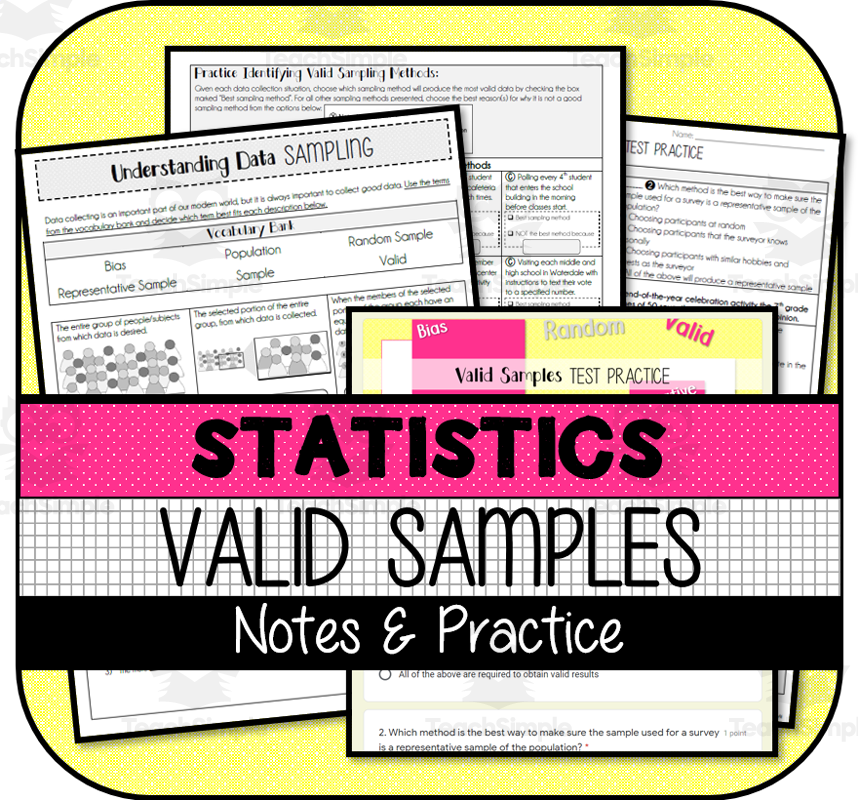
Valid Samples NOTES & PRACTICE
Teach students to evaluate sampling methods and determine whether a sample is valid and representative of a population, aligned to CCSS.MATH.CONTENT.7.SP.A.1.
Answers included




11,995 resources
Explore sub-categories
11 sub-categories · 11,995 resources
Teach students to evaluate sampling methods and determine whether a sample is valid and representative of a population, aligned to CCSS.MATH.CONTENT.7.SP.A.1.

A multi-activity pack for a 3rd-grade Ancient Egypt unit, aligned to Virginia SOL, covering vocabulary, reading comprehension, elapsed time math, and a craft/emoji-hieroglyphics activity.
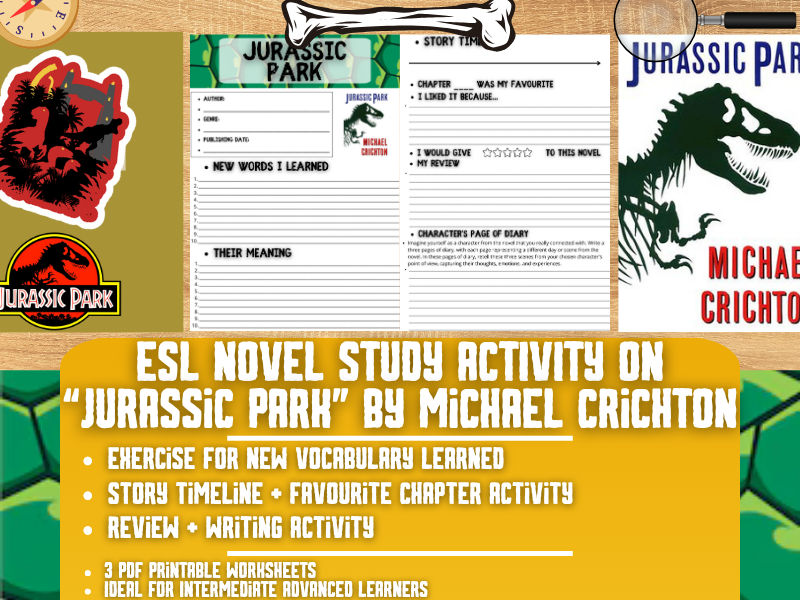
ESL Novel Study Worksheets on "Jurassic Park" by Michael Crichton This ESL EFL TESOL (English Second or Foreign Language) teaching resource is a comprehensive novel study worksheet activity (2 printable PDF pages; Worksheets) focused on the sci fi novel "Jurassic Park" . This Novel Study worksheets on "Jurassic Park" is tailored for…
 Free download
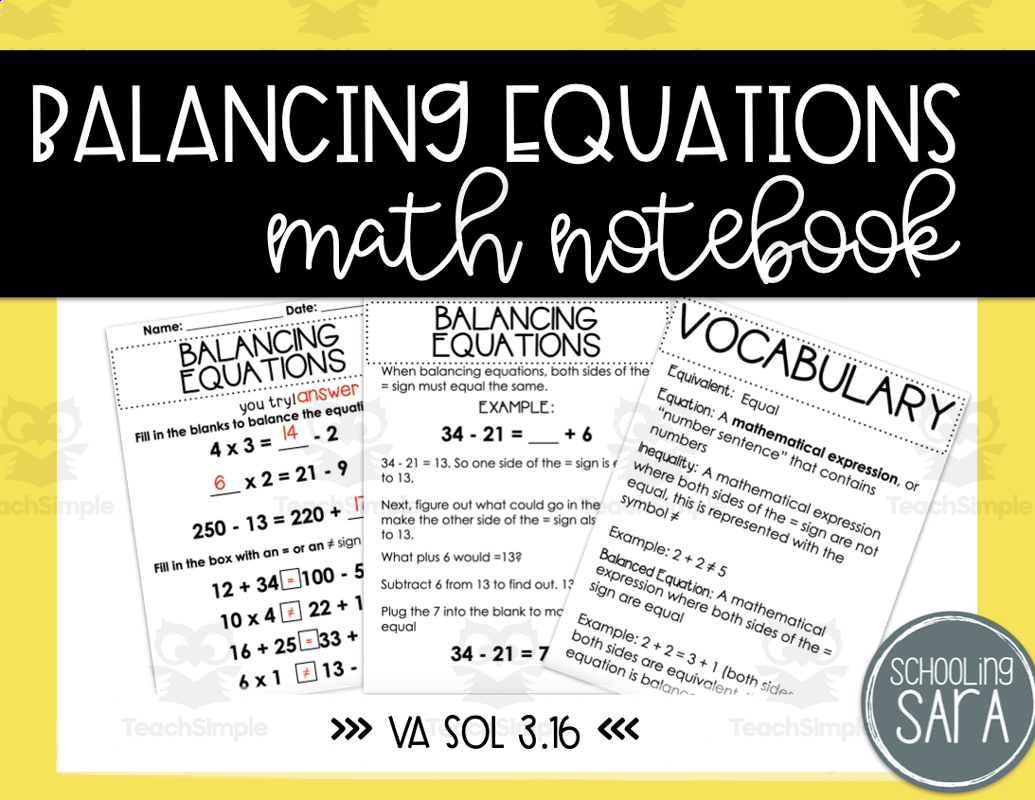
 An interactive-notebook resource teaching equivalence and balancing of equations (identifying equal vs. not-equal expressions and solving for a missing value to balance both sides), aligned to Virginia SOL 3.17 (and noted as also applicable to 2023 VA SOL 3.CE.1.d).
Here's a fun and interactive way to teach your science lesson on the Arctic Ocean! This 8 pages adapted book is cut and paste. It's filled with lots of information about the Arctic Ocean as well as vocabulary, and wh reading comprehension questions. These are perfect for Pre-K, Kindergarten, First Grade, and Special Ed and are a NO PREP…
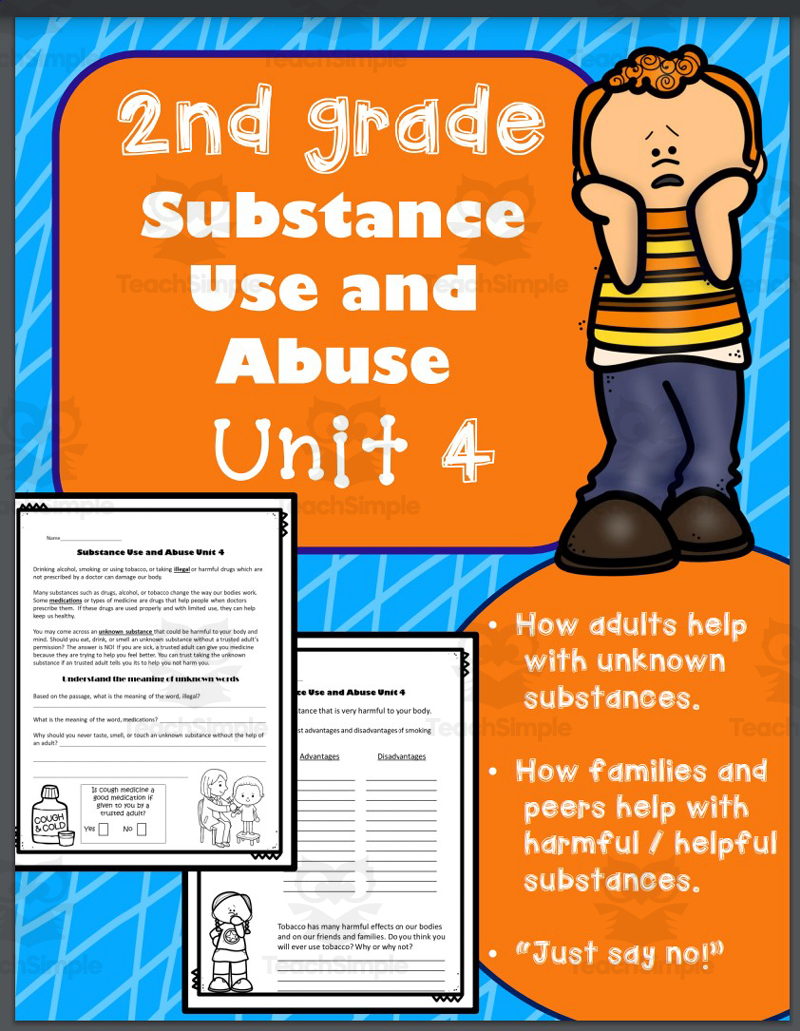
For 2nd Grade Health there are seven standards that need to be taught. Unit 1 Personal Health Unit 2 Growth and Development Unit 3 Nutrition and Physical Activity Unit 4 Substance Use and Abuse Unit 5 Injury/ Violence Prevention Control and Safety Unit 6 Prevention/Control of Disease Unit 7 Environmental Consumer Health These units can…
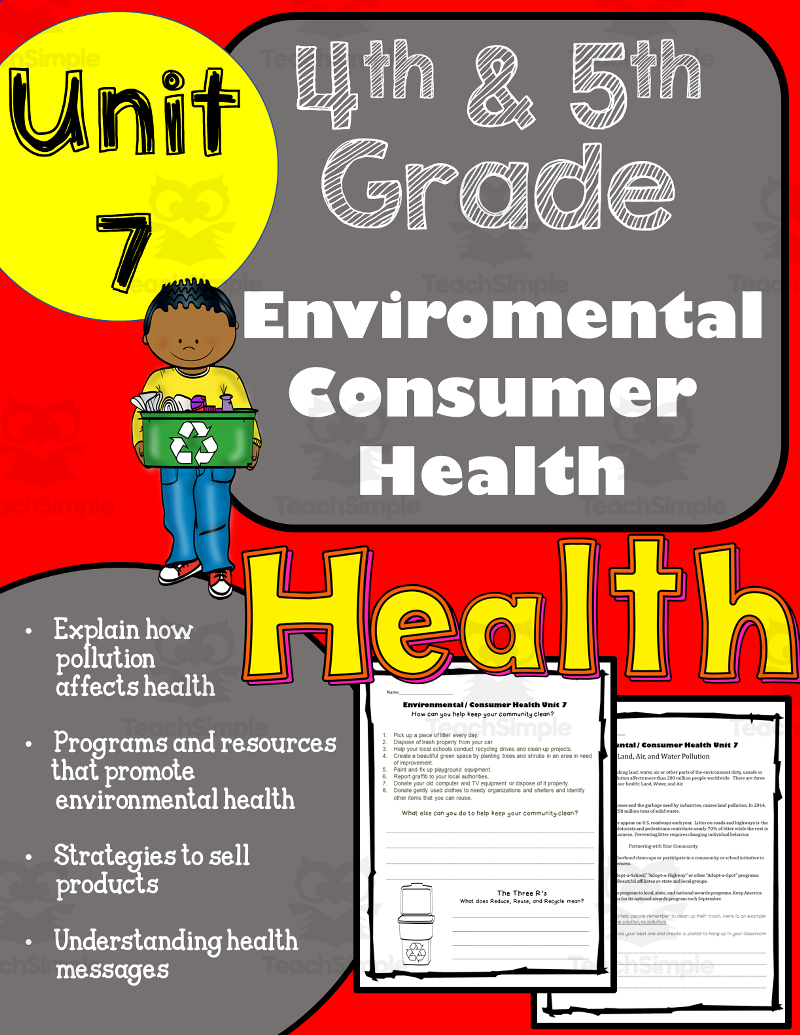
Teach 4th/5th grade students about environmental and consumer health topics, primarily how land, air, and water pollution affect health, and what community/individual actions (reduce, reuse, recycle; local programs) can address it. Unit intro also lists advertising/consumer topics (strategies to sell products, understanding health…

Teach 3rd graders about disease prevention and control: communicable vs. non-communicable disease, personal hygiene, and how viruses (including coronavirus/COVID-19) spread.

Teach students to fluently divide multi-digit numbers using the standard algorithm, aligned to standard 6.NS.B.2, via guided notes with vocabulary and worked examples.

Guided notes and practice packet applying the Pythagorean Theorem to right triangles, real-world problems, and 3D figures, aligned to CCSS.MATH.CONTENT.8.G.B.7.

Guided notes and practice problems teaching 8th-grade students to identify proportional relationships (in graphs, tables, and equations), interpret unit rate as slope, and compare proportional relationships shown in different formats.
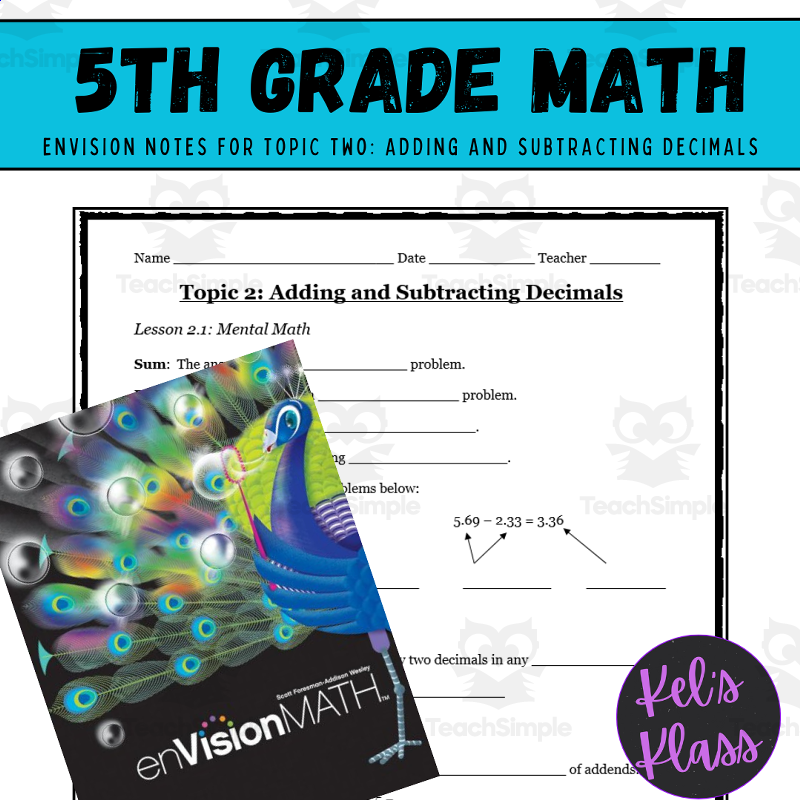
Teach and provide guided practice for adding and subtracting decimals, including mental math strategies, rounding, estimation, and standard algorithms, aligned to (but not excerpted from) the Envision Math Grade 5 Topic 2 curriculum sequence.

A 7th-grade math notes-and-practice resource on percent applications and proportional relationships, aligned to CCSS.MATH.CONTENT.7.RP.A.3.
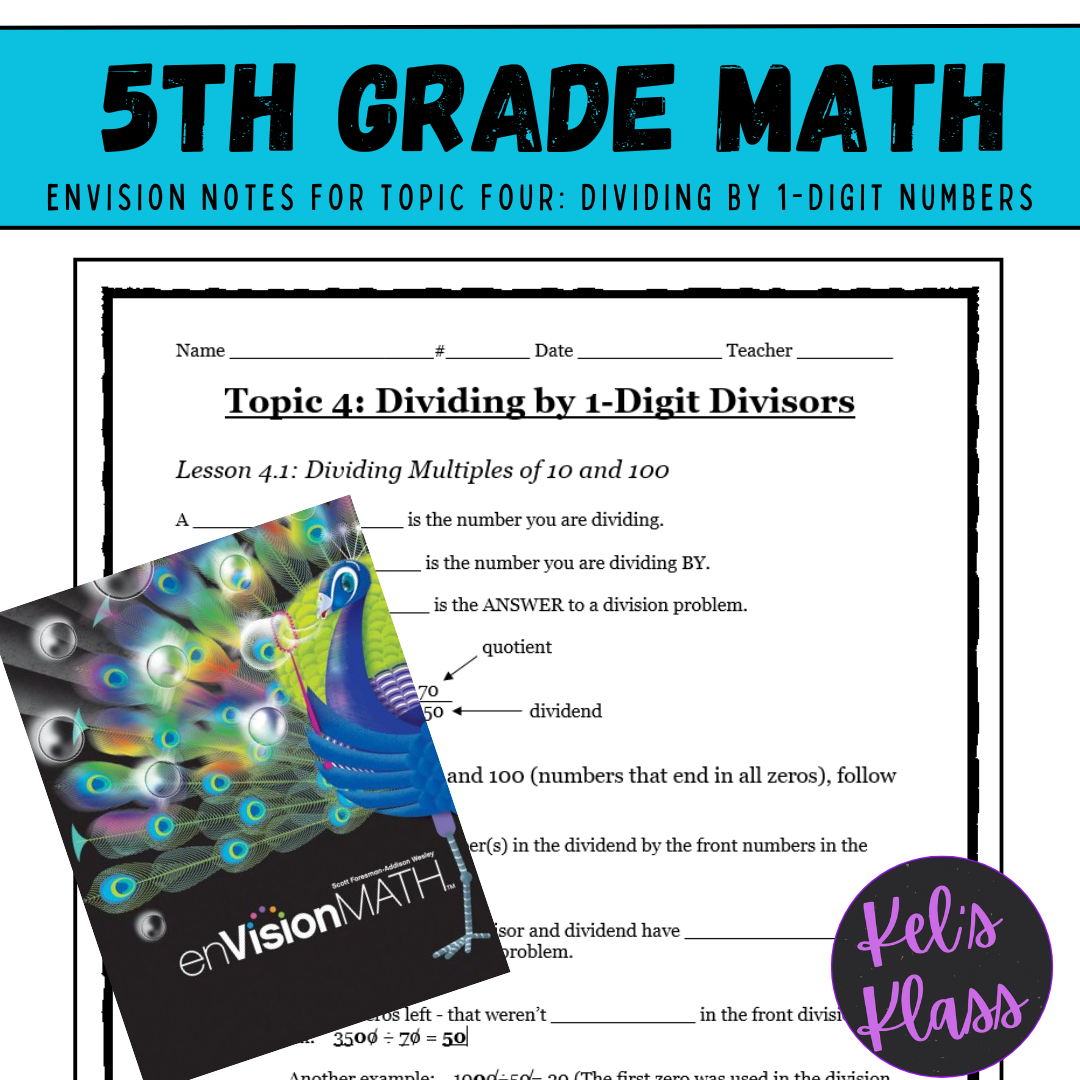
Teach and provide guided practice for dividing by 1-digit divisors, including dividing multiples of 10/100, estimating quotients, and the standard division algorithm (including quotients with zeros), aligned to (but not excerpted from) the Envision Math Grade 5 Topic 4 curriculum sequence.
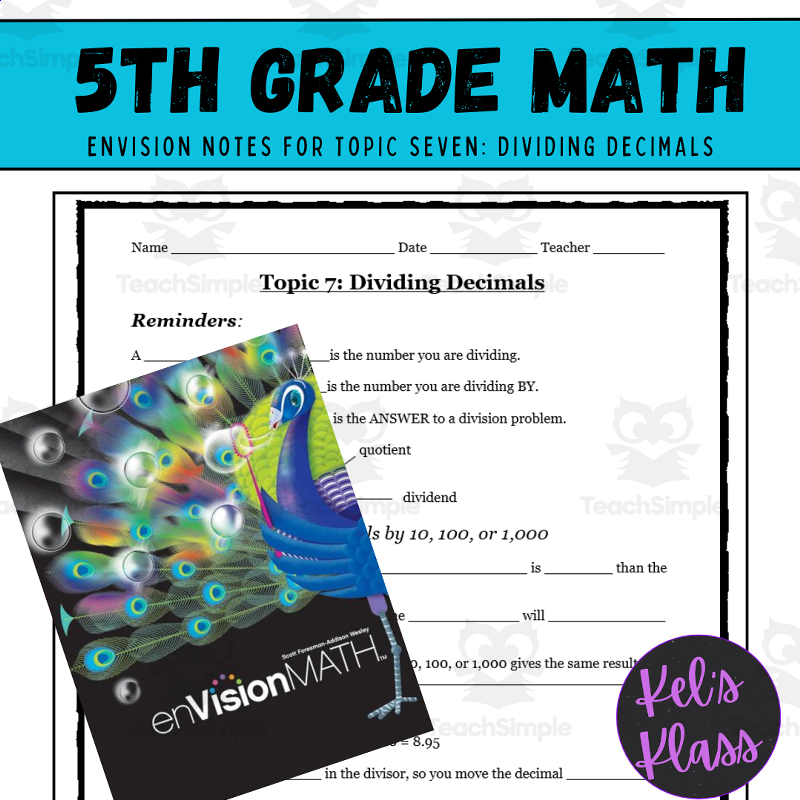
Teach and provide guided practice for dividing decimals, including dividing by powers of 10, estimating quotients, and standard algorithms for dividing by whole numbers and decimals, aligned to (but not excerpted from) the Envision Math Grade 5 Topic 7 curriculum sequence.
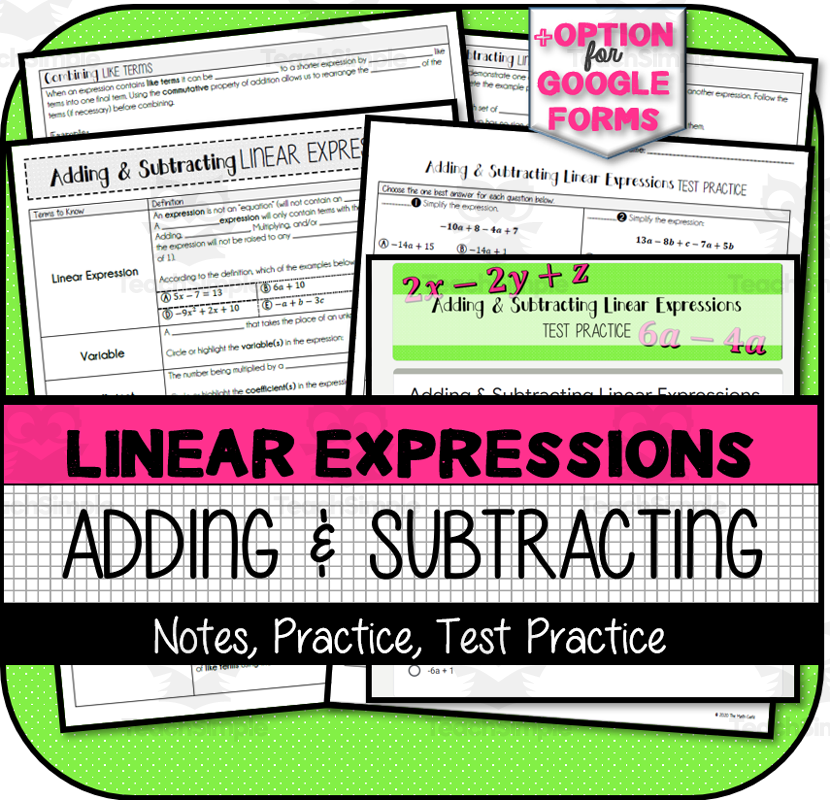
Guided notes and practice packet teaching students to identify parts of a linear expression and to add/subtract linear expressions with rational coefficients, aligned to CCSS.MATH.CONTENT.7.EE.A.1.

Provide multiple game-based review formats (task cards, Jeopardy-style PowerPoint, Google Slides version) to build reading comprehension and higher-order-thinking vocabulary around the novel Hatchet by Gary Paulsen.
Set of 36 task cards teaching students to distinguish mathematical expressions from equations (vocabulary/classification only, not solving or evaluating).
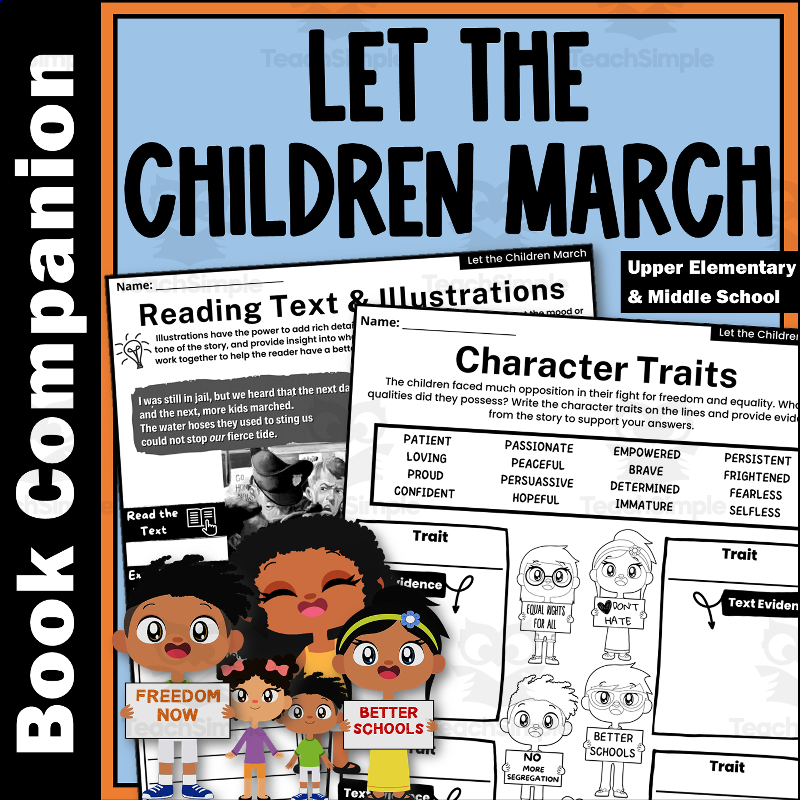
A larger read-aloud book companion (36 activities) for 'Let the Children March,' covering comprehension, story elements, character analysis, vocabulary, and civil-rights themes.
A vocabulary/grammar matching activity that has students identify common suffixes and their meanings using a pumpkin-patch visual theme.

Build vocabulary and writing skills through pumpkin-themed word unscrambling and related writing tasks.

A large science packet teaching the butterfly life cycle (egg, caterpillar, chrysalis/pupa, butterfly), butterfly anatomy, and butterfly vs. moth differences, through posters, an interactive handbook, and a wide variety of printable practice activities.

A grade 3 division workbook that teaches division as repeated subtraction and as the inverse of multiplication, then builds fluency with division facts, vocabulary (divisor, dividend, quotient), and word problems.
A multi-unit practice test workbook for assessing and drilling core Grade 3 math skills, covering basic operations vocabulary, multiplication and division facts, rounding/estimation, fractions, and place value.