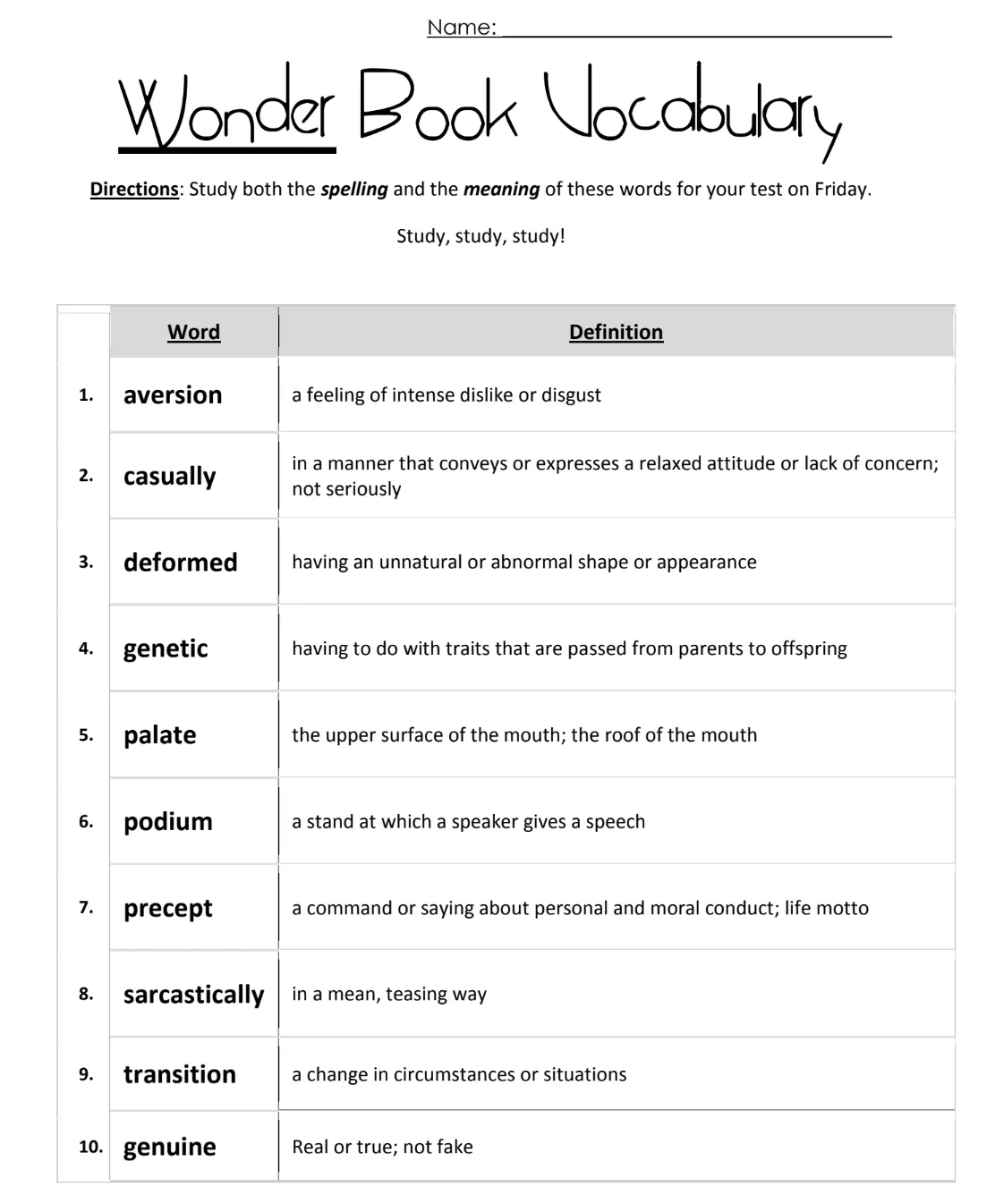
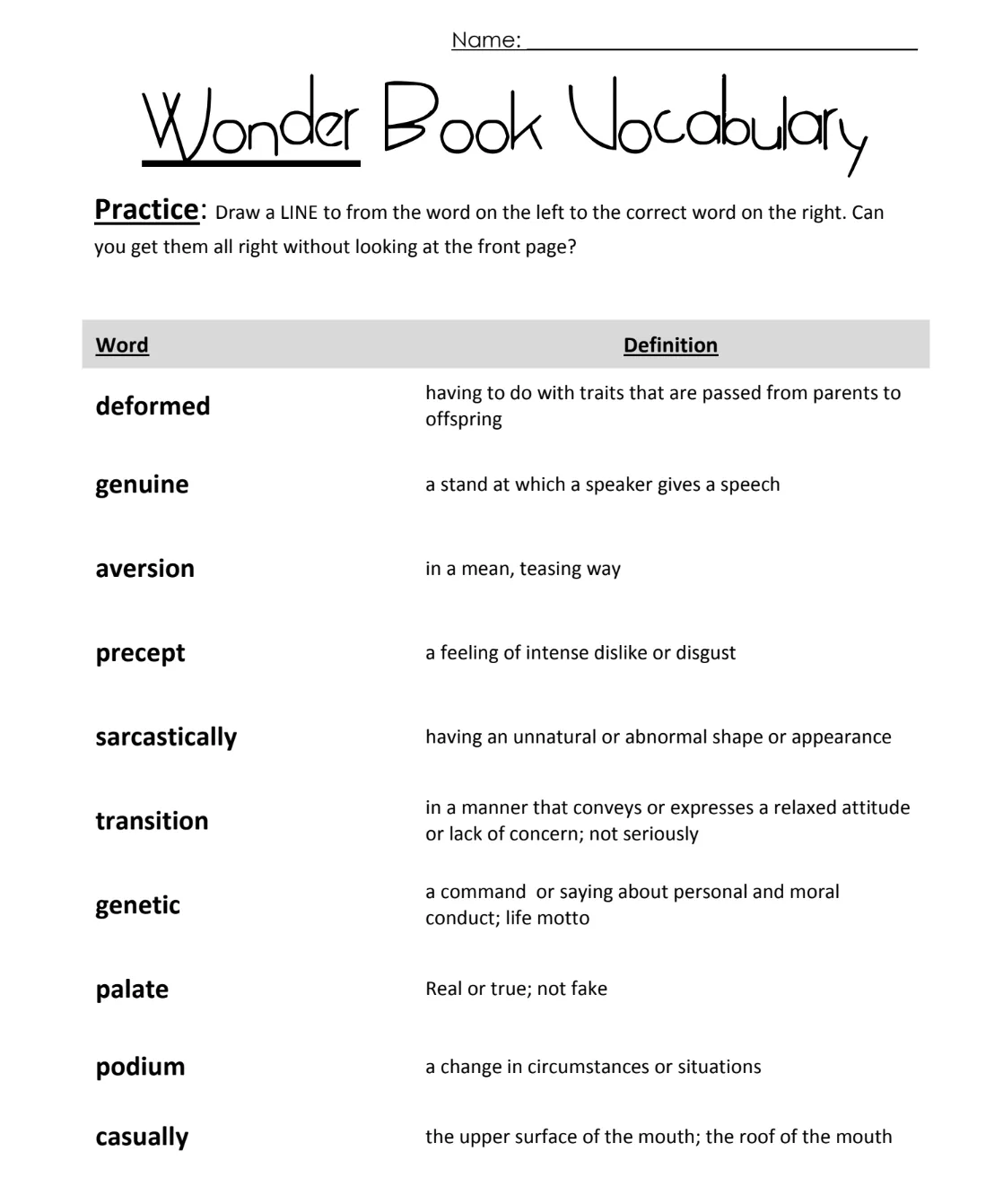
Wonder by R.J. Palacio Vocabulary Study
- Grades
- Grades 5–6
- Pages
- 2
- File type
- Preparation
- Print ready


- Subject
- Literature, Vocabulary
- Topic
- Wonder novel, Vocabulary definitions
- Preparation
- Print ready
- Standards
- L.5.4
Product description
From the author
This resource is a Wonder by R.J. Palacio Vocabulary Study.
Students will use this chart to study both the spelling and the meaning of these words.
Related resources
More resources teachers may find useful
24 related resources were found using this product's title, contributor, categories and tags.

In the classroom
Teaching tips & learning objectives

Learning objectives
Read and discuss ten vocabulary words from Wonder
Compare supplied descriptions with novel context
Practise spelling the target words

Teaching tips
Read each word in its context in Wonder before discussing the supplied description.
Compare the study list with the matching page and explain the connections.

Skills covered
Contextual vocabulary — learners discuss ten words in their setting in Wonder.
Definition comparison — learners compare supplied descriptions with the novel’s wording.
Spelling practice — learners rehearse the target words.
Good to know
Questions teachers ask about this resource
Is the Friday test included?
No. The PDF includes a study list and a matching-practice page; the first page refers to a test that the teacher would supply separately.

No reviews yet
Downloaded this resource? Tell other teachers how it went.
Curriculum
Standards, concepts & topics
Standards
 Standards
- L.5.4
Core concepts
 Core concepts
Novel vocabulary
Word-definition matching
Vocabulary self-testing
 Topics
Explore more
Categories this resource belongs to
Explore related searches
More to explore
You may also like