



3,968 products added recently
Page 31 - 4th Grade Activities
Introduce your fourth-grade students to activities that challenge and inspire. These resources encourage analytical thinking, teamwork, and creative expression across subjects. Use them to elevate your teaching and engage students in meaningful learning experiences.

 Show filters

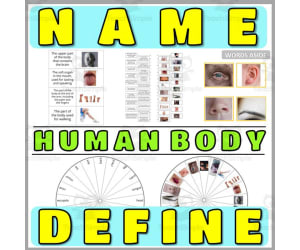
Concept Nouns Naming and Definitions 5
Special Resources, ELA, Speech Therapy, Language Development, ESL, Vocabulary, Grade 2, 3, 4, 5, Activities
This series of PDF BUNDLE resources focuses on identifying noun concepts, with engaging visualizations ( pictures and graphic arrangements ) of vocabulary by topic. The activity materials in this assignment are designed to help students develop their vocabulary and reading comprehension skills through interactive activities and real-life examples. It includes clear names and definitions of words from common noun categories and can also serve as discussion prompts to encourage critical and analytical thinking, deepen your understanding of the language, and improve your communication skills . This resource is designed to be accessible and engaging to all students . Ideal for teaching English as a Second Language and intervention sessions on learning difficulties. Clear and concise language, visual aids and interactive activities help students easily understand and remember information, integrating visual and kinesthetic elements. You can choose from a variety of worksheets that suit your student's level, interests, and printing preferences. Each category topic includes : 2 sets of Flash cards ( definition sentence / image, image / definition sentence ) 2 sets of Flash cards ( definition word / phrase, definition phrase / word ) 3 anagram strings ( mixed letters of single words or in definition text ) 1 Crossword ( word definition ) 2 sets of linked activities Draw a Line ( definition / image, image / definition ) 2 sets of matching activities Draw a line ( word / definition, definition / word ) 2 series of Quizzes ( definition / image, image / definition ) 2 series of quizzes ( word / definition, definition / word ) 3 Wheels of Fortune ( words, definitions, images ) Search page for 1 word ( word definition ) 2 writing boards ( words, definitions ) 2 blank boards/artboards ( words, definitions ) Various puzzles and word games for naming noun concepts as well . * Use as-is or create your own board games, like Snap, Memory, Match to Sample, and Knowledge Races . Distribute it as morning exercises, quiet time and focus activities, independent workbooks, or fun homework . 65 PDF Pages
Author WORDS ASIDE
Tags Esl, Word Defining, Semantics, Word Search, Anagram, Flash Cards, Centers, Crossword, Definitions, Writing Expository
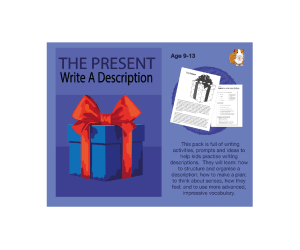
The Present: Write A Description (And More) (9-13 years)
ELA, Writing, Creative Writing, Grade 3, 4, 5, 6, 7, Activities
The Present: Write A Description (And More) (9-13 years) This product is a structured writing exercise designed to aid educators in teaching their students how to construct an articulate, detailed depiction about a present. It targets children aged 9-13 and provides them essential writing practice. This program tackles not just the explanation of what the present is, but also encourages users to delve into sensory details by exploring and expressing feelings about it. Built for complex language learning: This resource extends word banks of its users while simultaneously bolstering their confidence with complex language norms through high-level vocabulary options presented within. Promotes critical thinking skills: Fosters such skills by allowing users to organise thoughts and plan out their descriptions before they put pen to paper. The ten-page downloadable PDF pack offers an array of practical exercises. Whether you're using it for whole group instruction or smaller groups in learning centers ; its adaptable nature ensures ease depending on your pedagogical needs. Fits into Grade 3 - Grade 7 Language Arts curriculum seamlessly: Weaving this resource into Creative Writing modules helps engage a child's imagination while working coherently on structuring ideas – shaping young writers capable of deftly handling different types of writing from articles, stories, letters even up to play scripts!
Author Guinea Pig Education
Tags Present, Description, Writing Practice, Sensory Details, Vocabulary
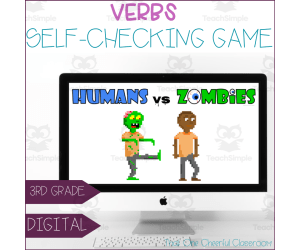
Identifying Verbs Self-Checking Digital Pixel Art Game Humans vs. Zombies
ELA, Grammar, Grade 3, 4, Games, Activities
Identifying Verbs Self-Checking Digital Pixel Art Game Humans vs. Zombies Instilling fundamental language acquisition skills, this interactive game combines the thrill of Humans vs. Zombies with key educational elements. It aids third and fourth-grade students in grasping and identifying verbs. Gameplay on Google Sheets Individual or collaborative tasks: Students can perform tasks independently or in pairs, meeting various teaching styles and student requirements. Inclusive pace: The game promotes accuracy over speed, allowing all learners to participate at their own pace. Sentence Underlining: The students will be provided with sentences and tasked to underline the verbs present, which would reinforce grammatical skills. Instant Feedback: As answers are keyed into the Google Sheet they are instantly checked; every correct answer uncovers a piece of an image for immediate feedback. User-friendly Technology No prior technology experience is needed for both teachers and students because instructions have been prepared to guide players through smoothly; these guidelines can be adapted based on specific needs. The resource comes with printable recording sheets for offline activities making it zero-prep-required material after digital presentation setup - suitable teaching resource package all around! Note For Teachers: Single-Classroom Use Only License This versatile tool benefits educators in traditional classrooms as well as homeschool educators by providing robust resources conforming to Language Arts curricula(especially Grammar). To maintain access rights beyond initial purchase applications or sharing usage across multiple classrooms make sure to acquire additional licenses accordingly. Transform mundane verbal practice into a captivating gaming encounter!
Author That One Cheerful Classroom
Tags Educational Game, Language Acquisition, Verbs, Digital Learning, Grammar, Verbs For Art
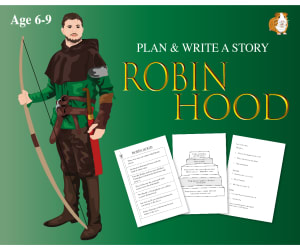
Cut Out And Write The Story Of Robin Hood (6-9 years)
ELA, Writing, Creative Writing, Grade 1, 2, 3, 4, Activities
Cut Out And Write The Story Of Robin Hood (6-9 years) A comprehensive resource designed to boost the creative writing abilities of children aged 6-9 years. It mainly targets Grade 1 to Grade 4 students and finds its use in Language Arts classes, specifically under the component of creative writing. The main aim is engaging learners in creating imaginative stories. This learning tool employs the story of 'The Three Billy Goats Gruff' as an example, covering storytelling elements such as: Characters Setting Plot Structure The content concentrates on accustoming young minds with story structuring involving a beginning middle and end sequence. An Engaging Learning Process: This package prompts children to brainstorm ideas systematically before sketching out their unique take on traditional tales like Robin Hood. Initially, students are asked to cut out the pages, mix them up, then organise them back into their original order; thereby understanding how a storyline progresses from start to finish. As an additional challenge and engagement activity , they are encouraged not only read through but also rewrite their own detailed version once they have covered the original text. Pedagogically Sound Design: Crafted keeping evolving educational needs in mind this teaching tool ensures practical application while solidifying theoretical understanding of aspects related to narrative construction through various writing challenges found within each pack; providing numerous opportunities for idea generation and sequential thought arrangement tasks. Format And Usage: This resource comes in an easy-to-use PDF format file allowing hassle-free download and print readiness. The attractive silhouette illustrations included increase its appeal particularly suited for whole group instruction or small group cooperative activities in a classroom set-up; equally practical for homeschooling parents aiming to enhance their child’s narrative composition skills. With Cut Out And Write The Story Of Robin Hood (6-9 years) as part of the curriculum, children enjoy learning how to craft a story while gaining deeper understanding of plot and structure creation.
Author Guinea Pig Education
Tags Creative Writing, Narrative Construction, Storytelling Elements, Robin Hood, Imaginative Stories

Author At Work Writing Checklist Activity
ELA, Writing, Grade 2, 3, 4, 5, Activities
If you want to give students extra practice with writing skills, I have just the resource for you! What You Get: This is an Author at Work Writing Checklist that was designed for elementary students who need writing supports. This resource is a 6-page printable . How To Implement This Resource: Standard: Produce clear and coherent writing in which the development and organization are appropriate to task, purpose, and audience. Directions: Use the writing checklists (narrative, informative, opinion) to ensure your written work is written clearly and contains the necessary components. There are 3 types of checklists included: - Narrative Writing - Opinion Writing - Informative Writing Each checklist can be printed in color or black and white. These checklists can be utilized any time you are focusing on these writing types. These are also great to print, laminate, and display on a reading or writing bulletin board. I hope you enjoy! Here are more of my resources for you to enjoy: Total Solar Eclipse Worksheet Recognizing Fractions Worksheet Long U Matching Puzzle 1.OA.5 Common Core Math Lesson Point of View Activity Rounding to the Nearest Hundred Thousandth Worksheet You can find more resources at my storefront here: Have Fun Teaching
Author Have Fun Teaching
Tags Reading Poster, Writing Poster, Writing Checklist, Opinion Writing, Narrative Writing, Informative Writing, Author At Work
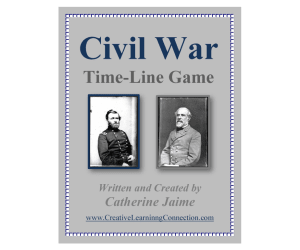
Civil War Timline Game
Social Studies, History, History: USA, Grade 4, 5, 6, Activities, Games
A fun game of civil war timeline, you can learn more about the history of USA with this game, playing & learning.
Author Creative Learning Connection
Tags Game, History, Civil War, Timeline
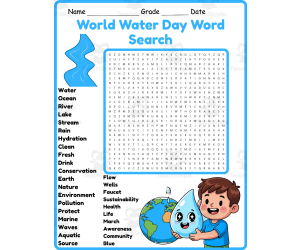
World Water Day Word Search 2nd 3rd 4th 5th Grade Worksheet Activity
Common Core, Social Studies, Life Studies, Grade 2, 3, 4, 5, Activities, Worksheets & Printables, Word Searches, Worksheets
Let us celebrate World Water Day with a fun Word Search Worksheet Activity for students. This activity teaches students about water and the environment in a way that's easy for them to understand. Students will get better at reading and spelling while they learn about how important water's how we need to take care of it. The worksheet comes in two versions. One with colors and one without. This helps students see things in an interesting way and be more creative. The word search game helps students focus and pay attention to details as they find words in directions. This makes learning fun and useful for the classroom. Objective The main goal of this worksheet is to help students learn words and get better at reading while also teaching them about taking care of the environment. Students will practice spelling and reading as they find words that go across up and down and diagonally. This activity also helps students think about why we need to save water and take care of the earth. Order, Outline and Steps Students will look at the list of words that're about water. They will then find each word that is hidden in the puzzle. These words can go across up and down or diagonally. When they are done with the word search students can color the black-and-white page to be more creative. This way of learning combines school work with creative activities. Ages This worksheet is good for students in the 2nd, 3rd, 4th and 5th grades. It is helpful for students who read at levels. Implementation Format This worksheet is perfect for science class learning about the environment reading groups, morning work, homework or special projects. Students can do it by themselves in groups or on a computer in the classroom. Answer Keys We include an answer key that's easy to read and use. How to Use and Variations You can use this worksheet to start a lesson about water taking care of the environment or saving resources. You can give it to students to do by themselves or in groups. You can also use it for reading groups morning work or special projects. Students can color the picture to be more creative. Standards This worksheet helps students learn what they need to know for class like new words and reading skills and for science class like taking care of the environment. File Type You can print this out as a PDF. Number of Pages There are 3 pages in total: • 1 colored word search worksheet • 1 black-and-white coloring page • 1 answer key
Author Classsim
Rating
Tags World , Water, Day , Word Search, 2nd 3rd 4th 5th Grade, Worksheet, Activity, World Water Day , World Water Day Word Search 2nd 3rd 4th 5th Grade , World Water Day Word Search 2nd 3rd 4th 5th Grade Worksheet Activity
Keys Reading Comprehension Passage - Cored Ed Encyclopedia
ELA, Language Development, Resources for Teachers, Reading Comprehension, Reading, Pre-Reading, Writing, Strategies, Science, Technology, Grade 2, 3, 4, 5, Worksheets & Printables, Worksheets, Teacher Tools, Centers, Activities, Writing Prompts, Assessments, Tests, Quizzes and Tests, Quizzes
This keys reading comprehension contains the following: Visualize on the Cover (Teacher Read Aloud Script) Start your lesson by taking a few moments to visualize the topic and share thoughts or feelings about it. Pre-Reading Trivia Students will write down one thing they already know about the subject and then read five more facts and discuss. These facts are fun, and the students will enjoy learning about the subject before reading more. Reading Passage The text is a high-interest reading passage with set paragraphs, roughly three to four paragraphs long. It contains a variety of themes about the topic, anywhere from history to technology. The passage is between 250 and 350 words in length. Mixed Questions The first question page contains four multiple-choice questions, each with a choice of four answers, and three written response questions that require a sentence or two from the student. Vocabulary Questions Practice seven key words from the text in this section across two activities. First section is scrambled words where students will unscramble three words given a clue for each. The second section is a word to meaning matching activity. Creative Writing In this question, the student will be required to write a five to eight sentence paragraph on a question related to the topic. Extension Activities This page is optional for fast finishers or to take home. There are several activities, each one requiring a different skill. Do some, do none, do all, completely optional - but you will feel reassured knowing every possibility is planned for. Includes summary writting question. Answer Key There are answers for the multiple-choice questions, written response questions have sample answers, vocabulary answers and if there is a summary question then a sample summary will be provided as well. FULL CATALOG OF DOWNLOAD LINKS AND ENCYCLOPEDIA INDEX HERE Lesson Snapshot Title: Keys Genre: Nonfiction (informational text) Subject: Science & Technology / Reading (Informational Text) Primary Topic: How keys work, key history, and modern “keys” Estimated Guided Reading Level (A–Z): O What This Lesson Teaches Best Explains what a key does: it tells a lock “yes” so something can open (door, box, or bike). Describes how the shapes on a key (bumps, grooves) match hidden parts inside a lock, including pins or pieces that must be lifted. Introduces the idea of a “master” key that can open several doors in big buildings. Summarizes how locks and keys changed over time (ancient wooden locks, Romans using metal keys, and later improvements). Shows that some modern “keys” aren’t metal (keycard, code, fingerprint) and connects keys to ideas like trust and belonging. Learning Goals Students will explain what a key does and what it can help open, using details from the text. Students will describe how a key’s shapes help it work inside a lock (bumps, grooves, pins/pieces). Students will identify what a “master” key is and why it can be helpful. Students will recount key changes “through time” mentioned in the passage (ancient, Roman, later improvements). Students will name at least one non-metal kind of “key” used today, based on the text. Students will explain how giving someone a key can show trust, using the passage’s wording/ideas. Key Vocabulary From the Text keyway — the opening a key slides into. grooves — long cut-in lines on a key. pins — tiny parts inside some locks that must lift. locksmiths — people who make or copy keys. electronic — using technology, not only mechanical parts. Cored Ed Encyclopedia Overview The Cored Ed Encyclopedia is a weekly series of lessons that you can pick up and use right away. These short readings fit into whatever time you have available. Each one includes a warm-up, a reading, and a set of questions, but it’s flexible — you can do just the reading, the full lesson, or skip the writing section if you need to. Each lesson focuses on a single topic so students don’t get lost. The writing is clear but never childish, making it perfect for grades two through five. Topics range from animals and science to history, inventions, and everyday things. No matter the level of the student, everyone should take away at least one new idea or fact from each lesson. The materials are easy to print, easy to explain, and require no setup. They work well for whole-class teaching, partner work, or independent study.
Author Cored Education
Rating
Tags Vocabulary, Spelling, Reading Comprehension, Reading Passages, Reading, Creative Writing, Reading Strategies, Writing Prompts, Keys, Technology
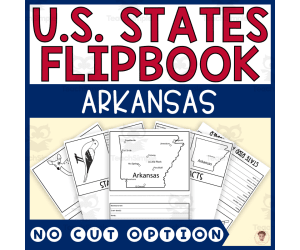
Arkansas State Flipbook (Capital, Bird, Flower, Flag, Animal)
ELA, Creative Arts, Art, Social Studies, Reading, Reading Comprehension, Grammar, Language Development, Spelling, Writing, History, History: USA, Geography, Research, Grade 2, 3, 4, Activities
Arkansas State Flipbook (Capital, Bird, Flower, Flag, Animal) Discover an exciting and interactive flipbook research project that provides an engaging way to teach and review the state of Arkansas and its symbols! Designed for both elementary teachers and homeschoolers, this low-prep resource offers a comprehensive exploration of five major symbols of Arkansas: its capital, bird, flower, flag, and animal. Through an interactive and cross-curricular activity , students will gain a deeper understanding of the state's rich heritage. Choose between two printing options: one that involves cutting and one that doesn't. Additionally, the resource offers two design options: one featuring pictures and one without. With a total of four flipbooks, students will have ample opportunities to dive into their research. This flipbook research project is an excellent addition to your Arkansas-focused unit study or review, Southeast region exploration, or U.S. states curriculum. It seamlessly integrates into writing lessons or centers, as well as social studies or history classes. Furthermore, it can be enjoyed simply for the fun of learning! Empower your students to become experts in all things Arkansas with this versatile resource. Whether you're introducing the state or assessing prior knowledge, this flipbook project caters to a variety of learning needs. Watch as your students immerse themselves in the wonders of Arkansas, develop their research skills, and present their findings with enthusiasm. Unlock the secrets of Arkansas and its symbols through this captivating flipbook research project. Perfect for engaging students in meaningful learning experiences, this resource guarantees an exciting and educational journey through the state's unique heritage. CROSS-CURRICULAR SUBJECTS COVERED: Art (drawing and coloring) English language arts Geography Grammar History Reading Research Science Social studies Spelling Writing Are you interested in helping your students become experts in other U.S. states? From Alabama to Wyoming, you can explore each state and its major symbols—its capital, bird, flower, flag, and animal—through cross-curricular activities. Each day's lesson plan appeals to different types of learners: curated videos (visual and auditory), reading passages (reading), research report pages (writing), interactive notebook and other activities (kinesthetic), and more. Click on the link to my profile to learn more about my 5-day units, including Arkansas ! 37 PDF pages Instructions for 4 easy-to-assemble flipbooks 2 printing options (cutting and no cutting) 2 design options (pictures and without pictures) 7 topics (Arkansas's state capital and other facts, state bird, state flower, state flag, state animal, state map, and KWL)
Author Heather Huhman
Tags Arkansas, Little Rock, Arkansas State Bird, Arkansas State Flower, Arkansas State Flag, Arkansas State Animal, Geography, Flipbook, Us States, United States, What Is Arkansas's State Bird, Arkansas State Flower Picture, What Is Arkansas's State Flower, What Is The Arkansas State Animal, State Animal Arkansas, State Animal For Arkansas

Multiplication Facts Posters and Flashcards BUNDLE
Special Resources, Special Education Needs (SEN), Math, Addition and Subtraction, Addition, Multiplication and Division, Division, Place Value, Grade 2, 3, 4, Teacher Tools, Lesson Plans, Worksheets & Printables, Flashcards, Activities
Multiplication 1 - 10 x 1 - 12 CARDS / MATS / POSTERS to use with your students, display during teaching or on the wall as decor or visual prompts . * Big size versions to work with snap cubes, bricks and other manipulatives on. * Smaller size versions to create task cards and books . Six ( 6 ) books included in this BUNDLE : 1 . Big cards / SPACE THEMED . 2 . Big cards / HALLOWEEN THEMED . 3 . Big cards / With MATH CUBES . 4 . Big cards plain . 5 . Smaller cards / OCEAN THEMED . Smaller cards plain . Each book contains THREE VERSIONS / SETS OF ALL THE FACTS : FACT NUMBER WITH EMBEDDED FACTOR ( x times to make up the fact ) . FACT NUMBER WITH THE FACTOR ( x times to make up the fact ) IN A ROW AT THE BOTTOM OF THE MAT . FACT NUMBER WITH THE RELEVANT FIRST PART OF EQUATION . Facts of each factor 1 - 10 have a mutual distinct color ( when colored ) for sorting and prompting / cueing reasons . Each version / set of facts carries ( when themed ) a different and unique backround space / halloween / ocean themed . Useful in your centers . Try as a flip through laminated book . Great as pictorial reference / explanation for operations and word problems, for repeated addition, multiplication and division . Print and laminate to reuse or display them on your screen ( wall screen or tablet ) . Create task cards . Make classroom books of group reference . A4 size helps for group presentation and activities 1696 pdf pages with big and smaller cards of facts and factors in 3 display versions . For more pdf materials on numeracy, basic math and pictorial / manipulative approach to learning, you can click WORDS ASIDE .
Author WORDS ASIDE
Tags Facts And Factors, Math Center, Math Station, Repeated Addition, Classroom Decoration, Decor, Halloween, Task Cards, Manipulatives, Words Aside
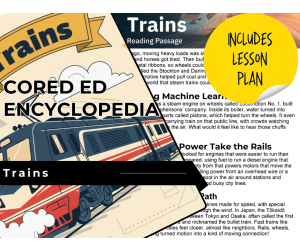
Trains Reading Comprehension Passage - Cored Ed Encyclopedia
ELA, Language Development, Reading Comprehension, Reading, Science, Technology, Engineering, History, Social Studies, Physics, Grade 2, 3, 4, 5, Worksheets & Printables, Worksheets, Teacher Tools, Centers, Activities, Writing Prompts, Assessments, Quizzes and Tests, Quizzes, Lesson Plans
This trains reading comprehension with lesson plan includes: Visualization (on the front cover) Start your lesson by taking a minute to think and share something about the topic. Read the script aloud (slowly), perhaps prepare some music or sound effects. Student close their eyes and let their imaginations wander. Students open their eyes, read the question aloud and give them a few minutes to complete. Ask a few students to share or keep answers until the end to compare with what they learn in the passage. Quick pause—thousands of Cored Education products are included with your TeachSimple membership. Download links and encyclopedia index available here. Pre-Reading Trivia Students will write down one thing they already know about the subject and then read five more facts and discuss. These facts are fun, and the students will enjoy learning about the subject before reading more. Give 1 minute for students to write what they already know (no pressure—best guess is fine). Read the five facts together. After each fact, do ask a student for their opinion, was it surprising? Set a purpose by asking students to highlight/underline one fact they want to learn more about during the reading. Reading Passage The text is a high-interest reading passage with set paragraphs, roughly three to four paragraphs long. It contains a variety of themes about the topic, anywhere from history to technology. The passage is between 250 and 350 words in length. First, ask students to look at the headings and see what they’ll learn about today. What do they know about the topic/heading? First read options: Teacher read-aloud (best for support). Partner reading (paragraph by paragraph). While reading, students underline important details, and vocabulary words they think may come up in the questions section. Mixed Questions The first question page contains four multiple-choice questions, each with a choice of four answers, and three written response questions that require a sentence or two from the student. Students complete the mcqs first independently, then review quickly as a class. For the 3 written responses, try to get students giving the answer with some form of evidence: “I think ___ because the text says ___.” If students get stuck, send them back to check the passage. Vocabulary Questions Practice seven key words from the text in this section across two activities. First section is scrambled words where students will unscramble three words given a clue for each. The second section is a word to meaning matching activity. Before starting, have some students read out words they underlined in the passage. Ask students to say the word and read aloud the sentence(s) around each word. Ask students to do scrambled words and the matching exercise in pairs then go through answers as a class. For the scrambled spelling task, get four pairs to come up to the board and write the words for extra practice with the other student reading out the clue. For the matching task, prompt students to give full sentences: “I matched ___ with ___ because ___.” Creative Writing In this question, the student will be required to write a five to eight sentence paragraph on a question related to the topic. Before starting, ask students write down 3 key ideas they are going to include in their piece. Ask students for ideas to share around the class to help those struggling. Pro writing expectations: 5–8 sentences At least 2 facts or details from the passage At least 2 vocabulary words from the previous page Students read their paragraphs while classmates listen for facts and vocabulary words. Extension Activities This page is optional for fast finishers or to take home. There are several activities, each one requiring a different skill. Do some, do none, do all, completely optional - but you will feel reassured knowing every possibility is planned for. Includes summary writting question. Answer Key There are answers for the multiple-choice questions, written response questions have sample answers, vocabulary answers and if there is a summary question then a sample summary will be provided as well. Lesson Plan Included Customized lesson plan for this lesson is included. Lesson Snapshot Title: Trains Genre: Nonfiction (informational text) Subject: Science (Technology & Engineering) Primary Topic: How rails and train power changed over time Estimated Guided Reading Level (A–Z): R What This Lesson Teaches Best Explains how smooth rails reduce “rubbing,” helping heavy loads move more easily than wagons on muddy roads. Uses a real historical example (the Stockton and Darlington Railway opening in 1825) to show steam trains carrying coal and people. Describes how a steam locomotive works (water becomes steam, steam pushes pistons, pistons help turn wheels). Compares train power types—steam, diesel (engine spins a generator), and electric (overhead wire or third rail). Shows how high-speed rail was designed for speed (special tracks, trains shaped to slice through wind), including Japan’s Tōkaidō Shinkansen (1964) “bullet train.” QA check (support pages vs. passage): The pre-reading trivia uses the word “friction,” but the main passage describes the idea as “rubbing.” Other questions and vocabulary (boiler, pistons, diesel, generator, third rail, high-speed rail) match the passage. Learning Goals Students will explain why smooth rails helped heavy loads move with less rubbing. Students will identify what happened in 1825 with the Stockton and Darlington Railway. Students will describe how steam in a boiler can help power wheel movement using pistons. Students will compare steam, diesel, and electric explanations of how trains get power in the text. Students will describe how train design and tracks can increase speed, using details about high-speed rail. Key Vocabulary From the Text locomotive — the front engine that pulls the train cars. boiler — the part where water is heated to make steam. pistons — parts steam pushes to help turn the wheels. generator — a machine that makes electricity for the train. soot — black dirty particles in the air from smoke. FULL CATALOG OF DOWNLOAD LINKS AND ENCYCLOPEDIA INDEX HERE
Author Cored Education
Rating
Tags Vocabulary, Reading Comprehension, Reading Passages, Lesson Plans, Ela Lesson Plans, Reading Comprehension Lesson Plans, Pre-reading, History, History Lesson Plans, Physics
Past Tense Sample - Grammar Grade 3-4 (PPT)
ELA, Language Development, ESL, Grammar, Common Core, Resources for Teachers, Grade 3, 4, Quizzes and Tests, Teacher Tools, Tests, Assessments, Presentations, Activities
Past Tense Sample Lesson ELA MCQS Overview: In this series of lessons, students will embark on an engaging journey to explore the grammar skills that make our language vibrant and expressive. These lessons are crafted to help students identify, comprehend, and effectively apply language arts skills in both writing and speech. Accompanied by free supplementary materials available for all topics, each lesson builds on the previous one, offering a balanced mix of direct instruction, interactive group activities, and independent practice. Through fun and creative tasks, students will learn to recognize grammar within sentences, understand their function, and use them to enrich their own writing and speech. Past Tense Overview: Includes: Past Simple Past Continuous Past Perfect Mistake Finding PPT Version This is the PPT editable and interactive version. There is a fillable answer sheet at the end. This download is available in GOOGLE Docs, GOOGLE Forms, GOOGLE Slides. PDF, PPT, WORD, check the links below for more details. FULL CATALOG OF DOWNLOAD LINKS HERE Grade 3/4 Links: Adjectives Google Docs Google Forms Google Slides PDF PPT Word Free Supplementary Materials Pack Adverbs Google Docs Google Forms Google Slides PDF PPT Word Free Supplementary Materials Pack Conjunctions Google Docs Google Forms Google Slides PDF PPT Word Free Supplementary Materials Pack Nouns Google Docs Google Forms Google Slides PDF PPT Word Free Supplementary Materials Pack Pronouns Google Docs Google Forms Google Slides PDF PPT Word Free Supplementary Materials Pack Verbs Google Docs Google Forms Google Slides PDF PPT Word Free Supplementary Materials Pack Sentence Structure Google Docs Google Forms Google Slides PDF PPT Word Free Supplementary Materials Pack Present Tense Google Docs Google Forms Google Slides PDF PPT Word Free Supplementary Materials Pack Past Tense Google Docs Google Forms Google Slides PDF PPT Word Free Supplementary Materials Pack Future Tense Google Docs Google Forms Google Slides PDF PPT Word Free Supplementary Materials Pack Context Clues Google Docs Google Forms Google Slides PDF PPT Word Free Supplementary Materials Pack Defining Words Google Docs Google Forms Google Slides PDF PPT Word Free Supplementary Materials Pack Fill the Blanks Google Docs Google Forms Google Slides PDF PPT Word Free Supplementary Materials Pack Homophones Google Docs Google Forms Google Slides PDF PPT Word Free Supplementary Materials Pack Synonyms Google Docs Google Forms Google Slides PDF PPT Word Free Supplementary Materials Pack ELA Review Questions Overview Questions have three answer choices. There are a handful of pictures on each test for aesthetic purposes, as well as a review sheet covering most of the topics covered in the product. Introduction or Example Sheet Each topic will include an introduction or example sheet to go through first with your students. Full Answer Keys Full answer keys and sample responses are provided so no matter how busy you are, you know you're covered! In the Supplementary Pack Interactive Ice Breakers: Fun, hands-on activities that get students thinking about adjectives right from the start. Guided Practice: Teacher-led exercises that reinforce the day’s lesson, ensuring students can confidently identify and use adjectives. Group and Partner Tasks: Collaborative activities that allow students to work together to solve problems, categorize adjectives, and create descriptive sentences. Independent Worksheets: Structured worksheets that provide individual practice and help solidify understanding of key concepts. Exit Tasks: Quick, reflective activities at the end of each lesson that assess understanding and encourage students to apply what they’ve learned. For similar downloads and other frees, do check out Cored Group on TeachSimple.
Author Cored Education
Tags Elementary, Answers, Ccss, Common Core, Grammar, Tests, Test Prep, Assessment, Grade 3, Grade 4

Reading Comprehension Nonfiction Set 3 - Mammals (Fillable PDF)
ELA, Reading, Reading Comprehension, Common Core, ESL, Language Development, Spelling, Vocabulary, Creative Writing, Writing, Grade 4, 5, Worksheets & Printables, Worksheets, Assessments, Teacher Tools, Tests, Quizzes and Tests, Centers, Activities
Reading Comprehension Passages Nonfiction Set 3 Snapshot Title: READING COMPREHENSION: Nonfiction Grade 4–5 Mammals Genre: Nonfiction (informational articles with comprehension/practice pages) Subject: Reading (Informational Text) / Life Science Primary Topic: Mammal traits, habitats, and survival (big cats + other mammals) Estimated Guided Reading Level (A–Z): T What This Teaches Best Building science knowledge from nonfiction (lions, tigers, horses, beavers, Canadian lynx, and cheetahs, including diet, habitat, and behavior). Cause-and-effect explanations (how living in prides supports lions; why beavers are called “nature’s engineers”; why cheetahs are becoming endangered). Comparing and distinguishing related animals (cheetahs vs. leopards; lions vs. other big cats; Canadian lynx vs. Eurasian lynx). Learning domain vocabulary in context (e.g., prides, solitary, habitat loss, ruff, ambush, diurnal, and carnivore appear within the articles). Support-page QA note: Some skill pages include words not used verbatim in the related article (e.g., Lion spelling includes impressive ; Horse spelling cues include attach / barrier while the article uses tack and obstacle courses ). Learning Goals Explain how lions live and hunt in prides using details from the text. Describe how tiger mothers care for cubs and what makes that job difficult. Identify costs and responsibilities connected to owning and caring for horses in the article. Explain how beavers change their environment and how dams and lodges help them survive. Describe how the Canadian lynx finds food and why it relies heavily on the snowshoe hare. Explain how cheetahs are adapted for speed and how they hunt differently from other big cats. Passages Include 1.Lions: Read about the second largest wild cat in this article. 2.Tiger Time: Tigers are such solitary creatures. Find out more in this lesson. 3.All About Horses: How is the author preparing to become a vet when she gets older? 4.All About Beavers: Here's all you need to know about 'nature's engineers'. 5.The Canadian Lynx: Canadian Lynxes look unique, and truly are amazing animals. 6.All About Cheetahs: The cheetah is the earth's fastest mammal. It can run as fast as 70 miles an hour! FULL CATALOG OF DOWNLOAD LINKS HERE FILLABLE PDF VERSION Worksheet-style pages, but with type-in answer boxes so students can complete and save their work digitally. Other versions are available in the links list below or in the full catalog. For similar downloads and other frees, do check out Cored Group on TeachSimple.
Author Cored Education
Rating
Tags Elementary, Reading, Comprehension, Vocabulary, Common Core, Spelling, Writing, Passages, Reading Centers, Reading Comprehension Assessments
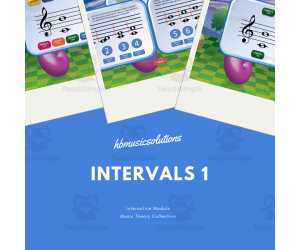
Intervals Level 1 | Interactive Theory Activities
Creative Arts, Art, Music, Grade 1, 2, 3, 4, Activities
Intervals Level 1 | Interactive Theory Activities Designed as an innovative tool for teaching music theory, this product uses an interactive method to help students understand the concept of musical intervals effectively. The resource aims primarily at educators, assisting them in introducing their students to constructing intervals based on a major scale. It covers all major and perfect intervals across all significant key signatures. Interactive Learning The creators understand the diverse needs of learners. As such, each slide has a helpful button and scale prompt encouraging self-guided learning while offering essential support. Teachers can use this feature during individual student usage or group settings. Evaluation Section The resource also includes a section for comprehension reinforcement and testing skills. This section enables teachers to monitor progress actively throughout the interval learning journey. Broad Coverage Versatile: The educational resource provides extensions covering minor intervals, augmented intervals, and diminished intervals alike – aspects certain to enrich your music lessons further down your instructional curriculum course. Technological Requirements: The complete package comes as computer zip files needing unzipping before use; Mac users are limited currently to only using via tablet-linked methods compatible with computer usage but not allowing offline access via downloaded version. Note: Tablet files should be housed in a free app (articulate mobile player) creating ease & simplicity once initial download/setup has taken place. Suitable for Grades 1-4: The program is adaptable across grade levels - giving room for repetitive application over many academic years if necessary ensuring that students fully master every step before advancing forward. Inclusion in broader curriculums-h3/> The subject easily integrates with technology-driven lessons found in general education contexts. It's primary subject category Naturally falls under Arts & Music - although more specifically subsiding within the Music segment. The file type of the resource is PDF. Overall, Interval Level 1 showcases how interactive educational resources can successful fuse traditional fields like music theory with modern digitized teaching strategies and tools.
Author Hbmusicsolutions's Shop
Tags Interactive Learning, Music Theory, Intervals, Teaching Resource, Digital Education

Reading Comprehension Nonfiction Set 1 Sample - Ostrich (PPT)
ELA, Reading, Writing, Common Core, ESL, Language Development, Spelling, Reading Comprehension, Creative Writing, Resources for Teachers, Grade 4, 5, Teacher Tools, Presentations, Tests, Quizzes and Tests, Assessments, Activities
Reading Comprehension Passages Nonfiction Set 1 Sample Overview No prep reading comprehension lessons, with enjoyable articles and topics. Each lesson has a blend of post-reading activities. Mixed questions to check overall understanding. Vocabulary activities, plus a writing section. Lessons also contain a bonus extension exercise at the end. Some you may like, some you may not, either way they are there if you wish to use them. Full answer keys are provided. Passage Included 2.Ostrich: Ostrich eggs are big enough to be used as make shift cups! PPT Version This is the PPT editable and fillable (when not in presentation mode) version. This download is available in GOOGLE Docs, GOOGLE Forms, GOOGLE Slides. PDF, PPT, WORD. FULL CATALOG OF DOWNLOAD LINKS HERE Grade 4/5 Links Fiction Set 1 - Animals Google Docs Google Forms Google Slides PDF PPT Word Guided Reading Materials Fiction Set 2 - Family Google Docs Google Forms Google Slides PDF PPT Word Guided Reading Materials Fiction Set 3 - Friends Google Docs Google Forms Google Slides PDF PPT Word Guided Reading Materials Fiction Set 4 - School Google Docs Google Forms Google Slides PDF PPT Word Guided Reading Materials Fiction Set 5 - Sports Google Docs Google Forms Google Slides PDF PPT Word Guided Reading Materials Nonfiction Set 1 - Birds Google Docs Google Forms Google Slides PDF PPT Word Guided Reading Materials Nonfiction Set 2 - Insects Google Docs Google Forms Google Slides PDF PPT Word Guided Reading Materials Nonfiction Set 3 - Mammals Google Docs Google Forms Google Slides PDF PPT Word Guided Reading Materials Nonfiction Set 4 - Nature Google Docs Google Forms Google Slides PDF PPT Word Guided Reading Materials Nonfiction Set 5 - Sea Animals Google Docs Google Forms Google Slides PDF PPT Word Guided Reading Materials Reading Passages Overview Each passage is especially written for Grade 4-5 students, including key vocabulary required for this age group. Topics are varied and are accompanied by colorful graphics. Topics are meant to educate, yet entertain the modern student. These passages are perfect for the modern classroom. Whereas textbooks can become outdated in no time, any changes to technology or the world will result in updates to this product. Mixed Questions The mixed questions section of each lesson includes a variation of five comprehension, vocabulary and math questions. In addition, key reading strategies are frequently covered including cause & effect, summarizing, compare & contrast and making conclusions. Two or three of the questions will be MCQs and other questions will require a written response of some kind. Full answers and example responses appear at the end of the lesson. Spelling & Vocab Each reading passage contains a variety of words and phrases designed for Grade 4-5 students. Spelling and vocab activities provide the opportunity to build fluency with these words. As it can become quite mundane doing the same activities over and over, each lesson in a set will contain a different spelling and vocab activity . Activities include: spelling games, sentence match-ups, mixed-up text and decoding words from the lesson. Writing Prompts Writing prompts are designed to continue the theme or lessons learned in the story. Students are persuaded to write in a variety of ways and each prompt includes several cues to help. As with the spelling/vocab section, writing prompts will vary. This includes research pieces, reading responses, poetry and creative writing prompts. Full Answer Keys Full answer keys and sample responses are provided so no matter how busy you are, you know you're covered! Mixed question answers provide evidence from the text, math questions contain the relevant workings. Answers are designed for use by the teacher, but also suitable as a handout to the student. Just for Fun Each lesson will have a bonus extension exercise. This is something fun to extend the lesson with. You can find these at the end of each lesson, titled Just for Fun. Just for Funs are optional. Some you may like, some you may not. Either way, they are there to do with as you wish. For similar downloads and other frees, do check out Cored Group on TeachSimple.
Author Cored Education
Tags Elementary, Reading, Comprehension, Vocabulary, Answers, Ccss, Common Core, Spelling, Writing, Passages

Burger Stack Matching Math Game
Math, Order Of Operations, Grade 2, 3, 4, 5, Activities, Games
Product Description Burger stack matching math games are great for mathematics lessons in basic operations like addition, subtraction, division, and multiplication and math centers for class activity . This product is useful for all children to learn addition, subtraction, division, and multiplication through play-based learning with burger clip arts and task cards for games and activities. Directions for use: To prepare the templates for use by printing the pages you wish to use and laminate them for durability. All clip arts will need to be printed and cut before use, with the option to laminate for durability. It is important to make copies of the burger clip arts for multiple players, specifically the top and bottom bun. These templates can also be used for writing with board markers, making sure not to use permanent markers. Wipe the marker off with a moist cloth or if particularly hard you can use rubbing alcohol. Uses for product Task Cards Math class Math center Wall tiles Decoration Writing Counting Sorting
Author Koodles Clubhouse
Tags Math, Equation, Building, Addition

Geometry: 3Ds Polyhedrons
Math, Geometry, Grade 4, 5, 6, Activities
Geometry: 3D's Polyhedrons Geometry: 3Ds Polyhedrons provides an excellent teaching aid for introducing your middle and elementary school students to the dynamic world of polyhedrons. Our resources simplify complex geometry concepts, making them easy to understand for beginners learning about prisms, pyramids, and other 3D shapes. Poster-centered Learning: A wide range of posters for every prism and pyramid shape covered in middle school geometry curriculum . Detailed explanation of unique attributes such as faces, sides, vertices. In-depth visual understanding assisting learners in comprehending why each shape is distinguished by its particular name. Rhymes & Practice: An array of catchy rhymes designed specifically to aid in remembering each prism & pyramid. A multitude of practice pages & worksheets supplementing classroom teaching efforts. Focused activities ensuring consolidation gained knowledge and skills. The 'Geometry: 3Ds Polyhedron' package includes reference pages together with cheat sheets that work as compact summaries ensuring no lesson gets lost during the learning process. As a teacher or educator, feel free to utilize these materials in whatever way suits your method best. This could mean shaping a vibrant classroom demo space by draping those colorful posters around your room or assigning them individually for personal study at home or during break time at school. The same applies to practice worksheets which can function either as homework assignments or coordinated classwork exercises. Usage: This resource was designed primarily with Grades 4-6 Math classes focusing on the Geometry subunits in mind. It spreads over forty-two PDF pages full of activities centered around classifying polyhedrons. Note: Geometry: 3Ds Polyhedron translates complex geometry subjects into much simpler concepts and processes, making it easy for learners to tackle challenging topics.
Author Big Apple Teaching
Tags Geometry, Polyhedrons, 3D Shapes, Posters, Practice Pages

Fog Free Reading Comprehension Passage
ELA, Reading Comprehension, Reading, Language Development, ESL, Strategies, Library, Resources for Teachers, Earth and Environmental Sciences, Science, Grade 2, 3, 4, 5, Worksheets & Printables, Worksheets, Teacher Tools, Centers, Activities, Writing Prompts, Assessments, Quizzes and Tests, Quizzes, Tests
Fog reading comprehension: This Product Includes Reading Passage Each lesson begins with a high-interest reading passage written in clear, student-friendly paragraphs. The passage is usually three to four paragraphs long and explores different parts of the topic, such as history, science, technology, people, places, or real-world connections. Most passages are between 250 and 350 words, making them long enough to build reading stamina but short enough to fit easily into a regular lesson. Before reading, ask students to look at the heading and make a quick prediction: What do they think the passage will be about? What do they already know about this topic? What words or ideas might appear in the text? First Read Options You can choose the reading format that best fits your class: Teacher read-aloud – Great for support, modeling fluency, and helping students access the text. Partner reading – Students read paragraph by paragraph with a partner. Independent reading – Best for students who are ready to work with more independence. While reading, students can underline important details and any vocabulary words they think might appear later in the questions. Mixed Questions The first question page includes four multiple-choice questions and three written response questions. The multiple-choice questions each include four answer choices. These are useful for checking basic understanding, key details, vocabulary, and reading skills. Students can complete the multiple-choice questions independently first, then quickly review the answers as a class. The written response questions require students to answer in one or two complete sentences. Encourage students to include evidence from the passage when possible. A helpful sentence frame is: “I think ___ because the text says ___.” If students get stuck, remind them to return to the passage and look for the part that helps answer the question. Creative Writing The creative writing task asks students to write a short paragraph of five to eight sentences based on a question connected to the topic. Before writing, have students jot down three key ideas they want to include. You can also ask a few students to share ideas with the class to support anyone who needs help getting started. Writing Expectations Students should aim to include: 5–8 complete sentences At least 2 facts or details from the passage At least 2 vocabulary words from the previous page After writing, students can read their paragraphs aloud while classmates listen for facts, details, and vocabulary words. Answer Key An answer key is included for the multiple-choice questions. Written response questions include sample answers to show what a strong response might look like. Vocabulary answers are also provided. If the lesson includes a summary question, a sample summary is included as well.
Author Cored Education
Rating
Tags Reading Comprehension, Reading Passages, Reading, Ela Mcqs, Creative Writing, Comprehension, Free, Free Reading, Science, Earth Science

Bigmama's by Donald Crews Read Aloud
ELA, Reading, Reading Comprehension, Literature, Grade 2, 3, 4, Read Alouds, Activities
This picture book companion is a complete supplemental resource for the book Bigmama's by Donald Crews. It includes 27 print-and-go reading activities to choose from, making this resource ideal for customizing learning to your student's specific needs and academic abilities. Students will investigate characters, identify story elements, determine the theme, practice plotting story events, compare & contrast, make predictions, inferences, & connections, answer questions that require them to think beyond the text, and much more! Students will be captivated by the stimulating activities, while educators will value the saved effort in searching for premium resources to tackle complex reading concepts. The activities on offer aim to promote advanced cognitive skills, urge students to cite textual justifications for their conclusions, and motivate them to articulate their personal opinions and views. ⭐️This Resource Includes:⭐️ ◾ Making Predictions: Before reading the book, students will make predictions about the text. ◾ Story Elements: Students fill in the boxes with words & pictures to represent the story elements. ◾ Sequencing: Students will retell & illustrate the important parts of the story. ◾ Summary: Students complete the Somebody, Wanted, Because, But, So graphic organizer and write a summary of the story. ◾ Recalling Events in Chronological Order: Students will describe and illustrate four events from the story in chronological order. ◾ Story Event Sort: Students will describe a scene or event from the story that fits into each of the categories & explain how the event made them feel & how it relates to the category. ◾ Making Inferences: Students use clues & schema to make inferences while reading the story. ◾ Using Details to Make Inferences: Students will read the details from the story, answer the questions, and highlight or underline the supporting evidence (ANSWER KEY included). ◾ Making Connections: Students make connections to events in the story. ◾ Character Inside & Out: Students include details from the story to describe what the characters say, think, do, and feel. ◾ Character Feelings: Students describe how the characters' feelings change throughout the story & give examples of the events that cause them to feel the way they do. ◾ Character Summary: Students summarize the main character of the story. ◾ Sketch a Scene From the Story: Students will draw a scene from the story and explain why it's important to the plot. ◾ Setting Influences the Plot: Students will draw a scene from the story that takes place in one of the settings and write about what happened there and why it was important to the plot. ◾ Setting the Scene: Students identify three different settings in the story and explain how they know that the setting changed. ◾ 3-2-1: Students will list three things the author did at Bigmama's, 2 activities from the story they would like to try, and one word that describes spending time at Bigmama's. ◾ Author's Message: Students describe four important events from the story in chronological order and answer the questions about the author's message. ◾ Theme: Students answer the questions to determine which theme best fits the story and provide text evidence to support their choice. ◾ Thinking About the Text: Students will answer the questions about the story & include examples from the text to support their answers. ◾ Then & Now: Students will describe something that the author did at Bigmama's house when he was young. Then, they will describe what they think he would do now at Bigmama's, as an adult. ◾ Wait... There's More!: Students will write about what happens next in the story. ◾ My Special Memory: Students write about a special day or moment in their lives. ◾ Families are Special: Students will brainstorm their family's traditions, things that make their family unique, and special things they do with their family. Then, they will compare and contrast their family with a classmate's family using a Venn diagram. ◾ Book Review: Students will color in the stars to rate how much they enjoyed the book and draw a new cover & their favorite character from the story. Then, they will explain why other kids should or should not read it. ◾ Story Details Crossword Puzzle: Students will use the clues to fill in the puzzle (ANSWER KEY included). This resource is for extension read-aloud activities only. The book is not included. ⭐️You may also like: ⭐ TEXT SET #1: "The Importance of Friendship" ◾ A Weekend With Wendell Read Aloud Book Companion Activities for IRA ◾ First Come the Zebra Read Aloud Book Companion Activities for IRA ◾ This is Our House Read Aloud Book Companion Activities for IRA ◾ Horace and Morris But Mostly Dolores Read Aloud Book Companion Activities for IRA ◾ The Old Woman Who Named Things Read Aloud Book Companion Activities for IRA TEXT SET #3: "Finding Your Way in a New Place" ◾ Grandfather Counts Read Aloud Book Companion Activities for IRA ◾ The Have a Good Day Cafe, Read Aloud Book Companion Activities for IRA ◾ Roses for Gita Read Aloud Book Companion Activities for IRA ◾ Mango, Abuela, and Me, Read Aloud Book Companion Activities for IRA ◾ Home at Last Read Aloud Book Companion Activities for IRA TEXT SET #7: "Exploring Narrative Nonfiction" ◾ Cactus Hotel Read Aloud Book Companion Activities for IRA ◾ A Log's Life Read Aloud Book Companion Activities for IRA ◾ Salmon Stream Read Aloud Book Companion Activities for IRA ◾ Think of an Eel Read Aloud Book Companion Activities for IRA ✨Be sure to check out my storefront here: https://teachsimple.com/contributor/creatively-gifted
Author Creatively Gifted
Tags IRA, Picture Book Activities, Read Aloud Lessons, Interactive Read Aloud Activities, Elementary Reading, Reading Comprehension, Fountas And Pinnell IRA, Family, Second Grade, Memory Stories
Lesson 9: The Clincher – How to End an Essay that Satisfies the Reader - An Alien Wrote my Expository Essay with Mr. Butt and Bonefish
ELA, Writing, Creative Writing, Strategies, Language Development, Vocabulary, Grade 4, 5, 6, Activities
Product Title: Lesson 9: The Clincher – How to End an Essay that Satisfies the Reader - An Alien Wrote my Expository Essay with Mr. Butt and Bonefish Built as an essential teaching aid, this product is crafted to support educators in their quest toward enhancing students' writing techniques, specifically their aptitude for crafting satisfying essay endings. Suitable for students of grades 4 through 6, this resource aids in molding proficient writers who can leave their readers feeling gratified and satisfied. Centered around Language Arts-a subject of paramount importance- it weaves together areas such as Creative Writing, Strategies, Vocabulary and General Writing. Packaged with PowerPoint Lessons Word Document Assessment Lesson(s) PowerPoint Lesson Review(s) This tool aims at making the learning process engaging while providing ample practice opportunities to solidify understanding. An interesting aspect lies in how every lesson incorporates a story that embodies the concept being taught. This narrative technique ensures teaching is more relatable hence enabling better retention among pupils. What follows next is a lesson review leading into an assessment designed to gauge comprehension level of each student regarding a given concept. Motivated Students: Note: This versatile tool renders itself useful across versatile learning environments and group settings: Individual study sessions, Vibrant small groups exchanging ideas, All-rounded whole-class instruction guided by teachers, This dynamic resource can be harnessed for removing any bottlenecks on individuals’ learning pathways- even swelling budding scholars facing challenges during homework assignations!! In short, equipped with these dynamic learning materials at hand teachers are empowered to drive home the crucial skill of endowing essays with compelling conclusions called 'clinchers,' ensuring what readers have invested time on was worth it; thereby leaving an enduring impression on them.
Author Scary Good Writing With Mr. Butt and Bonefish
Tags Essay Writing, Conclusion, Language Arts, Teaching Aid, Creative Writing

India Map Geography Word Search 2rd 3th 4th 5th Grade worksheet
Vocabulary, Language Development, ELA, Spelling, Geography, Social Studies, Grade 2, 3, 4, 5, Games, Activities, Word Searches, Worksheets, Worksheets & Printables
Make learning fun with a no-prep, printable vocabulary word search that builds vocabulary, reinforces literacy, and sparks curiosity! Students can explore the new vocabulary words while practicing spelling, scanning for letters, and identifying keywords. A word search can be a perfect and easy-to-use activity to liven up a lesson by combining learning with fun! It is an excellent way to reinforce concepts within a lesson and engage students' hands-on learning. Purpose: This activity allows students to learn new vocabulary words and contextualized vocabulary related to a topic ✏️, improve spelling, reading, and attention to detail 📚, increase awareness of concepts and knowledge about the world at large 🌍, and encourage curiosity and engagement about the topic 🐾. Word searches are a hands-on way to make learning memorable and fun for students - it engages them at all vocabulary levels! How to Do It: 1️⃣ Hand out the word search worksheet. 2️⃣ Introduce any important vocabulary or concepts that fit with the topic. 3️⃣ The students search for the words and circle or highlight each one. 4️⃣ Discuss the importance of the topic or the words that the student found. 5️⃣ Review the answers using the answer key that is included for each product ✅ Perfect For: Grades 2-5 🌟, independent practice, partner work, students who finish early, science or social studies centers, or for substitute plans 🤝 Way of Implementation: Great for independent practice early finishers, partner work, or substitute plans 🤝. Answer Keys: (these will be pencils under your three files: Given for simple checking and self-assessing. Fun Variations: Timed Challenge ⏳ - record how many words students can find in a set time. Partner Puzzle 🤝 - work together to find all of the words. Vocabulary Extension ✏️ - write sentences or a few short paragraphs using the words. Create-Your-Own Word Search 🧩 - have students make their own word search puzzles using the vocabulary. Standards Alignment: Supports CCSS/ELA vocabulary development, and can also connect to NGSS or other relevant standards, depending on the topic. File & Print Info: PDF includes both a color and black and white version, and is ink-friendly to make printing easy. Teacher Tip! Have students learn by being hands-on, engaged, and active while helping them build awareness, vocabulary, and literacy skills around any topic! 🌟
Author Classsim
Rating
Tags India, Map , Geography , Word Search , 2rd 3th 4th 5th Grade , Worksheet , Activity, India Map Geography , India Map Geography Word Search 2rd 3th 4th 5th Grade , India Map Geography Word Search 2rd 3th 4th 5th Grade Worksheet Activity

History of the Domestic Dog: Guided Reading Level R with Lesson Plan
ELA, Resources for Teachers, Reading Comprehension, Reading, Science, Language Development, Life Sciences, Vocabulary, History, Social Studies, Grade 3, 4, 5, Worksheets & Printables, Worksheets, Teacher Tools, Centers, Activities, Literacy Readers, Quizzes, Quizzes and Tests, Assessments, Lesson Plans
This History of the Domestic Dog (level r) guided reading book with lesson plan includes: Guided Reading Color Label (front cover x1) This is a quick way to match the book’s demands to what students can generally handle.. The overall goal is to use the level/color to pick books for several smaller groups. To qualify for a certain level, a student is expected to read a book from that level with about 90–94% accuracy. If a student is consistently accurate and understands, move up a level. If the student is struggling at that level, drop down and add more support. Each student will improve at completely different rates, but it is generally one of the best ways to check progress across the class. DOWNLOAD THE CATALOG TO VIEW ALL GUIDED READING BOOKS AVAILABLE (SORTED LEVELS A-Z) Pre-Reading Question (x1) Teacher asks the prompt aloud, can be while showing the cover or first page. Students share what they already know, or make educated guesses from the cover. Prompt them to use the target vocabulary. Write some of their responses on the board to look back at during the reading. Vocabulary Words (x5) Introduce the five words, best doing it one at a time. Start by saying it, while students repeat and then see if anyone knows what it means before reading further. Read through the meaning and try to briefly connect each word to a picture or gesture so it’s meaningful. Ask students to flip through the book pages and point to where they see each of the vocabulary words. While reading the book pause upon coming across one of the vocab words or read the sentence twice to make sure students understand the word has appeared. Optional: Ask students to raise hands whenever they see/hear one of the new words. Guided Reading Pages (x10) Check the book snapshot (below) for: primary topic - do you need to prep extra reading or intro materials on this? what is taught best - decide on 1-2 bullets to focus on, use the prompt or words provided here for best results. learning goals - what you are checking for students to be able to do after the session, elicit answers using prompts or words provided. key vocabulary (see section above). questions overview - so you know what is coming up and if you need to prep extra materials to assist understanding. Run the lesson You may have already looked at a few of the pages together, but you can show them some of the pictures again first to set meaning. Depending on how much time you have and how familiar your students are with guided reading class, you may want to read the book aloud first with the group first. Students whisper or partner read, while you listen in. If time, do it as a group, one student reading a page each. Use the guided page’s prompts to coach: “Check the picture / does it make sense?” “Point under the words / try the first sound” “Reread the sentence smoothly”. Try to focus more on one student per session (rotating every time), so you can work out if they are ready to move up or need to move down a level. Comprehension Questions (back cover x3) This is your way to check that students didn’t just say the words, but actually understood the text. First, let students answer by pointing to the page/picture and saying a short sentence. After any answer, follow with: “Show me where you found that in the text.” In bigger groups, have partners answer first (10–20 seconds), then call on 2–3 students to share. Differentiation tips: Emerging speakers/struggling readers: oral + pointing On-level: oral in a full sentence Higher: one written sentence or draw + label Book Snapshot Title: The Science and History of the Domestic Dog Genre: Nonfiction (informational) Subject: Life Science Primary Topic: Domestication, traits, and roles of dogs Estimated Guided Reading Level (A–Z): R What This Book Teaches Best Explains dogs’ biological connection to gray wolves , including shared DNA and instincts tied to social behavior and communication. Describes the history of domestication and how human artificial selection led to many distinct dog breeds. Uses specific evidence to show why dogs have exceptional smell and hearing (brain structures, scent receptors, and hearing frequencies). Shows how selective breeding creates specialists for different jobs (speed, herding, cold-weather survival, and service work). Teaches how to read dog communication signals (tail wag speed/height, ear position, facial muscles, back posture). Learning Goals Explain how the text connects domestic dogs to gray wolves using specific evidence (classification and DNA). Describe how domestication began and how humans’ breeding choices created many breeds over time. Identify details that show why dogs can smell better than humans (olfactory bulb and scent receptors). Identify details that show why dogs can hear better than humans (frequencies and ear muscles). Compare at least two breeds in the text by explaining how traits match their work or environment (speed, herding, cold climate, service). Describe what the text says people can look for to understand a dog’s emotional state. Key Vocabulary From the Text subspecies — a smaller group within a kind of animal. domestication — animals becoming used to living with people. olfactory — having to do with smell. frequencies — how high or low a sound is. resilient — able to handle hard conditions and keep going. Discussion Prompts Pre-reading question: What jobs or tasks have you seen dogs do for people? Comprehension questions: According to the text, how are domestic dogs connected to gray wolves? Comprehension questions: What evidence does the text give to show how powerful a dog’s sense of smell is? Comprehension questions: What signs does the text say people can look for to understand a dog’s emotional state? Printing Tips 1. Best Printing Method (Recommended) “Booklet” Printing (Best if Available) If your printer or PDF viewer supports Booklet Printing , use this. Settings to use: Print mode: Booklet Paper size: Letter or A4 (either works) Orientation: Landscape Print on both sides: Yes Flip on: Short edge Scaling: Fit to printable area Booklet subset: First test: Front sides only Then: Back sides only This will automatically: Pair pages correctly Put the cover on the outside Align everything for folding After printing, fold in half and staple along the spine . 2. If “Booklet” Printing Is NOT Available You can still print this correctly with manual duplex printing . Step-by-step: Open the PDF. Choose Print . Set: Orientation: Landscape Pages per sheet: 1 Print on both sides: Yes Flip on: Short edge Print all pages . Because each PDF page already contains two facing book pages, the result will still fold cleanly into a book. Thousands of Cored Education products are included with your TeachSimple membership. Download links and encyclopedia index available here.
Author Cored Education
Rating
Tags Reading Comprehension, Reading Passages, Reading, Guided Reading, Guided Reading Lesson Plan, Guided Reading Activity, Pre-reading, Science Lesson Plans, Life Science, History
Language Quest – ESL Board Game for the Classroom
ELA, Language Development, ESL, Grammar, Vocabulary, Grade 4, 5, 6, 7, Activities, Games
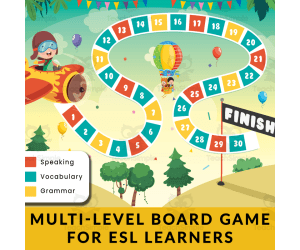
Introducing "Language Quest," the ultimate multi-level board game for ESL learners! Elevate your teaching experience by bringing fun, engagement, and friendly competition to your ESL classroom. Carefully crafted for both teachers and students, this game offers a comprehensive approach to improve grammar, vocabulary, and speaking skills. The diverse set of questions cater to 3 different levels of proficiency – A1/A2, B1, and B2+, ensuring that all your students stay engaged, motivated, and eager to learn. "Language Quest" is the ideal supplement to your existing lesson plans, transforming English language learning into an enjoyable and interactive experience. With this game, you can foster a positive learning environment and encourage your students to work together, promoting camaraderie and teamwork. As they advance through the game, students will gain confidence in their language abilities, making learning not just fun, but truly effective. It's also an easy way to use differentiation in your classroom through the color-coded game system! Designed with both beginner and advanced students in mind, "Language Quest" offers three distinct levels of questions. This adaptable game seamlessly integrates into your curriculum, allowing you to use it for mixed-level classes or as a one-size-fits-all solution for varying proficiency levels. The colorful board design and straightforward setup make it an inviting and engaging learning tool, particularly for younger learners. "Language Quest" is not only a valuable teaching resource, but it is also built to last. The game components, including the board, cards, and playing pieces, are made from high-quality materials that can be laminated for long-term use. This ensures that you'll be able to enjoy the educational benefits of "Language Quest" for years to come. Don't miss out on this unique and innovative approach to language learning. Invest in "Language Quest" today and watch your students' language abilities soar to new heights! #LanguageQuest #ESLBoardGame #FunLanguageLearning
Author The Laughing Linguist
Rating
Tags Game, ESL Game, Fun, EFL, ESL, English, Speaking, English Game
Lesson 4: Interjections: Using Interjections to Make Your Story Pop! - A Zombie Wrote my Narrative Essay with Mr. Butt and Bonefish
ELA, Writing, Grade 4, 5, 6, Activities
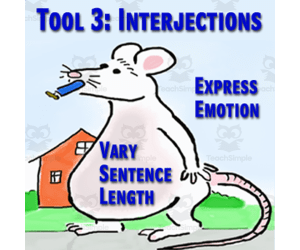
Interjections: Wow! Interjections! A great tool for your writing toolbox. Each lesson contains a story that illustrates the concept being taught. This is followed by an assessment to evaluate a student’s understanding of the concept and a lesson review.
Author Scary Good Writing With Mr. Butt and Bonefish
Tags How To Write A Narrative Essay, Creative Writing, Using Interjections, How To Use Interjections, How To Write A Story, Why Do You Use Interjections, How To Vary Sentence Length, Scary Good Writing