



3,968 products added recently
Page 32 - 4th Grade Activities
Introduce your fourth-grade students to activities that challenge and inspire. These resources encourage analytical thinking, teamwork, and creative expression across subjects. Use them to elevate your teaching and engage students in meaningful learning experiences.

 Show filters


Learning About Landforms Activity Packet
Social Studies, Geography, Grade 3, 4, 5, Activities
This is a Learning About Landforms Activity Packet. It comes with: - Posters - Leveled Passages - Comprehension Questions - Mini-Book - Game /Task Cards - Graphic Organizers - Lapbook There are 14 landforms included!
Author Siri Latina
Tags Landforms, Geography, Lap Books, Task Cards, Graphic Organizers, Social Studies, Mini Book, Reading Comprehension, Small Group, Landforms Activities, Landforms Activity

Brainy Acts of Following Directions: Logic Activities
, Grade 3, 4, Activities
Brainy Acts of Following Directions: Logic Activities A comprehensive educational resource, designed with the specific aim of fostering logic and directional skills in students. Created particularly for students in Grade 3 and Grade 4, this material created by proficient educators strikes the perfect balance between learning and exploration. Promote Cognitive Growth through Interactive Experiences The teaching resource transforms traditional activities into enriching learning experiences. The packet features: Ten PDF pages filled with various exercises. Diverse tasks that range from treasure hunting using maps to solving mentally stimulating riddles. Cultivate Learning Environments that suit your Curriculum's Needs This tool offers flexibility to educators to integrate these exercises within their curriculum in several ways: In whole group activities, promoting idea exchange and team-building environment. In smaller group discussions or during one-on-one tutoring sessions focusing on individual needs of students. A Versatile Resource - Use It Any Time, Any Place! Educators can use this tool either as a day-starter or a wrap-up activity ensuring an invigorating mood throughout the academic hours. Not only limited to classroom use, they can even be used as exciting homework assignments extending learning into homes! "Brainy Acts Of Following Directions: Logic Activities", is more than just another teaching aid; it's a progressive means through which complex subjects like logic navigation are effortlessly integrated into enjoyable tasks fit for third and fourth graders - it is truly transformative education engaging students in fun-filled explorations!
Author Classroom Complete Press
Tags Brainy Acts, Brain Activities, Logic Activities, Following Directions, Teacher Resources

Social Skills Word List Posters (PDF)
ELA, Language Development, Vocabulary, Spelling, ESL, Resources for Teachers, Social Skills, Special Resources, Grade 2, 3, 4, 5, Worksheets & Printables, Worksheets, Teacher Tools, Centers, Activities, Posters, Classroom Decor
Word List Poster Series This word list poster series is designed for students in grades 2–5. Each printable focuses on a clear, kid-friendly theme and features 8 target vocabulary words with short, student-friendly meanings or fun facts. The clean layout works as both an anchor chart and a write-in sheet, giving students a quick, visual reference they can revisit during centers and independent work. These posters are student-friendly, classroom-ready, and perfect for warmups, vocabulary walls, sub plans, or take-home reference. Display a single poster to support the day’s lesson, or group several to build a themed wall across your unit. Note: Each poster is a companion piece to its matching themed product in the series—pair it with the corresponding maze, wordsearch, or activity pack for a consistent set of 8 focus words. Social Skills Word List 1. Kindness and Respect Kind, Share, Help, Nice, Fair, Smile, Listen, Thank 2. Communication Talk, Ask, Say, Chat, Answer, Voice, Words, Quiet 3. Making Friends Friend, Wave, Hi, Play, Laugh, Group, Together, Fun 4. Good Manners Please, Excuse, Sorry, Welcome, Respect, Wait, Polite, Honest 5. Working Together Team, Help, Share, Try, Fair, Listen, Job, Strong 6. Solving Problems Brainstorm, Listen, Create, Adjust, Discuss, Decide, Solve, Confidence PDF Version Other versions will appear here when available. Follow the store for the lastest on new products. How to Use These Word List Posters Perfect for: Morning work or early-finisher bins Vocabulary centers or anchor walls Holiday/seasonal review lessons Independent stations, sub plans, or take-home reference More Social Skills Themed Products CROSSWORDS WORD SEARCHES MAZES FULL CATALOG OF DOWNLOAD LINKS HERE Themed Word List Posters Links Addition PDF Animals PDF Around the Home PDF Birthday PDF Candy PDF Christmas PDF Cinco de Mayo PDF Clothes PDF Colors PDF Days and Months PDF Division PDF Earth Day PDF Easter PDF Easy Word List Posters PDF Fall PDF Father's Day PDF Food PDF Geography (Set 1) PDF Geography (Set 2) PDF Geography (Set 3) PDF Graduation PDF Health PDF History (Set 1) PDF History (Set 2) PDF History (Set 3) PDF Human Body PDF Kindness PDF Life Skills PDF Mother's Day PDF Multiplication PDF Science (Set 1) PDF Science (Set 2) PDF Science (Set 3) PDF Shapes PDF Social Skills PDF Spring PDF Sports PDF St. Patrick's Day PDF Subtraction PDF Summer PDF Thanksgiving PDF Transport PDF Valentine's Day PDF Winter PDF Word List Posters in Depth Structure Each poster is built around a focused sub-theme and presents 8 target words with short, student-friendly meanings or fun facts. The clean A4 portrait layout works as an anchor chart on your board or as a student reference at desks. These posters are designed as companion pieces to the matching themed products (mazes, wordsearches, activity packs), so the same vocabulary stays visible across your unit. Each poster set includes: A themed word list poster with 8 words + brief meanings/facts A clean, high-contrast layout for easy printing and display Space that can double as write-in/draw-to-show-meaning during centers Themes Included Seasons & Holidays (e.g., Halloween, Easter, Valentine’s Day) Everyday Topics (e.g., Animals, Weather, School) Math & Science Connections (e.g., Number Words, Simple Machines) Special Units (e.g., Health, Earth Day, Sports, Kindness) Each topic reflects real-life experiences and interests while strengthening vocabulary recognition and content understanding in a clear, visual way. Easy extensions (optional) Sketch it: students draw a quick icon for each word Sort it: group words by category (e.g., actions, objects) Star it: highlight “I already know” vs. “I’m learning” words Match it: point to examples in a reading, video, or picture set Say it: brief oral definition or example sentence during share-out Differentiation tips Pre-teach 2–3 anchor words; add the rest later in the week Offer picture cues or gestures for emerging readers/ELLs Let students choose 4 of 8 to focus on first, then build up Color-code by part of speech or concept family for quick scanning For similar downloads and other frees, do check out Cored Group on TeachSimple.
Author Cored Education
Rating
Tags Vocabulary, Spelling, Social Skills, Communication, Making Friends, Ela Posters, Posters, Word Lists, Social Skills Posters, Social Skills Word Lists

9th 100 Fry Sight Words: Bingo Cards
ELA, Reading, Language Development, Spelling, Vocabulary, Grade 3, 4, 5, Activities, Games
9th 100 Fry Sight Words: Bingo Cards An engaging and practical skill development tool specifically designed for Grade 3,4,5 students. These Bingo cards offer a unique approach to sight word learning with a particular focus on Language Arts aspects like Reading,Spelling, and Vocabulary. Bingo Game Structure: The simplistic structure of the game involves each player having a bingo card with sight words randomly placed within grid format. The signaling of these words by either teacher or an selected student forms the basic function while players mark off these pronounced words on their respective cards. A resultant line of five matched words whether vertically, horizontally or diagonally calls for victory! Educational Advantages: An interactive method for enhancing reading fluency amongst students. Involves repeated exposure to high-frequency sightwords leading reinforcement in understanding fundamental literacy facets. Makes learning more attractive process for kids. Versatility & Ease: This versatile design structure allows these bingo cards to be effortlessly adapted as per class requirements. Whether group activities or potent literary center tasks – this tool seamlessly adjusts! Your purchase comes with one downloadable PDF containing thirty pages that can easily be printed on US Letter Size paper. Sightword Range: 'addition', 'observe', 'safe', etc., this teaching aid aims at revamping conventional classroom methodologies into self-driven challenges! In light of the transition towards more interactive ways of learning in classrooms or homeschooling setups - This adaptable and exciting formative resource is just what you need!
Author TeacherYouWant
Tags Sight Words, Bingo Game, Literacy, Reading Fluency, Vocabulary

The Lion King Movie Guide (Animal Adaptations and Ecosystems)
Science, Life Sciences, Biology, Earth and Environmental Sciences, Environmental Science, Grade 3, 4, 5, Activities, Teacher Tools
Using The Lion King movie guide, students will engage with science concepts including ecosystems, animal adaptations, environmental changes, food webs (and food chains), and what a disruption to the environment can do to populations. Using movie guides in the classroom can make content interactive and relatable for your class. Movies provide a visual for the content covered in class, so students can see real world (or animated world) applications.. Movie guides help students focus on important details throughout at the movie and think critically about what they watch. Movie Synopsis: The Lion King follows the journey of Simba, a young lion cub, as he struggles to figure out what he wants to do later in life. After his father, the king, is killed by his uncle, Simba runs away from home, because feels responsible for his father's death. As he grows up, Simba meets new animal species and makes new friends, who help him rediscover his strength and purpose. Eventually, Simba returns to face his uncle and take his rightful place as king of the Pride Lands, restoring balance to the ecosystem and to the kingdom. Speaking and listening standards are also covered, depending on how many of the above topics you discuss in your classroom. The movie guide provides an opportunity for teachers to "get back" some of that class time at the end of a unit, whether needed for grading projects, working one on one with students, or finishing up assessments. Other students are engaged and still actively searching for the topics covered in the unit discussed. The activities provided allow for: Class discussion Small group discussion Informal assessment Movie Rating: G Grades: 3rd - 5th Tags: The Lion King, Disney, movie guide, natural resources, environment, ecosystems, animal adaptations, animals, species, populations, savannah, rainforest, desert File type: PDF Pages: 4 - including answer key
Author Kel's Klass
Tags Movie Guide, Natural Resources, Environment, Disney, The Lion King, Ecosystems, Animal Adaptations, Animals, Species, Populations
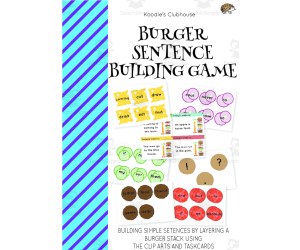
Burger Sentence Building Game
ELA, Reading, Grade 1, 2, 3, 4, 5, Activities, Games
Product Description Burger sentence building game is great for phonics and literacy lessons and centers. This product is useful for all children to learn sentence building through play-based learning with burger clip arts and task cards for games and activities. Directions for use: To prepare the templates for use by printing the pages you wish to use and laminate them for durability. All clip arts will need to be printed and cut before use, with the option to laminate for durability. It is important to make copies of the burger clip arts for multiple players. These templates can also be used for writing with board markers, making sure not to use permanent markers. Wipe the marker off with a moist cloth or if particularly hard you can use rubbing alcohol. Uses for product Flashcards Task Cards Phonics lesson Literacy center Wall tiles Decoration Reading Writing Sorting
Author Koodles Clubhouse
Tags Sentence, Building, Template, Burger, Task Cards, Burger Writing Template, Sentence Making Games, Build A Burger Games, Build A Burger Free Printable, Sentence Building Game, Sentence Building Games

4th 100 Fry Sight Words Practice Game , Roll & Color, Fun Activity - SET 9 (b)
ELA, Reading, Language Development, Vocabulary, Spelling, Grade 2, 3, 4, Activities
Product Overview: 4th 100 Fry Sight Words Practice Game , Roll & Color, Fun Activity - SET 9 (b) This product provides a dynamic and interactive approach to learning sight words, combining elements of literacy and math into an engaging game designed to increase student’s engagement while mastering essential words. Gameplay In this activity, the roll of dice determines which column of sight words a student will select from on each game sheet. Every sheet features five colored sight words at its top section. After every roll, students color in a box that corresponds with the chosen word's color. This continues until all boxes are filled with vibrant colors. Educational Benefits Motivation: Using games for instruction encourages learners more effectively than traditional exercises often associated with vocabulary acquisition. Cognitive Development: Learners are required to apply their knowledge in an enjoyable context. Versatility: Set 9b caters to both individual learners and group settings effectively, making it suitable for various teaching methods employed by teachers or homeschooling parents. Beyond The Classroom The tool can also be used outside of classroom scenarios such as reinforcement homework assignments or summer reviews that can easily be administered by parents wishing to support their kids’ academic growth. Aesthetic Appeal The worksheets have been designed with eye-catching colors which increase visual interest and boosts memory retention through creating an association between each hue and specific sight word. In conclusion, our Set 9b Sight Words Worksheets offer valuable resource that incorporates fun into critical subject learning. Bonus: Since this product is delivered in a PDF format, no preparation time is required, allowing teachers to focus more on teaching and learning through this innovative sight words game . Color up your word practice with this engaging resource ideal for grades 2-4.
Author TeacherYouWant
Tags Sight Words, Literacy Game, Interactive Learning, Vocabulary Practice, Educational Resource
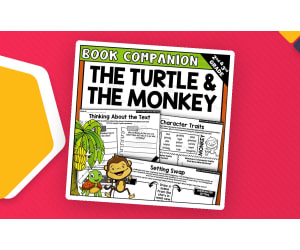
Read Aloud Book Companion: The Turtle and the Monkey
ELA, Reading, Reading Comprehension, Literature, Grade 2, 3, 4, Read Alouds, Activities
This comprehensive supplemental resource serves as the perfect companion to the book The Monkey and the Turtle by Paul Galdone. It offers 31 ready-to-use reading activities, catering to a variety of student needs and academic competencies. From exploring characters, pinpointing story elements, determining themes, plotting story events, comparing and contrasting, making predictions, inferences, and connections, to responding to questions that push their thinking beyond the text, students are thoroughly engaged. Not only will these fun and engaging activities be a hit with the students, but educators will also appreciate the time saved in searching for high-level resources to teach complex reading concepts. These activities are specifically designed to encourage students to apply higher-order thinking skills, justify their ideas with textual evidence, and express their own thoughts and perspectives. Included in this resource: ◾ Elements of a Trickster Tale Anchor Chart or Notes Handout: Color and B&W ◾ Making Predictions: Before reading the book, students will make predictions about the text. ◾ Elements of a Trickster Tale: Students fill in the chart with the details of the story that characterize it as a trickster tale. ◾ Trickster Tale Tidbits: Students will answer the questions with details from the story that proves it's a trickster tale. ◾ Story Elements: Students fill in the boxes with words & pictures to represent the story elements. ◾ Sequencing: Students will retell & illustrate the important parts of the story. ◾ Retell the Story: Students retell the beginning, middle, and end of story with text and illustrations. ◾ Recalling events in Chronological Order: Students describe and illustrate four major events in the story in chronological order. ◾ Plot: Students will answer the questions in each section of the plot map to help them identify the plot's key events (ANSWER KEY included). ◾ Summary: Students complete the Somebody, Wanted, Because, But, So graphic organizer and write a summary of the story. ◾ Story Event Sort: Students will describe a scene or event from the story that fits into each of the categories & explain how the event made them feel & how it relates to the category. ◾ Making Inferences: Students use clues & schema to make inferences while reading the story. ◾ Making Connections: Students make connections to an event from the story. ◾ Problem & Solution: Students will answer questions related to the problem and solution. ◾ Author's Message: Students describe four important events from the story in chronological order and answer the questions about the author's message. ◾ Character Traits: Students choose the most important character traits that describe each of the characters and give 1-2 examples from the story that support the traits they chose. ◾ Character Inside & Out (Turtle): Students include details from the story to describe what the character says, thinks, does, and feels. ◾ Character Inside & Out (Monkey): Students include details from the story to describe what the character says, thinks, does, and feels. ◾ Character Feelings (Turtle): Students describe how the character's feelings change throughout the story & give examples of the events that cause them to feel the way they do. ◾ Character Feelings (Monkey): Students describe how the character's feelings change throughout the story & give examples of the events that cause them to feel the way they do. ◾ Character Development (Turtle): Students select the character traits that best describe the character at different times throughout the story and provide examples from the book to support each character trait. ◾ Character Development (Monkey): Students select the character traits that best describe the character at different times throughout the story and provide examples from the book to support each character trait. ◾ Character Change (Turtle): Students will explain how the character changed from the beginning to the end of the story and describe the events that caused the change to happen. ◾ Character Change (Monkey): Students will explain how the character changed from the beginning to the end of the story and describe the events that caused the change to happen. ◾ Sketch a Scene From the Story: Students draw a scene from the story & explain why it's important to the plot. ◾ Setting Influences the Plot: Students will draw a scene from the story that takes place in one of the settings and write about what happened there and why it was important to the plot. ◾ Setting the Scene: Students identify three different settings in the story and explain how they know that the setting changed. ◾ Setting Swap: Students draw a scene from the story in a big city setting and an underwater setting. Then, they explain what would change and what would stay the same. ◾ Theme: Students answer the questions to determine which theme best fits the story and provide text evidence to support their choice. ◾ Thinking About the Text: Students will answer the questions about the story & include examples from the text to support their answers. ◾ Wait... There's More!: Students will write about what happens next in the story. ◾ Book Review: Students color in the stars to rate how much they enjoyed the book and draw a new cover & their favorite character from the story. Then, they will explain why other kids should or should not read it. ◾ All About the Philippines: Students will research to learn more about the Philippines country. 💡Need ideas for different ways you can implement these activities? ◾ Focus on different reading skills each day for targeted instruction, and have students complete a corresponding printable to check for understanding. ◾ During centers, students can independently read the story again and complete an activity that reviews a previously taught concept. ◾ Work with students on a reading concept they struggle with during guided reading or strategy groups. ◾ Students work with a partner or in literature circles to complete additional reading activities. This resource is for extension read-aloud activities only. The book is not included. ⭐️You may also like: ⭐ TEXT SET #1: "The Importance of Friendship" ◾ A Weekend With Wendell Read Aloud Book Companion Activities for IRA ◾ First Come the Zebra Read Aloud Book Companion Activities for IRA ◾ This is Our House Read Aloud Book Companion Activities for IRA ◾ Horace and Morris But Mostly Dolores Read Aloud Book Companion Activities for IRA ◾ The Old Woman Who Named Things Read Aloud Book Companion Activities for IRA TEXT SET #3: "Finding Your Way in a New Place" ◾ Grandfather Counts Read Aloud Book Companion Activities for IRA ◾ The Have a Good Day Cafe, Read Aloud Book Companion Activities for IRA ◾ Roses for Gita Read Aloud Book Companion Activities for IRA ◾ Mango, Abuela, and Me, Read Aloud Book Companion Activities for IRA ◾ Home at Last Read Aloud Book Companion Activities for IRA TEXT SET #7: "Exploring Narrative Nonfiction" ◾ Cactus Hotel Read Aloud Book Companion Activities for IRA ◾ A Log's Life Read Aloud Book Companion Activities for IRA ◾ Salmon Stream Read Aloud Book Companion Activities for IRA ◾ Think of an Eel Read Aloud Book Companion Activities for IRA ✨Be sure to check out my storefront here: https://teachsimple.com/contributor/creatively-gifted
Author Creatively Gifted
Tags IRA, Picture Book Activities, Read Aloud Lessons, Interactive Read Aloud Activities, Elementary Reading, Reading Comprehension, Fountas And Pinnell IRA, Second Grade, Trickster Tales, The Turtle And The Monkey

Lesson 3: Adjectives - Choose Just the Right Adjectives to Make Your Story Come to Life - A Zombie Wrote my Narrative Essay with Mr. Butt and Bonefish
ELA, Writing, Grade 4, 5, 6, Activities
Lesson 3: Adjectives - Choose Just the Right Adjectives to Make Your Story Come to Life - A Zombie Wrote my Narrative Essay with Mr. Butt and Bonefish This teaching tool is skillfully created for students in grades 4 through 6, with a keen focus on writing skills enhancement. This lesson remarkably combines a narrative featuring characters ( zombie, Mr. Butt, and Bonefish ) creatively to emphasize the proficient usage of adjectives when describing people, places, and things. The integration of storytelling into education provisions an interactive learning experience that keeps students interested while promoting key academic understandings concurrently. Resourceful Assessment Tool The instructional package further provides an insightful assessment tool for evaluating students' grasp of the concept taught during the session. It acts as: A summative assessment A formative feedback instrument for educators to identify areas requiring additional explanation or reinforcement. Inclusive Review Session & Editable Files Included Additionally included is a review session accessible via PowerPoint Lesson along with Assessment files available in Word Document format: Easily editable according to your needs or preferences, Ideal for seamless integration into varying teaching arrangements (from whole-group classroom settings to small-group activities) or even individual work like homework assignments. Note: Join us today in this engaging and fun journey towards enhancing our student's storytelling skills by choosing just right adjectives which truly make their stories come alive!
Author Scary Good Writing With Mr. Butt and Bonefish
Tags Adjectives, Language Arts, Writing Skills, Descriptive Writing, Interactive Learning
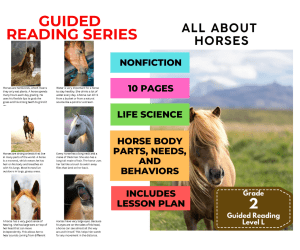
Guided Reading Level L - All About Horses (with Lesson Plan)
ELA, Resources for Teachers, Reading Comprehension, Reading, Science, Language Development, Life Sciences, Animals, Pre-Reading, Vocabulary, Grade 2, 3, 4, Worksheets & Printables, Worksheets, Teacher Tools, Centers, Activities, Literacy Readers, Quizzes, Quizzes and Tests, Assessments, Lesson Plans
This Guided Reading Book - All About Horses (Level L) with lesson plan includes: Guided Reading Color Label (front cover x1) This is a quick way to match the book’s demands to what students can generally handle.. The overall goal is to use the level/color to pick books for several smaller groups. To qualify for a certain level, a student is expected to read a book from that level with about 90–94% accuracy. If a student is consistently accurate and understands, move up a level. If the student is struggling at that level, drop down and add more support. Each student will improve at completely different rates, but it is generally one of the best ways to check progress across the class. DOWNLOAD THE CATALOG TO VIEW ALL GUIDED READING BOOKS AVAILABLE (SORTED LEVELS A-Z) Pre-Reading Question (x1) Teacher asks the prompt aloud, can be while showing the cover or first page. Students share what they already know, or make educated guesses from the cover. Prompt them to use the target vocabulary. Write some of their responses on the board to look back at during the reading. Vocabulary Words (x5) Introduce the five words, best doing it one at a time. Start by saying it, while students repeat and then see if anyone knows what it means before reading further. Read through the meaning and try to briefly connect each word to a picture or gesture so it’s meaningful. Ask students to flip through the book pages and point to where they see each of the vocabulary words. While reading the book pause upon coming across one of the vocab words or read the sentence twice to make sure students understand the word has appeared. Optional: Ask students to raise hands whenever they see/hear one of the new words. Guided Reading Pages (x10) Check the book snapshot (below) for: primary topic - do you need to prep extra reading or intro materials on this? what is taught best - decide on 1-2 bullets to focus on, use the prompt or words provided here for best results. learning goals - what you are checking for students to be able to do after the session, elicit answers using prompts or words provided. key vocabulary (see section above). questions overview - so you know what is coming up and if you need to prep extra materials to assist understanding. Run the lesson You may have already looked at a few of the pages together, but you can show them some of the pictures again first to set meaning. Depending on how much time you have and how familiar your students are with guided reading class, you may want to read the book aloud first with the group first. Students whisper or partner read, while you listen in. If time, do it as a group, one student reading a page each. Use the guided page’s prompts to coach: “Check the picture / does it make sense?” “Point under the words / try the first sound” “Reread the sentence smoothly”. Try to focus more on one student per session (rotating every time), so you can work out if they are ready to move up or need to move down a level. Comprehension Questions (back cover x3) This is your way to check that students didn’t just say the words, but actually understood the text. First, let students answer by pointing to the page/picture and saying a short sentence. After any answer, follow with: “Show me where you found that in the text.” In bigger groups, have partners answer first (10–20 seconds), then call on 2–3 students to share. Differentiation tips: Emerging speakers/struggling readers: oral + pointing On-level: oral in a full sentence Higher: one written sentence or draw + label Book Snapshot Title: All About Horses Genre: Nonfiction (informational) Subject: Life Science / Reading (Informational Text) Primary Topic: Horse body parts, needs, and behaviors Estimated Guided Reading Level (A–Z): L What This Book Teaches Best Key animal facts about horses (they are strong animals, mammals, and live outdoors in grassy areas). How horse body parts help them (mane and tail; tail swishes away flies). What horses need to stay healthy (they eat plants and drink a lot of water). How horses move (trot with “diagonal pairs,” and gallop as the fastest way to move with hooves off the ground). Special horse behaviors and life stages (sleeping while standing; a baby horse is a foal). Learning Goals Students will identify key facts about horses (habitat, body traits, and needs) from the text. Students will explain how a horse uses its tail based on details in the book. Students will describe what horses eat and how they graze using evidence from the text. Students will compare two horse movements (trot and gallop) using information from the book. Students will explain how a horse can sleep while standing without falling over. Students will describe what a foal is and what it can do soon after being born. Key Vocabulary From the Text mammal — an animal that breathes air with lungs. herbivores — animals that eat only plants. grazing — eating grass little by little over time. diagonal — slanted, from one corner to the opposite corner. hooves — the hard feet of a horse. Discussion Prompts Pre-reading question: What do you think a horse needs to stay healthy outdoors? Comprehension questions: What does the text say a horse uses its tail for? How does the text describe a trot? What is a foal, and what can it do within an hour of being born? Printing Tips 1. Best Printing Method (Recommended) “Booklet” Printing (Best if Available) If your printer or PDF viewer supports Booklet Printing , use this. Settings to use: Print mode: Booklet Paper size: Letter or A4 (either works) Orientation: Landscape Print on both sides: Yes Flip on: Short edge Scaling: Fit to printable area Booklet subset: First test: Front sides only Then: Back sides only This will automatically: Pair pages correctly Put the cover on the outside Align everything for folding After printing, fold in half and staple along the spine . 2. If “Booklet” Printing Is NOT Available You can still print this correctly with manual duplex printing . Step-by-step: Open the PDF. Choose Print . Set: Orientation: Landscape Pages per sheet: 1 Print on both sides: Yes Flip on: Short edge Print all pages . Because each PDF page already contains two facing book pages, the result will still fold cleanly into a book. Thousands of Cored Education products are included with your TeachSimple membership. Download links and encyclopedia index available here.
Author Cored Education
Rating
Tags Reading Comprehension, Reading Passages, Reading, Guided Reading, Guided Reading Lesson Plan, Guided Reading Activity, Pre-reading, Science Lesson Plans, Life Science, Animals

Digital Dilemma Activity
Social Studies, History, History: USA, Government, Research, Grade 2, 3, 4, 5, Activities
If you want to give your students extra practice with digital resources and computer skills, I have just the resource for you! What You Get: This is aDigital Dilemma Activitythat was designed for upper elementary students who have learned or are reviewing this skill. This resource is a 4-page printable. This has a set of 10 task cards with 2 more blank task cards. There is a writing page so students can respond to the prompts. Standard: Draw on information from multiple print or digital sources, demonstrating the ability to locate an answer to a question quickly or to solve a problem efficiently. How To Implement This Resource: You will print off enough copies of the worksheet for all your students to have. Choose a task card. Follow the directions and record your work on the provided worksheet. This is great for an independent activity or in small groups. Answer key included. I hope you enjoy! Here are more of my resources for you to enjoy: Total Solar Eclipse Worksheet Recognizing Fractions Worksheet Long U Matching Puzzle 1.OA.5 Common Core Math Lesson Point of View Activity Rounding to the Nearest Hundred Thousandth Worksheet You can find more resources at my storefront here: Have Fun Teaching
Author Have Fun Teaching
Tags Digital Dilemma, Computer Activity, Computer Cards, Task Cards, Computer Task Cards, Computer Project, Online Research, Government Task Cards

Animal Adaptations in the Rainforest Habitat
ELA, Reading, Reading Comprehension, Language Development, Vocabulary, Writing, Science, Life Sciences, Animals, Earth and Environmental Sciences, Environmental Science, Grade 3, 4, Presentations, Activities, Worksheets & Printables, Worksheets, Task Cards, Games, Graphic Organizers
Animal Adaptations in the Rainforest Habitat: An Educational Resource This comprehensive educational resource is designed specifically for 3rd and 4th graders. It covers the science of rainforest habitats but also helps enhance several other crucial skills such as reading, writing, reasoning, dictionary skills and comprehension abilities. Included Resources: PDF Workbook: An extensive 82-page workbook filled with worksheets and games exploring various aspects of rainforest habitat including its animals and their adaptations. Activities involve tasks like cutting out animal images to glue them next to appropriate habitats or filling sections of K-W-L charts . PowerPoint Presentation:A beautifully illustrated PowerPoint presentation explaining important concepts related to this rich ecosystem. It introduces students to various rainforest animals along with their unique adaptations. Rainforest Animal Adaptations Task Cards:This PDF includes 20 fill-in-the-blank and true/false task cards promoting active learning among students.An answer key ensures correct answers every time!. Rainforest Card Games:Gaming resources that help reinforce the deployed lessons about this intriguing habitat and its inhabitants are also included. All these resources can be conveniently adapted according to different learning arrangements while keeping student engagement at priority. The Tool packs in extra features for educators seeking cross-curricular resources - 'Animal Adaptations in the Rainforest Habitat' contains multiple informational handouts that not only expand vocabulary but also engage learners more interestingly by sharing facts about the diverse regions housing similar ecosystems. Purchasing this product will get you worksheets encompassing a wide variety of activities involving animal adaptations broken down into categories such as physical traits, behavioral traits plus cyclical life changes, brainstorming and imaginative sessions about “coolest” animals; word puzzles revolving around rainforest-related themes; construct their personal word search grids and several others. Packed with well-curated information in varied formats, this resource helps students understand the delicate balance maintained by a rainforest within its environment. As an added advantage, along besides science lessons, children get the opportunity to sharpen their grammar skills, spelling abilities and vocabulary while performing various tasks.
Author Quail Trail Products
Tags Animal Adaptations, Rainforest Habitat, Rainforest Animals, Ecology, Science Education
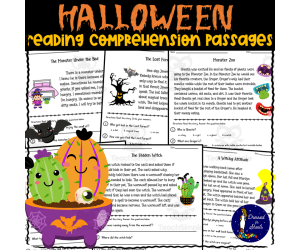
Halloween Reading Comprehension Passages
ELA, Reading, Grade 2, 3, 4, Activities
Looking for reading warm-ups for the month of October? Students will enjoy reading the passages included in this set just in time for Halloween. Includes silly and spooky stories to make children wonder and ponder. Titles included: ✅The Monster Under the Bed ✅The Lost Forest ✅A Web of Opportunities ✅A Witchy Attitude ✅A Trick and a Treat ✅The Hidden Witch ✅Monster Zoo ✅A Witch's Potion ✅The Candy Taster ✅A Monster Class What I love about these reading passages is that they come in two formats for you to choose from! You will have the option to assign the open response or the multiple choice answers. This will allow you to have flexibility in grading and also for students to get a chance to perform handwriting while making complete sentences. These 10 passages are ideal for 2nd and 3rd graders. Answer key included.
Author Soumara Siddiqui
Tags Halloween , Halloween Reading Comprehension, Halloween Passages, Halloween Reading
Math-Based Puzzles: Beginning Links to Logic
, Grade 2, 3, 4, Activities
Math-Based Puzzles: Beginning Links to Logic - A Teaching Resource Introduce your students to the world of logical thinking with Math-Based Puzzles: Beginning Links to Logic. This teaching resource has been expertly composed for elementary school kids, particularly grade 2 to grade 4. The unconventional tasks promote active initiation into logic-based problem-solving, with a primary focus on Math. This packet promotes a vibrant and pragmatic approach towards the subject. It contains a range of reproducible activities designed explicitly for young learners that inspire gradual interest in mathematics using engaging puzzles. These exercises amplify their understanding while ensuring continuous development during their learning journey. Main Features: A solid foundation in forming expressions and pinpointing errors within solutions Inclusion of Geometry Sudoku puzzles for enhancing geometric and Sudoku skills Bespoke design beneficial for both individual and group learning atmospheres Educators can use these tasks as classwork assignments or employ them during group study sessions fostering collaboration and teamwork among students. They can also be used as engaging homework assignments providing an interesting change from usual practice problems. About the Packet: "Math-Based Puzzles: Beginning Links to Logic" spans across 13 print-ready pages structured in an easy-to-process format contained within one hassle-free PDF file—ensuring no extra preparation time is wasted by teachers whilst infusing exciting logical exercise sessions right from home or classroom settings itself. In conclusion, allow students a glimpse into the charm of logical reasoning through mathematics with this valuable addition to your educational toolkit - because setting down roots of rational thinking today will help germinate smarter brains tomorrow!</p
Author Classroom Complete Press
Tags Math Puzzles, Links To Logic, Activity Packet, Logic Activities

101 Math Activities for Calculating Kids
Math, Calculus, Grade 3, 4, 5, 6, Activities
101 Math Activities for Calculating Kids: An Engaging Teaching Resource 101 Math Activities for Calculating Kids is a unique teaching aid designed to enthuse and engage students in grades 3 through 6. Mixing real-life scenarios, interactive activities, and guided calculation examples, the resource aims to blend mathematical theory with practice in ways that are relatable to young learners. A Wealth of Questions & Sample Responses This valuable teaching tool provides access to over 1,000 questions with corresponding sample responses. Each query involves real-world situations that make math more exciting and relevant for young minds. All these engaging math prompts covering fundamental operations such as addition, subtraction, multiplication, and division come packed into one easily downloadable PDF. Flexible Implementation Options The beauty of 101 Math Activities for Calculating Kids rests in its adaptability within any educational setup. Educators can use it during whole group instruction or adapt it for small groups based on their learners' needs. The resource also doubles as reinforcement homework assignments or independent practice during centers . Homeschooling:The resource is not confined solely to traditional teachers; homeschoolers can also utilize this instructional material effectively during structured learning sessions at home. Fostering Critical Thinking:Apart from enhancing mathematical abilities among third-grade students through sixth-grade students (children aged between eight and twelve years), this product incorporates calculus-oriented tasks within relatable narratives. Connecting challenging mathematical concepts like calculus with everyday situations helps children comprehend theoretical aspects simply without causing knowledge gaps or misunderstandings.’s equally impacting as self-directed creative math assignments promoting intellectual growth while nurturing problem-solving skills. An Advantageous Tool Within Comprehensive Mathematics Curriculum Embedded with not just lesson plans but also self-directed creative math assignments that challenge pupils on an intellectual level, this resource nurtures problem-solving skills. It is an advantageous tool within a complete mathematics curriculum aimed towards fostering sturdy critical-thinking habits early in the education life cycle. The Transformative Power of Fun Learning By transforming how young learners perceive maths - from a challenging subject area to something fun yet meaningful – 101 Math Activities for Calculating Kids indeed redefines the pedagogic approach. Catering to modern-day educational needs and completing tasks involved successfully under '101 Math activities for calculating kids’ offers an exciting shift in educational paradigms.
Author Classroom Complete Press
Tags PDF
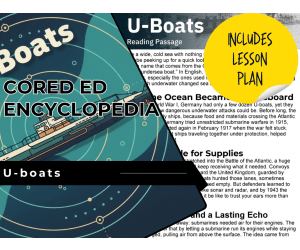
U-Boats Reading Comprehension Passage - Cored Ed Encyclopedia
ELA, Language Development, Reading Comprehension, Reading, Science, Technology, Engineering, History, Social Studies, Physics, Grade 2, 3, 4, 5, Worksheets & Printables, Worksheets, Teacher Tools, Centers, Activities, Writing Prompts, Assessments, Quizzes and Tests, Quizzes, Lesson Plans
This U-boats reading comprehension with lesson plan includes: Visualization (on the front cover) Start your lesson by taking a minute to think and share something about the topic. Read the script aloud (slowly), perhaps prepare some music or sound effects. Student close their eyes and let their imaginations wander. Students open their eyes, read the question aloud and give them a few minutes to complete. Ask a few students to share or keep answers until the end to compare with what they learn in the passage. Quick pause—thousands of Cored Education products are included with your TeachSimple membership. Download links and encyclopedia index available here. Pre-Reading Trivia Students will write down one thing they already know about the subject and then read five more facts and discuss. These facts are fun, and the students will enjoy learning about the subject before reading more. Give 1 minute for students to write what they already know (no pressure—best guess is fine). Read the five facts together. After each fact, do ask a student for their opinion, was it surprising? Set a purpose by asking students to highlight/underline one fact they want to learn more about during the reading. Reading Passage The text is a high-interest reading passage with set paragraphs, roughly three to four paragraphs long. It contains a variety of themes about the topic, anywhere from history to technology. The passage is between 250 and 350 words in length. First, ask students to look at the headings and see what they’ll learn about today. What do they know about the topic/heading? First read options: Teacher read-aloud (best for support). Partner reading (paragraph by paragraph). While reading, students underline important details, and vocabulary words they think may come up in the questions section. Mixed Questions The first question page contains four multiple-choice questions, each with a choice of four answers, and three written response questions that require a sentence or two from the student. Students complete the mcqs first independently, then review quickly as a class. For the 3 written responses, try to get students giving the answer with some form of evidence: “I think ___ because the text says ___.” If students get stuck, send them back to check the passage. Vocabulary Questions Practice seven key words from the text in this section across two activities. First section is scrambled words where students will unscramble three words given a clue for each. The second section is a word to meaning matching activity. Before starting, have some students read out words they underlined in the passage. Ask students to say the word and read aloud the sentence(s) around each word. Ask students to do scrambled words and the matching exercise in pairs then go through answers as a class. For the scrambled spelling task, get four pairs to come up to the board and write the words for extra practice with the other student reading out the clue. For the matching task, prompt students to give full sentences: “I matched ___ with ___ because ___.” Creative Writing In this question, the student will be required to write a five to eight sentence paragraph on a question related to the topic. Before starting, ask students write down 3 key ideas they are going to include in their piece. Ask students for ideas to share around the class to help those struggling. Pro writing expectations: 5–8 sentences At least 2 facts or details from the passage At least 2 vocabulary words from the previous page Students read their paragraphs while classmates listen for facts and vocabulary words. Extension Activities This page is optional for fast finishers or to take home. There are several activities, each one requiring a different skill. Do some, do none, do all, completely optional - but you will feel reassured knowing every possibility is planned for. Includes summary writting question. Answer Key There are answers for the multiple-choice questions, written response questions have sample answers, vocabulary answers and if there is a summary question then a sample summary will be provided as well. Lesson Plan Included Customized lesson plan for this lesson is included. Lesson Snapshot Title: U-Boats Genre: Nonfiction (informational text) Subject: Social Studies (World History) Primary Topic: U-boats, convoys, and the Battle of the Atlantic Estimated Guided Reading Level (A–Z): R What This Lesson Teaches Best Explains what “U-boat” means and where the name comes from (German U-Boot , short for Unterseeboot , meaning “undersea boat”). Shows how underwater attacks shifted World War I fighting toward supply ships , and why food and materials crossing the Atlantic mattered. Teaches how convoys (merchant ships traveling together under protection) helped weaken the U-boat threat. Highlights how defenders used tools like sonar and radar to listen and search better during the Battle of the Atlantic, and how the balance began to swing by 1943. Describes the snorkel as a solution for getting air to submarine engines while staying mostly submerged, including testing in 1943 and wider use in 1944. Learning Goals Students will explain what the term “U-boat” means and where the name comes from using details from the text. Students will describe why supply ships crossing the Atlantic became so important in both World War I and World War II. Students will identify how convoys worked and explain how they helped weaken the U-boat threat. Students will explain how sonar and radar helped defenders find and track U-boats better. Students will describe what problem the snorkel solved for submarines and how it worked. Key Vocabulary From the Text convoys — groups of ships traveling together with protection. unrestricted — not limited by rules or limits. sonar — a tool that uses sound to find underwater objects. radar — a tool that helps detect objects by radio waves. snorkel — a tube that brings air while mostly underwater. FULL CATALOG OF DOWNLOAD LINKS AND ENCYCLOPEDIA INDEX HERE
Author Cored Education
Rating
Tags Vocabulary, Reading Comprehension, Reading Passages, Lesson Plans, Ela Lesson Plans, Reading Comprehension Lesson Plans, Pre-reading, History, History Lesson Plans, Physics

Summer Road Trip Math Project | End of Year Activities | Real World
Addition and Subtraction, Math, Addition, Subtraction, Basic Operations, Early Math, Measurements, Grade 4, 5, Word Problems, Worksheets & Printables, Projects, Activities
Engaging and Educational! Take students on an exciting Summer Road Trip adventure while strengthening essential real-world math skills. This project-based learning activity encourages students to plan a trip, calculate distances and travel times, create budgets, analyze expenses, and make thoughtful financial decisions using practical math applications. Throughout the project, students will work through a variety of engaging activities that involve route planning, distance calculations, travel time estimation, budgeting for gas, food, lodging, and attractions, graphing expenses, and reflecting on their overall trip experience. These hands-on tasks help students connect classroom math concepts to real-life situations while building confidence in problem-solving and critical thinking. Perfect for end-of-year activities, summer learning, math centers, independent work, fast finishers, enrichment projects, and homeschool learning. The student-friendly format keeps learners engaged while reviewing important math skills in a meaningful and enjoyable way. The ready-to-print PDF format requires no preparation and is easy to implement in any learning environment. File type: PDF Number of Pages: 13 Grade Levels: 4th–5th Grade
Author Sadigitalart
Rating
Tags Road Trip Math, Math Project, End Of Year, Budgeting Math, 4th Grade Math, Summer Activity, Project Based, Real World Math

All About the Moon
Science, Earth and Environmental Sciences, Earth Sciences, Grade 3, 4, 5, 6, Activities
All About the Moon Pack The "All About the Moon" pack is a comprehensive teaching resource developed for grades 3-6, which provides an engaging journey into earth sciences and specifically lunar science. This hands-on guide is not just educational but highly stimulating and entertaining with multiple kinetic activities. The pack consist of six pages of dynamic tasks covering all phases of our moon including: Waning gibbous Waning crescent Waxing gibbous Waxing crescent Full moon New moon First quarter moon Third quarter moon Moon Vocabulary In 'Moon Vocabulary', students are introduced to key terminologies providing them a rudimentary understanding about lunar science. From this point, they proceed to 'Moon Matching Column' which strengthens their comprehension through illustrations and interactions. Oreo Cookie Activity The active progressive learning unfolds further via the interactive 'Oreo Cookie Activity '. This task allows children to observe and recreate the phases of the moon literally in their hands by manipulating cookies, providing tangible context to abstract notions. Moon's Phases - Comprehension Questions';' We move from practical application towards developing comprehension skills through sections dedicated towards answering questions about different phases hence nourishing reasoning faculties informed by their interaction with preceding elements. 'Descriptive Writing' 'Descriptive Writing', comes at closure stages offering opportunities for learners creativity expression where understanding is consolidated verbally complemented by ‘Identifying Pictures’ where we gauge grasp levels via recognition practice across various lunar stages. Overall, the “All About the Moon” pack guarantees enriching science exploration that fosters critical thinking and interest in lunar science. The pack is readily available in a PDF format ensuring maximum accessibility with simple download and print options.
Author Big Apple Teaching
Tags Moon Phases, Lunar Science, Hands-on Activities, Comprehension Skills, Descriptive Writing
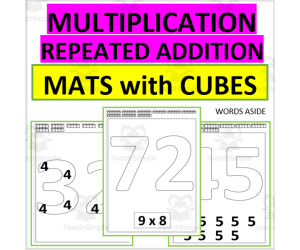
BIG MULTIPLICATION FACTS MATS WITH CUBES REPEATED ADDITION 3 VERSIONS
Special Resources, Special Education Needs (SEN), Math, Addition and Subtraction, Addition, Multiplication and Division, Division, Grade 1, 2, 3, 4, Teacher Tools, Presentations, Worksheets & Printables, Flashcards, Activities
BIG MULTIPLICATION FACTS MATS WITH CUBES REPEATED ADDITION (3 VERSIONS) This expansive teaching resource comprises A4-sized cards visually conveying multiplication facts from 1-10 by 1-12. These durable cards serve as both an instructional aid and a constant visual reinforcement. Unique features include three distinct styled sets to facilitate multiplication knowledge absorption: one with embedded factor numbers, one utilizing repeated addition strategy with separated factors, and one matching equation parts to boost familiarity. This versatile tool lends itself to centers , laminated books, and individual exploration. Apart from aiding multiplication practice, it also bolsters reasoning skills and prompts repeated addition links between addition, multiplication and division. Simplifying foundational math instruction delivery across Grade 1-5, this packet reduces teacher prep time while maximizing student math learning. Includes 389 pages of graphics emphasizing pictorial explanation methods to support all learners.
Author WORDS ASIDE
Tags Math Cubes, Repeated Addition, Posters, Flash Cards, Pictorial And Manipulatives, Multiplication, Hands On Learning, Centers, Task Cards, Words Aside

Suffix Able Sentence Reading Rings
ELA, Language Development, Phonics, Grade 2, 3, 4, Activities, Centers, Worksheets & Printables, Task Cards
Practice reading words with the suffix -ABLE with these sentence reading rings. Students will read words with the suffix -able in the context of sentences. Each card also includes a bold and colorful image to illustrate each sentence and to help students to learn the meanings of each word. What is Included: This resource includes one reading ring activity for the suffix able. There are cards each featuring a different word with the suffix able, with a sentence using the word in context and an image to illustrate that sentence. When to Use Early Finishers - If students finish their work early, they can use these reading rings for extra practice. Small Group Work - Teachers can use these reading rings to target small groups of students who need more practice reading words with suffixes. Independent Practice - Students can work independently at their desks to read this set of suffix cards. Morning Work - Students can read and review this reading ring for morning work as their classmates arrive to class. How to Make: Teachers will print out the pages and cut each card apart. Once cut apart, the teacher can choose to laminate the cards for durability. Then, use a hole punch to punch a hole in the top left corner of the card. Place the cards on a ring to create your reading ring, making sure the cover card is on top. Skills Assessed: These reading rings help with identifying words with suffixes These reading rings help with learning the meaning of suffixes These reading rings help students learn how suffixes change the meaning of words. These affixes reading rings are a low prep activity for teachers to prepare for students to use. Once created, these cards can be used over and over to practice reading words with suffixes in the context of a sentence.
Author The Connett Connection
Rating
Tags Affixes, Morphology, Literacy Activities, Reading Words With Suffixes, Suffixes

Safari Babies Know-It-Alls! Audio Book
Science, Life Sciences, Animals, Grade 2, 3, 4, Read Alouds, Activities
As part of the unique, science Know-It-Alls! Series that features interesting science facts, this audiobook puts the spotlight on Safari Babies! Did you know the first thing a baby zebra learns after birth is its mother’s stripe pattern? This is how zebras recognize each other. After a foal is born it takes its first steps within an hour. Learn about the baby: lion, zebra, meerkat, warthog, elephant, hippopotamus, ostrich, gazelle, cheetah, rhinoceros, baboon, wildebeest, and giraffe. Awesome narration and sound effects plus many interesting facts, makes this audiobook fun and exciting for young science enthusiasts age 4 and up! Titles in the Know-It-Alls! Series include: Butterflies, Crocodiles, Dinosaurs, Farm Animals, Safari Babies, Snakes, Sharks, Spiders, Whales, Wolves, Puppies, Wild Cats, Bugs, Birds of Prey, Fish, Frogs, Apes, Seals, Bats, Bears, Predators, Mummies, Volcanoes, Lizards, Kittens and Horses.
Author Twin Sisters Digital Media
Tags Science, Learning, Safari, Animals, Education
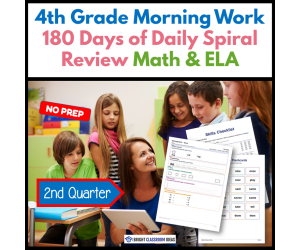
4th Grade Morning Work | 180 Days Review | Math & ELA | 2nd Quarter
ELA, Math, Grade 4, Centers, Activities, Lesson Plans, Teacher Tools, Worksheets & Printables
Grade 4 Morning Work | 2nd Quarter Student Pages + Full-Year Teacher Resources Keep your fourth grade mornings consistent, purposeful, and easy to manage with 45 days of Grade 4 morning work for Quarter 2 . This resource includes ALL teacher resources for the complete 180-day program , while the student practice pages in this pack are specifically for 2nd Quarter: Days 46–90 . What’s Included ⭐ FULL-YEAR TEACHER RESOURCES You receive the complete teacher toolkit for planning, organizing, differentiating, and assessing the entire 180-day Grade 4 morning work program : Teacher Guide Full 36-week Pacing Guide Skills Checklist for tracking student progress Fully Editable Morning Work Schedule Weekly planning support 36-week Year-at-a-Glance Planner Differentiation strategies Complete Answer Key for Days 1–180 Printing and classroom organization guidance 📚 STUDENT PAGES INCLUDED: 2ND QUARTER The student portion of this product includes Days 46–90 , providing 45 days of ready-to-use Grade 4 morning work . Each day includes a two-page set with 24 consistent sections . Page A — Language Arts Grammar Vocabulary Reading comprehension and reading skills Writing Vocabulary Word of the Day Writing Prompt Reading Challenge Morning SEL Check-In Joke of the Day Brain Teaser Growth Mindset Would You Rather Page B — Math & Think Number Sense Mental Math & Fact Fluency Multi-Digit Multiplication Long Division Fractions Decimals Measurement Geometry Data and Graphs Word Problems Math Challenges Daily Enrichment Fun Facts Important: The student practice pages included in this product are Days 46–90 only . The teacher resources and complete Answer Key cover all 180 days . How It Works in the Classroom Use this Grade 4 morning work as a daily bell ringer, morning routine, independent practice, homework, or spiral review. Each daily two-page set is designed to take approximately 10–15 minutes . Students work through Language Arts and Math & Think while you circulate, confer, pull small groups, or prepare for the day. The predictable format makes it easy for students to know what to expect each morning. Use the pages for: Morning work Bell ringers Homework Early finishers Sub plans Small-group warm-ups Math intervention Spiral review Test preparation Independent practice Print the pages two-sided, flipping on the long edge , for one sheet per student per day. You can print a week at a time or staple the Quarter 2 pages into a student packet. Standards & Learning Goals This Grade 4 morning work resource provides daily spiral review across important Grade 4 ELA and math skills. The full program covers grammar, vocabulary, reading, writing, number sense, operations, fractions, decimals, measurement, geometry, data, and problem solving. 📖 ELA Skills Students practice: Grammar and language conventions Vocabulary Prefixes, suffixes, and word meanings Reading comprehension Supporting details Cause and effect Writing and constructed responses Revising and editing Reading challenges Vocabulary development Quarter 2 specifically shifts reading practice toward supporting details and cause-and-effect relationships. Full reading passages appear twice each week. Other days target specific reading skills such as main idea, supporting details, cause and effect, inference, and text features. 🔢 Math Skills Students practice: Number sense through 999,999 Mental math Multi-digit multiplication Division with remainders Fractions Decimals Measurement Geometry Data and graphs Word problems Multi-step mathematical reasoning Quarter 2 increases the difficulty from Quarter 1, moving into larger multiplication factors and division with remainders while expanding number sense to 999,999 . Students continue applying their skills through real-world word problems, visual models, data displays, geometry, measurement, and daily math challenges. Why Teachers Love It ✨ You get ALL the teacher resources for the entire year. The Teacher Guide, pacing guide, Skills Checklist, editable schedule, differentiation support, and complete 180-day Answer Key are included. ✨ Students get exactly what they need for Quarter 2. Days 46–90 provide a complete 45-day student set for the second quarter. ✨ Save valuable planning time. The daily routine is already organized across ELA, math, enrichment, and engaging thinking activities. ✨ Build student independence. The same 24 sections appear every day, helping students quickly learn the routine and work independently. ✨ True spiral review. Skills return throughout the 180-day program while the difficulty increases. Every passage, grammar item, vocabulary item, word problem, joke, puzzle, and prompt is different across the 180 days. ✨ A built-in difficulty ramp. Quarter 2 moves students from smaller multiplication and division work into larger factors and division with remainders . Reading also progresses toward supporting details and cause and effect . ✨ Differentiate with ease. The Teacher Guide suggests highlighting fewer sections for students who need a shorter task, reading passages aloud, using multiplication charts, and adding extension challenges for advanced learners. ✨ Support small groups. Page B can double as a warm-up for math intervention groups, giving you meaningful practice without creating another activity. ✨ Track student growth. Use the Skills Checklist to mark skills as Introduced, Practiced, or Mastered and identify areas that need additional instruction. ✨ Keep mornings engaging. Jokes, brain teasers, growth mindset prompts, SEL check-ins, reading challenges, daily enrichment, and Would You Rather questions add variety to the academic routine. ✨ Have answers for the whole year. The Answer Key provides answers for the complete Days 1–180 program, so your teacher materials remain useful across every quarter. Looking for Grade 4 morning work for Quarter 2 that saves planning time and keeps students practicing essential skills every day? This pack includes 45 days of student practice (Days 46–90) PLUS ALL teacher resources for the full 180-day program . Give your fourth graders a predictable, engaging morning routine that strengthens ELA and math skills while building independence throughout the school year! Print it, prep it, and make your fourth grade mornings easier! 💛
Author Bright Classroom Ideas Marketplace
Rating
Tags Math, Ela, Morning Work, Back To School

Science Reading Passages on Light Heat Electricity Magnetism (Videos)
Science, Physics, Common Core, ELA, ESL, Language Development, Reading Comprehension, Reading, Pre-Reading, Grade 2, 3, 4, Teacher Tools, Activities
Accompanying Videos Based on Reading Passages on Light Heat Electricity Magnetism for Physical Science These accompanying videos contain scripts extracted from the Science Reading Passages series. With stock footage, subtitles, voiceovers, animation and diagrams, they will help students understand the topic more. Ideal for starting or ending a lesson, each video runs at less than 5 minutes and is at least 95% identical to the passage itself. What's inside? Part 3 Videos - Light, Heat, Electricity & Magnetism. Reading Passage 1: Characteristics of Light: Reflection and Refraction Reading Passage 2: Heat, Sources of Heat, and Heat Conduction Reading Passage 3: Electricity, Electrical Circuits, and Energy Reading Passage 4: Symbols and Electric Circuits Reading Passage 5: Magnets Magnetism and Electromagnetism Science Reading Comprehension Outline: Targeted for students in 3rd and 4th grades, these reading passages are enhanced with illustrations and graphs to elucidate critical points. Each lesson aligns with the Common Core State Standards, allowing you to integrate science reading practice effortlessly, knowing that minimal preparation is needed on your part. Each passage comes with a variety of questions in different formats, including multiple-choice formats, data analysis, and fill-in-the-blanks. The topics covered strike a balance between engaging content and core curriculum-based science subjects. Versatile in application, these lessons are suitable for a variety of settings such as whole-class instruction, morning activities, independent desk work, small group discussions, contingency plans for substitute teachers, homework assignments, or even special holiday-themed tasks. FULL CATALOG OF DOWNLOAD LINKS HERE Grade 3/4 Links: Physical Science Part 1 - Properties of Objects and Materials Google Docs/Slides/Forms PDF PPT Word Free Supplementary Pack Accompanying Videos Physical Science Part 2 - Position and Motion of Objects Google Docs/Slides/Forms PDF PPT Word Free Supplementary Pack Accompanying Videos Physical Science Part 3 - Light, Heat, Electricity, Magnetism Google Docs/Slides/Forms PDF PPT Word Free Supplementary Pack Accompanying Videos Life Science Part 1 - Characteristics of Organisms Google Docs/Slides/Forms PDF PPT Word Free Supplementary Pack Accompanying Videos Life Science Part 2 - Life Cycles of Organisms Google Docs/Slides/Forms PDF PPT Word Free Supplementary Pack Accompanying Videos Life Science Part 3 - Organisms and Environments Google Docs/Slides/Forms PDF PPT Word Free Supplementary Pack Accompanying Videos Earth Science Part 1 - Properties of Earth Materials Google Docs/Slides/Forms PDF PPT Word Free Supplementary Pack Accompanying Videos Earth Science Part 2 - Changes in the Earth and Sky Google Docs/Slides/Forms PDF PPT Word Free Supplementary Pack Accompanying Videos Earth Science Part 3 - Objects in the Sky Google Docs/Slides/Forms PDF PPT Word Free Supplementary Pack Accompanying Videos For similar products and other frees, do check out Cored Group on TeachSimple .
Author Cored Education
Tags Science, Elementary, Reading, Comprehension, Vocabulary, Answers, Physics, Physical Science, Ccss, Common Core

Presidential Elections: A Complete Resource with Historical Information, Activities and Ideas
Social Studies, Government, Grade 4, 5, 6, 7, 8, Activities
Presidential Elections: A Complete Resource with Historical Information, Activities, and Ideas This is a comprehensive teaching resource designed to empower educators on the subject of presidential elections. It facilitates students in grades 4 through 8 to traverse through the pivotal elements of governmental processes. The Resource: This compilation presents itself within a single PDF containing 50 straightforward pages ready for immediate printing. The simplicity of the layout ensures that it can effortlessly align with any existing lesson plan or serve as a comprehensive standalone study module. Suitable For: Social Studies educators specifically focusing on Government subheading. This resource enhances student understanding about the historic intricacies and contemporary practices of presidential elections. The Speciality: Engaging activities! Incorporating various engaging activities make learning about elections an immersive experience. The activities are carefully crafted to cater to diverse learning styles, helping each learner grasp complex concepts efficiently at their unique pace. Versatility: Ideal for varied teaching environments - whole group instruction or small group settings. Email-friendly resources supporting individual lessons or reinforcing classroom discussions. Cross-curricular instruction supported by weaving threads from history with modern government lessons. In conclusion, "Presidential Elections: A Complete Resource" offers an ideal blend of necessary foundational knowledge together with interactive engagements making learning not just easy but thoroughly exciting too! It equips both public school teachers and home-schoolers - paving way for well-informed young citizens attuned to the democratic pulse of their nation.
Author Classroom Complete Press
Tags Elections, Presidents, Social Studies, Government, Voting Rights