



3,970 products added recently
Page 38 - 4th Grade Activities
Introduce your fourth-grade students to activities that challenge and inspire. These resources encourage analytical thinking, teamwork, and creative expression across subjects. Use them to elevate your teaching and engage students in meaningful learning experiences.

 Show filters

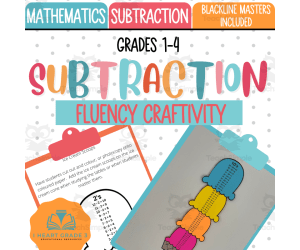
Subtraction Fluency Craftivity
Math, Addition and Subtraction, Subtraction, Grade 1, 2, 3, 4, Activities
Subtraction Fluency Craftivity A dynamic educational resource that bridges the gap between learning and fun, Subtraction Fluency Craftivity is specifically designed to boost subtraction skills for students from Grade 1 to Grade 4. Versatile Application The product is crafted with flexibility in mind, making it suitable for use in small group lessons, whole-class activities, or one-on-one tutoring. Emphasis on Progress Tracking In its distinctive feature, as children master subtracting numbers sequentially from zero through ten, they can add corresponding ice cream scoops onto cone templates. This allows teachers and students alike to visually monitor advancement in subtraction mastery over time. Merging Math Practice with Fun Art This craftivity innovatively combines math practice with motivating art. It transforms raw numbers into enjoyable visual displays like ice cream cones, reframing learning subtraction as something fun rather than strenuous. Versatility of Use The printable format (PDF file type) allows it to be implemented across various settings such as classrooms and homes alike. Ideal for remote teaching options or creative math activities students can take home with them over holidays or weekends! Inclusions: The Subtraction Fluency Creativity package comes equipped with: TWO different Ice Cream Cone Templates : Scoop templates aligned with all basic subtractions facts from 0-10. {HTML} </body
Author I Heart Grade 3
Tags Subtraction Fluency, Math Craftivity, Progress Tracking, Visual Learning, Fun Subtraction Practice

Add, Subtract & Multiply Fractions in Recipes - Florida BEST MA.4.FR.2
Social Studies, Geography, Math, Fractions, Grade 4, Activities
Looking to bring a relatable twist to adding, subtracting, and multiplying fractions with like denominators for your 4th graders? Look no further! Dive into a world of cultural diversity and culinary delights with our engaging resource that will provide meaningful opportunities for your students to practice these essential fraction operations. Our carefully crafted collection of real-life problems showcases recipes from around the world, making math come alive and fostering a deeper understanding of fractions. These task cards and interactive Google + PowerPoint slides are designed to enhance student engagement while aligning with Florida B.E.S.T. Benchmarks MA.4.FR.2.1, 2.2, and 2.4. Highlights of this resource include: Promotion of diversity, equity, and inclusion. Perfect alignment with Florida B.E.S.T. Benchmarks. Captivating and realistic applications of fourth-grade math skills. Two versatile formats: printable task cards and interactive digital slides. Multiple uses: ideal for lessons, small groups, math centers , games, independent practice, enrichment, and more! The package includes a PDF file with 24 engaging math task cards, each featuring a special recipe from a different country. Students will tackle fraction tasks using the ingredients, allowing for an immersive and culturally rich learning experience. Student recording sheets, reference pages for Florida teachers, and an answer key are also provided. You have the choice of printing in full color or black & white. In addition, we offer interactive Google Slides ™ and PowerPoint presentations with a clickable world map, linking to 20 word problems identical to those found on the task cards. Please note that presentation mode is required to access the interactive features. Every card and slide is labeled with the targeted 4th-grade benchmark, ensuring seamless integration into your curriculum. Take a sneak peek by checking out our preview, and prepare to ignite your students' passion for fractions while celebrating cultural diversity and fostering mathematical proficiency. ✏️ Supported Florida B.E.S.T. Standard & Benchmarks: Fractions Standard 2: Build a foundation of addition, subtraction and multiplication operations with fractions. - MA.4.FR.2.1 Decompose a fraction, including mixed numbers and fractions greater than one, into a sum of fractions with the same denominator in multiple ways. Demonstrate each decomposition with objects, drawings and equations. - MA.4.FR.2.2 Add and subtract fractions with like denominators, including mixed numbers and fractions greater than one, with procedural reliability. - MA.4.FR.2.4 Extend previous understanding of multiplication to explore the multiplication of a fraction by a whole number or a whole number by a fraction.
Author The End of the Alphabet
Tags Like Fractions, Like Denominators, Adding Fractions, Subtracting Fractions, Multiplying Fractions, Florida, Florida BEST, Task Cards, Google Slides, Powerpoint, Fraction Recipes
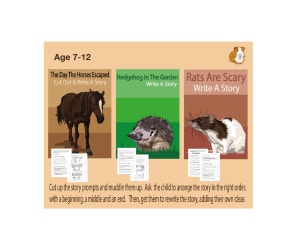
Use The Story Prompts To Write Animal Stories (7-11 years)
ELA, Writing, Creative Writing, Grade 1, 2, 3, 4, Activities
Creative Writing Animal Stories (7-11 years) Draw creativity out of young learners with the 'Use The Story Prompts To Write Animal Stories' resource. Designed for ages 7-11, this resource nudges children towards the craft of storytelling while honing their writing skills. With engaging tales like 'The Day The Horses Escaped,' 'Hedgehog In The Garden,' and 'Rats Are Scary', it sparks their imagination and guides them to arrange and rewrite the story by adding their own imaginative elements. The product is tailored not just for levels, from grade 1 to 4, but also for different types of learners—both regular students as well as those with learning challenges or teaching English as a second language. This pack offers an interactive way to practice writing emails, letters, play scripts, diaries reports, and other forms of non-fiction texts. No room for boredom here! Curated in an engaging reading format that simulates real-world assignments like magazines style formats—it encourages even reluctant writers to participate in writing exercises. This ressource offers intuitive instruction on how to approach a basic three-part story structure— beginning middle and end–– . A Key focus: Vocabulary Enhancement! A key focus of the resource is vocabulary enhancement – exposing children to harder adjectives more powerful verbs adverbs better word choices therefore fostering linguistic richness. If there are kids who are preparing for examinations or need additional writing practice this pack serves that agenda too; Easily accessible PDF format with handy eight-page layout allowing adaptability based on educational setting whether used one-on-one in homeschooling small groups during class activities or entire classrooms during language arts lessons. Unleash your student's potential with creative animal-themed storytelling. Round off your sessions interactive games quizzes lesson reviews ensuring reinforcement comprehension understanding - layout material offered inside
Author Guinea Pig Education
Tags Animal Stories, Creative Writing, Story Prompts, Writing Skills, Vocabulary Enhancement
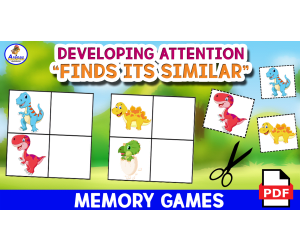
MEMORY GAME - FINDS ITS SIMILAR
Special Resources, Life Skills, Preschool, Grade 1, 2, 3, 4, Games, Activities
1. Introduction It is very important that in addition to developing skills in our students in normal courses: communication, mathematics, language, spelling, natural sciences, history, social sciences, we also develop skills in memory, attention and concentration. 2.Objective Some benefits of memory games are: -Improvement of short-term memory because participants will need to remember concrete and specific information, which will help improve their short-term memory. -It will motivate brain stimulation, because participants will activate different areas of the brain, they will also enhance their critical thinking and their cognitive function will achieve significant changes. -It will promote brain training because participants will learn to challenge their minds by starting to work more efficiently, in addition to developing more varied strategies to remember information. -They will be able to improve their attention and concentration because this type of memory games requires a lot of concentration and attention to remember specific details of the activity or worksheet, then this will also help to improve the person's concentration in daily activities. of their life. -They will prevent cognitive deterioration, because when participants play these types of mental activities, they will keep their minds active and engaged, thus delaying cognitive deterioration. -They will develop cognitive skills, such as problem solving, decision making and reasoning. -They will reduce stress, because this type of game is considered a relaxing and fun way to exercise the mind, which will help reduce stress and improve general well-being. -They will stimulate creativity, because these types of games require the creation of connections between concepts, as well as the association of ideas. -They will enhance the socialization of the participants, because there will be social interaction and teamwork, which is important for the promotion of emotional and mental health. 3.Order, scheme and stages - Introduce your class with relaxing and fun music for your students. Next, tell them that you are going to give out an activity that will help them strengthen their memory. 4.Grades or ages This game is designed for children from 5 to 12 years old. That is, all primary school students can use it. 5. Form of application It is suggested to print 1 activity sheet per student. The print must be in color and on A4 sheets. Then distribute the activities to the students and tell them that they must use scissors and rubber to carry out the activity . 6. Answer keys This game does not require answers. 7.Use text labels memory, memory games, memory, attention, concentration. 8.Rules Specified above. 9.File types The archive is in PDF format. 10.Number of pages This document contains 10 pages.
Author EDITORIAL LAURA EDUCA
Tags Memory Game, Games, Memory, Attention, Concentracion, Concentration

Science Word List Posters - Set 2 (PDF)
ELA, Language Development, Vocabulary, Spelling, ESL, Resources for Teachers, Science, Physics, Earth and Environmental Sciences, Life Sciences, Grade 2, 3, 4, 5, Worksheets & Printables, Worksheets, Teacher Tools, Centers, Activities, Mazes, Posters, Classroom Decor
Word List Poster Series This word list poster series is designed for students in grades 2–5. Each printable focuses on a clear, kid-friendly theme and features 8 target vocabulary words with short, student-friendly meanings or fun facts. The clean layout works as both an anchor chart and a write-in sheet, giving students a quick, visual reference they can revisit during centers and independent work. These posters are student-friendly, classroom-ready, and perfect for warmups, vocabulary walls, sub plans, or take-home reference. Display a single poster to support the day’s lesson, or group several to build a themed wall across your unit. Note: Each poster is a companion piece to its matching themed product in the series—pair it with the corresponding maze, wordsearch, or activity pack for a consistent set of 8 focus words. Science Set 2 Word List 1. Energy and Electricity Energy, Electricity, Battery, Circuit, Switch, Solar, Light, Heat 2. Rocks and Minerals Rock, Mineral, Fossil, Sand, Crystal, Diamond, Lava, Soil 3. Life Cycles Egg, Larva, Pupa, Adult, Seed, Sprout, Grow, Change 4. The Water Cycle Water, Evaporate, Condense, Cloud, Rain, Puddle, River, Ocean 5. Scientific Inquiry and Tools Observe, Hypothesis, Experiment, Measure, Balance, Ruler, Data, Graph 6. Natural Disasters Earthquake, Tsunami, Hurricane, Tornado, Flood, Drought, Lightning, Volcano PDF Version Other versions will appear here when available. Follow the store for the lastest on new products. How to Use These Word List Posters Perfect for: Morning work or early-finisher bins Vocabulary centers or anchor walls Holiday/seasonal review lessons Independent stations, sub plans, or take-home reference More Science Themed Products Science Crosswords (Set 1) PDF Science Crosswords (Set 2) PDF Science Crosswords (Set 3) PDF Science Word Searches (Set 1) PDF Science Word Searches (Set 2) PDF Science Word Searches (Set 3) PDF Science Mazes (Set 1) PDF Science Mazes (Set 2) PDF Science Mazes (Set 3) PDF FULL CATALOG OF DOWNLOAD LINKS HERE Themed Word List Posters Links Addition PDF Animals PDF Around the Home PDF Birthday PDF Candy PDF Christmas PDF Cinco de Mayo PDF Clothes PDF Colors PDF Days and Months PDF Division PDF Earth Day PDF Easter PDF Easy Word List Posters PDF Fall PDF Father's Day PDF Food PDF Geography (Set 1) PDF Geography (Set 2) PDF Geography (Set 3) PDF Graduation PDF Health PDF History (Set 1) PDF History (Set 2) PDF History (Set 3) PDF Human Body PDF Kindness PDF Life Skills PDF Mother's Day PDF Multiplication PDF Science (Set 1) PDF Science (Set 2) PDF Science (Set 3) PDF Shapes PDF Social Skills PDF Spring PDF Sports PDF St. Patrick's Day PDF Subtraction PDF Summer PDF Thanksgiving PDF Transport PDF Valentine's Day PDF Winter PDF Word List Posters in Depth Structure Each poster is built around a focused sub-theme and presents 8 target words with short, student-friendly meanings or fun facts. The clean A4 portrait layout works as an anchor chart on your board or as a student reference at desks. These posters are designed as companion pieces to the matching themed products (mazes, wordsearches, activity packs), so the same vocabulary stays visible across your unit. Each poster set includes: A themed word list poster with 8 words + brief meanings/facts A clean, high-contrast layout for easy printing and display Space that can double as write-in/draw-to-show-meaning during centers Themes Included Seasons & Holidays (e.g., Halloween, Easter, Valentine’s Day) Everyday Topics (e.g., Animals, Weather, School) Math & Science Connections (e.g., Number Words, Simple Machines) Special Units (e.g., Health, Earth Day, Sports, Kindness) Each topic reflects real-life experiences and interests while strengthening vocabulary recognition and content understanding in a clear, visual way. Easy extensions (optional) Sketch it: students draw a quick icon for each word Sort it: group words by category (e.g., actions, objects) Star it: highlight “I already know” vs. “I’m learning” words Match it: point to examples in a reading, video, or picture set Say it: brief oral definition or example sentence during share-out Differentiation tips Pre-teach 2–3 anchor words; add the rest later in the week Offer picture cues or gestures for emerging readers/ELLs Let students choose 4 of 8 to focus on first, then build up Color-code by part of speech or concept family for quick scanning For similar downloads and other frees, do check out Cored Group on TeachSimple.
Author Cored Education
Rating
Tags Vocabulary, Spelling, Science, Energy And Electricity, Rocks And Minerals, Life Cycles, The Water Cycle, Natural Disasters, Science Word Lists, Posters

Find Me a Home! Housing Market Analysis Math Project (Grades 3-5)
Math, Numbers, Grade 3, 4, 5, Activities, Projects
Find Me a Home! Housing Market Analysis Math Project is a 16-page standards-based math project for grades 3-5 that teaches real-world application of number operations and place value. Students take on the role of a real estate agent and use math skills to compare home listings, evaluate the housing market, and determine the best property purchase based on family needs and budget. Throughout the guided 5-day structure, students strengthen critical thinking, data analysis, mapping, writing, presentation, and collaborative skills. This differentiated activity works for whole-class, small groups, or independent practice, covering numerous Common Core standards while embedding cross-curricular social studies and technology components. With included teacher instructions, student help sheets, assessment tools and more, Find Me a Home makes math meaningful and fun!
Author Beyond Traditional Math
Tags Real-world Math, Interdisciplinary, Critical Thinking, Data Analysis, Differentiated Instruction
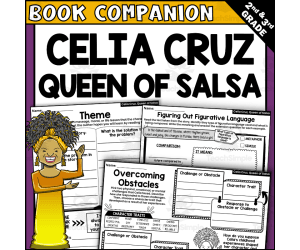
Celia Cruz, The Queen of Salsa Read Aloud Book Companion Activities
ELA, Reading, Reading Comprehension, Literature, Grade 2, 3, 4, Read Alouds, Activities
This picture book companion is a complete supplemental resource for the book Celia Cruz, The Queen of Salsa by Veronica Chambers. With 31 print-and-go reading activities to choose from, this resource is ideal for customizing learning to your student's specific needs and academic abilities. Students will investigate characters, identify story elements, determine the theme, practice plotting story events, compare & contrast, make predictions, inferences, & connections, answer questions that require them to think beyond the text, and much more! Students will love the engaging and fun activities, and you will appreciate the time saved hunting for high-level resources to teach reading concepts that students frequently struggle with. The activities provided are designed to enable students to apply higher-level thinking skills, encourage them to provide text evidence to support their thinking, and challenge them to express their own thoughts and/or perspectives. ⭐️This Resource Includes:⭐️ ◾ Making Predictions: Before reading the book, students will make predictions about the text. ◾ Making Inferences: Students use clues & schema to make inferences while reading the story. ◾ Making Connections: Students make connections to events in the story. ◾ Sketch a Scene From the Story: Students will draw a scene from the story and explain why it's important to the plot. ◾ Setting Influences the Plot: Students answer questions about the setting of the story to gain a better understanding of how a story's setting helps to build the narrative’s mood, plot, and character development. ◾ Summary: Students complete the Somebody, Wanted, Because, But, So graphic organizer and write a summary of the story. ◾ Theme: Students answer the questions to determine which theme best fits the story and provide text evidence to support their choice. ◾ Figuring Out Figurative Language: Students read the text taken from the story. Identify the type of figurative language used and what is being compared. Write the meaning and answer the extension question for each example. ◾ Story Event Sort: Students will describe a scene or event from the story that fits into each of the categories & explain how the event made them feel & how it relates to the category. ◾ Character Traits: Students choose 4 important character traits that describe the main character and provide evidence from the text to support their choices. ◾ Character Inside & Out: Students include details from the story to describe what the character says, thinks, does, and feels. ◾ Character Feelings: Students describe the character's feelings throughout the story & give examples. ◾ Character Development: Students select character traits to describe how the character changed and developed throughout the story and support their thinking with evidence from the text. ◾ Overcoming Obstacles: Students describe 2 challenges the character faced and how they responded to those challenges. Then, choose a character trait that developed as a result of their experiences. ◾ Character Change: Students will explain how the character changed from the beginning to the end of the story and describe the events that caused the change to happen. ◾ Character Acrostic Poem: Students will write an acrostic poem to describe Celia Cruz. ◾ Character Summary: Students choose a character from the story and fill out the graphic organizer. ◾ Author's Message: Students describe four important events from the story and put them in chronological order. Then, answer the questions about the author's message. ◾ 3-2-1: Students will list three things they learned about the character, 2 challenges they faced, and one word that best describes the character. ◾ Timeline of Celia Cruz's Life: Students fill in the timeline with the information they learned from the text or through research, and illustrate each event. ◾ The Perfect Playlist: Students create a playlist of FOUR songs that represent four BIG IDEAS consistently seen throughout this book. ◾ Book Review: Students will color in the stars to rate how much they enjoyed the book and draw a new cover & their favorite character from the story. Then, they will explain why other kids should or should not read it. ◾ Biography Brochure: Students conduct research to learn more about Celia Cruz's life and create a brochure. ◾ Biography One-Pager: Students will research further into the life of Celia Cruz and complete the biography handout. ◾ Vocabulary Crossword Puzzle: Students will use the clues to fill in the puzzle (ANSWER KEY included). ◾ Investigating Images: Students will respond to the question prompts to help them investigate the photograph. ◾ Prep for a Podcast: Students create 3 questions they would want to ask Celia Cruz. Then, they will partner up with a classmate, who pretends to be Celia Cruz to ask them the interview questions. ◾ 4-Writing Prompts: Students respond to writing prompts with personal opinions, experiences, or evidence from the text to support their thinking. 💡Need ideas for different ways you can implement these activities? ◾ Focus on different reading skills each day for targeted instruction, and have students complete a corresponding printable to check for understanding. ◾ During centers, students can independently read the story again and complete an activity that reviews a previously taught concept. ◾ Work with students on a reading concept they struggle with during guided reading or strategy groups. ◾ Students work with a partner or in literature circles to complete additional reading activities. This resource is for extension read-aloud activities only. The book is not included. ⭐️You may also like: ⭐ TEXT SET #1: "The Importance of Friendship" ◾ A Weekend With Wendell Read Aloud Book Companion Activities for IRA ◾ First Come the Zebra Read Aloud Book Companion Activities for IRA ◾ This is Our House Read Aloud Book Companion Activities for IRA ◾ Horace and Morris But Mostly Dolores Read Aloud Book Companion Activities for IRA ◾ The Old Woman Who Named Things Read Aloud Book Companion Activities for IRA TEXT SET #3: "Finding Your Way in a New Place" ◾ Grandfather Counts Read Aloud Book Companion Activities for IRA ◾ The Have a Good Day Cafe, Read Aloud Book Companion Activities for IRA ◾ Roses for Gita Read Aloud Book Companion Activities for IRA ◾ Mango, Abuela, and Me, Read Aloud Book Companion Activities for IRA ◾ Home at Last Read Aloud Book Companion Activities for IRA TEXT SET #7: "Exploring Narrative Nonfiction" ◾ Cactus Hotel Read Aloud Book Companion Activities for IRA ◾ A Log's Life Read Aloud Book Companion Activities for IRA ◾ Salmon Stream Read Aloud Book Companion Activities for IRA ◾ Think of an Eel Read Aloud Book Companion Activities for IRA ✨Be sure to check out my storefront here: https://teachsimple.com/contributor/creatively-gifted
Author Creatively Gifted
Tags IRA, Picture Book Activities, Read Aloud Lessons, Interactive Read Aloud Activities, Elementary Reading, Reading Comprehension, Fountas And Pinnell IRA, Second Grade, Biography, Celia Cruz, Celia Cruz Challenges, Queen Of Salsa Cruz Crossword

Candy Reading Comprehension Passages and Questions Presentable PDF
ELA, Language Development, Resources for Teachers, Vocabulary, Spelling, Reading Comprehension, Reading, Common Core, Grade 2, 3, 4, 5, Teacher Tools, Centers, Activities, Assessments, Tests, Quizzes and Tests, Presentations, Quizzes
Themed Reading Comprehension Passages Series - Candy This reading comprehension series is built for grades 2 to 5 and keeps things simple, clear, and easy to use. Every title follows a fun, kid-friendly theme and comes with two passage levels, one written for grades 2 to 3 and a more challenging version for grades 4 to 5. Students then work through a mix of follow-up pages that check understanding in different ways: multiple-choice questions, short written responses, scrambled words, a quick summary, and a theme-based word problem. Answer keys are included, so prep stays minimal. Each resource also comes in nine classroom-friendly formats, so you can choose what fits your setup: print or digital, editable or ready to go, and even self-grading options. Because the layout stays consistent, it is easy to plug into whole-class lessons, small groups, literacy centers, morning work, fast finisher tubs, sub plans, or home learning. It is a straightforward way to build comprehension, practice reading skills in context, and strengthen written responses without adding extra steps for you. Candy Lesson List Note: This product has titles different to those in the rest of the themed series. 1. Candy Types 2. Candy Flavors 3. Candy Shapes and Colors 4. Candy Ingredients 5. Candy Fun Facts PRESENTABLE PDF VERSION Run it like a slide show straight from a PDF, with no PowerPoint or extra software needed, just open, project, and teach. Other versions are available in the links list below or in the full catalog. How to Use These Lessons Perfect for: Morning work or early-finisher bins Guided reading blocks or comprehension warmups Literacy centers or small-group rotations Holiday/seasonal review lessons Independent stations, sub plans, or take-home enrichment More Candy Themed Products CROSSWORDS WORDSEARCHES MAZES FULL CATALOG OF DOWNLOAD LINKS HERE Themed Reading Links Addition Animals Around the Home Birthday FORMATS: -FORMAL ASSESSMENT VERSION -PRESENTABLE PDF -PPT -SLIDES - PDF -FILLABLE PDF -WORD -FORMS -DOCS SUPPLEMENTARY MATERIALS (COMING SOON): -VISUAL READING PASSAGE VIDEO -GUIDED LEARNING VIDEO -LESSON PLANS Candy FORMATS: -FORMAL ASSESSMENT VERSION -PRESENTABLE PDF -PPT -SLIDES -PDF -FILLABLE PDF -WORD -FORMS -DOCS SUPPLEMENTARY MATERIALS (COMING SOON): -VISUAL READING PASSAGE VIDEO -GUIDED LEARNING VIDEO -LESSON PLANS Christmas Cinco de Mayo Clothes Colors Days and Months Division Earth Day Easter Easy Mazes Fall Father's Day Food Geography (Set 1) Geography (Set 2) Geography (Set 3) Graduation Health History (Set 1) History (Set 2) History (Set 3) Human Body Kindness Life Skills Mother's Day Multiplication Science (Set 1) Science (Set 2) Science (Set 3) Shapes Social Skills Spring Sports St. Patrick's Day Subtraction Summer Thanksgiving Transport Valentine's Day Winter Free One Lesson Themes Chinese New Year Lunar New Year Halloween Pink Shirt Day Independence Day Juneteenth President's Day Groundhog Day Readings in Depth Structure Each resource is built around a focused sub-theme within the broader topic. Students read two leveled passages (Grades 2–3 and Grades 4–5), then move through a short, consistent sequence of activities that checks understanding and keeps momentum: multiple-choice, brief written responses, a scrambled-words review, a compact summary task, and a light theme-linked word problem. The flow is predictable for students, but varied enough to feel fresh across topics. Each completed resource includes: Two differentiated reading passages (lower and upper level) A multiple-choice comprehension page Short written-response questions A scrambled-words or quick vocabulary check A brief summary activity A simple, theme-connected word problem Answer keys for fast marking and easy self-checking Nine classroom-friendly formats, including print, editable, digital, and self-grading options Themes Included These readings span a wide range of age-appropriate, high-interest topics, such as: Seasons and celebrations Real-world science and nature Community, character, and life skills Everyday high-frequency themes students already enjoy Each title connects to familiar experiences while strengthening comprehension, vocabulary in context, and clear written expression. Easy extensions (optional): Read twice: first for gist, second to highlight key details Write two “right there” questions and swap with a partner Create a 3-bullet fact list or mini mind map Turn the summary into a 3-sentence retell using sequence words Add one extra math question connected to the topic Compare the two levels: what details appear in both? Differentiation tips: Pre-teach 2–3 key words with quick examples Offer sentence starters for written responses Use partner reading: one reads aloud, one tracks evidence Allow highlighting or underlining before answering questions Provide a shorter chunking option for students who need breaks Encourage confident readers to justify answers with a quoted detail For similar downloads and other frees, do check out Cored Group on TeachSimple.
Author Cored Education
Rating
Tags Vocabulary, Spelling, Candy, Candy Activities, Writing Prompts, Word Problems, Reading Comprehension, Candy Reading, Candy Passages, Reading Passages
Action Verbs
ELA, Grammar, Grade 3, 4, Activities
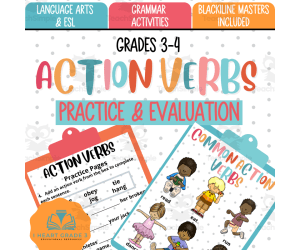
Action Verbs - A Comprehensive Package for Language Arts Education "Action Verbs" provides an extensive resource for educators teaching language arts to students in Grade 3 and 4. This resource is enriched with intriguing activities, centered around vibrant illustrations meant to stimulate interest and aid the learning process. Focus on Action Verbs This product primarily focuses on action verbs. With exercises like fill-in-the-blanks and sentence-construction challenges, students are taught to identify action verbs and use them correctly to construct their own complete sentences. Included Resources Four colorfully illustrated posters explaining the concept of Action Verbs. A black-and-white title page for student duo-tangs promoting learner independence. A total of five worksheets strictly dealing with action verbs along with evaluation sheets available for pre- assessment and post- assessment purposes. An evaluation tracking sheet facilitating effective monitoring of each student's progress over time. Note: All resources provided are recorded as black-line masters. Also Included: Complete Teacher Answer Key Saves teachers' valuable preparation time while ensuring accurate grading. The entire kit is formatted in a way that it can easily be photocopied or printed directly from the supplied PDF file without losing essential details. Moreover, this package facilitates interactive sessions making it perfect for direct instruction during group lessons, smaller literacy circles or even individual home study reinforcing verb concepts at each student's pace. See your young students' grammar comprehension flourish with this hands-on approach!
Author I Heart Grade 3
Tags Action Verbs, Language Arts, Grammar Comprehension, Interactive Activities, Teacher Resources

Multiplication Word List Posters (PDF)
ELA, Language Development, Resources for Teachers, Vocabulary, Spelling, ESL, Multiplication, Multiplication and Division, Math, Grade 2, 3, 4, 5, Worksheets & Printables, Worksheets, Teacher Tools, Centers, Activities, Posters, Classroom Decor
Word List Poster Series This word list poster series is designed for students in grades 2–5. Each printable focuses on a clear, kid-friendly theme and features 8 target vocabulary words with short, student-friendly meanings or fun facts. The clean layout works as both an anchor chart and a write-in sheet, giving students a quick, visual reference they can revisit during centers and independent work. These posters are student-friendly, classroom-ready, and perfect for warmups, vocabulary walls, sub plans, or take-home reference. Display a single poster to support the day’s lesson, or group several to build a themed wall across your unit. Note: Each poster is a companion piece to its matching themed product in the series—pair it with the corresponding maze, wordsearch, or activity pack for a consistent set of 8 focus words. Multiplication Word List 1. Basic Multiplication Two, Three, Four, Five, Six, Seven, Eight, Nine 2. Multiplying by 4 and 5 Ten, Twelve, Fifteen, Sixteen, Twenty, Twenty-Four, Twenty-Five, Thirty 3. Multiplying by 6 and 7 Thirty-Six, Forty-Two, Forty-Nine, Fifty-Six, Sixty-Three, Seventy, Seventy-Seven, Eighty-Four 4. Multiplying by 8 and 9 Sixty-Four, Seventy-Two, Eighty-One, Ninety, Ninety-Nine, One Hundred Eight, One Hundred Twenty, One Hundred Forty-Four 5. Larger Multiplication Numbers One Hundred Sixty, One Hundred Eighty, Two Hundred Ten, Two Hundred Forty, Two Hundred Seventy, Three Hundred, Three Hundred Thirty, Three Hundred Sixty 6. Extra Large Multiplication Four Hundred, Four Hundred Fifty, Five Hundred, Six Hundred, Seven Hundred Fifty, Eight Hundred, Nine Hundred, One Thousand PDF Version Other versions will appear here when available. Follow the store for the lastest on new products. How to Use These Word List Posters Perfect for: Morning work or early-finisher bins Vocabulary centers or anchor walls Holiday/seasonal review lessons Independent stations, sub plans, or take-home reference More Multiplication Themed Products CROSSWORDS WORD SEARCHES MAZES FULL CATALOG OF DOWNLOAD LINKS HERE Themed Word List Posters Links Addition PDF Animals PDF Around the Home PDF Birthday PDF Candy PDF Christmas PDF Cinco de Mayo PDF Clothes PDF Colors PDF Days and Months PDF Division PDF Earth Day PDF Easter PDF Easy Word List Posters PDF Fall PDF Father's Day PDF Food PDF Geography (Set 1) PDF Geography (Set 2) PDF Geography (Set 3) PDF Graduation PDF Health PDF History (Set 1) PDF History (Set 2) PDF History (Set 3) PDF Human Body PDF Kindness PDF Life Skills PDF Mother's Day PDF Multiplication PDF Science (Set 1) PDF Science (Set 2) PDF Science (Set 3) PDF Shapes PDF Social Skills PDF Spring PDF Sports PDF St. Patrick's Day PDF Subtraction PDF Summer PDF Thanksgiving PDF Transport PDF Valentine's Day PDF Winter PDF Word List Posters in Depth Structure Each poster is built around a focused sub-theme and presents 8 target words with short, student-friendly meanings or fun facts. The clean A4 portrait layout works as an anchor chart on your board or as a student reference at desks. These posters are designed as companion pieces to the matching themed products (mazes, wordsearches, activity packs), so the same vocabulary stays visible across your unit. Each poster set includes: A themed word list poster with 8 words + brief meanings/facts A clean, high-contrast layout for easy printing and display Space that can double as write-in/draw-to-show-meaning during centers Themes Included Seasons & Holidays (e.g., Halloween, Easter, Valentine’s Day) Everyday Topics (e.g., Animals, Weather, School) Math & Science Connections (e.g., Number Words, Simple Machines) Special Units (e.g., Health, Earth Day, Sports, Kindness) Each topic reflects real-life experiences and interests while strengthening vocabulary recognition and content understanding in a clear, visual way. Easy extensions (optional) Sketch it: students draw a quick icon for each word Sort it: group words by category (e.g., actions, objects) Star it: highlight “I already know” vs. “I’m learning” words Match it: point to examples in a reading, video, or picture set Say it: brief oral definition or example sentence during share-out Differentiation tips Pre-teach 2–3 anchor words; add the rest later in the week Offer picture cues or gestures for emerging readers/ELLs Let students choose 4 of 8 to focus on first, then build up Color-code by part of speech or concept family for quick scanning For similar downloads and other frees, do check out Cored Group on TeachSimple.
Author Cored Education
Rating
Tags Vocabulary, Spelling, Multiplication, Math, Word Lists, Posters, Math Word Lists, Math Posters, Math Poster, Multiplication Word List

Reading Passages on Position and Motion of Objects (Presentable PDF)
ELA, Reading, Reading Comprehension, Science, Physics, Common Core, ESL, Language Development, Vocabulary, Grade 2, 3, 4, Worksheets & Printables, Worksheets, Assessments, Teacher Tools, Tests, Quizzes and Tests, Centers, Activities
Reading Passages on Position and Motion of Objects for Physical Science Snapshot Genre: Nonfiction Subject: Physical Science Primary Topic: Motion, forces, sound, hearing, and sound properties Estimated Guided Reading Level (A–Z): M What This Teaches Best It explains position, distance, motion, speed, grids, and coordinates in clear everyday language. It teaches that forces are pushes and pulls and gives examples including pedaling, braking, steering, gravity, and magnetism. It connects sound to vibration and shows how sound waves move through air to the ear and brain. It teaches how tone and volume depend on compressions and the force of air against the eardrum. Learning Goals Students will describe position and use coordinates to identify location on a grid. Students will explain how distance and time are used to describe speed. Students will identify examples of push, pull, gravity, and magnetism as forces. Students will explain how vibrations create sound waves. Students will compare high and low tone and explain what makes sounds louder or quieter. Part 2 - Position & Motion of Objects. Reading Passage 1: Position, Distance, and Motion Reading Passage 2: Pushing and Pulling Forces Reading Passage 3: Sound, Hearing, and Force Reading Passage 4: Characteristics of Sound PRESENTABLE PDF VERSION Run it like a slide show straight from a PDF, with no PowerPoint or extra software needed, just open, project, and teach. Other versions are available in the links list below or in the full catalog. FULL CATALOG OF DOWNLOAD LINKS HERE Grade 3/4 Links: Physical Science Part 1 - Properties of Objects and Materials Google Docs/Slides/Forms PDF PPT Word Free Supplementary Pack Accompanying Videos Physical Science Part 2 - Position and Motion of Objects Google Docs/Slides/Forms PDF PPT Word Free Supplementary Pack Accompanying Videos Physical Science Part 3 - Light, Heat, Electricity, Magnetism Google Docs/Slides/Forms PDF PPT Word Free Supplementary Pack Accompanying Videos Life Science Part 1 - Characteristics of Organisms Google Docs/Slides/Forms PDF PPT Word Free Supplementary Pack Accompanying Videos Life Science Part 2 - Life Cycles of Organisms Google Docs/Slides/Forms PDF PPT Word Free Supplementary Pack Accompanying Videos Life Science Part 3 - Organisms and Environments Google Docs/Slides/Forms PDF PPT Word Free Supplementary Pack Accompanying Videos Earth Science Part 1 - Properties of Earth Materials Google Docs/Slides/Forms PDF PPT Word Free Supplementary Pack Accompanying Videos Earth Science Part 2 - Changes in the Earth and Sky Google Docs/Slides/Forms PDF PPT Word Free Supplementary Pack Accompanying Videos Earth Science Part 3 - Objects in the Sky Google Docs/Slides/Forms PDF PPT Word Free Supplementary Pack Accompanying Videos For similar products and other frees, do check out Cored Group on TeachSimple .
Author Cored Education
Rating
Tags Science, Elementary, Reading, Comprehension, Physics, Physical Science, Reading Centers, Reading Comprehension Assessments, Science Assessments, Vocabulary Assessments

Wolves Know-It-Alls! Audio Book
Science, Life Sciences, Animals, Grade 2, 3, 4, Read Alouds, Activities
As part of the unique, science Know-It-Alls! Series that features interesting science facts, this audiobook puts the spotlight on Wolves! Did you know a wolf can pick up the scent of an animal from a mile (1.6km) away? Awesome narration and sound effects plus many interesting facts, makes this audiobook fun and exciting for young science enthusiasts age 4 and up! Titles in the Know-It-Alls! Series include: Butterflies, Crocodiles, Dinosaurs, Farm Animals, Safari Babies, Snakes, Sharks, Spiders, Whales, Wolves, Puppies, Wild Cats, Bugs, Birds of Prey, Fish, Frogs, Apes, Seals, Bats, Bears, Predators, Mummies, Volcanoes, Lizards, Kittens and Horses.
Author Twin Sisters Digital Media
Tags Science, Learning, Wolves, Animals, Ebook

Candy Reading Comprehension Passages and Questions PDF
ELA, Language Development, Resources for Teachers, Vocabulary, Spelling, Reading Comprehension, Reading, Early Math, Math, Common Core, Grade 2, 3, 4, 5, Worksheets & Printables, Worksheets, Teacher Tools, Centers, Activities, Assessments, Tests, Quizzes and Tests, Word Problems, Writing Prompts
Themed Reading Comprehension Passages Series - Candy This reading comprehension passages series is designed for students in grades 2–5. Each title uses a clear, kid-friendly theme and includes two differentiated passages—one aimed at Grades 2–3 and another for Grades 4–5—followed by skill-building pages that check understanding through multiple choice, short written responses, a scrambled-words activity, a brief summary task, and a quick theme-linked word problem. Answer keys are included for easy prep. To suit different teaching styles and settings, each resource is available in nine classroom-friendly versions, including print, digital, editable, and self-grading options. The consistent structure makes these readings a strong fit for whole-class lessons, guided groups, literacy centers, morning work, fast finishers, sub plans, or home learning—helping students build comprehension, vocabulary in context, and confident written answers without extra teacher workload. Candy Lesson List Note: This product has titles different to those in the rest of the themed series. 1. Candy Types 2. Candy Flavors 3. Candy Shapes and Colors 4. Candy Ingredients 5. Candy Fun Facts PDF VERSION The original worksheet-style format, designed for easy printing and student use, perfect for binders, folders, and quick copies. Other versions are available in the links list below or in the full catalog. How to Use These Lessons Perfect for: Morning work or early-finisher bins Guided reading blocks or comprehension warmups Literacy centers or small-group rotations Holiday/seasonal review lessons Independent stations, sub plans, or take-home enrichment More Candy Themed Products CROSSWORDS WORDSEARCHES MAZES FULL CATALOG OF DOWNLOAD LINKS HERE Themed Reading Links Addition Animals Around the Home Birthday FORMATS: -FORMAL ASSESSMENT VERSION -PRESENTABLE PDF -PPT -SLIDES - PDF -FILLABLE PDF -WORD -FORMS -DOCS SUPPLEMENTARY MATERIALS (COMING SOON): -VISUAL READING PASSAGE VIDEO -GUIDED LEARNING VIDEO -LESSON PLANS Candy FORMATS: -FORMAL ASSESSMENT VERSION -PRESENTABLE PDF -PPT -SLIDES -PDF -FILLABLE PDF -WORD -FORMS -DOCS SUPPLEMENTARY MATERIALS (COMING SOON): -VISUAL READING PASSAGE VIDEO -GUIDED LEARNING VIDEO -LESSON PLANS Christmas Cinco de Mayo Clothes Colors Days and Months Division Earth Day Easter Easy Mazes Fall Father's Day Food Geography (Set 1) Geography (Set 2) Geography (Set 3) Graduation Health History (Set 1) History (Set 2) History (Set 3) Human Body Kindness Life Skills Mother's Day Multiplication Science (Set 1) Science (Set 2) Science (Set 3) Shapes Social Skills Spring Sports St. Patrick's Day Subtraction Summer Thanksgiving Transport Valentine's Day Winter Free One Lesson Themes Chinese New Year Lunar New Year Halloween Pink Shirt Day Independence Day Juneteenth President's Day Groundhog Day Readings in Depth Structure Each resource is built around a focused sub-theme within the broader topic. Students read two leveled passages (Grades 2–3 and Grades 4–5), then move through a short, consistent sequence of activities that checks understanding and keeps momentum: multiple-choice, brief written responses, a scrambled-words review, a compact summary task, and a light theme-linked word problem. The flow is predictable for students, but varied enough to feel fresh across topics. Each completed resource includes: Two differentiated reading passages (lower and upper level) A multiple-choice comprehension page Short written-response questions A scrambled-words or quick vocabulary check A brief summary activity A simple, theme-connected word problem Answer keys for fast marking and easy self-checking Nine classroom-friendly formats, including print, editable, digital, and self-grading options Themes Included These readings span a wide range of age-appropriate, high-interest topics, such as: Seasons and celebrations Real-world science and nature Community, character, and life skills Everyday high-frequency themes students already enjoy Each title connects to familiar experiences while strengthening comprehension, vocabulary in context, and clear written expression. Easy extensions (optional): Read twice: first for gist, second to highlight key details Write two “right there” questions and swap with a partner Create a 3-bullet fact list or mini mind map Turn the summary into a 3-sentence retell using sequence words Add one extra math question connected to the topic Compare the two levels: what details appear in both? Differentiation tips: Pre-teach 2–3 key words with quick examples Offer sentence starters for written responses Use partner reading: one reads aloud, one tracks evidence Allow highlighting or underlining before answering questions Provide a shorter chunking option for students who need breaks Encourage confident readers to justify answers with a quoted detail For similar downloads and other frees, do check out Cored Group on TeachSimple.
Author Cored Education
Rating
Tags Vocabulary, Spelling, Candy, Candy Activities, Writing Prompts, Word Problems, Reading Comprehension, Candy Reading, Candy Passages, Reading Passages

Reading Comprehension Nonfiction Set 5 - Sea Animals (Fillable PDF)
ELA, Reading, Reading Comprehension, Common Core, Creative Writing, Writing, ESL, Language Development, Spelling, Vocabulary, Grade 4, 5, Worksheets & Printables, Worksheets, Writing Prompts, Assessments, Teacher Tools, Tests, Quizzes and Tests, Centers, Activities
Reading Comprehension Passages Nonfiction Set 5 Snapshot Title: READING COMPREHENSION: Nonfiction Grade 4–5 Sea Animals Genre: Nonfiction (informational articles with practice/support pages) Subject: Reading (Informational Text) / Life Science Primary Topic: Sea animals, traits, and survival adaptations Estimated Guided Reading Level (A–Z): T What This Teaches Best Animal adaptations for survival (camouflage and burying in sand for stingrays; electric eels’ electric charge; whale sharks’ filter feeding; sharks’ cartilage skeletons). How body parts help animals function (electro-receptors, venomous spines, gill rakers, blowholes, dorsal fins, tentacles, and tiny sensory cells). Cause-and-effect in ecosystems and human impact (sharks as top predators that help maintain balance; shark finning and endangered sharks disrupting ocean ecosystems). Compare/contrast informational reading (how porpoises and dolphins are alike and different in teeth, body shape, lifespan, and social behavior). Support-page QA note: The “Sea Animals Multiple Choice Quiz” says some answers aren’t in the articles, and several questions require outside knowledge (e.g., seahorse pregnancy, “fastest known sea animal,” and sharks hunted each year). Learning Goals Explain how at least two sea animals use special body features to survive, using text details. Describe how a stingray finds prey and defends itself, based on the article. Explain how an electric eel uses electricity and how it breathes in low-oxygen water. Describe how a whale shark eats and why it is not a significant danger to humans. Summarize why sharks are important to the ocean’s balance and why some sharks become endangered. Compare dolphins and porpoises by identifying two similarities and two differences from the text. Passages Include Stingray: Stingrays are close relatives of sharks. Read more about this amazing sea animal in this article. That’s Electric: How much electricity can an electric eel produce? Find out here. Whale Shark: Meet the whale shark—the biggest fish in the ocean. Yes, the biggest! Scared of Sharks: A shark passage packed with facts… if you’re brave enough to read it! Under the Sea: Porpoise or dolphin—what’s the difference? All About Jellyfish: More people die each year from jellyfish stings than from great white shark attacks. FULL CATALOG OF DOWNLOAD LINKS HERE FILLABLE PDF VERSION Worksheet-style pages, but with type-in answer boxes so students can complete and save their work digitally. Other versions are available in the links list below or in the full catalog. For similar downloads and other frees, do check out Cored Group on TeachSimple.
Author Cored Education
Rating
Tags Elementary, Reading, Comprehension, Vocabulary, Common Core, Spelling, Writing, Passages, Reading Centers, Reading Comprehension Assessments
Geography: Reading Comprehension
ELA, Social Studies, Reading, Reading Comprehension, Geography, Grade 4, 5, 6, 7, Activities
Geography: Reading Comprehension A teaching resource that seeks to illuminate the facets of our fascinating world for students at a 4th to 6th-grade reading level. This package seeks to satisfy curiosity about diverse subjects ranging from endangered species, area, and population dynamics across the globe. The goal is not only to encourage students' engagement with non-fiction texts but also instill critical comprehension skills. Package Content: This offer includes informative tidbits about all seven continents - covering their unique attributes, physical features, and pertinent facts. Included are maps ripe for annotations and coloring, giving visual learners an engaging way to connect with geographical information. Cross-Content Learning Opportunities: This product contains non-fiction articles devoted to each continent – aiding in fluid language arts instruction whilst bolstering social studies knowledge simultaneously. The pack contains comprehensive questions designed to measure text retention and understanding; developing students' problem-solving abilities is a core feature here. Pages dedicated solely for flag recognition and animal information nurturing student’s inquisitiveness about diverse global cultures and wildlife habitats respectively. Educational games stimulate intellectual growth through play while sorting & cutting exercises promote hand-eye coordination development. 'Be a Detective’ Activity & 'Find Someone Who Game’: The first activity introduces reasoning skills whereas the latter encourages interpersonal interaction within learner groups. These can be used as part of regular coursework or as ready-to-go material for substitute teachers needing time-effective materials on the fly. High school educators would find this highly adaptable product equally useful as an engaging center or station activity – offering insightful background knowledge prior diving into more intensive social studies curriculum ahead. Overall: This product truly encapsulates a complete and comprehensive means of exploring the expansive confines of our global community. In total, there are 83 pages with rich content made available in a user-friendly PDF format for easy access and printing. The curriculum maps well to common core standards for language arts and social studies, making it an invaluable resource in any grade 4-7 classroom context.
Author Big Apple Teaching
Tags Geography, Reading Comprehension, Continents, Non-fiction Articles, Assessments
Engines Reading Comprehension Passage - Cored Ed Encyclopedia
ELA, Reading Comprehension, Reading, Science, Technology, Pre-Reading, Language Development, Physics, History, Social Studies, Grade 2, 3, 4, 5, Worksheets & Printables, Worksheets, Teacher Tools, Centers, Activities, Writing Prompts, Assessments, Quizzes and Tests, Quizzes, Lesson Plans
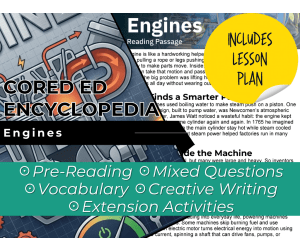
This engines reading comprehension with lesson plan includes: Visualization (on the front cover) Start your lesson by taking a minute to think and share something about the topic. Read the script aloud (slowly), perhaps prepare some music or sound effects. Student close their eyes and let their imaginations wander. Students open their eyes, read the question aloud and give them a few minutes to complete. Ask a few students to share or keep answers until the end to compare with what they learn in the passage. Quick pause—thousands of Cored Education products are included with your TeachSimple membership. Download links and encyclopedia index available here. Pre-Reading Trivia Students will write down one thing they already know about the subject and then read five more facts and discuss. These facts are fun, and the students will enjoy learning about the subject before reading more. Give 1 minute for students to write what they already know (no pressure—best guess is fine). Read the five facts together. After each fact, do ask a student for their opinion, was it surprising? Set a purpose by asking students to highlight/underline one fact they want to learn more about during the reading. Reading Passage The text is a high-interest reading passage with set paragraphs, roughly three to four paragraphs long. It contains a variety of themes about the topic, anywhere from history to technology. The passage is between 250 and 350 words in length. First, ask students to look at the headings and see what they’ll learn about today. What do they know about the topic/heading? First read options: Teacher read-aloud (best for support). Partner reading (paragraph by paragraph). While reading, students underline important details, and vocabulary words they think may come up in the questions section. Mixed Questions The first question page contains four multiple-choice questions, each with a choice of four answers, and three written response questions that require a sentence or two from the student. Students complete the mcqs first independently, then review quickly as a class. For the 3 written responses, try to get students giving the answer with some form of evidence: “I think ___ because the text says ___.” If students get stuck, send them back to check the passage. Vocabulary Questions Practice seven key words from the text in this section across two activities. First section is scrambled words where students will unscramble three words given a clue for each. The second section is a word to meaning matching activity. Before starting, have some students read out words they underlined in the passage. Ask students to say the word and read aloud the sentence(s) around each word. Ask students to do scrambled words and the matching exercise in pairs then go through answers as a class. For the scrambled spelling task, get four pairs to come up to the board and write the words for extra practice with the other student reading out the clue. For the matching task, prompt students to give full sentences: “I matched ___ with ___ because ___.” Creative Writing In this question, the student will be required to write a five to eight sentence paragraph on a question related to the topic. Before starting, ask students write down 3 key ideas they are going to include in their piece. Ask students for ideas to share around the class to help those struggling. Pro writing expectations: 5–8 sentences At least 2 facts or details from the passage At least 2 vocabulary words from the previous page Students read their paragraphs while classmates listen for facts and vocabulary words. Extension Activities This page is optional for fast finishers or to take home. There are several activities, each one requiring a different skill. Do some, do none, do all, completely optional - but you will feel reassured knowing every possibility is planned for. Includes summary writting question and additional facts. Answer Key There are answers for the multiple-choice questions, written response questions have sample answers, vocabulary answers and if there is a summary question then a sample summary will be provided as well. Lesson Plan Included Customized lesson plan for this lesson is included. Lesson Snapshot Title: Engines Genre: Nonfiction (Informational Text) Subject: Science (Physical Science/Technology) / Reading (Informational Text) Primary Topic: How engines turn energy into motion Estimated Guided Reading Level (A–Z): P What This Lesson Teaches Best Explains the core idea that an engine turns energy into motion , using heat, fuel, or electricity to make parts move. Builds understanding of how steam engines work (boiling water makes steam push a piston) and how designs became more efficient (Watt’s separate condenser idea). Describes internal combustion engines and the four-step cycle (take in, squeeze, burn/push, exhaust) that repeats. Connects parts and motion: pistons moving back-and-forth can turn a crankshaft to keep rotation going. Introduces electric motors as another way to change energy into motion using magnetism and current to spin a shaft. Learning Goals Students will explain how an engine changes energy into motion using heat, fuel, or electricity. Students will describe how steam can push a piston in an early steam engine. Students will explain why a separate condenser made a steam engine design more efficient. Students will identify how an internal combustion engine makes motion by burning fuel inside a chamber. Students will list the four repeated steps of a four-stroke engine as stated in the passage. Students will describe how an electric motor uses magnetism and current to spin a shaft. Key Vocabulary From the Text piston — a part pushed by steam or hot gases. condenser — a part that cools steam somewhere else. combustion — burning fuel to make hot gases. crankshaft — a part that keeps turning as pistons move. magnetism — a force used with current to make a shaft spin. FULL CATALOG OF DOWNLOAD LINKS AND ENCYCLOPEDIA INDEX HERE
Author Cored Education
Rating
Tags Vocabulary, Reading Comprehension, Reading Passages, Lesson Plans, Ela Lesson Plans, Reading Comprehension Lesson Plans, Pre-reading, Science Lesson Plans, Technology, Physics

Guided Reading Lesson Plan & Activities for Grade 4
Reading, ELA, Grade 4, Activities, Lesson Plans, Teacher Tools
Each child acquires reading skills in a unique manner and at their own pace, but you can assist in establishing a solid base through thoughtful, intentional teaching. Guided reading is a teaching method that includes small groups of 4-6 students collaborating with an instructor, concentrating on their specific reading skills and requirements. The small-group environment allows the teacher to monitor and customize teaching for every student. Years of studies indicate that this tight-knit method is impactful and successful. A key benefit of guided reading is its capacity to offer individualized teaching. In a small-group environment, educators can recognize every student's reading proficiency, strengths, and areas for improvement. This tailored method enables teachers to focus on particular skills and strategies essential for every child's growth. This comprehensive lesson outline will assist you in practicing guided reading with your fourth-grade students. The session lasts around 90 minutes, and the responses are included as well.
Author Bright Classroom Ideas Marketplace
Tags Guided, Reading, Lesson, Plan, Activities, Grade 4, Language

Food - sorting non-identical food
Special Resources, Special Education Needs (SEN), Speech Therapy, Math, Early Math, Kindergarten, Preschool, Grade 1, 2, 3, 4, 5, 6, 7, 8, 9, 10, 11, Activities
Food - Sorting Non-Identical Food: An Educational Resource Food - Sorting Non-Identical Food is an exceptional educational tool designed to augment learners' cognitive skills through the task of organizing non-indact elements. Main Activity : Learners are presented with assorted food items such as hamburgers, cupcakes, and apples. They are tasked with correctly categorizing these items by matching them with corresponding images—stimulating both their critical and creative thinking abilities. Learner Engagement: This hands-on math activity encourages active engagement from the learners, fostering decision-making skills as they assign each food item to its appropriate category. Cognitive Processing: Post-sorting discussions reinforce cognition regarding the categorized groups. Additional discussions can venture into alternative ways of categorizing foods based on different parameters like country of origin or consumption method. Variation and Repeated Use: Repeated use with varying sets of food broadens this learning experience by introducing new challenges for the learner while consolidating learned knowledge—promoting skills in critical thinking, creativity, and categorization; all the while expanding understanding about various food types and their attributes. Inclusions in Resource The resource includes 19 table-scale food sorting cards. Each card is accompanied by six associated non-identical images—one for easier visual recognition by learners! Ease of Implementation This exercise's preparation is straightforward: print out a downloadable PDF document, laminate for durability—ready to use! The ease allows educators flexibility to best introduce content regardless if it's assigned as individual homework or group class activity ; perfect for all grade levels starting from preschool up through grade 11. An Adventure for the Palate and Brain! Take note, this resource covers common foods from pizzas to baked potatoes—an actual feast meant for your stomach and brain both! Grab this versatile teaching aid today!
Author IFIO girl - I'll Figure It Out
Tags Food Sorting, Cognitive Skills, Educational Resource, Critical Thinking, Categorization, Food Sorting Activity
Science Mazes - Set 2: 1 Page Sample (PDF)
ELA, Language Development, Vocabulary, Spelling, ESL, Resources for Teachers, Science, Physics, Earth and Environmental Sciences, Life Sciences, Grade 2, 3, 4, 5, Worksheets & Printables, Worksheets, Teacher Tools, Centers, Activities, Mazes
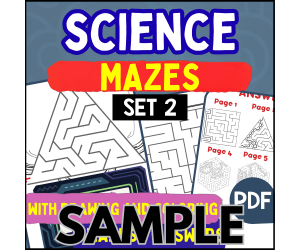
THIS IS A ONE PAGE SAMPLE OF A SIX PAGE MAZE DOWNLOAD FULL SIX MAZE DOWNLOAD INFORMATION: Maze Series This maze series is designed for students in grades 2–5. Each set features a clear, kid-friendly theme with scene-based mazes that students first navigate, then complete by drawing a few target words from a simple word list. Pages come in varied styles and graduated difficulty, with an optional “color it in” step—and some themes invite quick calculations to match the task. These mazes are student-friendly, classroom-ready, and perfect for literacy warmups, seasonal units, fast-finisher bins, centers, sub plans, or home learning extensions. The playful, structured format builds problem-solving, attention to detail, and fine-motor control while reinforcing themed content in a motivating way. Note: Unlike many themed products, not all word-list words appear on the maze pages. To support full vocabulary coverage, we’ve released a companion word list you can find in the links section. Science Set 2 Word List 1. Energy and Electricity Energy, Electricity, Battery, Circuit, Switch, Solar, Light, Heat 2. Rocks and Minerals Rock, Mineral, Fossil, Sand, Crystal, Diamond, Lava, Soil 3. Life Cycles Egg, Larva, Pupa, Adult, Seed, Sprout, Grow, Change 4. The Water Cycle Water, Evaporate, Condense, Cloud, Rain, Puddle, River, Ocean 5. Scientific Inquiry and Tools Observe, Hypothesis, Experiment, Measure, Balance, Ruler, Data, Graph 6. Natural Disasters Earthquake, Tsunami, Hurricane, Tornado, Flood, Drought, Lightning, Volcano PDF Version Other versions will appear here when available. Follow the store for the lastest on new products. How to Use These Mazes Perfect for: Morning work or early-finisher bins Literacy or STEM centers Holiday/seasonal review lessons Independent stations, sub plans, or take-home enrichment More Science Themed Products Science Crosswords (Set 1) PDF Science Crosswords (Set 2) PDF Science Crosswords (Set 3) PDF Science Word Searches (Set 1) PDF Science Word Searches (Set 2) PDF Science Word Searches (Set 3) PDF Science Mazes (Set 1) PDF Science Mazes (Set 3) PDF FULL CATALOG OF DOWNLOAD LINKS HERE Themed Mazes Links Addition PDF Animals PDF Around the Home PDF Birthday PDF Candy PDF Christmas PDF Cinco de Mayo PDF Clothes PDF Colors PDF Days and Months PDF Division PDF Earth Day PDF Easter PDF Easy Mazes PDF Fall PDF Father's Day PDF Food PDF Geography (Set 1) PDF Geography (Set 2) PDF Geography (Set 3) PDF Graduation PDF Health PDF History (Set 1) PDF History (Set 2) PDF History (Set 3) PDF Human Body PDF Kindness PDF Life Skills PDF Mother's Day PDF Multiplication PDF Science (Set 1) PDF Science (Set 2) PDF Science (Set 3) PDF Shapes PDF Social Skills PDF Spring PDF Sports PDF St. Patrick's Day PDF Subtraction PDF Summer PDF Thanksgiving PDF Transport PDF Valentine's Day PDF Winter PDF Mazes in Depth Structure Each maze is crafted around a focused sub-theme. Students navigate the maze, encountering branches and cul-de-sacs that build attention and planning. Most pages include a tiny follow-up box—students draw or label 2–3 target words from a small word box, add a quick count, or color in the scene—so the activity reinforces both content and skills in a highly engaging format. Each completed set includes: A themed maze page. A simple student instruction strip. An answer key showing the solved path for teacher support or self-checking Themes Included These mazes cover a wide range of fun, age-appropriate themes, including: Seasons & Holidays (e.g., Halloween, Easter, Valentine’s Day) Math-Lite Connections (e.g., quick counts, number words) Everyday Topics (e.g., Animals, Weather, School) Special Units (e.g., Health, Earth Day, Sports, Kindness) Each topic reflects students’ real-life experiences and interests while strengthening problem-solving, visual scanning, and fine-motor control in a playful, highly visual way. Easy extensions (optional): Time it: solve once in pencil, then try to beat the time in pen Retell the route using sequence words (first, next, then, finally) Count intersections or turns and graph the results Write a 1–2 sentence mini-story about the scene using the target words Design a tiny maze in the corner for a partner to solve Differentiation tips: Offer a finger-trace pass before pencils for emerging learners Highlight the borders of the correct region on first attempts Use thicker-line versions or simpler pages to build confidence Pair roles: “navigator” gives directions; “driver” traces the path For similar downloads and other frees, do check out Cored Group on TeachSimple.
Author Cored Education
Rating
Tags Vocabulary, Spelling, Science, Energy And Electricity, Rocks And Minerals, Life Cycles, The Water Cycle, Natural Disasters, Science Mazes, Mazes

Funny Dad Jokes for 4th Grade Reading, Spelling, Inference, Homonyms
ELA, Language Development, Spelling, Vocabulary, Reading, Reading Comprehension, Grade 4, 5, 6, Activities
52 Funny Dad Jokes Guessing Game What's the FUNniest way for your kids to practice and improve their reading, spelling, and inferencing skills while focusing on the funny aspects of, homonyms, homophones and homographs? Play the Dad Jokes Guessing Game, of course! This 31-page printable PDF package has all you need to play (except for 2 kids, a printer, a pencil and scissors): A directions sheet for the kids to read and follow - the familiar hangman letter by letter guessing game format makes it easy to "get the hang" of the game 52 favorite Dad jokes and riddles, printed 2 per page - you need the scissors to cut each page in half While playing this simple hangman-style game (where nobody gets hanged, by the way!), kids get plenty of practice reading directions, jokes, hints and answers, as well as writing and spelling the answers letter by letter. Each joke card includes the answer as well as hints that the sharp guesser (i.e. excellent inferencer) can use to infer the answer more quickly. There's also a page of blank joke cards if you or the kids want to add even more of your own jokes and riddles. The game is easy and fun to play and can be short or long, depending on how many joke cards are used. Designed as a pairs activity, the game works well with a group divided into pairs and then playing in a round robin format. Store the directions and joke cards in a resealable bag or envelope, replenish the joke cards periodically, and add it to a literacy center and your personal collection of fun English language learning resources. Kids might even want to start their own joke and riddle collections. Suggested grade level: 4th grade or higher Common Core English Language Arts Standards: L4.4, L4.5, L4.1G, L5.5
Author WorksheetsPlus
Tags Homonyms, Homophones, Inference, Jokes, Reading, Homograph, Game, Riddles, Worksheets, Printable
Algebra: Board Game for 3rd-5th - MAC Software
Math, Algebra, Common Core, Grade 3, 4, 5, Activities, Games
Algebra: Board Game for 3rd-5th - MAC Software Engaging students in the learning process is always a rewarding experience, and the Algebra: Board Game for 3rd-5th - MAC Software makes this an easier task. This teaching resource specifically caters to 3rd to 5th-grade level students eager to comprehend algebra concepts covered in the Five Strands of Math. Housed within this fun-filled board game are a series of sixteen engaging multiple-choice questions, neatly divided between two teams. The purpose behind this clever scheme is more than just installing a sense of friendly competition among learners, it's also about imbuing them with core mathematics skills while ensuring they enjoy every step of the process. Understanding that teachers often resort to different teaching strategies depending on their classrooms' dynamics, we've ensured that this resource can be flexibly implemented. It lends itself wonderfully as: The spark for whole group discussions where collective thought processing can unravel intricate algebra concepts. Engaging small groups or even assigning it as homework can allow students more focused collaboration or individual contemplation time. This digital tool comes as a zip file containing MAC software, designed specifically for ease-of-use and seamless integration into your existing lesson plan structure. Harnessing technology in such an interactive way paves yet another effective path towards learners' mastery over foundational mathematical aspects like algebra. Most importantly, our product aligns perfectly with Common Core State Standards and STEM initiatives while being written adhering strictly to National Council of Teachers Mathematics (NCTM) guidelines. This ensures that while engaging in playful instruction via our board game tool educators ensure standardized content delivery crucial for student's scholastic growth at no compromise in pedagogical efficacy. In sum-Up, Algebra: Board Game for 3rd-5th - MAC Software succeeds not only as a creative learning supplement but also tutors Grade 3-5 learners mirroring best educational standards practices simultaneously serving up math education under an exciting guise!
Author Classroom Complete Press
Tags Math Games, Algebra Game, Board Game, Addition Game, Digital Game
Write A Story Called 'Don't Ever Say I'm Bored' (7-11 years)
ELA, Writing, Creative Writing, Grade 2, 3, 4, 5, 6, Activities
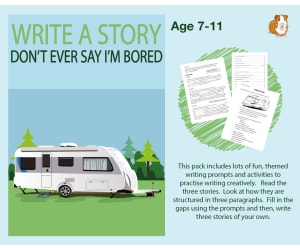
Product Description: Meet a revolutionary product in the realm of education - Write A Story Called 'Don't Ever Say I'm Bored' (7-11 years). This unique resource comes packed with interactive activities meant to trigger the creative mind and blend learning with joy. Designed for students from grade 2 to grade 6, this tool focuses on enhancing skills within Language Arts, specifically targeting Creative Writing. It operates in an engaging format that poses challenges and invokes critical thinking capacities of young learners. A Fun-filled Approach To Learning This educational tool stands out by transforming tedious writing sessions into fun-filled workouts for the mind. It aims at fostering creativity while cementing comprehensive language fundamentals such as proper sentence structures, punctuations, verb usage, and grammar rules. Vocabulary Expansion: The functionalities don't end here; it also centers around vocabulary expansion efforts offering children better words choices along their expressive journey. Such a holistic approach aids in figuring out intricate details about various word forms including but not limited to adjectives, powerful verbs and adverbs as well. Analytical Assessment : Notably highlighted is the Write A Story Called 'Don't Ever Say I'm Bored' wherein children are encouraged to read intriguing stories before embarking on their own writing adventure. They're urged to analyse the structure – beginning stage, suspense build-up middle section and ending closure - all split conveniently across three paragraphs for easy comprehension. Add-on Assignments: Similar assignments sprout up titled ‘Nothing’s Changed’ where kids help Sam recount his visit or ‘The Day I Changed My Mind’ revolving around Amir's first birthday celebration story completion solely based on event recollection using a writer's plan. Flexible Teaching Approach: Allowing flexibility in teaching methods plays a crucial part too; this can be implemented across whole-group discussions or small-group workshops even extending towards crafting individual homework assignments or taking up station activities within classrooms as per convenience. Armed with an understandingly organized PDF format file type adds fuel by promoting uncomplicated access without any hitches anywhere anytime fulfilling its aim towards growth-oriented learning.
Author Guinea Pig Education
Tags Interactive Activities, Creative Writing, Language Arts, Vocabulary Expansion, Storytelling

Dancing Hands by Margarita Engle Read-Aloud Activities
ELA, Reading, Grade 3, 4, 5, Read Alouds, Activities
This picture book companion for Dancing Hands: How Teresa Carreño Played the Piano for President Lincoln by Margarita Engle offers 45 print-and-go activities designed to meet the unique needs of your students. From identifying story elements and analyzing characters to making inferences and determining the theme, this resource helps students think critically and engage with the text. The activities encourage students to provide text evidence, express their own thoughts, and apply higher-level thinking skills—all while making learning fun and engaging. ⭐️This Resource Includes:⭐️ Judging by the Cover: Students analyze the book cover and answer questions. Story Elements: Students identify key story elements using words and pictures. Sequencing: Retell and illustrate the main events of the story. Character Traits: Identify two traits that describe Teresa, with examples from the text. Character Change: Explain how Teresa changes throughout the story and the events that cause the change. Overcoming Obstacles: Discuss challenges Teresa faces and how she responds. Setting Influences the Plot: Analyze how the story's setting contributes to mood and plot development. Author’s Message: Identify four key events and discuss the author’s message. Making Inferences: Use details from the text to make inferences and connect them to the story. 3-2-1: Explore three emotions Teresa felt, two key moments in her journey, and one word that best describes her. Dear Piano: Write a letter from Teresa to her piano, reflecting on its significance. Compare and Contrast: Compare Teresa’s life in Venezuela and the United States. The Perfect Playlist: Design a soundtrack with songs that represent key moments and themes from the story. Diary Entry: Write a diary entry from Teresa’s perspective about a significant event. Design a Concert Flyer: Create a flyer advertising one of Teresa’s concerts. Music Appreciation: Listen to a Teresa Carreño composition and respond to questions about it. This resource also includes crossword puzzles, book reviews, podcast interview prep, a biography research brochure, and more! It's a comprehensive toolkit for diving deep into Teresa Carreño's inspiring story.
Author Creatively Gifted
Tags Biography, Music Appreciation, Character Analysis, Sensory Details, Book Critique

"Life Is Hard When You're A Point" Math Song
Math, Geometry, Grade 4, 5, 6, Songs, Activities
Many of our students love learning in a variety of ways and music is one of those! We can retain information better when we hear it through songs and visual videos. This is one reason we like to incorporate music in our learning environments. We don’t have to limit music to music class only for our students. In my store, you’ll find a wide array of music resources that students will love to learn from. This is a music video for your math students in 4th – 6th grade. The title of this song is “Life Is Hard When You’re A Point.”This is a song and video that will have students learn about lines, rays, and points. This video provides explanations and many examples to support student learning. You can implement this video at the introduction of teaching this math skill. The objective is for students to understand and identify what a line, ray, and point is. This would be a song that I play multiple times for my students across the course of this unit . It is an MP4 file, so you can download it and have the option of embedding it into any slideshow you may be using for instruction. I hope you enjoy! Here are other similar resources for you to enjoy: “A Cow Named Larry” Math Song “Bigger Bottom” Math Song “Bump It” Math Song “Looking For A Ten” Math Song “Both Sides of the Road” Math Song “This Little Piggy” Math Song You can find more resources at my storefront here: https://teachsimple.com/contributor/mathdog-media
Author MathDog Media
Tags Math Song, Math Video, Geometry Song, Geometry Music, Lines, Rays, Points, Line Segments