



3,967 products added recently
Page 7 - 4th Grade Activities
Introduce your fourth-grade students to activities that challenge and inspire. These resources encourage analytical thinking, teamwork, and creative expression across subjects. Use them to elevate your teaching and engage students in meaningful learning experiences.

 Show filters

Math Adventures in Team Building: Building Community in the Classroom
, Grade 3, 4, Activities
Math Adventures in Team Building: Building Community in the Classroom An invaluable teaching resource designed for Grade 3 and Grade 4 students with a pivotal focus on fostering classroom unity while simultaneously enhancing fundamental mathematical skills. This compilation adeptly merges active student participation with challenging problem-solving assignments. A Community-centered Learning Environment This resource caters to educators seeking to create an interactive learning environment. Each activity emulates real-world scenarios equipping students with necessary tools to tackle problems collaboratively. These lessons utilize math as their foundation and are structured around relevant topics for this age group. Striking a Balance "Math Adventures in Team Building" strikes a balance between intricate math concepts, team-building exercises, and playful learning experiences - one of them being a fast-paced math relay race that promotes quick thinking and strengthens team dynamics. Versatility & Adaptability The activities offer generous adaptability across multiple formats like whole group participation, small group activities, or as intriguing homework tasks. Their length can be readily adjusted based on specific classroom needs – filled into shorter time gaps or expanded into longer periods for an added layer of complexity. Once downloaded, the PDF offers seven neatly laid out pages ready for immediate use without any necessity for preparation or additional resources – simplicity at its best! To summarize, "Math Adventures in Team Building: Building Community in the Classroom", this product is nothing less than an empowering tool kit aimed at encouraging connectivity among learners while bolstering their mathematical prowess.
Author Classroom Complete Press
Tags Adventures, Curriculum, Team Building, Building Community, Classroom Community
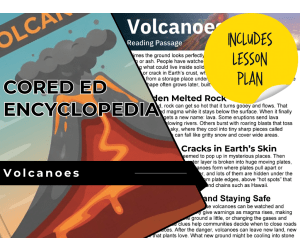
Volcanoes Reading Comprehension Passage - Cored Ed Encyclopedia
ELA, Language Development, Reading Comprehension, Reading, Pre-Reading, Earth Sciences, Earth and Environmental Sciences, Science, Geography, Social Studies, Grade 2, 3, 4, 5, Worksheets & Printables, Worksheets, Teacher Tools, Centers, Activities, Writing Prompts, Assessments, Quizzes and Tests, Quizzes, Lesson Plans
This volcanoes reading comprehension with lesson plan includes: Visualization (on the front cover) Start your lesson by taking a minute to think and share something about the topic. Read the script aloud (slowly), perhaps prepare some music or sound effects. Student close their eyes and let their imaginations wander. Students open their eyes, read the question aloud and give them a few minutes to complete. Ask a few students to share or keep answers until the end to compare with what they learn in the passage. Quick pause—thousands of Cored Education products are included with your TeachSimple membership. Download links and encyclopedia index available here. Pre-Reading Trivia Students will write down one thing they already know about the subject and then read five more facts and discuss. These facts are fun, and the students will enjoy learning about the subject before reading more. Give 1 minute for students to write what they already know (no pressure—best guess is fine). Read the five facts together. After each fact, do ask a student for their opinion, was it surprising? Set a purpose by asking students to highlight/underline one fact they want to learn more about during the reading. Reading Passage The text is a high-interest reading passage with set paragraphs, roughly three to four paragraphs long. It contains a variety of themes about the topic, anywhere from history to technology. The passage is between 250 and 350 words in length. First, ask students to look at the headings and see what they’ll learn about today. What do they know about the topic/heading? First read options: Teacher read-aloud (best for support). Partner reading (paragraph by paragraph). While reading, students underline important details, and vocabulary words they think may come up in the questions section. Mixed Questions The first question page contains four multiple-choice questions, each with a choice of four answers, and three written response questions that require a sentence or two from the student. Students complete the mcqs first independently, then review quickly as a class. For the 3 written responses, try to get students giving the answer with some form of evidence: “I think ___ because the text says ___.” If students get stuck, send them back to check the passage. Vocabulary Questions Practice seven key words from the text in this section across two activities. First section is scrambled words where students will unscramble three words given a clue for each. The second section is a word to meaning matching activity. Before starting, have some students read out words they underlined in the passage. Ask students to say the word and read aloud the sentence(s) around each word. Ask students to do scrambled words and the matching exercise in pairs then go through answers as a class. For the scrambled spelling task, get four pairs to come up to the board and write the words for extra practice with the other student reading out the clue. For the matching task, prompt students to give full sentences: “I matched ___ with ___ because ___.” Creative Writing In this question, the student will be required to write a five to eight sentence paragraph on a question related to the topic. Before starting, ask students write down 3 key ideas they are going to include in their piece. Ask students for ideas to share around the class to help those struggling. Pro writing expectations: 5–8 sentences At least 2 facts or details from the passage At least 2 vocabulary words from the previous page Students read their paragraphs while classmates listen for facts and vocabulary words. Extension Activities This page is optional for fast finishers or to take home. There are several activities, each one requiring a different skill. Do some, do none, do all, completely optional - but you will feel reassured knowing every possibility is planned for. Includes summary writting question. Answer Key There are answers for the multiple-choice questions, written response questions have sample answers, vocabulary answers and if there is a summary question then a sample summary will be provided as well. Lesson Plan Included Customized lesson plan for this lesson is included. Lesson Snapshot Title: Volcanoes Genre: Nonfiction (Informational text) Subject: Science (Earth Science) Primary Topic: What volcanoes are, how they form, and safety clues Estimated Guided Reading Level (A–Z): P What This Lesson Teaches Best What a volcano is (more than a “mountain”): Explains a volcano as an opening/vent or crack in Earth’s crust where hot melted rock, ash, and gases escape from an underground storage place called a magma chamber. Magma vs. lava: Defines melted rock as magma underground and lava once it reaches open air. How volcanic ash forms and spreads: Describes eruptions that toss bits of magma into the sky, cooling into tiny sharp pieces called volcanic ash that can fall like gritty snow and cover wide areas. Why volcanoes form where they do: Connects volcano locations to Earth’s outer layer being broken into huge moving plates (pulling apart or sliding under another), and also to “hot spots” that can form island chains such as Hawaii. Warning signs and community safety: Notes that rising magma can cause small earthquakes, ground swelling, or changes in gases and heat, and that these clues help communities decide when to close roads or move to safer places. Learning Goals Students will explain what the text says a volcano is and where the material comes from. Students will describe the difference between magma and lava using the passage’s definitions. Students will identify one way volcanic ash forms and describe what it is like when it falls. Students will describe how moving plates and hot spots help explain where volcanoes form. Students will list warning signs in the passage that may happen as magma rises. Students will explain how scientists’ observations can help communities stay safer. Key Vocabulary From the Text crust — Earth’s hard outer layer. magma — melted rock below Earth’s surface. lava — melted rock after it reaches open air. eruptions — times when a volcano sends material out. plates — huge moving pieces of Earth’s outer layer. FULL CATALOG OF DOWNLOAD LINKS AND ENCYCLOPEDIA INDEX HERE
Author Cored Education
Rating
Tags Vocabulary, Reading Comprehension, Reading Passages, Lesson Plans, Ela Lesson Plans, Reading Comprehension Lesson Plans, Pre-reading, Science Lesson Plans, Earth Science, Social Studies Lesson Plans

The Empathy Odyssey Seasonal Micro-Mission Deck for Social-Emotional
Classroom Management, Resources for Teachers, Community Building, Sociology, Social Studies, Special Resources, Life Skills, Social Emotional Learning (SEL), Social Skills, Special Education Needs (SEN), Grade 4, 5, 6, 7, 8, Projects, Activities, Assessments, Teacher Tools, Lesson Plans, Rubrics, Worksheets, Worksheets & Printables, Word Searches, Word Problems
Unleash the full potential of social and emotional learning with "The Empathy Odyssey: Pedagogical Architectures for the Middle Years" – a comprehensive, immersive, and transformative curriculum that develops empathy, resilience, and cognitive skills for tweens. This 43-page digital PDF contains a facilitator's guide, theory, student workbook, and teacher resources, all rolled into one. Developed with the principles of neuroscience, psychology, and the Seasonal Cyclicality Model (SCM), this social and emotional learning program for kids takes students on a series of fun, gamified, and micro-level missions aligned with Autumn (self-awareness), Winter (social observation), Spring (social skills), and Summer (responsible decision-making). This social and emotional learning program for kids, tweens, and pre-teens is perfect for parents, teachers, and counselors who want to develop the cognitive empathy, emotional intelligence, and growth mindset of middle school students. A must-have for middle school emotional intelligence development, bullying prevention, and classroom community building. Instant download. Keywords: SEL curriculum for 4th to 7th grade, empathy workbook for middle school, social and emotional learning activities, tween emotional intelligence development, neuroscience-based SEL program. Why Parents/Schools Love It: Neuroscience-Based: Fuses the power of brain science with the ease of using Micro-Missions to develop empathy as a "muscle" that grows with repetition, creating a lifelong tool for children without overwhelming them. Seasonal Format: Utilizes the power of seasonal themes and activities to eliminate social anxiety issues with a "game" approach to SEL that integrates easily into the school year or home schedule. Comprehensive Resources Included: Provides facilitator guides, student worksheets, case studies, images, and teacher keys in one convenient PDF format for quick and effective implementation with proven results such as improved conflict resolution and self-regulation. Universal and Adaptable: Includes protocols for working with children who have experienced trauma, those with neurodiverse needs, and applications for real-world issues such as bullying, making it effective for a wide range of classrooms and promoting a sense of community. Proven Results through Real-Life Case Studies: Includes real-life examples of how children move from isolation to connection, giving parents and educators the power to see the impact on children's social skills and decisions. Target Classes/Students : After a thorough analysis of the entire content presented in the PDF, from the introduction to the chapters, case studies, worksheets, and teacher resources, the content is clearly targeted at students from grade 4 through grade 7 (approximately 9-13 years old). This is consistent with the "middle years" concept presented throughout the content, which covers neurological developments such as prefrontal cortex restructuring, synaptic pruning, and the progression from Erik Erikson's Industry vs. Inferiority stage to the Identity vs. Role Confusion stage. For example, grade 4 community projects, grade 5 integrations into the classroom, grade 6 self-awareness interventions, and grade 7 conflict resolutions. The content is applicable for homeschoolers, classrooms in public/private schools, after-school programs, and counseling sessions for the target age group, with modifications for neurodiverse students with ASD or NVLD. Copyright/Terms of Use: This Book was copyrighted by Syed Hammad Rizvi. This resource is for personal and single classroom use only. You may not alter, redistribute, or sell any part of this resource. In other words, you may not put it on the Internet where it could be publicly found and downloaded. If you want to share this resource with colleagues, please purchase additional licenses from Teachsimple. Thank you for respecting these terms of use. This product is happily brought to you by Syed Hammad Rizvi
Author Creative Book Store
Rating
Tags TheEmpathyOdyssey, SELCurriculum, SocialEmotionalLearning, EmpathyWorkbook, MiddleSchoolSEL, Grades4to7, EmotionalIntelligenceKids, TweenResilience, NeuroscienceEducation, EmpathyBuildingActivities

Elephants: Guided Reading Level Q with Lesson Plan
ELA, Resources for Teachers, Reading Comprehension, Reading, Science, Language Development, Life Sciences, Earth and Environmental Sciences, Geography, Social Studies, Grade 3, 4, 5, Worksheets & Printables, Worksheets, Teacher Tools, Centers, Activities, Literacy Readers, Quizzes, Quizzes and Tests, Assessments, Lesson Plans
This Elephants (level q) guided reading book with lesson plan includes: Guided Reading Color Label (front cover x1) This is a quick way to match the book’s demands to what students can generally handle.. The overall goal is to use the level/color to pick books for several smaller groups. To qualify for a certain level, a student is expected to read a book from that level with about 90–94% accuracy. If a student is consistently accurate and understands, move up a level. If the student is struggling at that level, drop down and add more support. Each student will improve at completely different rates, but it is generally one of the best ways to check progress across the class. DOWNLOAD THE CATALOG TO VIEW ALL GUIDED READING BOOKS AVAILABLE (SORTED LEVELS A-Z) Pre-Reading Question (x1) Teacher asks the prompt aloud, can be while showing the cover or first page. Students share what they already know, or make educated guesses from the cover. Prompt them to use the target vocabulary. Write some of their responses on the board to look back at during the reading. Vocabulary Words (x5) Introduce the five words, best doing it one at a time. Start by saying it, while students repeat and then see if anyone knows what it means before reading further. Read through the meaning and try to briefly connect each word to a picture or gesture so it’s meaningful. Ask students to flip through the book pages and point to where they see each of the vocabulary words. While reading the book pause upon coming across one of the vocab words or read the sentence twice to make sure students understand the word has appeared. Optional: Ask students to raise hands whenever they see/hear one of the new words. Guided Reading Pages (x10) Check the book snapshot (below) for: primary topic - do you need to prep extra reading or intro materials on this? what is taught best - decide on 1-2 bullets to focus on, use the prompt or words provided here for best results. learning goals - what you are checking for students to be able to do after the session, elicit answers using prompts or words provided. key vocabulary (see section above). questions overview - so you know what is coming up and if you need to prep extra materials to assist understanding. Run the lesson You may have already looked at a few of the pages together, but you can show them some of the pictures again first to set meaning. Depending on how much time you have and how familiar your students are with guided reading class, you may want to read the book aloud first with the group first. Students whisper or partner read, while you listen in. If time, do it as a group, one student reading a page each. Use the guided page’s prompts to coach: “Check the picture / does it make sense?” “Point under the words / try the first sound” “Reread the sentence smoothly”. Try to focus more on one student per session (rotating every time), so you can work out if they are ready to move up or need to move down a level. Comprehension Questions (back cover x3) This is your way to check that students didn’t just say the words, but actually understood the text. First, let students answer by pointing to the page/picture and saying a short sentence. After any answer, follow with: “Show me where you found that in the text.” In bigger groups, have partners answer first (10–20 seconds), then call on 2–3 students to share. Differentiation tips: Emerging speakers/struggling readers: oral + pointing On-level: oral in a full sentence Higher: one written sentence or draw + label Book Snapshot Title: Elephants Genre: Nonfiction (informational) Subject: Life Science Primary Topic: Elephant species, adaptations, behavior, and threats Estimated Guided Reading Level (A–Z): Q What This Book Teaches Best Explains that scientists recognize three distinct species of elephants and describes physical differences (like ear shape and head shape) that fit their environments. Describes key body structures and functions (trunk muscles and “fingers,” tusks as elongated incisor teeth, sensitive skin). Shows behavioral adaptations for survival , including how elephants protect themselves from heat and insects by using water or mud. Highlights social organization and communication , including matriarchal herds and vocalizations such as trumpets, rumbles, and infrasound. Connects elephants to their ecosystems and conservation by explaining seed dispersal (African Forest elephants) and current threats like habitat loss and poaching for ivory. Learning Goals Describe the three elephant species named in the text and one physical difference mentioned between African and Asian elephants. Explain how elephants use their skin and what they do to protect themselves from heat and insects. Identify how the text describes an elephant’s trunk and list at least three things elephants use it to do. Explain what tusks are and give examples from the text of how tusks help elephants survive. Describe how elephants live in groups and how a matriarch helps keep a herd safe. Explain how African Forest elephants help plant new trees in the forest, according to the text. Key Vocabulary From the Text distinct — clearly different from something else. characteristic — an important feature that helps describe something. matriarchal — led by a female (mother) in the group. vocalizations — animal sounds used to communicate. endangered — in danger of disappearing because there are not many left. Discussion Prompts Pre-reading question: What do you already know about how elephants live and survive in their habitats? Comprehension questions: What are the three species of elephants that scientists recognize in the text? Comprehension questions: What does the text say elephants do to protect themselves from heat and insects? Comprehension questions: How do African Forest elephants help plant the next generation of trees in the forest? Printing Tips 1. Best Printing Method (Recommended) “Booklet” Printing (Best if Available) If your printer or PDF viewer supports Booklet Printing , use this. Settings to use: Print mode: Booklet Paper size: Letter or A4 (either works) Orientation: Landscape Print on both sides: Yes Flip on: Short edge Scaling: Fit to printable area Booklet subset: First test: Front sides only Then: Back sides only This will automatically: Pair pages correctly Put the cover on the outside Align everything for folding After printing, fold in half and staple along the spine . 2. If “Booklet” Printing Is NOT Available You can still print this correctly with manual duplex printing . Step-by-step: Open the PDF. Choose Print . Set: Orientation: Landscape Pages per sheet: 1 Print on both sides: Yes Flip on: Short edge Print all pages . Because each PDF page already contains two facing book pages, the result will still fold cleanly into a book. Thousands of Cored Education products are included with your TeachSimple membership. Download links and encyclopedia index available here.
Author Cored Education
Rating
Tags Reading Comprehension, Reading Passages, Reading, Guided Reading, Guided Reading Lesson Plan, Guided Reading Activity, Pre-reading, Science Lesson Plans, Life Science, Geography

Multiply by "Ten" Task Cards - 60 Task Cards
Math, Calculus, Early Math, Basic Operations, Numbers, Multiplication and Division, Multiplication, Grade 1, 2, 3, 4, 5, Centers, Activities, Teacher Tools, Assessments, Lesson Plans, Quizzes and Tests, Worksheets & Printables, Task Cards
Your students will love multiplying by 10 (trust us, it’s their favorite number) with these 60 task cards! The 10 times table is a math milestone that your students will master in no time with the help of these cards—because multiplying by 10 is easier than convincing your dog to fetch a ball. Ways to Use: Class Warm-Up: Start the lesson with a quick task card challenge to get them thinking math! Partner Power: Let students quiz each other for some team spirit. Independent Practice: Use for focused solo work during math centers or quiet time. Competitive Fun: Host a multiplication relay race with the task cards for extra excitement. Quick Check-In: Instantly assess students’ progress and identify where they might need a little more practice. Advantages: Zero Stress: Multiplying by 10 is as easy as adding a zero—and these cards make it fun! Prep-Free: Just print, distribute, and watch your students’ math skills soar. Engagement Guaranteed: Keep students hooked with interactive and dynamic activities. Versatile: Use for individual practice, group work, or pair up students for friendly challenges. Your students will be multiplying by 10 in no time—no magic required! Just these task cards.
Author Ponder Palette Plazza
Tags Multiplication, Multiplication Worksheets, Multiplication Task Cards, Task Cards, Math Task Cards, Numbers, Multiplication Activities, Mental Math Activities

Summer Road Trip Math Project | End of Year Activities | Real World
Addition and Subtraction, Math, Addition, Subtraction, Basic Operations, Early Math, Measurements, Grade 4, 5, Word Problems, Worksheets & Printables, Projects, Activities
Engaging and Educational! Take students on an exciting Summer Road Trip adventure while strengthening essential real-world math skills. This project-based learning activity encourages students to plan a trip, calculate distances and travel times, create budgets, analyze expenses, and make thoughtful financial decisions using practical math applications. Throughout the project, students will work through a variety of engaging activities that involve route planning, distance calculations, travel time estimation, budgeting for gas, food, lodging, and attractions, graphing expenses, and reflecting on their overall trip experience. These hands-on tasks help students connect classroom math concepts to real-life situations while building confidence in problem-solving and critical thinking. Perfect for end-of-year activities, summer learning, math centers, independent work, fast finishers, enrichment projects, and homeschool learning. The student-friendly format keeps learners engaged while reviewing important math skills in a meaningful and enjoyable way. The ready-to-print PDF format requires no preparation and is easy to implement in any learning environment. File type: PDF Number of Pages: 13 Grade Levels: 4th–5th Grade
Author Sadigitalart
Rating
Tags Road Trip Math, Math Project, End Of Year, Budgeting Math, 4th Grade Math, Summer Activity, Project Based, Real World Math

X-Rays Reading Comprehension Passage - Cored Ed Encyclopedia
ELA, Language Development, Reading Comprehension, Reading, Science, Technology, Physics, History, Social Studies, Pre-Reading, Grade 2, 3, 4, 5, Worksheets & Printables, Worksheets, Teacher Tools, Centers, Activities, Writing Prompts, Assessments, Quizzes and Tests, Quizzes, Lesson Plans
This x-rays reading comprehension with lesson plan includes: Visualization (on the front cover) Start your lesson by taking a minute to think and share something about the topic. Read the script aloud (slowly), perhaps prepare some music or sound effects. Student close their eyes and let their imaginations wander. Students open their eyes, read the question aloud and give them a few minutes to complete. Ask a few students to share or keep answers until the end to compare with what they learn in the passage. Quick pause—thousands of Cored Education products are included with your TeachSimple membership. Download links and encyclopedia index available here. Pre-Reading Trivia Students will write down one thing they already know about the subject and then read five more facts and discuss. These facts are fun, and the students will enjoy learning about the subject before reading more. Give 1 minute for students to write what they already know (no pressure—best guess is fine). Read the five facts together. After each fact, do ask a student for their opinion, was it surprising? Set a purpose by asking students to highlight/underline one fact they want to learn more about during the reading. Reading Passage The text is a high-interest reading passage with set paragraphs, roughly three to four paragraphs long. It contains a variety of themes about the topic, anywhere from history to technology. The passage is between 250 and 350 words in length. First, ask students to look at the headings and see what they’ll learn about today. What do they know about the topic/heading? First read options: Teacher read-aloud (best for support). Partner reading (paragraph by paragraph). While reading, students underline important details, and vocabulary words they think may come up in the questions section. Mixed Questions The first question page contains four multiple-choice questions, each with a choice of four answers, and three written response questions that require a sentence or two from the student. Students complete the mcqs first independently, then review quickly as a class. For the 3 written responses, try to get students giving the answer with some form of evidence: “I think ___ because the text says ___.” If students get stuck, send them back to check the passage. Vocabulary Questions Practice seven key words from the text in this section across two activities. First section is scrambled words where students will unscramble three words given a clue for each. The second section is a word to meaning matching activity. Before starting, have some students read out words they underlined in the passage. Ask students to say the word and read aloud the sentence(s) around each word. Ask students to do scrambled words and the matching exercise in pairs then go through answers as a class. For the scrambled spelling task, get four pairs to come up to the board and write the words for extra practice with the other student reading out the clue. For the matching task, prompt students to give full sentences: “I matched ___ with ___ because ___.” Creative Writing In this question, the student will be required to write a five to eight sentence paragraph on a question related to the topic. Before starting, ask students write down 3 key ideas they are going to include in their piece. Ask students for ideas to share around the class to help those struggling. Pro writing expectations: 5–8 sentences At least 2 facts or details from the passage At least 2 vocabulary words from the previous page Students read their paragraphs while classmates listen for facts and vocabulary words. Extension Activities This page is optional for fast finishers or to take home. There are several activities, each one requiring a different skill. Do some, do none, do all, completely optional - but you will feel reassured knowing every possibility is planned for. Includes summary writting question. Answer Key There are answers for the multiple-choice questions, written response questions have sample answers, vocabulary answers and if there is a summary question then a sample summary will be provided as well. Lesson Plan Included Customized lesson plan for this lesson is included. Lesson Snapshot Title: X-Rays Genre: Nonfiction (informational text) Subject: Science (energy, technology, space science) / Informational Reading Primary Topic: Discovering X-rays and how they’re used Estimated Guided Reading Level (A–Z): R Support pages present: Pre-reading trivia; mixed questions; vocabulary page; creative writing; extension activities; answer key What This Lesson Teaches Best How Wilhelm Conrad Röntgen noticed a surprising glow in a dark lab and named the mystery ray “X.” Why X-ray pictures look like “shadow pictures,” with bone and metal stopping rays more than skin and soft tissue. How X-rays help doctors and dentists see inside the body without surgery, and how CT scans use many X-rays from different angles. That X-ray doses are kept as low as possible because X-rays can damage cells. How X-rays are used beyond hospitals, including security scanners and space telescopes on satellites that collect X-rays from hot places near black holes. Learning Goals Students will describe what happened in the lab that made the discovery of X-rays possible. Students will explain why bone and soft tissues show up differently on an X-ray picture. Students will identify how X-rays help doctors or dentists look inside the body without cutting. Students will describe what the text says about safety and why doses are kept low. Students will give an example of an X-ray use outside a doctor’s office found in the passage. Key Vocabulary From the Text invisible — not able to be seen. mystery — something not understood yet. detector — a tool that records the X-rays. tissues — soft parts inside the body. wavelength — the size/length of a wave. FULL CATALOG OF DOWNLOAD LINKS AND ENCYCLOPEDIA INDEX HERE
Author Cored Education
Rating
Tags Vocabulary, Reading Comprehension, Reading Passages, Lesson Plans, Ela Lesson Plans, Reading Comprehension Lesson Plans, Pre-reading, Science Lesson Plans, History Lesson Plans, Physics

Algebra: Board Game for 3rd-5th - PC Software
Math, Algebra, Common Core, Grade 3, 4, 5, Activities, Games
Algebra: Board Game for 3rd-5th - PC Software This innovative educational tool is aimed at enhancing understanding of basic algebra concepts among grade 3 to grade 5 students. It has been keenly crafted to align with the Five Strands of Math and satisfy the rigorous standards stipulated by initiatives such as Common Core State Standards, STEM, and those set by National Council of Teachers of Mathematics (NCTM). Detailed Overview The product is a downloadable zip file containing PC software that facilitates 16 engaging algebra questions designed in an interactive board game format. Each item is presented as a multiple choice question allowing division between two teams stimulating healthy competition and cooperation. Versatility in Teaching Settings Ideal for group instruction, small group sessions or individual assignments Suitable for classroom usage or homeschooling during self-study sessions. Educational Advantage Integrating this tool into your lessons infuses them with play while delivering substantial academic material related to Math and Algebra. Such combination helps students to better absorb challenging concepts leading to enhanced retention rates and overall performance. User-friendly Progression The delivery instruction using this resource pursues systematic progression ensuring comprehensive understanding among learners irrespective their pace or learning style. Practicality for Endless Learning Opportunities This Algebra board game can be accessed on PCs at home or after school programs without needing continuous internet access. Therefore it can be considered as an indispensable addition to your teaching toolkit facilitating independent thinking while reinforcing fundamental algebra principles amongst students. In conclusion, Don’t spend too much time planning detailed lessons on complex topics like algebra. This PC software offers engaging and effective assistance in shaping young minds towards mathematical excellence.
Author Classroom Complete Press
Tags Board Game, Math Game, Math Board Game, Algebra Game, Algebra Board Game
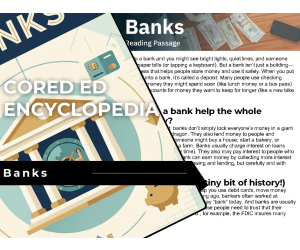
Banks Reading Comprehension Passage - Cored Ed Encyclopedia
ELA, Language Development, Resources for Teachers, Reading Comprehension, Reading, Pre-Reading, Creative Writing, Writing, Economics, Social Studies, Grade 2, 3, 4, 5, Worksheets & Printables, Worksheets, Teacher Tools, Centers, Activities, Writing Prompts, Assessments, Tests, Quizzes and Tests, Quizzes
This banks reading comprehension contains the following: Pre-Reading Trivia Students will write down one thing they already know about the subject and then read five more facts and discuss. These facts are fun, and the students will enjoy learning about the subject before reading more. COMPANION VIDEO NOW AVAILABLE (EMBEDDED AFTER PREVIEW PICTURES IN PRODUCT DESCRIPTION) Reading Passage The text is a high-interest reading passage with set paragraphs, roughly three to four paragraphs long. It contains a variety of themes about the topic, anywhere from history to technology. The passage is between 250 and 350 words in length. Mixed Questions The first question page contains four multiple-choice questions, each with a choice of four answers, and three written response questions that require a sentence or two from the student. Creative Writing In this question, the student will be required to write a five to eight sentence paragraph on a question related to the topic. Extension Activities This page is optional for fast finishers. If there are five to ten minutes left at the end of the lesson, the student can choose one of three activities, each one requiring a different skill. Answer Key There are answers for the multiple-choice questions and three written response questions have sample answers. FULL CATALOG OF DOWNLOAD LINKS AND ENCYCLOPEDIA INDEX HERE Cored Ed Encyclopedia Overview The Cored Ed Encyclopedia is a weekly series of lessons that you can pick up and use right away. These short readings fit into whatever time you have available. Each one includes a warm-up, a reading, and a set of questions, but it’s flexible — you can do just the reading, the full lesson, or skip the writing section if you need to. Each lesson focuses on a single topic so students don’t get lost. The writing is clear but never childish, making it perfect for grades two through five. Topics range from animals and science to history, inventions, and everyday things. No matter the level of the student, everyone should take away at least one new idea or fact from each lesson. The materials are easy to print, easy to explain, and require no setup. They work well for whole-class teaching, partner work, or independent study.
Author Cored Education
Rating
Tags Vocabulary, Spelling, Reading Comprehension, Reading Passages, Cored Encyclopedia, Facts, Reading, Banks, Economics, Creative Writing
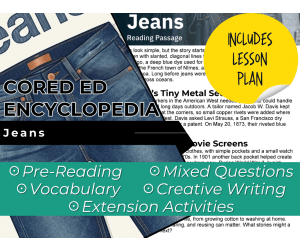
Jeans Reading Comprehension Passage - Cored Ed Encyclopedia
ELA, Reading Comprehension, Reading, Language Development, Vocabulary, History, Social Studies, Technology, Science, Pre-Reading, Grade 2, 3, 4, 5, Worksheets & Printables, Worksheets, Teacher Tools, Centers, Activities, Writing Prompts, Assessments, Quizzes and Tests, Quizzes, Lesson Plans
This Jeans reading comprehension with lesson plan includes: Visualization (on the front cover) Start your lesson by taking a minute to think and share something about the topic. Read the script aloud (slowly), perhaps prepare some music or sound effects. Student close their eyes and let their imaginations wander. Students open their eyes, read the question aloud and give them a few minutes to complete. Ask a few students to share or keep answers until the end to compare with what they learn in the passage. Quick pause—thousands of Cored Education products are included with your TeachSimple membership. Download links and encyclopedia index available here. Pre-Reading Trivia Students will write down one thing they already know about the subject and then read five more facts and discuss. These facts are fun, and the students will enjoy learning about the subject before reading more. Give 1 minute for students to write what they already know (no pressure—best guess is fine). Read the five facts together. After each fact, do ask a student for their opinion, was it surprising? Set a purpose by asking students to highlight/underline one fact they want to learn more about during the reading. Reading Passage The text is a high-interest reading passage with set paragraphs, roughly three to four paragraphs long. It contains a variety of themes about the topic, anywhere from history to technology. The passage is between 250 and 350 words in length. First, ask students to look at the headings and see what they’ll learn about today. What do they know about the topic/heading? First read options: Teacher read-aloud (best for support). Partner reading (paragraph by paragraph). While reading, students underline important details, and vocabulary words they think may come up in the questions section. Mixed Questions The first question page contains four multiple-choice questions, each with a choice of four answers, and three written response questions that require a sentence or two from the student. Students complete the mcqs first independently, then review quickly as a class. For the 3 written responses, try to get students giving the answer with some form of evidence: “I think ___ because the text says ___.” If students get stuck, send them back to check the passage. Vocabulary Questions Practice seven key words from the text in this section across two activities. First section is scrambled words where students will unscramble three words given a clue for each. The second section is a word to meaning matching activity. Before starting, have some students read out words they underlined in the passage. Ask students to say the word and read aloud the sentence(s) around each word. Ask students to do scrambled words and the matching exercise in pairs then go through answers as a class. For the scrambled spelling task, get four pairs to come up to the board and write the words for extra practice with the other student reading out the clue. For the matching task, prompt students to give full sentences: “I matched ___ with ___ because ___.” Creative Writing In this question, the student will be required to write a five to eight sentence paragraph on a question related to the topic. Before starting, ask students write down 3 key ideas they are going to include in their piece. Ask students for ideas to share around the class to help those struggling. Pro writing expectations: 5–8 sentences At least 2 facts or details from the passage At least 2 vocabulary words from the previous page Students read their paragraphs while classmates listen for facts and vocabulary words. Extension Activities This page is optional for fast finishers or to take home. There are several activities, each one requiring a different skill. Do some, do none, do all, completely optional - but you will feel reassured knowing every possibility is planned for. Includes summary writting question and additional facts. Answer Key There are answers for the multiple-choice questions, written response questions have sample answers, vocabulary answers and if there is a summary question then a sample summary will be provided as well. Lesson Plan Included Customized lesson plan for this lesson is included. Lesson Snapshot Title: Jeans Genre: Nonfiction (informational text) Subject: Reading (Informational Text) / Social Studies Primary Topic: Denim, rivets, and how jeans changed over time Estimated Guided Reading Level (A–Z): R What This Lesson Teaches Best Explains what makes denim strong (slanted, diagonal woven lines) and connects denim’s blue color to indigo dye. Builds word/history knowledge by linking “denim” to Nîmes and “jeans” to the port city of Genoa. Shows an invention problem-and-solution story: pockets ripped, so copper rivets were added, leading to a patented idea. Traces how jeans spread from work clothes to popular culture (mines/farms → World War II → 1950s movie stars). Introduces environmental impact through a concrete detail: making and caring for jeans can use thousands of liters of water, so mending/sharing/reusing matters. Learning Goals Identify the main idea and key details about how jeans were made to be tough. Explain why denim is strong and how indigo connects to the story of jeans. Describe the problem Jacob W. Davis noticed and how rivets solved it. Describe at least two ways jeans changed over time, using details and dates from the passage. Explain why mending, sharing, and reusing jeans can matter, based on the passage. Key Vocabulary From the Text denim — strong cloth with slanted, diagonal woven lines. indigo — a deep blue dye used to color denim. rivets — tiny metal pieces that strengthen places that rip. patent — legal protection for a new invention idea. synthetic — made by people, not from nature. FULL CATALOG OF DOWNLOAD LINKS AND ENCYCLOPEDIA INDEX HERE
Author Cored Education
Rating
Tags Vocabulary, Reading Comprehension, Reading Passages, Lesson Plans, Ela Lesson Plans, Reading Comprehension Lesson Plans, Pre-reading, Social Studies Lesson Plans, History, Technology

Fill in the Blanks Practice Questions - Vocabulary Grade 3-4 (Slides)
ELA, Language Development, ESL, Common Core, Resources for Teachers, Vocabulary, Grade 3, 4, Quizzes and Tests, Teacher Tools, Tests, Assessments, Activities, Presentations
Fill in the Blanks Vocabulary Practice MCQS ELA MCQS Overview: In this series of lessons, students will embark on an engaging journey to explore the grammar skills that make our language vibrant and expressive. These lessons are crafted to help students identify, comprehend, and effectively apply language arts skills in both writing and speech. Accompanied by free supplementary materials available for all topics, each lesson builds on the previous one, offering a balanced mix of direct instruction, interactive group activities, and independent practice. Through fun and creative tasks, students will learn to recognize grammar within sentences, understand their function, and use them to enrich their own writing and speech. Fill in the Blanks Overview: Includes: Adjectives in Sentences Nouns in Sentences Verbs in Sentences Frequently Mistaken Words Slides Version This is the Slides editable and interactive version. There is a fillable answer sheet at the end. This download is available in GOOGLE Docs, GOOGLE Forms, GOOGLE Slides. PDF, PPT, WORD, check the links below for more details. FULL CATALOG OF DOWNLOAD LINKS HERE Grade 3/4 Links: Adjectives Google Docs Google Forms Google Slides PDF PPT Word Free Supplementary Materials Pack Adverbs Google Docs Google Forms Google Slides PDF PPT Word Free Supplementary Materials Pack Conjunctions Google Docs Google Forms Google Slides PDF PPT Word Free Supplementary Materials Pack Nouns Google Docs Google Forms Google Slides PDF PPT Word Free Supplementary Materials Pack Pronouns Google Docs Google Forms Google Slides PDF PPT Word Free Supplementary Materials Pack Verbs Google Docs Google Forms Google Slides PDF PPT Word Free Supplementary Materials Pack Sentence Structure Google Docs Google Forms Google Slides PDF PPT Word Free Supplementary Materials Pack Present Tense Google Docs Google Forms Google Slides PDF PPT Word Free Supplementary Materials Pack Past Tense Google Docs Google Forms Google Slides PDF PPT Word Free Supplementary Materials Pack Future Tense Google Docs Google Forms Google Slides PDF PPT Word Free Supplementary Materials Pack Context Clues Google Docs Google Forms Google Slides PDF PPT Word Free Supplementary Materials Pack Defining Words Google Docs Google Forms Google Slides PDF PPT Word Free Supplementary Materials Pack Fill the Blanks Google Docs Google Forms Google Slides PDF PPT Word Free Supplementary Materials Pack Homophones Google Docs Google Forms Google Slides PDF PPT Word Free Supplementary Materials Pack Synonyms Google Docs Google Forms Google Slides PDF PPT Word Free Supplementary Materials Pack ELA Review Questions Overview Questions have three answer choices. There are a handful of pictures on each test for aesthetic purposes, as well as a review sheet covering most of the topics covered in the product. Introduction or Example Sheet Each topic will include an introduction or example sheet to go through first with your students. Full Answer Keys Full answer keys and sample responses are provided so no matter how busy you are, you know you're covered! In the Supplementary Pack Interactive Ice Breakers: Fun, hands-on activities that get students thinking about adjectives right from the start. Guided Practice: Teacher-led exercises that reinforce the day’s lesson, ensuring students can confidently identify and use adjectives. Group and Partner Tasks: Collaborative activities that allow students to work together to solve problems, categorize adjectives, and create descriptive sentences. Independent Worksheets: Structured worksheets that provide individual practice and help solidify understanding of key concepts. Exit Tasks: Quick, reflective activities at the end of each lesson that assess understanding and encourage students to apply what they’ve learned. For similar downloads and other frees, do check out Cored Group on TeachSimple.
Author Cored Education
Tags Elementary, Answers, Ccss, Common Core, Tests, Test Prep, Assessment, Grade 3, Grade 4, Vocabulary

Fill in the Blanks Sample - Vocabulary Grade 3-4 (Slides)
ELA, Language Development, ESL, Common Core, Resources for Teachers, Vocabulary, Grade 3, 4, Quizzes and Tests, Teacher Tools, Tests, Assessments, Activities, Presentations
Fill in the Blanks Sample Lesson ELA MCQS Overview: In this series of lessons, students will embark on an engaging journey to explore the grammar skills that make our language vibrant and expressive. These lessons are crafted to help students identify, comprehend, and effectively apply language arts skills in both writing and speech. Accompanied by free supplementary materials available for all topics, each lesson builds on the previous one, offering a balanced mix of direct instruction, interactive group activities, and independent practice. Through fun and creative tasks, students will learn to recognize grammar within sentences, understand their function, and use them to enrich their own writing and speech. Fill in the Blanks Overview: Includes: Adjectives in Sentences Nouns in Sentences Verbs in Sentences Frequently Mistaken Words Slides Version This is the Slides editable and interactive version. There is a fillable answer sheet at the end. This download is available in GOOGLE Docs, GOOGLE Forms, GOOGLE Slides. PDF, PPT, WORD, check the links below for more details. FULL CATALOG OF DOWNLOAD LINKS HERE Grade 3/4 Links: Adjectives Google Docs Google Forms Google Slides PDF PPT Word Free Supplementary Materials Pack Adverbs Google Docs Google Forms Google Slides PDF PPT Word Free Supplementary Materials Pack Conjunctions Google Docs Google Forms Google Slides PDF PPT Word Free Supplementary Materials Pack Nouns Google Docs Google Forms Google Slides PDF PPT Word Free Supplementary Materials Pack Pronouns Google Docs Google Forms Google Slides PDF PPT Word Free Supplementary Materials Pack Verbs Google Docs Google Forms Google Slides PDF PPT Word Free Supplementary Materials Pack Sentence Structure Google Docs Google Forms Google Slides PDF PPT Word Free Supplementary Materials Pack Present Tense Google Docs Google Forms Google Slides PDF PPT Word Free Supplementary Materials Pack Past Tense Google Docs Google Forms Google Slides PDF PPT Word Free Supplementary Materials Pack Future Tense Google Docs Google Forms Google Slides PDF PPT Word Free Supplementary Materials Pack Context Clues Google Docs Google Forms Google Slides PDF PPT Word Free Supplementary Materials Pack Defining Words Google Docs Google Forms Google Slides PDF PPT Word Free Supplementary Materials Pack Fill the Blanks Google Docs Google Forms Google Slides PDF PPT Word Free Supplementary Materials Pack Homophones Google Docs Google Forms Google Slides PDF PPT Word Free Supplementary Materials Pack Synonyms Google Docs Google Forms Google Slides PDF PPT Word Free Supplementary Materials Pack ELA Review Questions Overview Questions have three answer choices. There are a handful of pictures on each test for aesthetic purposes, as well as a review sheet covering most of the topics covered in the product. Introduction or Example Sheet Each topic will include an introduction or example sheet to go through first with your students. Full Answer Keys Full answer keys and sample responses are provided so no matter how busy you are, you know you're covered! In the Supplementary Pack Interactive Ice Breakers: Fun, hands-on activities that get students thinking about adjectives right from the start. Guided Practice: Teacher-led exercises that reinforce the day’s lesson, ensuring students can confidently identify and use adjectives. Group and Partner Tasks: Collaborative activities that allow students to work together to solve problems, categorize adjectives, and create descriptive sentences. Independent Worksheets: Structured worksheets that provide individual practice and help solidify understanding of key concepts. Exit Tasks: Quick, reflective activities at the end of each lesson that assess understanding and encourage students to apply what they’ve learned. For similar downloads and other frees, do check out Cored Group on TeachSimple.
Author Cored Education
Tags Elementary, Answers, Ccss, Common Core, Tests, Test Prep, Assessment, Grade 3, Grade 4, Vocabulary
Self-Guided Logic Activities #3: Classification and Measurement:
, Grade 4, 5, 6, 7, 8, Activities
Self-Guided Logic Activities #3: Classification and Measurement This resource serves as a comprehensive teaching tool that encourages students in Grades 4-8 to delve deeper into critical-thinking exercises. It includes four meticulous units guaranteed to challenge and stimulate intellectual curiosity. Activity Features: Animal classification tasks Time measurement issues resolution Determining the longitude and latitude of global cities Suitable for both individual work and collaborative learning among small groups, these activities cater to diverse learning styles. Educators seek significant engagement levels from learners while enhancing their analytical reasoning abilities. Thus, these self-guide logic activities serve well in both traditional classroom settings or home-based instruction, providing instructions that are easy-to-follow while stimulating minds through challenges that encourage further thinking. The Innovative Student Self-Check Section: This section follows each unit providing correct responses along with thought-provoking ideas intended not just for answer verification. Instead, it nurtures an autonomous learning environment aimed at fostering independent thinkers capable of assessing their own performance. This digital product comes formatted as a PDF containing 14 ready-to-print pages - ideal for immediate class implementation or preparation for various school terms. The packet is designed well enough to function as classwork challenges or homework assignments requiring minimal supervision from instructors but maximizing opportunities for fostering logical reasoning skills amongst learners. In essence, Self-Guided Logic Activities #3: Classification and Measurement extend beyond being merely an educational tool—it covers two vital parts in today's education strategy—encouraging critical thinking skills among its users while ensuring practicality on the part of hands-on educators, guaranteeing quality education despite our ever-changing circumstances.
Author Classroom Complete Press
Tags Logic Activities, Classification, Measurement, Self-guided, Critical Thinking

Shapes Crosswords (PDF)
ELA, Language Development, Resources for Teachers, Vocabulary, Spelling, ESL, Shapes, Early Math, Math, Grade 2, 3, 4, 5, Worksheets & Printables, Worksheets, Teacher Tools, Crosswords Puzzles, Centers, Activities
Crossword Series This crossword series is designed for students in grades 2–5. Each set of crosswords is built around a clear vocabulary theme, allowing students to strengthen their word recognition, build subject-based knowledge, and reinforce early literacy and thinking skills. Each topic includes six crossword sets , and each set features the following consistent structure: 1. 8 vocabulary clues 2. Crossword puzzle 3. Answer key 4. 1 Did You Know fact related to the set These crosswords are designed to be student-friendly, classroom-ready, and easily integrated into thematic units, seasonal learning, morning work, or independent literacy stations. Shapes Crosswords Word List 1. Basic Shapes Circle, Square, Triangle, Rectangle, Oval, Star, Heart, Diamond 2. 3D Shapes Cube, Sphere, Cylinder, Cone, Pyramid, Rectangular prism, Hemisphere, Torus 3. Shapes in Everyday Life Wheel, Window, Stop sign, Ball, Pizza slice, Dice, Ice cream cone, Tabletop 4. Describing Shapes Round, Pointy, Flat, Curved, Straight, Symmetrical, Wide, Narrow 5. Fun & Unique Shapes Hexagon, Pentagon, Octagon, Crescent, Trapezoid, Parallelogram, Spiral, Arrow 6. Jobs & Tools Using Shapes Architect, Artist, Engineer, Designer, Carpenter, Mapmaker, Mathematician, Puzzle maker PDF Version Other versions will appear here when available. Follow the store for the lastest on new products. How to Use This Crossword These crosswords are ideal for whole-class work, small groups, literacy centers, or take-home activities. Use one set per day, or spread them across a week or month depending on your curriculum needs. Each clue has been crafted to align with the reading level of grades 2–5, with support for both decoding and meaning. The Did You Know? facts offer additional extension opportunities for writing, drawing, or display work. Whether you're reinforcing vocabulary, exploring a seasonal topic, or adding variety to your literacy block, these crosswords provide a fun, flexible, and focused way to boost early literacy in an engaging format. More Shapes Themed Products Nothing yet, but follow for the latest on new products. FULL CATALOG OF DOWNLOAD LINKS HERE Addition PDF Animals PDF Around the Home PDF Birthday PDF Candy PDF Christmas PDF Cinco de Mayo PDF Clothes PDF Colors PDF Days and Months PDF Division PDF Earth Day PDF Easter PDF Easy Crosswords PDF Fall PDF Father's Day PDF Food PDF Geography (Set 1) PDF Geography (Set 2) PDF Geography (Set 3) PDF Graduation PDF Health PDF History (Set 1) PDF History (Set 2) PDF History (Set 3) PDF Human Body PDF Kindness PDF Life Skills PDF Mother's Day PDF Multiplication PDF Science Crosswords (Set 1) PDF Science Crosswords (Set 2) PDF Science Crosswords (Set 3) PDF Shapes PDF Social Skills PDF Spring PDF Sports PDF St. Patrick's Day PDF Subtraction PDF Summer PDF Thanksgiving PDF Transport PDF Valentine's Day PDF Winter PDF Crosswords in Depth Structure Each crossword clue is written in simplified language to suit early readers, and follows a strict number-and-clue format (e.g., 1.A shape with four sides ). Students complete each puzzle using the themed vocabulary provided, helping to build both content knowledge and spelling confidence. Each completed set includes: A questions section with clearly formatted clues An answers section to support teacher checking or independent correction A Did You Know? fact tied to the topic (one per set) to add curiosity and cross-curricular value Themes Included The crosswords cover a wide variety of engaging, age-appropriate themes such as: Seasons & Holidays (e.g., Winter, Easter, Valentine’s Day) Math Concepts (e.g., Addition, Subtraction, Multiplication, Division) Everyday Topics (e.g., School, Colors, Animals, Weather) Special Units (e.g., Health, Earth Day, Sports, Graduation, Kindness) Each theme is carefully selected to reflect the experiences and interests of young learners, while reinforcing vocabulary and comprehension. For similar downloads and other frees, do check out Cored Group on TeachSimple.
Author Cored Education
Rating
Tags Vocabulary, Spelling, Crosswords, Basic Shapes, 3D Shapes, Shapes, Shape Crosswords, Math, Math Crosswords, Describing Shapes

Close Reading Comprehension Practice Papers (The Computer Game) 9-12 years
ELA, Reading, Grade 4, 5, 6, Games, Activities
Close Reading Comprehension Practice Papers (The Computer Game) for 9-12 years A vibrant series of practice sheets targeting comprehension testing for children aged 9 to 12, spans across 48 meticulously prepared pages. This high-quality teaching resource serves as a versatile tool to enhance children's reading comprehension skills. Usefulness in Educational Settings This educational resource is an exceptional asset to public school teachers and homeschool educators teaching Language Arts. The product primarily caters to students in Grades 4 through Grade 6. It is well suited for incorporation into full class activities, smaller study groups, individual reading sessions or as homework take-away tasks. Main Features of the Practice Papers Fosters Identification of Critical Details: This key emphasis helps children master extracting crucial details from the text. Inferencing Skills Development: The resources aid with this area by enabling students make predictions using evidence from the passages directly. Vocabulary Expansion: The Comprehension Practice Papers are an excellent means to expand your child's vocabulary base. Distinguishing Aspect of Close Reading Comprehension Practice Papers (The Computer Game) This program sets itself apart due its striking resemblance with actual examination texts - making it significantly useful when preparing students for formal assessments . Accompanied with these practice papers are suggested answers – which serve as key reference points when evaluating a student’s performance or in guiding them towards accurate responses. Purchase your copy today!. In Conclusion...P>Selecting Close Reading Comprehension Practice Papers yields worthwhile benefits among various educational tools due to their broad coverage of key reading comprehension components. Furthermore, it's adaptability across various teaching formats is commendable. And lastly, they come in manageable PDF files for easy accessibility anytime for educators .
Author Guinea Pig Education
Tags Close Reading, Comprehension Practice, Vocabulary Development, Inferencing Skills, Exam Preparation
My First Phonics Adventure Workbook 109 Fun Lessons to Master Letters
ELA, Language Development, Literature, Reading, Writing, Phonics, Children’s Literature, Reading Comprehension, Strategies, Creative Writing, Kindergarten, Preschool, Grade 1, 2, 3, 4, 5, Projects, Activities, Teacher Tools, Assessments, Lesson Plans, Presentations, Workbooks, Worksheets & Printables, Literacy Readers, Graphic Organizers
Discover the ultimate preschool and kindergarten phonics workbook called the "My First Phonics Adventure Workbook: 109 fun lessons helping children to master letters, sounds and beginning reading!" This 369-page resource for early literacy education presents a sequentially organized curriculum of phonics skills (i.e., identification of uppercase/lowercase letters; pronunciation of short and long vowel sounds; recognition of CVC words; consonant blend sounds; recognition of diagraph sounds (e.g., "sh," "ch," "th," "wh"); pronunciation of r-controlled vowel sounds; recognition and pronunciation of diphthongs; identification of double consonant letters; recognition and use of sight words; simple sentence/story reading). Written in an easy-to-read and engaging style with many examples of the different types of words for blending activities and everyday application of reading skills, this learn to read workbook provides children with a strong phonemic awareness base and confidence in decoding words when reading. It is great for homeschoolers, teachers, or parents who want to use a comprehensive first-time reader program starting with A-Z letters, and ending with reading comprehension of a whole story; no prior knowledge required; ages 3-6. Improve child reading fluency from an all-inclusive phonics adventure that will support your preschool, Pre-K, or kindergarten child's growth towards success as a reader. Start today by downloading and becoming part of your child's journey toward unlocking the beauty of reading! Why Parents/Teachers Love: Systematic and Comprehensive Coverage — 109 accumulation chapters lead children from single letters to fluent reading of stories — no holes, no additional books needed. Creates True Confidence — Simple explanations with rules of word families and blending activities allow children to independently decode words they have not seen before, providing less frustration to children. Parent and Teacher Friendly — Ready-to-use lessons with examples; works well as a homeschooling, center, or daily practice resource. Proven Early Literacy Base — Phonics standard based and result driven methods that predict long-term success of reading. Affordable and All-in-One Resource – One download replaces more than one costly workbook and offers high quality profession instruction. Target Audience: This workbook is designed for children ages 3–7 in preschool (Pre-K) or early grade 1. Pre-k – Ideal for teaching children to recognize the letters of the alphabet, the sounds they make, and the beginning of their ability to read (Chapters 1-33). Kindergarten – This workbook provides a variety of activities that correlate to the core objectives found in the K-12 English language arts curriculum such as: recognizing and reading short/long vowel sounds, identifying consonant blends/digraphs, and writing simple sentences (Chapters 34-102). Early Grade 1 – This workbook can be used to reinforce and build on skills associated with r-controlled vowels, diphthongs, sight words, and text comprehension (Chapters 103-109). This workbook’s skills are foundational and will assist children who are developing as readers; however, the skills may be too easy for students in 2nd grade and above. Copyright Notice / Terms and Conditions: This Book is owned by Syed Hammad Rizvi. The Book is intended for personal use and only in one classroom. It may not be modified or sold by you, nor may it be distributed over the internet for others to download. If you would like to share the Book with your coworkers, please purchase more licenses for the Book on Teachsimple. Thank you for respecting these terms of use. Syed Hammad Rizvi is pleased to provide you with this product.
Author Creative Book Store
Rating
Tags Phonics, PhonicsFun, PhonicsForKids, PhonicsActivities, EarlyLiteracy, EarlyReading, LearnToRead, ReadingSkills, Literacy, ScienceOfReading

Deserts Reading Comprehension Passage - Cored Ed Encyclopedia
ELA, Language Development, Reading Comprehension, Reading, Life Sciences, Science, Earth and Environmental Sciences, Technology, Geography, Social Studies, Grade 2, 3, 4, 5, Worksheets & Printables, Worksheets, Teacher Tools, Centers, Activities, Writing Prompts, Assessments, Quizzes and Tests, Quizzes, Lesson Plans
This deserts reading comprehension with lesson plan includes: Visualization (on the front cover) Start your lesson by taking a minute to think and share something about the topic. Read the script aloud (slowly), perhaps prepare some music or sound effects. Student close their eyes and let their imaginations wander. Students open their eyes, read the question aloud and give them a few minutes to complete. Ask a few students to share or keep answers until the end to compare with what they learn in the passage. COMPANION VIDEO NOW AVAILABLE (EMBEDDED AFTER PREVIEW PICTURES IN PRODUCT DESCRIPTION) Quick pause—thousands of Cored Education products are included with your TeachSimple membership. Download links and encyclopedia index available here. Pre-Reading Trivia Students will write down one thing they already know about the subject and then read five more facts and discuss. These facts are fun, and the students will enjoy learning about the subject before reading more. Give 1 minute for students to write what they already know (no pressure—best guess is fine). Read the five facts together. After each fact, do ask a student for their opinion, was it surprising? Set a purpose by asking students to highlight/underline one fact they want to learn more about during the reading. Reading Passage The text is a high-interest reading passage with set paragraphs, roughly three to four paragraphs long. It contains a variety of themes about the topic, anywhere from history to technology. The passage is between 250 and 350 words in length. First, ask students to look at the headings and see what they’ll learn about today. What do they know about the topic/heading? First read options: Teacher read-aloud (best for support). Partner reading (paragraph by paragraph). While reading, students underline important details, and vocabulary words they think may come up in the questions section. Mixed Questions The first question page contains four multiple-choice questions, each with a choice of four answers, and three written response questions that require a sentence or two from the student. Students complete the mcqs first independently, then review quickly as a class. For the 3 written responses, try to get students giving the answer with some form of evidence: “I think ___ because the text says ___.” If students get stuck, send them back to check the passage. Vocabulary Questions Practice seven key words from the text in this section across two activities. First section is scrambled words where students will unscramble three words given a clue for each. The second section is a word to meaning matching activity. Before starting, have some students read out words they underlined in the passage. Ask students to say the word and read aloud the sentence(s) around each word. Ask students to do scrambled words and the matching exercise in pairs then go through answers as a class. For the scrambled spelling task, get four pairs to come up to the board and write the words for extra practice with the other student reading out the clue. For the matching task, prompt students to give full sentences: “I matched ___ with ___ because ___.” Creative Writing In this question, the student will be required to write a five to eight sentence paragraph on a question related to the topic. Before starting, ask students write down 3 key ideas they are going to include in their piece. Ask students for ideas to share around the class to help those struggling. Pro writing expectations: 5–8 sentences At least 2 facts or details from the passage At least 2 vocabulary words from the previous page Students read their paragraphs while classmates listen for facts and vocabulary words. Extension Activities This page is optional for fast finishers or to take home. There are several activities, each one requiring a different skill. Do some, do none, do all, completely optional - but you will feel reassured knowing every possibility is planned for. Includes summary writting question and additional facts. Answer Key There are answers for the multiple-choice questions, written response questions have sample answers, vocabulary answers and if there is a summary question then a sample summary will be provided as well. Lesson Plan Included Customized lesson plan for this lesson is included. Lesson Snapshot Title: Deserts Genre: Nonfiction (informational text with headings) Subject: Earth Science / Life Science / Reading (Informational Text) Primary Topic: Deserts are defined by dryness and survival tricks Estimated Guided Reading Level (A–Z): P What This Lesson Teaches Best Clarifies the key definition: a desert is defined by dryness , not by sand. Explains desert rainfall patterns (often under about 10 inches/25 centimeters per year, sometimes arriving in a quick burst). Builds understanding that deserts can be hot or cold, including Antarctica as the biggest desert on Earth in the passage. Highlights plant and animal adaptations (cacti storing water; plants keeping/curling leaves; rodents getting moisture from seeds; animals hiding in burrows by day and moving at night). Introduces how scientists study deserts today (weather stations, soil samples, satellite pictures) and explains “rain shadow.” Learning Goals Students will explain how the passage defines a desert. Students will describe what the passage says about how much rain many deserts get in a year. Students will identify at least two survival tricks of desert plants from the text. Students will identify at least two survival tricks of desert animals from the text. Students will explain what a “rain shadow” is, using the passage’s description. Students will describe ways deserts are studied today, based on the text. Key Vocabulary From the Text dryness — having very little water or rain. sparse — not many; spread out. burrows — holes in the ground where animals hide. satellite — something in space that takes pictures from above. dunes — hills of sand shaped by wind. FULL CATALOG OF DOWNLOAD LINKS AND ENCYCLOPEDIA INDEX HERE
Author Cored Education
Rating
Tags Vocabulary, Reading Comprehension, Reading Passages, Lesson Plans, Ela Lesson Plans, Reading Comprehension Lesson Plans, Pre-reading, Science Lesson Plans, Earth Science, Geography

101 Science Activities for Emerging Einsteins
Special Resources, Social Skills, Grade 1, 2, 3, 4, Activities
101 Science Activities for Emerging Einsteins: A Wonderful Resource Embrace this invaluable resource for educators who aspire to invoke the scientist within students - "101 Science Activities for Emerging Einsteins". This encyclopedic guide offers uncomplicated and enjoyable activities that perceptively stir children's curiosity about the mysteries of world mechanics. The teaching material breaks away from conventional textbook learning, employing day-to-day experiences as specimens illustrating scientific principles. It effectively transforms education into an exhilarating exploration instead of an overwhelming chore. Coverage and Practicality The guide touches upon vital science branches like biology, physics, chemistry, geology etc., assuring exposure to a plethora of scientific concepts while concurrently sharpening their social skills. This meticulously organized 112-page ready-to-print PDF is specifically designed by Tracey Schofield with primary grade students in mind - Grade 1 through Grade 4. The systematic sequence eases its inclusion into lesson plans sans prepping stress. Potential Applications & Benefits Teachers could incorporate these tasks in a whole group setting during everyday lessons or could subdivide into smaller groups prompting interaction around experimental observations stemming from these activities. Assigning these intriguing challenges individually would prevent homework from turning drab and tiresome. Simplifying convoluted scientific theories through practical composite exercises not only clears understanding but contributes towards fostering early analytical thinking as well. Use of regular analogies ensures concepts become relatable ultimately upping retention markedly. Inspiring open-ended science exploration can potentially sow seeds for future Einsteins', nourishing lifelong affection towards science among primary school novices! Let the ethos of 'learning by doing' come alive with the 101 Science Activities for Emerging Einsteins! Joyfully untangle the enigmas that baffle us alongside your enthusiastic little learners!
Author Classroom Complete Press
Tags Science Activities, Yeast Experiment, Einsteins, Scientist Activity, I Spy

Homophones Practice Questions - Vocabulary Grade 3-4 (PPT)
ELA, Language Development, ESL, Common Core, Resources for Teachers, Vocabulary, Grade 3, 4, Quizzes and Tests, Teacher Tools, Tests, Assessments, Presentations, Activities
Homophones Vocabulary Practice MCQS ELA MCQS Overview: In this series of lessons, students will embark on an engaging journey to explore the grammar skills that make our language vibrant and expressive. These lessons are crafted to help students identify, comprehend, and effectively apply language arts skills in both writing and speech. Accompanied by free supplementary materials available for all topics, each lesson builds on the previous one, offering a balanced mix of direct instruction, interactive group activities, and independent practice. Through fun and creative tasks, students will learn to recognize grammar within sentences, understand their function, and use them to enrich their own writing and speech. Homophones Overview: Homophones include: sent, scent, cent for, four, fore wear, where, were raise, rays, raze vane, vein, vain they're, their, there two, too, to, than, then, van PPT Version This is the PPT editable and interactive version. There is a fillable answer sheet at the end. This download is available in GOOGLE Docs, GOOGLE Forms, GOOGLE Slides. PDF, PPT, WORD, check the links below for more details. FULL CATALOG OF DOWNLOAD LINKS HERE Grade 3/4 Links: Adjectives Google Docs Google Forms Google Slides PDF PPT Word Free Supplementary Materials Pack Adverbs Google Docs Google Forms Google Slides PDF PPT Word Free Supplementary Materials Pack Conjunctions Google Docs Google Forms Google Slides PDF PPT Word Free Supplementary Materials Pack Nouns Google Docs Google Forms Google Slides PDF PPT Word Free Supplementary Materials Pack Pronouns Google Docs Google Forms Google Slides PDF PPT Word Free Supplementary Materials Pack Verbs Google Docs Google Forms Google Slides PDF PPT Word Free Supplementary Materials Pack Sentence Structure Google Docs Google Forms Google Slides PDF PPT Word Free Supplementary Materials Pack Present Tense Google Docs Google Forms Google Slides PDF PPT Word Free Supplementary Materials Pack Past Tense Google Docs Google Forms Google Slides PDF PPT Word Free Supplementary Materials Pack Future Tense Google Docs Google Forms Google Slides PDF PPT Word Free Supplementary Materials Pack Context Clues Google Docs Google Forms Google Slides PDF PPT Word Free Supplementary Materials Pack Defining Words Google Docs Google Forms Google Slides PDF PPT Word Free Supplementary Materials Pack Fill the Blanks Google Docs Google Forms Google Slides PDF PPT Word Free Supplementary Materials Pack Homophones Google Docs Google Forms Google Slides PDF PPT Word Free Supplementary Materials Pack Synonyms Google Docs Google Forms Google Slides PDF PPT Word Free Supplementary Materials Pack ELA Review Questions Overview Questions have three answer choices. There are a handful of pictures on each test for aesthetic purposes, as well as a review sheet covering most of the topics covered in the product. Introduction or Example Sheet Each topic will include an introduction or example sheet to go through first with your students. Full Answer Keys Full answer keys and sample responses are provided so no matter how busy you are, you know you're covered! In the Supplementary Pack Interactive Ice Breakers: Fun, hands-on activities that get students thinking about adjectives right from the start. Guided Practice: Teacher-led exercises that reinforce the day’s lesson, ensuring students can confidently identify and use adjectives. Group and Partner Tasks: Collaborative activities that allow students to work together to solve problems, categorize adjectives, and create descriptive sentences. Independent Worksheets: Structured worksheets that provide individual practice and help solidify understanding of key concepts. Exit Tasks: Quick, reflective activities at the end of each lesson that assess understanding and encourage students to apply what they’ve learned. For similar downloads and other frees, do check out Cored Group on TeachSimple.
Author Cored Education
Tags Elementary, Answers, Ccss, Common Core, Tests, Test Prep, Assessment, Grade 3, Grade 4, Vocabulary
Flutes Reading Comprehension Passage - Cored Ed Encyclopedia
ELA, Reading Comprehension, Reading, Science, Technology, Social Studies, History, Music, Creative Arts, Physics, Grade 2, 3, 4, 5, Worksheets & Printables, Worksheets, Teacher Tools, Centers, Activities, Writing Prompts, Assessments, Quizzes and Tests, Quizzes, Lesson Plans
This flutes reading comprehension with lesson plan includes: Visualization (on the front cover) Start your lesson by taking a minute to think and share something about the topic. Read the script aloud (slowly), perhaps prepare some music or sound effects. Student close their eyes and let their imaginations wander. Students open their eyes, read the question aloud and give them a few minutes to complete. Ask a few students to share or keep answers until the end to compare with what they learn in the passage. Quick pause—thousands of Cored Education products are included with your TeachSimple membership. Download links and encyclopedia index available here. Pre-Reading Trivia Students will write down one thing they already know about the subject and then read five more facts and discuss. These facts are fun, and the students will enjoy learning about the subject before reading more. Give 1 minute for students to write what they already know (no pressure—best guess is fine). Read the five facts together. After each fact, do ask a student for their opinion, was it surprising? Set a purpose by asking students to highlight/underline one fact they want to learn more about during the reading. Reading Passage The text is a high-interest reading passage with set paragraphs, roughly three to four paragraphs long. It contains a variety of themes about the topic, anywhere from history to technology. The passage is between 250 and 350 words in length. First, ask students to look at the headings and see what they’ll learn about today. What do they know about the topic/heading? First read options: Teacher read-aloud (best for support). Partner reading (paragraph by paragraph). While reading, students underline important details, and vocabulary words they think may come up in the questions section. Mixed Questions The first question page contains four multiple-choice questions, each with a choice of four answers, and three written response questions that require a sentence or two from the student. Students complete the mcqs first independently, then review quickly as a class. For the 3 written responses, try to get students giving the answer with some form of evidence: “I think ___ because the text says ___.” If students get stuck, send them back to check the passage. Vocabulary Questions Practice seven key words from the text in this section across two activities. First section is scrambled words where students will unscramble three words given a clue for each. The second section is a word to meaning matching activity. Before starting, have some students read out words they underlined in the passage. Ask students to say the word and read aloud the sentence(s) around each word. Ask students to do scrambled words and the matching exercise in pairs then go through answers as a class. For the scrambled spelling task, get four pairs to come up to the board and write the words for extra practice with the other student reading out the clue. For the matching task, prompt students to give full sentences: “I matched ___ with ___ because ___.” Creative Writing In this question, the student will be required to write a five to eight sentence paragraph on a question related to the topic. Before starting, ask students write down 3 key ideas they are going to include in their piece. Ask students for ideas to share around the class to help those struggling. Pro writing expectations: 5–8 sentences At least 2 facts or details from the passage At least 2 vocabulary words from the previous page Students read their paragraphs while classmates listen for facts and vocabulary words. Extension Activities This page is optional for fast finishers or to take home. There are several activities, each one requiring a different skill. Do some, do none, do all, completely optional - but you will feel reassured knowing every possibility is planned for. Includes summary writting question and additional facts. Answer Key There are answers for the multiple-choice questions, written response questions have sample answers, vocabulary answers and if there is a summary question then a sample summary will be provided as well. Lesson Plan Included Customized lesson plan for this lesson is included. Lesson Snapshot Title: Flutes Genre: Nonfiction (Informational Text) Subject: Music / Science (Sound) / Reading (Informational Text) Primary Topic: How flutes make sound and changed over time Estimated Guided Reading Level (A–Z): Q What This Lesson Teaches Best How very early flutes were made (carved from bird bone and mammoth ivory ) and why these finds matter as early musical instruments. How flutes make a clear note: a thin jet of air across an opening creates a wobbling column of air inside the tube. Cause and effect in instruments: covering or uncovering holes changes the tube’s length, so the pitch goes up or down. How design evolved in Europe, including added holes and keys and Theobald Boehm’s 1800s redesign with tone holes and ring keys . Key features of a modern concert flute (often metal, about 26 inches long, three sections, padded keys, range of a little more than three octaves ). Learning Goals Students will describe what materials some ancient flutes were carved from and how old they were said to be. Students will explain how a flute makes a clear note using the idea of a “column of air” in a tube. Students will explain how covering or uncovering holes changes pitch by changing the tube’s length. Students will summarize how the sideways flute changed over time in Europe, including added holes and keys. Students will identify changes Theobald Boehm made to flute design and how ring keys helped players. Students will describe at least two details of today’s concert flute mentioned in the passage. Key Vocabulary From the Text mammoth — an ancient animal related to today’s elephants. ivory — hard material used for carving. column — a long “tube” shape of air inside. pitch — how high or low a note sounds. octaves — sets of notes higher or lower. FULL CATALOG OF DOWNLOAD LINKS AND ENCYCLOPEDIA INDEX HERE
Author Cored Education
Rating
Tags Vocabulary, Reading Comprehension, Reading Passages, Lesson Plans, Ela Lesson Plans, Reading Comprehension Lesson Plans, Pre-reading, History, Music, Music Lesson Plans
Multiply by "Five" Task Cards - Multiplication Task Cards
Math, Early Math, Basic Operations, Numbers, Counting, Multiplication and Division, Multiplication, Grade 1, 2, 3, 4, 5, Worksheets & Printables, Task Cards, Assessments, Teacher Tools, Lesson Plans, Quizzes and Tests, Centers, Activities
Teaching the 5-times tables just got easier—and way more fun! This set of 60 task cards and 10 worksheets is perfect for helping your students master multiplication by 5 while keeping them engaged and entertained. Whether you’re tackling math in class or sending practice home, this resource is a game-changer. Ways to Use: Lesson Warm-Up: Use task cards to kickstart your math lessons with energy. Partner Practice: Students can work in pairs, quizzing each other to sharpen their skills. Independent Work: Quiet time? Let them focus on worksheets while you sip your coffee. Group Games: Turn the task cards into scavenger hunts or relay races to get the class moving. Homework Hero: Assign the worksheets for extra practice at home without the groans. Advantages: Targeted Mastery: Focuses on multiplying by 5 to help students gain confidence. Prep-Free: Print and go—no extra work for you! Fun & Interactive: Engages students while reinforcing critical math skills. Flexible Use: Perfect for individuals, pairs, or group activities. Progress Tracking: Worksheets make it easy to spot strengths and areas needing more practice. Make multiplying by 5 a breeze—your students (and sanity) will thank you!
Author Ponder Palette Plazza
Tags Multiplication, Multiplication Task Cards, Multiplication Worksheets, Multiply By 5, Multiply By Five, Math Task Cards, Task Cards, Mental Math

Adverbs Practice Questions - Grades 3-4 Grammar (Google Docs)
ELA, Language Development, ESL, Grammar, Common Core, Resources for Teachers, Grade 3, 4, Worksheets & Printables, Worksheets, Quizzes and Tests, Teacher Tools, Tests, Assessments, Centers, Activities
Adverbs Grammar Practice MCQS ELA MCQS Overview: In this series of lessons, students will embark on an engaging journey to explore the grammar skills that make our language vibrant and expressive. These lessons are crafted to help students identify, comprehend, and effectively apply language arts skills in both writing and speech. Accompanied by free supplementary materials available for all topics, each lesson builds on the previous one, offering a balanced mix of direct instruction, interactive group activities, and independent practice. Through fun and creative tasks, students will learn to recognize grammar within sentences, understand their function, and use them to enrich their own writing and speech. Adverbs Overview: Includes: When Adverbs Where Adverbs How Adverbs Mistake Finding Google Docs Version This is the Docs editable and fillable version. This download is available in GOOGLE Docs, GOOGLE Forms, GOOGLE Slides. PDF, PPT, WORD, check the links below for more details. FULL CATALOG OF DOWNLOAD LINKS HERE Grade 3/4 Links: Adjectives Google Docs Google Forms Google Slides PDF PPT Word Free Supplementary Materials Pack Adverbs Google Docs Google Forms Google Slides PDF PPT Word Free Supplementary Materials Pack Conjunctions Google Docs Google Forms Google Slides PDF PPT Word Free Supplementary Materials Pack Nouns Google Docs Google Forms Google Slides PDF PPT Word Free Supplementary Materials Pack Pronouns Google Docs Google Forms Google Slides PDF PPT Word Free Supplementary Materials Pack Verbs Google Docs Google Forms Google Slides PDF PPT Word Free Supplementary Materials Pack Sentence Structure Google Docs Google Forms Google Slides PDF PPT Word Free Supplementary Materials Pack Present Tense Google Docs Google Forms Google Slides PDF PPT Word Free Supplementary Materials Pack Past Tense Google Docs Google Forms Google Slides PDF PPT Word Free Supplementary Materials Pack Future Tense Google Docs Google Forms Google Slides PDF PPT Word Free Supplementary Materials Pack Context Clues Google Docs Google Forms Google Slides PDF PPT Word Free Supplementary Materials Pack Defining Words Google Docs Google Forms Google Slides PDF PPT Word Free Supplementary Materials Pack Fill the Blanks Google Docs Google Forms Google Slides PDF PPT Word Free Supplementary Materials Pack Homophones Google Docs Google Forms Google Slides PDF PPT Word Free Supplementary Materials Pack Synonyms Google Docs Google Forms Google Slides PDF PPT Word Free Supplementary Materials Pack ELA Review Questions Overview Questions have three answer choices. There are a handful of pictures on each test for aesthetic purposes, as well as a review sheet covering most of the topics covered in the product. Introduction or Example Sheet Each topic will include an introduction or example sheet to go through first with your students. Full Answer Keys Full answer keys and sample responses are provided so no matter how busy you are, you know you're covered! In the Supplementary Pack Interactive Ice Breakers: Fun, hands-on activities that get students thinking about adjectives right from the start. Guided Practice: Teacher-led exercises that reinforce the day’s lesson, ensuring students can confidently identify and use adjectives. Group and Partner Tasks: Collaborative activities that allow students to work together to solve problems, categorize adjectives, and create descriptive sentences. Independent Worksheets: Structured worksheets that provide individual practice and help solidify understanding of key concepts. Exit Tasks: Quick, reflective activities at the end of each lesson that assess understanding and encourage students to apply what they’ve learned. For similar downloads and other frees, do check out Cored Group on TeachSimple.
Author Cored Education
Tags Elementary, Answers, Ccss, Common Core, Grammar, Tests, Test Prep, Grade 3, Grade 4, Digital Centers

Homophones Practice Questions - Vocabulary Grade 3-4 (Slides)
ELA, Language Development, ESL, Common Core, Resources for Teachers, Vocabulary, Grade 3, 4, Quizzes and Tests, Teacher Tools, Tests, Assessments, Activities, Presentations
Homophones Vocabulary Practice MCQS ELA MCQS Overview: In this series of lessons, students will embark on an engaging journey to explore the grammar skills that make our language vibrant and expressive. These lessons are crafted to help students identify, comprehend, and effectively apply language arts skills in both writing and speech. Accompanied by free supplementary materials available for all topics, each lesson builds on the previous one, offering a balanced mix of direct instruction, interactive group activities, and independent practice. Through fun and creative tasks, students will learn to recognize grammar within sentences, understand their function, and use them to enrich their own writing and speech. Homophones Overview: Homophones include: sent, scent, cent for, four, fore wear, where, were raise, rays, raze vane, vein, vain they're, their, there two, too, to, than, then, van Slides Version This is the Slides editable and interactive version. There is a fillable answer sheet at the end. This download is available in GOOGLE Docs, GOOGLE Forms, GOOGLE Slides. PDF, PPT, WORD, check the links below for more details. FULL CATALOG OF DOWNLOAD LINKS HERE Grade 3/4 Links: Adjectives Google Docs Google Forms Google Slides PDF PPT Word Free Supplementary Materials Pack Adverbs Google Docs Google Forms Google Slides PDF PPT Word Free Supplementary Materials Pack Conjunctions Google Docs Google Forms Google Slides PDF PPT Word Free Supplementary Materials Pack Nouns Google Docs Google Forms Google Slides PDF PPT Word Free Supplementary Materials Pack Pronouns Google Docs Google Forms Google Slides PDF PPT Word Free Supplementary Materials Pack Verbs Google Docs Google Forms Google Slides PDF PPT Word Free Supplementary Materials Pack Sentence Structure Google Docs Google Forms Google Slides PDF PPT Word Free Supplementary Materials Pack Present Tense Google Docs Google Forms Google Slides PDF PPT Word Free Supplementary Materials Pack Past Tense Google Docs Google Forms Google Slides PDF PPT Word Free Supplementary Materials Pack Future Tense Google Docs Google Forms Google Slides PDF PPT Word Free Supplementary Materials Pack Context Clues Google Docs Google Forms Google Slides PDF PPT Word Free Supplementary Materials Pack Defining Words Google Docs Google Forms Google Slides PDF PPT Word Free Supplementary Materials Pack Fill the Blanks Google Docs Google Forms Google Slides PDF PPT Word Free Supplementary Materials Pack Homophones Google Docs Google Forms Google Slides PDF PPT Word Free Supplementary Materials Pack Synonyms Google Docs Google Forms Google Slides PDF PPT Word Free Supplementary Materials Pack ELA Review Questions Overview Questions have three answer choices. There are a handful of pictures on each test for aesthetic purposes, as well as a review sheet covering most of the topics covered in the product. Introduction or Example Sheet Each topic will include an introduction or example sheet to go through first with your students. Full Answer Keys Full answer keys and sample responses are provided so no matter how busy you are, you know you're covered! In the Supplementary Pack Interactive Ice Breakers: Fun, hands-on activities that get students thinking about adjectives right from the start. Guided Practice: Teacher-led exercises that reinforce the day’s lesson, ensuring students can confidently identify and use adjectives. Group and Partner Tasks: Collaborative activities that allow students to work together to solve problems, categorize adjectives, and create descriptive sentences. Independent Worksheets: Structured worksheets that provide individual practice and help solidify understanding of key concepts. Exit Tasks: Quick, reflective activities at the end of each lesson that assess understanding and encourage students to apply what they’ve learned. For similar downloads and other frees, do check out Cored Group on TeachSimple.
Author Cored Education
Tags Elementary, Answers, Ccss, Common Core, Tests, Test Prep, Assessment, Grade 3, Grade 4, Vocabulary

Reading Comprehension Passages Fiction Set 2 - Family Presentable PDF
ELA, Reading, Reading Comprehension, Common Core, Writing, Children’s Literature, Literature, Language Development, Spelling, Vocabulary, Grade 4, 5, Worksheets & Printables, Worksheets, Writing Prompts, Assessments, Teacher Tools, Quizzes and Tests, Tests, Centers, Activities
Reading Comprehension Passages Fiction Set 2 Snapshot Title: Title not stated Genre: Fiction anthology (family-themed short stories, plus a few informational-style passages) Subject: Reading (ELA) Primary Topic: Family relationships, traditions, and everyday challenges Estimated Guided Reading Level (A–Z): Q What This Teaches Best Family relationships and empathy (siblings, cousins, parents, grandparents, and an aunt: disappointment, jealousy, pride, teasing, and appreciation are shown through dialogue and actions). Accepting differences and changing your mind (a character worries about being embarrassed by a cousin, then learns others see her as “awesome”). Problem/solution thinking in realistic situations (money limits, fear of bugs, conflicts with an older kid, and handling busy family plans). Reading for information inside a narrative (dates and customs for Mother’s Day, Father’s Day, and Children’s Day; health terms and “healthy lifestyle” rules explained in dialogue). Skill practice with support pages (mixed questions, vocabulary tasks, sequencing, and short writes; QA note: some “Secret Trails” words don’t appear in the “Healthier Lifestyle” story text). Learning Goals Retell key events from a story in correct order using details from the text. Describe a character’s feelings or traits and point to evidence in the story. Explain how a problem starts and how it is solved in a passage. Use context clues to figure out the meaning of unfamiliar words in the text. Identify important facts presented in an informational-style passage and explain them in your own words. Passages Include 1.Birthday Lessons: Lois wanted a horse for her birthday. What did he get instead? 2.Funny Cousin: Britney's cousin can be a little much. Read about their day. 3.Favorite Aunt: Raquel is helping her aunt get ready for a new arrival. 4.Grandma Can Dance: Tracie learns something new about her grandma. 5.Sisterly Love: Kyle did want a big brother. How does he feel after today though? 6.A Not So Relaxing Hike: Jordan's scared of bugs. Read how he gets over his fear. 7.On the Coaster: Sid talks about his experience on a roller coaster. 8.Grandma's Tulips: Read about Grandma's passion of tulips in this story. 9.Father's Day: Maria learns about Father's Day and other holidays in this passage. 10.Healthier Lifestyle: The twins' doctor teaches them how to live a healthier lifestyle. PRESENTABLE PDF VERSION Run it like a slide show straight from a PDF, with no PowerPoint or extra software needed, just open, project, and teach. Other versions are available in the links list below or in the full catalog. FULL CATALOG OF DOWNLOAD LINKS HERE For similar downloads and other frees, do check out Cored Group on TeachSimple.
Author Cored Education
Rating
Tags Elementary, Reading, Comprehension, Vocabulary, Answers, Spelling, Writing, Passages, Reading Centers, Reading Comprehension Assessments