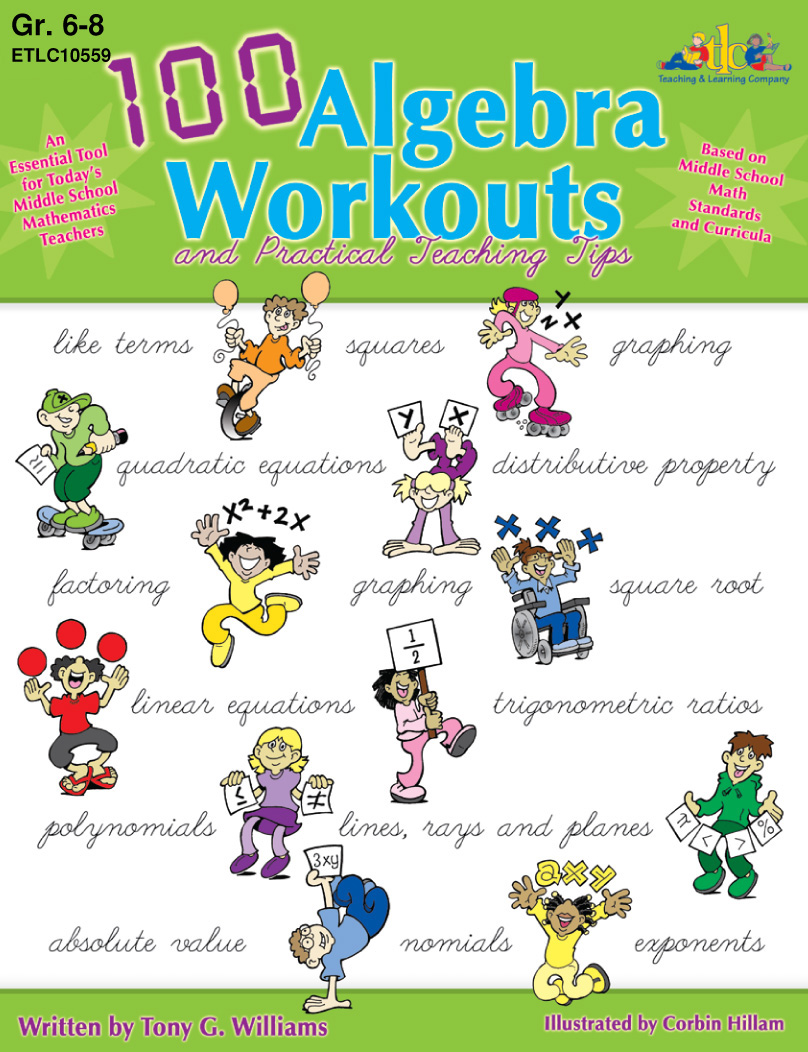
100 Algebra Workouts
Students complete each ready-to-use blackline-master workout as a lesson warm-up; each workout is algebra-skill-focused (organized into thematic units, e.g. 'Unit 1: Foundation', 'Unit 3: Games, Fun and Mystery').
Classroom resources
Browse by lesson focus
Choose the topic or kind of practice you need.
Students complete each ready-to-use blackline-master workout as a lesson warm-up; each workout is algebra-skill-focused (organized into thematic units, e.g. 'Unit 1: Foundation', 'Unit 3: Games, Fun and Mystery').
Students solve puzzle-formatted algebra problems (e.g. word/symbol finds, cross-number puzzles, mazes) covering topics such as math symbols, number properties, order of operations, exponents, integers, fractions, absolute value, and graphing.
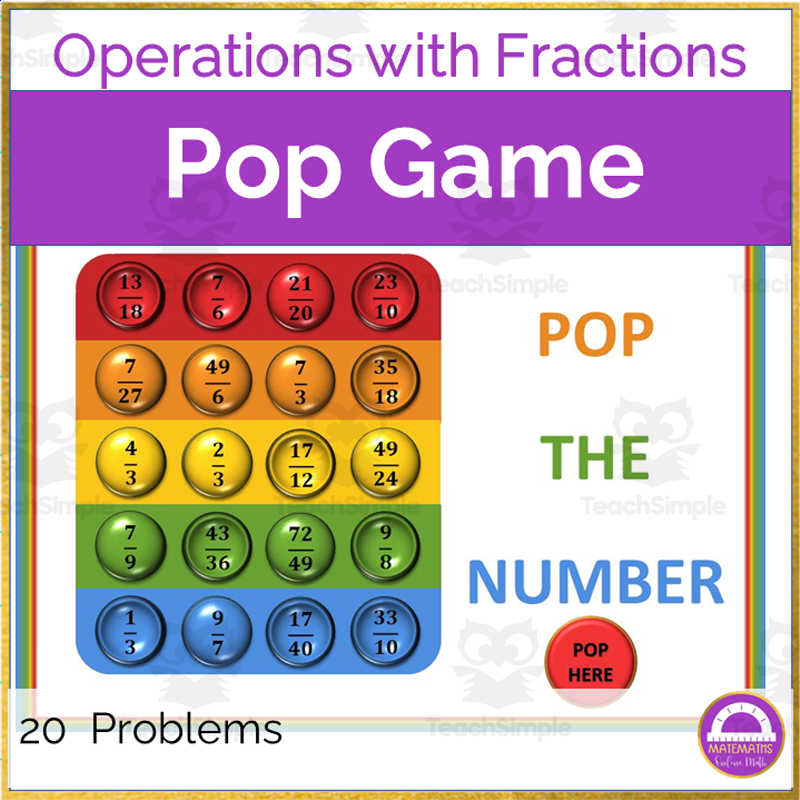
A digital 'Pop Game' style escape-room activity practicing the four fraction operations (addition, subtraction, multiplication, division), including improper fractions.
Coordinate pairs mark the positions of a five-ship fleet — aircraft carrier, battleship, submarine, destroyer, and patrol boat — in this two-player Battleship-style plotting game built around 'MY SHIPS' and 'ENEMY SHIPS' coordinate grids . Players record ordered pairs in (x,y) form for each ship they place, then take turns calling out coordinates to try to sink their opponent's hidden fleet, with the file explicitly reminding students to read the x-axis before the y-axis. The download is a printable grid sheet rather than a worksheet with content questions, so gameplay itself is the practice.
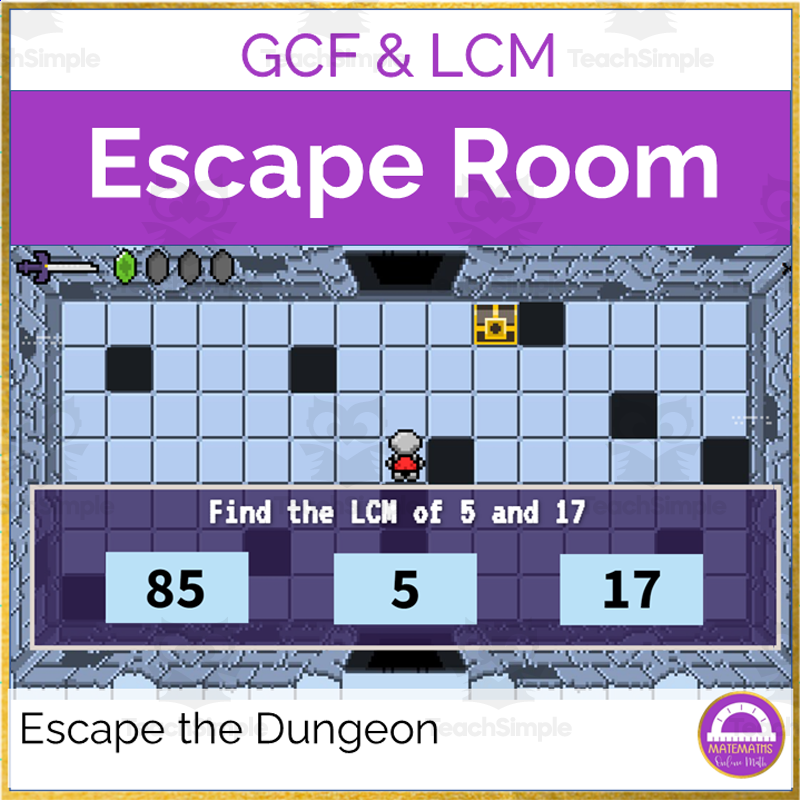
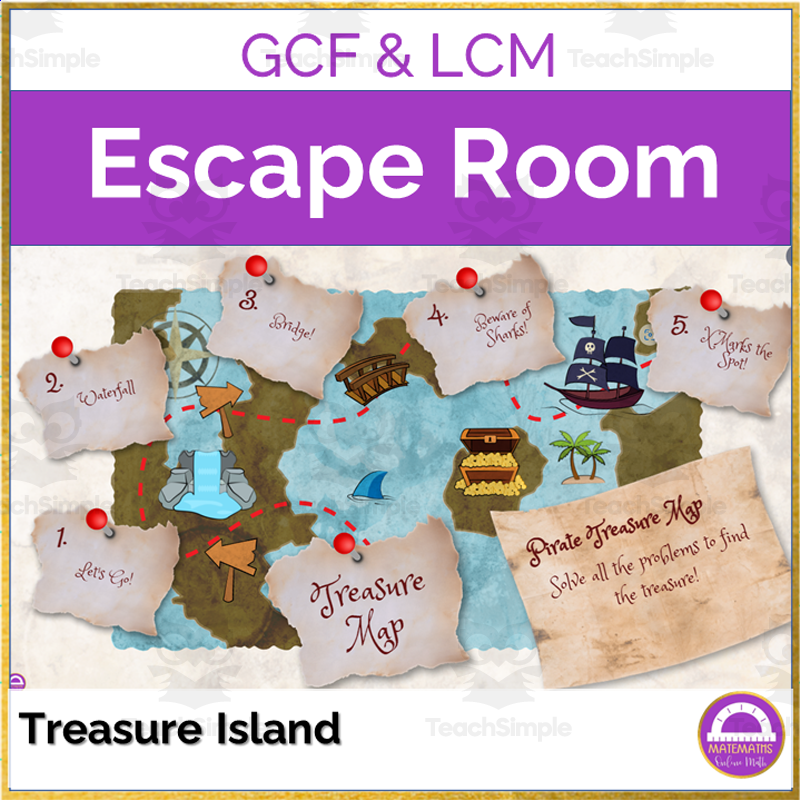
Solve GCF and LCM problems across four themed 'gem' stations (Earth, Air, Water, Fire), five problems each, to progress through the escape room.
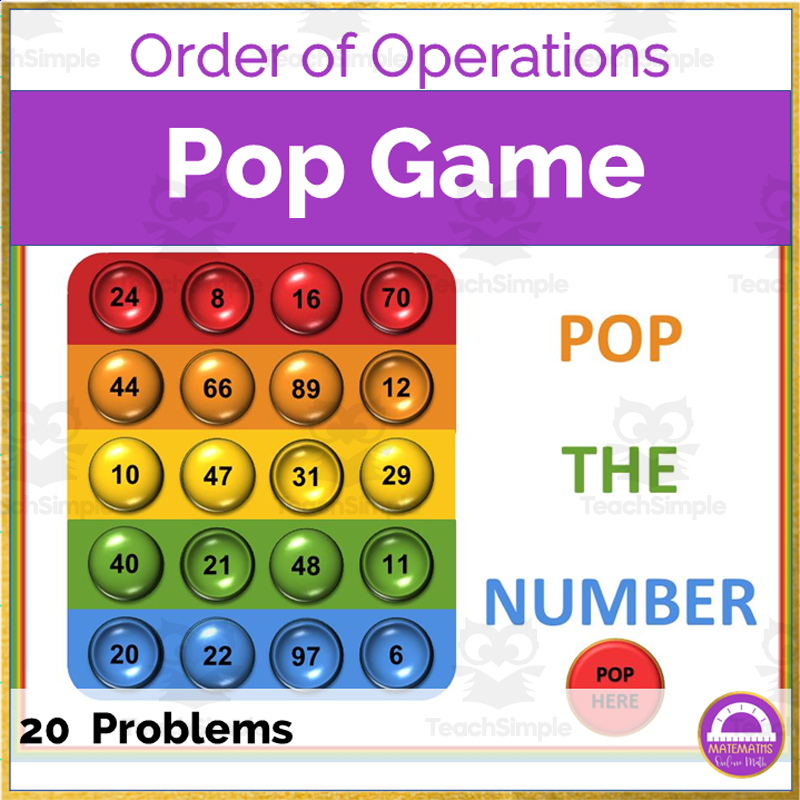
A digital 'pop it' style practice activity giving middle-school students repeated exposure to order-of-operations expressions with parentheses (no exponents).
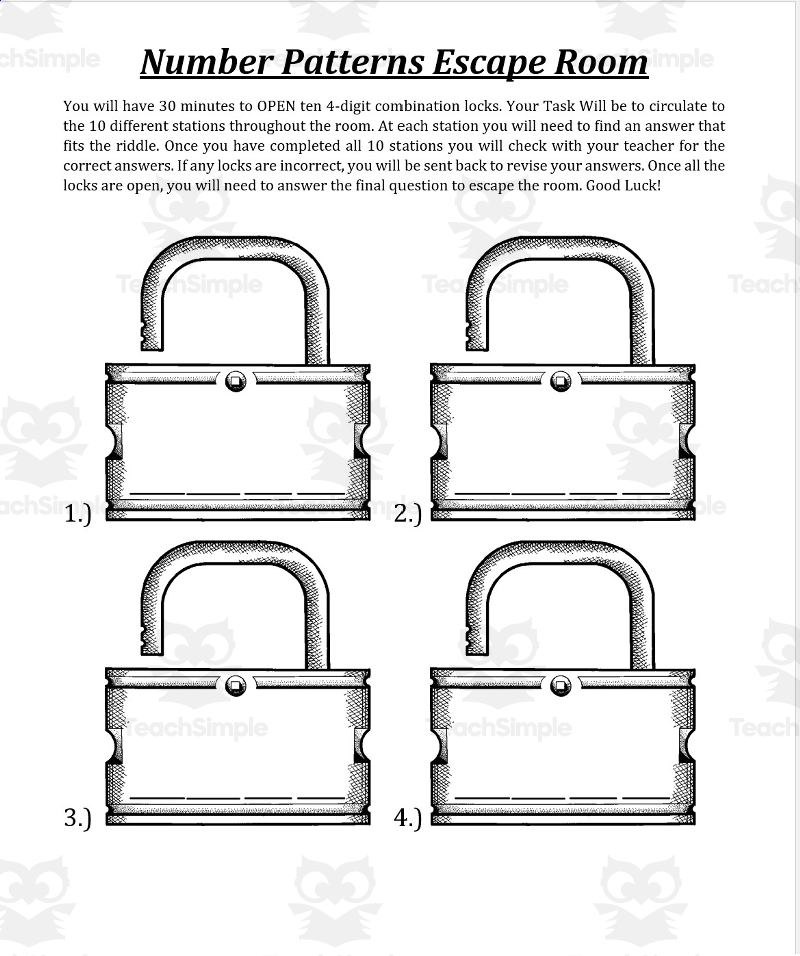
Students circulate to 10 stations, solving riddles that require finding 4-digit (one 3-digit) numbers meeting stated divisibility rules to open combination locks, then solve a final riddle/poem to determine the escape code.
Fantasy-narrative escape-room lesson (Lesson 2 of 4) teaching multiplication and division vocabulary and skills through a guided puzzle adventure.
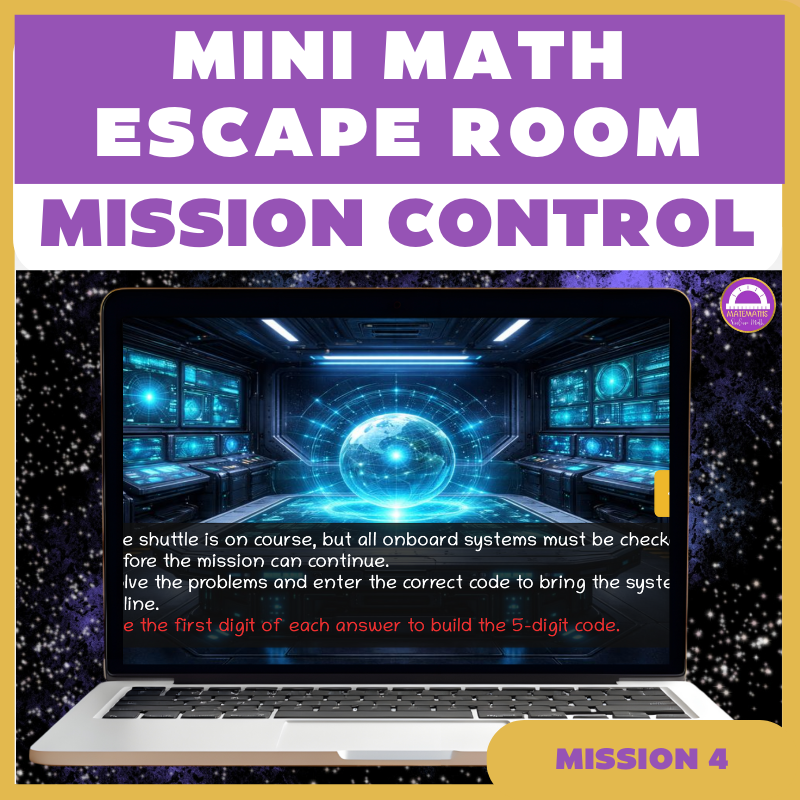
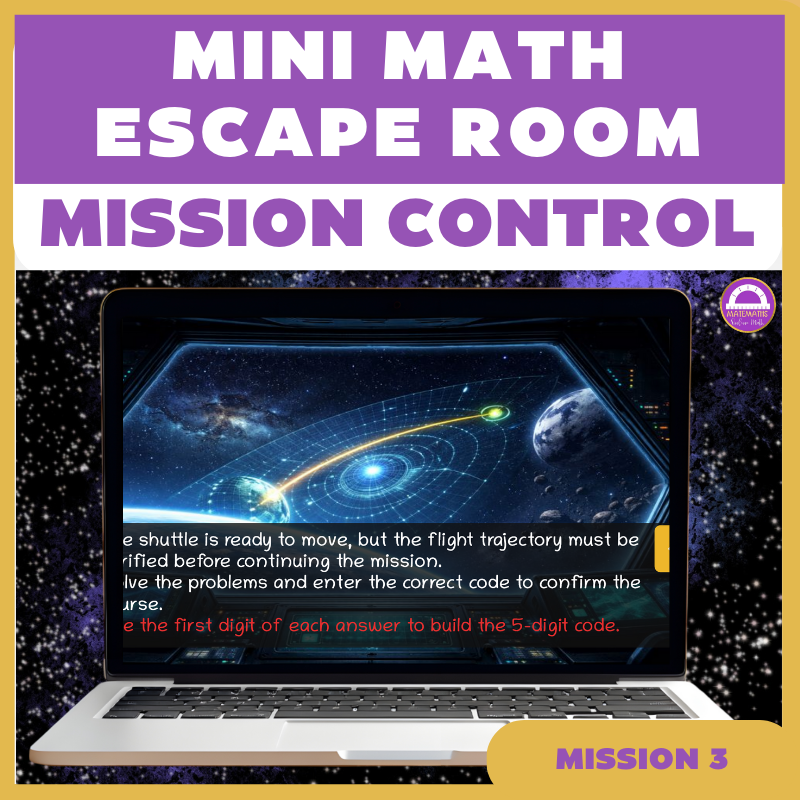
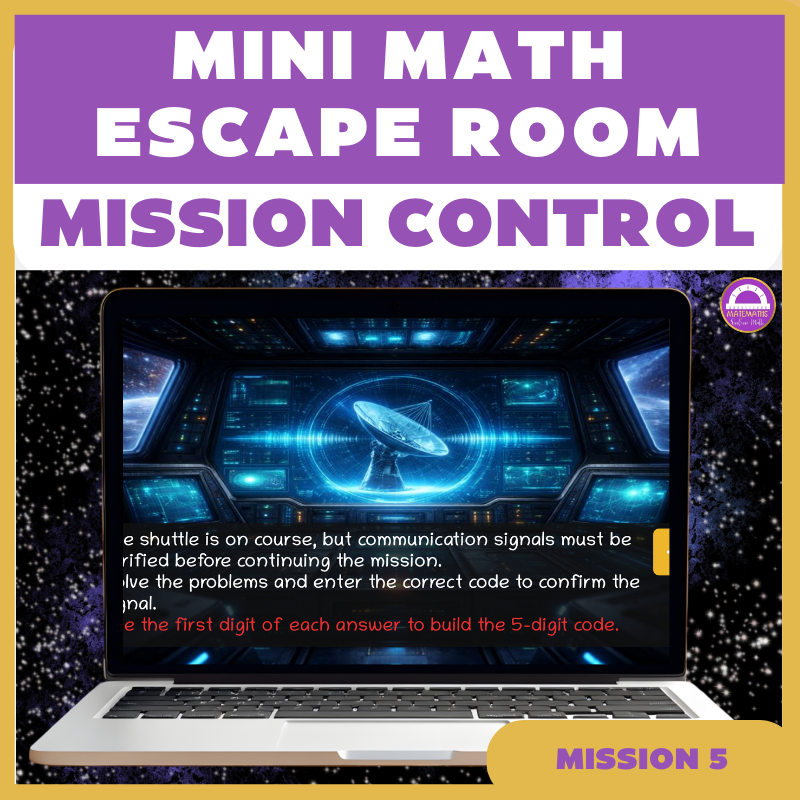
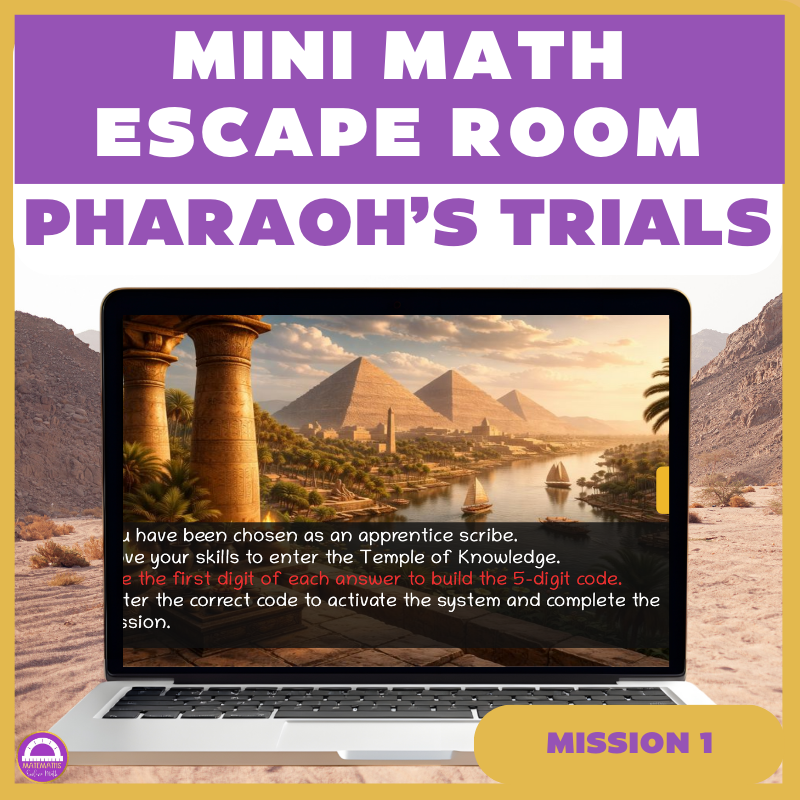
Solve 5 math problems, take the first digit of each answer, combine the five digits into a numeric code, and enter the code to 'complete the mission.'
Move around the room asking classmates to solve the problem shown in a square; the answering classmate signs their name if correct; play continues bingo-style until a student marks 5 names in a row and can justify each answer to win.
Solve 5 math problems, take the first digit of each answer, combine the five digits into a numeric code, and enter the code to 'complete the mission.'
Partner with another student; read the sentence frame completing the interpretation of the division expression on the partner's card, while the partner checks the answer side; then swap roles, trade cards, and repeat.
Each student holds a card with a sentence-frame question on one side (Quiz Side) and the answer on the other (Answer Side); partners take turns reading the sentence frame aloud, filling in the blank verbally, checking each other's answers, then trade cards and find a new partner to repeat.
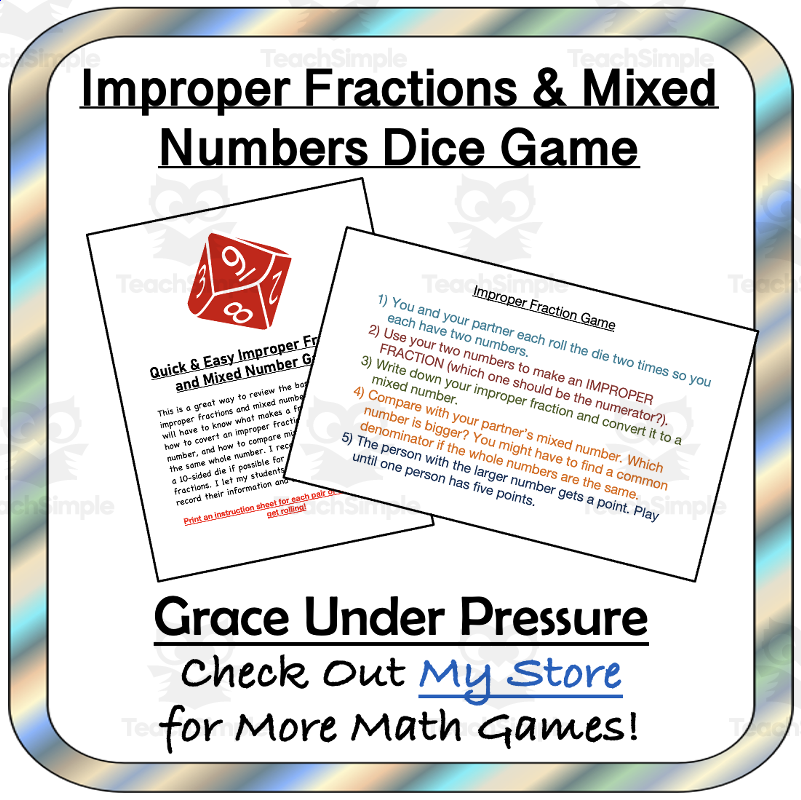
In pairs, each roll a die twice to get two numbers, form an improper fraction from them, convert it to a mixed number, compare it to their partner's mixed number (finding a common denominator if whole numbers match), and score a point for the larger number; first to five points wins.
Digital Escape Room: GCF and LCM Math Activity Pirate-Themed This Digital Escape Room: GCF and LCM Math Activity Pirate-Themed comes with 20 engaging problems designed to test your 5th and 6th graders' knowledge of greatest common factors (GCF) and least common multiples (LCM), this educational treasure hunt is a…
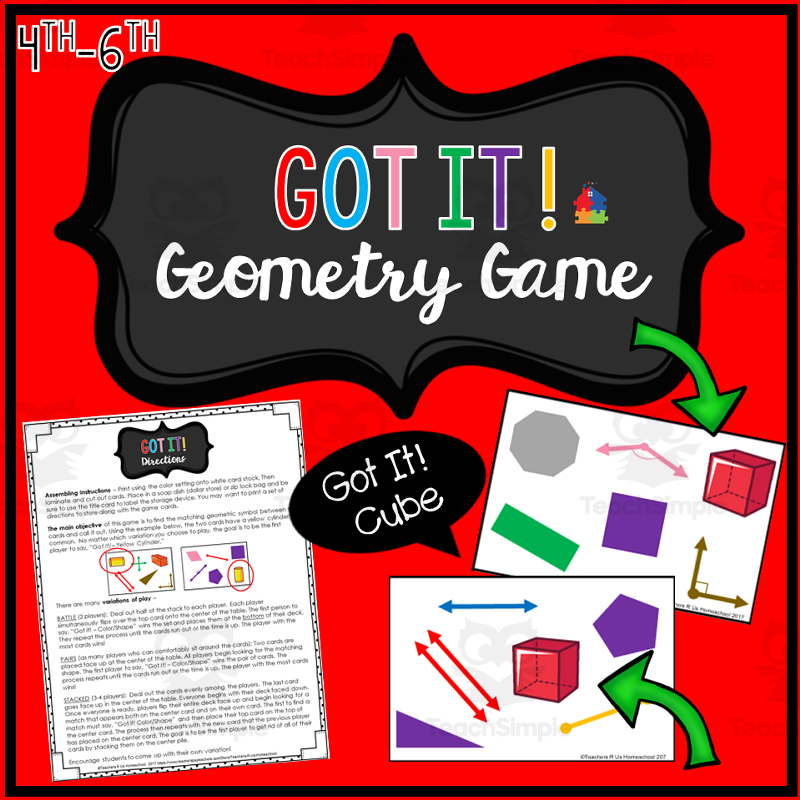
['match a geometric symbol/shape shown on one card to the same shape on another card', 'call out the shape name first to win the pair/set', 'play in one of three variations: Battle, Pairs, or Stacked']
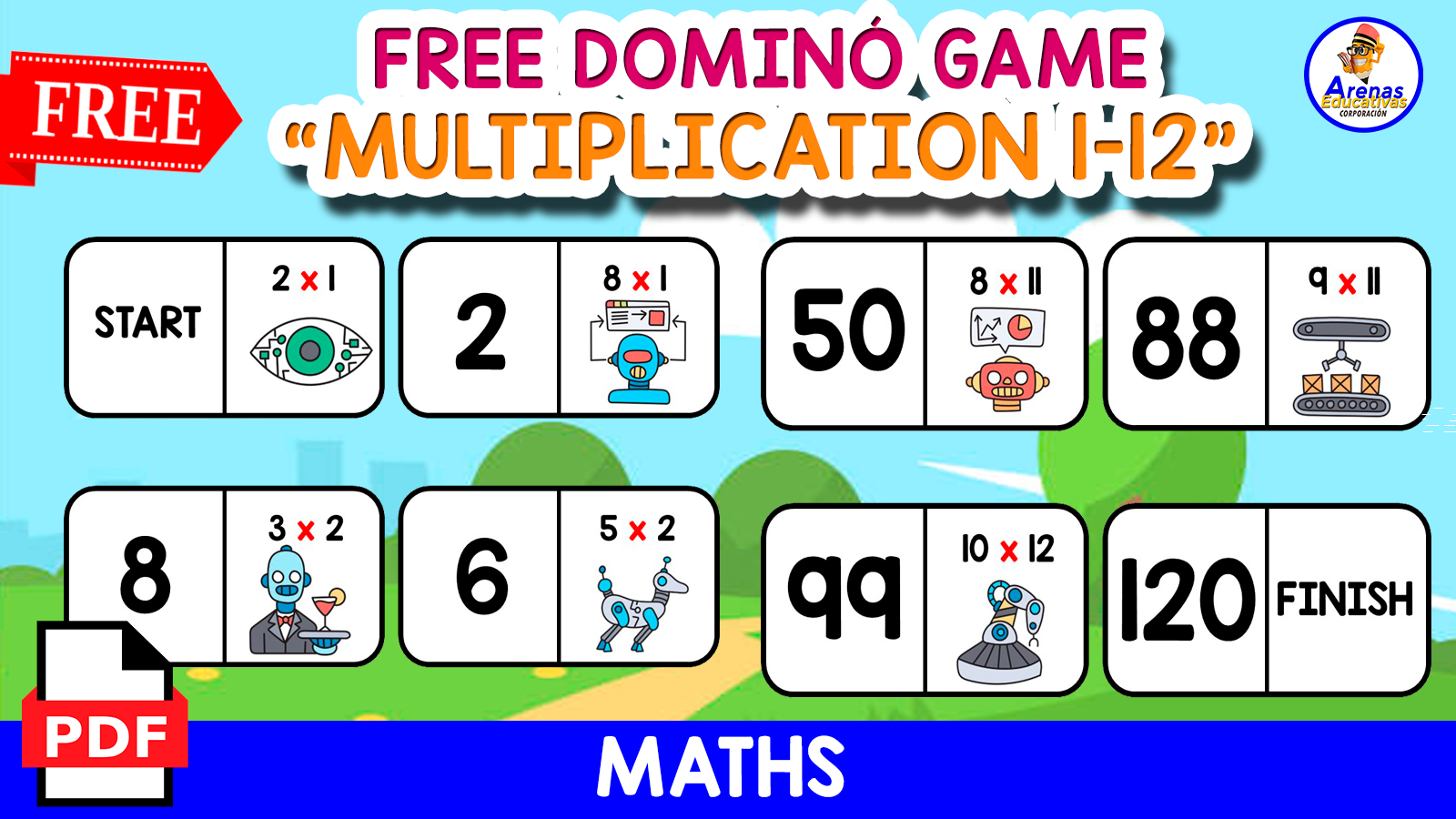
Domino-style matching game for practicing multiplication facts (times tables 1 through 12).
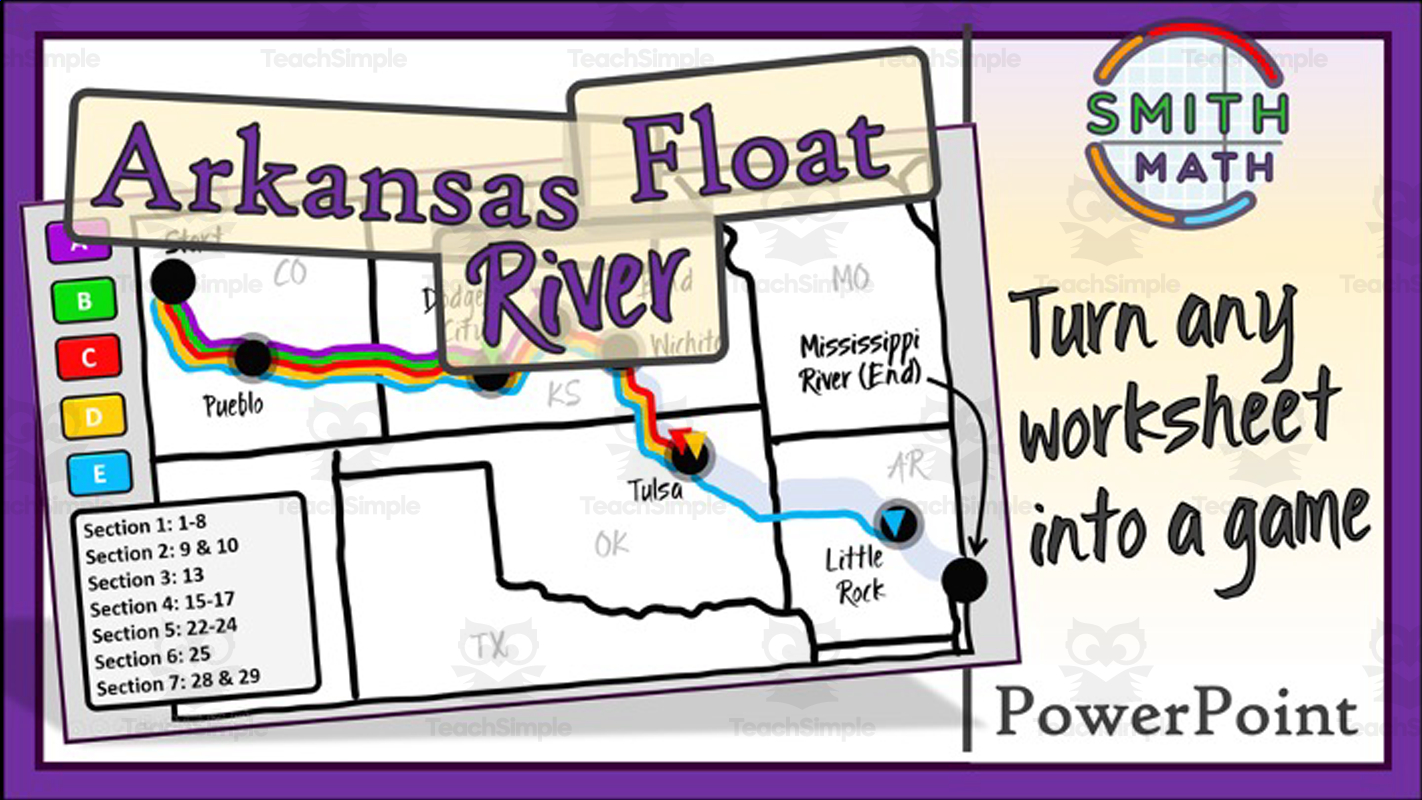
Run a team-based math-review game ('float the Arkansas River') where teams work through numbered problem sections to advance along a river-route map.
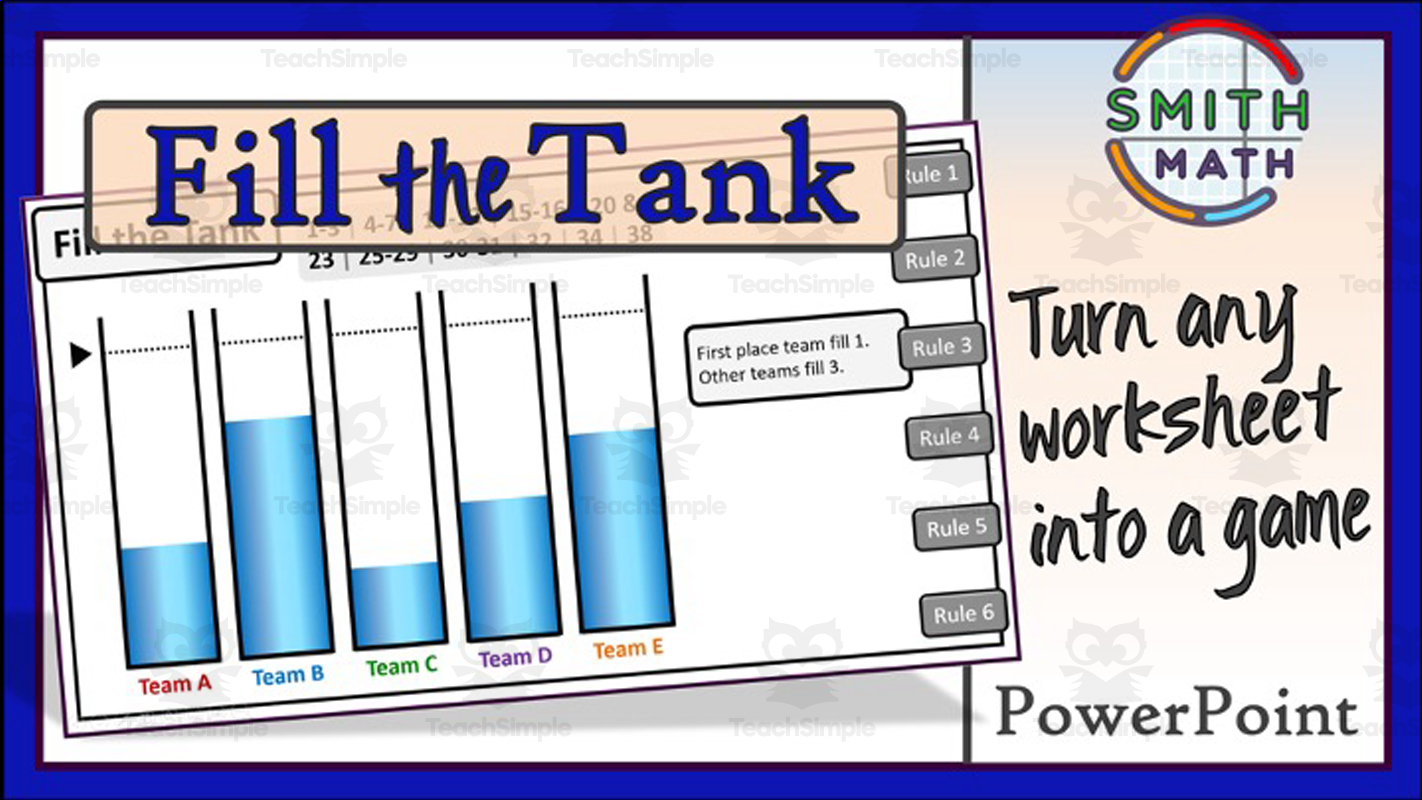
Work through a section of math problems as a team, check answers with the teacher, then roll a die to apply a game rule that fills or drains team tanks.
Solve 5 math problems, take the first digit of each answer, combine the five digits into a numeric code, and enter the code to 'complete the mission.'
Create a 4x4 bingo board on notebook paper, fill in answers to teacher-displayed word/computation problems in random order to personalize the board, show work on paper, mark answers with a highlighter as questions are revealed slide by slide, and call bingo when a row is completed.
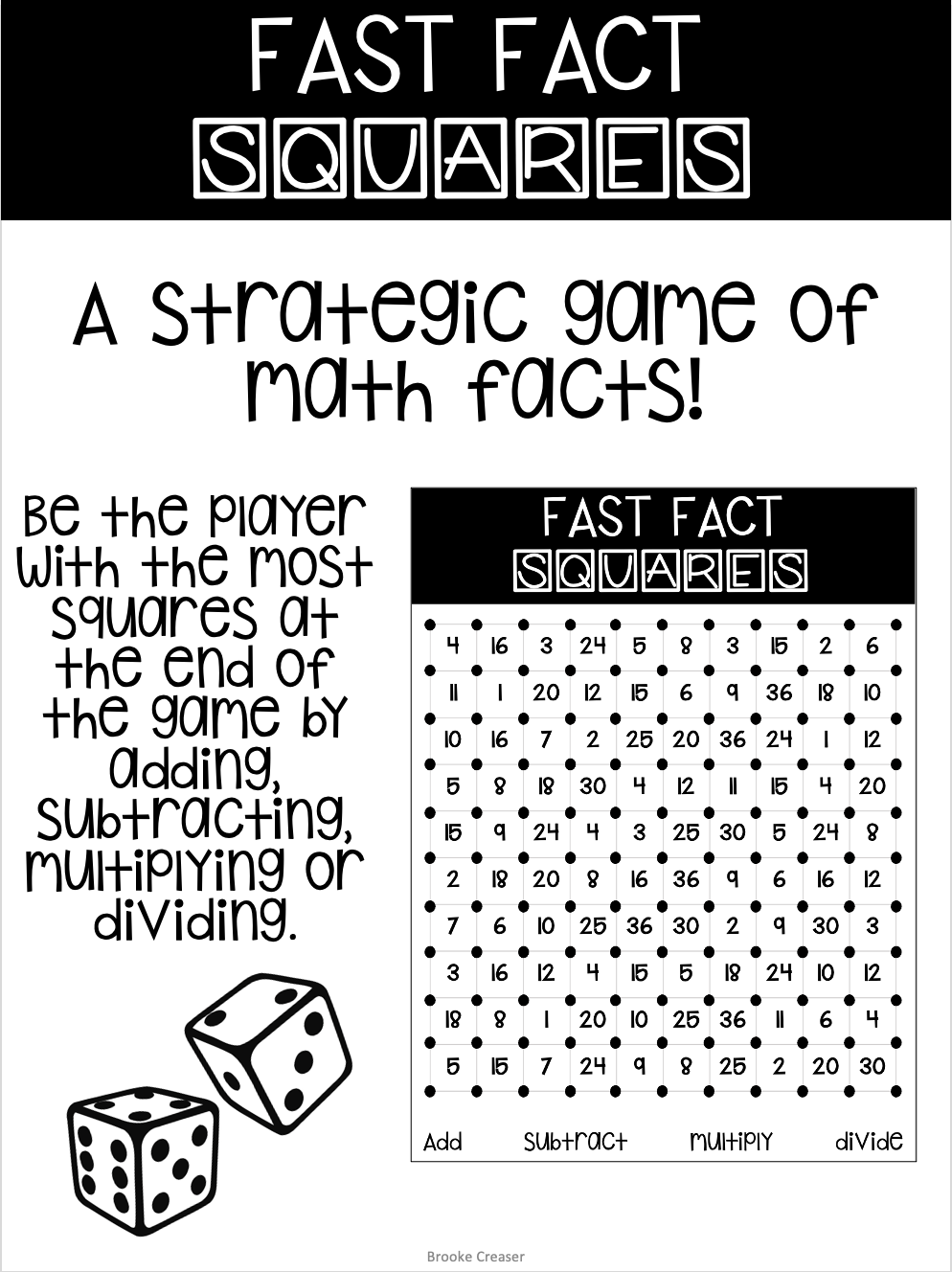
Provide a strategic dots-and-boxes style game for practicing addition, subtraction, multiplication, and division math-fact fluency