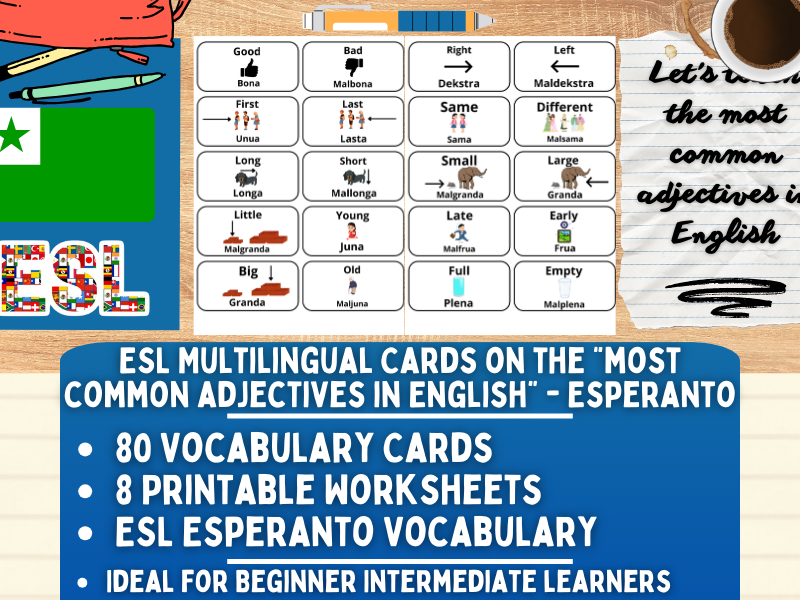
ESL Vocabulary Flashcards - Most Common Adjectives - Esperanto
Bilingual (English / Esperanto) vocabulary flashcards teaching the most common English adjectives, presented as antonym pairs, to ESL/EFL students who speak Esperanto.
Classroom resources
Browse by lesson focus
Choose the topic or kind of practice you need.
Bilingual (English / Esperanto) vocabulary flashcards teaching the most common English adjectives, presented as antonym pairs, to ESL/EFL students who speak Esperanto.
Large (232-page) independently authored novel study unit for Island of the Blue Dolphins by Scott O'Dell, covering all 29 chapters with comprehension, vocabulary, exit quizzes, writing prompts, and a summative test for grades 5-7.
A large (580-page) novel study unit for 'Hour of the Bees' by Lindsay Eagar, covering comprehension, assessment, vocabulary, writing, and spelling for grades 5-7.
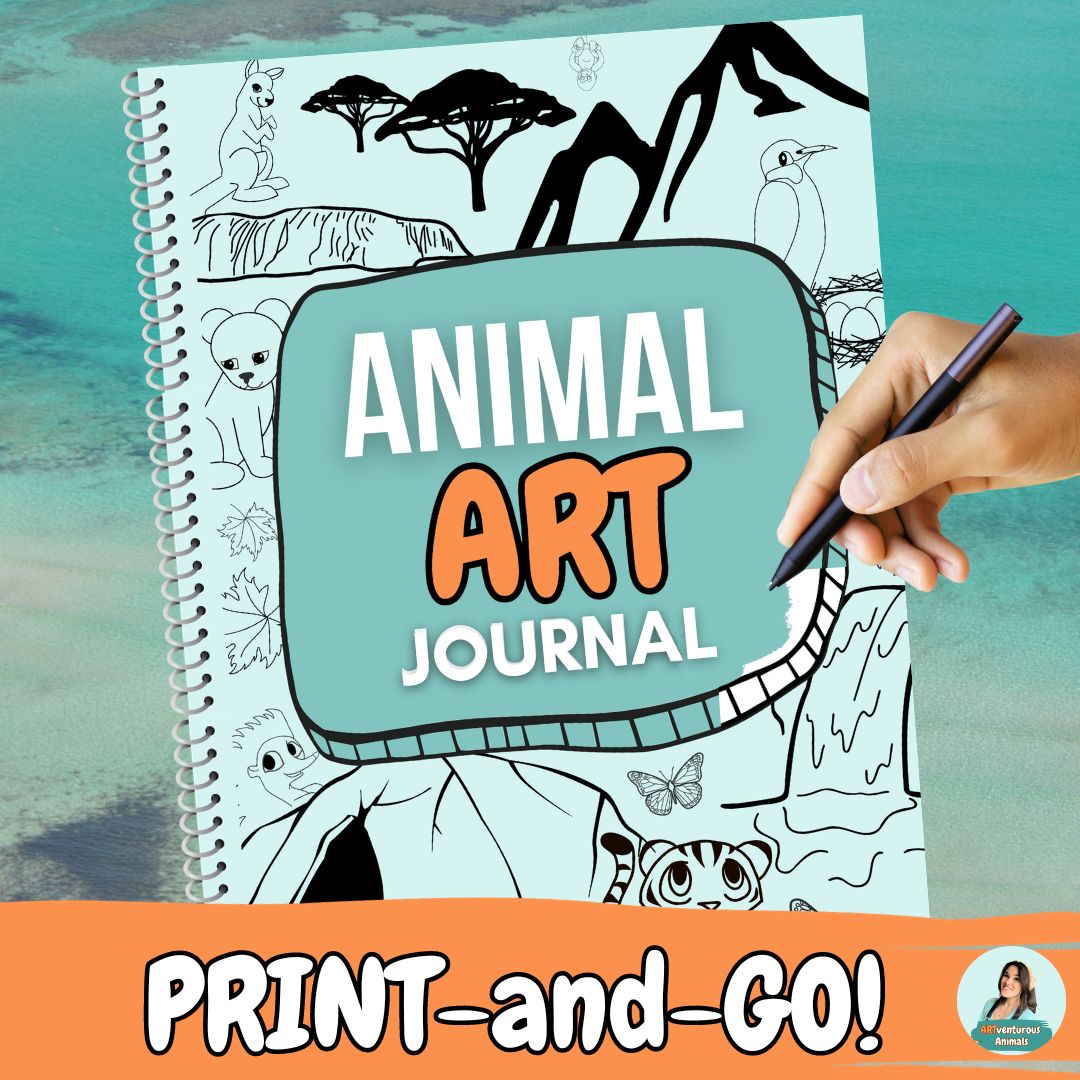
Teaches the elements of art (line, texture, shape, and others in later units) in a print-and-go workbook format, using each of the seven continents (and animals from them) as the theme for one unit.
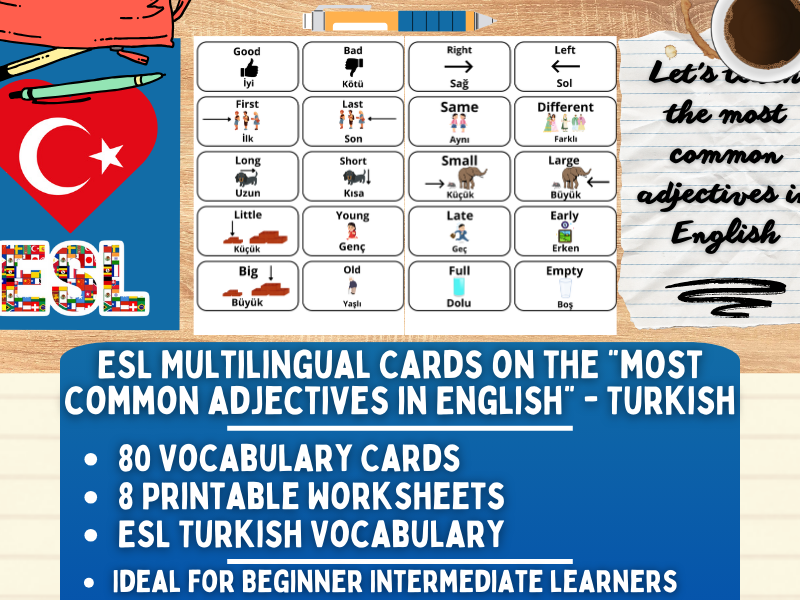
Bilingual English-Turkish flashcard/worksheet set pairing common English adjectives with their opposites and Turkish translations, for Turkish-speaking ESL/EFL students.
Teaches students how to prepare a resume, as part of a practical life-skills series on employment and volunteering.
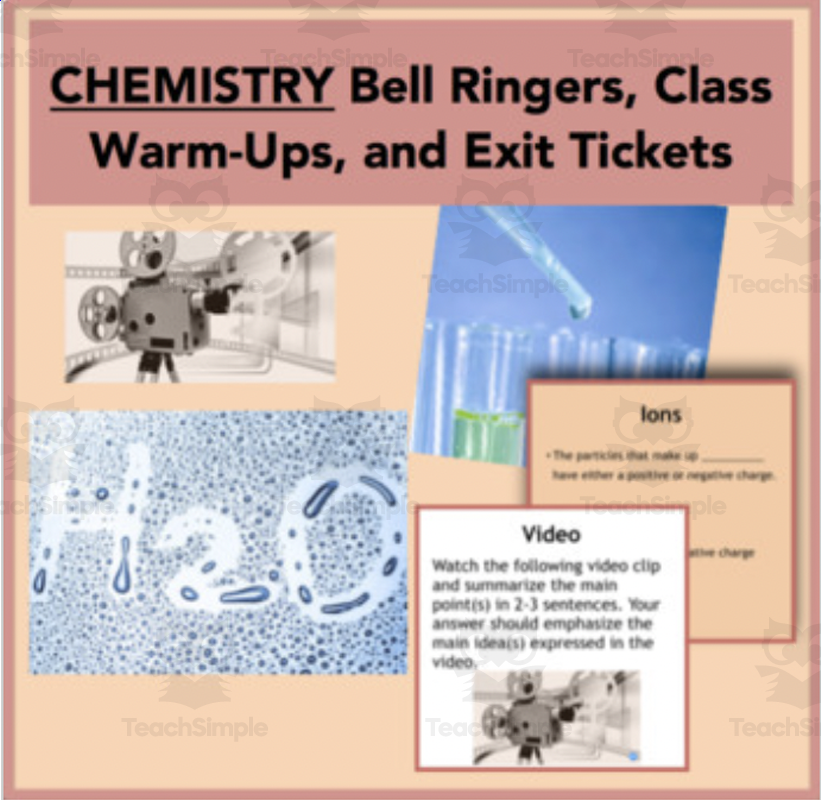
Provide daily short-form review activities (bell ringers/warm-ups/exit tickets) for an introductory chemistry unit covering matter, atomic theory, the periodic table, ions, and chemical formulas.
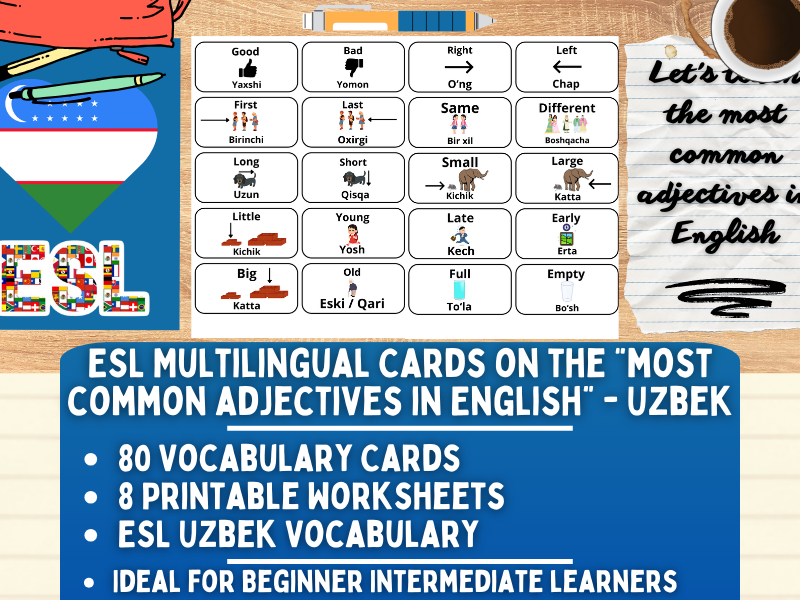
Bilingual English-Uzbek flashcard/worksheet set pairing common English adjectives with their opposites and Uzbek translations, for Uzbek-speaking ESL/EFL students.
A comprehensive literature kit for teaching Steinbeck's "Of Mice and Men," built around Bloom's Taxonomy critical-thinking levels, for high school ELA.
Teaches about volunteering and its role in career/life-skills development, as part of a practical life-skills series on employment and volunteering.
An editable 14-slide presentation teaching high-school students to distinguish fact from opinion, covering clue words/verbs for each, misinformation, the scientific method/expertise, the historical evolution of how knowledge has been validated, and media-literacy/critical-thinking implications.
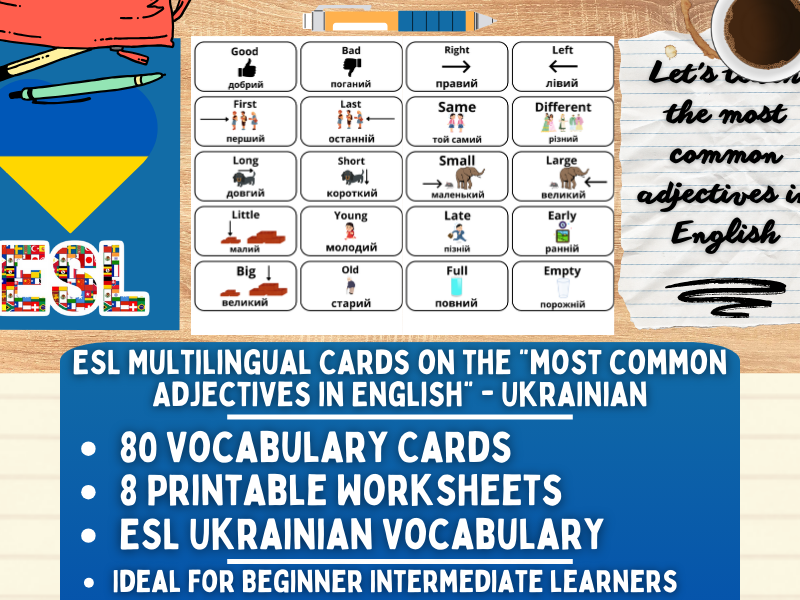
Bilingual English-Ukrainian flashcard/worksheet set pairing common English adjectives with their opposites and Ukrainian translations, for Ukrainian-speaking ESL/EFL students.
Serve as a quick-reference guide of basic geometry vocabulary, symbols, shape properties, and perimeter/area formulas to support geometry instruction for upper-elementary and middle-school students.
Teaches students about employee rights in the workplace, as part of a practical life-skills series on employment and volunteering.
A full-year package of PowerPoint lecture notes covering major human body systems for an Anatomy & Physiology (or Biology) course.
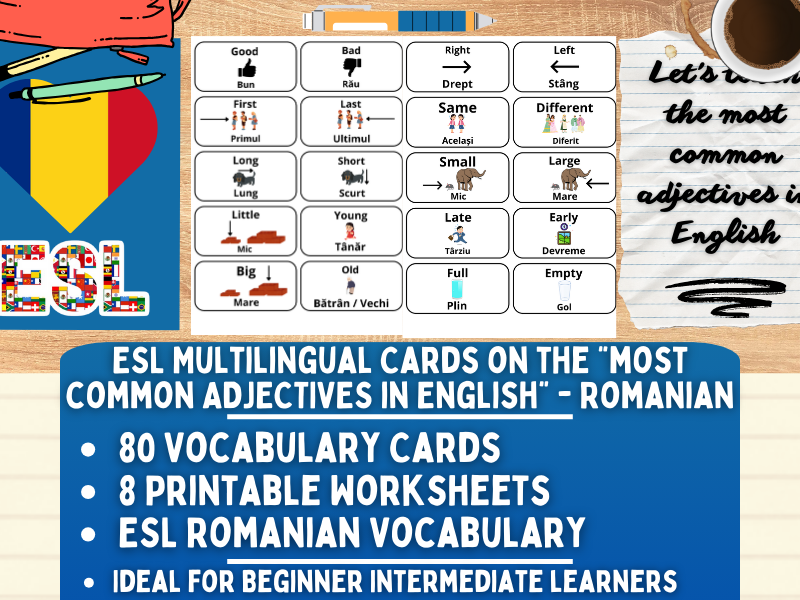
Bilingual English-Romanian flashcard/worksheet set pairing common English adjectives with their opposites and Romanian translations, for Romanian-speaking ESL/EFL students.
A one-page reference/study-guide handout summarizing the Scientific Revolution, Age of Absolutism, English Civil War, French Revolution, Enlightenment thinkers, and related arts/humanities figures of the 1600s-1700s.
Provide lecture/discussion notes for an AP Human Geography unit on global immigration issues.
Get older (upper middle/high school) students thinking about what it means to be a professional, choose and research a career, and create a presentation on their findings while building a mock resume/LinkedIn profile.
Teach students to analyze and interpret challenging primary source documents by creating Found Poetry, connecting close reading of historical/literary texts to creative poetic composition.
Teach the structure, function, and location of body tissue types (epithelial, connective, blood, bone, cartilage, adipose, nervous, and muscle) for an Anatomy & Physiology / Biology course.
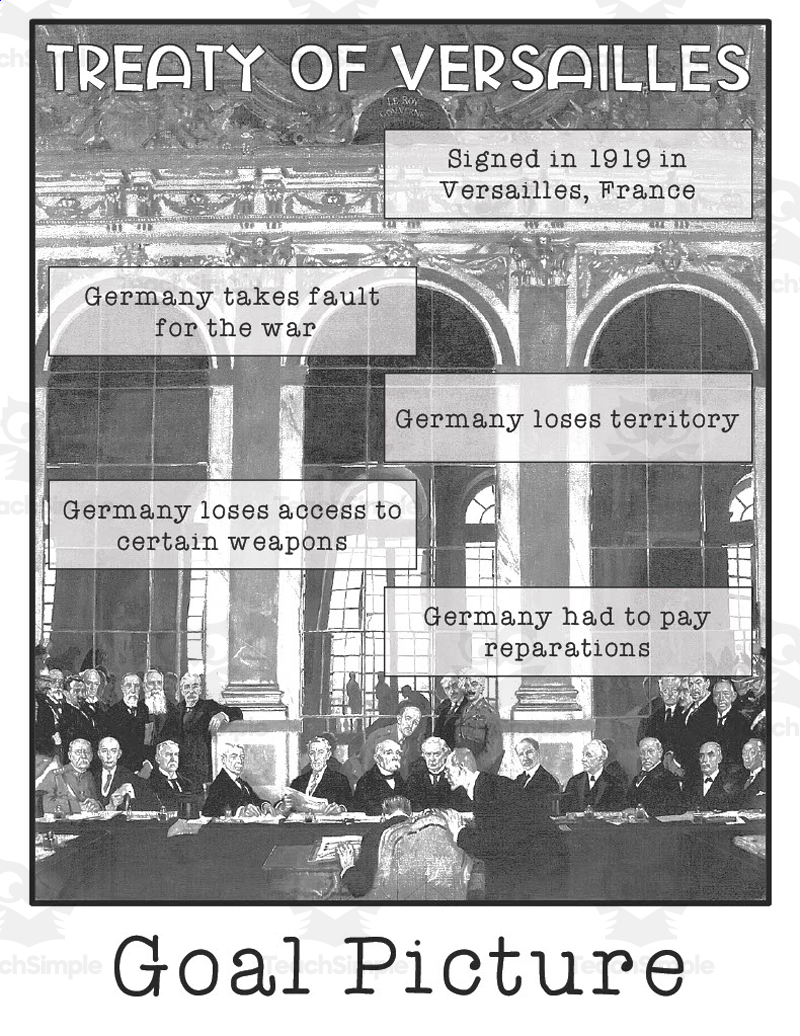
Engage middle-school students in a WWI content review through a gamified, standards-aligned (Georgia SS5H2/SS5H2a) digital-and-printable escape room combining reading, math, and puzzle-solving.
A President's Day bundle teaching students about George Washington and Abraham Lincoln through notes, timelines, essay writing, task cards, and Washington's 110 Rules of Civility, building toward narrative/expository/opinion writing.
Teaches middle/high school students about loans, credit, and borrowing as part of a financial literacy skills unit, using a reading comprehension passage, hands-on activities, vocabulary puzzles, and a quiz.