resources by type
resources by grade
resources by subject
other resources

3,890 products added recently

Page 71 - Reading Activities

Discover a variety of reading activities designed to inspire and engage your students. From guided reading sessions to interactive reading journals, these resources support the development of comprehension and critical thinking skills. Tailored for different grade levels, these activities can help you create a dynamic literacy environment that fosters a lifelong love of reading.

Relevant
alt down
Any Time
alt down
filter by
alt down
All File Types
alt down
filter nav Show filters
Sort by: Relevant
CLEAR
resources by type
Activities
up arrow
Centers
Crafts
Escape Room
Experiments
down arrow
Games
Projects
Read Alouds
Songs
Classroom Decor
down arrow
Teacher Tools
down arrow
Worksheets & Printables
down arrow
resources by grade
Early Learning
down arrow
Pre-K
down arrow
Elementary
down arrow
Middle School
down arrow
High School
down arrow
Adult Education
Not Grade Specific
resources by subject
Creative Arts
down arrow
ELA
up arrow
Language Development
down arrow
Literature
down arrow
Reading
up arrow
Reading Comprehension
Library
Strategies
Writing
down arrow
Holiday & Seasonal
down arrow
Life Studies
down arrow
Math
down arrow
P.E. & Health
down arrow
Social Studies
down arrow
Special Resources
down arrow
Science
down arrow
Foreign Languages
down arrow
Resources for Teachers
down arrow
other resources
Common Core
Homeschool Resources
down arrow
Montessori
Research
STEM
Bioluminescence & Insects : Reading Comprehension passages (Docs)

Bioluminescence & Insects : Reading Comprehension passages (Docs)
Science, ELA, Reading, Reading Comprehension, Strategies, Resources for Teachers, Life Sciences, Animals, Insects, Nature & Plants, Grade 6, 7, 8, 9, Writing Prompts, Worksheets & Printables, Centers, Activities, Teacher Tools, Assessments, Quizzes and Tests, Quizzes, Tests

Bioluminescence and Insects: Reading Comprehension Passages (Docs) This very engaging collection of life science reading passages about Bioluminescence and Insects is designed to bridge the gap between science and literacy through strengthening reading comprehension and sparking scientific curiosity in middle school students. Each passage blends English Language Arts skills with accurate science content that supports NGSS classroom practice. Ideal for interdisciplinary learning in ELA and Science. Suitable for Grade 9 review, too! What Is Included? There are (3) informational passages: Living Lights: The Science of Bioluminescence Explains how organisms produce “cold light” with luciferin and luciferase, and shows why they glow for signaling, hunting, and protection. Cicadas: The Long Wait Underground Covers the long underground nymph stage, synchronized emergence, molting, loud calls, and how this life cycle supports survival and reproduction. Masters of Disguise: How Insects Hide and Imitate Distinguishes camouflage from mimicry with clear examples, highlighting how color, shape, and behavior help insects avoid predators and capture prey. Student Tasks for Each Passage: 5 multiple-choice questions targeting main idea, key details, inference, vocabulary in context, and use of evidence 5 vocabulary matching items with clear, student-friendly definitions 5 text-based questions that require citing specific lines or facts 1 summary prompt that asks students to condense central ideas accurately Full answer key for every section Available Formats for this Resource PDF Word Docs FULL CATALOG OF DOWNLOADING LINKS HERE Other Science Reading Collections you May find in the store: 1. Astronomy & Space Science 2. Volcanoes, Rocks, & Mountains 3. Rock Cycle, Soil, & Sinkholes 4. Mars, Glaciers, & Antarctica 5. Water Cycle, Acid Rain, & Wastewater 6. Insects, Animals, & Ecosystems 7. Bioluminescence & Insects 8. Animal Skin, Cats, & T. Rex 9. Human Body and Senses 10. Health & Applied Bioscience 11. Waves, Light, & Imaging 12. Electricity & Energy 13. Motion & Materials 14. Chemistry and Materials Science Product Details Length: 14 pages total Grades: 6–8, also suitable for Grade 9 review Use cases: close reading, stations, homework, intervention, test prep, and sub plans Standards support: reinforces informational-text skills and supports NGSS-style sense making through observation, modeling, and clear use of claim, evidence, and reasoning Why Teachers Choose This Set Authentic science content paired with rigorous literacy practice Consistent task structure across all passages for easier planning and smoother student routines Clear, age-appropriate writing that builds confidence without oversimplifying Use this set to reinforce ELA skills in science, to add literacy to your lessons, or to support independent work. The passages strengthen main idea, evidence use, vocabulary in context, inference, cause and effect, and summary writing. With ready-to-use assessments and complete answer keys, you can provide focused practice that is simple to run and fast to review.

Author Middle & High School - CORED Education

Rating

Tags Middle School, Reading Comprehension, Reading Strategies, ELA, Centers, Reading Passage, Assessments, Vocabulary, Life Science, Insects

Reading Comprehension Nonfiction Set 2 - Insects (Slides)

Reading Comprehension Nonfiction Set 2 - Insects (Slides)
ELA, Reading, Language Development, Spelling, Common Core, Vocabulary, ESL, Reading Comprehension, Creative Writing, Writing, Grade 4, 5, Teacher Tools, Presentations, Tests, Quizzes and Tests, Assessments, Activities

Reading Comprehension Passages Nonfiction Set 2 Overview No prep reading comprehension lessons, with enjoyable articles and topics. Each lesson has a blend of post-reading activities. Mixed questions to check overall understanding. Vocabulary activities, plus a writing section. Lessons also contain a bonus extension exercise at the end. Some you may like, some you may not, either way they are there if you wish to use them. Full answer keys are provided. Passages Include 1.We Are Not Insects: Spiders ARE NOT insects! Read more in this article. 2.What a Smell: How does the stink bug protect its children? Find out in this lesson. 3.Queen: The ant queen. Sounds elegant. In fact, it isn't! It's a tough job. 4.Summer Singer: How do grasshoppers make noise and why? Read this passage to find out. 5.Fireflies: Why do fireflies flash? Read to learn about this, and more. 6.Bees: Worker bees, house bees. Collecting nectar, storing nectar. What exactly goes on in a bee hive? Slides Version This is the Slides editable and fillable version. This download is available in GOOGLE Docs, GOOGLE Forms, GOOGLE Slides. PDF, PPT, WORD. Browse the Complete Cored Catalog — 2,000+ Resources Included Reading Passages Each reading passage has been written specifically for students in Grades 4–5, using vocabulary and language that match their age and ability level. The collection covers a wide range of engaging topics, supported by colorful visuals that help bring the content to life. Every lesson is designed to build knowledge while keeping students interested and motivated to read. These resources are also designed with flexibility in mind. Unlike traditional textbooks that can quickly become outdated, lessons can be updated over time to reflect changes in technology, discoveries, and the world around us. Mixed Questions Every lesson includes a variety of questions that help students think more deeply about what they have read. The question section combines reading comprehension, vocabulary, and math skills, while also regularly reinforcing important reading strategies such as cause and effect, summarizing, compare and contrast, and drawing conclusions. Most lessons include a mix of multiple-choice and written-response questions, giving students opportunities to explain their thinking as well as select answers. Complete answer keys and sample responses are provided at the end of each lesson for quick and easy reference. Spelling & Vocabulary Each passage introduces students to useful words and phrases appropriate for Grades 4–5. To help build confidence and word knowledge, every lesson includes a spelling or vocabulary activity. Rather than repeating the same task throughout the collection, activities vary from lesson to lesson to keep practice fresh and engaging. Activities may include spelling challenges, sentence matching, decoding activities, mixed-up text exercises, and other vocabulary-building tasks connected directly to the reading. Writing Prompts Each lesson includes a writing activity that extends the ideas, themes, or topics explored in the passage. Students are encouraged to write in a variety of formats, with prompts providing helpful guidance and ideas to get them started. Writing tasks vary throughout the collection and may include creative writing, research activities, personal responses, poetry, opinion writing, and other engaging assignments. Full Answer Keys Complete answer keys and sample responses are included with every lesson, making planning and marking quicker and easier. Reading comprehension answers include evidence and support from the text, while math-based questions show the relevant working where appropriate. The answer keys are designed primarily for teachers but can also be shared with students when needed. Just for Fun Each lesson finishes with an optional extension activity called Just for Fun . These bonus activities provide an enjoyable way to extend learning beyond the main lesson and often encourage creativity, discussion, or independent thinking. They are completely optional, giving you the flexibility to use the activities that best suit your students and classroom needs. For similar downloads and other frees, do check out Cored Group on TeachSimple.

Author Cored Education

Rating

Tags Elementary, Reading, Comprehension, Vocabulary, Answers, Ccss, Common Core, Spelling, Writing, Passages

95 Nouns Sight Words, Playdough Mats

95 Nouns Sight Words, Playdough Mats
ELA, Reading, Language Development, Spelling, Vocabulary, Grade 1, 2, 3, Activities

Introducing: 95 Nouns Sight Words Playdough Mats The 95 Nouns Sight Words Playdough Mats is an engaging educational resource suitable for teachers and parents alike. With a clear focus on common nouns sight words, this set of playdough mats offers a hands-on learning experience that can enhance literacy skills and contribute to successful early reading and spelling. List of Features Covers 95 sight words including simple ones like 'apple', 'boat', 'cat' as well as complex terms such as ‘Christmas’, ‘Santa Claus’. Tactile play for enjoyable learning which boosts fine motor skills, word recognition, and reading fluency. Clear bold lettering for each word with an added blank space underneath for writing practice. Versatile design that can be incorporated into existing lesson plans or used independently. Educational Benefits and Uses This resource provides several benefits in both classroom settings and at home: Ideal for whole group instructions,suitable also for smaller groups or individual workstations. Promotes learning continuity at home—parents can utilize these mats to support their child’s developing literacy skills during out-of-school hours or summer breaks, making homeschooling more interactive and effective. The PDF file includes 48 pages (US Letter Size) aimed primarily at Grade 1-3 students focusing on Language Arts subjects including Reading, Spelling, Vocabulary integrated into exciting activities. In Summary... If you're seeking a combination of fun-filled yet factual teaching method aiming immense linguistic development –whether you are in traditional classrooms or at home - the 95 Nouns Sight Words Playdough Mats are a comprehensive, practical, and enjoyable tool to boost young learners' competence in reading and writing.

Author TeacherYouWant

Tags Nouns Sight Words, Playdough Mats, Early Literacy, Hands-on Learning, Vocabulary Development

Reading Passages on Position and Motion of Objects (PDF)

Reading Passages on Position and Motion of Objects (PDF)
ELA, Reading, Reading Comprehension, Science, Physics, Common Core, ESL, Language Development, Vocabulary, Grade 2, 3, 4, Worksheets & Printables, Worksheets, Assessments, Teacher Tools, Tests, Quizzes and Tests, Centers, Activities

Reading Passages on Position and Motion of Objects for Physical Science Position and Motion of Objects: Reading Passages Physical Science incorporates science literacy seamlessly into your teaching plans. The pack not only facilitates learning in crucial scientific domains but also offers an engaging variety of questions to reinforce comprehension. Focused on essential topics like motion, forces, and sound, these passages serve as a dual-purpose educational tool. By integrating this resource, you'll be able to tackle key scientific concepts while also honing your students' reading skills. The diverse set of questions that follow each passage—spanning multiple-choice, analytical, and more—provide a comprehensive approach to understanding both the text and the scientific principles it covers. What's inside? Part 2 - Position & Motion of Objects. Reading Passage 1: Position, Distance, and Motion Reading Passage 2: Pushing and Pulling Forces Reading Passage 3: Sound, Hearing, and Force Reading Passage 4: Characteristics of Sound Product Info: 23 pages Teaching Duration: 2 Weeks Science Reading Comprehension Outline: Targeted for students in 3rd and 4th grades, these reading passages are enhanced with illustrations and graphs to elucidate critical points. Each lesson aligns with the Common Core State Standards, allowing you to integrate science reading practice effortlessly, knowing that minimal preparation is needed on your part. Each passage comes with a variety of questions in different formats, including multiple-choice formats, data analysis, and fill-in-the-blanks. The topics covered strike a balance between engaging content and core curriculum-based science subjects. Versatile in application, these lessons are suitable for a variety of settings such as whole-class instruction, morning activities, independent desk work, small group discussions, contingency plans for substitute teachers, homework assignments, or even special holiday-themed tasks. FULL CATALOG OF DOWNLOAD LINKS HERE Grade 3/4 Links: Physical Science Part 1 - Properties of Objects and Materials Google Docs/Slides/Forms PDF PPT Word Free Supplementary Pack Accompanying Videos Physical Science Part 2 - Position and Motion of Objects Google Docs/Slides/Forms PDF PPT Word Free Supplementary Pack Accompanying Videos Physical Science Part 3 - Light, Heat, Electricity, Magnetism Google Docs/Slides/Forms PDF PPT Word Free Supplementary Pack Accompanying Videos Life Science Part 1 - Characteristics of Organisms Google Docs/Slides/Forms PDF PPT Word Free Supplementary Pack Accompanying Videos Life Science Part 2 - Life Cycles of Organisms Google Docs/Slides/Forms PDF PPT Word Free Supplementary Pack Accompanying Videos Life Science Part 3 - Organisms and Environments Google Docs/Slides/Forms PDF PPT Word Free Supplementary Pack Accompanying Videos Earth Science Part 1 - Properties of Earth Materials Google Docs/Slides/Forms PDF PPT Word Free Supplementary Pack Accompanying Videos Earth Science Part 2 - Changes in the Earth and Sky Google Docs/Slides/Forms PDF PPT Word Free Supplementary Pack Accompanying Videos Earth Science Part 3 - Objects in the Sky Google Docs/Slides/Forms PDF PPT Word Free Supplementary Pack Accompanying Videos For similar products and other frees, do check out Cored Group on TeachSimple .

Author Cored Education

Rating

Tags Science, Elementary, Reading, Comprehension, Physics, Physical Science, Reading Centers, Reading Comprehension Assessments, Science Assessments, Vocabulary Assessments

The Crow and The Pitcher | Animated Aesop's Fables Video

The Crow and The Pitcher | Animated Aesop's Fables Video
ELA, Reading, Not Grade Specific, Read Alouds, Activities

This animated Aesop's Fables video is titled The Crow and The Pitcher. Students will love to go on this adventure and learn more about fables. It is a 7-minute video.

Author Educational Voice

Tags Audio Book, Crow, Reading Story, Fables, Aesop, Crow And The Pitcher Menu, Aesop's Fables Crow

Social Studies Reading Passages: Global Festivals and Traditions (PDF)

Social Studies Reading Passages: Global Festivals and Traditions (PDF)
ELA, Reading, Reading Comprehension, Strategies, Resources for Teachers, Social Studies, Sociology, Psychology, Grade 6, 7, 8, 9, Writing Prompts, Worksheets & Printables, Centers, Activities, Teacher Tools, Assessments, Quizzes and Tests, Quizzes, Tests

Social Studies Reading Comprehension Passages: Global Festivals and Traditions (PDF) This resource introduces a collection of Social Studies reading comprehension passages about Global Festivals and Traditions. The passages are carefully designed to bridge the gap between social studies and literacy through strengthening reading comprehension and sparking knowledge curiosity in middle school students. Each passage blends English Language Arts skills with accurate social studies content. Ideal for interdisciplinary learning in ELA and Social Studies. Suitable for Grade 9 review, too! What Is Included in this Collection? There are three informational passages (with full answer keys): Diwali Around the World: One Festival, Many Lights Traditional Costumes: Clothing That Tells a Story Lucky Cash: What Money Superstitions Tell Us For Each Passage, students will have multiple tasks to complete as follow: 5 multiple-choice questions targeting main idea, key details, inference, vocabulary in context, and use of evidence 5 vocabulary matching items with clear, student-friendly definitions 5 text-based questions that require citing specific lines or facts 1 summary prompt that asks students to condense central ideas accurately Available Formats for this Resource Fillable PDF Word Docs Google Docs FULL CATALOG OF DOWNLOADING LINKS HERE For more Social Studies Reading Passages, check the following Links: Ancient Civilizations PDF Fillable PDF Word Docs Google Docs Early Empires and Trade Networks PDF Fillable PDF Word Docs Google Docs The Founding of the United States PDF Fillable PDF Word Docs Google Docs Language, Culture, and Meaning PDF Fillable PDF Word Docs Google Docs Psychology and Society PDF Fillable PDF Word Docs Google Docs Global Festivals and Traditions PDF Fillable PDF Word Docs Google Docs Extreme Environments and People PDF Fillable PDF Word Docs Google Docs Food, Culture, and Preservation PDF Fillable PDF Word Docs Google Docs Global Food Customs PDF Fillable PDF Word Docs Google Docs Media, Communication, and Popular Culture PDF Fillable PDF Word Docs Google Docs Human Impact on the Environment PDF Fillable PDF Word Docs Google Docs Civic Action and Social Change PDF Fillable PDF Word Docs Google Docs Fashion, Society, and Power PDF Fillable PDF Word Docs Google Docs People, Places, and Unusual Histories PDF Fillable PDF Word Docs Google Docs Product Details Length: 14 pages total Grades: 6–8, also suitable for Grade 9 review Use cases: close reading, stations, homework, intervention, test prep, and sub plans Why Teachers Choose This Set Authentic social studies content paired with rigorous literacy practice Consistent task structure across all passages for easier planning and smoother student routines Clear, age-appropriate writing that builds confidence without oversimplifying Use this set to reinforce ELA skills in social studies, to add literacy to your lessons, and to support independent work. The passages strengthen main idea, evidence use, vocabulary in context, inference, cause and effect, and summary writing. With ready-to-use assessments and complete answer keys, you can provide focused practice that is simple to run and fast to review.

Author Middle & High School - CORED Education

Rating

Tags Middle School, Reading Comprehension, Reading Strategies, ELA, Centers, Reading Passage, Assessments, Vocabulary, Social Studies, Global Festivals And Traditions

Letter F Reading Rings

Letter F Reading Rings
ELA, Language Development, Phonics, Reading, Kindergarten, Preschool, Activities

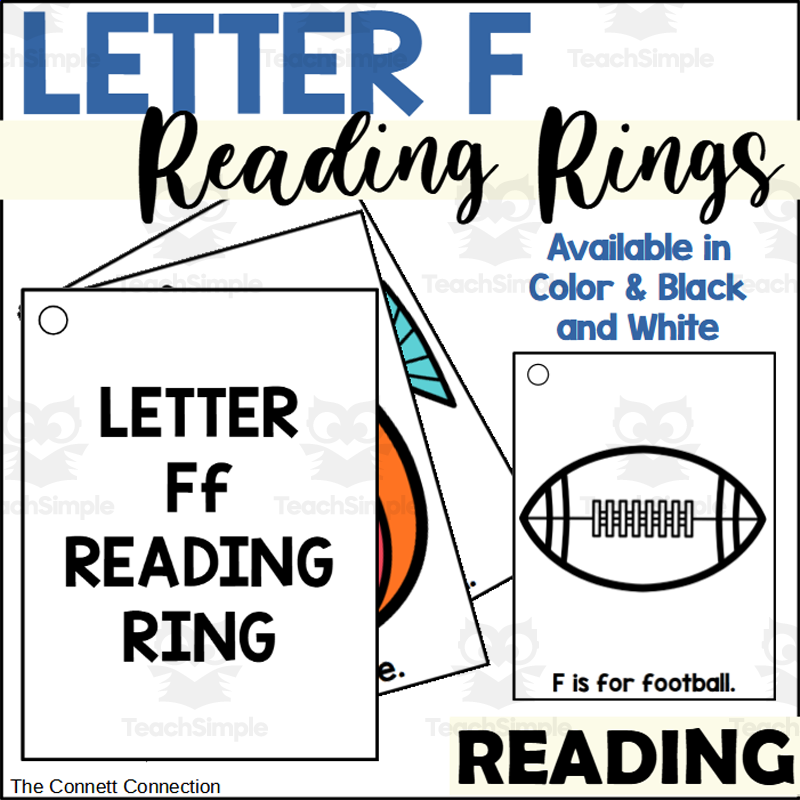
These letter F reading rings are great for students learning the beginning sound of the letter F. These reading rings give students simple sentences to introduce them to reading in the format of "F is for ____." These reading rings are suitable for preschool and kindergarten students who are learning the initial sound of the letter F and are ready to begin reading simple sentences. The reading rings include the following pages * F is for fairy. * F is for fan. * F is for fish. * F is for fire. * F is for feather. * F is for foot. * F is for football. * F is for fork. * F is for fox. * F is for frog. * F is for flower. When to Use: * Literacy Centers * Small Group Activity * Early Finisher Task * Reading Center * Independent Reading Activity * Take Home Book This rings are easy to create. The teacher just needs to print each page, laminate each card (if desired) and then, using a hole punch, the teacher needs to place a hold in the indicated corner of the card. The cards are then placed on a ring for students to flip through each letter F card. Skills Assessed * Letter Recognition * Beginning Sounds * Reading Simple Sentences These reading rings provide students with a fun and engaging way to practice reading simple sentences with words that begin with the letter F. In this set, you can create a set for classroom use and the students can use the black and white set to make a set to take home and read with their families.

Author The Connett Connection

Tags Letter F, Letter F Activities, Letter Of The Week, Alphabet Activities, Beginning Reader, Reading Center, Simple Sentences, Reading Activity

Let's Learn! Reading Readiness Activities

Let's Learn! Reading Readiness Activities
ELA, Reading, Kindergarten, Preschool, Grade 1, Activities

Let's Learn! Reading Readiness Activities An extraordinary teaching resource aimed at establishing a robust foundation for reading in youngsters. This package includes a comprehensive 32-page PDF stuffed with activities appropriate for early years language arts instruction focusing mainly on reading comprehension and vocabulary acquisition. Detailed Design with Progression in Mind Carefully crafted keeping the skill level of young learners in mind, Let's Learn! Reading Readiness Activities incorporates sequential exercises designed to build successively on previous knowledge. The system bolsters already developed cognitive skills whilst steadily presenting new concepts in an understandable way. Furthermore, it stimulates children to implement their newly acquired skills with multifaceted activities that keep them engaged while learning vital information. All-inclusive Activity Sheets The downloadable PDF encompasses 36 ready-to-use activity sheets that can effortlessly be incorporated into any syllabus or lesson plan making it adaptable for every instructional setting – independent study, small group teaching, entire classroom exercise or homework assignment method. Engaging Artwork with Every Page A unique feature of each page is the encompassing vibrant artwork purposefully created not just for visual allure but also constructing each task enjoyable and captivating for young minds. This fusion of eye-catching design promotes creativity alongside intellectual growth significantly contributing to the total learning encounter. An Invaluable Skills Matrix included within A tool that functions both as a tracking instrument and an instructional blueprint facilitating educators as they steer pupils through the insights introduced across each task performed. In Summary... Let's Learn! Reading Readiness Activities presents insightful content coverage blending age-suitable materials aligned flawlessly gliding along early childhood education standards practiced worldwide. It serves as an adaptable resource encompassing strategic techniques perfect for educators pursuing fresh approaches to enhance traditional methods and promote productive engagement among young learners.

Author Classroom Complete Press

Tags Alphabet Review, Short Essay Writing, Sight Words, Readiness Activities, Rhyming Poems

9th 100 Fry Sight Words: Bingo Cards

9th 100 Fry Sight Words: Bingo Cards
ELA, Reading, Language Development, Spelling, Vocabulary, Grade 3, 4, 5, Activities, Games

9th 100 Fry Sight Words: Bingo Cards An engaging and practical skill development tool specifically designed for Grade 3,4,5 students. These Bingo cards offer a unique approach to sight word learning with a particular focus on Language Arts aspects like Reading,Spelling, and Vocabulary. Bingo Game Structure: The simplistic structure of the game involves each player having a bingo card with sight words randomly placed within grid format. The signaling of these words by either teacher or an selected student forms the basic function while players mark off these pronounced words on their respective cards. A resultant line of five matched words whether vertically, horizontally or diagonally calls for victory! Educational Advantages: An interactive method for enhancing reading fluency amongst students. Involves repeated exposure to high-frequency sightwords leading reinforcement in understanding fundamental literacy facets. Makes learning more attractive process for kids. Versatility & Ease: This versatile design structure allows these bingo cards to be effortlessly adapted as per class requirements. Whether group activities or potent literary center tasks – this tool seamlessly adjusts! Your purchase comes with one downloadable PDF containing thirty pages that can easily be printed on US Letter Size paper. Sightword Range: 'addition', 'observe', 'safe', etc., this teaching aid aims at revamping conventional classroom methodologies into self-driven challenges! In light of the transition towards more interactive ways of learning in classrooms or homeschooling setups - This adaptable and exciting formative resource is just what you need!

Author TeacherYouWant

Tags Sight Words, Bingo Game, Literacy, Reading Fluency, Vocabulary

3-D Book Scenes Design Challenge

3-D Book Scenes Design Challenge
ELA, Reading, Not Grade Specific, Activities

3-D Book Scenes Design Challenge: An Innovative Teaching Resource The 3-D Book Scenes Design Challenge is an exciting teaching resource that immerses students into the world of their favorite books. It aims to inspire a deeper understanding of literary concepts, particularly in Language Arts and reading activities . Real-world Application This product establishes a connection between academic content standards and practical experiences, fostering a fun learning environment. Versatility and Usage This challenge can be effectively utilized in classrooms, Makerspace labs , Genius Hour sessions, STEM/STEAM classes or even for homeschooling. It also serves as an ideal tool for after-school programs that promote hands-on learning experiences. A Progressive Journey The 3-D Book Scenes Design Challenge guides students through progressive steps - from specifying the context to outlining specifications and limitations. It lists out relevant materials and tools needed for this adventure. Educators' toolkit: This resource comes with helpful tips providing insights throughout this immersive exercise which fosters problem-solving skills while cultivating innovative thinking among learners. Potential Advantages: Bolsters Collaboration Skills: Promotes Individual Focus:LWhen used individually, it encourages personalized approaches towards problem-solving. In short, The 3-D Book Scenes Design Challenge combines active involvement within literature's exciting realms with a platform where knowledge meets creativity—an ideal addition worth considering for modern educators striving to stimulate both academic growth and innovative creativity among learners.

Author WhyMaker

Tags 3-D Design, Book Scenes, Creative Challenge, Reading Activities, Problem-solving

Jets Reading Comprehension Passage - Cored Ed Encyclopedia

Jets Reading Comprehension Passage - Cored Ed Encyclopedia
ELA, Language Development, Resources for Teachers, Reading Comprehension, Reading, Pre-Reading, Science, Technology, Writing, Strategies, Grade 2, 3, 4, 5, Worksheets & Printables, Worksheets, Teacher Tools, Centers, Activities, Writing Prompts, Assessments, Tests, Quizzes and Tests, Quizzes

This jets reading comprehension contains the following: Visualize on the Cover (Teacher Read Aloud Script) Start your lesson by taking a few moments to visualize the topic and share thoughts or feelings about it. Pre-Reading Trivia Students will write down one thing they already know about the subject and then read five more facts and discuss. These facts are fun, and the students will enjoy learning about the subject before reading more. Reading Passage The text is a high-interest reading passage with set paragraphs, roughly three to four paragraphs long. It contains a variety of themes about the topic, anywhere from history to technology. The passage is between 250 and 350 words in length. Mixed Questions The first question page contains four multiple-choice questions, each with a choice of four answers, and three written response questions that require a sentence or two from the student. Vocabulary Questions Practice seven key words from the text in this section across two activities. First section is scrambled words where students will unscramble three words given a clue for each. The second section is a word to meaning matching activity. Creative Writing In this question, the student will be required to write a five to eight sentence paragraph on a question related to the topic. Extension Activities This page is optional for fast finishers or to take home. There are several activities, each one requiring a different skill. Do some, do none, do all, completely optional - but you will feel reassured knowing every possibility is planned for. Answer Key There are answers for the multiple-choice questions, written response questions have sample answers, vocabulary answers and if there is a summary question then a sample summary will be provided as well. FULL CATALOG OF DOWNLOAD LINKS AND ENCYCLOPEDIA INDEX HERE Lesson Snapshot Title: Jets Genre: Nonfiction (Informational Text) Subject: Science & Technology / Reading (Informational Text) Primary Topic: How jets move, engine parts, and high flight Estimated Guided Reading Level (A–Z): Q What This Lesson Teaches Best Explains the big idea behind jets using an action-and-reaction example (like a blown-up balloon zipping across a room). Describes how a jet engine makes thrust by pulling air in, squeezing it, heating it, and blasting it out the back. Builds technical understanding of engine parts and jobs (inlet, compressor, turbine, exhaust nozzle). Connects jet flight to conditions in the sky (air is thinner and smoother high above clouds; contrails can form when water vapour freezes). Adds brief history context about early jet-engine work and the first turbojet-powered flight date and plane name. Learning Goals Explain how a jet airplane is pushed forward when air or hot gas rushes out the back. Describe what happens inside a jet engine from the inlet to the exhaust nozzle. Identify the jobs of the compressor and turbine using details from the passage. Retell key history details about early jet designs and the first turbojet-powered flight mentioned. Describe what the air is like high above clouds and how that relates to jet travel. Explain how contrails can form according to the text. Key Vocabulary From the Text inlet — the front opening where air is pulled in. compressor — a part that squeezes air so it is packed tight. turbine — a wheel that takes energy from rushing gas. thrust — the push that moves an airplane forward. contrails — white lines that can form when water vapour freezes. Cored Ed Encyclopedia Overview The Cored Ed Encyclopedia is a weekly series of lessons that you can pick up and use right away. These short readings fit into whatever time you have available. Each one includes a warm-up, a reading, and a set of questions, but it’s flexible — you can do just the reading, the full lesson, or skip the writing section if you need to. Each lesson focuses on a single topic so students don’t get lost. The writing is clear but never childish, making it perfect for grades two through five. Topics range from animals and science to history, inventions, and everyday things. No matter the level of the student, everyone should take away at least one new idea or fact from each lesson. The materials are easy to print, easy to explain, and require no setup. They work well for whole-class teaching, partner work, or independent study.

Author Cored Education

Rating

Tags Vocabulary, Spelling, Reading Comprehension, Reading Passages, Reading, Creative Writing, Reading Strategies, Writing Prompts, Technology, Jets

Science Reading Comprehension Passage: How Sound Travels (Docs)

Science Reading Comprehension Passage: How Sound Travels (Docs)
Science, ELA, Reading, Reading Comprehension, Strategies, Resources for Teachers, Physics, Grade 6, 7, 8, 9, Writing Prompts, Worksheets & Printables, Centers, Activities, Teacher Tools, Assessments, Quizzes and Tests, Quizzes, Tests

Physical Science Reading Comprehension Passage and Questions: How Sound Travels (Docs) This very engaging Physical science reading passage is about how sound travels . More specifically, it explains that sound begins with vibrations , moves as a longitudinal wave through a medium such as air, liquid, or solid, and then reaches the ear. It also explains how the eardrum, ossicles, cochlea, auditory nerve, and brain work together so we can recognize pitch and loudness. The passage also corrects the misconception that sound travels fastest in air by explaining that sound often travels faster in solids because their particles are packed closer together. This passage is designed to bridge the gap between science and literacy through strengthening reading comprehension and sparking scientific curiosity in middle school students. The passage blends English Language Arts skills with accurate science content that supports NGSS classroom practice. Ideal for interdisciplinary learning in ELA and Science. Suitable for Grade 9 review, too! These worksheets are designed as fillable PDFs , which means students can type their answers directly into the document on any computer or tablet . Each page includes highlighted text fields that show them exactly where to type! Student Tasks for The Passage: 5 multiple-choice questions targeting main idea, key details, inference, vocabulary in context, and use of evidence 5 vocabulary matching items with clear, student-friendly definitions 5 text-based questions that require citing specific lines or facts 1 summary prompt that asks students to condense central ideas accurately Full answer key for every section Available Formats for this Resource PDF Fillable PDF Word Docs FULL CATALOG OF DOWNLOADING LINKS HERE Product Details Length: 5 pages total Grades: 6–8, also suitable for Grade 9 review Use cases: close reading, stations, homework, intervention, test prep, and sub plans Standards support: reinforces informational-text skills and supports NGSS-style sense making through observation, modeling, and clear use of claim, evidence, and reasoning Why Teachers Choose This Set Authentic science content paired with rigorous literacy practice Consistent task structure across all passages for easier planning and smoother student routines Clear, age-appropriate writing that builds confidence without oversimplifying Other Science Reading Collections you May find in the store: 1. Astronomy & Space Science 2. Volcanoes, Rocks, & Mountains 3. Rock Cycle, Soil, & Sinkholes 4. Mars, Glaciers, & Antarctica 5. Water Cycle, Acid Rain, & Wastewater 6. Insects, Animals, & Ecosystems 7. Bioluminescence & Insects 8. Animal Skin, Cats, & T. Rex 9. Human Body and Senses 10. Health & Applied Bioscience 11. Waves, Light, & Imaging 12. Electricity & Energy 13. Motion & Materials 14. Chemistry and Materials Science Use this set to reinforce ELA skills in science, to add literacy to your lessons, and to support independent work. The passages strengthen main idea, evidence use, vocabulary in context, inference, cause and effect, and summary writing. With ready-to-use assessments and complete answer keys, you can provide focused practice that is simple to run and fast to review.

Author Middle & High School - CORED Education

Rating

Tags Middle School, Reading Comprehension, Reading Strategies, ELA, Centers, Reading Passage, Assessments, Vocabulary, Physical Science, Physics

Oboes Reading Comprehension Passage - Cored Ed Encyclopedia

Oboes Reading Comprehension Passage - Cored Ed Encyclopedia
ELA, Language Development, Resources for Teachers, Reading Comprehension, Reading, Pre-Reading, Writing, Strategies, Music, Creative Arts, Grade 2, 3, 4, 5, Worksheets & Printables, Worksheets, Teacher Tools, Centers, Activities, Writing Prompts, Assessments, Tests, Quizzes and Tests, Quizzes

This oboes reading comprehension contains the following: Visualize on the Cover (Teacher Read Aloud Script) Start your lesson by taking a few moments to visualize the topic and share thoughts or feelings about it. Pre-Reading Trivia Students will write down one thing they already know about the subject and then read five more facts and discuss. These facts are fun, and the students will enjoy learning about the subject before reading more. Reading Passage The text is a high-interest reading passage with set paragraphs, roughly three to four paragraphs long. It contains a variety of themes about the topic, anywhere from history to technology. The passage is between 250 and 350 words in length. Mixed Questions The first question page contains four multiple-choice questions, each with a choice of four answers, and three written response questions that require a sentence or two from the student. Vocabulary Questions Practice seven key words from the text in this section across two activities. First section is scrambled words where students will unscramble three words given a clue for each. The second section is a word to meaning matching activity. Creative Writing In this question, the student will be required to write a five to eight sentence paragraph on a question related to the topic. Extension Activities This page is optional for fast finishers or to take home. There are several activities, each one requiring a different skill. Do some, do none, do all, completely optional - but you will feel reassured knowing every possibility is planned for. Includes summary writting question. Answer Key There are answers for the multiple-choice questions, written response questions have sample answers, vocabulary answers and if there is a summary question then a sample summary will be provided as well. FULL CATALOG OF DOWNLOAD LINKS AND ENCYCLOPEDIA INDEX HERE Lesson Snapshot Title: Oboes Genre: Nonfiction (informational text) Subject: Music (Performing Arts) / Reading Informational Text Primary Topic: How the oboe developed and works Estimated Guided Reading Level (A–Z): S Support pages included: Pre-reading trivia, mixed questions, vocabulary activities, creative writing, extension activities, and an answer key. Support-page QA note: The support page uses “orchestra” (singular) in a scrambled-word item, while the passage uses “orchestras” (plural). What This Lesson Teaches Best How the modern oboe developed from earlier instruments, including the shawm and hautbois , across time in Europe. How a double reed starts the oboe’s sound through vibrating and buzzing. How adding more keys helped players move faster and play more notes in tune. Why the oboe often gives the tuning note in an orchestra (clear, steady sound). Using section headings to organize and locate key facts in an informational passage. Learning Goals Students will be able to describe how the shawm relates to the modern oboe. Students will be able to explain what the double reed does to start the oboe’s sound. Students will be able to identify how the hautbois was different from the shawm. Students will be able to explain why new key systems were designed in the 1800s. Students will be able to describe why the oboe often gives the tuning note in orchestras. Students will be able to use the passage’s headings to find information quickly. Key Vocabulary From the Text shawm — a loud older double-reed instrument played long ago. hautbois — an early French version of the oboe. double reed — two reeds that vibrate to start the sound. tuning — matching the same pitch before playing together. blend — mix smoothly with other instruments. Cored Ed Encyclopedia Overview The Cored Ed Encyclopedia is a weekly series of lessons that you can pick up and use right away. These short readings fit into whatever time you have available. Each one includes a warm-up, a reading, and a set of questions, but it’s flexible — you can do just the reading, the full lesson, or skip the writing section if you need to. Each lesson focuses on a single topic so students don’t get lost. The writing is clear but never childish, making it perfect for grades two through five. Topics range from animals and science to history, inventions, and everyday things. No matter the level of the student, everyone should take away at least one new idea or fact from each lesson. The materials are easy to print, easy to explain, and require no setup. They work well for whole-class teaching, partner work, or independent study.

Author Cored Education

Rating 5

Tags Vocabulary, Spelling, Reading Comprehension, Reading Passages, Reading, Creative Writing, Reading Strategies, Writing Prompts, Oboes, Music

ENGLISH TEXT + 6 ANCHOR CHARTS | The Umbrella That Didn't Belong
Free Download

ENGLISH TEXT + 6 ANCHOR CHARTS | The Umbrella That Didn't Belong
Reading, ELA, Reading Comprehension, Strategies, Writing, Formal Writing, Creative Writing, Early Learning, Adult Education, Elementary, High School, Homeschool Resources, Middle School, Not Grade Specific, Activities, Worksheets & Printables, Teacher Tools, Anchor Charts, Charts, Quizzes and Tests

ENGLISH TEXT + 6 ANCHOR CHARTS | The Umbrella That Didn't Belong INTRODUCTION: We are EDITORIAL ARENAS EDUCATIVAS, and our mission is to produce a variety of educational materials so children can learn better and more effectively. We encourage you to visit our entire store to download our products. Also, remember that we produce reading, writing, math, and Spanish language learning materials. TAGS: COMPREHENSION,READING,READING AND COMPREHENSION,ANCHOR CHART. PLEASE FOLLOW ME AND GIVE ME A POSITIVE REVIEW OF MY PRODUCTS! Thnak you so much. MAIN DESCRIPTION OF THIS PRODUCT: 1) What specific skills are developed using this resource? Students will be able to develop their attention, concentration, creativity, and imagination skills. It will also allow students to develop their cognitive skills such as comprehension, analysis, and others. 2) Who is the ideal audience for this document? This document and/or teaching resource is primarily intended for young students, meaning those between the ages of 5 and 12, in other words, students in early childhood and/or primary education. However, it can also be used by the general public if required. 3) What recommendations are there for making the most of this resource? To make the most of this resource, I recommend first analyzing it, then looking at the specific topic your student needs to learn and assess whether my resource addresses it. I also ask you to consider how you will print it. 4) Is this material up to date with the latest educational changes? Yes, this material primarily addresses all learning theories about children, which tell us that children should learn in an educational and fun way. SECONDARY AND COMPLEMENTARY INFORMATION: 1) How many pages does the file contain in total? This educational document contains enough pages to make this resource ideal for promoting fun and successful learning. 2) Does this material allow for custom editing? This educational document is available in PDF format, so you cannot edit it. You simply need to download and then print it. 3) What main topic does the resource cover? This document has been developed to address a basic topic that children in kindergarten through elementary school should master. This document will also be helpful to the general public who want to learn.

Author EDITORIAL LAURA EDUCA

Rating

Tags FREE, FREE RESOURCES, ANCHOR CHART, READING, COMPREHENSION ANCHOR CHART, READING AND COMPREHENSION

An Song (MP3)

An Song (MP3)
ELA, Reading, Preschool, Kindergarten, Grade 1, Songs, Activities

This product is the AN Song, an MP3 that helps students recognize the sight word AN. This product can help build speed and fluency while reading for other teachers who are interested.

Author Have Fun Teaching

Tags Counting

Colorado State Flipbook (Capital, Bird, Flower, Flag, Animal)

Colorado State Flipbook (Capital, Bird, Flower, Flag, Animal)
Creative Arts, Art, Social Studies, ELA, History, History: USA, Geography, Reading, Reading Comprehension, Grammar, Language Development, Spelling, Writing, Grade 2, 3, 4, Activities

Colorado State Flipbook - Exploring Symbols (Capital, Bird, Flower, Flag, Animal) The Colorado State flipbook is an engaging and interactive educational resource providing a comprehensive perspective on the key symbols representative of Colorado. This teaching tool is designed to enrich learning experiences for Grade 2 through 4 students in public schools and homeschool settings. This easy-to-use flipbook encourages students' exploration and understanding of Colorado's significant symbols including its capital, Fbird, flower, Fflag, " + " . It offers a hands-on approach to research while improving their comprehension skills across different subjects including: -Art & Music; -Social Studies; i -Language Arts inclusive of Coloring; -History: USA; ]'> ] ' Spelling and Writing." ' By having each page formatted visually appealingly – drawing young learners into state-wide data immersion – the flipbook features four unique combinations with two printing options ( either cutting required or not ) and two design choices ( pictures inclusion or otherwise). The minimal preparatory requirements permit educators limitations within their core responsibilities: delivering content rather than logistical solutions. Hence this practical resource finds utility in diverse scenarios like: Enriching social studies/history discussions within small groups or whole class cohorts; Breathing life into writing lessons or centers stressing spelling correctness & grammar usage via research tasks. This resource also lends itself quite well to cross-curricular efforts such as: Incorporating art through drawing & coloring exercises correlated with geography identification tasks upon map review; Tackling science components focused on identifying native species like birds & flowers. The goal is to convert each student into a 'Coloradan' expert researcher. The design shows particular consideration towards diverse learners. Reading passages cater to voracious readers while curated videos draw visual-auditory types closer towards grasping intended subject matter. Additional interactive activities tie in kinesthetic learners, effectively targeting various learning types. Moreover, it's utility stretches beyond Colorado state - with comprehensive research tools embedded, students can apply the method developed here across all U.S states from Alabama through Wyoming making this flipbook the first step on a rewarding American journey channeling contextual exploration!

Author Heather Huhman

Tags Colorado Symbols, Flipbook, Colorado Capital, Colorado Bird, Colorado Flower

Phonics eBook Story for Short U Vowel Sound + Spelling Activities and Word Lists

Phonics eBook Story for Short U Vowel Sound + Spelling Activities and Word Lists
ELA, Language Development, Phonics, Reading, Spelling, Preschool, Grade 1, 2, Activities

This engaging story easily teaches your students that the Short U sound in words can be spelled in many ways. Break the monotony of endless disconnected lists and make learning to spell fun and meaningful. Our unique program uses stories and connected activities to help your children develop phonemic awareness and build phonics skills. ‘Stuck in the Mud' is a traditional narrative style storybook written by a teacher dedicated to bringing learning to life with stories. In this engaging story Doug and his brother are having fun building by the creek when suddenly it starts to rain. Children will love reading about their adventures in the mud and have fun learning to spell at the same time. The story contains 114 Short U vowel sound words, with the Short U letters printed in contrasting green to clearly show 6 different ways the Short U sound can be spelled. The storybook also includes differentiated word family lists, a reading comprehension quiz , homonyms, high frequency sight words, play based and cross curricular activities and a colouring page to support students in developing phonemic awareness and learning to decode sounds in words and letter sound correspondence Combining systematic spelling with story based learning this unique approach provides the context for phonics to make sense and brings spelling to life. Print or View PDF format to print as booklet or single pages, or view on any screen in single or double page format to suit

Author Clever Speller

Tags Phonics Activities, Spelling Activities, Story To Teach Spelling, Short U Vowel Sound, Phonemic Awareness, Word Study, Story Based Learning, Short U Word Families, Letter Sound Correspondence

Guided Reading Lesson Plan & Activities for Grade 4

Guided Reading Lesson Plan & Activities for Grade 4
Reading, ELA, Grade 4, Activities, Lesson Plans, Teacher Tools

Each child acquires reading skills in a unique manner and at their own pace, but you can assist in establishing a solid base through thoughtful, intentional teaching. Guided reading is a teaching method that includes small groups of 4-6 students collaborating with an instructor, concentrating on their specific reading skills and requirements. The small-group environment allows the teacher to monitor and customize teaching for every student. Years of studies indicate that this tight-knit method is impactful and successful. A key benefit of guided reading is its capacity to offer individualized teaching. In a small-group environment, educators can recognize every student's reading proficiency, strengths, and areas for improvement. This tailored method enables teachers to focus on particular skills and strategies essential for every child's growth. This comprehensive lesson outline will assist you in practicing guided reading with your fourth-grade students. The session lasts around 90 minutes, and the responses are included as well.

Author Bright Classroom Ideas Marketplace

Tags Guided, Reading, Lesson, Plan, Activities, Grade 4, Language

Speaking and Listening Would You Rather Set 3

Speaking and Listening Would You Rather Set 3
ELA, Reading, Reading Comprehension, Language Development, Vocabulary, Not Grade Specific, Activities

Speaking and Listening Would You Rather Set 3 is the first of 5 sets to engage your students in this game. Speaking and listening are important skills to practice with students. Many students have a hard time sharing their ideas out loud. Would You Rather questions are a great way to get all students involved. You could do just speaking and listening where you put the questions up and students share their answers. You could print out the questions and have students answer in groups. Or, you could have students write answers in complete sentences and then share. Would You Rather questions not only allow students to communicate with each other, it's a great opportunity for students to see who might have common interests. If students complete these in a group setting, there could be some great discussions that students have based on who has the same answers. If you choose to have students stand and give their answer in front of the class, you could have them just say their answer, or you could encourage them to give reasons why. Having them write the sentence first will also help them clearly state their answer.

Author Life with 5 Boys

Tags Speaking And Listening, Speaking And Listening Activities, Would You Rather Activities

AN Words Matching Mats

AN Words Matching Mats
ELA, Language Development, Phonics, Reading, Preschool, Grade 1, Activities

Students can practice reading comprehension skills with these AN word family mats. Students can practice reading AN words in isolation and in the context of sentences. The words in this set follow a CVC or CCVC spelling pattern. Included in this resource: This resource includes one word mat and one sentence mat, both for reading AN words in insolation and in context. There are also picture cards that correspond with each word and sentence. To complete this activity , students will read each AN word or sentence on the mat and then match the corresponding pictures. Students can work independently or with a partner to complete this activity . How to Use these AM word Family Mats: The students can simply lay the images on top of the word or sentence. They can be placed in a file folder utilizing hook and loop fasteners to attach the images. A magnetic activity can be created by using a baking sheet and magnets to affix the images. Students will love the hands-on nature of this activity . The bold and colorful images will capture students' attention, and the easy to recognize pictures are sure to keep students engaged in learning. These literacy activities allow students to practice target words both in the context of sentences and in isolation. Where can these mats be used? Literacy Center - Students can work independently or with a partner to read these words Morning Tub or Basket - The cards can be placed in a morning bin for students to work on as students arrive to class. Small Group Activity - The teacher can choose a small group of students or a specific group of words for students to work on in a small group setting with the teacher. Hands On Assessment - The teacher can use these to test students on reading the target words in context or in isolation. Skills assessed through this activity : Reading AN words in context of a sentence and in isolation Reading comprehension The low-prep nature of this AM words matching mats activity makes it an easy to assign activity . The mats simply need to be printed out, while the matching cards need to be printed and cut. Lamination is optional for increased durability. Once created, this resource can be used repeatedly in literacy centers or small group activities, providing ongoing support for students' learning journey.

Author The Connett Connection

Tags Literacy Center, Phonics Activity, Kindergarten Literacy, Matching Mats, Simple Sentences, Reading Comprehension, CVC Words, AN Words, AN Word Family

History of the Domestic Dog: Guided Reading Level R with Lesson Plan
Free Download

History of the Domestic Dog: Guided Reading Level R with Lesson Plan
ELA, Resources for Teachers, Reading Comprehension, Reading, Science, Language Development, Life Sciences, Vocabulary, History, Social Studies, Grade 3, 4, 5, Worksheets & Printables, Worksheets, Teacher Tools, Centers, Activities, Literacy Readers, Quizzes, Quizzes and Tests, Assessments, Lesson Plans

This History of the Domestic Dog (level r) guided reading book with lesson plan includes: Guided Reading Color Label (front cover x1) This is a quick way to match the book’s demands to what students can generally handle.. The overall goal is to use the level/color to pick books for several smaller groups. To qualify for a certain level, a student is expected to read a book from that level with about 90–94% accuracy. If a student is consistently accurate and understands, move up a level. If the student is struggling at that level, drop down and add more support. Each student will improve at completely different rates, but it is generally one of the best ways to check progress across the class. DOWNLOAD THE CATALOG TO VIEW ALL GUIDED READING BOOKS AVAILABLE (SORTED LEVELS A-Z) Pre-Reading Question (x1) Teacher asks the prompt aloud, can be while showing the cover or first page. Students share what they already know, or make educated guesses from the cover. Prompt them to use the target vocabulary. Write some of their responses on the board to look back at during the reading. Vocabulary Words (x5) Introduce the five words, best doing it one at a time. Start by saying it, while students repeat and then see if anyone knows what it means before reading further. Read through the meaning and try to briefly connect each word to a picture or gesture so it’s meaningful. Ask students to flip through the book pages and point to where they see each of the vocabulary words. While reading the book pause upon coming across one of the vocab words or read the sentence twice to make sure students understand the word has appeared. Optional: Ask students to raise hands whenever they see/hear one of the new words. Guided Reading Pages (x10) Check the book snapshot (below) for: primary topic - do you need to prep extra reading or intro materials on this? what is taught best - decide on 1-2 bullets to focus on, use the prompt or words provided here for best results. learning goals - what you are checking for students to be able to do after the session, elicit answers using prompts or words provided. key vocabulary (see section above). questions overview - so you know what is coming up and if you need to prep extra materials to assist understanding. Run the lesson You may have already looked at a few of the pages together, but you can show them some of the pictures again first to set meaning. Depending on how much time you have and how familiar your students are with guided reading class, you may want to read the book aloud first with the group first. Students whisper or partner read, while you listen in. If time, do it as a group, one student reading a page each. Use the guided page’s prompts to coach: “Check the picture / does it make sense?” “Point under the words / try the first sound” “Reread the sentence smoothly”. Try to focus more on one student per session (rotating every time), so you can work out if they are ready to move up or need to move down a level. Comprehension Questions (back cover x3) This is your way to check that students didn’t just say the words, but actually understood the text. First, let students answer by pointing to the page/picture and saying a short sentence. After any answer, follow with: “Show me where you found that in the text.” In bigger groups, have partners answer first (10–20 seconds), then call on 2–3 students to share. Differentiation tips: Emerging speakers/struggling readers: oral + pointing On-level: oral in a full sentence Higher: one written sentence or draw + label Book Snapshot Title: The Science and History of the Domestic Dog Genre: Nonfiction (informational) Subject: Life Science Primary Topic: Domestication, traits, and roles of dogs Estimated Guided Reading Level (A–Z): R What This Book Teaches Best Explains dogs’ biological connection to gray wolves , including shared DNA and instincts tied to social behavior and communication. Describes the history of domestication and how human artificial selection led to many distinct dog breeds. Uses specific evidence to show why dogs have exceptional smell and hearing (brain structures, scent receptors, and hearing frequencies). Shows how selective breeding creates specialists for different jobs (speed, herding, cold-weather survival, and service work). Teaches how to read dog communication signals (tail wag speed/height, ear position, facial muscles, back posture). Learning Goals Explain how the text connects domestic dogs to gray wolves using specific evidence (classification and DNA). Describe how domestication began and how humans’ breeding choices created many breeds over time. Identify details that show why dogs can smell better than humans (olfactory bulb and scent receptors). Identify details that show why dogs can hear better than humans (frequencies and ear muscles). Compare at least two breeds in the text by explaining how traits match their work or environment (speed, herding, cold climate, service). Describe what the text says people can look for to understand a dog’s emotional state. Key Vocabulary From the Text subspecies — a smaller group within a kind of animal. domestication — animals becoming used to living with people. olfactory — having to do with smell. frequencies — how high or low a sound is. resilient — able to handle hard conditions and keep going. Discussion Prompts Pre-reading question: What jobs or tasks have you seen dogs do for people? Comprehension questions: According to the text, how are domestic dogs connected to gray wolves? Comprehension questions: What evidence does the text give to show how powerful a dog’s sense of smell is? Comprehension questions: What signs does the text say people can look for to understand a dog’s emotional state? Printing Tips 1. Best Printing Method (Recommended) “Booklet” Printing (Best if Available) If your printer or PDF viewer supports Booklet Printing , use this. Settings to use: Print mode: Booklet Paper size: Letter or A4 (either works) Orientation: Landscape Print on both sides: Yes Flip on: Short edge Scaling: Fit to printable area Booklet subset: First test: Front sides only Then: Back sides only This will automatically: Pair pages correctly Put the cover on the outside Align everything for folding After printing, fold in half and staple along the spine . 2. If “Booklet” Printing Is NOT Available You can still print this correctly with manual duplex printing . Step-by-step: Open the PDF. Choose Print . Set: Orientation: Landscape Pages per sheet: 1 Print on both sides: Yes Flip on: Short edge Print all pages . Because each PDF page already contains two facing book pages, the result will still fold cleanly into a book. Thousands of Cored Education products are included with your TeachSimple membership. Download links and encyclopedia index available here.

Author Cored Education

Rating

Tags Reading Comprehension, Reading Passages, Reading, Guided Reading, Guided Reading Lesson Plan, Guided Reading Activity, Pre-reading, Science Lesson Plans, Life Science, History

Owls Reading Comprehension Passage - Cored Ed Encyclopedia

Owls Reading Comprehension Passage - Cored Ed Encyclopedia
ELA, Language Development, Resources for Teachers, Reading Comprehension, Reading, Pre-Reading, Writing, Science, Animals, Life Sciences, Grade 2, 3, 4, 5, Worksheets & Printables, Worksheets, Teacher Tools, Centers, Activities, Writing Prompts, Assessments, Tests, Quizzes and Tests, Quizzes

This owls reading comprehension contains the following: Visualize on the Cover (Teacher Read Aloud Script) Start your lesson by taking a few moments to visualize the topic and share thoughts or feelings about it. COMPANION VIDEO NOW AVAILABLE (EMBEDDED AFTER PREVIEW PICTURES IN PRODUCT DESCRIPTION) Pre-Reading Trivia Students will write down one thing they already know about the subject and then read five more facts and discuss. These facts are fun, and the students will enjoy learning about the subject before reading more. Reading Passage The text is a high-interest reading passage with set paragraphs, roughly three to four paragraphs long. It contains a variety of themes about the topic, anywhere from history to technology. The passage is between 250 and 350 words in length. Mixed Questions The first question page contains four multiple-choice questions, each with a choice of four answers, and three written response questions that require a sentence or two from the student. Vocabulary Questions Practice seven key words from the text in this section across two activities. First section is scrambled words where students will unscramble three words given a clue for each. The second section is a word to meaning matching activity. Creative Writing In this question, the student will be required to write a five to eight sentence paragraph on a question related to the topic. Extension Activities This page is optional for fast finishers or to take home. There are several activities, each one requiring a different skill. Do some, do none, do all, completely optional - but you will feel reassured knowing every possibility is planned for. Includes summary writting question. Answer Key There are answers for the multiple-choice questions, written response questions have sample answers, vocabulary answers and if there is a summary question then a sample summary will be provided as well. FULL CATALOG OF DOWNLOAD LINKS AND ENCYCLOPEDIA INDEX HERE Lesson Snapshot Title: Owls Genre: Nonfiction (informational text) Subject: Life Science (animals) / Reading Informational Text Primary Topic: How owls hunt, live, and help ecosystems Estimated Guided Reading Level (A–Z): S What This Lesson Teaches Best How owls are birds of prey in a group called Strigiformes , with more than 200 kinds , and most hunt alone and mostly at night. How an owl’s facial disc works “like a satellite dish” to gather tiny sounds and guide them toward its ears. How owl bodies help hunting: wing feathers let air pass quietly, and owls turn their heads (nearly 270 degrees ) because their eyes stay fixed. How scientists sort owls into two main families— Tytonidae and Strigidae —and how owls live in many habitats worldwide (with a few exceptions). How pellets and nest boxes connect owls to people today (learning what was eaten, helping keep mouse numbers down, and supporting safe nesting). Learning Goals Students will describe what the text says about how many kinds of owls there are and when most owls hunt. Students will explain how a facial disc helps an owl find prey using details from the passage. Students will describe two body features that help owls hunt quietly and accurately. Students will identify the two main owl families named in the text and one detail about each. Students will explain what an owl pellet is and how it helps students and scientists learn. Students will name habitats where owls can live and describe one way people can help owls near fields and barns. Key Vocabulary From the Text Strigiformes — a group name for owls. facial — related to the face. parliament — a name for a group of owls. Tytonidae — the barn owl family. pellets — dry bundles of fur and bones owls cough up. Cored Ed Encyclopedia Overview The Cored Ed Encyclopedia is a weekly series of lessons that you can pick up and use right away. These short readings fit into whatever time you have available. Each one includes a warm-up, a reading, and a set of questions, but it’s flexible — you can do just the reading, the full lesson, or skip the writing section if you need to. Each lesson focuses on a single topic so students don’t get lost. The writing is clear but never childish, making it perfect for grades two through five. Topics range from animals and science to history, inventions, and everyday things. No matter the level of the student, everyone should take away at least one new idea or fact from each lesson. The materials are easy to print, easy to explain, and require no setup. They work well for whole-class teaching, partner work, or independent study.

Author Cored Education

Rating

Tags Vocabulary, Spelling, Reading Comprehension, Reading Passages, Reading, Creative Writing, Reading Strategies, Writing Prompts, Owls, Life Science

Letter C Emergent Reader

Letter C Emergent Reader
ELA, Language Development, Phonics, Reading, Kindergarten, Preschool, Activities

This letter C emergent reader is a great book for practicing beginning sounds. This book is a low prep activity for students to make and take home to practice the initial sound of the letter C. These beginning readers are perfect for any preschool or kindergarten classroom where students are learning about letters and letter sounds. Students can be guided to color each picture first and then cut the pages apart. There are two emergent reader pages for each printed page. The pages will then be stapled together in a book for students to read over and over to practice the letter C sound. All pictures in this book focus on the initial /c/ sound. This emergent reader includes a cover page and seven different "C is for..." pages that all focus on the most common sound of the letter C in the initial position of the word. When to Use: * Literacy Center * Reading Center * Small Group Activity * Independent Activity * Emergency Sub Plans * Use as mini books in a class library These alphabet emergent readers make great student made books for them to take home and read with their families or for placing in a class library for students to read again and again during center time. Skills Assessed: * Letter Recognition * initial Sound of the Letter C * Reading simple sight words * reading simple repetitive sentences For similar resources, visit my store!

Author The Connett Connection

Tags Letter C, Letter C Activities, Letter C Emergent Reader, Emergent Reader, Beginning Reader, Alphabet Activitiy, Alphabet Emergent Reader, Preschool Reader

Alphabet Story Book | Letter T Interactive Book

Alphabet Story Book | Letter T Interactive Book
ELA, Reading, Kindergarten, Preschool, Grade 1, Activities

This resource is an Alphabet Story Book for the Letter T. Within this interactive book, you will find: -A vocabulary list -Pictures to cut and glue -An original story This story book provides great introduction and practice for learning letters and their sounds. There are an endless amount of ways you can utilize these letter books in your classroom. These stories can also be enjoyed on YouTube: https://www.youtube.com/playlist?list=PLIIm-PSqtVdou8Uy1SZfH-6mLuV1X8GEP .

Author Golden Promise

Tags Reading Activity, Short Story, Cut And Paste, Letter T