



3,931 products added recently
Page 55 - ELA Activities
Explore a variety of ELA activities designed to enrich your students' learning experience. From reading comprehension exercises to creative writing prompts, these resources support the development of essential literacy skills. Engage your class with interactive lessons that foster a love for language and literature. These activities are suitable for various grade levels and can be seamlessly integrated into your curriculum, helping you create dynamic and effective English Language Arts lessons.

 Show filters


Happy Like Soccer, by Maribeth Boelt Interactive Read-Aloud Activities
ELA, Reading, Reading Comprehension, Grade 2, 3, 4, Read Alouds, Activities
This picture book companion is a comprehensive supplemental resource for Happy Like Soccer, by Maribeth Boelts. It includes 35 ready-to-use, print-and-go activities designed to meet the needs of all learning levels. Created with teachers in mind, this resource saves you time while providing students with engaging opportunities to demonstrate their understanding and newly acquired knowledge through interactive read-alouds. The activities cover a range of skills, from basic comprehension to critical thinking. INCLUDED IN THIS RESOURCE: Making Predictions Judging by the Cover Story Elements Sequencing Recalling Events in Chronological Order Summary Story Event Sort Cause and Effect Making Connections Making Inferences Making Inferences Character Traits (Sierra) Character Traits (Sierra) Character Traits (Sierra, Auntie, & Coach Marco) Character Inside & Out (Sierra) Character Inside & Out (Auntie) Character Inside & Out (Coach Marco) Character Feelings (Sierra) Character Development (Sierra) Character Change (Sierra) Overcoming Obstacles Acrostic Poem Sketch a Scene From the Story Setting the Scene Thinking About the Text Thinking Beyond the Text Theme Descriptive Language Author's Message Dear Diary Caught on Social Media Crossword Puzzle Word Search Puzzle Wait... There's More! Book Review This resource is for extension read-aloud activities only. The book is not included.
Author Creatively Gifted
Tags Reading Comprehension, Reading, Upper Elementary Reading, Picture Book , Read-aloud Activities, Interactive Read-aloud Activities, Book Companion, ELAR

Life Science Reading Comprehension Passage: Blood (Docs)
Science, ELA, Reading, Reading Comprehension, Strategies, Resources for Teachers, Life Sciences, Biology, Grade 6, 7, 8, 9, 10, Writing Prompts, Worksheets & Printables, Centers, Activities, Teacher Tools, Assessments, Quizzes and Tests, Quizzes, Tests
Life Science Reading Comprehension Passage and Questions: Blood (Docs) This very engaging science reading passage is about blood and the many essential jobs it performs throughout the human body . It explains how red blood cells and hemoglobin carry oxygen, how plasma transports nutrients, hormones, and wastes, how white blood cells help fight infection, and how platelets help stop bleeding. Students also learn how blood supports homeostasis, why blood types and safe transfusions matter, and how donated blood can help patients during surgery, after accidents, and during medical treatment. This passage is designed to bridge the gap between science and literacy by strengthening reading comprehension while sparking scientific curiosity in middle school students. It blends English Language Arts skills with accurate science content, helping students build background knowledge, understand key concepts, use evidence from the text, and explain scientific ideas clearly. This resource supports science classroom practice while also reinforcing important literacy skills such as main idea, vocabulary, comprehension, and summarizing. Ideal for interdisciplinary learning in ELA and Science. Suitable for Grade 9 review, too! Student Tasks for The Passage: 10 multiple-choice questions targeting main idea, key details, science concepts, comparison, and real-world applications 10 True/False statements to check understanding and address common misconceptions 5 text-based short-answer questions that require students to explain important ideas from the passage 5 vocabulary matching items with clear, student-friendly definitions 1 summary prompt that asks students to condense the central ideas accurately Full answer key for every section Available Formats for this Resource PDF Fillable PDF Word Docs FULL CATALOG OF DOWNLOADING LINKS HERE Product Details Length: 7 pages total Grades: 6–8, also suitable for Grade 9 review Use cases: close reading, stations, homework, intervention, test prep, and sub plans Standards support: Reinforces informational-text skills and supports NGSS-style sense-making by helping students read scientific explanations, connect evidence to key concepts, interpret real-world examples, and explain cause-and-effect relationships in science. Why Teachers Choose This Set Authentic science content paired with rigorous literacy practice Consistent task structure across all passages for easier planning and smoother student routines Clear, age-appropriate writing that builds confidence without oversimplifying Other Science Reading Collections and Topics You May Find in the Store: 1. Astronomy & Space Science 2. Volcanoes, Rocks, & Mountains 3. Rock Cycle, Soil, & Sinkholes 4. Mars, Glaciers, & Antarctica 5. Water Cycle, Acid Rain, & Wastewater 6. Insects, Animals, & Ecosystems 7. Bioluminescence & Insects 8. Animal Skin, Cats, & T. Rex 9. Human Body and Senses 10. Health & Applied Bioscience 11. Waves, Light, & Imaging 12. Electricity & Energy 13. Motion & Materials 14. Chemistry and Materials Science 15. Electromagnetism 16. Acids and Bases 17. Gas Laws 18. Biotechnology 19. Periodic Trends 20. Protists and Fungi 21. Microevolution 22. Blood 23. Chemical Bonding 24. Magnets 25. Muscles 26. Nuclear Chemistry 27. Electromagnetic Devices 28. Epigenetics 29. The Law of Conservation of Mass 30. Atomic Models 31. Isotopes and Ions 32. Light 33. Human-Environment Interaction 34. Theory of Evolution 35. Photosynthesis 36. Origins of Life and Early Earth 37. Gene Expression and Regulation 38. Thermochemistry 39. Allergies 40. Coevolution 41. Birth to Adulthood 42. Cells 43. Entropy and Free Energy 44. The Human Brain 45. Mixtures and Solutions 46. Invertebrates 47. Zoo Animals 48. Biochemistry 49. Animal Behavior 50. Population Ecology ...and many more engaging science reading passages that cover intriguing and important topics designed to spark curiosity and support student learning. Use this passage to reinforce ELA skills in science, to add literacy to your lessons, and to support independent work. The passages strengthen main idea, evidence use, vocabulary in context, inference, cause and effect, and summary writing. With ready-to-use assessments and complete answer keys, you can provide focused practice that is simple to run and fast to review.
Author Middle & High School - CORED Education
Rating
Tags Middle School, Reading Comprehension, Reading Strategies, ELA, Centers, Reading Passage, Assessments, Vocabulary, Biology, Life Science

Little Red Riding Hood Lapbook Project Reading & Writing Grade 3 4 5
Children’s Literature, Literature, ELA, ESL, Language Development, Reading Comprehension, Reading, Strategies, Grade 3, 4, 5, Activities, Centers, Crafts, Projects
Explore the wonders of the woods with the adventurous Little Red Riding Hood through this Little Red Riding Hood Lapbook Project . Created for Grades 3, 4, 5, homeschoolers and EFL/ESL learners, this fantastic is perfect for reading classes, fairy tale units, reading centers, supplemental assessment tool for reading comprehension activities and so much more! What’s Inside: 3 Little Red Riding Hood Lapbook Differentiated Reading Passages (Easy, Average, Hard) 6 Little Red Riding Hood Lapbook Themed Lapbook Covers 2 Little Red Riding Hood Lapbook Name Page Formats 1 Little Red Riding Hood Lapbook Inner Overlap 3 Little Red Riding Hood Lapbook Story Summary Pages (supporting comprehension & voice) 2 Little Red Riding Hood Lapbook Theme & Message Pages 2 Little Red Riding Hood Lapbook Story Sequence Pockets 6 Little Red Riding Hood Lapbook Story Sequence Photocards 3 Little Red Riding Hood Lapbook Story Sequence Sets (6 cards each: Easy, Average, Hard) 6 Little Red Riding Hood Lapbook Story Retell Cards 1 Little Red Riding Hood Lapbook Character Traits Fold 1 Little Red Riding Hood Lapbook Story Setting Fold 1 Little Red Riding Hood Lapbook Extra Elements Fold 1 Little Red Riding Hood Lapbook Story Ratings Page 1 Little Red Riding Hood Lapbook Personal Reflection Fold
Author It's Teacher L
Rating
Tags Fairy Tale, Reading Comprehension Project, ELA Project, Little Red Riding Hood, Reading Centers

Letter T Song (Original Music Video)
ELA, Language Development, Phonics, Preschool, Kindergarten, Grade 1, 2, Songs, Activities
The Letter T Song is a great resource for teachers to help their students learn about the letter T. The video goes over letter sounds, vocabulary words, and letter formation. This is a great tool for teachers to help their students learn about the letter T.
Author Have Fun Teaching
Tags Alphabet, Phonics, Have Fun Teaching Letter T Song, T.song, Learning Letter T

10th 100 Fry Sight Words, Color by Sight Words Game - SET 9 (a)
ELA, Reading, Language Development, Spelling, Vocabulary, Grade 3, 4, 5, Activities
The 10th 100 Fry Sight Words, Color by Sight Words Game - SET 9 (a) Designed to promote learning in young readers, this educational resource focuses on sight words practice for students in grades three through five. This unique tool integrates language arts subjects like reading, spelling, and vocabulary into engaging and effective interactive activities. Making sight words enjoyable becomes easy with these worksheets. They feature an attractive blend of color-coding and text association techniques: each sheet displays colored boxes with corresponding colored sight words listed at the top. Learners complete the activity by coloring boxes linked to their respective sight words above. Beyond Design: Catering to Different Learning Styles The value of these worksheets extends beyond their design—by catering to various learning styles, they particularly benefit visual learners. The color-coding technique works as a valuable memory aid that strengthens word recognition effectively. Incorporating Motor Skills Development Fostering hand-eye coordination enhancement, fine motor control improvement, and encouragement of concentration span are some benefits associated with these coloring activities while keeping engagement high. Distribution: Use them within classrooms for whole-group activities or engage small groups during breakout sessions; have them as homework assignments for consistent reinforcement at home—making it effective even for homeschoolers or tutors seeking one-on-one reading skills improvement. Coverage: These worksheets branch out broadly—it includes various common terms that children frequently encounter across texts offering ample practice opportunities. In Summary Aiming towards enriching young learners’ reading abilities in the most engaging yet productive manner,—The 10th Fry Sight Words PDF—boasts fifteen vibrant, carefully crafted pages, promising to be a worthy partner for advancing young readers' word recognition abilities through experiential and purposeful learning sessions.
Author TeacherYouWant
Tags Sight Words, Color Coding, Interactive Activities, Reading Mastery, Motor Skills
Reading Passage 32: Vertebrates (Google Forms)
ELA, Reading, Reading Comprehension, Science, Life Sciences, Biology, Common Core, ESL, Language Development, Spelling, Grade 5, 6, 7, Centers, Activities, Assessments, Teacher Tools, Tests, Quizzes and Tests
Free Reading Passage on Vertebrates for Life Science What's inside this free product? Science Reading Comprehension Passage: Vertebrates Independent Google Forms Version: This is the independent Google Forms version containingone lesson. Product Info: 1 form (US English with Answers) Google Forms Version Teaching Duration: 90 Minutes Science Reading Comprehension Outline: Introducing a comprehensive resource tailored for 5th and 6th graders, this product offers enriching reading passages supplemented with illustrative pictures and graphs to clarify key concepts. Aligned with the Common Core State Standards (CCSS), it offers a hassle-free approach to teaching, given that the bulk of the preparation is already done for you. The passages present a diverse set of questions – from multiple choice to data analysis and fill-in-the-blanks. This ensures a rich blend of high-interest content and fundamental curriculum-based science themes. With its versatility, you can seamlessly integrate these lessons into various classroom settings, whether it's whole class discussions, morning exercises, independent desk tasks, small group engagements, contingency plans for substitute teachers, regular homework assignments, or even themed activities for holidays. FULL CATALOG OF DOWNLOAD LINKS HERE Grade 5/6 Links: Physical Science Part 1 - Physical and Chemical Properties Google Docs/Slides/Forms PDF PPT Word Free Supplementary Pack Accompanying Videos Physical Science Part 2 - Motion and Energy Google Docs/Slides/Forms PDF PPT Word Free Supplementary Pack Accompanying Videos Physical Science Part 3 - Electricity and Magnets Google Docs/Slides/Forms PDF PPT Word Free Supplementary Pack Accompanying Videos Life Science Part 1 - Cells, Reproduction and Genetics Google Docs/Slides/Forms PDF PPT Word Free Supplementary Pack Accompanying Videos Life Science Part 2 - Human Body Systems Google Docs/Slides/Forms PDF PPT Word Free Supplementary Pack Accompanying Videos Life Science Part 3 - Plant Parts and Ecosystems Google Docs/Slides/Forms PDF PPT Word Free Supplementary Pack Accompanying Videos Earth Science Part 1 - Plate Tectonics and Rock Cycle Google Docs/Slides/Forms PDF PPT Word Free Supplementary Pack Accompanying Videos Earth Science Part 2 - Ocean Exploration and Natural Resources Google Docs/Slides/Forms PDF PPT Word Free Supplementary Pack Accompanying Videos Earth Science Part 3 - Weather and Solar System Google Docs/Slides/Forms PDF PPT Word Free Supplementary Pack Accompanying Videos For similar products and other frees, do check out Cored Group on TeachSimple .
Author Cored Education
Tags Science, Elementary, Reading, Comprehension, Vocabulary, Answers, Physics, Physical Science, Ccss, Digital Centers

Astronomy: A student’s book: history & facts about telescopes project
Social Studies, ELA, Biographies, Writing, Science, Inventors, Earth and Environmental Sciences, Space, Grade 4, 5, 6, 7, Activities, Projects, Worksheets & Printables, Worksheets
Astronomy: A student’s book: history & facts about telescopes project This Astronomy: A student’s book: history & facts about telescopes project is a booklet on the history/facts about telescopes and the lives of seven different inventors! Students are to research the information necessary to complete this Astronomy: A student’s book: history & facts about telescopes. Students are sure to increase their knowledge concerning tools of astronomy as well as the parts of the telescope. Additionally, there are opportunities for students to practice their essay writing skills with specific topics. There are 2 Quizzes included in this booklet as well as the Answer keys for easy checking. This Astronomy: A student’s book: history & facts about telescopes project includes the following TABLE OF CONTENTS: 1 Just what is a telescope? 2 Terminology 3 Parts of a telescope (Refracting telescope-fill in 3 a Answer key: Parts of a Refracting telescope 3 b: Research/Respond: What are the parts of a Reflecting Telescope? 4 Essay #1: How do telescopes work 5 Different types of telescopes 6 Essay #2 7 Essay #3: What is Optics 8 What is an observatory? 9 What is a planetarium? 10 What is the difference between a telescope and a periscope? 11 Leonardo da Vinci 12 Galileo Galilei 13 Hans Lippershey 14 Zacharias Janssen 15 Isaac Newton 16 Lyman Spitzer 16 a Edwin Hubble: His discoveries/ Hubble Telescope 17 Word Jumble/ Science Vocabulary 18 Answer key: Word Jumble 19 Word Search 20 Quiz #1:Fill in Facts about telescopes 21 Answer key: Quiz: Facts about telescopes 22 Mystery Quote Challenge 23 Answer key: Mystery Quote Challenge 24 Quiz #2: James Webb Telescope 25 Answer key: Quiz #2: James Webb Telescope This Astronomy: A student’s book: history & facts about telescopes project contains 32 pages and it is ready to print and use!
Author THE LANTERN OF KNOWLEDGE
Tags Astronomy, Telescopes, Da Vinci, Galileo, Hans Lippershey
Earthquakes Reading Comprehension Passage - Cored Ed Encyclopedia
ELA, Reading Comprehension, Reading, Science, Technology, Social Studies, Earth and Environmental Sciences, Geography, Pre-Reading, Language Development, Grade 2, 3, 4, 5, Worksheets & Printables, Worksheets, Teacher Tools, Centers, Activities, Writing Prompts, Assessments, Quizzes and Tests, Quizzes, Lesson Plans
This earthquakes reading comprehension with lesson plan includes: Visualization (on the front cover) Start your lesson by taking a minute to think and share something about the topic. Read the script aloud (slowly), perhaps prepare some music or sound effects. Student close their eyes and let their imaginations wander. Students open their eyes, read the question aloud and give them a few minutes to complete. Ask a few students to share or keep answers until the end to compare with what they learn in the passage. Quick pause—thousands of Cored Education products are included with your TeachSimple membership. Download links and encyclopedia index available here. Pre-Reading Trivia Students will write down one thing they already know about the subject and then read five more facts and discuss. These facts are fun, and the students will enjoy learning about the subject before reading more. Give 1 minute for students to write what they already know (no pressure—best guess is fine). Read the five facts together. After each fact, do ask a student for their opinion, was it surprising? Set a purpose by asking students to highlight/underline one fact they want to learn more about during the reading. Reading Passage The text is a high-interest reading passage with set paragraphs, roughly three to four paragraphs long. It contains a variety of themes about the topic, anywhere from history to technology. The passage is between 250 and 350 words in length. First, ask students to look at the headings and see what they’ll learn about today. What do they know about the topic/heading? First read options: Teacher read-aloud (best for support). Partner reading (paragraph by paragraph). While reading, students underline important details, and vocabulary words they think may come up in the questions section. Mixed Questions The first question page contains four multiple-choice questions, each with a choice of four answers, and three written response questions that require a sentence or two from the student. Students complete the mcqs first independently, then review quickly as a class. For the 3 written responses, try to get students giving the answer with some form of evidence: “I think ___ because the text says ___.” If students get stuck, send them back to check the passage. Vocabulary Questions Practice seven key words from the text in this section across two activities. First section is scrambled words where students will unscramble three words given a clue for each. The second section is a word to meaning matching activity. Before starting, have some students read out words they underlined in the passage. Ask students to say the word and read aloud the sentence(s) around each word. Ask students to do scrambled words and the matching exercise in pairs then go through answers as a class. For the scrambled spelling task, get four pairs to come up to the board and write the words for extra practice with the other student reading out the clue. For the matching task, prompt students to give full sentences: “I matched ___ with ___ because ___.” Creative Writing In this question, the student will be required to write a five to eight sentence paragraph on a question related to the topic. Before starting, ask students write down 3 key ideas they are going to include in their piece. Ask students for ideas to share around the class to help those struggling. Pro writing expectations: 5–8 sentences At least 2 facts or details from the passage At least 2 vocabulary words from the previous page Students read their paragraphs while classmates listen for facts and vocabulary words. Extension Activities This page is optional for fast finishers or to take home. There are several activities, each one requiring a different skill. Do some, do none, do all, completely optional - but you will feel reassured knowing every possibility is planned for. Includes summary writting question and additional facts. Answer Key There are answers for the multiple-choice questions, written response questions have sample answers, vocabulary answers and if there is a summary question then a sample summary will be provided as well. Lesson Plan Included Customized lesson plan for this lesson is included. Lesson Snapshot Title: Earthquakes Genre: Nonfiction (Informational Text) Subject: Science (Earth Science) / Reading (Informational Text) Primary Topic: How earthquakes happen and how people prepare Estimated Guided Reading Level (A–Z): N What This Lesson Teaches Best Explains what causes earthquakes : rocks can get stuck along a fault , pressure builds, and rocks suddenly slip. Builds understanding of earthquake vocabulary and concepts (fault, seismic waves, epicenter, focus, magnitude, intensity). Shows how scientists measure and describe earthquakes using seismometers and “magnitude” vs. “intensity.” Describes where quakes happen more often (where tectonic plates meet , including the Pacific Ocean’s Ring of Fire ) and what can follow ( aftershocks , possible tsunami ). Connects science to safety and preparedness , including “ Drop, Cover, and Hold On ,” retrofits, and warning systems. Learning Goals Students will be able to describe how pressure can build along a fault and lead to an earthquake. Students will be able to identify and explain the meanings of key earthquake terms used in the text. Students will be able to explain how seismic waves relate to ground shaking and the epicenter . Students will be able to compare “magnitude” and “intensity” as described in the passage. Students will be able to describe why some places experience more earthquakes than others (plate boundaries, Ring of Fire). Students will be able to list actions people and communities take to be ready for earthquakes. Key Vocabulary From the Text fault — a crack where rocks can slip. seismic — related to shaking waves moving through Earth. epicenter — the spot above where the break happened. seismometers — tools that trace wiggly lines when waves pass. aftershocks — smaller earthquakes that can follow a big quake. FULL CATALOG OF DOWNLOAD LINKS AND ENCYCLOPEDIA INDEX HERE
Author Cored Education
Rating
Tags Vocabulary, Reading Comprehension, Reading Passages, Lesson Plans, Ela Lesson Plans, Reading Comprehension Lesson Plans, Pre-reading, Science Lesson Plans, Geography, Earth Science

5th Grade Morning Work | 180 Days Review | Math & ELA | 2nd Quarter
ELA, Math, Grade 5, Centers, Activities, Lesson Plans, Teacher Tools, Worksheets & Printables
Grade 5 Morning Work | 2nd Quarter Student Pages + Full-Year Teacher Resources Keep your fifth grade mornings purposeful and easy to manage with 45 days of Grade 5 morning work for Quarter 2 . This resource includes ALL teacher resources for the complete 180-day program , while the student practice pages in this pack are specifically for 2nd Quarter: Days 46–90 . What’s Included ⭐ FULL-YEAR TEACHER RESOURCES You receive the complete teacher toolkit for planning, organizing, differentiating, and assessing the entire 180-day Grade 5 morning work program : Teacher Guide Full 36-week Pacing Guide Skills Checklist for tracking student progress Fully Editable Morning Work Schedule Weekly planning support Year-at-a-Glance Planner Differentiation strategies Complete Answer Key for Days 1–180 Printing and classroom organization guidance 📚 STUDENT PAGES INCLUDED: 2ND QUARTER The student portion of this product includes Days 46–90 , providing 45 days of ready-to-use Grade 5 morning work . Each day includes 24 consistent sections across Language Arts and Math & Think. 📖 LANGUAGE ARTS Students practice: Grammar Vocabulary Reading comprehension Reading skills Writing Vocabulary Word of the Day Writing prompts Reading challenges SEL check-ins Jokes Brain teasers Growth mindset Would You Rather questions 🔢 MATH & THINK Students practice: Number sense Mental math and fact fluency Multi-digit multiplication Long division Order of operations Fractions Decimals Measurement Geometry Data and graphs Multi-step word problems Math challenges Daily enrichment Fun facts Important: The student practice pages included in this product are Days 46–90 only . The teacher resources and complete Answer Key cover all 180 days . How It Works in the Classroom Use this Grade 5 morning work as a daily bell ringer, morning routine, independent practice, homework, or spiral review. Each two-page daily set takes approximately 10–15 minutes . Students work through Language Arts and Math & Think while you circulate, confer, pull small groups, or prepare for the day. The daily spotlight keeps the routine focused: Monday: Grammar, place value, multiplication, and editing Tuesday: Reading passage, theme, fractions, and vocabulary Wednesday: Grammar, long division, and decimals Thursday: Reading, inference, and geometry Friday: Spiral review, multi-step problems, and writing response The enrichment rotation adds variety: 🧠 Monday — Brain Teaser 🧩 Tuesday — Logic Puzzle 🔬 Wednesday — STEM Challenge 📚 Thursday — Vocabulary Challenge 🌎 Friday — Trivia Use the pages for: Morning work Bell ringers Homework Early finishers Sub plans Small-group warm-ups Intervention practice Spiral review Test preparation Independent practice Print the pages two-sided, flipping on the long edge , for one sheet per student per day. Standards & Learning Goals This Grade 5 morning work resource provides daily spiral review across essential fifth grade ELA and math skills. Quarter 2 increases the difficulty from Quarter 1, moving students into 3-digit × 2-digit multiplication, division with remainders, thousandths, decimal ordering, cause and effect, and author's purpose . 📖 ELA Skills Students practice: Grammar and language conventions Context clues Academic vocabulary Prefixes and suffixes Greek and Latin roots Figurative language Reading comprehension Cause and effect Author's purpose Main idea Summarizing Inference Text structure Writing and revising Opinion writing Narrative writing Constructed responses Quarter 2 gives students regular practice identifying cause-and-effect relationships and author's purpose , while continuing to build vocabulary, comprehension, and writing skills. Students encounter both reading passages and targeted reading-skill activities. Examples include identifying an author's purpose, summarizing information, analyzing text structure, and explaining cause and effect. 🔢 Math Skills Students practice: Place value through the thousandths Ordering decimals Mental math Multi-digit multiplication Long division Division with remainders Order of operations Fractions Decimal operations Measurement Geometry Data interpretation Multi-step word problems Mathematical reasoning Quarter 2 moves students into 3-digit × 2-digit multiplication and division with remainders . Number sense expands into thousandths and decimal ordering . Students also work with fractions, decimal multiplication and division, measurement conversions, area and volume, geometry, graphs, and multi-step real-world problems. Why Teachers Love It ✨ You get ALL the teacher resources for the entire year. The teacher materials support the complete 180-day program , not just Quarter 2. ✨ Students get exactly what they need for Quarter 2. Days 46–90 provide a complete 45-day student set. ✨ Save valuable planning time. The daily routine is already organized across ELA, math, enrichment, and engaging thinking activities. ✨ Build student independence. The same 24 sections appear every day, helping fifth graders quickly learn the routine. ✨ True spiral review. Skills return throughout the 180-day program while the difficulty increases. No content repeats across the 180 days. ✨ A built-in difficulty ramp. Quarter 2 moves students into larger multiplication, division with remainders, thousandths, and more advanced reading skills. ✨ Strengthen higher-level thinking. Students solve multi-step problems, analyze reading passages, revise writing, interpret data, and tackle daily enrichment challenges. ✨ Differentiate with ease. Assign fewer sections for students needing additional support. Read passages aloud or provide tools such as multiplication charts when appropriate. ✨ Support small groups. Use Page B as a ready-made warm-up for math intervention groups. ✨ Keep mornings engaging. Logic puzzles, STEM challenges, trivia, brain teasers, jokes, growth mindset prompts, and Would You Rather questions add variety. ✨ Use it beyond morning work. The pages work well for homework, early finishers, intervention practice, sub plans, and spiral review. ✨ Have answers for the entire year. The Answer Key supports the complete Days 1–180 program, so your teacher resources remain useful across every quarter. Looking for Grade 5 morning work for Quarter 2 that saves planning time and keeps students practicing essential skills every day? This pack includes 45 days of student practice (Days 46–90) PLUS ALL teacher resources for the full 180-day program . Give your fifth graders a purposeful, engaging morning routine that strengthens ELA and math skills while building independence throughout the school year! Print it, prep it, and make your fifth grade mornings easier! 💛
Author Bright Classroom Ideas Marketplace
Rating
Tags Math, Ela, Morning Work, Back To School

Subtraction Crosswords (PDF)
ELA, Language Development, Resources for Teachers, Vocabulary, Spelling, ESL, Subtraction, Addition and Subtraction, Math, Grade 2, 3, 4, 5, Worksheets & Printables, Worksheets, Teacher Tools, Crosswords Puzzles, Centers, Activities
Crossword Series This crossword series is designed for students in grades 2–5. Each set of crosswords is built around a clear vocabulary theme, allowing students to strengthen their word recognition, build subject-based knowledge, and reinforce early literacy and thinking skills. Each topic includes six crossword sets , and each set features the following consistent structure: 1. 8 vocabulary clues 2. Crossword puzzle 3. Answer key 4. 1 Did You Know fact related to the set These crosswords are designed to be student-friendly, classroom-ready, and easily integrated into thematic units, seasonal learning, morning work, or independent literacy stations. Subtraction Crosswords Word List 1. Basic Subtraction One, Two, Three, Four, Five, Six, Seven, Eight 2. Subtracting from 10-20 Nine, Ten, Eleven, Twelve, Thirteen, Fourteen, Fifteen, Sixteen 3. Subtracting from 20-40 Seventeen, Eighteen, Nineteen, Twenty, Twenty-One, Twenty-Two, Twenty-Five, Twenty-Eight 4. Larger Subtraction Problems Thirty, Thirty-Two, Thirty-Five, Forty, Forty-Two, Forty-Five, Fifty, Fifty-Five 5. Up to 100 Sixty, Sixty-Five, Seventy, Seventy-Five, Eighty, Eighty-Five, Ninety, Ninety-Five 6. Larger Subtraction Numbers One Hundred, One Hundred Ten, One Hundred Twenty, One Hundred Fifty, One Hundred Seventy, Two Hundred, Two Hundred Fifty, Three Hundred PDF Version Other versions will appear here when available. Follow the store for the lastest on new products. How to Use This Crossword These crosswords are ideal for whole-class work, small groups, literacy centers, or take-home activities. Use one set per day, or spread them across a week or month depending on your curriculum needs. Each clue has been crafted to align with the reading level of grades 2–5, with support for both decoding and meaning. The Did You Know? facts offer additional extension opportunities for writing, drawing, or display work. Whether you're reinforcing vocabulary, exploring a seasonal topic, or adding variety to your literacy block, these crosswords provide a fun, flexible, and focused way to boost early literacy in an engaging format. More Subtraction Themed Products Nothing yet, but follow for the latest on new products. FULL CATALOG OF DOWNLOAD LINKS HERE Addition PDF Animals PDF Around the Home PDF Birthday PDF Candy PDF Christmas PDF Cinco de Mayo PDF Clothes PDF Colors PDF Days and Months PDF Division PDF Earth Day PDF Easter PDF Easy Crosswords PDF Fall PDF Father's Day PDF Food PDF Geography (Set 1) PDF Geography (Set 2) PDF Geography (Set 3) PDF Graduation PDF Health PDF History (Set 1) PDF History (Set 2) PDF History (Set 3) PDF Human Body PDF Kindness PDF Life Skills PDF Mother's Day PDF Multiplication PDF Science Crosswords (Set 1) PDF Science Crosswords (Set 2) PDF Science Crosswords (Set 3) PDF Shapes PDF Social Skills PDF Spring PDF Sports PDF St. Patrick's Day PDF Subtraction PDF Summer PDF Thanksgiving PDF Transport PDF Valentine's Day PDF Winter PDF Crosswords in Depth Structure Each crossword clue is written in simplified language to suit early readers, and follows a strict number-and-clue format (e.g., 1.A shape with four sides ). Students complete each puzzle using the themed vocabulary provided, helping to build both content knowledge and spelling confidence. Each completed set includes: A questions section with clearly formatted clues An answers section to support teacher checking or independent correction A Did You Know? fact tied to the topic (one per set) to add curiosity and cross-curricular value Themes Included The crosswords cover a wide variety of engaging, age-appropriate themes such as: Seasons & Holidays (e.g., Winter, Easter, Valentine’s Day) Math Concepts (e.g., Addition, Subtraction, Multiplication, Division) Everyday Topics (e.g., School, Colors, Animals, Weather) Special Units (e.g., Health, Earth Day, Sports, Graduation, Kindness) Each theme is carefully selected to reflect the experiences and interests of young learners, while reinforcing vocabulary and comprehension. For similar downloads and other frees, do check out Cored Group on TeachSimple.
Author Cored Education
Rating
Tags Vocabulary, Spelling, Crosswords, Math, Math Crosswords, Subtraction, Subtraction Crosswords, Basic Subtraction, Crossword, Crossword Puzzles
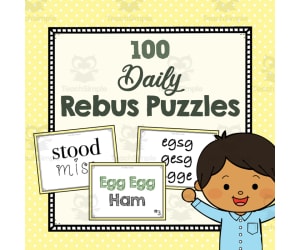
Daily Rebus Puzzles
ELA, Reading, Reading Comprehension, Strategies, Grade 3, 4, 5, Activities
Want a fun brain teaser to start the day? Rebus puzzles use letters, words, position, colors, and sometimes even pictures to create a puzzle. Most of the puzzles are clues to common phrases and idioms. There are 100 puzzles provided, enough for a few each week during the school year! These are perfect for students who finish early or need an extra challenge in their day. This is a great way to stretch and challenge little minds and help them develop logic and reasoning skills. How To Use This: Print the set of rebus puzzles. If you want to reuse them- laminate each page. Every day post a new rebus puzzle on the board. Have students submit answers secretly. As a class discuss the puzzle and try and figure it out together. Then celebrate when you all get to the answer and can celebrate and laugh together! Make sure to put them back together in the set when you take them down each day! You could also choose to bind these into a book or put them on a book ring and keep them in a center or for early finishers to use and enjoy. What You Get: - 100 Full-page Rebus Puzzles - Answer Keys
Author Simply Schoolgirl
Tags Morning Work, Bell Ringer, Idioms, Brain Teaser, Figurative Language

Letter S Song (Original Music Video)
ELA, Language Development, Phonics, Preschool, Kindergarten, Grade 1, 2, Songs, Activities
This product is the perfect way for teachers to help their students learn about the letter S. The video is engaging and informative, and it will help students understand the letter sound, formation, and vocabulary.
Author Have Fun Teaching
Tags Alphabet, Phonics

The Day I Met A Dinosaur: Write The Story (9-13 years)
ELA, Writing, Creative Writing, Grade 3, 4, 5, 6, 7, 8, Activities
'The Day I Met A Dinosaur: Write The Story' (9-13 years) An engaging and informative teaching resource, ideal for educators of Grade 3 to Grade 8 learners. This valuable academic tool fosters creative writing practice among students, offering a unique opportunity to delve into the world of dinosaurs and narrative creation. Package Content: Designed For: This resource has been primarily crafted for children aged 9-13 years. Core Objective: It provides a platform for young minds to explore their creativity by constructing their own tale titled 'The Day I Met A Dinosaur'. An exemplary story is included in the package as an example yielding ideas on character development, plot devising and setting establishment. A Variety Of Activities:The activities span over three pages with innovative writing prompts which cater not only to Language Arts Practice but also enhance imaginative capabilities. Moreover, there's a dedicated planning sheet that caters to different elements of the story including characters, settings or plot. Diverse Learning Needs Adressed:This teaching tool challenges proficient pupils through more complex vocabulary usage while ensuring it remains accessible enough for those still grappling with foundational concepts. You can consider implementing these resources either in whole group settings—promoting collaborative learning—or assigned individually depending upon each student’s unique needs. They are also suitable for use as homework assignments ensuring constructive utilization of home-study hours while paving way for parental involvement. Digital Delivery & Practicality- The entire package is provided digitally as a PDF file type allowing easily reproducible copies catering to classroom-wide distribution without any hiccups maintaining high-quality print outputs every single instance subsequently minimizing overhead costs while maximizing learning outcomes. With 'The Day I Met A Dinosaur: Write The Story', Language Arts class will become an anticipated event for students as it nurtures critical creative writing capabilities. Explore the narratives your students concoct and in the process help them hone their storytelling skills, fostering a lifelong love for written expression.
Author Guinea Pig Education
Tags Writing Prompt, Creative Writing, Narrative Development, Character Development, Storytelling Skills

Read Across America Day Reading Comprehension Passage and Questions
Reading, ELA, Elementary, Read Alouds, Activities
Read Across America Day, celebrated on March 2nd, promotes a love of reading among children and honors Dr. Seuss’s birthday. Established by the National Education Association (NEA), it encourages schools, libraries, and communities to engage in reading activities. The day aims to inspire lifelong reading habits and literacy development. Are you looking for a fun and engaging way to celebrate Read Across America Day? This reading passage is a great resource for celebrating Read Across America Day while practicing reading skills. This educational resource features simple, kid-friendly pages designed to make learning both enjoyable and interactive. Great for homeschooling, classroom education, or extra practice. Number of pages: 10 pages (5 BW + 5 COLOR) Format PDF file size: 8.5*11 Inches If you and your students or your children enjoy using this educational and engaging resource. please rate it and follow my store to be the first to know about my new teaching resources and freebies. Enjoy!
Author Wonderland School
Tags Readi Across America Day, Read Across America, National Reading Month, Dr. Seuss , Read Across America Craft, Read Across America Coloring Pages

Cut + Glue: Fruits
ELA, Reading, Not Grade Specific, Activities
Cut + Glue: Fruits is an engaging literacy activity that helps students practice matching words and images. Ideal for young readers, this resource features common fruits like apples, bananas, strawberries and more. Students will cut out full-color fruit images, then paste each fruit next to its written name. This hands-on matching game builds confidence with early reading skills. It's perfect for introducing new vocabulary, reinforcing sight words, or reviewing phonics skills. Use Cut + Glue: Fruits with small groups or individuals for independent work. Have students race against the clock, then proudly display their work. Modify for various ability levels by providing word banks, removing some words, or using vegetable vocabulary instead. This versatile resource is easily customized to suit learners' needs.
Author Better Teaching Resources
Tags Cut, Glue, Fruit, Words, Matching

5th Grade Morning Work | 180 Days Review | Math & ELA | 1st Quarter
ELA, Math, Grade 5, Centers, Activities, Lesson Plans, Teacher Tools, Worksheets & Printables
Grade 5 Morning Work | 1st Quarter Student Pages + Full-Year Teacher Resources Make fifth grade mornings easier with 45 days of Grade 5 morning work for Quarter 1 . This resource includes ALL teacher resources for the complete 180-day program , while the student practice pages in this pack are specifically for 1st Quarter: Days 1–45 . What’s Included ⭐ FULL-YEAR TEACHER RESOURCES You receive the complete teacher toolkit for planning, organizing, differentiating, and assessing the entire 180-day Grade 5 morning work program : Teacher Guide Full 36-week Pacing Guide Skills Checklist for tracking student progress Fully Editable Morning Work Schedule Weekly planning support Year-at-a-Glance planning Differentiation strategies Complete Answer Key for Days 1–180 Printing and classroom organization guidance 📚 STUDENT PAGES INCLUDED: 1ST QUARTER The student portion of this product includes Days 1–45 , providing 45 days of ready-to-use Grade 5 morning work . Each day includes 24 consistent sections across Language Arts and Math & Think. 📖 LANGUAGE ARTS Students practice: Grammar Vocabulary Reading skills Reading comprehension Writing Vocabulary Word of the Day Writing prompts Reading challenges SEL check-ins Jokes Brain teasers Growth mindset Would You Rather questions 🔢 MATH & THINK Students practice: Number sense Mental math and fact fluency Multi-digit multiplication Long division Order of operations Fractions Decimals Measurement Geometry Data and graphs Multi-step word problems Math challenges Daily enrichment Fun facts Important: The student practice pages included in this product are Days 1–45 only . The teacher resources and complete Answer Key cover all 180 days . How It Works in the Classroom Use this Grade 5 morning work as a daily bell ringer, morning routine, independent practice, homework, or spiral review. Each two-page daily set takes approximately 10–15 minutes . Students work through Language Arts and Math & Think while you circulate, confer, pull small groups, or prepare for the day. The resource also has a helpful daily spotlight : Monday: Grammar, place value, multiplication, and editing Tuesday: Reading passage, theme, fractions, and vocabulary Wednesday: Grammar, long division, and decimals Thursday: Reading, inference, and geometry Friday: Spiral review, multi-step problems, and writing response The enrichment rotation keeps the routine fresh: 🧠 Monday — Brain Teaser 🧩 Tuesday — Logic Puzzle 🔬 Wednesday — STEM Challenge 📚 Thursday — Vocabulary Challenge 🌎 Friday — Trivia Use the pages for: Morning work Bell ringers Homework Early finishers Sub plans Small-group warm-ups Intervention practice Spiral review Test preparation Independent practice Print the pages two-sided, flipping on the long edge , for one sheet per student per day. Standards & Learning Goals This Grade 5 morning work resource provides daily spiral review across essential fifth grade ELA and math skills. 📖 ELA Skills Students practice: Grammar and language conventions Context clues Academic vocabulary Greek and Latin roots Prefixes and suffixes Figurative language Reading comprehension Main idea Theme Inference Author's purpose Text structure Writing and editing Opinion writing Informative writing Narrative writing Constructed responses Quarter 1 builds a strong foundation with increasingly sophisticated reading, vocabulary, grammar, and writing tasks. Students encounter authentic passages and questions requiring them to identify main ideas, themes, author's purpose, and supporting evidence. The writing tasks include editing, revising, opinion writing, narrative writing, and informative responses. 🔢 Math Skills Students practice: Place value Number sense Mental math Multi-digit multiplication Long division Order of operations Fractions Decimals Measurement Geometry Data interpretation Multi-step word problems Mathematical reasoning Quarter 1 gives students consistent practice with grade-level computation and problem solving while building fluency and accuracy. The pages include visual math models, real data displays, geometry figures, measurement tasks, and multi-step challenges. Why Teachers Love It ✨ You get ALL the teacher resources for the entire year. The teacher materials support the complete 180-day program , not just Quarter 1. ✨ Students get exactly what they need for Quarter 1. Days 1–45 provide a complete 45-day student set. ✨ Save valuable planning time. The daily routine is already organized across ELA, math, enrichment, and engaging thinking activities. ✨ Build student independence. The same 24 sections appear every day, helping fifth graders quickly learn the routine. ✨ True spiral review. Skills return throughout the 180-day program while the difficulty increases. No content repeats across the 180 days. ✨ A built-in daily focus. Each weekday has its own academic spotlight, helping students practice specific skills while still receiving broad spiral review. ✨ Challenge fifth graders appropriately. The work includes multi-step problems, higher-level reading questions, academic vocabulary, order of operations, long division, and increasingly complex writing. ✨ Differentiate with ease. The teacher resources allow you to adjust the workload, provide additional support, or extend learning for students ready for more. ✨ Keep mornings engaging. Logic puzzles, STEM challenges, trivia, brain teasers, jokes, growth mindset prompts, and Would You Rather questions make the routine more than another worksheet. ✨ Use it beyond morning work. These pages are flexible enough for homework, early finishers, intervention warm-ups, sub plans, and spiral review. ✨ Have answers for the entire year. The Answer Key provides answers for all 180 days , including reading, vocabulary, writing, math, data, and enrichment sections. Looking for Grade 5 morning work for Quarter 1 that saves planning time and keeps students practicing essential skills every day? This pack includes 45 days of student practice (Days 1–45) PLUS ALL teacher resources for the full 180-day program . Give your fifth graders a purposeful morning routine that strengthens ELA and math skills while preparing them for the demands of upper elementary learning! Print it, prep it, and make your fifth grade mornings easier! 💛
Author Bright Classroom Ideas Marketplace
Rating
Tags Math, Ela, Morning Work, Back To School
Fossils Reading Comprehension Passage - Cored Ed Encyclopedia
ELA, Reading Comprehension, Reading, Science, Technology, Earth and Environmental Sciences, Life Sciences, Pre-Reading, Language Development, Vocabulary, Grade 2, 3, 4, 5, Worksheets & Printables, Worksheets, Teacher Tools, Centers, Activities, Writing Prompts, Assessments, Quizzes and Tests, Quizzes, Lesson Plans
This fossils reading comprehension with lesson plan includes: Visualization (on the front cover) Start your lesson by taking a minute to think and share something about the topic. Read the script aloud (slowly), perhaps prepare some music or sound effects. Student close their eyes and let their imaginations wander. Students open their eyes, read the question aloud and give them a few minutes to complete. Ask a few students to share or keep answers until the end to compare with what they learn in the passage. Quick pause—thousands of Cored Education products are included with your TeachSimple membership. Download links and encyclopedia index available here. Pre-Reading Trivia Students will write down one thing they already know about the subject and then read five more facts and discuss. These facts are fun, and the students will enjoy learning about the subject before reading more. Give 1 minute for students to write what they already know (no pressure—best guess is fine). Read the five facts together. After each fact, do ask a student for their opinion, was it surprising? Set a purpose by asking students to highlight/underline one fact they want to learn more about during the reading. Reading Passage The text is a high-interest reading passage with set paragraphs, roughly three to four paragraphs long. It contains a variety of themes about the topic, anywhere from history to technology. The passage is between 250 and 350 words in length. First, ask students to look at the headings and see what they’ll learn about today. What do they know about the topic/heading? First read options: Teacher read-aloud (best for support). Partner reading (paragraph by paragraph). While reading, students underline important details, and vocabulary words they think may come up in the questions section. Mixed Questions The first question page contains four multiple-choice questions, each with a choice of four answers, and three written response questions that require a sentence or two from the student. Students complete the mcqs first independently, then review quickly as a class. For the 3 written responses, try to get students giving the answer with some form of evidence: “I think ___ because the text says ___.” If students get stuck, send them back to check the passage. Vocabulary Questions Practice seven key words from the text in this section across two activities. First section is scrambled words where students will unscramble three words given a clue for each. The second section is a word to meaning matching activity. Before starting, have some students read out words they underlined in the passage. Ask students to say the word and read aloud the sentence(s) around each word. Ask students to do scrambled words and the matching exercise in pairs then go through answers as a class. For the scrambled spelling task, get four pairs to come up to the board and write the words for extra practice with the other student reading out the clue. For the matching task, prompt students to give full sentences: “I matched ___ with ___ because ___.” Creative Writing In this question, the student will be required to write a five to eight sentence paragraph on a question related to the topic. Before starting, ask students write down 3 key ideas they are going to include in their piece. Ask students for ideas to share around the class to help those struggling. Pro writing expectations: 5–8 sentences At least 2 facts or details from the passage At least 2 vocabulary words from the previous page Students read their paragraphs while classmates listen for facts and vocabulary words. Extension Activities This page is optional for fast finishers or to take home. There are several activities, each one requiring a different skill. Do some, do none, do all, completely optional - but you will feel reassured knowing every possibility is planned for. Includes summary writting question and additional facts. Answer Key There are answers for the multiple-choice questions, written response questions have sample answers, vocabulary answers and if there is a summary question then a sample summary will be provided as well. Lesson Plan Included Customized lesson plan for this lesson is included. Lesson Snapshot Title: Fossils Genre: Nonfiction (Informational Text) Subject: Science (Earth Science/Life Science) / Reading (Informational Text) Primary Topic: Fossils, how they form, and what they reveal Estimated Guided Reading Level (A–Z): Q What This Lesson Teaches Best Defines a fossil and explains that fossils can be body parts (tooth, bone) or traces (footprint, burrow, fossilized poop) that become clues in the “fossil record.” Explains how fossils form when remains are quickly covered by sediment , and minerals in water replace material or fill empty spaces until remains harden like stone. Teaches mold and cast formation: a body can disappear, leaving a hollow mold that later fills to make a cast. Introduces paleontology and shows how scientists “read” patterns in sedimentary rock layers to learn how life has changed over time. Shows how fossils can guide new discoveries , including using rock layers to search for missing kinds of creatures (Tiktaalik example). Learning Goals Students will identify two kinds of fossils named in the text and give an example of each. Students will explain how sediment and minerals help remains become hard “as stone.” Students will describe how a mold and a cast can form, using the text’s explanation. Students will explain how scientists use patterns in sedimentary rock layers to learn which fossils are older. Students will describe why the fossil record is “not complete,” based on the passage. Students will describe how fossils can help scientists decide where to search for new discoveries. Key Vocabulary From the Text sediment — dirt and tiny bits of rock. minerals — materials in water that can harden remains. mold — a hollow shape left after a body is gone. cast — a filled-in copy of a hollow shape. paleontology — the study of ancient life using fossils. FULL CATALOG OF DOWNLOAD LINKS AND ENCYCLOPEDIA INDEX HERE
Author Cored Education
Rating
Tags Vocabulary, Reading Comprehension, Reading Passages, Lesson Plans, Ela Lesson Plans, Reading Comprehension Lesson Plans, Pre-reading, Science Lesson Plans, Earth Science, Life Science

Manfish: A Story of Jacques Cousteau Read Aloud Book Companion
ELA, Reading, Reading Comprehension, Literature, Grade 2, 3, 4, Read Alouds, Activities
The Manfish: A Story of Jacques Cousteau Read Aloud Book Companion This exceptional teaching resource, designed for Grade 2 to Grade 4 students, focuses on comprehension, literature and reading skills development as a unique part of Language Arts learning. Specifically meant to accompany the book Manfish: A Story of Jacques Couveau by Jennifer Berne (not included). Key Features: 28 distinct print-and-go reading activities - offers flexibility in lesson planning. Fosters critical thinking - encourages predicting outcomes and drawing inferences using text evidence. Creativity-promoting exercises - includes designing a Biosphere Brochure or crafting an Instagram post. Learn & Grow with Interesting Activities: Younger learners will explore intriguing topics including: Character studies, Identification of story elements, Determination of themes, Event plotting, Additionally they'll engage in exercises such as : Sensory detail sketching, Comparison and contrast tasks, This handy tool can be used across diverse learning platforms for both individual lessons and guided reading sessions. Perfect for group work during center rotations or more comprehensive literature circles enabling thorough supplemental reading tasks like research-based projects. The PDF file contains enlightening graphic organizers deliver insights into the book companion along with enjoyable worksheets for activities lavished upon second graders through fourth graders alike!
Author Creatively Gifted
Tags Character Studies, Comprehension, Critical Thinking, Literature Appreciation, Reading Skills Development

Game Masters: Phonics Games
ELA, Language Development, Phonics, Preschool, Grade 1, 2, 3, Activities, Games
The Game Masters: Phonics Games is a 46-page download with printable game boards to explore a variety of phonic sounds. These dice game boards will keep students engaged while improving their phonic knowledge.
Author Ready-Ed Publications
Tags Board Games, Phonics Games, Phonics Board Game, Initial Sounds Activity, Vowel Activity, 3rd Grade Phonics Games
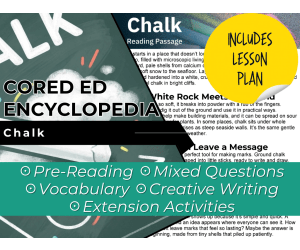
Chalk Reading Comprehension Passage - Cored Ed Encyclopedia
ELA, Language Development, Reading Comprehension, Reading, Pre-Reading, Life Sciences, Science, Social Studies, Earth and Environmental Sciences, Geography, Grade 2, 3, 4, 5, Worksheets & Printables, Worksheets, Teacher Tools, Centers, Activities, Writing Prompts, Assessments, Quizzes and Tests, Quizzes, Lesson Plans
This chalk reading comprehension with lesson plan includes: Visualization (on the front cover) Start your lesson by taking a minute to think and share something about the topic. Read the script aloud (slowly), perhaps prepare some music or sound effects. Student close their eyes and let their imaginations wander. Students open their eyes, read the question aloud and give them a few minutes to complete. Ask a few students to share or keep answers until the end to compare with what they learn in the passage. Quick pause—thousands of Cored Education products are included with your TeachSimple membership. Download links and encyclopedia index available here. Pre-Reading Trivia Students will write down one thing they already know about the subject and then read five more facts and discuss. These facts are fun, and the students will enjoy learning about the subject before reading more. Give 1 minute for students to write what they already know (no pressure—best guess is fine). Read the five facts together. After each fact, do ask a student for their opinion, was it surprising? Set a purpose by asking students to highlight/underline one fact they want to learn more about during the reading. Reading Passage The text is a high-interest reading passage with set paragraphs, roughly three to four paragraphs long. It contains a variety of themes about the topic, anywhere from history to technology. The passage is between 250 and 350 words in length. First, ask students to look at the headings and see what they’ll learn about today. What do they know about the topic/heading? First read options: Teacher read-aloud (best for support). Partner reading (paragraph by paragraph). While reading, students underline important details, and vocabulary words they think may come up in the questions section. Mixed Questions The first question page contains four multiple-choice questions, each with a choice of four answers, and three written response questions that require a sentence or two from the student. Students complete the mcqs first independently, then review quickly as a class. For the 3 written responses, try to get students giving the answer with some form of evidence: “I think ___ because the text says ___.” If students get stuck, send them back to check the passage. Vocabulary Questions Practice seven key words from the text in this section across two activities. First section is scrambled words where students will unscramble three words given a clue for each. The second section is a word to meaning matching activity. Before starting, have some students read out words they underlined in the passage. Ask students to say the word and read aloud the sentence(s) around each word. Ask students to do scrambled words and the matching exercise in pairs then go through answers as a class. For the scrambled spelling task, get four pairs to come up to the board and write the words for extra practice with the other student reading out the clue. For the matching task, prompt students to give full sentences: “I matched ___ with ___ because ___.” Creative Writing In this question, the student will be required to write a five to eight sentence paragraph on a question related to the topic. Before starting, ask students write down 3 key ideas they are going to include in their piece. Ask students for ideas to share around the class to help those struggling. Pro writing expectations: 5–8 sentences At least 2 facts or details from the passage At least 2 vocabulary words from the previous page Students read their paragraphs while classmates listen for facts and vocabulary words. Extension Activities This page is optional for fast finishers or to take home. There are several activities, each one requiring a different skill. Do some, do none, do all, completely optional - but you will feel reassured knowing every possibility is planned for. Includes summary writting question and additional facts. Answer Key There are answers for the multiple-choice questions, written response questions have sample answers, vocabulary answers and if there is a summary question then a sample summary will be provided as well. Lesson Plan Included Customized lesson plan for this lesson is included. Lesson Snapshot Title: Chalk Genre: Nonfiction (informational text with headings) Subject: Life Science / Earth Science / Reading (Informational Text) Primary Topic: How chalk forms and how people use it Estimated Guided Reading Level (A–Z): O What This Lesson Teaches Best Explains chalk’s origin: microscopic ocean life made calcium carbonate shells that piled up, hardened, and became chalk. Uses cause-and-effect to show how pressure, time, and weather change materials (shells → rock; waves/wind reveal cliffs). Connects a natural material to human uses (building materials, improving sour soil, writing and drawing). Builds understanding of properties of materials (chalk is soft, rubs into powder, leaves visible marks on dark boards). Highlights how tools and surfaces change over time (dark boards, colored chalk experiments, sidewalk chalk, whiteboards). Learning Goals Students will explain how chalk forms over a long time using details from the text. Students will identify what chalk is made from in the beginning of its story (shells of microscopic living things). Students will describe at least two practical uses of chalk named in the text. Students will explain why chalk worked well on dark boards, using evidence from the passage. Students will compare chalk rock and gypsum “chalk” as described in the passage. Key Vocabulary From the Text microscopic — too tiny to see without help. carbonate — part of a mineral in many shells. crumbly — easy to break into small pieces. gypsum — a mineral used to make some board “chalk.” pavement — the hard surface of a sidewalk or road. FULL CATALOG OF DOWNLOAD LINKS AND ENCYCLOPEDIA INDEX HERE
Author Cored Education
Rating
Tags Vocabulary, Reading Comprehension, Reading Passages, Lesson Plans, Ela Lesson Plans, Reading Comprehension Lesson Plans, Pre-reading, Science Lesson Plans, Earth Science, Geography

New Mexico State Flipbook (Capital, Bird, Flower, Flag, Animal)
Creative Arts, Art, Social Studies, ELA, History, History: USA, Geography, Reading, Reading Comprehension, Grammar, Language Development, Spelling, Writing, Grade 2, 3, 4, Activities, Projects
New Mexico State Flipbook (Capital, Bird, Flower, Flag, Animal) The New Mexico State Flipbook is a teaching resource designed to introduce and review essential facts about the state of New Mexico through an engaging flipbook concept. This resource can serve both public school teachers and homeschoolers in units covering New Mexico or the Southwest region in general. Subjects Covered Capital City State Bird State Flower State Flag State Animal Included Design Options and Features: Pictorial Representation or text-only format design options. Note: There are two printing options - one requiring cutting and another without any need for it - to suit various environments." 2. Detailed instructions for assembling four different flipbooks. " /> . The product consists of 37 PDF pages with valuable information on seven different topics including details about the state map." 3. An integrated Know-Want Learnt (KWL) chart enabling constructivist learning approach within young learners.". A note: Activities embedded within span multiple subject areas such as geography learning through a state map study, art through drawing and coloring activities integrating into language arts including spelling practice; further promoting reading skills acquisition by extracting out information from written content while fostering logical reasoning capacities during research-based activities.". The Bottom Line: "The New Mexico State Flipbook serves as an interactive means of teaching that promotes skill development and knowledge accumulation about essential features of the state of New Mexico. Notably, it adds a colorful dimension to everyday learning, thereby enhancing student engagement and the joy in acquiring knowledge."
Author Heather Huhman
Tags New Mexico, Flipbook, Teaching Resource, State Facts, Hands-on Learning, New Mexico State Flower And Bird, New Mexico State Flower Facts, New Mexico State Bird And Flower, What Is New Mexico's State Flower, New Mexico State Flower Drawing

Letter W Beginning Sound Sort
ELA, Language Development, Phonics, Kindergarten, Preschool, Activities
Letter W Beginning Sound Sort The Letter W Beginning Sound Sort helps students recognize, distinguish, and categorize words that start with the W sound versus words that do not. This hands-on phonics activity includes picture cards of objects on spider shapes that students will sort onto two printed mats - one for W initial sounds and one for non-W initial sounds. Educators can implement this printable resource in small groups, literacy or fine motor centers, morning work, or substitute lesson plans. The sorting activity allows assessment of skills like differentiating beginning sounds, matching pictures to sounds, and classifying based on auditory cues. Teachers simply print, cut out cards, and laminate if desired. With no prep besides printing, this W sound sorting set fosters early literacy skills essential for preschool through kindergarten reading readiness. The engaging format holds student interest while they practice distinguishing letter sounds.
Author The Connett Connection
Tags Letter Of The Week, Alphabet Activities, Alphabet Centers, Beginning Sounds, Literacy Center, Preschool Literacy Center, Initial Sounds, Letter W, Letter W Activities, Initial /w/
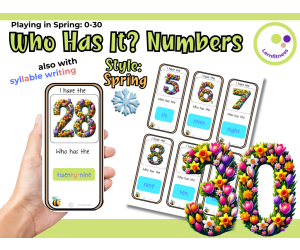
Spring-Themed Number Learning Game: Who Has It? Elementary + ESL
Math, Numbers, Early Math, ESL, Language Development, ELA, Seasons, Holiday & Seasonal, Spring, Grade 1, 2, 3, 4, 5, 6, Activities, Games, Worksheets & Printables, Quizzes and Tests, Teacher Tools, Quizzes, Flashcards
A Fun Spring Game to Make Learning Numbers Easy! 🌸🐝 Looking for a simple way to make learning numbers engaging and fun this spring? The Spring "Who Has It?" Game is a fantastic way to get your students actively involved while practicing number recognition and number words. Whether you're teaching young learners or ESL students, this game makes learning natural, interactive, and exciting. Why Your Students Will Love It 🌷 It’s a Game, Not a Worksheet! – No more boring number drills. Students will be excited to participate. 🐝 Spring-Themed Fun – Flowers, butterflies, and a fresh seasonal design keep kids interested and engaged. 🎲 Great for All Levels – Covers numbers 0 to 30, making it perfect for different skill levels. ✂ Super Easy for Teachers – Just print, cut, and start playing—no extra prep required! 👫 Encourages Teamwork – Students work together and build communication skills. How to Play 1️⃣ Hand out the cards to students. 2️⃣ The first player reads their card aloud: "I have five. Who has six?" 3️⃣ The student with the matching number responds and reads their next prompt. 4️⃣ The game continues until all numbers have been called and the loop is complete! Why This Game is a Classroom Favorite ✔ Keeps Students Engaged – Learning numbers feels like play, not work! ✔ Boosts Confidence – Helps students recognize, read, and say numbers aloud with ease. ✔ Supports ESL Learners – Reinforces number vocabulary and fluency in a low-pressure way. ✔ Versatile for Any Setting – Use it for whole-class activities, small groups, or even one-on-one practice. Instead of worksheets, give your students a fun way to learn numbers with laughter, movement, and teamwork. This spring-themed number game is the perfect way to make learning feel fresh and exciting! 🌸 Want to bring more energy into your math lessons? Download now and start playing today! Wishing you and your students lots of fun! Best, Heike from Lernfitness Did You Know? I teach with a certified therapy dog, and together we focus on creating a positive and inspiring learning environment.
Author Lernfitness
Tags Numbers, Math, EFL, ESL, Game, Educational Card Games, Number Words, Easter, Who Has It, Easter Game

Overlapping Patterns Drawing Prompts | Creative Art Enrichment
ELA, Creative Arts, Art, Language Development, Pre-Reading, Fine Arts, Preschool, Grade 1, 2, 3, 4, Drawing Templates & Outlines, Worksheets & Printables, Activities
Overlapping Patterns Drawing Prompts | Creative Art Enrichment & Imagination Boost These printable drawing prompts are engaging and easy to use that will boost your students imagination and creativity. Students are able to create designs from each overlapping pattern and learn about shapes, lines, and patterns. For more creative ideas, visit Doodle Thinks website! Incorporating this Resource into Everyday Teaching: Integrating this tool into your standard teaching routine encourages students to broaden their creative minds through art while solidifying their knowledge of some elements of art. Included in this download: 5 Colorful Drawing Prompts 5 Black and White Drawing Prompts Pedagogical Applications: This resource can be effectively used during whole group instruction. Individual activities or when working in small groups. Your learners will find the prompts easy to understand and they help facilitate interactive peer-learning when utilized within a group or team (partner) setting. Plus, you may even use them as a calming brain break activity, homeschool drawing time, sub days, or they could serve as engaging tasks for early finishers! Versatility & Effectiveness: This educational yet engaging resource encourages creativity and ensures all learners enjoy each drawing prompt. Thanks for supporting Doodle Thinks and have fun drawing!
Author Doodle Thinks
Rating
Tags Grid Drawing, Alphabet, Art Education, Fine Motor Skills, Creativity, Drawing, Build Confidence, Learn The Alphabet, Drawing Accuracy, Art Printables