



3,890 products added recently
Page 80 - ELA Activities
Explore a variety of ELA activities designed to enrich your students' learning experience. From reading comprehension exercises to creative writing prompts, these resources support the development of essential literacy skills. Engage your class with interactive lessons that foster a love for language and literature. These activities are suitable for various grade levels and can be seamlessly integrated into your curriculum, helping you create dynamic and effective English Language Arts lessons.

 Show filters

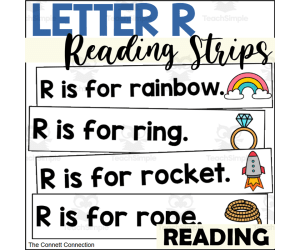
Letter R Reading Strips
ELA, Language Development, Phonics, Reading, Kindergarten, Preschool, Activities
Practice recognizing and reading words beginning with the letter R with these 14 simple sentence strips. Each black and white strip features a word starting with R and a corresponding illustration, such as "R is for rainbow". Students will build phonics skills by identifying the initial R sound and using the picture clues to read the sentences independently or with a partner. These printable strips work well for literacy centers , small group instruction, early finisher tasks, and take-home practice for preschoolers or kindergarteners learning letter recognition, beginning sounds, and decoding new vocabulary. Teachers can place the strips on a key ring, cut apart the pictures for a matching activity, or use them for letter R sorting and classification. With no prep besides printing, laminating if desired, and cutting the strips, this versatile phonics resource builds key early reading skills.
Author The Connett Connection
Tags Beginning Sounds, Alphabet Activities, Letter Of The Week, Reading Center, Reading Simple Sentences, Simple Sentences, Initial Sounds, Preschool Reading Center, Letter R, Letter R Activities
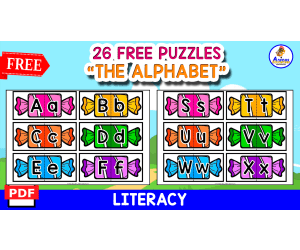
26 FREE PUZZLES OF THE ALPHABET | A TO Z
ELA, Writing, Elementary, Early Learning, Classroom Decor, Activities
WHO WE ARE? We are EDITORIAL ARENAS EDUCATIVAS, a publisher dedicated to designing educational resources for primary school children approximately between the ages of 3 and 12 who are learning mathematics, literacy, as well as worksheets for learning Spanish and some brain exercises. THE ABECEDARY | 26 FREE PUZZLES MAIN INFORMATION: 1. Why should teachers use educational material in the classroom? As is known, educational material helps students build their knowledge autonomously and, above all, in an unforgettable way. 2. What is the name of this document? This document is titled "Educational material for children" 3. What topic will be addressed in this resource? This document will address an educational topic that every child should learn in a basic way. 4. For what ages is it recommended? This set of educational sheets is recommended for children in general who are in the learning age and these sheets will be of great help to them. 5. Who is the author of this document? The author, who was in charge of producing and compiling this educational material, is EDITORIAL ARENAS EDUCATIVAS. 6. In what area of knowledge can it be applied? You can apply this set of educational sheets according to your criteria, in the corresponding area. 7. Should I apply it individually or as a group in my class? Also, according to your criteria, see if it is better for these sheets to be applied individually or as a group. SECONDARY INFORMATION: 8. Area: This educational document may be used in some area of primary education for children. 9. Keywords: children, primary education, resources for children, free resources, primary resources, resources for primary education. 10. How do I print it? You can print this document in PDF format, A4 size. 11. How to apply it in class? You can apply this document individually or also in a group, it all depends on the criteria of the educator who is going to apply this sheet. 12. Will they need extra elements to use this sheet? Yes, perhaps the students when using this sheet will need pencils, colors, or perhaps scissors, eraser. It all depends on the point of view of the educator.
Author EDITORIAL LAURA EDUCA
Tags ALPHABET, PUZZLES, LITERACY, FREE RESOURCES, ABECEDARY
Letter R Emergent Reader
ELA, Language Development, Phonics, Reading, Kindergarten, Preschool, Activities
Letter R Emergent Reader The Letter R Emergent Reader is a low-prep literacy activity for preschool and kindergarten students to practice recognizing and sounding out the letter R. This packet includes a cover page and seven “R is for...” pages focusing on common R words like rainbow, rocket, raccoon, and more. To use, have students color the pictures, then cut out and staple the pages into a mini book to read independently or with a teacher or parent. The repetitive text and relatable visuals make this resource perfect for reinforcing the letter R sound during small groups, literacy centers , or as a take-home practice readers. Students will love creating their own little books while building critical early reading skills. With no prep besides printing, this phonics activity can also be useful for subs. The Letter R Emergent Reader allows young learners to recognize letter R words, sound out initial R sounds, read basic sight words, and comprehend simple sentences.
Author The Connett Connection
Tags Emergent Reader, Beginning Sounds, Beginning Reader, Alphabet Reader, Alphabet Book, Alphabet Activity, Letter Of The Week, Letter R, Letter R Book, Letter R Activities
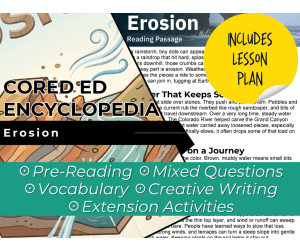
Erosion Reading Comprehension Passage - Cored Ed Encyclopedia
ELA, Reading Comprehension, Reading, Science, Technology, Language Development, Social Studies, Earth and Environmental Sciences, Geography, Life Sciences, Grade 2, 3, 4, 5, Worksheets & Printables, Worksheets, Teacher Tools, Centers, Activities, Writing Prompts, Assessments, Quizzes and Tests, Quizzes, Lesson Plans
This erosion reading comprehension with lesson plan includes: Visualization (on the front cover) Start your lesson by taking a minute to think and share something about the topic. Read the script aloud (slowly), perhaps prepare some music or sound effects. Student close their eyes and let their imaginations wander. Students open their eyes, read the question aloud and give them a few minutes to complete. Ask a few students to share or keep answers until the end to compare with what they learn in the passage. Quick pause—thousands of Cored Education products are included with your TeachSimple membership. Download links and encyclopedia index available here. Pre-Reading Trivia Students will write down one thing they already know about the subject and then read five more facts and discuss. These facts are fun, and the students will enjoy learning about the subject before reading more. Give 1 minute for students to write what they already know (no pressure—best guess is fine). Read the five facts together. After each fact, do ask a student for their opinion, was it surprising? Set a purpose by asking students to highlight/underline one fact they want to learn more about during the reading. Reading Passage The text is a high-interest reading passage with set paragraphs, roughly three to four paragraphs long. It contains a variety of themes about the topic, anywhere from history to technology. The passage is between 250 and 350 words in length. First, ask students to look at the headings and see what they’ll learn about today. What do they know about the topic/heading? First read options: Teacher read-aloud (best for support). Partner reading (paragraph by paragraph). While reading, students underline important details, and vocabulary words they think may come up in the questions section. Mixed Questions The first question page contains four multiple-choice questions, each with a choice of four answers, and three written response questions that require a sentence or two from the student. Students complete the mcqs first independently, then review quickly as a class. For the 3 written responses, try to get students giving the answer with some form of evidence: “I think ___ because the text says ___.” If students get stuck, send them back to check the passage. Vocabulary Questions Practice seven key words from the text in this section across two activities. First section is scrambled words where students will unscramble three words given a clue for each. The second section is a word to meaning matching activity. Before starting, have some students read out words they underlined in the passage. Ask students to say the word and read aloud the sentence(s) around each word. Ask students to do scrambled words and the matching exercise in pairs then go through answers as a class. For the scrambled spelling task, get four pairs to come up to the board and write the words for extra practice with the other student reading out the clue. For the matching task, prompt students to give full sentences: “I matched ___ with ___ because ___.” Creative Writing In this question, the student will be required to write a five to eight sentence paragraph on a question related to the topic. Before starting, ask students write down 3 key ideas they are going to include in their piece. Ask students for ideas to share around the class to help those struggling. Pro writing expectations: 5–8 sentences At least 2 facts or details from the passage At least 2 vocabulary words from the previous page Students read their paragraphs while classmates listen for facts and vocabulary words. Extension Activities This page is optional for fast finishers or to take home. There are several activities, each one requiring a different skill. Do some, do none, do all, completely optional - but you will feel reassured knowing every possibility is planned for. Includes summary writting question and additional facts. Answer Key There are answers for the multiple-choice questions, written response questions have sample answers, vocabulary answers and if there is a summary question then a sample summary will be provided as well. Lesson Plan Included Customized lesson plan for this lesson is included. Lesson Snapshot Title: Erosion Genre: Nonfiction (Informational Text) Subject: Science (Earth Science) / Reading (Informational Text) Primary Topic: How erosion moves Earth materials and changes land Estimated Guided Reading Level (A–Z): N What This Lesson Teaches Best Clearly distinguishes weathering (breaking rock apart in place) from erosion (moving pieces away). (Reading Passage, p. 3) Explains multiple forces that cause erosion— water, wind, waves, ice, and gravity —and what they do to Earth’s surface. (p. 3) Shows how rivers reshape land over time, including how moving water and sediment can help carve deep valleys (Colorado River/Grand Canyon example). (p. 3) Introduces sediment and connects erosion to deposition , explaining how new landforms can build up (beaches, river deltas). (p. 3) Connects science to real-world problem solving by describing ways people can slow soil loss (trees, terraces, keeping plants on soil). (p. 3) Learning Goals Students will explain how erosion is different from weathering using the text’s definitions. Students will identify forces that can cause erosion (water, wind, waves, ice, gravity). Students will describe how rivers move sediment and can change riverbeds and valleys over time. Students will explain what sediment is and how deposition happens when sediment settles. Students will describe at least two ways people can help soil “stay home,” based on the passage. Key Vocabulary From the Text weathering — breaking rock apart where it sits. erosion — moving soil and rock to a new place. sediment — tiny bits of soil and rock that travel. deposition — when sediment settles and builds up land. terraces — steps that slow water on a steep slope. FULL CATALOG OF DOWNLOAD LINKS AND ENCYCLOPEDIA INDEX HERE
Author Cored Education
Rating
Tags Vocabulary, Reading Comprehension, Reading Passages, Lesson Plans, Ela Lesson Plans, Reading Comprehension Lesson Plans, Pre-reading, Geography, Earth Science, Science Lesson Plans

Research Organizer & Essay Assignment: T.S. Eliot
ELA, Literature, Poetry, Writing, Grade 7, 8, 9, 10, 11, 12, Activities, Projects, Worksheets & Printables, Worksheets
This resource provides your students with the opportunity to independently explore and write about the life of the famous English poet T.S. Eliot with this engaging research planner and essay assignment. This carefully scaffolded and easy-to-assign-AND-assess resource has been designed to guide student learning from T.S. Eliot fact-collection to the careful development of a five-paragraph research essay. Teaching this resource could not be easier! Start by handing out the background research and note-taking worksheet (you could also ONLY hand this out if you want a shorter lesson!). Once students have found their facts and sources, provide them with the essay outline activity, which guides them step-by-step through the requirements of a short research essay. From there, drafting their essay, using the provided peer review checklist, and submitting their final draft will be no problem at all. And then you can assess their work with the provided Common Core rubric! Use this entire resource as a complete research lesson or just part of it as a short research activity or sub plan! This TeachSimple download includes: - A T.S. Eliot essay writing assignment with directions, requirements, research essay writing tips, a peer review checklist, and Common Core-tied grading rubric - An editable rubric, provided as a link, that lets you make adjustments to the grade values and guidelines. This link is provided as as Google Sheet specifically built for integration into Google Classroom, although you can also modify it for use in other Learning Management Systems (LMSs) - A T.S. Eliot biography and note-taking worksheet that will guide your students through information gathering. This straightforward two-page handout includes instructions for background research, a fun drawing section, and an area to cite quality sources and organize cnducted research - A research essay outlining worksheet, so students build on their T.S. Eliot notes in a clear and simple manner as they build their work towards a draft and final paper - All 6-pages of this lesson are provided in full-color and B&W versions Although this resource can be fitted for any secondary Language Arts classroom, it has been carefully designed to work best in grades 8 through 11. The included rubric is subtly but specifically tied to Common Core ELA Standards for Language (3) and Writing (2 and 7). This resource is provided as a print-ready, bookmarked, and adjustable PDF file. The rubric is also included as an editable Google Sheet. This resource contains 6 pages and 1 Google Sheet.
Author The Language of Educational Art, LLC
Tags Essay, Research, Rubric, Notetaking, Outlining
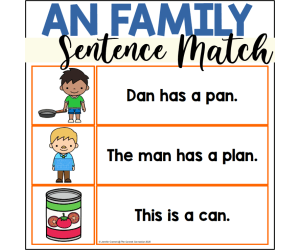
AN Word Family Sentence Matching
ELA, Language Development, Phonics, Preschool, Grade 1, Activities
With this AN words CVC word sentence and picture matching literacy center , students can practice reading comprehension and reading fluency. This reading comprehension activity uses decodable sentences, with words that follow the CVC spelling rule, as well as bold, easy to recognize pictures to match or sort. This AM Word Family packet includes: This resource includes as set of sentence cards that focus on AN words and early sight words. Each sentence has a colorful picture to match the sentence. How to Use this Resource: In this literacy activity, students will read each sentence on each card, and then they will match the sentence to the correct image. This activity will make a great literacy station for kindergartners and first graders who are learning CVC words and reading comprehension. This literacy activity allows students to receive tons of practice reading AN words in the context of sentences. These simple sentence and picture matching activity will allow students to have a tactile way to practice reading comprehension that focuses on words in the AN word family. They will stay engaged and have fun as they complete this literacy activity. Students can work independently or with a partner to complete this literacy center . Alternative Ways to Use this Resource: The teacher can place magnets on the back of each picture card and sentence card, and then use a cookie tray to sort the cards. The magnets will keep the cards from sliding around. The teacher can place the sentence strips in a file folder and place hook and loop fasteners to the picture cards and the file folders to make file folder sorting activity. Where to Use: Morning Tubs or Baskets - These cards can be placed in a morning bin for students to complete as they wait for their classmates to arrive to class. Literacy Center - Place the cards in a literacy center for students to complete alone or with a partner. Small Group Instruction - Teachers can pull aside small groups of students to complete this activity. Matching Game - Students can match pictures to sentences. Skills Assessed: This deck allows students to practice reading CVC words from the AN word family as well as testing students' reading comprehension skills with simple sentences. This reading comprehension activity is low prep. Teacher simply need to print the activity, cut apart the cards and laminate, if desired, for a reusable center . The pieces can be stored inside a pencil box or bag for easy set up, clean up, and storage.
Author The Connett Connection
Tags Sentence Reading Comprehension, Reading Comprehension, Literacy Center, CVC Words, Kindergarten Literacy, Literacy Station, Phonics Station, AN Words, AN Word Family
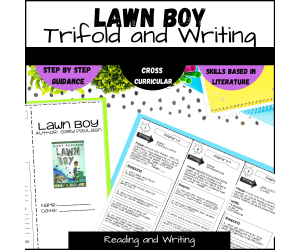
Guided Reading Activity Lawn Boy Book Report Trifold
ELA, Reading, Grade 3, 4, 5, Activities, Projects, Teacher Tools, Graphic Organizers, Worksheets & Printables, Novel Studies
Lawn Boy by Gary Paulsen tells the story of a 12-year-old boy who transforms a simple lawn-mowing gig into an unexpectedly booming business. Through quirky clients, a surprising stock market investment, and the involvement of a professional boxer, the boy learns about responsibility, success, and the unpredictable twists of entrepreneurship. With humor and insight, Lawn Boy captivates readers while sparking conversations about economics, character growth, and life lessons. This trifold activity is created to help students practice reading comprehension skills while providing differentiated instruction for various reading levels. Trifolds can be utilized during guided reading, as independent seat work, or in literature circles. The included writing wrap-up allows for assessing multiple skills in one cohesive project, making it an ideal, standards-aligned resource for busy teachers. Multiple subjects can be assessed, including reading skills, reading comprehension, and writing reflection. What’s Included in This Resource: Each trifold is broken down by chapters or pages and allows chunking of information for easy teacher planning and appropriate student use. In each trifold, the following skills are assessed: Making Connections: Encourage students to relate the story to their own lives, other texts, and the wider world. Making Inferences: Help students combine text evidence with prior knowledge to draw logical conclusions. Using Context Clues: Teach students to deduce the meaning of unfamiliar words using hints from the text. Visualization: Support students in creating mental images of characters, events, and settings. Evaluation: Develop critical thinking by analyzing characters, themes, and the author’s message. Writing Wrap-Up: A writing assessment tool for reflection and deeper understanding. How This Resource Benefits Teachers: ✔ Provides differentiated instruction for diverse learners. ✔ Fosters text engagement and critical thinking with content. ✔ Offers flexibility for grades, seat work, or group discussions. What Teachers Are Saying: ⭐ "This resource made my guided reading groups more organized and productive!" - Rebecca T. ⭐ "Perfect for differentiation and keeping all students engaged at their level." - Larraine C. ⭐ "My students loved the activities, and it worked seamlessly in our literature circles!" - Celia N.
Author Kel's Klass
Tags Trifold, Reading Project, Gary Paulsen, Making Inferences, Making Connections, Lawn Boy, Guided Reading Activity, Context Clues, Evaluation, Visualization

Primer Sight Words Practice Game , Roll & Color, Fun Activity - SET 9 (b)
ELA, Reading, Language Development, Spelling, Vocabulary, Preschool, Grade 1, Activities
Primer Sight Words This Sight word resource includes Roll & Color by sight word activity . The game starts with a roll of a dice, which determines which column of sight words the student will pick from. For example, if the roll of the dice is two, the student will pick a word from column two. Once the word is picked, the student will color one box with the color of the sight word written in it. Each sheet has five sight words written on the top of the page in different colors. The game is repeated until all the boxes on the page are colored. This is a fun and interactive way for students to practice their sight words, while also developing their math skills. This set is perfect for both individual and group activities. It is great for classroom use, as well as homeschooling and at-home learning. It is also a wonderful resource for parents who are looking for a fun and engaging way to help their children learn and practice sight words. The Color by Sight Words Game is a proven and effective way to help students master sight words. By incorporating a fun game element, students are more likely to stay engaged and motivated. The game also helps to reinforce memory retention, as students have to recall the sight word associated with the color. In addition, this set is visually appealing and easy to use. The colors and design are engaging, and the worksheets are easy to print and distribute. The clear instructions also make it easy for teachers and parents to implement the game in their lesson plans and activities. Overall, Set 9b of our Sight Words Worksheets is an excellent resource for teachers, parents, and students. It combines the fun of a game with the important learning outcomes of sight words and math skills. Give your students the gift of learning and play with this engaging and effective resource. Words Included: all, am, are, at, ate, be, black, brown, but, came, did, do, eat, four, get, good, have, he, into, like, must, new, no, now, on, our, out, please, pretty, ran, ride, saw, say, she, so, soon, that, there, they, this, too, under, want, was, well, went, what, white, who, will, with, yes
Author TeacherYouWant
Tags Kindergarten, Sight Words Coloring, Color, Color By Sight Words, Game, Rainbow

Alphabet Song (Animated Music Video)
ELA, Writing, Language Development, Phonics, Handwriting, Pre-Reading, Preschool, Kindergarten, Grade 1, 2, Songs, Activities
The Alphabet Song (Animated Music Video) is a great way for students to learn letter names and sounds. The catchy lyrics and colorful video make it fun and easy to follow along.
Author Have Fun Teaching
Tags Alphabet, Phonics

Letter I Song (Animated Music Video)
ELA, Writing, Language Development, Phonics, Handwriting, Preschool, Kindergarten, Grade 1, 2, Songs, Activities
This product is the Letter I Song and it is a great resource for teaching the Letter I Sound, uppercase and lowercase Letter I, vocabulary words with the Letter I sound, and Letter I handwriting practice. This product is perfect for any teacher who wants to help their students learn the Letter I Sound and improve their handwriting.
Author Have Fun Teaching
Tags Alphabet, Phonics, Vowels

Long O: Letters Phonics Games and Activities - MCQS Game
ELA, Language Development, ESL, Resources for Teachers, Vocabulary, Phonics, Pre-Reading, Spelling, Kindergarten, Preschool, Grade 1, Teacher Tools, Games, Activities
Long O: MCQS Game Note: This download is in PowerPoint show mode to protect the rights of the image creator(s), and is thus UNEDITABLE. Playing the Game The arrow in the bottom right will allow you to navigate through the game. There will be picture prompts and question prompts. Click on the correct answer. Correct answers will flash, incorrect answers will dim. Picture prompts will flash quickly to provide extra difficulty. About the Game This game provides a colorful and entertaining way to practice long O key words. Each page looks completely different and gives a different number of choices. There are question prompts and picture prompts to provide different challenges to your students. With at least three words on the screen at any time, there is the possibility of practicing words with all of your students. Words: rope, rose, nose, mole, hole, home, window, goat, boat, coat, arrow, pillow, cone, phone, road, soap, snow. Picture style:clipart Includes basic sound effects for increased entertainment. Helps to Build Letter recognition – Identifying letters in different fonts or contexts. Letter-sound association – Connecting letters to its sounds. Vocabulary building – Introducing words that start with each letter. Phonemic awareness – Listening for letter sounds in words, rhyming, or segmenting sounds. FULL CATALOG OF DOWNLOAD LINKS HERE Letter PPT Game Links: Letter A Hidden Pictures 1 MemWord Hidden Pictures 2 Hidden Pictures 3 The Short Question Riddle Time Review Games Follow the Vocab Letter B Letter C Letter D Letter E Hidden Pictures 1 The Grand Circle 8 Pictures 1 Clue Behind the Garage Doors Outside the Submarine Two Review Games Say What You See Quiz Game Letter F Letter G Letter H Letter I Hidden Pictures 1 MemWord Three Review Games Three Quiz Show Style Games Find the Ball Bowling Four Mini Games Outside the Train Window Letter J Letter K Letter L Letter M Letter N Letter O Hidden Pictures 1 MemWord Yes or No Game Six Pictures Game Hidden Pictures 2 6 Stars One Question MCQS Game The Grid Letter P Letter Q Letter R Letter S Letter T Letter U Letter V Letter W Letter X Letter Y Letter Z Overview These interactive PowerPoint games make early phonics practice fun and engaging for young learners. With a mix of exciting activities, kids stay motivated while strengthening key phonetic patterns. Each game offers plenty of opportunities for participation—whether playing in teams, one-on-one, or independently. The variety of game styles, from disappearing squares to timed challenges, ensures that every student can learn in a way that works best for them. Bright visuals, sound effects, and gradually increasing difficulty keep students engaged and support different skill levels. Teachers have full control over the pacing and difficulty, making it easy to adjust the experience based on their students' needs. Whether guessing hidden images, recalling sequences, or solving riddles, each activity reinforces phonics in a fun, interactive way. These games turn traditional phonics drills into an exciting, hands-on learning adventure, building confidence and essential literacy skills in young learners. For More Like This For similar downloads and other frees, do check out Cored Group on TeachSimple.
Author Cored Education
Tags Esl, Powerpoint, Ppt, Powerpoint Games, Esl Games, Ela Games, Vocabulary Games, Phonics Games, Letter O Games, Letter O Activities

Guided Reading Level H - All About Hiking (with Lesson Plan)
ELA, Resources for Teachers, Reading Comprehension, Reading, Science, Earth and Environmental Sciences, Geography, Social Studies, Health, P.E. & Health, Kindergarten, Grade 1, 2, Worksheets & Printables, Worksheets, Teacher Tools, Centers, Activities, Literacy Readers, Quizzes, Quizzes and Tests, Assessments
This Guided Reading Book - All About Hiking (Level H) with lesson plan includes: Guided Reading Color Label (front cover x1) This is a quick way to match the book’s demands to what students can generally handle.. The overall goal is to use the level/color to pick books for several smaller groups. To qualify for a certain level, a student is expected to read a book from that level with about 90–94% accuracy. If a student is consistently accurate and understands, move up a level. If the student is struggling at that level, drop down and add more support. Each student will improve at completely different rates, but it is generally one of the best ways to check progress across the class. DOWNLOAD THE CATALOG TO VIEW ALL GUIDED READING BOOKS AVAILABLE (SORTED LEVELS A-Z) Pre-Reading Question (x1) Teacher asks the prompt aloud, can be while showing the cover or first page. Students share what they already know, or make educated guesses from the cover. Prompt them to use the target vocabulary. Write some of their responses on the board to look back at during the reading. Vocabulary Words (x5) Introduce the five words, best doing it one at a time. Start by saying it, while students repeat and then see if anyone knows what it means before reading further. Read through the meaning and try to briefly connect each word to a picture or gesture so it’s meaningful. Ask students to flip through the book pages and point to where they see each of the vocabulary words. While reading the book pause upon coming across one of the vocab words or read the sentence twice to make sure students understand the word has appeared. Optional: Ask students to raise hands whenever they see/hear one of the new words. Guided Reading Pages (x10) Check the book snapshot (below) for: primary topic - do you need to prep extra reading or intro materials on this? what is taught best - decide on 1-2 bullets to focus on, use the prompt or words provided here for best results. learning goals - what you are checking for students to be able to do after the session, elicit answers using prompts or words provided. key vocabulary (see section above). questions overview - so you know what is coming up and if you need to prep extra materials to assist understanding. Run the lesson You may have already looked at a few of the pages together, but you can show them some of the pictures again first to set meaning. Depending on how much time you have and how familiar your students are with guided reading class, you may want to read the book aloud first with the group first. Students whisper or partner read, while you listen in. If time, do it as a group, one student reading a page each. Use the guided page’s prompts to coach: “Check the picture / does it make sense?” “Point under the words / try the first sound” “Reread the sentence smoothly”. Try to focus more on one student per session (rotating every time), so you can work out if they are ready to move up or need to move down a level. Comprehension Questions (back cover x3) This is your way to check that students didn’t just say the words, but actually understood the text. First, let students answer by pointing to the page/picture and saying a short sentence. After any answer, follow with: “Show me where you found that in the text.” In bigger groups, have partners answer first (10–20 seconds), then call on 2–3 students to share. Differentiation tips: Emerging speakers/struggling readers: oral + pointing On-level: oral in a full sentence Higher: one written sentence or draw + label Book Snapshot Title: All About Hiking Genre: Nonfiction (informational) Subject: Health / Outdoor Safety Primary Topic: Hiking basics: trails, gear, nature, and care Estimated Guided Reading Level (A–Z): H What This Book Teaches Best Defines hiking as “a long walk in nature” and a sport done on trails. Describes that trails exist in different environments (forests and rocky ground). Explains essential hiking items and why they help (footwear with treads, backpack, water, snacks). Introduces navigation support on trails by explaining what trail markers and signs do. Emphasizes caring for nature by not leaving litter so the trail stays clean. Learning Goals Students can describe what hiking is using details from the text. Students can identify different trail environments mentioned in the book. Students can explain how specific hiking items help hikers (boots, backpack, water, snacks). Students can explain how trail markers and signs help hikers follow the correct path. Students can describe how hikers can protect the environment by leaving no litter behind. Key Vocabulary From the Text footwear — shoes or boots you wear on your feet. treads — bumpy lines on shoes that help you not slip. essential — very important; you really need it. reusable — can be used again instead of thrown away. landscape — the land you can see in an area. Discussion Prompts Pre-reading question: What supplies do you think people might bring when they go hiking? Comprehension questions: What does the book say hiking is? What do trail markers and signs help hikers do? What happens to the trail when no litter is left behind? Printing Tips 1. Best Printing Method (Recommended) “Booklet” Printing (Best if Available) If your printer or PDF viewer supports Booklet Printing , use this. Settings to use: Print mode: Booklet Paper size: Letter or A4 (either works) Orientation: Landscape Print on both sides: Yes Flip on: Short edge Scaling: Fit to printable area Booklet subset: First test: Front sides only Then: Back sides only This will automatically: Pair pages correctly Put the cover on the outside Align everything for folding After printing, fold in half and staple along the spine . 2. If “Booklet” Printing Is NOT Available You can still print this correctly with manual duplex printing . Step-by-step: Open the PDF. Choose Print . Set: Orientation: Landscape Pages per sheet: 1 Print on both sides: Yes Flip on: Short edge Print all pages . Because each PDF page already contains two facing book pages, the result will still fold cleanly into a book. Thousands of Cored Education products are included with your TeachSimple membership. Download links and encyclopedia index available here.
Author Cored Education
Rating
Tags Reading Comprehension, Reading Passages, Reading, Guided Reading, Guided Reading Lesson Plan, Guided Reading Activity, Pre-reading, Vocabulary, Science Lesson Plans, Geography Lesson Plans
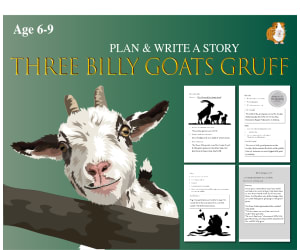
Plan And Write The Story Of The Three Billy Goats Gruff (6-9 years)
ELA, Writing, Creative Writing, Grade 1, 2, 3, 4, Activities
The resource, Plan And Write The Story Of The Three Billy Goats Gruff (6-9 years), is a teaching tool designed to foster creativity and stimulate imagination in young learners aged between 6 to 9 years. It aims to improve storytelling abilities by encouraging children to expand the narrative of the popular traditional tale, 'The Three Billy Goats Gruff.' This activity -based pack is fundamental part of language arts and creative writing education suitable for grade levels 1-4. Students can develop a better understanding of how to structure their own tales with a robust beginning, middle, and end by analyzing characters, setting, and plot. Each teaching activity ignites imaginations while providing stepping stones towards independent writing. In one such activity where students cut up stories and order them logically helps nurture critical thinking skills as well. The provided guide leads students through the brainstorming process enhancing their lateral thinking abilities. Children can learn how they can turn their ideas into proper plans which can then be built upon into engaging narratives. The silhouette illustrations add an extra visual layer that brings this work pack vividly alive for your students. This downloadable PDF resource filled with innovative activities spans twelve pages which are perfect for both group engagement or self-study. Adapting this flexible resource according to specific learning needs becomes incredibly simple whether it's classroom instruction or homework assignments. If you’re looking for compelling ways for your 6-9-year-old pupils to efficiently develop storytelling along with planning skills - Plan And Write The Story Of The Three Billy Goats Gruff may just be what you need!
Author Guinea Pig Education
Tags Imagination, Creativity, Storytelling, Language Arts, Critical Thinking

Women's History Month Quote Posters – 30-Pack
Social Studies, ELA, History, History: World, Reading, Writing, Grade 1, 2, 3, 4, 5, 6, 7, 8, 9, 10, 11, 12, Activities
Celebrate Women’s History Month and empower your students with these 30 powerful motivational quote posters . Featuring quotes from notable women in history, these posters are a perfect way to honor the legacy of women who have made a lasting impact on the world with their words and actions. Perfect for classroom decor , these posters feature uplifting messages that will remind your students to stay focused, work hard, and believe in themselves. Not just during Women’s History Month, but all year around, these quote posters are great for daily inspiration, morning reflection, personal motivation and goal setting. Each poster features a powerful quote from a notable woman in history, along with the time period, and what she is known for. Hang these posters in your classroom, office, or home to remind yourself and others of the strength, resilience and accomplishments of women throughout history. SIZE Each poster prints on a single 8.5 x 11-inch landscape-sized sheet. HOW TO DISPLAY Print out the posters. Laminate them for durability. Attach to the classroom wall with Blu-tack or Plasti-Tac. You may also frame selected posters to display on your teacher desk or on the wall. DIGITAL FILE FORMAT: Pdf file (in zipped folder) The quotes featured in the posters are from the following notable women in history: Alexandria Ocasio Cortez Amelia Earhart Anne Frank Audrey Hepburn Billie Jean King Catherine the Great Charlotte Bronte Ellen Johnson Sirleaf Eva Peron Frida Kahlo Florence Nightingale Helen Keller Indira Gandhi Jane Goodall Kamala Harris Mae Jemison Malala Yousafzai Marie Antoinette Marie Curie Melinda Gates Michelle Obama Mother Teresa Oprah Winfrey Princess Diana Queen Elizabeth II Rosa Parks Ruth Bader Ginsburg Sally Ride Sonia Sotomayor Susan B. Anthony ___________________________________________________ Please contact me with any queries regarding this resource. Thank you! Laurane@teach2tell.com
Author Teach2Tell
Rating
Tags Womens History Month Posters, Womens History Month Activities, Black History Month, Inspirational Quotes, Classroom Posters, Classroom Decor, Womens History Month Bulletin Board, History Posters, Women's History Month Quote, Womens History Month Quotes, Quote For Women's History Month, Women's History Month Quotes For Students, Women's History Month Crafts, Womens Month Quotes, Women's History Month Activities Pdf, Womans History Month Quotes, Quotes Women's History Month, Womens History Month Projects, Womens History Month Poster, Womens History Month Crafts, Women's History Month Poster, Quotes For Women's History Month, Women History Month Quotes
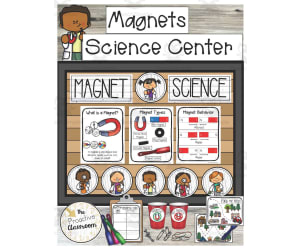
Magnet Science Center
ELA, Language Development, Vocabulary, Science, Basic Science, Kindergarten, Preschool, Grade 1, 2, 3, Centers, Activities
The Magnet Science Center: An Interactive Educational Tool The Magnet Science Center is an innovative teaching tool designed to provide preschool, kindergarten, and early elementary students with a hands-on engagement opportunity through the exciting world of magnets. Emphasizing an approachable science and language arts curriculum, this resource introduces fundamental magnetism concepts in a tangible manner. Interactive Activities: Magnet Sorting Activity : This allows students to actively test diverse items for magnetism which emphasizes observational skills while enabling them to group items based on their magnetic properties. Follow the Road: In this activity , learners guide a car via a concealed magnet navigating through various routes- making it an exciting way to understand how magnets can move objects without obvious push or pull motion! Anchored Chart Activities: Students visually discover differing aspects of magnets using charts such as "Magnet Types", "What Is a Magnet?" and "Magnet Behaviour". These charts help simplify abstract ideas especially for younger grade levels. Attract Or Repel: This furthers understanding on how different sides of magnets interact with each other - be it attraction or repulsion! This download-ready product comes in PDF format containing all necessary instructions & materials required including recording sheets for individual tracking after completion of each experiment. Educational Standards Compliance Designed keeping education standards across multiple grades (Preschool through Grade 3) in mind, the foundational objective remains consistent - cultivating early interest in science while fostering essential learning skills like observation & critical thinking! Homeschooling & Public School Teachers’ Friendly Navigating challenging times where attention needs to be focused towards keeping our youth engaged, this educative kit positions itself not merely as effective learning material but also perfectly apt for both public school teachers and homeschoolers seeking at imparting basic science knowledge innovatively yet enjoyable. Fostering Learning – The Fun Way! The Magnet Science Center strikes just right by being educational but also fun – proving that indeed ,learning unfolds everywhere when you make it engaging!
Author The Proactive Classroom
Tags Magnet Science, Interactive Learning, Hands-on Education, Basic Physics, Homeschool Resource

Ancient Mesopotamia Reading Passages Questions | History Civilizations
Reading Comprehension, Reading, ELA, History: Ancient, History, Social Studies, Grade 4, 5, Centers, Activities, Assessments, Teacher Tools
Engaging and Informative! Explore the fascinating world of Ancient Mesopotamia with this reading comprehension resource designed for upper elementary and middle school students. Through five high-interest informational passages, students will discover the history, inventions, culture, and daily life of one of the world’s earliest civilizations while strengthening important reading comprehension and critical thinking skills. Students will learn about the Cradle of Civilization, the achievements of the Sumerians, Hammurabi’s Code, farming and irrigation systems, and everyday life in Mesopotamia. Each passage includes comprehension questions that encourage vocabulary development, text analysis, and historical understanding in a student-friendly format. This resource supports informational text standards and works perfectly for social studies lessons, literacy centers, homework assignments, substitute plans, morning work, independent practice, small-group instruction, and homeschool learning. Ideal for Grades 4–6, ESL and ELL learners, intervention groups, and history enrichment activities. The ready-to-print PDF format makes preparation simple and convenient for busy teachers and parents. File type: PDF
Author Sadigitalart
Rating
Tags Ancient Mesopotamia, HISTORY, Civilization, Mesopotamia Reading , Civilizations Worksheet

Journey Through South Korea: Guided Reading Level R with Lesson Plan
ELA, Resources for Teachers, Reading Comprehension, Reading, Science, Geography, Social Studies, History, Earth and Environmental Sciences, Technology, Grade 3, 4, 5, Worksheets & Printables, Worksheets, Teacher Tools, Centers, Activities, Literacy Readers, Quizzes, Quizzes and Tests, Assessments, Lesson Plans
This Journey Through South Korea (level r) guided reading book with lesson plan includes: Guided Reading Color Label (front cover x1) This is a quick way to match the book’s demands to what students can generally handle.. The overall goal is to use the level/color to pick books for several smaller groups. To qualify for a certain level, a student is expected to read a book from that level with about 90–94% accuracy. If a student is consistently accurate and understands, move up a level. If the student is struggling at that level, drop down and add more support. Each student will improve at completely different rates, but it is generally one of the best ways to check progress across the class. DOWNLOAD THE CATALOG TO VIEW ALL GUIDED READING BOOKS AVAILABLE (SORTED LEVELS A-Z) Pre-Reading Question (x1) Teacher asks the prompt aloud, can be while showing the cover or first page. Students share what they already know, or make educated guesses from the cover. Prompt them to use the target vocabulary. Write some of their responses on the board to look back at during the reading. Vocabulary Words (x5) Introduce the five words, best doing it one at a time. Start by saying it, while students repeat and then see if anyone knows what it means before reading further. Read through the meaning and try to briefly connect each word to a picture or gesture so it’s meaningful. Ask students to flip through the book pages and point to where they see each of the vocabulary words. While reading the book pause upon coming across one of the vocab words or read the sentence twice to make sure students understand the word has appeared. Optional: Ask students to raise hands whenever they see/hear one of the new words. Guided Reading Pages (x10) Check the book snapshot (below) for: primary topic - do you need to prep extra reading or intro materials on this? what is taught best - decide on 1-2 bullets to focus on, use the prompt or words provided here for best results. learning goals - what you are checking for students to be able to do after the session, elicit answers using prompts or words provided. key vocabulary (see section above). questions overview - so you know what is coming up and if you need to prep extra materials to assist understanding. Run the lesson You may have already looked at a few of the pages together, but you can show them some of the pictures again first to set meaning. Depending on how much time you have and how familiar your students are with guided reading class, you may want to read the book aloud first with the group first. Students whisper or partner read, while you listen in. If time, do it as a group, one student reading a page each. Use the guided page’s prompts to coach: “Check the picture / does it make sense?” “Point under the words / try the first sound” “Reread the sentence smoothly”. Try to focus more on one student per session (rotating every time), so you can work out if they are ready to move up or need to move down a level. Comprehension Questions (back cover x3) This is your way to check that students didn’t just say the words, but actually understood the text. First, let students answer by pointing to the page/picture and saying a short sentence. After any answer, follow with: “Show me where you found that in the text.” In bigger groups, have partners answer first (10–20 seconds), then call on 2–3 students to share. Differentiation tips: Emerging speakers/struggling readers: oral + pointing On-level: oral in a full sentence Higher: one written sentence or draw + label Book Snapshot Title: A Journey Through South Korea Genre: Nonfiction Subject: Social Studies (Geography/Culture) Primary Topic: South Korea’s geography, traditions, and modern innovation Estimated Guided Reading Level (A–Z): R What This Book Teaches Best How geography shapes a country , describing South Korea as a peninsula with seas on three sides and mountains across much of the land. City life and infrastructure , using Seoul to show population size, public transportation, and the mix of historic areas with modern skyscrapers. Cultural traditions and identity , including palaces and Joseon Dynasty heritage, traditional clothing (Hanbok), and national martial arts (Taekwondo). Food culture and processes , highlighting fermentation through kimchi and naming other dishes and ingredients. Modern technology and global influence , explaining South Korea’s role in electronics (including semiconductors) and daily-life innovation. Learning Goals Students will explain how South Korea’s location as a peninsula and its mountains are described in the text. Students will describe Seoul’s role in the nation and cite details about its transportation and city features. Students will identify examples of South Korea’s history and heritage from the text, including details about palaces and architecture. Students will describe how fermentation is connected to Korean food by using the text’s description of kimchi and storage. Students will explain how the text shows South Korea as a leader in technology and innovation. Students will describe one natural environment featured in the text (Jeju Island) using key details provided. Key Vocabulary From the Text peninsula — land with water on most sides, still connected. metropolis — a very large city with many people. fermentation — a process that changes food over time. semiconductors — tiny electronic parts that help devices work. aesthetic — the look and style that feels pleasing. Discussion Prompts Pre-reading question: How can a country honor its past while also building new technology for the future? Comprehension questions: What does the text say about South Korea being a peninsula and the seas around it? Comprehension questions: What details does the text give about Gyeongbokgung Palace and its architecture? Comprehension questions: How does the text describe the Haenyeo and what they do? Printing Tips 1. Best Printing Method (Recommended) “Booklet” Printing (Best if Available) If your printer or PDF viewer supports Booklet Printing , use this. Settings to use: Print mode: Booklet Paper size: Letter or A4 (either works) Orientation: Landscape Print on both sides: Yes Flip on: Short edge Scaling: Fit to printable area Booklet subset: First test: Front sides only Then: Back sides only This will automatically: Pair pages correctly Put the cover on the outside Align everything for folding After printing, fold in half and staple along the spine . 2. If “Booklet” Printing Is NOT Available You can still print this correctly with manual duplex printing . Step-by-step: Open the PDF. Choose Print . Set: Orientation: Landscape Pages per sheet: 1 Print on both sides: Yes Flip on: Short edge Print all pages . Because each PDF page already contains two facing book pages, the result will still fold cleanly into a book. Thousands of Cored Education products are included with your TeachSimple membership. Download links and encyclopedia index available here.
Author Cored Education
Rating
Tags Reading Comprehension, Reading Passages, Reading, Guided Reading, Guided Reading Lesson Plan, Guided Reading Activity, Pre-reading, Social Studies, Geography, History

AN Word Family Flower Craft
ELA, Language Development, Phonics, Preschool, Grade 1, Crafts, Activities
Get those creative juices flowing with these AN words flower craftivity. Students will practice reading and identifying AN words while creating a fun spring flower. What is Included: There is 1 flower template for reading AN family words There is 1 flower template for identifying and matching AN words and pictures. This resource contains two CVC words flower template. When finished, each flower will have 6 different petals with words and pictures. They can be used to introduce or review CVC words, especially words with the AN spelling. With easy to identify images, students will not have difficulty knowing which picture matches which word. There are two ways to use this product: One way to use this resource is to simply print, and allow students to color, cut out and glue the flower onto colored paper. Another way to use this resource is to print the flower onto colored card stock paper. The teacher then can cut and laminate the pieces. The flower can make a great matching activity for a literacy center, or be combined with other word flowers to sort. Ways to Use: Independent Work - Students can complete books on their own. Small Group Activity - The teacher can target students who need more practice with word families in a small group setting. Early Finishers - Students who finish other work early can make these books for extra practice. Homework - These foldable books can be sent home for students to work on with parents. Sub Plans - The no-prep nature makes these books great for subs to give to students to complete. Create a hallway, wall, door or bulletin board display Skills Assessed This activity has students practice scissor skills and following directions. This activity tests students' ability to read CVC words and match AN words with pictures. These flower craft templates are a single paged craft that supply a no prep option for teachers. One the page is printed, the teacher just needs to provide students with scissors, glue, crayons, and colored paper.
Author The Connett Connection
Rating
Tags Phonics Craft, Craftivity, CVC Words, Flower Craft, Literacy Center, Spring Craft, Kindergarten Phonics, Kindergarten Literacy, AN Words

Any Song (Animated Music Video)
ELA, Reading, Preschool, Kindergarten, Grade 1, 2, Songs, Activities
This product, The ANY Song (Animated Music Video), is a great way for students to learn and recognize the sight word ANY. The video is fun and engaging, and will help build reading speed and fluency.
Author Have Fun Teaching
Tags Counting
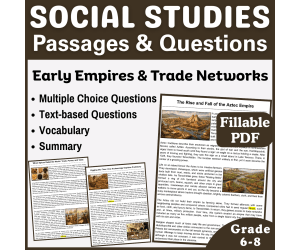
Social Studies Passages: Early Empires and Trades (Fillable PDF)
ELA, Reading, Reading Comprehension, Strategies, Resources for Teachers, Social Studies, History: Ancient, History, Economics, Geography, Grade 6, 7, 8, 9, Writing Prompts, Worksheets & Printables, Centers, Activities, Teacher Tools, Assessments, Quizzes and Tests, Quizzes, Tests
Social Studies Reading Comprehension Passages: Early Empires and Trade Networks (Fillable PDF) This very engaging collection of Social Studies reading passages about Early Empires and Trade Networks is designed to bridge the gap between social studies and literacy through strengthening reading comprehension and sparking knowledge curiosity in middle school students. Each passage blends English Language Arts skills with accurate social studies content. Ideal for interdisciplinary learning in ELA and Social Studies. Suitable for Grade 9 review, too! These worksheets are designed as fillable PDFs , which means students can type their answers directly into the document on any computer or tablet . Each page includes highlighted text fields that show them exactly where to type! What Is Included? There are - (3) - informational passages: Digging Into Time: How Archaeology Explains Prehistory When Spices Ruled the World: Trade, Power, and Taste The Rise and Fall of the Aztec Empire Student Tasks for Each Passage: 5 multiple-choice questions targeting main idea, key details, inference, vocabulary in context, and use of evidence 5 vocabulary matching items with clear, student-friendly definitions 5 text-based questions that require citing specific lines or facts 1 summary prompt that asks students to condense central ideas accurately Full answer key for every section Available Formats for this Resource PDF Word Docs Google Docs FULL CATALOG OF DOWNLOADING LINKS HERE Reading Passage Links: Ancient Civilizations PDF Fillable PDF Word Docs Google Docs Early Empires and Trade Networks PDF Fillable PDF Word Docs Google Docs The Founding of the United States PDF Fillable PDF Word Docs Google Docs Language, Culture, and Meaning PDF Fillable PDF Word Docs Google Docs Psychology and Society PDF Fillable PDF Word Docs Google Docs Global Festivals and Traditions PDF Fillable PDF Word Docs Google Docs Extreme Environments and People PDF Fillable PDF Word Docs Google Docs Food, Culture, and Preservation PDF Fillable PDF Word Docs Google Docs Global Food Customs PDF Fillable PDF Word Docs Google Docs Media, Communication, and Popular Culture PDF Fillable PDF Word Docs Google Docs Human Impact on the Environment PDF Fillable PDF Word Docs Google Docs Civic Action and Social Change PDF Fillable PDF Word Docs Google Docs Fashion, Society, and Power PDF Fillable PDF Word Docs Google Docs People, Places, and Unusual Histories PDF Fillable PDF Word Docs Google Docs How to Use These PDFs Click on the highlighted area to start typing your answer. Move to the next question by clicking in the next highlighted box. When you are finished, close the document and select SAVE so your answers stay recorded. If you want to keep a blank copy for later, choose Save As and give your completed version a new name. Product Details Length: 15 pages total Grades: 6–8, also suitable for Grade 9 review Use cases: close reading, stations, homework, intervention, test prep, and sub plans Why Teachers Choose This Set Authentic social studies content paired with rigorous literacy practice Consistent task structure across all passages for easier planning and smoother student routines Clear, age-appropriate writing that builds confidence without oversimplifying Use this set to reinforce ELA skills in social studies, to add literacy to your lessons, and to support independent work. The passages strengthen main idea, evidence use, vocabulary in context, inference, cause and effect, and summary writing. With ready-to-use assessments and complete answer keys, you can provide focused practice that is simple to run and fast to review.
Author Middle & High School - CORED Education
Rating
Tags Middle School, Reading Comprehension, Reading Strategies, ELA, Centers, Reading Passage, Assessments, Vocabulary, Social Studies, Ancient Civilization
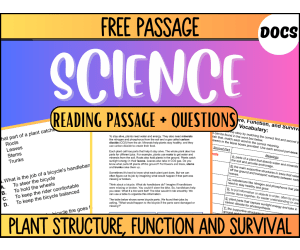
Free Reading Passage: Plant Structure, Function, and Survival (Docs)
ELA, Reading, Reading Comprehension, Science, Life Sciences, Biology, Common Core, Grade 2, 3, 4, Centers, Activities, Worksheets, Worksheets & Printables, Assessments, Teacher Tools, Tests, Quizzes and Tests
Free Reading Passage on Plant Structure, Function, and Survival for Life Science What's inside this free product? Science Reading Comprehension Passage19 : Plant Structure, Function, and Survival Independent Google Docs Version: This is the independent Google Docs version containingone lesson with full answer keys. Product Info: 6 PAGES (US English with Answers) Google Docs Version Teaching Duration: 90 Minutes Science Reading Comprehension Outline: Targeted for students in 3rd and 4th grades, these reading passages are enhanced with illustrations and graphs to elucidate critical points. Each lesson aligns with the Common Core State Standards, allowing you to integrate science reading practice effortlessly, knowing that minimal preparation is needed on your part. Each passage comes with a variety of questions in different formats, including multiple-choice formats, data analysis, and fill-in-the-blanks. The topics covered strike a balance between engaging content and core curriculum-based science subjects. Versatile in application, these lessons are suitable for a variety of settings such as whole-class instruction, morning activities, independent desk work, small group discussions, contingency plans for substitute teachers, homework assignments, or even special holiday-themed tasks. FULL CATALOG OF DOWNLOAD LINKS HERE Grade 3/4 Links: Physical Science Part 1 - Properties of Objects and Materials Google Docs/Slides/Forms PDF PPT Word Free Supplementary Pack Accompanying Videos Physical Science Part 2 - Position and Motion of Objects Google Docs/Slides/Forms PDF PPT Word Free Supplementary Pack Accompanying Videos Physical Science Part 3 - Light, Heat, Electricity, Magnetism Google Docs/Slides/Forms PDF PPT Word Free Supplementary Pack Accompanying Videos Life Science Part 1 - Characteristics of Organisms Google Docs/Slides/Forms PDF PPT Word Free Supplementary Pack Accompanying Videos Life Science Part 2 - Life Cycles of Organisms Google Docs/Slides/Forms PDF PPT Word Free Supplementary Pack Accompanying Videos Life Science Part 3 - Organisms and Environments Google Docs/Slides/Forms PDF PPT Word Free Supplementary Pack Accompanying Videos Earth Science Part 1 - Properties of Earth Materials Google Docs/Slides/Forms PDF PPT Word Free Supplementary Pack Accompanying Videos Earth Science Part 2 - Changes in the Earth and Sky Google Docs/Slides/Forms PDF PPT Word Free Supplementary Pack Accompanying Videos Earth Science Part 3 - Objects in the Sky Google Docs/Slides/Forms PDF PPT Word Free Supplementary Pack Accompanying Videos For similar products and other frees, do check out Cored Group on TeachSimple .
Author Cored Education
Tags Science, Elementary, Reading, Comprehension, Vocabulary, Answers, Physics, Physical Science, Ccss, Common Core

ABC CLIP CARDS | FREE RESOURCE
Language Development, ELA, Reading, Writing, Early Learning, Elementary, Not Grade Specific, Pre-K, Homeschool Resources, Activities, Worksheets & Printables
LITERACY | FREE CLIP CARDS FOR LEARNING THE ABC SOUNDS INTRODUCTION: Hello! I thank you infinitely for your interest in my educational store! I am a teacher who strives every day to produce these great educational resources for children, so I thank you because with your downloads you are helping a lot to promote my personal and professional work. MAIN INFORMATION: 1. Product name: You can use this educational resource in the primary education classroom. 2. Number of pages: This document contains the following number of pages. 3. Is it editable or not? This educational document is not editable, because this way you can use it better and you will not have any problem with the composition or design undergoing any variation. 4. Theme: This educational resource contains a topic for the primary education of children. 5. Document version: This educational document is available in PDF version, size A4. 6. Color or black/white: This educational product is designed in color because we believe that this will be much more attractive for your children. COMPLEMENTARY INFORMATION: 7. In what version is it available? This document is available in PDF version, A4 size, because we consider that this size is the original and most common standard. 8. Editable/Non-Editable: This educational document and/or set of educational sheets is not editable, because this way you will be able to use it much more easily. 9. Age at which it can be applied: This educational resource can be applied to children of all ages, that is, students from 3 to 12 years old, who must acquire some basic knowledge that thanks to this document they will be able to address. 10. Tags or keywords that describe the content: didactic material, teaching sheets, material for children, printable educational material, printable material. 11. Ways to print: I suggest you print this document in A4 format, and check if your printer has enough ink for the printout to be of quality and so that your students can complete their worksheet without any problem. 12. Ways to apply it in class: You can apply this document both individually and as a group, it all depends on your criteria.
Author EDITORIAL LAURA EDUCA
Tags CLIP CARDS, FREE, FREE RESOURCE, ABECEDARY, ABC, ALPHABET, LITERACY

Letter I Spelling Puzzles
ELA, Language Development, Phonics, Spelling, Kindergarten, Preschool, Activities
Letter I Spelling Puzzles This phonics resource helps young learners practice spelling letter I words through engaging hands-on puzzles. Students build words like insects, iguana, ill, and ice using large, visual puzzle pieces. Each letter of the word is a separate puzzle piece featuring a colorful image related to the word. Use these spelling puzzles in literacy centers, morning tubs, tabletop activities, and more. The puzzles assess skills like spelling, letter sounds, and fine motor development. Print, laminate, and cut out the four included puzzles for a ready-to-go small group or individual activity . Children will love piecing together the words and matching letters to sounds as they learn. Discover more phonics and early literacy teaching resources for grades PreK-K in my store here.
Author The Connett Connection
Tags Letter I, Letter I Activities, Alphabet Activities, Alphabet Puzzles, Spelling Puzzles, Spelling Activity, Alphabet Center, Puzzle Center, Letter Of The Week, Phonics Activity

Human Body & Senses: SAMPLE Life Science Reading Comprehension (PDF)
Science, ELA, Reading, Reading Comprehension, Strategies, Resources for Teachers, Life Sciences, Human Body, Grade 6, 7, 8, 9, Writing Prompts, Worksheets & Printables, Centers, Activities, Teacher Tools, Assessments, Quizzes and Tests, Quizzes, Tests
This is a ONE PASSAGE SAMPLE. The following is the description of the FULL resource and the downloading links: Human Body and Senses: Life Science Reading Comprehension Passages (PDF) This very engaging collection of life science reading passages about Contact Lenses, Goosebumps, and Skin is designed to bridge the gap between science and literacy through strengthening reading comprehension and sparking scientific curiosity in middle school students. Each passage blends English Language Arts skills with accurate science content that supports NGSS classroom practice. Ideal for interdisciplinary learning in ELA and Science. Suitable for Grade 9 review, too! What Is Included? There are (3) informational passages: Clear Vision: The Story of Contact Lenses: Early lenses were hard, bulky, and uncomfortable, but the idea was simple: correct vision right on the eye. Modern soft lenses let oxygen in, stay in place, and give people clear sight without glasses. Goosebumps: A Chilly Reminder of Our Past: When you get cold or scared, tiny muscles pull on each hair and make bumps. It once helped our hairy ancestors look bigger and hold heat, so today it’s mostly a leftover reflex. Skin: Your Protective Shield: Skin keeps germs out, moisture in, and helps your body stay at a steady temperature. With nerves and blood vessels close to the surface, it also lets you feel and heal. Student Tasks for Each Passage: 5 multiple-choice questions targeting main idea, key details, inference, vocabulary in context, and use of evidence 5 vocabulary matching items with clear, student-friendly definitions 5 text-based questions that require citing specific lines or facts 1 summary prompt that asks students to condense central ideas accurately Full answer key for every section Available Formats for this Resource Word Docs Google Docs FULL CATALOG OF DOWNLOADING LINKS HERE Other Science Reading Collections and Topics You May Find in the Store: 1. Astronomy & Space Science 2. Volcanoes, Rocks, & Mountains 3. Rock Cycle, Soil, & Sinkholes 4. Mars, Glaciers, & Antarctica 5. Water Cycle, Acid Rain, & Wastewater 6. Insects, Animals, & Ecosystems 7. Bioluminescence & Insects 8. Animal Skin, Cats, & T. Rex 9. Human Body and Senses 10. Health & Applied Bioscience 11. Waves, Light, & Imaging 12. Electricity & Energy 13. Motion & Materials 14. Chemistry and Materials Science 15. Electromagnetism 16. Acids and Bases 17. Gas Laws 18. Biotechnology 19. Periodic Trends 20. Protists and Fungi 21. Microevolution 22. Blood 23. Chemical Bonding 24. Magnets 25. Muscles 26. Nuclear Chemistry 27. Electromagnetic Devices 28. Epigenetics 29. The Law of Conservation of Mass 30. Atomic Models 31. Isotopes and Ions 32. Light 33. Human-Environment Interaction 34. Theory of Evolution 35. Photosynthesis 36. Origins of Life and Early Earth 37. Gene Expression and Regulation 38. Thermochemistry 39. Allergies 40. Coevolution 41. Birth to Adulthood 42. Cells 43. Entropy and Free Energy 44. The Human Brain 45. Mixtures and Solutions 46. Invertebrates 47. Zoo Animals 48. Biochemistry 49. Animal Behavior 50. Population Ecology ...and many more engaging science reading passages that cover intriguing and important topics designed to spark curiosity and support student learning. Product Details Length: 14 pages total Grades: 6–8, also suitable for Grade 9 review Use cases: close reading, stations, homework, intervention, test prep, and sub plans Standards support: reinforces informational-text skills and supports NGSS-style sense making through observation, modeling, and clear use of claim, evidence, and reasoning Why Teachers Choose This Set Authentic science content paired with rigorous literacy practice Consistent task structure across all passages for easier planning and smoother student routines Clear, age-appropriate writing that builds confidence without oversimplifying Use this set to reinforce ELA skills in science, to add literacy to your lessons, or to support independent work. The passages strengthen main idea, evidence use, vocabulary in context, inference, cause and effect, and summary writing. With ready-to-use assessments and complete answer keys, you can provide focused practice that is simple to run and fast to review.
Author Middle & High School - CORED Education
Rating
Tags Middle School, Reading Comprehension, Reading Strategies, ELA, Centers, Reading Passage, Assessments, Vocabulary, Life Science, Human Body