Multiplication Chart Freebie
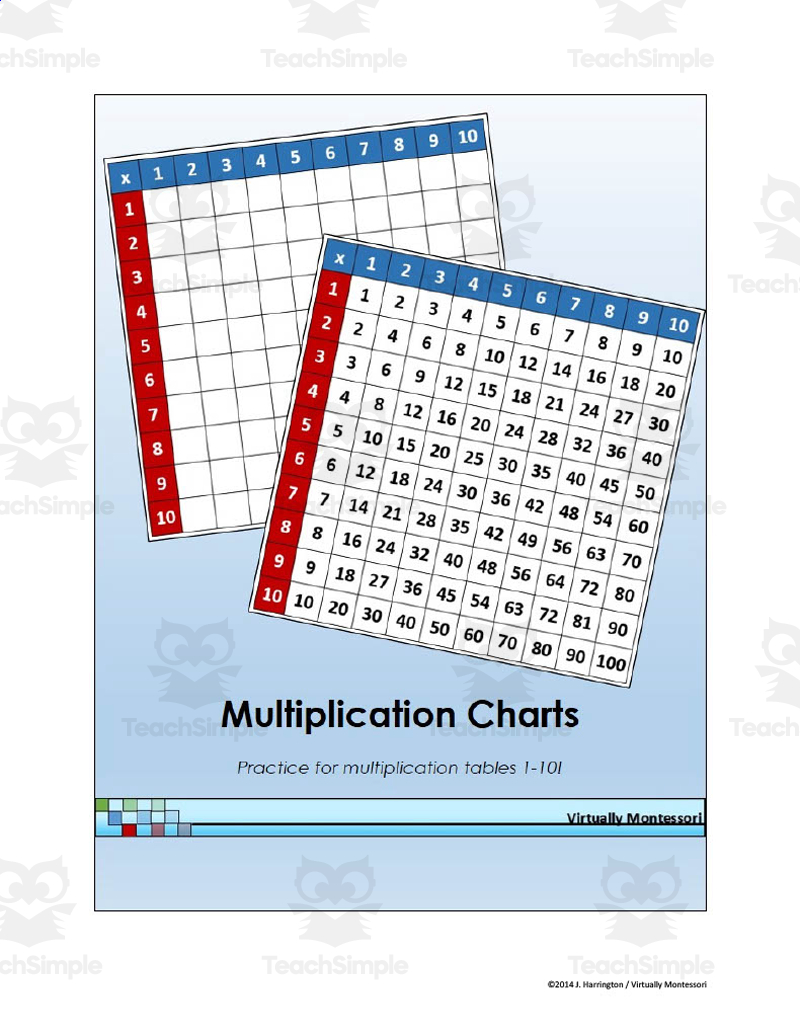
Fill in products on a blank 1-10 x 1-10 chart using finger-tracing from the top row and left column, then check answers against the completed chart; can also be used as a timed self-assessment.
Classroom resources
Browse by lesson focus
Choose the topic or kind of practice you need.
Fill in products on a blank 1-10 x 1-10 chart using finger-tracing from the top row and left column, then check answers against the completed chart; can also be used as a timed self-assessment.
Review multiplication and division through fifteen multiple-choice questions that combine calculations with word problems. Students work with equal groups, remainders, estimation, and more than two factors. The labeled answer page supports checking; asking students to explain a calculation before choosing an option can reveal how they approached it.
Multiplication Facts Writing | Strip Lines Set 10D This educational resource teaches basic multiplication facts to students through writing practice. The set includes printable strip lines worksheets that allow learners to repeatedly write out multiplication equations to improve fact fluency. Teachers can utilize these materials in…
This multiplication practice worksheet is a great resource for students who are struggling with two- and three-digit multiplication. The worksheet includes a variety of problems for students to solve, and is a great way for students to get extra practice outside of class.
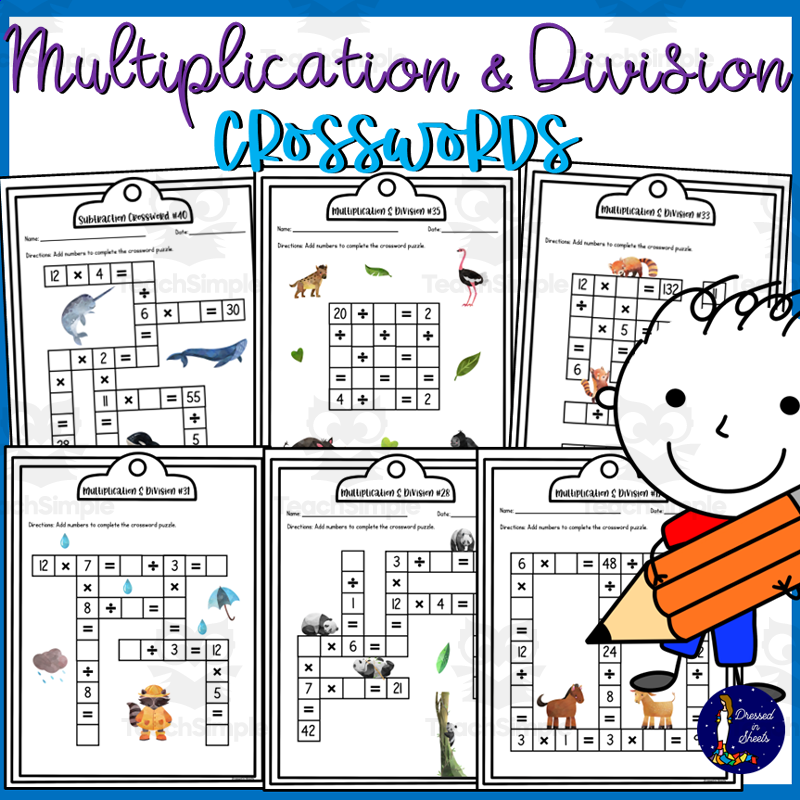
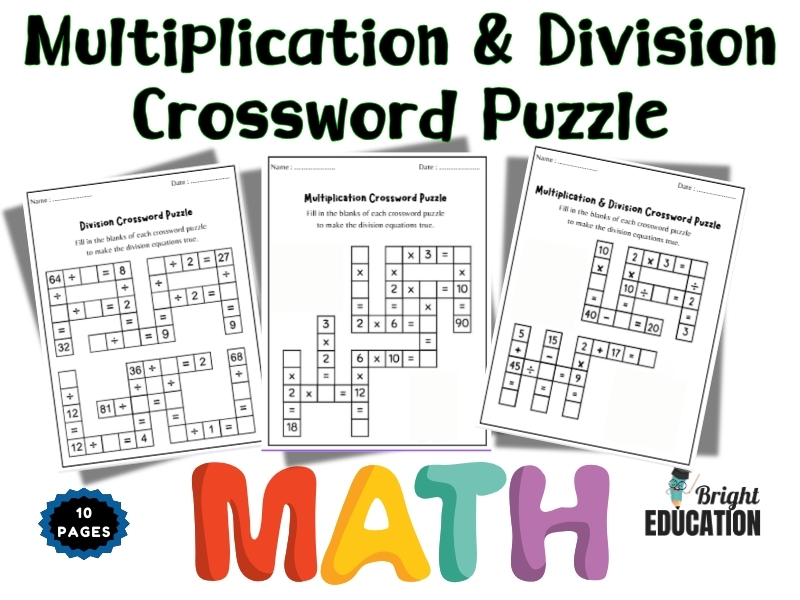
Students solve a grid of interlocking multiplication and division problems, writing the numeric answers into a crossword-style grid so that shared digits line up between intersecting problems.
Match number cards to math problem strips and write answers on an activity sheet; solve missing-number multiplication and division equations on worksheet pages.
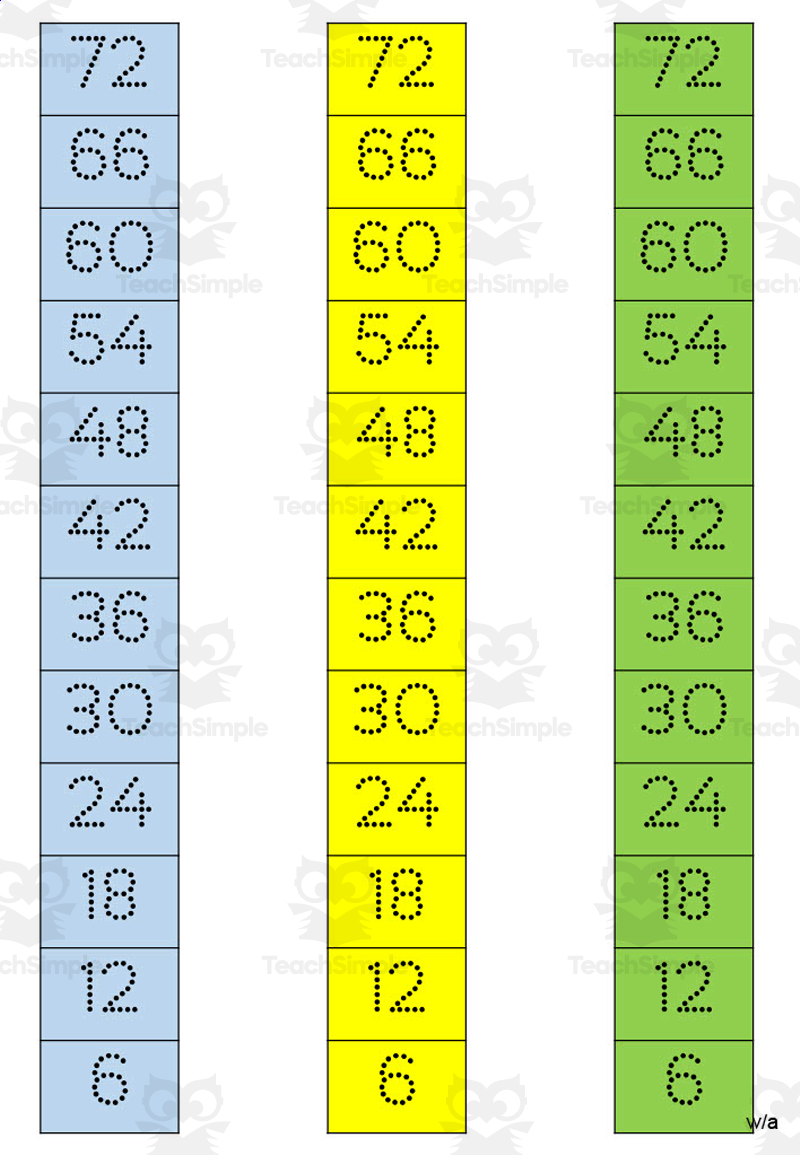
Multiplication fact fluency practice for the ×6 table, presented as repeating three-column number strips.
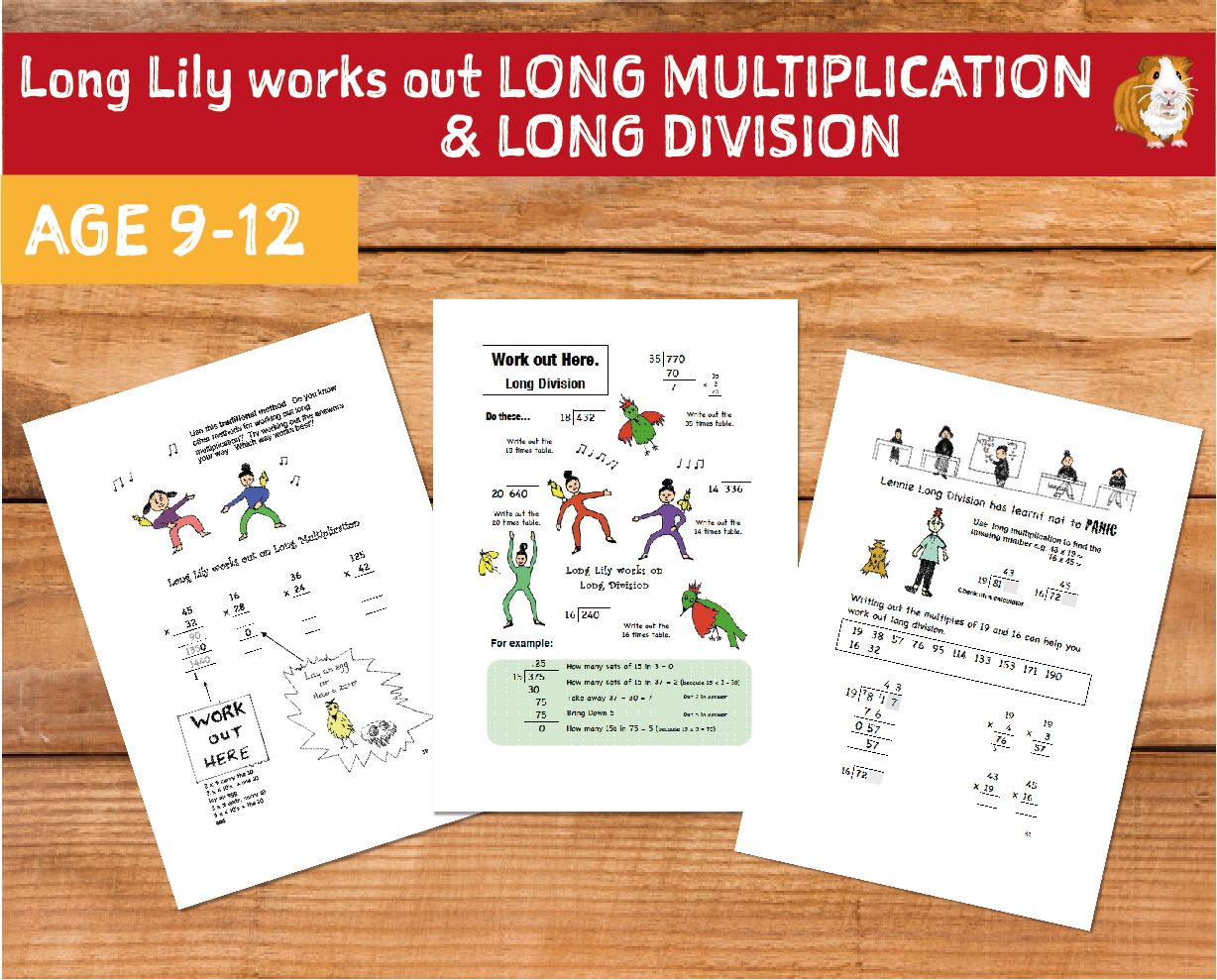
Work out long multiplication and long division problems using the traditional method shown (including writing out times tables, tracking carries, and using the 'how many sets of X' subtraction method for division), and identify prime numbers/factors in later pages.
Read math clues (equations) and fill in the correct numeric answers into a crossword-style grid.
Write multiplication sentences to match arrays or equal groups, draw arrays/equal groups to match given equations, and solve related word problems on task cards, a recording sheet, and independent-practice/homework pages.
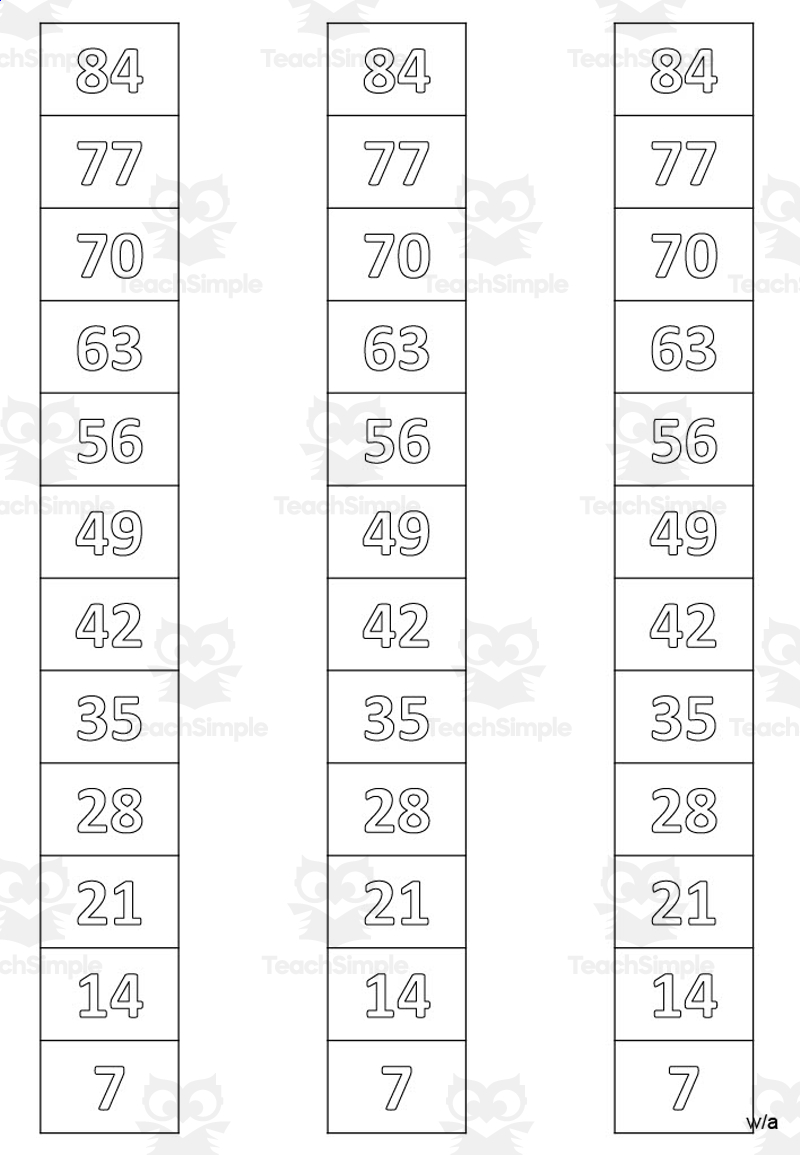
Multiplication fact fluency practice for the ×7 table, presented as repeating three-column number strips.
Students perform a calculation involving powers/exponents and multiplication for each numbered item, match the numeric result to a letter shown at the bottom of the page, and place that letter into a rectangle; repeating until all rectangles are filled reveals the name of a city.
Count printed groups of cube images corresponding to each multiple of 9 and match/complete the equation for that multiple (e.g. 1x9 through 12x9).
Solve multiplication equations printed on popsicle graphics, solve division equations, and solve paired multiplication equations (fact families) across a set of five worksheets.
Count printed groups of cube images corresponding to each multiple of 10 and match/complete the equation for that multiple (e.g. 1x10 through 12x10).
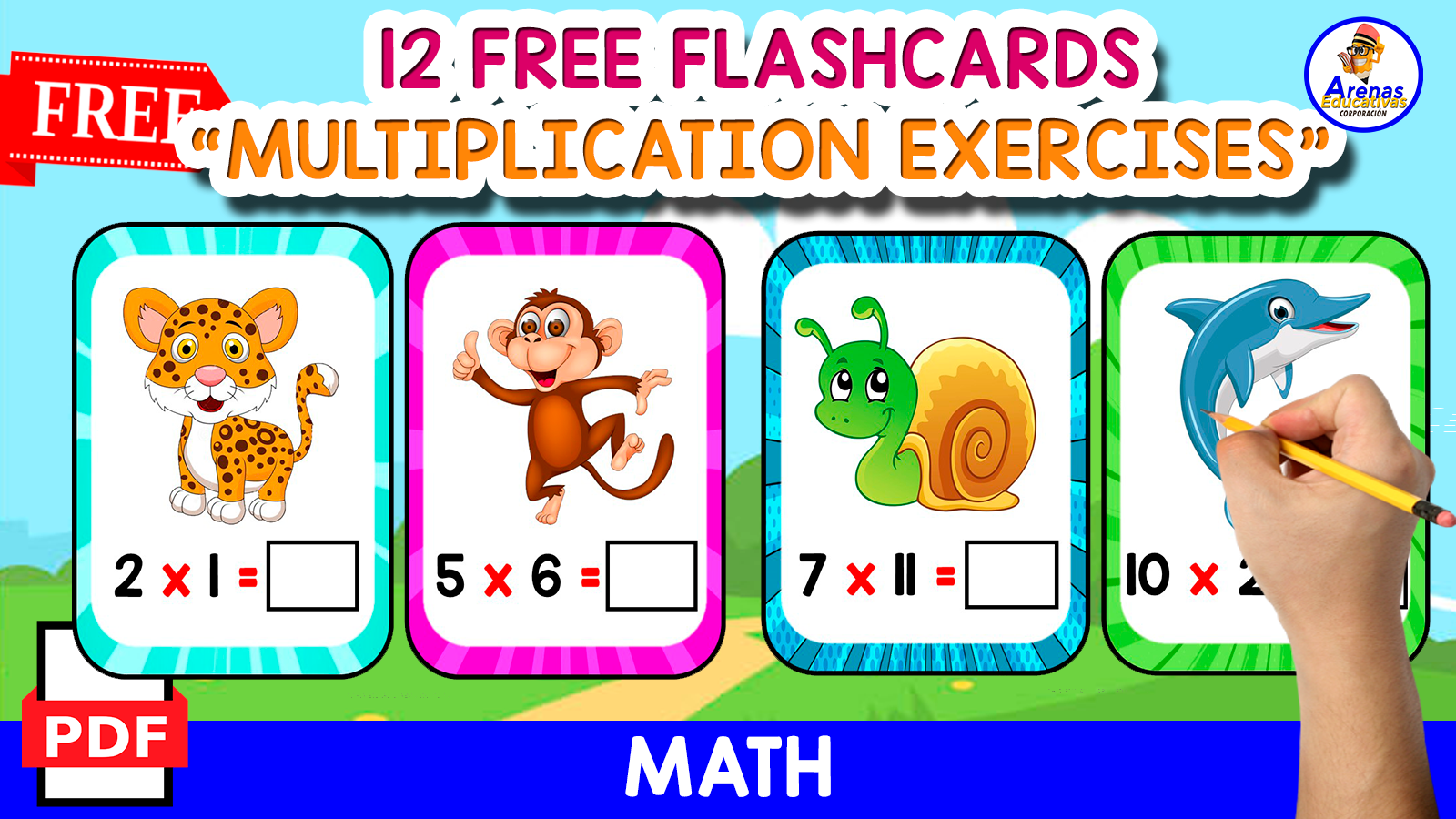
Solve each printed multiplication equation (e.g. 2x1=, 5x6=, 6x9=, 9x12=...); equations are shown without answers, functioning as blank practice/drill flashcards.
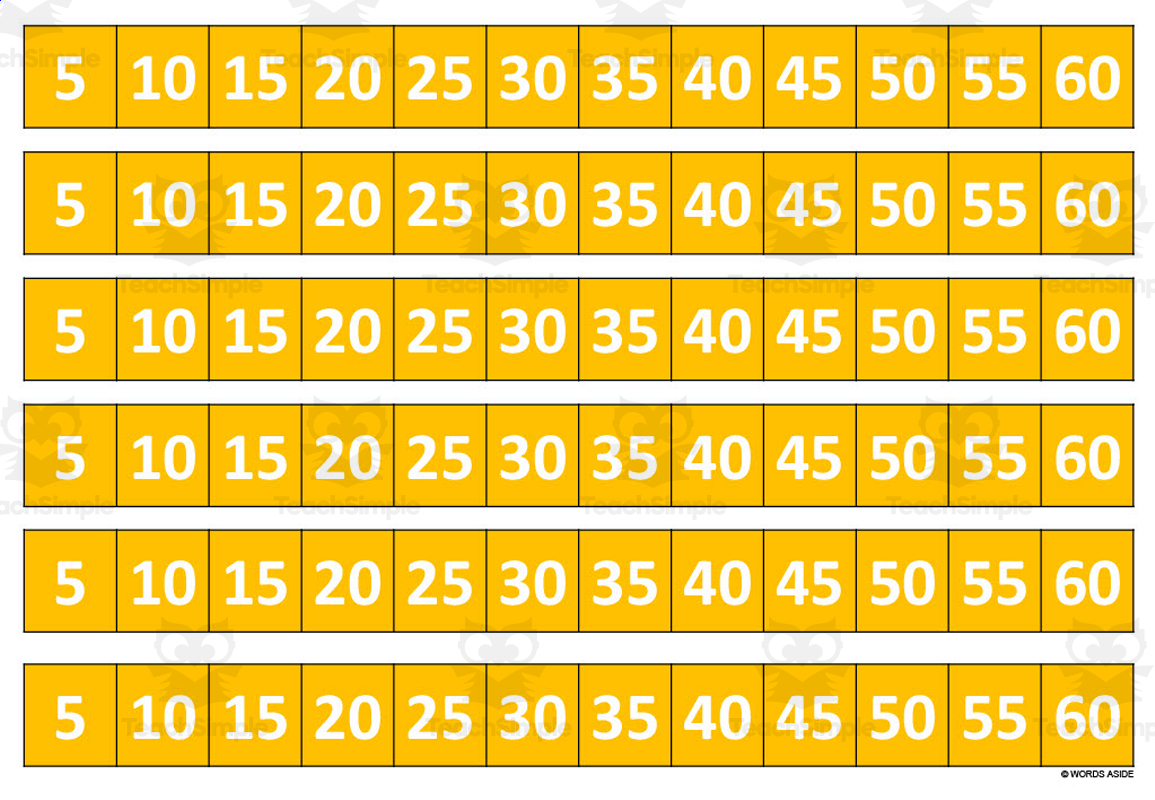
Write out the multiples of 5 (the 5 times table, 5 through 60) repeatedly on ruled strip lines.
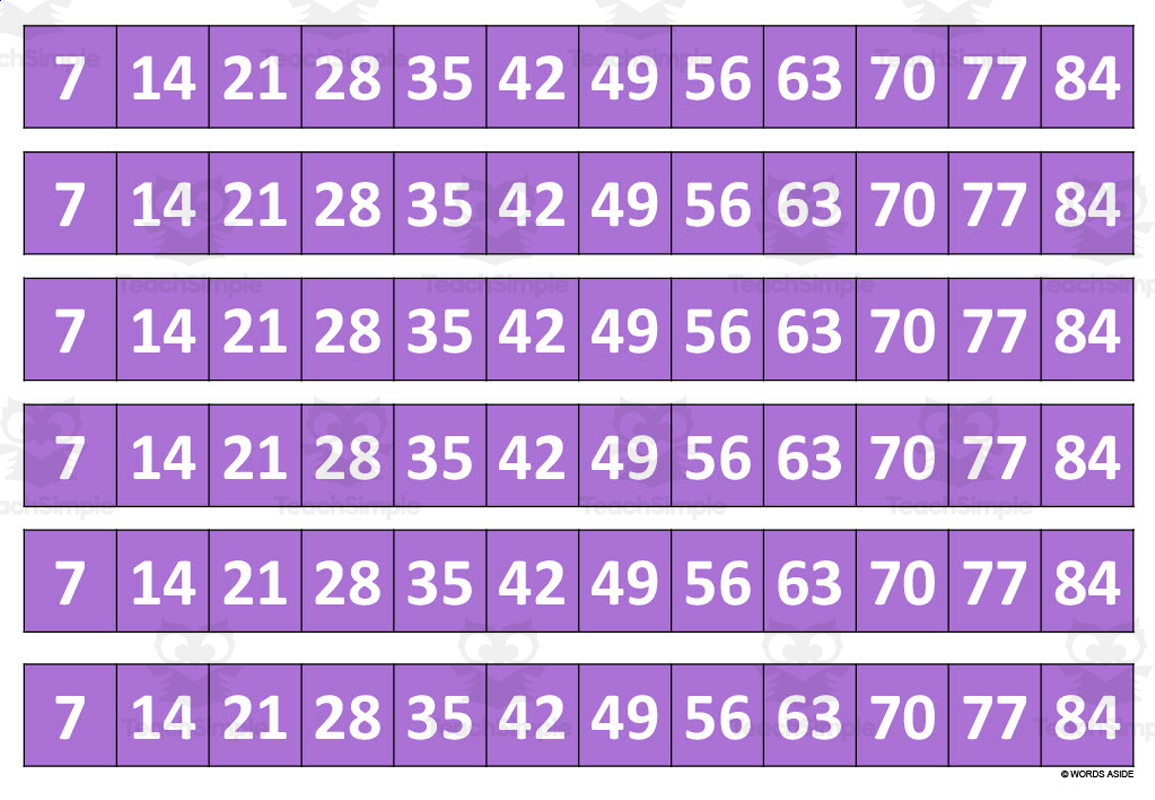
Write out the multiples of 7 (the 7 times table, 7 through 84) repeatedly on ruled strip lines.
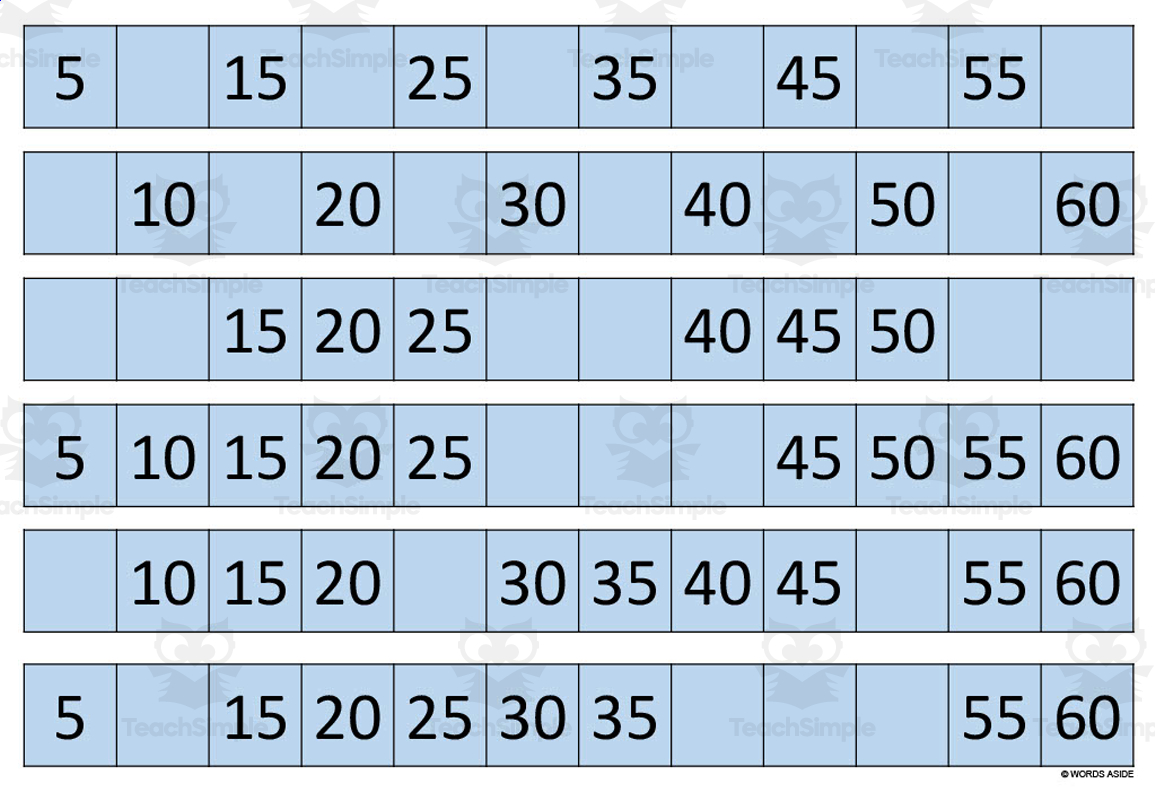
Fill in the missing multiples of 5 in partially completed number rows on ruled strip lines.
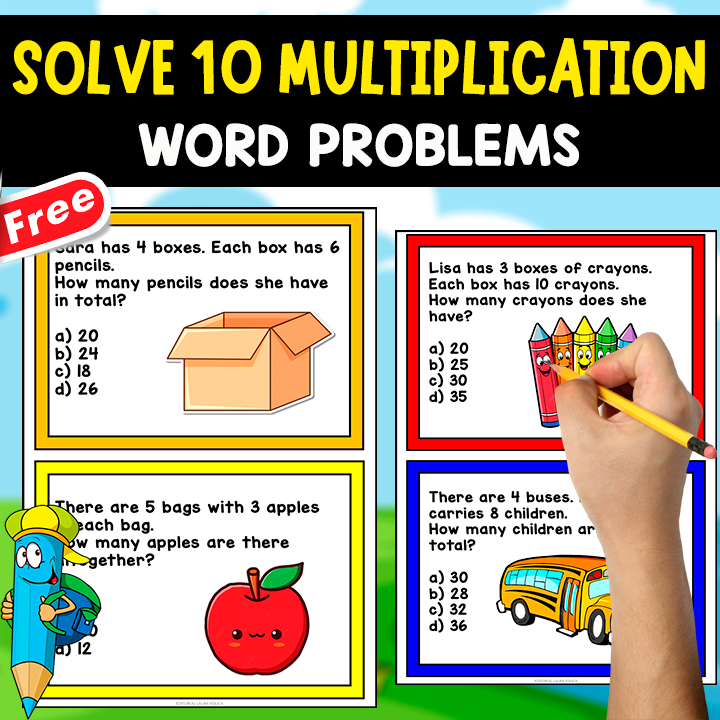
Read a short multiplication word problem (e.g. groups/rows of items) and select the correct total from four multiple-choice answers (a-d).
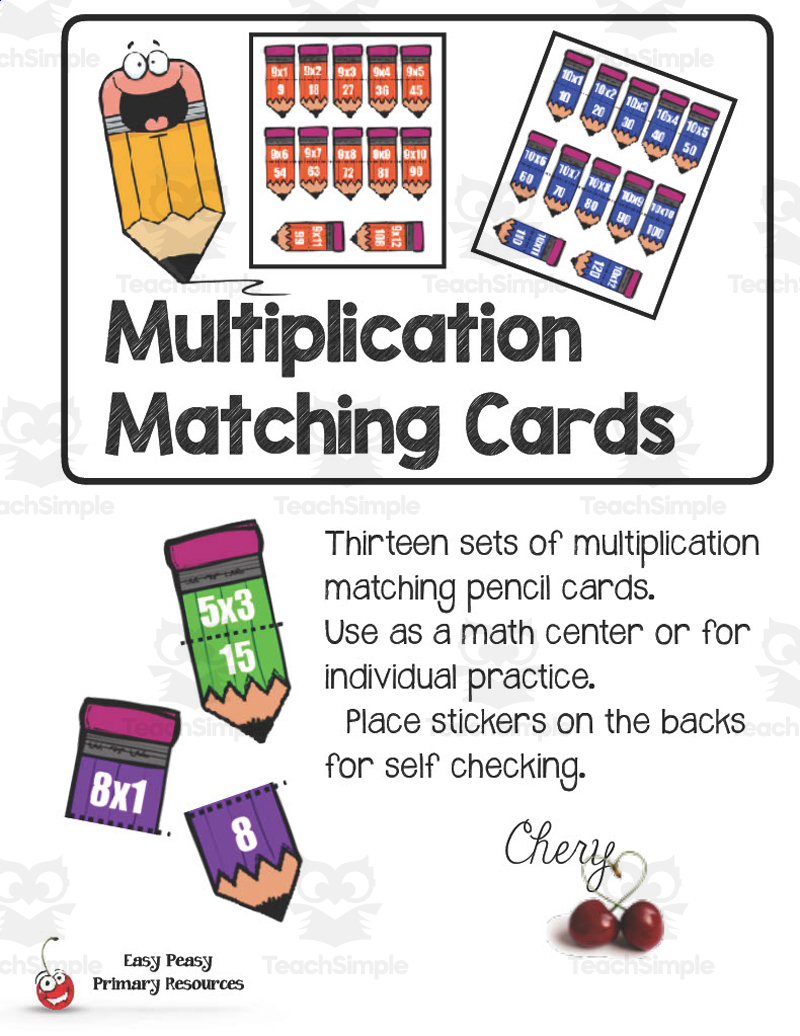
Students match multiplication-problem pencil cards to their correct product cards; a sticker placed on the back of each pair allows students to self-check their matches.
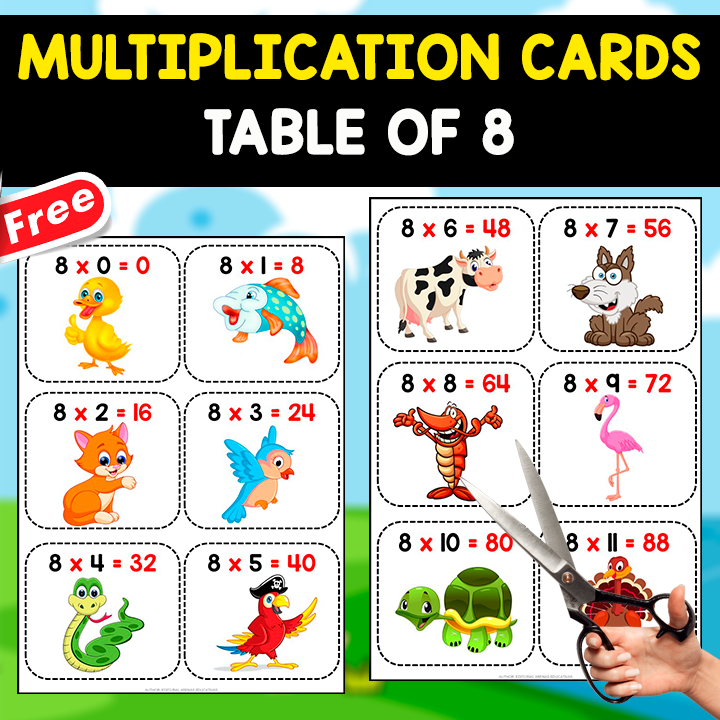
Review flashcards showing multiplication facts for the table of 8 with the answer shown (e.g. 8 x 2 = 16), to memorize the facts.
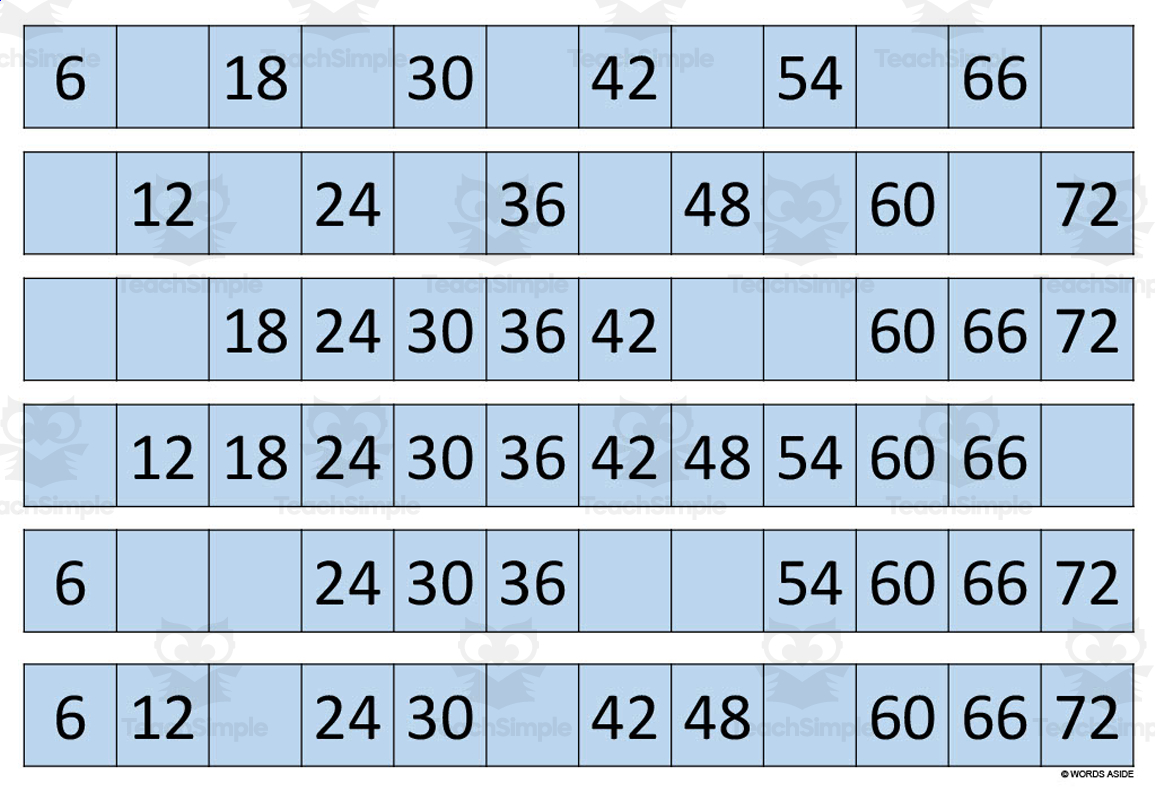
Fill in the missing multiples of 6 in partially completed number rows on ruled strip lines.
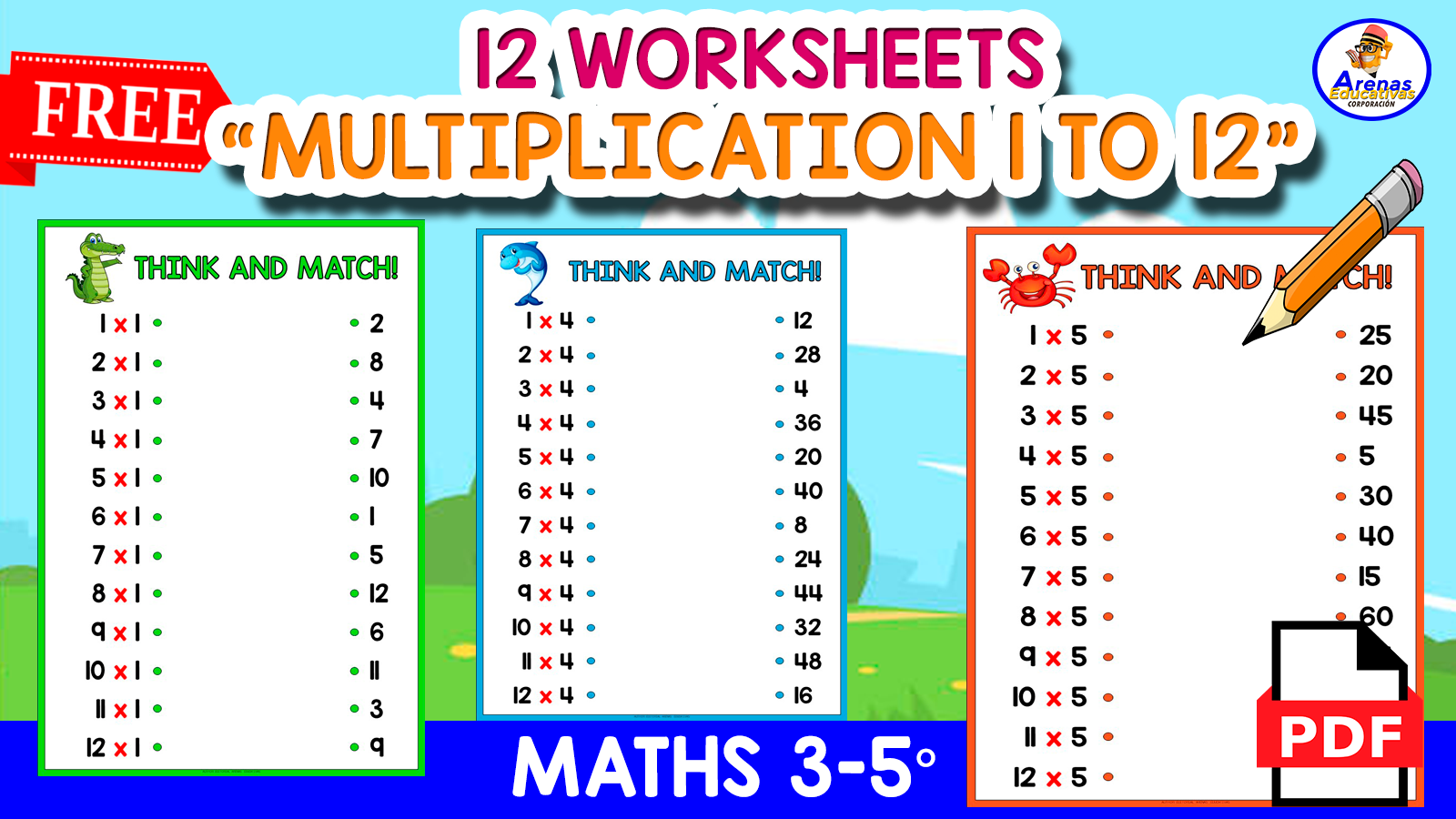
Give students practice matching multiplication equations to their correct numeric answers.