
Cafe du Monde Math Worksheet
Math worksheet using a Cafe Du Monde beignet-shop scenario to practice multiplication, division, unit rates, tables, money, and weight-conversion word problems.
Answers included


19,642 resources
Explore sub-categories
15 sub-categories · 19,642 resources
Math worksheet using a Cafe Du Monde beignet-shop scenario to practice multiplication, division, unit rates, tables, money, and weight-conversion word problems.

A bundle of eight hands-on activities covering the 6th grade Number System domain: fraction operations, multi-digit multiplication/division, decimal operations, factors/multiples, integers, coordinate-plane plotting, absolute value, and transformations, aligned to Common Core 6.NS standards.

Teach 3rd graders about disease prevention and control: communicable vs. non-communicable disease, personal hygiene, and how viruses (including coronavirus/COVID-19) spread.
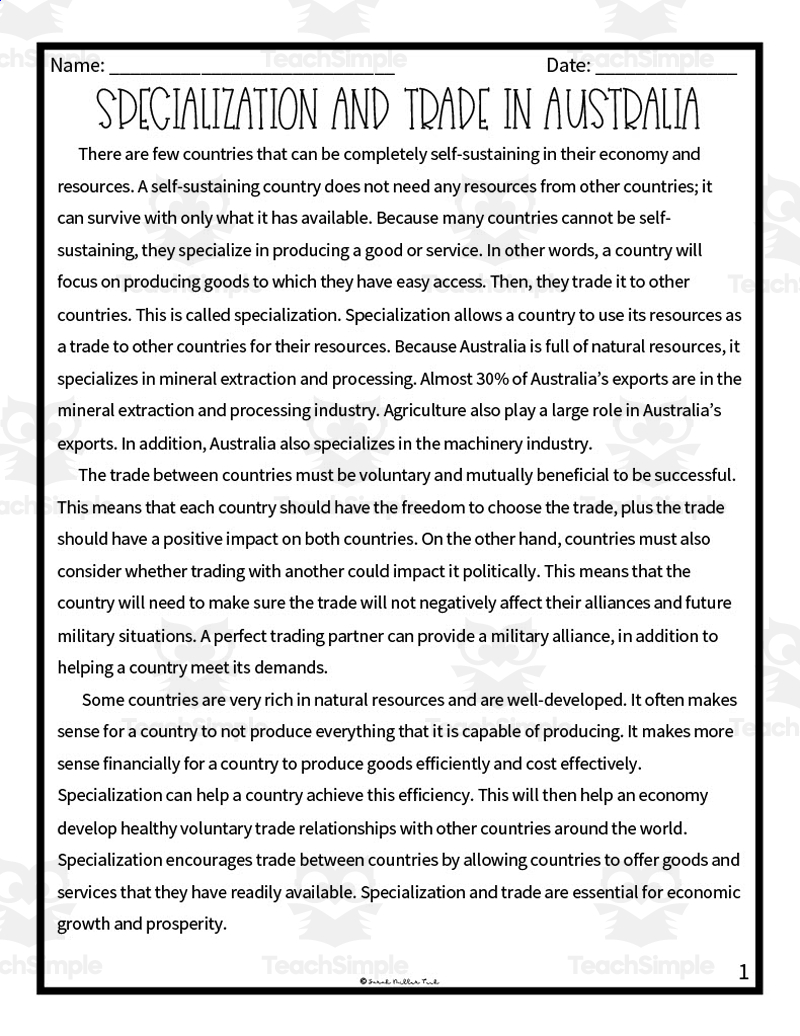
Teach students about specialization and trade in Australia (mineral extraction/processing, agriculture, machinery industries) through a nonfiction reading passage on specialization and trade/economics.

A 7-step personal research project guiding students to choose a real-world topic, form a math question about it, learn/practice needed skills, research, calculate an answer, and present their findings.
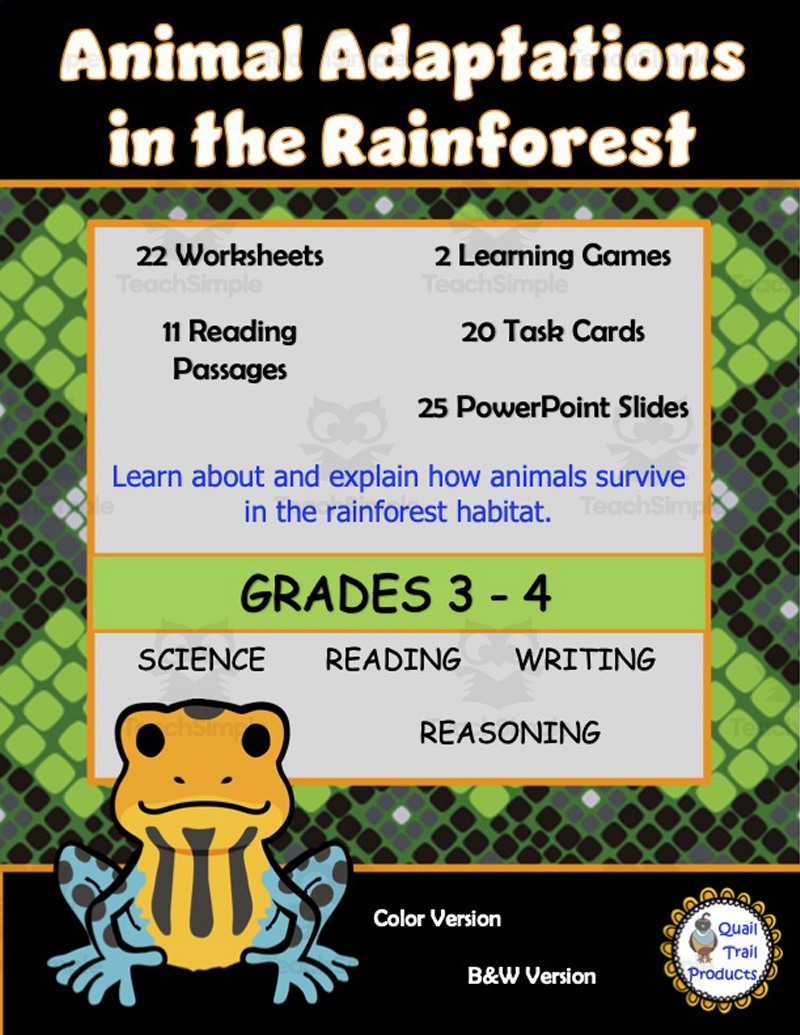
A four-part rainforest bundle opens with a slideshow covering what a habitat is, rainforest vocabulary (dewlap, echolocation, terrestrial, and similar terms), the four layers of rainforest trees, and the three types of adaptation (behavioral, physical, life cycle) illustrated through nine specific animals such as the toucan, sloth, and jaguar. A set of 20 numbered task cards then quizzes students on that same content through fill-in-the-blank, true/false, and riddle formats, each with a matching answer key, alongside a separate animal-picture card game with three small-group activities for practicing adaptation facts aloud. The largest component, an 82-page workbook, adds a K-W-L chart, vocabulary-matching and dictionary-guide-word worksheets, reading passages on eight rainforest animals plus three additional animals for a reasoning exercise, an opinion-writing assignment with a graphic organizer, and a word search and crossword puzzle. Reading comprehension, vocabulary, and opinion writing are woven throughout the science content, so the bundle functions as a combined ELA-and-science unit rather than a single-subject resource.
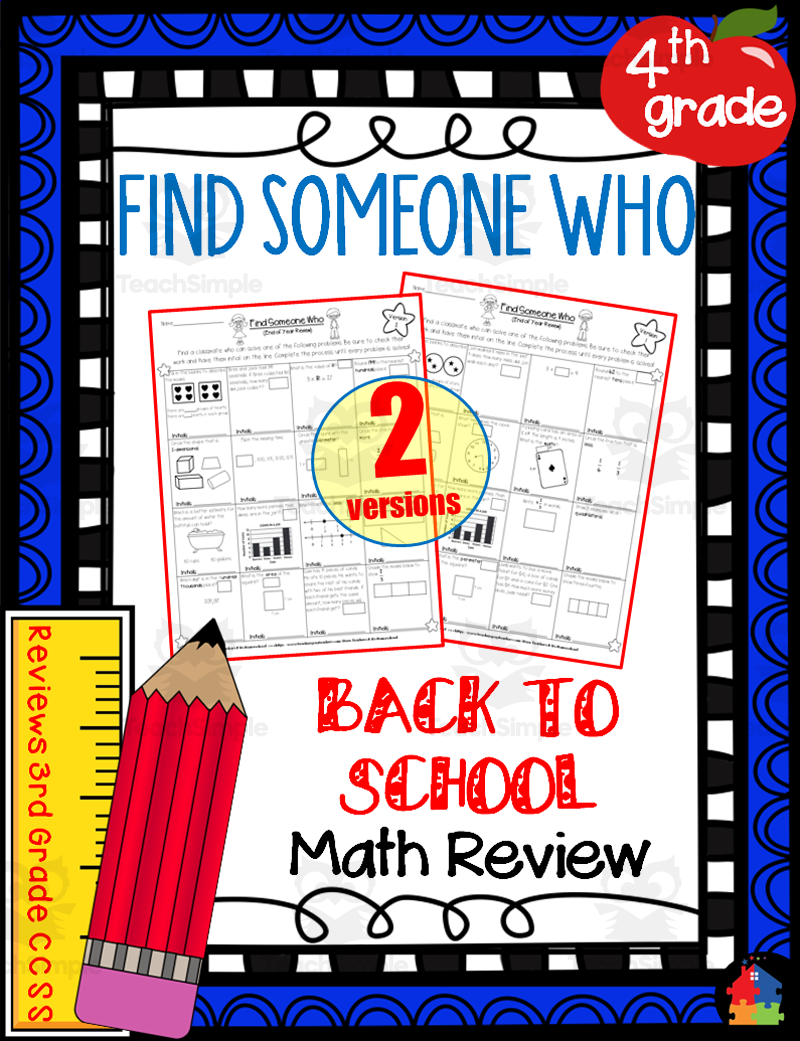
Two review sheets support a Find Someone Who routine using prior-grade mathematics. Model how partners exchange papers, solve a problem and compare responses, then rotate partners using the supplied directions. Use the completed checking pages to revisit questions afterward.
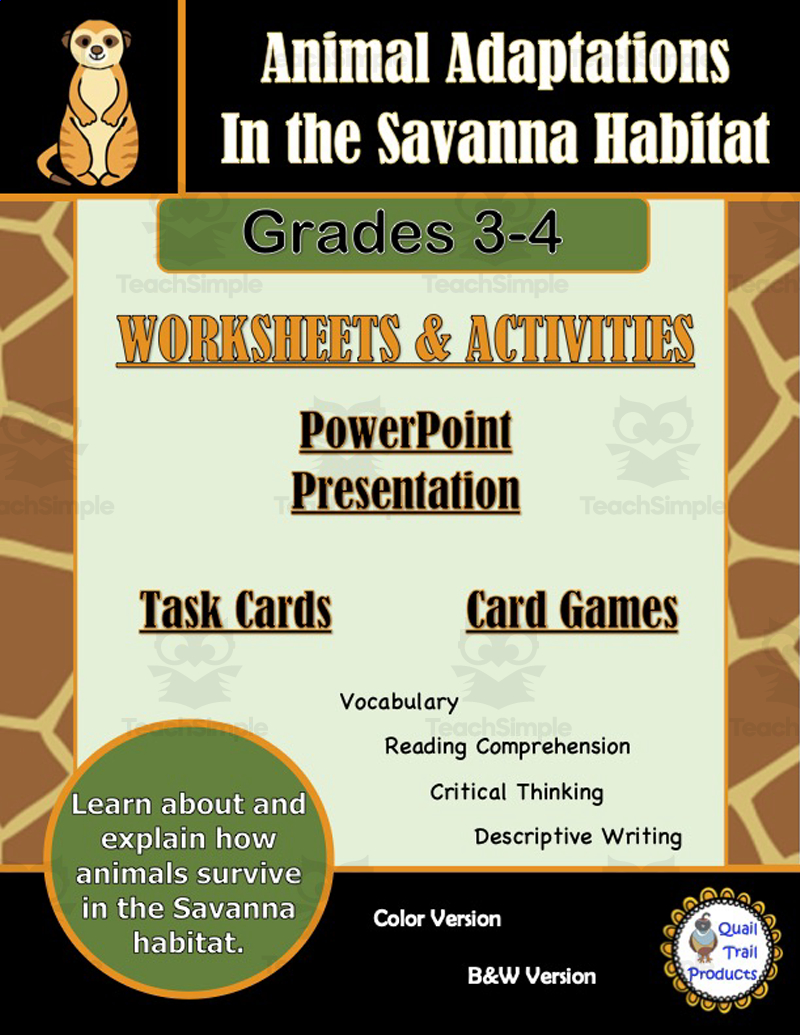
Teaches elementary students about the savanna habitat and how savanna animals use behavioral, physical, and life-cycle adaptations to survive in a flat, arid, transitional-zone environment.

A leveled dice-based board game series for practicing number recognition through addition, subtraction, multiplication, and division facts.
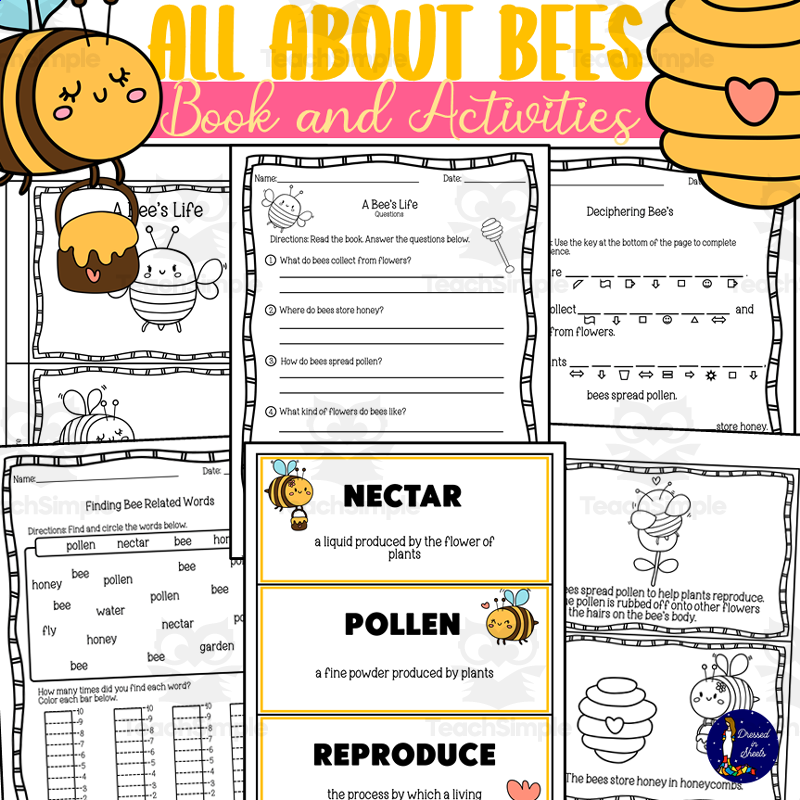
A mini cut-and-assemble emergent reader book about bees ('A Bee's Life') paired with comprehension, cloze/decoding, word search, and vocabulary activities.
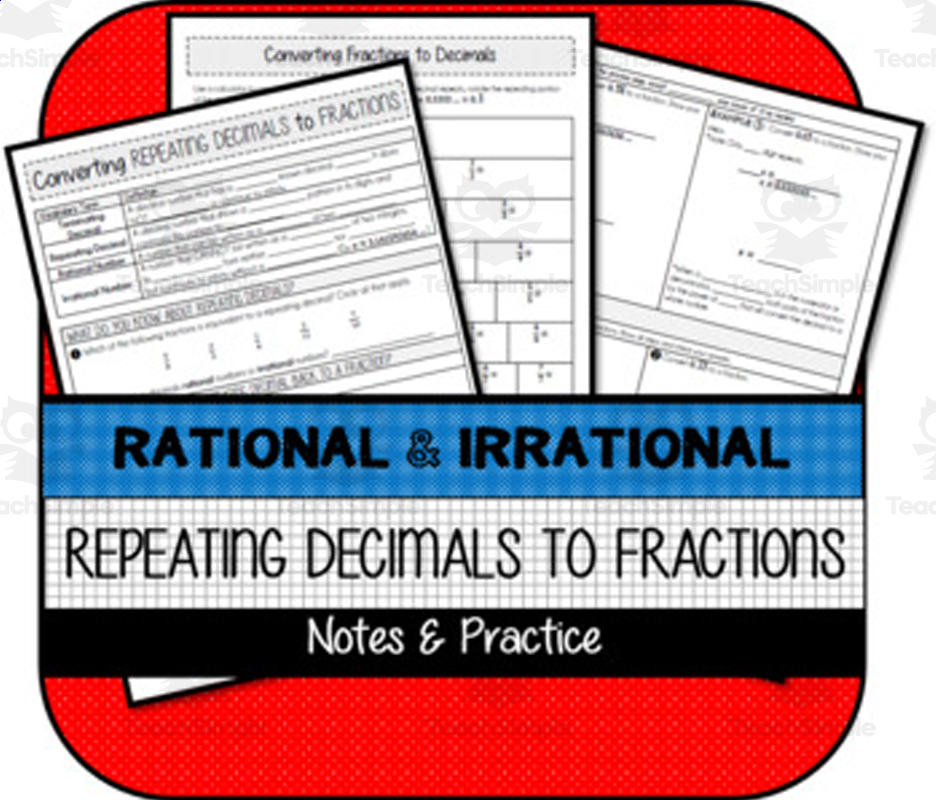
Guided notes and practice teaching students to convert repeating decimals back to fractions using the multiply-and-subtract (system of equations) method, aligned to the convert-a-repeating-decimal portion of CCSS.MATH.CONTENT.8.NS.A.1.
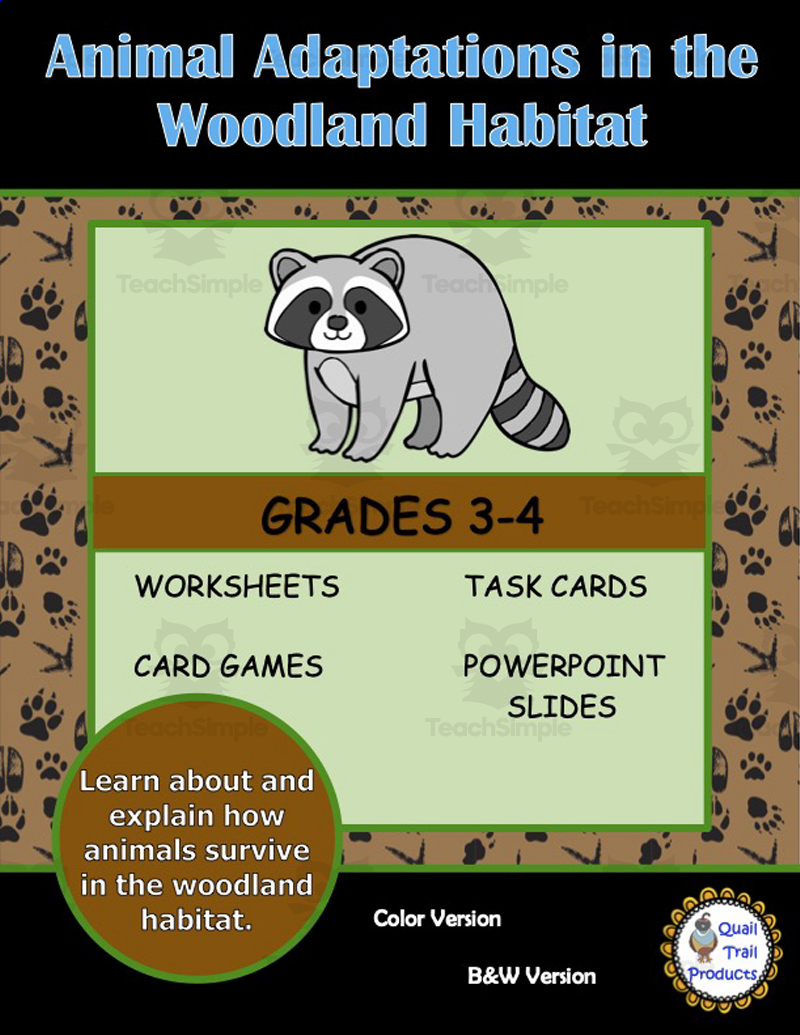
Teaches elementary students about the woodland habitat and how specific woodland animals (woodpecker, raccoon, white-tailed deer, black bear, skunk, great horned owl, porcupine, red fox, camel, snapping turtle, narwhal) use behavioral, physical, and life-cycle adaptations to survive.
Give Grade 3 students realistic practice with Florida FAST Math test items (MA.3.NSO, MA.3.FR, MA.3.AR, MA.3.M, MA.3.GR, MA.3.DP standards-coded questions) before the state assessment.

A vocabulary-reinforcement puzzle set on the American Civil War, covering terms like Union, Confederacy, slavery, abolition, Lincoln, Davis, Gettysburg, emancipation, and reconstruction.
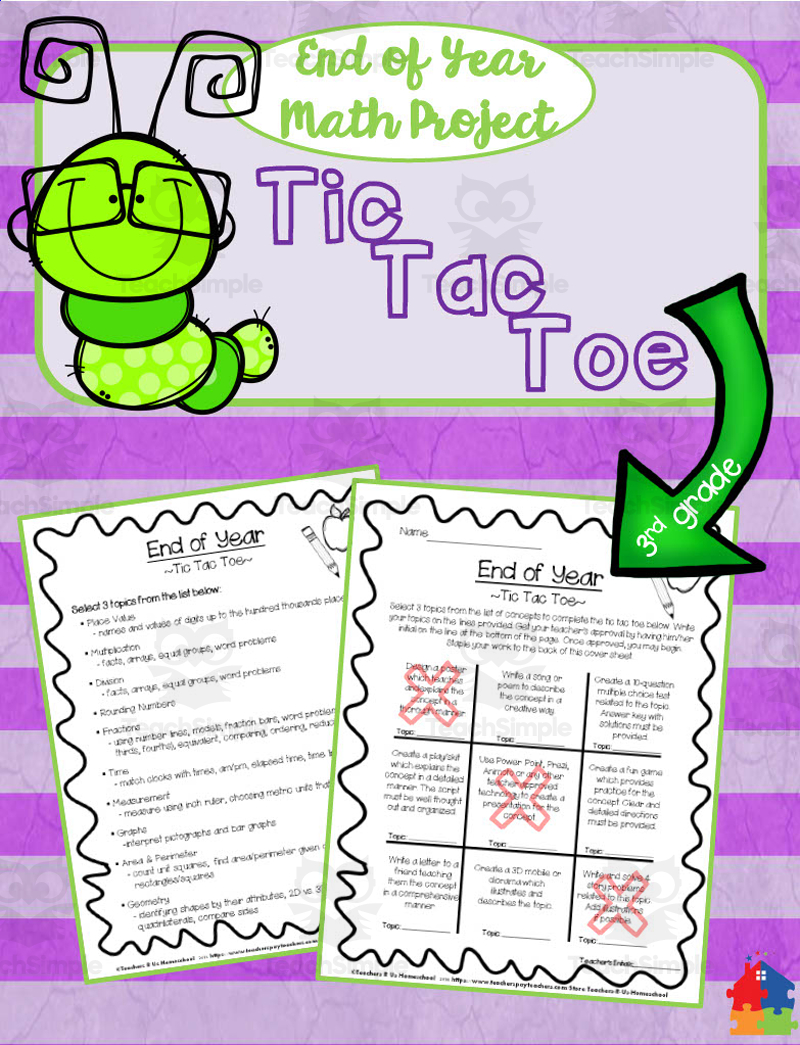
A choice-board math project for 3rd grade students to review a self-selected math topic in depth through a creative product of their choosing, at the end of the school year.
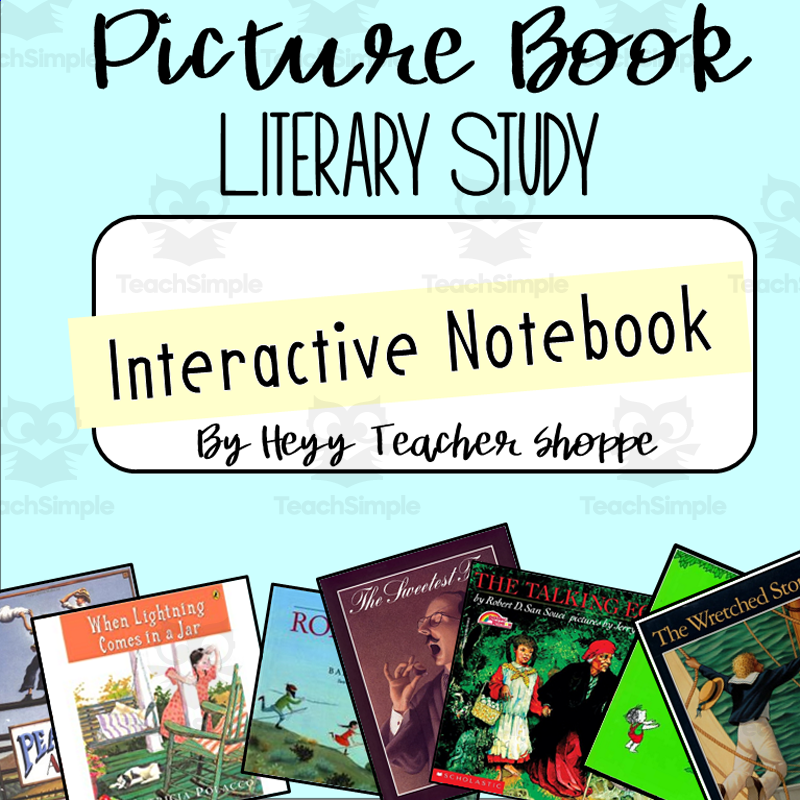
An interactive notebook unit teaching literary analysis skills (vocabulary, plot, characters, theme, inference, point of view, literary devices) using a student-selected picture book as a repeated mentor text.

Teacher-led bingo game bank of 2nd-grade math questions grouped by numeric answer (1-16), for reviewing multiple math topics.

A detective/case-file-themed literary analysis unit built around Edgar Allan Poe's short story 'The Cask of Amontillado', teaching close reading, character analysis, and textual-evidence-based argument writing.
Literacy unit built around a class read-aloud of the book referred to as 'Alexander and the Bad Day', with before/during/after reading activities plus a personal-narrative writing and vocabulary component.
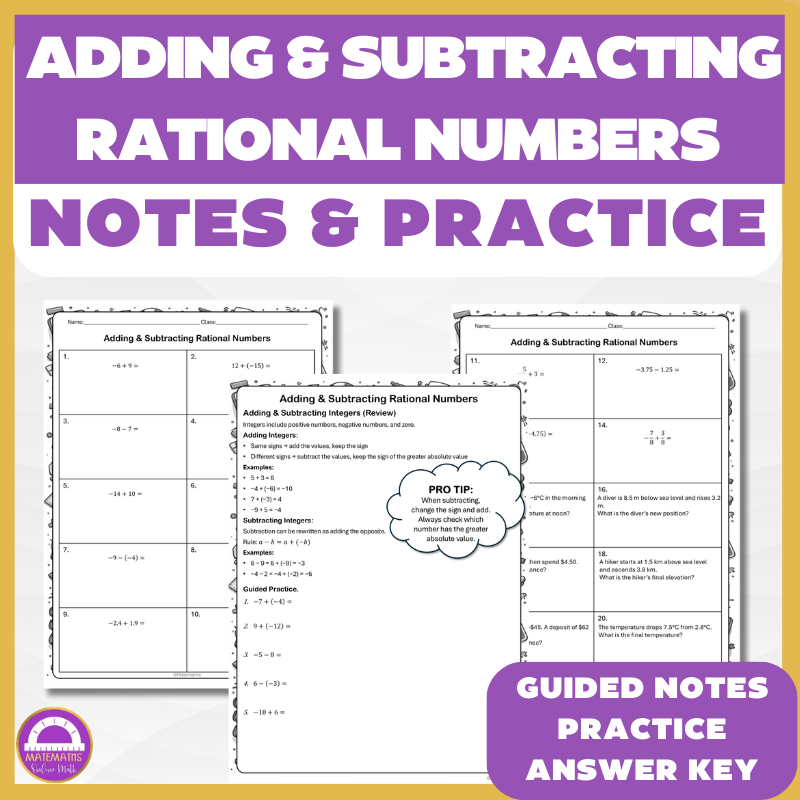
Teach and practice adding and subtracting rational numbers (integers, decimals, and fractions, including negatives) via guided notes and practice.
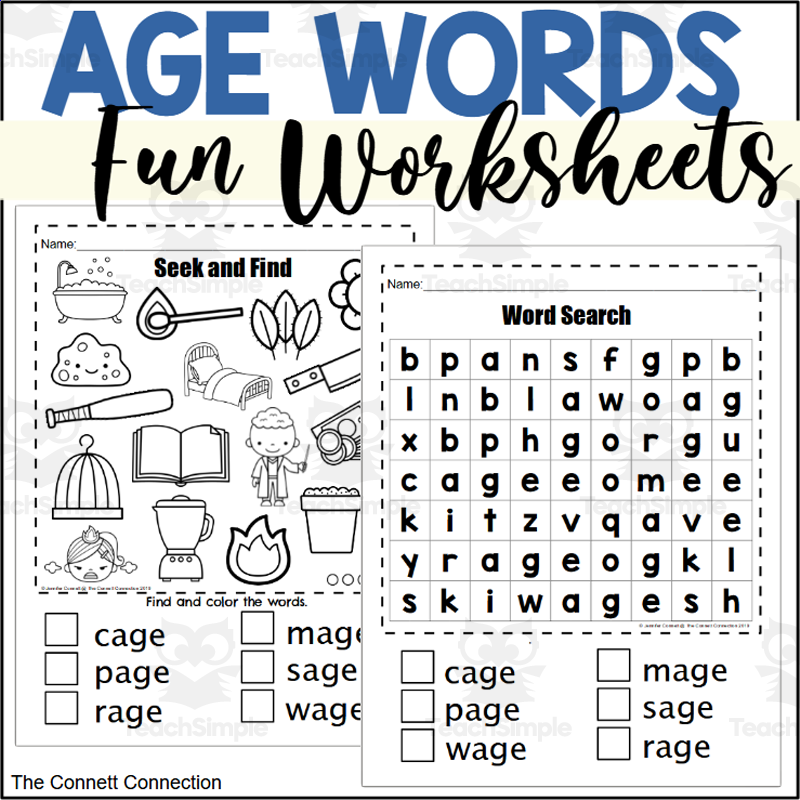
Provide engaging phonics practice with AGE-family CVCe (magic e / silent e) words through puzzle-style worksheets.
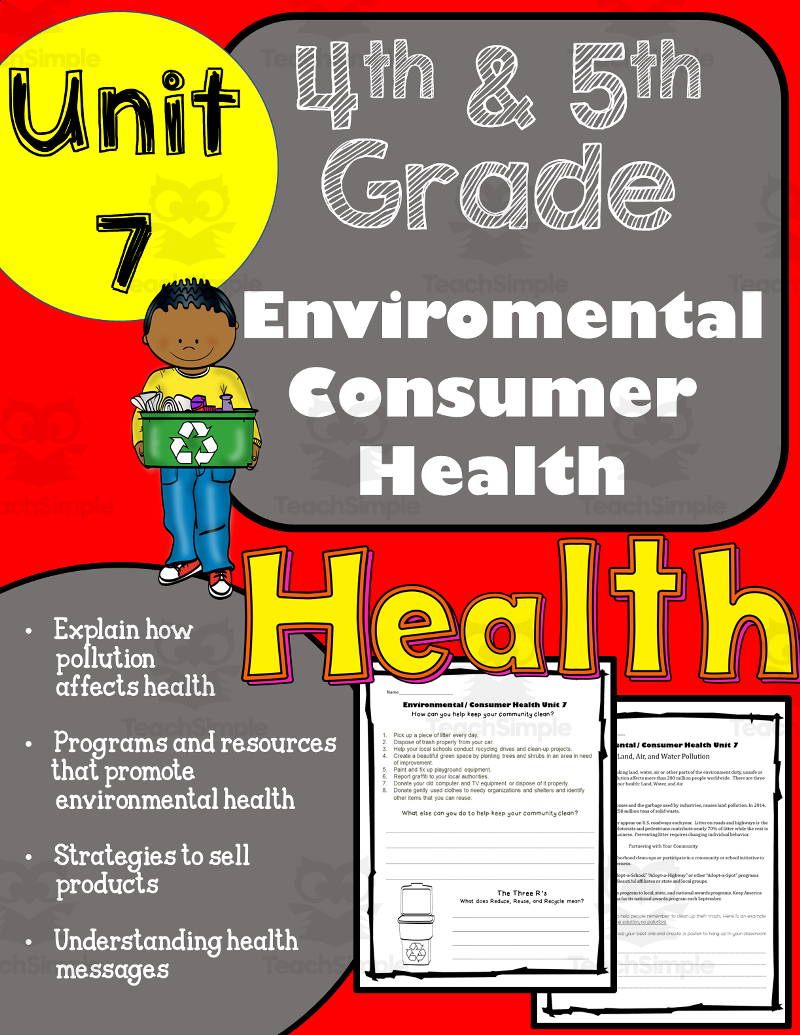
Teach 4th/5th grade students about environmental and consumer health topics, primarily how land, air, and water pollution affect health, and what community/individual actions (reduce, reuse, recycle; local programs) can address it. Unit intro also lists advertising/consumer topics (strategies to sell products, understanding health…

Review a range of 6th grade math skills (ratios, unit rate, order of operations, percent, equations, inequalities, fraction/decimal operations, coordinate plane distance, GCF) through two slide-driven bingo review games.
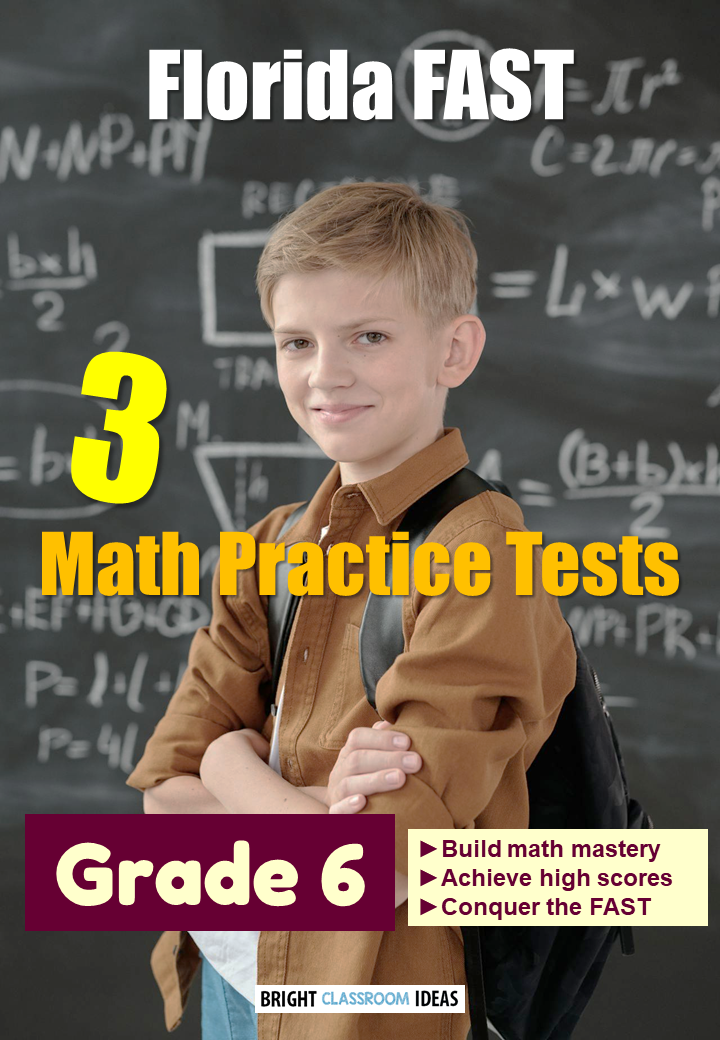
Give Grade 6 students realistic practice with Florida FAST Math test items (MA.6.NSO, MA.6.AR, MA.6.GR, MA.6.DP standards-coded questions) before the state assessment.