3,950 products added recently
Page 3 - 8th Grade Science Experiments
Prepare your eighth-grade students for high school science with experiments that explore genetics, atomic structure, and ecological systems. This collection includes DNA extraction, chemical bonding models, and environmental impact studies. By integrating these experiments into your curriculum, you can enhance students' readiness for future scientific endeavors.
Eclipse – Lab Station Activity
Science, Earth and Environmental Sciences, Space, Grade 7, 8, 9, 10, Labs, Experiments, Activities
Eclipse Lab Station Activity - An Engaging Lesson on Solar and Lunar Eclipses Get your students out of their seats with this hands-on lab activity on solar and lunar eclipses! Students will rotate through 9 stations, each offering a unique way to build knowledge. Activities range from drawing models and watching expert videos to answering knowledge questions and creating their own quiz. The self-paced format allows students to work at their own level on activities specially designed to complement the content. Minimal prep is required - simply print station cards and passports and you're ready to engage students. Answer keys provided. This activity covers the science behind both solar and lunar eclipses. Add the bonus word scramble and word search to keep kids learning during transition times. Use this lab to introduce, reinforce or review this astronomy topic in an unforgettable way!
Author Teach With Fergy
Tags Solar, Lunar, Eclipses, Moon, Lab Station, Eclipse Lab
Interactive Chemistry Quiz: GHS Symbols – Genially + PDF Version
Science, STEM, Chemistry, Physics, Life Sciences, Earth and Environmental Sciences, Technology, Basic Science, Biology, P.E. & Health, Homeschool Templates, Grade 6, 7, 8, 9, 10, 11, Teacher Tools, Experiments, Activities, Labs, Worksheets & Printables, Escape Room, Games, Presentations, Quizzes and Tests, Quizzes
Interactive Chemistry Quiz: GHS Symbols – Genially (+ PDF Version) Bring lab safety to life with this interactive quiz on the GHS (Globally Harmonized System) hazard symbols – perfect for middle and high school chemistry lessons. Whether you're starting the unit or wrapping up a safety review, this quiz adds variety, visual appeal, and a bit of fun to your lesson plan. You’ll get two versions of the quiz: – A PDF version that can be used digitally or printed (but it works not well) – A Genially link that leads to an animated, interactive version (includes sound – which can be muted) Both versions test students on the meanings of the various GHS symbols – from corrosive substances to environmental hazards. The quiz includes original clipart and my own glitter-animated GHS symbols to make the content more visually appealing without distracting from the important safety message. I usually use the Genially quiz for individual work in the computer lab or on tablets, so each student can go at their own pace. But it also works well as a station activity , a class-wide quiz , or even as homework , depending on your classroom setup. At the end of the PDF, you’ll find: A QR code to scan directly to the Genially A clickable link for browser access An iframe embed code , if you want to use it on your (non-commercial) learning platform Attention: The interactive PDF does not contain the full scope of the material. The quiz works. Unfortunately, the additional tasks do not. Using Genially is therefore recommended and much more motivating for the pupils. For the interactive quiz you need an internet connection and a terminal device. The quiz can be carried out with the whole class or as partner or individual work. I prefer individual work at each student's own pace. To get to the Genially link, either scan the QR code at the end of the document or click on the link button available there. You can also copy the iframe code and embed the Genially on a learning platform or other... The Genially can be used either at the beginning of the topic or as a backup. It is also worth using as a station in station work. The interactive version includes motivating sound effects , a self-paced structure , and a clear, age-appropriate design for grades 7–10. 📌 Important note : The Genially quiz is protected by copyright. It’s for your own classroom use only . Please don’t share the link or embed it outside a private, secure learning environment. Sharing with colleagues, online platforms, or social media is not permitted. I hope your students enjoy reviewing GHS symbols as much as mine do! – Heike from @Lernfitness Did You Know? I teach with a certified therapy dog, and together we create a positive and welcoming learning environment. 🐶
Author Lernfitness
Rating
Tags GHS, Science, Lab, Chemistry, Pictograms, Genially, Interactive, Lab Safety, Hazard Symbols, Individual Work
Mole and Avogadro’s Number – Lab Station Activity
Science, Chemistry, Grade 8, 9, 10, 11, Labs, Experiments, Activities
Practical Chemistry Lab for Middle and High School Students Mole and Avogadro's Number Lab Stations provide an engaging hands-on learning experience for 8th-12th grade chemistry students. Learners will rotate through 9 interactive stations focused on key concepts like molar mass, Avogadro’s number, stoichiometry calculations, and real-world applications. Activities range from creative tasks like drawing models to knowledge checks through video and reading comprehension. The variety builds interest while allowing learners to demonstrate understanding. Use this lab to complement instruction on the mole or as review before exams. Includes teacher instructions, recording sheets, answer keys, bonus vocabulary puzzles to minimize idle time between stations. Suitable for individual or group work in classroom or homeschool environment.
Author Teach With Fergy
Tags Calculation, Application, Mole, Avogadro, Lab Station, Avogadro And The Mole Lab Key
Biology Binder Covers – Templates for Classroom Use
Life Sciences, Science, STEM, Basic Science, Special Resources, Montessori, Classroom Management, Resources for Teachers, Biology, Human Body, Homeschool Templates, Grade 7, 8, 9, 10, 11, 12, Worksheets, Worksheets & Printables, Teacher Tools, Projects, Activities, Workbooks, Drawing Templates & Outlines, Templates, Graphic Organizers, Experiments
Biology Binder Covers – Templates for Classroom Use Organize your biology handouts, notes, and units with visual clarity Simple and flexible templates to help organize your biology materials In my biology classes, it can be a challenge to keep things organized - especially when it comes to multiple units, lab notes, worksheets and review materials. To make it easier for my students and myself, I designed these simple binder sleeves. There are 12 different pages. The covers have a clean, colorful blob layout that is friendly but not distracting. I usually print them out and use them as cover sheets or as dividers in folders for students or teachers. They also work well for digital learning environments, e.g. as section covers in PDF files or on classroom platforms. I like that the color scheme allows students to quickly find what they are looking for, and it brings a little more structure to a subject that is often riddled with formulas and technical terms. When used as cover sheets, students can choose their favorite color for their cover sheet. This resource is handy - and has saved me a lot of time in lesson preparation and follow-up. What’s included: 12 biology-themed cover pages different colors zu choose as a cover sheet as a divider between the individual biology topics I've printed these on colored paper for my own binder and also used them digitally in student notebooks. Works well for both teacher organization and student-facing materials. 📍 Best wishes, Heike from Lernfitness Biology teacher (Chemistry teacher, Math teacher) in Germany Did You Know? I teach with a certified therapy dog, and together we create a positive and inspiring learning environment. 🐶✨
Author Lernfitness
Rating
Tags Science, Biology, STEM, Binder, Cover Sheet, Template, Organizer, Organize, GoodNotes, PDF
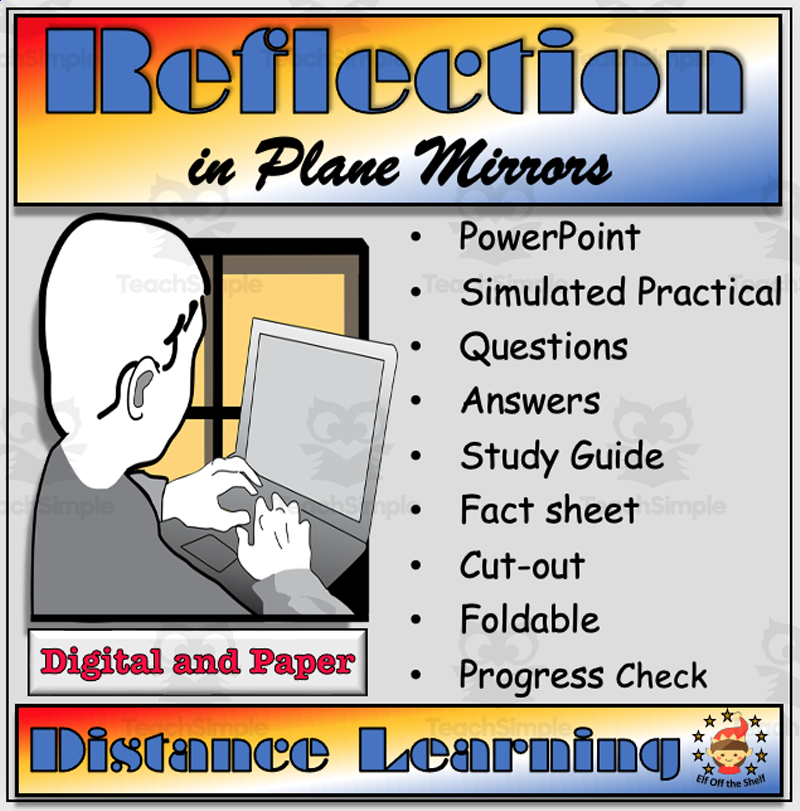
Reflection or Refraction Activity
Science, Basic Science, Physics, Grade 3, 4, 5, 6, 7, 8, 9, 10, Activities, Experiments
Activity Introduction An amazing activity designed for the students to learn more about STEM subjects. Reflection or Refraction Do you like STEM subjects? what is your favorite one? Have you ever tried to plant a seed? If yes, tell us more about it. Or have you ever tried to invent something? If yes, tell us more about it. And how do you think it will help us? Have you ever seen a microorganism under a microscope? What was it? And how it looked like? Mathematics is a marvelous subject. Let' sharpen our brains and solve some equations. Do you like timetable tricks? What is your favorite one? Do you know how to code? Have you ever created an app or a game before? If yes, how was it like? Reflection or Refraction Activity The activity is perfect for encouraging the researching skills for the students, while learning more about this topic. Reflection or Refraction This friendly designed worksheet is suitable for students at school, homeschooling, and as a group activity. Instructions Cut the items out below and sort them into the correct column. Format Available in a PDF format.
Author Educational Voice
Tags Reflection Or Refraction Activity, Reflection Or Refraction, Reflection, Reflection Activity, Reflection Facts, Reflection Facts For Kids, Refraction, Refraction Activity, Refraction Facts, Refraction Facts For Kids
Classification of Living Things – Lab Station Activity
Science, Life Sciences, Biology, Grade 7, 8, 9, 10, Labs, Experiments, Activities
This fully editable Lab Station Activity on the Classification of Living Things is meant to get your students out of their seats and engaged in the content. Each station not only offers a unique opportunity to test your students' knowledge (offer an opinion, answer questions based on a video or reading, draw, etc.), but also provides a fantastic learning opportunity where your kids are learning through assessment. Each station comes with a description card while some also contain more detailed instructions, a reading, questions to answer, etc. Students are equipped with a recording sheet (passport) to write their answers. There is almost no prep for you. Simply print the cards, lay them out around the room and you're all set. An answer key is also provided where applicable. --------------------------------------------------------------------------------------------- This lab activity covers: - The Classification of Living Things - The 7 Kingdoms - Taxonomy ---------------------------------------------- Bonus Activities: To ensure your students don’t have any downtime between stations, your lab also includes a 10-word word scramble and word search, both with an answer key. You can use them as part of their mark, as a bonus so it’s not mandatory, etc. However you choose to use it, it will ensure that your students are always busy and never idle. Note: For stronger classes, I give the word scramble and for weaker ones, the word search. ----------------------------------------------- How do the Lab Stations work? Each station is specially designed to be a unique complement to the material while at the same time, provide a valuable learning experience. Below is an overview of how each station works. In your activity , each will be tailored to the specific content. Station 1: Get Hands-On – using their creative skills, students are required to draw or build. Station 2: Research – using a classroom computer or their own device, students must research a specific question/issue surrounding the topic. Station 3: Explain yourself – students write down an opinion to a question in paragraph form. Station 4: Rest Station - students can use this time to catch up on work they didn't have time to complete at a previous station or prepare themselves for an upcoming one. Station 5 - Applicability reading – students read a short passage from an article, website, etc. which directly connects the classroom content to a real life application. Station 6: Test your knowledge – students answer 5 multiple choice questions then provide a written explanation for how/why they came to their conclusions. Station 7: Learn from the expert – using a classroom computer or their own device, students must watch a short video clip and answer the associated questions. They may stop, rewind and restart as often as they like during the time frame. Station 8 - Rest Station. Station 9: Become the question master – Students must create 2 multiple-choice questions, 2 true/false questions and 1 short answer question. Students must also supply the answers. ------------------------------- You might also be interested in my other lab station activities Ecology and the Environment: • Ecosystems • The Classification of Living Things • Biodiversity and Invasive Species • The Carbon and Water Cycle • Climate Change • Photosynthesis • Cellular Respiration and Photosynthesis • Ecological Succession • Plant Sexual and Asexual Reproduction • Earth's Seasons • Interactions Within Ecosystems Biology: • Cell and the Cell Theory • The Human Digestive System • The Circulatory System • The Human Respiratory System • Mitosis and the Cell Cycle • Cellular Respiration and Photosynthesis • Photosynthesis • Cancer: Cell Division Gone Wrong - Volume I • Cancer: Cell Division Gone Wrong - Volume II • Cell Membrane and Transport • Hearing and the Human Ear • The Human Eye • Genetic Material: DNA and RNA • The Nervous System • Energy Flow In Ecosystems Physics: • Newton's Three Laws of Motion • Kinetic and Gravitational Potential Energy • Current Electricity and Circuit Diagrams • Static Electricity • Light Optics and the Production of Light • Sound, Sound Energy and Speed • One and Two-Dimensional Motion • Uniform Acceleration • How Planes Fly • Refraction • Friction • Energy and Its Forms • Density and Buoyancy Space Science: • The Life and Death of Stars • The Moon and its Phases • Life In Space • Our Solar System • Solar and Lunar Eclipse • Earth's Seasons • Asteroids, Comets and Meteors Chemistry: • Atomic Model, Notation and Atoms • Chemical Reactions and Balancing Equations • Molecular and Ionic Compounds • Physical and Chemical Properties & Changes • Acids, Bases, and Neutralization Reactions • The Periodic Table • Single and Double Displacement Reactions • Balancing Chemical Equations • Synthesis, Decomposition and Combustion Reactions • Atomic Theory, Atomic Structure and Isotopes • Types of Bonds and Intermolecular Forces • The Mole/Avogadro's Number • Density and Buoyancy These station cards are meant to be used as a lab activity but can also be utilized in a review task before a test or a quiz. Used either way, your students will love it! I know mine do and I'm telling you from first-hand experience as I've used this activity in my own class. Thank you for your interest in my products. If you have any questions, please send me an email - devon@teachwithfergy.com
Author Teach With Fergy
Tags Taxonomy, Living Things, Classification, Lab Station, Activities, Classification Activity Middle School, Classification Activities High School, Classification Activities Middle School, Classification Activity, Living Things Zip
Meteorology – Lab Station Activity
Science, Earth and Environmental Sciences, Environmental Science, Grade 8, 9, 10, Labs, Experiments, Activities
Engage middle and high school science students with this interactive Meteorology Lab Station Activity. Students will rotate through 9 stations to test their knowledge of weather concepts like convection cells, jet streams, global warming, and more. At each station, students will get hands-on with drawing models, conducting research, answering discussion questions, watching videos, and even creating their own quiz questions. Recording sheets are provided for students to document their learning. This self-guided activity requires almost no prep - just print, set up, and students will stay engaged as they move through the stations. Use this as a review, reinforcement, or assessment for your weather and climate curriculum. Suitable for physical science and environmental science classrooms. Fully customizable Word and PDF documents included.
Author Teach With Fergy
Tags Scientist, Weather, Storms, Meteorology, Lab Station, Mymeteorologylab, Meteorology Lab Report
Sound, Sound Energy, and Speed – Lab Station Activity
Science, Physics, Grade 8, 9, 10, 11, Labs, Experiments, Activities
Product Overview: The product under consideration is the Sound, Sound Energy, and Speed – Lab Station Activity . This interactive teaching resource invites students to explore key scientific concepts around sound and energy in an engaging, hands-on way. Suitable for use with students in Grade 8 through to Grade 11, this learning tool aligns particularly well with physics coursework. Main Features: A core element of this lab station activity hinges on active participation. It requires learners to interact directly with the content materials available at each station—ranging from video clips to informative readings or related assignments/tasks. Rather than a one-size-fits-all approach, this resource considers varying student speeds and comprehensions by including intermittent rest stations where additional catch-up time can be spent on previous activities or preparing for upcoming ones. This product file is multi-format—a detail that allows seamless deployment in any classroom setup whether traditional school environment or homeschool setting—an advantage that greatly benefits today's varied educational contexts. Unique Attributes: Each unique station offers the chance for learners to deepen their understanding of topics like renewable energy sources or future technologies while simultaneously honing skills such as research techniques and opinion-forming. The lesson's adaptability shines with its included bonus activities- a word scramble for academically stronger groups or a word search for those needing simpler tasks. Another attribute that sets Sound, Sound Energy, and Speed – Lab Station Activity apart is its creative integration of different learning modalities. From having students express personal opinions in paragraph form (station 3), watching educational videos (station 7), or creating their own assessment items (station 9), there are plenty of opportunities catering towards diverse learning styles. Lastly, whether utilized as a lab activity during regular instruction sessions or employed as productive revision tools leading up to exam periods—the flexibility offered by these stations allows educators maximum control over how best they are utilized within their unique classroom settings.
Author Teach With Fergy
Tags Sound, Energy, Speed, Lab Activity, Hands-on Learning
Physical and Behavioral Adaptations – Lab Station Activity
Science, Physics, Grade 8, 9, 10, Labs, Experiments, Activities
Physical and Behavioral Adaptations – Lab Station Activity The Physical and Behavioral Adaptations - Lab Station Activity is a student-oriented learning resource meant for Grade 8, Grade 9, and Grade 10 Science classrooms. It enhances the understanding of physical and behavioral adaptations in plants and animals using dynamic learning techniques. This product diverges from traditional resources by offering multiplex testing methods. In one station, students might need to voice opinions or answer queries stemming from a video or passage. Another station may involve creating diagrams or models related to physical/behavioral adaptations. The package comprises fully customizable station cards that can be printed out and arranged around the classroom. These facilitate an engaging learning environment. Each card comes with comprehensive instructions which aid smooth movement across activities for learners individually, in small groups or full class setups - without wasting any time. A log sheet (passport) is included for students' input along with an answer key where required easing monitoring of progress. A distinguishing component that elevates this product's value are exciting additionals: word scrambles & searches aimed at cementing concepts during transitions between stations thus minimizing idle time amongst learners. Beyond serving as a practical lab task, this could be used as review material before evaluations too. Requiring minimal preparation on part of educators (only card printing), this proves highly efficient without negotiating on quality education. In summary, The Physical and Behavioral Adaptations - Lab Station Activity provides interactive educational experiences centered around pivotal science themes catering to diverse learner types promoting advanced levels understanding.
Author Teach With Fergy
Tags Physical Adaptations, Behavioral Adaptations, Plants, Animals, Lab Activity
Science Action Labs Sound & Light
Science, Physics, Grade 4, 5, 6, 7, 8, Labs, Experiments, Activities
Science Action Labs Sound & Light An exceptional educational resource aimed especially at students in Grades 4-8, focusing predominantly on engaging physical science subtopics. This easy-to-use workbook captivates the minds of budding learners, stimulating their imagination and curiosity through hands-on experience with sound and light concepts. Participatory learning is favored over mere observation. Students engage in entertaining experiments using commonplace objects like mirrors and flashlights to unpack complex scientific principles in a digestible manner. By interacting with sound waves and light as reflected or emitted from these objects, young minds gain better comprehension of scientific theories. Sir Isaac Newton's wisdom is celebrated throughout the pages of this book. Simplified explanations grounded in his concepts build understanding while additional nuggets of information further enrich knowledge, fostering a lighthearted yet potent educational environment for the pupils. Encouragement is key — plentiful doses are offered while confidently guiding learners on their journey. Versatile Usage The Science Action Labs Sound & Light primarily serves classroom usage during whole-group instruction, but also can work effectively for smaller group engagement - such as after-school science clubs or other similar activities. It even supports homeschooling parents looking to reinforced their current curriculum effectively. Instructor’s Asset For added convenience, this tool includes a single manageable PDF file containing 64 print-ready pages formatted for standard paper sizes . This becomes ideal when preparing assignments or practical sessions need to be straightforward! Besides serving as worksheets that underpin knowledge gained during teaching sessions, these materials could also support homework assignments; thus linking school-based learning into home-time follow-up tuning perfectly. In Summary: The Science Action Labs Sound & Light translates abstract scientific theories into tangible understanding via active tasks. Because truly, nothing embeds learning quite like doing!
Author Classroom Complete Press
Tags Action Labs, Science Labs, Sound, Light, Science Worksheet
Shell Model – Chemistry Flashcards Without Element Names
STEM, Science, Chemistry, Physics, Life Sciences, Grade 7, 8, 9, 10, 11, 12, Activities, Games, Worksheets & Printables, Task Cards, Quizzes and Tests, Teacher Tools, Word Problems, Flashcards, Escape Room, Experiments
Shell Model – Chemistry Flashcards Without Element Names 118 cards for learning the periodic table Visual practice with atomic structure and electron configurations 🧪🔬 This printable flashcard set gives students a hands-on way to practice atomic structure and the shell model – without revealing the element names. Each of the 118 cards shows the atomic number, the chemical symbol, and a diagram of the electron distribution across shells. This encourages students to actively recall element names and deepen their understanding of how atomic structure relates to the periodic table. I’ve used these cards mainly for review and partner quizzes. Students really have to think: “What element has 11 electrons and that shell pattern?” or “Which group might this symbol belong to?” It shifts the focus from just memorizing the periodic table to actually understanding the structure behind it. What’s included: 118 printable flashcards (PDF) Each card includes: atomic number, symbol, and shell model (no element names) High-resolution layout, easy to print and cut Suggestions for classroom use included Classroom ideas: Use the cards as a “Find the Pairs” game: Print two sets and let students match identical cards or group elements by patterns. Use them for sorting tasks: metals vs. non-metals, main groups vs. transition metals, increasing number of shells, etc. Create mini-quiz stations: One student shows a card, the other has to guess the element name or describe properties based on the shell model. Let students use the cards to quiz themselves or work in pairs for peer learning. The fact that the element name is missing makes the activity more cognitively demanding – great for more advanced learners or as a follow-up to a unit on atomic structure. Students are more engaged when they can “figure things out” rather than just read off answers. The resource is ready to print. For repeated use, laminating is recommended. 📍 Best wishes, Heike from @Lernfitness Did You Know? I teach with a certified therapy dog, and together we create a positive and welcoming learning environment. 🐶
Author Lernfitness
Rating
Tags Educational Card Games, Chemistry, Physics, STEM Science Matching Game, Chemical Elements, Periodic Table Matching Game, Flashcards Chemical Elements, Shell Model, Game, Electron Configuration
Energy and its forms – Lab Station Activity
Science, Physics, Grade 8, 9, 10, 11, Labs, Experiments, Activities
Energy and its forms – Lab Station Activity is an immersive learning experience designed to demystify the complex world of energy, its types, sources, and transformations. A blend of science education and kinetic learning allows students to garner knowledge through hands-on activities. Each lab station has unique descriptions with some having intricate instructions to test knowledge comprehension. The provided 'passport' or recording sheet enables students to record their answers for assessment. Topics Covered: Different Types of Energy Understand Convection, Conduction & Radiation The origin of Everyday Energy Use In-depth Insights into Electricity Generation All about Thermodynamics- heat & temperature introduction for eighth graders! Bonus Activities Included: An engaging ten word scramble game and a word-search challenge designed for different learning abilities while maintaining high pedagogical momentum. This product uses innovative educational techniques like integrating diverse formats at each 'learning station'. These opportunities include creative tasks like model building related to the discussion topics; research-based quests; writing assignments; multiple-choice questionnaires supplemented by reasoning ability checks among other challenges inspired by reading materials. All aim at fostering the development of critical thinking skills in learners. In-built Rest Stations: Rejuvenating spots intended either as recuperation areas between station hops or revisiting previously covered material catered flexibility inside classrooms while considering students’ varying pace & focus levels simultaneously. This comprehensive lab activity serves as an excellent teaching aid that brings authenticity and excitement into science education - suitable not only as a regular lab activity but also doubles effectively as preparatory review methods prior exams or quizzes. Complete Package includes: Applicability Reading Lab Station Cards Lab Station Passport "Learn from the Expert" "Test Your Knowledge" sessions Bonus: Additional Answer Keys
Author Teach With Fergy
Tags Energy Types, Lab Activity, Science Education, Hands-on Learning, Critical Thinking
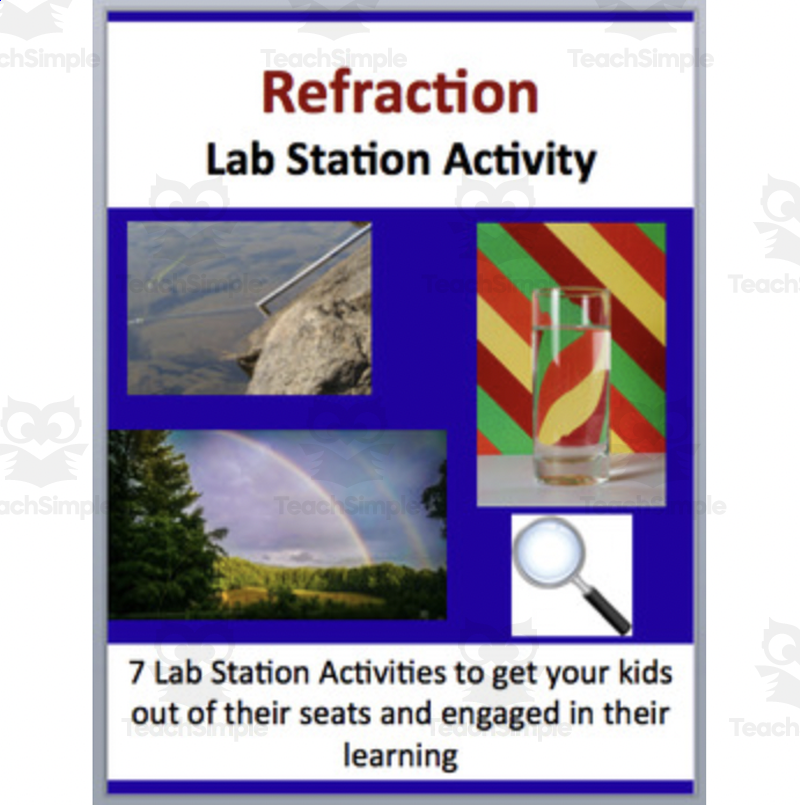
Refraction – Lab Station Activity
Science, Physics, Grade 7, 8, 9, 10, Labs, Experiments, Activities
Refraction – Lab Station Activity is a physics teaching resource for educators to engage students in hands-on learning. Through nine interactive stations, students explore key concepts like apparent depth, index of refraction, and more. Activities range from creative drawing prompts and videos to answering knowledge checks and writing explanations. This self-directed 30-45 minute lab gives students exposure to real-world examples while providing built-in support materials like reading passages, answer keys, word games, and recording sheets to keep students focused. Teachers can implement whole-class, but sessions also work for small groups or independent practice. This multifaceted refraction lab is one module in a physics series exploring concepts like motion, energy, light, sound, and flight through inquiry-based activities customizable for grades 7-10.
Author Teach With Fergy
Tags Refraction, Speed, Light, Physics, Lab Station, Refraction Of Light Lab
Independent, Dependent & Controlled Variables Lesson
Science, Basic Science, Grade 4, 5, 6, 7, 8, Activities, Experiments
This fun science lesson is a great introduction for a science fair unit or a beginning of the year scientific method unit when you need to teach your students how to carry out a true experiment . It teaches students about independent, dependent and controlled variables using humour and real-life situations. The first page has fill-in-the blank notes about a pretend experiment I completed that had some mistakes in the design. Students should stay engaged and focused throughout the lesson component as they have to fill in the blanks. They should start to think about why controlling variables matters, and they learn the relevant vocabulary. The second page gives students a chance to start brainstorming some basic experimental design ideas on their own or in pairs. They are given three situations and need to think of independent variables they could alter, what dependent variable that would affect, and all of the other variables they would need to carefully control. At the end, there is a quick review to reinforce the relevant vocabulary. Grades to Use With: This lesson can easily work in a variety of grades in the middle years, from grades 4-8 and possibly beyond! Standards: NGSS3-5-ETS1-3 Plan and carry out fair tests in which variables are controlled and failure points are considered to identify aspects of a model or prototype that can be improved. If you enjoy this science activity, check out some other options in my store: Personal Carbon Emissions /Footprint: Integrated Math and Earth Sciences Lesson: Ways to Slow Climate Change Periodic Table: Element Baseball Cards STEM Project: Extreme Environment Technology Design and "Shark Tank" Presentation STEM Project: Climate Change Solutions 8 Low-Prep STEM Tasks for Elementary and Middle School Students: Simple Handouts for Each Experiment
Author Grace Under Pressure
Rating
Tags Science Experiments, Independent Variable, Dependent Variable, Science Fair, Scientific Method, Control Variable, Experiment, STEM, Science, Elementary Science, Variables In Science Experiments, Independent And Controlled Variables, Controlled Scientific Experiment, Examples Of Independent Dependent And Controlled Variables, Controlled Variables In Science, Independent Dependent And Control Variables, What Are Independent Dependent And Controlled Variables, Science Experiment Control, Variables For Science Projects, Worksheet, Lesson, Science Worksheet, Science Lesson
Science Popcorn Activity | Heat Transfer Lab
Science, Physics, Grade 5, 6, 7, 8, Labs, Experiments, Activities
This resource is a Science Popcorn Activity Heat Transfer Lab . This activity is focused on Convection, Conduction, & Radiation. Students will follow procedures, document their observations, collect data and so much more.
Author Maude in the Middle
Tags Science Lab, Heat Transfer, Popcorn Activity, Physical Science, Student Observation, Popcorn Lab, Heat Transfer Labs, Heat Transfer Lab Middle School
Thermoregulation – Lab Station Activity
Science, Life Sciences, Biology, Grade 8, 9, 10, Labs, Experiments, Activities
Thermoregulation – Lab Station Activity : Interactive Teaching Resource The primary objective of this multifaceted and fully editable Lab Station activity is to foster student engagement and create an interactive learning atmosphere. It uses several instructional methods, providing a dynamic approach to learning the critical subject of thermoregulation. This comprehensive Lab activity covers: Maintenance of body temperature Ectotherms and endotherms Metabolic responses to external temperatures Hibernation and cold conditions responses Torpor periods Estivation during hot weather scenarios etc. The lab showcases seven participatory stations along with two resting stations for reflection or preparation. Bonus activities such as word scrambles or searches further reinforce essential vocabulary associated with thermoregulation. An Organized Layout for Seamless Learning: All teachers need to do is print out the cards and arrange them throughout their classroom. The structured layout allows students an effortless transition between different activities, enhancing productivity while minimizing prep work on your end! Included Answer Key & Flexible Use Advantage: •An available answer key enhances this lab station's usability. •This thermoregulation resource can be used not only for lab activities but also as a performance assessment tool or revision resource. •Catering predominantly to Grade 8 – Grade 10 students studying Biology, it can be implemented in diverse educational settings ranging from whole-group instruction to small cluster teaching or even home assignments. Thermoregulation – Lab Station Activity not only makes learning about body temperature regulation engaging and impactful but is also versatile, catering to different teaching strategies and student learning styles.
Author Teach With Fergy
Tags Thermoregulation, Lab Activity, Interactive Learning, Body Temperature Regulation, Biology
Muscular System ~ Muscle Labs Package
Science, Life Sciences, Human Body, Grade 7, 8, 9, 10, 11, 12, Labs, Experiments, Activities
This Lab Package combines 3 labs into 1 product. These labs are very flexible and will work for any level student from English Learner - EL - to more advanced students. The Lab will take the student through the process of obtaining muscle tissue suitable for viewing under a microscope enhancing microscope usage skills and show the structure of muscle tissue. Normally done after a discussion of muscle energy and muscle contraction at the cellular level, this lab uses a small sample of stew beef to get outstanding results. This lab usually lasts from lasts from 1-2 days depending on your level of student. The Muscle Tissue Prepared Slide Lab includes a complete lab, answer key and brief administration guidelines. It will take the student through the microscopic anatomy of muscle using prepared slides of muscle tissue with a longitudinal and cross-sectional view. This lab usually lasts from lasts from 1-2 days depending on your level of student. The Vertical Jump Test-Calculating Anaerobic Power Lab is normally conducted after a discussion of muscle energy, and includes a complete lab and administration guidelines. There is also an opportunity to add graphing or data analysis to this lab at your discretion. In addition, this lab provides an opportunity to get your students out of your classroom and move around for a change of pace. The lab activities in this product can be purchased separately, but purchased together are a great value. For any teacher looking for “hands on” enrichment activities that will fully engage the student, this product is for you.
Author The Teacher Team
Tags Muscular System, Anatomy, Physiology, Body Systems, ELL, Activities For Muscular System, Muscle Labs
Sustainable Energy Projects Handbook - Environmental Science Book
Earth and Environmental Sciences, Science, Earth Sciences, Environmental Science, Geology, Space, Life Sciences, Human Body, Nature & Plants, Physics, Grade 6, 7, 8, 9, 10, 11, 12, Experiments, Activities, Projects, Lesson Plans, Teacher Tools, Workbooks, Worksheets & Printables
Explore the realm of environmental science and sustainable energies with the “Sustainable Energy Projects Handbook - Environmental Science” authored by Syed Hammad Rizvi - an essential handbook that must be present in every school library or educational institution offering environmental science courses for middle school and high school students interested in renewable energies and environmental conservation. This comprehensive 370-page handbook specifically written with grades 6-12 in mind addresses tough subject matters related to ecosystems, natural resources, water & carbon cycle processes, biodiversity conservation, fossil fuels effects, and developing contemporary renewable sources of solar photovoltaics, wind turbines, hydroelectricity, geothermal power, biomass biofuels, and ocean tidal power. Jam-packed with do-it-yourself projects (including solar oven designs & DIY models of wind turbines), case studies of successful community sustainable initiatives all over the world, as well as useful guides in project planning & budgeting analysis, risk assessment & management, product life cycle assessment & carbon footprint calculations, & methods of air & water pollutants control strategies included in this handbook encourage critical thinking & environmental education. It is STEM & SDGs compatible & suitable for teachers or parents looking for hands-on environmental science & sustainable education projects. Keywords: environmental science middle school textbook, sustainable energy projects for middle school students, renewable energy resource for teenagers, climate change lesson plans grades 6-12, environmental education book on STEM and environment, biodiversity and conservation guide, homemade solar wind hydro energy projects for kids, energy conservation education resource, eco-friendly ideas for a science project, environmental energy advocacy for a high school. Why Parents/Schools Love It : Comprehensive and Curriculum-Aligned: It encompasses a broad array of environmental science-related subjects from basic to advanced level projects, aligning perfectly and facilitating a complete understanding of sustainability and renewable energy. Hands-on Learning Activities: It includes various DIY and case studies that help students take part in hands-on learning by making difficult concepts such as solar and wind power more interesting and accessible to them. Fosters Environmental Responsibility: Equips young learners with knowledge about climate change, biodiversity, and values for preparing environmentally responsible global citizens for the future. Engaging and Accessible Language: Presented in clear, technical writing style that appeals to teens, with cross-discipline knowledge from biology, physics, as well as ethics. Adaptive to Various Settings: Designed to fit a multitude of settings, including educational use in the classroom, homeschooling, science fairs, or even clubs, offering tools for measuring the impact of the project. Target Students/Classes : On the basis of a comprehensive assessment of the material, structure, and language of the book, which varies from the basic notions of sustainability, ecosystems, energy fundamentals, renewables, and reaches its climax with the advanced notions of project development, assessment of the environmental implications of such projects (LCA, footprints, etc.), policies, to action, the intended recipients of the material’s scope and focus can be determined to be students between the ages of 11-18, i.e. from grades 6 to 12. Grades 6-8 (Middle School): Best for introductory classes for environmental science, basic cycles, human effects, biodiversity, and simple energy principles, with the goal of creating engagement through DIY projects. Grades 9-12 (High School): More suited for advanced classes in environmental science, earth science, or AP environmental science, focusing on renewable technologies, integration, feasibility analysis, risk analysis, and goals for sustainability in more real-world examples and discussions. Again, this would correlate with the intended audience of grades 6-12 and the progressive level of complexity from the book. Copyright/Terms of Use : This book has been copyrighted by Syed Hammad Rizvi. This educational resource may be used for personal and single class use. You may not, under any circumstances, reproduce, distribute, and sell any part of this resource. This means you may not post this resource on the Internet so it could be downloaded from anywhere. If you would like to share this resource with others, you can purchase more licenses through Teachsimple. Thank you for following the guidelines for use! It is all happily offered by Syed Hammad Rizvi
Author Creative Book Store
Rating
Tags SustainableEnergy, EnvironmentalScience, RenewableEnergy, SolarEnergy, WindEnergy, HydroPower, GeothermalEnergy, BiomassEnergy, OceanEnergy, ClimateChange
Pressure, Volume, and Temperature – Lab Station Activity
Science, Chemistry, Grade 8, 9, 10, 11, Labs, Experiments, Activities
Pressure, Volume, and Temperature – Lab Station Activity This dynamic teaching resource designed for middle and high school physical science students brings the classroom to life with interactive activities revolving around pressure-volume-temperature laws. Key Highlights: Station tasks exploring Archimedes' Principle, Avogadro’s Law, Boyle’s Law, Charles's Law and Ideal Gas Law Inclusive lab recording sheets (passports) for documenting observations or answers Activity cards that can be placed around your classroom to turn it into a miniature laboratory Included answer keys for efficient progress tracking and immediate feedback The distinct features of this resource promote an active learning environment. Students are propelled towards collaborative discussions thereby solidifying their understanding of the involved principles. A highlight of added fun: To increase interaction in a less formal setting while ensuring that no learner is left out; two full-time activities—a word scramble and word search are provided. Ready-made answer keys make grading a breeze! Tailored Flexibility: This product fits perfectly into various teaching strategies without straining resources—whether you plan whole-group communal activities or divide students into smaller groups for methodical task completion under your guidance. Towards Promoting Lifelong Learning: The hands-on experience gained from scientific explorations encourages inquiry-based learning. The successful integration in numerous teaching styles aims at fostering engagement which sparks their curiosity paving way for lifelong learners! An essential tool catering not just to public school teachers but homeschooling parents seeking effective teaching aids as well. Digital & Printable Formats: Available in different file types for easy access across digital platforms. It proves proficient for Grade 8-11 science students boosting their comprehension of pressure, volume and temperature thereby enhancing scientific literacy. Experience the joy of teaching with this interactive lab station activity that challenges student understanding and intrigues young minds!
Author Teach With Fergy
Tags Pressure, Volume, Temperature, Lab Station Activity, Active Learning
Proteins and Nucleic Acids – Lab Station Activity
Science, Chemistry, Grade 7, 8, 9, 10, Labs, Experiments, Activities
Proteins and Nucleic Acids - Lab Station Activity An interactive resource for Grade 7-10 teachers enabling students to dive deep into the world of Thermoregulation. Extremely engaging with several elements: Drawing or building challenges. Online research questions. Space for expressing opinion writings on temperature regulation topics. Inclusive rest stations inbetween tasks. Note: These activities are designed so that they stimulate higher-order thinking, linking academic concepts with real-life applications. Assessment Components The lab activity also includes targeted assessments such as: Multiple Choice Questions: Providing thoughtful explanations behind their chosen solutions. Mastership Task: A station where they create two multiple-choice questions from true/false categories and a short answer query inclusive of supplying accurate answers as well. The entire lab activity is seamless for instructors; printing cards and scattering them around the learning space is all it takes. A supplied answer key adds convenience during assessment phases. Bonus Activities! To keep the engagement lively, this resource offers bonus games like a word scramble puzzle and a word search game ensuring no room for idle intervals among learners. Fruitful Knowledge Outcomes & Future Topics The resource is dedicated towards achieving solid understanding about Thermoregulation processes in living organisms while future planned topics cover broader scientific concepts including: Caveat: - Exploring Carbohydrates & Lipids. - Understanding Enzymes & Metabolism. - And many other topics spanning Ecosystems till Chemical Reactions under Chemistry realm. The Proteins and Nucleic Acids - Lab Station Activity , a teacher’s delight for enriching student's learning journey in the field of science.
Author Teach With Fergy
Tags Thermoregulation, Ectotherms, Endotherms, Metabolic Responses, Assessments
Correlation vs Causation: Scientific Methods and Critical Thinking
Social Studies, History, Psychology, Science, Basic Science, Grade 6, 7, 8, 9, 10, 11, 12, Activities, Experiments, Worksheets & Printables, Worksheets
Correlation does not equal Causation: Scientific Method and Critical Thinking Lesson for Middle or High School Students This comprehensive lesson walks your students through all the vocabulary and concepts about correlation vs true experiments in a simple and engaging manner. 12 different real-world correlation examples are included. The lesson will help teach your middle school or high school students about the scientific method and strengthen their media literacy skills as they learn how to spot errors in headlines explaining scientific research. It could be great to use before a science fair unit too! The package includes handouts, notes, practice questions, a quick review, and an answer key. How to Use: Print out 7 pages of worksheets for each kid in your class. Present the first four pages on an interactive whiteboard in your room. Teach your students the concepts of correlation (scatterplots, correlation coefficients, positive correlation, negative correlation, mistaking correlation for causation, media examples, third variables, etc.) as they follow along and fill in questions and notes. Then, students can work to complete the practice questions on the worksheets. Next, present page six to explain how one can find causation in a true experiment by using random selection, a dependent variable, an independent variable, an experimental group, a control group, and random assignment. Finally, students complete the review worksheet. Grades to Use With: This activity is designed to be used with students as young as grade six up to 12th grade in high school. What's Included: 10 pages in PDF Format: Ready to Print! Title Page Two Pages about Scatterplots and Correlation Coefficients Two Pages about Correlation Not Indicating Causation Practice Questions True Experiments Review Questions Two Page Answer Key Math Standards: 8th Grade Statistics and Probability Study scatterplots to see associations between 2 variables Linear relationships are shown as straight lines
Author Grace Under Pressure
Rating
Tags Correlation, Causation, Critical Thinking, Scientific Method, Experiments, Reasoning, Experiment, Science Fair, Basic Science, Correlation Vs Causation
Plant Sexual and Asexual Reproduction – Lab Station Activity
Science, Life Sciences, Biology, Grade 8, 9, 10, 11, 12, Labs, Experiments, Activities
Plant Sexual and Asexual Reproduction Lab Stations provide educators with a hands-on learning activity to engage students on plant reproduction concepts. Learners rotate through nine stations, each offering a unique way to assess and build knowledge on reproduction methods, the role of bees, and plant growth. The activity comes with station description cards, questions, articles, video clips, creative drawing prompts, and more to suit various learning styles. Easy to implement with no prep work required, just print and distribute the cards. The lab also includes bonus vocabulary boosters like word scrambles and searches so students stay actively learning. This versatile resource works for whole class, small groups, or independent work.
Author Teach With Fergy
Tags Plants, Reproduction, Pollination, Photosynthesis, Lab Station, Asexual Reproduction Answer Key
Scientific Method Hypothesis Activity
Science, Basic Science, Grade 3, 4, 5, 6, 7, 8, 9, Activities, Experiments
Activity Introduction An amazing activity designed for the students to learn more about STEM subjects. Scientific Method Hypothesis Do you like STEM subjects? what is your favorite one? Have you ever tried to plant a seed? If yes, tell us more about it. Or have you ever tried to invent something? If yes, tell us more about it. And how do you think it will help us? Have you ever seen a microorganism under a microscope? What was it? And how it looked like? Mathematics is a marvelous subject. Let' sharpen our brains and solve some equations. Do you like timetable tricks? What is your favorite one? Do you know how to code? Have you ever created an app or a game before? If yes, how was it like? Scientific Method Hypothesis Activity The activity is perfect for encouraging the researching skills for the students, while learning more about this topic. Scientific Method Hypothesis This friendly designed worksheet is suitable for students at school, homeschooling, and as a group activity. Instructions Your are doing a scientific research/ experiment . Tell us what was your: Observation Main question Hypothesis and tell us more about the research/ experiment . Format Available in a PDF format.
Author Educational Voice
Tags Scientific Method Hypothesis Activity, Scientific Method Hypothesis, Scientific Method, Scientific Methods For Kids, Hypothesis, Hypothesis Facts, Hypothesis For Kids, STEM, STEM Facts For Kids
Lab Safety - Lab Station Activity
Science, Basic Science, Grade 6, 7, 8, 9, Labs, Experiments, Activities
Lab Station Activity - Classroom Lab Safety. This activity will get your students moving around the room, and applying what they've learned regarding the scientific method. This activity was designed for high school and middle science students. You can either use it to introduce the topic or assess their understanding of the scientific method. This resource covers the following topics: Lab Safety Equipment Basic Emergency Procedures How To Keep Safe in a Lab Setting Lab Station Activity - Classroom Lab Safety. This activity will get your students moving around the room, and applying what they've learned regarding the scientific method. This activity was designed for high school and middle science students. You can either use it to introduce the topic or assess their understanding of the scientific method. Lab Station Activity - Classroom Lab Safety. This activity will get your students moving around the room, and applying what they've learned regarding the scientific method. This activity was designed for high school and middle science students. You can either use it to introduce the topic or assess their understanding of the scientific method. I also have many other lab stations in my store. Please have a look. They cover topics within all branches of science including chemistry, physics, biology, general science, and space science. They work well in middle as well as high school classrooms. If you have any questions, please send me an email - devon@teachwithfergy.com
Author Teach With Fergy
Tags Lab Safety, Science Safety, Classroom Lab Safety, Lab Safety Lab Station, Lab Station Activity