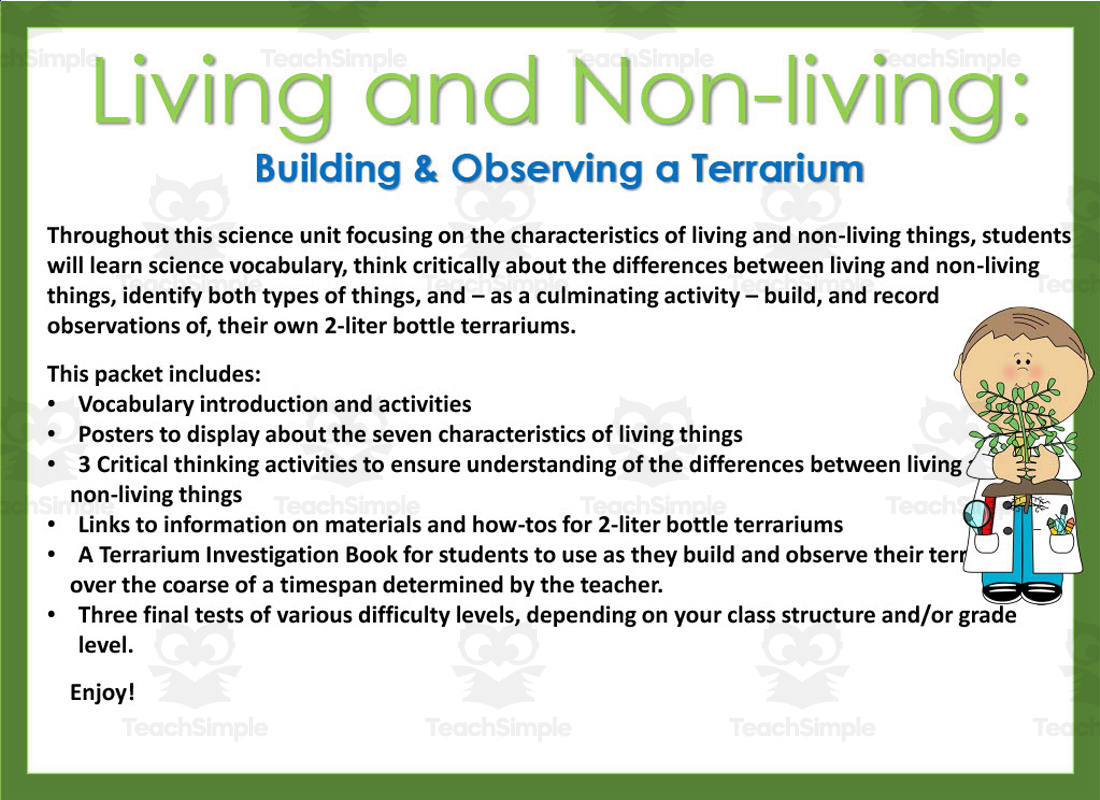
Living & Non-living Terrarium Packet
A science unit teaching the characteristics that distinguish living from non-living things through vocabulary work, critical-thinking activities, and a hands-on terrarium-building and observation project.




361 resources
Explore sub-categories
18 sub-categories · 361 resources
A science unit teaching the characteristics that distinguish living from non-living things through vocabulary work, critical-thinking activities, and a hands-on terrarium-building and observation project.
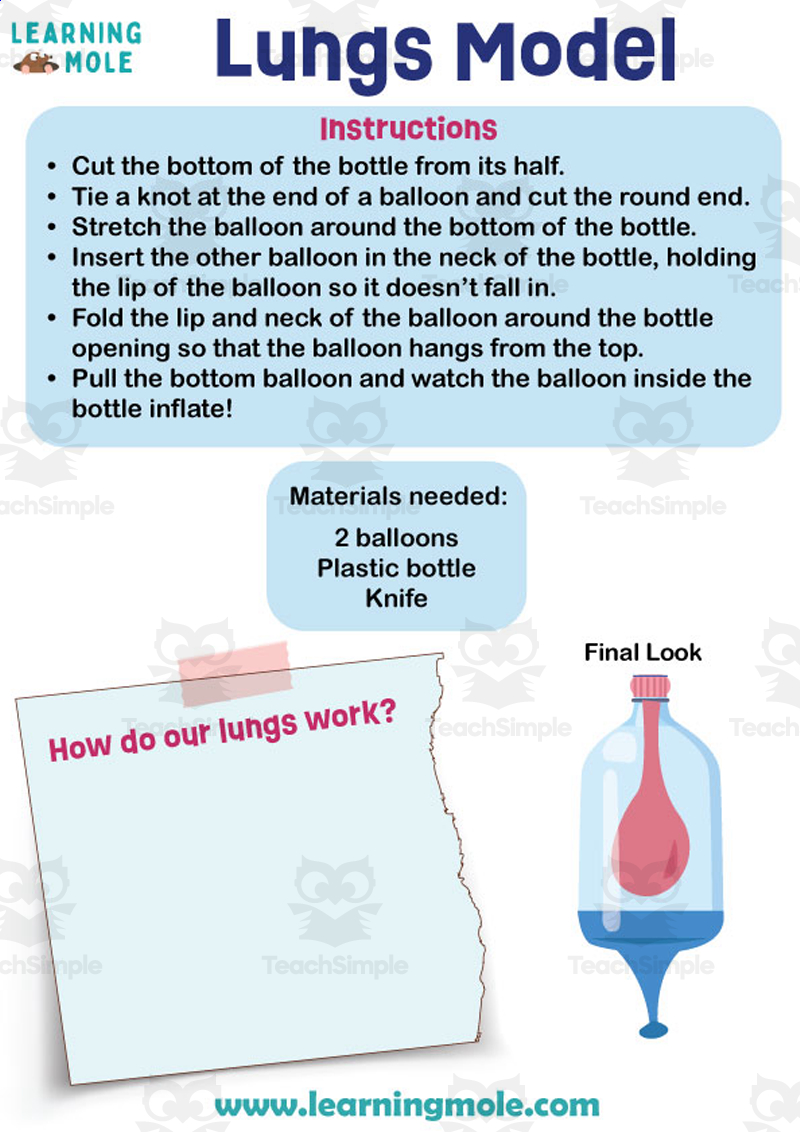
Activity Overview The human body is full of fascinating wonders to learn. This activity is created to help the students recognize the anatomy and the job of the human body. Lungs Model Have you ever thought about how do we breath?
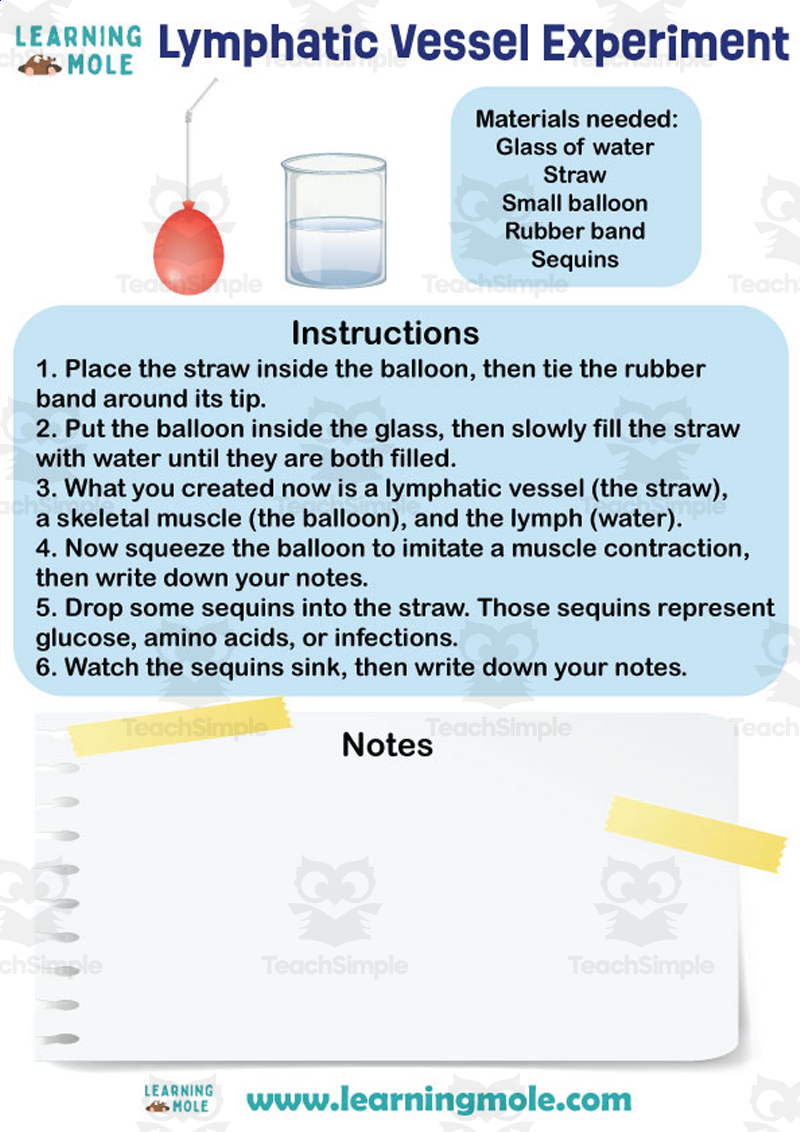
Activity Introduction An amazing activity designed for the students to learn how does the lymphatic vessel work. The Lymphatic System Your lymphatic system is part of your immune system.
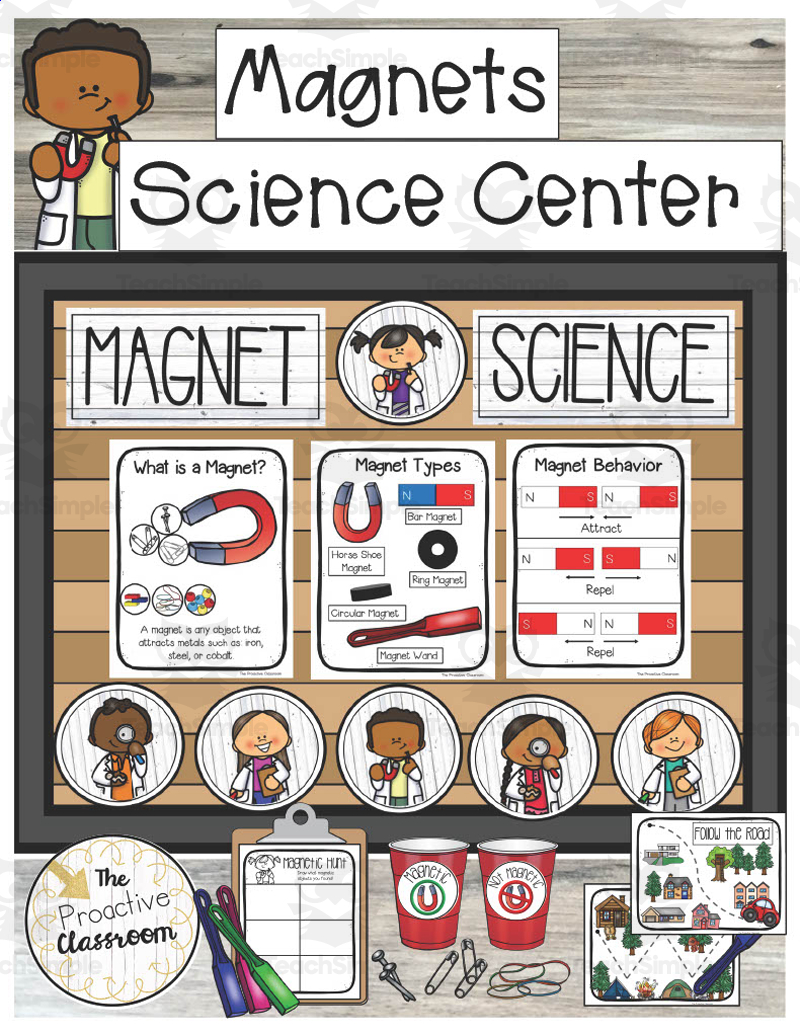
Hands-on science center teaching early magnetism concepts: magnetic vs. non-magnetic objects, types of magnets, poles, and attract/repel behavior.
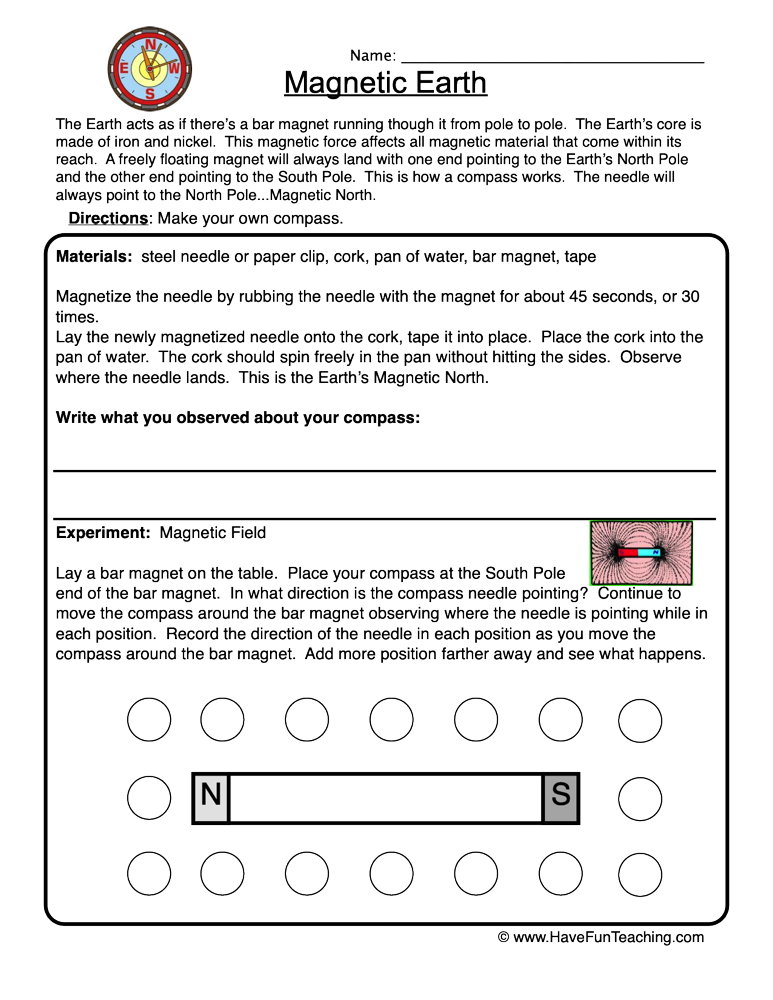
The Magnetic Earth Worksheet is a great way for students to learn about the Earth's magnetic fields. They can create their own compass and see how it works.

Multi-station lab activity for high school physical science teaching magnetic-field concepts through hands-on observation, research, reading, video, and question-writing tasks.
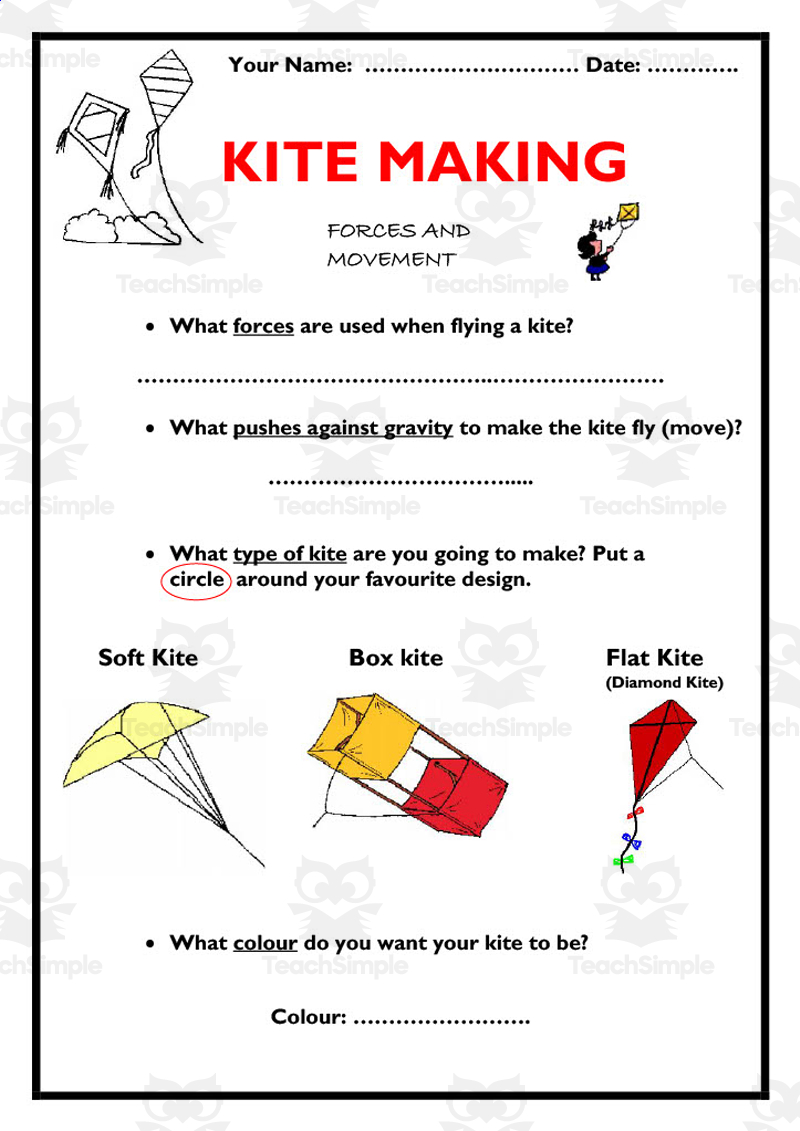
A design-and-build STEM activity where students plan, construct, and test a kite while thinking about the forces (gravity and lift/push) involved in flight.

Teaching science to our elementary students opens them up to a whole new world of interests, but with a whole new take! They get to learn about the weather and its changes. They get to learn about animals and their offspring.

This is a Make Your Own Pendulum Activity. This printable will give students information about pendulums and then provide instructions for how they can make their own.

Marshmallow Catapult STEM Challenge for Middle School Students. My Marshmallow Catapult Challenge is an excellent way to get your students' excited for STEM in an engaging hands-on way.

Marshmallow Catapult STEM Challenge for High School Students. My Marshmallow Catapult Challenge is an excellent way to get your students' excited for STEM in an engaging hands-on way.

A physical science unit teaching matter, atoms, molecules, states of matter, and physical vs. chemical changes through overhead teacher notes, worksheets, puzzles, and hands-on activities.
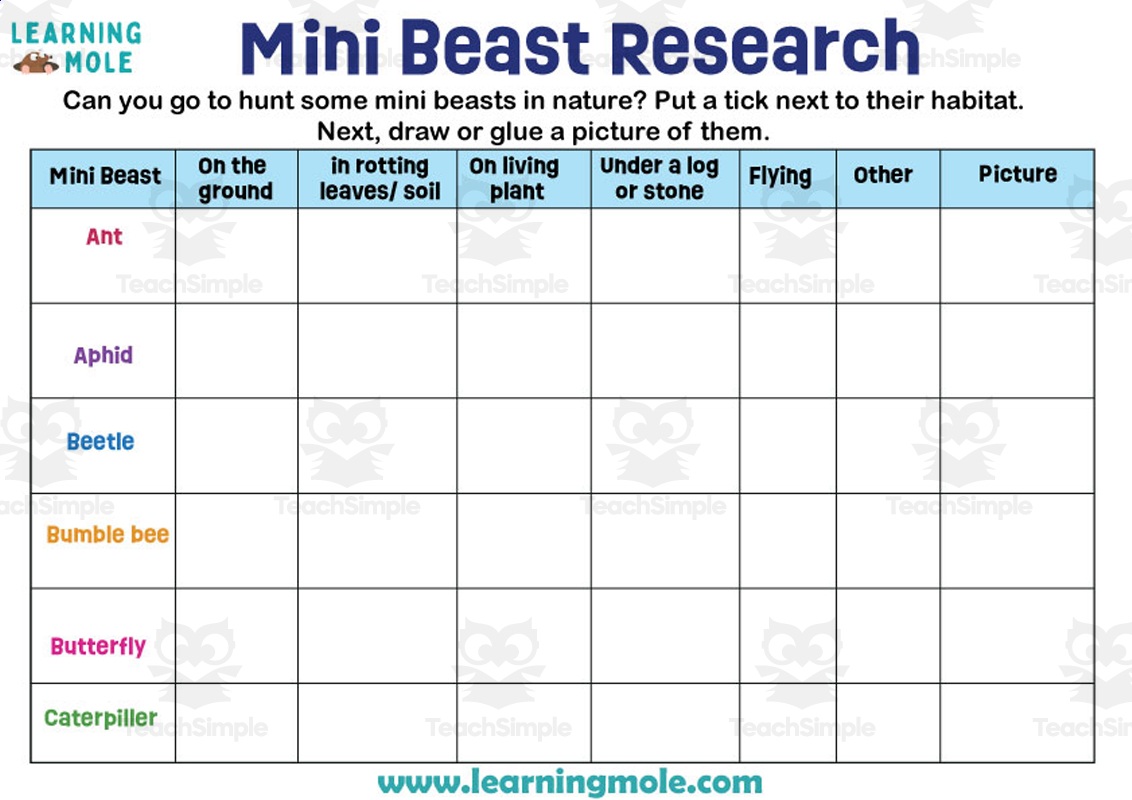
Activity Introduction An amazing activity designed for the students to learn more about STEM. Mini Beast Research Do you like STEM subjects? what is your favorite one? Have you ever tried to plant a seed? If yes, tell us more about it.

Multi-day group project/activity plan for teaching about the planets and solar system through research and a hands-on straw-rocket launch relay.

This activity is a fun way for students to learn about the moon phases! They will enjoy creating the different phases out of cookies, and it will help them to better understand the pattern of the moon.
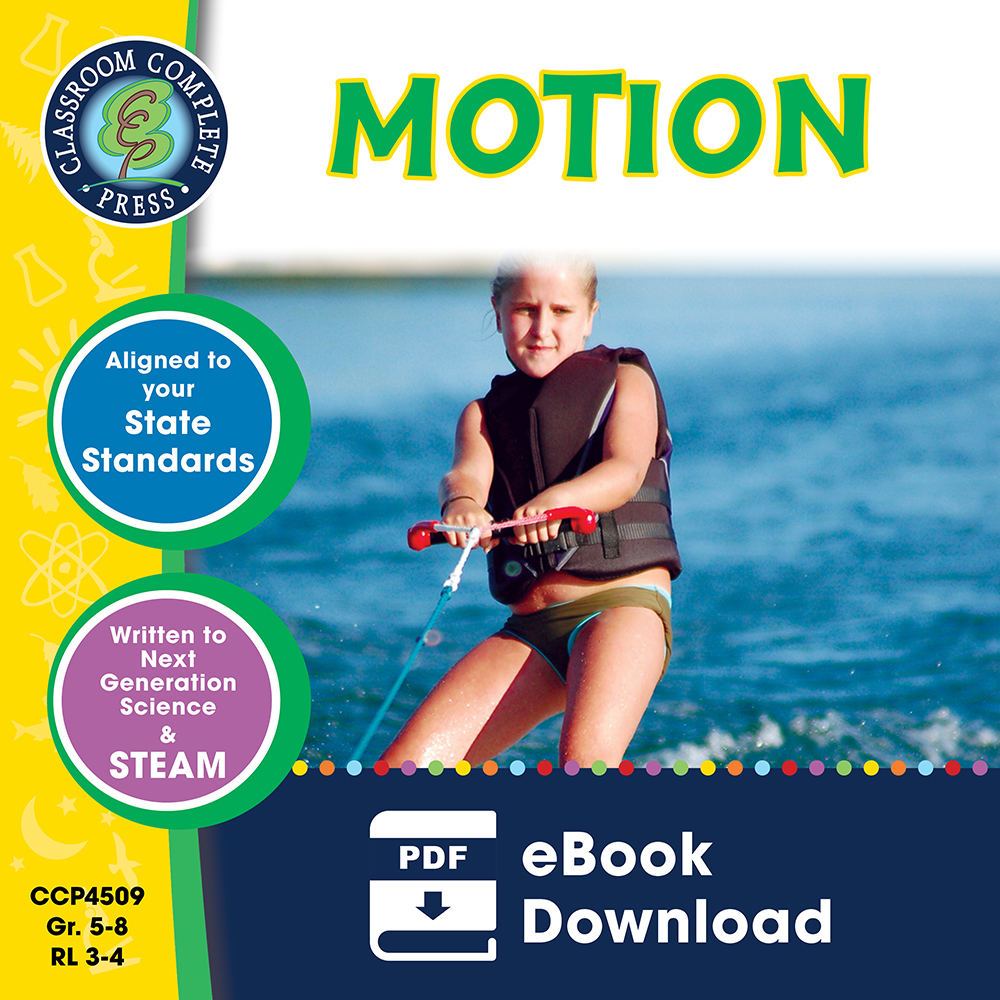
A comprehensive physical science teaching resource ('Force & Motion Series') covering motion concepts for grades 5-8, combining reading comprehension passages with hands-on activities, a crossword, and a word search.
"Motion: What Is Motion?" Teaching Resource Simplify the science of motion for middle school students with this skillfully designed teaching resource.
This Lab Package combines 3 labs into 1 product. These labs are very flexible and will work for any level student from English Learner - EL - to more advanced students.
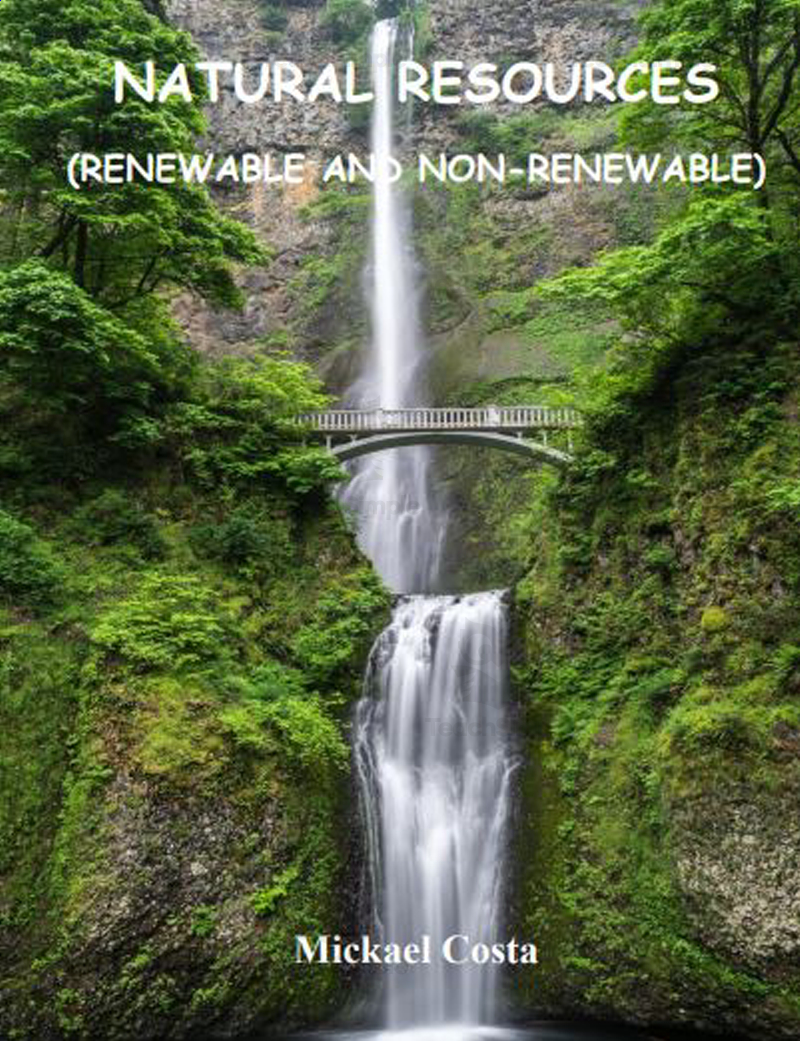
TABLE OF CONTENTS p.5-7 Text with illustrations : Renewable and non-renewable resources p.8-10 Questions p.11-13 Answer key p.14 Exploration activity: non-renewable resources in the school yard p.15 Exploration activity: non-renewable…
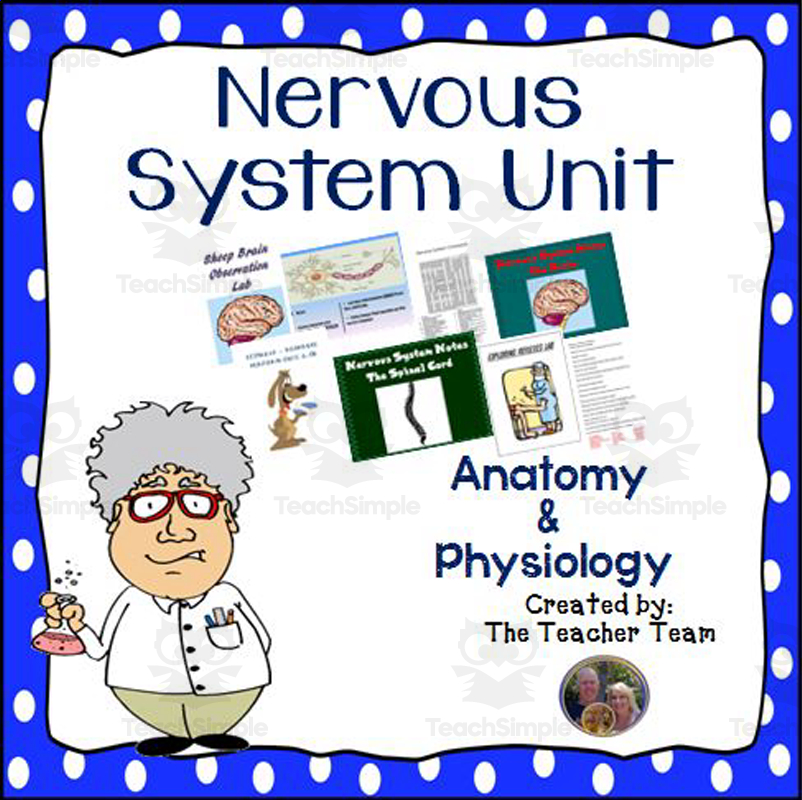
Nervous System Unit: A Comprehensive Teaching Resource Primarily intended for anatomy, physiology, and biology educators, our Nervous System Unit is an all-encompassing resource that serves as a robust guide to the human nervous system.

This resource is to help teach students the stimulus response within a nervous system. It is a fun lab that is engaging.

A senior high school chemistry lesson teaching how to name ionic compounds and multivalent (transition metal) compounds, including ionic bonding, the criss-cross rule, and the classical naming system, delivered via a teacher/student slide presentation with supporting labs and handouts.
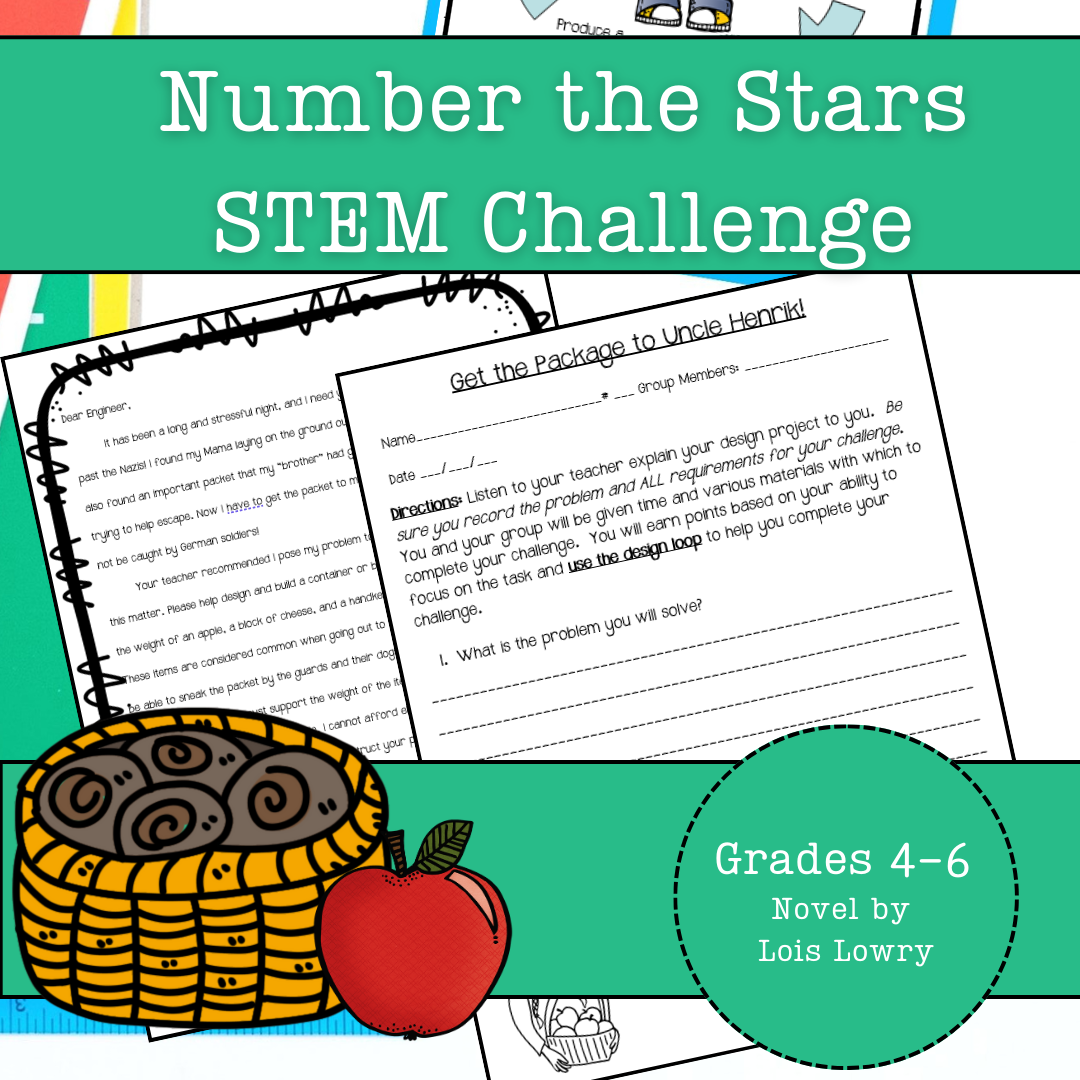
This hands-on activity combines creativity and problem-solving as students design and build a basket for Anne Marie to get the package safely to Uncle Henrik, based on the novel Number the Stars!
Physics Lab Station Activity: Exploring One and Two-Dimensional Motion In this inquiry-based physics lab activity, students will actively investigate concepts of one and two-dimensional motion through nine interactive stations.