


9,422 products added recently
Page 905 - Newest Teaching Resources

 Show filters


0-10 Number Lines
Math, Number Lines, Early Math, Numbers, Kindergarten, Preschool, Grade 1, Worksheets & Printables
Reinforcing number sequence and improving number sense just got a lot more engaging with these vibrant 0-10 Number Lines! This set includes printable number lines in three fun designs perfect for math centers, activities or display. Using these number lines as support can help children gain some independence in their math work. The first set features numbers 0-10 depicted as adorable monster characters, with each numbered monster shown in a different color. The visual pairing of number and monster builds number recognition and sequencing skills. The second design provides traceable number line models from 0-10. Students can practice writing numerals and reinforcing order and value relationships as they trace over each number in sequence. This provides helpful repetition and writing practice. The third set displays numbers 0-10 in a spectrum of bright rainbow colors. This connects each numeral visually with its place in the sequence. Students will gain intuition for number order and patterns. These three number line designs allow teachers to match activities to the specific needs of learners. The different formats provide versatility for modeling counting, comparing numbers, skip counting, identifying missing numbers and more. This collection is ideal for centers, math journals, displays and reference. The wonderful and eye catching monster number Clipart images are courtesy of Pretty Grafik
Author SEN Resource Source
Rating
Tags Number Lines, Math, Number, Counting, Visual Aid, Early Math, Printable

Picture Prompt Reading Comprehension
ELA, Special Resources, Reading, Special Education Needs (SEN), Preschool, Grade 1, 2, Activities
Boosting reading comprehension skills is easy with these engaging Picture Prompt activities! This set includes 13 illustrated worksheets that challenge students to read and follow written directions carefully. Each page features a basic line drawing along with a set of instructions. Students must read the instructions closely to identify what objects to add to the picture, as well as how to color, size or place it. For example, one prompt instructs students that "In the vase there are 2 yellow flowers" this tells them what to draw, where to draw it and what color to make it. These activities require focused attention to comprehend the written instructions and transfer that information accurately onto the drawing. Students will build skills like extracting details, sequencing and following multi-step directions. The instant visual feedback acts as a self-checking mechanism. These Picture Prompt worksheets provide enjoyable reading practice! They are ideal for independent work, literacy centers, morning work and comprehension assessment. Teachers can use them to reinforce active reading, check understanding and improve listening skills. With their handy mix of reading and creativity, these Picture Prompt Reading Comprehensions will engage students as their comprehension improves! They are perfect for kindergarten through to second grade students needing a boost in focused reading skills. Eye catching clipart courtesy of Kari Bolt Clipart
Author SEN Resource Source
Tags Reading Comprehension, Picture Prompts, Visual Literacy, Reading Skills, Picture-based Learning, Literacy Activities, Reading Fluency, Language Development, Illustration Comprehension

Scientists and Inventors Social Media Profile Project | Biography
ELA, Social Studies, Writing, Creative Writing, Science, Inventors, Biographies, Research, Grade 4, 5, 6, Activities, Projects
Explore the lives and achievements of notable and remarkable genius minds from different generations with this Scientists and Inventors Social Media Profile Project. This resource is made for 4th, 5th and 6th primary grade level learners, EFL/ESL students, and homeschoolers that can be used for English Language Arts and Science and Technology subjects. The project is aimed to develop the students’ language skills, research proficiency, and creative skills through the imagined social media profile of their chosen scientists or inventors. Featuring 12 genius minds from different ages and fields, these activities are a sure win in capturing the attention and unleashing the creativity of the learners as they learn and explore the lives and achievements of these scientific geniuses. The activities included in this set are: 1. 12 Scientists and Inventors Worksheets (Albert Einstein, J. Robert Oppenheimer, Alexander Graham Bell, Galileo Galilei, Stephen Hawking, Steve Jobs, Isaac Newton, Charles Darwin, Nicolaus Copernicus, Nikola Tesla, Thomas Edison, Leonardo da Vinci) 2. 1 colored Albert Einstein Sample Profile 3. 1 Profile Template 4. Lesson Plan 5. Student’s Instructions Page 6. List of Scientists and Inventors 7. Feedback Rubric This project is designed as supplemental activity or project for lessons relating to lives and achievements of notable and famous scientists and inventors from different generations and fields, and biography lessons or topics in the curriculum. This can also be used as assessment tool for the said lessons, teacher-friendly resource for emergencies and sub plans. With the fun and engaging nature of this project, it will definitely achieve your lesson objectives as well as collecting amazing outputs from your learners!
Author It's Teacher L
Tags Scientists Biographies, Inventors Biographies, Biography Project, ELA Activities, Biography Research
Reading Writing Games | Word Definitions 2
Special Resources, ELA, Special Education Needs (SEN), Speech Therapy, Reading, Reading Comprehension, Language Development, ESL, Writing, Handwriting, Vocabulary, Grade 2, 3, 4, 5, Activities
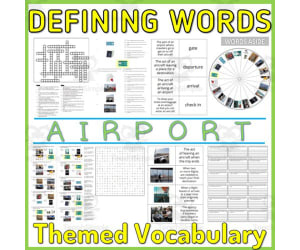
This series of PDF resources focuses on identifying noun concepts, with engaging visualizations ( pictures and graphic arrangements ) of vocabulary by topic. The activity materials in this assignment are designed to help students develop their vocabulary and reading comprehension skills through interactive activities and real-life examples. It includes clear definitions of words from common categories and can also serve as discussion prompts to encourage critical and analytical thinking, deepen your understanding of the language, and improve your communication skills . This resource is designed to be accessible and engaging to all students . Ideal for teaching English as a Second Language and intervention sessions on learning difficulties. Clear and concise language, visual aids and interactive activities help students easily understand and remember information, integrating visual and kinesthetic elements. You can choose from a variety of worksheets that suit your student's level, interests, and printing preferences. Each category topic includes : 2 sets of Flash cards ( definition sentence / image, image / definition sentence ) 2 sets of Flash cards ( definition word / phrase, definition phrase / word ) 3 Anagram strings ( mixed letters of single words or in definition text ) 1 Crossword ( word definition ) 2 sets of linked activities Draw a Line ( definition / image, image / definition ) 2 sets of matching activities Draw a line ( word / definition, definition / word ) 2 series of Quizzes ( definition / image, image / definition ) 2 series of Quizzes ( word / definition, definition / word ) 3 Wheels of Fortune ( words, definitions, images ) 1 Word Search page for ( word definition ) 2 Writing Boards ( words, definitions ) 2 Blank Boards ( words, definitions ) * Use as-is or create your own board games, like Snap, Memory, Match to Sample, and Knowledge Races . Distribute it as morning exercises, quiet time and focus activities, independent workbooks, or fun homework . 48 PDF Pages
Author WORDS ASIDE
Tags Esl, Word Defining, Semantics, Word Search, Anagram, Flash Cards, Centers, Crossword, Categories, Words Aside
Nonfiction under the sea project
ELA, Writing, Creative Writing, Grade 1, 2, 3, 4, Projects, Activities
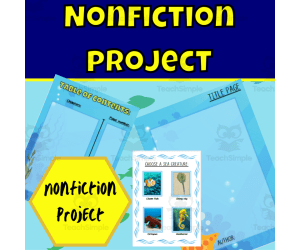
Put your students' concept knowledge and skills to the test with this excellent nonfiction research project. Students are required to follow a set of instructions to complete their research project. They will need to select a sea animal/creature to base their research on and come up with a catchy title page. There is a set of categories to pick from for chapter headings. Fill in the table of contents with chosen headings and page numbers, select a subheading for each heading allocated, and research and find factual information about the selected animal, including photographs/illustrations of information and a caption. At the end, students will be required to complete a glossary with difficult words they encountered and their definitions, fill in an index with keywords and page numbers those words can be found on, and finally, a bibliography with references they used to find out their information. Included in your purchase: Nonfiction research project: Online (Google slides) Nonfiction research project: Printable (PDF) Assessment rubric: Printable (PDF) DIRECTIONS: PDF Files can be printed and handed to students to complete. They can also be bound together to form a book. Google slides can be shared with students for them to complete online. A rubric can be completed a printed copies for each student. Use: You are free to use and modify the material. Non-commercial use only You may not resell the material. Nonfiction lessons: Nonfiction captions and labels Nonfiction Glossary Nonfiction table of contents Nonfiction title Nonfiction title page Nonfiction index
Author Ezee 101
Tags Nonfiction, Text Feature, Concept Development, Project, Under The Sea
Nonfiction Text Features: Glossary Lesson
ELA, Reading, Grade 1, 2, 3, 4, Teacher Tools, Lesson Plans
This resource is a Nonfiction Text Feature: Glossary. A short and sweet lesson to introduce or recap the nonfiction text feature; glossary. This lesson aims to keep students engaged and interacting through class discussions and activities. Students will apply reading, creative thinking, problem-solving, and more as they work through these interactive slides. The objective of these lessons is to provide an introduction or recap of the nonfiction text feature; glossary. These lessons are aimed and creating a concrete understanding of the concepts through various activities as well as class discussions. Students will learn all about a glossary, and how to identify and apply them on their own. Class discussions and practice activities are included for students to apply their knowledge. There are lesson slides and student slides; the lesson slides can be presented to students as an introduction or recap lesson of the concepts. The lesson slides are animated as well as have speaker notes. Student slides can be given to students to complete during the lesson or as homework after the lesson. There are 2 different presentations - 1 for the lesson and 1 answer slide presentation. These slides are made through Google Slides an animations may work better through Google Slides. If you like this lesson be sure to have in our other Nonfiction lessons: Nonfiction lessons: Nonfiction captions and labels Nonfiction Glossary Nonfiction table of contents Nonfiction title Nonfiction title page Nonfiction index
Author Ezee 101
Tags Nonfiction, Glossary, Text Features, Concept Develpoment, Student Engagment, Interactive, Nonfiction Text Features Worksheet Answers, Nonfiction Text Features Powerpoint

Nonfiction Text Features: Index Lesson
ELA, Reading, Grade 1, 2, 3, 4, Teacher Tools, Lesson Plans
Introducing a Nonfiction Text Features: Index Lesson Engage your students with an interactive lesson that teaches them about indexes, an important nonfiction text feature. This resource aims to create concrete understanding through class discussions and hands-on practice. Over the course of the lesson, students will learn what an index is, why it is useful, and how to identify it within nonfiction texts. The slides incorporate discussions, think-pair-share opportunities, and activities that allow students to apply their new knowledge. Whether using this as an introduction or a review, the lesson is sure to reinforce this key concept. With customizable Google Slides, speaker notes, and ready-to-go student handouts, integrating this resource into your language arts or reading curriculum is seamless. Use it for whole-group teaching, small groups, or even independent practice. Suitable for grades 1-4. Expand your nonfiction text feature instruction with companion resources on captions, glossaries, tables of contents, titles, title pages, and more. Discover engaging interactive lessons that are teacher-created and classroom-tested.
Author Ezee 101
Tags Index, Vocabulary, Nonfiction, Text Features, Concept Development, Student Engagment, Interactive, Nonfiction Text Feature

Nonfiction Text Features: Heading and Subheading Lesson
ELA, Reading, Grade 1, 2, 3, 4, Teacher Tools, Lesson Plans
This resource is a Nonfiction Text Features: headings and subheadings Lesson. A short and sweet lesson to introduce or recap the nonfiction text features; headings and subheadings. This lesson aims to keep students engaged and interacting through class discussions and activities. Students will apply reading, creative thinking, problem-solving, and more as they work through these interactive slides. The objective of these lessons is to provide an introduction or recap of the nonfiction text features; headings and subheadings. These lessons are aimed and creating a concrete understanding of the concepts through various activities as well as class discussions. Students will learn all about headings and subheadings, how to identify them and how to apply them on their own. Class discussions and practice activities are included for students to apply their knowledge. There are lesson slides and student slides; the lesson slides can be presented to students as an introduction or recap lesson of the concepts. The lesson slides are animated as well as have speaker notes. Student slides can be given to students to complete during the lesson or as homework after the lesson. There are 2 different presentations - 1 for the lesson and 1 answer slide presentation. These slides are made through Google Slides an animations may work better through Google Slides. If you like this lesson be sure to have in our other Nonfiction lessons: Nonfiction lessons: Nonfiction captions and labels Nonfiction Glossary Nonfiction table of contents Nonfiction title Nonfiction title page Nonfiction index
Author Ezee 101
Tags Nonfiction, Text Features, Headings, Subheadings, Interactive Reading, Student Engagment, Interactive, Text Features Lesson Plan, Text Feature Lesson Plans

Nonfiction lesson
ELA, Reading, Grade 1, 2, 3, 4, Teacher Tools, Lesson Plans
Nonfiction Concepts Lesson Plan This interactive Google Slides resource teaches students the key concepts of nonfiction texts. Through discussions, activities, and practice, students will learn how to identify and apply nonfiction text features like captions, labels, glossaries, tables of contents, titles, title pages, and indexes. Animated slides, speaker notes, class discussion prompts, and student application activities allow this resource to be used flexibly: as an introductory whole-group lesson, a small group activity, or even home learning. This concrete, engaging resource aims to spark student creativity and critical thinking. Check out our shop for more nonfiction text features lessons covering glossaries, tables of contents, titles, title pages, and indexes. Made for grades 1-4.
Author Ezee 101
Tags Story Elements, Text Features, Nonfiction, Interactive Reading, Nonfiction Concept, Interactive, Student Engagement

Nonfiction Text Features: Photographs and Illusions Lesson
ELA, Reading, Grade 1, 2, 3, 4, Teacher Tools, Lesson Plans
This resource is a Nonfiction Text Features: photographs and illustrations Lesson. A short and sweet lesson to introduce or recap the nonfiction text features; photographs and illustrations. This lesson aims to keep students engaged and interacting through class discussions and activities. Students will apply reading, creative thinking, problem-solving, and more as they work through these interactive slides. The objective of these lessons is to provide an introduction or recap of the nonfiction text features; photographs and illustrations. These lessons are aimed and creating a concrete understanding of the concepts through various activities as well as class discussions. Students will learn all about captions and labels, and how to identify and apply them on their own. Class discussions and practice activities are included for students to apply their knowledge. There are lesson slides and student slides; the lesson slides can be presented to students as an introduction or recap lesson of the concepts. The lesson slides are animated as well as have speaker notes. Student slides can be given to students to complete during the lesson or as homework after the lesson. There are 2 different presentations - 1 for the lesson and 1 answer slide presentation. These slides are made through Google Slides an animations may work better through Google Slides. If you like this lesson be sure to have in our other Nonfiction lessons: Nonfiction lessons: Nonfiction captions and labels Nonfiction Glossary Nonfiction table of contents Nonfiction title Nonfiction title page Nonfiction index
Author Ezee 101
Tags Nonfiction, Text Features, Photographs, Illusions, Interactive Reading, Activities, Lesson Plans, Intractive, Student Engagment

Nonfiction Text Features: Title Lesson
ELA, Reading, Grade 1, 2, 3, 4, Teacher Tools, Lesson Plans
Nonfiction Text Features: Title Lesson Plan This engaging Google Slides resource teaches students about the key nonfiction text feature - the title. Through class discussions and practice activities, students will learn how to identify titles and apply this knowledge. Animated slides explain what a title is and how it is used in nonfiction texts. Additional student slides provide opportunities for further practice. This resource can be used to introduce or review the concept of titles in an interactive small group or whole class setting. Extend student learning by using the additional nonfiction text features lessons linked at the end, covering topics like captions, glossaries, and more. This reading resource helps build nonfiction comprehension in grades 1-4.
Author Ezee 101
Tags Title, Text Features, Nonfiction, Interactive Reading
Nonfiction Text Features: Table of Contents Lesson
ELA, Reading, Grade 1, 2, 3, 4, Teacher Tools, Lesson Plans
Nonfiction Text Features: Table of Contents Lesson Plan This interactive Google Slides resource teaches students about the table of contents nonfiction text feature. Through discussions and activities, students will learn how to identify, understand, and apply tables of contents. The resource includes animated lesson slides with speaking notes to introduce or recap the key concepts. Student slides provide opportunities for practice during or after the lesson. Students will apply reading, critical thinking, and problem solving skills as they work. The slides aim to actively engage students using a variety of learning modalities. They can be presented to the whole class or assigned to small groups or individual students. The resource is designed for grades 1-4 language arts or reading classes, but could be adapted for other grades and subjects.
Author Ezee 101
Tags Nonfiction, Text Features, Table Of Contents, Lesson Plans, Student Activities, Interactive, Engaged
Nonfiction Text Features: Title Page Lesson
ELA, Literature, Grade 1, 2, 3, 4, Teacher Tools, Lesson Plans
Introducing a Grade 1-4 Language Arts lesson on nonfiction text features - specifically, title pages. Educators can use this animated and interactive Google Slides presentation to introduce or review what a title page is, why it's important in nonfiction texts, and how to identify a good title page. Students will participate in class discussions and activities applying their reading, critical thinking, and problem-solving skills. Lesson slides contain speaker notes while student slides allow independent or group work during or after the lesson. This concise yet thorough resource aims to concretely build students' understanding of nonfiction text structure . For more nonfiction text lessons, see the additional Google Slides resources on captions, glossaries, tables of contents, titles, title pages, and indexes.
Author Ezee 101
Tags Nonfiction, Text Features, Title Page, Glossary, Interactive Reading
Nonfiction Text Features: Captions and Labels Lesson
ELA, Reading, Preschool, Grade 1, 2, 3, Lesson Plans, Teacher Tools
Nonfiction Text Features: Captions and Labels Lesson Plan This interactive Google Slides resource teaches students about captions and labels, two key text features found in nonfiction books. Through discussions, activities, and practice exercises, students will learn how to identify captions and labels and apply them in their own writing. Animated slides, speaker notes, and student task slides allow flexibility to use this resource for whole-group instruction, small-group work, or independent practice during class or as homework. This concise yet engaging lesson plan aims to deepen third graders' understanding of nonfiction text structures . It can serve as an introduction or refresher on this topic. Check out other nonfiction text features lessons from this shop covering glossaries, tables of contents, titles, title pages, and indexes.
Author Ezee 101
Tags Nonfiction, Text Features, Reading, Strategies, Captions, Labels, Lesson, Activities

Country Study on South Korea - Research Project - Worksheet + Cards
Social Studies, History, History: Asian, Geography, Research, Grade 7, 8, 9, 10, 11, 12, Projects, Activities
Country Study on South Korea - Research Project - Worksheet + Cards This Teaching Resource is a PDF research project (9 Slides) on South Korea. This Printable Resource can be great for Geography, Asian History and Social Studies Classes. Suitable Learners for this kind of lesson are students from 7th Grade to 12th Grade. This Geography + Social Studies Research Project on South Korea (Country Study) aims to make learners discover South Korea (history, geography, economy, Seoul and culture). Little preparation can be helpful. Within this Country Study on South Korea Research Project, it is offered: 2 worksheets to write research outcomes 56 Cards to fish for this Research Project on South Korea How does this Country Study on South Korea Teaching Resource work? learners (or groups) fish a Research Topic card of each color (black for history, blue for geography, orange for economy, Red for Seoul and green for Korean Culture) each student or group makes their personalized Research on South Korea, by focusing on their fished topic cards (ex. fished black card on history on "Gwanju Uprising", blue card on geography on "Rice Production in South Korea", orange card on economy on "Tertiary Sector", Red Card on Seoul on Dongdaemun Design Plaza and a green card on Korean Culture on K-Pop) Learners stick their fished cards on their research worksheet and write their Research outcomes Learners make a presentation on their personalized rersearch on South Korea teacher evaluates research given learner or group's research outcomes written on worksheets Why is this Teaching Resource worth using? By fishing topic cards, students have a chance to: make unique randomized research projects focus on specific topics only and discover more the research country in "non-superficial" ways Connect their own Research outcomes with their peers' This Social Studies + Geography Country Study on South Korea PDF Printable Research Project Teaching (9 slides) can be great for learners from 7th grade to 12th grade to introduce South Korea and its Culture. Learning with Alan is a Brand New Teaching Resource/Educational Material Store whose aim is to help Teachers, Educators and Tutors to achieve their teaching objectives while creating a fun and stimulating environment. Never Forget! If you want to browse more of my Teaching Resources, click here Learning with Alan!
Author Learning with Alan
Tags South Korea, Asia, Research, Project, Worksheet, Cards, Asian History, Geography, Social Studies, Country Study

Country Study on South Korea - Snakes and Ladders Board Game PDF
Social Studies, History, History: Asian, Geography, Grade 7, 8, 9, 10, 11, 12, Activities, Games
Country Study on South Korea - Snakes and Ladders Board Game PDF This Teaching Resource is a PDF Board game (Snakes and Ladders; 3 slides) on South Korea (Asia). This Printable Resource can be great for Geography, Asian History and Social Studies Classes. Suitable Learners for this kind of lesson are students from 7th Grade to 12th Grade. This Geography + Social Studies game on South Korea (Country Study) aims to test learners on their knowledge on South Korea and Korean Culture (naming 2 Korean cities, telling about history events, telling about your pawn's character, telling about Famous Korean individuals or telling what you would like to visit if you had to go to South Korea). Some preparation on South Korea, Korean Culture and History can be useful for this Social Studies Activity. Within this amazing Country Study on South Korea (Asia) board game (snakes and ladders; 3 PDF Printable slides) it is offered: 1 board with questions and Speaking Prompts (ex. naming Korean Cities or telling about Korea's history events such as the Korean War, Sejong the Great, the 1st March Movement etc) 1 Printable Craft Die with numbers written 1 Printable Craft cone to make Game Pawns to play 5 Famous People from South Korea (Bong Joon-ho, Queen Min, Sejong the Great, Ban Ki-moon etc.) to stick on the players' printable craft cone This amazing and fun Social Studies + Geography Country Study on South Korea (Asia) PDF Digital Teaching Resource (3 PDF Printable Slides) can be great for learners from 7th grade to 12th grade to test South Korea and Korean Culture. Learning with Alan is a Brand New Teaching Resource, Educational Material Store whose aim is to help Teachers, Educators and Tutors to achieve their teaching objectives while creating a fun and stimulating environment. Never Forget! If you want to browse more of my Teaching Resources, click here Learning with Alan
Author Learning with Alan
Tags South Korea, Asia, Geography, Asian History, Social Studies, Snakes And Ladders, Board Game, Printable, Game, Korea

Country Study on South Korea - Guess Who Game Cards on Famous Koreans
Social Studies, Geography, History, History: Asian, Grade 6, 7, 8, 9, 10, 11, 12, Activities, Games
Country Study on South Korea - Guess Who Game Cards on Famous Koreans This Teaching Resource is a fun Guess Who Game PDF (1 slide, 15 cards) on Famous Korean People. This Printable Resource can be great for Geography, Asian History and Social Studies Classes. Suitable Learners for this kind of lesson are students from 6th Grade to 12th Grade. This Geography + Social Studies Guess Who Game on Famous People from South Korea (Country Study) aims to introduce learners to South Korea and its most famous Koreans (leaders, film makers, politicians, music groups, singers etc.). Little Preparation is needed for this Social Studies + Geography Activity. Some of the Korean People selected for this Geography + Social Studies + Asian History Country Study on South Korea are: Sejong the Great (Monarch and creator of Korean Writing System Hangul) Kim Dae-jun (President of South Korea) BTS (K-Pop Boy Band) Blackpink (K-Pop Band) BoA (Singer) June Huh (Mathematician) Bong Joon-ho (Academy Award Film Maker; "Parasite") Ban Ki-moon (UN Secretary-General and Politician) Queen Min (Korean Monarch) and many more! A very fun and engaging way to play this "Guess Who on Famous People from South Korea" (country study on South Korea) game can be the following: all Learners sit on the floor in a circle every Learner has a Flash Card on their face every Learner/player asks a question about their Flash Card's famous Korean This Social Studies + Geography Country Study on South Korea PDF Printable Teaching Resource (1 slide, 15 cards for 15 Famous People from Korea) can be great for learners from 6th grade to 12th grade to introduce South Korea and its Culture through its most important and celebrated people. Learning with Alan is a Brand New Teaching Resource/Educational Material Store whose aim is to help Teachers, Educators and Tutors to achieve their teaching objectives while creating a fun and stimulating environment. Never Forget! If you want to browse more of my Teaching Resources, click here Learning with Alan!
Author Learning with Alan
Tags South Korea, Asia, Famous People, Geography, Social Studies, Country Study, Guess Who, Cards, Game, Printable

Funky Fingers fine Motor Skills Challenges
ELA, Writing, Handwriting, Kindergarten, Preschool, Grade 1, Activities
Developing fine motor skills lays the foundation for pencil grasp, legible handwriting and manipulation tasks. These Fine Motor Skills Challenges provide a fun-filled way to build hand strength, dexterity and control. This set includes 36 activity cards that target key skills. Each card features a unique fine motor exercise using engaging materials like pompoms, beads, strings, locks and keys. Kids will love practicing with the tactile toys! Also included are printable templates to support many of the challenges, these include: Gingerbread men to tweezer buttons onto Large numbers to place sequins on Hole punch activity Jellybean jars Geoboard number templates Gumball machines Muffin tray templates Tags for padlocks and keys Pompom ice creams Pompom pictures Numbers for threading Students can rotate through the Fine Motor Skills Challenges independently at a specialized station or table. Teachers can also use the cards to assign differentiated tasks to children needing extra practice grasping small items or maintaining precision. The self-correcting activities allow for repeated practice to increase dexterity. This comprehensive collection of research-based challenges will strengthen the small muscles needed for cutting, lacing, buttoning, writing and more. Early childhood educators, occupational therapists and parents will find these activities perfect for promoting proficiency and confidence in fine motor skills. Clipart images courtesy of Kari Bolt Clipart and Krista Wallden Creative Clips
Author SEN Resource Source
Tags Fine Motor, Hand-eye Coordination, Finger Strength, Motor Skill Challenges, Manipulative Exercises, Occupational Therapy, Grasping Skills, Hand Manipulation, Coordination Challenges
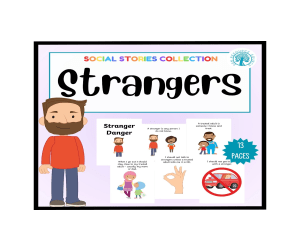
Stranger Danger – Social Story for Kids
Special Resources, Life Skills, Social Skills, Special Education Needs (SEN), Not Grade Specific, Activities
Teaching children about stranger safety is crucial, but can be a scary topic. This Stranger Danger Social Story takes the fear out of this important lesson by using a warm, straightforward approach. Designed for preschool and elementary age kids, this social story clearly defines "stranger" and explains why children should never go anywhere with someone they don't know. It covers strangers in different situations, like if approached on the street, in a store or playground. Kids learn that strangers can trick them with offers of candy, pets or fun activities. Importantly, this Stranger Danger story also teaches children what to do if a stranger tries to interact with them. It provides simple steps like saying "No!", running to a trusted adult, yelling for help and reporting it right away. The empowering message is: Your body is yours and no one can take you without permission. With its therapeutic tone and real-world advice, this social story removes anxiety and arms children with strategies. It is an indispensable tool for teachers, counselors, social workers and parents wanting to broach this sensitive safety issue. Using concrete examples and a reassuring voice, this Stranger Danger guide will build awareness, confidence and essential skills to help keep kids secure.These books should be used over and over to reinforce the point so I would suggest either putting the pages into a display book or laminating and binding them. Clipart images courtesy of Kari Bolt Clipart
Author SEN Resource Source
Rating
Tags Stranger, SEN, Social Skills, Autism, Social Story, Social Narrative

Riding the School Bus Social Story
Special Resources, Life Skills, Social Skills, Special Education Needs (SEN), Not Grade Specific, Activities
For many students, riding the school bus can cause uneasiness and uncertainty. This Riding the School Bus Social Story is designed to alleviate anxiety by clearly explaining what to expect before, during and after the bus ride. Using a reassuring tone and relatable imagery, this social story walks children through bus transportation from start to finish. It covers key steps like waiting at the stop, boarding the bus, sitting properly in a seat, following safety rules, and disembarking at school. The story also provides tips for staying calm, avoiding distractions and getting help if needed. By articulating every detail of the process, this social story reduces fear of the unknown. Teachers can review it with individuals or small groups to set expectations and impart skills like following directions, seat safety and asking for assistance. The step-by-step breakdown and supportive tone build confidence in even the most apprehensive riders. An invaluable inclusion resource, this Riding the School Bus Social Story promotes independence and eases transition jitters. It is ideal for special education teachers, counselors, therapists and parents supporting neurodiverse learners or children with behavioral struggles. Provide this social story to students before the first bus ride to curb anxious feelings and pave the way for a positive school year. These books should be used over and over to reinforce the point so I would suggest either putting the pages into a display book or laminating and binding them. Clipart images courtesy of Artifex
Author SEN Resource Source
Tags Social Story, Riding The Bus, SEN, Autism, Social Narrative
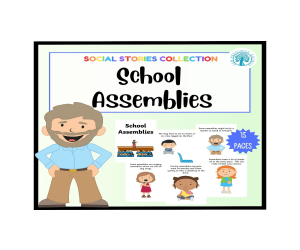
School Assemblies Social Story
Special Resources, Life Skills, Social Skills, Special Education Needs (SEN), Not Grade Specific, Activities
School assemblies can be overwhelming for some students who struggle with changes to routine or large, noisy gatherings. That's why this School Assemblies Social Story is an invaluable tool for easing anxiety and promoting skills. Social stories use simple language and visuals to walk children step-by-step through challenging situations. This school assemblies story uses a reassuring tone and eye catching pictures to explain what assemblies are, who attends them, what to expect, and tips for coping. The story covers arriving at the assembly, sitting quietly, appropriate responses, avoiding distractions, and more. Using concrete examples and positive reinforcement, this social story builds understanding of assembles as well as skills like following directions, focus, and self-regulation. Teachers can review the story with individuals or small groups to reduce apprehension and prevent sensory overload. The clear explanations and real-world scenes help students know what to anticipate. With its therapeutic approach, this School Assemblies Social Story fosters confidence, independence and inclusion. It is an excellent resource for special education teachers, counselors, and other professionals supporting neurodiverse learners or students with behavioral challenges. By articulating social expectations in a comprehensive yet accessible way, this story empowers children to successfully participate in assemblies. These books should be used over and over to reinforce the point so I would suggest either putting the pages into a display book or laminating and binding them. Clipart images courtesy of Kari Bolt Clipart
Author SEN Resource Source
Tags Social Story, SEN, Autism, Assembly, School Assemblies, Social Narrative

Strength Cards
Special Resources, Social Emotional Learning (SEL), Special Education Needs (SEN), Social Skills, Not Grade Specific, Activities
nstilling confidence and self-esteem in students starts with helping them recognize and appreciate their own unique strengths. These Strength Cards are the perfect tool to foster positive self-image and empowerment. The set includes 48 cards each featuring an uplifting strength word. Included words are: graceful, sporty, brave, funny, caring, clever, helpful, playful, friendly, musical, intelligent, happy, loving, creative, artistic, strong, honest, respectful, adventurous, patient, joyful, sensible, cheerful, gentle, calm, protective, resilient, reliable, responsible, curious, persistent, forgiving, enthusiastic, hopeful, assertive, courageous, energetic, fair, organised, imaginative, proud, active, ambitious, careful, co-operative, hard working, loyal and kind. The diverse mix of attributes encompasses social, emotional, intellectual and physical strengths to represent the well-rounded potential of every child. Students can use these cards for self-reflection, goal setting, praise and affirmation exercises. Teachers can incorporate Strength Cards into lessons on growth mindset, self-confidence, kindness and more. Have students draw a card and share a time when they exhibited that strength. Or, play an affirmation game where children give Strength Cards to classmates who display those qualities. The possibilities are endless! With their vibrant, inspiring designs, these Strength Cards make identifying and celebrating students' inner strengths simple and fun. Educators looking for a flexible resource to reinforce positivity and self-worth will find these cards perfect for classroom use. Children will light up as they recognize their own amazing abilities and qualities represented in the deck. The wonderful eye catching clipart is courtesy of Kari Bolt Clipart.
Author SEN Resource Source
Tags Positive Affirmations, Resilience Building, Character Strengths, Emotional Intelligence, Self-esteem, Growth Mindset, Coping Skills, Mindfulness, Personal Development, Social-emotional Learning

Homophone Flash Cards
ELA, Reading, Grammar, Grade 1, 2, 3, Worksheets & Printables, Flashcards
Mastering homophones is an essential part of building strong literacy skills. These Homophone Flash Cards make learning these tricky sound-alike words engaging and effective. The set includes 68 cards featuring common homophone pairs with corresponding pictures. There is one flash card for each word which teachers can either show as sets of 2 or print or laminate as a two sided card. Each card features colorful illustrations depicting the different meanings of each word, providing context clues. This design allows students to see and hear the differences between easily confused homophones for clearer understanding. Learning to identify and properly use words that sound the same but have different meanings is a key phonics and reading comprehension skill. These Homophone Flash Cards give students focused practice to build mastery of these tricky words through repetitive exposure and visual association. The pictures aid retention while keeping students interested. Teachers can use these cards for small group lessons, literacy centers, and vocabulary reinforcement. Young readers will love flipping through the cards and learning the nuances of these sound-alike words. With vivid art and clear word pairing, these Homophone Flash Cards make homophone practice easy and engaging. Words included: hear, here, heel, heal, main, mane, male, mail, knot, not, break, brake, die, dye, I, eye, night, knight, ate, eight, bear, bare, bury, berry, dear, deer, flu, flew, know, no, made, maid, meet, meat, blew, blue, ,flower, flour, hair, hare, one, won, pain, pane, pail, pale, pause, paws, pear, pair, red, read, right, write, see, sea, stairs, stares, tale, tail, toe, tow, tea, tee, ring, wring, ball bawl The wonderful, eye catching clipart is courtesy of Kari Bolt Clipart.
Author SEN Resource Source
Tags Homophones, Grammar, Language Arts , Vocabulary , Literacy Skills, Word Recognition, Homophonic Pairs, Reading Comprehension, Spelling Practice, Phonemic Awareness
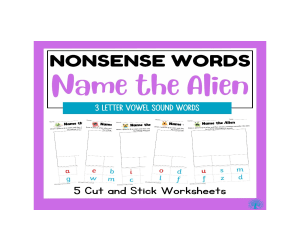
3 Letter Nonsense Words Name the Alien
ELA, Language Development, Phonics, Reading, Preschool, Grade 1, Activities
Learning to decode new words is an essential reading skill, and these Nonsense Words worksheets make mastering vowel sounds fun! This pack contains 6 alien-themed worksheets focused on creating and sounding out nonsense words to build phonics skills. Each page contains a blank box for children to design, draw and color their own alien. They then have a collection of sounds at the bottom to cut out and create a nonsense name for their alien that includes a specific vowel sound that will go in the middle of the silly alien name. Students will practice isolating and pronouncing the target sounds as they figure out how to read the funny names. With fun graphics and engaging activities, these Nonsense Word worksheets provide enjoyable phonics practice. Children will get repeated exposure to the basic short vowel sounds that pop up frequently in English words. The alien theme adds an element of entertainment to help hold kids' interest as they tackle each new sound challenge. Educators looking for a supplemental resource to help students master short vowel sounds will love this pack. It provides focused practice to cement knowledge of these fundamental phonics skills in a refreshing way! The eye catching clipart is courtesy of Kari Bolt Clipart
Author SEN Resource Source
Tags Word Blending, Decoding Practice, Early Reading Skills, Reading Fluency , Phonological Awareness, Short Vowel Sounds, Nonsense Words, Alien Words, Phonic, Reading