Bowling Rubrics and Skill Cue Posters - EdTPA Friendly!
Assessment rubrics and instructional posters for evaluating and teaching the four-step bowling delivery in a physical education class.




574 resources
Explore sub-categories
2 sub-categories · 574 resources
Assessment rubrics and instructional posters for evaluating and teaching the four-step bowling delivery in a physical education class.
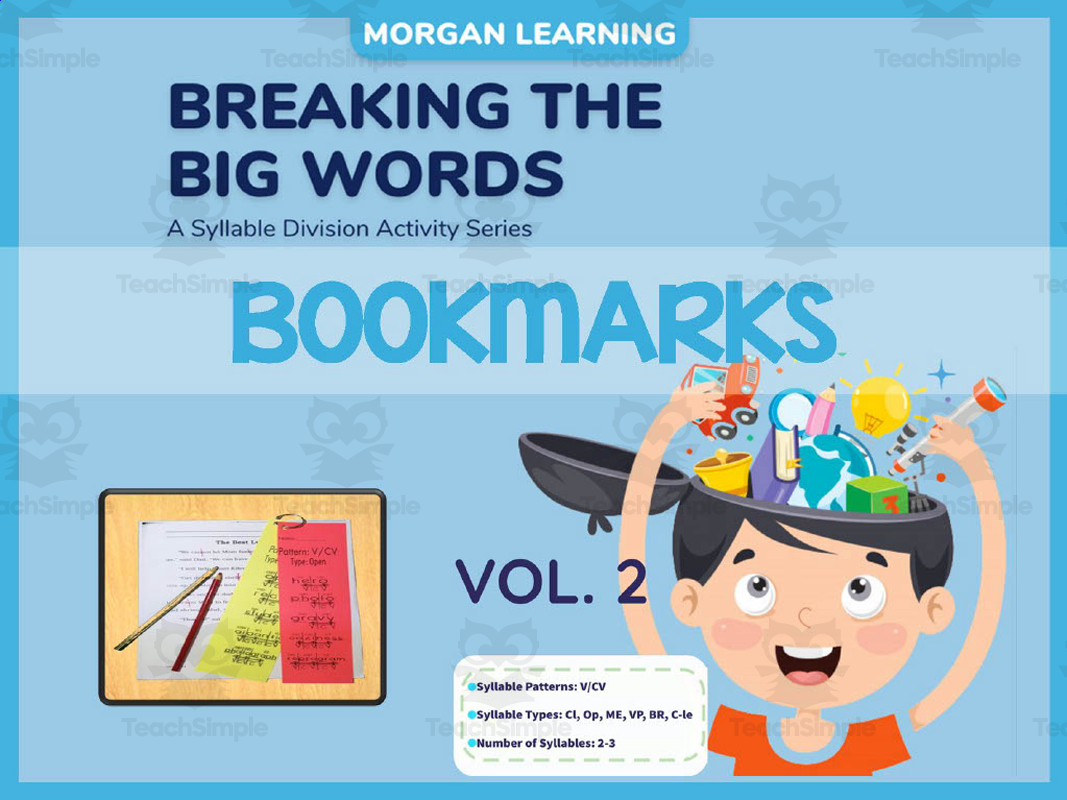
Breaking the Big Words Bookmarks Volume 2 Mastering syllable division is a critical part of learning to read. When early elementary students can break words into syllables, they become confident decoders ready to take on any text.

A mindfulness poster that teaches the 5-senses grounding technique to help children calm anxiety.

Introduce one capitalization rule at a time using the completed chart. Keep it visible during writing, then use the cloze version to revisit the rules together.

Introduce cause and effect with a simple rain-and-umbrella example and words such as “because” and “as a result.” The complete reference chart makes the relationship visible, while a matching fill-in page supports guided notes. Students can then use the sentence frames to explain connected events in a text or familiar situation. Model a sentence together before asking students to choose a signal word for their own response.
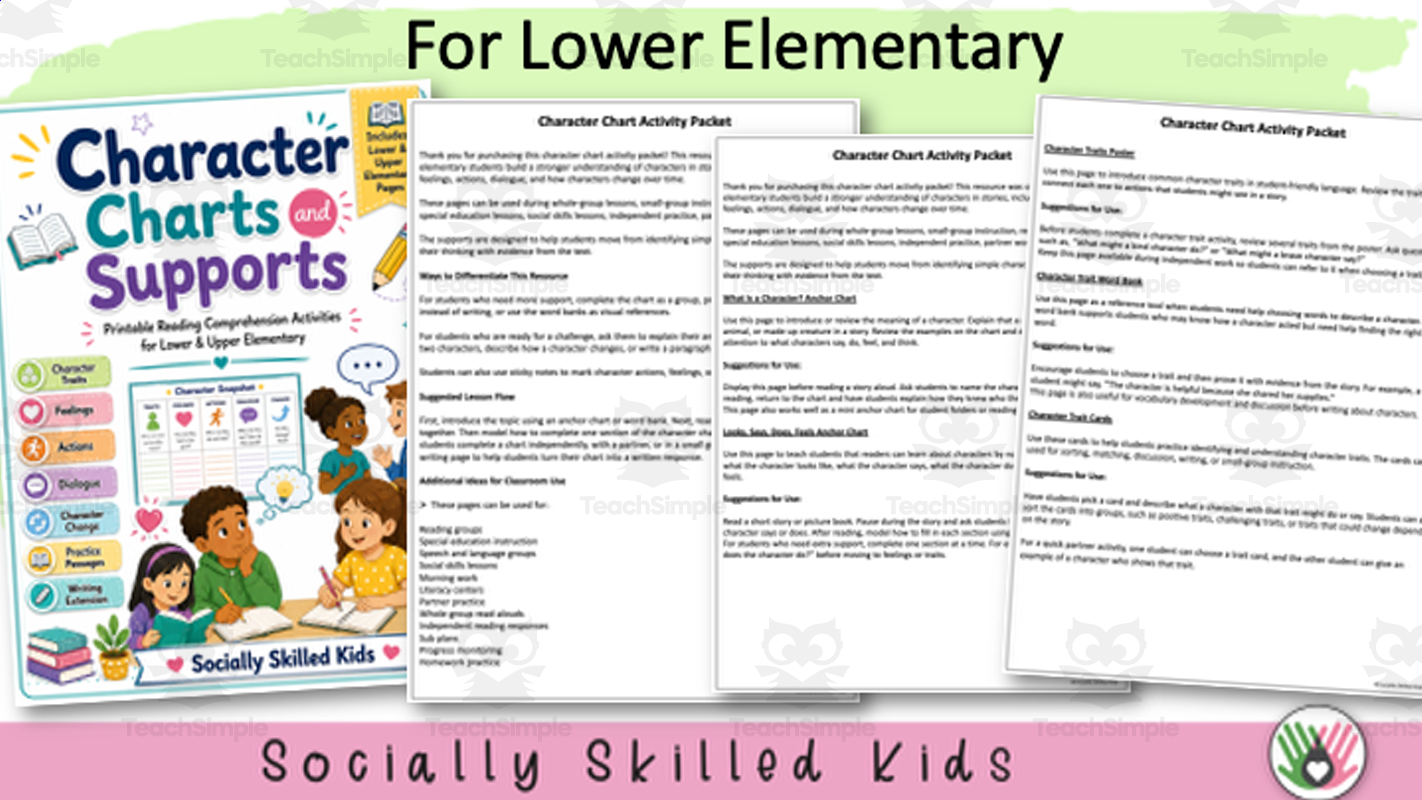
Character Chart Activity Packet | Character Traits, Feelings, Evidence & Reading Response Help your students build stronger reading comprehension skills with this Character Chart Activity Packet !
 Free download
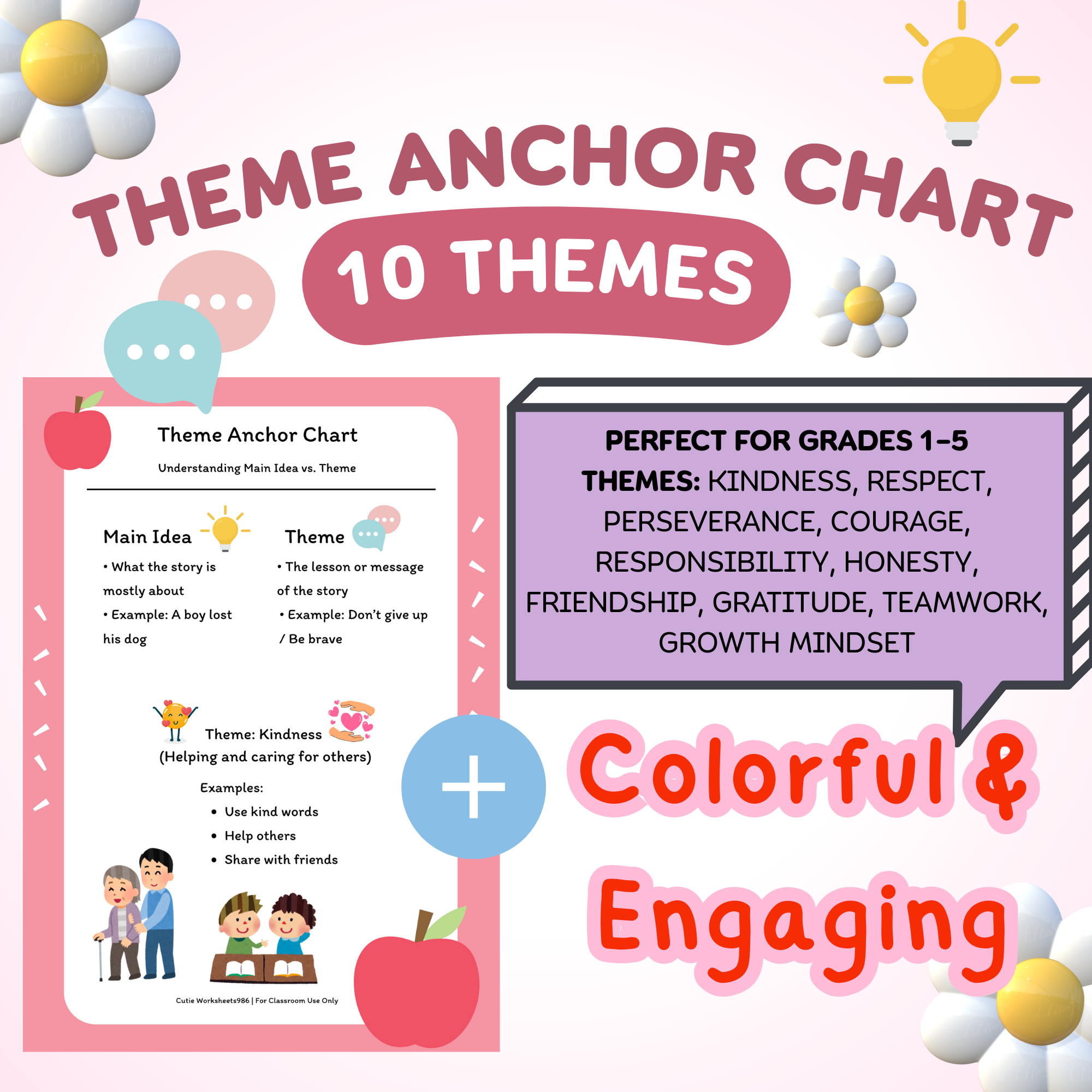
 A set of 10 themed anchor charts distinguishing 'main idea' from 'theme' and illustrating character-education themes (kindness, respect, perseverance, courage, responsibility, honesty, friendship, gratitude, teamwork, growth mindset) for classroom display.

The Character Experiences Anchor Chart is an indispensable tool conceived particularly for educators, to better comprehend character's experiences and their interactions within various tales or series.

Two illustrated anchor charts teach how readers infer a story character's traits — through what characters say or think, do, feel, and how others describe them — each supplied in a completed poster version and a fill-in-the-blank interactive-notebook version. The chart pairs a four-category graphic organizer (thoughts/words, feelings, actions, and what others say) with a sentence frame, 'This character is (or has) ___. I know this because ___,' for students to justify a trait using text evidence. Teachers can print the completed posters for a bulletin board or hand out the blank versions for students to fill in as guided notes while reading a class novel or short story.

An anchor chart defines characters as 'the people or animals that the story is about' and then focuses on the main character, describing them as the most important character and the one central to the story's action. The chart is provided in two matching versions: a fully completed reference page for teacher display, and a second page with key words removed as blanks (e.g., 'the ______ or _______ that the story is about' and 'The MOST __________ CHARACTER'), letting a teacher use it as a fill-in-the-blank activity with students during a shared reading or mini-lesson. Once students can identify a story’s main character, the roll a story printable lets them apply that concept by rolling a character, setting, and story-line into an original story idea.
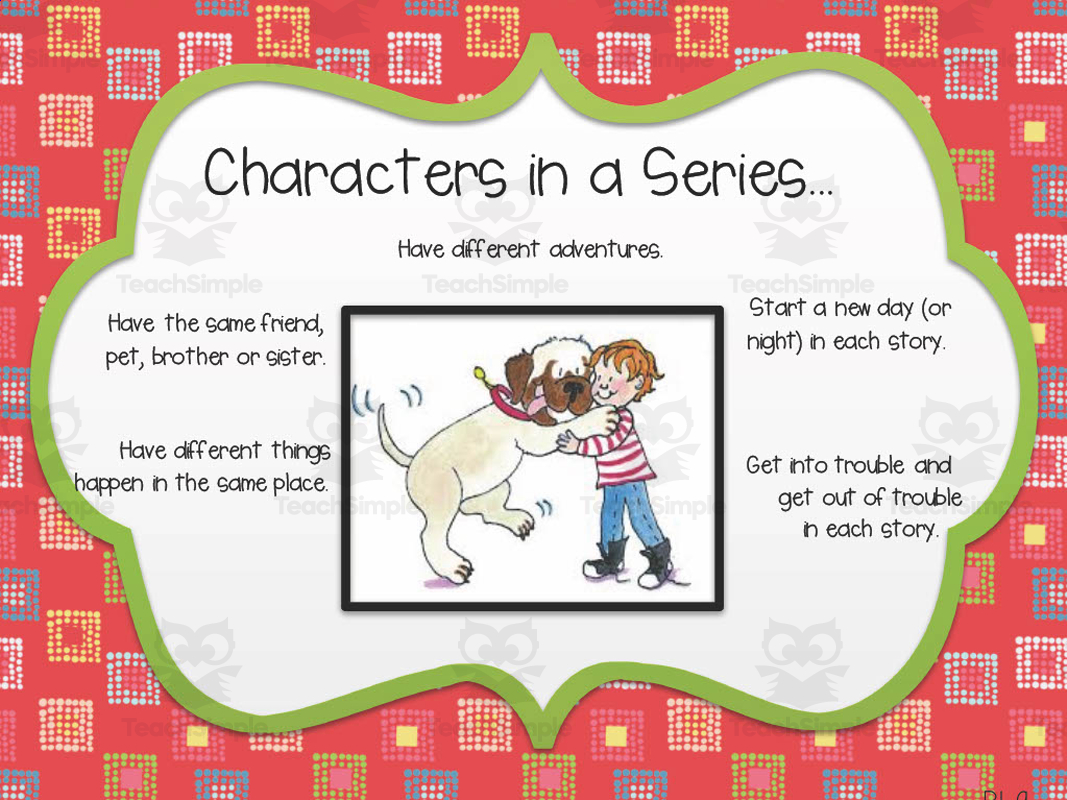
This resource is an anchor chart set for characters in a series. The first anchor chart is complete. The second anchor chart is a fill in the blank.
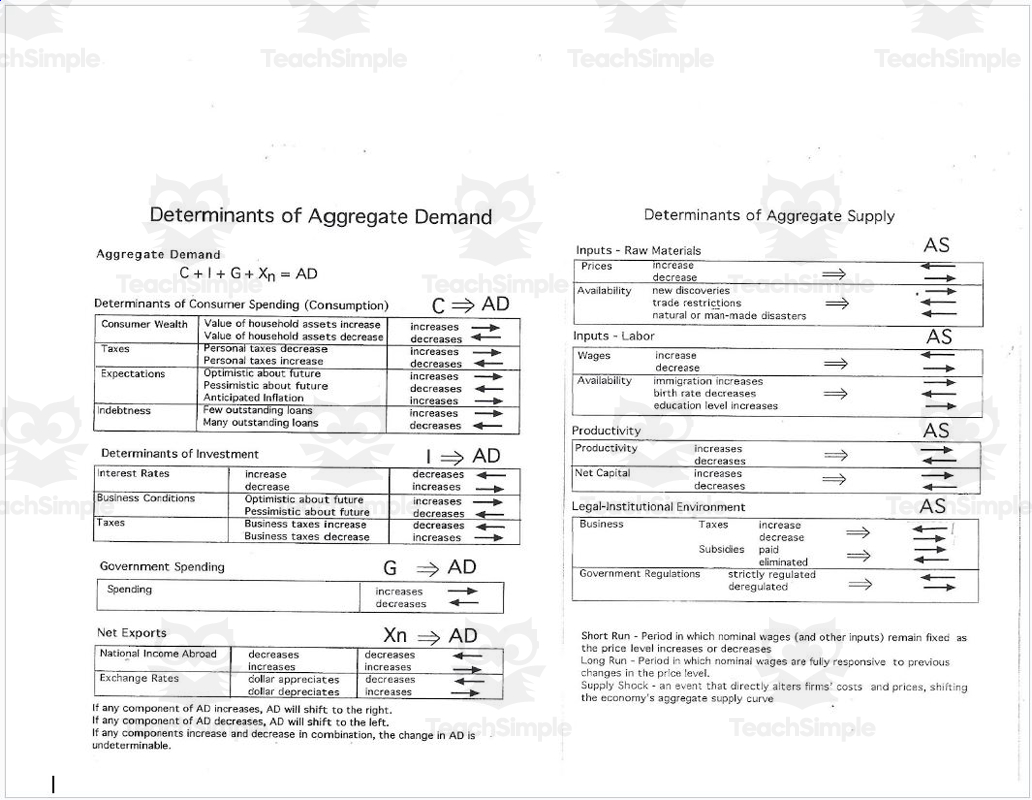
Cheat Sheet: Determinants of AS_AD-1 Target Audience: This resource is meticulously designed for high school students within the grades 9 to 12. It's optimal for subjects like Social Studies, with an emphasis on USA History and Economics.
Unravel the truth behind your emotions with "Checking the Facts about Shame and Guilt." This guide empowers you to assess the justification of your feelings, offering a systematic approach to explore facts, challenge interpretations, and…
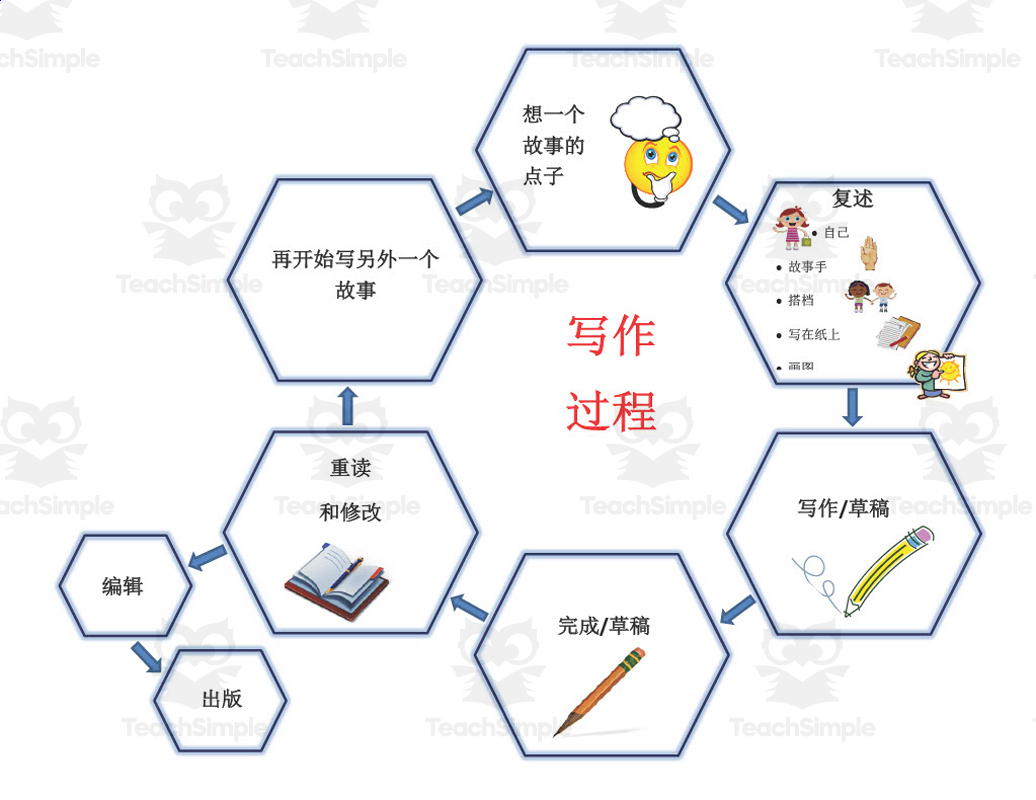
This resource is a Chinese: Writing Process Chart. It is an easily printable chart that shows the basic steps of writing for your students to follow along.

This resource is a set of learning posters and graphic organizers for cinquain poetry writing. There are posters that teach about cinquain poetry. Students will explore features and how to write a cinquain poem and so much more. They will use the templates to write a cinquain poetry. This pairs well with your poetry unit in English…

Model the four steps with a question about a shared text. Use the guided chart during practice and the fill-in version to review the routine.

A set of 8 French grammar posters teaching word classes (parts of speech): noun (nom), adjective (adjectif), verb (verbe), adverb (adverbe), determiner (déterminant), pronoun (pronom), preposition (préposition), and conjunction (conjonction), each giving a definition, example words, and an identification trick/question with a worked example sentence.
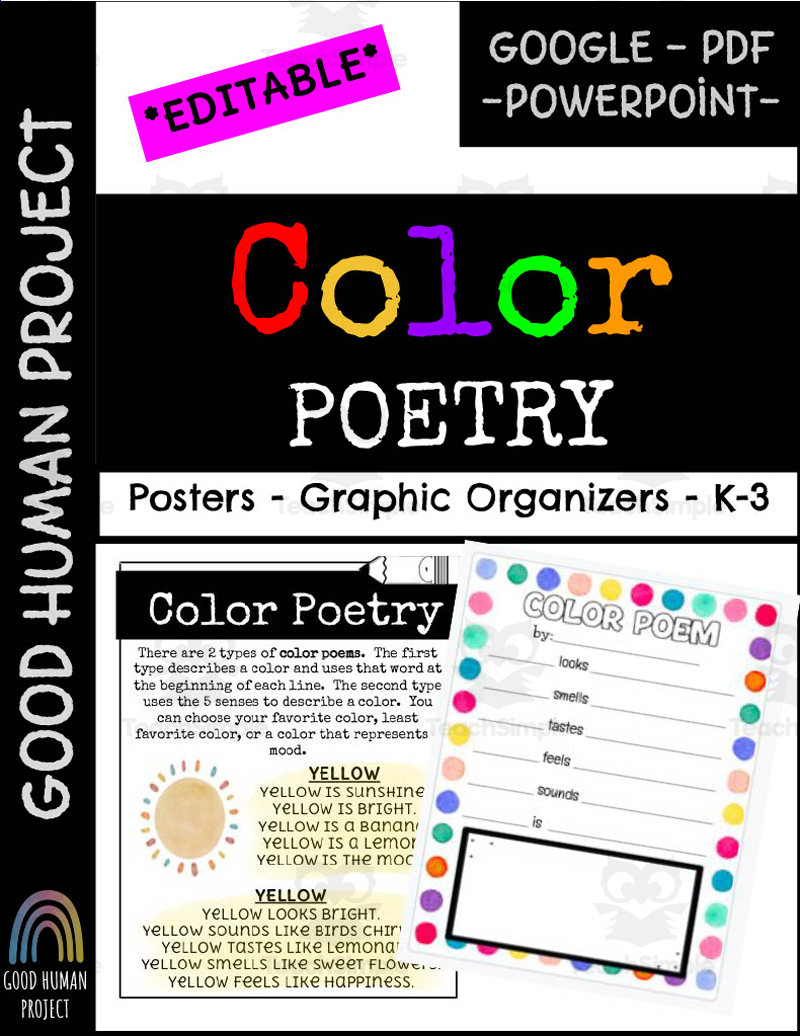
Teach students the two forms of color poetry (a) starting each line with the color name, and (b) describing a color using the five senses, via instructional posters and fill-in graphic organizers, for a K-3 poetry unit.

Show students how comparing and contrasting works with a Venn diagram about two children. The chart separates what they have in common from their differences and supplies words that help students express each kind of idea. Use the complete chart to model a comparison, then let students fill in the key terms on the companion version. The sentence-frame pages support responses about a new pair of characters, objects, or ideas you introduce.

This resource is a set of anchor charts focused on comparing two texts on the same topic. Students are able to use these anchor charts to decipher similarities and differences between texts on the same topic.

This resource is a set of learning posters and graphic organizers for concrete shape poetry writing. There are a variety of posters that teach about concrete shape poetry. Students will explore features and so much more. They will use the graphic organizers to brainstorm ideas and then write a concrete shape poem. This pairs well with…

This resource is a set of 2 charts">anchor charts for connections within texts The first chart is complete. The following chart is fill in the blank.

This resource is a set of 4 charts">anchor charts for teaching how to find and use context clues. The first chart is complete. The following 3 charts are fill in the blank.

Two matching contraction charts show how pairs of words combine into one by dropping letters and adding an apostrophe — 'can not' becomes 'can't,' 'I will' becomes 'I'll,' 'would have' becomes 'would've.' The first chart is fully completed with all seventeen example pairs, ready to display or read as-is. The second repeats the identical seventeen contractions but leaves the definition's key words blank, so students fill in 'two,' 'one,' and 'apostrophe' themselves before using the chart as a reference. Grouped by base word — not, will, have, and am/is/are — the contractions move from the most common pattern to more irregular ones, giving students a structured reference for reading and writing.