



3,886 products added recently
Page 11 - Elementary Assessments
Provide your elementary students with assessments that monitor their development across all subject areas. This collection includes grade-appropriate tools that help you track progress and tailor instruction. Ensure your students build a strong academic foundation by regularly evaluating their understanding.

 Show filters

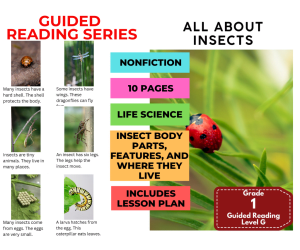
All About Insects: Guided Reading Level G with Lesson Plan
ELA, Resources for Teachers, Reading Comprehension, Reading, Science, Language Development, Vocabulary, Pre-Reading, Insects, Life Sciences, Kindergarten, Grade 1, 2, Worksheets & Printables, Worksheets, Teacher Tools, Centers, Activities, Literacy Readers, Quizzes, Quizzes and Tests, Assessments, Lesson Plans
This All About Insects (level g) guided reading book with lesson plan includes: Guided Reading Color Label (front cover x1) This is a quick way to match the book’s demands to what students can generally handle.. The overall goal is to use the level/color to pick books for several smaller groups. To qualify for a certain level, a student is expected to read a book from that level with about 90–94% accuracy. If a student is consistently accurate and understands, move up a level. If the student is struggling at that level, drop down and add more support. Each student will improve at completely different rates, but it is generally one of the best ways to check progress across the class. DOWNLOAD THE CATALOG TO VIEW ALL GUIDED READING BOOKS AVAILABLE (SORTED LEVELS A-Z) Pre-Reading Question (x1) Teacher asks the prompt aloud, can be while showing the cover or first page. Students share what they already know, or make educated guesses from the cover. Prompt them to use the target vocabulary. Write some of their responses on the board to look back at during the reading. Vocabulary Words (x5) Introduce the five words, best doing it one at a time. Start by saying it, while students repeat and then see if anyone knows what it means before reading further. Read through the meaning and try to briefly connect each word to a picture or gesture so it’s meaningful. Ask students to flip through the book pages and point to where they see each of the vocabulary words. While reading the book pause upon coming across one of the vocab words or read the sentence twice to make sure students understand the word has appeared. Optional: Ask students to raise hands whenever they see/hear one of the new words. Guided Reading Pages (x10) Check the book snapshot (below) for: primary topic - do you need to prep extra reading or intro materials on this? what is taught best - decide on 1-2 bullets to focus on, use the prompt or words provided here for best results. learning goals - what you are checking for students to be able to do after the session, elicit answers using prompts or words provided. key vocabulary (see section above). questions overview - so you know what is coming up and if you need to prep extra materials to assist understanding. Run the lesson You may have already looked at a few of the pages together, but you can show them some of the pictures again first to set meaning. Depending on how much time you have and how familiar your students are with guided reading class, you may want to read the book aloud first with the group first. Students whisper or partner read, while you listen in. If time, do it as a group, one student reading a page each. Use the guided page’s prompts to coach: “Check the picture / does it make sense?” “Point under the words / try the first sound” “Reread the sentence smoothly”. Try to focus more on one student per session (rotating every time), so you can work out if they are ready to move up or need to move down a level. Comprehension Questions (back cover x3) This is your way to check that students didn’t just say the words, but actually understood the text. First, let students answer by pointing to the page/picture and saying a short sentence. After any answer, follow with: “Show me where you found that in the text.” In bigger groups, have partners answer first (10–20 seconds), then call on 2–3 students to share. Differentiation tips: Emerging speakers/struggling readers: oral + pointing On-level: oral in a full sentence Higher: one written sentence or draw + label Book Snapshot Title: All About Insects Genre: Nonfiction (informational) Subject: Science (Life Science) Primary Topic: Insect body parts, features, and where they live Estimated Guided Reading Level (A–Z): G What This Book Teaches Best Explains what insects are by stating they are tiny animals that live in many places . Teaches basic insect anatomy: insects have six legs and three body parts (head, thorax, abdomen). Connects structures to functions: legs help the insect move and antennae are used to smell things . Describes common insect features: some have a hard shell that protects the body , and some have wings (dragonflies can fly fast ). Introduces early life stages: many insects come from eggs , and a larva hatches from an egg. Learning Goals Students will describe insects as tiny animals that live in many places. Students will identify that an insect has six legs that help it move. Students will name the three body parts of an insect: head, thorax, and abdomen. Students will explain that most insects have two antennae used to smell things. Students will describe details from the text about insect features (shells, wings) and how insects begin life (eggs, larva). Key Vocabulary From the Text thorax — the middle part of an insect’s body. abdomen — the back part of an insect’s body. antennae — body parts insects use to smell things. larva — a young insect that hatches from an egg. dragonflies — insects that can fly fast. Discussion Prompts Pre-reading question: Where have you seen insects living before? Comprehension questions: What does the book say insects are? Comprehension questions: How many legs does an insect have? Comprehension questions: Where does the book tell you to look to find an insect? Printing Tips 1. Best Printing Method (Recommended) “Booklet” Printing (Best if Available) If your printer or PDF viewer supports Booklet Printing , use this. Settings to use: Print mode: Booklet Paper size: Letter or A4 (either works) Orientation: Landscape Print on both sides: Yes Flip on: Short edge Scaling: Fit to printable area Booklet subset: First test: Front sides only Then: Back sides only This will automatically: Pair pages correctly Put the cover on the outside Align everything for folding After printing, fold in half and staple along the spine . 2. If “Booklet” Printing Is NOT Available You can still print this correctly with manual duplex printing . Step-by-step: Open the PDF. Choose Print . Set: Orientation: Landscape Pages per sheet: 1 Print on both sides: Yes Flip on: Short edge Print all pages . Because each PDF page already contains two facing book pages, the result will still fold cleanly into a book. Thousands of Cored Education products are included with your TeachSimple membership. Download links and encyclopedia index available here.
Author Cored Education
Rating
Tags Reading Comprehension, Reading Passages, Reading, Guided Reading, Guided Reading Lesson Plan, Guided Reading Activity, Pre-reading, Science Lesson Plans, Life Science, Insects
Tennis Reading Comprehension Passage - Cored Ed Encyclopedia
ELA, Language Development, Reading Comprehension, Reading, Pre-Reading, Science, Technology, Engineering, History, Social Studies, Grade 2, 3, 4, 5, Worksheets & Printables, Worksheets, Teacher Tools, Centers, Activities, Writing Prompts, Assessments, Quizzes and Tests, Quizzes, Lesson Plans
This tennis reading comprehension includes: Visualization (on the front cover) Start your lesson by taking a minute to think and share something about the topic. Read the script aloud (slowly), perhaps prepare some music or sound effects. Student close their eyes and let their imaginations wander. Students open their eyes, read the question aloud and give them a few minutes to complete. Ask a few students to share or keep answers until the end to compare with what they learn in the passage. Quick pause—thousands of Cored Education products are included with your TeachSimple membership. Download links and encyclopedia index available here. Pre-Reading Trivia Students will write down one thing they already know about the subject and then read five more facts and discuss. These facts are fun, and the students will enjoy learning about the subject before reading more. Give 1 minute for students to write what they already know (no pressure—best guess is fine). Read the five facts together. After each fact, do ask a student for their opinion, was it surprising? Set a purpose by asking students to highlight/underline one fact they want to learn more about during the reading. Reading Passage The text is a high-interest reading passage with set paragraphs, roughly three to four paragraphs long. It contains a variety of themes about the topic, anywhere from history to technology. The passage is between 250 and 350 words in length. First, ask students to look at the headings and see what they’ll learn about today. What do they know about the topic/heading? First read options: Teacher read-aloud (best for support). Partner reading (paragraph by paragraph). While reading, students underline important details, and vocabulary words they think may come up in the questions section. Mixed Questions The first question page contains four multiple-choice questions, each with a choice of four answers, and three written response questions that require a sentence or two from the student. Students complete the mcqs first independently, then review quickly as a class. For the 3 written responses, try to get students giving the answer with some form of evidence: “I think ___ because the text says ___.” If students get stuck, send them back to check the passage. Vocabulary Questions Practice seven key words from the text in this section across two activities. First section is scrambled words where students will unscramble three words given a clue for each. The second section is a word to meaning matching activity. Before starting, have some students read out words they underlined in the passage. Ask students to say the word and read aloud the sentence(s) around each word. Ask students to do scrambled words and the matching exercise in pairs then go through answers as a class. For the scrambled spelling task, get four pairs to come up to the board and write the words for extra practice with the other student reading out the clue. For the matching task, prompt students to give full sentences: “I matched ___ with ___ because ___.” Creative Writing In this question, the student will be required to write a five to eight sentence paragraph on a question related to the topic. Before starting, ask students write down 3 key ideas they are going to include in their piece. Ask students for ideas to share around the class to help those struggling. Pro writing expectations: 5–8 sentences At least 2 facts or details from the passage At least 2 vocabulary words from the previous page Students read their paragraphs while classmates listen for facts and vocabulary words. Extension Activities This page is optional for fast finishers or to take home. There are several activities, each one requiring a different skill. Do some, do none, do all, completely optional - but you will feel reassured knowing every possibility is planned for. Includes summary writting question. Answer Key There are answers for the multiple-choice questions, written response questions have sample answers, vocabulary answers and if there is a summary question then a sample summary will be provided as well. Lesson Plan Included Customized lesson plan for this lesson is included. Lesson Snapshot Title: Tennis Genre: Nonfiction (informational text) Subject: Social Studies (History of Sports) Primary Topic: How tennis changed over time Estimated Guided Reading Level (A–Z): Q What This Lesson Teaches Best How tennis began as jeu de paume (“game of the palm”) and shifted from hands to gloves and then rackets. How indoor courts with hard walls and slanted roofs changed play by creating surprising angles. How tennis moved outdoors in the 1800s when rubber balls bounced well outside and lawns made smooth courts. Key moments that helped standardize and spread the sport (1873 rules book, 1877 Wimbledon). How tournaments changed when the Open Era began in 1968, allowing professionals and amateurs to compete together. Learning Goals Students will explain why the early game was called jeu de paume using details from the text. Students will describe how playing spaces changed from courtyards to enclosed indoor courts. Students will identify how walls and slanted roofs affected play in real tennis. Students will summarize two changes in the 1800s that helped tennis move outdoors. Students will describe why the 1873 rulebook and the 1877 Wimbledon championship mattered for tennis. Students will explain what changed in 1968 when the Open Era began. Key Vocabulary From the Text monastery — a place where monks live and work. cloisters — covered walkways around a courtyard. boundary — a line that shows where play must stay. enclosed — closed in by walls; not open outside. amateurs — people who play for fun, not as paid work. FULL CATALOG OF DOWNLOAD LINKS AND ENCYCLOPEDIA INDEX HERE
Author Cored Education
Rating
Tags Vocabulary, Reading Comprehension, Reading Passages, Lesson Plans, Ela Lesson Plans, Reading Comprehension Lesson Plans, Pre-reading, History, History Lesson Plans, Sports

UK/Aus Spelling Homophones Practice Questions - Year 4-5 (PDF)
ELA, Language Development, ESL, Common Core, Resources for Teachers, Vocabulary, Grade 3, 4, Worksheets & Printables, Worksheets, Quizzes and Tests, Teacher Tools, Tests, Assessments, Quizzes
THIS IS THE UK/AUS ENGLISH SPELLING VERSION. CHECK THE CATALOG FOR THE ORIGINAL AMERICAN ENGLISH VERSION. Homophones Vocabulary Practice MCQS ELA MCQS Overview: In this series of lessons, students will embark on an engaging journey to explore the grammar skills that make our language vibrant and expressive. These lessons are crafted to help students identify, comprehend, and effectively apply language arts skills in both writing and speech. This UK/Aus English version is especially useful for schools, teachers, and families working with British-based spelling and language conventions. It is a helpful option for classrooms using UK curriculum expectations, international programmes influenced by British English, or any setting where learners need to practise the correct capitalisation and punctuation forms for that version of English. Homophones Overview: Homophones include: sent, scent, cent for, four, fore wear, where, were raise, rays, raze vane, vein, vain they're, their, there two, too, to, than, then, van PDF Version This is the PDF uneditable version. This download is available in GOOGLE Docs, GOOGLE Forms, GOOGLE Slides. PDF, PPT, WORD, check the links below for more details. FULL CATALOG OF DOWNLOAD LINKS HERE ELA Review Questions Overview Each review test includes three answer choices for every question, which helps keep things simple and manageable for students. The layout is clear and easy to follow, so students can focus on the questions instead of figuring out what to do. A few pictures are included on each test to make the pages feel a little more inviting and less overwhelming. A review sheet is also included, giving students a chance to go back over many of the main skills covered in the resource. Introduction or Example Sheet Each topic comes with an introduction or example sheet to look at before students begin. This gives students a clear starting point and helps them feel more prepared. It also lets them see what to expect before moving into the main work. For many students, it is a helpful way to quickly refresh the key ideas before they start practicing on their own. Full Answer Keys Full answer keys are included to make marking and checking work faster and easier. Sample responses are also provided where needed, especially for open-ended tasks. This can be a real time-saver on busy days and makes the resource more practical to use. Everything is there to help make planning, teaching, and checking student work feel a little more straightforward. For similar downloads and other frees, do check out Cored Group on TeachSimple.
Author Cored Education
Rating
Tags Elementary, Answers, Ccss, Common Core, Tests, Test Prep, Assessment, Grade 3, Grade 4, Vocabulary
Ferris Wheels Reading Comprehension Passage - Cored Ed Encyclopedia
ELA, Reading Comprehension, Reading, Science, Technology, Language Development, Social Studies, History, Pre-Reading, Writing, Grade 2, 3, 4, 5, Worksheets & Printables, Worksheets, Teacher Tools, Centers, Activities, Writing Prompts, Assessments, Quizzes and Tests, Quizzes, Lesson Plans
This Ferris wheels reading comprehension with lesson plan includes: Visualization (on the front cover) Start your lesson by taking a minute to think and share something about the topic. Read the script aloud (slowly), perhaps prepare some music or sound effects. Student close their eyes and let their imaginations wander. Students open their eyes, read the question aloud and give them a few minutes to complete. Ask a few students to share or keep answers until the end to compare with what they learn in the passage. Quick pause—thousands of Cored Education products are included with your TeachSimple membership. Download links and encyclopedia index available here. Pre-Reading Trivia Students will write down one thing they already know about the subject and then read five more facts and discuss. These facts are fun, and the students will enjoy learning about the subject before reading more. Give 1 minute for students to write what they already know (no pressure—best guess is fine). Read the five facts together. After each fact, do ask a student for their opinion, was it surprising? Set a purpose by asking students to highlight/underline one fact they want to learn more about during the reading. Reading Passage The text is a high-interest reading passage with set paragraphs, roughly three to four paragraphs long. It contains a variety of themes about the topic, anywhere from history to technology. The passage is between 250 and 350 words in length. First, ask students to look at the headings and see what they’ll learn about today. What do they know about the topic/heading? First read options: Teacher read-aloud (best for support). Partner reading (paragraph by paragraph). While reading, students underline important details, and vocabulary words they think may come up in the questions section. Mixed Questions The first question page contains four multiple-choice questions, each with a choice of four answers, and three written response questions that require a sentence or two from the student. Students complete the mcqs first independently, then review quickly as a class. For the 3 written responses, try to get students giving the answer with some form of evidence: “I think ___ because the text says ___.” If students get stuck, send them back to check the passage. Vocabulary Questions Practice seven key words from the text in this section across two activities. First section is scrambled words where students will unscramble three words given a clue for each. The second section is a word to meaning matching activity. Before starting, have some students read out words they underlined in the passage. Ask students to say the word and read aloud the sentence(s) around each word. Ask students to do scrambled words and the matching exercise in pairs then go through answers as a class. For the scrambled spelling task, get four pairs to come up to the board and write the words for extra practice with the other student reading out the clue. For the matching task, prompt students to give full sentences: “I matched ___ with ___ because ___.” Creative Writing In this question, the student will be required to write a five to eight sentence paragraph on a question related to the topic. Before starting, ask students write down 3 key ideas they are going to include in their piece. Ask students for ideas to share around the class to help those struggling. Pro writing expectations: 5–8 sentences At least 2 facts or details from the passage At least 2 vocabulary words from the previous page Students read their paragraphs while classmates listen for facts and vocabulary words. Extension Activities This page is optional for fast finishers or to take home. There are several activities, each one requiring a different skill. Do some, do none, do all, completely optional - but you will feel reassured knowing every possibility is planned for. Includes summary writting question and additional facts. Answer Key There are answers for the multiple-choice questions, written response questions have sample answers, vocabulary answers and if there is a summary question then a sample summary will be provided as well. Lesson Plan Included Customized lesson plan for this lesson is included. Lesson Snapshot Title: Ferris Wheels Genre: Nonfiction (Informational Text) Subject: Social Studies (History) / Science & Technology / Reading (Informational Text) Primary Topic: Origins, design, and purpose of Ferris wheels Estimated Guided Reading Level (A–Z): P What This Lesson Teaches Best Explains the origin story of the first Ferris wheel at the 1893 Chicago world’s fair and why people wanted a daring new attraction. Uses clear facts and measurements (about 264 feet/80 meters , 36 cars , ride cost and time) to build informational reading skills. Shows how Ferris wheels spread to new places and why they’re also called “observation wheels” (because looking is part of the fun). Compares past and present Ferris wheels, including modern wheels built for slow sightseeing like the London Eye with enclosed capsules. Highlights how modern wheels rely on strong steel, careful testing, and steady motors for smooth turns. Learning Goals Students will describe why the 1893 world’s fair crowd wanted something “brand-new” to see. Students will identify key details about the first Ferris wheel (height, number of cars, ride time, and cost). Students will explain why Ferris wheels are also called “observation wheels” using evidence from the text. Students will describe how Ferris wheels spread to other places after Chicago, including the example in Vienna. Students will compare how some Ferris wheels are designed for thrills versus slow sightseeing today. Key Vocabulary From the Text Exposition — a huge fair where inventions and exhibits are shown. engineer — a person who designs and builds things. fairgrounds — the area where a fair is held. capsules — closed pods that carry riders on a wheel. skyline — the outline of a city’s buildings against the sky. FULL CATALOG OF DOWNLOAD LINKS AND ENCYCLOPEDIA INDEX HERE
Author Cored Education
Rating
Tags Vocabulary, Reading Comprehension, Reading Passages, Lesson Plans, Ela Lesson Plans, Reading Comprehension Lesson Plans, Pre-reading, Science Lesson Plans, Social Studies Lesson Plans, History

Prefixes and Suffixes Practice Questions - Grades 1-2 Grammar Fillable
ELA, Language Development, ESL, Grammar, Common Core, Resources for Teachers, Grade 1, 2, Worksheets & Printables, Worksheets, Assessments, Teacher Tools, Tests, Quizzes and Tests
Prefixes and Suffixes Grammar Practice MCQS: 8 lessons, 120 MCQS, 35 pages Pack Snapshot Title: Prefixes & Suffixes Genre: Nonfiction / Educational Workbook Subject: Reading / Foundational Skills / Vocabulary Primary Topic: Using prefixes and suffixes to build meaning What This Pack Teaches Best It teaches students that prefixes are added to the front of words and suffixes are added to the end to change meaning. It gives direct practice with common affix meanings such as re- , un- , dis- , and tele- . It builds word-formation skills with plural endings and spelling changes such as bunny → bunnies and stop → stopped . It reinforces meaning-making by asking students to match affixed words to simple definitions. It gives repeated practice with agent nouns and related forms such as teacher , player , singer , visitor , and sailor . Learning Goals Students will identify whether a prefix or suffix has been added to a base word. Students will explain how an affix changes the meaning of a word. Students will form correct new words by adding common endings such as -s , -es , -ies , -ed , -er , and -or . Students will choose the correct word form to show plural, comparison, or past time. Students will use affixes as clues to understand unfamiliar words. Prefixes and Suffixes Overview: Includes: Intro to Prefixes Intro to Suffixes Forming Suffixes Determining Affix Word Meaning FILLABLE PDF VERSION Worksheet-style pages, but with type-in answer boxes so students can complete and save their work digitally. Other versions are available in the links list below or in the full catalog. CATLOG NOW HOSTS MORE THAN 2000 PRODUCTS WITH A VALUE OF OVER $1000. WITH 5 NEW PRODUCTS RELEASED EVERYDAY MAKE SURE TO FOLLOW AND LOOK OUT FOR CATALOG UPDATES EVERY MONDAY. Choose familiar examples from these prefix and suffix charts to support the word-building questions.
Author Cored Education
Rating
Tags Elementary, Reading, Comprehension, Vocabulary, Answers, Ccss, Common Core, Spelling, Writing, Passages
Gasoline Reading Comprehension Passage - Cored Ed Encyclopedia
ELA, Reading Comprehension, Reading, Science, Technology, Earth and Environmental Sciences, Pre-Reading, Language Development, Vocabulary, Physics, Grade 2, 3, 4, 5, Worksheets & Printables, Worksheets, Teacher Tools, Centers, Activities, Writing Prompts, Assessments, Quizzes and Tests, Quizzes, Lesson Plans
This gasoline reading comprehension with lesson plan includes: Visualization (on the front cover) Start your lesson by taking a minute to think and share something about the topic. Read the script aloud (slowly), perhaps prepare some music or sound effects. Student close their eyes and let their imaginations wander. Students open their eyes, read the question aloud and give them a few minutes to complete. Ask a few students to share or keep answers until the end to compare with what they learn in the passage. Quick pause—thousands of Cored Education products are included with your TeachSimple membership. Download links and encyclopedia index available here. Pre-Reading Trivia Students will write down one thing they already know about the subject and then read five more facts and discuss. These facts are fun, and the students will enjoy learning about the subject before reading more. Give 1 minute for students to write what they already know (no pressure—best guess is fine). Read the five facts together. After each fact, do ask a student for their opinion, was it surprising? Set a purpose by asking students to highlight/underline one fact they want to learn more about during the reading. Reading Passage The text is a high-interest reading passage with set paragraphs, roughly three to four paragraphs long. It contains a variety of themes about the topic, anywhere from history to technology. The passage is between 250 and 350 words in length. First, ask students to look at the headings and see what they’ll learn about today. What do they know about the topic/heading? First read options: Teacher read-aloud (best for support). Partner reading (paragraph by paragraph). While reading, students underline important details, and vocabulary words they think may come up in the questions section. Mixed Questions The first question page contains four multiple-choice questions, each with a choice of four answers, and three written response questions that require a sentence or two from the student. Students complete the mcqs first independently, then review quickly as a class. For the 3 written responses, try to get students giving the answer with some form of evidence: “I think ___ because the text says ___.” If students get stuck, send them back to check the passage. Vocabulary Questions Practice seven key words from the text in this section across two activities. First section is scrambled words where students will unscramble three words given a clue for each. The second section is a word to meaning matching activity. Before starting, have some students read out words they underlined in the passage. Ask students to say the word and read aloud the sentence(s) around each word. Ask students to do scrambled words and the matching exercise in pairs then go through answers as a class. For the scrambled spelling task, get four pairs to come up to the board and write the words for extra practice with the other student reading out the clue. For the matching task, prompt students to give full sentences: “I matched ___ with ___ because ___.” Creative Writing In this question, the student will be required to write a five to eight sentence paragraph on a question related to the topic. Before starting, ask students write down 3 key ideas they are going to include in their piece. Ask students for ideas to share around the class to help those struggling. Pro writing expectations: 5–8 sentences At least 2 facts or details from the passage At least 2 vocabulary words from the previous page Students read their paragraphs while classmates listen for facts and vocabulary words. Extension Activities This page is optional for fast finishers or to take home. There are several activities, each one requiring a different skill. Do some, do none, do all, completely optional - but you will feel reassured knowing every possibility is planned for. Includes summary writting question and additional facts. Answer Key There are answers for the multiple-choice questions, written response questions have sample answers, vocabulary answers and if there is a summary question then a sample summary will be provided as well. Lesson Plan Included Customized lesson plan for this lesson is included. Lesson Snapshot Title: Gasoline Genre: Nonfiction (informational text) Subject: Science Primary Topic: What gasoline is, how it works, and impacts Estimated Guided Reading Level (A–Z): Q What This Lesson Teaches Best Explains what gasoline is and why it must be handled carefully because it “can catch fire very easily.” Describes how gasoline helps a car engine work (a spark burns gasoline in a controlled way to move parts that turn the wheels). Traces a brief history of gasoline’s changing value (from “leftover” in 1859 to useful once automobiles appeared in 1892). Introduces the idea of octane ratings and how they relate to engine “knocking” and early ignition. Connects gasoline use to environmental effects (vapors can pollute; burning creates gases including carbon dioxide) and mentions cleaner travel choices. Learning Goals Students will identify what gasoline is and where it comes from (petroleum/crude oil from deep underground). Students will describe how gasoline is used inside a car engine to help make the wheels turn. Students will explain how gasoline changed from being thrown away to becoming a valuable fuel. Students will explain what “octane” measures and how it relates to engine knocking. Students will describe two ways gasoline can affect the air (vapors and burning gases). Students will name choices mentioned in the text for using less gasoline (electric vehicles, bikes, buses, walking). Key Vocabulary From the Text gasoline — fuel liquid used in many cars. petroleum — thick oil material gasoline is made from. crude — raw oil from deep underground. kerosene — lamp fuel people wanted in 1859. octane — rating showing resistance to early ignition. FULL CATALOG OF DOWNLOAD LINKS AND ENCYCLOPEDIA INDEX HERE
Author Cored Education
Rating
Tags Vocabulary, Reading Comprehension, Reading Passages, Lesson Plans, Ela Lesson Plans, Reading Comprehension Lesson Plans, Pre-reading, Science Lesson Plans, Earth Science, Physics

Ninjas Reading Comprehension Passage - Cored Ed Encyclopedia
ELA, Language Development, Resources for Teachers, Reading Comprehension, Reading, Pre-Reading, Writing, History, Social Studies, Strategies, Grade 2, 3, 4, 5, Worksheets & Printables, Worksheets, Teacher Tools, Centers, Activities, Writing Prompts, Assessments, Tests, Quizzes and Tests, Quizzes
This ninjas reading comprehension contains the following: Visualize on the Cover (Teacher Read Aloud Script) Start your lesson by taking a few moments to visualize the topic and share thoughts or feelings about it. Pre-Reading Trivia Students will write down one thing they already know about the subject and then read five more facts and discuss. These facts are fun, and the students will enjoy learning about the subject before reading more. Reading Passage The text is a high-interest reading passage with set paragraphs, roughly three to four paragraphs long. It contains a variety of themes about the topic, anywhere from history to technology. The passage is between 250 and 350 words in length. Mixed Questions The first question page contains four multiple-choice questions, each with a choice of four answers, and three written response questions that require a sentence or two from the student. Vocabulary Questions Practice seven key words from the text in this section across two activities. First section is scrambled words where students will unscramble three words given a clue for each. The second section is a word to meaning matching activity. Creative Writing In this question, the student will be required to write a five to eight sentence paragraph on a question related to the topic. Extension Activities This page is optional for fast finishers or to take home. There are several activities, each one requiring a different skill. Do some, do none, do all, completely optional - but you will feel reassured knowing every possibility is planned for. Includes summary writting question. Answer Key There are answers for the multiple-choice questions, written response questions have sample answers, vocabulary answers and if there is a summary question then a sample summary will be provided as well. FULL CATALOG OF DOWNLOAD LINKS AND ENCYCLOPEDIA INDEX HERE Lesson Snapshot Title: Ninjas Genre: Nonfiction Subject: Social Studies (World History) Primary Topic: Ninjas in Japan: spying, training, legends Estimated Guided Reading Level (A–Z): N What This Lesson Teaches Best Explains what a ninja (also called a shinobi ) did in pre modern Japan: move unnoticed and gather information. Shows why ninjas were useful during the Sengoku period , when warlords fought for power and secret information mattered. Describes key parts of training connected to ninjutsu , including disguise, hiding, escaping, and careful attention to the world around them. Compares legends to history by noting stories made ninjas seem magical, while historical evidence points toward spying, scouting, and sneaky missions. Connects place and community to history by describing ninja traditions linked to Iga Province and the nearby Kōka district , including teamwork and shared knowledge. Learning Goals Explain what the passage says a ninja (shinobi) was trained to do. Describe why ninjas became especially useful during the Sengoku period, using details from the text. Identify skills named in the passage that helped ninjas stay unnoticed (such as disguise, hiding, escaping, and patience). Describe how ninja work could involve watching, listening, and bringing back clues from enemy areas. Explain how the passage says ninja stories changed over time under the Tokugawa shogunate and during the Edo period. Key Vocabulary From the Text Shinobi — another name for a ninja. Warlords — powerful leaders who fought for control. Evidence — facts that help show what was true. Disguise — a way to look like someone else. Shogunate — government led by a shogun in Japan. Cored Ed Encyclopedia Overview The Cored Ed Encyclopedia is a weekly series of lessons that you can pick up and use right away. These short readings fit into whatever time you have available. Each one includes a warm-up, a reading, and a set of questions, but it’s flexible — you can do just the reading, the full lesson, or skip the writing section if you need to. Each lesson focuses on a single topic so students don’t get lost. The writing is clear but never childish, making it perfect for grades two through five. Topics range from animals and science to history, inventions, and everyday things. No matter the level of the student, everyone should take away at least one new idea or fact from each lesson. The materials are easy to print, easy to explain, and require no setup. They work well for whole-class teaching, partner work, or independent study.
Author Cored Education
Rating
Tags Vocabulary, Spelling, Reading Comprehension, Reading Passages, Reading, Creative Writing, Reading Strategies, Writing Prompts, History, Ninjas
Nouns Practice Questions - Grammar Grade 5-6 (Slides)
ELA, Language Development, ESL, Grammar, Common Core, Resources for Teachers, Grade 5, 6, 7, Quizzes and Tests, Teacher Tools, Tests, Assessments, Activities
Nouns Grammar Practice MCQS ELA MCQS Overview: In this series of lessons, students will embark on an engaging journey to master the language arts skills that make communication effective and expressive. These lessons are designed to help students recognize, understand, and apply key grammar, vocabulary, and writing conventions in both their writing and speech. Each lesson builds upon the previous one, providing a structured blend of direct instruction, interactive group activities, and independent practice. With engaging tasks and thought-provoking questions, students will explore sentence structure, word choice, punctuation, and grammar rules to strengthen their understanding of English language conventions. Accompanied by free supplementary materials covering all topics, this series ensures a well-rounded and enjoyable learning experience. Through practice and exploration, students will develop the skills needed to analyze language, construct clear sentences, and express themselves with confidence. Nouns Overview: Includes: Abstract Nouns Concrete Nouns Compound Nouns Collective Nouns Possessive Nouns Slides Version This is the Slides editable and interactive version. There is a fillable answer sheet at the end. This download is available in GOOGLE Docs, GOOGLE Forms, GOOGLE Slides. PDF, PPT, WORD, check the links below for more details. FULL CATALOG OF DOWNLOAD LINKS HERE Grade 5/6 Links: Capitalization & Punctuation Google Docs Google Forms Google Slides PDF PPT Word Free Supplementary Materials Pack Adjectives Google Docs Google Forms Google Slides PDF PPT Word Free Supplementary Materials Pack Nouns Google Docs Google Forms Google Slides PDF PPT Word Free Supplementary Materials Pack Pronouns Google Docs Google Forms Google Slides PDF PPT Word Free Supplementary Materials Pack Verbs Google Docs Google Forms Google Slides PDF PPT Word Free Supplementary Materials Pack Prefixes & Suffixes Google Docs Google Forms Google Slides PDF PPT Word Free Supplementary Materials Pack Sentence Structure Google Docs Google Forms Google Slides PDF PPT Word Free Supplementary Materials Pack Subject Verb Agreement Google Docs Google Forms Google Slides PDF PPT Word Free Supplementary Materials Pack Tenses Google Docs Google Forms Google Slides PDF PPT Word Free Supplementary Materials Pack Context Clues Google Docs Google Forms Google Slides PDF PPT Word Free Supplementary Materials Pack Defining Words Google Docs Google Forms Google Slides PDF PPT Word Free Supplementary Materials Pack Fill in the Blanks Google Docs Google Forms Google Slides PDF PPT Word Free Supplementary Materials Pack Homophones Google Docs Google Forms Google Slides PDF PPT Word Free Supplementary Materials Pack Synonyms Google Docs Google Forms Google Slides PDF PPT Word Free Supplementary Materials Pack ELA Review Questions Overview Questions have three answer choices. There are a handful of pictures on each test for aesthetic purposes, as well as a review sheet covering most of the topics covered in the product. Introduction or Example Sheet Each topic will include an introduction or example sheet to go through first with your students. Full Answer Keys Full answer keys and sample responses are provided so no matter how busy you are, you know you're covered! In the Supplementary Pack Interactive Ice Breakers: Engaging warm-up activities that introduce students to key ELA concepts, such as quick capitalization corrections and punctuation challenges. Guided Practice: Structured teacher-led exercises that reinforce grammar and punctuation rules, helping students identify and apply them correctly in sentences. Group and Partner Tasks: Collaborative activities where students work together to edit sentences, correct capitalization, and improve punctuation through peer discussion and teamwork. Independent Worksheets: Carefully designed worksheets that provide focused practice, allowing students to apply learned concepts and refine their skills independently. Exit Tasks: Quick assessments at the end of each lesson, prompting students to reflect on what they’ve learned and apply their knowledge in writing and editing tasks. For More Like This For similar downloads and other frees, do check out Cored Group on TeachSimple.
Author Cored Education
Tags Elementary, Answers, Ccss, Common Core, Grammar, Tests, Test Prep, Assessment, Grade 5, Grade 6
UK/Aus English Captitalisation and Punctuation Year 2-3 (Word)
ELA, Language Development, ESL, Grammar, Common Core, Resources for Teachers, Grade 1, 2, Worksheets & Printables, Worksheets, Quizzes and Tests, Teacher Tools, Quizzes, Tests, Assessments
THIS IS THE UK/AUS ENGLISH SPELLING VERSION. CHECK THE CATALOG FOR THE ORIGINAL AMERICAN ENGLISH VERSION. Capitalisation and Punctuation Grammar Practice MCQS: 10 lessons, 150 MCQS, 43 pages ELA MCQS Overview: In this series of lessons, students will embark on an engaging journey to explore the grammar skills that make our language vibrant and expressive. These lessons are crafted to help students identify, comprehend, and effectively apply language arts skills in both writing and speech. This UK/Aus English version is especially useful for schools, teachers, and families working with British-based spelling and language conventions. It is a helpful option for classrooms using UK curriculum expectations, international programmes influenced by British English, or any setting where learners need to practise the correct capitalisation and punctuation forms for that version of English. Capitalisation and Punctuation Overview: Includes: Proper Nouns Opening/Closing Letters Uppercase/Lowercase Dates Punctuation Practice Word Version This is the Word editable version. This download is available in GOOGLE Docs, GOOGLE Forms, GOOGLE Slides. PDF, PPT, WORD, check the links below for more details. FULL CATALOG OF DOWNLOAD LINKS HERE ELA Review Questions Overview Each review test includes three answer choices for every question, which helps keep things simple and manageable for students. The layout is clear and easy to follow, so students can focus on the questions instead of figuring out what to do. A few pictures are included on each test to make the pages feel a little more inviting and less overwhelming. A review sheet is also included, giving students a chance to go back over many of the main skills covered in the resource. Introduction or Example Sheet Each topic comes with an introduction or example sheet to look at before students begin. This gives students a clear starting point and helps them feel more prepared. It also lets them see what to expect before moving into the main work. For many students, it is a helpful way to quickly refresh the key ideas before they start practicing on their own. Full Answer Keys Full answer keys are included to make marking and checking work faster and easier. Sample responses are also provided where needed, especially for open-ended tasks. This can be a real time-saver on busy days and makes the resource more practical to use. Everything is there to help make planning, teaching, and checking student work feel a little more straightforward. For similar downloads and other frees, do check out Cored Group on TeachSimple.
Author Cored Education
Rating
Tags Elementary, Answers, Ccss, Common Core, Grammar, Language Arts, Test, Test Prep, Mcq, Ela

New York NYS Pack of 3 ELA Practice Tests for Grade 4
ELA, Grade 4, Assessments, Teacher Tools, Tests, Quizzes and Tests, Worksheets & Printables
New York NYS Pack of 3 ELA Practice Tests for Grade 4 Help your students feel confident and prepared with these NYS Grade 4 ELA practice tests designed to mirror the real exam! This comprehensive resource gives students meaningful practice while helping teachers track growth and target instruction. 📦 What’s Included 3 full-length NYS-style ELA practice tests (30 questions each) 90 total multiple-choice questions Engaging reading passages (fiction, nonfiction, and poetry) Detailed answer key with explanations and standards alignment Teacher guide with pacing plans, scoring tools, and intervention strategies Aligned to NY Next Generation ELA Standards (4R & 4L) 🏫 How It Works in the Classroom These 4th grade ELA test prep practice tests are flexible and easy to use: Beginning, mid-year, and end-of-year benchmark assessments Small group reteaching and intervention Whole group test prep lessons Independent practice or homework Test-taking strategy modeling and review Each test follows the same structure as the real NYS exam, helping students build familiarity and reduce test anxiety. 🎯 Standards & Learning Goals Students will strengthen key Grade 4 ELA skills, including: Main idea and theme Text evidence and inference Vocabulary in context Figurative language and author’s craft Text structure and author’s purpose Aligned to NY Next Generation ELA Standards (4R1–4R6, 4L4) 💛 Why Teachers Love It ✅ Ready-to-use assessments that save planning time ✅ Builds student confidence with realistic test practice ✅ Provides clear data for targeted instruction ✅ Includes detailed explanations for deeper understanding ✅ Perfect for tracking growth across the school year The included answer explanations clearly explain why each answer is correct—making reteaching and student reflection simple and effective . 🚀 Ready to boost your students’ ELA scores? Download these NYS Grade 4 ELA practice tests and give your students the structured practice they need to succeed on test day!
Author Bright Classroom Ideas Marketplace
Rating
Tags New York, Ela, Nys, State Test

Virginia SOL Reading Practice Test for Grade 4
ELA, Grade 4, Assessments, Teacher Tools, Tests, Quizzes and Tests, Worksheets & Printables
Virginia SOL Reading Practice Test for Grade 4 Boost student confidence with this 4th Grade Virginia SOL Reading Practice Test designed to mirror the real exam! This comprehensive SOL reading test prep resource helps students master fiction, nonfiction, and vocabulary skills while building test-taking stamina. What’s Included Full-length Grade 4 Virginia SOL Reading Practice Test (38 questions) 3 engaging passages: biography, informational science, and realistic fiction Vocabulary in context section Detailed Answer Key with quick reference and standards Teacher’s Guide with rationales, teaching tips, and strategies SOL-aligned skills for 4.3, 4.4, and 4.5 Scoring guide with performance levels Class data tracking sheet How It Works in the Classroom This SOL reading test prep resource is flexible and easy to use: Whole group test simulation Small group intervention Literacy centers or rotations Independent practice or homework Sub plans or review days Administer in one sitting or split into sections (A–D) for manageable pacing, as suggested in the teacher guide (about 55–72 minutes total). Standards & Learning Goals Aligned to Virginia SOL standards: 4.3 – Vocabulary & word analysis (prefixes, suffixes, context clues) 4.4 – Fiction comprehension (theme, character, inference, point of view) 4.5 – Informational text skills (main idea, structure, author’s purpose) Students will: Analyze complex texts across genres Use evidence to support answers Strengthen vocabulary strategies Practice real SOL-style questions and formats Why Teachers Love It ✅ No prep – print and go ✅ Closely mirrors real SOL testing format ✅ Includes detailed teaching support and rationales ✅ Helps track student data and identify skill gaps ✅ Easy to differentiate for all learners ✅ Saves valuable planning time during test prep Looking for a rigorous, standards-aligned 4th grade reading SOL test prep resource? This complete practice test is perfect for helping your students feel prepared, confident, and ready to succeed—grab it today!
Author Bright Classroom Ideas Marketplace
Rating
Tags Virginia, Sol, State Test, Reading

Verbs Practice Questions - Grade 3-4 Grammar (Presentable PDF)
ELA, Language Development, ESL, Grammar, Common Core, Resources for Teachers, Grade 3, 4, Worksheets & Printables, Worksheets, Quizzes and Tests, Teacher Tools, Tests, Assessments, Quizzes
Verbs Grammar Practice MCQS Snapshot Title: Parts of Speech: Verbs Genre: Nonfiction / Educational Workbook Subject: Language Arts Primary Topic: Identifying action, helping, and linking verbs This workbook contains a review sheet, five practice worksheets, and answer keys focused on verb types and correct verb usage for Grades 3–4. What This Teaches Best Defines action verbs, helping verbs, and linking verbs with examples. Helps students identify verbs within complete sentences. Gives focused practice distinguishing action, helping, and linking verbs. Reinforces correct verb forms through editing and sentence-choice tasks. Includes simple past forms of irregular verbs for added verb-form practice. These teaching strengths are shown in the review sheet and in Worksheets 1–5. Learning Goals Students will explain the difference between action, helping, and linking verbs. Students will identify the verb in a sentence. Students will classify verbs as action, helping, or linking. Students will choose verb forms that make sentences correct and complete. Students will correct mistakes in sentences that misuse verbs. Students will use simple past forms of common irregular verbs accurately. These goals reflect the review-sheet definitions and the worksheet task sequence. Key Vocabulary From the Text action — something a person or thing can do helping — a verb that helps the main verb auxiliary — another word for helping linking — connects the subject to more information mood — the feeling or purpose a verb helps show All five words appear in the review sheet text. Common Core Alignment L.3.1d — Form and use regular and irregular verbs. L.3.1e — Form and use regular and irregular simple verb tenses. L.4.1b — Form and use the progressive verb tenses. Verbs Overview: Includes: Action Verbs Helping Verbs Linking Verbs Correcting Mistakes PRESENTABLE PDF VERSION Run it like a slide show straight from a PDF, with no PowerPoint or extra software needed, just open, project, and teach. Other versions are available in the links list below or in the full catalog. FULL CATALOG OF DOWNLOAD LINKS HERE For similar downloads and other frees, do check out Cored Group on TeachSimple.
Author Cored Education
Rating
Tags Elementary, Answers, Ccss, Common Core, Grammar, Tests, Test Prep, Assessment, Grade 3, Grade 4

Experiential Learning – Community Problem-Solving Projects
Social Studies, Government, Sociology, History: USA, History, Resources for Teachers, Classroom Management, Community Building, Special Resources, Social Emotional Learning (SEL), Grade 5, 7, 8, 9, 10, 11, 12, Worksheets & Printables, Workbooks, Worksheets, Word Searches, Teacher Tools, Assessments, Lesson Plans, Quizzes and Tests, Quizzes, Tests
Utilizing the no-prep experiential learning unit on solving community issues will empower your students to be active learners and members of their community by providing them with a hands-on, project-based learning (PBL) experience that goes far beyond the traditional textbook. The complete curriculum guide and student workbook for this PBL unit will give you all the necessary information to create an engaging and effective PBL unit with your middle school students. The curriculum is built on the proven E.P.I.C framework (empathize, probe, innovate, commit), which will lead them through the entire civic action process, from identifying an authentic community issue, to conducting research about that issue, to designing a sustainable solution, to implementing their proposed solution. ● Learning Objectives For Participants: 1. Developing Systems Thinking through the use of tools like Iceberg Model and Five Whys, to identify underlying causes of issues rather than just surface level symptoms. 2. Supporting Empathetic Research by conducting interviews with Stakeholders and Mapping Community Assets through uses of Asset-Based Community Development. 3. Developing Data Analysis through differentiating and collecting data from both Qualitative and Quantitative sources in order to effectively communicate the case for change. 4. Supporting Design Thinking and Innovation by brainstorming and using a Feasibility/Impact Matrix to develop the best ideas. 5. Developing project management through Budgeting, Resources Allocation, Timelines with Milestones and Risk Mitigation. 6. Developing Persuasive Communication by learning how to "Pitch" using Ethos, Pathos and Logos to obtain Stakeholder Buy-In. 7. Developing Resilience and Reflection by gaining experience with real-world friction, by learning from successes and failures. Basic Content Summary. The following outlines the contents of the 39-page PDF document: - Part 1 is the Teacher's Theoretical Guide (approximately 11 pages in total) and provides a comprehensive overview of experiential learning's pedagogical background. The guide will give you the ability to facilitate, and confidence to use, experiential learning with your students. - Part 2 is the Student Workbook (about 16 pages total) and has worksheets that are scaffolded for each step of the project from community mapping through to summative reflection; includes 10 different worksheets. - Part 3 is comprised of Visuals & Teacher Resources (about 12 pages total). - Classroom Visuals: Contains anchor charts for The Experiential Learning Cycle, Root Cause Analysis (Fishbone Diagram), and the Strategic Intervention Matrix. - Comprehensive Answer Key & Rubrics: Contains exhibiting example rubrics at every stage (from Substandard to Advanced responses) so that grading is on the process of completion—this means your students know what to expect when working on this project! - Teacher Implementation Guide: Provides suggestions on becoming a guide on the side to your students, how to manage issues that may arise throughout the project, as well as how to create psychological safety for your students. Social Studies, Civics, Government, Leadership, Service-Learning, and Project-Based Learning (PBL) classrooms can benefit from using this resource to empower their students to positively impact the world around them. Download this resource today to begin developing the next generations of architects who will create social change! Projects Based Learning, (PBL), Experiential Learning, Civic, Social Studies, Middle School, Community Service, Servic eLearning, Problem Solving/ Critical Thinking/ Designthinking, Student Workbook (and Teacherguide). This resource also contains Rubrics, No Prep needed, Printable, Leadership and Civic engagement. What Makes It Good for Parents & Schools: Teaches 21st Century Skills Through Real-Life Scenarios: This learning experience is much more than hand memorizing; it teaches students real life skills that they will use throughout highschool, college, and their professional lives, such as budgeting, project management, public speaking, and analyzing data. Promotes Empathy and Civic Responsibility: Through class activities and community projects that are performed as a group and individulally, students will inherently develop a sense of empathy toward others and their community, realizing that they can and should take responsibility for helping bring about positive changes. Develops Resiliency & Growth Mindset: The curriculum helps students change the way they think about challenges (obstacles) and how they see their own failure (a way to collect information for growth). Students will learn to be resilient, open and flexible to the change of environment/challenges, as well as to be perseverant in overcoming obstacles into adulthood. Provides a Complete Package of A High-Quality, Cross-Curricular, and Academically Rigorou: The project consists of four major areas all integrated into one project: social studies, ie. civic mindedness; math, ie. development of budget(s); ELA, ie. persuasive writing skills; science, ie. collection of data. As a result, the project allows for multiplication of all of the classes learned as opposed to singularly focused learning. Provides Everything Needed in a Complete Turnkey Package: When teachers receive the project; it includes a teacher guide, student workbooks, and visual aids, as well as description of the method to assess the student's work is extremely organized, easy-to-understand as well as easy to implement and to grade both substantively and fairly. Intended Audience by Age Group: Age Breakdown Based on Content, Language and Express; Grades 6-8, (Middle School). Page 2 has an explicit mention of the "critical development window of grades 5-8". The task complexity (Budgeting, Stakeholder Analysis and System Thinking) fits perfectly within this age bracket particularly in 7-8 grade level. Secondary Audience: Advanced 5th grade or as part of Introductory 9th/10th grade course work. Material is substantial enough to be used as a High School Freshman/Sophomore Civics, Government or Leadership Elective Course- and, an awesome resource for Gifted and Talented (of which there are many!) in Middle School. Copyright & Terms Of Use: Syed Hammad Rizvi owns copyright on this book. The materials on this site may be used only by yourself or in your classroom (individually). You may not modify, share, or sell any part of it; therefore you are prohibited from placing it on the Internet so that someone else could download it. If you would like to share the resource with your Co-Workers, please purchase Multiple licenses through Teachsimple. Thank you for abiding by the Terms of Use. We thank you for your continued support of Syed Hammad Rizvi.
Author Creative Book Store
Rating
Tags ProjectBasedLearning, PBL, ExperientialLearning, ServiceLearning, CommunityProblemSolving, CivicEngagement, CivicAction, DesignThinking, SystemsThinking, InquiryBasedLearning

Reading Comprehension: Properties of Objects and Materials (Word File)
ELA, Reading, Science, Physics, Common Core, ESL, Language Development, Vocabulary, Chemistry, Grade 2, 3, 4, Worksheets, Worksheets & Printables, Assessments, Teacher Tools, Tests, Quizzes and Tests
Reading Comprehension: Properties of Objects and Materials for Physical Science This comprehensive package Properties of Objects and Materials: Reading Passages Physical Science enables your students to practice reading strategies and learn essential science topics for the week. All of this is made easier by the fact that the bulk of the work is already completed for you. Physical properties and states of matter are the focus of the reading materials. What's inside? Part I Passage 1: Observable Physical Properties of Objects & Materials Passage 2: Measuring Physical Properties Passage 3: Classification of Matter Passage 4: States of Matter Passage 5: Change of Phase Product Info: 28 pages Teaching Duration: 2 Weeks Science Reading Comprehension Outline: Targeted for students in 3rd and 4th grades, these reading passages are enhanced with illustrations and graphs to elucidate critical points. Each lesson aligns with the Common Core State Standards, allowing you to integrate science reading practice effortlessly, knowing that minimal preparation is needed on your part. Each passage comes with a variety of questions in different formats, including multiple-choice formats, data analysis, and fill-in-the-blanks. The topics covered strike a balance between engaging content and core curriculum-based science subjects. Versatile in application, these lessons are suitable for a variety of settings such as whole-class instruction, morning activities, independent desk work, small group discussions, contingency plans for substitute teachers, homework assignments, or even special holiday-themed tasks. FULL CATALOG OF DOWNLOAD LINKS HERE Grade 3/4 Links: Physical Science Part 1 - Properties of Objects and Materials Google Docs/Slides/Forms PDF PPT Word Free Supplementary Pack Accompanying Videos Physical Science Part 2 - Position and Motion of Objects Google Docs/Slides/Forms PDF PPT Word Free Supplementary Pack Accompanying Videos Physical Science Part 3 - Light, Heat, Electricity, Magnetism Google Docs/Slides/Forms PDF PPT Word Free Supplementary Pack Accompanying Videos Life Science Part 1 - Characteristics of Organisms Google Docs/Slides/Forms PDF PPT Word Free Supplementary Pack Accompanying Videos Life Science Part 2 - Life Cycles of Organisms Google Docs/Slides/Forms PDF PPT Word Free Supplementary Pack Accompanying Videos Life Science Part 3 - Organisms and Environments Google Docs/Slides/Forms PDF PPT Word Free Supplementary Pack Accompanying Videos Earth Science Part 1 - Properties of Earth Materials Google Docs/Slides/Forms PDF PPT Word Free Supplementary Pack Accompanying Videos Earth Science Part 2 - Changes in the Earth and Sky Google Docs/Slides/Forms PDF PPT Word Free Supplementary Pack Accompanying Videos Earth Science Part 3 - Objects in the Sky Google Docs/Slides/Forms PDF PPT Word Free Supplementary Pack Accompanying Videos For similar products and other frees, do check out Cored Group on TeachSimple .
Author Cored Education
Rating
Tags Science, Elementary, Reading, Comprehension, Vocabulary, Physics, Physical Science, Reading Comprehension Assessments, Science Assessments, Vocabulary Assessments

Texas STAAR Reading Practice Test for Grade 5
Reading, ELA, Grade 5, Assessments, Teacher Tools, Tests, Quizzes and Tests, Worksheets & Printables
Prepare your students for success with this 5th Grade STAAR Reading Practice Test . This TEKS-aligned resource helps students build confidence with reading, writing, and test-taking skills. It mirrors the format and rigor of the real STAAR exam and is easy to use. The test includes 41 questions with literary, informational, and paired passages. Students complete revising and editing tasks, short constructed responses, and an extended writing task. These activities support comprehension, analysis, and clear written communication. A complete answer key is included with detailed scoring notes and TEKS alignment. The teacher guide provides pacing, implementation tips, and differentiation strategies. This makes it easy to assess performance and plan targeted instruction. Teachers can use this resource for full test practice, targeted review, or small group instruction. It also works well for independent work, homework, or sub plans. Students strengthen skills such as analyzing texts, identifying author’s purpose, and writing evidence-based responses. Just print and use. This 5th grade STAAR reading practice test makes test prep simple and helps students feel confident and ready to succeed.
Author Bright Classroom Ideas Marketplace
Rating
Tags Texas, Staar, State Test, Reading
Radar Reading Comprehension Passage - Cored Ed Encyclopedia
ELA, Language Development, Reading Comprehension, Reading, Pre-Reading, Writing, History, Social Studies, Technology, Science, Grade 2, 3, 4, 5, Worksheets & Printables, Worksheets, Teacher Tools, Centers, Activities, Writing Prompts, Assessments, Quizzes and Tests, Quizzes, Lesson Plans
This radar reading comprehension includes: Visualization (on the front cover) Start your lesson by taking a minute to think and share something about the topic. Read the script aloud (slowly), perhaps prepare some music or sound effects. Student close their eyes and let their imaginations wander. Students open their eyes, read the question aloud and give them a few minutes to complete. Ask a few students to share or keep answers until the end to compare with what they learn in the passage. Quick pause—thousands of Cored Education products are included with your TeachSimple membership. Download links and encyclopedia index available here. Pre-Reading Trivia Students will write down one thing they already know about the subject and then read five more facts and discuss. These facts are fun, and the students will enjoy learning about the subject before reading more. Give 1 minute for students to write what they already know (no pressure—best guess is fine). Read the five facts together. After each fact, do ask a student for their opinion, was it surprising? Set a purpose by asking students to highlight/underline one fact they want to learn more about during the reading. Reading Passage The text is a high-interest reading passage with set paragraphs, roughly three to four paragraphs long. It contains a variety of themes about the topic, anywhere from history to technology. The passage is between 250 and 350 words in length. First, ask students to look at the headings and see what they’ll learn about today. What do they know about the topic/heading? First read options: Teacher read-aloud (best for support). Partner reading (paragraph by paragraph). While reading, students underline important details, and vocabulary words they think may come up in the questions section. Mixed Questions The first question page contains four multiple-choice questions, each with a choice of four answers, and three written response questions that require a sentence or two from the student. Students complete the mcqs first independently, then review quickly as a class. For the 3 written responses, try to get students giving the answer with some form of evidence: “I think ___ because the text says ___.” If students get stuck, send them back to check the passage. Vocabulary Questions Practice seven key words from the text in this section across two activities. First section is scrambled words where students will unscramble three words given a clue for each. The second section is a word to meaning matching activity. Before starting, have some students read out words they underlined in the passage. Ask students to say the word and read aloud the sentence(s) around each word. Ask students to do scrambled words and the matching exercise in pairs then go through answers as a class. For the scrambled spelling task, get four pairs to come up to the board and write the words for extra practice with the other student reading out the clue. For the matching task, prompt students to give full sentences: “I matched ___ with ___ because ___.” Creative Writing In this question, the student will be required to write a five to eight sentence paragraph on a question related to the topic. Before starting, ask students write down 3 key ideas they are going to include in their piece. Ask students for ideas to share around the class to help those struggling. Pro writing expectations: 5–8 sentences At least 2 facts or details from the passage At least 2 vocabulary words from the previous page Students read their paragraphs while classmates listen for facts and vocabulary words. Extension Activities This page is optional for fast finishers or to take home. There are several activities, each one requiring a different skill. Do some, do none, do all, completely optional - but you will feel reassured knowing every possibility is planned for. Includes summary writting question. Answer Key There are answers for the multiple-choice questions, written response questions have sample answers, vocabulary answers and if there is a summary question then a sample summary will be provided as well. Lesson Plan Included Customized lesson plan for this lesson is included. Lesson Snapshot Title: Radar Genre: Nonfiction (informational text with support pages) Subject: Science (Physical Science/Technology) Primary Topic: Using radio waves to find objects Estimated Guided Reading Level (A–Z): R What This Lesson Teaches Best Explains how radar works using radio waves, an “echo,” and a receiver that measures return time. Connects timing to distance (how long the trip takes helps show how far away something is). Builds background knowledge about radar’s development before World War II (tests in the 1930s; June 1935 detection; Chain Home stations). Shows real-world uses after the war (air traffic control, ships in fog, weather radar tracking rain and storms). Includes support pages that match the passage content (questions, vocabulary, writing, and extension activities focus on radio waves, echoes, Chain Home, and the 1935 test). Learning Goals Students can describe radar as a tool that sends out radio waves and listens for the waves that bounce back. Students can explain how a receiver uses the echo’s return time to show distance. Students can describe one early step in radar’s development mentioned in the passage (1930s tests or the June 1935 detection). Students can explain why early-warning stations mattered as World War II was getting closer. Students can identify at least two ways radar is used in everyday life after the war (planes, ships, or weather). Key Vocabulary From the Text receiver — device that listens for the returning signal echo — a returning signal that bounces back pulsing — sending waves in repeated bursts detected — found or noticed something was there vessels — boats or ships FULL CATALOG OF DOWNLOAD LINKS AND ENCYCLOPEDIA INDEX HERE
Author Cored Education
Rating
Tags Vocabulary, Reading Comprehension, Reading Passages, Reading, Creative Writing, Reading Strategies, Writing Prompts, Lesson Plans, History, Radar
Year 5 End-of-Term Mathematics Review Pack | Australian Curriculum
Math, Grade 5, Assessments, Teacher Tools, Lesson Plans, Worksheets & Printables
Year 5 End-of-Term Mathematics Review Workbook Pack | Australian Curriculum Looking for a comprehensive, low-prep Year 5 mathematics review resource aligned to the Australian Curriculum? This Grade 5 End-of-Term Math Review Workbook + Teacher's Guide Pack helps students consolidate key skills, identify learning gaps, and build confidence before assessments, reporting periods, or transition to the next year level. The pack includes a 95-page student workbook , a detailed teacher's guide , and a complete answer key . Perfect for: End-of-term review Revision and intervention Homework and independent practice Small-group instruction Assessment preparation Summer learning support Fast-finisher activities What's Included? Student Workbook A comprehensive review workbook covering 23 mathematics sections across all major Year 5 curriculum strands. Each section includes: Warm-up activities Guided practice Problem-solving tasks Real-world applications Self-check strategies Progress tracking tools Teacher's Guide Includes: Curriculum alignment Teaching notes Pacing suggestions Common misconceptions Differentiation ideas Assessment guidance Complete Answer Key A full answer key with worked solutions, marking guidance, and sample responses for open-ended tasks. Topics Covered Number & Algebra Place Value & Decimals Factors, Multiples & Prime Numbers Comparing & Ordering Fractions Adding & Subtracting Fractions Percentages Fractions, Decimals & Percentages Multiplication Division Decimal Operations Financial Mathematics Patterns & Algebraic Thinking Measurement & Geometry Length, Mass & Capacity Perimeter & Area Volume Time Angles 3D Objects & Nets Coordinates & Transformations Statistics & Probability Collecting & Representing Data Graphs & Data Interpretation Probability Problem Solving Multi-Step Problem Solving Mixed Review Challenge Australian Curriculum Alignment Aligned to Australian Curriculum v9.0 Mathematics (ACARA) and designed specifically for Year 5 learners. The workbook provides balanced coverage across: Number & Algebra Measurement & Geometry Statistics & Probability Problem Solving & Mathematical Modelling Why Teachers Love This Resource ✅ Ready to print and teach ✅ Covers an entire term of mathematics review ✅ Supports differentiated instruction ✅ Encourages mathematical reasoning and problem solving ✅ Helps identify learning gaps before reporting ✅ Includes answer key and teacher support materials ✅ Suitable for classroom, intervention, homework, and revision programs Page Count Student Workbook: 95 pages Teacher's Guide: 8 pages Answer Key: 24 pages Total Pack: 127+ pages of printable mathematics resources This complete review pack gives Year 5 students meaningful practice across all major mathematics strands while providing teachers with the support materials needed to implement an effective end-of-term revision program.
Author Bright Classroom Ideas Marketplace
Rating
Tags Math, Review, End-of-term, Winter, Lesson, Pla

UK/Aus English Subject-Verb Agreement Practice Year 6-7 (Word)
ELA, Language Development, ESL, Grammar, Common Core, Resources for Teachers, Grade 5, 6, 7, Worksheets & Printables, Worksheets, Quizzes and Tests, Teacher Tools, Tests, Assessments
THIS IS THE UK/AUS ENGLISH SPELLING VERSION. CHECK THE CATALOG FOR THE ORIGINAL AMERICAN ENGLISH VERSION. Subject-Verb Agreement Grammar Practice MCQS ELA MCQS Overview: In this series of lessons, students will embark on an engaging journey to explore the grammar skills that make our language vibrant and expressive. These lessons are crafted to help students identify, comprehend, and effectively apply language arts skills in both writing and speech. This UK/Aus English version is especially useful for schools, teachers, and families working with British-based spelling and language conventions. It is a helpful option for classrooms using UK curriculum expectations, international programmes influenced by British English, or any setting where learners need to practise the correct capitalisation and punctuation forms for that version of English. Subject-Verb Agreement Overview: Major Subject-Verb Practice Wish Sentences Request Sentences Contrary to Fact Sentences Word Version This is the Word editable and version. This download is available in GOOGLE Docs, GOOGLE Forms, GOOGLE Slides. PDF, PPT, WORD, check the links below for more details. FULL CATALOG OF DOWNLOAD LINKS HERE ELA Review Questions Overview Each review test includes three answer choices for every question, which helps keep things simple and manageable for students. The layout is clear and easy to follow, so students can focus on the questions instead of figuring out what to do. A few pictures are included on each test to make the pages feel a little more inviting and less overwhelming. A review sheet is also included, giving students a chance to go back over many of the main skills covered in the resource. Introduction or Example Sheet Each topic comes with an introduction or example sheet to look at before students begin. This gives students a clear starting point and helps them feel more prepared. It also lets them see what to expect before moving into the main work. For many students, it is a helpful way to quickly refresh the key ideas before they start practicing on their own. Full Answer Keys Full answer keys are included to make marking and checking work faster and easier. Sample responses are also provided where needed, especially for open-ended tasks. This can be a real time-saver on busy days and makes the resource more practical to use. Everything is there to help make planning, teaching, and checking student work feel a little more straightforward. For More Like This For similar downloads and other frees, do check out Cored Group on TeachSimple.
Author Cored Education
Rating
Tags Elementary, Answers, Ccss, Common Core, Grammar, Tests, Test Prep, Assessment, Grade 5, Grade 6

Homophones Sample - Vocabulary Grade 3-4 (PPT)
ELA, Language Development, ESL, Common Core, Resources for Teachers, Vocabulary, Grade 3, 4, Quizzes and Tests, Teacher Tools, Tests, Assessments, Presentations, Activities
Homophones Sample Lesson ELA MCQS Overview: In this series of lessons, students will embark on an engaging journey to explore the grammar skills that make our language vibrant and expressive. These lessons are crafted to help students identify, comprehend, and effectively apply language arts skills in both writing and speech. Accompanied by free supplementary materials available for all topics, each lesson builds on the previous one, offering a balanced mix of direct instruction, interactive group activities, and independent practice. Through fun and creative tasks, students will learn to recognize grammar within sentences, understand their function, and use them to enrich their own writing and speech. Homophones Overview: Homophones include: sent, scent, cent for, four, fore wear, where, were raise, rays, raze vane, vein, vain they're, their, there two, too, to, than, then, van PPT Version This is the PPT editable and interactive version. There is a fillable answer sheet at the end. This download is available in GOOGLE Docs, GOOGLE Forms, GOOGLE Slides. PDF, PPT, WORD, check the links below for more details. FULL CATALOG OF DOWNLOAD LINKS HERE Grade 3/4 Links: Adjectives Google Docs Google Forms Google Slides PDF PPT Word Free Supplementary Materials Pack Adverbs Google Docs Google Forms Google Slides PDF PPT Word Free Supplementary Materials Pack Conjunctions Google Docs Google Forms Google Slides PDF PPT Word Free Supplementary Materials Pack Nouns Google Docs Google Forms Google Slides PDF PPT Word Free Supplementary Materials Pack Pronouns Google Docs Google Forms Google Slides PDF PPT Word Free Supplementary Materials Pack Verbs Google Docs Google Forms Google Slides PDF PPT Word Free Supplementary Materials Pack Sentence Structure Google Docs Google Forms Google Slides PDF PPT Word Free Supplementary Materials Pack Present Tense Google Docs Google Forms Google Slides PDF PPT Word Free Supplementary Materials Pack Past Tense Google Docs Google Forms Google Slides PDF PPT Word Free Supplementary Materials Pack Future Tense Google Docs Google Forms Google Slides PDF PPT Word Free Supplementary Materials Pack Context Clues Google Docs Google Forms Google Slides PDF PPT Word Free Supplementary Materials Pack Defining Words Google Docs Google Forms Google Slides PDF PPT Word Free Supplementary Materials Pack Fill the Blanks Google Docs Google Forms Google Slides PDF PPT Word Free Supplementary Materials Pack Homophones Google Docs Google Forms Google Slides PDF PPT Word Free Supplementary Materials Pack Synonyms Google Docs Google Forms Google Slides PDF PPT Word Free Supplementary Materials Pack ELA Review Questions Overview Questions have three answer choices. There are a handful of pictures on each test for aesthetic purposes, as well as a review sheet covering most of the topics covered in the product. Introduction or Example Sheet Each topic will include an introduction or example sheet to go through first with your students. Full Answer Keys Full answer keys and sample responses are provided so no matter how busy you are, you know you're covered! In the Supplementary Pack Interactive Ice Breakers: Fun, hands-on activities that get students thinking about adjectives right from the start. Guided Practice: Teacher-led exercises that reinforce the day’s lesson, ensuring students can confidently identify and use adjectives. Group and Partner Tasks: Collaborative activities that allow students to work together to solve problems, categorize adjectives, and create descriptive sentences. Independent Worksheets: Structured worksheets that provide individual practice and help solidify understanding of key concepts. Exit Tasks: Quick, reflective activities at the end of each lesson that assess understanding and encourage students to apply what they’ve learned. For similar downloads and other frees, do check out Cored Group on TeachSimple.
Author Cored Education
Tags Elementary, Answers, Ccss, Common Core, Tests, Test Prep, Assessment, Grade 3, Grade 4, Vocabulary
Candy Reading Comprehension Passages and Questions Powerpoints
ELA, Language Development, Resources for Teachers, Vocabulary, Spelling, Reading Comprehension, Reading, Common Core, Grade 2, 3, 4, 5, Teacher Tools, Centers, Activities, Assessments, Tests, Quizzes and Tests, Presentations, Quizzes
Themed Reading Comprehension Passages Series - Candy This reading comprehension series is built for grades 2 to 5 and keeps things simple, clear, and easy to use. Every title follows a fun, kid-friendly theme and comes with two passage levels, one written for grades 2 to 3 and a more challenging version for grades 4 to 5. Students then work through a mix of follow-up pages that check understanding in different ways: multiple-choice questions, short written responses, scrambled words, a quick summary, and a theme-based word problem. Answer keys are included, so prep stays minimal. Each resource also comes in nine classroom-friendly formats, so you can choose what fits your setup: print or digital, editable or ready to go, and even self-grading options. Because the layout stays consistent, it is easy to plug into whole-class lessons, small groups, literacy centers, morning work, fast finisher tubs, sub plans, or home learning. It is a straightforward way to build comprehension, practice reading skills in context, and strengthen written responses without adding extra steps for you. Candy Lesson List Note: This product has titles different to those in the rest of the themed series. 1. Candy Types 2. Candy Flavors 3. Candy Shapes and Colors 4. Candy Ingredients 5. Candy Fun Facts PPT VERSION Editable slides with all the Presentable PDF convenience, so you can customize text, images, and pacing for your class. Other versions are available in the links list below or in the full catalog. How to Use These Lessons Perfect for: Morning work or early-finisher bins Guided reading blocks or comprehension warmups Literacy centers or small-group rotations Holiday/seasonal review lessons Independent stations, sub plans, or take-home enrichment More Candy Themed Products CROSSWORDS WORDSEARCHES MAZES FULL CATALOG OF DOWNLOAD LINKS HERE Themed Reading Links Addition Animals Around the Home Birthday FORMATS: -FORMAL ASSESSMENT VERSION -PRESENTABLE PDF -PPT -SLIDES - PDF -FILLABLE PDF -WORD -FORMS -DOCS SUPPLEMENTARY MATERIALS (COMING SOON): -VISUAL READING PASSAGE VIDEO -GUIDED LEARNING VIDEO -LESSON PLANS Candy FORMATS: -FORMAL ASSESSMENT VERSION -PRESENTABLE PDF -PPT -SLIDES -PDF -FILLABLE PDF -WORD -FORMS -DOCS SUPPLEMENTARY MATERIALS (COMING SOON): -VISUAL READING PASSAGE VIDEO -GUIDED LEARNING VIDEO -LESSON PLANS Christmas Cinco de Mayo Clothes Colors Days and Months Division Earth Day Easter Easy Mazes Fall Father's Day Food Geography (Set 1) Geography (Set 2) Geography (Set 3) Graduation Health History (Set 1) History (Set 2) History (Set 3) Human Body Kindness Life Skills Mother's Day Multiplication Science (Set 1) Science (Set 2) Science (Set 3) Shapes Social Skills Spring Sports St. Patrick's Day Subtraction Summer Thanksgiving Transport Valentine's Day Winter Free One Lesson Themes Chinese New Year Lunar New Year Halloween Pink Shirt Day Independence Day Juneteenth President's Day Groundhog Day Readings in Depth Structure Each resource is built around a focused sub-theme within the broader topic. Students read two leveled passages (Grades 2–3 and Grades 4–5), then move through a short, consistent sequence of activities that checks understanding and keeps momentum: multiple-choice, brief written responses, a scrambled-words review, a compact summary task, and a light theme-linked word problem. The flow is predictable for students, but varied enough to feel fresh across topics. Each completed resource includes: Two differentiated reading passages (lower and upper level) A multiple-choice comprehension page Short written-response questions A scrambled-words or quick vocabulary check A brief summary activity A simple, theme-connected word problem Answer keys for fast marking and easy self-checking Nine classroom-friendly formats, including print, editable, digital, and self-grading options Themes Included These readings span a wide range of age-appropriate, high-interest topics, such as: Seasons and celebrations Real-world science and nature Community, character, and life skills Everyday high-frequency themes students already enjoy Each title connects to familiar experiences while strengthening comprehension, vocabulary in context, and clear written expression. Easy extensions (optional): Read twice: first for gist, second to highlight key details Write two “right there” questions and swap with a partner Create a 3-bullet fact list or mini mind map Turn the summary into a 3-sentence retell using sequence words Add one extra math question connected to the topic Compare the two levels: what details appear in both? Differentiation tips: Pre-teach 2–3 key words with quick examples Offer sentence starters for written responses Use partner reading: one reads aloud, one tracks evidence Allow highlighting or underlining before answering questions Provide a shorter chunking option for students who need breaks Encourage confident readers to justify answers with a quoted detail For similar downloads and other frees, do check out Cored Group on TeachSimple.
Author Cored Education
Rating
Tags Vocabulary, Spelling, Candy, Candy Activities, Writing Prompts, Word Problems, Reading Comprehension, Candy Reading, Candy Passages, Reading Passages

Reading Comprehension: Organisms and Environments (Google Drive)
Science, Life Sciences, Biology, Common Core, ESL, Language Development, ELA, Vocabulary, Reading Comprehension, Reading, Grade 2, 3, 4, Assessments, Teacher Tools, Diagrams, Presentations, Tests, Quizzes and Tests, Centers, Activities, Worksheets, Worksheets & Printables
Reading Comprehension: Organisms and Environments for Life Science (Biology) Make science a smooth part of your week with this ready-to-use resource designed for Grades 3–4. These reading passages explore food chains, food webs, and how organisms affect their environments—all while reinforcing key reading skills. Aligned with Common Core State Standards (CCSS) and filled with engaging questions, everything is prepped and ready to go. Whether you're looking to spark curiosity or support deeper learning, this set makes science both manageable and meaningful. What's inside? Part 3 - Organisms & Environments Reading Passage 1: Food Chains and Food Webs Reading Passage 2: Organisms Change Environments Reading Passage 3: People Change Environments Product Info: 17 PAGES (Docs Version: US English with Answers) & 3 FORMS (Self-Grading) 79 Slides Teaching Duration: 2 Weeks Science Reading Comprehension Outline: Targeted for students in 3rd and 4th grades, these reading passages are enhanced with illustrations and graphs to elucidate critical points. Each lesson aligns with the Common Core State Standards, allowing you to integrate science reading practice effortlessly, knowing that minimal preparation is needed on your part. Each passage comes with a variety of questions in different formats, including multiple-choice formats, data analysis, and fill-in-the-blanks. The topics covered strike a balance between engaging content and core curriculum-based science subjects. Versatile in application, these lessons are suitable for a variety of settings such as whole-class instruction, morning activities, independent desk work, small group discussions, contingency plans for substitute teachers, homework assignments, or even special holiday-themed tasks. FULL CATALOG OF DOWNLOAD LINKS HERE Grade 3/4 Links: Physical Science Part 1 - Properties of Objects and Materials Google Docs/Slides/Forms PDF PPT Word Free Supplementary Pack Accompanying Videos Physical Science Part 2 - Position and Motion of Objects Google Docs/Slides/Forms PDF PPT Word Free Supplementary Pack Accompanying Videos Physical Science Part 3 - Light, Heat, Electricity, Magnetism Google Docs/Slides/Forms PDF PPT Word Free Supplementary Pack Accompanying Videos Life Science Part 1 - Characteristics of Organisms Google Docs/Slides/Forms PDF PPT Word Free Supplementary Pack Accompanying Videos Life Science Part 2 - Life Cycles of Organisms Google Docs/Slides/Forms PDF PPT Word Free Supplementary Pack Accompanying Videos Life Science Part 3 - Organisms and Environments Google Docs/Slides/Forms PDF PPT Word Free Supplementary Pack Accompanying Videos Earth Science Part 1 - Properties of Earth Materials Google Docs/Slides/Forms PDF PPT Word Free Supplementary Pack Accompanying Videos Earth Science Part 2 - Changes in the Earth and Sky Google Docs/Slides/Forms PDF PPT Word Free Supplementary Pack Accompanying Videos Earth Science Part 3 - Objects in the Sky Google Docs/Slides/Forms PDF PPT Word Free Supplementary Pack Accompanying Videos For similar products and other frees, do check out Cored Group on TeachSimple .
Author Cored Education
Rating
Tags Science, Elementary, Reading, Comprehension, Life Science, Biology, Science Assessments, Reading Comprehension Assessments, Vocabulary Assessments, Self Assessment

Guided Reading Level L - Building the Perfect Plate (with Lesson Plan)
ELA, Resources for Teachers, Reading Comprehension, Reading, Science, Life Sciences, Health, P.E. & Health, Pre-Reading, Language Development, Grade 1, 2, 3, Worksheets & Printables, Worksheets, Teacher Tools, Centers, Activities, Literacy Readers, Quizzes, Quizzes and Tests, Assessments
This Guided Reading Book - Building the Perfect Plate (Level L) with lesson plan includes: Guided Reading Color Label (front cover x1) This is a quick way to match the book’s demands to what students can generally handle.. The overall goal is to use the level/color to pick books for several smaller groups. To qualify for a certain level, a student is expected to read a book from that level with about 90–94% accuracy. If a student is consistently accurate and understands, move up a level. If the student is struggling at that level, drop down and add more support. Each student will improve at completely different rates, but it is generally one of the best ways to check progress across the class. DOWNLOAD THE CATALOG TO VIEW ALL GUIDED READING BOOKS AVAILABLE (SORTED LEVELS A-Z) Pre-Reading Question (x1) Teacher asks the prompt aloud, can be while showing the cover or first page. Students share what they already know, or make educated guesses from the cover. Prompt them to use the target vocabulary. Write some of their responses on the board to look back at during the reading. Vocabulary Words (x5) Introduce the five words, best doing it one at a time. Start by saying it, while students repeat and then see if anyone knows what it means before reading further. Read through the meaning and try to briefly connect each word to a picture or gesture so it’s meaningful. Ask students to flip through the book pages and point to where they see each of the vocabulary words. While reading the book pause upon coming across one of the vocab words or read the sentence twice to make sure students understand the word has appeared. Optional: Ask students to raise hands whenever they see/hear one of the new words. Guided Reading Pages (x10) Check the book snapshot (below) for: primary topic - do you need to prep extra reading or intro materials on this? what is taught best - decide on 1-2 bullets to focus on, use the prompt or words provided here for best results. learning goals - what you are checking for students to be able to do after the session, elicit answers using prompts or words provided. key vocabulary (see section above). questions overview - so you know what is coming up and if you need to prep extra materials to assist understanding. Run the lesson You may have already looked at a few of the pages together, but you can show them some of the pictures again first to set meaning. Depending on how much time you have and how familiar your students are with guided reading class, you may want to read the book aloud first with the group first. Students whisper or partner read, while you listen in. If time, do it as a group, one student reading a page each. Use the guided page’s prompts to coach: “Check the picture / does it make sense?” “Point under the words / try the first sound” “Reread the sentence smoothly”. Try to focus more on one student per session (rotating every time), so you can work out if they are ready to move up or need to move down a level. Comprehension Questions (back cover x3) This is your way to check that students didn’t just say the words, but actually understood the text. First, let students answer by pointing to the page/picture and saying a short sentence. After any answer, follow with: “Show me where you found that in the text.” In bigger groups, have partners answer first (10–20 seconds), then call on 2–3 students to share. Differentiation tips: Emerging speakers/struggling readers: oral + pointing On-level: oral in a full sentence Higher: one written sentence or draw + label Book Snapshot Title: Building the Perfect Plate Genre: Nonfiction (Informational) Subject: Health / Science (Nutrition) Primary Topic: Building a balanced meal with food groups Estimated Guided Reading Level (A–Z): L What This Book Teaches Best Balanced meals and food groups: A balanced meal starts with a plan to fill a plate with different types of “fuel,” and each food group has a special job for the body. Portions for healthy choices: Vegetables should take up the largest portion (with a goal of filling half the plate), and grains should fill about one-quarter of the plate. Nutrition reasons behind choices: The text explains benefits such as vitamins and minerals, fiber and long-lasting energy, calcium and vitamin D, and why water is the best drink choice. Choosing variety and whole foods: Different vegetable colors represent different nutrients, and eating whole fruit is better than drinking juice because it contains more fiber. Healthy habits and kitchen safety: Washing hands with warm water and soap for twenty seconds helps prevent the spread of germs before touching ingredients. Learning Goals Students will explain what the text says a balanced meal provides for the body. Students will identify which food group should take up the largest portion of the plate and describe why. Students will describe what the text says about whole grains and why they are the best choice. Students will explain how fruits, dairy (or fortified alternatives), and water support health using details from the text. Students will use the text to describe a recommended protein portion size. Students will describe the kitchen safety step the text gives to prevent germs from spreading. Key Vocabulary From the Text nutrients — helpful parts of food that keep your body healthy. portion — the amount of food you eat at one time. fortified — extra vitamins added to make food healthier. hydration — having enough water in your body. digest — break down food so your body can use it. Discussion Prompts Pre-reading question: What foods do you think belong in a balanced meal? Comprehension questions: According to the text, what should take up the largest portion of the plate? Why does the text say whole grains are the best choice? What does the text say you should do before touching ingredients to stop germs from spreading? Printing Tips 1. Best Printing Method (Recommended) “Booklet” Printing (Best if Available) If your printer or PDF viewer supports Booklet Printing , use this. Settings to use: Print mode: Booklet Paper size: Letter or A4 (either works) Orientation: Landscape Print on both sides: Yes Flip on: Short edge Scaling: Fit to printable area Booklet subset: First test: Front sides only Then: Back sides only This will automatically: Pair pages correctly Put the cover on the outside Align everything for folding After printing, fold in half and staple along the spine . 2. If “Booklet” Printing Is NOT Available You can still print this correctly with manual duplex printing . Step-by-step: Open the PDF. Choose Print . Set: Orientation: Landscape Pages per sheet: 1 Print on both sides: Yes Flip on: Short edge Print all pages . Because each PDF page already contains two facing book pages, the result will still fold cleanly into a book. Thousands of Cored Education products are included with your TeachSimple membership. Download links and encyclopedia index available here. Check the food-group discussion with this food sorting worksheet .
Author Cored Education
Rating
Tags Reading Comprehension, Reading Passages, Reading, Guided Reading, Guided Reading Lesson Plan, Guided Reading Activity, Pre-reading, Vocabulary, Health Lesson Plans, Food

Skateboarding Reading Comprehension Passage - Cored Ed Encyclopedia
ELA, Language Development, Reading Comprehension, Reading, Pre-Reading, Writing, Sports, P.E. & Health, Technology, Science, Grade 2, 3, 4, 5, Worksheets & Printables, Worksheets, Teacher Tools, Centers, Activities, Writing Prompts, Assessments, Quizzes and Tests, Quizzes, Lesson Plans
This skateboarding reading comprehension includes: Visualization (on the front cover) Start your lesson by taking a minute to think and share something about the topic. Read the script aloud (slowly), perhaps prepare some music or sound effects. Student close their eyes and let their imaginations wander. Students open their eyes, read the question aloud and give them a few minutes to complete. Ask a few students to share or keep answers until the end to compare with what they learn in the passage. Quick pause—thousands of Cored Education products are included with your TeachSimple membership. Download links and encyclopedia index available here. Pre-Reading Trivia Students will write down one thing they already know about the subject and then read five more facts and discuss. These facts are fun, and the students will enjoy learning about the subject before reading more. Give 1 minute for students to write what they already know (no pressure—best guess is fine). Read the five facts together. After each fact, do ask a student for their opinion, was it surprising? Set a purpose by asking students to highlight/underline one fact they want to learn more about during the reading. Reading Passage The text is a high-interest reading passage with set paragraphs, roughly three to four paragraphs long. It contains a variety of themes about the topic, anywhere from history to technology. The passage is between 250 and 350 words in length. First, ask students to look at the headings and see what they’ll learn about today. What do they know about the topic/heading? First read options: Teacher read-aloud (best for support). Partner reading (paragraph by paragraph). While reading, students underline important details, and vocabulary words they think may come up in the questions section. Mixed Questions The first question page contains four multiple-choice questions, each with a choice of four answers, and three written response questions that require a sentence or two from the student. Students complete the mcqs first independently, then review quickly as a class. For the 3 written responses, try to get students giving the answer with some form of evidence: “I think ___ because the text says ___.” If students get stuck, send them back to check the passage. Vocabulary Questions Practice seven key words from the text in this section across two activities. First section is scrambled words where students will unscramble three words given a clue for each. The second section is a word to meaning matching activity. Before starting, have some students read out words they underlined in the passage. Ask students to say the word and read aloud the sentence(s) around each word. Ask students to do scrambled words and the matching exercise in pairs then go through answers as a class. For the scrambled spelling task, get four pairs to come up to the board and write the words for extra practice with the other student reading out the clue. For the matching task, prompt students to give full sentences: “I matched ___ with ___ because ___.” Creative Writing In this question, the student will be required to write a five to eight sentence paragraph on a question related to the topic. Before starting, ask students write down 3 key ideas they are going to include in their piece. Ask students for ideas to share around the class to help those struggling. Pro writing expectations: 5–8 sentences At least 2 facts or details from the passage At least 2 vocabulary words from the previous page Students read their paragraphs while classmates listen for facts and vocabulary words. Extension Activities This page is optional for fast finishers or to take home. There are several activities, each one requiring a different skill. Do some, do none, do all, completely optional - but you will feel reassured knowing every possibility is planned for. Includes summary writting question. Answer Key There are answers for the multiple-choice questions, written response questions have sample answers, vocabulary answers and if there is a summary question then a sample summary will be provided as well. Lesson Plan Included Customized lesson plan for this lesson is included. Lesson Snapshot Title: Skateboarding Genre: Nonfiction (informational text) Subject: Social Studies (history/culture) / Physical Education (sports) Primary Topic: How skateboarding began and evolved Estimated Guided Reading Level (A–Z): R What This Lesson Teaches Best How skateboarding started in California when surfers tried “sidewalk surfing” using boards and roller-skate wheels. How a problem (hard wheels and injury worries) led to a decline around 1966, and how a new solution helped the sport return. How new technology (polyurethane wheels that gripped and rolled smoothly) changed what riders could do and how safe it felt. How places to ride shaped new styles, from parks with banks/curves to pools, then street spots like curbs, stairs, and rails. How a timeline of key decades/years (1940s–50s, 1960s, 1970s, 1980s, 1995, Tokyo 2020/2021) shows the sport’s growth into major events. Learning Goals Describe why skateboarding began and what early riders used to make boards roll. Explain why skateboarding “nearly disappeared” around 1966 using details from the text. Identify how polyurethane wheels changed riding and why turns felt more controllable. Describe how skate parks and empty swimming pools helped create vertical skating and half-pipes. Explain how street-style skateboarding grew and name major events mentioned in the passage. Key Vocabulary From the Text polyurethane — a wheel material that grips and rolls smoothly. contests — competitions where people try to win. controllable — easy to control and not scary. vertical — going up steeply, like riding up walls. debut — first time something appears in an event. FULL CATALOG OF DOWNLOAD LINKS AND ENCYCLOPEDIA INDEX HERE
Author Cored Education
Rating
Tags Vocabulary, Reading Comprehension, Reading Passages, Reading, Creative Writing, Reading Strategies, Writing Prompts, Lesson Plans, Sports, Skateboarding

Reading Comprehension Fiction Set 5 Free Best at Being a Friend Forms
ELA, Reading, Language Development, Vocabulary, Common Core, ESL, Reading Comprehension, Creative Writing, Writing, Literature, Grade 2, 3, Centers, Activities, Assessments, Teacher Tools, Tests, Quizzes and Tests
Reading Comprehension Passages Fiction Set 5 Sample Overview Fascinating reading comprehension passages, each with an array of activities included. Stories are written for the modern classroom and topics are designed to promote enthusiasm from each student. Each lesson contains a mixed questions section to check understanding, a vocabulary or spelling activity to help remember key language introduced, and a writing exercise. Full answer keys are provided. For a more detailed overview, check the section under the links at the bottom of this description. Passage Included 5.Best at Being a Friend: Second place again, but there is one thing Tara is best at. Forms Version This is the Forms editable and fillable/self grading version. This download is available in GOOGLE Docs, GOOGLE Forms, GOOGLE Slides. PDF, PPT, WORD. FULL CATALOG OF DOWNLOAD LINKS HERE Grade 2/3 Links Fiction Set 1 - Nature Google Docs Google Forms Google Slides PDF PPT Word Guided Reading Materials Fiction Set 2 - Animals Google Docs Google Forms Google Slides PDF PPT Word Guided Reading Materials Fiction Set 3 - Food Google Docs Google Forms Google Slides PDF PPT Word Guided Reading Materials Fiction Set 4 - School Google Docs Google Forms Google Slides PDF PPT Word Guided Reading Materials Fiction Set 5 - Friends Google Docs Google Forms Google Slides PDF PPT Word Guided Reading Materials Fiction Set 6 - Family Google Docs Google Forms Google Slides PDF PPT Word Guided Reading Materials Fiction Set 7 - Sports Google Docs Google Forms Google Slides PDF PPT Word Guided Reading Materials Nonfiction Set 1 - Technology Google Docs Google Forms Google Slides PDF PPT Word Guided Reading Materials Nonfiction Set 2 - Nutrition Google Docs Google Forms Google Slides PDF PPT Word Guided Reading Materials Nonfiction Set 3 - Animals Google Docs Google Forms Google Slides PDF PPT Word Guided Reading Materials Reading Passages Overview Each passage is especially written for Grade 2-3 students, including key vocabulary required for this age group. Topics are varied and are accompanied by colorful graphics. Topics are meant to educate, yet entertain the modern student. These passages are perfect for the modern classroom. Whereas textbooks can become outdated in no time, any changes to technology or the world will result in updates to this product. Mixed Questions The mixed questions section of each lesson includes a variation of fivecomprehension, vocabulary and math questions. In addition, key reading strategies are frequently covered including cause & effect, summarizing, compare & contrast and making conclusions. Three of the questions will be MCQs and two will require a written response of some kind. Full answers and example responses appear at the end of the lesson. Spelling & Vocab Each reading passage contains a variety of words and phrases designed for Grade 2-3 students. Spelling and vocab activities provide the opportunity to build fluency with these words. As it can become quite mundane doing the same activities over and over, each lesson in a set will contain a different spelling and vocab activity . Writing Prompts Writing prompts are designed to continue the theme or lessons learned in the story. Students are persuaded to write in a variety of ways and each prompt includes several cues to help. As with the spelling/vocab section, writing prompts will vary. This includes research pieces, reading responses, poetry and creative writing prompts. Full Answer Keys Full answer keys and sample responses are provided so no matter how busy you are, you know you're covered! Mixed question answers provide evidence from the text, math questions contain the relevant workings. Answers are designed for use by the teacher, but also suitable as a handout to the student. Additional File One lesson will have an additional file. This is something fun to extend the lesson with. For similar downloads and other frees, do check out Cored Group on TeachSimple.
Author Cored Education
Tags Elementary, Reading, Comprehension, Vocabulary, Answers, Ccss, Common Core, Spelling, Writing, Digital Centers