Geometry & measurement
Grade 6 Math Volume 2
Teach four Grade 6 fraction-operations topics: adding/subtracting fractions and mixed numbers with unlike denominators, multiplying mixed numbers, and dividing fractions/mixed numbers.


Classroom resources
Browse by lesson focus
Choose the topic or kind of practice you need.
Showing 73–96 of 291 resources

 Show filters
Teach four Grade 6 fraction-operations topics: adding/subtracting fractions and mixed numbers with unlike denominators, multiplying mixed numbers, and dividing fractions/mixed numbers.
This age-labeled test brings together arithmetic, measurement, shape and data questions in one assessment. Worked answers support checking and discussion of the methods students used. Choose the test according to demonstrated understanding, allow the suggested 45–50 minutes when appropriate and review patterns in the responses before planning follow-up practice.

A grade 5 math workbook covering decimals; add & subtract decimals; ratio and proportion; percents.
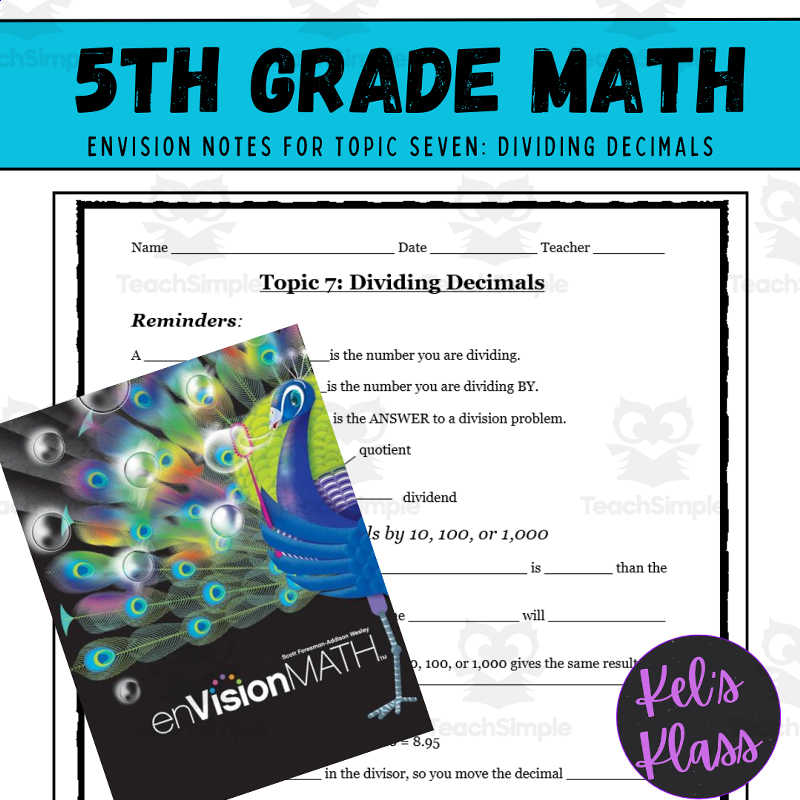
Teach and provide guided practice for dividing decimals, including dividing by powers of 10, estimating quotients, and standard algorithms for dividing by whole numbers and decimals, aligned to (but not excerpted from) the Envision Math Grade 5 Topic 7 curriculum sequence.
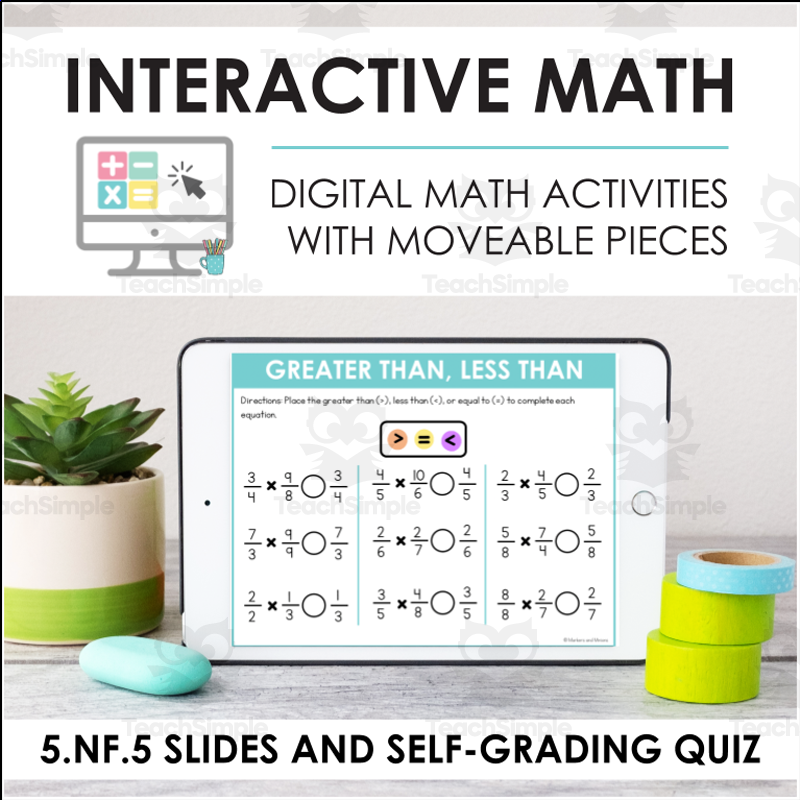
Digital practice resource for CCSS math standard 5.NF.5 (Apply Understandings of Multiplication and Division), delivered as interactive drag-and-drop/fill-in slides plus a linked self-grading Google Form quiz.
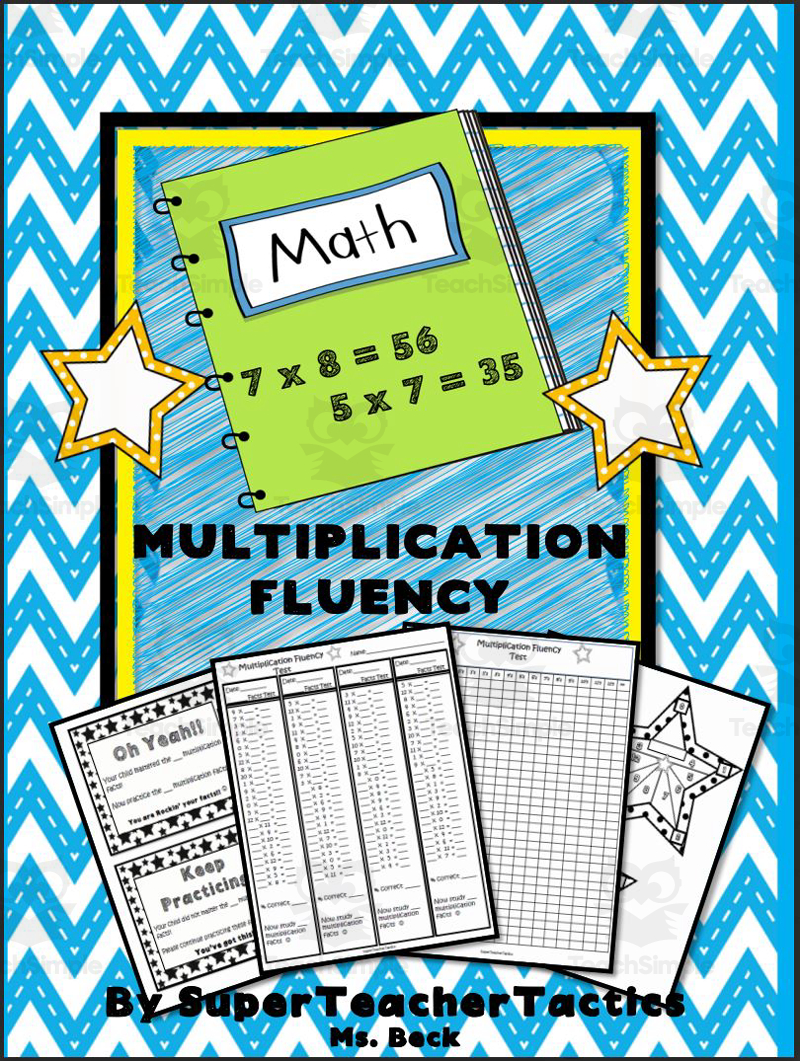
A systematic, one-factor-at-a-time program to help students memorize multiplication facts (0-12) through weekly homework practice and Friday fluency tests.
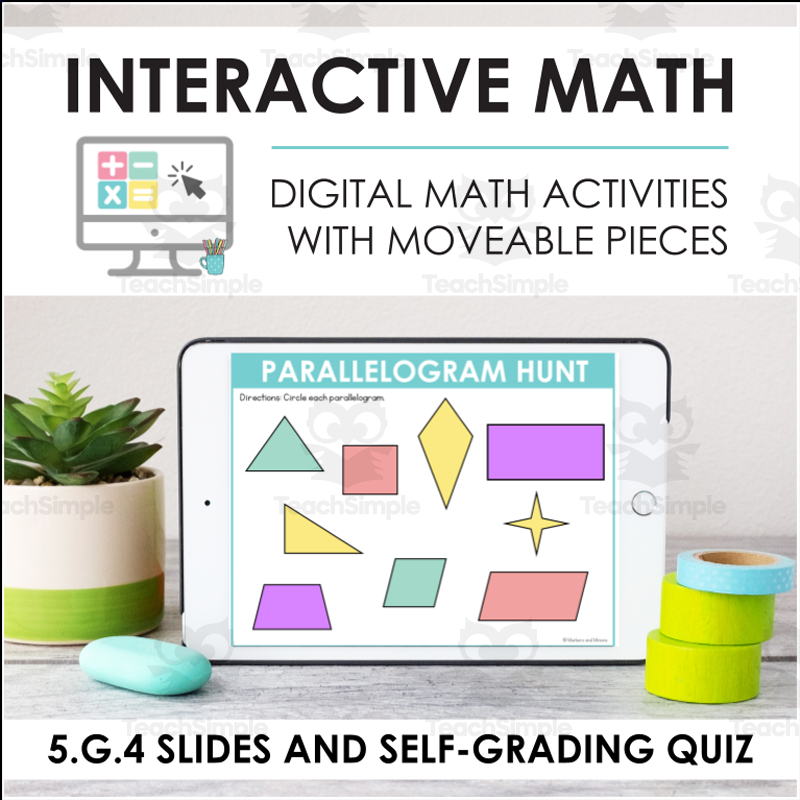
Digital practice resource for CCSS math standard 5.G.4 (Classifying 2D Figures), delivered as interactive drag-and-drop/fill-in slides plus a linked self-grading Google Form quiz.
Grade 4 Math skill-practice workbook covering problem solving strategies (inverse operations), patterns and tables, decimals, equivalent fractions with worked examples, guided practice pages, and a short quiz at the end of each topic.
Division Dash is an engaging Quiz -Quiz-Trade game that helps 3rd-6th grade students interpret the meaning of whole number division. This resource includes 36 ready-to-use cards with division number sentences and explanations.
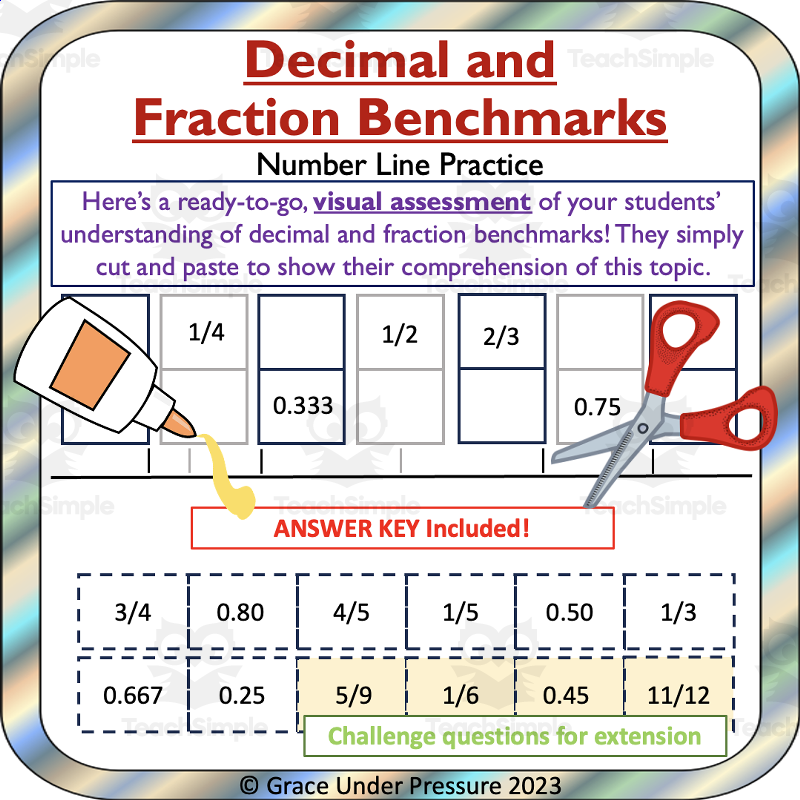
A visual, low-reading-demand cut-and-paste assessment of student understanding of decimal and fraction benchmarks on a 0-to-1 number line.
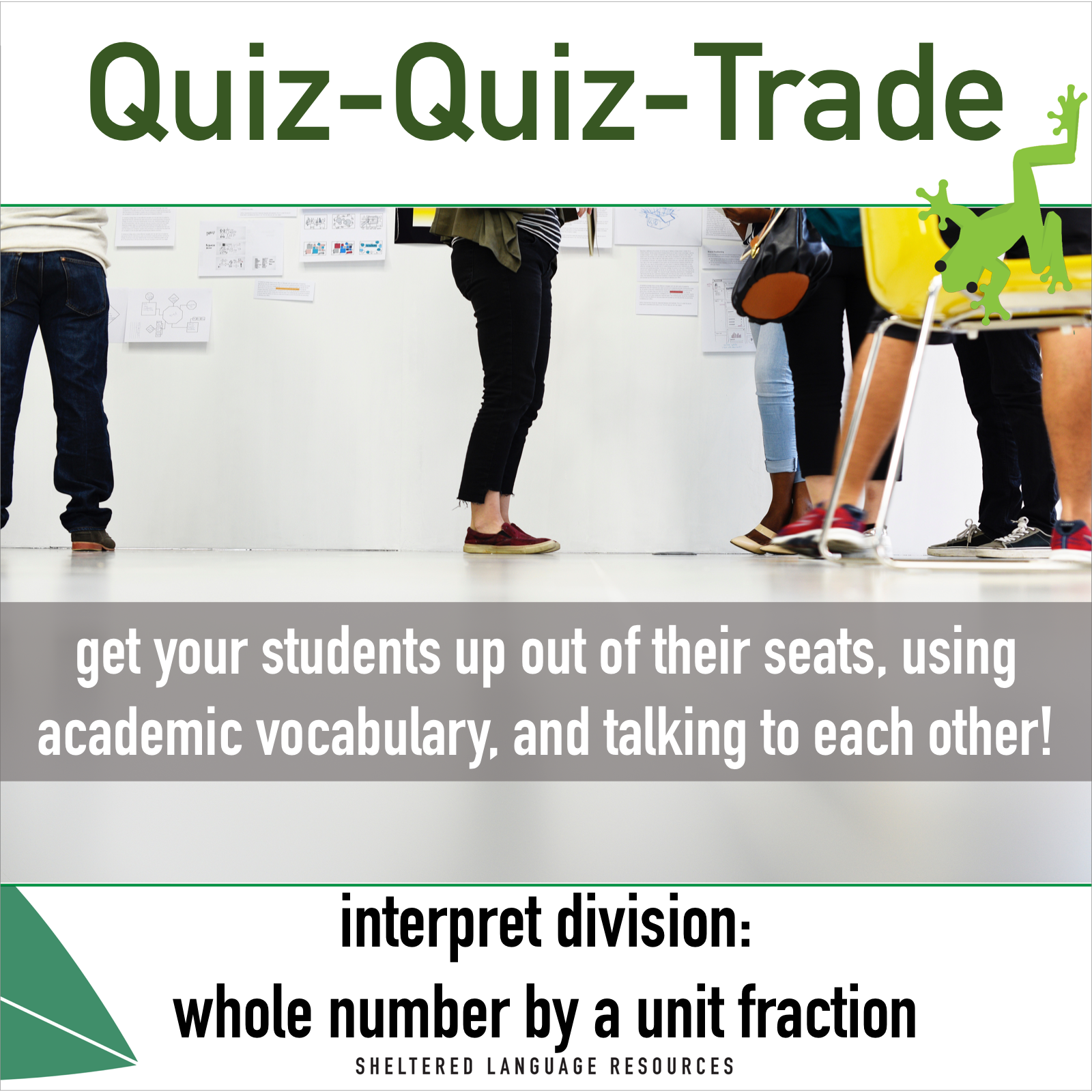
A Quiz-Quiz-Trade partner card game combining academic vocabulary instruction ('sheltered language' strategy for ELL students) with math practice interpreting division of a whole number by a unit fraction, aligned to CCSS 5.NF.B.7.B.

Bundles digital review, practice, and self-grading assessment materials for 3 CCSS grade 4 math standards covering geometry (lines and angles, classifying two-dimensional shapes, and line symmetry) (4.G.1, 4.G.2, 4.G.3), each delivered as its own interactive slide deck (PowerPoint/Google Slides) plus a linked Google Form quiz.

A choice-board math project for 4th grade students to review a self-selected math topic in depth through a creative product of their choosing, at the end of the school year.
This lesson is designed to help fifth grade students who are struggling with division. In this lesson, students will apply their previous understandings of division to divide unit fractions by whole numbers and whole numbers by fractions.
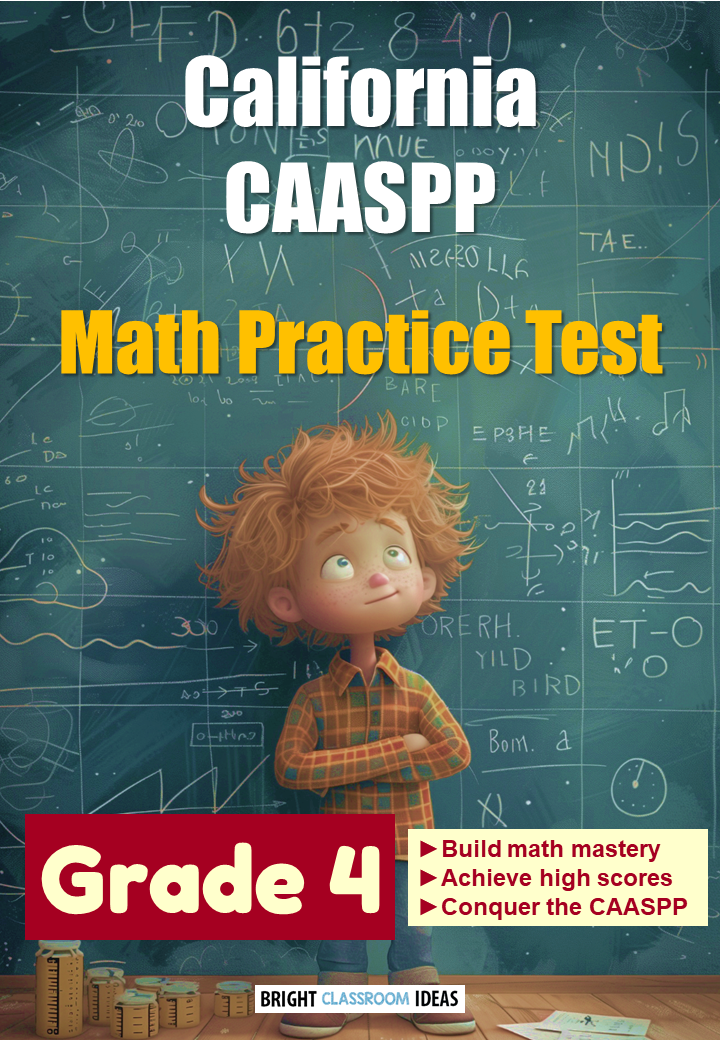
Select from thirty math questions spanning five Grade 4 topic areas, from multiplication and place value to fractions, measurement and geometry. Five written-response items provide space for students to explain or demonstrate their methods. The teacher materials include worked responses, partial-credit guidance and teaching suggestions by item. The performance bands are classroom guidance, not official CAASPP score predictions.
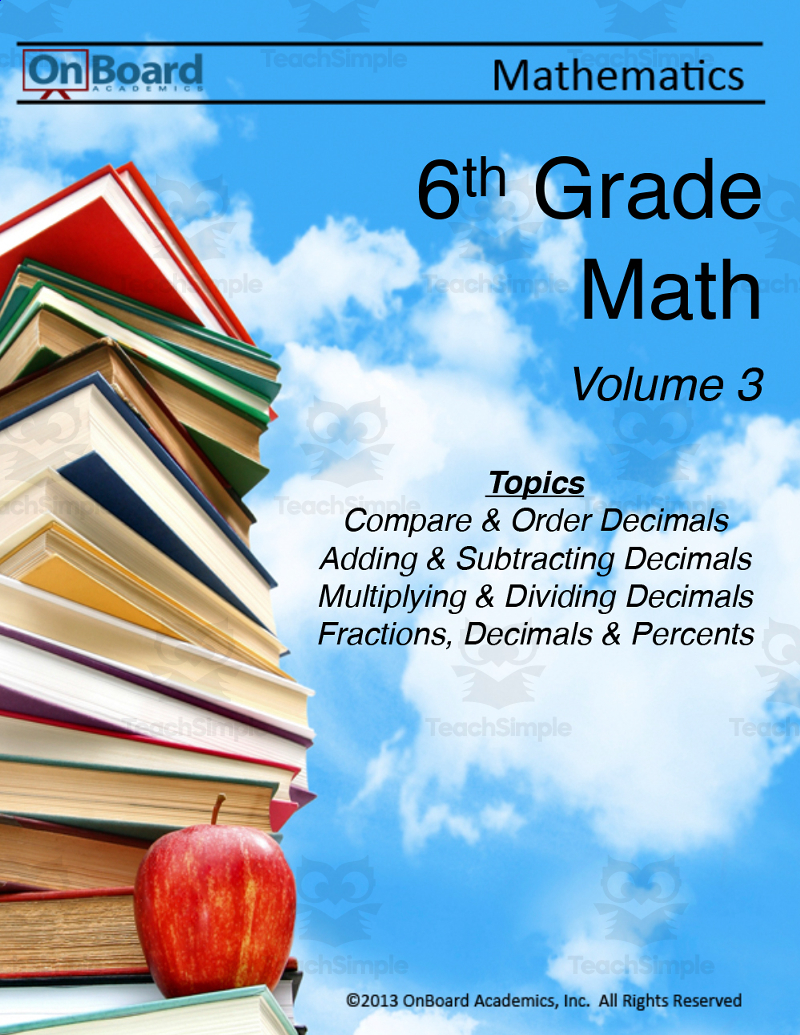
Teach four Grade 6 decimals-and-percents topics: comparing/ordering decimals, adding/subtracting decimals, multiplying/dividing decimals, and converting among fractions, decimals and percents.
Students work through forty multiple-choice questions grouped into six math sections, including ratios, number operations, expressions, geometry, and statistics. A separate teacher key explains the calculations, while the guide organizes benchmark references and follow-up suggestions. Use the results for classroom review; the resource’s score bands should not be treated as official state performance levels.

Real-life addition and subtraction word problems (whole numbers to 10,000) practicing operation choice, estimation, the standard algorithm, and an alternate strategy, with self-assessment.

A choice-board math project for 5th grade students to review a self-selected math topic in depth through a creative product of their choosing, at the end of the school year.
A TEKS-aligned STAAR-style math practice test for Grade 6, giving students a realistic test-day format plus a teacher's guide and answer key for scoring and reteaching.
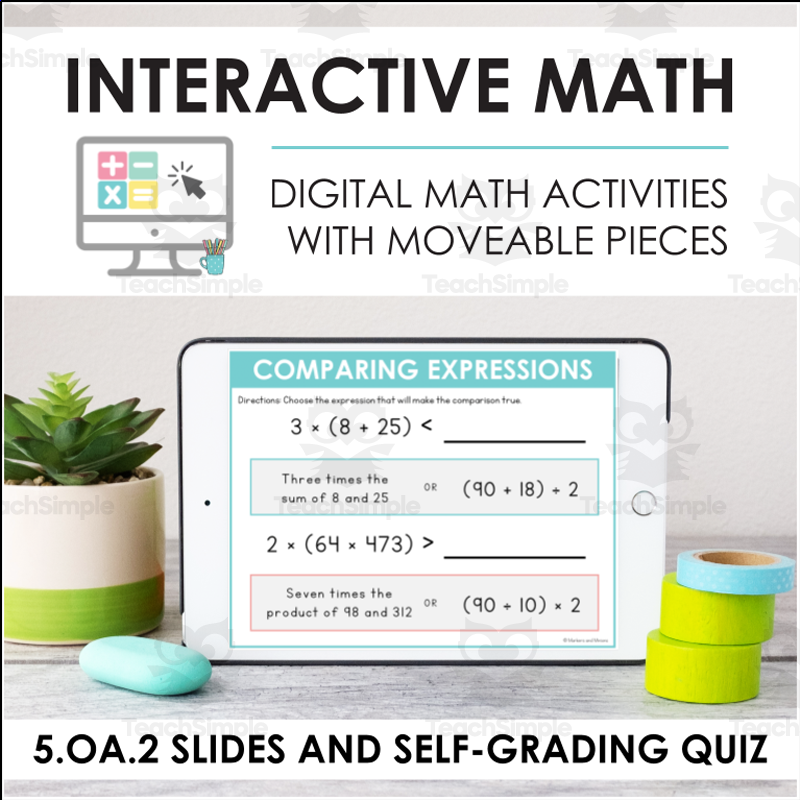
Interactive digital math practice slides plus a self-grading Google Form quiz aligned to CCSS 5.OA.2.

Teach five Grade 6 number-and-operations topics: order of operations, multiples/least common multiple, greatest common factor, prime factorization, and comparing/ordering fractions.
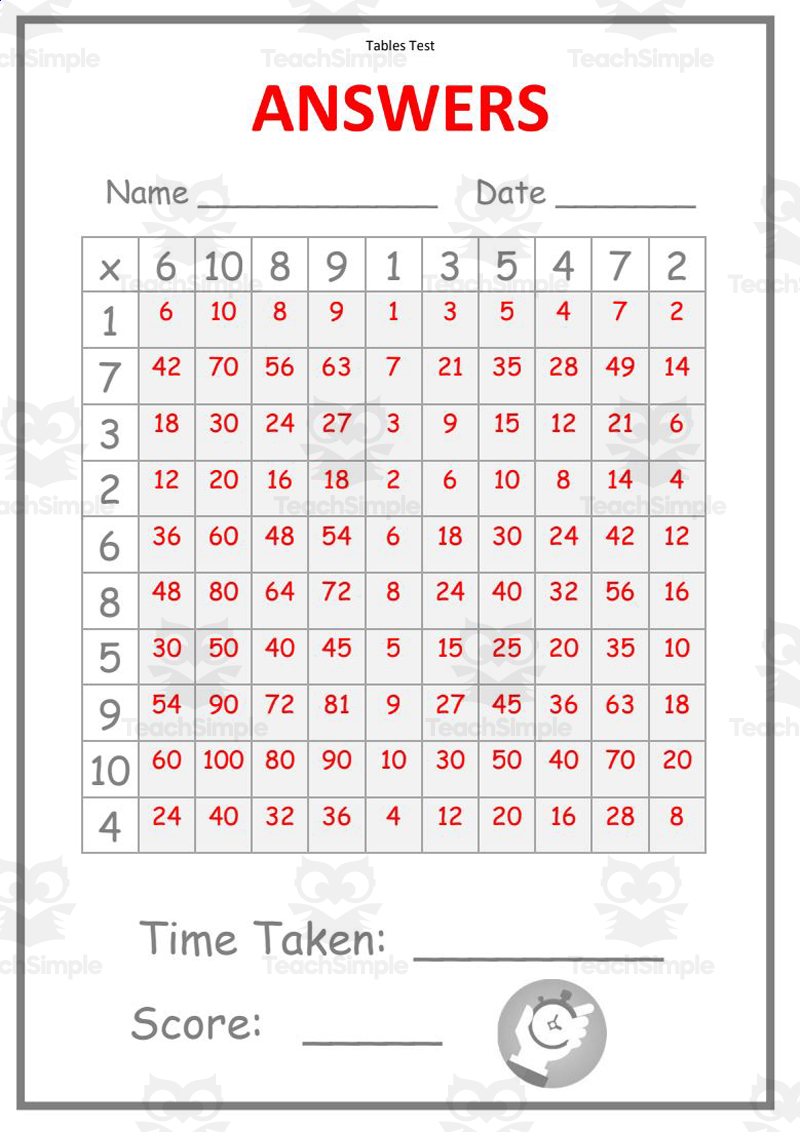
Give students a timed multiplication-facts assessment ('Speed Tables') to build and measure fluency across the times tables.
Grade 4 Math skill-practice workbook covering finding the average, measures of central tendency, bar graphs, probability with worked examples, guided practice pages, and a short quiz at the end of each topic.