
The First Amendment Reading Packet
A reading passage and worksheet packet teaching students about the First Amendment of the U.S. Constitution and the five freedoms it protects.
Answers included




864 resources
Explore sub-categories
6 sub-categories · 864 resources
A reading passage and worksheet packet teaching students about the First Amendment of the U.S. Constitution and the five freedoms it protects.

Teach 4th-grade students about key figures and events of the 1787 U.S. Constitutional Convention.
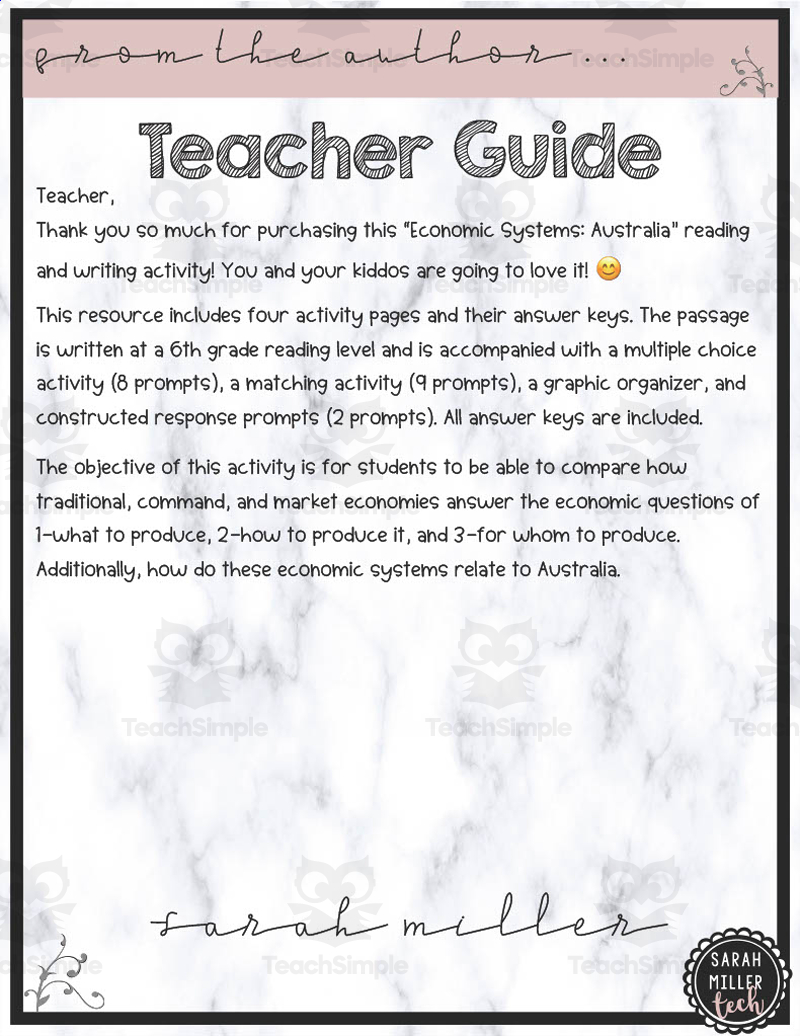
Teach students the three basic economic models (traditional, command, market) and how they apply to Australia, which is described as having a market economy.
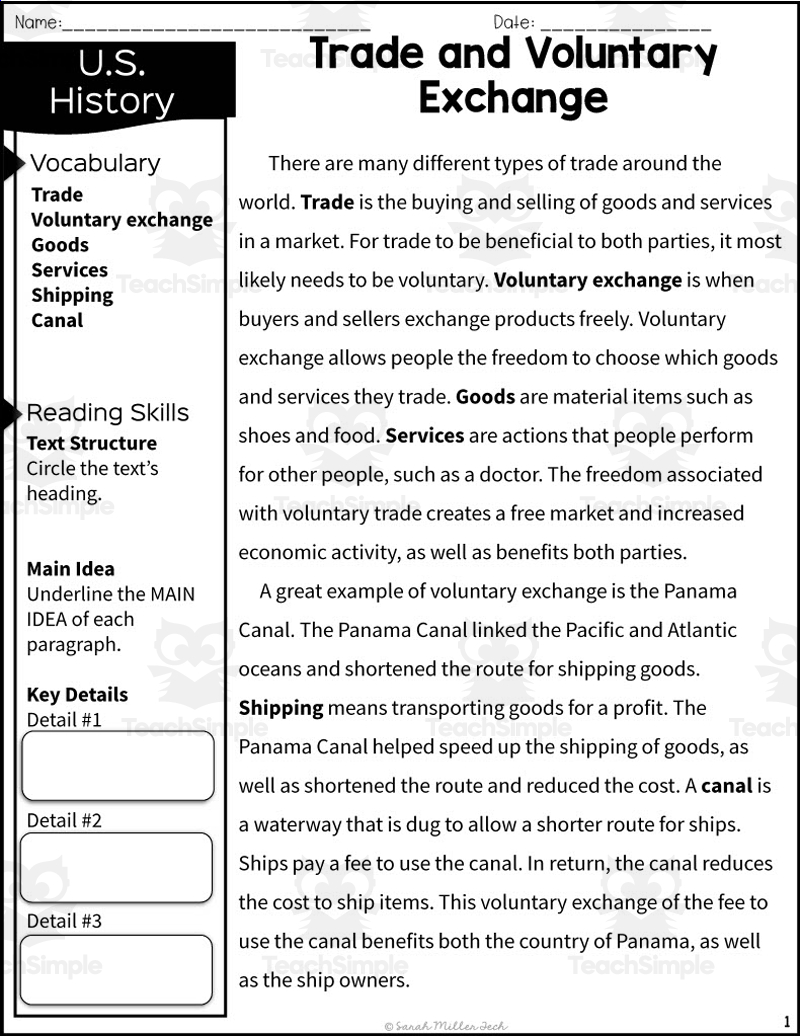
Teach students the concepts of trade and voluntary exchange through an informational reading passage and follow-up comprehension activities.
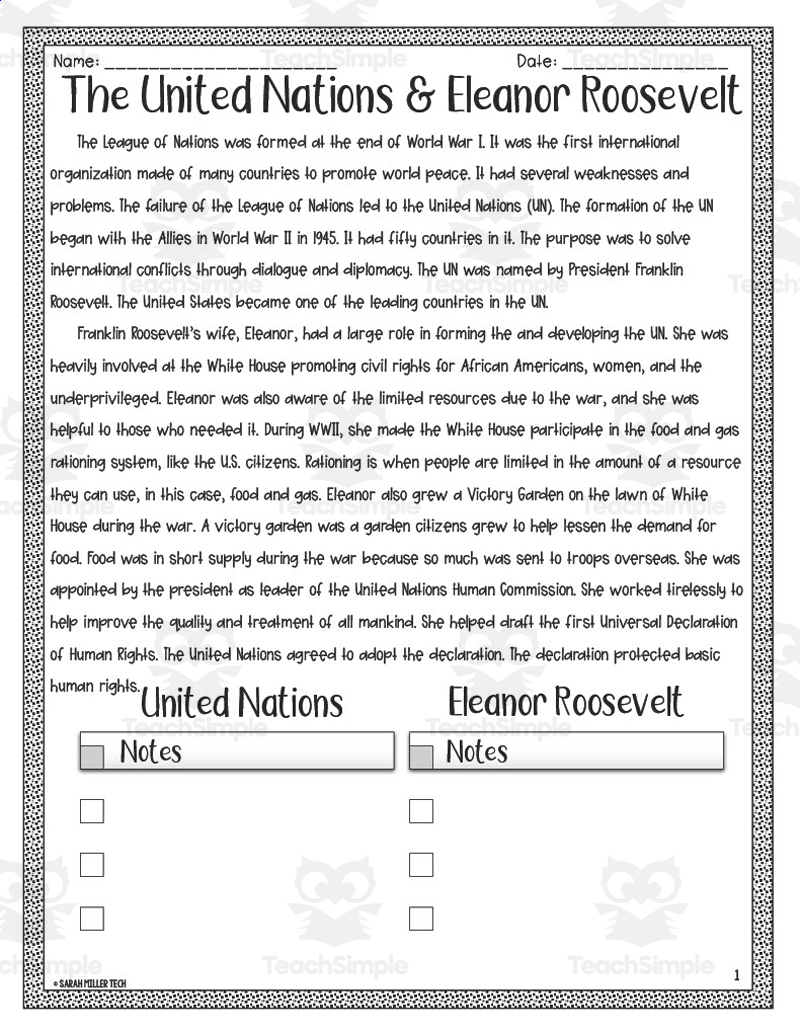
A reading and writing activity packet teaching the formation of the United Nations and Eleanor Roosevelt's role in it, via an informational passage (written at an 800 Lexile level per the teacher guide), vocabulary matching, multiple-choice questions, and writing prompts.
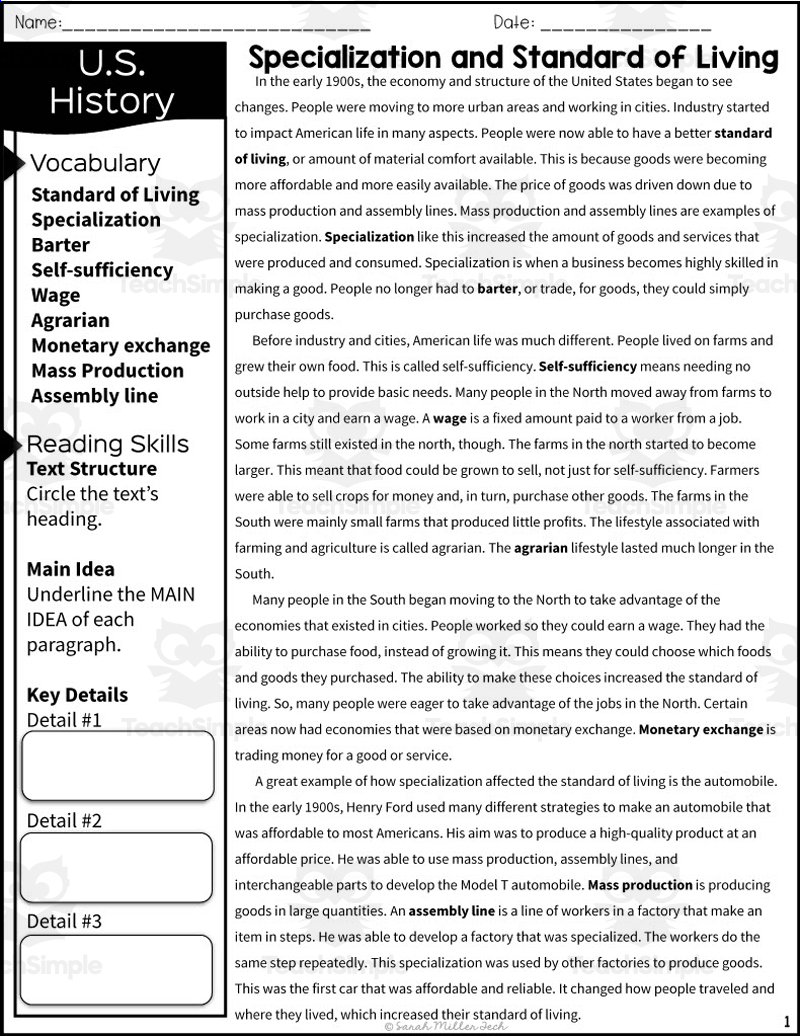
Teach students about specialization, mass production, and standard of living (using Henry Ford/Model T as an example) through a nonfiction reading passage on specialization and trade/economics.
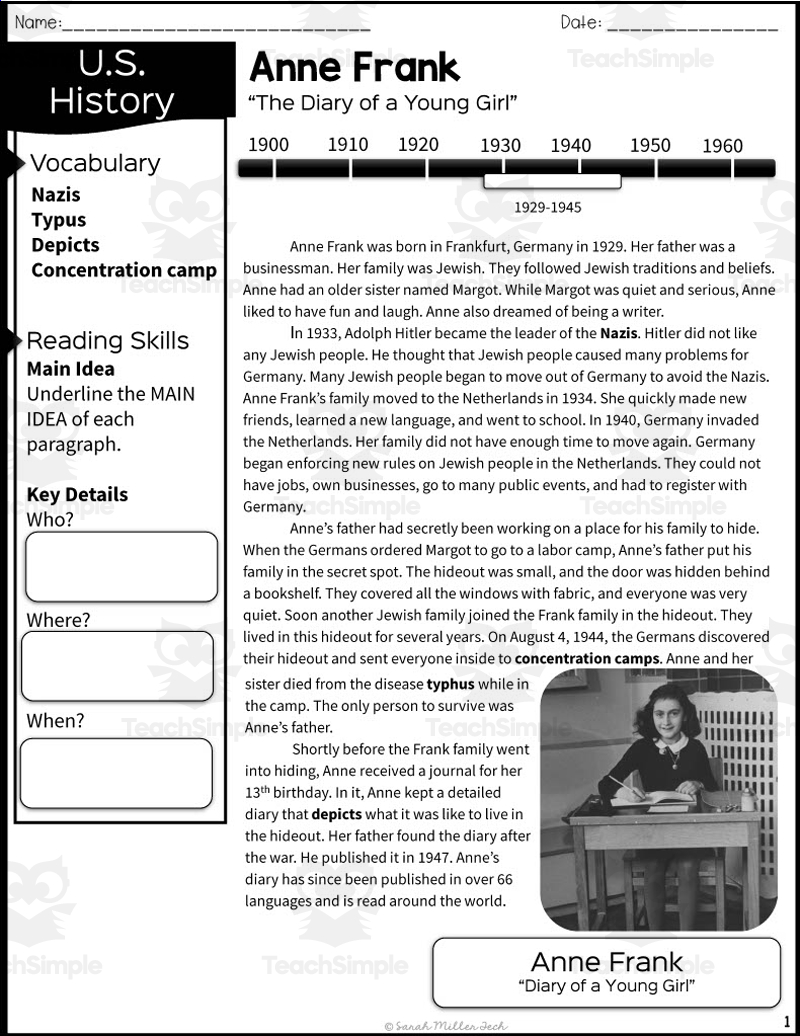
Teach upper-elementary students about Anne Frank's life and experience during the Holocaust through a reading passage and comprehension activities.
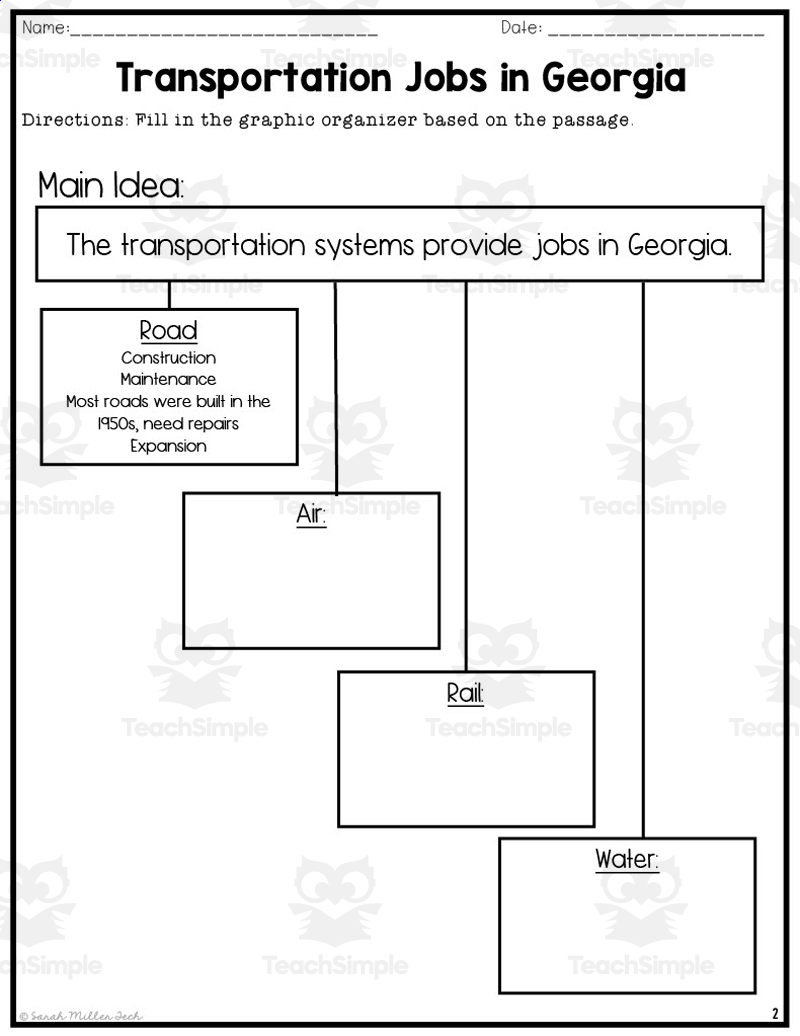
A social studies reading packet teaching students about transportation-related careers in Georgia (aviation, trucking, logistics, public transit, road/rail/port jobs).
 Free download
 A free week-1 sample of a longer novel-study companion packet for 'Wings of Fire: The Dragonet Prophecy,' giving students vocabulary, comprehension, and response activities tied to reading the novel over a paced schedule.

An economics reading packet teaching how governments provide goods and services and fund them through taxes.
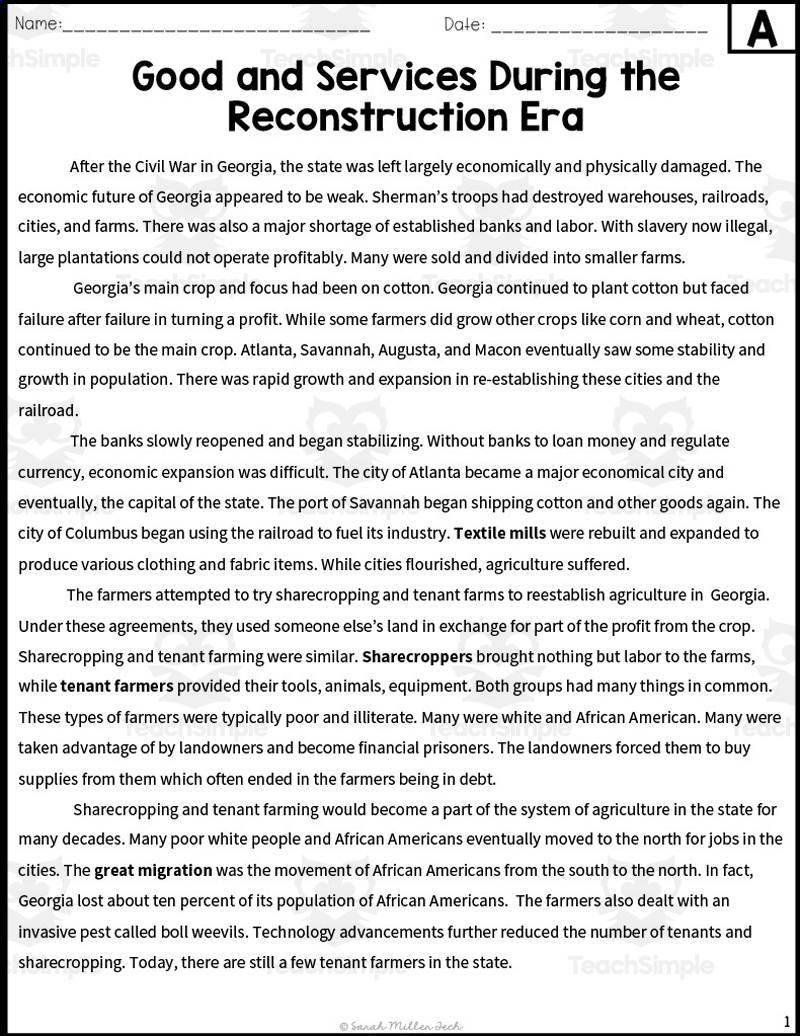
A differentiated social studies reading packet on the economy of Georgia during the Reconstruction era, teaching how goods and services recovered after the Civil War.

A no-prep reading packet teaching the War of 1812 through an informative passage paired with vocabulary and comprehension practice.

A reading packet teaching students about the Preamble to the US Constitution: what it is, its purpose, and the concept of popular sovereignty.

Teach students about post-Civil War U.S. economic specialization and North/South standard-of-living differences through a nonfiction reading passage on specialization and trade/economics.

A nonfiction reading passage and activity packet teaching the causes and effects of acid rain in Germany (power plant/factory emissions, harm to wildlife, forests, and buildings, and mitigation efforts).
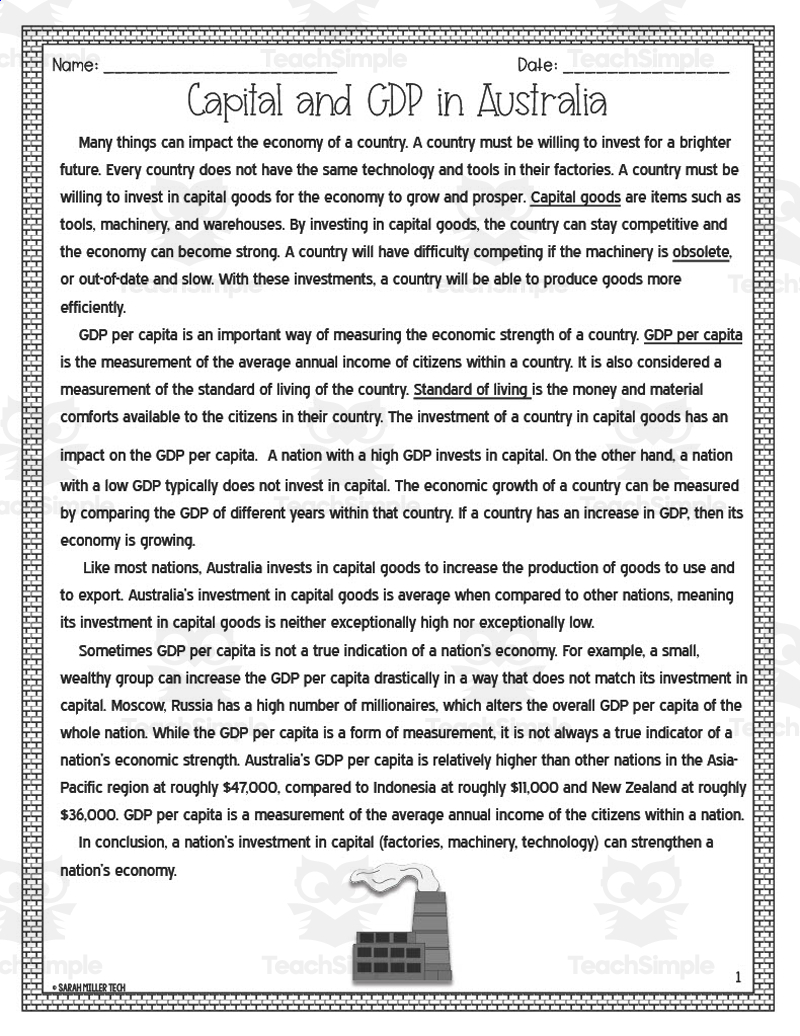
An economics reading packet teaching how capital investment and GDP per capita measure a country's economic strength, using Australia as the example.
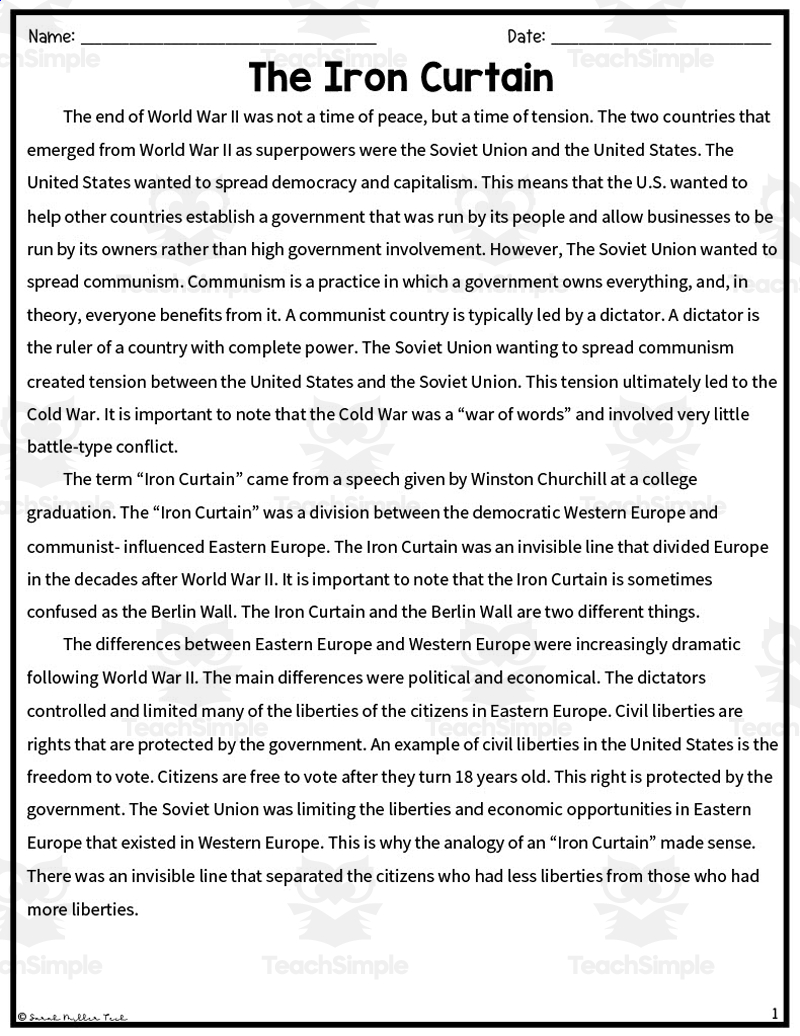
Teach 5th-grade social studies students about the Iron Curtain and the origins of Cold War division between the Soviet Union/Eastern Europe and the United States/Western Europe.

A reading passage and worksheet packet teaching about nationalism movements in Africa, focusing on the Pan-African Movement and the independence of Kenya and Nigeria.

Differentiated nonfiction reading packet teaching about the Freedmen's Bureau and the Ku Klux Klan's impact on Reconstruction-era Georgia, provided at two reading levels.
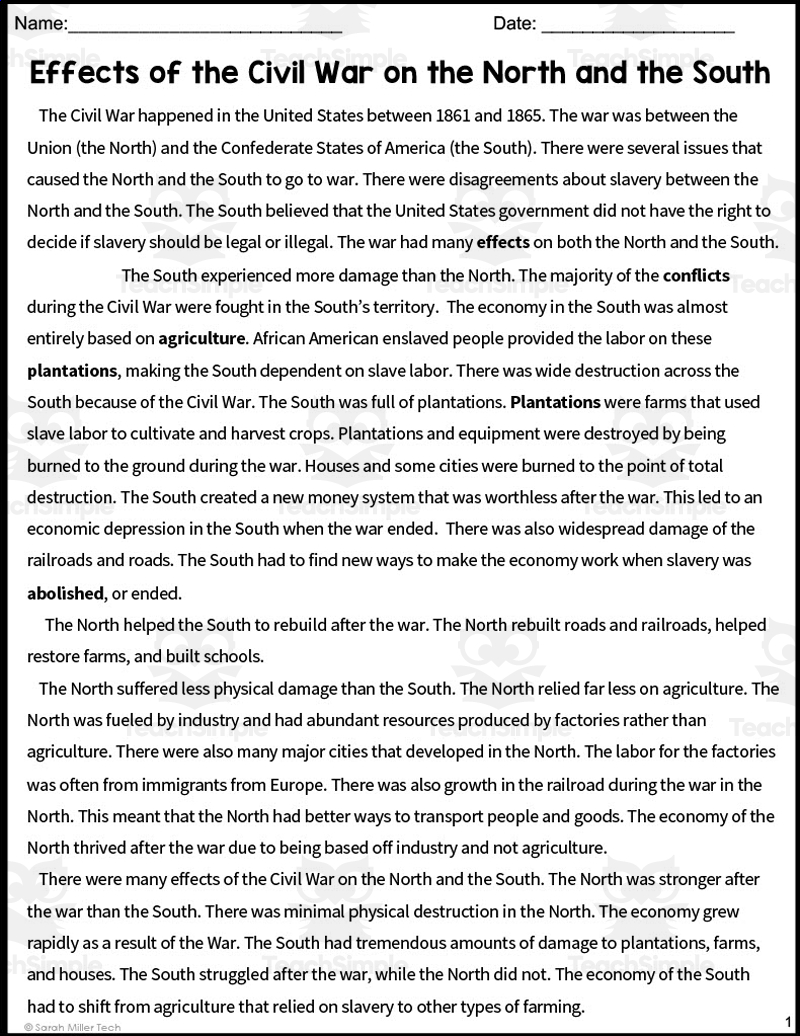
Teach students about how the Civil War economically, socially, and politically impacted the North (Union) and South (Confederacy) through a reading passage and follow-up activities.
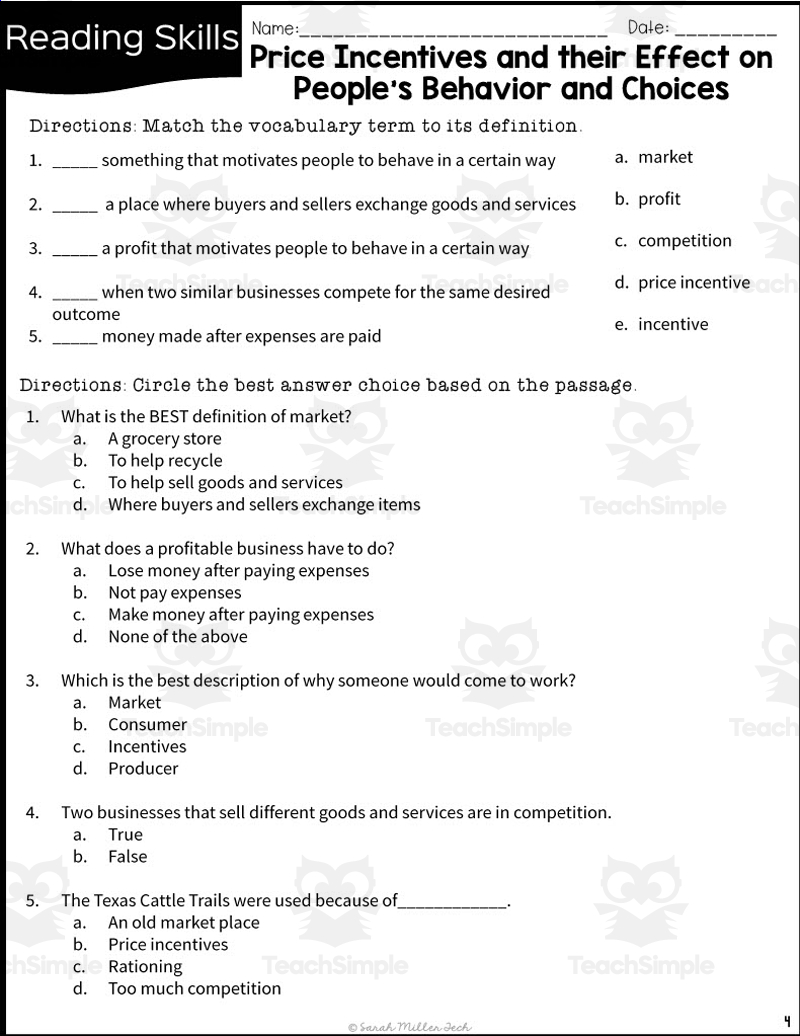
Teach Grade 5 economics concepts of price incentives and their effect on people's behavior/choices through a reading passage and follow-up activities.
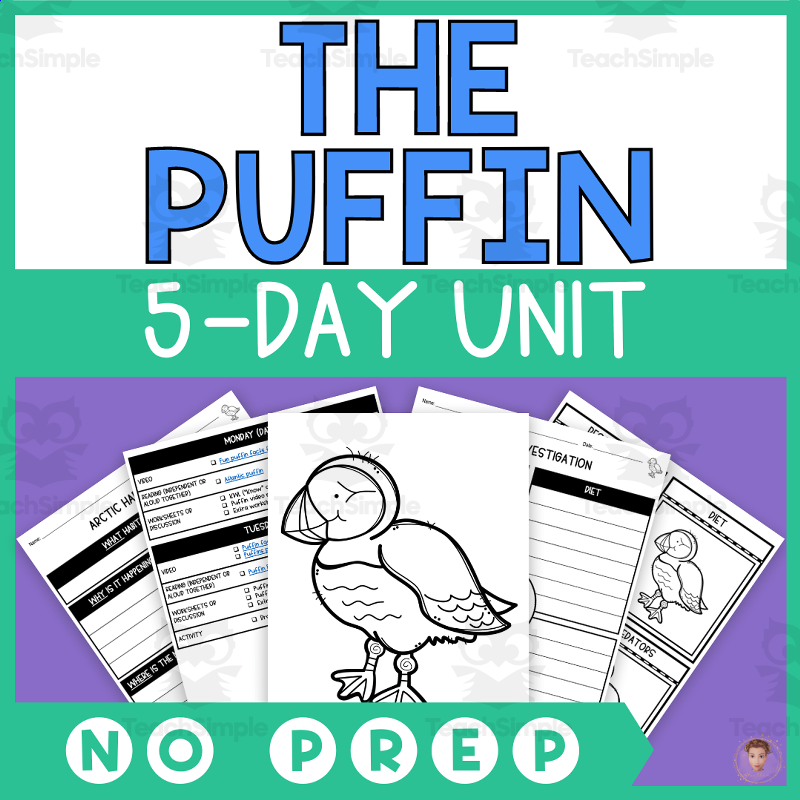
Deliver a 5-day, multidisciplinary unit study on puffins (an arctic animal) combining videos, readings, worksheets/discussion, and daily activities.
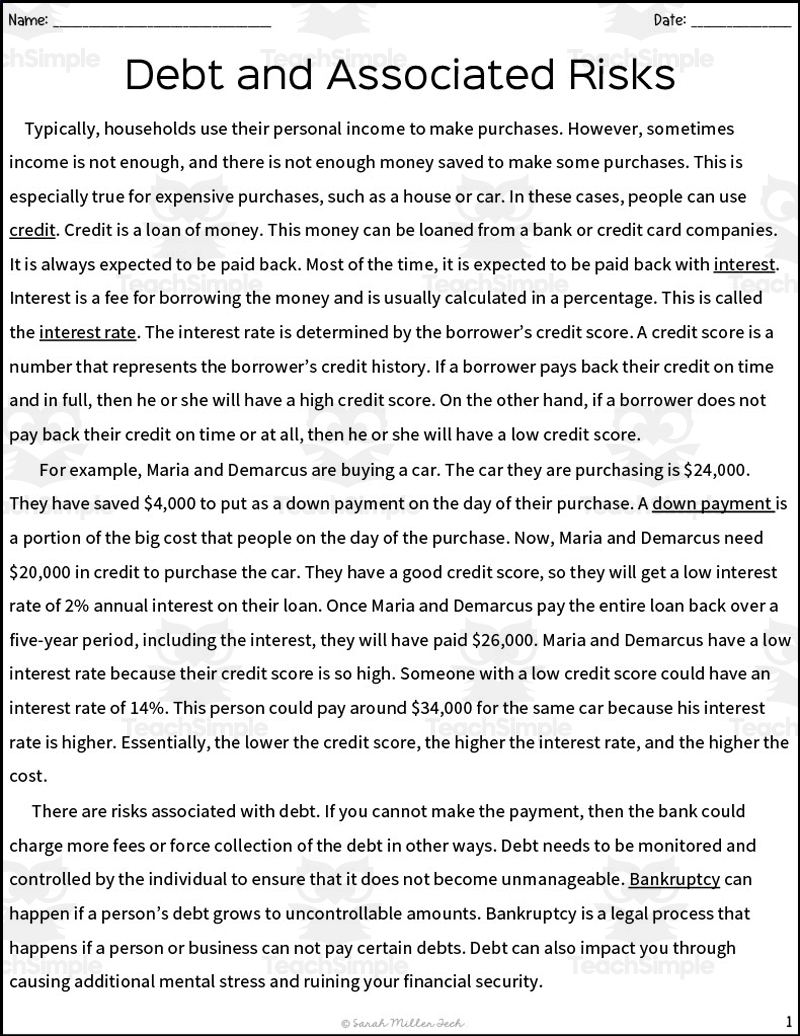
A no-prep reading and worksheet packet teaching middle-school economics concepts around debt, credit, interest, and the risks of unmanaged debt.
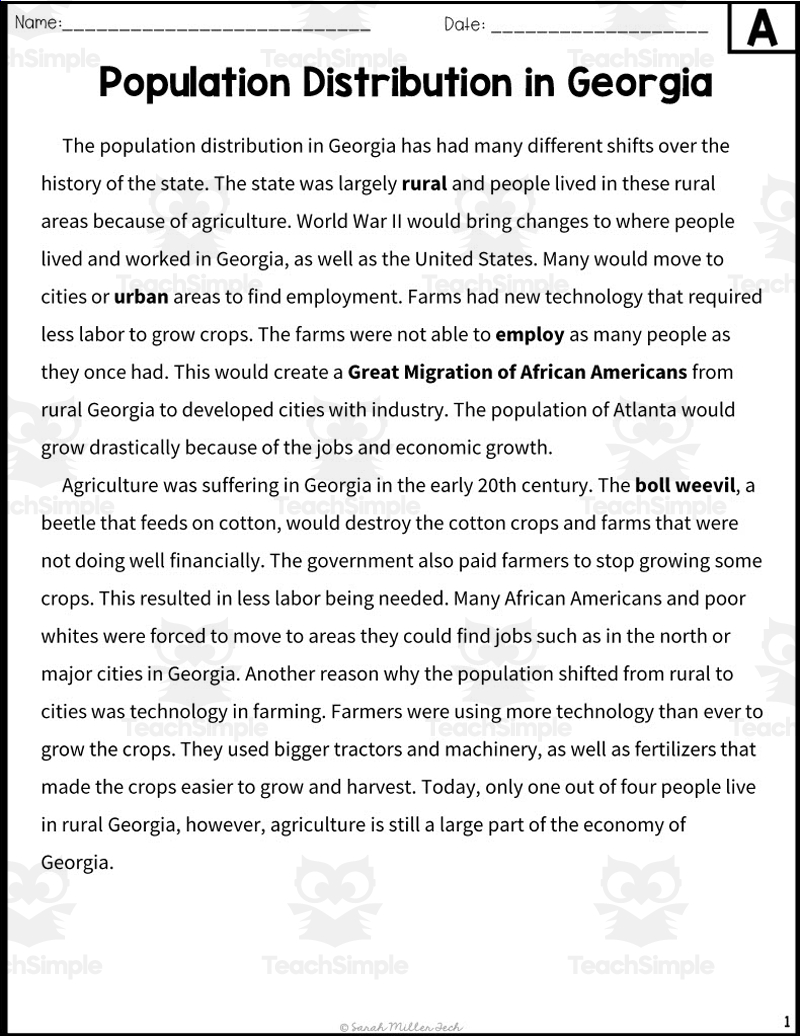
GSE-aligned (SS8H10/SS8H10a) differentiated reading passage packet on population distribution, agricultural technology, and the Great Migration in Georgia.