



3,942 products added recently
Page 14 - 2nd Grade Lesson Plans
Enhance your second-grade classroom with lesson plans that build on foundational skills and introduce new concepts. These activities promote critical thinking and creativity across subjects. Implement these plans to keep your students motivated and progressing confidently.

 Show filters


Number & Operations: Grouping Objects & Number Lines - Practice the Skill 1 - PC Software
Math, Number Lines, Common Core, Kindergarten, Preschool, Grade 1, 2, Teacher Tools, Lesson Plans
Number & Operations: Grouping Objects & Number Lines - Practice the Skill 1 - PC Software This is an excellent teaching resource, perfect for educators, enriching students' understanding of grouping objects and number lines in operations. Audience: Spanning Preschool through Grade 2 level, it infuses curriculum-based content with fun learning activities. Activities: The core feature lies in drill tasks like completing number charts —an engaging drill providing students with clear visual representations of numbers' relationships. Inclusivity: Instructions are available not only in English but also come with Spanish voice over and text alternatives–beneficial for bilingual settings. The software comes as a downloadable zip file suitable for PCs which can be widely used across different group sizes. Implementation can range from whole group instruction time to individual student-centered sessions or even as homework assignments on students' computers. 'Number Lines' This tool delves into different aspects of 'Number Lines', making remarkable contributions towards meeting Common Core State Standards and STEM initiatives – all while meshing well with NCTM principles. If you're searching for comprehensive lesson plans that merge knowledge enhancement seamlessly with practical application—this software stands out as your go-to choice!
Author Classroom Complete Press
Tags Math Skills, Digital Math, Math Lesson, Grouping Objects, Number Lines
Measurement: Measuring Time - Practice the Skill 2 - MAC Software
Math, Time, Common Core, Kindergarten, Preschool, Grade 1, 2, Teacher Tools, Lesson Plans
Measurement: Measuring Time - Practice the Skill 2 - MAC Software This software provides a unique educational resource for teaching time measurement concepts. It is designed to meet curriculum -based content and can be easily integrated into any teaching plan. Created for learners across multiple levels, from preschool through grade 2, this software addresses diverse instructional needs with its various features: Dynamic timed drill activities: These challenge students to round provided times to five-minute intervals, offering them a comprehensive understanding of time measurement. MAC-friendly zip file format: This allows for easy download and usage on Mac computers. Included interactive math tools: These foster hands-on learning experiences and instil practical math skills. Educational standards integration : The modules align with Common Core State Standards and NCTM (National Council of Teachers of Mathematics) principles ensuring quality education service delivery regardless of locale or class size. Linguistic diversity: While English is the default voice-over language; Spanish voice-over options are also available which promote inclusivity in classrooms worldwide. This flexible tool allows educators to conduct whole-group instruction or have students work independently on homework assignments. It proves invaluable not only in classroom settings but also in a homeschooling environment by providing ready-to-go lessons meticulously aligned with prominent educational standards. In essence, Measurement: Measuring Time - Practice the Skill 2 has everything an educator needs for student growth while freeing up valuable teacher time.
Author Classroom Complete Press
Tags Measuring, Time, Digital Math, Math Activities, Math Skills
Project Lesson Plans for 3D Printing - Utensil Redesign
Science, Technology, Computer Science, Grade 2, 3, 4, 5, 6, 7, 8, 9, 10, 11, 12, Lesson Plans, Teacher Tools
Project Lesson Plans for 3D Printing - Utensil Redesign The Project Lesson Plans for 3D Printing - Utensil Redesign, is a comprehensive resource that equips educators to introduce their pupils aged 8 and up to the engaging world of 3D printing. This package provides students across grades 2-12 with an exciting opportunity to design and create a utensil customised specifically for eating certain food better. Features An all-inclusive teaching resource presented in clear step-by-step details over eight lesson days. A detailed analysis of prior knowledge requirements, learning objectives and standards. Stipulated assessments designed to track the progress of learners throughout this innovative project. All necessary materials along with instructions on how technology should be integrated every step of the way are provided. Inclusion strategies have been included which ensure that no students are left behind due to differences in learning needs or capabilities. The package also includes external web links directing educators further towards more related study topics. Concluding from Day Eight onwards are helpful closure strategies coupled alongside extension activities which enhance retention while generating interest around future projects. An easily adaptable format: The product is offered in PDF segments catering flexibly with various teaching situations such as whole group instructions or smaller screen-sharing groups ensuring adaptability into individual environments including home-study settings if necessary. Ideal For: Every science existent educator especially those specialising in computer science across Grades 2-12 looking forward bringing practicality into theory by jumping aboard real-world applications using tomorrow’s groundbreaking tech.
Author WhyMaker
Tags 3D Printing, Utensil Redesign, Lesson Plans, Technology Integration, Inclusion Strategies
Measurement: Measuring Time - MAC Software
Math, Time, Kindergarten, Preschool, Grade 1, 2, Teacher Tools, Lesson Plans
Measurement: Measuring Time - MAC Software An inclusive teaching resource focusing on mathematical subtopic of time measurement. Designed for preschool, kindergarten, and grade 1-2 students. About the package: This program comes with multiple components, each thoughtfully crafted to facilitate engaging learning experience for young learners. The features include: A pre- assessment tool for gauging students' understanding of time concepts. A well-rounded lesson plan detailing effective teaching strategies. Real-world word problems to foster relatability. Timed drill activities emphasizing concept reinforcement post-lessons. Additional Support : The product also includes a teacher guide with expert advice enabling educators to maximize utilisation and track progress efficiently. Moreover, printable math tools and match games provide resources for independent / small group study or homework assignments. Multilingual Inclusivity : In bid to support multicultural inclusivity, our resources like board games & spinner games come in both English & Spanish voiceover along with matching text options. Tech specifications: Please note that this program is compressed in a zip file thus requiring suitable software on MAC OS systems for usage. The final assessment can be performed via the integrated SMART Response feedback mechanism. In summary, Measurement: Measuring Time - MAC Software is an exceptional recourse poised as an essential tool kit either for public school teachers or homeschooling parents seeking comprehensive solutions dedicated towards teaching kids about measuring time.
Author Classroom Complete Press
Tags Math Skills, Digital Math, Digital Time, Measuring Time, Time Lesson Plan
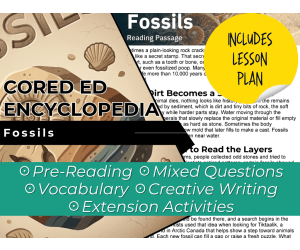
Fossils Reading Comprehension Passage - Cored Ed Encyclopedia
ELA, Reading Comprehension, Reading, Science, Technology, Earth and Environmental Sciences, Life Sciences, Pre-Reading, Language Development, Vocabulary, Grade 2, 3, 4, 5, Worksheets & Printables, Worksheets, Teacher Tools, Centers, Activities, Writing Prompts, Assessments, Quizzes and Tests, Quizzes, Lesson Plans
This fossils reading comprehension with lesson plan includes: Visualization (on the front cover) Start your lesson by taking a minute to think and share something about the topic. Read the script aloud (slowly), perhaps prepare some music or sound effects. Student close their eyes and let their imaginations wander. Students open their eyes, read the question aloud and give them a few minutes to complete. Ask a few students to share or keep answers until the end to compare with what they learn in the passage. Quick pause—thousands of Cored Education products are included with your TeachSimple membership. Download links and encyclopedia index available here. Pre-Reading Trivia Students will write down one thing they already know about the subject and then read five more facts and discuss. These facts are fun, and the students will enjoy learning about the subject before reading more. Give 1 minute for students to write what they already know (no pressure—best guess is fine). Read the five facts together. After each fact, do ask a student for their opinion, was it surprising? Set a purpose by asking students to highlight/underline one fact they want to learn more about during the reading. Reading Passage The text is a high-interest reading passage with set paragraphs, roughly three to four paragraphs long. It contains a variety of themes about the topic, anywhere from history to technology. The passage is between 250 and 350 words in length. First, ask students to look at the headings and see what they’ll learn about today. What do they know about the topic/heading? First read options: Teacher read-aloud (best for support). Partner reading (paragraph by paragraph). While reading, students underline important details, and vocabulary words they think may come up in the questions section. Mixed Questions The first question page contains four multiple-choice questions, each with a choice of four answers, and three written response questions that require a sentence or two from the student. Students complete the mcqs first independently, then review quickly as a class. For the 3 written responses, try to get students giving the answer with some form of evidence: “I think ___ because the text says ___.” If students get stuck, send them back to check the passage. Vocabulary Questions Practice seven key words from the text in this section across two activities. First section is scrambled words where students will unscramble three words given a clue for each. The second section is a word to meaning matching activity. Before starting, have some students read out words they underlined in the passage. Ask students to say the word and read aloud the sentence(s) around each word. Ask students to do scrambled words and the matching exercise in pairs then go through answers as a class. For the scrambled spelling task, get four pairs to come up to the board and write the words for extra practice with the other student reading out the clue. For the matching task, prompt students to give full sentences: “I matched ___ with ___ because ___.” Creative Writing In this question, the student will be required to write a five to eight sentence paragraph on a question related to the topic. Before starting, ask students write down 3 key ideas they are going to include in their piece. Ask students for ideas to share around the class to help those struggling. Pro writing expectations: 5–8 sentences At least 2 facts or details from the passage At least 2 vocabulary words from the previous page Students read their paragraphs while classmates listen for facts and vocabulary words. Extension Activities This page is optional for fast finishers or to take home. There are several activities, each one requiring a different skill. Do some, do none, do all, completely optional - but you will feel reassured knowing every possibility is planned for. Includes summary writting question and additional facts. Answer Key There are answers for the multiple-choice questions, written response questions have sample answers, vocabulary answers and if there is a summary question then a sample summary will be provided as well. Lesson Plan Included Customized lesson plan for this lesson is included. Lesson Snapshot Title: Fossils Genre: Nonfiction (Informational Text) Subject: Science (Earth Science/Life Science) / Reading (Informational Text) Primary Topic: Fossils, how they form, and what they reveal Estimated Guided Reading Level (A–Z): Q What This Lesson Teaches Best Defines a fossil and explains that fossils can be body parts (tooth, bone) or traces (footprint, burrow, fossilized poop) that become clues in the “fossil record.” Explains how fossils form when remains are quickly covered by sediment , and minerals in water replace material or fill empty spaces until remains harden like stone. Teaches mold and cast formation: a body can disappear, leaving a hollow mold that later fills to make a cast. Introduces paleontology and shows how scientists “read” patterns in sedimentary rock layers to learn how life has changed over time. Shows how fossils can guide new discoveries , including using rock layers to search for missing kinds of creatures (Tiktaalik example). Learning Goals Students will identify two kinds of fossils named in the text and give an example of each. Students will explain how sediment and minerals help remains become hard “as stone.” Students will describe how a mold and a cast can form, using the text’s explanation. Students will explain how scientists use patterns in sedimentary rock layers to learn which fossils are older. Students will describe why the fossil record is “not complete,” based on the passage. Students will describe how fossils can help scientists decide where to search for new discoveries. Key Vocabulary From the Text sediment — dirt and tiny bits of rock. minerals — materials in water that can harden remains. mold — a hollow shape left after a body is gone. cast — a filled-in copy of a hollow shape. paleontology — the study of ancient life using fossils. FULL CATALOG OF DOWNLOAD LINKS AND ENCYCLOPEDIA INDEX HERE
Author Cored Education
Rating
Tags Vocabulary, Reading Comprehension, Reading Passages, Lesson Plans, Ela Lesson Plans, Reading Comprehension Lesson Plans, Pre-reading, Science Lesson Plans, Earth Science, Life Science

Mapping Skills with Google Earth - Digital Lesson Plan Gr. PK-2 - FLASH-MAC
Social Studies, Geography, Grade 1, 2, Teacher Tools, Lesson Plans
Resource Description: Mapping Skills with Google Earth - Digital Lesson Plan Gr. PK-2 - FLASH-MAC is a digitally interactive teaching aid crafted to assist early learners grasp the basics of map reading. Imbued with an array of versatile activities, this 80 screen-page digital lesson plan provides a comprehensive introduction to fundamental mapping components such as symbols, legends and the compass rose. Catering primarily to students in prekindergarten through second grade, this resource seamlessly combines theoretical insights with practical application. It encourages students to apply their learned knowledge about mapping into designing a map of their classroom or routing their way to school. This program expands the perspective towards larger geographical concepts such as North America's Great Lakes, seven continents & four oceans enveloping our globe. Fully customizable for all Interactive Whiteboard brands, it leads teachers construct an engaging learning journey where active participation enhances comprehension. Each prepared slide incorporates reading sections, pre-and-post reading interactive tasks alongside an interesting feature leveraging Google Earth™ capabilities. A Multivariate Learning Software: The software cultivates various skill sets via its diverse options like interactive map explorations, test preparation tools and memory match games packaged within one single product file. This package also includes quizzes which serve as assessment tests for understanding post-lesson delivery along with features like text-to-speech provision in both English and Spanish considering linguistic diversity among learners. In addition are printable supplements and a specially curated video that intensifies lesson delivery through visual reinforcement. The included lessons plans cater for varied scenarios– from group study sessions or homework tasks on social studies mainly focusing on geography catering primarily to Grade 1 & Grade 2 learners but flexible for adaptation based on student capabilities within homeschool or public school frameworks. Conclusion: This digital lesson plan, designed in alignment with your state's academic norms, applies a multidimensional approach to learning inspired by Bloom's Taxonomy model. It serves as a reliable desktop solution aimed at successfully imparting geographical cognizance among young learners in an interactive and enjoyable manner.
Author Classroom Complete Press
Tags Software (Mac)

Magic Math Trick | Interactive Math Video Lesson
, Grade 1, 2, 3, Lesson Plans, Teacher Tools
The Magic Math Trick | Interactive Math Video Lesson An engaging teaching resource, crafted cleverly for kids in Grade 1, Grade 2, and Grade 3. This advanced educational tool transforms regular math classes into an immersive learning experience using interactive videos. The Heart of The Product At the heart of this product is an animated video that showcases magic math tricks. With a run time of just a minute, it succinctly packs in the fundamentals that will empower students to grasp mathematical concepts with ease. The video seamlessly amalgamates education with entertainment – something that's bound to resonate well with young audiences. Importance in Digital Age In today's digitally-centered world where screen time plays a significant role in children's lives, integrating videos into lessons can significantly enhance their understanding and retention capabilities. The Magic Math Trick | Interactive Math Video Lesson veers away from traditional teaching methods for subject matter delivery. Versatility: As educators, one can utilize this tool during whole group sessions or even when teaching small groups of learners–making it versatile enough suit various classroom dynamics. Convenience: It need not always be restricted within school-walls; indeed as homework assignments too; it shines effortlessly. No compatibility issues: Provided as an MP4 file—a universally-accepted format—this video lesson fits effortlessly into diverse digital environments such as projectors or laptops! To sum up: Rich on content but concise on duration - That’s what the Magic Math Trick | Interactive Math Video Lesson encapsulates! A Tool For Everyone This product serves not just as an innovative approach towards introducing new concepts but functions equally effectively as a review mechanism—how versatile! Regardless of you being public-school teachers looking forward to spicing up your classes or homeschoolers aiming for some animated edutainment your kids would love—the Magic Math Trick | Interactive Math Video Lesson caters aptly making mathematical learning fun-filled yet effective!
Author Educational Voice
Tags Math Tricks, Interactive Learning, Educational Videos, Engaging Lessons, Math Concepts
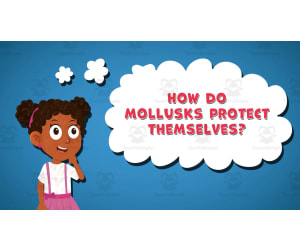
I WONDER - How Do Mollusks Protect Themselves | Animated Video Lesson
STEM, Animals, Life Sciences, Science, Biology, Grade 1, 2, 3, 4, 5, 6, 7, 8, Lesson Plans, Teacher Tools
Video Introduction Animal kingdoms are full of fascinating wonders to learn. This video is designed for the students to learn more about animals in different countries. I WONDER - How Do Mollusks Protect Themselves | Animated Video Lesson Do you like animals? what is your favorite one? Do you own a pet? If yes, tell us more about it, like what its name? And what do you like most about it? What are the animal kingdoms? Can you write down the characteristics of each animal class like mammals, birds, reptiles, amphibian, fish and mollusks. Do you know that some animals can sing, can you name any of them? What is the largest and the smallest mammal in the world? What is the largest and the smallest bird in the world? What is the largest and the smallest fish in the world? I WONDER - How Do Mollusks Protect Themselves | Animated Video Lesson The video is perfect for encouraging the researching skills for the students, while learning more about these fantastic animals. I WONDER - How Do Mollusks Protect Themselves | Animated Video Lesson This friendly designed video is suitable for students at school, homeschooling, and as a group activity. Format Available in MP4 format.
Author Educational Voice
Tags How Do Mollusks Protect Themselves, How Do Mollusks Protect Themselves Video, Mollusks, Mollusk, Mollusks Facts, Mollusks Facts For Kids, Mollusks Video, Mollusks Video For Kids, Mollusk Video
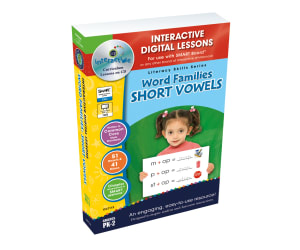
Word Families: Short Vowels - Digital Lesson Plan Gr. PK-2 | MAC Software
ELA, Language Development, Vocabulary, Kindergarten, Preschool, Grade 1, 2, Teacher Tools, Lesson Plans
Word Families: Short Vowels - Digital Lesson Plan Gr. PK-2 This is an innovative teaching resource, expertly designed for MAC Software users. It functions as a vital tool for educators to augment the language arts learning journey of their students. Main Features: A terrific suite of 80 digital screen-pages stimulating student curiosity and promoting engagement. A core purpose of fostering precise Short Vowel phonogram pronunciation using real-life imagery. An interactive format that enhances reading capabilities while improving comprehension skills. Inclusive working with words activities on each page, encouraging practical language application and positive long-term retention. Evaluation Mechanisms: Versatile testing formats including memory match games, crosswords and word searches to keep assessments comprehensive yet enjoyable. Comprehension Quizzes at every level acting as informative markers to evaluate learner understanding and track progress over time. This dynamic tool is perfect for teachers employing diverse instruction strategies across Preschool through Grade 2. Its user-friendly design also makes it suitable for homework assignments extending learning outside the classroom bounds! All content aligns with state standards underlining the widely recognized pedagogical methodology of Blooms Taxonomy ensuring a balance between curriculum mandates and learning goals thus enriching educational experiences profoundly!
Author Classroom Complete Press
Tags Word Families, Short Vowels, Short Vowel Word Family, Digital Lesson Plan, Reading Lesson

Geometry - Digital Lesson Plan Gr. PK-2 | PC Software
Math, Geometry, Kindergarten, Preschool, Grade 1, 2, Teacher Tools, Lesson Plans
Geometry Digital Lesson Plan for Grades PK-2 | PC Software The Geometry Digital Lesson Plan is a comprehensive learning tool tailored for students in grades PK-2. This package includes over 150 activities deployed via more than 80 interactive screen pages, offering an all-inclusive learning experience. A Deep Dive into Geometry Concepts This Math program is designed to provide a thorough understanding of geometric concepts. Adhering to NCTM and State Curriculum's geometry strand, it effectively blends task and drill exercises to create an engaging learning environment. Pre- assessment Activities: Each new concept introduced is accompanied by pre- assessment tasks enabling the student to measure their understanding. Word Problems: Theoretical knowledge finds relevance through real-life examples presented in word problems thereby converting abstract theories into understandable scenarios. Diverse Drill Problems:The inclusion of over 90 distinct drill problems echoes the notion that practice results in proficiency—a cornerstone philosophy of this teaching resource. Educational Tools Featuring Dual Language Options Educating children at varying competency levels or catering to respective language preferences becomes achievable with the implementation of math tools - imperial and metric options included -and English/Spanish text-to-speech features on every interactive screen page. Sundry Supplementary Resources & Interactive Exercises Beside being utilized for independent study or homework assignments, additional printable resources serve as supplementary classroom materials—raising versatility factor remarkably. Memory match games, board games, spinner games within this multifaceted software program ensure retention while maintaining student interest. Evaluation Quizzes A concluding quiz at the end of every chapter tests students' understanding of geometric principles explored during classwork enabling teachers to focus on areas needing improvement. Accessibility Considerations This single zip file compatible with PC software is perfect for lesson presentations, strengthening its usefulness in digital classrooms catering to preschool-grade second learners studying Math and specifically Geometry.
Author Classroom Complete Press
Tags Digital Math, Math Activities, Math Board Game, Geometry Board Game, Digital Lesson Plan
Data Analysis & Probability: Probability - FLASH-PC
Math, Statistics, Grade 1, 2, Teacher Tools, Lesson Plans
Data Analysis & Probability: Probability - FLASH-PC A comprehensive resource targeted at Grade 1 and Grade 2 students, with an emphasis on the field of statistics. Overview: Made to make learning probability easier and more engaging. Loaded with curriculum-based content for support in teaching Data Analysis and Probability effectively. Main Features: Pre- assessment materials: Tools to teste students' prior understanding. Detailed lesson plans: Designed specifically for ease of adaptation to varying stages of learning. "Real-world" word problems: Practical tasks designed to show probability's everyday role in the world around us. 'Time drill' activities:To boost speed and precise execution when tackling issues related to probability. In addition, other features include helpful math tools that fit different teaching environments. A handy teacher guide also comes as part of this educational package offering tips about how best to leverage all this resource has on offer! Fostering Fun While Learning: Besides these aspects, integrated memory match games, board games and spinner games themed around Data Analysis & Statistics make learning enjoyable. Serving Diverse Learners: A noteworthy aspect about FLASH-PC is its inclusivity - not limited just English-speaking learners but extends support via Spanish voice-over and text options ensuring no learner misses out because of language barriers. "SMART Response"- a modern tool included causes periodic assessments enabling teachers monitor progress over time while identifying areas needing attention. Summary: In short, Data Analysis & Probability: Probability - FLASH-PC is an excellent resource for educators wishing to elevate their teaching of statistics.
Author Classroom Complete Press
Tags Software (PC), Spanish Math Lesson Plan, Data Analysis, Probability, Statistics
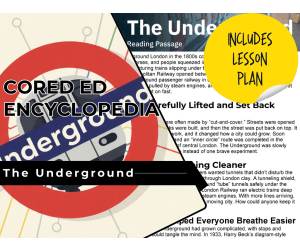
The Underground Reading Comprehension Passage - Cored Ed Encyclopedia
ELA, Language Development, Reading Comprehension, Reading, Science, Technology, Engineering, History, Social Studies, Geography, Grade 2, 3, 4, 5, Worksheets & Printables, Worksheets, Teacher Tools, Centers, Activities, Writing Prompts, Assessments, Quizzes and Tests, Quizzes, Lesson Plans
This Underground reading comprehension with lesson plan includes: Visualization (on the front cover) Start your lesson by taking a minute to think and share something about the topic. Read the script aloud (slowly), perhaps prepare some music or sound effects. Student close their eyes and let their imaginations wander. Students open their eyes, read the question aloud and give them a few minutes to complete. Ask a few students to share or keep answers until the end to compare with what they learn in the passage. Quick pause—thousands of Cored Education products are included with your TeachSimple membership. Download links and encyclopedia index available here. Pre-Reading Trivia Students will write down one thing they already know about the subject and then read five more facts and discuss. These facts are fun, and the students will enjoy learning about the subject before reading more. Give 1 minute for students to write what they already know (no pressure—best guess is fine). Read the five facts together. After each fact, do ask a student for their opinion, was it surprising? Set a purpose by asking students to highlight/underline one fact they want to learn more about during the reading. Reading Passage The text is a high-interest reading passage with set paragraphs, roughly three to four paragraphs long. It contains a variety of themes about the topic, anywhere from history to technology. The passage is between 250 and 350 words in length. First, ask students to look at the headings and see what they’ll learn about today. What do they know about the topic/heading? First read options: Teacher read-aloud (best for support). Partner reading (paragraph by paragraph). While reading, students underline important details, and vocabulary words they think may come up in the questions section. Mixed Questions The first question page contains four multiple-choice questions, each with a choice of four answers, and three written response questions that require a sentence or two from the student. Students complete the mcqs first independently, then review quickly as a class. For the 3 written responses, try to get students giving the answer with some form of evidence: “I think ___ because the text says ___.” If students get stuck, send them back to check the passage. Vocabulary Questions Practice seven key words from the text in this section across two activities. First section is scrambled words where students will unscramble three words given a clue for each. The second section is a word to meaning matching activity. Before starting, have some students read out words they underlined in the passage. Ask students to say the word and read aloud the sentence(s) around each word. Ask students to do scrambled words and the matching exercise in pairs then go through answers as a class. For the scrambled spelling task, get four pairs to come up to the board and write the words for extra practice with the other student reading out the clue. For the matching task, prompt students to give full sentences: “I matched ___ with ___ because ___.” Creative Writing In this question, the student will be required to write a five to eight sentence paragraph on a question related to the topic. Before starting, ask students write down 3 key ideas they are going to include in their piece. Ask students for ideas to share around the class to help those struggling. Pro writing expectations: 5–8 sentences At least 2 facts or details from the passage At least 2 vocabulary words from the previous page Students read their paragraphs while classmates listen for facts and vocabulary words. Extension Activities This page is optional for fast finishers or to take home. There are several activities, each one requiring a different skill. Do some, do none, do all, completely optional - but you will feel reassured knowing every possibility is planned for. Includes summary writting question. Answer Key There are answers for the multiple-choice questions, written response questions have sample answers, vocabulary answers and if there is a summary question then a sample summary will be provided as well. Lesson Plan Included Customized lesson plan for this lesson is included. Lesson Snapshot Title: The Underground Genre: Nonfiction (informational text) Subject: Social Studies (History) Primary Topic: How London built and improved the Underground Estimated Guided Reading Level (A–Z): R What This Lesson Teaches Best Explains why planners wanted trains under crowded London streets in the 1800s. Teaches key early-history facts, including the Metropolitan Railway opening on January 10, 1863, between Paddington and Farringdon. Describes the “cut-and-cover” method (opening streets like a trench, building tracks, then putting the street back). Shows how deeper “tube” tunnels and electric trains reduced street disruption and avoided steam smoke. Demonstrates how a clearer diagram-style map (Harry Beck, 1933) helped riders understand a complicated system. Learning Goals Students will explain why some planners imagined trains going under London in the 1800s. Students will identify what opened on January 10, 1863, and name the two stations connected in the text. Students will describe the steps of “cut-and-cover” tunnel building using details from the passage. Students will explain how digging deeper “tube” tunnels changed building the Underground and affected smoke underground. Students will explain how Harry Beck’s 1933 diagram-style map made the system easier to follow. Key Vocabulary From the Text Metropolitan — the name of an early London railway line. cut-and-cover — open a street, build tracks, rebuild street on top. tunneling — digging a passage underground. shield — a strong ring that helps bore tunnels safely. complicated — hard to understand because there are many parts. FULL CATALOG OF DOWNLOAD LINKS AND ENCYCLOPEDIA INDEX HERE
Author Cored Education
Rating
Tags Vocabulary, Reading Comprehension, Reading Passages, Lesson Plans, Ela Lesson Plans, Reading Comprehension Lesson Plans, Pre-reading, History, History Lesson Plans, Geography

DIGGING FOR DINOSAURS Gr. 1-3
Science, Life Sciences, Animals, Grade 1, 2, Teacher Tools, Lesson Plans
DIGGING FOR DINOSAURS Gr. 1-3 An engaging teaching resource designed for first through third-grade students. Packed with captivating facts about dinosaurs, this material provides a detailed exploration into life approximately 160 million years ago when these incredible creatures inhabited our planet. Learning Content The resources integrate information about different types of dinosaurs- both carnivorous and herbivorous – with an in-depth approach to their reproduction habits and the amazing process in which their bones and eggs fossilized over time. This blend of content makes it ideal for cultivating fundamental reading, research, math, writing, phonics,and creativity skills among young learners. Flexible Application across Teaching Formats This resource can be utilized during whole-class instruction or within smaller study groups to foster peer-to-peer learning interaction. It also proves beneficial for homework assignments or individual study sessions at home or inside the classroom. Inclusive Activities Dinosaur riddles & rhymes that stimulate critical thinking. Rebus stories fostering enthusiasm for learning science subjects. Creative use of art through constructing plasticine models and pipe cleaner skeletons. The instructional material is accompanied by printed facts sheets& interactive tasks like book-making projects intertwining theory knowledge with concrete application. Easy Access Material Format (Downloadable PDF|91 pages| Engaging Graphics) This resource is delivered as a downloadable PDF featuring 91 pages full of eye-catching graphics - stirring visuals which ignite children’s inherent curiosity towards understanding themselves in relation to the world around them,and their sense of wonder about the biomysteries of life forms that dominated Earth millions of years before us. Methodology The methodologies utilized in DIGGING FOR DINOSAURS Gr.1-3 have been meticulously tested and found effective across varied schooling patterns. They are flexible enough to be concurrently used across subjects, thus forging a broad range of cross-disciplinary links while reinforcing fundamental topic-specific skills in every lesson plan. So embark on a captivating journey into the age of dinosaurs with this unique teaching resource, conducive for fostering your students' curiosity and love for science."Happy digging!"
Author Classroom Complete Press
Tags Reading Passages, Interview, Science Facts, Reading Comprehension, Riddles

I WONDER - What Is An Iceberg | Animated Video Lesson
Geography, Social Studies, Grade 1, 2, 3, 4, 5, 6, 7, 8, Lesson Plans, Teacher Tools
Video Introduction An amazing video designed for the students to learn more about famous places in different countries. I WONDER - What Is An Iceberg | Animated Video Lesson What do you know about this place? Do you know in which part of the world it is? Have you ever visited this place? If yes, can you tell us more about your adventure, and what do you like the most about this place? Do you like reading about Geography? What is your favorite country in the whole world? If you are going on a trip where it will be? Which country? What you are going to see there? Does this country has a famous place to visit? I WONDER - What Is An Iceberg | Animated Video Lesson The activity is perfect for encouraging the researching skills for the students, while learning more about this fantastic place. I WONDER - What Is An Iceberg | Animated Video Lesson This friendly designed video is suitable for students at school, homeschooling, and as a group activity. Format Available in MP4 format.
Author Educational Voice
Tags What Is An Iceberg, What Is An Iceberg Video, Iceberg, Iceberg Video, Iceberg Facts, Iceberg Facts For Kids, Iceberg Video For Kids, Polar Regions, Polar Regions Facts, Polar Regions Video
I WONDER - What Animals Live In The River Nile | Animated Video Lesson
Biology, Life Sciences, Science, Animals, STEM, Grade 1, 2, 3, 4, 5, 6, 7, 8, Lesson Plans, Teacher Tools
Video Introduction Animal kingdoms are full of fascinating wonders to learn. This video is designed for the students to learn more about animals in different countries. I WONDER - What Animals Live In The River Nile | Animated Video Lesson Do you like animals? what is your favorite one? Do you own a pet? If yes, tell us more about it, like what its name? And what do you like most about it? What are the animal kingdoms? Can you write down the characteristics of each animal class like mammals, birds, reptiles, amphibian, fish and mollusks. Do you know that some animals can sing, can you name any of them? What is the largest and the smallest mammal in the world? What is the largest and the smallest bird in the world? What is the largest and the smallest fish in the world? I WONDER - What Animals Live In The River Nile | Animated Video Lesson The video is perfect for encouraging the researching skills for the students, while learning more about these fantastic animals. I WONDER - What Animals Live In The River Nile | Animated Video Lesson This friendly designed video is suitable for students at school, homeschooling, and as a group activity. Format Available in MP4 format.
Author Educational Voice
Tags What Animals Live In The River Nile, What Animals Live In The River Nile Video, Animals That Live In The River Nile, Animals That Live In The River Nile Facts, Animals That Live In The River Nile Facts For Kids, Animals That Live In The River Nile Video
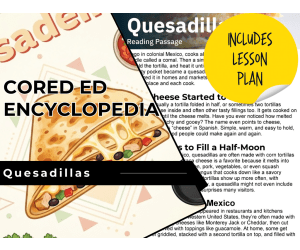
Quesadillas Reading Comprehension Passage - Cored Ed Encyclopedia
ELA, Language Development, Reading Comprehension, Reading, Pre-Reading, Social Studies, Writing, Strategies, Geography, Vocabulary, Grade 2, 3, 4, 5, Worksheets & Printables, Worksheets, Teacher Tools, Centers, Activities, Writing Prompts, Assessments, Quizzes and Tests, Quizzes, Lesson Plans
This quesadillas reading comprehension includes: Visualization (on the front cover) Start your lesson by taking a minute to think and share something about the topic. Read the script aloud (slowly), perhaps prepare some music or sound effects. Student close their eyes and let their imaginations wander. Students open their eyes, read the question aloud and give them a few minutes to complete. Ask a few students to share or keep answers until the end to compare with what they learn in the passage. Quick pause—thousands of Cored Education products are included with your TeachSimple membership. Download links and encyclopedia index available here. Pre-Reading Trivia Students will write down one thing they already know about the subject and then read five more facts and discuss. These facts are fun, and the students will enjoy learning about the subject before reading more. Give 1 minute for students to write what they already know (no pressure—best guess is fine). Read the five facts together. After each fact, do ask a student for their opinion, was it surprising? Set a purpose by asking students to highlight/underline one fact they want to learn more about during the reading. Reading Passage The text is a high-interest reading passage with set paragraphs, roughly three to four paragraphs long. It contains a variety of themes about the topic, anywhere from history to technology. The passage is between 250 and 350 words in length. First, ask students to look at the headings and see what they’ll learn about today. What do they know about the topic/heading? First read options: Teacher read-aloud (best for support). Partner reading (paragraph by paragraph). While reading, students underline important details, and vocabulary words they think may come up in the questions section. Mixed Questions The first question page contains four multiple-choice questions, each with a choice of four answers, and three written response questions that require a sentence or two from the student. Students complete the mcqs first independently, then review quickly as a class. For the 3 written responses, try to get students giving the answer with some form of evidence: “I think ___ because the text says ___.” If students get stuck, send them back to check the passage. Vocabulary Questions Practice seven key words from the text in this section across two activities. First section is scrambled words where students will unscramble three words given a clue for each. The second section is a word to meaning matching activity. Before starting, have some students read out words they underlined in the passage. Ask students to say the word and read aloud the sentence(s) around each word. Ask students to do scrambled words and the matching exercise in pairs then go through answers as a class. For the scrambled spelling task, get four pairs to come up to the board and write the words for extra practice with the other student reading out the clue. For the matching task, prompt students to give full sentences: “I matched ___ with ___ because ___.” Creative Writing In this question, the student will be required to write a five to eight sentence paragraph on a question related to the topic. Before starting, ask students write down 3 key ideas they are going to include in their piece. Ask students for ideas to share around the class to help those struggling. Pro writing expectations: 5–8 sentences At least 2 facts or details from the passage At least 2 vocabulary words from the previous page Students read their paragraphs while classmates listen for facts and vocabulary words. Extension Activities This page is optional for fast finishers or to take home. There are several activities, each one requiring a different skill. Do some, do none, do all, completely optional - but you will feel reassured knowing every possibility is planned for. Includes summary writting question. Answer Key There are answers for the multiple-choice questions, written response questions have sample answers, vocabulary answers and if there is a summary question then a sample summary will be provided as well. Lesson Plan Included Customized lesson plan for this lesson is included. Lesson Snapshot Title: Quesadillas Genre: Nonfiction (informational passage with support pages) Subject: Reading (Informational Text) / Social Studies (Culture & Food Traditions) Primary Topic: How quesadillas began and changed by place Estimated Guided Reading Level (A–Z): Q What This Lesson Teaches Best How foods and traditions change as people share them in different places (homes, markets, restaurants, and around the world). Comparing regional variations (corn vs. flour tortillas; different cheeses and fillings in different parts of Mexico and the U.S.). Building vocabulary and background knowledge about cooking tools and ingredients (comal, Oaxaca cheese, huitlacoche, guacamole). Identifying main ideas and key details across sections with headings (history/origin, filling choices, spreading beyond Mexico). Learning Goals Students can explain how the passage says a quesadilla is made (tortilla, filling, folded, heated). Students can describe how quesadillas changed in different places using details from the text. Students can compare quesadillas in different regions mentioned (central/southern Mexico, northern Mexico, Mexico City, Southwestern United States). Students can identify the main idea of each section heading and support it with one detail. Students can use key vocabulary from the passage when discussing the topic. Key Vocabulary From the Text colonial — from the time when a country was ruled by another comal — a flat griddle for heating and cooking tortillas Oaxaca — a place in Mexico named in the passage huitlacoche — a corn fungus used as a savory filling guacamole — a topping served with some quesadillas Discussion Prompts Pre-reading question: What foods have you seen change in different places or families? Comprehension questions: According to the passage, what is a quesadilla and how is it cooked? Comprehension questions: What are two different fillings or cheeses the passage says people use? Comprehension questions: How does the passage explain quesadillas changing as they spread beyond Mexico? FULL CATALOG OF DOWNLOAD LINKS AND ENCYCLOPEDIA INDEX HERE
Author Cored Education
Rating
Tags Vocabulary, Reading Comprehension, Reading Passages, Reading, Creative Writing, Reading Strategies, Writing Prompts, Lesson Plans, Quesadillas, Social Studies
Mapping Skills with Google Earth: How to Read a Map
Social Studies, Geography, Common Core, Grade 1, 2, Teacher Tools, Lesson Plans
Mapping Skills with Google Earth: How to Read a Map Mapping Skills with Google Earth: How to Read a Map is an innovative educational tool for first and second graders. This resource offers a captivating insight into basic map reading, engaging young learners in the fascinating world of geography. It combines practical lessons with interactive technology, introducing students to fundamental map concepts such as symbols, legends, and compass roses. In their learning journey, students begin by mapping their immediate surroundings like the classroom or the route they take to school. This hands-on exercise boosts involvement while reinforcing key concepts through real-life applications. Students then progress to explore global geographical features including North America's Great Lakes along with seven continents and four oceans. The product integrates seamlessly with Google Earth™ enhancing visual learning while keeping studies dynamic. Learners can link theoretical knowledge from explanatory passages about various map characteristics with actual use cases viewed on Google Earth™. Mapping Skills with Google Earth: How to Read a Map also includes entertaining educational tools such as crossword puzzles, word searches and comprehension quizzes that simultaneously reinforce learnt topics and introduce new ones in an interesting way. Teaching strategies using this remarkable tool can be diverse - ranging from whole class instruction directed by teachers or small group exploration led by students; even individual homework assignments are made simple and effective due to the easy-to-understand content within this resource file. This curriculum aligns perfectly with Common Core State Standards while referencing Bloom's Taxonomy - educators can be confident that lessons taught using Mapping Skills With Google Earth: How To Read A Map, meet approved academic criteria ensuring optimal instructional time utility at primary grades 1 or grade 2 level specially focused on social studies – specifically geography subtopics. The resource, downloadable as a PDF file, proves to be both simple to access and highly convenient for educators globally.
Author Classroom Complete Press
Tags PDF

I WONDER - How Clever Are Bears | Animated Video Lesson
STEM, Biology, Life Sciences, Science, Animals, Grade 1, 2, 3, 4, 5, 6, 7, 8, Lesson Plans, Teacher Tools
Video Introduction Animal kingdoms are full of fascinating wonders to learn. This video is designed for the students to learn more about animals in different countries. I WONDER - How Clever Are Bears | Animated Video Lesson Do you like animals? what is your favorite one? Do you own a pet? If yes, tell us more about it, like what its name? And what do you like most about it? What are the animal kingdoms? Can you write down the characteristics of each animal class like mammals, birds, reptiles, amphibian, fish and mollusks. Do you know that some animals can sing, can you name any of them? What is the largest and the smallest mammal in the world? What is the largest and the smallest bird in the world? What is the largest and the smallest fish in the world? I WONDER - How Clever Are Bears | Animated Video Lesson The video is perfect for encouraging the researching skills for the students, while learning more about these fantastic animals. I WONDER - How Clever Are Bears | Animated Video Lesson This friendly designed video is suitable for students at school, homeschooling, and as a group activity. Format Available in MP4 format.
Author Educational Voice
Tags How Clever Are Bears, How Clever Are Bears Vidfeo, Clever Bears, Clever Bears Facts, Clever Bears Facts For Kids, Clever Bears Video, Clever Bears Video For Kids, Clever Bear, Clever Bear Video For Kids
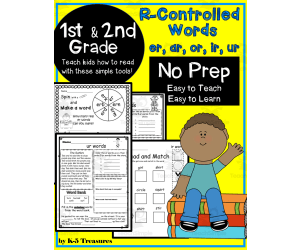
Phonics: R-Controlled Words for 1st and 2nd Grade and Early Readers
ELA, Reading, Reading Comprehension, Grammar, Language Development, Phonics, Strategies, Pre-Reading, Grade 1, 2, Literacy Readers, Teacher Tools, Lesson Plans, Worksheets, Worksheets & Printables
This Phonics: R-Controlled Words for 1st and 2nd Grade and Early Readers is so HELPFUL! Help your student's phonics skills grow to a new level with this Phonics: R-Controlled Words for 1st and 2nd Grade and Early Readers. These engaging worksheets require very little prep work, making it a breeze for your student to conquer the ER, IR, UR, AR, and OR R-Controlled words. These easy and engaging activities can be used in a whole group setting, for individual work, used in centers, and will help your students master these difficult sounds as they effortlessly match, read, write, and identify the r-controlled sounds in words. In this unit, students will read easy passages that require comprehension as they will answer several questions about what they read and highlight or color the r-controlled words in the passage. They will identify at least 5 words that have these sounds from the passage. Furthermore, they will expand their knowledge even more by filling in the blank of words from a word bank in sentences that are missing the r-controlled word sounds. On another worksheet, students will spin a paperclip and fill in the missing words. They will also complete a word search of r-controlled words, and lastly, students will cut, sort, and paste pictures of r-controlled words to the correct written word. There are also worksheets that are differentiated to help all young learners with these sounds. What a great way to help young readers conquer their reading skills with these fun and engaging activities! Get your copy of this Phonics: R-Controlled Words: 1st & 2nd Grade Phonics Worksheets for Early Readers and get ready to be amazed with the skills as they master these words that are so difficult to master! For a list of other phonics and grammar activities, click on the following links:
Author K-5 Treasures
Rating
Tags Phonics, Reading, R-controlled Words, Er Words, Or Words, Ar Words, Early Reading Worksheets, R-controlled Worksheets, Phonics Practice, Phonics Worksheets

I WONDER - What Age Can Dogs Live To | Animated Video Lesson
STEM, Biology, Life Sciences, Science, Animals, Grade 1, 2, 3, 4, 5, 6, 7, 8, Lesson Plans, Teacher Tools
Video Introduction Animal kingdoms are full of fascinating wonders to learn. This video is designed for the students to learn more about animals in different countries. I WONDER - What Age Can Dogs Live To | Animated Video Lesson Do you like animals? what is your favorite one? Do you own a pet? If yes, tell us more about it, like what its name? And what do you like most about it? What are the animal kingdoms? Can you write down the characteristics of each animal class like mammals, birds, reptiles, amphibian, fish and mollusks. Do you know that some animals can sing, can you name any of them? What is the largest and the smallest mammal in the world? What is the largest and the smallest bird in the world? What is the largest and the smallest fish in the world? I WONDER - What Age Can Dogs Live To | Animated Video Lesson The video is perfect for encouraging the researching skills for the students, while learning more about these fantastic animals. I WONDER - What Age Can Dogs Live To | Animated Video Lesson This friendly designed video is suitable for students at school, homeschooling, and as a group activity. Format Available in MP4 format.
Author Educational Voice
Tags What Age Can Dogs Live To, What Age Can Dogs Live To Video, Dogs Age, Dogs Age Facts, Dogs Age Facts For Kids, Dogs Age Video, Dogs Age Video For Kids, Dogs, Dog, Dogs Video
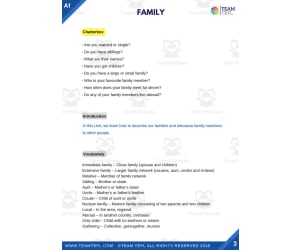
Family Beginner Lesson Plan
ELA, Grade 2, 3, 4, 7, 8, 9, 10, 11, 12, Teacher Tools, Lesson Plans
Discover the "All About Family: Beginner Lesson Plan" - an engaging and comprehensive digital resource crafted to help your students explore and understand the concept of family. Brought to you by TeachSimple, this innovative lesson plan is perfect for educators seeking to provide their students with an interactive learning experience while adapting to today's dynamic educational environment. This resource aims not only to educate students about families but also challenge their comprehension and enhance grammar skills with carefully designed activities. Focusing on effective teaching methods and clear communication strategies, the All About Family: Beginner Lesson Plan promises a memorable educational journey for your young learners as they delve into a crucial aspect of social studies – understanding families. The package conveniently includes an answer key for both teachers and students to efficiently assess their progress. Invest in this vibrant digital resource now, and take delight in empowering young minds with accessible knowledge tailored for their continuous growth! Components of this lesson plan include: Flash cards A warm-up activity Main usage exploration Construction details Rules, along with any exceptions Illustrative examples Two closed exercises One open exercise Listening exercise Revision exercise Writing exercises Chatterbox, a recurring feature in our course books encouraging conversation Activity , such as a game, quiz, puzzle, etc., to conclude the class The lesson plan is available in PDF with 26 ready to print pages and one digital access file. One MP3 file included. A part of it is on Google Apps. The answer key is also included for reference.
Author TEAM TEFL
Tags Family, Vocabulary, Language Arts, Reading Passage, Family Tree
I WONDER - Are There Different Species Of Zebra | Animated Video
Biology, Life Sciences, Science, Animals, STEM, Grade 1, 2, 3, 4, 5, 6, 7, 8, Lesson Plans, Teacher Tools
Video Introduction Animal kingdoms are full of fascinating wonders to learn. This video is designed for the students to learn more about animals in different countries. I WONDER - Are There Different Species Of Zebra | Animated Video Lesson Do you like animals? what is your favorite one? Do you own a pet? If yes, tell us more about it, like what its name? And what do you like most about it? What are the animal kingdoms? Can you write down the characteristics of each animal class like mammals, birds, reptiles, amphibian, fish and mollusks. Do you know that some animals can sing, can you name any of them? What is the largest and the smallest mammal in the world? What is the largest and the smallest bird in the world? What is the largest and the smallest fish in the world? I WONDER - Are There Different Species Of Zebra | Animated Video Lesson The video is perfect for encouraging the researching skills for the students, while learning more about these fantastic animals. I WONDER - Are There Different Species Of Zebra | Animated Video Lesson This friendly designed video is suitable for students at school, homeschooling, and as a group activity. Format Available in MP4 format.
Author Educational Voice
Tags Are There Different Species Of Zebra, Are There Different Species Of Zebra Video, Different Species Of Zebra, Different Species Of Zebra Facts, Different Species Of Zebra Facts For Kids, Different Species Of Zebra Video
Number & Operations: Addition & Subtraction - MAC Software
Math, Numbers, Kindergarten, Preschool, Grade 1, 2, Teacher Tools, Lesson Plans
Number & Operations: Addition & Subtraction - MAC Software A Must-Have Educational Resource! Ideal for preschool, kindergarten, first grade, and second-grade students, this software focuses on improving understanding of addition and subtraction techniques. Detailed Lesson Plan: The plan integrates real-world word problems into the teaching method for better comprehension. Pre- Assessment Module: This tool is useful in tailoring instruction to the individual needs of students to ensure no one is left behind. Educational Games: The software includes a fun memory match game and board game approach that reinforces learning through play-based methods. Timed Drill Activities:This unique feature aids in developing quick mental calculation abilities – vital for higher-level mathematics. Bilingual Support (Spanish):An optional Spanish voiceover service along with Spanish text translations are included catering diverse learner composition SMART Response Assessment Feature This feature provides instant feedback on students' grasp of lesson concepts helping educators swiftly address gaps effective teaching practise implementation . Incorporated Additional Resources Printables :Aids seamless lesson delivery by teachers. helps improve learners' grasp over number systems further. Math Tools :Further help learners boost their number system related competency , providing holistic learning experience. Suitability across diverse Education SetupsLorem Ipsums The flexible usage of this software allows it to be utilized in whole classes or small groups, as well as for homework assignments accommodating teaching preferences across varied schools or homeschoolers In conclusion, the comprehensive package of interactive tools offered by this MAC software delivers a customized teaching experience fostering quality solution focused learning for all primary grade level students.
Author Classroom Complete Press
Tags Math Lesson, Addition, Subtraction, Digital Math, Operations
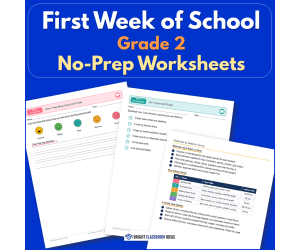
First Week of School Grade 2 | No-Prep Worksheets
ELA, Math, Grade 2, Lesson Plans, Teacher Tools, Worksheets & Printables
First Week of School Grade 2 | No-Prep Worksheets Start the school year with confidence using this First Week of School Activities for 2nd Grade resource! This engaging, no-prep back-to-school packet helps students ease into classroom routines while reviewing important second grade math, literacy, writing, graphing, and social-emotional learning skills. With five structured days of activities, teachers can build classroom community while assessing student readiness from day one. What’s Included ✅ 45-page student activity workbook ✅ 5 ready-to-teach themed days ✅ Comprehensive Teacher Guide ✅ Complete Answer Key ✅ All About Me activities ✅ Summer writing prompt ✅ Goal-setting pages ✅ Place value and tens & ones activities ✅ Classroom rules and routines practice ✅ Classroom scavenger hunt ✅ Following directions activities ✅ Classroom jobs matching activity ✅ Tally charts, picture graphs, and bar graphs ✅ Friendship and teamwork activities ✅ Skip counting by 2s, 5s, and 10s ✅ Addition and subtraction practice ✅ Money and coin counting ✅ Line plots and graphing ✅ Fractions and equal parts ✅ ABC order activities ✅ Nouns, verbs, and adjectives practice ✅ High-frequency word work ✅ Syllable sorting ✅ Creative writing activities ✅ End-of-week reflection and certificate ✅ No-prep print-and-go format How It Works in the Classroom This 2nd Grade First Week of School Packet is organized into five engaging learning days: Day 1: All About Me Introductions Summer writing Goal setting Place value review Feelings and self-reflection Day 2: Our Classroom Rules and expectations Classroom tour Following directions Classroom jobs Data collection and graphing Day 3: Making New Friends Friendship skills Class surveys Picture graphs Bar graphs Teamwork problem solving Day 4: Numbers All Around Skip counting Place value Addition and subtraction Money Line plots Fractions Day 5: Letters & Reading ABC order Parts of speech Word work Syllables Writing activities Perfect for: Back-to-school lessons Morning work Independent practice Whole-group instruction Small groups Early finishers Review activities Sub plans First-week assessments The included teacher guide provides pacing suggestions, discussion prompts, lesson plans, and differentiation ideas to support successful implementation. Standards & Learning Goals Students will practice: ⭐ Goal setting and self-reflection ⭐ Personal narrative writing ⭐ Place value concepts ⭐ Tens and ones ⭐ Data collection and graphing ⭐ Picture graphs and bar graphs ⭐ Skip counting by 2s, 5s, and 10s ⭐ Addition and subtraction within 20 ⭐ Comparing numbers ⭐ Counting money ⭐ Reading line plots ⭐ Fractions and equal parts ⭐ Alphabetical order ⭐ Nouns, verbs, and adjectives ⭐ High-frequency words ⭐ Syllable recognition ⭐ Creative writing ⭐ Social-emotional learning and teamwork This resource reviews key first-grade concepts while introducing important second-grade expectations in a supportive and engaging format. Why Teachers Love It ❤️ No prep required ❤️ Easy-to-follow daily organization ❤️ Combines math, literacy, writing, and SEL ❤️ Supports classroom community building ❤️ Includes answer key and teacher guide ❤️ Provides meaningful review of foundational skills ❤️ Encourages student reflection and goal setting ❤️ Built-in differentiation suggestions included ❤️ Helps teachers assess student readiness ❤️ Keeps students engaged during the critical first week ❤️ Offers a balance of academic review and community-building activities Designed specifically to help second graders transition smoothly into a new school year while building confidence, independence, and excitement for learning. Give your students a fun, structured, and successful start to second grade with this First Week of School Activities for 2nd Grade packet. Add it to your back-to-school plans and enjoy five days of meaningful learning, classroom community building, and skill review with minimal teacher prep!
Author Bright Classroom Ideas Marketplace
Rating
Tags Back To School, First Week, Worksheet, Ela, Math, Lesson