



3,945 products added recently
Page 13 - 2nd Grade Lesson Plans
Enhance your second-grade classroom with lesson plans that build on foundational skills and introduce new concepts. These activities promote critical thinking and creativity across subjects. Implement these plans to keep your students motivated and progressing confidently.

 Show filters


I WONDER - How Many Species Of Snake Are There | Animated Video Lesson
STEM, Biology, Life Sciences, Science, Animals, Grade 1, 2, 3, 4, 5, 6, 7, 8, Lesson Plans, Teacher Tools
Video Introduction Animal kingdoms are full of fascinating wonders to learn. This video is designed for the students to learn more about animals in different countries. I WONDER - How Many Species Of Snake Are There | Animated Video Lesson Do you like animals? what is your favorite one? Do you own a pet? If yes, tell us more about it, like what its name? And what do you like most about it? What are the animal kingdoms? Can you write down the characteristics of each animal class like mammals, birds, reptiles, amphibian, fish and mollusks. Do you know that some animals can sing, can you name any of them? What is the largest and the smallest mammal in the world? What is the largest and the smallest bird in the world? What is the largest and the smallest fish in the world? I WONDER - How Many Species Of Snake Are There | Animated Video Lesson The video is perfect for encouraging the researching skills for the students, while learning more about these fantastic animals. I WONDER - How Many Species Of Snake Are There | Animated Video Lesson This friendly designed video is suitable for students at school, homeschooling, and as a group activity. Format Available in MP4 format.
Author Educational Voice
Tags How Many Species Of Snake Are There, How Many Species Of Snake Are There Video, Species Of Snake, Species Of Snake Facts, Species Of Snake Facts For Kids, Species Of Snake Video, Species Of Snake Video For Kids
Atlantis Reading Comprehension Passage - Cored Ed Encyclopedia
ELA, Language Development, Reading Comprehension, Reading, Social Studies, Writing, Vocabulary, Geography, History, History: Ancient, Grade 2, 3, 4, 5, Worksheets & Printables, Worksheets, Teacher Tools, Centers, Activities, Writing Prompts, Assessments, Quizzes and Tests, Quizzes, Lesson Plans
This Atlantis reading comprehension with lesson plan includes: Visualization (on the front cover) Start your lesson by taking a minute to think and share something about the topic. Read the script aloud (slowly), perhaps prepare some music or sound effects. Student close their eyes and let their imaginations wander. Students open their eyes, read the question aloud and give them a few minutes to complete. Ask a few students to share or keep answers until the end to compare with what they learn in the passage. Quick pause—thousands of Cored Education products are included with your TeachSimple membership. Download links and encyclopedia index available here. Pre-Reading Trivia Students will write down one thing they already know about the subject and then read five more facts and discuss. These facts are fun, and the students will enjoy learning about the subject before reading more. Give 1 minute for students to write what they already know (no pressure—best guess is fine). Read the five facts together. After each fact, do ask a student for their opinion, was it surprising? Set a purpose by asking students to highlight/underline one fact they want to learn more about during the reading. Reading Passage The text is a high-interest reading passage with set paragraphs, roughly three to four paragraphs long. It contains a variety of themes about the topic, anywhere from history to technology. The passage is between 250 and 350 words in length. First, ask students to look at the headings and see what they’ll learn about today. What do they know about the topic/heading? First read options: Teacher read-aloud (best for support). Partner reading (paragraph by paragraph). While reading, students underline important details, and vocabulary words they think may come up in the questions section. Mixed Questions The first question page contains four multiple-choice questions, each with a choice of four answers, and three written response questions that require a sentence or two from the student. Students complete the mcqs first independently, then review quickly as a class. For the 3 written responses, try to get students giving the answer with some form of evidence: “I think ___ because the text says ___.” If students get stuck, send them back to check the passage. Vocabulary Questions Practice seven key words from the text in this section across two activities. First section is scrambled words where students will unscramble three words given a clue for each. The second section is a word to meaning matching activity. Before starting, have some students read out words they underlined in the passage. Ask students to say the word and read aloud the sentence(s) around each word. Ask students to do scrambled words and the matching exercise in pairs then go through answers as a class. For the scrambled spelling task, get four pairs to come up to the board and write the words for extra practice with the other student reading out the clue. For the matching task, prompt students to give full sentences: “I matched ___ with ___ because ___.” Creative Writing In this question, the student will be required to write a five to eight sentence paragraph on a question related to the topic. Before starting, ask students write down 3 key ideas they are going to include in their piece. Ask students for ideas to share around the class to help those struggling. Pro writing expectations: 5–8 sentences At least 2 facts or details from the passage At least 2 vocabulary words from the previous page Students read their paragraphs while classmates listen for facts and vocabulary words. Extension Activities This page is optional for fast finishers or to take home. There are several activities, each one requiring a different skill. Do some, do none, do all, completely optional - but you will feel reassured knowing every possibility is planned for. Includes summary writting question and additional facts. Answer Key There are answers for the multiple-choice questions, written response questions have sample answers, vocabulary answers and if there is a summary question then a sample summary will be provided as well. Lesson Plan Included Customized lesson plan for this lesson is included. Lesson Snapshot Title: Atlantis Genre: Nonfiction (informational passage about a myth/story’s origins and meaning) Subject: Reading (Informational Text) / Social Studies (Myths & ancient world references) Primary Topic: Atlantis in writing, details, and “lesson” meaning Estimated Guided Reading Level (A–Z): T What This Lesson Teaches Best Identifying where an idea “first appears in writings” and tracking its source (the passage names Plato and two dialogues). Visualizing and describing setting details from informational text (rings of water, bridges, gates, canals, temples, palace). Cause/effect in a legend: how pride and disrespect lead to destruction (earthquakes, floods, island vanishes; travel becomes hard). Distinguishing story-meaning vs scientific proof: stories can warn; science looks for “rocks, ruins, and dates.” Understanding how a name becomes a symbol for “anything lost and longed for” and why mysteries keep people thinking. Learning Goals Students will identify where the Atlantis story first appears and name the two dialogues the passage lists. Students will describe Atlantis’s “circles of water” using details from the passage (moats, bridges, gates, canals). Students will explain what events cause the island to vanish and how the water changes afterward. Students will summarize why people keep hunting for a real location and what “most scholars” think instead. Students will compare what the passage says stories do versus what science asks for. Students will explain how the passage describes Atlantis as a “shortcut” for things that are lost. Key Vocabulary From the Text dialogues — written conversations between speakers. moats — water ditches around a place. canals — water paths that boats can travel on. clogged — blocked so movement becomes difficult. scholars — people who study a topic deeply. FULL CATALOG OF DOWNLOAD LINKS AND ENCYCLOPEDIA INDEX HERE
Author Cored Education
Rating
Tags Vocabulary, Reading Comprehension, Reading Passages, Lesson Plans, Ela Lesson Plans, Reading Comprehension Lesson Plans, Pre-reading, History, History Lesson Plans, Geography
I WONDER - Where Do Pangolins Live | Animated Video Lesson
STEM, Animals, Life Sciences, Science, Biology, Grade 1, 2, 3, 4, 5, 6, 7, 8, Lesson Plans, Teacher Tools
Video Introduction Animal kingdoms are full of fascinating wonders to learn. This video is designed for the students to learn more about animals in different countries. I WONDER - Where Do Pangolins Live | Animated Video Lesson Do you like animals? what is your favorite one? Do you own a pet? If yes, tell us more about it, like what its name? And what do you like most about it? What are the animal kingdoms? Can you write down the characteristics of each animal class like mammals, birds, reptiles, amphibian, fish and mollusks. Do you know that some animals can sing, can you name any of them? What is the largest and the smallest mammal in the world? What is the largest and the smallest bird in the world? What is the largest and the smallest fish in the world? I WONDER - Where Do Pangolins Live | Animated Video Lesson The video is perfect for encouraging the researching skills for the students, while learning more about these fantastic animals. I WONDER - Where Do Pangolins Live | Animated Video Lesson This friendly designed video is suitable for students at school, homeschooling, and as a group activity. Format Available in MP4 format.
Author Educational Voice
Tags Where Do Pangolins Live, Where Do Pangolins Live Video, Pangolins, Pangolin, Pangolins Facts, Pangolins Facts For Kids, Pangolins Video, Pangolins Video For Kids, Pangolin Video

Data Analysis & Probability: Bar Graphs - FLASH-MAC
Math, Statistics, Grade 1, 2, Teacher Tools, Lesson Plans
Data Analysis & Probability: Bar Graphs - FLASH-MAC A comprehensive teaching resource for Grade 1 and Grade 2 Math Statistics. This resource revolves around demystifying bar graphs in Data Analysis and probability through an engaging chapter mini-series. It offers: Pre- assessment segment: Aims to establish students' comprehension levels before the start of detailed lessons. Note-worthy lesson plans: Curriculum-centered content that aids understanding of complex concepts through real-world word problems. Follow-up activities: Include timed drill activities to enhance mathematical agility and understanding by actively challenging students' problem-solving skills. Incorporates games like Memory Match Game, Board Game, and Spinner Game for making learning exciting and memorable while reinforcing mathematical concepts. The teaching tool is also designed for software compatibility, suitable with Mac hardware platforms ensuring user-friendly interfaces across devices. A Note on Bilingual Learning The package is unique because it includes a Spanish voice over along with text option in addition to the default English format, catering to a diverse range of students. Educator Support Tools Techer guide, Returns helpful tips on using educational material effectively supplemented by conveniently provided printables minimizing content preparation efforts. Assessment u/>, An advanced evaluation tool not just measuring outcomes but also providing strategic improvement tips creating a holistical learning environment driven by technology-aided precision. In conclusion, Data Analysis & Probability: Bar Graphs - FLASH-MAC is a dynamic educational aide interlacing instruction, application, and assessment into one comprehensive learning experience.
Author Classroom Complete Press
Tags Software (Mac)

Guided Reading Lesson Plan & Activities for Grade 2
Reading, ELA, Grade 2, Activities, Lesson Plans, Teacher Tools
Second Grade Reading Second graders keep enhancing their literacy abilities as they acquire more intricate vocabulary and engage with lengthier, more challenging texts across various genres, such as fiction, non-fiction, and poetry. Learners enhance their reading comprehension abilities while discussing their readings and cultivate more sophisticated concepts related to those subjects. As in prior years, second graders consistently engage in reading as they utilize texts for other subjects during the day. To develop reading abilities, a second grader: Reads more intricate words, like two-syllable terms. Recognizes words that have common prefixes and suffixes, such as: pre-, re-, un-, -able, -ad, and -er. Reads grade-level, irregularly spelled words (ask your child's teacher for an exact list of these words). Peruses a range of writings encompassing fiction, nonfiction, fables, and poetry. This ebooks features a guided reading lesson plan and activities, designed especially for Grade 2, that can last up to 40 minutes.
Author Bright Classroom Ideas Marketplace
Tags Guided, Reading, Grade 2, Language, Lesson, Plan, Activities
Radar Reading Comprehension Passage - Cored Ed Encyclopedia
ELA, Language Development, Reading Comprehension, Reading, Pre-Reading, Writing, History, Social Studies, Technology, Science, Grade 2, 3, 4, 5, Worksheets & Printables, Worksheets, Teacher Tools, Centers, Activities, Writing Prompts, Assessments, Quizzes and Tests, Quizzes, Lesson Plans
This radar reading comprehension includes: Visualization (on the front cover) Start your lesson by taking a minute to think and share something about the topic. Read the script aloud (slowly), perhaps prepare some music or sound effects. Student close their eyes and let their imaginations wander. Students open their eyes, read the question aloud and give them a few minutes to complete. Ask a few students to share or keep answers until the end to compare with what they learn in the passage. Quick pause—thousands of Cored Education products are included with your TeachSimple membership. Download links and encyclopedia index available here. Pre-Reading Trivia Students will write down one thing they already know about the subject and then read five more facts and discuss. These facts are fun, and the students will enjoy learning about the subject before reading more. Give 1 minute for students to write what they already know (no pressure—best guess is fine). Read the five facts together. After each fact, do ask a student for their opinion, was it surprising? Set a purpose by asking students to highlight/underline one fact they want to learn more about during the reading. Reading Passage The text is a high-interest reading passage with set paragraphs, roughly three to four paragraphs long. It contains a variety of themes about the topic, anywhere from history to technology. The passage is between 250 and 350 words in length. First, ask students to look at the headings and see what they’ll learn about today. What do they know about the topic/heading? First read options: Teacher read-aloud (best for support). Partner reading (paragraph by paragraph). While reading, students underline important details, and vocabulary words they think may come up in the questions section. Mixed Questions The first question page contains four multiple-choice questions, each with a choice of four answers, and three written response questions that require a sentence or two from the student. Students complete the mcqs first independently, then review quickly as a class. For the 3 written responses, try to get students giving the answer with some form of evidence: “I think ___ because the text says ___.” If students get stuck, send them back to check the passage. Vocabulary Questions Practice seven key words from the text in this section across two activities. First section is scrambled words where students will unscramble three words given a clue for each. The second section is a word to meaning matching activity. Before starting, have some students read out words they underlined in the passage. Ask students to say the word and read aloud the sentence(s) around each word. Ask students to do scrambled words and the matching exercise in pairs then go through answers as a class. For the scrambled spelling task, get four pairs to come up to the board and write the words for extra practice with the other student reading out the clue. For the matching task, prompt students to give full sentences: “I matched ___ with ___ because ___.” Creative Writing In this question, the student will be required to write a five to eight sentence paragraph on a question related to the topic. Before starting, ask students write down 3 key ideas they are going to include in their piece. Ask students for ideas to share around the class to help those struggling. Pro writing expectations: 5–8 sentences At least 2 facts or details from the passage At least 2 vocabulary words from the previous page Students read their paragraphs while classmates listen for facts and vocabulary words. Extension Activities This page is optional for fast finishers or to take home. There are several activities, each one requiring a different skill. Do some, do none, do all, completely optional - but you will feel reassured knowing every possibility is planned for. Includes summary writting question. Answer Key There are answers for the multiple-choice questions, written response questions have sample answers, vocabulary answers and if there is a summary question then a sample summary will be provided as well. Lesson Plan Included Customized lesson plan for this lesson is included. Lesson Snapshot Title: Radar Genre: Nonfiction (informational text with support pages) Subject: Science (Physical Science/Technology) Primary Topic: Using radio waves to find objects Estimated Guided Reading Level (A–Z): R What This Lesson Teaches Best Explains how radar works using radio waves, an “echo,” and a receiver that measures return time. Connects timing to distance (how long the trip takes helps show how far away something is). Builds background knowledge about radar’s development before World War II (tests in the 1930s; June 1935 detection; Chain Home stations). Shows real-world uses after the war (air traffic control, ships in fog, weather radar tracking rain and storms). Includes support pages that match the passage content (questions, vocabulary, writing, and extension activities focus on radio waves, echoes, Chain Home, and the 1935 test). Learning Goals Students can describe radar as a tool that sends out radio waves and listens for the waves that bounce back. Students can explain how a receiver uses the echo’s return time to show distance. Students can describe one early step in radar’s development mentioned in the passage (1930s tests or the June 1935 detection). Students can explain why early-warning stations mattered as World War II was getting closer. Students can identify at least two ways radar is used in everyday life after the war (planes, ships, or weather). Key Vocabulary From the Text receiver — device that listens for the returning signal echo — a returning signal that bounces back pulsing — sending waves in repeated bursts detected — found or noticed something was there vessels — boats or ships FULL CATALOG OF DOWNLOAD LINKS AND ENCYCLOPEDIA INDEX HERE
Author Cored Education
Rating
Tags Vocabulary, Reading Comprehension, Reading Passages, Reading, Creative Writing, Reading Strategies, Writing Prompts, Lesson Plans, History, Radar
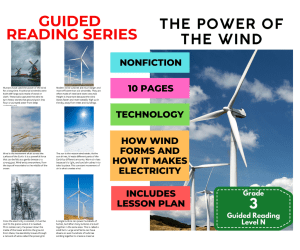
Guided Reading Level N - The Power of the Wind (with Lesson Plan)
ELA, Resources for Teachers, Reading Comprehension, Reading, Social Studies, Geography, Earth and Environmental Sciences, Science, Physics, Technology, Grade 2, 3, 4, Worksheets & Printables, Worksheets, Teacher Tools, Centers, Activities, Literacy Readers, Quizzes, Quizzes and Tests, Assessments, Lesson Plans
This Guided Reading Book - The Power of the Wind (Level N) with lesson plan includes: Guided Reading Color Label (front cover x1) This is a quick way to match the book’s demands to what students can generally handle.. The overall goal is to use the level/color to pick books for several smaller groups. To qualify for a certain level, a student is expected to read a book from that level with about 90–94% accuracy. If a student is consistently accurate and understands, move up a level. If the student is struggling at that level, drop down and add more support. Each student will improve at completely different rates, but it is generally one of the best ways to check progress across the class. DOWNLOAD THE CATALOG TO VIEW ALL GUIDED READING BOOKS AVAILABLE (SORTED LEVELS A-Z) Pre-Reading Question (x1) Teacher asks the prompt aloud, can be while showing the cover or first page. Students share what they already know, or make educated guesses from the cover. Prompt them to use the target vocabulary. Write some of their responses on the board to look back at during the reading. Vocabulary Words (x5) Introduce the five words, best doing it one at a time. Start by saying it, while students repeat and then see if anyone knows what it means before reading further. Read through the meaning and try to briefly connect each word to a picture or gesture so it’s meaningful. Ask students to flip through the book pages and point to where they see each of the vocabulary words. While reading the book pause upon coming across one of the vocab words or read the sentence twice to make sure students understand the word has appeared. Optional: Ask students to raise hands whenever they see/hear one of the new words. Guided Reading Pages (x10) Check the book snapshot (below) for: primary topic - do you need to prep extra reading or intro materials on this? what is taught best - decide on 1-2 bullets to focus on, use the prompt or words provided here for best results. learning goals - what you are checking for students to be able to do after the session, elicit answers using prompts or words provided. key vocabulary (see section above). questions overview - so you know what is coming up and if you need to prep extra materials to assist understanding. Run the lesson You may have already looked at a few of the pages together, but you can show them some of the pictures again first to set meaning. Depending on how much time you have and how familiar your students are with guided reading class, you may want to read the book aloud first with the group first. Students whisper or partner read, while you listen in. If time, do it as a group, one student reading a page each. Use the guided page’s prompts to coach: “Check the picture / does it make sense?” “Point under the words / try the first sound” “Reread the sentence smoothly”. Try to focus more on one student per session (rotating every time), so you can work out if they are ready to move up or need to move down a level. Comprehension Questions (back cover x3) This is your way to check that students didn’t just say the words, but actually understood the text. First, let students answer by pointing to the page/picture and saying a short sentence. After any answer, follow with: “Show me where you found that in the text.” In bigger groups, have partners answer first (10–20 seconds), then call on 2–3 students to share. Differentiation tips: Emerging speakers/struggling readers: oral + pointing On-level: oral in a full sentence Higher: one written sentence or draw + label Book Snapshot Title: The Power of the Wind Genre: Nonfiction (informational science text) Subject: Science (Energy/Earth Science) Primary Topic: How wind forms and how it makes electricity Estimated Guided Reading Level (A–Z): N What This Book Teaches Best Defines wind as the movement of air across Earth’s surface and describes wind as a breeze or a strong gust. Explains the cause of wind : the sun heats Earth unevenly, warm air rises, and cool air moves in to replace it. Shows how people have used wind over time, comparing traditional windmills (grinding grain, pumping water) to modern wind turbines. Describes how a wind turbine works, including blades spinning a shaft connected to a generator that makes electricity. Connects wind energy to sustainability by explaining wind farms , offshore wind farms , and wind energy as a clean, renewable resource. Learning Goals Students will explain what wind is using details from the text. Students will describe how the sun’s heating of Earth helps create wind. Students will describe how traditional windmills used wind to help people. Students will explain how wind turbines change wind’s motion into electricity. Students will describe what a wind farm is and why offshore wind farms can capture strong winds. Students will explain why wind energy is described as renewable and clean in the text. Key Vocabulary From the Text movement — going from one place to another. gust — a short, strong burst of wind. turbines — big machines with blades that spin in wind. generator — a machine that makes electricity. renewable — can be used again and won’t run out. Discussion Prompts Pre-reading question: Where have you seen wind do work, like moving something or making power? Comprehension questions: What does the text say creates wind? Comprehension questions: How did traditional windmills use wind to help people? Comprehension questions: How does a wind turbine turn wind into electricity, according to the text? Printing Tips 1. Best Printing Method (Recommended) “Booklet” Printing (Best if Available) If your printer or PDF viewer supports Booklet Printing , use this. Settings to use: Print mode: Booklet Paper size: Letter or A4 (either works) Orientation: Landscape Print on both sides: Yes Flip on: Short edge Scaling: Fit to printable area Booklet subset: First test: Front sides only Then: Back sides only This will automatically: Pair pages correctly Put the cover on the outside Align everything for folding After printing, fold in half and staple along the spine . 2. If “Booklet” Printing Is NOT Available You can still print this correctly with manual duplex printing . Step-by-step: Open the PDF. Choose Print . Set: Orientation: Landscape Pages per sheet: 1 Print on both sides: Yes Flip on: Short edge Print all pages . Because each PDF page already contains two facing book pages, the result will still fold cleanly into a book. Thousands of Cored Education products are included with your TeachSimple membership. Download links and encyclopedia index available here.
Author Cored Education
Rating
Tags Reading Comprehension, Reading Passages, Reading, Guided Reading, Guided Reading Lesson Plan, Guided Reading Activity, Pre-reading, Geography, Science Lesson Plans, Technology
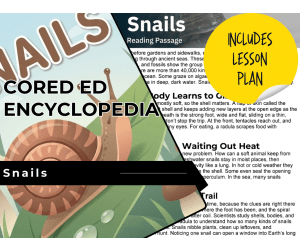
Snails Reading Comprehension Passage - Cored Ed Encyclopedia
ELA, Language Development, Reading Comprehension, Reading, Pre-Reading, Writing, Science, Animals, Life Sciences, Strategies, Grade 2, 3, 4, 5, Worksheets & Printables, Worksheets, Teacher Tools, Centers, Activities, Writing Prompts, Assessments, Quizzes and Tests, Quizzes, Lesson Plans
This snails reading comprehension includes: Visualization (on the front cover) Start your lesson by taking a minute to think and share something about the topic. Read the script aloud (slowly), perhaps prepare some music or sound effects. Student close their eyes and let their imaginations wander. Students open their eyes, read the question aloud and give them a few minutes to complete. Ask a few students to share or keep answers until the end to compare with what they learn in the passage. Quick pause—thousands of Cored Education products are included with your TeachSimple membership. Download links and encyclopedia index available here. Pre-Reading Trivia Students will write down one thing they already know about the subject and then read five more facts and discuss. These facts are fun, and the students will enjoy learning about the subject before reading more. Give 1 minute for students to write what they already know (no pressure—best guess is fine). Read the five facts together. After each fact, do ask a student for their opinion, was it surprising? Set a purpose by asking students to highlight/underline one fact they want to learn more about during the reading. Reading Passage The text is a high-interest reading passage with set paragraphs, roughly three to four paragraphs long. It contains a variety of themes about the topic, anywhere from history to technology. The passage is between 250 and 350 words in length. First, ask students to look at the headings and see what they’ll learn about today. What do they know about the topic/heading? First read options: Teacher read-aloud (best for support). Partner reading (paragraph by paragraph). While reading, students underline important details, and vocabulary words they think may come up in the questions section. Mixed Questions The first question page contains four multiple-choice questions, each with a choice of four answers, and three written response questions that require a sentence or two from the student. Students complete the mcqs first independently, then review quickly as a class. For the 3 written responses, try to get students giving the answer with some form of evidence: “I think ___ because the text says ___.” If students get stuck, send them back to check the passage. Vocabulary Questions Practice seven key words from the text in this section across two activities. First section is scrambled words where students will unscramble three words given a clue for each. The second section is a word to meaning matching activity. Before starting, have some students read out words they underlined in the passage. Ask students to say the word and read aloud the sentence(s) around each word. Ask students to do scrambled words and the matching exercise in pairs then go through answers as a class. For the scrambled spelling task, get four pairs to come up to the board and write the words for extra practice with the other student reading out the clue. For the matching task, prompt students to give full sentences: “I matched ___ with ___ because ___.” Creative Writing In this question, the student will be required to write a five to eight sentence paragraph on a question related to the topic. Before starting, ask students write down 3 key ideas they are going to include in their piece. Ask students for ideas to share around the class to help those struggling. Pro writing expectations: 5–8 sentences At least 2 facts or details from the passage At least 2 vocabulary words from the previous page Students read their paragraphs while classmates listen for facts and vocabulary words. Extension Activities This page is optional for fast finishers or to take home. There are several activities, each one requiring a different skill. Do some, do none, do all, completely optional - but you will feel reassured knowing every possibility is planned for. Includes summary writting question. Answer Key There are answers for the multiple-choice questions, written response questions have sample answers, vocabulary answers and if there is a summary question then a sample summary will be provided as well. Lesson Plan Included Customized lesson plan for this lesson is included. Lesson Snapshot Title: Snails Genre: Nonfiction (informational text with support pages) Subject: Science (Life Science) Primary Topic: Snail traits, habitats, and how they survive Estimated Guided Reading Level (A–Z): S What This Lesson Teaches Best What snails are (gastropods, “belly-footed” mollusks) and how they move using a strong foot on the bottom of their bodies. How snail body parts work, including the mantle making the shell, tentacles with tiny eyes, and a radula that scrapes food with many tiny teeth. How snails live in many habitats (mostly ocean; also land and freshwater), including near shore, on reefs, and in deep, dark water. How snails stay safe and survive tough conditions by pulling into their shell, becoming dormant, and sometimes sealing the opening with mucus or an operculum. How scientists use evidence (shell growth spirals and silvery trails) to study snails and understand how they live in so many places. Learning Goals Explain what “gastropods” means and how snails move using a strong foot. Describe how a snail’s mantle helps make and grow its shell. Identify what a radula is and how it helps a snail eat. Describe how land and freshwater snails avoid drying out and handle hot or cold weather. Use details from the passage to describe where snails live (near shore, reefs, deep water, and moist land places). Key Vocabulary From the Text gastropods — “belly-footed” animals that move using a strong foot. mantle — a flap of skin that makes the shell. radula — a scraper with many tiny teeth for eating. dormant — resting and not active for a while. operculum — a little door that can seal a shell opening. FULL CATALOG OF DOWNLOAD LINKS AND ENCYCLOPEDIA INDEX HERE
Author Cored Education
Rating
Tags Vocabulary, Reading Comprehension, Reading Passages, Reading, Creative Writing, Reading Strategies, Writing Prompts, Lesson Plans, Snails, Life Science
Geometry: Spatial Relationships - FLASH-MAC
Math, Geometry, Grade 1, 2, Teacher Tools, Lesson Plans
Geometry: Spatial Relationships - FLASH-MAC is an advanced educational tool targeted specifically at first and second-grade educators. Its main objective is to simplify the process of teaching spatial relationships in geometry. The educational content, neatly structured into mini-chapters, adheres to the curriculum. The product seamlessly blends technology with conventional teaching methods and offers useful resources such as: Pre- assessment tests Lesson plans with detailed instructions A range of 'real-world' word problems to explain ideas better A set of timed drill activities for practice and eventual perfection! Evaluating Progress Over Time? No worries! FLASH-MAC takes care of this too by incorporating SMART Response assessment methodologies that offer intelligent feedback. This greatly assists in conducting pedagogical procedures effectively. Making Learning Fun! To make things more fun and interesting, we've also integrated memory match games along with board and spinner games into the curriculum. Linguistic Diversity? We have got you covered! We embrace diverse linguistic capacities - English voice overs & Spanish text options are included apart from the primary English text mode. The FLASH-MAC software package includes files accessible via a zip file that can work across class instruction routines or smaller group interactions. Plus! It's also perfect for assigning individual tasks aimed at home reinforcement allowing students to further practice their skills beyond classroom boundaries. In conclusion,, Think of Geometry: Spatial Relationships - FLASH-MAC as your remote assistant delivering finely curated lesson plans coupled with practical applications thrown within engaging gaming sessions—completely redefining geometry education paradigms within your Grade 1-2 classrooms.
Author Classroom Complete Press
Tags Geometry, Spatial Relationships, Pre-assessment, Math Quiz, Shapes

Curriculum Math Tools - Protractor Tool - FLASH-MAC
Math, Algebra, Grade 1, 2, 3, 4, 5, 6, 7, 8, Lesson Plans, Teacher Tools
Curriculum Math Tools - Protractor Tool - FLASH-MAC This is an extensive teaching resource, ideally crafted to support educators and optimized for MAC software. It helps in creating immersive and interactive learning experiences for the students of grade 1 through to grade 8. Standards Compatibility: NCTM (National Council of Teachers of Mathematics) Common Core Standards STEM standards The tool provides guidance on mathematical sub-disciplines like Number & Operations, Algebra, Geometry, Measurement, Data Analysis & Probability. Versatility & Adaptability This protractor tool can be used in various educational scenarios such as whole group sessions or smaller study groups. It can also be assigned as supplemental homework or used as an assessment tool to gauge student understanding. Therefore it facilitates both home-schooling and public school teaching scenarios. Kinesthetic Learning Enhancement The application enables hands-on manipulation during geometrical problem-solving exercises enabling real-time observation effects influenced by measurements within angles using protractors. Included in the toolkit: A comprehensive product file ready for immediate download upon purchase which makes usage stress-free. Special Mention: Algebra Teaching The Curriculum Math Tools-Protractor-FLASH MAC enhances understanding and empowerment around complex calculations required in algebraic studies thus standing out especially within algebra teaching scenarios. To Summarize: This tool promises educators an improved level instruction while assuring learners an elevated engagement level due to its practical capabilities packaged finely into its user-friendly interface ready for use right off shelf. </p+
Author Classroom Complete Press
Tags Software (Mac)
Algebra: Simple Patterns - PC Software
Math, Patterns, Kindergarten, Preschool, Grade 1, 2, Teacher Tools, Lesson Plans
Algebra: Simple Patterns - PC Software A robust teaching software designed to help educators in traditional classrooms and homeschool settings effectively instruct students on the basic concepts of algebra. The content is aligned with the curriculum and ideally suited for preschool, kindergarten, and early grade school level (grades 1-2). Features: Pre-assessment stage: Precisely gauge students' existing knowledge about algebraic patterns before starting a lesson. Detailed Lesson Plan: A comprehensive roadmap that guides teachers through their lessons in an organized manner and ensures key learning objectives are met. Real-world Word Problems: Present algebraic pattern concepts in relatable contexts for a practical understanding of the material. A timed drill activity : Test speed without sacrificing accuracy, ideal for both group lessons or individual study sessions. Additions: The software also includes math tools and printables making it easy to mix digital learning with hands-on activities. Additionally, to make learning more engaging there are multiple built-in games like memory match game, board game ,and spinner games available within the program. Bilingual Support: An added advantage is it's support Spanish voiceover & texts enabling bilingual instruction or assisting second language learners to easily make connections between verbal expressions in two languages. Note: This product is compatible with PCs only . In conclusion, combining all these features makes "Algebra: Simple Patterns - PC Software", an invaluable addition to any modern educational toolkit!
Author Classroom Complete Press
Tags Digital Math, Simple Patterns, Patterns Lesson, Algebra Worksheet, Math Lesson

I WONDER - How Many Animals Live In The Rainforest | Animated Video
Biology, Life Sciences, Science, Animals, STEM, Grade 1, 2, 3, 4, 5, 6, 7, 8, Lesson Plans, Teacher Tools
Video Introduction Animal kingdoms are full of fascinating wonders to learn. This video is designed for the students to learn more about animals in different countries. I WONDER - How Many Animals Live In The Rainforest | Animated Video Lesson Do you like animals? what is your favorite one? Do you own a pet? If yes, tell us more about it, like what its name? And what do you like most about it? What are the animal kingdoms? Can you write down the characteristics of each animal class like mammals, birds, reptiles, amphibian, fish and mollusks. Do you know that some animals can sing, can you name any of them? What is the largest and the smallest mammal in the world? What is the largest and the smallest bird in the world? What is the largest and the smallest fish in the world? I WONDER - How Many Animals Live In The Rainforest | Animated Video Lesson The video is perfect for encouraging the researching skills for the students, while learning more about these fantastic animals. I WONDER - How Many Animals Live In The Rainforest | Animated Video Lesson This friendly designed video is suitable for students at school, homeschooling, and as a group activity. Format Available in MP4 format.
Author Educational Voice
Tags How Many Animals Live In The Rainforest, How Many Animals Live In The Rainforest Video, Animals Live In The Rainforest, Animals Live In The Rainforest Facts, Animals Live In The Rainforest Facts For Kids, Animals Live In The Rainforest Video

I WONDER - How Many Continents Are There | Animated Video Lesson
Geography, Social Studies, Grade 1, 2, 3, 4, 5, 6, 7, 8, Lesson Plans, Teacher Tools
Video Introduction An amazing video designed for the students to learn more about famous places in different countries. I WONDER - How Many Continents Are There | Animated Video Lesson What do you know about this place? Do you know in which part of the world it is? Have you ever visited this place? If yes, can you tell us more about your adventure, and what do you like the most about this place? Do you like reading about Geography? What is your favorite country in the whole world? If you are going on a trip where it will be? Which country? What you are going to see there? Does this country has a famous place to visit? I WONDER - How Many Continents Are There | Animated Video Lesson The activity is perfect for encouraging the researching skills for the students, while learning more about this fantastic place. I WONDER - How Many Continents Are There | Animated Video Lesson This friendly designed video is suitable for students at school, homeschooling, and as a group activity. Format Available in MP4 format.
Author Educational Voice
Tags How Many Continents Are There, How Many Continents Are There Video, Continents, Continent, Continents Facts, Continents Facts For Kids, Continents Video, Continents Video For Kids, Continent Facts
I WONDER - In Baseball What Is A Strike | Animated Video Lesson
Sports, P.E. & Health, Grade 2, 3, 4, 5, 6, 7, 8, Lesson Plans, Teacher Tools
Video Introduction An amazing video designed for the students to learn more about sports in different countries. I WONDER - In Baseball What Is A Strike | Animated Video Lesson What is your favorite sport? Tell us more about it. Who is your favorite athlete? Or what is your favorite team? Do you know who invented basketball? When basketball has been invented? Can you tell us where is the first time it has been played? Have you ever played soccer or football? If yes, tell us what was your position: A goal keeper, midfield player, or a defender? Do you like watching golf? If yes who is your favorite player? Can you name the differences between tennis and ping pong? Have you ever played volleyball on the beach? When it has been officially recognized by the Olympics? Do you like watching Formula 1 races? If yes, who is your favorite team or driver? Have you ever tried to play handball? If yes tell us more. Do you like watching people skiing or surfing? I WONDER - In Baseball What Is A Strike | Animated Video Lesson The video is perfect for encouraging the researching skills for the students, while learning more about this sport. I WONDER - In Baseball What Is A Strike | Animated Video Lesson This friendly designed video is suitable for students at school, homeschooling, and as a group activity. Format Available in MP4 format.
Author Educational Voice
Rating
Tags Strike, Strike Facts, Strike Video, Strike Video For Kids, Strike Facts For Kids, In Baseball What Is A Strike, In Baseball What Is A Strike Video, Baseball, Baseball Facts, Baseball Video

I WONDER - What Is A Pyramid | Animated Video Lesson
STEM, Geometry, Math, Grade 1, 2, 3, 4, 5, 6, 7, 8, Lesson Plans, Teacher Tools
Video Introduction An amazing video designed for the students to learn more about STEM. I WONDER - What Is A Pyramid | Animated Video Lesson Do you like STEM subjects? what is your favorite one? Have you ever tried to plant a seed? If yes, tell us more about it. Or have you ever tried to invent something? If yes, tell us more about it. And how do you think it will help us? Have you ever seen a microorganism under a microscope? What was it? And how it looked like? Mathematics is a marvelous subject. Let' sharpen our brains and solve some equations. Do you like timetable tricks? What is your favorite one? Do you know how to code? Have you ever created an app or a game before? If yes, how was it like? I WONDER - What Is A Pyramid | Animated Video Lesson The video is perfect for encouraging the researching skills for the students, while learning more about this fantastic topic. I WONDER - What Is A Pyramid | Animated Video Lesson This friendly designed video is suitable for students at school, homeschooling, and as a group activity. Format Available in MP4 format.
Author Educational Voice
Tags What Is A Pyramid, What Is A Pyramid Video, Pyramid, Pyramid Shape, Pyramid Shape Facts, Pyramid Shape Facts For Kids, Pyramid Shape Video, Pyramid Shape Video For Kids, Pyramid Video

Nouns Sample - Grades 1-2 Grammar (Word)
ELA, Language Development, ESL, Grammar, Common Core, Resources for Teachers, Grade 1, 2, Lesson Plans, Teacher Tools, Tests, Quizzes and Tests, Assessments
Nouns - 1 Sample Lesson ELA MCQS Overview: In this series of lessons, students will embark on an engaging exploration of the grammar skills that bring our language to life. These lessons are designed to help students identify, understand, and effectively use language arts skills in their writing and speech. Used with the free supplementary materials available for all topics, each lesson builds on the last, offering a mix of direct instruction, interactive group activities, and independent practice. Through fun and creative tasks, students will learn how to recognize grammar in sentences, understand their role in sentences and use them to enhance their own writing and speech. Nouns Overview: Includes: Common Nouns Proper Nouns Irregular Plurals Possessive Nouns Collective Nouns Word Version This is the Word editable and version. This download is available in GOOGLE Docs, GOOGLE Forms, GOOGLE Slides. PDF, PPT, WORD, check the links below for more details. FULL CATALOG OF DOWNLOAD LINKS HERE Grade 1/2 Links: Capitalization and Punctuation Google Docs Google Forms Google Slides PDF PPT Word Free Supplementary Materials Pack Adjectives Google Docs Google Forms Google Slides PDF PPT Word Free Supplementary Materials Pack Nouns Google Docs Google Forms Google Slides PDF PPT Word Free Supplementary Materials Pack Pronouns Google Docs Google Forms Google Slides PDF PPT Word Free Supplementary Materials Pack Verbs Google Docs Google Forms Google Slides PDF PPT Word Free Supplementary Materials Pack Prefixes & Suffixes Google Docs Google Forms Google Slides PDF PPT Word Free Supplementary Materials Pack Sentence Structure Google Docs Google Forms Google Slides PDF PPT Word Free Supplementary Materials Pack Subject-Verb Agreement Google Docs Google Forms Google Slides PDF PPT Word Free Supplementary Materials Pack ELA Review Questions Overview Questions have three answer choices. There are a handful of pictures on each test for aesthetic purposes, as well as a review sheet covering most of the topics covered in the product. Introduction or Example Sheet Each topic will include an introduction or example sheet to go through first with your students. Full Answer Keys Full answer keys and sample responses are provided so no matter how busy you are, you know you're covered! In the Supplementary Pack Interactive Ice Breakers: Fun, hands-on activities that get students thinking about adjectives right from the start. Guided Practice: Teacher-led exercises that reinforce the day’s lesson, ensuring students can confidently identify and use adjectives. Group and Partner Tasks: Collaborative activities that allow students to work together to solve problems, categorize adjectives, and create descriptive sentences. Independent Worksheets: Structured worksheets that provide individual practice and help solidify understanding of key concepts. Exit Tasks: Quick, reflective activities at the end of each lesson that assess understanding and encourage students to apply what they’ve learned. For similar downloads and other frees, do check out Cored Group on TeachSimple.
Author Cored Education
Tags Elementary, Reading, Comprehension, Vocabulary, Answers, Ccss, Common Core, Spelling, Writing, Passages

A Trip to the Zoo
Science, Life Sciences, Animals, Preschool, Grade 1, 2, 3, Teacher Tools, Lesson Plans
A Trip to the Zoo: An Educational Treasure A Trip to the Zoo is an exceptional teaching resource designed specifically to invoke a sense of curiosity in young students from Kindergarten through Grade 3. It transports children into an explorative journey of animals, fostering learning about science and zoology themes. Promoting Reading and Engrossing Stories This resource is packed with carefully curated poems and non-fiction passages. The aim? To not just present facts but weave them into a story that nurtures love for reading among young learners. Beyond Just Reading - Interactive Learning The guide includes classroom activities for reinforcing themes learnt, promoting hands-on interaction with the subject material. It encourages creativity via art projects tied directly to the lessons learned. The unique feature? Classification skills. Students get hands-on experience understanding how classification works by categorizing different animals they encounter on their virtual tour. Fostering Active Discovery and Participation By entwining wildlife facts within poetry and prose narratives, students aren't just passive receivers—they become active discoverers! This approach promotes both meaningful participation & better information retention. Independent Research & Creation We empower our students towards self-motivated learning. They collate observations & findings together creating their own 'zoo book'. A crucial step towards nurturing lifelong learners! In conclusion – 'A Trip To The Zoo' blends seamlessly into any teaching setting (classroom full group settings or during small-group instructional time or even as homework). The best part? This ready-to-use pdf file makes teaching science & zoology subjects effortless while tapping into student's curiosity about wildlife.
Author Classroom Complete Press
Tags PDF

Winter Sports Gr. 2
P.E. & Health, Physical Education, Grade 2, Teacher Tools, Lesson Plans
Winter Sports Gr. 2 Step into the exciting world of winter sports with this comprehensive and engaging Grade 2 lesson unit. Winter Sports Gr. 2 is designed around popular winter activities such as: Bobsled Hockey Curling Luge Cross Country Skiing, Downhill Skiing, Snowmobiling Skating. The daily anticipation of discovering another game brings joy to education as students immerse themselves in diverse sporting activities. The lesson plans come equipped with suggested strategies that offer an effective teaching guide for each sport-themed topic of study. Beginning the lessons with brainstorming sessions sets up every chapter on a lively note; stimulating creativity and fostering group involvement. The inclusion of new vocabulary studies each day enhances language art skills while keeping content fresh and intriguing for learners. The curriculum also includes spelling activities aligned to each day's chosen winter sport; fortifying your pupils linguistic proficiency systematically over time. In addition to these elements are daily tasks assigned from both an activity book and writing book included within this resourceful kit which deepens comprehension while amplifying practicum aspects of learning modules. Beyond Classroom- Consider extending the fascination beyond classroom hours by leveraging the homework pages provided in Winter Sports Gr. 2 unit. This ensures that learning continues at home; reinforcing concepts taught during school hours for improved understanding and retention. Paragraph highlighted-" To cap off each chapter tastefully is accompanying crossword puzzles and word searches themed along specific sports enhancing critical thinking capacity yet maintaining thematic consistency. " All files come grouped under one easily manageable product file downloadable as PDF format ensuring ease-of-use regardless if being used by traditional classrooms or homeschoolers alike. Winter Sports Gr .2 speaks directly to Physical Education & Health curricula making it a dependable choice when seeking robust supplemental educational tools under this category curated especially for second graders.
Author Classroom Complete Press
Tags Winter, Sports, Language Arts, Vocabulary, Writing

'Encanto' Lesson Plan & Worksheets | Grades 2 - 9
ELA, Social Emotional Learning (SEL), Special Resources, Grade 2, 3, 4, 5, 6, 7, 8, Lesson Plans, Teacher Tools, Worksheets & Printables
'Encanto' Lesson Plan & Worksheets | Grades 2 - 9 Bring the magic of Encanto into your classroom with this engaging Encanto Movie Study ! Students will explore powerful themes of family, self-worth, community, identity, and belonging while building reading comprehension, critical thinking, social-emotional learning, and cross-curricular skills. With 30 differentiated activities, this resource transforms movie day into a meaningful learning experience that encourages reflection, discussion, and creativity. What's Included 30 printable student activities Student workbook Comprehensive teacher guide Complete answer key Reading comprehension questions Character analysis activities Theme and symbolism exploration Social-emotional learning reflections Family relationship discussions Colombian culture activities Vocabulary development tasks Science connections with butterfly life cycles Math graphing activities Creative writing prompts Art and design projects Reflection and review activities Differentiated learning opportunities for Grades 2–9 Students will explore: Self-worth and confidence Family relationships and expectations Community and belonging Cultural appreciation and awareness Symbolism and theme Character development Problem-solving and empathy Personal reflection and growth How It Works in the Classroom This Encanto movie guide is flexible and easy to implement in: Whole-class movie studies ELA lessons SEL and character education units Cultural awareness units Independent work Homeschool learning Sub plans Small-group discussions Fast-finisher activities Cross-curricular lessons Students work through activities before viewing, after viewing, and during guided discussions. Lessons include comprehension checks, family tree analysis, character comparisons, symbolism studies, graphing activities, science connections, creative writing, and personal reflection tasks. Standards & Learning Goals Students will: Recall and sequence key events from the film Analyze character traits and motivations Explore themes of family, self-worth, and belonging Interpret symbolism and deeper meaning Strengthen vocabulary and language skills Practice critical thinking and discussion skills Learn about Colombian culture and geography Apply graphing and data-analysis skills Investigate butterfly life cycles and symbolism Express ideas through narrative, opinion, and reflective writing Supports learning in: English Language Arts Social-Emotional Learning (SEL) Social Studies Science Mathematics Cultural Studies Speaking and Listening Creative Writing Why Teachers Love It ✅ No-prep printable resource ✅ Includes teacher guide and complete answer key ✅ Supports a wide grade range (Grades 2–9) ✅ Encourages meaningful conversations about self-worth and family ✅ Integrates ELA, SEL, science, social studies, and math ✅ Celebrates Colombian culture in a respectful and engaging way ✅ Promotes empathy, reflection, and critical thinking ✅ Includes creative and analytical activities ✅ Perfect for movie days with academic purpose ✅ Flexible for classroom, homeschool, and enrichment settings Teachers love how this resource helps students connect deeply with the film’s themes while reinforcing important academic and life skills in a fun, accessible format. Add this Encanto Movie Study to your classroom today and help students explore family, identity, self-worth, and community through one of Disney’s most beloved films. Perfect for building meaningful connections while strengthening literacy and critical-thinking skills!
Author Bright Classroom Ideas Marketplace
Rating
Tags Encanto, Film, Movie, Guide, Lesson, Plan, Worksheet

Manuscript Writing
ELA, Writing, Preschool, Grade 1, 2, 3, Teacher Tools, Lesson Plans
Manuscript Writing: Resourceful Teaching Tool Manuscript Writing is a teaching instrument chiefly designed for educators that include public school tutors and homeschoolers. This engaging workbook facilitates the learning of manuscript writing in children through regular practice. A Developmental Approach The approach taken combines systematic writing exercises with motivational activities, offering foundational coverage beneficial for children from Kindergarten to Grade 3. As it's targeted mainly at Language Arts, it integrates into the curriculum effortlessly while promoting development in the key subtopic of Writing. Main Features Detailed, stepwise introductory guidelines for each letter. Preparatory activities and strokes before detailed letter formation tasks. Variety of implementations such as group lessons or individual study assignments according to learner comfort levels. Perspective Matters: Created by Teachers This tool offers valuable hands-on experience enabling kids to understand effectively due to consistent practice routines complemented with suitable example guidance. It turns out beneficial from a teacher's point of view too! User-friendly Format - PDF files The product offers seamless content delivery due to its accessibility through PDF file format—perfectly suited for printing or on-screen usage without any compromise on format compatibility concerns! To summarize, Manuscript Writing makes handwriting instruction less formidable and more enjoyable—for both students and teachers alike!
Author Classroom Complete Press
Tags PDF
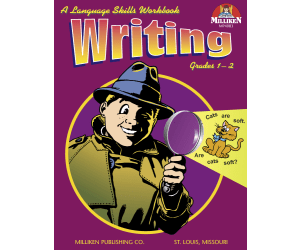
Writing - Grades 1-2
ELA, Writing, Grade 1, 2, Teacher Tools, Lesson Plans
Welcome to Writing - Grades 1-2 This is a comprehensive educational material, known for developing basic writing skills in grades 1 and 2. It is versatile and fosters individual learning as it can be used at any pace or style of work. Product Highlights: Multifaceted Activities: Encourages the development of capitalization, punctuation, sentence structure, and letter-writing prowess through varied exercises. Individual Words and Larger Text Scales: Focus on diverse aspects makes learning more wholesome. Exercises are structured to first promote understanding of sentence structure followed by distinction between various types of sentences. Punctuation & Capitalization: Speeds up comprehension of capitalization rules along with the correct use of punctuation—essential factors in creating meaning through text. Creative Expression Through Story Writing: After familiarizing with basics, students get an opportunity to consolidate new found skills through story writing tasks—an engaging way for them to express their creativity. In addition to the above we also understand penmanship, so we've included specific lined practice sections aiding students towards proper letter formation and good handwriting habits. Teachers will find this product useful across multiple settings—for whole classrooms during language art lessons or smaller group sessions. Even homeschooling parents may find this resource handy as our pre-prepared lesson plans incorporate well with self-directed learning at home too—a truly multi-use resource! An Added Bonus! An answer key accompanies these materials—to facilitate guiding discussions or even enabling children to self-check their responses! We're not just making teaching efficient but ensuring teachers are able do so stress-free—with less time spent creating homework assignments and more focus on individual student progress. Final Note In a nutshell, our all-inclusive, user-friendly "Writing - Grades 1-2" resource might just be the necessary element to transform your first and second graders into confident young writers. Our PDF product file ensures you're never far from an excellent teaching aid that blends comprehensive language arts lessons in an easy-to-use format for both today’s school teachers and committed home educators alike!
Author Classroom Complete Press
Tags PDF

Data Analysis & Probability: Bar Graphs - PC Software
Math, Graphing, Kindergarten, Preschool, Grade 1, 2, Teacher Tools, Lesson Plans
Data Analysis & Probability: Bar Graphs - PC Software As an educator, finding effective and engaging teaching resources is essential for helping our students thrive. The Data Analysis & Probability: Bar Graphs - PC Software is a comprehensive tool tailored towards enhancing understanding of Bar Graphs as part of Data Analysis and Probability. Easily applicable across multiple learning scenarios, the software can be utilized in both large group settings for core lessons or small groups to bolster collaborative learning. Homeschooling parents will also find the platform highly beneficial. Packed with curriculum-aligned content, educators get a wide variety of materials in its digital inventory; Lesson plans Real-world word problems Timed drill activities. The software comes complete with pre-lesson assessments designed to gauge students' knowledge before embarking on a new topic. This provides valuable insights which can enhance personalized tutoring approaches. Likewise, at the end of each chapter, a SMART Response assessment ensures comprehension tracking on every student's progress is made easy. This solution champions diversity by offering both English and Spanish voice over options alongside text support – ensuring everyone's needs are fully catered for even in multi-language settings. The inclusion of mathematical tools elevates interactive practices essential for enhancing understanding while memory match games spark creativity during learning sessions. To make it more exciting, board game and spinner game elements are also incorporated into the system giving teachers distinct ways to diversify math lessons hence boosting engagement levels among learners. Within single zip files easily extractable on PCs across various grades (Preschool through Grade 2), educators have access to lesson plans covering key subsect subjects like graphing under math topics. With these available resources at teacher’s fingertips coding becomes less daunting thus promoting effective delivery of knowledge transfer within their respective educational contexts without leaving some learners behind. Exploring graph data has never been so detailed yet straightforward – thanks to this inclusive-, learner-centered approach-inspired teaching resource that aims at cultivating solid math foundation for learners right from their early schooling stages.
Author Classroom Complete Press
Tags Math Lesson Plan, Bar Graphs, Graphing Activity, Data, Probability
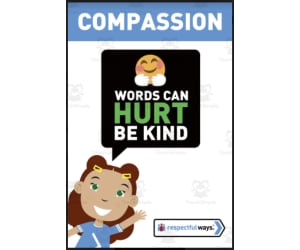
Let's Chat Conversation Cards | "Words Can Hurt! Be Kind"
Special Resources, Social Emotional Learning (SEL), Grade 2, 3, 4, 5, 6, Teacher Tools, Lesson Plans
Let's Chat Conversation Cards for "Words Can Hurt! Be Kind." The “Let’s Chat Conversation Cards is a wonderful resource to help students build a positive mindset. This resource is part of a whole program that works towards having students believe they can be compassionate, have perseverance, respect, and responsibility and through it all, achieve great things! Let’s Chat Conversation Cards allows for real conversations through which students may learn of different perspectives and strengthen friendships through truly understanding each other. This resource is a set of Let's Chat Conversation Cards for "Words Can Hurt! Be Kind." There are 57 other Let's Chat resources available, along with matching Respectful Signage listed under "graphics". The "Home Connects" for families is available in English and Spanish. Meridian MS Public Schools has been a partner district of Respectful Ways since October of 2020 and they shared this year’s Panorama Data with us. Meridian students who are utilizing Respectful Ways and PBIS showed great improvements in these 3 key areas: 12% higher GPAs 37% attendance improvements 93% less referrals Respectful Ways is a trauma-informed program: Assessment: Take our survey to assess your school climate. Targeted Results: Your survey identifies modules that meet your students' social and emotional needs. Our trauma-informed online curriculum has been vetted by the Attachment & Trauma Network. Custom Professional Development: We offer workshops with subject-matter experts who use your data to address student behavioral needs and educator wellness needs. Blended Education Interventions: Respectful Ways (RW) integrates seamlessly with different instructional frameworks such as PBIS and MTSS, using evidence and research-based practices. For more information email Pam@RespectfulWays.com or call 404-955-8882.
Author Respectful Ways
Tags Community, SEL, Conversation Cards, Respectful Ways, Be Kind, Bullying, Social Emotional Learning, Compassion, Character Education, Let's Chat

Measurement: Measuring Length - Practice the Skill 3 - MAC Software
Math, Measurements, Common Core, Kindergarten, Preschool, Grade 1, 2, Teacher Tools, Lesson Plans
Measurement: Measuring Length - Practice the Skill 3 - MAC Software This dynamic teaching tool, designed to enhance understanding of measurement concepts in preschool through grade 2 students, features a captivating mini chapter focusing on length measurement skills. The software is meticulously crafted to marry curriculum-based content with timed drill activities for practice. Main Features: Created bearing in mind students' unique learning styles and abilities. Incorporates interactive drills that allow learners to convert given measurements using provided formulas. Inclusive mathematical tools are integrated into the software aiding further learning process. The program offers versatility with English and Spanish voice over and text options. Alignment with recognized educational practices: The key content areas of the software aligns remarkably well with Common Core State Standards and STEM initiatives. Its design adheres strictly to guidelines outlined by the National Council of Teachers of Mathematics (NCTM). Versatile utility across various classroom contexts: This resource can be utilized for individual study or group collaboration within classrooms, Critically beneficial as a value-added homework assignment activity , . Note:The software is downloadable as a zip file compatible only for MAC systems. In conclusion, Measurement: Measuring Length - Practice the Skill 3 - MAC Software holds astonishing potential as a state-of-the-art teaching resource leading your students towards better proficiency in mathematics. This practical tool fortifies active involvement among young learners while strengthening essential mathematical concepts related to Measurements.
Author Classroom Complete Press
Tags Math Lesson Plan, Measurement Lesson, Length, Digital Math, Math Skills