



3,945 products added recently
Page 6 - 2nd Grade Lesson Plans
Enhance your second-grade classroom with lesson plans that build on foundational skills and introduce new concepts. These activities promote critical thinking and creativity across subjects. Implement these plans to keep your students motivated and progressing confidently.

 Show filters


My Emotions Explorer: SEL Activity Book
ELA, Language Development, ESL, Grammar, Social Emotional Learning (SEL), Special Resources, Life Skills, Social Skills, Special Education Needs (SEN), Speech Therapy, Homeschool Curriculum, Kindergarten, Grade 1, 2, 3, 4, 5, Assessments, Teacher Tools, Graphic Organizers, Lesson Plans, Worksheets & Printables, Drawing Templates & Outlines, Workbooks, Writing Prompts, Task Cards, Word Problems
Find "My Emotions Explorer: SEL Activity Book Professional Edition," the best social emotional learning activity book for kids aged 6-9 years old. This exciting kids' emotional intelligence book helps kids, parents, and teachers with various social and emotional learning activities. With numerous tools like the Wheel of Feelings, Body Scan, Anger Volcano, Breathing Bubbles, Worry Jar, Empathy Scenarios, Positive Self Talk, Gratitude Garden, Weekly Mood Tracker, and many more, this 43-page downloadable PDF helps kids manage overwhelming emotions with ease. It is an amazing tool for homeschool social and emotional learning, classroom activities, and even family bonding. It also includes an adult facilitation guide to provide psychological safety. Give your kids the gift of higher emotional intelligence with this top-rated kids' emotions book, great for kids' social and emotional learning activities, elementary SEL, and child development tools. Get your copy now and start enjoying instant access to fun and therapeutic exercises! Why Parents/Schools Love It: Research-Backed SEL Tools: Informed by affective science and positive psychology, it develops emotional granularity, strength, and co-regulation skills, resulting in improved mental health and fewer behavioral problems. Engaging, Interactive Activities: Fun activities like drawing faces, building anger volcanoes, and developing gratitude gardens keep kids engaged while learning practical coping skills. Adult Facilitation Guide: Offers parents and educators professional guidelines on how to create a psychologically safe environment, ask open-ended questions, and incorporate SEL into daily routines. Customizable and Printable: Offers 43 pages of printable and editable PDFs, including trackers and certificates, for personalized learning without the need for additional materials. Promotes Long-Term Growth: Assists children in moving from reactive emotions to proactive self-awareness, developing empathy, emotional intelligence, and family/school relationships. Target Classes/Students : Upon a thorough analysis of the 43-page PDF, which includes the adult guide, modules on emotional identification (e.g., Wheel of Feelings, Draw Your Face), emotion regulation skills (e.g., Body Scan, Anger Volcano, Breathing Bubbles, 5-4-3-2-1 Grounding, Worry Jar, Positive Self-Talk), empathy skills (e.g., Empathy Scenarios), gratitude skills (e.g., Gratitude Garden), tracking skills (e.g., Weekly Mood Tracker), and the completion certificate, the content is geared towards children in the age range of 6 to 9 years. This age range corresponds to the early elementary school students. The age range of 6 to 9 years corresponds to the following grades: Kindergarten (5 to 6 years, but this age range can be adapted for 6-year-olds to be introduced to SEL). 1st Grade (6 to 7 years, focusing on basic emotion identification skills). 2nd Grade (7 to 8 years, focusing on emotion regulation skills). 3rd Grade (8 to 9 years, focusing on advanced skills such as gratitude skills and analysis of mood patterns). This PDF is not adapted for children younger than 6 years, i.e., for preschoolers, nor for children above 9 years. Copyright/Terms of Use: This Book was copyrighted by Syed Hammad Rizvi. This resource may be used for personal and single classroom use. You may not change, distribute, or sell any part of this resource. In other words, you may not put this resource on the Internet, so that it could be found and downloaded by others. If you wish to share this resource with others, you may purchase additional licenses from Teachsimple. I appreciate your understanding of these terms of use. This product is happily brought to you by Syed Hammad Rizvi
Author Creative Book Store
Rating
Tags SELAactivities, SocialEmotionalLearning, EmotionalIntelligenceForKids, KidsEmotionsWorkbook, SELWorkbook, ChildrensMentalHealth, EmotionalLiteracy, ResilienceBuildingForKids, HomeschoolSEL, ClassroomActivities

Phonics Seek and Find
ELA, Language Development, Phonics, Preschool, Grade 1, 2, 3, Teacher Tools, Lesson Plans
Phonics Seek and Find, a fabulous teaching resource that shapes learning, skill development, and creativity into an engaging journey. Designed specifically to fortify phonics skills, this powerful aid targets learners from kindergarten through grade 3. It incorporates 23 effective lessons addressing both long and short vowels, along with common consonant sounds. It’s an ideal tool for enhancing linguistic comprehension in young learners. With stunning artwork which visually promotes learning and heightens student engagement - Phonics Seek and Find transforms every lesson into a voyage where students eagerly traverse each page. Incorporates large variety of lessons within single PDF file. Easily adapts to multiple classroom settings – full classes or smaller groups. Potential use as homework assignments deepening understanding at home. Under the broad umbrella of Language Arts, it focuses on Phonics, zeroing in on specific speech sounds crucial for language development. Note: Phonics Seek and Find is not just about lesson plans . It provides educators with the power to turn standard phonetics education into interactive sessions which strike a chord with young learners enhancing their overall academic experience during early schooling years. With this product in your arsenal, You can create vibrant infotainment sessions easily, Foster curiosity-driven learning, Aid visual memory using associated artwork thereby aiding recall ability. Step up your teaching modus operandi delighting not only yourself but each student under your tutelage using Phonics Seek and Find - your one-stop solution for effortlessly imparting basics in a lively package of entertainment! A hidden gem waiting to be discovered by educators aiming to bring significant change benefitting their ward's academic growth trajectory, paving way for brighter futures ahead!
Author Classroom Complete Press
Tags PDF
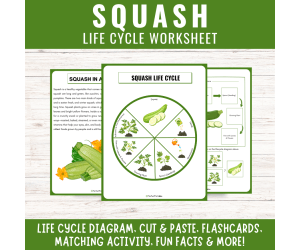
Squash Life Cycle Fall Plant Harvest Science unit study fun facts
Life Sciences, Science, Biology, Nature & Plants, Kindergarten, Preschool, Grade 1, 2, 3, Coloring Pages, Worksheets, Worksheets & Printables, Parts of and Anatomy of, Flashcards, Diagrams, Teacher Tools, Lesson Plans
Make learning about the squash life cycle fun and engaging with this printable plant science activity! Students will explore how a squash plant grows from seed to mature plant while learning about germination, plant growth, flowering, pollination, fruit development, and harvest. I like using this resource during fall science units, autumn classroom activities, harvest lessons, gardening studies, botany units, and seasonal learning. It's a low-prep activity that combines plant science with an engaging fall harvest theme. What You Will Get This printable Squash Life Cycle activity helps students understand the stages of squash plant growth while building science vocabulary and learning interesting facts about this popular fall crop. What's Included in this Resource? • Squash life cycle activity • Seed germination and growth stages • Plant parts and development activities • Flowering and pollination information • Fruit development and harvest stages • Fun facts about squash • Student-friendly science activities • Easy-to-use printable pages This resource is perfect for: • Fall science lessons • Autumn classroom activities • Harvest-themed lessons • Plant life cycle units • Botany and gardening studies • Science centers • Homeschool learning • Early finisher activities Why you will love this? • Easy to print and use • Connects science learning with a seasonal fall theme • Reinforces plant life cycle vocabulary • Encourages observation and scientific thinking • Introduces how crops grow from seed to harvest • Great for seasonal science centers and independent work This Squash Life Cycle activity is a fun way for students to discover how squash plants grow from seed to harvest while exploring plant development, pollination, fruit production, and fascinating fall harvest facts.
Author Perfect_Printables
Rating
Tags Plant Science, Life Cycle, Plant Life Cycle, Plants Diagram, Fall Activities, Squash Life Cycle, Squash, Fall Plants, Fall Science, Autumn Activities

Camping: A Complete Theme Unit Including Learning Centers
, Preschool, Grade 1, 2, Lesson Plans, Teacher Tools
The Camping: A Complete Theme Unit Including Learning Centers This versatile teaching resource brings nature into the classroom, fostering curiosity about the outdoors and strengthening connections to it. Delivered in an easy-to-download PDF format, this comprehensive digital educational toolkit will positively transform your teaching approach. What's Inside? A set of 34 rigorously planned pages packed with engaging activities. Adaptable framework for kindergarten through second-grade students, adjustable for different grade levels. An ensemble of educative games, puzzles and craft projects centered around the camping theme. Differentiated Learning Approach The Camping: A Complete Theme Unit Including Learning Centers goes behind just honing foundational subjects like reading or numeracy skills among learners. It aims at broadening their mental horizons by intensifying their critical thinking aptitudes through: Craft challenges that enhance creativity Mind-stimulating puzzles that boost problem-solving abilities Real-life application-based learning experiences that nurture logical reasoning. Fostering Teamwork: An Accessible Teaching Methodology This resource can seamlessly be integrated into whole group instruction or small group collaborations during center time. It encourages team-building skills among learners while providing opportunities for them to learn how to logically categorize items or decode ciphered messages – a classic element in outdoor adventures! A Unique Opportunity For Homework Tasks Increase student engagement with homework tasks based on this resource unit's activities. This allows them to connect lessons learned in class with real-world applications- a unique opportunity to further explore intriguing topics! Make Learning Fun with The Camping: A Complete Theme Unit Including Learning Centers! This comprehensive curriculum enrichment pack will bring about a welcome change in your classroom, ensuring that learning continues to be a joyous adventure packed journey for your learners! It is the perfect mix of fun-filled ideas, and academically sound content- definitely an investment that will pay off well in the educational journey of every student!
Author Classroom Complete Press
Tags Camping, Learning Center, Math, Manipulatives, Art Center
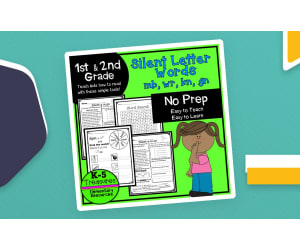
Silent Letters Phonics – MB, WR, KN, GN Set
ELA, Phonics, Language Development, Vocabulary, Grammar, Grade 1, 2, Worksheets & Printables, Literacy Readers, Teacher Tools, Lesson Plans
With this Phonics / Silent Letters for 1st and 2nd Grade: MB, WR, KN, and GN your students will be able to identify the silent letter words and become better readers as they practice each sound and learn the words that are associated with these sounds. Each worksheet as many activities for the following silent letters: WR, GN, MB, and KN silent letter sounds. This unit is perfect for whole group, individual work, centers, or homework to complete on their own. These fun and engaging activities will help your student match, read, write, and identify the silent sounds in words. With so much practice, students will be able to master these sounds and become better readers. Also included are short reading passages where they will then answer comprehension questions on what they read. All tools helpful to young readers and engaging at the same time. For each sound in this unit, students will: Start with reading a short and easy passage and identify the silent letter words and highlight or color those words. They will also identify at least five words from the reading passage with the silent letter sound. Included are comprehension questions about the passage that each student will answer. Students will also fill in the missing word in a sentence from a word bank that highlights the silent letter sound. On another worksheet, students will complete a cut, sort, and matching activity with the silent letter words and glue them to the correct picture. With a paperclip, students will spin the silent letter word and match it to the correct picture. Lastly, they will complete a word search for the silent letter sounds. It is 27 pages of fun, engaging activities that your students are sure to enjoy! For more phonics and grammar activities, click on the following links below:
Author K-5 Treasures
Rating
Tags Phonics, Silent Letters, 1st Grade Resources, 2nd Grade Resources, Gn Words, Mb Words, Kn Words, Wr Words, Reading Resources, Phonics Worksheets

Guided Reading Level M - The Sport of Fencing (with Lesson Plan)
ELA, Resources for Teachers, Reading Comprehension, Reading, Science, Engineering, Technology, Sports, P.E. & Health, Physical Education, Grade 2, 3, 4, Worksheets & Printables, Worksheets, Teacher Tools, Centers, Activities, Literacy Readers, Quizzes, Quizzes and Tests, Assessments, Lesson Plans
This Guided Reading Book - The Sport of Fencing (Level M) with lesson plan includes: Guided Reading Color Label (front cover x1) This is a quick way to match the book’s demands to what students can generally handle.. The overall goal is to use the level/color to pick books for several smaller groups. To qualify for a certain level, a student is expected to read a book from that level with about 90–94% accuracy. If a student is consistently accurate and understands, move up a level. If the student is struggling at that level, drop down and add more support. Each student will improve at completely different rates, but it is generally one of the best ways to check progress across the class. DOWNLOAD THE CATALOG TO VIEW ALL GUIDED READING BOOKS AVAILABLE (SORTED LEVELS A-Z) Pre-Reading Question (x1) Teacher asks the prompt aloud, can be while showing the cover or first page. Students share what they already know, or make educated guesses from the cover. Prompt them to use the target vocabulary. Write some of their responses on the board to look back at during the reading. Vocabulary Words (x5) Introduce the five words, best doing it one at a time. Start by saying it, while students repeat and then see if anyone knows what it means before reading further. Read through the meaning and try to briefly connect each word to a picture or gesture so it’s meaningful. Ask students to flip through the book pages and point to where they see each of the vocabulary words. While reading the book pause upon coming across one of the vocab words or read the sentence twice to make sure students understand the word has appeared. Optional: Ask students to raise hands whenever they see/hear one of the new words. Guided Reading Pages (x10) Check the book snapshot (below) for: primary topic - do you need to prep extra reading or intro materials on this? what is taught best - decide on 1-2 bullets to focus on, use the prompt or words provided here for best results. learning goals - what you are checking for students to be able to do after the session, elicit answers using prompts or words provided. key vocabulary (see section above). questions overview - so you know what is coming up and if you need to prep extra materials to assist understanding. Run the lesson You may have already looked at a few of the pages together, but you can show them some of the pictures again first to set meaning. Depending on how much time you have and how familiar your students are with guided reading class, you may want to read the book aloud first with the group first. Students whisper or partner read, while you listen in. If time, do it as a group, one student reading a page each. Use the guided page’s prompts to coach: “Check the picture / does it make sense?” “Point under the words / try the first sound” “Reread the sentence smoothly”. Try to focus more on one student per session (rotating every time), so you can work out if they are ready to move up or need to move down a level. Comprehension Questions (back cover x3) This is your way to check that students didn’t just say the words, but actually understood the text. First, let students answer by pointing to the page/picture and saying a short sentence. After any answer, follow with: “Show me where you found that in the text.” In bigger groups, have partners answer first (10–20 seconds), then call on 2–3 students to share. Differentiation tips: Emerging speakers/struggling readers: oral + pointing On-level: oral in a full sentence Higher: one written sentence or draw + label Book Snapshot Title: The Sport of Fencing Genre: Nonfiction (informational) Subject: Physical Education / Reading (Informational Text) Primary Topic: Fencing gear, swords, and how matches work Estimated Guided Reading Level (A–Z): M What This Book Teaches Best Basic overview of fencing as a sport, including where it takes place (a long, narrow mat called a “strip”). Safety equipment and how it protects fencers (mask, jacket, glove, cuff). Differences among the three fencing swords and how points are scored with each (foil, épée, sabre). Key fencing moves and positions used in a match (“En Garde” stance, lunge). How modern fencing tracks points and how respect is shown before and after matches. Learning Goals Students will describe what fencing looks like and where it takes place using details from the text. Students will explain how fencing safety gear protects a fencer during a match. Students will compare foil, épée, and sabre by describing how targets and scoring work. Students will identify and describe the “En Garde” stance and why it helps movement. Students will explain how a lunge helps a fencer reach an opponent to score a point. Students will describe how fencing shows respect before and after a match. Key Vocabulary From the Text strip — the long, narrow mat where fencers move. foil — a light, flexible sword used in fencing. épée — the heaviest fencing sword with the whole body as target. sabre — a fast sword that can score with tip or edge. lunge — a move stepping forward to reach an opponent. Discussion Prompts Pre-reading question: What safety gear do you think someone would need to fence safely? Comprehension questions: Why do fencers wear a fencing mask? In a foil match, what part of the opponent is the target for scoring points? What do fencers do before and after a match to show respect? Printing Tips 1. Best Printing Method (Recommended) “Booklet” Printing (Best if Available) If your printer or PDF viewer supports Booklet Printing , use this. Settings to use: Print mode: Booklet Paper size: Letter or A4 (either works) Orientation: Landscape Print on both sides: Yes Flip on: Short edge Scaling: Fit to printable area Booklet subset: First test: Front sides only Then: Back sides only This will automatically: Pair pages correctly Put the cover on the outside Align everything for folding After printing, fold in half and staple along the spine . 2. If “Booklet” Printing Is NOT Available You can still print this correctly with manual duplex printing . Step-by-step: Open the PDF. Choose Print . Set: Orientation: Landscape Pages per sheet: 1 Print on both sides: Yes Flip on: Short edge Print all pages . Because each PDF page already contains two facing book pages, the result will still fold cleanly into a book. Thousands of Cored Education products are included with your TeachSimple membership. Download links and encyclopedia index available here.
Author Cored Education
Rating
Tags Reading Comprehension, Reading Passages, Reading, Guided Reading, Guided Reading Lesson Plan, Guided Reading Activity, Pre-reading, Health Lesson Plans, P.e., Sports

Data Analysis & Probability: Bar Graphs - Learn the Skill - MAC Software
Math, Graphing, Common Core, Kindergarten, Preschool, Grade 1, 2, Teacher Tools, Lesson Plans
Data Analysis & Probability: Bar Graphs - Learn the Skill - MAC Software This teaching resource is designed for educators aiming to deepen students' understanding of data analysis and probability via the use of bar graphs. It particularly targets preschool, kindergarten, and primary grade children (Grade 1 and 2), simplifying mathematical concepts in a user-friendly manner. Main Features: The content adheres to common core state standards and NCTM principles. Language accessibility with voice-over options in English and Spanish along with supportive text. Incorporates math tools that increase student engagement while improving their math proficiency. Promotes active learning through practical problems that foster critical thinking allowing learners to apply knowledge gained concurrently. An aspect making this software exceptional is its versatility, helping it find a place across diverse learning setups from group lectures/classroom settings to small study sessions or homework assignments providing maximum flexibility to educators. The Software: This product comes as a single MAC-compatible software zip file making it simple right from download till navigation. All activities are neatly packed within one unit saving time lost on searching – thus enhancing time available for teaching & learning! Tailored For: Ideal for teachers focused on strengthening their student's grasp of data analysis using bar graphs and probability estimation, offering pedagogically sound instructional materials specifically from an education professional’s perspective. If you are an educator aiming at delivering effective mathematics instruction consistent with STEM initiatives while keeping lessons engaging – the Data Analysis & Probability: Bar Graphs - Learn The Skill - MAC Software is your go-to resource!.
Author Classroom Complete Press
Tags Bar Graphs, Digital Graphs, Digital Math, Math Skills, Data

Data Analysis & Probability - Digital Lesson Plan Gr. PK-2 | MAC Software
Math, Patterns, Kindergarten, Preschool, Grade 1, 2, Teacher Tools, Lesson Plans
Product Description This product is an all-round educational resource for educators teaching data analysis and probability in grades PK-2. Containing over 150 activities across more than 80 interactive screens, it successfully combines task-based activities and drills to cater to various classroom settings. Standards Compliance Aligned with NCTM standards and individual State Curriculum Math Strand of Data Analysis & Probability, this software is specifically cast for math proficiency. Main Features An array of pre- assessment activities for bespoke learning plans. Real-world problem solving exercises aimed at applied skill development. Dual functionality in imperial and metric measurements - useful in diverse geographical contexts. Bilingual text-to-speech ability (English/Spanish), supporting non-native speakers or bilingual classrooms effectively. Aptly balanced drill problems (90+) ensuring practice on accuracy and speediness. Printables available for traditional paper tasks/tests. Incorporated learning games like memory match game, board game & spinner game offering fun ways to learn concepts at a suitable pace. Actionable Evaluations The product comes fitted with assessment quizzes after each chapter acting as key knowledge-check markers providing both, the student performance feedback & teacher evaluations on their mathematical understanding level. Loading Details: - SKU: le-dap02m - Manufacturer: Lakeshore - Format: Downloadable Lessons / .ZIP files - Operating System Compatibility: Macos This state-of-the-art digital lesson plan encourages curiosity while filling knowledge gaps in areas of Data Analysis & Probability for pre-kindergarten to grade 2 students, inclusive, be it at home or school settings.
Author Classroom Complete Press
Tags Data, Analysis, Probability Lesson Plan, Digital Math, Patterns Lesson
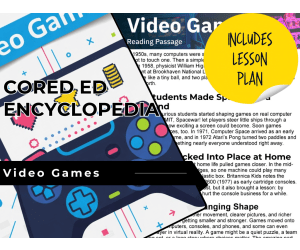
Video Games Reading Comprehension Passage - Cored Ed Encyclopedia
ELA, Language Development, Reading Comprehension, Reading, Pre-Reading, Science, Technology, Engineering, History, Social Studies, Grade 2, 3, 4, 5, Worksheets & Printables, Worksheets, Teacher Tools, Centers, Activities, Writing Prompts, Assessments, Quizzes and Tests, Quizzes, Lesson Plans
This video games reading comprehension with lesson plan includes: Visualization (on the front cover) Start your lesson by taking a minute to think and share something about the topic. Read the script aloud (slowly), perhaps prepare some music or sound effects. Student close their eyes and let their imaginations wander. Students open their eyes, read the question aloud and give them a few minutes to complete. Ask a few students to share or keep answers until the end to compare with what they learn in the passage. Quick pause—thousands of Cored Education products are included with your TeachSimple membership. Download links and encyclopedia index available here. Pre-Reading Trivia Students will write down one thing they already know about the subject and then read five more facts and discuss. These facts are fun, and the students will enjoy learning about the subject before reading more. Give 1 minute for students to write what they already know (no pressure—best guess is fine). Read the five facts together. After each fact, do ask a student for their opinion, was it surprising? Set a purpose by asking students to highlight/underline one fact they want to learn more about during the reading. Reading Passage The text is a high-interest reading passage with set paragraphs, roughly three to four paragraphs long. It contains a variety of themes about the topic, anywhere from history to technology. The passage is between 250 and 350 words in length. First, ask students to look at the headings and see what they’ll learn about today. What do they know about the topic/heading? First read options: Teacher read-aloud (best for support). Partner reading (paragraph by paragraph). While reading, students underline important details, and vocabulary words they think may come up in the questions section. Mixed Questions The first question page contains four multiple-choice questions, each with a choice of four answers, and three written response questions that require a sentence or two from the student. Students complete the mcqs first independently, then review quickly as a class. For the 3 written responses, try to get students giving the answer with some form of evidence: “I think ___ because the text says ___.” If students get stuck, send them back to check the passage. Vocabulary Questions Practice seven key words from the text in this section across two activities. First section is scrambled words where students will unscramble three words given a clue for each. The second section is a word to meaning matching activity. Before starting, have some students read out words they underlined in the passage. Ask students to say the word and read aloud the sentence(s) around each word. Ask students to do scrambled words and the matching exercise in pairs then go through answers as a class. For the scrambled spelling task, get four pairs to come up to the board and write the words for extra practice with the other student reading out the clue. For the matching task, prompt students to give full sentences: “I matched ___ with ___ because ___.” Creative Writing In this question, the student will be required to write a five to eight sentence paragraph on a question related to the topic. Before starting, ask students write down 3 key ideas they are going to include in their piece. Ask students for ideas to share around the class to help those struggling. Pro writing expectations: 5–8 sentences At least 2 facts or details from the passage At least 2 vocabulary words from the previous page Students read their paragraphs while classmates listen for facts and vocabulary words. Extension Activities This page is optional for fast finishers or to take home. There are several activities, each one requiring a different skill. Do some, do none, do all, completely optional - but you will feel reassured knowing every possibility is planned for. Includes summary writting question. Answer Key There are answers for the multiple-choice questions, written response questions have sample answers, vocabulary answers and if there is a summary question then a sample summary will be provided as well. Lesson Plan Included Customized lesson plan for this lesson is included. Lesson Snapshot Title: Video Games Genre: Nonfiction (Informational text) Subject: Science & Technology / Media Literacy Primary Topic: How video games changed from dots to VR Estimated Guided Reading Level (A–Z): P Story text location: Reading Passage on page 3. Support pages included: Visualization prompt (p.1), Pre-Reading Trivia (p.2), Mixed Questions (p.4), Vocabulary (p.5), Creative Writing (p.6), Extension Activities (p.7), Answers (p.8). Support-page QA check: The questions, vocabulary tasks, and answer key match the passage’s details (dates, examples, and key terms). What This Lesson Teaches Best Early video games grew from science tools and big computers: Describes room-sized computers and a “game screen” idea using an oscilloscope. Timeline of key early games and places: Connects Tennis for Two (1958), Spacewar! at MIT (1962), Computer Space (1971), and Atari’s Pong (1972). How cartridges changed home gaming: Explains that swapping cartridges let one system play many different games, and names early cartridge consoles (Fairchild system, Atari 2600). Technology improvements changed how games look, sound, and where they are played: Notes smoother movement, clearer pictures, richer sound, and games moving to handheld screens, computers, consoles, and phones. Games became many types of experiences: Lists examples like puzzles, team sports, building sets, long stories with choices, and virtual reality. Learning Goals Students will describe how Tennis for Two worked and what device showed the moving dot. Students will identify major milestones in early video game history by placing key examples in order. Students will explain how cartridges helped video games spread at home. Students will summarize how video games changed as computers became smaller and stronger. Students will give examples of different kinds of games mentioned in the passage. Key Vocabulary From the Text oscilloscope — a screen tool that can show moving signals. physicist — a scientist who studies matter and energy. arcades — public places where people play games. cartridges — plastic game boxes you swap into a system. virtual — computer-made, not physically real. FULL CATALOG OF DOWNLOAD LINKS AND ENCYCLOPEDIA INDEX HERE
Author Cored Education
Rating
Tags Vocabulary, Reading Comprehension, Reading Passages, Lesson Plans, Ela Lesson Plans, Reading Comprehension Lesson Plans, Pre-reading, Science Lesson Plans, Technology, History Lesson Plans

Data Analysis & Probability: Probability - Practice the Skill 1 - MAC Software
Math, Patterns, Kindergarten, Preschool, Grade 1, 2, Teacher Tools, Lesson Plans
Data Analysis & Probability: Probability - Practice the Skill 1 - MAC Software This educational resource is a valuable tool for educators seeking to strengthen understanding of probability within data analysis. It's designed specifically for use on MAC systems and is particularly suitable for early education environments such as preschool, kindergarten and elementary grades 1 and 2. Main Features: An interactive mini-chapter composed of timed drill activities suitable for young math learners' practice. Aidful built-in math tools that facilitate smooth navigation and enhance learning experience. Multilingual function offering both English default voiceover and text alongside Spanish voice over options. Note: This bilingual feature makes it consequently user-friendly even in bilingual classrooms or where English may be a second language. The software rigorously adheres to CCSS, STEM initiatives, and NCTM guidelines thus aligning students’ learning with key mathematical competencies such as data analysis and probability patterns. This tool can effectively integrate into teacher-led instruction session or serve as homework assignments. It offers practical insight on mathematical concepts while also allowing teachers to monitor progress effectively. Included Materials: A single zip file containing all necessary software materials ensuring hassle-free download with minimal set up required on any MAC operating system used by either teachers or homeschoolers alike.
Author Classroom Complete Press
Tags Probability Lesson Plan, Math Skills, Digital Math, Data, Analysis

Worry Wizards: Small/Whole Group Curriculum | Anxiety Lesson Plans
Special Resources, Life Skills, Preschool, Grade 1, 2, Lesson Plans, Teacher Tools
Worry Wizards: Small/Whole Group Curriculum | Anxiety Lesson Plans is a 100-page resource that will prepare you with all the tools you need to support your students with their anxiety. This curriculum can be conducted with small groups or whole groups. You will receive: - 10 lesson plans - Parent letters - Activity resources - Self-assessments - Digital resources This curriculum is designed for a small group called “Worry Wizards” that aims to empower students to understand anxiety and learn strategies to support anxious thoughts. It could be used with a whole group but would be better in small groups. This group is ideal for students who may be struggling with anxiety. A suggested timeline would be meeting once a week for 30 minutes for approximately 10 weeks (although could range from 8-14 depending on your students and time allotted). Ideally groups will be limited to 4-6 students. While each lesson has a suggested Coping Strategy and 2 Minute Game, facilitators can easily exchange these with other activities provided to best fit the needs of their group.
Author Kindergarten Cafe
Tags Whole Group Curriculum, Small Group Curriculum, Anxiety Lesson Plan, Anxiety Work Curriculum, Class Structure

Science Mega Bundle: 3 Topics-in-1 Complete Teaching Kit for Grade 1-4
Science, Basic Science, Earth and Environmental Sciences, Grade 1, 2, 3, 4, Worksheets & Printables, Lesson Plans, Teacher Tools, Presentations, Templates, Quizzes and Tests, Classroom Decor
🌿 Science Mega Bundle: Plants, Animals & Habitats Make science teaching simple and engaging with this MEGA bundle covering three key topics: Parts of the Plant, Animal Adaptations, and Exploring Habitats. It helps students learn how living things grow, survive, and interact with their environment. Each topic includes: ✔ Editable PowerPoint Lesson with Assessment ✔ Editable Lesson Plan ✔ Worksheets (no prep) with Answer Key ✔ Classroom Posters Best For: Grade 1–4, Homeschooling, Tutoring How to Use: Use as full lessons or small activities for classroom, online, or independent learning. Use slides for teaching, worksheets for practice, and posters for classroom display. Differentiate tasks based on learner ability. Perfect For: Grade 1–4, Homeschooling, Tutoring Aligned with early primary science learning on living things and environments. Format: PDF, PNG, Editable PowerPoint, and lesson plans. Number of Pages: 50+ resources total. Tags #ScienceBundle #PrimaryScience #PlantsandAnimals #Habitats #NoPrepLessons 📥 Instant Download after purchase.
Author Pinay Digitals
Rating
Tags #PrimaryScience, #ScienceMegaBundle, #TeachingResources, #DigitalTeachingTools, #NoPrepResources, #ScienceWorksheets, #ElementaryScience, #TeacherCreatedResources, #HomeschoolScience

B and D Reversal — A Structured Daily Intervention Programme
Common Core, Phonics, Language Development, ELA, Spelling, Special Education Needs (SEN), Special Resources, Kindergarten, Grade 1, 2, 3, 4, Charts, Teacher Tools, Lesson Plans
B and D Reversal — A Structured Daily Intervention programme to tackle a real problem: Dyslexic Logic Font used with permission. B and D reversal is one of the most persistent problems in early literacy. The Problem Children who confuse these two letters are not being careless, nor are they failing to try, as some suppose. They know that Bee says 'b' and Dee says 'd' — they have moved beyond learning beginning sounds. The problem is not knowledge — it is retrieval. When a child is writing at speed, the brain cannot always pull up the right letter shape quickly enough. The child starts to write, and the wrong shape is already on the page. They do not have time to sit there working out which way round a b or a d goes. They guess. And nine times out of ten , they get it wrong. The teacher points out the errors. The child feels dumb. Parents and teachers scour the web for a solution. They try one thing after another with the same fruitless results. The usual approaches — the bed trick, the b hand, repeated correction — all share the same flaw. They ask the child to retrieve the correct answer from memory under pressure. The b hand fails because the child cannot remember which hand is which. That is precisely what they cannot do reliably. A strategy that depends on the thing that is broken will not fix the thing that is broken. The Solution Remove the need to retrieve the correct shape and formation from memory entirely. This pack gives the child a simple visual reference — a card with a picture embedded in each letter shape, fixed permanently to the desk, with a clear starting point for letter formation marked on each letter. One glance before writing, and the right letter is there. No memory required. No cognitive load. Just the correct letter, every time. The Dyslexic Logic Font — used with permission — is used throughout. This helps pupils establish the correct letter shape more easily. What is included Table cards for the desk, bookmarks for reading books and folders, and smaller cards for use wherever your child writes. Every format ensures the cue is always within reach — because a cue that is not there cannot help. Five weeks of pre-written daily word lists — carefully sequenced from single b words through to mixed b and d in longer words. Nothing to prepare. Just open and use. Weekly record sheets — a simple daily checklist tracking whether your child chose the correct letter, checked the card independently, and formed the letter correctly. Includes a progress chart the child completes themselves and a readiness check so you know exactly when to move to the next stage. A full step-by-step guide for parents and teachers. This is the part most similar resources leave out. A visual cue only works if the child has been properly trained to use it — consistently, every time, before they write rather than after. The guide explains exactly how to do that, how to handle resistance, and what to expect over time. A video guide showing the full programme in action — because seeing it is easier than reading about it. There are no quick fixes here. The habit of checking takes weeks to establish and months to become fully automatic. But with consistent use, it works — and this pack gives you everything you need to make that happen. Suitable for use at home or in the classroom with any child who has a persistent b and d reversal problem, regardless of which reading programme they are following.
Author Lilibette's Resources
Rating
Tags B/d Reversal, Letter Confusion, B/d Confusion, Speling Problems, Dyslexia, Special Needs

Fairy Tales Gr. 1-2
ELA, Reading, Grade 1, 2, Teacher Tools, Lesson Plans
Fairy Tales Gr. 1-2 Fairy Tales Gr. 1-2 is a dynamic resource designed to deliver comprehensive teaching solutions that make use of the charm and fascination of traditional fairy tales. Crafted for Grade 1 and Grade 2 pupils, this unit aims to enhance reading abilities while promoting innovative learning within the broader subject area of Language Arts. Diverging From Ordinary Teaching Methods This resource transcends typical storytime with an engaging blend of classic stories and interactive activities encapsulated in twenty open-ended task cards adorned with captivating illustrations. What's Included? Four visually rich stories modelled around favourite fairy tales, offering students a fresh experience with familiar narratives. A Fairy Tale Trivia Game designed to test students' recall proficiency using pertinent question cards. An amalgamation of secondary subjects including understanding ordinals and alphabetical sequences, fostering classification skills, focusing on dialogue in texts, applying mathematical concepts creatively, among others in addition to literacy-focused units. Additional Features: Each student receives a custom record sheet forming part their personalized learning center workbook—a tool that keeps track of their progress throughout the course—providing additional incentive for active involvement. All components are compiled into one comprehensive PDF file type lesson plan document under license for single use per purchase which also accommodates blank activity /task cards allowing individualized instruction or additional practice problems where needed. Versatile Use Across Teaching Settings This resource is adaptable across various teaching formats—from full-class lectures building collective knowledge to smaller focused groups facilitating collaborative yet independent learning—the decision lies solely upon educators based on their teaching approach and learners' needs. The Fairy Tales Gr. 1-2 unit bridges the gap between interactive, fun-filled learning and academic excellence—bringing traditional fairy tales to life in an experiential way. Every educationist deserves this essential tool as they strive toward cultivating ardent learners for the future.
Author Classroom Complete Press
Tags PDF, Fairy Tales Learning Center, Simple Fairytales
Data Analysis & Probability: Probability - FLASH-PC
Math, Statistics, Grade 1, 2, Teacher Tools, Lesson Plans
Data Analysis & Probability: Probability - FLASH-PC A comprehensive resource targeted at Grade 1 and Grade 2 students, with an emphasis on the field of statistics. Overview: Made to make learning probability easier and more engaging. Loaded with curriculum-based content for support in teaching Data Analysis and Probability effectively. Main Features: Pre- assessment materials: Tools to teste students' prior understanding. Detailed lesson plans: Designed specifically for ease of adaptation to varying stages of learning. "Real-world" word problems: Practical tasks designed to show probability's everyday role in the world around us. 'Time drill' activities:To boost speed and precise execution when tackling issues related to probability. In addition, other features include helpful math tools that fit different teaching environments. A handy teacher guide also comes as part of this educational package offering tips about how best to leverage all this resource has on offer! Fostering Fun While Learning: Besides these aspects, integrated memory match games, board games and spinner games themed around Data Analysis & Statistics make learning enjoyable. Serving Diverse Learners: A noteworthy aspect about FLASH-PC is its inclusivity - not limited just English-speaking learners but extends support via Spanish voice-over and text options ensuring no learner misses out because of language barriers. "SMART Response"- a modern tool included causes periodic assessments enabling teachers monitor progress over time while identifying areas needing attention. Summary: In short, Data Analysis & Probability: Probability - FLASH-PC is an excellent resource for educators wishing to elevate their teaching of statistics.
Author Classroom Complete Press
Tags Software (PC), Spanish Math Lesson Plan, Data Analysis, Probability, Statistics

Data Analysis & Probability: Probability - Practice the Skill 1 - PC Software
Math, Patterns, Common Core, Kindergarten, Preschool, Grade 1, 2, Teacher Tools, Lesson Plans
Data Analysis & Probability: Probability - Practice the Skill 1 - PC Software This is a specialized teaching resource designed meticulously for educators across preschool, kindergarten, and grades 1 and 2. The offered content focuses primarily on understanding the probability aspect of data analysis. Outstanding Feature The software includes an engaging chapter mini offering practice-the-skill timed drill activities. These drills pose questions related to a given collection of marbles which encourages logical thinking making learning more dynamic and fun. Additionals In addition, it includes necessary math tools for immersive learning. These easily navigable tools support children to decode complex math problems independently fostering their problem-solving abilities effectively. Plus, there's a bilingual feature providing both English voiceovers with text along with Spanish options for accommodating diverse learning needs. Crafted fittingly to align with Common Core State Standards and STEM initiatives; NCTM guidelines have also informed its creation. This software meets relevant academic standards making it reliable for educators out there tackling Math teaching challenges head-on! Installation is straightforward without any technical hassles compromising your valuable teaching time! The Lesson Plans type under Math category emphasize Patterns sub-subjects giving you something indispensable for innovative delivery of mathematical education. Whether you need a tool for whole group instruction or smaller interactive groups or even devising homework assignments – this PC Software carries versatile pedagogical potential right at your fingertips rejuvenating your teaching strategies effectively.
Author Classroom Complete Press
Tags Math Lesson Plan, Patterns, Digital Math, Math Skills, Probability

Measurement: Measuring Time - FLASH-MAC
Math, Measurements, Grade 1, 2, Teacher Tools, Lesson Plans
Measurement: Measuring Time - FLASH-MAC Measurement: Measuring Time - FLASH-MAC is a comprehensive educational resource developed primarily for grade 1 and grade 2 educators as well as homeschooling parents. This package focuses on the subject of Math, particularly Measurements. Our aim with this meticulously designed package is to simplify the task of explaining concepts related to the measurement of time to young learners. Content Offering Packed with curriculum-based content, the FLASH-MAC ensures a thorough understanding and easy assimilation of knowledge about measuring time. Teachers can benefit from using this resource in several ways thanks to its inclusivity and versatility; it can be applied in various learning scenarios – whole group instruction, small group activities or even individual homework assignments. Each set comes complete with a precursory assessment activity that enables educators to gauge students' prior understanding. A well-rounded lesson plan forms the crux of this resource allowing teachers an effective execution route for introducing these often tricky concepts. The kit also includes engaging real-world word problems which add relevance and interest while timed drill activities help reinforce knowledge and enhance speed through practice. The inclusion of math tools further assists active learning processes promoting clear comprehension. Educational Games & Tools Included within are captivating games like memory match board game and spinner game that assist in imparting practical know-how in an enjoyable manner thereby fostering enhanced retention among students. Evaluation Functionality A state-of-the-art SMART Response Assessment functionality allows educators to conduct responsive evaluations effectively tracking individual student growth over time. Multilingual Support To make things easier for teachers who might be dealing with Spanish speakers, there is a Spanish voice over along with text option included as well – helping break any language barriers that may arise during instruction. Printable Resources & Guides We conclude our features by including printable resources along with a helpful teacher guide giving teachers supplementary support during their instructional journey flying through the concept of measuring time! In conclusion, serves as an all-encompassing go-to tool serving various pedagogical needs while ensuring cross-curricular connections in your Math and Measurement lessons. Note that though specifically designed for the Mac platform, its prudent layout ensures functionality remains undeterred even if accessed via alternate software platforms.
Author Classroom Complete Press
Tags Software (Mac)

Whales Gr. 2-3
Science, Life Sciences, Animals, Grade 2, 3, Teacher Tools, Lesson Plans
Whales Gr. 2-3 An insightful resource for educators, Whales Gr. 2-3, offers a fascinating glimpse into the world of these magnificent marine mammals and their significant role in Earth's ecosystem. This teaching resource is designed to optimize learning for students in Grades 2 and 3 studying zoology within the field of science. Whales Gr. 2-3 is not an ordinary teaching guide – it's an experience that brings together classrooms with nature by exploring thought-provoking subjects such as: whale extinction, Inuit culture and whales, Distribution of whales across Canada, The unique methods of whale communication amongst other engaging themes. We have infused the material with learning activities that encourage students' exploration while providing appropriate visuals to aid understanding. It becomes a comprehensive tool for teaching or augmenting lessons on marine life, specifically related to whales. The package dives into explicit details like: dietary preferences, mammalian features that make them unique among sea creatures. Coverage includes: Societal patterns (whale families & social groups) Potential threats (whale hunting) Using this curriculum based upon your needs - during whole class lessons or smaller group settings - ensures flexibility. The guide also comprises hands-on exercises such as word searches along with creative tasks like themed bookmaking projects. Designed as a .PDF format file for easy access across diverse educational environments including traditional schools and homeschooling setups. The product includes student sections containing reading passages expanding upon each topic which can be utilized effectively during lessons. Finally, a significant feature is the integration of a big book to enhance reading comprehension skills, making Whales Gr.2-3 an indispensable teaching material for any educator passionate about inspiring curiosity about the natural world among their students.
Author Classroom Complete Press
Tags PDF

Math Phonics Subtraction: Quick Tips and Alternative Techniques for Math Mastery
Math, Addition and Subtraction, Subtraction, Grade 1, 2, 3, Teacher Tools, Lesson Plans
Math Phonics Subtraction: Quick Tips and Alternative Techniques for Math Mastery An ideal tool for educators seeking engaging ways to teach subtraction skills to students in grades 1 through 3. This resource combines the structure of language arts with the fundamentals of math, allowing students to learn math facts in a unique and effective manner. The Phonics-Based Approach This innovative teaching resource uses a phonics-based approach, relying on rules, patterns, and memory tools often used in language arts education making it an excellent choice for introducing new concepts or offering alternative techniques. Versatility and Implementation The package includes one product file - a PDF format containing lesson plans centered on subtraction. Content is versatile and can be adapted according to various scenarios: Group discussions during class sessions, Potential small pod tasks within larger classrooms, Tutoring situations or homework assignments at homes. The Advantage for Educators Educators gain access not only to basic instruction materials but also inventive methods designed with consideration towards their typical challenges. The intriguing patterns inspired from language arts make learning an enjoyable yet immersive process. Aiding Tomorrow's Problem Solvers Today! Tackling the journey toward math mastery might sometimes seem like an uphill battle but when armed with this teaching tool designed specifically for beginners' ease mathematicians-in-making will enjoy each revelation across their learning experience. In summary, if you value effective instruction that integrates creativity into fundamental mathematical operations—subtraction—then Math Phonics Subtraction: Quick Tips and Alternative Techniques for Math Mastery should be your next pick.
Author Classroom Complete Press
Tags PDF
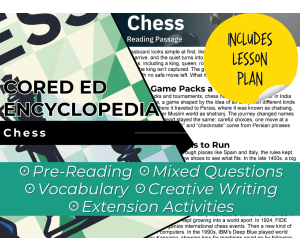
Chess Reading Comprehension Passage - Cored Ed Encyclopedia
ELA, Language Development, Reading Comprehension, Reading, Pre-Reading, Science, Social Studies, Geography, History, Technology, Grade 2, 3, 4, 5, Worksheets & Printables, Worksheets, Teacher Tools, Centers, Activities, Writing Prompts, Assessments, Quizzes and Tests, Quizzes, Lesson Plans
This chess reading comprehension with lesson plan includes: Visualization (on the front cover) Start your lesson by taking a minute to think and share something about the topic. Read the script aloud (slowly), perhaps prepare some music or sound effects. Student close their eyes and let their imaginations wander. Students open their eyes, read the question aloud and give them a few minutes to complete. Ask a few students to share or keep answers until the end to compare with what they learn in the passage. COMPANION VIDEO NOW AVAILABLE (EMBEDDED AFTER PREVIEW PICTURES IN PRODUCT DESCRIPTION) Quick pause—thousands of Cored Education products are included with your TeachSimple membership. Download links and encyclopedia index available here. Pre-Reading Trivia Students will write down one thing they already know about the subject and then read five more facts and discuss. These facts are fun, and the students will enjoy learning about the subject before reading more. Give 1 minute for students to write what they already know (no pressure—best guess is fine). Read the five facts together. After each fact, do ask a student for their opinion, was it surprising? Set a purpose by asking students to highlight/underline one fact they want to learn more about during the reading. Reading Passage The text is a high-interest reading passage with set paragraphs, roughly three to four paragraphs long. It contains a variety of themes about the topic, anywhere from history to technology. The passage is between 250 and 350 words in length. First, ask students to look at the headings and see what they’ll learn about today. What do they know about the topic/heading? First read options: Teacher read-aloud (best for support). Partner reading (paragraph by paragraph). While reading, students underline important details, and vocabulary words they think may come up in the questions section. Mixed Questions The first question page contains four multiple-choice questions, each with a choice of four answers, and three written response questions that require a sentence or two from the student. Students complete the mcqs first independently, then review quickly as a class. For the 3 written responses, try to get students giving the answer with some form of evidence: “I think ___ because the text says ___.” If students get stuck, send them back to check the passage. Vocabulary Questions Practice seven key words from the text in this section across two activities. First section is scrambled words where students will unscramble three words given a clue for each. The second section is a word to meaning matching activity. Before starting, have some students read out words they underlined in the passage. Ask students to say the word and read aloud the sentence(s) around each word. Ask students to do scrambled words and the matching exercise in pairs then go through answers as a class. For the scrambled spelling task, get four pairs to come up to the board and write the words for extra practice with the other student reading out the clue. For the matching task, prompt students to give full sentences: “I matched ___ with ___ because ___.” Creative Writing In this question, the student will be required to write a five to eight sentence paragraph on a question related to the topic. Before starting, ask students write down 3 key ideas they are going to include in their piece. Ask students for ideas to share around the class to help those struggling. Pro writing expectations: 5–8 sentences At least 2 facts or details from the passage At least 2 vocabulary words from the previous page Students read their paragraphs while classmates listen for facts and vocabulary words. Extension Activities This page is optional for fast finishers or to take home. There are several activities, each one requiring a different skill. Do some, do none, do all, completely optional - but you will feel reassured knowing every possibility is planned for. Includes summary writting question and additional facts. Answer Key There are answers for the multiple-choice questions, written response questions have sample answers, vocabulary answers and if there is a summary question then a sample summary will be provided as well. Lesson Plan Included Customized lesson plan for this lesson is included. Lesson Snapshot Title: Chess Genre: Nonfiction (informational passage with headings) Subject: Reading (Informational Text) / Social Studies (history & culture) Primary Topic: How chess works and how it changed over time Estimated Guided Reading Level (A–Z): Q What This Lesson Teaches Best Introduces key basics of the game (64 squares, 16 pieces, and the goal of checkmate). Traces chess’s spread across places and cultures (India → Persia → Muslim world → Europe). Explains how rules changed over time (the queen and bishop gaining powerful moves in the late 1400s). Uses a chronological, heading-based structure to show history in clear sections (early origins, Europe, tournaments, computers). Connects chess to modern competition and technology (international tournaments, FIDE, computers like Deep Blue). Learning Goals Students will describe the chessboard and starting pieces using details from the passage. Students will explain what “checkmate” means in the passage. Students will identify where the passage says chess traveled and what it was called in different places. Students will describe the late-1400s rule change mentioned and how it affected games. Students will summarize how chess moved into public life and became an international sport. Students will explain one way computers affected chess, based on the passage. Key Vocabulary From the Text checkmate — the king is trapped with no safe move. ancestor — something that came earlier than something else. chaturanga — an early India game linked to chess. tournament — a contest with many games. calculating — working things out by thinking ahead. FULL CATALOG OF DOWNLOAD LINKS AND ENCYCLOPEDIA INDEX HERE
Author Cored Education
Rating
Tags Vocabulary, Reading Comprehension, Reading Passages, Lesson Plans, Ela Lesson Plans, Reading Comprehension Lesson Plans, Pre-reading, Geography, Social Studies Lesson Plans, History

Measurement: Temperature & Currency - Learn the Skill - FLASH-PC
Math, Measurements, Common Core, Grade 1, 2, Teacher Tools, Lesson Plans
Measurement: Temperature & Currency - Learn the Skill - FLASH-PC Unearth a new realm of practical Mathematics with our innovative software, Measurement: Temperature and Currency - Learn The Skill for PC. Especially tailored for grade 1 and 2 educators committed to integrating life skills into their Math curriculum. The program explores essential components of measurements focusing on aspects like temperature and currency. Using real-world word problems, students can associate complex mathematical principles with daily experiences, thereby enhancing understanding and problem-solving capabilities. Crossing Language Barriers: This inclusive software transcends language barriers seamlessly by incorporating English and Spanish voice overs making it a truly multicultural educational resource. Bridges Theory to Hands-on Experience: An integrated digital math tool allows students to visually understand various outcomes through independent experimentation with changeable inputs while gaining greater insight into measurable nuances. Adherence to Educational Standards: Promotes student-centric learning in line with Common Core State Standards favouring comprehension over memorization techniques. Synchronizes well with STEM (Science, Technology, Engineering, Mathematics) initiatives encouraging tech-integration in education. Meticulously aligns with teaching practices recommended by the NCTM (National Council of Teachers Mathematics). Versatile Applications: Ideal for diverse scenarios including group instructions or homework assignments enables continuity in learning at different paces making it an extensively dynamic resource. In Summary- "Measurement: Temperature & Currency - Learn The Skill", is more than just an educational aid. It's a tool that enhances learner engagement while fostering Math proficiency among Grade 1 & 2 learners. This makes it an indispensable asset in your teaching repository. Experience a radical change in your students' understanding of measurements as complex notions transform into attainable learning objectives.
Author Classroom Complete Press
Tags Software (PC)

Geometry: Shapes - Practice the Skill 2 - PC Software
Math, Geometry, Common Core, Kindergarten, Preschool, Grade 1, 2, Teacher Tools, Lesson Plans
Geometry: Shapes - Practice the Skill 2 - PC Software This is an exceptional teaching tool designed to enhance students' understanding of geometry shapes. The resource offers timed drill activities, focusing on three-dimensional figure identification. It aids in speeding up and enhancing accuracy with regular practice. The software is underlied by curriculum -based content supporting teachers from preschool level up to second grade. It's especially geared towards mathematics and geometry. Educational Environments: Whole group activities Small group instructions fostering collaborative learning Individual homework assignments promoting independent problem-solving skills Inclusive Features: The software ensures inclusivity by accommodating non-English speakers as well through: Spanish text options Voice-overs for Spanish-speaking learners Promoting Standards & Enhancing Skills: In alliance with Common Core State Standards (CCSS) and National Council of Teachers of Mathematics (NCTM), this tool simplifies complex topics like geometry for young learners. Furthermore, it reinforces cognitive development while preparing children for future STEM initiatives. Packaging: The Geometry: Shapes - Practice The Skill 2 – PC Software comes famously packed in a zip file ensuring convenience without the stress of organizing multiple files or resources. A key catalyst that makes learning engaging yet effective, these products create profound environments where students practice essential skills while enabling educators to effectively track progress.</p
Author Classroom Complete Press
Tags Digital Math, Shapes Activity, Shapes Lesson, Math Skills, Geometry
Sensory Diet Planning for Overstimulation
Life Skills, Special Resources, Social Emotional Learning (SEL), Social Skills, Special Education Needs (SEN), Speech Therapy, STEM, Physical Education, P.E. & Health, Health, Homeschool Curriculum, Homeschool Templates, Grade 1, 2, 3, 4, 5, Worksheets & Printables, Workbooks, Worksheets, Word Searches, Teacher Tools, Lesson Plans, Quizzes and Tests, Quizzes, Tests, Assessments
Help your autistic learners thrive in the classroom and beyond with this complete sensory diet toolkit that will allow you to create a sensory diet for each learner. If you're a parent, educator, or therapist who feels lost when trying to understand the sensory processing issues of young autistic learners and are looking for a way to go beyond reactionary approaches to create an environment that is neuro-affirming, this is the toolkit for you! The 35-page guide was created by professionals who understand the challenges faced by preschool through 1st grade educators and provides clear, easy-to-follow instructions to create, implement and track an effective sensory diet. This is more than just worksheets; it is a complete evidence-based professional development program helping you develop your skills as a sensory detective using evidence-based data. What’s Included in This Evidence-Based Toolkit: Phase 1: Comprehensive Theory & Methodology (10 Pages) : This section offers a thorough guide detailing the neurobiology of sensory overstimulation, the often-overlooked senses such as proprioception, vestibular awareness, and interoception. Additionally, it covers fundamental concepts regarding a sensory diet and features case studies to enhance practical understanding. Phase 2: Student Workbook & Facilitator Tracking Tools (17 Pages) : This part comprises a collection of 11 clinical-grade worksheets intended for educators and parents to monitor, assess, and address sensory needs. These tools include: - Tracker for Sensory Baseline & Arousal State - Guides for Proprioceptive, Vestibular, and Tactile "Brain Breaks" - Early Warning Signs Tracker for Overstimulation - Audit Checklist for Classroom Environmental Triggers - "My Body Feels..." Interoception Check-In with an accompanying visual chart designed for students! - And much more! In this section of the Toolkit there are important visual representations and other teaching materials to provide you with what you need for an effective system of Supports. Phase 3: includes visual representation(s) of the "Escalation & Intervention Cycle" (Examples: Conceptual Diagrams - for use in understanding the steps in the Cycle). - "Brain Break Taxonomy" flowchart - allowing you to tie interventions to specific behaviours in the Escalation Cycle. - Teacher Implementation Guide, with details on how to implement the components of the toolkit as well as a neurodiversity-affirming perspective. - Model Documentation - showing you how to complete trackers for maximum effect. The contents of your Toolkit will help you transition from "Behaviour Management" (i.e. behaviour modification techniques/strategies) to "Neurological Support" (ie supporting learners by providing specific tools & strategies for self-regulation) through concrete examples identifying the root causes of behaviours, preventing crises before they happen and teaching learners through respectful means." Reasons That Parents/Schools Appreciate It: Proactive vs Reactive: Rather than only reacting to incidents of sensory overload or meltdowns, it provides a data-based system for helping to identify causes of the issue and preventing future occurrences through additional data tracking tools. All-in-one vs completing multiple worksheets: This program is designed as a complete curriculum including theory, tracking, intervention and teacher guides. All resources are provided in one location, reducing the burden on the parent and/or educator having to independently find and create all the resources. Creates Consistency in Support throughout Home/School: The program has been designed to provide tools that can be used and shared between home and school, providing a system of support for the child, 24 hours a day, 7 days a week. Empowering and approves of Neurodiversity: The program promotes the understanding and support of a child’s neurological needs with dignity and respect thereby eliminating the need to use antiquated methods of behavior modification. Immediate Implementation: The program was designed for immediate use in a real-world situation with written and sample instructions included; therefore, it is easy for all educators to implement new strategies into day-to-day teaching. Depending on the content and language used in the PDF, the target audience should be: Grade Level: Pre-K, Kindergarten, and First Grade (in particular, the age range of 4-7 years old). Primary Audience: Special Education Teachers, Occupational Therapists , School Psychologists, Board Certified Behaviour Analysts with a Neurological Understanding of Autism (would find guide useful). Inclusion Classroom General Education Teachers Paraprofessionals, Teacher Aides, Support Staff (including training/employment opportunities) Secondary Audience: Inclusion Classroom Teachers—General Education Knowledgeable and Engaged Parents of Autistic Students who are involved in their child's Sensory Plan and collaborating with the school team. Copyright / Terms of Use: Syed Hammad Rizvi copyrighted this book. This resource is for your personal use as well as only one classroom. You may not modify, redistribute, or sell any section of this resource, thus making it available on the Internet for anyone to find publicly and download. If you'd like to share this resource with colleagues, please purchase additional licenses through Teachsimple. Your respect for these terms of use is appreciated. Syed Hammad Rizvi is delighted to provide this product to you!
Author Creative Book Store
Rating
Tags SpecialEducation, SpEd, SpecialEducationTeacher, SpEdTeacher, OccupationalTherapy, SchoolOT, PediatricOT, BCBA, NeurodiversityAffirming, AutismParent

Data Analysis & Probability - Digital Lesson Plan Gr. PK-2 | PC Software
Math, Patterns, Kindergarten, Preschool, Grade 1, 2, Teacher Tools, Lesson Plans
Data Analysis & Probability - Digital Lesson Plan Gr. PK-2 | PC Software Experience a breakthrough in mathematics instruction with the Data Analysis & Probability - Digital Lesson Plan meant for grades PK-2. This software is developed with a comprehensive understanding of the NCTM standards and State Curriculum Math Strand of Data Analysis & Probability, offering an interactive and engrossing medium to grasp essential mathematical concepts. This inclusive lesson plan features: Over 150 individual activities embedded into more than 80 interactive screen pages. A range of applicability from preschool to grade two. An associated pre-assessment activity for each introduced mathematical concept. Integration of word problems derived from real-world scenarios to bridge the gap between abstract theories and real-life applications. To ensure practice alongside understanding, this program presents over 90 drill problems which strengthen procedural proficiency among learners. By blending task-oriented activities with these drills, learning experience becomes balanced yet fun. The software also includes: Dual language support (Imperial English and Spanish) Text-to-Speech functionality making help accessible for diverse student groups along with enhancing language skills simultaneously. In addition, there are printables that serve as an extra resource material useful for future reference or revision purposes. Coupled with an array of educational games like memory match game, board games, and spinner games they make theory engaging while building analytical intelligence among students concurrently keeping it enjoyable at their pace. Evaluation Tools Included: (For each chapter’s progress) Built-in quiz tools with instant feedback helps identify focus areas or areas needing improvement. This gives educators insight about each learner's subject-wise understanding, streamlining future lessons while making it apt for a whole group, small group, or individual settings. The program comes in a 1 zip file compatible with PC software allowing educators to convey high-quality math education at their well-suited timings. It instills an innovative approach to learning catering to today's young learners while setting strong foundations for their academic journey.
Author Classroom Complete Press
Tags Digital Lesson Plan, Data Analysis Lesson, Probability Lesson, Digital Patterns, Digital Math