



3,945 products added recently
Page 7 - 2nd Grade Lesson Plans
Enhance your second-grade classroom with lesson plans that build on foundational skills and introduce new concepts. These activities promote critical thinking and creativity across subjects. Implement these plans to keep your students motivated and progressing confidently.

 Show filters


Geometry: Shapes - Learn the Skill - FLASH-PC
Math, Geometry, Common Core, Grade 1, 2, Teacher Tools, Lesson Plans
Geometry: Shapes - Learn the Skill - FLASH-PC Make your lessons more engaging with our top-tier educational tool specially designed for Grade 1 and Grade 2 teachers. The Geometry: Shapes - Learn the Skill FLASH-PC software is focused on helping students understand diverse shapes in geometry through real-world word problems , making learning both applicable and comprehensible. Diverse Teaching Opportunities & Tools This resource offers various teaching possibilities, such as: Supplementing whole group lectures, Facilitating smaller guided math groups, Giving challenging homework assignments to reinforce classroom learning at home. Multilingual Support We also accommodate non-native English speakers! Our software includes Spanish voice over and text options, making it usable even in multilingual classrooms. Pedagogical Excellence & Standards Compliance In accordance with global education standards, we ensure that our content aligns well with both Common Core State Standards as well as STEM initiatives. Moreover, our product follows guidelines by the National Council for Teachers of Mathematics (NCTM), ensuring you are using high-standard materials. To make an investment today in Geometry: Shapes - Learn the Skill Flash-PC is essentially investing in creative math instruction that boosts critical thinking whilst conforming to essential standards. Please keep this note: On purchase, remember that one product file comes within each download package.</small
Author Classroom Complete Press
Tags Software (PC)

High Frequency Sight Words: Match and Print - FLASH-PC
ELA, Language Development, Vocabulary, Grade 1, 2, Teacher Tools, Lesson Plans
High Frequency Sight Words: Match and Print - FLASH-PC An indispensable resource for educators, High Frequency Sight Words: Match and Print - FLASH-PC focuses on strengthening comprehension of Dolch Sight words. This teaching tool, ideal for Grade 1 and Grade 2 learners, aids in vocabulary development while enhancing their overall language skills. Main Features: Match and print activities: Curriculum -focused engaging tasks that simplify lesson planning. Dolch sight word flashcards: Aids in speedy recognition of common words consequently expanding vocabulary. Useful for both individual teaching and group engagement. Catered to Different Learning Paces & Styles: The tool's graphic organizers are structured differently to accommodate individual comprehension levels – perfect for differentiated instruction plans based on a student's specific requirements. This multifaceted product is useful not only during whole-group instruction but also sparks engagement during dynamic small group interactions. It provides ample support materials apt for homework assignments or one-on-one sessions making it flexible enough for mixed ability classrooms. User-friendly Software Integration: The High Frequency Sight Words: Match and Print - FLASH-PC is simple to use via a PC without requiring an overhaul of existing tech systems. This convenience allows educators more time developing diversified educational experiences rather than collating resources manually. In Summary... The High Frequency Sight Words: Match and Print – FLASH-PC serves as an essential teaching aid designed specifically to elevate early elementary level language arts proficiency. Its dynamic instructional methods pave the way to seamless vocabulary enhancement among students."
Author Classroom Complete Press
Tags Software (PC)

Bibliotherapy: Children's Books that Train the Brain and Jumpstart the Heart
, Preschool, Grade 1, 2, 3, 4, 5, Teacher Tools, Lesson Plans
Bibliotherapy: Children's Books that Train the Brain and Jumpstart the Heart An enriched teaching resource designed specifically for educators seeking to enhance their students' cognitive, social, and emotional growth through engaging children’s literature. This highly useful tool for kindergarten through grade 5 teachers offers a collection of activities tied to 48 award-winning children’s books spanning six unique areas of bibliotherapy. This resource not only ignites young minds but also helps them navigate complex issues. Attachments and growth, creativity and critical thinking, bullying and building friendships - each topic becomes a teachable moment with this well-crafted guide. Educators can effectively tackle family matters including dynamics and changes along with perhaps unexpectedly sophisticated topics such as poverty and social justice issues. It even aids in addressing real-life childhood challenges faced by many students. Each activity within this PDF document is carefully designed to improve listening, speaking, reading, and writing skills in tandem with the themes explored in each chosen book. As a result, it allows educators to diversify learning environments beyond traditional subject matter into the realm of personal development – making it quite versatile. Ideal for use both within small-group settings or whole-class discussions as well as personalised homework assignments due to its printable nature - it offers incredible flexibility for educators adapting their lesson plans on-the-fly or planning ahead for entire semester's worth of content. 118 ready-to-print pages Bibliotherapy tool moulds young hearts facing dynamic world Fosters captivatingly imaginative education using compelling storylines from award-winning literature This makes Bibliotherapy: Children's Books that Train the Brain and Jumpstart the Heart an essential classroom companion enhancing your everyday teaching toolkit.
Author Classroom Complete Press
Tags Team Building, Children's Books, Bibliotherapy, Emotional Outcomes, Cognitive Skills
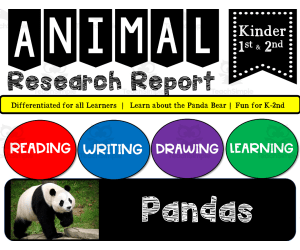
Zoo Animal Research Writing Project on PANDAS for K-2nd Grade
Life Studies, ELA, Writing, Creative Writing, Reading, Science, Life Sciences, Animals, Research, Kindergarten, Grade 1, 2, Teacher Tools, Lesson Plans, Worksheets & Printables, Worksheets, Writing Prompts, Coloring Pages, Presentations
Animal Research Writing Project on Pandas for K-2nd Grade. Introduce young students to pandas through this engaging 19-page informational writing project. Students will read panda facts, examine real-life photos, color pictures, draw a panda habitat, organize information using a color-coding system, and write about what they learned using differentiated writing pages for various ability levels. This versatile resource can be used for whole group, small group, or individual work. Encourage creativity, reading, research, and writing skills with this panda-themed project. Extend the learning by creating a whole classbook with students' final writing and artwork compiled together. Compatible for kindergarten, 1st grade, or 2nd grade. Click the author link to see other animal-themed writing project units spanning topics like tigers, dolphins, whales and more. Teachers appreciate the ready-to-use animal units covering reading, note-taking, drafting, illustrating, and publishing. Engage your class in meaningful informational writing with this standards-based project on monkeys. Plus, there are many more zoo animals to research as well in my store: K-5 Treasures! For additional Zoo Animal reports, click on the following links below: Animal Research Writing Project on TIGERS for K-2nd Grade Animal Research Writing Project on MONKEYS for K-2nd Grade Animal Research Writing Project on PANDAS for K-2nd Grade Animal Research Writing Project on HIPPOS for K-2nd Grade Animal Research Writing Project on ELEPHANTS for K-2nd Grade Animal Research Writing Project on GIRAFFES for K-2nd Grade Here are even more informational resources on report writing for OCEAN ANIMALS. Click on the links below: Animal Research Writing Project on WHALES for K-2nd Grade Animal Research Writing Project on the OCTOPUS for K-2nd Grade Animal Research Writing Project on SEA TURTLES for K-2nd Grade Animal Research Writing Project on ORCAS for K-2nd Grade Animal Research Writing Project on the SHELLFISH for K-2nd Grade Animal Research Writing Project on DOLPHINS for K-2nd Grade Animal Research Writing Project on SEALS for K-2nd Grade
Author K-5 Treasures
Tags Animal Research, Informational Writing, Writing Report, Zoo Animals, Report On Animals, Report On Zoo Animals, 1st Grade Writing, 2nd Grade Writing, Pandas, Report On Pandas
Geometry: Transformations & Symmetry - Learn the Skill - MAC Software
Math, Geometry, Common Core, Kindergarten, Preschool, Grade 1, 2, Teacher Tools, Lesson Plans
Geometry: Transformations & Symmetry - Learn the Skill - MAC Software Geometry: Transformations & Symmetry - Learn the Skill - MAC Software is a highly productive teaching resource, aimed at students ranging from Preschool to Grade 2. Engaging practical real-world word problems, this curriculum -based training tool helps develop a holistic understanding of Transformations and Symmetry in Geometry. A Journey into Geometry The software delivers an exciting exploration through the world of Geometry. It allows students to go beyond theoretical understanding by applying their knowledge towards solving real-world problems. Integrated Math Tools and Bilingual Support The software comes fitted with integrated math tools thoughtfully designed around learners' needs. We believe that learning should be fun, not tedious! Our software ensures that while actively engaging in problem-solving activities, students are also having a good time! The product values inclusivity with bilingual support (English – voice over & text, Spanish – Voice over & text). In Compliance with Educational Standards We strictly adhere to Common Core State Standards, STEM initiatives and National Council of Teachers Mathematics (NCTM) guidelines; you can count on our quality content! Versatility at Its Best This tool optimizes its usage for whole group instruction or smaller groups as per your discretion! You can even assign certain aspects for individual learning at home. All features and resources come compacted within one zip file aimed specifically for MAC systems ensuring ease-of-use across varying scenarios. In Conclusion.... To sum it all up, our Geometry: Transformations & Symmetry - Learn the Skill - MAC Software simplifies complicated geometric concepts with an inventive real-world application approach. It is an engaging and systematically devised learning experience that caters particularly to young minds. Indeed, a must-have resource for every committed educator.
Author Classroom Complete Press
Tags Math Lesson Plan, Digital Math, Digital Lesson, Digital Math Activities, Symmetry

2nd Grade Morning Work | 180 Days Review | Math & ELA | 1st Quarter
ELA, Math, Grade 2, Centers, Activities, Lesson Plans, Teacher Tools, Worksheets & Printables
Grade 2 Morning Work | 1st Quarter Student Pages + Full-Year Teacher Resources Make your second grade mornings simple, consistent, and purposeful with 45 days of Grade 2 morning work for Quarter 1 . This resource includes ALL teacher resources for the full 180-day program , while the student practice pages included in this pack are Days 1–45 only . What’s Included ⭐ FULL-YEAR TEACHER RESOURCES You receive the complete teacher toolkit for planning, implementing, differentiating, and assessing the entire 180-day program : Teacher Guide with routine, implementation, and differentiation ideas Full 36-week Pacing Guide Skills Checklist for tracking progress Editable Morning Work Schedule in Word + PDF Complete Answer Key for Days 1–180 Full-year skill sequence and planning support 📚 STUDENT PAGES INCLUDED: 1ST QUARTER The student portion of this product includes Days 1–45 , providing 45 days of ready-to-use Grade 2 morning work . Each day includes a two-page set with 20 consistent sections : Page A — Reading & Language Prefixes & suffixes Grammar Reading comprehension Vocabulary Writing prompts Reading challenges Morning SEL check-ins Fun facts Page B — Math & Think Addition Subtraction Money Telling time Measurement Graphs and data Fractions Math challenges Jokes Brain teasers Growth mindset Would You Rather questions Important: The student practice pages included in this product are Days 1–45 only , but the teacher resources and Answer Key cover the complete 180-day program . How It Works in the Classroom Use this Grade 2 morning work as a daily bell ringer, morning routine, independent practice, homework, or spiral review. The predictable two-page format helps students develop independence while you take attendance, greet students, confer with learners, or pull a small group. The Teacher Guide suggests a 10–15 minute routine : Students begin Page A independently. Students complete the Reading & Language sections. Students move to Page B for Math & Think. Use the final discussion sections for quick community sharing. You can also use the pages for: Morning work Bell ringers Homework Early finishers Sub plans Small-group warm-ups Test-prep spiral review Print the pages two-sided, flipping on the long edge , for one sheet per child per day. You can also print one quarter at a time and staple the pages into a student packet. Standards & Learning Goals This Grade 2 morning work resource provides ongoing spiral practice across important second grade ELA and math skills. Students practice skills including: 📖 ELA Prefixes and suffixes Grammar Reading comprehension Vocabulary Writing Reading fluency and response Sentence-level language skills 🔢 Math Addition and subtraction Place value Money and making change Telling time Measurement Graphs and data Fractions Multi-step word problems Mathematical reasoning Quarter 1 begins with foundational second grade skills and builds through the daily sequence. For example, Day 1 includes prefixes and suffixes, nouns, reading comprehension, vocabulary, addition, subtraction, money, time, graphs, measurement, fractions, and a multi-step math challenge . Why Teachers Love It ✨ You get ALL the teacher resources for the entire year. The Teacher Guide, 36-week pacing guide, Skills Checklist, editable schedule, and complete 180-day Answer Key are included—even though the student pages in this particular product are only Quarter 1. ✨ Students get exactly what they need for the first quarter. Days 1–45 provide a complete first-quarter student set without requiring you to purchase or print the other quarters at the same time. ✨ Save planning time. The daily routine is already organized across reading, language, writing, math, and engaging thinking activities. ✨ Build independence. The same sections appear every day, allowing students to quickly learn the routine and work with less teacher direction. ✨ True spiral review. Skills return throughout the year, while the difficulty increases from quarter to quarter. No content repeats across the 180 days. ✨ Differentiate with ease. The Teacher Guide includes strategies for students who need support, on-level learners, students who need a challenge, English learners, and small-group instruction. ✨ Track student growth. The Skills Checklist lets you mark skills as Introduced, Practiced, or Mastered , making it easier to identify areas for reteaching and intervention. ✨ Everything is ready to go. The resource is designed to be ink-friendly, with clear graphics for coins, clocks, rulers, graphs, and fraction models built directly into the student pages. Looking for Grade 2 morning work for Quarter 1 that saves you planning time while giving you a complete teacher system for the entire year? This pack includes 45 days of student practice (Days 1–45) PLUS ALL of the teacher resources for the full 180-day program , including the pacing guide, skills checklist, editable schedule, Teacher Guide, and complete Answer Key. Start your second graders with a consistent, engaging morning routine that keeps important skills fresh from the very first day! 💛
Author Bright Classroom Ideas Marketplace
Rating
Tags Ela, Math, Morning Work, Back To School
Algebra: Addition & Subtraction - Practice the Skill 3 - MAC Software
Math, Algebra, Common Core, Kindergarten, Preschool, Grade 1, 2, Teacher Tools, Lesson Plans
Algebra: Addition & Subtraction - Practice the Skill 3 - MAC Software MAC Software is an exceptional teaching resource that enhances understanding of Algebra in a simplified, yet effective manner. Covering the key construct of Addition and Subtraction, this digital tool intricately designs practice drills to solidify comprehension and mastery. Ideal for preschoolers to second graders, this software offers content rooted in curriculum standards. Main Features: Enables students to learn by doing through fill-in-the-gap activities based on number lines. Aids students improve their problem-solving speed and efficiency under timed conditions. Multilingual support with both English and Spanish voice over options along with corresponding text for diverse audiences. Versatility for various environments such as whole-group instructions in classrooms or small-group interactions during homeschooling sessions and one-on-one tutoring or independent study. The versatility provided by this software doesn’t end here; it extends itself into adaptability across different environments like whole-group instructions in classrooms or small-group interactions during homeschooling sessions. Even one-on-one tutoring or independent study can gain immensely from engaging with these math-centric exercises as homework assignments. Beyond just adhering to the Common Core State Standards for mathematical tenacity among young learners, our software aligns itself neatly within STEM initiatives as well as NCTM standards – thereby ensuring a comprehensive edtech solution that holistically covers all necessary dimensions of early-stage algebra learning.Please note your download will consist of 1 zip file containing MAC software compatible materials. In essence, Algebra: Addition & Subtraction - Practice the Skill 3 - MAC Software reveals itself not just as a standalone educational tool but forms an integrated piece within any existing pedagogical structure where focus on bolstering math skills reigns supreme.
Author Classroom Complete Press
Tags Algebra Lesson, Math Lesson, Math Skills, Digital Math, Addition Practice

Geometry: Decomposing Geometric Shapes - Learn the Skill - PC Software
Math, Geometry, Common Core, Kindergarten, Preschool, Grade 1, 2, Teacher Tools, Lesson Plans
Geometry: Decomposing Geometric Shapes - Learn the Skill - PC Software Highlight:This practical teaching resource is designed to boost learning in preschool, kindergarten, and first and second grades. It provides a comprehensive cover on geometry, focused on decomposing geometric shapes. This aligns perfectly with Common Core State Standards and STEM initiatives. The learning approach: Curriculum -based content introduces learners to core concepts through real-life word problems enhancing understanding of principles involved in decomposing shapes. The software package also includes useful math tools to further sharpen their skills. Versatility at its Best Easily adapts to any setting or presentation manner. Suitable for large group environments such as traditional classrooms or smaller homeschool settings guided by an educator. Friendly interface design enables use for individual study activities or homework assignments. Inclusivity Focused The resource appeals to both English-speaking students and Spanish-speaking students. Standard features include English voiceover and text. However, for Spanish-speaking students or bilingual contexts there's also an alternate option featuring Spanish voice over and text integrated into this digital learning aid. Installation Made Easy No complicated installations! Just one zip file ensures educators can set up quickly without hassles thereby focusing more on creating engaging lesson plans while students uncover interactive modules dedicated solely for education enrichment within the software package itself. In Summary: Geometry: Decomposing Geometric Shapes - Learn the Skill - PC Software has been crafted keeping "versatility" as its key mantra making it perfect for any classroom scenario; be it groups or lone learners by arming educators with relevant lesson guides while affording an interesting platform making mathematical grasp less daunting. It's math-made-easier with smart use of technology!
Author Classroom Complete Press
Tags Decomposing Activity, Decomposing Shapes, Geometry Lesson, Geometry Activity, Shapes Lesson

Early Settlers: History - Hands On
Social Studies, History, History: USA, Grade 1, 2, 3, 4, Teacher Tools, Lesson Plans
'Early Settlers: History - Hands On' Teaching Resource Explore the rich tapestry of early American history with this immersive educational resource. Designed for Grades 1 through 4, 'Early Settlers: History - Hands On' takes learning beyond textbooks, inviting students to recreate the lives of America's first settlers in a hands-on, interactive way. A New Approach to History Lessons Traditional theoretical instruction takes a backseat with the 'Hands-On' approach: Inspired by true events: Students learn how settlers built huts using materials like sod bricks and straw coverings. Versatile: The activity can be implemented as a group project or as individual homework assignments where each student creates their own miniature settlement at home. A Seamless Integration into Your Existing Curriculum This teaching resource comes in the form of seamless lesson plans that are: - Ready to implement: It provides ready-to-implement instructions along with historical context. - Tailored to fit needs: Educators can modify lessons based on different classes and individual students. Digitally Ready Lessons Plans The Early Settler's History -Hands-On is available in PDF format ensuring availability on all digital platforms. It also negates any need for specialized software installations. The Outcome > Redefining classroom instruction, this method captures learners’ curiosity while equipping them with vital historical knowledge leading towards their overall development.
Author Classroom Complete Press
Tags PDF
Trains Reading Comprehension Passage - Cored Ed Encyclopedia
ELA, Language Development, Reading Comprehension, Reading, Science, Technology, Engineering, History, Social Studies, Physics, Grade 2, 3, 4, 5, Worksheets & Printables, Worksheets, Teacher Tools, Centers, Activities, Writing Prompts, Assessments, Quizzes and Tests, Quizzes, Lesson Plans
This trains reading comprehension with lesson plan includes: Visualization (on the front cover) Start your lesson by taking a minute to think and share something about the topic. Read the script aloud (slowly), perhaps prepare some music or sound effects. Student close their eyes and let their imaginations wander. Students open their eyes, read the question aloud and give them a few minutes to complete. Ask a few students to share or keep answers until the end to compare with what they learn in the passage. Quick pause—thousands of Cored Education products are included with your TeachSimple membership. Download links and encyclopedia index available here. Pre-Reading Trivia Students will write down one thing they already know about the subject and then read five more facts and discuss. These facts are fun, and the students will enjoy learning about the subject before reading more. Give 1 minute for students to write what they already know (no pressure—best guess is fine). Read the five facts together. After each fact, do ask a student for their opinion, was it surprising? Set a purpose by asking students to highlight/underline one fact they want to learn more about during the reading. Reading Passage The text is a high-interest reading passage with set paragraphs, roughly three to four paragraphs long. It contains a variety of themes about the topic, anywhere from history to technology. The passage is between 250 and 350 words in length. First, ask students to look at the headings and see what they’ll learn about today. What do they know about the topic/heading? First read options: Teacher read-aloud (best for support). Partner reading (paragraph by paragraph). While reading, students underline important details, and vocabulary words they think may come up in the questions section. Mixed Questions The first question page contains four multiple-choice questions, each with a choice of four answers, and three written response questions that require a sentence or two from the student. Students complete the mcqs first independently, then review quickly as a class. For the 3 written responses, try to get students giving the answer with some form of evidence: “I think ___ because the text says ___.” If students get stuck, send them back to check the passage. Vocabulary Questions Practice seven key words from the text in this section across two activities. First section is scrambled words where students will unscramble three words given a clue for each. The second section is a word to meaning matching activity. Before starting, have some students read out words they underlined in the passage. Ask students to say the word and read aloud the sentence(s) around each word. Ask students to do scrambled words and the matching exercise in pairs then go through answers as a class. For the scrambled spelling task, get four pairs to come up to the board and write the words for extra practice with the other student reading out the clue. For the matching task, prompt students to give full sentences: “I matched ___ with ___ because ___.” Creative Writing In this question, the student will be required to write a five to eight sentence paragraph on a question related to the topic. Before starting, ask students write down 3 key ideas they are going to include in their piece. Ask students for ideas to share around the class to help those struggling. Pro writing expectations: 5–8 sentences At least 2 facts or details from the passage At least 2 vocabulary words from the previous page Students read their paragraphs while classmates listen for facts and vocabulary words. Extension Activities This page is optional for fast finishers or to take home. There are several activities, each one requiring a different skill. Do some, do none, do all, completely optional - but you will feel reassured knowing every possibility is planned for. Includes summary writting question. Answer Key There are answers for the multiple-choice questions, written response questions have sample answers, vocabulary answers and if there is a summary question then a sample summary will be provided as well. Lesson Plan Included Customized lesson plan for this lesson is included. Lesson Snapshot Title: Trains Genre: Nonfiction (informational text) Subject: Science (Technology & Engineering) Primary Topic: How rails and train power changed over time Estimated Guided Reading Level (A–Z): R What This Lesson Teaches Best Explains how smooth rails reduce “rubbing,” helping heavy loads move more easily than wagons on muddy roads. Uses a real historical example (the Stockton and Darlington Railway opening in 1825) to show steam trains carrying coal and people. Describes how a steam locomotive works (water becomes steam, steam pushes pistons, pistons help turn wheels). Compares train power types—steam, diesel (engine spins a generator), and electric (overhead wire or third rail). Shows how high-speed rail was designed for speed (special tracks, trains shaped to slice through wind), including Japan’s Tōkaidō Shinkansen (1964) “bullet train.” QA check (support pages vs. passage): The pre-reading trivia uses the word “friction,” but the main passage describes the idea as “rubbing.” Other questions and vocabulary (boiler, pistons, diesel, generator, third rail, high-speed rail) match the passage. Learning Goals Students will explain why smooth rails helped heavy loads move with less rubbing. Students will identify what happened in 1825 with the Stockton and Darlington Railway. Students will describe how steam in a boiler can help power wheel movement using pistons. Students will compare steam, diesel, and electric explanations of how trains get power in the text. Students will describe how train design and tracks can increase speed, using details about high-speed rail. Key Vocabulary From the Text locomotive — the front engine that pulls the train cars. boiler — the part where water is heated to make steam. pistons — parts steam pushes to help turn the wheels. generator — a machine that makes electricity for the train. soot — black dirty particles in the air from smoke. FULL CATALOG OF DOWNLOAD LINKS AND ENCYCLOPEDIA INDEX HERE
Author Cored Education
Rating
Tags Vocabulary, Reading Comprehension, Reading Passages, Lesson Plans, Ela Lesson Plans, Reading Comprehension Lesson Plans, Pre-reading, History, History Lesson Plans, Physics

I WONDER - How Are Waterfalls Formed | Animated Video Lesson
Geography, Social Studies, Grade 1, 2, 3, 4, 5, 6, 7, 8, Lesson Plans, Teacher Tools
Video Introduction An amazing video designed for the students to learn more about famous places in different countries. I WONDER - How Are Waterfalls Formed | Animated Video Lesson What do you know about this place? Do you know in which part of the world it is? Have you ever visited this place? If yes, can you tell us more about your adventure, and what do you like the most about this place? Do you like reading about Geography? What is your favorite country in the whole world? If you are going on a trip where it will be? Which country? What you are going to see there? Does this country has a famous place to visit? I WONDER - How Are Waterfalls Formed | Animated Video Lesson The activity is perfect for encouraging the researching skills for the students, while learning more about this fantastic place. I WONDER - How Are Waterfalls Formed | Animated Video Lesson This friendly designed video is suitable for students at school, homeschooling, and as a group activity. Format Available in MP4 format.
Author Educational Voice
Tags How Are Waterfalls Formed, How Are Waterfalls Formed Video, Waterfalls, Waterfall, Waterfalls Facts, Waterfalls Facts For Kids, Waterfalls Video, Waterfalls Video For Kids, Waterfall Video
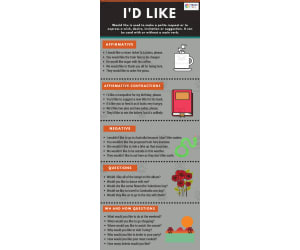
Making Requests: I'd Like | Beginner Lesson Plan
ELA, Language Development, ESL, Grade 2, 3, 4, 5, 9, 10, 11, 12, Teacher Tools, Lesson Plans
I'd like ESL and EFL lesson plan for A1 beginner English students. This TEFL resource is ready to go and comprises a range of teaching materials, such as flashcards, activities, conversation topics, and writing drills. Created to raise language proficiency for early English students, the lesson dives into the present continuous in a variety of situations. Students will learn how to make polite requests and express desire. It empowers ESL students with the knowledge and confidence to use the I'd like accurately in every day conversation and writing. With the inclusion of activities, exercises, and real-life examples, this lesson plan strengthens language concepts and establishes a solid foundation in the basics of English grammar. This TEFL lesson plan includes: Cover page Flash cards A warm-up activity Main use Construction details Rules, along with any exceptions Illustrative examples Two closed exercises One open exercise Revision exercise Writing exercises Chatterbox, a recurring feature in our course books encouraging conversation Activity , such as a game, quiz, puzzle, etc., to conclude the class The lesson plan is available in PDF with 27 ready to print pages and one digital access file. A part of it is on Google Apps. The answer key is also included for reference.
Author TEAM TEFL
Tags Language Practice, ESL, Verbs, Dialogue, Partner Work

Data Analysis & Probability: Bar Graphs - Practice the Skill 2 - MAC Software
Math, Graphing, Common Core, Kindergarten, Preschool, Grade 1, 2, Teacher Tools, Lesson Plans
Data Analysis & Probability: Bar Graphs - Practice the Skill 2 - MAC Software The Data Analysis & Probability: Bar Graphs - Practice the Skill 2 MAC software product is an educational tool intended mostly for early educational levels including: Pre-schoolers Kindergarteners First and second graders. The center of its curriculum is on graphing, a crucial component in mathematics education. This full-featured resource proposes dynamic activities intended to boost learning. It focuses on the understanding of bar graphs for data analysis and probability. The software engages students in timed drill practice skill activities, prompting learners to answer questions based upon a given bar graph. Educators can utilise this software across diverse teaching settings and platforms, whether it be in traditional school classrooms or homeschooling. Teaching modes could range from: Cross-group instruction:To introduce or review graph concepts, Pint-sized group work: To encourage peer-guided learning and more customized attention to varying student proficiency levels. The software also provides an effective additional study material or as homework tasks assistance. Catering to diverse classrooms and learners, this teaching resource comes with default English voice over and text but also includes Spanish voice-over option with Spanish text—an effective way of supporting multilingual classrooms or students learning Spanish without needing any translation work by teachers. This incorporates math tools within the program allowing students to manipulate mathematical objects adding that hands-on aspect often missing from digital resources. In terms of quality assurance, education experts can trust in the material provided aligns with Common Core State Standards—ensuring content relevance—and STEM initiatives while sticking to National Council of Teachers of Mathematics (NCTM) principles. All packed within one handy zip file that is compatible with Mac systems, this tool smoothly incorporates into daily lesson planning for teachers. In summary, the "Data Analysis & Probability: Bar Graphs - Practice the Skill 2" MAC software spurs students' understanding of bar graphs and their practical use in data analysis and probability.
Author Classroom Complete Press
Tags Math Lesson Plan, Data, Probability, Bar Graphs, Digital Math

I WONDER - Did Roman Children Wear Jewellery | Animated Video Lesson
History: Europe, History, Social Studies, History: Ancient, Grade 2, 3, 4, 5, 6, 7, 8, Lesson Plans, Teacher Tools
Video Introduction An amazing video designed for the students to learn more about history. I WONDER - Did Roman Children Wear Jewellery | Animated Video Lesson Do you like history? Which topic do you really enjoy about history? Have you ever read an interesting fact about the Vikings? If yes, can you mention them? What do you like most about the Victorian era? Can you name all the Tudors? Have you ever wondered how people used to live in ancient Japan and ancient China? Do you know any interesting facts about ancient Egyptians and the Pharaohs? Have you ever visited South America? What do you know about Incas and Aztecs? Celtic culture was really one of a kind, can you name any of the places that Celts used to live in? Imagine yourself living during the ancient Roman empire, how your life will look like? Ancient Greece was an amazing place to live in. What do you know about ancient Greek life? I WONDER - Did Roman Children Wear Jewellery | Animated Video Lesson The video is perfect for encouraging the researching skills for the students, while learning more about history. I WONDER - Did Roman Children Wear Jewellery | Animated Video Lesson This friendly designed video is suitable for students at school, homeschooling, and as a group activity. Format Available in MP4 format.
Author Educational Voice
Tags Did Roman Children Wear Jewellery, Did Roman Children Wear Jewellery Video, Roman Children, Roman Children Video, Roman Children Video For Kids, Roman Children Facts, Roman Children Facts For Kids
Algebra: Simple Patterns - PC Software
Math, Patterns, Kindergarten, Preschool, Grade 1, 2, Teacher Tools, Lesson Plans
Algebra: Simple Patterns - PC Software A robust teaching software designed to help educators in traditional classrooms and homeschool settings effectively instruct students on the basic concepts of algebra. The content is aligned with the curriculum and ideally suited for preschool, kindergarten, and early grade school level (grades 1-2). Features: Pre-assessment stage: Precisely gauge students' existing knowledge about algebraic patterns before starting a lesson. Detailed Lesson Plan: A comprehensive roadmap that guides teachers through their lessons in an organized manner and ensures key learning objectives are met. Real-world Word Problems: Present algebraic pattern concepts in relatable contexts for a practical understanding of the material. A timed drill activity : Test speed without sacrificing accuracy, ideal for both group lessons or individual study sessions. Additions: The software also includes math tools and printables making it easy to mix digital learning with hands-on activities. Additionally, to make learning more engaging there are multiple built-in games like memory match game, board game ,and spinner games available within the program. Bilingual Support: An added advantage is it's support Spanish voiceover & texts enabling bilingual instruction or assisting second language learners to easily make connections between verbal expressions in two languages. Note: This product is compatible with PCs only . In conclusion, combining all these features makes "Algebra: Simple Patterns - PC Software", an invaluable addition to any modern educational toolkit!
Author Classroom Complete Press
Tags Digital Math, Simple Patterns, Patterns Lesson, Algebra Worksheet, Math Lesson
I WONDER - What Equipment is Used To Play Hockey | Animated Video
Sports, P.E. & Health, Grade 2, 3, 4, 5, 6, 7, 8, Lesson Plans, Teacher Tools
Video Introduction An amazing video designed for the students to learn more about sports in different countries. I WONDER - What Equipment is Used To Play Hockey | Animated Video Lesson What is your favorite sport? Tell us more about it. Who is your favorite athlete? Or what is your favorite team? Do you know who invented basketball? When basketball has been invented? Can you tell us where is the first time it has been played? Have you ever played soccer or football? If yes, tell us what was your position: A goal keeper, midfield player, or a defender? Do you like watching golf? If yes who is your favorite player? Can you name the differences between tennis and ping pong? Have you ever played volleyball on the beach? When it has been officially recognized by the Olympics? Do you like watching Formula 1 races? If yes, who is your favorite team or driver? Have you ever tried to play handball? If yes tell us more. Do you like watching people skiing or surfing? I WONDER - What Equipment is Used To Play Hockey | Animated Video Lesson The video is perfect for encouraging the researching skills for the students, while learning more about this sport. I WONDER - What Equipment is Used To Play Hockey | Animated Video Lesson This friendly designed video is suitable for students at school, homeschooling, and as a group activity. Format Available in MP4 format.
Author Educational Voice
Rating
Tags What Equipment Is Used To Play Hockey, What Equipment Is Used To Play Hockey Video, Hockey, Hockey Facts, Hockey Video, Hockey Facts For Kids, Hockey Video For Kids, Sports, Sport

I WONDER - Where Did The Olympics Begin | Animated Video Lesson
Sports, P.E. & Health, Grade 2, 3, 4, 5, 6, 7, 8, Lesson Plans, Teacher Tools
Video Introduction An amazing video designed for the students to learn more about sports in different countries. I WONDER - Where Did The Olympics Begin | Animated Video Lesson What is your favorite sport? Tell us more about it. Who is your favorite athlete? Or what is your favorite team? Do you know who invented basketball? When basketball has been invented? Can you tell us where is the first time it has been played? Have you ever played soccer or football? If yes, tell us what was your position: A goal keeper, midfield player, or a defender? Do you like watching golf? If yes who is your favorite player? Can you name the differences between tennis and ping pong? Have you ever played volleyball on the beach? When it has been officially recognized by the Olympics? Do you like watching Formula 1 races? If yes, who is your favorite team or driver? Have you ever tried to play handball? If yes tell us more. Do you like watching people skiing or surfing? I WONDER - Where Did The Olympics Begin | Animated Video Lesson The video is perfect for encouraging the researching skills for the students, while learning more about this sport. I WONDER - Where Did The Olympics Begin | Animated Video Lesson This friendly designed video is suitable for students at school, homeschooling, and as a group activity. Format Available in MP4 format.
Author Educational Voice
Rating
Tags Where Did The Olympics Begin, Where Did The Olympics Begin Video, The Olympics, The Olympics Facts, The Olympics Video, The Olympics Facts For Kids, The Olympics Video For Kids, The Olympics History
Helium Reading Comprehension Passage - Cored Ed Encyclopedia
ELA, Reading Comprehension, Reading, Science, Technology, Pre-Reading, Language Development, Physics, Earth and Environmental Sciences, Chemistry, Grade 2, 3, 4, 5, Worksheets & Printables, Worksheets, Teacher Tools, Centers, Activities, Writing Prompts, Assessments, Quizzes and Tests, Quizzes, Lesson Plans
This helium reading comprehension with lesson plan includes: Visualization (on the front cover) Start your lesson by taking a minute to think and share something about the topic. Read the script aloud (slowly), perhaps prepare some music or sound effects. Student close their eyes and let their imaginations wander. Students open their eyes, read the question aloud and give them a few minutes to complete. Ask a few students to share or keep answers until the end to compare with what they learn in the passage. Quick pause—thousands of Cored Education products are included with your TeachSimple membership. Download links and encyclopedia index available here. Pre-Reading Trivia Students will write down one thing they already know about the subject and then read five more facts and discuss. These facts are fun, and the students will enjoy learning about the subject before reading more. Give 1 minute for students to write what they already know (no pressure—best guess is fine). Read the five facts together. After each fact, do ask a student for their opinion, was it surprising? Set a purpose by asking students to highlight/underline one fact they want to learn more about during the reading. Reading Passage The text is a high-interest reading passage with set paragraphs, roughly three to four paragraphs long. It contains a variety of themes about the topic, anywhere from history to technology. The passage is between 250 and 350 words in length. First, ask students to look at the headings and see what they’ll learn about today. What do they know about the topic/heading? First read options: Teacher read-aloud (best for support). Partner reading (paragraph by paragraph). While reading, students underline important details, and vocabulary words they think may come up in the questions section. Mixed Questions The first question page contains four multiple-choice questions, each with a choice of four answers, and three written response questions that require a sentence or two from the student. Students complete the mcqs first independently, then review quickly as a class. For the 3 written responses, try to get students giving the answer with some form of evidence: “I think ___ because the text says ___.” If students get stuck, send them back to check the passage. Vocabulary Questions Practice seven key words from the text in this section across two activities. First section is scrambled words where students will unscramble three words given a clue for each. The second section is a word to meaning matching activity. Before starting, have some students read out words they underlined in the passage. Ask students to say the word and read aloud the sentence(s) around each word. Ask students to do scrambled words and the matching exercise in pairs then go through answers as a class. For the scrambled spelling task, get four pairs to come up to the board and write the words for extra practice with the other student reading out the clue. For the matching task, prompt students to give full sentences: “I matched ___ with ___ because ___.” Creative Writing In this question, the student will be required to write a five to eight sentence paragraph on a question related to the topic. Before starting, ask students write down 3 key ideas they are going to include in their piece. Ask students for ideas to share around the class to help those struggling. Pro writing expectations: 5–8 sentences At least 2 facts or details from the passage At least 2 vocabulary words from the previous page Students read their paragraphs while classmates listen for facts and vocabulary words. Extension Activities This page is optional for fast finishers or to take home. There are several activities, each one requiring a different skill. Do some, do none, do all, completely optional - but you will feel reassured knowing every possibility is planned for. Includes summary writting question and additional facts. Answer Key There are answers for the multiple-choice questions, written response questions have sample answers, vocabulary answers and if there is a summary question then a sample summary will be provided as well. Lesson Plan Included Customized lesson plan for this lesson is included. Lesson Snapshot Title: Helium Genre: Nonfiction (informational text) Subject: Science / Engineering (transportation technology) Primary Topic: How an air-cushion craft hovers and is used Estimated Guided Reading Level (A–Z): Q What This Lesson Teaches Best Explains how a “Helium” craft rides on a cushion of air trapped underneath instead of sitting in water. Describes why an air cushion reduces rubbing so the craft can “slide along” over surfaces like water, sand, or flat grass. Connects invention history to technology improvements (early ideas, a patented concept, then a smarter way to prevent air leaking). Shows how design changes solved problems (the flexible “skirt” helped hold the air cushion and climb over obstacles). Shares real-world uses and limitations (ferries, rescue missions, military landings, racing/recreation; noise and wind/waves). Learning Goals Students will describe how the craft moves differently from a regular boat, using details from the passage. Students will explain what an “air cushion” does and why it helps the craft slide over different surfaces. Students will identify one inventor or engineer named in the text and describe what problem they helped solve. Students will explain how the flexible “skirt” improved the craft’s ability to hover and travel. Students will list at least two jobs the craft can do (such as ferries or rescue missions) using evidence from the text. Students will describe one challenge mentioned in the passage that can make travel harder (winds or rough waves). Key Vocabulary From the Text cushion — a pocket of air that holds something up. patented — officially claimed an invention idea by law. pressure — pushing force under the craft that can lift it. hovering — staying just above a surface, not touching it. skirt — flexible part that helps hold air underneath. FULL CATALOG OF DOWNLOAD LINKS AND ENCYCLOPEDIA INDEX HERE
Author Cored Education
Rating
Tags Vocabulary, Reading Comprehension, Reading Passages, Lesson Plans, Ela Lesson Plans, Reading Comprehension Lesson Plans, Pre-reading, Science Lesson Plans, Physics, Chemistry

Number & Operations: Addition & Subtraction - Practice the Skill 2 - PC Software
Math, Numbers, Common Core, Kindergarten, Preschool, Grade 1, 2, Teacher Tools, Lesson Plans
Number & Operations: Addition & Subtraction - Practice the Skill 2 - PC Software The Number & Operations: Addition & Subtraction software is an enriching resource designed to enhance foundational numerical skills. This tool focuses on solidifying students' grasp on basic addition and subtraction operations. Interactive Learning Experience: Tailored for Pre-school, Kindergarten, Grade 1 and Grade 2 levels, the software offers timed drill activities, stimulating mastery of these fundamental skills in an engaging environment. Specially Designed Math Tools: The package includes comprehensive math tools that aid tactile learners during problem-solving sessions. The product's unique feature is its dual-language capability – offering both English and Spanish voice-over and text instructions for bilingual instruction. Digital Lesson Plan: This fully downloadable zip file, compatible with PC systems. The content offered in this software meets Common Core State Standards (CCSS) and STEM initiatives across different regions relevant to science, technology, engineering, mathematics integrations into teaching programs along with Person Orientation towards auditory learners who gain a better comprehension when they hear instructions spoken out along with practical work session. Versatility And Flexibility : The program caters largely to auditory learners pairing spoken instructions with practical work sessions. Note: Please remember that this resource can be implemented ideally into whole group instruction sessions or smaller focus groups where individual support is necessary or as constructive reinforcement during homework assignments ensuring consistent practice even outside classroom grounds. In Conclusion, This interactive tool increases proficiency in basic math operations, leveraging technology-guided curriculums for an accessible and engaging learning experience. Invest in Number & Operations: Addition & Subtraction - Practice the Skill 2 today!
Author Classroom Complete Press
Tags Math Skills, Digital Math, Operations, Addition, Subtraction
I WONDER - What Do Whales Eat | Animated Video Lesson
STEM, Animals, Life Sciences, Science, Biology, Grade 1, 2, 3, 4, 5, 6, 7, 8, Lesson Plans, Teacher Tools
Video Introduction Animal kingdoms are full of fascinating wonders to learn. This video is designed for the students to learn more about animals in different countries. I WONDER - What Do Whales Eat | Animated Video Lesson Do you like animals? what is your favorite one? Do you own a pet? If yes, tell us more about it, like what its name? And what do you like most about it? What are the animal kingdoms? Can you write down the characteristics of each animal class like mammals, birds, reptiles, amphibian, fish and mollusks. Do you know that some animals can sing, can you name any of them? What is the largest and the smallest mammal in the world? What is the largest and the smallest bird in the world? What is the largest and the smallest fish in the world? I WONDER - What Do Whales Eat | Animated Video Lesson The video is perfect for encouraging the researching skills for the students, while learning more about these fantastic animals. I WONDER - What Do Whales Eat | Animated Video Lesson This friendly designed video is suitable for students at school, homeschooling, and as a group activity. Format Available in MP4 format.
Author Educational Voice
Tags What Do Whales Eat, What Do Whales Eat Video, Whales, Whale, Whales Food, Whales Food Facts, Whales Food Facts For Kids, Whales Food Video, Whales Food Video For Kids, Whale Video

Guided Reading Activities with Lesson Plans: Fiction Set 2 - Animals
ELA, Reading, Reading Comprehension, Common Core, ESL, Language Development, Pre-Reading, Vocabulary, Resources for Teachers, Grade 2, 3, Worksheets & Printables, Worksheets, Teacher Tools, Lesson Plans, Activities
Guided Reading Activities with Lesson Plans Fiction Set 2 Note: This download DOES NOT include the passages themselves. If you have not already done so, download in a format of your choice in the "reading links" section below. Overview The perfect companion materials for Cored Education reading comprehension downloads. This collection of guided reading lessons includes a wide array of engaging themes that aim to foster comprehension, vocabulary development, and creative thinking. Each lesson is crafted to be interactive and immersive, making learning enjoyable while promoting essential literacy skills. The lessons are designed for students to actively engage with both the material and the world around them, creating connections to their personal experiences while developing key skills. Includes Guided Reading Materials For: 1.Unexpected Visitors 2.Feeding Time 3.New Pup Next Door 4.Stargazing 5.On the Search 6.Tadpoles 7.Lucky Caterpillar 8.Karl the Photographer 9.Chasing Pheasants 10.Part of the Family Reading Links: This is the guided reading materials version and DOES NOT include the passages themselves. The passages related to this download are available here in GOOGLE Docs, GOOGLE Forms, GOOGLE Slides. PDF, PPT, WORD. Google Docs Google Forms Google Slides PDF PPT Word Details Pre-reading Discussions Each lesson begins with pre-reading questions that help activate prior knowledge and engage students in the theme of the lesson. This allows students to make personal connections with the content before diving into the reading material. Vocabulary Development Every lesson includes vocabulary exploration that introduces key terms students will encounter in the reading. These words are essential for understanding the passage, and activities encourage students to apply the new vocabulary in context. Comprehension Check After the reading, the lessons provide comprehension questions (typically multiple-choice) that assess students’ understanding of the story. These questions help students reflect on key events, characters, and concepts within the text, reinforcing their comprehension. Creative Writing Prompts To foster creativity, the lessons include writing activities that challenge students to apply what they've learned in imaginative ways. These prompts allow students to practice creative expression while reinforcing the lesson’s theme. Discussion Topics Each lesson ends with wrap-up discussion questions that encourage students to think critically and engage in group conversations. These discussions can enhance social learning and deepen understanding by connecting the lesson's content to broader real-world applications. Theme-Based Learning The themes (e.g., winter, nature walks, photography, flowers) are universally appealing and offer opportunities for cross-curricular connections with science, art, and environmental studies. This makes the lessons versatile for a wide range of teaching contexts. Student-Centered Approach The activities are designed to be interactive and student-driven, allowing them to explore the content through discussions, hands-on vocabulary practice, and personal reflections. This promotes active learning and keeps students engaged. FULL CATALOG OF DOWNLOAD LINKS HERE Grade 2/3 Links Fiction Set 1 - Nature Google Docs Google Forms Google Slides PDF PPT Word Guided Reading Materials Fiction Set 2 - Animals Google Docs Google Forms Google Slides PDF PPT Word Guided Reading Materials Fiction Set 3 - Food Google Docs Google Forms Google Slides PDF PPT Word Guided Reading Materials Fiction Set 4 - School Google Docs Google Forms Google Slides PDF PPT Word Guided Reading Materials Fiction Set 5 - Friends Google Docs Google Forms Google Slides PDF PPT Word Guided Reading Materials Fiction Set 6 - Family Google Docs Google Forms Google Slides PDF PPT Word Guided Reading Materials Fiction Set 7 - Sports Google Docs Google Forms Google Slides PDF PPT Word Guided Reading Materials Nonfiction Set 1 - Technology Google Docs Google Forms Google Slides PDF PPT Word Guided Reading Materials Nonfiction Set 2 - Nutrition Google Docs Google Forms Google Slides PDF PPT Word Guided Reading Materials Nonfiction Set 3 - Animals Google Docs Google Forms Google Slides PDF PPT Word Guided Reading Materials Reading Passages Overview Each passage is especially written for Grade 2-3 students, including key vocabulary required for this age group. Topics are varied and are accompanied by colorful graphics. Topics are meant to educate, yet entertain the modern student. These passages are perfect for the modern classroom. Whereas textbooks can become outdated in no time, any changes to technology or the world will result in updates to this product. Mixed Questions The mixed questions section of each lesson includes a variation of fivecomprehension, vocabulary and math questions. In addition, key reading strategies are frequently covered including cause & effect, summarizing, compare & contrast and making conclusions. Three of the questions will be MCQs and two will require a written response of some kind. Full answers and example responses appear at the end of the lesson. Spelling & Vocab Each reading passage contains a variety of words and phrases designed for Grade 2-3 students. Spelling and vocab activities provide the opportunity to build fluency with these words. As it can become quite mundane doing the same activities over and over, each lesson in a set will contain a different spelling and vocab activity . Writing Prompts Writing prompts are designed to continue the theme or lessons learned in the story. Students are persuaded to write in a variety of ways and each prompt includes several cues to help. As with the spelling/vocab section, writing prompts will vary. This includes research pieces, reading responses, poetry and creative writing prompts. Full Answer Keys Full answer keys and sample responses are provided so no matter how busy you are, you know you're covered! Mixed question answers provide evidence from the text, math questions contain the relevant workings. Answers are designed for use by the teacher, but also suitable as a handout to the student. Additional File One lesson will have an additional file. This is something fun to extend the lesson with. For similar downloads and other frees, do check out Cored Group on TeachSimple.
Author Cored Education
Tags Elementary, Reading, Comprehension, Vocabulary, Answers, Common Core, Guided Reading, Guided Reading Activity, Guided Reading Lesson Plans, Guided Reading Lesson Plan

Number & Operations: Addition & Subtraction - Practice the Skill 2 - FLASH-MAC
Math, Addition and Subtraction, Addition, Common Core, Grade 1, 2, Teacher Tools, Lesson Plans
The Number & Operations: Addition & Subtraction - Practice the Skill 2 - FLASH-MAC: A Comprehensive Teaching Resource This resource aims to develop an understanding of basic arithmetic focusing on addition and subtraction in students. It is primarily suitable for Grade 1 and Grade 2 pupils, perfectly in line with Common Core State Standards. Moreover, it embodies principles spearheaded by STEM initiatives and The National Council of Teachers of Mathematics (NCTM). Key Features: Curriculum -based content: Its critical feature provides timed drill activities that challenge the students' proficiency in fast and accurate subtraction. Inclusive Language Support: The software is built with English voice overs and text, with added options for Spanish voice over along with corresponding Spanish text. Versatile Application:This tool excels whether utilized for whole group instruction or small group workshops, also effective when incorporated into homeschooling programs. The Number & Operations: Addition & Subtraction - Practice the Skill 2 - FLASH-MAC, fostering a positive attitude towards math while developing numerical skills. An ideal companion on your student's journey in understanding mathematics; enriching their knowledge through practical skills exploration while encouraging a fun learning environment.
Author Classroom Complete Press
Tags Software (Mac)
Tennis Reading Comprehension Passage - Cored Ed Encyclopedia
ELA, Language Development, Reading Comprehension, Reading, Pre-Reading, Science, Technology, Engineering, History, Social Studies, Grade 2, 3, 4, 5, Worksheets & Printables, Worksheets, Teacher Tools, Centers, Activities, Writing Prompts, Assessments, Quizzes and Tests, Quizzes, Lesson Plans
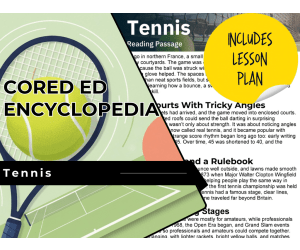
This tennis reading comprehension includes: Visualization (on the front cover) Start your lesson by taking a minute to think and share something about the topic. Read the script aloud (slowly), perhaps prepare some music or sound effects. Student close their eyes and let their imaginations wander. Students open their eyes, read the question aloud and give them a few minutes to complete. Ask a few students to share or keep answers until the end to compare with what they learn in the passage. Quick pause—thousands of Cored Education products are included with your TeachSimple membership. Download links and encyclopedia index available here. Pre-Reading Trivia Students will write down one thing they already know about the subject and then read five more facts and discuss. These facts are fun, and the students will enjoy learning about the subject before reading more. Give 1 minute for students to write what they already know (no pressure—best guess is fine). Read the five facts together. After each fact, do ask a student for their opinion, was it surprising? Set a purpose by asking students to highlight/underline one fact they want to learn more about during the reading. Reading Passage The text is a high-interest reading passage with set paragraphs, roughly three to four paragraphs long. It contains a variety of themes about the topic, anywhere from history to technology. The passage is between 250 and 350 words in length. First, ask students to look at the headings and see what they’ll learn about today. What do they know about the topic/heading? First read options: Teacher read-aloud (best for support). Partner reading (paragraph by paragraph). While reading, students underline important details, and vocabulary words they think may come up in the questions section. Mixed Questions The first question page contains four multiple-choice questions, each with a choice of four answers, and three written response questions that require a sentence or two from the student. Students complete the mcqs first independently, then review quickly as a class. For the 3 written responses, try to get students giving the answer with some form of evidence: “I think ___ because the text says ___.” If students get stuck, send them back to check the passage. Vocabulary Questions Practice seven key words from the text in this section across two activities. First section is scrambled words where students will unscramble three words given a clue for each. The second section is a word to meaning matching activity. Before starting, have some students read out words they underlined in the passage. Ask students to say the word and read aloud the sentence(s) around each word. Ask students to do scrambled words and the matching exercise in pairs then go through answers as a class. For the scrambled spelling task, get four pairs to come up to the board and write the words for extra practice with the other student reading out the clue. For the matching task, prompt students to give full sentences: “I matched ___ with ___ because ___.” Creative Writing In this question, the student will be required to write a five to eight sentence paragraph on a question related to the topic. Before starting, ask students write down 3 key ideas they are going to include in their piece. Ask students for ideas to share around the class to help those struggling. Pro writing expectations: 5–8 sentences At least 2 facts or details from the passage At least 2 vocabulary words from the previous page Students read their paragraphs while classmates listen for facts and vocabulary words. Extension Activities This page is optional for fast finishers or to take home. There are several activities, each one requiring a different skill. Do some, do none, do all, completely optional - but you will feel reassured knowing every possibility is planned for. Includes summary writting question. Answer Key There are answers for the multiple-choice questions, written response questions have sample answers, vocabulary answers and if there is a summary question then a sample summary will be provided as well. Lesson Plan Included Customized lesson plan for this lesson is included. Lesson Snapshot Title: Tennis Genre: Nonfiction (informational text) Subject: Social Studies (History of Sports) Primary Topic: How tennis changed over time Estimated Guided Reading Level (A–Z): Q What This Lesson Teaches Best How tennis began as jeu de paume (“game of the palm”) and shifted from hands to gloves and then rackets. How indoor courts with hard walls and slanted roofs changed play by creating surprising angles. How tennis moved outdoors in the 1800s when rubber balls bounced well outside and lawns made smooth courts. Key moments that helped standardize and spread the sport (1873 rules book, 1877 Wimbledon). How tournaments changed when the Open Era began in 1968, allowing professionals and amateurs to compete together. Learning Goals Students will explain why the early game was called jeu de paume using details from the text. Students will describe how playing spaces changed from courtyards to enclosed indoor courts. Students will identify how walls and slanted roofs affected play in real tennis. Students will summarize two changes in the 1800s that helped tennis move outdoors. Students will describe why the 1873 rulebook and the 1877 Wimbledon championship mattered for tennis. Students will explain what changed in 1968 when the Open Era began. Key Vocabulary From the Text monastery — a place where monks live and work. cloisters — covered walkways around a courtyard. boundary — a line that shows where play must stay. enclosed — closed in by walls; not open outside. amateurs — people who play for fun, not as paid work. FULL CATALOG OF DOWNLOAD LINKS AND ENCYCLOPEDIA INDEX HERE
Author Cored Education
Rating
Tags Vocabulary, Reading Comprehension, Reading Passages, Lesson Plans, Ela Lesson Plans, Reading Comprehension Lesson Plans, Pre-reading, History, History Lesson Plans, Sports
Guided Reading Level H - The Life of a Frog (with Lesson Plan)
ELA, Resources for Teachers, Reading Comprehension, Reading, Science, Animals, Life Sciences, Pre-Reading, Language Development, Vocabulary, Grade 1, 2, 3, Worksheets & Printables, Worksheets, Teacher Tools, Centers, Activities, Literacy Readers, Quizzes, Quizzes and Tests, Assessments, Lesson Plans
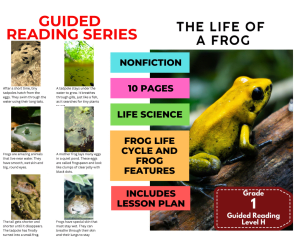
This Guided Reading Book - The Life of a Frog (Level H) with lesson plan includes: Guided Reading Color Label (front cover x1) This is a quick way to match the book’s demands to what students can generally handle.. The overall goal is to use the level/color to pick books for several smaller groups. To qualify for a certain level, a student is expected to read a book from that level with about 90–94% accuracy. If a student is consistently accurate and understands, move up a level. If the student is struggling at that level, drop down and add more support. Each student will improve at completely different rates, but it is generally one of the best ways to check progress across the class. DOWNLOAD THE CATALOG TO VIEW ALL GUIDED READING BOOKS AVAILABLE (SORTED LEVELS A-Z) Pre-Reading Question (x1) Teacher asks the prompt aloud, can be while showing the cover or first page. Students share what they already know, or make educated guesses from the cover. Prompt them to use the target vocabulary. Write some of their responses on the board to look back at during the reading. Vocabulary Words (x5) Introduce the five words, best doing it one at a time. Start by saying it, while students repeat and then see if anyone knows what it means before reading further. Read through the meaning and try to briefly connect each word to a picture or gesture so it’s meaningful. Ask students to flip through the book pages and point to where they see each of the vocabulary words. While reading the book pause upon coming across one of the vocab words or read the sentence twice to make sure students understand the word has appeared. Optional: Ask students to raise hands whenever they see/hear one of the new words. Guided Reading Pages (x10) Check the book snapshot (below) for: primary topic - do you need to prep extra reading or intro materials on this? what is taught best - decide on 1-2 bullets to focus on, use the prompt or words provided here for best results. learning goals - what you are checking for students to be able to do after the session, elicit answers using prompts or words provided. key vocabulary (see section above). questions overview - so you know what is coming up and if you need to prep extra materials to assist understanding. Run the lesson You may have already looked at a few of the pages together, but you can show them some of the pictures again first to set meaning. Depending on how much time you have and how familiar your students are with guided reading class, you may want to read the book aloud first with the group first. Students whisper or partner read, while you listen in. If time, do it as a group, one student reading a page each. Use the guided page’s prompts to coach: “Check the picture / does it make sense?” “Point under the words / try the first sound” “Reread the sentence smoothly”. Try to focus more on one student per session (rotating every time), so you can work out if they are ready to move up or need to move down a level. Comprehension Questions (back cover x3) This is your way to check that students didn’t just say the words, but actually understood the text. First, let students answer by pointing to the page/picture and saying a short sentence. After any answer, follow with: “Show me where you found that in the text.” In bigger groups, have partners answer first (10–20 seconds), then call on 2–3 students to share. Differentiation tips: Emerging speakers/struggling readers: oral + pointing On-level: oral in a full sentence Higher: one written sentence or draw + label Book Snapshot Title: The Life of a Frog Genre: Nonfiction (informational life cycle) Subject: Life Science + Reading (Informational Text) Primary Topic: Frog life cycle and frog features Estimated Guided Reading Level (A–Z): H What This Book Teaches Best Explains where frogs live and describes basic frog traits (smooth, wet skin; big, round eyes; living near water). Teaches the frog life cycle in clear steps: eggs (frogspawn) → tadpoles → legs grow → tail disappears → small frog. Shows how a tadpole lives and grows in water, including breathing through gills and eating tiny plants. Describes how frogs breathe (through skin and lungs) and how they get food (long, sticky tongue catching insects). Connects body parts to movement (strong back legs help frogs hop and jump high). Learning Goals Students will describe where frogs live and name physical traits the text mentions. Students will explain what frog eggs are called and describe what they look like. Students will retell the main stages of a frog’s life from eggs to a small frog. Students will describe how tadpoles move, breathe, and find food in the water. Students will explain how the frog’s body changes as legs grow and the tail disappears. Students will use text details to describe how a frog hunts and how it jumps. Key Vocabulary From the Text frogspawn — frog eggs that look like jelly. tadpoles — baby frogs that live in water and have tails. gills — body parts that help an animal breathe underwater. lungs — body parts used for breathing air. insects — small animals a frog can catch and eat. Discussion Prompts Pre-reading question: What changes do you think happen as a tadpole grows into a frog? Comprehension questions: Where does a mother frog lay many eggs, according to the text? Comprehension questions: What do tiny tadpoles use to swim through the water? Comprehension questions: What happens to the tadpole’s tail as it turns into a small frog? Printing Tips 1. Best Printing Method (Recommended) “Booklet” Printing (Best if Available) If your printer or PDF viewer supports Booklet Printing , use this. Settings to use: Print mode: Booklet Paper size: Letter or A4 (either works) Orientation: Landscape Print on both sides: Yes Flip on: Short edge Scaling: Fit to printable area Booklet subset: First test: Front sides only Then: Back sides only This will automatically: Pair pages correctly Put the cover on the outside Align everything for folding After printing, fold in half and staple along the spine . 2. If “Booklet” Printing Is NOT Available You can still print this correctly with manual duplex printing . Step-by-step: Open the PDF. Choose Print . Set: Orientation: Landscape Pages per sheet: 1 Print on both sides: Yes Flip on: Short edge Print all pages . Because each PDF page already contains two facing book pages, the result will still fold cleanly into a book. Thousands of Cored Education products are included with your TeachSimple membership. Download links and encyclopedia index available here.
Author Cored Education
Rating
Tags Reading Comprehension, Reading Passages, Reading, Guided Reading, Guided Reading Lesson Plan, Guided Reading Activity, Pre-reading, Science Lesson Plans, Animals, Frog Life Cycle