



3,890 products added recently
Page 32 - Elementary Lesson Plans
Support your elementary students with lesson plans that cover a broad range of subjects and skills. These resources are designed to promote cognitive, social, and emotional growth. Incorporate them into your teaching to provide a well-rounded education that meets the needs of all your students.

 Show filters


Elephants: Guided Reading Level Q with Lesson Plan
ELA, Resources for Teachers, Reading Comprehension, Reading, Science, Language Development, Life Sciences, Earth and Environmental Sciences, Geography, Social Studies, Grade 3, 4, 5, Worksheets & Printables, Worksheets, Teacher Tools, Centers, Activities, Literacy Readers, Quizzes, Quizzes and Tests, Assessments, Lesson Plans
This Elephants (level q) guided reading book with lesson plan includes: Guided Reading Color Label (front cover x1) This is a quick way to match the book’s demands to what students can generally handle.. The overall goal is to use the level/color to pick books for several smaller groups. To qualify for a certain level, a student is expected to read a book from that level with about 90–94% accuracy. If a student is consistently accurate and understands, move up a level. If the student is struggling at that level, drop down and add more support. Each student will improve at completely different rates, but it is generally one of the best ways to check progress across the class. DOWNLOAD THE CATALOG TO VIEW ALL GUIDED READING BOOKS AVAILABLE (SORTED LEVELS A-Z) Pre-Reading Question (x1) Teacher asks the prompt aloud, can be while showing the cover or first page. Students share what they already know, or make educated guesses from the cover. Prompt them to use the target vocabulary. Write some of their responses on the board to look back at during the reading. Vocabulary Words (x5) Introduce the five words, best doing it one at a time. Start by saying it, while students repeat and then see if anyone knows what it means before reading further. Read through the meaning and try to briefly connect each word to a picture or gesture so it’s meaningful. Ask students to flip through the book pages and point to where they see each of the vocabulary words. While reading the book pause upon coming across one of the vocab words or read the sentence twice to make sure students understand the word has appeared. Optional: Ask students to raise hands whenever they see/hear one of the new words. Guided Reading Pages (x10) Check the book snapshot (below) for: primary topic - do you need to prep extra reading or intro materials on this? what is taught best - decide on 1-2 bullets to focus on, use the prompt or words provided here for best results. learning goals - what you are checking for students to be able to do after the session, elicit answers using prompts or words provided. key vocabulary (see section above). questions overview - so you know what is coming up and if you need to prep extra materials to assist understanding. Run the lesson You may have already looked at a few of the pages together, but you can show them some of the pictures again first to set meaning. Depending on how much time you have and how familiar your students are with guided reading class, you may want to read the book aloud first with the group first. Students whisper or partner read, while you listen in. If time, do it as a group, one student reading a page each. Use the guided page’s prompts to coach: “Check the picture / does it make sense?” “Point under the words / try the first sound” “Reread the sentence smoothly”. Try to focus more on one student per session (rotating every time), so you can work out if they are ready to move up or need to move down a level. Comprehension Questions (back cover x3) This is your way to check that students didn’t just say the words, but actually understood the text. First, let students answer by pointing to the page/picture and saying a short sentence. After any answer, follow with: “Show me where you found that in the text.” In bigger groups, have partners answer first (10–20 seconds), then call on 2–3 students to share. Differentiation tips: Emerging speakers/struggling readers: oral + pointing On-level: oral in a full sentence Higher: one written sentence or draw + label Book Snapshot Title: Elephants Genre: Nonfiction (informational) Subject: Life Science Primary Topic: Elephant species, adaptations, behavior, and threats Estimated Guided Reading Level (A–Z): Q What This Book Teaches Best Explains that scientists recognize three distinct species of elephants and describes physical differences (like ear shape and head shape) that fit their environments. Describes key body structures and functions (trunk muscles and “fingers,” tusks as elongated incisor teeth, sensitive skin). Shows behavioral adaptations for survival , including how elephants protect themselves from heat and insects by using water or mud. Highlights social organization and communication , including matriarchal herds and vocalizations such as trumpets, rumbles, and infrasound. Connects elephants to their ecosystems and conservation by explaining seed dispersal (African Forest elephants) and current threats like habitat loss and poaching for ivory. Learning Goals Describe the three elephant species named in the text and one physical difference mentioned between African and Asian elephants. Explain how elephants use their skin and what they do to protect themselves from heat and insects. Identify how the text describes an elephant’s trunk and list at least three things elephants use it to do. Explain what tusks are and give examples from the text of how tusks help elephants survive. Describe how elephants live in groups and how a matriarch helps keep a herd safe. Explain how African Forest elephants help plant new trees in the forest, according to the text. Key Vocabulary From the Text distinct — clearly different from something else. characteristic — an important feature that helps describe something. matriarchal — led by a female (mother) in the group. vocalizations — animal sounds used to communicate. endangered — in danger of disappearing because there are not many left. Discussion Prompts Pre-reading question: What do you already know about how elephants live and survive in their habitats? Comprehension questions: What are the three species of elephants that scientists recognize in the text? Comprehension questions: What does the text say elephants do to protect themselves from heat and insects? Comprehension questions: How do African Forest elephants help plant the next generation of trees in the forest? Printing Tips 1. Best Printing Method (Recommended) “Booklet” Printing (Best if Available) If your printer or PDF viewer supports Booklet Printing , use this. Settings to use: Print mode: Booklet Paper size: Letter or A4 (either works) Orientation: Landscape Print on both sides: Yes Flip on: Short edge Scaling: Fit to printable area Booklet subset: First test: Front sides only Then: Back sides only This will automatically: Pair pages correctly Put the cover on the outside Align everything for folding After printing, fold in half and staple along the spine . 2. If “Booklet” Printing Is NOT Available You can still print this correctly with manual duplex printing . Step-by-step: Open the PDF. Choose Print . Set: Orientation: Landscape Pages per sheet: 1 Print on both sides: Yes Flip on: Short edge Print all pages . Because each PDF page already contains two facing book pages, the result will still fold cleanly into a book. Thousands of Cored Education products are included with your TeachSimple membership. Download links and encyclopedia index available here.
Author Cored Education
Rating
Tags Reading Comprehension, Reading Passages, Reading, Guided Reading, Guided Reading Lesson Plan, Guided Reading Activity, Pre-reading, Science Lesson Plans, Life Science, Geography

Darts Reading Comprehension Passage - Cored Ed Encyclopedia
ELA, Language Development, Reading Comprehension, Reading, Pre-Reading, History, Social Studies, Math, Sports, P.E. & Health, Grade 2, 3, 4, 5, Worksheets & Printables, Worksheets, Teacher Tools, Centers, Activities, Writing Prompts, Assessments, Quizzes and Tests, Quizzes, Lesson Plans
This darts reading comprehension with lesson plan includes: Visualization (on the front cover) Start your lesson by taking a minute to think and share something about the topic. Read the script aloud (slowly), perhaps prepare some music or sound effects. Student close their eyes and let their imaginations wander. Students open their eyes, read the question aloud and give them a few minutes to complete. Ask a few students to share or keep answers until the end to compare with what they learn in the passage. Quick pause—thousands of Cored Education products are included with your TeachSimple membership. Download links and encyclopedia index available here. Pre-Reading Trivia Students will write down one thing they already know about the subject and then read five more facts and discuss. These facts are fun, and the students will enjoy learning about the subject before reading more. Give 1 minute for students to write what they already know (no pressure—best guess is fine). Read the five facts together. After each fact, do ask a student for their opinion, was it surprising? Set a purpose by asking students to highlight/underline one fact they want to learn more about during the reading. Reading Passage The text is a high-interest reading passage with set paragraphs, roughly three to four paragraphs long. It contains a variety of themes about the topic, anywhere from history to technology. The passage is between 250 and 350 words in length. First, ask students to look at the headings and see what they’ll learn about today. What do they know about the topic/heading? First read options: Teacher read-aloud (best for support). Partner reading (paragraph by paragraph). While reading, students underline important details, and vocabulary words they think may come up in the questions section. Mixed Questions The first question page contains four multiple-choice questions, each with a choice of four answers, and three written response questions that require a sentence or two from the student. Students complete the mcqs first independently, then review quickly as a class. For the 3 written responses, try to get students giving the answer with some form of evidence: “I think ___ because the text says ___.” If students get stuck, send them back to check the passage. Vocabulary Questions Practice seven key words from the text in this section across two activities. First section is scrambled words where students will unscramble three words given a clue for each. The second section is a word to meaning matching activity. Before starting, have some students read out words they underlined in the passage. Ask students to say the word and read aloud the sentence(s) around each word. Ask students to do scrambled words and the matching exercise in pairs then go through answers as a class. For the scrambled spelling task, get four pairs to come up to the board and write the words for extra practice with the other student reading out the clue. For the matching task, prompt students to give full sentences: “I matched ___ with ___ because ___.” Creative Writing In this question, the student will be required to write a five to eight sentence paragraph on a question related to the topic. Before starting, ask students write down 3 key ideas they are going to include in their piece. Ask students for ideas to share around the class to help those struggling. Pro writing expectations: 5–8 sentences At least 2 facts or details from the passage At least 2 vocabulary words from the previous page Students read their paragraphs while classmates listen for facts and vocabulary words. Extension Activities This page is optional for fast finishers or to take home. There are several activities, each one requiring a different skill. Do some, do none, do all, completely optional - but you will feel reassured knowing every possibility is planned for. Includes summary writting question and additional facts. Answer Key There are answers for the multiple-choice questions, written response questions have sample answers, vocabulary answers and if there is a summary question then a sample summary will be provided as well. Lesson Plan Included Customized lesson plan for this lesson is included. Lesson Snapshot Title: Darts Genre: Nonfiction (informational text with headings) Subject: Reading (Informational Text) / Math (numbers & scoring context) Primary Topic: History, dartboard design, and how scoring works Estimated Guided Reading Level (A–Z): Q What This Lesson Teaches Best Explains how darts began as indoor throwing at targets in England and became a friendly challenge in taverns and homes. Teaches key dartboard features (20 pie-shaped sections, thin wires, double/triple rings, and a bull’s-eye that can be 50 points). Builds real-world math context by describing common game formats (301 or 501) where points are subtracted each turn. Uses a cause-and-claim structure to discuss uncertainties and evidence (a debated story about why numbers are scrambled; a court case about skill vs luck). Connects materials/technology to sports equipment (sisal fibers that close up; tungsten barrels for a slimmer grip) and modern leagues/championships. Learning Goals Students will summarize how the text describes darts’ early history and where people played. Students will identify key parts of a dartboard in the text and explain what they do for scoring. Students will explain how a 301 or 501 game works in the passage, including what happens each turn. Students will describe why the dartboard numbers might be scrambled and explain what the text says is uncertain about that story. Students will explain what happened in 1908 and how it relates to whether darts is luck or skill. Students will cite details about modern boards and darts (sisal fibers, tungsten barrels, leagues/championships). Key Vocabulary From the Text taverns — places where people gather for food and drink. oche — the throwing line you stand behind. subtracted — taken away from a total number. sisal — strong fibers used to make dartboards. tungsten — a dense metal used for slimmer dart barrels. Discussion Prompts FULL CATALOG OF DOWNLOAD LINKS AND ENCYCLOPEDIA INDEX HERE
Author Cored Education
Rating
Tags Vocabulary, Reading Comprehension, Reading Passages, Lesson Plans, Ela Lesson Plans, Reading Comprehension Lesson Plans, Pre-reading, Sports, History, Social Studies Lesson Plans

I WONDER - How Can You Read Hieroglyphs | Animated Video Lesson
History: African, History, Social Studies, History: Ancient, Grade 5, 6, 7, 8, 9, 10, 11, Lesson Plans, Teacher Tools
Video Introduction An amazing video designed for the students to learn more about history. I WONDER - How Can You Read Hieroglyphs | Animated Video Lesson Do you like history? Which topic do you really enjoy about history? Have you ever read an interesting fact about the Vikings? If yes, can you mention them? What do you like most about the Victorian era? Can you name all the Tudors? Have you ever wondered how people used to live in ancient Japan and ancient China? Do you know any interesting facts about ancient Egyptians and the Pharaohs? Have you ever visited South America? What do you know about Incas and Aztecs? Celtic culture was really one of a kind, can you name any of the places that Celts used to live in? Imagine yourself living during the ancient Roman empire, how your life will look like? Ancient Greece was an amazing place to live in. What do you know about ancient Greek life? I WONDER - How Can You Read Hieroglyphs | Animated Video Lesson The video is perfect for encouraging the researching skills for the students, while learning more about history. I WONDER - How Can You Read Hieroglyphs | Animated Video Lesson This friendly designed video is suitable for students at school, homeschooling, and as a group activity. Format Available in MP4 format.
Author Educational Voice
Tags How Can You Read Hieroglyphs, How Can You Read Hieroglyphs Video, Hieroglyphs, Hieroglyphs Video, Hieroglyphs Video For Kids, Hieroglyphs Facts, Hieroglyphs Facts For Kids, Ancient Egypt
Measurement: Perimeter & Area - Practice the Skill 3 - FLASH-MAC
Math, Measurements, Common Core, Grade 3, 4, 5, Teacher Tools, Lesson Plans
Measurement: Perimeter & Area - Practice the Skill 3 - FLASH-MAC Designed for educators, this downloadable software Measurement: Perimeter & Area - Practice the Skill 3 caters specifically to public school teachers and homeschoolers seeking engaging resources. Aimed at Grades 3 to Grade 5, its focus is forming a foundational understanding of area and perimeter measurements. This Mac OS compatible tool features: Efficient teaching aids: Transform abstract mathematical concepts into enjoyable activities in classrooms or in homework assignments. Timed drill activities: These enhance knowledge retention and encourage discipline for timely task completion. The drills include tasks like computing missing side lengths based on given perimeters making learning an engaging process. Educational tools: Provides math tools useful for educators aiming to facilitate a conducive yet challenging learning environment during both group discussions and private study sessions. In line with inclusive education, the tool also offers English voiceover and texts accompanied by Spanish versions, thus catering to learners with different first languages equally well. Educational Standards Compliance: It aligns with Common Core State Standards and STEM initiatives while using quotations from NCTM during content development. Hence it fits well into any curriculum adopted across U.S schools. Purpose of Product: The Measurement: Perimeter & Area - Practice the Skill 3 - FLASH-MAC is more than just digital resources; it serves as potential guiding staff readily available at hand for the nurturing minds!
Author Classroom Complete Press
Tags Software (Mac)

Measurement: Measuring Time - PC Software
Math, Time, Kindergarten, Preschool, Grade 1, 2, Teacher Tools, Lesson Plans
Measurement: Measuring Time - PC Software A resourceful product aimed to make time concepts easier to understand and impart for preschool, kindergarten, Grade 1, and Grade 2 educators. Features: Pre- assessment tool: Helps teachers gauge students' basic understanding of the subject matter. Outcome-based lesson plans: Serve as strong teaching strategies that are concise yet thorough. Real-world word problems:Add practicality to lessons helping students connect theory with real-life scenarios. Timed drill activities:Increase student engagement by improving quick thinking and logical reasoning skills. Creative Learning Components: The Memory Match Game & Board Game - Enhance children's assessment competencies through fun learning techniques The Spinner Game - A creative/testing methodology for children's learning progression. Tailored Language Support : This software offers English voiceover and text standardly, but it also provides Spanish voiceover and text competently addressing bilingual educational needs. This thoughtful integration boosts its usability beyond specific demographics. Aids Teaching : We provide a comprehensive teacher guide for successful integration into lesson structures. Notably there are printable reinforcing materials available serving traditional learning methodologies fostering holistic teaching support for both educators & students alike. This intuitive software makes teaching aspects of Measurement notably simple with interactive tools complementing curriculum-driven techniques broadly suitable in varied class formats as well as homework assignments.This promotes adaptive learners rooted in today's digital age.
Author Classroom Complete Press
Tags Math Lesson Plan, Measuring Time, Time Lesson Plan, Digital Math, Digital Clock

American Civil War: Key Events of the Civil War Gr. 5-8
Social Studies, History, History: USA, Grade 5, 6, 7, 8, Teacher Tools, Lesson Plans
American Civil War: Key Events of the Civil War Gr. 5-8 This informative and comprehensive teaching resource sheds light on the critical incidents and notable personalities during the American Civil War from 1861 to 1865. Perfect for social studies and history instruction, it is aimed at students in grades 5 through 8. Resource Contents: Trouble Within America: Students will delve into principal causes of this destructive internal conflict comprising slavery issues, disparities in economic trends (industry versus agriculture), and state rights. Key Figures: Learn about significant figures like Abraham Lincoln, Ulysses S. Grant, Jefferson Davis, Lincoln’s Gettysburg Address ,etc., and their roles in molding historical events. Versatile Teaching Tool: This resource is adaptable for whole-class instruction or small-group discussions. Ideal for engaging classroom activities or detailed homework assignments. Battles Beyond Strategies: Analysis of noteworthy battles such as Attack on Fort Sumter & Battle of Bull Run along with a study about societal impacts including viewpoints held by women & African Americans. Furthur Into History: Students are given a unique chance to closely analyze Lincoln's historic Gettysburg Address along with gaining insights about post-war constitutional modifications through educational briefs regarding Amendments 13th to15th feveloped after war termination. Educational Benefits: All content aligns with state standards; structured according to Blooms Taxonomy . Bonus Inclusions: Included are bonus learning tools - crossword puzzles (for vocabulary reinforcement), word search activities (for interactive class participation) and practical comprehension quizzes(with answer keys for ensuring comprehensive learning). Format Advantage: The resource is delivered in a easy-to-manage PDF file, rendering consistent, accessible material at hand. The American Civil War: Key Events of the Civil War Gr. 5-8 promises to invigorate history lessons for your enthusiastic young learners!
Author Classroom Complete Press
Tags PDF
Geometry: Transformations & Symmetry - Practice the Skill 1 - MAC Software
Math, Geometry, Common Core, Kindergarten, Preschool, Grade 1, 2, Teacher Tools, Lesson Plans
Geometry: Transformations and Symmetry - Practice the Skill 1 - MAC Software The Geometry: Transformations and Symmetry - Practice the Skill 1 - MAC Software is a comprehensive educational resource designed to assist educators in teaching geometry to younger learners. It utilizes interactive timed drill activities to introduce concepts of transformations and symmetry. Students get to analyze pairs of shapes, determining the type of transformation that each pair represents. This helps them visualize these key mathematical ideas while building their spatial reasoning skills. To complement these exercises, math tools are provided within the software that help reinforce geometric understanding. The software includes both English and Spanish voice overs and text options for inclusivity, making it a valuable tool across multilingual classrooms around the world. This learning resource is aligned with: Common Core State Standards (CCSS), ensuring students gain knowledge adhering to US education standards, National Councils of Teachers Mathematics (NCTM) norms, endorsing its commitment towards delivering quality education from Preschool through Grade 2. This multifunctional resource can effectively be used in group settings like classroom lessons or breakout sessions. It also makes an excellent enrichment activity for home assignments ( prioritizing flexibility based on different teaching strategies . Your download includes essential compatibility details: Your download includes one zip file only compatible with Mac software. This falls under lesson plans for Math subject area focusing particularly on geometry sub-subject – serving as an efficient aide for teachers aiming at high quality education delivery. Promoting Learning Made Fun! Introduce your students to the exciting world of geometry transformations and symmetry with the transformational Geometry: Transformations & Symmetry - Practice the Skill 1 - MAC Software!
Author Classroom Complete Press
Tags Math Lesson, Geometry, Symmetry, Digital Math, Math Skills

I WONDER - How Long Did It Take To Build The Leaning Tower Of Pisa
History: Ancient, History, Social Studies, History: Europe, Geography, Grade 4, 5, 6, 7, 8, 9, 10, Lesson Plans, Teacher Tools
Video Introduction An amazing video designed for the students to learn more about history. I WONDER - How Long Did It Take To Build The Leaning Tower Of Pisa | Animated Video Lesson Do you like history? Which topic do you really enjoy about history? Have you ever read an interesting fact about the Vikings? If yes, can you mention them? What do you like most about the Victorian era? Can you name all the Tudors? Have you ever wondered how people used to live in ancient Japan and ancient China? Do you know any interesting facts about ancient Egyptians and the Pharaohs? Have you ever visited South America? What do you know about Incas and Aztecs? Celtic culture was really one of a kind, can you name any of the places that Celts used to live in? Imagine yourself living during the ancient Roman empire, how your life will look like? Ancient Greece was an amazing place to live in. What do you know about ancient Greek life? I WONDER - How Long Did It Take To Build The Leaning Tower Of Pisa | Animated Video Lesson The video is perfect for encouraging the researching skills for the students, while learning more about history. I WONDER - How Long Did It Take To Build The Leaning Tower Of Pisa | Animated Video Lesson This friendly designed video is suitable for students at school, homeschooling, and as a group activity. Format Available in MP4 format.
Author Educational Voice
Tags How Long Did It Take To Build The Leaning Tower Of Pisa, How Long Did It Take To Build The Leaning Tower Of Pisa Video, The Leaning Tower Of Pisa, The Leaning Tower Of Pisa Video, The Leaning Tower Of Pisa Facts

I WONDER - Is Fat Important To Our Diet | Animated Video Lesson
Biology, Life Sciences, Science, Human Body, STEM, Grade 2, 3, 4, 5, 6, 7, 8, Teacher Tools, Lesson Plans
Video Overview The human body is full of fascinating wonders to learn. This video is created to help the students recognize the anatomy and the job of the human body. I WONDER - Is Fat Important To Our Diet | Animated Video Lesson Every part and organ in our human body is vital so let's see how important they are. Have you ever imagined how we look like if we didn't have a skeleton? Did you know that because we have our amazing muscles we can stand! Do you know how many teeth do we have? Have you ever wondered about the food journey inside our body? Can you name all the glands in our body? Why do we have skin? Our nervous system is really good at sending signals. Can you tell us more about it? Are you really good at Mathematics, painting, or any other thing? You should really thank your brain about it! The famous five senses are really doing a great work? Can you explain how every sense works? I WONDER - Is Fat Important To Our Diet | Animated Video Lesson The video is perfect for encouraging the researching skills for the students, while learning more about our fantastic human body. I WONDER - Is Fat Important To Our Diet | Animated Video Lesson This friendly designed video is suitable for students at school, homeschooling, and as a group activity. Format Available in MP4 format.
Author Educational Voice
Tags Is Fat Important To Our Diet, Is Fat Important To Our Diet Video, Our Diet, Our Diet Facts, Our Diet Facts For Kids, Our Diet Video, Our Diet Video For Kids, Fats Facts, Fats Video For Kids
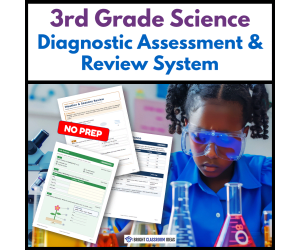
3rd Grade Science Diagnostic Assessment & Review System
Science, Grade 3, Assessments, Teacher Tools, Worksheets & Printables, Lesson Plans
Start the year with a clear picture of what your students know using this 3rd grade beginning of year science assessment and targeted review system. With a 47-question science diagnostic , teacher scoring and analysis tools, instructional grouping support, 12 targeted follow-up practice pages , and complete explained answer keys, this resource helps you move from assessment results to focused instruction without piecing together separate materials. Designed as a complete Assess → Analyze → Group → Review → Reteach system, this Grade 3 science resource checks readiness across Life Science, Earth Science, Physical Science, and Scientific Practices using visual, mixed-format questions instead of a plain test-only format. What’s Included This 3rd grade science assessment and review system includes: ✅ 47-question beginning-of-year science diagnostic ✅ 107 total assessment points ✅ 4 major science strands ✅ Life Science assessment questions ✅ Earth Science assessment questions ✅ Physical Science assessment questions ✅ Scientific Practices assessment questions ✅ Multiple-choice questions ✅ Short-answer questions ✅ Labeling activities ✅ Matching questions ✅ Data tables ✅ Graph reading ✅ Diagram interpretation ✅ Scientific scenarios ✅ Vocabulary-in-context questions ✅ Claim-Evidence-Reasoning (CER) tasks ✅ Answer recording sheet ✅ Quick-reference answer key ✅ Skill-by-skill scoring chart ✅ Strand analysis tool ✅ Secure, Developing, and Needs Support performance bands ✅ Individual Student Performance Profile ✅ Whole-class data tracker ✅ Suggested instructional groups ✅ Group planning sheet ✅ 12 targeted follow-up science practice pages ✅ “Remember” reteaching box on every follow-up page ✅ “Apply It” challenge on every follow-up page ✅ Fresh practice that does not repeat assessment questions ✅ Complete answer keys ✅ Suggested short-answer responses ✅ Worked visual and diagram answers ✅ Sample CER responses ✅ Short “why” explanations for assessment items ✅ CER scoring rubric Part 1 includes 47 mixed-format questions worth 107 total points across Life Science, Earth Science, Physical Science, and Scientific Practices. The Teacher Guide suggests using two 30–40 minute sessions or one longer block, and items may be read aloud because the goal is to assess science understanding rather than reading ability. Part 2 turns student responses into actionable data with answer recording tools, a quick key, skill-by-skill scoring, strand analysis, performance bands, student profiles, a class tracker, and suggested instructional groups. Part 3 includes 12 ready-to-assign targeted review pages , each with fresh practice, a short Remember reteach box, and an Apply It challenge. Part 4 provides complete answers for all 47 questions, explanations, suggested open-response answers, worked diagrams, sample CER responses, and a CER scoring rubric. How It Works in the Classroom Use this 3rd grade beginning of year science assessment during the first weeks of school to identify what students remember from earlier science learning and where instruction should begin. The resource follows a practical five-step system: 🔎 Assess — Students complete the 47-item mixed-format science review 📊 Analyze — Score by skill and strand to identify patterns 👥 Group — Place students into instructional groups based on shared needs 📝 Review — Assign targeted follow-up practice pages 🎯 Reteach — Use complete answer keys, explanations, and sample CER responses to support next steps This workflow is built directly into the four-part resource, creating a connected system from initial diagnostic assessment through targeted follow-up. Use this resource for: ⭐ Beginning-of-year science assessment ⭐ 3rd grade science diagnostic ⭐ Back-to-school science review ⭐ Science pre-assessment ⭐ Science readiness check ⭐ Formative assessment ⭐ Small-group planning ⭐ Science intervention ⭐ Targeted reteaching ⭐ Data-driven instruction ⭐ Skill-based grouping ⭐ Science centers ⭐ Independent follow-up practice ⭐ CER practice ⭐ Graph and data interpretation review The Scoring at a Glance chart on page 2 of Part 2 breaks the assessment into four strand totals: Life Science /35, Earth Science /26, Physical Science /22, and Scientific Practices /24 , for 107 total points . It also defines three performance bands: Secure (80%–100%) , Developing (50%–79%) , and Needs Support (below 50%) . The Class Data Tracker on page 15 of Part 2 gives teachers a whole-class view of Life, Earth, Physical, and Scientific Practices percentages, while the Suggested Instructional Groups chart on page 16 helps sort students by their lowest strand and connect groups to matching Part 3 practice. Standards & Learning Goals This third grade science diagnostic assessment reviews foundational science concepts and practices across four major strands: 🌱 Life Science — living and nonliving things, plant structures, plant needs, plant responses, animal needs, habitats, life cycles, food chains, producers and consumers, and interpreting biological data 🌦️ Earth Science — weather tools, weather data, graph reading, patterns, seasons, Earth materials, natural and human-made materials, and weather-based scientific reasoning 🧲 Physical Science — states of matter, changes of state, pushes and pulls, forces and motion, friction, light, shadows, sound, and evidence-based reasoning 🔬 Scientific Practices — science tools, observation versus measurement, measuring length, interpreting data, graph reading, fair tests, recording data, designing investigations, and drawing conclusions from evidence Students work with science content through multiple formats, including tables, graphs, diagrams, scenarios, and CER tasks. The assessment includes plant labeling, butterfly life-cycle sequencing, food-chain interpretation, rainfall and temperature graphs, states-of-matter particle models, force and friction scenarios, shadow diagrams, ruler measurement, pictographs, fair-test design, and data-based conclusions. The skill-by-skill scoring chart in Part 2 helps pinpoint specific gaps rather than relying only on one total score. Teachers can identify needs such as plant structures, life cycles, food chains, weather data, seasons, matter, forces, friction, light and shadows, science tools, measuring, graph reading, fair tests, and data conclusions. Why Teachers Love It ✨ Move beyond a single test score. Results can be analyzed by science strand and individual skill, helping teachers see exactly where students are secure and where review is needed. ✨ Turn assessment data into an instructional plan. The scoring and analysis tools connect results to grouping and follow-up practice instead of leaving teachers with a stack of completed tests. ✨ Use mixed-format questions to see student thinking. Students respond through multiple choice, matching, labeling, data tables, graph reading, diagrams, short answers, scenarios, vocabulary in context, and CER tasks. ✨ Support data-driven small groups. The suggested instructional groups organize students around shared needs in Life Science, Earth Science, Physical Science, or Scientific Practices. ✨ Differentiate with clear performance bands. Use Secure, Developing, and Needs Support ranges to guide enrichment, targeted practice, or foundational small-group reteaching. ✨ Assign only the review students need. The 12 targeted follow-up pages cover: Living vs. Nonliving Plant Parts & Needs Life Cycles Habitats Food Chains Weather & Seasons Earth Materials Properties of Matter Forces & Motion Light & Sound Science Tools & Measuring Science Data & Graphs The Practice Page Menu on page 2 of Part 3 directly matches student difficulties to specific follow-up pages, making targeted assignment faster. ✨ Reteach before students practice. Every targeted page includes a short Remember box that reviews the essential concept before students begin. ✨ Challenge students who are already secure. Every follow-up page includes an Apply It task that extends thinking beyond basic recall. ✨ Build Claim-Evidence-Reasoning skills. The diagnostic includes CER tasks connected to plant needs, weather, friction, and plant-growth data, while Part 4 includes sample CER responses and a scoring rubric. ✨ Make grading more manageable. Part 4 includes correct answers, suggested short-answer responses, completed visual items, explanations of why answers are correct, and guidance for partial credit. ✨ Support visual science learning. The assessment uses colorful layouts, diagrams, data tables, bar graphs, line graphs, particle models, food chains, rulers, and other visual formats to assess understanding in varied ways. ✨ Use student profiles for individualized planning. The Student Performance Profile on page 14 of Part 2 provides strand snapshots, strengths, focus areas, assigned practice pages, and group placement. ✨ Keep the instructional loop connected. Assessment, analysis, grouping, targeted review, reteaching, and answer support are designed as one coordinated system rather than separate activities. Start the year knowing what your students understand and what they need next with this 3rd grade beginning of year science assessment . Download this complete science diagnostic and review system to assess readiness, analyze results by strand and skill, create targeted instructional groups, assign focused follow-up practice, and support reteaching with complete explained answer keys. Perfect for teachers searching for a 3rd grade science diagnostic assessment , beginning-of-year science review, back-to-school science assessment, third grade science pre-assessment, Life Science review, Earth Science review, Physical Science review, Scientific Practices assessment, CER practice, science intervention, small-group science planning, data-driven instruction, or targeted science reteaching resource.
Author Bright Classroom Ideas Marketplace
Rating
Tags Back To School, Science, Assessment, Worksheet
I WONDER - Do All Mollusks Have Shells | Animated Video Lesson
STEM, Animals, Life Sciences, Science, Biology, Grade 1, 2, 3, 4, 5, 6, 7, 8, Teacher Tools, Lesson Plans
Video Introduction Animal kingdoms are full of fascinating wonders to learn. This video is designed for the students to learn more about animals in different countries. I WONDER - Do All Mollusks Have Shells | Animated Video Lesson Do you like animals? what is your favorite one? Do you own a pet? If yes, tell us more about it, like what its name? And what do you like most about it? What are the animal kingdoms? Can you write down the characteristics of each animal class like mammals, birds, reptiles, amphibian, fish and mollusks. Do you know that some animals can sing, can you name any of them? What is the largest and the smallest mammal in the world? What is the largest and the smallest bird in the world? What is the largest and the smallest fish in the world? I WONDER - Do All Mollusks Have Shells | Animated Video Lesson The video is perfect for encouraging the researching skills for the students, while learning more about these fantastic animals. I WONDER - Do All Mollusks Have Shells | Animated Video Lesson This friendly designed video is suitable for students at school, homeschooling, and as a group activity. Format Available in MP4 format.
Author Educational Voice
Tags Do All Mollusks Have Shells, Do All Mollusks Have Shells Video, Mollusks Shells, Mollusks Shells Facts, Mollusks Shells Facts For Kids, Mollusks Shells Video, Mollusks Shells Video For Kids, Mollusks

I WONDER - How Do Biofuels Help The Planet | Animated Video Lesson
Environmental Science, Earth and Environmental Sciences, Science, Earth Sciences, Grade 4, 5, 6, 7, 8, 9, 10, Lesson Plans, Teacher Tools
Video Introduction An amazing video designed for the students to learn more about STEM. I WONDER - How Do Biofuels Help The Planet | Animated Video Lesson Do you like STEM subjects? what is your favorite one? Have you ever tried to plant a seed? If yes, tell us more about it. Or have you ever tried to invent something? If yes, tell us more about it. And how do you think it will help us? Have you ever seen a microorganism under a microscope? What was it? And how it looked like? Mathematics is a marvelous subject. Let' sharpen our brains and solve some equations. Do you like timetable tricks? What is your favorite one? Do you know how to code? Have you ever created an app or a game before? If yes, how was it like? I WONDER - How Do Biofuels Help The Planet | Animated Video Lesson The video is perfect for encouraging the researching skills for the students, while learning more about this fantastic topic. I WONDER - How Do Biofuels Help The Planet | Animated Video Lesson This friendly designed video is suitable for students at school, homeschooling, and as a group activity. Format Available in MP4 format.
Author Educational Voice
Tags How Do Biofuels Help The Planet, How Do Biofuels Help The Planet Video, Biofuels, Biofuel, Biofuels Facts, Biofuels Facts For Kids, Biofuels Video, Biofuels Video For Kids, Environment
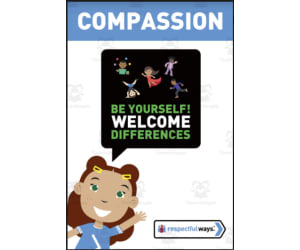
Let's Chat Conversation Cards | "Be Yourself, Welcome Differences"
Special Resources, Social Emotional Learning (SEL), Kindergarten, Preschool, Grade 2, 3, 4, 5, 6, Teacher Tools, Lesson Plans
Let's Chat Conversation Cards for "Be Yourself, Welcome Differences." The “Let’s Chat Conversation Cards is a wonderful resource to help students build a positive mindset. This resource is part of a whole program that works towards having students believe they can be compassionate, have perseverance, respect, and responsibility and through it all, achieve great things! Let’s Chat Conversation Cards allows for real conversations through which students may learn of different perspectives and strengthen friendships through truly understanding each other. This resource is a set of Let's Chat Conversation Cards for "Be Yourself, Welcome Differences." There are 57 other Let's Chat resources available, along with matching Respectful Signage listed under "graphics". The "Home Connects" for families is available in English and Spanish. Meridian MS Public Schools has been a partner district of Respectful Ways since October of 2020 and they shared this year’s Panorama Data with us. Meridian students who are utilizing Respectful Ways and PBIS showed great improvements in these 3 key areas: 12% higher GPAs 37% attendance improvements 93% less referrals Respectful Ways is a trauma-informed program: Assessment: Take our survey to assess your school climate. Targeted Results: Your survey identifies modules that meet your students' social and emotional needs. Our trauma-informed online curriculum has been vetted by the Attachment & Trauma Network. Custom Professional Development: We offer workshops with subject-matter experts who use your data to address student behavioral needs and educator wellness needs. Blended Education Interventions: Respectful Ways (RW) integrates seamlessly with different instructional frameworks such as PBIS and MTSS, using evidence and research-based practices. For more information email Pam@RespectfulWays.com or call 404-955-8882.
Author Respectful Ways
Tags Conversation Cards, Social, Spanish, Respectful Ways, Be Yourself, Sel, Social Emotional Learning, Compassion, Let's Chat, Character Education

I WONDER - What Are The Different Angles Called | Animated Video
STEM, Geometry, Math, Grade 2, 3, 4, 5, 6, 7, 8, Lesson Plans, Teacher Tools
Video Introduction An amazing video designed for the students to learn more about STEM. I WONDER - What Are The Different Angles Called | Animated Video Lesson Do you like STEM subjects? what is your favorite one? Have you ever tried to plant a seed? If yes, tell us more about it. Or have you ever tried to invent something? If yes, tell us more about it. And how do you think it will help us? Have you ever seen a microorganism under a microscope? What was it? And how it looked like? Mathematics is a marvelous subject. Let' sharpen our brains and solve some equations. Do you like timetable tricks? What is your favorite one? Do you know how to code? Have you ever created an app or a game before? If yes, how was it like? I WONDER - What Are The Different Angles Called | Animated Video Lesson The video is perfect for encouraging the researching skills for the students, while learning more about this fantastic topic. I WONDER - What Are The Different Angles Called | Animated Video Lesson This friendly designed video is suitable for students at school, homeschooling, and as a group activity. Format Available in MP4 format.
Author Educational Voice
Tags What Are The Different Angles Called, What Are The Different Angles Called Video, Different Angles, Different Angles Video, Different Angles Video For Kids, Different Angles Facts, Different Angles Facts For Kids

FAIRY TALE TIME Gr. 3-6
ELA, Reading, Grade 3, 4, Teacher Tools, Lesson Plans
FAIRY TALE TIME Gr. 3-6 Designed for public and homeschool educators engaging students in grades three through six, this unique teaching resource traces back to the rich pre-literate history of fairy tales and folk tales. These timeless stories were passed down orally from one generation to the next, kindling creativity, oral interaction, and cooperative learning. This stimulating lesson plan revolves around four key activity areas: Drama Listening Research Creativity The integration of these focuses into your teaching framework with this pre-planned resource assures a fulfilling learning environment for your learners. Drama Component: Learners get immersive experience by understanding character motivations and relationships portrayed in fairy tales. Students engage themselves by reenacting various stories or scenes therewith - an enjoyable group activity that mixes play with education. Listening Activities: Including listening activities improves auditory comprehension and cultivates analytical abilities as students outline content or predict outcomes based on context cues from tale narration. Scholarly discussions bloom when they are broken down into small groups to exchange summaries—a wonderful tool for reinforcing comprehension! Research activities: A fantastic setting for independent work; research assignments can morph into collaborative endeavors where students delve deep into exploring different cultures or origins of various folktales—thereby nurturing curiosity-driven research skills among young minds. Showcasing Creativity: Students love being involved in "The Unfinished Fairy Tale," allowing them to complete a half-told story using their imagination! Herein lies another opportunity– crafting an alternative ending or conceptualizing costumes for characters. A plethora of exciting opportunities to learn while having a ball! Contained in 62 ready-to-print PDF pages, this file is meticulously designed keeping educators' needs at the heart, ensuring minimum preparation effort and maximum focus on the implementation of effective teaching methods. FAIRY TALE TIME Gr. 3-6 gets kids excited about Language Arts, specifically Reading development–making it an indispensable resource in your set of teaching tools.
Author Classroom Complete Press
Tags Fairy Tales, Activity Centers, Letter Writing, Character Development, Poetry

Simple Machines: Inclined Planes, Wedges, and Screws - FLASH-PC
Science, Technology, Engineering, Common Core, Grade 5, 6, 7, 8, Teacher Tools, Lesson Plans
Simple Machines: Inclined Planes, Wedges, and Screws - FLASH-PC This exclusive educational resource is designed specifically for educators focusing on the teaching of inclined planes, wedges, and screws found in simple machines. It provides curriculum -based content from grade 5 to grade 8, through an efficient blend of reading passages. Preparatory questions are used to stimulate independent thinking and curiosity about the subject before delving into the topic. This learning journey continues with queries formulated after reading sections to ensure comprehension and retention of content. Educator's Convenience Platform An excellent tool for public school teachers as well as homeschoolers, this resource aligns all its material with Common Core State Standards while following Bloom's Taxonomy’s path for promoting higher level cognitive skills. Plus, it offers printable materials facilitating diversified teaching styles or outside assignments where technology access might be limited. Versatility This product fits in various settings — whole group discussion or focused small groups — effortlessly adapting to diverse teaching strategies. Interactive activities included alongside audio-video options make learning engaging yet comprehensive. The broad umbrella topic 'Engineering' is further nurtured via: A focus on vocabulary building related specifically to scientific jargon understanding key to 'Simple Machines.' Vocab flashcards distinctly inserted within this digital lesson plan format that aid in gradual building of a specialized word bank. New age pedagogical needs are met with this FLASH-PC compatible file offering easy-to-understand academic material without compromising its credible quality - just a click away!
Author Classroom Complete Press
Tags Software (PC)

I WONDER - What Is A Nuclear Reaction | Animated Video Lesson
Environmental Science, Earth and Environmental Sciences, Science, Earth Sciences, Grade 4, 5, 6, 7, 8, 9, 10, Lesson Plans, Teacher Tools
Video Introduction An amazing video designed for the students to learn more about STEM. I WONDER - What Is A Nuclear Reaction | Animated Video Lesson Do you like STEM subjects? what is your favorite one? Have you ever tried to plant a seed? If yes, tell us more about it. Or have you ever tried to invent something? If yes, tell us more about it. And how do you think it will help us? Have you ever seen a microorganism under a microscope? What was it? And how it looked like? Mathematics is a marvelous subject. Let' sharpen our brains and solve some equations. Do you like timetable tricks? What is your favorite one? Do you know how to code? Have you ever created an app or a game before? If yes, how was it like? I WONDER - What Is A Nuclear Reaction | Animated Video Lesson The video is perfect for encouraging the researching skills for the students, while learning more about this fantastic topic. I WONDER - What Is A Nuclear Reaction | Animated Video Lesson This friendly designed video is suitable for students at school, homeschooling, and as a group activity. Format Available in MP4 format.
Author Educational Voice
Tags What Is A Nuclear Reaction, What Is A Nuclear Reaction Video, Nuclear Reaction, Nuclear Reaction Facts, Nuclear Reaction Facts For Kids, Nuclear Reaction Video, Nuclear Reaction Video For Kids
I WONDER - What Is The Smallest Bird In The World | Animated Video
Animals, Life Sciences, Science, Biology, STEM, Grade 1, 2, 3, 4, 5, 6, 7, 8, Lesson Plans, Teacher Tools
Video Introduction Animal kingdoms are full of fascinating wonders to learn. This video is designed for the students to learn more about animals in different countries. I WONDER - What Is The Smallest Bird In The World | Animated Video Lesson Do you like animals? what is your favorite one? Do you own a pet? If yes, tell us more about it, like what its name? And what do you like most about it? What are the animal kingdoms? Can you write down the characteristics of each animal class like mammals, birds, reptiles, amphibian, fish and mollusks. Do you know that some animals can sing, can you name any of them? What is the largest and the smallest mammal in the world? What is the largest and the smallest bird in the world? What is the largest and the smallest fish in the world? I WONDER - What Is The Smallest Bird In The World | Animated Video Lesson The video is perfect for encouraging the researching skills for the students, while learning more about these fantastic animals. I WONDER - What Is The Smallest Bird In The World | Animated Video Lesson This friendly designed video is suitable for students at school, homeschooling, and as a group activity. Format Available in MP4 format.
Author Educational Voice
Tags What Is The Smallest Bird In The World, What Is The Smallest Bird In The World Video, Smallest Bird In The World, Smallest Bird In The World Facts, Smallest Bird In The World Facts For Kids, Smallest Bird In The World Video
I WONDER - Why Were Ancient Temples Built | Animated Video Lesson
History: African, History, Social Studies, History: Ancient, Grade 6, 7, 8, 9, 10, 11, 12, Lesson Plans, Teacher Tools
Video Introduction An amazing video designed for the students to learn more about history. I WONDER - Why Were Ancient Temples Built | Animated Video Lesson Do you like history? Which topic do you really enjoy about history? Have you ever read an interesting fact about the Vikings? If yes, can you mention them? What do you like most about the Victorian era? Can you name all the Tudors? Have you ever wondered how people used to live in ancient Japan and ancient China? Do you know any interesting facts about ancient Egyptians and the Pharaohs? Have you ever visited South America? What do you know about Incas and Aztecs? Celtic culture was really one of a kind, can you name any of the places that Celts used to live in? Imagine yourself living during the ancient Roman empire, how your life will look like? Ancient Greece was an amazing place to live in. What do you know about ancient Greek life? I WONDER - Why Were Ancient Temples Built | Animated Video Lesson The video is perfect for encouraging the researching skills for the students, while learning more about history. I WONDER - Why Were Ancient Temples Built | Animated Video Lesson This friendly designed video is suitable for students at school, homeschooling, and as a group activity. Format Available in MP4 format.
Author Educational Voice
Tags Why Were Ancient Temples Built, Why Were Ancient Temples Built Video, Ancient Temples, Ancient Temples Video, Ancient Temples Facts, Ancient Temples Video For Kids, Ancient Temples Facts For Kids
Algebra: Number Sentences & Fact Families - PC Software
Math, Fact Families, Kindergarten, Preschool, Grade 1, 2, Teacher Tools, Lesson Plans
Algebra: Number Sentences & Fact Families - PC Software Algebra: Number Sentences & Fact Families - PC Software is an innovative teaching resource designed to simplify and augment the process of teaching algebra. Tailored for preschool, kindergarten, grade 1 and grade 2 levels, it offers a comprehensive approach to understanding the concept of Number Sentences and Fact Families in a fun manner. Main Features: A broad spectrum of curriculum-aligned content: The software comprises pre- assessment materials, carefully structured lesson plans, real-world word problems, and timed drill activities fostering a full understanding of concepts. An interactive gameplay approach to learning: Memory match game, board game as well as spinner game are included to stir curiosity in students making learning enjoyable. Bilingual feature: : Contents have English voice-over with text default option but also dubbed in Spanish accommodating diverse classrooms' needs especially where there may be Spanish-speaking students alongside English-speaking ones. Packed conveniently for PC users: The entire package comes neatly contained in a ZIP file specifically designed for PCs. This user-friendly design ensures quick accessibility whether you are installing it on multiple school computers or transferring it onto other devices. Incorporation into Daily Learning: This software can seamlessly mesh with your daily lesson plans turning solo assignments or small group tasks into interactive experiences that engage students’ curiosity about algebraic principles. It can also find application as part of homework exercises enabling parents kid interaction towards common educational goal on homefronts. If you're seeking ways stimulate early graders' mathematical understanding especially concerning fact families be informed; Algebra: Number Sentences & Fact Families - PC Software perfectly addresses that need.
Author Classroom Complete Press
Tags Number Sentences, Fact Families, Algebra Lesson, Math Lesson, Digital Math

World Electoral Processes Gr. 5-8
Social Studies, Government, Grade 5, 6, 7, 8, Teacher Tools, Lesson Plans
World Electoral Processes Gr. 5-8 This is an all-encompassing teaching resource that thoroughly enlightens students on a myriad of electoral processes seen globally. This educational tool delves into the specifics of presidential, parliamentary, and dictatorship governments thus equipping learners with a multifaceted view of diverse political systems. Educators have the freedom to teleport their classrooms backwards temporally to explore voting's evolution from its infancy stages to modern practices with this resource. A fascinating journey through the exploration of democracy and its effectiveness in echoing populace views awaits students. Main Features: A thorough analysis of power distribution between presidents and legislatures in presidential systems. Detailed examination on why laws garner easier passageway under parliamentary regimes compared to presidential ones. A deep dive into dictatorships' history, highlighting why most dictators usually ascend from military ranks, plus how dictatorships roles have morphed over centuries. In-depth discussion regarding suffrage intricacies looking especially at citizen voting requirements— a crucial pillar in worldwide democratic societies. Interactive Activities: "Role-Playing Tasks": These fun activities such as role-playing tasks that see students mimicking parliament members by showcasing 90-second statements relevant to concerning issues will give learners greater empathy for politicians' challenges. "Classroom Elections": An entertaining element involves arranging classroom elections where students democratically decide their class running policy! The design accomplish adherence to both State Standards & Bloom's Taxonomy guidelines ascertains content quality is high-grade education material specifically calibrated for enhancing comprehension techniques effectively checked for efficacy consistently. The additional amusement elements like contextually subject matter based writing tasks, social studies themed crosswords, and subject-centric word searches make learning not only recreational but solidify knowledge simultaneously! Delivery: The resource is delivered effortlessly via PDF format so that printing or digital sharing of it is utterly unhassling. All these resources are explicitly tailored for social studies targeted specifically towards government-related subjects with a primary focus on Grades 5-8. Conclusion In totality, the World Electoral Processes Gr. 5-8 toolkit forms an interactive and intriguing tool for educators imparting wisdom to middle school grades. An extensive guide to understanding varied systems of government makes it particularly handy for both homeschooling scenarios in addition to public schools alike.
Author Classroom Complete Press
Tags PDF

Number & Operations: Multiplication & Division - PC Software
Math, Algebra, Grade 3, 4, 5, Teacher Tools, Lesson Plans
Number & Operations: Multiplication & Division - PC Software Use this essential teaching resource for educators focusing on Grades 3, 4, and 5. It's a powerful digital tool specifically designed to simplify the process of imparting knowledge about multiplication and division under Number and Operations, reinforcing students' mathematical skills in an interactive way. Main Features Comprehensive content provision: Provides curriculum-based learning materials including a pre- assessment segment, a detailed lesson plan, real-world word problems to encourage practical understanding, and timed drill activities to reinforce conceptual understanding at a faster pace. Bonus math tools: Includes additional math tools such as memory match game for fostering students’ memory capabilities; board game perfect for group activities promoting teamwork; spinner game ideal for individual student participation or adding fun into classroom instruction. Multilingual support: English text with voice over narration is default accompanied by Spanish voice over narration with associated text content option available. Hassle-free setup process: Comes as downloadable zip file developed specifically for PC use allowing easy installation tailored really uncomplicated handling once set up on educator’s device. Additional Benefits Included printables material assists teachers in creating handy tangible learning aids that support follow-up studies at home comfortable as homework assignments or continued independent study after school hours. The software includes SMART Response assessments providing feedback on student performance effortlessly guiding necessary teaching modifications required by each individual learner progress while enhancing personalized learning experience through focused teacher attention where needed most. Closing Statement "Number & Operations: Multiplication & Division" sets up every education facilitator such as public schooling teachers / homeschoolers etc., value loaded versatile tool that can effectively be employed across whole group learning activities, smaller self-paced learning groups or even tailored individual student focused sessions providing adaptability that answers differing teaching and learner needs. The inclusivity provision goes a long way in meeting set class goals through facilitation of flexible yet rewarding instruction processes.
Author Classroom Complete Press
Tags Digital Math, Operations, Division, Math Activities, Multiplication
I WONDER - Did Viking Women Fight In Battle | Animated Video Lesson
History: British, History, Social Studies, History: Europe, History: Ancient, History: Canada, History: USA, Grade 4, 5, 6, 7, 8, 9, 10, Lesson Plans, Teacher Tools
Video Introduction An amazing video designed for the students to learn more about history. I WONDER - Did Viking Women Fight In Battle | Animated Video Lesson Do you like history? Which topic do you really enjoy about history? Have you ever read an interesting fact about the Vikings? If yes, can you mention them? What do you like most about the Victorian era? Can you name all the Tudors? Have you ever wondered how people used to live in ancient Japan and ancient China? Do you know any interesting facts about ancient Egyptians and the Pharaohs? Have you ever visited South America? What do you know about Incas and Aztecs? Celtic culture was really one of a kind, can you name any of the places that Celts used to live in? Imagine yourself living during the ancient Roman empire, how your life will look like? Ancient Greece was an amazing place to live in. What do you know about ancient Greek life? I WONDER - Did Viking Women Fight In Battle | Animated Video Lesson The video is perfect for encouraging the researching skills for the students, while learning more about history. I WONDER - Did Viking Women Fight In Battle | Animated Video Lesson This friendly designed video is suitable for students at school, homeschooling, and as a group activity. Format Available in MP4 format.
Author Educational Voice
Tags Did Viking Women Fight In Battle, Did Viking Women Fight In Battle Video, Viking Women, Viking Women Facts, Viking Women Facts For Kids, Viking Women Video, Viking Women Video For Kids

I WONDER - What Was A Victory Garden | Animated Video Lesson
History: British, History, Social Studies, History: Europe, Grade 4, 5, 6, 7, 8, 9, 10, Lesson Plans, Teacher Tools
Video Introduction An amazing video designed for the students to learn more about history. I WONDER - What Was A Victory Garden | Animated Video Lesson Do you like history? Which topic do you really enjoy about history? Have you ever read an interesting fact about the Vikings? If yes, can you mention them? What do you like most about the Victorian era? Can you name all the Tudors? Have you ever wondered how people used to live in ancient Japan and ancient China? Do you know any interesting facts about ancient Egyptians and the Pharaohs? Have you ever visited South America? What do you know about Incas and Aztecs? Celtic culture was really one of a kind, can you name any of the places that Celts used to live in? Imagine yourself living during the ancient Roman empire, how your life will look like? Ancient Greece was an amazing place to live in. What do you know about ancient Greek life? I WONDER - What Was A Victory Garden | Animated Video Lesson The video is perfect for encouraging the researching skills for the students, while learning more about history. I WONDER - What Was A Victory Garden | Animated Video Lesson This friendly designed video is suitable for students at school, homeschooling, and as a group activity. Format Available in MP4 format.
Author Educational Voice
Tags What Was A Victory Garden, What Was A Victory Garden Video, Victory Garden, Victory Garden Facts, Victory Garden Video, Victory Garden Facts For Kids, Victory Garden Video For Kids