



3,928 products added recently
Page 20 - Reading Lesson Plans
Inspire your students with reading lesson plans that incorporate a variety of genres and interactive activities. These resources aim to improve fluency, vocabulary, and comprehension. Use these plans to create an engaging reading environment where students develop a lifelong love for literature.

 Show filters


High School Famous People in History Reading Passage and Q & A
ELA, Reading, Writing, Science, Social Studies, High School, Homeschool Resources, Teacher Tools, Assessments, Quizzes and Tests, Lesson Plans, Worksheets & Printables, Writing Prompts
You know that moment when your teenager gives you that look after you hand them another boring history book? My 9th grader practically perfected the eye-roll when it came to learning about "dead people from way back when" (her words, not mine!). I finally got fed up with watching her zone out during history time—these are not just random names and dates, these are the people who literally changed everything! After way too many late nights researching and writing (and lots of coffee), I put together these High School Famous People in History Reading Passage, Q & A, and Note-Taking Sheets that actually tell their stories in a way that makes sense to teenagers. The best part? My daughter actually started asking questions and voluntarily bringing up history during dinner conversation—when that happens, you know you've found something that works, and I'm hoping it'll do the same thing for your family's history studies. INCLUDED IN THIS RESOURCE: In-depth exploration of historical figures in history 20 thought-provoking questions about historical impact Detailed guided responses to help parents facilitate meaningful discussions 5 Note-Taking Sheets to help students organize information and develop analytical thinking skills TOPICS COVERED: Scientific and Mathematical Pioneers Literary and Artistic Luminaries Political Visionaries and Social Reformers Technological and Medical Breakthroughs Okay, so here's the deal—I spent forever putting together this High School Famous People in History Reading Passage, Q & A, and Note-Taking Sheets because I was tired of my kid thinking history was just a bunch of boring old stuff. These readings aren't fluff—they really dive into what made these people tick and how they managed to shake up the entire world. What I love is that the questions actually make kids think instead of just spitting back whatever they memorized five minutes ago, and the note-taking part keeps everything organized without making their brain hurt. My daughter went from literally groaning every time I mentioned history to actually telling her friends about some of the crazy things these historical figures did. Trust me, you are going to find yourself pulling this out over and over because there's always something new your kid will pick up on that they totally missed before. If you and your students/homeschoolers enjoyed this resource, please leave a review. Thank you for your support! Tina - Big Easy Homeschooling Mom
Author Homeschool with Big Easy Homeschooling Mom
Rating
Tags Famous People History Lesson, Historical Figures Homeschool, History Critical Thinking, Homeschool History Curriculum, Famous Scientists Study, Homeschool History Resource Famous People Civilization, Famous Inventors, Social Reformers History, Philosophy History Study, Civilization Shapers
Abigail Adams: A Woman Ahead of Her Time: A Cross-Curricular Unit
ELA, Reading, Grade 5, 6, Teacher Tools, Lesson Plans
Abigail Adams: A Woman Ahead of Her Time: A Cross-Curricular Unit This is a high-quality educational supplement designed for educators in a public school or homeschool setting. The target audience is grade 5 and grade 6 Language Arts programs, with an emphasis on reading curriculum . The unit merges the fascinating life of Abigail Adams, known for her ground-breaking advocacy on women's rights, into a comprehensive lesson plan. This creates an engaging learning environment that not only improves students’ reading abilities but also enlightens them about historical figures and events. The Importance of Abigail Adams Beyond being just the wife of a president, Abigail played a vital role in advocating for women's rights almost 150 years before they received their voting privileges. Structure and Approach A central feature is its story-driven approach where aspects from Abigail’s life are incorporated into an interesting script ready to be performed as a play by students. Cross-curricular worksheets further enhance the learning experience by going beyond simply rote learning about history. All resources are presented as a single PDF file with seven pages ready to print when needed. Suggested additional activities provide ample options to customize learning material across different student abilities and interests. Note: This resource reduces your prep time significantly while giving you more hands-on engagement with your students – whether used in large group settings or smaller focus groups. Versatility In addition to its primary application for classroom instruction, this unit can also be effectively used as material for homework assignments which reinforce classroom learnings effectively at home. The package promotes independent study skills within medium complexity reading levels (grades 5-6), assisting educators to inspire learners about modern history and gender equality through focused reading sessions incorporating this cross-curricular unit.
Author Classroom Complete Press
Tags Abigail Adams, Presidents, Women's History, Voting, Reading Worksheet
Helium Reading Comprehension Passage - Cored Ed Encyclopedia
ELA, Reading Comprehension, Reading, Science, Technology, Pre-Reading, Language Development, Physics, Earth and Environmental Sciences, Chemistry, Grade 2, 3, 4, 5, Worksheets & Printables, Worksheets, Teacher Tools, Centers, Activities, Writing Prompts, Assessments, Quizzes and Tests, Quizzes, Lesson Plans
This helium reading comprehension with lesson plan includes: Visualization (on the front cover) Start your lesson by taking a minute to think and share something about the topic. Read the script aloud (slowly), perhaps prepare some music or sound effects. Student close their eyes and let their imaginations wander. Students open their eyes, read the question aloud and give them a few minutes to complete. Ask a few students to share or keep answers until the end to compare with what they learn in the passage. Quick pause—thousands of Cored Education products are included with your TeachSimple membership. Download links and encyclopedia index available here. Pre-Reading Trivia Students will write down one thing they already know about the subject and then read five more facts and discuss. These facts are fun, and the students will enjoy learning about the subject before reading more. Give 1 minute for students to write what they already know (no pressure—best guess is fine). Read the five facts together. After each fact, do ask a student for their opinion, was it surprising? Set a purpose by asking students to highlight/underline one fact they want to learn more about during the reading. Reading Passage The text is a high-interest reading passage with set paragraphs, roughly three to four paragraphs long. It contains a variety of themes about the topic, anywhere from history to technology. The passage is between 250 and 350 words in length. First, ask students to look at the headings and see what they’ll learn about today. What do they know about the topic/heading? First read options: Teacher read-aloud (best for support). Partner reading (paragraph by paragraph). While reading, students underline important details, and vocabulary words they think may come up in the questions section. Mixed Questions The first question page contains four multiple-choice questions, each with a choice of four answers, and three written response questions that require a sentence or two from the student. Students complete the mcqs first independently, then review quickly as a class. For the 3 written responses, try to get students giving the answer with some form of evidence: “I think ___ because the text says ___.” If students get stuck, send them back to check the passage. Vocabulary Questions Practice seven key words from the text in this section across two activities. First section is scrambled words where students will unscramble three words given a clue for each. The second section is a word to meaning matching activity. Before starting, have some students read out words they underlined in the passage. Ask students to say the word and read aloud the sentence(s) around each word. Ask students to do scrambled words and the matching exercise in pairs then go through answers as a class. For the scrambled spelling task, get four pairs to come up to the board and write the words for extra practice with the other student reading out the clue. For the matching task, prompt students to give full sentences: “I matched ___ with ___ because ___.” Creative Writing In this question, the student will be required to write a five to eight sentence paragraph on a question related to the topic. Before starting, ask students write down 3 key ideas they are going to include in their piece. Ask students for ideas to share around the class to help those struggling. Pro writing expectations: 5–8 sentences At least 2 facts or details from the passage At least 2 vocabulary words from the previous page Students read their paragraphs while classmates listen for facts and vocabulary words. Extension Activities This page is optional for fast finishers or to take home. There are several activities, each one requiring a different skill. Do some, do none, do all, completely optional - but you will feel reassured knowing every possibility is planned for. Includes summary writting question and additional facts. Answer Key There are answers for the multiple-choice questions, written response questions have sample answers, vocabulary answers and if there is a summary question then a sample summary will be provided as well. Lesson Plan Included Customized lesson plan for this lesson is included. Lesson Snapshot Title: Helium Genre: Nonfiction (informational text) Subject: Science / Engineering (transportation technology) Primary Topic: How an air-cushion craft hovers and is used Estimated Guided Reading Level (A–Z): Q What This Lesson Teaches Best Explains how a “Helium” craft rides on a cushion of air trapped underneath instead of sitting in water. Describes why an air cushion reduces rubbing so the craft can “slide along” over surfaces like water, sand, or flat grass. Connects invention history to technology improvements (early ideas, a patented concept, then a smarter way to prevent air leaking). Shows how design changes solved problems (the flexible “skirt” helped hold the air cushion and climb over obstacles). Shares real-world uses and limitations (ferries, rescue missions, military landings, racing/recreation; noise and wind/waves). Learning Goals Students will describe how the craft moves differently from a regular boat, using details from the passage. Students will explain what an “air cushion” does and why it helps the craft slide over different surfaces. Students will identify one inventor or engineer named in the text and describe what problem they helped solve. Students will explain how the flexible “skirt” improved the craft’s ability to hover and travel. Students will list at least two jobs the craft can do (such as ferries or rescue missions) using evidence from the text. Students will describe one challenge mentioned in the passage that can make travel harder (winds or rough waves). Key Vocabulary From the Text cushion — a pocket of air that holds something up. patented — officially claimed an invention idea by law. pressure — pushing force under the craft that can lift it. hovering — staying just above a surface, not touching it. skirt — flexible part that helps hold air underneath. FULL CATALOG OF DOWNLOAD LINKS AND ENCYCLOPEDIA INDEX HERE
Author Cored Education
Rating
Tags Vocabulary, Reading Comprehension, Reading Passages, Lesson Plans, Ela Lesson Plans, Reading Comprehension Lesson Plans, Pre-reading, Science Lesson Plans, Physics, Chemistry
Phonic Spelling Programme Level 1 Ages 7+
Special Resources, ELA, Special Education Needs (SEN), Language Development, Phonics, Reading, Spelling, Preschool, Grade 1, 2, 3, Lesson Plans, Teacher Tools, Outlines, Worksheets & Printables, Flashcards, Workbooks
This is a Phonic spelling programme. Not only will it teach a child to spell, but also to write. Just add a good handwriting programme. The spelling programme can be used with all ages from 5 to 99, however, if used with a young learner I strongly advise using the programme to teach both reading and spelling at the same time. See the website for more information and resources to teach young children. The spelling programme can be used: with children who have learnt to read, but need a spelling/writing programme with children who have tried another phonic programme and not made much progress with reading and/or spelling/writing with a special needs child who needs a very structured approach to learning by home educators by parents wishing to help their child at home About the programme The programme is very flexible and can be made to fit the child, rather than the child to fit the programme. Being highly structured, each new lesson builds on the one before, constantly revising the previously taught material The spelling programme will take 41 weeks to teach. One new sound is taught each week. What is included? The teacher's manual with full lesson plans and helpful teaching tips A list of the keywords for each lesson with the phonic sound highlighted - for practice and revision 39 spelling worksheets The Reading Made Simple Phonic flashcards The Odd Word flashcards About the worksheets The worksheets use time-honoured exercises to help pupils to become familiar with the new sound and revise previously taught ones. They include such exercises as tracking the new sound in words, proofreading as well as comprehension questions. Children generally find them fun because they are so easy due to the way learning is structured throughout the programme. More information If you would like more information about the spelling programme, then please visit the Reading Made Simple website. The same programme and set of worksheets can also be used to help an older child read, one who has some phonic knowledge but needs the gaps filled in a systematic manner.
Author Lilibette's Resources
Rating
Tags Phonics, Spelling, Phonic Intervention, Reading Made Simple, Reading, Special Needs, Worksheets, Learning To Spell, Learning To Write

Gondolas Reading Comprehension Passage - Cored Ed Encyclopedia
ELA, Reading Comprehension, Reading, Science, Technology, Pre-Reading, Language Development, History, Social Studies, Geography, Grade 2, 3, 4, 5, Worksheets & Printables, Worksheets, Teacher Tools, Centers, Activities, Writing Prompts, Assessments, Quizzes and Tests, Quizzes, Lesson Plans
This gondolas reading comprehension with lesson plan includes: Visualization (on the front cover) Start your lesson by taking a minute to think and share something about the topic. Read the script aloud (slowly), perhaps prepare some music or sound effects. Student close their eyes and let their imaginations wander. Students open their eyes, read the question aloud and give them a few minutes to complete. Ask a few students to share or keep answers until the end to compare with what they learn in the passage. Quick pause—thousands of Cored Education products are included with your TeachSimple membership. Download links and encyclopedia index available here. Pre-Reading Trivia Students will write down one thing they already know about the subject and then read five more facts and discuss. These facts are fun, and the students will enjoy learning about the subject before reading more. Give 1 minute for students to write what they already know (no pressure—best guess is fine). Read the five facts together. After each fact, do ask a student for their opinion, was it surprising? Set a purpose by asking students to highlight/underline one fact they want to learn more about during the reading. Reading Passage The text is a high-interest reading passage with set paragraphs, roughly three to four paragraphs long. It contains a variety of themes about the topic, anywhere from history to technology. The passage is between 250 and 350 words in length. First, ask students to look at the headings and see what they’ll learn about today. What do they know about the topic/heading? First read options: Teacher read-aloud (best for support). Partner reading (paragraph by paragraph). While reading, students underline important details, and vocabulary words they think may come up in the questions section. Mixed Questions The first question page contains four multiple-choice questions, each with a choice of four answers, and three written response questions that require a sentence or two from the student. Students complete the mcqs first independently, then review quickly as a class. For the 3 written responses, try to get students giving the answer with some form of evidence: “I think ___ because the text says ___.” If students get stuck, send them back to check the passage. Vocabulary Questions Practice seven key words from the text in this section across two activities. First section is scrambled words where students will unscramble three words given a clue for each. The second section is a word to meaning matching activity. Before starting, have some students read out words they underlined in the passage. Ask students to say the word and read aloud the sentence(s) around each word. Ask students to do scrambled words and the matching exercise in pairs then go through answers as a class. For the scrambled spelling task, get four pairs to come up to the board and write the words for extra practice with the other student reading out the clue. For the matching task, prompt students to give full sentences: “I matched ___ with ___ because ___.” Creative Writing In this question, the student will be required to write a five to eight sentence paragraph on a question related to the topic. Before starting, ask students write down 3 key ideas they are going to include in their piece. Ask students for ideas to share around the class to help those struggling. Pro writing expectations: 5–8 sentences At least 2 facts or details from the passage At least 2 vocabulary words from the previous page Students read their paragraphs while classmates listen for facts and vocabulary words. Extension Activities This page is optional for fast finishers or to take home. There are several activities, each one requiring a different skill. Do some, do none, do all, completely optional - but you will feel reassured knowing every possibility is planned for. Includes summary writting question and additional facts. Answer Key There are answers for the multiple-choice questions, written response questions have sample answers, vocabulary answers and if there is a summary question then a sample summary will be provided as well. Lesson Plan Included Customized lesson plan for this lesson is included. Lesson Snapshot Title: Gondolas Genre: Nonfiction (informational text) Subject: Social Studies (places/culture) Primary Topic: Gondolas in Venice: design, history, and use Estimated Guided Reading Level (A–Z): Q What This Lesson Teaches Best How Venice’s canals and bridges shape daily transportation, making boats important for visiting, carrying food, and crossing town. How a gondolier can steer with one oar using a carved wooden holder called a forcola and a smooth sculling motion. How gondola design supports steering, including being slightly asymmetrical to help one oar work better. How gondolas changed over time (older styles; “banana-shaped” modern gondola in the 1800s; laws affecting appearance). How gondolas are still used today (rides for visitors, traghetti ferries across the Grand Canal, and racing in regattas ). Learning Goals Students will describe why boats are important in Venice using details from the passage. Students will explain how a gondolier steers a gondola with one oar and a forcola. Students will identify one design feature that helps the gondola steer straighter (slight asymmetry). Students will describe how gondolas changed in shape and appearance over time, based on the text. Students will explain what traghetti are and what they do in Venice. Students will describe one way gondola traditions continue today (rides or regattas). Key Vocabulary From the Text forcola — carved wooden holder that supports and guides the oar. sculling — smooth rowing motion used to move and steer. asymmetrical — not the same on both sides. traghetti — small ferries that carry people across the Grand Canal. regattas — boat races where gondoliers race with skill and pride. FULL CATALOG OF DOWNLOAD LINKS AND ENCYCLOPEDIA INDEX HERE
Author Cored Education
Rating
Tags Vocabulary, Reading Comprehension, Reading Passages, Lesson Plans, Ela Lesson Plans, Reading Comprehension Lesson Plans, Pre-reading, Science Lesson Plans, Social Studies Lesson Plans, History

Non-Fiction Early Reader: Penguins Unit
ELA, Reading, Grade 1, 2, 3, 4, Lesson Plans, Teacher Tools
Sure, please find below the reformatted text according to your instructions: Non-Fiction Early Reader: Penguins Unit The Non-Fiction Early Reader: Penguins Unit is an educational resource that provides a delightful balance between improving reading skills and immersing students in a world of non-fiction. This unit is best suited for grade 1 to grade 4 educators. Main Features: A meticulously designed nonfiction book about penguins with real photographs. Two versions of the main book catering to different reading levels. Inclusion of supplementary materials like posters and worksheets for reinforced learning. Penguin themed word strips for comprehension improvement. A provision for tracking progress via dedicated reading charts which highlight individual accomplishments in non-fiction reading. This teaching resource provides flexibility towards collective or individual learning routines. It may be used as homework material or during interactive group readings. Note on Independent Research Skills: To promote independent research skills among learners, it contains half-page blank booklets enabling them to pen down their own versions based on discoveries they make during primary-level research activities. Aid For Parents: An 'ABC's guide' is included providing tips on assisting children read non-fiction at home effortlessly. This package offers layered benefits across 87 pages packed full of pedagogical support including informative text feature posters guiding through foundational aspects like tables of content or index usage along differentiated articles about penguins. For Language Arts instructors within Grades I-IV, this PDF will be a hands-on tool to cultivate reading skills while delving into fascinating non-fiction. Let's together take our young readers on this journey to broaden their horizons!
Author Simply Schoolgirl
Tags Early Reader, Penguins, Non-fiction, Reading Skills, Differentiated Instruction

Non-Fiction Early Reader: Skiing Unit
ELA, Reading, Grade 1, 2, 3, 4, Lesson Plans, Teacher Tools
Non-Fiction Early Reader: Skiing Unit Welcome to an exhilarating educational package designed to stimulate reading interest amongst young learners. Titled Non-Fiction Early Reader: Skiing Unit, this resource enhances learning by incorporating real-world photographs alongside informative text. What's Included? A wealth of teacher guides: This valuable toolkit includes themed words, comprehension concepts, and thoughtful text questions embedded with essential reading tips. Different Reading Levels: Catering to the diverse proficiency levels present in a learning environment, our unit accommodates both insightful readers as well as those just beginning their literacy journey. Skiing themes for Language arts skills development: Use it versatilely for whole classroom teaching sessions or small activity group discussions or even designate it as homework! All while boosting language arts skills from grades 1-4. Add-On Materials In addition, enjoy our tailored posters and worksheets based on skiing themes. We've also included tracking sheets into our unit - an excellent tool for recording progress in real-time! The Teaching Approach Design An essential aspect is the operation tuition – systematically segmenting informative text such as table of contents, subtopics, headings that combined will elevate your teaching approach whilst keeping it engaging. In conclusion... The Lexile levelled booklets about skiing, Educative parent handouts, Dedicated theme word sound cards and student booklets ready for completing by budding authors! This all culminates into an enchanting escapade downhill skiing through the language arts world!
Author Simply Schoolgirl
Tags Non-Fiction, Early Reader, Skiing, Language Arts, Literacy

School Gr. 1
ELA, Reading, Grade 1, Teacher Tools, Lesson Plans
School Gr. 1: A Comprehensive Grade 1 Classroom Resource School Gr. 1 is a comprehensive, educational resource aimed at primarily Grade 1 students. This unit encapsulates various themes, such as School, Books, Paper, Lunch, Recess, Backpacks and Glue to engage students effectively in the pursuit of reading and writing prowess. The resources have been designed with a strong emphasis on structure to allow learners to pace their learning. Features: Meticulously planned day-to-day lesson plans describing adaptable teaching strategies Incorporation of brainstorming activities enriching the creative engagement levels in children. A unique writing book and student activity book for hands-on practice sessions on grammar rules and syntax comprehension. Individual and group word cards designed for spelling reinforcement activities recognizing spelling importance. Crossword puzzle aiding vocabulary retention; complemented by a word search bringing fun-filled education environment into classrooms or homeschooling sessions. Promoting home-based continuity with school curriculum re-inspiring renewed interest among children towards reading abilities includes parent-child homework activity pages supporting each lesson content and ensuring progress tracking even outside school perimeters. Assessment Tools: Fully equipped with tests helping educators monitor student progress level while providing them necessary feedback pointers for future advancement areas factoring enhancement measurement tool as an essential part of their learning journey's satisfaction index seeing it form an integral part of this complete package. Gearing Up Your Classroom: An all-in-one resource adaptable to whole group lessons or small group discussion bases alternatively used as homework assignments too! All materials are provided in a simple yet much appreciable PDF format making it easy for every educator to use. So go ahead and enhance your classroom or homeschool session with School Gr. 1 - It's more than just a teaching resource. A Reliable Resource: Whether it's Language Arts or Reading, School Gr. 1 proves to be an absolute necessity for providing a rounded lesson plan!
Author Classroom Complete Press
Tags PDF
High School The Winter-Spring Dialogue Writing Prompt Bundle
ELA, Reading, Writing, Spring, Seasons, Holiday & Seasonal, Winter, Research, Resources for Teachers, Creative Writing, Homeschool Resources, High School, Teacher Tools, Worksheets & Printables, Writing Prompts, Worksheets, Assessments, Lesson Plans, Quizzes and Tests
I will be honest—high school hit us like a ton of bricks! Watching my 9th-grade daughter outgrow our old curriculum was a huge wake-up call; the 'fluff' that worked in middle school just made her roll her eyes. I realized we didn’t need more prompts; we needed better conversations. That is why I built High School The Winter-Spring Dialogue Writing Prompt Bundle . I wanted something that felt as deep and complex as she is. We have spent the last few weeks sitting at the kitchen table, watching the literal thaw outside while she tackles these big, 'grown-up' ideas. Seeing her actually think instead of just filling in blanks? Those are the moments that remind me why we chose to homeschool in the first place. INCLUDED IN THIS RESOURCE: 20 reflective nature prompts 10 brainstorming note-taking sheets Analytical grading rubric Weighted high school grading scale TOPICS COVERED: Dormancy & Growth Liminality & Transitions Seasonal Reliability Vulnerability & Light If your teen gets stuck on a tough prompt, just let them sit with it. I tell my daughter all the time: some of the best ideas need a little time in the dark before they are ready to surface. I cannot wait to hear about the 'aha!' moments that happen at your house this season. Keep leaning into the thaw—the growth is coming. If you and your students/homeschoolers enjoyed this resource, please leave a review. Thank you for your support! Tina - Big Easy Homeschooling Mom
Author Homeschool with Big Easy Homeschooling Mom
Rating
Tags High School Creative Writing, Homeschool Writing Curriculum, High School ELA Resources, Eclectic Homeschool Writing Prompts, Winter To Spring Transition For High Schoolers, Nature Study For High School English, Creative Writing For High School, Creative Writing Curriculum, Teenage Self-reflection, Teen Nature Journaling

Sing (2016): Movie Guide and Growth Mindset Lesson
P.E. & Health, ELA, Reading, Reading Comprehension, Health, Grade 6, 7, 8, 9, Lesson Plans, Teacher Tools
"Sing" is an animated musical comedy film that was released in 2016. The movie follows a group of anthropomorphic animals who participate in a singing competition in order to save a failing theater. Buster Moon, a koala, owns the theater and is determined to save it from bankruptcy. He decides to hold a singing competition with a grand prize of $100,000 to attract more customers to the theater. The competition attracts a diverse group of contestants, including a shy elephant named Meena, a street-smart mouse named Mike, a porcupine named Ash, and a gorilla named Johnny who wants to break away from his family's criminal business. As the competition progresses, each character faces their own challenges and learns valuable lessons about themselves and their relationships. Meena gains confidence, Mike learns the value of teamwork, Ash finds her own voice, and Johnny discovers his passion for singing. In the end, the competition becomes a huge success, and the theater is saved. The movie ends with the characters coming together for a final performance that showcases their talents and celebrates their newfound friendships. "Sing" is a heartwarming and entertaining movie that celebrates the power of music and the importance of pursuing your dreams. The movie features an all-star cast, including Matthew McConaughey, Reese Witherspoon, Seth MacFarlane, Scarlett Johansson, and Taron Egerton, among others. Looking for a great way to bring the concept of growth mindset to your students? This product uses the movie Sing (2016) to teach the students 9 principles associated with growth mindset. As the students are watching the movie, the teacher is prompted to stop the movie and read through key connections that help students understand the 9 principles associated with growth mindset. This product also comes with some background information that will help your students understand the difference between fixed mindset and growth mindset. This product comes with a complete teacher key! Thumbnail and Product Clipart Credit: by Whimsy Workshop Teaching
Author EduPal Learning
Tags Growth Mindset, Character Education, Movie Guide, Sing, Comprehension, Movie Characters With A Fixed Mindset, Sing 2016 Film Characters, Mindset Movie, Matthew Mcconaughey Growth Mindset, Animated Movie Sing 2016

Alabama State Unit Study (Capital, Bird, Flower, Flag, Animal)
Social Studies, ELA, History, History: USA, Geography, Reading, Reading Comprehension, Grammar, Language Development, Spelling, Writing, Grade 2, 3, 4, Lesson Plans, Teacher Tools
Alabama State Unit Study: Engaging 5-Day Curriculum The Alabama State Unit Study is a comprehensive educational resource meticulously designed for elementary school teachers and homeschoolers. It offers an exposure to the rich cultural and historical significance of Alabama through its state's key symbols: the capital, bird, flower, flag, and animal. Product Features: Cross-curricular activities: Catering to visual and auditory learners through curated videos; interactive reading passages for young readers; research report pages for writing enthusiasts. Interactive notebook pieces:: Provides physical engagement opportunities with state symbol cards (both in color or black & white). Diverse suite of resources:: Can be seamlessly integrated into an existing states unit study and also works great as an independent study tool accentuating student-led learning experiences. It may also be used in art session involving drawing and coloring tasks. Extensive Coverage: In addition to providing information about Alabama’s Capital Montgomery or state symbols such as the Yellowhammer (state bird), Camellia (state flower), Black Bear (state animal), integrated literacy aspects cover grammar comprehension conducted at appropriate reading level suiting Grades 2 through 4 pupils. Versatile Use Cases: The resource can be deployed in different scenarios - whole group sessions promoting teamwork or smaller group lessons cultivating deep understanding on U.S geography/history. For parents opting for homeschooling due to societal shifts, this resource can serve as a reliable guide nurturing juvenile minds at home. "No Prep" Equals "More Freedom"! In conclusion - because every teacher loves functionality paired with flexibility - this "no prep" resource allows you more freedom! Enjoy unwinding with creative coloring pages and other activities while also helping your students become zealous Alabama experts! This Alabama State Unit Study offers a fun-filled, engaging approach to advancing academic learning.
Author Heather Huhman
Tags Alabama, State Symbols, Cross-curricular Activities, Educational Resource, Homeschooling

Guided Reading Activities and Lesson Plans Fiction Set 5 - Sports
ELA, Reading, Reading Comprehension, Common Core, ESL, Language Development, Pre-Reading, Vocabulary, Resources for Teachers, Grade 4, 5, Worksheets & Printables, Worksheets, Lesson Plans, Teacher Tools
Guided Reading Activities with Lesson Plans Fiction Set 5 Note: This download DOES NOT include the passages themselves. If you have not already done so, download in a format of your choice in the "reading links" section below. Overview The perfect companion materials for Cored Education reading comprehension downloads. This collection provides structured lessons designed to enhance students' reading, comprehension, vocabulary, and creative thinking. Each lesson follows a consistent format that includes pre-reading activities to engage students, vocabulary-building exercises, comprehension checks, creative writing prompts, and discussion topics that promote critical thinking. The lessons are designed to foster active participation, encourage reflection, and develop key literacy skills through interactive and immersive learning experiences. The series is ideal for guided reading sessions, providing teachers with a comprehensive toolkit to engage students in both individual and group activities, enhancing their understanding of text and expanding their language skills. Includes Guided Reading Materials For: 1.Olympics 2.Tryouts 3.Big Brienne 4.A Skate on the Lake 5.Baseball Boy 6.Running Reading Links: This is the guided reading materials version and DOES NOT include the passages themselves. The passages related to this download are available here in GOOGLE Docs, GOOGLE Forms, GOOGLE Slides. PDF, PPT, WORD. Google Docs Google Forms Google Slides PDF PPT Word Key Features: Engaging Lesson Structure: Each lesson follows a clear and predictable format, which includes pre-reading discussions, vocabulary exercises, reading activities, and creative tasks to maintain student engagement. Vocabulary Development: Focus on introducing and applying new vocabulary in context, helping students internalize new words and use them effectively. Comprehension and Reflection: The lessons include comprehension questions and reflective prompts that encourage students to think critically about the text and its themes. Creative Writing and Discussion: Opportunities for students to express themselves through writing and group discussions, reinforcing their understanding while fostering creativity. Interactive and Student-Centered: The activities are designed to be interactive, allowing students to engage directly with the content and each other, promoting active learning. Browse the Complete Cored Catalog — 2,000+ Resources Included Reading Passages Each reading passage has been written specifically for students in Grades 4–5, using vocabulary and language that match their age and ability level. The collection covers a wide range of engaging topics, supported by colorful visuals that help bring the content to life. Every lesson is designed to build knowledge while keeping students interested and motivated to read. These resources are also designed with flexibility in mind. Unlike traditional textbooks that can quickly become outdated, lessons can be updated over time to reflect changes in technology, discoveries, and the world around us. Mixed Questions Every lesson includes a variety of questions that help students think more deeply about what they have read. The question section combines reading comprehension, vocabulary, and math skills, while also regularly reinforcing important reading strategies such as cause and effect, summarizing, compare and contrast, and drawing conclusions. Most lessons include a mix of multiple-choice and written-response questions, giving students opportunities to explain their thinking as well as select answers. Complete answer keys and sample responses are provided at the end of each lesson for quick and easy reference. Spelling & Vocabulary Each passage introduces students to useful words and phrases appropriate for Grades 4–5. To help build confidence and word knowledge, every lesson includes a spelling or vocabulary activity. Rather than repeating the same task throughout the collection, activities vary from lesson to lesson to keep practice fresh and engaging. Activities may include spelling challenges, sentence matching, decoding activities, mixed-up text exercises, and other vocabulary-building tasks connected directly to the reading. Writing Prompts Each lesson includes a writing activity that extends the ideas, themes, or topics explored in the passage. Students are encouraged to write in a variety of formats, with prompts providing helpful guidance and ideas to get them started. Writing tasks vary throughout the collection and may include creative writing, research activities, personal responses, poetry, opinion writing, and other engaging assignments. Full Answer Keys Complete answer keys and sample responses are included with every lesson, making planning and marking quicker and easier. Reading comprehension answers include evidence and support from the text, while math-based questions show the relevant working where appropriate. The answer keys are designed primarily for teachers but can also be shared with students when needed. Just for Fun Each lesson finishes with an optional extension activity called Just for Fun . These bonus activities provide an enjoyable way to extend learning beyond the main lesson and often encourage creativity, discussion, or independent thinking. They are completely optional, giving you the flexibility to use the activities that best suit your students and classroom needs. For similar downloads and other frees, do check out Cored Group on TeachSimple.
Author Cored Education
Rating
Tags Elementary, Reading, Comprehension, Vocabulary, Answers, Common Core, Guided Reading, Guided Reading Activity, Guided Reading Lesson Plans, Guided Reading Lesson Plan

Lob’s Girl: Full Lesson Plan w/ PowerPoints & Graphic Organizers
ELA, Reading, Grade 7, 8, 9, 10, 11, 12, Lesson Plans, Teacher Tools
This resource will give you everything you need to complete a full, comprehensive reading lesson plan for Lob’s Girl text by Joan Aiken. Files are offered as PDFs and Word documents. Included: -Lob’s Girl Lesson Plan -Lob’s Girl Worksheet -Lob’s Girl Answer Key Graphic Organizers: Author’s Purpose Characterization Chart Figurative Language Chart Historical Analysis Chart Imagery Chart Peer Evaluation Sheet Plot Diagram Read for Detail Setting Style Chart Symbol Chart Symbolism Chart Theme Diagram Tone and Mood Diagram Universal Plot Diagram Venn Diagram PowerPoints: Characterization Imagery, Voice, and Persona Irony and Ambiguity Narrator and Voice Plot Structure Symbolism and Allegory Theme - How to Interpret Theme Thank You Bonus Stuff!
Author Quality Teaching Products
Tags Lob's Girl, Reading Lesson Plan, Reading Powerpoint, Graphic Organizers, Readers Bookmarks

Reading Made Simple Reading and Spelling Programme Level 1
Special Resources, ELA, Language Development, Phonics, Reading, Vocabulary, Spelling, Kindergarten, Preschool, Grade 1, 2, Teacher Tools, Outlines, Lesson Plans
Reading Made Simple is a programme of phonic instruction that aims to make reading easier for everyone. This programme will give you all the tools you need to help a child gain confidence as a reader and/or writer, using phonics instruction. It is popular amongst home-schooling families, but can equally be used by private tutors and is simple enough to be used supplementary to school work by parents. About Reading Made Simple The programme is Very simple to teach: One basic lesson format and no complicated phonic language to learn Flexible - no one size fits all. You can choose the path that is right for your child. Systematic: Each lesson builds on the one before, creating a seamless learning experience. Many pupils do not even realise how much they have learnt, as it seems so easy! Who is this reading and writing programme for? Children who are just starting to read and write Older children who can already read but need help with spelling and writing Children with special needs who have failed with other phonic programmes Anyone of any age and ability who needs to learn to read and/or write! What is included in the pack? The complete teaching programme for Level 1, with full instructions for teaching the lessons The Word Lists needed for practice and review Flashcards for the phonic sounds and sight words Which phonic sounds are taught? The lessons cover 41 of the most common phonic patterns: ck, oo, ee, sh, ch, nd/nt ending, nk endings, th, ng, ing, ar, or, a-e, i-e, o-e, u-e, ai, ea, oa, high, it, ay, ou, aw, oi, ur, al, er, y ending both ee and eye, ea saying/e/, ow as in cow, a saying /ar/, long vowels with no 'e', ow saying oe, ew, oy and rules concerning 'wa' words. About the lessons: Pupils study a set of around ten words per week, all with a common sound. There is an extension list of words for reading to help reading move faster than spelling. This list is optional as it contains words from Level 2, which can also be studied for reading and/ or spelling as needed by the child. The lessons are simple, following a set format and taking one week each to give sufficient practice. Weekly dictations help the child to apply new knowledge while revising previously taught sounds. Word lists Accompanying word lists are provided. These can be used in multiple ways: Pinned up to allow daily revision of the current sound being taught Put in a folder for review work To have on hand to remind a pupil of a sound family and the words within it Supporting resources: Reading books The first set of reading books for the younger child can be found here: https://teachsimple.com/dashboard/admin/my-products/644f7f2e7593a1001985bc3f The rest can be downloaded individually for FREE from the website. Worksheets Worksheets for older pupils 7+ can be found in the Level 1 spelling pack here: https://teachsimple.com/product/phonic-spelling-programme-level-1-ages-7 Worksheets for younger children/special needs can be found in the reading book packs: Reading Books can be found separately: Set 1: https://teachsimple.com/product/graded-decodable-phonic-reading-books-workbooks-for-common-digraphs Set 2: https://teachsimple.com/product/decodable-phonic-reading-books-long-vowelsilent-e-cvce Set 3: https://teachsimple.com/product/decodable-phonic-reading-books-ai-ea-oa-igh-ir-ay-ou
Author Lilibette's Resources
Rating
Tags Reading Intervention, Remedial Spelling, Phonics, Speling, Writing, Spelling Curriculum, Phonic Reading Program, Reading Curriculum, Year-long Spelling, Easy Spelling
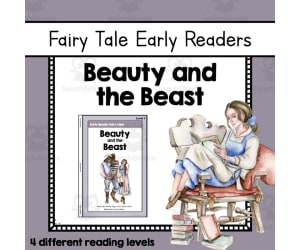
"Beauty and the Beast" | Fairy Tale Early Reader Unit
ELA, Reading, Kindergarten, Preschool, Grade 1, Lesson Plans, Teacher Tools
This comprehensive Beauty and the Beast language arts unit engages students with a classic fairy tale story adapted to four reading levels. Easily find the right fit for each learner's needs. Vibrant custom illustrations by Leila Alieva bring the tale to life in student-facing booklets structured like real books. The bundle equips teachers with differentiated reading materials including teacher guides outlining standards-aligned activities. Extend student learning through supplemental texts on the fairy tale's history and original author. Printable writing tasks allow students to reimagine plot points. Emerging writers will appreciate tracing activities while more advanced students can craft their own Beauty and the Beast adventures. Practice essential literacy skills such as vocabulary, comprehension, fluency, and phonics with ready-made flashcards, worksheets, readers theater scripts, sequencing tasks, and more. Assessment materials like reading logs allow teachers to track progress. Editing and descriptive writing activities challenge students to enrich their own fairy tale renditions. With definitions, visual references, and multiple learning formats, unit components ensure concept accessibility for a diversity of learners. Adaptable to various classroom contexts, this fairy tale kit saves valuable teacher prep time. It can inspire an entire multi-week unit with interdisciplinary connections or supplement existing plans as a targeted small group or center activity . With abundant materials at each reading level, differentiation and remediation is simplified. Motivate young readers as a beloved tale comes alive at just the right level. Check out other resources from my store: Simply Schoolgirl! I can be contacted for questions and concerns at simplyschoolgirl1@gmail.com
Author Simply Schoolgirl
Tags Fairy Tales, Beauty And The Beast, Early Reader, Elements Of Fairy Tales, Reading Posters, EBook, Vocabulary, Decoding, Sequencing, Folk Tale, Beauty And The Beast Fairy Tales, Beauty And The Beast Fairy Tale, Fairy Tail Beauty And The Beast, The Beauty And The Beast Fairy Tale, Fairy Tales Beauty And The Beast, Fairy Tale Beauty And The Beast

Quick Snacks Reading Comprehension Passage - Cored Ed Encyclopedia
ELA, Language Development, Reading Comprehension, Reading, Pre-Reading, Writing, Strategies, Vocabulary, Health, P.E. & Health, Grade 2, 3, 4, 5, Worksheets & Printables, Worksheets, Teacher Tools, Centers, Activities, Writing Prompts, Assessments, Quizzes and Tests, Quizzes, Lesson Plans
This quick snacks reading comprehension includes: Visualization (on the front cover) Start your lesson by taking a minute to think and share something about the topic. Read the script aloud (slowly), perhaps prepare some music or sound effects. Student close their eyes and let their imaginations wander. Students open their eyes, read the question aloud and give them a few minutes to complete. Ask a few students to share or keep answers until the end to compare with what they learn in the passage. Quick pause—thousands of Cored Education products are included with your TeachSimple membership. Download links and encyclopedia index available here. Pre-Reading Trivia Students will write down one thing they already know about the subject and then read five more facts and discuss. These facts are fun, and the students will enjoy learning about the subject before reading more. Give 1 minute for students to write what they already know (no pressure—best guess is fine). Read the five facts together. After each fact, do ask a student for their opinion, was it surprising? Set a purpose by asking students to highlight/underline one fact they want to learn more about during the reading. Reading Passage The text is a high-interest reading passage with set paragraphs, roughly three to four paragraphs long. It contains a variety of themes about the topic, anywhere from history to technology. The passage is between 250 and 350 words in length. First, ask students to look at the headings and see what they’ll learn about today. What do they know about the topic/heading? First read options: Teacher read-aloud (best for support). Partner reading (paragraph by paragraph). While reading, students underline important details, and vocabulary words they think may come up in the questions section. Mixed Questions The first question page contains four multiple-choice questions, each with a choice of four answers, and three written response questions that require a sentence or two from the student. Students complete the mcqs first independently, then review quickly as a class. For the 3 written responses, try to get students giving the answer with some form of evidence: “I think ___ because the text says ___.” If students get stuck, send them back to check the passage. Vocabulary Questions Practice seven key words from the text in this section across two activities. First section is scrambled words where students will unscramble three words given a clue for each. The second section is a word to meaning matching activity. Before starting, have some students read out words they underlined in the passage. Ask students to say the word and read aloud the sentence(s) around each word. Ask students to do scrambled words and the matching exercise in pairs then go through answers as a class. For the scrambled spelling task, get four pairs to come up to the board and write the words for extra practice with the other student reading out the clue. For the matching task, prompt students to give full sentences: “I matched ___ with ___ because ___.” Creative Writing In this question, the student will be required to write a five to eight sentence paragraph on a question related to the topic. Before starting, ask students write down 3 key ideas they are going to include in their piece. Ask students for ideas to share around the class to help those struggling. Pro writing expectations: 5–8 sentences At least 2 facts or details from the passage At least 2 vocabulary words from the previous page Students read their paragraphs while classmates listen for facts and vocabulary words. Extension Activities This page is optional for fast finishers or to take home. There are several activities, each one requiring a different skill. Do some, do none, do all, completely optional - but you will feel reassured knowing every possibility is planned for. Includes summary writting question. Answer Key There are answers for the multiple-choice questions, written response questions have sample answers, vocabulary answers and if there is a summary question then a sample summary will be provided as well. Lesson Plan Included Customized lesson plan for this lesson is included. Lesson Snapshot Title: Quick Snacks Genre: Nonfiction (informational passage) Subject: Health Science (Nutrition) / Reading (Informational Text) Primary Topic: Snacks between meals and steady energy Estimated Guided Reading Level (A–Z): R What This Lesson Teaches Best The purpose of a quick snack: a small, simple food that steadies you between bigger meals (not a meal replacement). How “convenience” packaged snacks are designed (ready to eat, travel well, last longer on a shelf) and what they may include (sweeteners, preservatives, bold flavors). Basic food science for kids: foods carry nutrients, including carbohydrates, protein, and fats, and protein helps tissues grow and repair. How to think about “steadier energy” snack choices (examples in the passage include fruit with yogurt and whole grains with beans). Built-in skill practice with aligned support pages (pre-reading facts, questions, vocabulary, writing, and extension activities based on the passage). Learning Goals Students can explain how the passage defines a quick snack and how it differs from a meal. Students can describe how quick snacks changed from home foods to packaged convenience foods, using text details. Students can identify the three nutrient groups named and describe what protein does in the body. Students can explain what the passage means by “steadier energy” and name a snack example it gives. Students can use section headings to locate information and state the main idea of each section. Key Vocabulary From the Text preservatives — ingredients that help food last longer. nutrients — helpful parts of food your body uses. carbohydrates — a nutrient group that gives the body energy. protein — helps body tissues grow and repair. packaged — put in a package to be ready and easy. FULL CATALOG OF DOWNLOAD LINKS AND ENCYCLOPEDIA INDEX HERE
Author Cored Education
Rating
Tags Vocabulary, Reading Comprehension, Reading Passages, Reading, Creative Writing, Reading Strategies, Writing Prompts, Lesson Plans, Quick Snacks, Health

Phonics / Digraphs for 1st and 2nd Grade: Beginning, Middle, and Ending Sounds
ELA, Reading, Reading Comprehension, Grammar, Language Development, Phonics, Pre-Reading, Grade 1, 2, Worksheets & Printables, Worksheets, Teacher Tools, Lesson Plans
This unit focuses on the Beginning, Middle and Ending Digraph sounds. Learning how to read can be the most challenging activity for many students and for a teacher. A digraph in the English language are two letters put together that represents a single sound or phoneme. Understanding that the combination of letters can make one sound can be difficult to master and requires repetitive practice of reading and writing these words with these sounds. There are other phonics units that I sell that focuses on the Beginning Digraph sounds, and one that focuses on just the Ending Digraph sounds. Reading can be made easier with these phonic helps that repeatedly encourage students to practice these Beginning, Middle and Ending Digraph sounds. Activities include reading comprehension and identifying the digraphs in their reading, writing their answers to questions regarding the paragraph, identifying additional digraph words in sentences using a word bank, matching words with pictures, spinning a paperclip activity where students will write the word with the digraph sound, and lastly a fun wordsearch with the digraph words. These activities are for each digraph so there is plenty of opportunities for students to practice their comprehension reading skills and phonic sounds. Students will practice the following Beginning, Middle and Ending Digraph sounds: ch, sh, th, wh, and ph. Teachers can use this resource in whole group, individually with students, students can practice with each other in centers, or they can be assigned as homework. Worksheets are also differentiated for each Beginning, Middle and Ending Digraph sound for all young learners which makes it perfect for all 1st - 2nd graders. A total of 33 pages full of reading and phonic activities. Along with reading and writing, there are matching, cutting, and pasting activities. Word searches and spin and make a word activity are also a part of this packet which make learning to read these phonic sounds entertaining for young learners. For a list of other phonics and grammar activities, click on the following links: CVC Word Families for Beginning Readers: Stamp it, Make it, Trace it, and Write it CVC Words | Short Vowel Phonics | Word Families for K- 2nd Grade Phonics for 1st and 2nd Grade: Help Students Learn Long A Words: AY, AI, A_E, EIGH, EY, and EA Phonics for 1st and 2nd Grade: Help Students Learn Long E Words: EE, EA, E_E, and Y Phonics for 1st and 2nd Grade: Help Students Learn Long I Words: I_E, IE, IGH, and Y Phonics for 1st and 2nd Grade: Help Students Learn Long O Words: O_E, OA, OW, OE, and OUGH Phonics for 1st and 2nd Grade: Help Students Learn Long U Words: U_E, EW, OO, UE, UI and OU Phonics / Digraphs for 1st and 2nd Grade: Beginning, Middle, and Ending Sounds Phonics / Digraphs for 1st -2nd: Ending Sounds: CK, NG, SH, TH, and NK Phonics / Digraphs for 1st and 2nd Grade: Beginning Sounds: SH, TH, WH and PH Phonics: R-Controlled Words for 1st and 2nd Grade and Early Readers
Author K-5 Treasures
Tags Digraphs, Beginning Sounds, Ending Sounds, Phonics, Digraph Words, Ph Words, Th Words , Sh Words, Ch Words, Phonics Digraphs
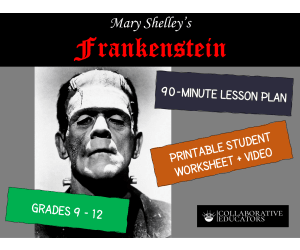
Lesson Plan on Mary Shelley's Frankenstein
Literature, ELA, Reading, Grade 9, 10, 11, 12, Lesson Plans, Teacher Tools, Activities, Worksheets & Printables
This is a lesson plan lasting 90 minutes focused on the classic book Frankenstein, authored by Mary Shelley. Shelley composed Frankenstein at the age of 19, and it was released the next year in 1818. The novel narrates the tale of Victor Frankenstein, a young scientist seeking the key to life who produces the hideous being in a clandestine experiment. The lesson plan incorporates the video summary of Mary Shelley's Frankenstein by Video SparkNotes. A separate printable worksheet for students contains numerous questions. The responses are given individually at the conclusion. The lesson is perfect for students in Grades 9 through 12. Frankenstein is full of meanings. It implies that social isolation is the main source of evil as well as its consequence. The Monster clearly states that his separation from humanity has led him to become a killer: “My guardians had left, severing the sole connection that tied me to the world.
Author Bright Classroom Ideas Marketplace
Rating
Tags Frankenstein, Mary, Shelley, Classic, Literature, Reading, Lesson, Plan

100 More Little Reading Comprehension Lessons
ELA, Reading, Reading Comprehension, Grade 1, 2, 3, 4, Teacher Tools, Lesson Plans
The 100 More Little Reading Comprehension Lessons The 100 More Little Reading Comprehension Lessons is an enriching resource tailored to enhance the reading comprehension skills of students in grades one to four. This teaching aid comprises 100 unique short stories, poems, and informative articles covering a wide range of interesting topics. The variety of subjects captivates students' curiosity while honing their literacy abilities in both mainstream and homeschool environments. Key Language Arts Concepts: Apart from offering rich reading materials, this bundle provides essential practice in key language arts concepts like: Vocabulary development and assimilation. Fostering Critical Thinking: This educational resource fosters critical thinking. Every narrative or poem has comprehension questions that provoke thought and understanding reinforcement. It encourages knowledge application in new contexts too. Variety of Uses: The 100 More Little Reading Comprehension Lessons product offers great flexibility. It caters for whole classroom instruction, focus groups, or can be tailored into individual homework assignments. Ease of Use: Its lesson plan format makes this teaching tool easily accessible for educators ensuring time-efficient planning as no valuable class time is wasted on class preparation but rather actual execution these well-planned lessons. Note: This product adds fun to learning thus making it intellectually stimulating; promising long-term benefits for children's academic success story.
Author Classroom Complete Press
Tags PDF
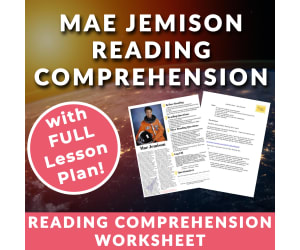
Mae Jemison - Astronaut & Pioneer - Reading Comprehension Worksheet & Lesson Plan
ELA, Reading, Grade 9, 10, 11, 12, Lesson Plans, Teacher Tools
Teach your students about Mae Jemison - the first African-American woman in space. Leading an inspiring life, Jemison should be a genuine role model for children and adults everywhere. Lesson includes: ✅ Pre-task Discussion ✅ Skimming and Scanning Reading Activities ✅Full Lesson Plan ✅ Vocabulary Review ✅ Comprehension Check ✅ Discussion.
Author The Laughing Linguist
Tags Mae Jemison Lesson Plan, Mae Jemison Activity, Reading Comprehension, Comprehension Worksheet, Astronaut Reading, Mae Jemison Clipart, Pioneer Worksheet

Reindeer Reading Comprehension Passage - Cored Ed Encyclopedia
ELA, Language Development, Reading Comprehension, Reading, Pre-Reading, Science, Writing, Strategies, Animals, Life Sciences, Grade 2, 3, 4, 5, Worksheets & Printables, Worksheets, Teacher Tools, Centers, Activities, Writing Prompts, Assessments, Quizzes and Tests, Quizzes, Lesson Plans
This reindeer reading comprehension includes: Visualization (on the front cover) Start your lesson by taking a minute to think and share something about the topic. Read the script aloud (slowly), perhaps prepare some music or sound effects. Student close their eyes and let their imaginations wander. Students open their eyes, read the question aloud and give them a few minutes to complete. Ask a few students to share or keep answers until the end to compare with what they learn in the passage. Quick pause—thousands of Cored Education products are included with your TeachSimple membership. Download links and encyclopedia index available here. COMPANION VIDEO NOW AVAILABLE (EMBEDDED AFTER PREVIEW PICTURES IN PRODUCT DESCRIPTION) Pre-Reading Trivia Students will write down one thing they already know about the subject and then read five more facts and discuss. These facts are fun, and the students will enjoy learning about the subject before reading more. Give 1 minute for students to write what they already know (no pressure—best guess is fine). Read the five facts together. After each fact, do ask a student for their opinion, was it surprising? Set a purpose by asking students to highlight/underline one fact they want to learn more about during the reading. Reading Passage The text is a high-interest reading passage with set paragraphs, roughly three to four paragraphs long. It contains a variety of themes about the topic, anywhere from history to technology. The passage is between 250 and 350 words in length. First, ask students to look at the headings and see what they’ll learn about today. What do they know about the topic/heading? First read options: Teacher read-aloud (best for support). Partner reading (paragraph by paragraph). While reading, students underline important details, and vocabulary words they think may come up in the questions section. Mixed Questions The first question page contains four multiple-choice questions, each with a choice of four answers, and three written response questions that require a sentence or two from the student. Students complete the mcqs first independently, then review quickly as a class. For the 3 written responses, try to get students giving the answer with some form of evidence: “I think ___ because the text says ___.” If students get stuck, send them back to check the passage. Vocabulary Questions Practice seven key words from the text in this section across two activities. First section is scrambled words where students will unscramble three words given a clue for each. The second section is a word to meaning matching activity. Before starting, have some students read out words they underlined in the passage. Ask students to say the word and read aloud the sentence(s) around each word. Ask students to do scrambled words and the matching exercise in pairs then go through answers as a class. For the scrambled spelling task, get four pairs to come up to the board and write the words for extra practice with the other student reading out the clue. For the matching task, prompt students to give full sentences: “I matched ___ with ___ because ___.” Creative Writing In this question, the student will be required to write a five to eight sentence paragraph on a question related to the topic. Before starting, ask students write down 3 key ideas they are going to include in their piece. Ask students for ideas to share around the class to help those struggling. Pro writing expectations: 5–8 sentences At least 2 facts or details from the passage At least 2 vocabulary words from the previous page Students read their paragraphs while classmates listen for facts and vocabulary words. Extension Activities This page is optional for fast finishers or to take home. There are several activities, each one requiring a different skill. Do some, do none, do all, completely optional - but you will feel reassured knowing every possibility is planned for. Includes summary writting question. Answer Key There are answers for the multiple-choice questions, written response questions have sample answers, vocabulary answers and if there is a summary question then a sample summary will be provided as well. Lesson Plan Included Customized lesson plan for this lesson is included. Lesson Snapshot Title: Reindeer Genre: Nonfiction (informational text) Subject: Life Science (Animals & Habitats) Primary Topic: Reindeer adaptations, migration, and human connections Estimated Guided Reading Level (A–Z): R What This Lesson Teaches Best How reindeer are adapted for cold places (thick coat; wide hooves for soft snow and soggy tundra). How reindeer find food when conditions are harsh (digging through snow to reach lichen). Migration and seasonal movement (some herds travel long journeys; more than 600 miles north in summer, then south again). How people and reindeer have influenced each other (communities watching hoofprints, herding partnerships, reindeer helping with travel and providing resources). A conservation-style question about changing winters (warming turning soft snow into hard ice that seals food away). Learning Goals Students will describe where reindeer live using details from the text (Arctic and subarctic lands). Students will explain two body features that help reindeer in winter conditions. Students will describe how reindeer get food when it is scarce, using the text’s example. Students will explain how long journeys relate to seasons and survival in the passage. Students will describe one way people have interacted with or depended on reindeer in the text. Key Vocabulary From the Text subarctic — very cold region just below the Arctic. tundra — open, cold land with few trees. hoofprints — marks left by hooves in the ground or snow. lichen — crusty plantlike growth on rocks and ground. Vulnerable — at risk of harm or shrinking in number. FULL CATALOG OF DOWNLOAD LINKS AND ENCYCLOPEDIA INDEX HERE
Author Cored Education
Rating
Tags Vocabulary, Reading Comprehension, Reading Passages, Reading, Creative Writing, Reading Strategies, Writing Prompts, Lesson Plans, Reindeer, Life Science

Civics and Government 3rd Grade (15 Day) Unit
Social Studies, ELA, Government, Reading, Writing, Common Core, Grade 3, Lesson Plans, Teacher Tools
Are you introducing 3rd graders to the concept of government and its role in our communities? Through engaging activities, students will explore the differences among national, state, and local and state governments, understand the importance of laws and justice, and learn how governments function to serve the people. This 15 day mini unit includes day by day planning with suggested activities for differentiation. Typically used in a high ability classroom, it is appropriate for all students. Teaching methods used: Jigsaw learning, foldables, Nonfiction research, doodle notes, graphic organizers, group work, individual work, (suggested) guest speakers, and traditional assessment. Unit includes: Alignment page showing 3rd grade social studies state standards, Common Core Reading and Writing standards, and National Council of Social Studies Themes 15 day lesson plan broken into standard, reading/information source, and activities Vocabulary journal + answer key Jigsaw activity for three branches of government Foldable activity for civic virtues Sequencing activity for election process 7 nonfiction reading passages (+ answer keys) 2 Project Based Learning projects - Elect a Mayor and Design a City Rubrics for all projects and answer keys where applicable Traditional vocabulary quiz List of possible guest speakers Government focus: Since third grade is more community based, the content and projects focus mainly on state and local government. The branches of government and responsibilities of important people within the government include national organizations and expectations (i.e.: President, Congress, and Supreme Court). If it is an election year, the election activity can easily be adjusted to "Elect a President" instead of "Electing a Mayor." Tags: government, elections, legislative, executive, judicial, state and local government, city planning, citizen, civic duty, mayor File Type: PDF (not editable) Number of Pages: 53 (including curriculum plan and answer keys) Grade: 3 - depending on state standards, may overlap with second or fourth grade government content
Author Kel's Klass
Tags Government, Elections, Legislative, Executive, Judicial, State And Local Government, City Planning, Citizen, Civic Duty, Mayor

Storytelling: Nursery Stories & Songs Gr. K
ELA, Reading, Preschool, Kindergarten, Teacher Tools, Lesson Plans
Storytelling: Nursery Stories & Songs Gr. K provides an interactive platform for educators in different settings, like public schools or homeschooling, looking to enhance their language arts pedagogy. It's designed to engage early learners with a sturdy foundation in reading and language arts. Nursery Stories and Songs Included: The Magic Perogy Pot The Little Red Hen The Gingerbread Man Songs like The Farmer In The Dell and Eensie Weensie Spider This teaching resource comes with storytelling props that will provide long-term value to your classroom. These adaptations of well-known nursery stories and songs breathe fun into story time. Easy Integration: You can effortlessly incorporate these materials into your lesson plan. Included are pictures for each story or song that can be colored and assembled before storytelling sessions. Designed intentionally to be interactive, it encourages children's retelling of the stories using these animated visual aids on flannel or magnet boards. About the Product: Name: Storytelling: Nursery Stories & Songs Gr.K li>Total Pages: 30 ready-to-print pages packed into a single PDF file accessible at teachsimple.com (under Lesson Plans ) br/> i>Included Material: "How to Assemble" ) along with practical insights for implementation ( "Telling the Stories" ) accompanied within. This product not only meets curriculum objectives but also improves student interaction during lessons. Whether used in large groups or smaller, more intimate settings adjusted based on the context of the class, it provokes student participation. It is user-friendly and built for ease-of-use without compromising on providing educational innovation to improve young learner outcomes in structured schools environments as well as homeschool setups. This encourages learning that goes beyond traditional textbook structures.
Author Classroom Complete Press
Tags Brown Bear, Reading Stories, Reading Classics, Big Books, Nursery Rhymes

Fiction Adventure Story Unit: Missions 1-3 Bundle
ELA, Reading, Grade 5, 6, 7, Lesson Plans, Teacher Tools
This is a Fiction Adventure Story Unit : Missions 1-3 Bundle. Units included: 1. Fort McHenry in Maryland 2. Golden Gate Bridge in California 3. Churchill Downs in Kentucky This is the perfect cross-curricular resource that allows students to explore reading, vocabulary, social studies, and science all at once. This bundle is packed with worksheets and activities that could be developed into a 2 or 3 week long unit for each story unit . Directions are included for preparation and implementation.
Author TrilogyTeacher
Tags Comprehension, Vocabulary, Geography, Cross-curricular, Literature