



3,926 products added recently
Page 19 - Reading Lesson Plans
Inspire your students with reading lesson plans that incorporate a variety of genres and interactive activities. These resources aim to improve fluency, vocabulary, and comprehension. Use these plans to create an engaging reading environment where students develop a lifelong love for literature.

 Show filters

Liberty: Full Lesson Plan w/ PowerPoints & Graphic Organizers
ELA, Reading, Grade 7, 8, 9, 10, Lesson Plans, Teacher Tools
Liberty: Full Lesson Plan with PowerPoints & Graphic Organizers Ready to engage your students in a comprehensive study of Julia Alvarez's text, Liberty? Our educational resource comes equipped with everything necessary to carry out a thorough reading lesson plan. This multifaceted resource pack provides teachers like you with a complete toolkit, helping students delve deep into the layered nuances of the text. Included in this pack are detailed lesson plans for Liberty, as well as complementary worksheets to help bolster student understanding. For your convenience, these files are offered in both PDF and Word document formats. Whether you need whole group activities or homework assignments, these ready-to-print resources can smoothly integrate into any teaching style. In order to cultivate a more profound understanding of the literature, our package includes an array of graphic organizers that target various literary elements such as: Charts for decoding author’s purpose, Analyzing characters and figurative language, Understanding historical context and symbolization methods used by the author. Additionally available are sheets dedicated to peer evaluation and various diagrams concerning plot details and themes. Detailed PowerPoints To Catalyze Discussions An inclusive set of eight PowerPoints comes accompanying each area discussed within the graphic organizers - from characterization through theme interpretation. These informative presentations catalyze discussion among students aiding their comprehension on complex topics such as Plot Structure Symbolism & Allegory Irony & Ambiguity Narrator & Voice Imagery Voice Persona Theme. Aimed towards Grade 7-10 Language Arts Classes Focusing on Reading Subsubject This meticulously curated lesson plan aids educators enhance their teaching trajectory while instilling beneficial learning experiences amongst learners. Bonus Thank You Gift To wrap up our product offering is a bonus thank you gift designed especially keeping educators like you! A single zip file containing all printable materials including PowerPoints PDFs Word documents - carefully combined cater diverse learning needs strategies classroom scenarios home schooling environments alike making this all-inclusive tool indispensable addition your teaching resources.
Author Quality Teaching Products
Tags Lesson Plans, Graphic Organizers, PowerPoints, Reading Comprehension, Literary Analysis

Lamb to the Slaughter: Full Lesson Plan w/ PowerPoints & Graphic Organizers
ELA, Reading, Grade 8, 9, 10, 11, Lesson Plans, Teacher Tools
Lamb to the Slaughter English Lesson Bundle This Lamb to the Slaughter teaching resource provides a full reading comprehension lesson plan for the short story by Roald Dahl. Educators receive a complete lesson plan, handouts, answer keys, graphic organizers , and PowerPoint presentations to teach the text. Teachers can facilitate whole-class learning with the PowerPoints analyzing characterization, plot, theme, imagery, and more literary elements. They can also assign the vivid imagery and suspenseful plot graphic organizers for small group discussion or independent practice. With multiple file types offered, this versatile bundle equips teachers to comprehensively teach Lamb to the Slaughter using diverse instructional approaches for grades 8-11.
Author Quality Teaching Products
Tags Reading Lesson, Fiction Text, Graphic Organizers, Reading Bookmark, Imagery, Lamb To The Slaughter Full Text, Imagery In Lamb To The Slaughter, Figurative Language In Lamb To The Slaughter, Lamb To The Slaughter Worksheets Answers
The Big Surprise Short Story | Intermediate Lesson Plan
ELA, Reading, Grade 5, 6, 7, 8, 9, 10, 11, 12, Teacher Tools, Lesson Plans
This is an intermediate lesson plan worksheet set for The Big Surprise short story. The Big Surprise is an intermediate-level lesson plan for teaching the short story of the same name. Students will read the narrative story and then complete reading comprehension and grammar skill-building exercises. Educators can implement this resource as a whole group, small group, or individual assignment to assess students' understanding of plot, character, and grammar concepts. The materials lend themselves to differentiated instruction based on your learners' needs. Answer keys are provided for all student handouts. This practical lesson plan helps you efficiently integrate reading, analysis, and language arts standards into your ESL school curriculum . Featuring five pages of diverse activities, this resource delves into various dimensions of learning. It encourages readers to deeply analyze the text by engaging them in thought-provoking exercises tailored to different learning styles. Conversation questions are included to enable a class discussion about the story and your students' own surprise stories. 3 PDFs with 4 ready to print pages and one digital access file
Author TEAM TEFL
Tags Short Story, Reading Passage, Vocabulary Words, Reading Story, ESL Lesson, Short Story Lesson Plans, Short Stories Lesson Plans, Short Stories Lesson Plan, Story Intermediate, Short Stories That Teach A Lesson

FAIRY TALE TIME Gr. 3-6
ELA, Reading, Grade 3, 4, Teacher Tools, Lesson Plans
FAIRY TALE TIME Gr. 3-6 Designed for public and homeschool educators engaging students in grades three through six, this unique teaching resource traces back to the rich pre-literate history of fairy tales and folk tales. These timeless stories were passed down orally from one generation to the next, kindling creativity, oral interaction, and cooperative learning. This stimulating lesson plan revolves around four key activity areas: Drama Listening Research Creativity The integration of these focuses into your teaching framework with this pre-planned resource assures a fulfilling learning environment for your learners. Drama Component: Learners get immersive experience by understanding character motivations and relationships portrayed in fairy tales. Students engage themselves by reenacting various stories or scenes therewith - an enjoyable group activity that mixes play with education. Listening Activities: Including listening activities improves auditory comprehension and cultivates analytical abilities as students outline content or predict outcomes based on context cues from tale narration. Scholarly discussions bloom when they are broken down into small groups to exchange summaries—a wonderful tool for reinforcing comprehension! Research activities: A fantastic setting for independent work; research assignments can morph into collaborative endeavors where students delve deep into exploring different cultures or origins of various folktales—thereby nurturing curiosity-driven research skills among young minds. Showcasing Creativity: Students love being involved in "The Unfinished Fairy Tale," allowing them to complete a half-told story using their imagination! Herein lies another opportunity– crafting an alternative ending or conceptualizing costumes for characters. A plethora of exciting opportunities to learn while having a ball! Contained in 62 ready-to-print PDF pages, this file is meticulously designed keeping educators' needs at the heart, ensuring minimum preparation effort and maximum focus on the implementation of effective teaching methods. FAIRY TALE TIME Gr. 3-6 gets kids excited about Language Arts, specifically Reading development–making it an indispensable resource in your set of teaching tools.
Author Classroom Complete Press
Tags Fairy Tales, Activity Centers, Letter Writing, Character Development, Poetry

Nonfiction lesson
ELA, Reading, Grade 1, 2, 3, 4, Teacher Tools, Lesson Plans
Nonfiction Concepts Lesson Plan This interactive Google Slides resource teaches students the key concepts of nonfiction texts. Through discussions, activities, and practice, students will learn how to identify and apply nonfiction text features like captions, labels, glossaries, tables of contents, titles, title pages, and indexes. Animated slides, speaker notes, class discussion prompts, and student application activities allow this resource to be used flexibly: as an introductory whole-group lesson, a small group activity , or even home learning. This concrete, engaging resource aims to spark student creativity and critical thinking. Check out our shop for more nonfiction text features lessons covering glossaries, tables of contents, titles, title pages, and indexes. Made for grades 1-4.
Author Ezee 101
Tags Story Elements, Text Features, Nonfiction, Interactive Reading, Nonfiction Concept, Interactive, Student Engagement

Rice Reading Comprehension Passage - Cored Ed Encyclopedia
ELA, Language Development, Reading Comprehension, Reading, Pre-Reading, Science, Writing, Strategies, Life Sciences, Nature & Plants, Grade 2, 3, 4, 5, Worksheets & Printables, Worksheets, Teacher Tools, Centers, Activities, Writing Prompts, Assessments, Quizzes and Tests, Quizzes, Lesson Plans
This rice reading comprehension includes: Visualization (on the front cover) Start your lesson by taking a minute to think and share something about the topic. Read the script aloud (slowly), perhaps prepare some music or sound effects. Student close their eyes and let their imaginations wander. Students open their eyes, read the question aloud and give them a few minutes to complete. Ask a few students to share or keep answers until the end to compare with what they learn in the passage. Quick pause—thousands of Cored Education products are included with your TeachSimple membership. Download links and encyclopedia index available here. Pre-Reading Trivia Students will write down one thing they already know about the subject and then read five more facts and discuss. These facts are fun, and the students will enjoy learning about the subject before reading more. Give 1 minute for students to write what they already know (no pressure—best guess is fine). Read the five facts together. After each fact, do ask a student for their opinion, was it surprising? Set a purpose by asking students to highlight/underline one fact they want to learn more about during the reading. Reading Passage The text is a high-interest reading passage with set paragraphs, roughly three to four paragraphs long. It contains a variety of themes about the topic, anywhere from history to technology. The passage is between 250 and 350 words in length. First, ask students to look at the headings and see what they’ll learn about today. What do they know about the topic/heading? First read options: Teacher read-aloud (best for support). Partner reading (paragraph by paragraph). While reading, students underline important details, and vocabulary words they think may come up in the questions section. Mixed Questions The first question page contains four multiple-choice questions, each with a choice of four answers, and three written response questions that require a sentence or two from the student. Students complete the mcqs first independently, then review quickly as a class. For the 3 written responses, try to get students giving the answer with some form of evidence: “I think ___ because the text says ___.” If students get stuck, send them back to check the passage. Vocabulary Questions Practice seven key words from the text in this section across two activities. First section is scrambled words where students will unscramble three words given a clue for each. The second section is a word to meaning matching activity. Before starting, have some students read out words they underlined in the passage. Ask students to say the word and read aloud the sentence(s) around each word. Ask students to do scrambled words and the matching exercise in pairs then go through answers as a class. For the scrambled spelling task, get four pairs to come up to the board and write the words for extra practice with the other student reading out the clue. For the matching task, prompt students to give full sentences: “I matched ___ with ___ because ___.” Creative Writing In this question, the student will be required to write a five to eight sentence paragraph on a question related to the topic. Before starting, ask students write down 3 key ideas they are going to include in their piece. Ask students for ideas to share around the class to help those struggling. Pro writing expectations: 5–8 sentences At least 2 facts or details from the passage At least 2 vocabulary words from the previous page Students read their paragraphs while classmates listen for facts and vocabulary words. Extension Activities This page is optional for fast finishers or to take home. There are several activities, each one requiring a different skill. Do some, do none, do all, completely optional - but you will feel reassured knowing every possibility is planned for. Includes summary writting question. Answer Key There are answers for the multiple-choice questions, written response questions have sample answers, vocabulary answers and if there is a summary question then a sample summary will be provided as well. Lesson Plan Included Customized lesson plan for this lesson is included. Lesson Snapshot Title: Rice Genre: Nonfiction (informational text) Subject: Science (Life Science/Agriculture) Primary Topic: How rice was grown and spread Estimated Guided Reading Level (A–Z): R What This Lesson Teaches Best How rice changed from a wild grass into a crop as people “saved the best” seeds and planted them over many seasons. How rice paddies work: shallow flooded fields that help rice grow and can slow weeds while protecting tender plants. How rice spread to new places as traders and travelers carried it along rivers and coasts, with rice learning to fit different climates. How rice has different types (including indica and japonica) and how rice continues changing as farmers and scientists work on challenges like floods, droughts, and plant diseases. Using evidence from the passage to check understanding (some support-page answer choices/answer key items do not match the passage exactly). Learning Goals Explain how people changed rice over time by saving and planting the best seeds each season. Describe what a rice paddy is and how shallow flooding helps rice plants. Identify how rice traveled from Asia to other regions through traders and travelers. Compare indica and japonica using details stated in the text. Describe ways rice continues to change because meals depend on it and it must handle floods, droughts, and diseases. Key Vocabulary From the Text wetlands — watery land where plants grow near rivers. shattering — breaking apart and scattering away. paddies — muddy fields with low banks holding shallow water. indica — a group of long-grained rice types. droughts — long times with very little rain. Discussion Prompts Pre-reading question: What do you already know or wonder about rice and how it grows? Comprehension questions: How did saving the best seeds change rice over many seasons? Comprehension questions: What is a rice paddy, and how does shallow water help rice plants? Comprehension questions: According to the passage, how did rice travel far from home to new places? FULL CATALOG OF DOWNLOAD LINKS AND ENCYCLOPEDIA INDEX HERE
Author Cored Education
Rating
Tags Vocabulary, Reading Comprehension, Reading Passages, Reading, Creative Writing, Reading Strategies, Writing Prompts, Lesson Plans, Life Science, Rice
Seventh Grade: Full Lesson Plan w/ PowerPoints & Graphic Organizers
ELA, Reading, Grade 6, 7, 8, 9, Lesson Plans, Teacher Tools
Seventh Grade Full Lesson Plan Bundle This comprehensive reading lesson plan bundle for the short story "Seventh Grade" by Gary Soto provides educators with everything needed to dive deep into the text. Includes a complete lesson plan, worksheet, answer key, 15 graphic organizers , and 8 PowerPoint presentations covering topics like theme, plot, characterization, figurative language, narrator and more. With multiple file types offered, this resource easily adapts for whole class instruction, small groups, or independent assignments. The materials facilitate rich discussion and analysis of literary elements using a variety of methods to reach all types of learners. This practical, standards-aligned teaching resource allows seventh grade and middle school English language arts teachers to save prep time while enhancing critical thinking skills.
Author Quality Teaching Products
Tags Reading Lesson Plan, Gary Soto, Graphic Organizers, Characterization, Imagery, Seventh Grade By Gary Soto Worksheet, 7th Grade Reading Lesson Plans

High School: The Scholar's Quest Mad Lib Mini-Unit
ELA, Reading, Writing, Creative Writing, Research, Resources for Teachers, High School, Homeschool Resources, Teacher Tools, Assessments, Lesson Plans, Quizzes and Tests, Templates, Worksheets & Printables, Writing Prompts
In my house, finding ninth-grade resources that do not feel childish is an uphill battle. If a worksheet looks like it is from 1994, my daughter is done before she even picks up a pencil. That is why I created the High School The Scholar's Quest Mad Lib Mini Unit. I wanted something that leaned into that dark academia, immersive vibe that teens actually like, while still hitting the academic rigor they need. We have used this on those slow, rainy Tuesdays to turn a boring ELA lesson into a deep dive into atmosphere—without the usual groaning. INCLUDED IN THIS RESOURCE: The Scholar's Quest: Multi-page immersive narrative experience. 100+ Tier 2 Word: Sophisticated academic vocabulary banks. 10 Brainstorming Sheets: Narrative architecture and planning tools. Advanced Grammar Guide: Gerunds and participle phrase toolkits. TOPICS COVERED: Literary Tone Analysis: Mastering mood through word choice. Narrative Synthesis: High-level academic word integration. Advanced Parts of Speech: Gerunds, transitive verbs, and more. Pre-Writing Skills: Character blueprints and setting design. This High School The Scholar'sQuest Mad Lib Mini Unit transforms a standard English lesson into an experiment. They are nott just students/homeschoolers here; they are alchemists in charge of the results. Whether you are homeschooling or in a classroom, this High School The Scholar'sQuest Mad Lib Mini Unit resource honors their maturity while keeping things fresh. Happy crafting! If you and your students/homeschoolers enjoyed this resource, please leave a review. Thank you for your support! Tina - Big Easy Homeschooling Mom
Author Homeschool with Big Easy Homeschooling Mom
Rating
Tags Mad Libs For Teens, Creative Writing, Homeschool Resources, Homeschool ELA Curriculum, Creative Writing Prompts For High School, Interest-led Learning ELA, Narrative Writing Unit, ELA Quest, High School ELA Workshop, Scholarly Writing Tasks
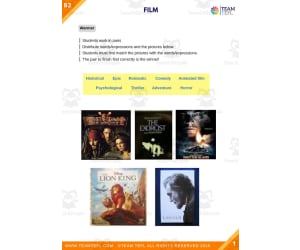
Film ESL TEFL Upper Intermediate Lesson Plan Worksheet
ELA, Language Development, ESL, Vocabulary, Reading, Writing, Grade 6, 7, 8, Teacher Tools, Lesson Plans, Worksheets & Printables
Film Upper Intermediate Lesson Plan This informative lesson plan helps intermediate ESL students improve their English comprehension and grammar skills. Students will read about topics related to film and cinema. The exercises that follow assess reading comprehension, implement relevant grammar principles in context, and provide opportunities for discussion. As a culminating activity , students will listen to an audio recording and respond to comprehension questions. This versatile resource can be used in various settings like whole group instruction, small group work, or independent assignments. Answer keys are included for the teacher. The content and activities target a grade 7-8 reading level. This well-rounded lesson exposes students to real-world topics like film and provides meaningful practice for intermediate ESL learners. The ESL lesson plan includes flashcards, a warmer, grammar rules, exercises, role-play, conversation, listening, writing drill, activity , answers and an extra study that would be good to set as homework. There are 30+ pages and there are teachers notes to guide the teacher.
Author TEAM TEFL
Tags Film Lesson, ESL Lesson Plan, Grammar Worksheet, Verbs, Reading Passage

Tad and Tom: Beginner Reader - Fry Sight Words
ELA, Language Development, Pre-Reading, Reading, Preschool, Grade 1, Teacher Tools, Lesson Plans, Activities
Tad and Tom: Beginner Reader - Fry Sight Words is a 12-page booklet that dives into a charming adventure story featuring sight words and blended words. As Tad and Tom embark on an exciting tale, students will strengthen reading skills. Comprehension pages allow further enrichment. This resource is perfect for centers , small groups, or homework. Use it for week-long lessons or reinforcing sight word mastery and reading comprehension. Available in color or black and white for back-to-back printing to save paper. This is one booklet in a beginner reader series that also covers Tim and Tai, Dax and Gab, and Meg and Ann. An optional 5-day lesson plan is included to introduce sight words, reinforce with games, practice blended words, use reading strategies, and complete comprehension pages. Extend the lesson as needed to boost kindergarten and first grade reading fluency.
Author The Kinder Lady
Tags Comprehension, Read In Kindergarten, Fluency, Emergent Readers, Kindergarten Readers, First Grade, Frys Sight Words
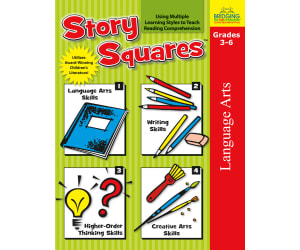
Story Squares: Using Multiple Learning Styles to Teach Reading Comprehension
ELA, Reading, Reading Comprehension, Grade 3, 4, 5, 6, Teacher Tools, Lesson Plans
Story Squares: Innovative Teaching Approach for Reading Comprehension The teaching resource, Story Squares: Using Multiple Learning Styles to Teach Reading Comprehension, offers an innovative approach to instill a passion for reading in 3rd to 6th-grade students. This educational tool tackles essential Language Arts topics with a distinct focus on comprehension. Featuring a collection of 40 enduring classics from children's literature, this resource challenges students to understand and respond comprehensively by utilizing various skills. The content demands the integration of Language Arts, Writing techniques, Higher-Order Thinking strategies and presents elements of Creative Arts. Versatile Usage: Story Squares can adapt to diverse learning environments — from collective learning experiences in larger groups to focused attention in smaller groups. These resources can also serve as engaging homework assignments that allow learners to explore their favourite literary pieces at their own pace. Rich Content: Beyond typical reading assignments, Story Squares offer over 800 unique activities that enable students the freedom and excitement of choice — further solidifying its popularity among educators and learners alike. Detailed Supporting Materials quick donavan story summaries serve as handy references for teachers or assurance tools for learners confirming their stories' comprehension. Moreover, teacher hints provide valuable guidance during explicative journeys while maintaining room for individual creativity during instruction. A comprehensive grading rubric is included within this package ensuring fair assessment standards across classrooms or homeschool settings. The addition of glossary terms enriches the overall language experience by exposing young readers not only story-specific tasks but also broadening their vocabulary. A Complete Package! This downloadable PDF contains 72 ready-to-print pages packed with knowledge-stimulating opportunities that will enthrall young minds and work on their comprehensive skills to make teaching enjoyably simple!
Author Classroom Complete Press
Tags Comprehension, Story Writing, Writing Skills, Freckle Juice, Verbs Worksheet

2nd Grade Unit 6 Reading Street Stories Set
ELA, Reading, Grade 2, Lesson Plans, Teacher Tools
This resource is a 2nd Grade Unit 6 Reading Street Stories Set. The 5 stories are included - 3-4 pages long per story - for each week. All you have to do is print and go. High-frequency words are included at the bottom. You can print these and place them in students' homework folders.
Author Sarah Sorensen
Tags Curriculum, Reading Street, Short Stories, Literacy, Cross-curricular, Reading Street Games

Good Morning, Gorillas (Magic Tree House #26 Lesson Plan, Videos, Activities)
Social Studies, ELA, Geography, Reading, Reading Comprehension, Grammar, Literature, Language Development, Vocabulary, Spelling, Writing, Science, Life Sciences, Animals, Grade 1, 2, 3, Lesson Plans, Teacher Tools
The Good Morning, Gorillas (Magic Tree House #26 Lesson Plan, Videos, Activities) is a comprehensive teaching resource designed to help educators facilitate engaging and informative lessons for first to third grade students. With over 114 pages of content, this PDF file serves as not just a book companion but a complete instructional tool. Drawing from the wide-ranging disciplines of Social Studies Language Arts Science The resource dives into specific topics like: Geography Comprehension Grammar Literature Reading Vocabulary Spelling Writing Zoology This lesson collection goes beyond basic instruction by immersing students in various dimensions of learning. No Prep Needed - Practical Learning Experience! Designed as a 5-day lesson plan with no prep required on your part—the emphasis remains on providing practical learning experiences while minimizing your workload. Creative Expression Through Art & History Exploration One particular highlight is how this resource encourages creative expression through art (drawing & coloring), history exploration through curated videos — paving way for multisensory learning where children 'experience' knowledge rather than just absorb it. Ease Of Classroom Management! This educational tool makes classroom management easier too! Given its adaptability across whole class instruction or small groups or even set as homework assignments—it offers flexibility in implementation suited best for your teaching style and student needs. Variety of activities available including: - Pre-reading Activities: Lay the groundwork for comprehensive understanding. - During Reading Discussions: Instigate transformative dialogues among learners—enhancing their critical thinking abilities. - Post-reading Worksheets: Activities that reinforce concepts learned. Additional Highlights: - Interactive Notebook Pieces (6): Promotes active recall among learners - Book Review Report Options (6): Boosts long-term retention rates - Writing Craftivity: Fosters creativity and refines writing skills Above all, the "Good Morning, Gorillas (Magic Tree House #26 Lesson Plan, Videos, Activities)" is more than just a lesson plan — it's an 'avenue for imagination and interactive learning.'
Author Heather Huhman
Tags Lesson Plan, Comprehension, Geography, Grammar, Zoology, Good Morning Tree House
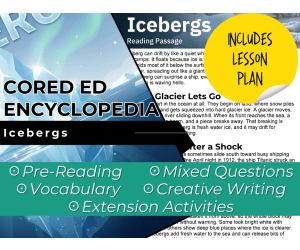
Icebergs Reading Comprehension Passage - Cored Ed Encyclopedia
ELA, Reading Comprehension, Reading, Language Development, History, Social Studies, Science, Physics, Earth and Environmental Sciences, Pre-Reading, Grade 2, 3, 4, 5, Worksheets & Printables, Worksheets, Teacher Tools, Centers, Activities, Writing Prompts, Assessments, Quizzes and Tests, Quizzes, Lesson Plans
This Icebergs reading comprehension with lesson plan includes: Visualization (on the front cover) Start your lesson by taking a minute to think and share something about the topic. Read the script aloud (slowly), perhaps prepare some music or sound effects. Student close their eyes and let their imaginations wander. Students open their eyes, read the question aloud and give them a few minutes to complete. Ask a few students to share or keep answers until the end to compare with what they learn in the passage. Quick pause—thousands of Cored Education products are included with your TeachSimple membership. Download links and encyclopedia index available here. Pre-Reading Trivia Students will write down one thing they already know about the subject and then read five more facts and discuss. These facts are fun, and the students will enjoy learning about the subject before reading more. Give 1 minute for students to write what they already know (no pressure—best guess is fine). Read the five facts together. After each fact, do ask a student for their opinion, was it surprising? Set a purpose by asking students to highlight/underline one fact they want to learn more about during the reading. Reading Passage The text is a high-interest reading passage with set paragraphs, roughly three to four paragraphs long. It contains a variety of themes about the topic, anywhere from history to technology. The passage is between 250 and 350 words in length. First, ask students to look at the headings and see what they’ll learn about today. What do they know about the topic/heading? First read options: Teacher read-aloud (best for support). Partner reading (paragraph by paragraph). While reading, students underline important details, and vocabulary words they think may come up in the questions section. Mixed Questions The first question page contains four multiple-choice questions, each with a choice of four answers, and three written response questions that require a sentence or two from the student. Students complete the mcqs first independently, then review quickly as a class. For the 3 written responses, try to get students giving the answer with some form of evidence: “I think ___ because the text says ___.” If students get stuck, send them back to check the passage. Vocabulary Questions Practice seven key words from the text in this section across two activities. First section is scrambled words where students will unscramble three words given a clue for each. The second section is a word to meaning matching activity. Before starting, have some students read out words they underlined in the passage. Ask students to say the word and read aloud the sentence(s) around each word. Ask students to do scrambled words and the matching exercise in pairs then go through answers as a class. For the scrambled spelling task, get four pairs to come up to the board and write the words for extra practice with the other student reading out the clue. For the matching task, prompt students to give full sentences: “I matched ___ with ___ because ___.” Creative Writing In this question, the student will be required to write a five to eight sentence paragraph on a question related to the topic. Before starting, ask students write down 3 key ideas they are going to include in their piece. Ask students for ideas to share around the class to help those struggling. Pro writing expectations: 5–8 sentences At least 2 facts or details from the passage At least 2 vocabulary words from the previous page Students read their paragraphs while classmates listen for facts and vocabulary words. Extension Activities This page is optional for fast finishers or to take home. There are several activities, each one requiring a different skill. Do some, do none, do all, completely optional - but you will feel reassured knowing every possibility is planned for. Includes summary writting question and additional facts. Answer Key There are answers for the multiple-choice questions, written response questions have sample answers, vocabulary answers and if there is a summary question then a sample summary will be provided as well. Lesson Plan Included Customized lesson plan for this lesson is included. Lesson Snapshot Title: Icebergs Genre: Nonfiction (informational passage) Subject: Reading (Informational Text) / Earth Science Primary Topic: How icebergs form, drift, and change Estimated Guided Reading Level (A–Z): R What This Lesson Teaches Best Key facts about iceberg floating: ice is lighter than seawater and most of an iceberg is below the surface (about 90% underwater). How icebergs form from glaciers on land, including the process called calving when a piece breaks away at the sea. Human safety and history connections: the Titanic tragedy and how the International Ice Patrol began sending warnings to ships. How icebergs change shape over time (waves at the waterline, meltwater weakening from above) and why scientists track them (ocean currents, changing polar ice). Using headings to organize information into focused sections (formation, safety/history, observation/science clues). Learning Goals Explain why most of an iceberg is hidden under the ocean’s surface. Describe how snow becomes hard glacier ice and how a new iceberg forms. Define calving using details from the passage. Identify what happened in 1912 and how it led to safer travel for ships. Describe two ways an iceberg can change shape and one reason scientists watch iceberg paths. Key Vocabulary From the Text seawater — ocean water with salt in it. surface — the top layer of something. glacier — a huge, slow-moving river of ice. calving — when a piece breaks off a glacier. currents — moving flows of ocean water. FULL CATALOG OF DOWNLOAD LINKS AND ENCYCLOPEDIA INDEX HERE
Author Cored Education
Rating
Tags Vocabulary, Reading Comprehension, Reading Passages, Lesson Plans, Ela Lesson Plans, Reading Comprehension Lesson Plans, Pre-reading, History, Science Lesson Plans, Earth Science

Guided Reading Lesson Plan & Activities for Grade 6
Reading, ELA, Grade 6, Activities, Lesson Plans, Teacher Tools
In their first year of middle school, 6th graders embark on a new phase in their education, facing fresh challenges and changes. In many ways, 6th grade marks an important transition for students, as they apply the skills they have learned before to engage in more complex and self-guided learning in deeper and more demanding ways. While collaboration continues to be an important element of the curriculum, students often need to produce more detailed independent assignments, especially in writing. This requires improved independence and organizational skills, and it will probably necessitate some adjustment and practice at the beginning of the school year. The main goal of the 6th grade reading curriculum is to have students interact with increasingly difficult texts over the year, preparing them for high school, advanced studies, and future professions. Students examine a variety of texts and different genres, including fiction, drama, poetry, and non-fiction. This ebook offers a detailed lesson plan for guided reading along with activities tailored for your sixth-grade classes. Suggested replies are also provided.
Author Bright Classroom Ideas Marketplace
Tags Guided, Reading, Lesson, Plan, Grade 6, Language, Activities

By Any Other Name: Full Lesson Plan w/ PowerPoints & Graphic Organizers
ELA, Reading, Grade 6, 7, 8, 9, Lesson Plans, Teacher Tools
Mastering Literary Analysis: A Full Lesson Plan for "By Any Other Name" This comprehensive reading lesson plan for the short story "By Any Other Name" by Santha Rama Rau includes everything educators need to guide students through close reading and analysis. With detailed lesson plans , graphic organizers , worksheets, answer keys, and PowerPoint slide decks on topics like plot structure, theme, characterization, and more, this resource supports whole-class instruction, small group discussion, and independent practice. Written for middle and high school students, these materials help teachers model literary analysis skills that students can apply to any fiction text. By engaging with this diverse story through multiple modalities, students will build interpretation, critical thinking, and writing abilities that meet 7th-8th grade reading standards.
Author Quality Teaching Products
Tags Reading Powerpoint, Reading Lesson, Short Story, Graphic Organizer, Imagery, Theme Of By Any Other Name, By Any Other Name By Santha Rama Rau, By Any Other Name Santha Rama Rau Questions And Answers, By Any Other Name Short Story, By Any Other Name Santha Rama Rau, By Any Other Name Story, Lesson Plan Graphic Organizer, Santha Rama Rau By Any Other Name

Reading Comprehension - Digital Lesson Plan Gr. 5-8 | MAC Software
ELA, Reading, Grade 3, 4, 5, 6, 7, 8, Teacher Tools, Lesson Plans
Reading Comprehension - Digital Lesson Plan Gr. 5-8 | MAC Software With an array of essential reading comprehension concepts, the Reading Comprehension - Digital Lesson Plan is characterized by its engagement and interactivity, making it a practical tool for educators. Designed specifically for Grade levels 5 through to 8, this digital resource can be applied in various educational settings like: whole group learning sessions small group work individual homework assignments. Covering over a bountiful course of 80 engaging screen-pages, this pragmatic lesson plan introduces students to vital aspects of reading. It focuses on enhancing their understanding of essential elements such as: Context clues: Serves to help students decipher meanings from surrounding text. Determining main ideas from passages: Guides their comprehension and enables them in making knowledgeable inferences. Inculcating the importance of graphic organizers, this tool assists in amplifying students’ comprehension skills – elementary towards achieving fluency across subject areas. In today's modern digitized era where communication spans multiple formats, proficient reading still remains an invaluable skill. The ability of a child to understand and articulate with written words forms the crux towards academic success and life participations. A Look into the Program's Structure The program engages with a balanced mix of pre-reading activities along with post-reading sessions. Each screen comprises enthralling content including: Enriched Reading Passages : This includes both pre-reading activities (before you read) and post-reading activities. Test Preparation Material : These are accompanied by a comprehensive quiz – pin-pointing assessment opportunities after each segment of the lesson. Children will encounter absorbing elements such as memory match games, crossword puzzles, and interesting word searches– all aimed at deepening their understanding in an enjoyable manner. The program also includes Text-to-Speech functionality, videos & audios to cater to diverse learners with different ways of learning. The digital lesson program aligns well with State Standards, mindful of the cognitive domains per Blooms Taxonomy. Embodying simplicity at its core, this MAC-friendly software is primed to assist educators in fostering competent readers amongst their students.
Author Classroom Complete Press
Tags Reading Comprehension, Fiction Texts, Nonfiction Texts, Digital Lesson Plan, Digital Reading

Fiction Elements: Fiction Story Lesson
ELA, Reading, Preschool, Grade 1, 2, 3, Teacher Tools, Lesson Plans
This resource is a Fiction Elements: Fiction Story Lesson. Students will apply reading, creative thinking, problem solving and so much more as they work through these interactive slides. Students will learn all about fiction stories - what they are, what they entail and how to write one. Class discussions and practice activities are included for students to apply their knowledge. There are 3 different presentations - 1 for the teacher, 1 for the student and 1 answer slide presentation.
Author Ezee 101
Tags Fiction Story, Reading Lesson, Problem And Solution, Story Elements, Google Classroom

Juneteenth Reading Comprehension Activity + Answers
ELA, Language Development, ESL, Reading, Reading Comprehension, Grade 3, 4, 5, Activities, Centers, Teacher Tools, Assessments, Lesson Plans
Help your students learn about the historical significance of Juneteenth with this engaging and informative reading comprehension activity designed for 3rd to 5th grade learners. This resource provides students with a deeper understanding of the events leading to the end of slavery in the United States and the importance of celebrating freedom. What’s Included: A nonfiction reading passage explaining the history and meaning of Juneteenth 5 comprehension questions (mix of multiple choice and written response) A vocabulary activity focused on key terms from the passage A writing prompt for reflection or creative extension Complete answer key for easy grading Ways to Use: Whole-class reading and discussion Small group guided reading activity Literacy centers or independent work Homework assignment or early finisher task Culturally responsive addition to your holiday lessons Advantages: Strengthens reading comprehension and critical thinking Promotes cultural awareness and historical understanding Aligned with 3rd–5th grade literacy standards Encourages meaningful classroom conversations Easy to print and use, no prep required Pdf file includes 2 pages. Enjoy!
Author Ponder Palette Plazza
Rating
Tags Reading, Reading Comprehension, Juneteenth, Juneteenth Activities, Juneteenth Reading, Literacy, Black History, Black History Reading, Reading Centers

Elephants: Guided Reading Level Q with Lesson Plan
ELA, Resources for Teachers, Reading Comprehension, Reading, Science, Language Development, Life Sciences, Earth and Environmental Sciences, Geography, Social Studies, Grade 3, 4, 5, Worksheets & Printables, Worksheets, Teacher Tools, Centers, Activities, Literacy Readers, Quizzes, Quizzes and Tests, Assessments, Lesson Plans
This Elephants (level q) guided reading book with lesson plan includes: Guided Reading Color Label (front cover x1) This is a quick way to match the book’s demands to what students can generally handle.. The overall goal is to use the level/color to pick books for several smaller groups. To qualify for a certain level, a student is expected to read a book from that level with about 90–94% accuracy. If a student is consistently accurate and understands, move up a level. If the student is struggling at that level, drop down and add more support. Each student will improve at completely different rates, but it is generally one of the best ways to check progress across the class. DOWNLOAD THE CATALOG TO VIEW ALL GUIDED READING BOOKS AVAILABLE (SORTED LEVELS A-Z) Pre-Reading Question (x1) Teacher asks the prompt aloud, can be while showing the cover or first page. Students share what they already know, or make educated guesses from the cover. Prompt them to use the target vocabulary. Write some of their responses on the board to look back at during the reading. Vocabulary Words (x5) Introduce the five words, best doing it one at a time. Start by saying it, while students repeat and then see if anyone knows what it means before reading further. Read through the meaning and try to briefly connect each word to a picture or gesture so it’s meaningful. Ask students to flip through the book pages and point to where they see each of the vocabulary words. While reading the book pause upon coming across one of the vocab words or read the sentence twice to make sure students understand the word has appeared. Optional: Ask students to raise hands whenever they see/hear one of the new words. Guided Reading Pages (x10) Check the book snapshot (below) for: primary topic - do you need to prep extra reading or intro materials on this? what is taught best - decide on 1-2 bullets to focus on, use the prompt or words provided here for best results. learning goals - what you are checking for students to be able to do after the session, elicit answers using prompts or words provided. key vocabulary (see section above). questions overview - so you know what is coming up and if you need to prep extra materials to assist understanding. Run the lesson You may have already looked at a few of the pages together, but you can show them some of the pictures again first to set meaning. Depending on how much time you have and how familiar your students are with guided reading class, you may want to read the book aloud first with the group first. Students whisper or partner read, while you listen in. If time, do it as a group, one student reading a page each. Use the guided page’s prompts to coach: “Check the picture / does it make sense?” “Point under the words / try the first sound” “Reread the sentence smoothly”. Try to focus more on one student per session (rotating every time), so you can work out if they are ready to move up or need to move down a level. Comprehension Questions (back cover x3) This is your way to check that students didn’t just say the words, but actually understood the text. First, let students answer by pointing to the page/picture and saying a short sentence. After any answer, follow with: “Show me where you found that in the text.” In bigger groups, have partners answer first (10–20 seconds), then call on 2–3 students to share. Differentiation tips: Emerging speakers/struggling readers: oral + pointing On-level: oral in a full sentence Higher: one written sentence or draw + label Book Snapshot Title: Elephants Genre: Nonfiction (informational) Subject: Life Science Primary Topic: Elephant species, adaptations, behavior, and threats Estimated Guided Reading Level (A–Z): Q What This Book Teaches Best Explains that scientists recognize three distinct species of elephants and describes physical differences (like ear shape and head shape) that fit their environments. Describes key body structures and functions (trunk muscles and “fingers,” tusks as elongated incisor teeth, sensitive skin). Shows behavioral adaptations for survival , including how elephants protect themselves from heat and insects by using water or mud. Highlights social organization and communication , including matriarchal herds and vocalizations such as trumpets, rumbles, and infrasound. Connects elephants to their ecosystems and conservation by explaining seed dispersal (African Forest elephants) and current threats like habitat loss and poaching for ivory. Learning Goals Describe the three elephant species named in the text and one physical difference mentioned between African and Asian elephants. Explain how elephants use their skin and what they do to protect themselves from heat and insects. Identify how the text describes an elephant’s trunk and list at least three things elephants use it to do. Explain what tusks are and give examples from the text of how tusks help elephants survive. Describe how elephants live in groups and how a matriarch helps keep a herd safe. Explain how African Forest elephants help plant new trees in the forest, according to the text. Key Vocabulary From the Text distinct — clearly different from something else. characteristic — an important feature that helps describe something. matriarchal — led by a female (mother) in the group. vocalizations — animal sounds used to communicate. endangered — in danger of disappearing because there are not many left. Discussion Prompts Pre-reading question: What do you already know about how elephants live and survive in their habitats? Comprehension questions: What are the three species of elephants that scientists recognize in the text? Comprehension questions: What does the text say elephants do to protect themselves from heat and insects? Comprehension questions: How do African Forest elephants help plant the next generation of trees in the forest? Printing Tips 1. Best Printing Method (Recommended) “Booklet” Printing (Best if Available) If your printer or PDF viewer supports Booklet Printing , use this. Settings to use: Print mode: Booklet Paper size: Letter or A4 (either works) Orientation: Landscape Print on both sides: Yes Flip on: Short edge Scaling: Fit to printable area Booklet subset: First test: Front sides only Then: Back sides only This will automatically: Pair pages correctly Put the cover on the outside Align everything for folding After printing, fold in half and staple along the spine . 2. If “Booklet” Printing Is NOT Available You can still print this correctly with manual duplex printing . Step-by-step: Open the PDF. Choose Print . Set: Orientation: Landscape Pages per sheet: 1 Print on both sides: Yes Flip on: Short edge Print all pages . Because each PDF page already contains two facing book pages, the result will still fold cleanly into a book. Thousands of Cored Education products are included with your TeachSimple membership. Download links and encyclopedia index available here.
Author Cored Education
Rating
Tags Reading Comprehension, Reading Passages, Reading, Guided Reading, Guided Reading Lesson Plan, Guided Reading Activity, Pre-reading, Science Lesson Plans, Life Science, Geography

Nothing But Mice Gr. K-1
ELA, Reading, Grade 1, Teacher Tools, Lesson Plans
Nothing But Mice Gr. K-1 Nothing But Mice Gr. K-1 is a comprehensive teaching resource, perfect for enhancing the learning experience of children in kindergarten and grade 1. Comprising of activities that target language arts with a focus on reading comprehension, this versatile toolpack plays a crucial role in the educational journey of educators be it public school teachers or homeschoolers. Incorporation into Themes and Sessions This resource fits nicely into any mouse theme study or traditional folk and fairy tale sessions providing students with interconnected tasks and exercises to stimulate their creativity, critical thinking skills, and curiosity about nature . Included Components: Detailed big book patterns. Creative puppet patterns for an interactive teaching experience. 'The Mouse And The Lion' sequencing cards to emphasize narrative structure. "Visuals" section containing clip art and organizational materials Specially Featured Sections: "All Kinds Of Mice" section blends scientific insights about different kinds of mice into engaging narratives. lı>"Traditional Mouse Tales" reveals folklore revolving around mice; fostering historical awareness through storytelling. *"Mouse Art"; unique suggestions for themed art endeavors. This useful product manages the harmonious fusion of various areas like literature, science (biology), visual arts & history under one mouse-themed umbrella—thereby making it more absorbing for young learners all round. Nothing But Mice Gr.K-1 is suitable for both group-based learning as well as smaller groups or solitary assignments & homework tasks. With an array of compelling activities contained within Nothing But Mice Gr.K-1, it ensures there’s something for every learner making the teaching-learning process more enjoyable and effective.
Author Classroom Complete Press
Tags PDF

Guided Reading Lesson Plan & Activities for Grade 10
Reading, ELA, Grade 10, Activities, Lesson Plans, Teacher Tools
Guided reading is not a novel approach in the realm of education. It has existed for a long time and has been extensively studied. Fountas and Pinnell (1996) demonstrated that guided reading effectively enhances students' reading skills. This occurs by offering a well-organized and encouraging educational setting in which learners can develop their reading abilities under the supervision of an instructor. The aim of guided reading is to assist students in cultivating essential reading skills including decoding, fluency, segmenting, and understanding. These abilities can thrive through small group teaching, support, and feedback from educators. Guided reading enables teachers to address the individual requirements of every student according to their grade level. You will be more equipped to offer each student the specific assistance they require to enhance their reading abilities. This ebook includes an elaborate guided reading lesson plan for your 10th-grade students. Activities and suggested answers are also included.
Author Bright Classroom Ideas Marketplace
Tags Guided, Reading, Lesson, Plan, Activities, Grade 10, Language

Future Perfect Upper Intermediate ESL ELL Lesson Plan Worksheet
ELA, Language Development, ESL, Reading, Writing, Grammar, Vocabulary, Grade 8, Teacher Tools, Lesson Plans
Future Perfect Upper Intermediate Lesson Plan This upper intermediate English lesson plan helps students learn how to use the future perfect tense in speech and writing. Educators can implement this resource in multiple ways - as a whole group grammar lesson, small group activity, or independent practice assignment. The lesson plan explains the future perfect tense and when to use it. Students then complete exercises assessing their comprehension and practicing the grammar skills. Answer keys are included for educators. This resource works well for students 12 years plus including adult learners of ESL or language arts. The PDF handouts and Google Apps access make it easy to distribute to remote learners too. Students will gain a deeper understanding of verb tenses through this clear, concise lesson. The ESL lesson plan includes flashcards , a warmer, grammar rules, exercises, role-play, conversation, writing drill, activity, answers and an extra study that would be good to set as homework. There are 30+ pages and there are teachers notes to guide the teacher.
Author TEAM TEFL
Tags ESL Lesson Plan, Past Participle, Expressions, Grammar Exercises, Weekly Planner

News ESL TEFL Upper Intermediate Lesson Plan Worksheet
ELA, Language Development, ESL, Vocabulary, Reading, Writing, Not Grade Specific, Adult Education, High School, Homeschool Resources, Middle School, Teacher Tools, Lesson Plans, Worksheets & Printables
News Upper Intermediate ESL TEFL Lesson Plan engages high school and adult ESL students through real-world topics. Learners study news-related vocabulary and grammar before completing comprehension exercises. The role-play activity encourages the students' to show off their conversation skills whilst working in pairs. The varied activities allow implementation in whole or small groups, for homework, or individual practice. This customizable resource features reading passages and audio about current events. The answer key supports self-guided learning. Simple formatting enables access via Google Apps when using Chromebooks or tablets. Teachers appreciate the flexibility this lesson plan offers to strengthen students' English proficiency, critical thinking, and discussion skills. The ESL lesson plan includes flashcards, a warmer, grammar rules, exercises, role-play, conversation, writing drill, activity , answers and an extra study that would be good to set as homework. There are 30+ pages and there are teachers notes to guide the teacher through the lesson.
Author TEAM TEFL
Tags Reading, Comprehension, ESL, News, Synonyms