



3,949 products added recently
Page 5 - Vocabulary Lesson Plans
Elevate your students' communication skills with vocabulary lesson plans that introduce new words in meaningful contexts. These resources provide interactive methods for word learning and retention. Integrate them into your curriculum to help students express themselves more effectively.

 Show filters

Word Puzzlers - Grades 5-6
ELA, Language Development, Vocabulary, Grade 5, 6, Teacher Tools, Lesson Plans
Word Puzzlers - Grades 5-6: A Comprehensive Educational Tool Word Puzzlers - Grades 5-6 is a potent educational asset specifically formulated to boost students' vocabularies in a fun yet challenging way. This resource bag provides an array of word puzzles that pique active interest in language and words, sharpen reasoning abilities, and reinforce spelling capabilities. This educative tool is not only suitable for Grade 5 and Grade 6 students majoring in Language Arts but also holds relevance across various subjects. As such, it can be used as a prime supplementary resource to heighten broad aspects of the curriculum materials.' Variety of Puzzle Formats Codes Mazes Riddles Rhymes Rebuses Word Searches Crossword Puzzles Matching Activities The diverse puzzle options maintain student engagement and provoke intellectual stimulation. It can be moulded according to varying student needs. Learner Engagement & Collaboration Skills: This learning aid adapts readily to various teaching scenarios. It can be employed during whole group sessions or small groups which promotes teamwork among learners hence enhancing their collaborative problem-solving skills. Moreover it serves as an effective homework assignment supplement catalysing continuous learning outside the classroom walls. Simplicity & Convenience: To ensure ease-of-use for both teachers and learners, these resources come compiled within one single product file in the form of easy-to-download PDF files that can be utilized willfully whenever required. In A Nutshell: Word Puzzlers - Grades 5-6 is a flexible teaching resource, tailor-made to befit individual lesson plans or comprehensive units focusing on vocabulary enhancement for students between grade five and six. Apart from honing critical thinking skills, this tool fosters appreciation and command over the English language, hence preparing the learners better academically. To sum it up, learning is transformed into an enjoyable process via multiple engaging vocab exercises thoughtfully embedded within these word puzzler books.
Author Classroom Complete Press
Tags PDF

Star Wars ESL-EFL-TESOL-TEFL Intermediate Lesson Plan
ELA, Language Development, ESL, Vocabulary, Grade 8, 9, 10, 11, 12, Teacher Tools, Lesson Plans, Activities
Star Wars ESL, EFL, TESOL, TEFL Intermediate Lesson Plan + picture description activity + storytelling (writing/speaking Activity) game with 5 printable dice! This Amazing Intermediate ESL, EFL, TESOL, TEFL Star Wars Lesson Plan (21 pages) can be Great to stimulate English Learning within English as a Second Language Students. Potential learners can be High Schoolers or Higher Education Learners too. This English as a second language (ESL) Teaching Product can also be Great for ESL Centers Abroad or English Second Language Tutors or Private Teachers (online or offline) This Nerdy Stimulating PDF ESL, EFL, TESOL, TEFL Lesson Plan for English Teachers Abroad (21 pages) includes: a brief Introduction to the Star Wars world, universe and philosophy 9 Star Wars Film Scenes for Picture Description Activity (one for each Star Wars film) 5 Printable Dice (3 6-faced dice + 2 4-faced) with writing/speaking Prompts, Planets, Good Guys, Bad Guys and "the Helping Tool" to create a personalized Star Wars Story (written or spoken given the teacher's teaching objectives) PS: Little general Knowledge on the Star Wars Universe, saga, world could be helpful but is not necessary. This Teaching Resource aims to improve English though Star Wars, not viceversa. This ESL, EFL, TESOL PDF Teaching Resource (lesson plan) is great for Intermediate English as a second language learners. It aims to make students get more fluent within their speaking and/or writing skills. ESL with Alan is a Brand New ESL, EFL, TESOL, TEFL Store that aims to help English as a Second Language Teachers, Educators and Tutors (be it online or offline) around the world to achieve their teaching objectives while creating a fun and stimulating environment. Never Forget! Learning is fun, So should English! If you are interested in more ESL, EFL, TESOL, TEFL Star Wars Teaching Resources, click here ESL with Alan!
Author Learning with Alan
Tags ESL, EFL, TESOL, TEFL, Star Wars, Lesson Plan, Speaking, Dice, Teens, Activity

Groundhog Day Curriculum Pack
Creative Arts, Art, Social Studies, Holiday & Seasonal, ELA, Language Development, Vocabulary, Math, Early Math, Science, Basic Science, Kindergarten, Lesson Plans, Teacher Tools
If your students are studying Groundhog Day or are about to begin a seasons unit, I have just the resource to provide you with everything you need and more! This is a Groundhog Day elHeleCurriculum Pack complete with an abundance of printable resources and engaging activities for students to complete. This curriculum was designed for your preschool students. The curriculum goal is to explore the mythology and concepts involved in “Groundhog Day” and reinforce skills in recognizing the predictable signs of spring. The vocabulary that students will focus on is groundhog, prediction, shadow, spring, February, hibernation, lair, woodchuck, outline, silhouette, tunnel, burrows, underground, and weather. This curriculum will come with a color of the week (brown) and a letter of the week (G). This curriculum pack includes: --Sensory Table Ideas --Art Activities --Cooking Experience --Community Time --Math Activities --Home/School Connection Ideas --Science Table Enrichments --Science Concepts/Activities --Prop Box Ideas/Dramatic Play Enrichments --Movement and Motor --Playground/Walk Activities --Transition/Waiting Ideas --Block Area Enrichments --Flannel Board --Teacher Made Enrichment Ideas --Field Trip Ideas --Supplemental Learning Ideas/Activities At the start of this pack, you will receive a list of supplies needed for activities and projects. The worksheets, activities, and tasks included in this pack are intended to be completed in a variety of formats – whole group, small group, and independent work. I hope you enjoy!
Author Learning Foundations
Tags Groundhog Day, Spring Activities, February, Preschool Curriculum, Learning Foundations, Sensory Table Ideas, Prop Box Ideas, Transitions

Media ESL TEFL Upper Intermediate Lesson Plan
ELA, Language Development, ESL, Grammar, Vocabulary, Reading, Writing, Resources for Teachers, Not Grade Specific, Adult Education, High School, Middle School, Teacher Tools, Lesson Plans, Worksheets & Printables
Media | Upper Intermediate ESL Lesson Plan This upper intermediate English lesson plan helps students explore various media topics through informative reading passages and targeted grammar exercises. Educators can implement the multifaceted workbook during whole group instruction or assign portions for small group discussion and independent practice. The resource examines compelling media issues that align with middle and high school curriculum. After reading the passages, students will answer comprehension questions, participate in class debates, and complete writing prompts that further their understanding of the media. This versatile lesson workbook also provides answer keys and an audio exercise to support diverse learning needs. Implement digitally or print for in-class use. The ESL lesson plan includes flashcards, a warmer, grammar rules, exercises, role-play, conversation, writing drill, activity, answers and an extra study that would be good to set as homework. There are 30+ pages and there are teachers notes to guide the teacher.
Author TEAM TEFL
Tags Media, Comprehension, ESL, Language Arts, Surveys

Quick Snacks Reading Comprehension Passage - Cored Ed Encyclopedia
ELA, Language Development, Reading Comprehension, Reading, Pre-Reading, Writing, Strategies, Vocabulary, Health, P.E. & Health, Grade 2, 3, 4, 5, Worksheets & Printables, Worksheets, Teacher Tools, Centers, Activities, Writing Prompts, Assessments, Quizzes and Tests, Quizzes, Lesson Plans
This quick snacks reading comprehension includes: Visualization (on the front cover) Start your lesson by taking a minute to think and share something about the topic. Read the script aloud (slowly), perhaps prepare some music or sound effects. Student close their eyes and let their imaginations wander. Students open their eyes, read the question aloud and give them a few minutes to complete. Ask a few students to share or keep answers until the end to compare with what they learn in the passage. Quick pause—thousands of Cored Education products are included with your TeachSimple membership. Download links and encyclopedia index available here. Pre-Reading Trivia Students will write down one thing they already know about the subject and then read five more facts and discuss. These facts are fun, and the students will enjoy learning about the subject before reading more. Give 1 minute for students to write what they already know (no pressure—best guess is fine). Read the five facts together. After each fact, do ask a student for their opinion, was it surprising? Set a purpose by asking students to highlight/underline one fact they want to learn more about during the reading. Reading Passage The text is a high-interest reading passage with set paragraphs, roughly three to four paragraphs long. It contains a variety of themes about the topic, anywhere from history to technology. The passage is between 250 and 350 words in length. First, ask students to look at the headings and see what they’ll learn about today. What do they know about the topic/heading? First read options: Teacher read-aloud (best for support). Partner reading (paragraph by paragraph). While reading, students underline important details, and vocabulary words they think may come up in the questions section. Mixed Questions The first question page contains four multiple-choice questions, each with a choice of four answers, and three written response questions that require a sentence or two from the student. Students complete the mcqs first independently, then review quickly as a class. For the 3 written responses, try to get students giving the answer with some form of evidence: “I think ___ because the text says ___.” If students get stuck, send them back to check the passage. Vocabulary Questions Practice seven key words from the text in this section across two activities. First section is scrambled words where students will unscramble three words given a clue for each. The second section is a word to meaning matching activity. Before starting, have some students read out words they underlined in the passage. Ask students to say the word and read aloud the sentence(s) around each word. Ask students to do scrambled words and the matching exercise in pairs then go through answers as a class. For the scrambled spelling task, get four pairs to come up to the board and write the words for extra practice with the other student reading out the clue. For the matching task, prompt students to give full sentences: “I matched ___ with ___ because ___.” Creative Writing In this question, the student will be required to write a five to eight sentence paragraph on a question related to the topic. Before starting, ask students write down 3 key ideas they are going to include in their piece. Ask students for ideas to share around the class to help those struggling. Pro writing expectations: 5–8 sentences At least 2 facts or details from the passage At least 2 vocabulary words from the previous page Students read their paragraphs while classmates listen for facts and vocabulary words. Extension Activities This page is optional for fast finishers or to take home. There are several activities, each one requiring a different skill. Do some, do none, do all, completely optional - but you will feel reassured knowing every possibility is planned for. Includes summary writting question. Answer Key There are answers for the multiple-choice questions, written response questions have sample answers, vocabulary answers and if there is a summary question then a sample summary will be provided as well. Lesson Plan Included Customized lesson plan for this lesson is included. Lesson Snapshot Title: Quick Snacks Genre: Nonfiction (informational passage) Subject: Health Science (Nutrition) / Reading (Informational Text) Primary Topic: Snacks between meals and steady energy Estimated Guided Reading Level (A–Z): R What This Lesson Teaches Best The purpose of a quick snack: a small, simple food that steadies you between bigger meals (not a meal replacement). How “convenience” packaged snacks are designed (ready to eat, travel well, last longer on a shelf) and what they may include (sweeteners, preservatives, bold flavors). Basic food science for kids: foods carry nutrients, including carbohydrates, protein, and fats, and protein helps tissues grow and repair. How to think about “steadier energy” snack choices (examples in the passage include fruit with yogurt and whole grains with beans). Built-in skill practice with aligned support pages (pre-reading facts, questions, vocabulary, writing, and extension activities based on the passage). Learning Goals Students can explain how the passage defines a quick snack and how it differs from a meal. Students can describe how quick snacks changed from home foods to packaged convenience foods, using text details. Students can identify the three nutrient groups named and describe what protein does in the body. Students can explain what the passage means by “steadier energy” and name a snack example it gives. Students can use section headings to locate information and state the main idea of each section. Key Vocabulary From the Text preservatives — ingredients that help food last longer. nutrients — helpful parts of food your body uses. carbohydrates — a nutrient group that gives the body energy. protein — helps body tissues grow and repair. packaged — put in a package to be ready and easy. FULL CATALOG OF DOWNLOAD LINKS AND ENCYCLOPEDIA INDEX HERE
Author Cored Education
Rating
Tags Vocabulary, Reading Comprehension, Reading Passages, Reading, Creative Writing, Reading Strategies, Writing Prompts, Lesson Plans, Quick Snacks, Health
Down on the Farm Curriculum Pack
Creative Arts, Art, Social Studies, ELA, Math, Early Math, Language Development, Vocabulary, Science, Basic Science, Kindergarten, Lesson Plans, Teacher Tools
If your students are studying farm animals or are about to begin a farm unit, I have just the resource to provide you with everything you need and more! This is a Down on the Farm Curriculum Pack complete with an abundance of printable resources and engaging activities for students to complete. This curriculum was designed for your preschool students. The curriculum goal is to develop an awareness and appreciation for farming and agriculture, and the products that are derived from the farming process. The vocabulary that students will focus on is field, planting, acres, crops, combine, country, tractor, barn, silo, harvest, plow, and produce. This curriculum will come with a color of the week (red) and a letter of the week (F). This curriculum pack includes: --Sensory Table Ideas --Art Activities --Cooking Experience --Community Time --Math Activities --Home/School Connection Ideas --Science Table Enrichments --Science Concepts/Activities --Prop Box Ideas/Dramatic Play Enrichments --Movement and Motor --Playground/Walk Activities --Transition/Waiting Ideas --Block Area Enrichments --Flannel Board --Teacher Made Enrichment Ideas --Field Trip Ideas --Supplemental Learning Ideas/Activities At the start of this pack, you will receive a list of supplies needed for activities and projects. The worksheets, activities, and tasks included in this pack are intended to be completed in a variety of formats – whole group, small group, and independent work. I hope you enjoy!
Author Learning Foundations
Tags Preschool Curriculum, Down On The Farm, Farm Animals, Science Concepts, Art Activities, Vocabulary, Color Of The Week, Learning Foundations

The World of Dolphins: Guided Reading Level Q with Lesson Plan
ELA, Resources for Teachers, Reading Comprehension, Reading, Science, Language Development, Life Sciences, Earth and Environmental Sciences, Pre-Reading, Vocabulary, Grade 3, 4, 5, Worksheets & Printables, Worksheets, Teacher Tools, Centers, Activities, Literacy Readers, Quizzes, Quizzes and Tests, Assessments, Lesson Plans
This The World of Dolphins (level q) guided reading book with lesson plan includes: Guided Reading Color Label (front cover x1) This is a quick way to match the book’s demands to what students can generally handle.. The overall goal is to use the level/color to pick books for several smaller groups. To qualify for a certain level, a student is expected to read a book from that level with about 90–94% accuracy. If a student is consistently accurate and understands, move up a level. If the student is struggling at that level, drop down and add more support. Each student will improve at completely different rates, but it is generally one of the best ways to check progress across the class. DOWNLOAD THE CATALOG TO VIEW ALL GUIDED READING BOOKS AVAILABLE (SORTED LEVELS A-Z) Pre-Reading Question (x1) Teacher asks the prompt aloud, can be while showing the cover or first page. Students share what they already know, or make educated guesses from the cover. Prompt them to use the target vocabulary. Write some of their responses on the board to look back at during the reading. Vocabulary Words (x5) Introduce the five words, best doing it one at a time. Start by saying it, while students repeat and then see if anyone knows what it means before reading further. Read through the meaning and try to briefly connect each word to a picture or gesture so it’s meaningful. Ask students to flip through the book pages and point to where they see each of the vocabulary words. While reading the book pause upon coming across one of the vocab words or read the sentence twice to make sure students understand the word has appeared. Optional: Ask students to raise hands whenever they see/hear one of the new words. Guided Reading Pages (x10) Check the book snapshot (below) for: primary topic - do you need to prep extra reading or intro materials on this? what is taught best - decide on 1-2 bullets to focus on, use the prompt or words provided here for best results. learning goals - what you are checking for students to be able to do after the session, elicit answers using prompts or words provided. key vocabulary (see section above). questions overview - so you know what is coming up and if you need to prep extra materials to assist understanding. Run the lesson You may have already looked at a few of the pages together, but you can show them some of the pictures again first to set meaning. Depending on how much time you have and how familiar your students are with guided reading class, you may want to read the book aloud first with the group first. Students whisper or partner read, while you listen in. If time, do it as a group, one student reading a page each. Use the guided page’s prompts to coach: “Check the picture / does it make sense?” “Point under the words / try the first sound” “Reread the sentence smoothly”. Try to focus more on one student per session (rotating every time), so you can work out if they are ready to move up or need to move down a level. Comprehension Questions (back cover x3) This is your way to check that students didn’t just say the words, but actually understood the text. First, let students answer by pointing to the page/picture and saying a short sentence. After any answer, follow with: “Show me where you found that in the text.” In bigger groups, have partners answer first (10–20 seconds), then call on 2–3 students to share. Differentiation tips: Emerging speakers/struggling readers: oral + pointing On-level: oral in a full sentence Higher: one written sentence or draw + label Book Snapshot Title: The World of Dolphins Genre: Nonfiction (informational) Subject: Life Science Primary Topic: Dolphin traits, behavior, and survival Estimated Guided Reading Level (A–Z): Q What This Book Teaches Best Explains dolphins as marine mammals (warm-blooded, nurse young with milk) and notes they are related to whales. Teaches how dolphins breathe : they cannot breathe underwater, must surface for oxygen, and use a blowhole to exhale and inhale quickly. Highlights dolphin social life in pods , including working together for food, protection from predators, and saving energy by swimming as a team. Describes dolphin communication and sensing , including clicks/squeaks/whistles, a unique “signature whistle,” and echolocation to find objects in dark or murky water. Connects dolphin survival to human impact , naming pollution, habitat loss, and accidental capture in fishing nets as threats. Learning Goals Students will explain why dolphins must come to the ocean’s surface to breathe and how a blowhole helps them do it. Students will describe how dolphins live in pods and list ways pod members help each other find food and stay safe. Students will explain how echolocation works in the text and what information dolphins learn from returning echoes. Students will identify what dolphins eat in the book and describe one hunting strategy pods use with schools of fish. Students will describe how mother dolphins care for calves and what the mother teaches the calf over time. Students will name threats to dolphins mentioned in the text and explain why protecting the ocean matters for their survival. Key Vocabulary From the Text blowhole — opening on top of a dolphin’s head for breathing. echolocation — finding things using sounds and listening for echoes. carnivores — animals that eat other animals for food. crustaceans — sea animals with hard shells, like crabs and shrimp. breaching — jumping up out of the water. Discussion Prompts Pre-reading question: What do you think dolphins need in order to survive in the ocean? Comprehension questions: Why does the text say dolphins have to come to the surface of the ocean? Comprehension questions: How does the text explain that echolocation helps dolphins in dark or murky water? Comprehension questions: What does the text say dolphins do in pods that helps them find food or stay safe? Printing Tips 1. Best Printing Method (Recommended) “Booklet” Printing (Best if Available) If your printer or PDF viewer supports Booklet Printing , use this. Settings to use: Print mode: Booklet Paper size: Letter or A4 (either works) Orientation: Landscape Print on both sides: Yes Flip on: Short edge Scaling: Fit to printable area Booklet subset: First test: Front sides only Then: Back sides only This will automatically: Pair pages correctly Put the cover on the outside Align everything for folding After printing, fold in half and staple along the spine . 2. If “Booklet” Printing Is NOT Available You can still print this correctly with manual duplex printing . Step-by-step: Open the PDF. Choose Print . Set: Orientation: Landscape Pages per sheet: 1 Print on both sides: Yes Flip on: Short edge Print all pages . Because each PDF page already contains two facing book pages, the result will still fold cleanly into a book. Thousands of Cored Education products are included with your TeachSimple membership. Download links and encyclopedia index available here.
Author Cored Education
Rating
Tags Reading Comprehension, Reading Passages, Reading, Guided Reading, Guided Reading Lesson Plan, Guided Reading Activity, Pre-reading, Science Lesson Plans, Life Science, Earth Science
Literary Terms Lesson for Eras of Literature
ELA, Language Development, Vocabulary, Grade 9, 10, 11, 12, Lesson Plans, Teacher Tools
Uncover the fascinating world of major literary time periods and explore effective teaching methods with this concise literary terms lesson. Dive into the concepts connected to various Eras of Literature, providing a stand-alone lesson or a valuable introduction or supplement to units focused on the study of literary periods across centuries. To fully comprehend and create literature, students must grasp the foundational concepts and techniques that shape literary art. L-EA's literary terms lessons empower students to learn and practice these techniques while equipping teachers with invaluable resources to assess student understanding. Engage students in a comprehensive exploration of literary time periods, nurturing their ability to analyze and appreciate the evolution of literature. This resource seamlessly complements units dedicated to the study of literature over the centuries, fostering students' growth as knowledgeable readers and insightful critics. Teaching this resource is simple! Start it by presenting the included slideshow of literary terms and definitions while students use the accompanying worksheet to take notes. The, handout the accompanying homework assignment. Later in the week or following week, administer the quiz, which is provided as a printable or Google Form quiz (ideal for Google Classroom distribution!) “Literary Terms Lesson: Eras of Literature” includes: - A presentation of 18 literary terms and definitions relating to different eras of literature - A presentation note-taking activity (w/ answer key) - A writing assignment that asks students to use the presented terms in a piece of original writing - A quiz assessment that includes definition matching (or drop-down selection), provided in 5 file types (Google Form, Easel assessment, PDF, ExamView test file, and ExamView test bank file) TERMS INCLUDED IN THIS LESSON: Middle English, Elizabethan Era, Neoclassicism, Enlightenment, Gothic Fiction, Romanticism, Realism, Victorian Era, Transcendentalism, Aestheticism, Modernism, Dadaism, Lost Generation, Harlem Renaissance, Literature of the Absurd, Beat Generation, Nouveau Roman (“New Novel”), and Postmodernism Although this resource can be fitted for any secondary Language Arts classroom, it has been carefully designed to work best in grades 9, 10, 11, and 12. The included activities and quizzes are subtly but specifically tied to Common Core ELA Standard for Language (6). This resource is provided in a print-ready, bookmarked, and adjustable PDFs, Google Form, and PowerPoint Show files. This resource contains: 7 Pages; 19 Slides; 1 Google Form; 2 Test Files
Author The Language of Educational Art, LLC
Tags Literature, Vocabulary, Presentation, Assignment, Quiz
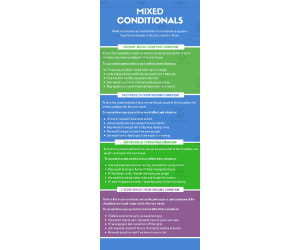
Mixed Conditionals ESL TEFL Upper Intermediate Lesson Plan Worksheet
ELA, Language Development, ESL, Grammar, Vocabulary, Reading, Writing, Resources for Teachers, Adult Education, High School, Middle School, Homeschool Resources, Teacher Tools, Lesson Plans, Worksheets & Printables
This Upper Intermediate ESL TEFL teaching lesson plan on Mixed Conditionals, is tailored to augment grammar skills comprehension and application among upper intermediate level students. Developed by seasoned educators, this plan caters to especially complex areas of language proficiency - mixed conditionals. Inclusion of 30 ready-to-print pages organised into three comprehensive PDFs. Well-structured exercises covering different aspects of mixed conditionals. Flexibly adaptable in various teaching settings - brick-and-mortar classrooms or virtual learning due to easy printability and digital access via Google Apps respectively. Suitable for diverse learners irrespective of grade level requirements – perfect for individual English language study tutoring or direct whole class lessons on mixed conditionals complexities. The ESL lesson plan includes flashcards , a warmer, grammar rules, exercises, role-play, conversation, writing drill, activity, answers and an extra study that would be good to set as homework. There are 30+ pages and there are teachers notes to guide the teacher.
Author TEAM TEFL
Tags Mixed Conditionals, Upper Intermediate, Grammar Skills, Language Arts, Lesson Plan
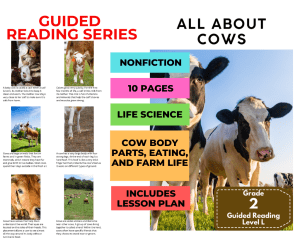
Guided Reading Level L - All About Cows (with Lesson Plan)
ELA, Resources for Teachers, Reading Comprehension, Reading, Science, Language Development, Life Sciences, Animals, Pre-Reading, Vocabulary, Grade 2, 3, 4, Worksheets & Printables, Worksheets, Teacher Tools, Centers, Activities, Literacy Readers, Quizzes, Quizzes and Tests, Assessments, Lesson Plans
This Guided Reading Book - All About Cows (Level L) with lesson plan includes: Guided Reading Color Label (front cover x1) This is a quick way to match the book’s demands to what students can generally handle.. The overall goal is to use the level/color to pick books for several smaller groups. To qualify for a certain level, a student is expected to read a book from that level with about 90–94% accuracy. If a student is consistently accurate and understands, move up a level. If the student is struggling at that level, drop down and add more support. Each student will improve at completely different rates, but it is generally one of the best ways to check progress across the class. DOWNLOAD THE CATALOG TO VIEW ALL GUIDED READING BOOKS AVAILABLE (SORTED LEVELS A-Z) Pre-Reading Question (x1) Teacher asks the prompt aloud, can be while showing the cover or first page. Students share what they already know, or make educated guesses from the cover. Prompt them to use the target vocabulary. Write some of their responses on the board to look back at during the reading. Vocabulary Words (x5) Introduce the five words, best doing it one at a time. Start by saying it, while students repeat and then see if anyone knows what it means before reading further. Read through the meaning and try to briefly connect each word to a picture or gesture so it’s meaningful. Ask students to flip through the book pages and point to where they see each of the vocabulary words. While reading the book pause upon coming across one of the vocab words or read the sentence twice to make sure students understand the word has appeared. Optional: Ask students to raise hands whenever they see/hear one of the new words. Guided Reading Pages (x10) Check the book snapshot (below) for: primary topic - do you need to prep extra reading or intro materials on this? what is taught best - decide on 1-2 bullets to focus on, use the prompt or words provided here for best results. learning goals - what you are checking for students to be able to do after the session, elicit answers using prompts or words provided. key vocabulary (see section above). questions overview - so you know what is coming up and if you need to prep extra materials to assist understanding. Run the lesson You may have already looked at a few of the pages together, but you can show them some of the pictures again first to set meaning. Depending on how much time you have and how familiar your students are with guided reading class, you may want to read the book aloud first with the group first. Students whisper or partner read, while you listen in. If time, do it as a group, one student reading a page each. Use the guided page’s prompts to coach: “Check the picture / does it make sense?” “Point under the words / try the first sound” “Reread the sentence smoothly”. Try to focus more on one student per session (rotating every time), so you can work out if they are ready to move up or need to move down a level. Comprehension Questions (back cover x3) This is your way to check that students didn’t just say the words, but actually understood the text. First, let students answer by pointing to the page/picture and saying a short sentence. After any answer, follow with: “Show me where you found that in the text.” In bigger groups, have partners answer first (10–20 seconds), then call on 2–3 students to share. Differentiation tips: Emerging speakers/struggling readers: oral + pointing On-level: oral in a full sentence Higher: one written sentence or draw + label Book Snapshot Title: All About Cows Genre: Nonfiction (informational) Subject: Life Science + Reading (Informational Text) Primary Topic: Cow body parts, eating, and farm life Estimated Guided Reading Level (A–Z): L What This Book Teaches Best Explains what cows are (large farm animals; mammals that have fur and give birth to live babies). Teaches how cow body parts help them (strong legs, hard hooves that protect feet; eyes placed on the sides for wide view). Describes what cows eat and how they eat plants (herbivores; tongue wraps around grass; plants like grass, hay, clover). Introduces a key digestion process (food goes to a large stomach; cows bring food back up to chew again—“chewing cud”). Builds understanding of cow family and social life (calf care; calves drink milk with vitamins and minerals; cows live in herds and have “friends”). Learning Goals Students will describe what the book says cows are and where they live. Students will explain how a cow’s hoof helps protect its feet while it walks. Students will identify what cows eat and describe how a cow uses its tongue to pull in grass. Students will explain what “chewing cud” means using the book’s description of digestion. Students will describe how calves are cared for and what the text says about calf milk. Students will describe how cows live together in a herd and how they rest. Key Vocabulary From the Text mammals — animals with fur that give birth to live babies. hoof — hard covering that protects a cow’s foot. herbivores — animals that eat only plants. digesting — breaking down food inside the body. herd — a group of cows living together. Discussion Prompts Pre-reading question: What do you already know about cows living on farms? Comprehension questions: How does the book describe a cow’s hoof and what it does? Comprehension questions: What happens to grass after a cow swallows it, and what is “chewing cud”? Comprehension questions: Why can a cow see almost all the way around its body without turning its head? Printing Tips 1. Best Printing Method (Recommended) “Booklet” Printing (Best if Available) If your printer or PDF viewer supports Booklet Printing , use this. Settings to use: Print mode: Booklet Paper size: Letter or A4 (either works) Orientation: Landscape Print on both sides: Yes Flip on: Short edge Scaling: Fit to printable area Booklet subset: First test: Front sides only Then: Back sides only This will automatically: Pair pages correctly Put the cover on the outside Align everything for folding After printing, fold in half and staple along the spine . 2. If “Booklet” Printing Is NOT Available You can still print this correctly with manual duplex printing . Step-by-step: Open the PDF. Choose Print . Set: Orientation: Landscape Pages per sheet: 1 Print on both sides: Yes Flip on: Short edge Print all pages . Because each PDF page already contains two facing book pages, the result will still fold cleanly into a book. Thousands of Cored Education products are included with your TeachSimple membership. Download links and encyclopedia index available here.
Author Cored Education
Rating
Tags Reading Comprehension, Reading Passages, Reading, Guided Reading, Guided Reading Lesson Plan, Guided Reading Activity, Pre-reading, Science Lesson Plans, Life Science, Animals
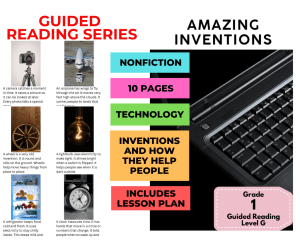
Guided Reading Level G - Amazing Inventions (with Lesson Plan)
ELA, Resources for Teachers, Reading Comprehension, Reading, Science, Engineering, Technology, Language Development, Pre-Reading, Vocabulary, Grade 1, 2, 3, Worksheets & Printables, Worksheets, Teacher Tools, Centers, Activities, Literacy Readers, Quizzes, Quizzes and Tests, Assessments, Lesson Plans
This Guided Reading Book - Amazing Inventions (Level G) with lesson plan includes: Guided Reading Color Label (front cover x1) This is a quick way to match the book’s demands to what students can generally handle.. The overall goal is to use the level/color to pick books for several smaller groups. To qualify for a certain level, a student is expected to read a book from that level with about 90–94% accuracy. If a student is consistently accurate and understands, move up a level. If the student is struggling at that level, drop down and add more support. Each student will improve at completely different rates, but it is generally one of the best ways to check progress across the class. DOWNLOAD THE CATALOG TO VIEW ALL GUIDED READING BOOKS AVAILABLE (SORTED LEVELS A-Z) Pre-Reading Question (x1) Teacher asks the prompt aloud, can be while showing the cover or first page. Students share what they already know, or make educated guesses from the cover. Prompt them to use the target vocabulary. Write some of their responses on the board to look back at during the reading. Vocabulary Words (x5) Introduce the five words, best doing it one at a time. Start by saying it, while students repeat and then see if anyone knows what it means before reading further. Read through the meaning and try to briefly connect each word to a picture or gesture so it’s meaningful. Ask students to flip through the book pages and point to where they see each of the vocabulary words. While reading the book pause upon coming across one of the vocab words or read the sentence twice to make sure students understand the word has appeared. Optional: Ask students to raise hands whenever they see/hear one of the new words. Guided Reading Pages (x10) Check the book snapshot (below) for: primary topic - do you need to prep extra reading or intro materials on this? what is taught best - decide on 1-2 bullets to focus on, use the prompt or words provided here for best results. learning goals - what you are checking for students to be able to do after the session, elicit answers using prompts or words provided. key vocabulary (see section above). questions overview - so you know what is coming up and if you need to prep extra materials to assist understanding. Run the lesson You may have already looked at a few of the pages together, but you can show them some of the pictures again first to set meaning. Depending on how much time you have and how familiar your students are with guided reading class, you may want to read the book aloud first with the group first. Students whisper or partner read, while you listen in. If time, do it as a group, one student reading a page each. Use the guided page’s prompts to coach: “Check the picture / does it make sense?” “Point under the words / try the first sound” “Reread the sentence smoothly”. Try to focus more on one student per session (rotating every time), so you can work out if they are ready to move up or need to move down a level. Comprehension Questions (back cover x3) This is your way to check that students didn’t just say the words, but actually understood the text. First, let students answer by pointing to the page/picture and saying a short sentence. After any answer, follow with: “Show me where you found that in the text.” In bigger groups, have partners answer first (10–20 seconds), then call on 2–3 students to share. Differentiation tips: Emerging speakers/struggling readers: oral + pointing On-level: oral in a full sentence Higher: one written sentence or draw + label Book Snapshot Title: Amazing Inventions Genre: Nonfiction (informational text) Subject: Science/Technology + Reading (Informational Text) Primary Topic: Inventions and how they help people Estimated Guided Reading Level (A–Z): G What This Book Teaches Best Introduces common inventions (wheel, lightbulb, telephone, computer, camera, airplane, refrigerator, clock, robot) and what each one does. Explains how inventions help people in everyday life (moving heavy things, seeing in the dark, connecting over distances, doing work quickly, keeping food cold, telling time, doing chores). Builds understanding of technology as something that changes, with “new things… invented every day to help people.” Supports describing key details from short informational passages paired with clear photos. Learning Goals Identify several inventions named in the book and tell what each helps people do. Describe how a wheel helps move heavy things from place to place. Explain how a lightbulb helps people see when it is dark outside. Tell how a telephone connects people who are far apart. Describe one way computers help people work quickly and what they can do. Explain what the book says about technology changing and new inventions helping people. Key Vocabulary From the Text invention — something made for the first time to help people. electricity — power that runs lights and machines. distances — how far apart places are. refrigerator — a machine that keeps food cold. sensors — parts that help a machine notice what is around it. Discussion Prompts Pre-reading question: What inventions do you use, and how do they help you? Comprehension questions: How do wheels help move heavy things from place to place? Comprehension questions: What does a lightbulb help people do when it is dark outside? Comprehension questions: What does the book say about new technology and how it helps people? Printing Tips 1. Best Printing Method (Recommended) “Booklet” Printing (Best if Available) If your printer or PDF viewer supports Booklet Printing , use this. Settings to use: Print mode: Booklet Paper size: Letter or A4 (either works) Orientation: Landscape Print on both sides: Yes Flip on: Short edge Scaling: Fit to printable area Booklet subset: First test: Front sides only Then: Back sides only This will automatically: Pair pages correctly Put the cover on the outside Align everything for folding After printing, fold in half and staple along the spine . 2. If “Booklet” Printing Is NOT Available You can still print this correctly with manual duplex printing . Step-by-step: Open the PDF. Choose Print . Set: Orientation: Landscape Pages per sheet: 1 Print on both sides: Yes Flip on: Short edge Print all pages . Because each PDF page already contains two facing book pages, the result will still fold cleanly into a book. Thousands of Cored Education products are included with your TeachSimple membership. Download links and encyclopedia index available here.
Author Cored Education
Rating
Tags Reading Comprehension, Reading Passages, Reading, Guided Reading, Guided Reading Lesson Plan, Guided Reading Activity, Pre-reading, Science Lesson Plans, Technology, Engineering

Defining Words Supplementary Materials Grades 3-4 (PDF)
ELA, Language Development, ESL, Common Core, Resources for Teachers, Vocabulary, Grade 3, 4, Worksheets & Printables, Worksheets, Quizzes and Tests, Teacher Tools, Tests, Assessments, Lesson Plans, Activities
Defining Words Supplementary Materials Note: This download DOES NOT include the tests themselves. You can still make use of these materials without them but they are recommended. Download in a format of your choice in the "Links" section below. Outline Ice Breaker (5-10 minutes) Engaging, interactive activity to introduce the lesson’s theme. Examples: Matching games, sentence races, charades, or storytelling challenges. Guided Practice (10-15 minutes) Teacher-led exercises to reinforce the concept. Examples: Sorting sentences by tense, sentence transformations, or fill-in-the-gap exercises. Group or Partner Task (15 minutes) Collaborative activity to practice the lesson’s focus in a fun and engaging way. Examples: Role-play, storytelling, sentence-building games, or small-group discussions. Independent Worksheet (15 minutes) Individual written activity to solidify understanding. Examples: Sentence corrections, verb conjugation drills, or tense identification exercises. Exit Task (5 minutes) Quick reflective activity to assess understanding before students leave. Examples: Writing a sentence using the target concept, identifying a tense, or explaining a rule. Links: Includes: Includes: Match Words to Definition Match Definition to Words Accurately Define Meanings Defining Word Practice Google Docs Google Forms Google Slides PDF PPT Word FULL CATALOG OF DOWNLOAD LINKS HERE Grade 3/4 Links: Adjectives Google Docs Google Forms Google Slides PDF PPT Word Free Supplementary Materials Pack Adverbs Google Docs Google Forms Google Slides PDF PPT Word Free Supplementary Materials Pack Conjunctions Google Docs Google Forms Google Slides PDF PPT Word Free Supplementary Materials Pack Nouns Google Docs Google Forms Google Slides PDF PPT Word Free Supplementary Materials Pack Pronouns Google Docs Google Forms Google Slides PDF PPT Word Free Supplementary Materials Pack Verbs Google Docs Google Forms Google Slides PDF PPT Word Free Supplementary Materials Pack Sentence Structure Google Docs Google Forms Google Slides PDF PPT Word Free Supplementary Materials Pack Present Tense Google Docs Google Forms Google Slides PDF PPT Word Free Supplementary Materials Pack Past Tense Google Docs Google Forms Google Slides PDF PPT Word Free Supplementary Materials Pack Future Tense Google Docs Google Forms Google Slides PDF PPT Word Free Supplementary Materials Pack Context Clues Google Docs Google Forms Google Slides PDF PPT Word Free Supplementary Materials Pack Defining Words Google Docs Google Forms Google Slides PDF PPT Word Free Supplementary Materials Pack Fill the Blanks Google Docs Google Forms Google Slides PDF PPT Word Free Supplementary Materials Pack Homophones Google Docs Google Forms Google Slides PDF PPT Word Free Supplementary Materials Pack Synonyms Google Docs Google Forms Google Slides PDF PPT Word Free Supplementary Materials Pack ELA Review Questions Overview Questions have three answer choices. There are a handful of pictures on each test for aesthetic purposes, as well as a review sheet covering most of the topics covered in the product. Introduction or Example Sheet Each topic will include an introduction or example sheet to go through first with your students. Full Answer Keys Full answer keys and sample responses are provided so no matter how busy you are, you know you're covered! In the Supplementary Pack Interactive Ice Breakers: Fun, hands-on activities that get students thinking about adjectives right from the start. Guided Practice: Teacher-led exercises that reinforce the day’s lesson, ensuring students can confidently identify and use adjectives. Group and Partner Tasks: Collaborative activities that allow students to work together to solve problems, categorize adjectives, and create descriptive sentences. Independent Worksheets: Structured worksheets that provide individual practice and help solidify understanding of key concepts. Exit Tasks: Quick, reflective activities at the end of each lesson that assess understanding and encourage students to apply what they’ve learned. For similar downloads and other frees, do check out Cored Group on TeachSimple.
Author Cored Education
Tags Elementary, Answers, Ccss, Common Core, Tests, Test Prep, Grade 3, Grade 4, Vocabulary, Lesson Plan
Unit Study: The Odyssey
ELA, Reading, Reading Comprehension, Literature, Language Development, Vocabulary, Writing, Grade 7, 8, 9, 10, Teacher Tools, Lesson Plans
Unit Study: The Odyssey The Unit Study: The Odyssey resource is a comprehensive teaching guide aimed at creating engaging and multi-modal instruction for Grade 7 through Grade 10 learners. It is precisely crafted to excel in the teaching of Language Arts subjects such as Literature, Vocabulary, Comprehension, and Writing. In-depth Coverage A total of thirty-one pages covers not just study guides but also quizzes, tests, and projects; providing a wide array of material designed to cater to different learning methods. Each aspect within the unit drives towards forming a cohesive whole that gradually builds students' understanding. Richest Aspect - Final Assessment The highlight of "Unit Study: The Odyssey" is its final assessment - it is designed as a take-home exam encouraging independent thinking among students at their own pace. It particularly benefits heuristic-driven learners who could explore multiple intelligence offerings on this examination. Mid-point Examination Key: To facilitate educators during periodic assessments , an answer guide has been provided for the mid-point examination; preserving time usually spent on crafting separate answer sheets. Extra Credit Options Page: This unique offering accommodates struggling students by granting extra credit options due to varied rates and styles that learners possess in assimilating information. "Unit Study: The Odyssey" - A Versatile Tool This tool can easily be utilized for both large group or small group instructions or even homework assignments thanks to its carefully tailored content ranging from step-by-step study guides up until its varied assessment tools, lending itself as an essential asset in supporting varied teaching methods. Digital Compatibility The resource is conveniently digitized into Rich Text Format to ensure easy accessibility without compromising quality content nor convenience - being steadfastly compatible across various devices whether you're planning lessons at home or engaged in a classroom discussion. In Conclusion Unit Study: The Odyssey is an assured way for teachers wishing to retain high engagement levels while also vouchsafing comprehensive understanding assistance towards each student's personal 'Odyssey' towards achieving educational triumph.
Author The Education Lab
Tags Unit Study, The Odyssey, Learning Guide, Comprehension, Writing
Guided Reading Activities and Lesson Plans Nonfiction Set 3 - Mammals
ELA, Reading, Reading Comprehension, Common Core, ESL, Language Development, Pre-Reading, Vocabulary, Resources for Teachers, Grade 4, 5, Worksheets & Printables, Worksheets, Lesson Plans, Teacher Tools, Activities
Guided Reading Activities with Lesson Plans Nonfiction Set 3 Note: This download DOES NOT include the passages themselves. If you have not already done so, download in a format of your choice in the "reading links" section below. Overview The perfect companion materials for Cored Education reading comprehension downloads. This collection provides structured lessons designed to enhance students' reading, comprehension, vocabulary, and creative thinking. Each lesson follows a consistent format that includes pre-reading activities to engage students, vocabulary-building exercises, comprehension checks, creative writing prompts, and discussion topics that promote critical thinking. The lessons are designed to foster active participation, encourage reflection, and develop key literacy skills through interactive and immersive learning experiences. The series is ideal for guided reading sessions, providing teachers with a comprehensive toolkit to engage students in both individual and group activities, enhancing their understanding of text and expanding their language skills. Includes Guided Reading Materials For: 1.Lions 2.Tiger Time 3.All About Horses 4.All About Beavers 5.The Canadian Lynx 6.All About Cheetahs Reading Links: This is the guided reading materials version and DOES NOT include the passages themselves. The passages related to this download are available here in GOOGLE Docs, GOOGLE Forms, GOOGLE Slides. PDF, PPT, WORD. Google Docs Google Forms Google Slides PDF PPT Word Key Features: Engaging Lesson Structure: Each lesson follows a clear and predictable format, which includes pre-reading discussions, vocabulary exercises, reading activities, and creative tasks to maintain student engagement. Vocabulary Development: Focus on introducing and applying new vocabulary in context, helping students internalize new words and use them effectively. Comprehension and Reflection: The lessons include comprehension questions and reflective prompts that encourage students to think critically about the text and its themes. Creative Writing and Discussion: Opportunities for students to express themselves through writing and group discussions, reinforcing their understanding while fostering creativity. Interactive and Student-Centered: The activities are designed to be interactive, allowing students to engage directly with the content and each other, promoting active learning. FULL CATALOG OF DOWNLOAD LINKS HERE Grade 4/5 Links Fiction Set 1 - Animals Google Docs Google Forms Google Slides PDF PPT Word Guided Reading Materials Fiction Set 2 - Family Google Docs Google Forms Google Slides PDF PPT Word Guided Reading Materials Fiction Set 3 - Friends Google Docs Google Forms Google Slides PDF PPT Word Guided Reading Materials Fiction Set 4 - School Google Docs Google Forms Google Slides PDF PPT Word Guided Reading Materials Fiction Set 5 - Sports Google Docs Google Forms Google Slides PDF PPT Word Guided Reading Materials Nonfiction Set 1 - Birds Google Docs Google Forms Google Slides PDF PPT Word Guided Reading Materials Nonfiction Set 2 - Insects Google Docs Google Forms Google Slides PDF PPT Word Guided Reading Materials Nonfiction Set 3 - Mammals Google Docs Google Forms Google Slides PDF PPT Word Guided Reading Materials Nonfiction Set 4 - Nature Google Docs Google Forms Google Slides PDF PPT Word Guided Reading Materials Nonfiction Set 5 - Sea Animals Google Docs Google Forms Google Slides PDF PPT Word Guided Reading Materials Reading Passages Overview Each passage is especially written for Grade 4-5 students, including key vocabulary required for this age group. Topics are varied and are accompanied by colorful graphics. Topics are meant to educate, yet entertain the modern student. These passages are perfect for the modern classroom. Whereas textbooks can become outdated in no time, any changes to technology or the world will result in updates to this product. Mixed Questions The mixed questions section of each lesson includes a variation of five comprehension, vocabulary and math questions. In addition, key reading strategies are frequently covered including cause & effect, summarizing, compare & contrast and making conclusions. Two or three of the questions will be MCQs and other questions will require a written response of some kind. Full answers and example responses appear at the end of the lesson. Spelling & Vocab Each reading passage contains a variety of words and phrases designed for Grade 4-5 students. Spelling and vocab activities provide the opportunity to build fluency with these words. As it can become quite mundane doing the same activities over and over, each lesson in a set will contain a different spelling and vocab activity . Activities include: spelling games, sentence match-ups, mixed-up text and decoding words from the lesson. Writing Prompts Writing prompts are designed to continue the theme or lessons learned in the story. Students are persuaded to write in a variety of ways and each prompt includes several cues to help. As with the spelling/vocab section, writing prompts will vary. This includes research pieces, reading responses, poetry and creative writing prompts. Full Answer Keys Full answer keys and sample responses are provided so no matter how busy you are, you know you're covered! Mixed question answers provide evidence from the text, math questions contain the relevant workings. Answers are designed for use by the teacher, but also suitable as a handout to the student. Just for Fun Each lesson will have a bonus extension exercise. This is something fun to extend the lesson with. You can find these at the end of each lesson, titled Just for Fun. Just for Funs are optional. Some you may like, some you may not. Either way, they are there to do with as you wish. For similar downloads and other frees, do check out Cored Group on TeachSimple.
Author Cored Education
Tags Elementary, Reading, Comprehension, Vocabulary, Answers, Ccss, Guided Reading, Guided Reading Activity, Guided Reading Lesson Plans, Guided Reading Lesson Plan

WH- QUESTION CARDS | WHY | LANGUAGE AND REASONING
Special Resources, ELA, Social Emotional Learning (SEL), Special Education Needs (SEN), Social Skills, Speech Therapy, Language Development, Pre-Reading, ESL, Grammar, Vocabulary, Writing, Kindergarten, Preschool, Grade 1, Teacher Tools, Lesson Plans, Worksheets & Printables, Flashcards, Activities
30 PAGES OF "WHY / BECAUSE" CARDS ( 12cm x 12cm ) . EACH PAGE HAS A PAIR OF COLOR PHOTOS ( total of 60 ) WITH ORANGE AND YELLOW FRAME, ACCORDINGLY . FOR REASONING, LANGUAGE AND COMMUNICATION SKILLS DEVELOPING PRACTICE. The 30 picture pairs are: # laugh - clown # cry - hurt hand # be tired - running # be cold - snow # sweat - sun # eat - hungry # hold umbrella - rain # wear sunscreen - beach # sleep - sleepy / tired # be scared - thunder # do homework - teacher # take pills - be sick # shout - football foul # fall down - slip on banana # apply salve - bee sting # give present - birthday # brush teeth - food # hang clothes - laundry # towel dry - take bath # pay - bill # take temperature - feel feverish # take picture - sightseeing # water - dry soil # change tire - nail # wash car - muddy car # visit dentist - toothache # sew button - single button # mop - wine spill # vacuum - dirty stairs # chop fruits - baby food * No written words included. You can use for: - vocabulary teaching ( according to what we see in the picture or think about it ) - conversation prompts ( inspired by the pictures ) - reasoning ( you can also create "fun and irrational scenarios" ) - narrating ( creating social scenarios ) - writing, as visual prompts ( either sentences or small / longer texts ) - fun ! ! ! This can function as a "go to" material for your speech and language, ocuppational and sped therapy sessions or your classroom teaching . Great for no print screen viewing, as well . 30 - page PDF of cards for language reasoning .
Author WORDS ASIDE
Tags Wh-questions, Language, Reasoning, Critical Thinking, Cause And Effect, Cards, Writing, Visual Prompts, Communication, Words Aside
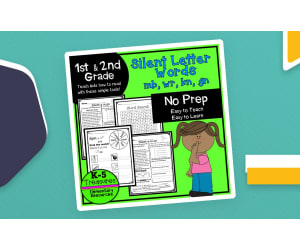
Silent Letters Phonics – MB, WR, KN, GN Set
ELA, Phonics, Language Development, Vocabulary, Grammar, Grade 1, 2, Worksheets & Printables, Literacy Readers, Teacher Tools, Lesson Plans
With this Phonics / Silent Letters for 1st and 2nd Grade: MB, WR, KN, and GN your students will be able to identify the silent letter words and become better readers as they practice each sound and learn the words that are associated with these sounds. Each worksheet as many activities for the following silent letters: WR, GN, MB, and KN silent letter sounds. This unit is perfect for whole group, individual work, centers, or homework to complete on their own. These fun and engaging activities will help your student match, read, write, and identify the silent sounds in words. With so much practice, students will be able to master these sounds and become better readers. Also included are short reading passages where they will then answer comprehension questions on what they read. All tools helpful to young readers and engaging at the same time. For each sound in this unit, students will: Start with reading a short and easy passage and identify the silent letter words and highlight or color those words. They will also identify at least five words from the reading passage with the silent letter sound. Included are comprehension questions about the passage that each student will answer. Students will also fill in the missing word in a sentence from a word bank that highlights the silent letter sound. On another worksheet, students will complete a cut, sort, and matching activity with the silent letter words and glue them to the correct picture. With a paperclip, students will spin the silent letter word and match it to the correct picture. Lastly, they will complete a word search for the silent letter sounds. It is 27 pages of fun, engaging activities that your students are sure to enjoy! For more phonics and grammar activities, click on the following links below:
Author K-5 Treasures
Rating
Tags Phonics, Silent Letters, 1st Grade Resources, 2nd Grade Resources, Gn Words, Mb Words, Kn Words, Wr Words, Reading Resources, Phonics Worksheets

Guided Reading Activities with Lesson Plans: Fiction Set 3 - Food
ELA, Reading, Reading Comprehension, Common Core, ESL, Language Development, Pre-Reading, Vocabulary, Resources for Teachers, Grade 2, 3, Worksheets & Printables, Worksheets, Teacher Tools, Lesson Plans
Guided Reading Activities with Lesson Plans Fiction Set 3 Note: This download DOES NOT include the passages themselves. If you have not already done so, download in a format of your choice in the "reading links" section below. Overview The perfect companion materials for Cored Education reading comprehension downloads. This collection of guided reading lessons includes a wide array of engaging themes that aim to foster comprehension, vocabulary development, and creative thinking. Each lesson is crafted to be interactive and immersive, making learning enjoyable while promoting essential literacy skills. The lessons are designed for students to actively engage with both the material and the world around them, creating connections to their personal experiences while developing key skills. Includes Guided Reading Materials For: 1.Happy Birthday 2.Sophie's Own Garden 3.Lunchtime 4.Cindy's Tea Party 5.My Saturdays 6.Friday Night Pizza Reading Links: This is the guided reading materials version and DOES NOT include the passages themselves. The passages related to this download are available here in GOOGLE Docs, GOOGLE Forms, GOOGLE Slides. PDF, PPT, WORD. Google Docs Google Forms Google Slides PDF PPT Word Grade 2/3 Links Details Pre-reading Discussions Each lesson begins with pre-reading questions that help activate prior knowledge and engage students in the theme of the lesson. This allows students to make personal connections with the content before diving into the reading material. Vocabulary Development Every lesson includes vocabulary exploration that introduces key terms students will encounter in the reading. These words are essential for understanding the passage, and activities encourage students to apply the new vocabulary in context. Comprehension Check After the reading, the lessons provide comprehension questions (typically multiple-choice) that assess students’ understanding of the story. These questions help students reflect on key events, characters, and concepts within the text, reinforcing their comprehension. Creative Writing Prompts To foster creativity, the lessons include writing activities that challenge students to apply what they've learned in imaginative ways. These prompts allow students to practice creative expression while reinforcing the lesson’s theme. Discussion Topics Each lesson ends with wrap-up discussion questions that encourage students to think critically and engage in group conversations. These discussions can enhance social learning and deepen understanding by connecting the lesson's content to broader real-world applications. Theme-Based Learning The themes (e.g., winter, nature walks, photography, flowers) are universally appealing and offer opportunities for cross-curricular connections with science, art, and environmental studies. This makes the lessons versatile for a wide range of teaching contexts. Student-Centered Approach The activities are designed to be interactive and student-driven, allowing them to explore the content through discussions, hands-on vocabulary practice, and personal reflections. This promotes active learning and keeps students engaged. FULL CATALOG OF DOWNLOAD LINKS HERE Grade 2/3 Links Fiction Set 1 - Nature Google Docs Google Forms Google Slides PDF PPT Word Guided Reading Materials Fiction Set 2 - Animals Google Docs Google Forms Google Slides PDF PPT Word Guided Reading Materials Fiction Set 3 - Food Google Docs Google Forms Google Slides PDF PPT Word Guided Reading Materials Fiction Set 4 - School Google Docs Google Forms Google Slides PDF PPT Word Guided Reading Materials Fiction Set 5 - Friends Google Docs Google Forms Google Slides PDF PPT Word Guided Reading Materials Fiction Set 6 - Family Google Docs Google Forms Google Slides PDF PPT Word Guided Reading Materials Fiction Set 7 - Sports Google Docs Google Forms Google Slides PDF PPT Word Guided Reading Materials Nonfiction Set 1 - Technology Google Docs Google Forms Google Slides PDF PPT Word Guided Reading Materials Nonfiction Set 2 - Nutrition Google Docs Google Forms Google Slides PDF PPT Word Guided Reading Materials Nonfiction Set 3 - Animals Google Docs Google Forms Google Slides PDF PPT Word Guided Reading Materials Reading Passages Overview Each passage is especially written for Grade 2-3 students, including key vocabulary required for this age group. Topics are varied and are accompanied by colorful graphics. Topics are meant to educate, yet entertain the modern student. These passages are perfect for the modern classroom. Whereas textbooks can become outdated in no time, any changes to technology or the world will result in updates to this product. Mixed Questions The mixed questions section of each lesson includes a variation of fivecomprehension, vocabulary and math questions. In addition, key reading strategies are frequently covered including cause & effect, summarizing, compare & contrast and making conclusions. Three of the questions will be MCQs and two will require a written response of some kind. Full answers and example responses appear at the end of the lesson. Spelling & Vocab Each reading passage contains a variety of words and phrases designed for Grade 2-3 students. Spelling and vocab activities provide the opportunity to build fluency with these words. As it can become quite mundane doing the same activities over and over, each lesson in a set will contain a different spelling and vocab activity . Writing Prompts Writing prompts are designed to continue the theme or lessons learned in the story. Students are persuaded to write in a variety of ways and each prompt includes several cues to help. As with the spelling/vocab section, writing prompts will vary. This includes research pieces, reading responses, poetry and creative writing prompts. Full Answer Keys Full answer keys and sample responses are provided so no matter how busy you are, you know you're covered! Mixed question answers provide evidence from the text, math questions contain the relevant workings. Answers are designed for use by the teacher, but also suitable as a handout to the student. Additional File One lesson will have an additional file. This is something fun to extend the lesson with. For similar downloads and other frees, do check out Cored Group on TeachSimple.
Author Cored Education
Tags Elementary, Reading, Comprehension, Vocabulary, Answers, Ccss, Guided Reading, Guided Reading Activity, Guided Reading Lesson Plans, Guided Reading Lesson Plan
Vocabulary Packet -Journey's 5th grade - Unit 1 Lesson 4
ELA, Language Development, Vocabulary, Grade 5, Lesson Plans, Teacher Tools
This vocabulary resource was created to be used with 5th grade Journey's reading program. Vocabulary is listed as a glossary, included with pronunciation. Plenty of activities ready to go for students to master the vocabulary included!
Author Jessica Richmond
Tags Vocabulary Practice, Journey's Vocabulary, 5th Grade Vocabulary, Double Dutch, Unit 1, Lesson 4, Vocabulary Packet

Warriors in Winter (Magic Tree House #31 Lesson Plan, Videos, Activities)
ELA, Social Studies, Reading, Reading Comprehension, Grammar, Literature, Language Development, Spelling, Vocabulary, Writing, Geography, Grade 1, 2, 3, Lesson Plans, Teacher Tools
Product Title: Warriors in Winter (Magic Tree House #31 Lesson Plan, Videos, Activities) This comprehensive, five-day novel study of the Magic Tree House book 'Warriors in Winter' provides plentiful resources to foster students' love for literature. A No PREP book companion , it offers a wealth of materials that can be tailored to the needs and abilities of individual students. Key Features: 5-Day Lesson Plan: Organised daily plan with detailed activities including comprehension questions and vocabulary practice. Versatile Activities: Engaging pre-reading, during reading and post-reading activities involving drawing/coloring/crafts related to various curriculum areas. Social Studies Context: The creative use of mapping exercises linking directly with the novel’s plotline enhances research skills and geographical understanding. Diverse Notebook Pieces: Six unique interactive notebook options that work alongside the main reading experience allowing children to explore adventures creatively. KWL Charts : In-depth analysis charts noting what do they already Know(K), what do they Wish(W) to learn more about as well as discuss what has been Learnt(L). The Pack Also Includes: In addition, learners are challenged through engaging character analysis exercises while reinforcing their understanding with writing craftivity built into reading sessions. The pack is created primarily for grades 1 -3 covering language arts and social studies but can be easily customized per student’s age group or skill level. Teachers have full control over how they want to utilize this resource strengthening both teaching effectiveness and student learning outcome! Ranging from guiding a whole group, managing small discussions or assigning homework; this flexible, 112-page PDF companion enhances teaching convenience and student learning process. Transform your classroom into the enchanting world of Jack and Annie with 'Warriors in Winter (Magic Tree House #31 Lesson Plan, Videos, Activities)'.
Author Heather Huhman
Tags Novel Study, Comprehension Questions, Vocabulary Practice, Interactive Notebook, Character Analysis
Planting Curriculum Pack
Creative Arts, Art, Social Studies, ELA, Math, Addition and Subtraction, Addition, Reading, Writing, Handwriting, Language Development, Vocabulary, Science, Life Sciences, Nature & Plants, Kindergarten, Lesson Plans, Teacher Tools
If your students are studying nature or are about to begin a planting unit, I have just the resource to provide you with everything you need and more! This is a Planting Curriculum Pack complete with an abundance of printable resources and engaging activities for students to complete. This curriculum was designed for your preschool students. The curriculum goal is to introduce an awareness of the life cycle of plants and build upon the children’s current knowledgebase related to gardening through a variety of hands-on experiences. The vocabulary that students will focus on is spring, row, buds, planting, petals, root, annuals, sprout, seeds, bulbs, greenhouse, garden, soil, stem, perennials, and weed. This curriculum will come with a letter of the week (G) and color of the week (green). This curriculum pack includes: --Sensory Table Ideas --Art Activities --Cooking Experience --Community Time --Math Activities --Home/School Connection Ideas --Science Table Enrichments --Science Concepts/Activities --Prop Box Ideas/Dramatic Play Enrichments --Movement and Motor --Playground/Walk Activities --Transition/Waiting Ideas --Block Area Enrichments --Flannel Board --Teacher Made Enrichment Ideas --Field Trip Ideas --Supplemental Learning Ideas/Activities At the start of this pack, you will receive a list of supplies needed for activities and projects. The worksheets, activities, and tasks included in this pack are intended to be completed in a variety of formats – whole group, small group, and independent work. I hope you enjoy! You can find more resources at my storefront here: https://teachsimple.com/contributor/learning-foundations Here are other similar resources for you to enjoy: https://teachsimple.com/product/gingerbread-man-curriculum-pack https://teachsimple.com/product/jungle-love-curriculum-pack https://teachsimple.com/product/friendship-curriculum-pack https://teachsimple.com/product/kings-queens-and-dragons-curriculum-pack https://teachsimple.com/product/fire-safety-curriculum-pack
Author Learning Foundations
Tags Planting, Gardening, Botany, Science Vocabulary, Plant Life Cycle, Color Of The Week, Letter Of The Week, Seasons, Art Activities

Guided Reading Activities and Lesson Plans Fiction Set 5 - Sports
ELA, Reading, Reading Comprehension, Common Core, ESL, Language Development, Pre-Reading, Vocabulary, Resources for Teachers, Grade 4, 5, Worksheets & Printables, Worksheets, Lesson Plans, Teacher Tools
Guided Reading Activities with Lesson Plans Fiction Set 5 Note: This download DOES NOT include the passages themselves. If you have not already done so, download in a format of your choice in the "reading links" section below. Overview The perfect companion materials for Cored Education reading comprehension downloads. This collection provides structured lessons designed to enhance students' reading, comprehension, vocabulary, and creative thinking. Each lesson follows a consistent format that includes pre-reading activities to engage students, vocabulary-building exercises, comprehension checks, creative writing prompts, and discussion topics that promote critical thinking. The lessons are designed to foster active participation, encourage reflection, and develop key literacy skills through interactive and immersive learning experiences. The series is ideal for guided reading sessions, providing teachers with a comprehensive toolkit to engage students in both individual and group activities, enhancing their understanding of text and expanding their language skills. Includes Guided Reading Materials For: 1.Olympics 2.Tryouts 3.Big Brienne 4.A Skate on the Lake 5.Baseball Boy 6.Running Reading Links: This is the guided reading materials version and DOES NOT include the passages themselves. The passages related to this download are available here in GOOGLE Docs, GOOGLE Forms, GOOGLE Slides. PDF, PPT, WORD. Google Docs Google Forms Google Slides PDF PPT Word Key Features: Engaging Lesson Structure: Each lesson follows a clear and predictable format, which includes pre-reading discussions, vocabulary exercises, reading activities, and creative tasks to maintain student engagement. Vocabulary Development: Focus on introducing and applying new vocabulary in context, helping students internalize new words and use them effectively. Comprehension and Reflection: The lessons include comprehension questions and reflective prompts that encourage students to think critically about the text and its themes. Creative Writing and Discussion: Opportunities for students to express themselves through writing and group discussions, reinforcing their understanding while fostering creativity. Interactive and Student-Centered: The activities are designed to be interactive, allowing students to engage directly with the content and each other, promoting active learning. Browse the Complete Cored Catalog — 2,000+ Resources Included Reading Passages Each reading passage has been written specifically for students in Grades 4–5, using vocabulary and language that match their age and ability level. The collection covers a wide range of engaging topics, supported by colorful visuals that help bring the content to life. Every lesson is designed to build knowledge while keeping students interested and motivated to read. These resources are also designed with flexibility in mind. Unlike traditional textbooks that can quickly become outdated, lessons can be updated over time to reflect changes in technology, discoveries, and the world around us. Mixed Questions Every lesson includes a variety of questions that help students think more deeply about what they have read. The question section combines reading comprehension, vocabulary, and math skills, while also regularly reinforcing important reading strategies such as cause and effect, summarizing, compare and contrast, and drawing conclusions. Most lessons include a mix of multiple-choice and written-response questions, giving students opportunities to explain their thinking as well as select answers. Complete answer keys and sample responses are provided at the end of each lesson for quick and easy reference. Spelling & Vocabulary Each passage introduces students to useful words and phrases appropriate for Grades 4–5. To help build confidence and word knowledge, every lesson includes a spelling or vocabulary activity. Rather than repeating the same task throughout the collection, activities vary from lesson to lesson to keep practice fresh and engaging. Activities may include spelling challenges, sentence matching, decoding activities, mixed-up text exercises, and other vocabulary-building tasks connected directly to the reading. Writing Prompts Each lesson includes a writing activity that extends the ideas, themes, or topics explored in the passage. Students are encouraged to write in a variety of formats, with prompts providing helpful guidance and ideas to get them started. Writing tasks vary throughout the collection and may include creative writing, research activities, personal responses, poetry, opinion writing, and other engaging assignments. Full Answer Keys Complete answer keys and sample responses are included with every lesson, making planning and marking quicker and easier. Reading comprehension answers include evidence and support from the text, while math-based questions show the relevant working where appropriate. The answer keys are designed primarily for teachers but can also be shared with students when needed. Just for Fun Each lesson finishes with an optional extension activity called Just for Fun . These bonus activities provide an enjoyable way to extend learning beyond the main lesson and often encourage creativity, discussion, or independent thinking. They are completely optional, giving you the flexibility to use the activities that best suit your students and classroom needs. For similar downloads and other frees, do check out Cored Group on TeachSimple.
Author Cored Education
Rating
Tags Elementary, Reading, Comprehension, Vocabulary, Answers, Common Core, Guided Reading, Guided Reading Activity, Guided Reading Lesson Plans, Guided Reading Lesson Plan

Fill in the Blanks Supplementary Materials Grades 3-4 (PDF)
ELA, Language Development, ESL, Common Core, Resources for Teachers, Vocabulary, Grade 3, 4, Worksheets & Printables, Worksheets, Quizzes and Tests, Teacher Tools, Tests, Assessments, Activities, Lesson Plans
Fill in the Blanks Supplementary Materials Note: This download DOES NOT include the tests themselves. You can still make use of these materials without them but they are recommended. Download in a format of your choice in the "Links" section below. Outline Ice Breaker (5-10 minutes) Engaging, interactive activity to introduce the lesson’s theme. Examples: Matching games, sentence races, charades, or storytelling challenges. Guided Practice (10-15 minutes) Teacher-led exercises to reinforce the concept. Examples: Sorting sentences by tense, sentence transformations, or fill-in-the-gap exercises. Group or Partner Task (15 minutes) Collaborative activity to practice the lesson’s focus in a fun and engaging way. Examples: Role-play, storytelling, sentence-building games, or small-group discussions. Independent Worksheet (15 minutes) Individual written activity to solidify understanding. Examples: Sentence corrections, verb conjugation drills, or tense identification exercises. Exit Task (5 minutes) Quick reflective activity to assess understanding before students leave. Examples: Writing a sentence using the target concept, identifying a tense, or explaining a rule. Links: Includes: Adjectives in Sentences Nouns in Sentences Verbs in Sentences Frequently Mistaken Words Google Docs Google Forms Google Slides PDF PPT Word FULL CATALOG OF DOWNLOAD LINKS HERE Grade 3/4 Links: Adjectives Google Docs Google Forms Google Slides PDF PPT Word Free Supplementary Materials Pack Adverbs Google Docs Google Forms Google Slides PDF PPT Word Free Supplementary Materials Pack Conjunctions Google Docs Google Forms Google Slides PDF PPT Word Free Supplementary Materials Pack Nouns Google Docs Google Forms Google Slides PDF PPT Word Free Supplementary Materials Pack Pronouns Google Docs Google Forms Google Slides PDF PPT Word Free Supplementary Materials Pack Verbs Google Docs Google Forms Google Slides PDF PPT Word Free Supplementary Materials Pack Sentence Structure Google Docs Google Forms Google Slides PDF PPT Word Free Supplementary Materials Pack Present Tense Google Docs Google Forms Google Slides PDF PPT Word Free Supplementary Materials Pack Past Tense Google Docs Google Forms Google Slides PDF PPT Word Free Supplementary Materials Pack Future Tense Google Docs Google Forms Google Slides PDF PPT Word Free Supplementary Materials Pack Context Clues Google Docs Google Forms Google Slides PDF PPT Word Free Supplementary Materials Pack Defining Words Google Docs Google Forms Google Slides PDF PPT Word Free Supplementary Materials Pack Fill the Blanks Google Docs Google Forms Google Slides PDF PPT Word Free Supplementary Materials Pack Homophones Google Docs Google Forms Google Slides PDF PPT Word Free Supplementary Materials Pack Synonyms Google Docs Google Forms Google Slides PDF PPT Word Free Supplementary Materials Pack ELA Review Questions Overview Questions have three answer choices. There are a handful of pictures on each test for aesthetic purposes, as well as a review sheet covering most of the topics covered in the product. Introduction or Example Sheet Each topic will include an introduction or example sheet to go through first with your students. Full Answer Keys Full answer keys and sample responses are provided so no matter how busy you are, you know you're covered! In the Supplementary Pack Interactive Ice Breakers: Fun, hands-on activities that get students thinking about adjectives right from the start. Guided Practice: Teacher-led exercises that reinforce the day’s lesson, ensuring students can confidently identify and use adjectives. Group and Partner Tasks: Collaborative activities that allow students to work together to solve problems, categorize adjectives, and create descriptive sentences. Independent Worksheets: Structured worksheets that provide individual practice and help solidify understanding of key concepts. Exit Tasks: Quick, reflective activities at the end of each lesson that assess understanding and encourage students to apply what they’ve learned. For similar downloads and other frees, do check out Cored Group on TeachSimple.
Author Cored Education
Tags Elementary, Answers, Ccss, Common Core, Tests, Test Prep, Grade 3, Grade 4, Vocabulary, Lesson Plan

Word Puzzlers - Grades 3-4
ELA, Language Development, Vocabulary, Grade 3, 4, Teacher Tools, Lesson Plans
Word Puzzlers - Grades 3-4 This teaching resource, Word Puzzlers - Grades 3-4, is a captivating way to enhance the vocabularies of your students while boosting their interest in words and language. Particularly suited for Grade 3 and Grade 4 learners, these word puzzle books provide comprehensive support for Language Arts curriculum. The resource consists of a single PDF file allowing seamless integration into lesson plans. It draws its appeal from compelling content as well as ease of access, thus minimizing supervision demands on educators. Veteran classroom teachers or homeschooling parents will value this resource for its myriad applications, from whole group instruction to small cooperative learning groups or even individual assignments. Targeted skill areas include reasoning skills sharpening, vocabulary stimulation and spelling skill reinforcement. A standout feature is the blend of diverse puzzle styles included in this product. Codes, mazes, riddles, rhymes, rebuses along with classic favorites like word searches and crossword puzzles challenge students' thinking abilities while maintaining their engagement levels high. Matching activities compliment core curricular material beautifully. Note: Subject matter spanning across various disciplines makes it applicable to a range of lessons providing extended curriculum material without making learning seem monotonous. To Summarize: Word Puzzlers - Grades 3-4 presents an innovative-yet-challenging methodology that aligns with scholastic development goals aimed at developing an avid interest in words along with advancing language skills among grade 3 and grade 4 learners specifically. Every activity is built keeping primary school language art criteria intact which naturally liaise with broader vocabulary enrichment contributing significantly towards all-round language competency building effectively.
Author Classroom Complete Press
Tags PDF

Whales Reading Comprehension Passage - Cored Ed Encyclopedia
ELA, Language Development, Reading Comprehension, Reading, Pre-Reading, Science, Animals, Life Sciences, Vocabulary, Writing, Grade 2, 3, 4, 5, Worksheets & Printables, Worksheets, Teacher Tools, Centers, Activities, Writing Prompts, Assessments, Quizzes and Tests, Quizzes, Lesson Plans
This whales reading comprehension with lesson plan includes: Visualization (on the front cover) Start your lesson by taking a minute to think and share something about the topic. Read the script aloud (slowly), perhaps prepare some music or sound effects. Student close their eyes and let their imaginations wander. Students open their eyes, read the question aloud and give them a few minutes to complete. Ask a few students to share or keep answers until the end to compare with what they learn in the passage. Quick pause—thousands of Cored Education products are included with your TeachSimple membership. Download links and encyclopedia index available here. Pre-Reading Trivia Students will write down one thing they already know about the subject and then read five more facts and discuss. These facts are fun, and the students will enjoy learning about the subject before reading more. Give 1 minute for students to write what they already know (no pressure—best guess is fine). Read the five facts together. After each fact, do ask a student for their opinion, was it surprising? Set a purpose by asking students to highlight/underline one fact they want to learn more about during the reading. Reading Passage The text is a high-interest reading passage with set paragraphs, roughly three to four paragraphs long. It contains a variety of themes about the topic, anywhere from history to technology. The passage is between 250 and 350 words in length. First, ask students to look at the headings and see what they’ll learn about today. What do they know about the topic/heading? First read options: Teacher read-aloud (best for support). Partner reading (paragraph by paragraph). While reading, students underline important details, and vocabulary words they think may come up in the questions section. Mixed Questions The first question page contains four multiple-choice questions, each with a choice of four answers, and three written response questions that require a sentence or two from the student. Students complete the mcqs first independently, then review quickly as a class. For the 3 written responses, try to get students giving the answer with some form of evidence: “I think ___ because the text says ___.” If students get stuck, send them back to check the passage. Vocabulary Questions Practice seven key words from the text in this section across two activities. First section is scrambled words where students will unscramble three words given a clue for each. The second section is a word to meaning matching activity. Before starting, have some students read out words they underlined in the passage. Ask students to say the word and read aloud the sentence(s) around each word. Ask students to do scrambled words and the matching exercise in pairs then go through answers as a class. For the scrambled spelling task, get four pairs to come up to the board and write the words for extra practice with the other student reading out the clue. For the matching task, prompt students to give full sentences: “I matched ___ with ___ because ___.” Creative Writing In this question, the student will be required to write a five to eight sentence paragraph on a question related to the topic. Before starting, ask students write down 3 key ideas they are going to include in their piece. Ask students for ideas to share around the class to help those struggling. Pro writing expectations: 5–8 sentences At least 2 facts or details from the passage At least 2 vocabulary words from the previous page Students read their paragraphs while classmates listen for facts and vocabulary words. Extension Activities This page is optional for fast finishers or to take home. There are several activities, each one requiring a different skill. Do some, do none, do all, completely optional - but you will feel reassured knowing every possibility is planned for. Includes summary writting question. Answer Key There are answers for the multiple-choice questions, written response questions have sample answers, vocabulary answers and if there is a summary question then a sample summary will be provided as well. Lesson Plan Included Customized lesson plan for this lesson is included. Lesson Snapshot Title: Whales Genre: Nonfiction (informational text) Subject: Life Science / Informational Reading Primary Topic: Whales as mammals, feeding types, fossils, human impacts Estimated Guided Reading Level (A–Z): Q What This Lesson Teaches Best Whales are mammals that breathe air with lungs through blowholes , so they must surface as part of everyday life. Whales can have two different feeding tools : baleen plates that strain food like krill, or sharp teeth used to grab fish or squid. Fossils provide evidence that early whale relatives were land mammals and changed over millions of years to live in the ocean. Human activity affects whales today (fishing gear tangles, ships strike, and loud noise can fill the water where whales communicate), and scientists use tracking tools to help protect them. Learning Goals Students will explain why whales rise to the surface using details about breathing and blowholes. Students will compare how baleen whales and toothed whales get food, using evidence from the text. Students will describe what fossils show about where whales came from long ago. Students will identify one modern problem that can make whale communication harder, based on the passage. Students will describe at least one way scientists track whales to protect them, using details from the text. Key Vocabulary From the Text blowholes — nostrils on top of a whale’s head. baleen — mouth plates that strain tiny food from water. krill — tiny sea creatures baleen whales hold onto. streamlined — shaped to move smoothly through water. fossils — old remains in rock that give clues. FULL CATALOG OF DOWNLOAD LINKS AND ENCYCLOPEDIA INDEX HERE
Author Cored Education
Rating
Tags Vocabulary, Reading Comprehension, Reading Passages, Lesson Plans, Ela Lesson Plans, Reading Comprehension Lesson Plans, Pre-reading, Science Lesson Plans, Life Science, Animals