



3,931 products added recently
Page 90 - Science Lesson Plans
Bring science to life with lesson plans that cover biology, chemistry, physics, and more. These resources offer experiments and interactive lessons to stimulate curiosity. Implement them to foster a deep understanding of scientific principles and a passion for discovery.

 Show filters


All About Tornadoes | Earth Science Unit
Science, Earth and Environmental Sciences, Earth Sciences, Grade 1, 2, 3, 4, Lesson Plans, Teacher Tools
All About Tornadoes | Earth Science Unit This is a comprehensive resource suitable for educators seeking to add depth and engagement to their earth science lessons. The unit puts particular emphasis on supercell storms, the genesis of tornadoes, different types and parts of tornadoes, their categorization, and also includes detailed guidance on tornado safety protocols. The flexible nature of this resource allows educators to tailor their approach based on individual student needs or class dynamics. The package includes: Detailed lesson plans Project recommendations Links to relevant videos (also available as QR codes) Thematic vocabulary sets - Enhancing the accessibility of key terms with word strips for easy reference Visual Teaching Aids: Posters The use of visual aids in teaching cannot be overstated - which is why this pack comes equipped with posters that cover various aspects related to tornadoes: Tornado Formation - Explains how storms lead to the creation of these cyclones The distinct characteristics identifying a tornado A highlight about 'Tornado Alley' - Regions highly susceptible/repeatedly victimized by such disasters Reading Materials : You will find included articles about challenges in predicting these vast natural occurrences and safety considerations during such episodes crafted at varying reading levels so you can cater effectively within diverse learning groups. Creative Learning Resources : Labelling Exercises focusing on parts of a Tornado. This unit brings something for everyone. Whether you want to use these resources in larger classroom sessions, smaller groups or even for take-home assignments, the materials are versatile and efficient across scenarios. This comprehensive package designed for students from Grade 1 through to Grade 4 comes as an easily navigable PDF format. While primarily catering to earth science subject matter, this resource bundle goes beyond by bringing relatable content that helps kindle curiosity while fostering a solid understanding amidst the young minds.
Author Simply Schoolgirl
Tags Tornadoes, Earth Science, Weather Phenomena, Teaching Resources, Tornado Safety
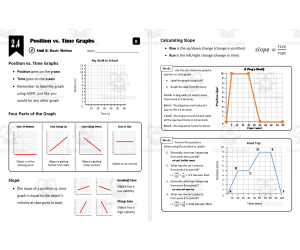
Lesson 2.4 - Position vs. Time Graphs
Science, Chemistry, Physics, Grade 6, 7, 8, 9, 10, 11, 12, Lesson Plans, Teacher Tools
Lesson 2.4 - Position vs. Time Graphs An invaluable teaching tool for educators focusing on Science, particularly Chemistry and Physics, for students in grades 6 through 12. This resource provides a detailed blueprint on how to construct and interpret position vs. time graphs — a core concept in studying motion and velocity. Inside the bundle are meticulously prepared resources that cater to diverse learning needs: Two versions of the notes sheet — one is blank (A) for majority of students to fill out during lectures, while another (B) is completed, designed as supplementary aid for students who might be absent or need additional support. Both sheets tackle how slope relates to velocity. A practice sheet with an equivalent dual-version system like the notes sheet— handy optionality that assures no learner is left behind during drill sessions or homework assignments. A dynamic PowerPoint Note file, ready to simplify class presentations with its efficient format translating theory into easily digestible parts. An additional PowerPoint file highlighting objectives & starter questions that trigger engaging class discussions or serve as refresher points before diving deep into new subjects. The integrated standards from Indiana State in 2016 encapsulated within this resource: ICP1.1; ICP1.2; ICP2; The files included can be accessed both via .docx and .pptx formats empowering teachers with the flexibility needed when it comes down to editing details matched explicitly towards their classes’ particular needs—without forgetting non-editable PDF versions suitable for general use rounding up one compact yet flexible function-rich teaching resource at your fingertips!
Author Integrated Chemistry and Physics
Tags Position Vs Time Graphs, Motion, Velocity, Physical Science, Teaching Resource
Bird Migration | Animated Birds Video Lesson
Science, Life Sciences, Animals, Not Grade Specific, Lesson Plans, Teacher Tools
Title: Bird Migration | Animated Birds Video Lesson This educational resource, named Bird Migration | Animated Birds Video Lesson, is a tool for all educators in public and home-schooling settings. It provides an engaging way to learn about bird science. Main Specifications A 12-minute video lesson which uses animation to explain advanced concepts. The video is not grade-specific and can be integrated across various curriculum levels. The resource exists in MP4 format, making learning more efficient without unnecessary clutter or hard-to-follow instructions. Categorization & Applications Bird Migration | Animated Birds Video Lesson falls under the broader subject of Science with Zoology being its specific field of study. Though primarily meant for classrooms, it's as effective when used for small group sessions or individual tasks at home. This makes it a versatile addition to any educator's teaching toolkit. Suited Learning Styles & Investment Worthiness This animated bird migration video lesson caters mainly to visual learners who find picture-based learning more beneficial than the traditional methods that rely solely on text-based information. However, auditory learners are also catered to via helpful voiceovers that come with each animation. In short, this pedagogic strategy brings strong conceptual clarity along with interactivity, thus proving worth every penny invested in this innovative solution.
Author Educational Voice
Tags Bird Migration, Animated Birds, Video Lesson, Science, Zoology, Birds Animated

Global Warming REDUCTION: Lowering Your Greenhouse Gas Emissions - FLASH-PC
Science, Earth and Environmental Sciences, Environmental Science, Common Core, Grade 5, 6, 7, 8, Teacher Tools, Lesson Plans
Global Warming REDUCTION: Lowering Your Greenhouse Gas Emissions - FLASH-PC An insightful resource that empowers educators in teaching their students a vital aspect of our world's current environmental circumstances. This chapter mini focuses on the understanding of the essential practices to lower greenhouse gas emissions as part of global warming reduction measures. Aligned specifically to Grades 5 to 8, it focuses attention towards environmental science. This teaching toolbox encompasses: Reading passages Comprehension activities for use both before and after reading Vocabulary flash cards Interactive elements such as video and audio materials. CATAPULT prepares supplementary printables that can be utilized for either on-site learning sessions such as whole class or small group activities or off-site reinforcements through homework assignments, allowing teachers to tailor-fit instructions based on the students' diverse learning needs and styles. The inclusion of vocabulary flash cards aids in simplifying complex terms into an approachable lexicon, fostering a higher level understanding while nurturing better information recall ability among students. Awareness towards global events In summary, 'Global Warming REDUCTION: Lowering Your Greenhouse Gas Emissions - FLASH-PC', harnesses 21st-century pedagogy; immerses students into valid societal discussions about environmental preservation stimulating not only academic growth but also awareness appreciation towards staying connected with the world's current events. Adherence ardently to Common Core State Standards leveraging Bloom's Taxonomy’s model propelling higher-order thinking skills helps educators design effective instructional strategies appropriating this software-based product onto their lesson plans effectively. .
Author Classroom Complete Press
Tags Software (PC)
I WONDER - What Is The Greenhouse Effect | Animated Video Lesson
Earth and Environmental Sciences, Science, Environmental Science, Earth Sciences, Grade 4, 5, 6, 7, 8, 9, 10, Lesson Plans, Teacher Tools
Video Introduction An amazing video designed for the students to learn more about STEM. I WONDER - What Is The Greenhouse Effect | Animated Video Lesson Do you like STEM subjects? what is your favorite one? Have you ever tried to plant a seed? If yes, tell us more about it. Or have you ever tried to invent something? If yes, tell us more about it. And how do you think it will help us? Have you ever seen a microorganism under a microscope? What was it? And how it looked like? Mathematics is a marvelous subject. Let' sharpen our brains and solve some equations. Do you like timetable tricks? What is your favorite one? Do you know how to code? Have you ever created an app or a game before? If yes, how was it like? I WONDER - What Is The Greenhouse Effect | Animated Video Lesson The video is perfect for encouraging the researching skills for the students, while learning more about this fantastic topic. I WONDER - What Is The Greenhouse Effect | Animated Video Lesson This friendly designed video is suitable for students at school, homeschooling, and as a group activity. Format Available in MP4 format.
Author Educational Voice
Tags What Is The Greenhouse Effect, What Is The Greenhouse Effect Video, Greenhouse Effect, Greenhouse Effects, Greenhouse Effect Video, Greenhouse Effect Facts, Greenhouse Effectfacts For Kids, Greenhouse Effect Video For Kids
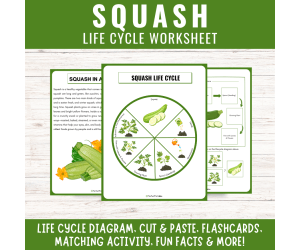
Squash Life Cycle Fall Plant Harvest Science unit study fun facts
Life Sciences, Science, Biology, Nature & Plants, Kindergarten, Preschool, Grade 1, 2, 3, Coloring Pages, Worksheets, Worksheets & Printables, Parts of and Anatomy of, Flashcards, Diagrams, Teacher Tools, Lesson Plans
Make learning about the squash life cycle fun and engaging with this printable plant science activity! Students will explore how a squash plant grows from seed to mature plant while learning about germination, plant growth, flowering, pollination, fruit development, and harvest. I like using this resource during fall science units, autumn classroom activities, harvest lessons, gardening studies, botany units, and seasonal learning. It's a low-prep activity that combines plant science with an engaging fall harvest theme. What You Will Get This printable Squash Life Cycle activity helps students understand the stages of squash plant growth while building science vocabulary and learning interesting facts about this popular fall crop. What's Included in this Resource? • Squash life cycle activity • Seed germination and growth stages • Plant parts and development activities • Flowering and pollination information • Fruit development and harvest stages • Fun facts about squash • Student-friendly science activities • Easy-to-use printable pages This resource is perfect for: • Fall science lessons • Autumn classroom activities • Harvest-themed lessons • Plant life cycle units • Botany and gardening studies • Science centers • Homeschool learning • Early finisher activities Why you will love this? • Easy to print and use • Connects science learning with a seasonal fall theme • Reinforces plant life cycle vocabulary • Encourages observation and scientific thinking • Introduces how crops grow from seed to harvest • Great for seasonal science centers and independent work This Squash Life Cycle activity is a fun way for students to discover how squash plants grow from seed to harvest while exploring plant development, pollination, fruit production, and fascinating fall harvest facts.
Author Perfect_Printables
Rating
Tags Plant Science, Life Cycle, Plant Life Cycle, Plants Diagram, Fall Activities, Squash Life Cycle, Squash, Fall Plants, Fall Science, Autumn Activities

Force - Digital Lesson Plan Gr. 5-8 - FLASH-MAC
Science, Physics, Grade 3, 4, 5, 6, 7, 8, Teacher Tools, Lesson Plans
The Force- Digital Lesson Plan Gr. 5-8 - FLASH-MAC This comprehensive teaching resource simplifies the complexities of physics for young learners from grades 5 to 8. It incorporates engaging and highly interactive content spread over its 80 screen pages, ensuring your pupils' curiosity about physical forces are adequately satisfied. Invisible Forces in Everyday Lives Educators will find this digital lesson plan invaluable in demonstrating how invisible forces operate in our everyday lives. The content provides a vivid explanation of what a force is, alongside dissecting the various types of forces at play around us including: Contact and distance forces Balanced and unbalanced forces Weight and gravity Magnetic and electrostatic forces. A Design for Active Learning The strength of this lesson plan lies within its design; not just to teach but also to engage students actively. Students participate via activities where they calculate total force on objects by adding different component forces at work. Varying Levels of Engagement with Interactivities Embedded The interactive activities offer varying levels of engagement, including pre-and-post reading activities designed for knowledge assessment purposes. Additionally, there's a memory match game targeted at promoting content retention amongst students while simultaneously providing fun learning experiences. Academic-driven Components Included: Test prep assistance,Crosswords & Word Search puzzles, This digital lesson plan includes crosswords and word search puzzles which enhances assimilative capabilities while establishing learning connections between different concepts taught during lessons. Addition: Audio-visual Support through Embedded Video Materials: Embedded videos further boost information absorption and vivify lessons. Standards-oriented: This digital lesson plan has been thoughtfully prepared in strict adherence to State Standards and Bloom’s Taxonomy requirements ensuring it caters suitably for your classroom needs. Mac Compatible: The course is compatible with Mac software platforms only, making it versatile for traditional public school settings or homeschooling scenarios. The Force- Digital Lesson Plan Gr. 5-8 - FLASH-MAC serves as a valuable addition to your physical science teaching toolkit.
Author Classroom Complete Press
Tags Software (Mac)

Global Warming CAUSES: Greenhouse Gases: Ozone - FLASH-MAC
Science, Earth and Environmental Sciences, Environmental Science, Common Core, Grade 5, 6, 7, 8, Teacher Tools, Lesson Plans
Global Warming CAUSES: Greenhouse Gases: Ozone - FLASH-MAC This is an educational resource designed to facilitate learning about ozone's role as a greenhouse gas in global warming. Intended for students from grade 5 through grade 8, it incorporates comprehensive insights into environmental science topics. Tailored Content and Pedagogical Approach The focus on greenhouse gases aligns specifically with lessons about global warming causes, providing educators with essential data needed for instruction. This teaching aid employs a multi-faceted instructional approach including : Reading passages Pre-reading and post-reading questions Vocabulary flashcards Multimedia Learning & Convenience Features In addition to text-based content, interactive educational activities are incorporated in the form of video or audio files, catering to different learner preferences. Moreover, teachers can appreciate its compatibility as Mac software and print-friendly design. Vocabulary Flashcards Feature: A unique feature is its inclusion of vocabulary flashcards serving as quick reference tools aiding learners with grapple complex terminologies associated with climate change and ozone depletion. Educational Standards Adherence This product adheres to established educational structures like Common Core State Standards. Aligned also with Bloom's Taxonomy which fosters higher order thinking skills among learners. In conclusion: No matter the teaching style or preferred modus operandi— whether dealing with whole classes, smaller groups or as a homework assignment— this product promises seamless integration that deepens students' understanding of environmental science.
Author Classroom Complete Press
Tags Software (Mac)

I WONDER - How Many Times Do We Blink In One Day | Animated Video
Human Body, Life Sciences, Science, Biology, STEM, Grade 1, 2, 3, 4, 5, 6, 7, 8, Lesson Plans, Teacher Tools
Video Overview The human body is full of fascinating wonders to learn. This video is created to help the students recognize the anatomy and the job of the human body. I WONDER - How Many Times Do We Blink In One Day | Animated Video Lesson Every part and organ in our human body is vital so let's see how important they are. Have you ever imagined how we look like if we didn't have a skeleton? Did you know that because we have our amazing muscles we can stand! Do you know how many teeth do we have? Have you ever wondered about the food journey inside our body? Can you name all the glands in our body? Why do we have skin? Our nervous system is really good at sending signals. Can you tell us more about it? Are you really good at Mathematics, painting, or any other thing? You should really thank your brain about it! The famous five senses are really doing a great work? Can you explain how every sense works? I WONDER - How Many Times Do We Blink In One Day | Animated Video Lesson The video is perfect for encouraging the researching skills for the students, while learning more about our fantastic human body. I WONDER - How Many Times Do We Blink In One Day | Animated Video Lesson This friendly designed video is suitable for students at school, homeschooling, and as a group activity. Format Available in MP4 format.
Author Educational Voice
Tags How Many Times Do We Blink In One Day, How Many Times Do We Blink In One Day Video, Blink, Blinking, Blinking Facts, Blinking Facts For Kids, Blinking Video, Blinking Video Facts For Kids

Free Science Light Waves Interactive Vocabulary Review Activity
Science, Earth and Environmental Sciences, Space, Basic Science, Earth Sciences, Environmental Science, Grade 8, Teacher Tools, Lesson Plans
Free Science Light Waves Interactive Vocabulary Review for Grade 8 This educational resource helps 8th grade students learn, practice, and review key vocabulary about light waves. Created as part of the science curriculum , it uses visual aids and interactive activities to reinforce concepts. First, students review a PowerPoint presentation practicing the words. Then they read aloud each term and choose the correct multiple choice definition. If correct, the answer is revealed. If not, they keep trying. There are over 30 slides focused specifically on light wave concepts like characteristics and importance. The multiple choice format allows for whole group or individual practice. Differentiated learning helps students at various levels strengthen their understanding. Check out other 8th grade science review games from ShapeUp-N-Matematicas y Lenguaje like force and motion, Earth science, reproduction, and more Spanish language arts activities for engaging academic support.
Author ShapeUp-N-Matematicas y Lenguaje
Tags Light Waves, Ultraviolet, Visualized, Frequency, Light, Wavelenght, Small Or Whole Group, Interactive Activity, Energy, Games

I WONDER - How Can Geothermal Energy Be Used | Animated Video Lesson
Environmental Science, Earth and Environmental Sciences, Science, Earth Sciences, Grade 5, 6, 7, 8, 9, 10, 11, Lesson Plans, Teacher Tools
Video Introduction An amazing video designed for the students to learn more about STEM. I WONDER - How Can Geothermal Energy Be Used | Animated Video Lesson Do you like STEM subjects? what is your favorite one? Have you ever tried to plant a seed? If yes, tell us more about it. Or have you ever tried to invent something? If yes, tell us more about it. And how do you think it will help us? Have you ever seen a microorganism under a microscope? What was it? And how it looked like? Mathematics is a marvelous subject. Let' sharpen our brains and solve some equations. Do you like timetable tricks? What is your favorite one? Do you know how to code? Have you ever created an app or a game before? If yes, how was it like? I WONDER - How Can Geothermal Energy Be Used | Animated Video Lesson The video is perfect for encouraging the researching skills for the students, while learning more about this fantastic topic. I WONDER - How Can Geothermal Energy Be Used | Animated Video Lesson This friendly designed video is suitable for students at school, homeschooling, and as a group activity. Format Available in MP4 format.
Author Educational Voice
Tags How Can Geothermal Energy Be Used, How Can Geothermal Energy Be Used Video, Geothermal Energy, Geothermal Energy Facts, Geothermal Energy Facts For Kids, Geothermal Energy Video, Geothermal Energy Video For Kids

I WONDER - Where Does Blood Come From | Animated Video Lesson
Human Body, Life Sciences, Science, Biology, Grade 4, 5, 6, 7, 8, 9, 10, Lesson Plans, Teacher Tools
Video Overview The human body is full of fascinating wonders to learn. This video is created to help the students recognize the anatomy and the job of the human body. I WONDER - Where Does Blood Come From | Animated Video Lesson Every part and organ in our human body is vital so let's see how important they are. Have you ever imagined how we look like if we didn't have a skeleton? Did you know that because we have our amazing muscles we can stand! Do you know how many teeth do we have? Have you ever wondered about the food journey inside our body? Can you name all the glands in our body? Why do we have skin? Our nervous system is really good at sending signals. Can you tell us more about it? Are you really good at Mathematics, painting, or any other thing? You should really thank your brain about it! The famous five senses are really doing a great work? Can you explain how every sense works? I WONDER - Where Does Blood Come From | Animated Video Lesson The video is perfect for encouraging the researching skills for the students, while learning more about our fantastic human body. I WONDER - Where Does Blood Come From | Animated Video Lesson This friendly designed video is suitable for students at school, homeschooling, and as a group activity. Format Available in MP4 format.
Author Educational Voice
Tags Where Does Blood Come From, Where Does Blood Come From Video, Blood, Blood Facts, Blood Facts For Kids, Blood Video, Blood Video For Kids, Human Body, Human Body Facts, Human Body Facts For Kids

I WONDER - How Many Legs Do Arachnids Have | Animated Video Lesson
STEM, Biology, Life Sciences, Science, Animals, Grade 4, 5, 6, 7, 8, 9, 10, Lesson Plans, Teacher Tools
Video Introduction Animal kingdoms are full of fascinating wonders to learn. This video is designed for the students to learn more about animals in different countries. I WONDER - How Many Legs Do Arachnids Have | Animated Video Lesson Do you like animals? what is your favorite one? Do you own a pet? If yes, tell us more about it, like what its name? And what do you like most about it? What are the animal kingdoms? Can you write down the characteristics of each animal class like mammals, birds, reptiles, amphibian, fish and mollusks. Do you know that some animals can sing, can you name any of them? What is the largest and the smallest mammal in the world? What is the largest and the smallest bird in the world? What is the largest and the smallest fish in the world? I WONDER - How Many Legs Do Arachnids Have | Animated Video Lesson The video is perfect for encouraging the researching skills for the students, while learning more about these fantastic animals. I WONDER - How Many Legs Do Arachnids Have | Animated Video Lesson This friendly designed video is suitable for students at school, homeschooling, and as a group activity. Format Available in MP4 format.
Author Educational Voice
Tags How Many Legs Do Arachnids Have, How Many Legs Do Arachnids Have Video, Arachnids, Arachnids Legs, Arachnids Legs Facts, Arachnids Legs Facts For Kids, Arachnids Legs Video, Arachnids Legs Video For Kids
I WONDER - What is Photosynthesis | Animated Video
Science, Nature & Plants, Life Sciences, Biology, Grade 4, 5, 6, 7, 8, 9, 10, Lesson Plans, Teacher Tools
Video Introduction An amazing activity designed for the students to learn more about STEM. I WONDER - What is Photosynthesis | Animated Video Lesson Do you like STEM subjects? what is your favorite one? Have you ever tried to plant a seed? If yes, tell us more about it. Or have you ever tried to invent something? If yes, tell us more about it. And how do you think it will help us? Have you ever seen a microorganism under a microscope? What was it? And how it looked like? Mathematics is a marvelous subject. Let' sharpen our brains and solve some equations. Do you like timetable tricks? What is your favorite one? Do you know how to code? Have you ever created an app or a game before? If yes, how was it like? I WONDER - What is Photosynthesis | Animated Video Lesson The video is perfect for encouraging the researching skills for the students, while learning more about this fantastic topic. I WONDER - What is Photosynthesis | Animated Video Lesson This friendly designed video is suitable for students at school, homeschooling, and as a group activity. Format Available in MP4 format.
Author Educational Voice
Tags What Is Photosynthesis, What Is Photosynthesis Video, Photosynthesis, Photosynthesis Video, Photosynthesis Facts, Photosynthesis Facts For Kids, Photosynthesis Video For Kids, Biology, Biology Facts
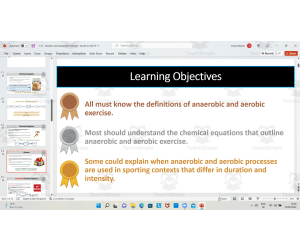
Aerobic and Anaerobic Energy Systems
Science, Life Sciences, Human Body, Grade 8, 9, 10, 11, Teacher Tools, Lesson Plans
The Aerobic and Anaerobic Energy Systems: A Comprehensive Teaching Resource Taking teaching to another level, the Aerobic and Anaerobic Energy Systems is a detailed educational resource that explores the complex but fascinating realm of energy systems in our bodies. This PowerPoint Lesson Presentation is crafted to thoroughly review both aerobic and anaerobic energy systems, immersing learners in integral concepts related to these biological marvels. Detailed and Dynamic Education Tool The platform contains 32 comprehensive slides. It commences with basic definitions for aerobic and anaerobic exercise, establishing a potent foundation from the start. This dynamic tool further broadens upon this base knowledge by excavating deeper into essential facets such as their fuel sources, byproducts, overall energy yield. Notably provided are supporting chemical equations that visually manifest how these reactions transpire on a molecular scale. Real-World Applicability An important feature is its dedication toward real-world application. The System offers valuable insights on when either process dominates during varying sporting events based on factors like duration and intensity; ensuring everyone comprehends basic terms while also understanding how they function chemically whilst being able to apply this awareness within different athletic situations. Learner-Centric Approach This teaching source proficiently caters all educators regardless of your preferred setting - whether you're conducting sessions with larger classroom groups or smaller study circles or even if you'd like your learners to delve deeper into human biology from home. Suitable for Middle Schoolers&High schoolers: Perfectly fit for Grades between 8-11 without overwhelming any learner. All Platforms Compatibility: It's a Microsoft PowerPoint -based resource ensuring easy usage across multiple devices, irrespective of traditional or virtual classrooms. In essence, the Aerobic and Anaerobic Energy Systems is an all-inclusive, user-friendly teaching aid – a seamless union of expertly curated data with practical applications that will without question enhance students' interest and understanding regarding the topic.
Author The PE Tutor
Tags Teaching, Energy Systems, Aerobic Exercise, Anaerobic Exercise, Human Biology

I WONDER - Are There Different Types Of Igneous Rocks | Animated Video
Geography, Social Studies, Earth Sciences, Earth and Environmental Sciences, Science, Grade 4, 5, 6, 7, 8, 9, 10, Lesson Plans, Teacher Tools
Video Introduction An amazing video designed for the students to learn more about famous places in different countries. I WONDER - Are There Different Types Of Igneous Rocks | Animated Video Lesson What do you know about this place? Do you know in which part of the world it is? Have you ever visited this place? If yes, can you tell us more about your adventure, and what do you like the most about this place? Do you like reading about Geography? What is your favorite country in the whole world? If you are going on a trip where it will be? Which country? What you are going to see there? Does this country has a famous place to visit? I WONDER - Are There Different Types Of Igneous Rocks | Animated Video Lesson The activity is perfect for encouraging the researching skills for the students, while learning more about this fantastic place. I WONDER - Are There Different Types Of Igneous Rocks | Animated Video Lesson This friendly designed video is suitable for students at school, homeschooling, and as a group activity. Format Available in MP4 format.
Author Educational Voice
Tags Are There Different Types Of Igneous Rocks, Are There Different Types Of Igneous Rocks Video, Different Types Of Igneous Rocks, Different Types Of Igneous Rocks Facts, Different Types Of Igneous Rocks Video

I WONDER - How Much Liquid Can The Bladder Hold | Animated Video
Human Body, Life Sciences, Science, Biology, Grade 6, 7, 8, 9, 10, 11, 12, Lesson Plans, Teacher Tools
Video Overview The human body is full of fascinating wonders to learn. This video is created to help the students recognize the anatomy and the job of the human body. I WONDER - How Much Liquid Can The Bladder Hold | Animated Video Lesson Every part and organ in our human body is vital so let's see how important they are. Have you ever imagined how we look like if we didn't have a skeleton? Did you know that because we have our amazing muscles we can stand! Do you know how many teeth do we have? Have you ever wondered about the food journey inside our body? Can you name all the glands in our body? Why do we have skin? Our nervous system is really good at sending signals. Can you tell us more about it? Are you really good at Mathematics, painting, or any other thing? You should really thank your brain about it! The famous five senses are really doing a great work? Can you explain how every sense works? I WONDER - How Much Liquid Can The Bladder Hold | Animated Video Lesson The video is perfect for encouraging the researching skills for the students, while learning more about our fantastic human body. I WONDER - How Much Liquid Can The Bladder Hold | Animated Video Lesson This friendly designed video is suitable for students at school, homeschooling, and as a group activity. Format Available in MP4 format.
Author Educational Voice
Tags How Much Liquid Can The Bladder Hold, How Much Liquid Can The Bladder Hold Video, Bladder, Bladder Facts, Bladder Facts For Kids, Bladder Video, Bladder Video For Kids, Urinary Bladder

Cheetahs | Interactive Science Lesson | Micro-Learning Deck
Science, Life Sciences, Animals, Grade 5, 6, 7, 8, Teacher Tools, Lesson Plans
Engaging Cheetahs Micro-Learning Science Lesson for Upper Elementary Students This informative digital slideshow lesson helps teach upper elementary students about the world's fastest land mammal - the cheetah. Ideal for grades 5-8 science classes, it can be used in whole group instruction or for individual student learning. The deck immerses students in learning with a short video, reading passage with audio, close reading activity, and quick write assignment. As the captivating content unfolds, young learners will build knowledge on cheetah characteristics like their speed, habitat, hunting techniques, and more through multiple modalities. This stand-alone resource provokes curiosity about animal classification while aligning to science standards. Implement as a supplemental science lesson or homework for engaged inquiry-based learning.
Author Teach Me This
Tags Cheetahs, Fastest Living Animals, Interactive Science Lesson, Comprehension, Vocabulary
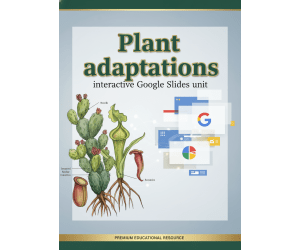
Plant Adaptations Interactive Google Slides Unit
Science, Earth and Environmental Sciences, Earth Sciences, Environmental Science, Geology, Space, Life Sciences, Animals, Nature & Plants, Biology, Grade 3, 4, 5, 9, 10, 11, 12, Experiments, Activities, Labs, Projects, Assessments, Teacher Tools, Diagrams, Lesson Plans, Outlines, Presentations
Find the best 4th Grade Plant Adaptations Interactive Google Slides Unit – a complete no-prep digital science resource that is perfectly correlated to NGSS 4-LS1-1! This teacher edition is a game-changer for teaching plant biology as an interactive adventure for students! With this resource, students will enjoy a hands-on approach to learning about plant adaptations as they explore interactive slides featuring desert succulents/cacti, rainforest drip tips/epiphytes, water plants floating leaves/stretching stems, structural vs. behavioral adaptations, roots, stem/leaf adaptations, defense structures, carnivorous plants Venus flytrap/pitcher plant, seed dispersal, mystery plant analysis, and a final knowledge check with answer keys! Students will actively engage in classifying adaptations, creating their own extremophiles, analyzing scenarios using Claim Evidence Reasoning, and connecting science to ELA, math, engineering, and technology using cross-curricular activities. It includes a teacher guide, standard alignment, steps to integrate into Google Classroom, instructional tips, interactive slide ideas, image credits, and ideas for self-grading. It can be used in a variety of learning environments, such as in-class learning, distance learning, homeschooling, etc. It saves automatically in Google Slides. Keywords: plant adaptation 4th grade, NGSS 4-LS1-1, Google Slides, interactive science unit, desert rainforest aquatic plants, carnivorous plants, seed dispersal activities, digital science resource, structure and function NGSS, no prep plant biology. Why Parents/Schools Love It : NGSS-Aligned & Standards-Ready: No planning required – lesson plans, objectives, and assessments are provided and align perfectly with 4th grade requirements. Truly Interactive & Engaging: Drag and drop sorting, CER plant mysteries, and biome builders ensure all students (including reluctant ones) are actively engaged and motivated to learn for hours. Cross-Curricular Powerhouse: Perfectly blends ELA (informative writing, vocabulary), math (data analysis, volume calculation), and engineering (biomimicry design challenges). Google Classroom Perfection: One-click “make a copy for each student,” auto-saving, and self-grading features save teachers 10+ hours per unit. Differentiation Built-In: Visual aids, scaffolding, and differentiation in activity levels and types meet the needs of diverse learners and challenge advanced students. Target Student Classes : This lesson is designed for 4th grade science (ages 9-10), specifically targeting the 4-LS1-1 standard for Structure and Function in plants/animals, as well as the cross cutting concepts of Systems and System Models + the Science and Engineering Practices of Engaging in Argument from Evidence. This lesson is suitable as the main resource for: Standard 4th grade life science curriculum for 4th grade students in public/private schools Homeschool 4th grade science curriculum (allows for fast or slow pacing for gifted or remedial students) Advanced 3rd grade science for 3rd grade students or 5th grade review for 5th grade students Special education or ESL students (visual learning tool of drag and drop CERs) Not recommended as the main resource for middle school students (6th+). Copyright/Terms of Use: This Book is copyrighted by Syed Hammad Rizvi. This is for your personal and single classroom use only. You may not change, reproduce, redistribute, or sell this in any way. This means you may not put it on the Internet in a way that it can be located and downloaded by others. If you wish to share this resource with others, please consider purchasing additional licenses from Teachsimple. Thank you for respecting these copyright laws! This product is happily brought to you by Syed Hammad Rizvi
Author Creative Book Store
Rating
Tags PlantAdaptations, 4thGradeScience, NGSS4LS11, GoogleSlidesScience, InteractiveScience, ScienceTeachers, ElementaryScience, NGSSScience, PlantAdaptationsUnit, DigitalScienceResource

I WONDER - What Is A Sinkhole | Animated Video Lesson
Geography, Social Studies, Environmental Science, Earth and Environmental Sciences, Science, Grade 4, 5, 6, 7, 8, 9, 10, Lesson Plans, Teacher Tools
Video Introduction An amazing video designed for the students to learn more about famous places in different countries. I WONDER - What Is A Sinkhole | Animated Video Lesson What do you know about this place? Do you know in which part of the world it is? Have you ever visited this place? If yes, can you tell us more about your adventure, and what do you like the most about this place? Do you like reading about Geography? What is your favorite country in the whole world? If you are going on a trip where it will be? Which country? What you are going to see there? Does this country has a famous place to visit? I WONDER - What Is A Sinkhole | Animated Video Lesson The activity is perfect for encouraging the researching skills for the students, while learning more about this fantastic place. I WONDER - What Is A Sinkhole | Animated Video Lesson This friendly designed video is suitable for students at school, homeschooling, and as a group activity. Format Available in MP4 format.
Author Educational Voice
Tags What Is A Sinkhole, What Is A Sinkhole Video, Sinkhole, Sinkholes, Sinkhole Facts, Sinkhole Facts For Kids, Sinkhole Video, Sinkhole Video For Kids, Sinkholes Video, Sinkholes Facts

I WONDER - Where Can Space Probes Be Used | Animated Video Lesson
Space, Earth and Environmental Sciences, Science, Grade 6, 7, 8, 9, 10, 11, 12, Teacher Tools, Lesson Plans
Video Introduction An amazing video designed for the students to learn more about space facts. I WONDER - Where Can Space Probes Be Used | Animated Video Lesson Do you like reading about space? If yes, what is your favorite topic? What do you know about our solar system? What is the smallest planet in our solar system? What is the biggest planet in our solar system? What is the hottest planet in our solar system? And what is the coldest one? Do you think there are aliens? If yes, what do you think they look like? What do they eat and how they speak to each other? Where do they live? What is a galaxy? And what is a milky way? Have you recently saw a shooting star? If yes, tell us more about it, like when did it happen and where? What is a blackhole? Can a blackhole gets bigger by time? Do you like counting the stars? What do you think a star is made of? I WONDER - Where Can Space Probes Be Used | Animated Video Lesson The video is perfect for encouraging the researching skills for the students, while learning more about the fantastic space. I WONDER - Where Can Space Probes Be Used | Animated Video Lesson This friendly designed video is suitable for students at school, homeschooling, and as a group activity. Format Available in MP4 format.
Author Educational Voice
Tags Where Can Space Probes Be Used, Where Can Space Probes Be Used Video, Space Probes, Space Probes Facts, Space Probe, Space Probes Facts For Kids, Space Probes Video, Space Probes Video For Kids

Solar System - Digital Lesson Plan Gr. 5-8 - FLASH-PC
Science, Earth and Environmental Sciences, Space, Grade 5, 6, 7, 8, Teacher Tools, Lesson Plans
The Solar System Digital Lesson Plan Gr.5-8 – FLASH-PC This is a comprehensive teaching resource designed to inspire and educate students in Grades 5 through 6 about the fascinating aspects of our solar system. This interactive digital lesson plan, carried on a flash PC drive, orchestrates an 80 screen-page journey through the vastness of space while making the topic intriguing and accessible for young learners. Topics Covered Inner and Outer Planets Moon Stars Constellations Asteroids, Meteors and Comets. The language adopted is simple yet informative, facilitating comprehension without compromising essential scientific data delivery. Concepts such as planetary orbits asteroid belts lunar cycle phases of the moon and shooting stars are systematically explored ensuring holistic understanding for students. Educators can employ this resource in several ways - whole group instruction small group work or as homework - enriching learning experiences for individual learners or groups alike. Along with before-and-after-you-read reading passages; engaging interactive activities are included that boost student participation. Interactive Feature Set In addition to test prep activities memory match games crosswords word searches printables supportive videos—all contribute towards creating more engaging lively interesting even challenging learning environment catering diverse learning styles ensuring better retention. What sets this product apart further is its flexibility - it supports both English Spanish Text-to-Speech features boosting its utility in bilingual classrooms or ESL settings Finally, educators can gauge pupil comprehension using a concluding Comprehension Quiz enhancing clarity feedback consequent instruction planning. Compliant with State Standards via Bloom's Taxonomy-based learning objectives this ready-to-use kit adds tremendous value not just in direct learning outcomes, but in curriculum planning by teachers. In conclusion: Learn the solar system in a new way with the Solar System Digital Lesson Plan Gr.5-8 – FLASH–PC due to its digital format, comprehensive coverage, interactive features and material set. It efficiently integrates teaching and learning making it particularly useful for delivering science curricula especially astronomy.
Author Classroom Complete Press
Tags Software (PC)
Atoms, Molecules & Elements: Patterns In the Periodic Table Gr. 5-8
Science, Life Sciences, Biology, Grade 5, 6, 7, 8, Teacher Tools, Lesson Plans
Atoms, Molecules & Elements: Patterns In the Periodic Table Gr. 5-8 An exceptional teaching resource designed for educators that simplifies the complex world of atoms, molecules and elements. Main Features: Simplified language with engaging activities for easy comprehension and retention. Exploration of patterns in the periodic table. Focused hands-on experiences on specific elements like calcium (Ca), chlorine (Cl), and helium (He). This well-structured educational product makes advanced science concepts accessible to learners of grade 5 through 8. Included Components: Labeling sections of an atom Understanding what compounds are Inclusive reading passages, student activities, a crossword puzzle for vocabulary skills, a word search game for fun learning moments. Evaluation Tools: This user-friendly tool can be integrated into larger group lessons or smaller tutorial sessions. It also serves as useful homework assignments aiding classroom learning at home. Designed for both public school teachers and homeschoolers aiming at self-paced learning! The product comes in secured PDFs compatible with most devices enhancing accessibility. End your lesson plan worries today! Choose "Atoms, Molecules & Elements: Patterns In the Periodic Table Gr. 5-8", your reliable ally in teaching nature's fundamental components - atoms, molecules & elements!
Author Classroom Complete Press
Tags PDF
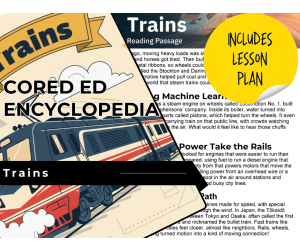
Trains Reading Comprehension Passage - Cored Ed Encyclopedia
ELA, Language Development, Reading Comprehension, Reading, Science, Technology, Engineering, History, Social Studies, Physics, Grade 2, 3, 4, 5, Worksheets & Printables, Worksheets, Teacher Tools, Centers, Activities, Writing Prompts, Assessments, Quizzes and Tests, Quizzes, Lesson Plans
This trains reading comprehension with lesson plan includes: Visualization (on the front cover) Start your lesson by taking a minute to think and share something about the topic. Read the script aloud (slowly), perhaps prepare some music or sound effects. Student close their eyes and let their imaginations wander. Students open their eyes, read the question aloud and give them a few minutes to complete. Ask a few students to share or keep answers until the end to compare with what they learn in the passage. Quick pause—thousands of Cored Education products are included with your TeachSimple membership. Download links and encyclopedia index available here. Pre-Reading Trivia Students will write down one thing they already know about the subject and then read five more facts and discuss. These facts are fun, and the students will enjoy learning about the subject before reading more. Give 1 minute for students to write what they already know (no pressure—best guess is fine). Read the five facts together. After each fact, do ask a student for their opinion, was it surprising? Set a purpose by asking students to highlight/underline one fact they want to learn more about during the reading. Reading Passage The text is a high-interest reading passage with set paragraphs, roughly three to four paragraphs long. It contains a variety of themes about the topic, anywhere from history to technology. The passage is between 250 and 350 words in length. First, ask students to look at the headings and see what they’ll learn about today. What do they know about the topic/heading? First read options: Teacher read-aloud (best for support). Partner reading (paragraph by paragraph). While reading, students underline important details, and vocabulary words they think may come up in the questions section. Mixed Questions The first question page contains four multiple-choice questions, each with a choice of four answers, and three written response questions that require a sentence or two from the student. Students complete the mcqs first independently, then review quickly as a class. For the 3 written responses, try to get students giving the answer with some form of evidence: “I think ___ because the text says ___.” If students get stuck, send them back to check the passage. Vocabulary Questions Practice seven key words from the text in this section across two activities. First section is scrambled words where students will unscramble three words given a clue for each. The second section is a word to meaning matching activity. Before starting, have some students read out words they underlined in the passage. Ask students to say the word and read aloud the sentence(s) around each word. Ask students to do scrambled words and the matching exercise in pairs then go through answers as a class. For the scrambled spelling task, get four pairs to come up to the board and write the words for extra practice with the other student reading out the clue. For the matching task, prompt students to give full sentences: “I matched ___ with ___ because ___.” Creative Writing In this question, the student will be required to write a five to eight sentence paragraph on a question related to the topic. Before starting, ask students write down 3 key ideas they are going to include in their piece. Ask students for ideas to share around the class to help those struggling. Pro writing expectations: 5–8 sentences At least 2 facts or details from the passage At least 2 vocabulary words from the previous page Students read their paragraphs while classmates listen for facts and vocabulary words. Extension Activities This page is optional for fast finishers or to take home. There are several activities, each one requiring a different skill. Do some, do none, do all, completely optional - but you will feel reassured knowing every possibility is planned for. Includes summary writting question. Answer Key There are answers for the multiple-choice questions, written response questions have sample answers, vocabulary answers and if there is a summary question then a sample summary will be provided as well. Lesson Plan Included Customized lesson plan for this lesson is included. Lesson Snapshot Title: Trains Genre: Nonfiction (informational text) Subject: Science (Technology & Engineering) Primary Topic: How rails and train power changed over time Estimated Guided Reading Level (A–Z): R What This Lesson Teaches Best Explains how smooth rails reduce “rubbing,” helping heavy loads move more easily than wagons on muddy roads. Uses a real historical example (the Stockton and Darlington Railway opening in 1825) to show steam trains carrying coal and people. Describes how a steam locomotive works (water becomes steam, steam pushes pistons, pistons help turn wheels). Compares train power types—steam, diesel (engine spins a generator), and electric (overhead wire or third rail). Shows how high-speed rail was designed for speed (special tracks, trains shaped to slice through wind), including Japan’s Tōkaidō Shinkansen (1964) “bullet train.” QA check (support pages vs. passage): The pre-reading trivia uses the word “friction,” but the main passage describes the idea as “rubbing.” Other questions and vocabulary (boiler, pistons, diesel, generator, third rail, high-speed rail) match the passage. Learning Goals Students will explain why smooth rails helped heavy loads move with less rubbing. Students will identify what happened in 1825 with the Stockton and Darlington Railway. Students will describe how steam in a boiler can help power wheel movement using pistons. Students will compare steam, diesel, and electric explanations of how trains get power in the text. Students will describe how train design and tracks can increase speed, using details about high-speed rail. Key Vocabulary From the Text locomotive — the front engine that pulls the train cars. boiler — the part where water is heated to make steam. pistons — parts steam pushes to help turn the wheels. generator — a machine that makes electricity for the train. soot — black dirty particles in the air from smoke. FULL CATALOG OF DOWNLOAD LINKS AND ENCYCLOPEDIA INDEX HERE
Author Cored Education
Rating
Tags Vocabulary, Reading Comprehension, Reading Passages, Lesson Plans, Ela Lesson Plans, Reading Comprehension Lesson Plans, Pre-reading, History, History Lesson Plans, Physics