Columbus Day: A Micro-Learning Deck | Reading Activities
A digital micro-lesson teaching about Christopher Columbus and Columbus Day through an informational reading passage, embedded video links, and comprehension activities.




Classroom resources
Browse by lesson focus
Choose the topic or kind of practice you need.
Showing 145–168 of 278 resources

 Show filters
 A digital micro-lesson teaching about Christopher Columbus and Columbus Day through an informational reading passage, embedded video links, and comprehension activities.

A 14-slide ESL/EFL lesson about global girls' education access and Malala Yousafzai's activism, combining picture description, listening comprehension, and writing activities.

Introduce ESL/EFL students to William Shakespeare's biography and famous works through a slide-based lesson with warm-up picture description, biographical reading, and a listening comprehension activity.

This resource is a Fiction Elements: Fiction Story Lesson. Students will apply reading, creative thinking, problem solving and so much more as they work through these interactive slides.
An interactive digital micro-learning deck (reading comprehension lesson) built around an informational article about the training ship 'Golden Bear' at the California Maritime Academy, teaching close reading, vocabulary, and summarizing skills.
A micro-learning slide deck that teaches the idiom 'fly by the seat of one's pants' through a reading passage, comprehension activities, and a summary-writing task to build figurative language and close-reading skills.
A digital micro-learning slide deck building reading comprehension, vocabulary, and summarizing skills through an informational text about a chocolate fountain caterer.

GCSE English Literature: (10) Macbeth - Act 5 Scenes 8, 9, 10, and 11 A teaching resource that is designed to assist educators in guiding their students through the final scenes of Shakespeare's 'Macbeth'.
A GCSE/KS4 English Literature PowerPoint lesson guiding students through a close reading and analysis of Macbeth Act 5, Scenes 2, 3 and 4, framed around the theme of insanity/loss of power.

A GCSE English Literature PowerPoint lesson guiding students through a close reading and analysis of Romeo and Juliet Act 3, Scenes 2 and 3 (see internal_notes: the catalog title/slug claims Scenes 4 and 5), framed around the theme of sexism/gender inequality.
A GCSE/KS4 English Literature PowerPoint lesson guiding students through a close reading and analysis of Macbeth Act 5, Scenes 5, 6 and 7 (Lady Macbeth's death through the final battle with Macduff), framed around the theme of courage.

A GCSE English Literature PowerPoint lesson guiding students through a close reading and analysis of Romeo and Juliet Act 5, Scenes 1, 2 and 3 (Romeo's dream and Balthasar's news, Friar John's failed errand, the deaths at the Capulet tomb), framed around audience regard for the leading characters.
A complete set of 11 PowerPoint lessons (framed as 12x2-hour lessons) covering Shakespeare's Romeo and Juliet act-by-act for UK GCSE English Literature, with adaptability noted for American classrooms.
A GCSE English Literature PowerPoint lesson guiding students through a close reading and analysis of Romeo and Juliet Act 1, Scenes 1 and 2 (the opening street brawl and Romeo's introduction), framed around the theme of verbal confrontations/insults.
A GCSE English Literature PowerPoint lesson analytically reading 'An Inspector Calls' Act 2 Part 3, from Mrs Birling's interrogation to the end of Act 2 (the revelation of Eva Smith's pregnancy and Eric's likely involvement), framed around the concept of dichotomy.
A GCSE English Literature PowerPoint lesson on the characterisation of Mrs Birling in 'An Inspector Calls', teaching direct vs indirect characterisation and applying it to her family/class status, hostility, role in Eva Smith's demise, and symbolic function as an unsympathetic upper-class figure.

A GCSE English Literature PowerPoint lesson analytically reading 'An Inspector Calls' Act 3 Part 1, from the opening of Act 3 to Eric's interrogation (Eric's confession of his relationship with Eva Smith and theft from his father), framed around the concept of remorse.
A GCSE English Literature PowerPoint lesson analytically reading 'An Inspector Calls' Act 3 Part 2, from Eric's interrogation to Gerald's doubts (Gerald's discovery that Inspector Goole may be fake, and the generational split over how seriously to take the revelations), framed around the concept of confession.
A GCSE English Literature PowerPoint lesson analytically reading 'An Inspector Calls' Act 3 Part 3, from Gerald's doubts to the close of the play (confirming no suicide occurred, the family's divided response, and the final twist telephone call), framed around the concept of alliance.
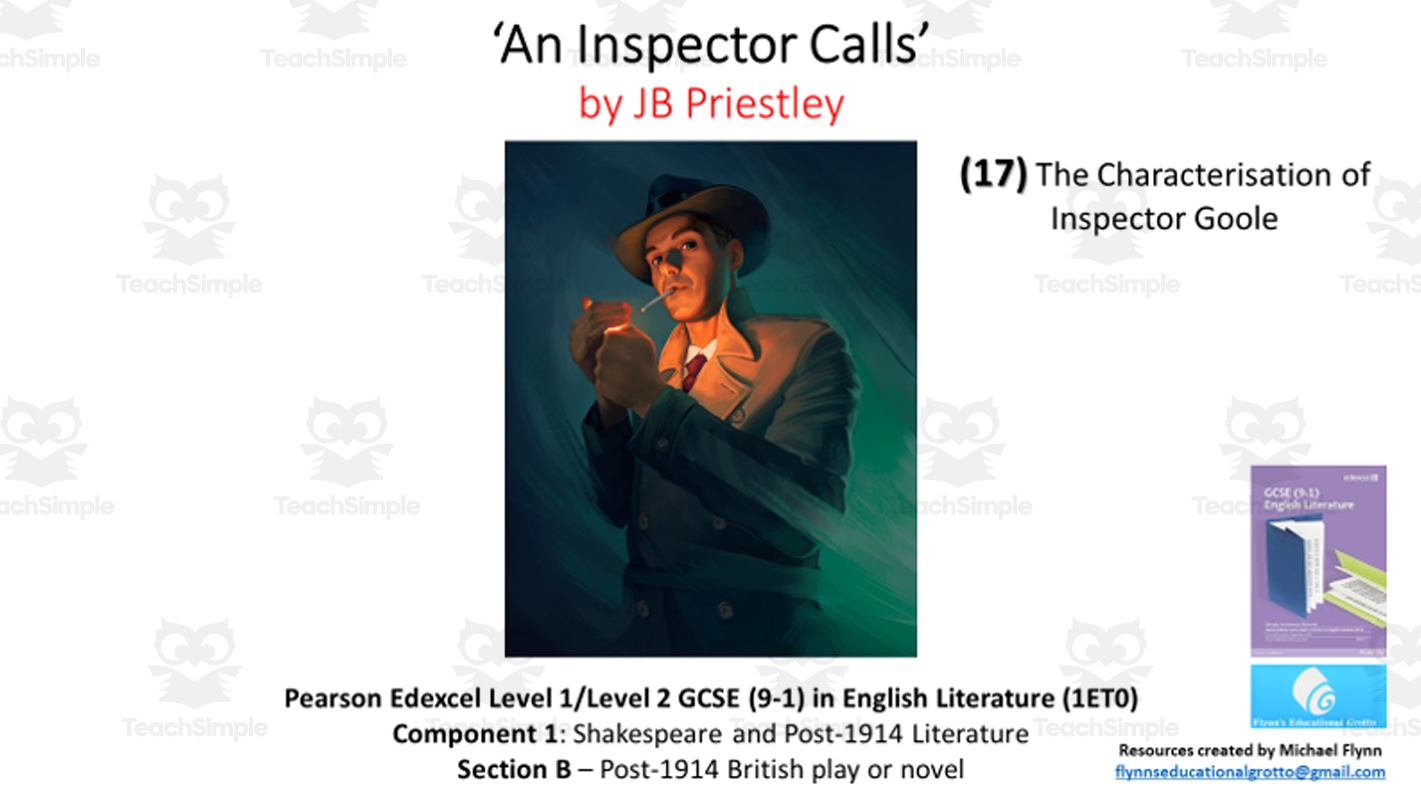
A GCSE English Literature PowerPoint lesson on the characterisation of Inspector Goole in 'An Inspector Calls', teaching direct vs indirect characterisation and applying it to his stage entrance, working-class-coded authority, and his role in challenging capitalism, class, arrogance of youth, sexual exploitation, lack of responsibility,…
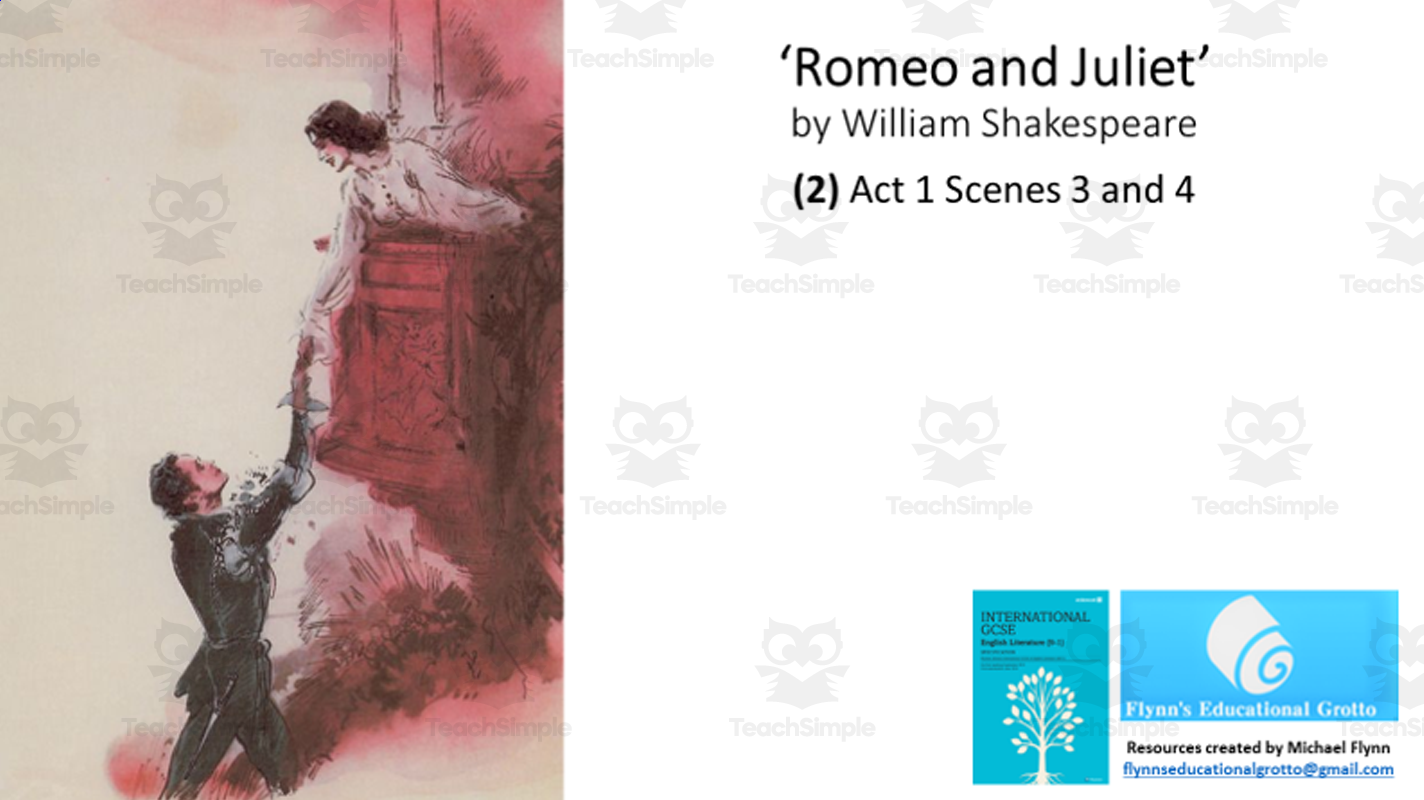
A GCSE English Literature PowerPoint lesson guiding students through a close reading and analysis of Romeo and Juliet Act 1, Scenes 3 and 4 (Lady Capulet raising marriage with Juliet, and Romeo/Mercutio/Benvolio en route to the Capulet feast), framed around the theme of innocence.
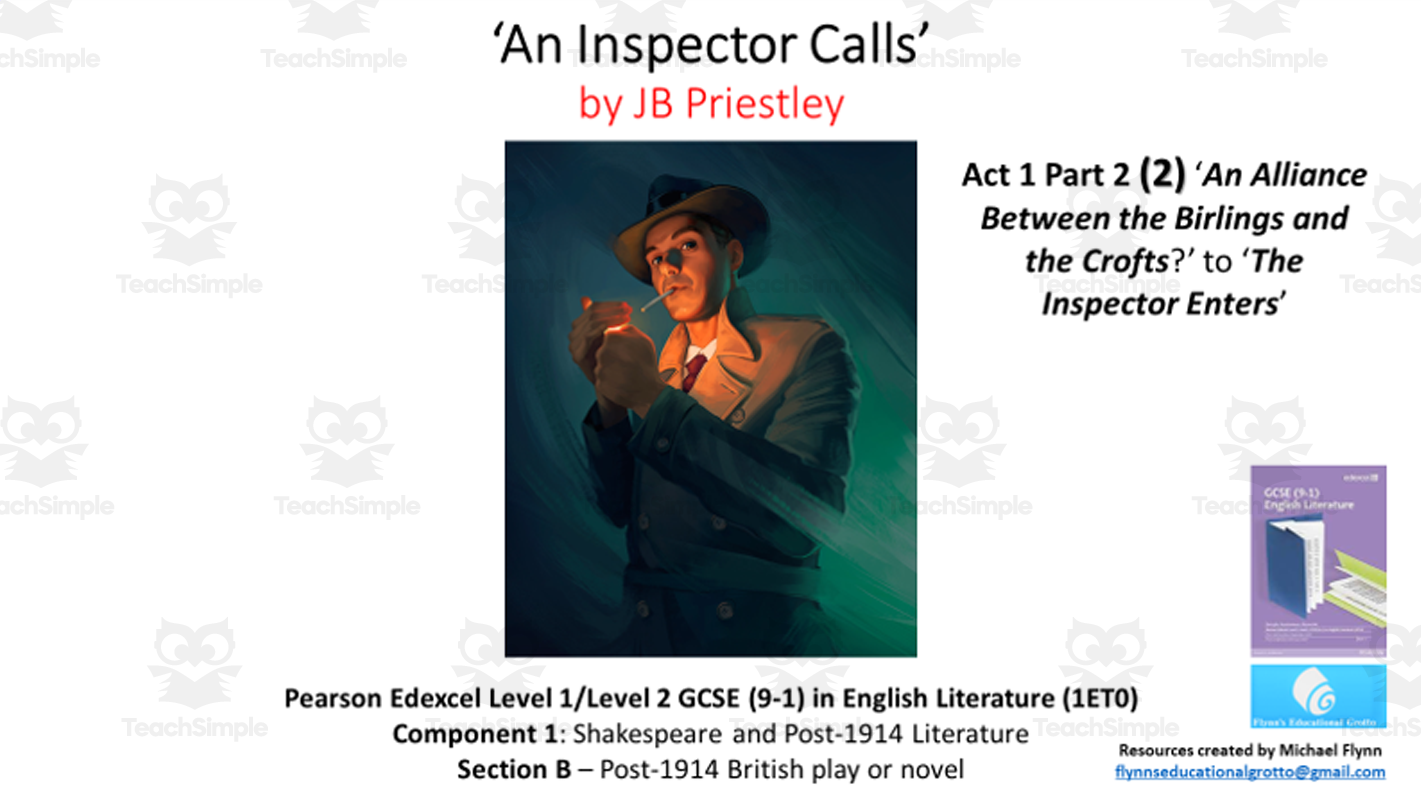
A GCSE English Literature PowerPoint lesson analytically reading 'An Inspector Calls' Act 1 Part 2, from 'An Alliance Between the Birlings and the Crofts?' to 'The Inspector Enters' (the engagement toast, Mr Birling's dramatic-irony-laden speeches, and the Inspector's arrival with news of Eva Smith's suicide), framed around the device of foreshadowing.
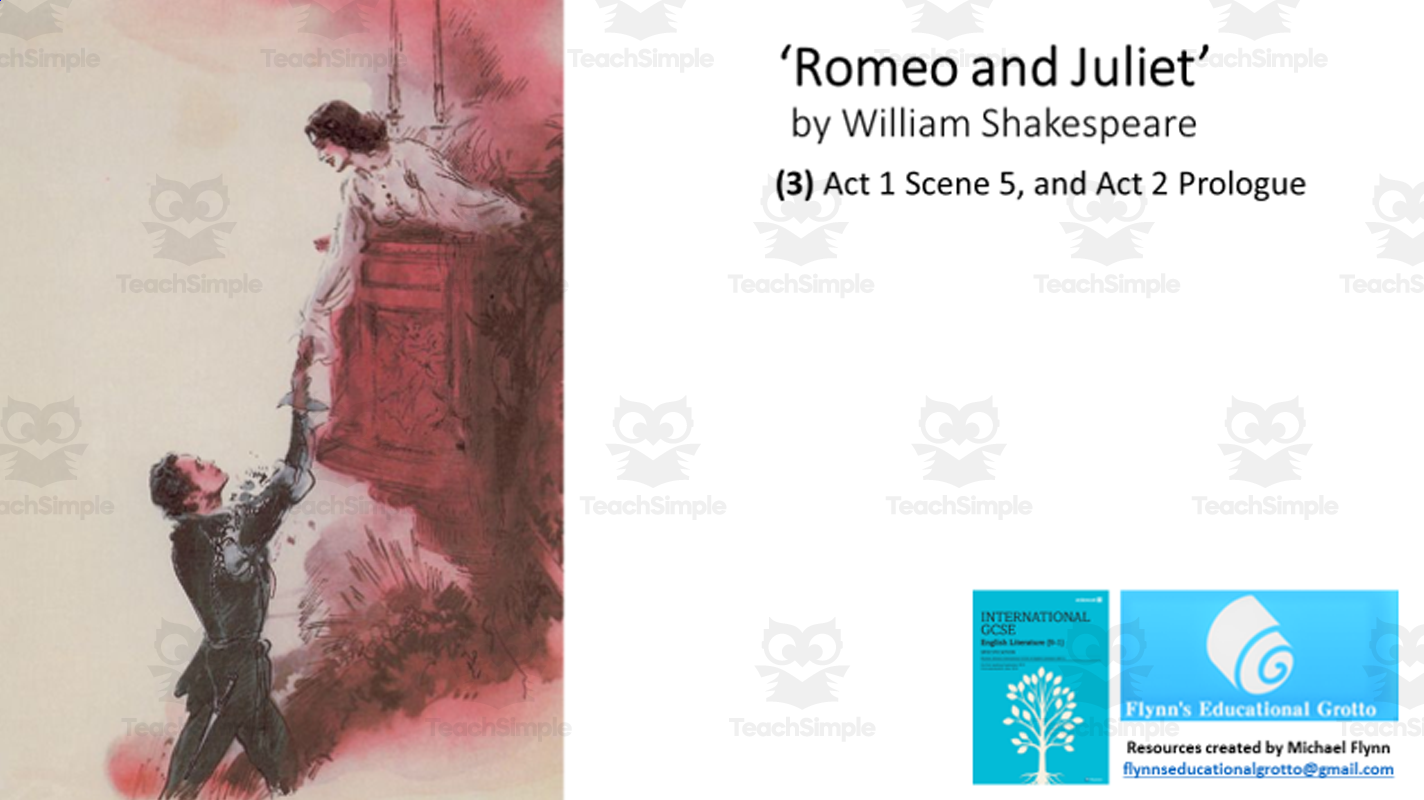
A GCSE English Literature PowerPoint lesson guiding students through a close reading and analysis of Romeo and Juliet Act 1 Scene 5 and the Act 2 Prologue (Romeo and Juliet's first meeting/kiss at the Capulet feast, Tybalt's fury, and the Chorus's sonnet on their obstacles), framed around the theme of love.
A GCSE English Literature PowerPoint lesson analytically reading 'An Inspector Calls' Act 1 Part 3, from the Inspector's entrance to revealing fresh suspects (Mr Birling's confession about firing Eva Smith, and the Inspector implicating other family members), framed around the concept of being human.