



3,953 products added recently
Page 9 - Science Presentations
Enrich your science instruction with presentations that cover a wide range of topics from biology to physics. These visual aids include diagrams, animations, and experiments to enhance learning. Incorporate them to make scientific concepts more tangible and exciting for your students.

 Show filters


Cell Structure and Function – Intro PowerPoint
Science, Life Sciences, Biology, Grade 9, 10, 11, 12, Presentations, Teacher Tools
This resource helps students learn about Cell Structure and Function and is a good introduction as you introduce a Cell Unit .
Author The Teacher Team
Rating
Tags Anatomy, Physiology, Biology, Cell , Cell Structure, Cell Membrane , Functions, Cell Membrane Transport, Basic Structure Of A Cell Ppt Viewing Questions Answers

All about Autumn for EYFS and KS1 PowerPoint
Science, Basic Science, Kindergarten, Preschool, Presentations, Teacher Tools
A simple introduction to autumn for EYFS/Y1 children. Covers: What is autumn? A season and a time of change The four seasons Change in temperature Change in daylight Plants get ready for autumn: leaves fall and change colour/make seeds/nuts/berries Harvest time: fruit/vegetable harvest/ploughing fields and sowing seed Mushrooms growing Animals prepare for winter including hibernation Birds migrate The presentation ends with the words of the hymn ‘We plough the fields and scatter’, over 2 slides. These can be omitted if the hymn is not considered appropriate. 29 slides PowerPoint format Beautiful photos Animated, but no sound - teacher to read the text A good way to start a project on autumn, or to consolidate work covered at the end of a project about autumn.
Author Lilibette's Resources
Tags Autumn For Eyfs, All About Autumn For Y1, Autumn Project For Eyfs
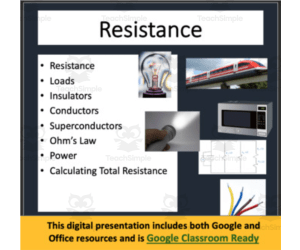
Electrical Resistance and Ohm's Law - Google Slides and PowerPoint Lesson
Science, Physics, Grade 7, 8, 9, Presentations, Teacher Tools
Everything you need to teach Electrical Resistance is right here including the student and teacher version of the lesson and an Ohms Law practice worksheet with answers. The presentation is interactive and engaging with multiple simulations embedded in the presentation. No more searching for online animations or demonstrations, simply click and play. The included lesson has been fully updated and now includes both Google and Office versions of each resource. The lesson also includes an auto-graded Exit Ticket to check for student understanding. Included in the lesson package is: Resistance Loads Conductors Superconductors Ohm’s Law Practice Questions More Examples Included in the lesson package is: Google and Office versions of the presentation and all documents The teacher version of the presentation The student version of the presentation Ohms Law Worksheet with answers An auto-graded Exit Ticket Student lesson handout Google Classroom and Exit Ticket This resource is perfect for in-class or distance learning and integrates seamlessly with Google Classroom. Included is a link that with one click, will automatically create a copy of the resources and put them directly into your Google Drive. Purchase --> Open --> Click --> Assign to your students On the last Google Slide is a link to a four-question Exit Ticket that you can give as homework or to conclude your lesson in class. This lesson includes both Google and Office versions for ALL resources. The presentation is in Google Slides and PowerPoint while all documents contain Word and Google Doc versions. Having both options allows you to use either without worrying about formatting issues as all the work has already been done for you. It also allows you, as well as your students, to access everything no matter where you are or what kind of equipment is being used. ------------------------------------------------- Digital and Distance Learning: This lesson is fully digital which makes it perfect for the classroom, distance learning, or as a sub-plan if needed. With a single click, the entire package will be imported into your Google Drive and will be ready to assign to your students or present in class. You can also place a copy of the resources directly into student Google Drive accounts for easy access. Included in your package is an Exit Ticket which can be directly accessed from the last Google Slide. Additionally, your purchase will create a copy of the Google Form Exit Ticket which you can edit to meet your class needs. Student Version: The student version of the lesson contains multiple blanks that need to be filled in throughout. These blanks are conveniently underlined and bolded on the teacher copy. I have found this to be the most effective means of keeping my students engaged and active without having them write everything out. This also leaves more time for discussion and activities. ---------------------------------------------------- The individual Electricity Unit Lessons can be accessed below. Lesson 1 - Electricity Lesson 2 - Solving Circuit Diagrams Lesson 3 - Resistance and Ohm's Law Lesson 4 - Solving Electrical Circuits with Resistance Lesson 4a - Electric Circuits Online Lab Lesson 5 - Power and Electrical Energy Lesson 6 - Electrical Safety in the Home Lesson 7 - Producing Electricity Lesson 8 - Static Electricity Lesson 9 - Electrostatic Charge and Applications Also, please visit my blog Teach With Fergy for my thoughts on teaching, learning, and everything in between.
Author Teach With Fergy
Tags Electricity, Electrical Resistance, Ohms Law, Science Lesson, Ohm's Law Practice Worksheet
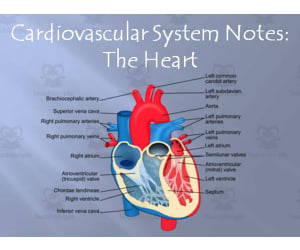
Cardiovascular System – Heart Structures PowerPoint
Science, Life Sciences, Human Body, Grade 9, 10, 11, 12, Presentations, Teacher Tools
This 22 slide power point presentation covers the second part of my unit on the Cardiovascular System for a high school Anatomy & Physiology or Biology course.
Author The Teacher Team
Rating
Tags Heart, Body Systems, Anatomy, Physiology, ELL, Heart Powerpoint

Earth Day: Conserving Electricity Lesson and Saving Electricity Groupwork Poster Presentation Activity
Science, Earth and Environmental Sciences, Environmental Science, Grade 4, 5, 6, 7, Presentations, Teacher Tools
Earth Day: Conserving Electricity Lesson and Saving Electricity Groupwork Poster Presentation Activity Teachers in search of a potent lesson plan on energy conservation will find the 'Earth Day: Conserving Electricity Lesson and Saving Electricity Groupwork Poster Presentation Activity ' impactful. Designed for students from grade 4 to grade 7, it blends crucial environmental science elements, making it appropriate for an electricity unit or as a notable Earth Day project. The main resource here is an engrossing Powerpoint presentation that enhances the understanding of why it's essential to conserve electricity in our dwellings and instructional institutions. It empowers learners with information about non-renewable resources vs. renewable resources, underscoring fossil fuels' cardinal role in energizing our routine devices and tech utilities. The curriculum includes thought-provoking questions related to these topics, sparking engaging conversations amongst pupils. The practice of conserving electricity is explored providing valuable life skills and encouraging students to become engaged global citizens aware of sustainability issues. One highlight of this educational tool is its integrated group activity that encapsulates all these teachings effectively. Instructions are provided at the end of the presentation for student participation in brainstorming sessions centred around electricity conservation strategies. In previous implementations, teachers have found that groups enjoy presenting their ideas during classroom activities. Achieving Active Learning Through Collaboration & Discussion The active learning approach adopted here encourages effective collaboration while enriching student knowledge about key environmental themes. Involvement In Poster Presentations: They lead discussions on energy conservation strategies they've come up with - facilitating lively classroom activity promoting interactive learning experiences. Well-rounded Lesson Experience With Easy Integration The resource provides streamlined instructions blended with relevant scientific discourse offering a holistic lesson experience. This allows teachers to quickly integrate potent environmental education into their existing syllabus, saving invaluable time amid busy classroom environments.
Author Easy As ABC
Tags Earth Day, Electricity Conservation, Renewable Resources, Fossil Fuels, Groupwork Poster Presentation

Comparative Fluid Mechanics – PowerPoint Lesson and Student Notes
Science, Technology, Engineering, Grade 8, 9, 10, Presentations, Teacher Tools
Comparative Fluid Mechanics – PowerPoint Lesson and Student Notes An exemplary teaching resource intended for grade 8, 9, and 10 educators specifying in Science or Engineering subjects. Offering a stimulating fusion of visual tools, interactive videos, and textual notes. Program Highlights: A structured PowerPoint presentation composed of illustrative diagrams and real-world examples sprawled over 55 slides. Detailed exploration of fluid dynamics with an introduction to fluid systems. The use of video-based learning. Twelve interactive videos embedded within the PPT itself provide supplementary material for deeper understanding. Inclusion of fill-in-the-blank sections throughout some slides to keep students engaged during lessons. Lesson Materials: An additional student handout mirroring the slide's information- can be used as classwork or homework activities for reinforcement. Presentation Versions: A teacher's version complete with all essential information provided in a visually attractive manner. A student-focused version containing blanks which can be filled out during class discussions. This Comparative Fluid Mechanics teaching resource package comes neatly zipped up ready to download—compatible whether using Mac or PC, no additional software required. A full purchase price refund is assured via PayPal if the product does not meet your expectations. Accessing the embedded videos takes just a simple click on each video player displayed within the slideshow. Multiplicity educational resources available aside from Science and Engineering! The store boasts audiovisual resources tailored to different grade levels with flexibility bearing different teaching styles in mind. Explore creative methods to incite intellectual curiosity and cultivate a conducive learning environment.
Author Teach With Fergy
Tags Fluid Mechanics, Comparative Study, Interactive Learning, PowerPoint Presentation, Student Notes
Chemistry: Unit 6 Periodic Table & Trends PowerPoint and Lecture Guide
Science, Chemistry, Grade 9, 10, 11, Presentations, Teacher Tools
This resource is provided in both a Microsoft Word and a Microsoft PowerPoint document. Please make sure that your computer can accommodate this resource before purchasing. This resource includes an 6 page lecture guide and a simple 63 slide PowerPoint for Atomic Theory. The topics are in accordance with Florida's Next Generation Sunshine State Standards for Science. Answers and explanations are included on either the slide or in the notes section of the PowerPoint. Please note that both the lecture guide and PowerPoint are editable. Please do not hesitate to contact me with any questions. Topics Included: History of the Periodic Table (slides 1-9) Review & Throwback Question (slides 10-13) Groups on Periodic Table (slides 14-28) Periodic Trends: effective nuclear charge, ionic radius, shielding, atomic radius, electronegativity and ionization (slides 29-41) Metals, Nonmetals & Metalloids (slides 42-45) Unit Review Questions and Explanations (slides 46-63)
Author Organized Chaos
Tags PowerPoint, Periodic Table, Lecture Guide, Periodic Trends, Unit Notes, Periodic Table Powerpoint

Thermal Energy, Temperature & Heat – Slides Lesson
Science, Physics, Grade 11, 12, Presentations, Teacher Tools
Thermal Energy, Temperature and Heat - Google Slides and PowerPoint Lesson The lesson meticulously explores the concepts of thermal energy, temperature, heat transfer methods such as conduction, convection, radiation and specific heat capacity along with the principle of heat exchange. An integral part includes interactive presentations catering both to educators and learners—it's complete with an auto-graded Exit Ticket. This product provides a separate quiz featuring answer keys—keeping instruction effective without needing additional resources. All its resources are available in both Office & Google formats –including PowerPoint presentations & Word documents– assuring compatibility for your tech preference or access level. For those embracing digital learning methodologies or prefer teaching on online platforms like Google Classroom. This resource also integrates perfectly within 'Check Your Understanding' slides while including a student handout that requires students to fill-in-the-blanks through lessons which help highlight areas where learners might require additional guidance. In addition to this package is the inclusion of four complementary videos for further visual delivery. This can be used regardless if you're group activities or individual assignments focused! This Complete Lesson Tool-Box: An included Thermal Energy, Temperature and Heat lesson forms part of several topics covered in the more extensive Work, Energy, and Power Unit. To all teachers aiming to ignite curiosity for physics, consider this toolbox essential amongst your teaching resources—it gives you full control over class engagement!
Author Teach With Fergy
Rating
Tags Thermal Energy, Temperature, Heat Transfer Methods, Specific Heat Capacity, Heat Exchange, Temperature And Energy Activity

Understanding Global Warming: A Child-Friendly PowerPoint
Science, Earth and Environmental Sciences, Environmental Science, Grade 2, 3, 4, Teacher Tools, Presentations
Introducing Students to Global Warming Introduce your students to the crucial topic of global warming with this accessible 5-slide PowerPoint presentation. Designed with "child speak" in mind, this resource breaks down complex concepts into easily understandable language, making it perfect for young learners. Key Features: The slides cover essential information about global warming, its causes, and its potential impact on our planet. By engaging with this PowerPoint , students will develop a foundational understanding of this pressing environmental issue and be encouraged to think critically about their role in combating climate change. Fully editable, this resource allows educators to tailor the content to their students' learning levels and integrate it seamlessly into their lesson plans.
Author Elementary Resources 4 U
Tags Global Warming, PowerPoint Presentation, Child-friendly, Environmental Issue, Climate Change

Botany: What Plants Need to Grow
Science, Life Sciences, Nature & Plants, Preschool, Grade 1, 2, Teacher Tools, Presentations, Worksheets & Printables, Worksheets
Botany: What Plants Need to Grow An essential teaching resource constructed for educators in the field of Science and specifically Botany. This tool is geared towards instructing learners from Kindergarten through Grade 2 about the fundamental necessities for plant growth. PowerPoint Presentation This interactive educational material is an engaging PowerPoint presentation with 11 slides, each illustrating and explaining the four main elements that plants require to thrive: warmth, light, water, and nutrients. The visualization enhances understanding among young learners making complex botanical concepts easier to comprehend. Detailed Handout The package also provides a handout outlining why it's crucial for plants to grow healthily; serves as an excellent reference point students can refer back time after time when deepening their knowledge of botany or doing related tasks. Worksheet A dynamic two-page worksheet accompanies this bundle aiming at reinforcing learned concepts practically. The first section instructs students to match words with corresponding images correctly—a proven method known for strengthening memory recall while enhancing vocabulary relating to botany. The second activity prompts students with crafting visuals reflecting how plants attain warmth, light, water and nutrients— thus solidifying recently acquired botanical information. Note: No answer key is provided as activities are pictorial representations encouraging individual interpretation rather than strict right-or-wrong responses. We believe learning should flexible allowing room for individual thinking creativity. Suitable for those aged five up (based on ability), "Botany: What Plants Need to Grow", adapts seamlessly across varying learning environments whether it be whole-group classroom sessions during science lessons or smaller focus groups participating in targeted drills; even used as homework assignments offering additional practice opportunities beyond school walls. A 45-minute teaching duration is estimated per complete run through the provided resources, making it a swift yet substantial addition to any educational agenda set for the day. The material comes in a zip file readily available for download and use. Botany: What Plants Need to Grow, paves a solid foundation branching out from traditional science syllabus norms-- developing our potential future botanists one leaf at time.
Author Elementary Resources 4 U
Tags Plants, Growth Essentials, Botany Education, Interactive Teaching, Hands-on Learning

Desert Animals Adaptations – 3rd & 4th Grade Pack
ELA, Reading, Reading Comprehension, Vocabulary, Writing, Science, Life Sciences, Biology, Earth and Environmental Sciences, Earth Sciences, Grade 3, 4, Worksheets, Worksheets & Printables, Activities, Games, Task Cards, Presentations
Are your 3rd or 4th graders learning about the desert habitat? Are you looking for a way to enhance the curriculum with fun and engaging activities? If so, look no further. You have found a product that will help your learners focus on the desert habitat, all while practicing their science, reading, writing, and critical thinking skills. Everything you need is included in the pages of this product. Most of the worksheets are print and go. All activities can be used in either a small or large group setting, or on an individual basis. A set of PowerPoint slides is included for you to display as learners delve into the world of desert animals and their unique adaptations. As learners work their way through this product, they will practice reading, reading comprehension, comparative writing, opinion writing, descriptive writing, vocabulary, dictionary skills, and much more. Most pages are available in color and black & white. PLEASE NOTE: color and b&w versions are IDENTICAL. Answer keys are provided for some worksheets. Others are not provided because your learners’ answers will vary. When you purchase this product, you will receive: WORKSHEETS: WORKSHEET 1: learners will cut out 5 animals and glue them next to their appropriate habitat. WORKSHEET 2: learners will fill-in the sections of a K-W-L chart . WORKSHEET 3: learners will draw lines matching sentences about desert vocabulary to their correct definitions. WORKSHEET 4: learners will use a dictionary to locate the guide words for desert vocabulary words and write either a synonym or antonym for each vocabulary word. WORKSHEET 5: learners will use the check-off list to draw a picture of a desert habitat, making sure to include items on the list. WORKSHEET 6: learners will read sentences about specific desert animal adaptations and label each adaptation as either physical, behavioral, or life cycle. WORKSHEETS 7-9: learners will write either 1, 2, or 3 adaptations for the given desert animals. WORKSHEETS 10-12: learners will write either 1, 2, or 3 adaptations for the given desert animals and non-desert animals. WORKSHEET 13: learners will choose 1 desert animal and 1 non-desert animal and write a brief paragraph about each animal’s adaptations. WORKSHEETS 14-21: learners will label 2-3 adaptations on a desert animal and briefly explain each adaptation. WORKSHEET 22: leaners will complete an organizer by listing 3 reasons they think a particular desert animal is the “coolest creature.” WORKSHEETS 23-24: learners will use their reasons from worksheet 22 to write an opinion piece about their favorite desert animal. WORKSHEET 25: learners will complete a wordsearch with various desert terms. WORKSHEET 26: learners will create their own wordsearch using various desert terms. WORKSHEET 27: learners will complete a crossword puzzle using clues about various desert animals. INFORMATIONAL HANDOUTS: HANDOUT 1: Information describing the definition of a habitat. HANDOUT 2: 4 vocabulary words and definitions that learners will come across in their reading. HANDOUT 3: 4 vocabulary words and definitions that learners will come across in their reading. HANDOUT 4: Information about the desert habitat including: landforms, bodies of water, climate, plants, and where deserts are found on Earth. HANDOUT 5: Information describing the definition of an adaptation, along with the three types of adaptations (physical, behavioral, life cycle). HANDOUT 6: Information about 4 desert animals and their adaptations (camel, scorpion, coyote, and Kangaroo rat). HANDOUT 7: Information about 4 desert animals and their adaptations (armadillo, Big Horn sheep, roadrunner, rattlesnake). HANDOUT 8: Information about 4 non-desert animals and their adaptations (toucan, polar bear, porcupine). TASK CARDS: 20 task cards (color version and b&w version) with questions about desert animal adaptations. Questions were created directly from informational handouts included in the product. Cards are fashioned in the following format: 5 cards: fill-in the blank 5 cards: multiple choice 5 cards: write the answer 5 cards: true or false An answer recording page is included. In order to reduce ink and/or number of copies, two answer recording sheets are included on one page. Color and black & white version are available. CARD GAME: 3 versions of a learning game focusing on desert animals and their adaptations. 1 set of desert animal cards (color and black & white). 1 set of cards with desert animal adaptations listed (B&W only). 1 set of clue cards with desert animal adaptations listed (B&W only). POWERPOINT: 25 full-color slides matching information provided in the informational handouts.
Author Quail Trail Products
Rating
Tags Worksheets, Task Cards, PowerPoint, Writing, Reading, Vocabulary, Animals, Animal Adaptations, Habitats, Science
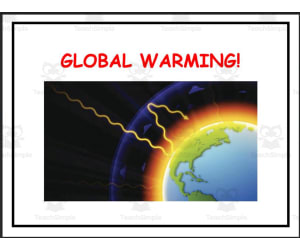
Global Warming!
Science, Earth and Environmental Sciences, Environmental Science, Not Grade Specific, Teacher Tools, Presentations
Global Warming! is an informative PowerPoint presentation that explains the complex topic of global warming in simple, easy-to-understand language suitable for all ages. This 5-slide presentation uses colorful graphics and straightforward text to provide a basic overview of climate change and its anticipated impacts. Educators can use this adaptable resource to introduce students to key concepts related to the greenhouse effect, rising temperatures, melting ice caps, extreme weather events, and more. Whether presented to an entire class or a small group, Global Warming! engages young learners on this timely subject through clear visuals and concise details written especially for children. This editable teaching material is conveniently provided as a downloadable ZIP file containing the fully customizable PowerPoint.
Author Elementary Resources 4 U
Tags Global Warming, Climate Change, PowerPoint, Presentation, Editable, Elementary Science
Use of Chemical Elements Editable PowerPoint Presentation
Science, Chemistry, Grade 6, 7, 8, 9, Teacher Tools, Presentations
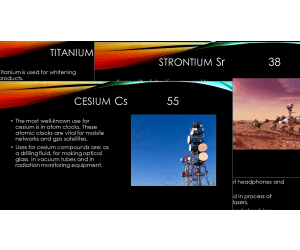
Overview The Use of Chemical Elements Editable PowerPoint Presentation is a comprehensive resource designed to aid in-depth understanding of chemical elements, their properties, and applications. The content is tailored for educators and students in grade 6 through 9. Main Features Detailed information about each chemical element from Hydrogen (H, atomic number 1) to Californium (Cf, atomic number 98). Straightforward representation of complex topics using relatable examples. Slide-numbering corresponds with the atomic numbers for easy location of elements within the material. All elements between numbers 99-118 are condensed into one slide due to their lesser-known uses. Note: The presentation should be used as supplementary content rather than main teaching material. It acts as a complement to standard textbooks by covering areas where they might fall short. Editability & Customizability: A standout feature of this resource is that users can edit all parts freely - invaluable for teachers wanting to insert extra details or customize delivery approaches according to individual teaching styles or student's needs. This makes it perfect not only for regular classes but also suitable for small study groups. Beyond just serving as an excellent tool in teaching Science and Chemistry topics, this visual-rich resource fosters better comprehension while encouraging interest among students - leading potentially higher retention rates. Lastly, it also proves useful homework assignment reference material. Incorporate the 'Use of Chemical Elements Editable PowerPoint Presentation ' into your educational toolkit today!. .
Author TheBrightestKid
Tags Chemical Elements, Applications, Classroom Resource, Editable Presentation, Teaching Tool
Antagonistic Muscle Pairs
Science, Life Sciences, Human Body, Grade 9, 10, Lesson Plans, Presentations
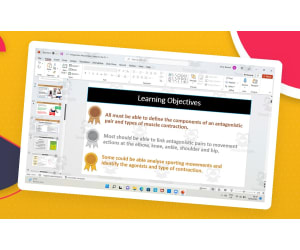
Antagonistic Muscle Pairs is a resource developed for educators who are reaching beyond the boundaries of their teaching strategies in human body science, specifically on the topic of antagonistic muscle pairs. The Primary Learning Objective This learning tool aims to assist students in understanding and defining the complex mechanisms involved within an antagonistic pair and the types of muscle contractions. As learners explore this resource further, they'll gain mastery in linking antagonistic pairs with movement actions at various parts of our bodies including: The elbow Knee Ankle shoulder and hip. Inquisitive or advanced learners can extend their understanding by analyzing different sporting movements and identifying agonists as well as contraction types. User-Friendly Format for Seamless Absorption of Information Our material comprises 31 meticulously crafted slides bundled into an easy-to-understand PowerPoint presentation suitable for screen-sharing during online sessions or projected onto whiteboards in classic classroom settings. What's more? Within seconds, your entire lesson plan stands prepared with this download. Tailored to Suit Different Educational Levels & Settings The primary target audience involves Grade 9-10 level science education concerning human body studies; however, educators can easily adjust the difficulty level to suit different grading standards. Whether you wish to use it during smaller work groups or wider scale general class discussions—you have multiple choices whether your preferred medium is traditional classrooms or distance learning setups online. Gearing Towards A Dynamic Learning Environment Coupled with In-depth Science Education In conclusion, Antagonistic Muscle Pairs PowerPoint presentation guarantees a dynamic learning coupled with scientific depth that caters both beginners & intermediate-level students alike without compromising complexity essential in understanding crucial components of the human body sciences curriculum objectives.
Author The PE Tutor
Tags Antagonistic Muscle Pairs, Human Body Science, Muscle Contractions, Movement Actions, Anatomy
Frames of Reference - Relative Motion - Google Slides and PowerPoint Lesson
Science, Physics, Grade 11, 12, Presentations, Teacher Tools
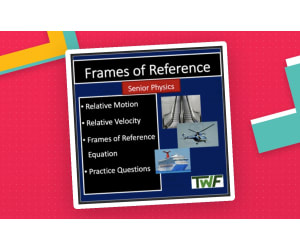
Relative Motion - SENIOR PHYSICS - This physics lesson package teaches about relative motion and velocity. It also discusses frames of reference and includes many example questions with fully worked answers. It is geared towards students who are in high school senior physics. This package includes the lesson (student and teacher versions of the presentation), fully worked practice questions, and a student lesson handout as a document. The presentation is fun and applicable with many opportunities for inquiry-based learning and discussion. In order, the lesson covers: Relative Motion Relative Velocity Frames of Reference Equation Practice Questions Included in the lesson package is: The teacher version of the presentation The student version of the presentation Student lesson handout Student homework questions with fully worked answers ------------------------------------------------- Google and Distance Learning Ready This lesson includes both Office and Google formats for ALL resources. The presentation is in PowerPoint and Google Slides while all documents contain Word and Google Doc versions. Your resource is perfect for distance learning and integrates seamlessly with Google Classroom as I've included a link that will automatically create a copy of the resources and put them directly into your Google Drive with one click. Download--> Open --> Click --> Assign to your students Having both options allows you to use either without worrying about formatting issues as all the work has already been done for you. It safeguards you in case your department or school decides to go Google 100% and allows you as well as your students to access everything no matter where you are or what kind of equipment is being used. The student version of the presentation contains multiple blanks that need to be filled in throughout the lesson. These blanks are conveniently underlined and bolded on the teacher copy. I have found this to be the most effective means of keeping my students engaged and active without having them write everything out. This also leaves more time for discussion and activities. Also, please visit my blog Teach With Fergy for my thoughts on teaching, learning, and everything in between.
Author Teach With Fergy
Tags Relative Motion, Frames Of Reference, Physical Science, Practice Problems, Science Lesson

How Flight Can Be Improved - Google Slides and PowerPoint Lesson
Science, Technology, Engineering, Grade 7, 8, 9, 10, Presentations, Teacher Tools
How Flight Can Be Improved - Google Slides and PowerPoint Lesson An informative teaching resource designed specifically for grades 7 through 10. The lesson outlines ways to improve upon current flight methods by utilizing diverse aircraft types or refining existing models. Lesson Details Begins with a comparison between helicopters and airplanes. Covers techniques for reducing drag, losing weight, and increasing thrust. Gives an insightful look into the future of aviation with stealth planes, drones, and spacecrafts. Included Resources The lesson comes complete with: Graphic diagrams : These enhance understanding (teacher versions). Vivid examples: Illustrate points made in the content (student versions). Videos: Seven videos that provide comprehensive explanations to supplement learning material. . A student-focused handout: A word document aiming to closely follow the lesson content. Digital Integration & Student Engagement This resource is compatible with Google Drive – featuring well-formatted documents ready for one-click upload. It supports both Office & Google formats eliminating format compatibility issues while allowing access anytime on any device- a perfect tool for distance learning. Beyond presenting information passively, this lesson integrates active learning by getting students engaged in filling out targeted blanks within the presentation slides. These gaps are clearly marked on teacher copies ensuring easy instruction. The Bigger Picture: Flight Unit This rich package forms part of a broader Flight Unit which offers additional lessons on various topics such as: An overview of flight history & future Exploring principles of various aircraft flights Wildlife adaptations for flight Air properties study Deliberations on environmental and social impacts related to airlines. The Takeaway This product is more than a mere 'lesson plan'. With its combination of stimulating ideas, encouraging group participation exercises and fostering independent homework assignments, it aims to broaden students understanding specifically in the realm of science- dealing with the engineering facet of flight.
Author Teach With Fergy
Tags Flight Improvement, Aircraft Types, Reducing Drag, Shedding Weight, Augmenting Thrust

Stars and Constellations Presentation
Science, Earth and Environmental Sciences, Space, Grade 4, 5, Presentations, Teacher Tools
If your students are studying outer space, you’ll want to have engaging and informative resources for instruction. This is aStars and Constellations Presentation . It is brief, but informative enough for students to learn from. The objective is for students to understand what galaxies and stars are, how they work, and how to apply that understanding. This is a science lesson for upper elementary students in 4th – 5th grade. Slides are as follows: 1. Universe – 3 facts about how the universe is broken down. 2. Constellations – Explanation about 4 types of constellations (ancient, zodiac, circumpolar, and modern). 3. Fact about stars 4. Reflect and Respond: Why are constellations not the most Useful way for astronomers to group stars? 5. Apparent vs. Absolute Magnitude - Definition of each 6. Parallax - 2 facts. 7. Properties of Stars - 2 facts. This presentation makes a great introduction for students! I hope you enjoy! Take A Look at My Best Sellers: Rocks and Minerals Task Cards Capillary Action Experiment The Tell-Tale Heart Booklet Project Air Pressure Presentation Avengers Classroom Supply Labels End of Year Reflection Packet You can find more resources at my storefront here: https://teachsimple.com/contributor/the-comprehensive-teacher
Author The Comprehensive Teacher
Tags Science Lesson, Science Presentation, Astronomy Lesson, Stars, Constellations, Outer Space, The Universe, Introduction Lesson, Solar System
Earth’s Position In The Celestial Sphere - Google Slides and PowerPoint Lesson
Science, Earth and Environmental Sciences, Space, Grade 9, 10, 11, 12, Presentations, Teacher Tools
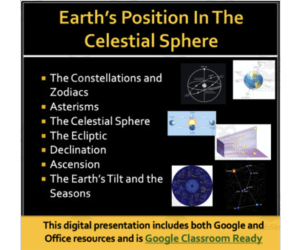
Earth’s Position In The Celestial Sphere - Google Slides and PowerPoint Lesson This is an educational resource catered specifically for 9th to 12th graders, concentrating on Earth and Space studies. Spanning across one to two days, this lesson comes with the following: Microsoft Office files Google formats Teacher's version of the presentation A student-friendly format An auto-graded Exit Ticket for swift evaluation A document form student handout, and Four integrated video supplements. The content encapsulates a diverse range of topics that stimulate interactive dialogue including: Zodiacs & constellations Fundamentals of celestial sphere astrometry—declination & ascension , Celestial sphere fundamentals and their connection to asterisms, task. Teachers will find all the resources furnished with duplicate copies made particularly for Google Classroom integration, giving them the benefit of hassle-free addition to their digital teaching strategies. Students benefit from fill-in-the-blank exercises spread throughout the lesson, simmering down note taking and offering enough time to steep into collaboration and more profound learning. Apart from focus on Earth's Position In The Celestial Sphere, this presentation slides also fold seamlessly into other substantial topics like : The Big Bang Theory, Star Classification & Spectroscopy, The Solar System—from Sun till Oort Cloud, Kepler's Laws of Planetary Motion, Origin of Moon its Orbits & Influences . For educators willing to unlock a realm understanding astronomical distances or laying a groundwork on electromagnetic radiation spectrum—Earth’s Position In The Celestial Sphere - Google Slides and PowerPoint Lesson is indeed an informative teaching resource that fosters a learner-centered environment.
Author Teach With Fergy
Tags Celestial Sphere, Constellations, Ecliptic Coordinates, Seasonal Changes, Interactive Discussions

Muscular System PowerPoint Presentation
Science, Life Sciences, Human Body, Grade 9, 10, 11, 12, Presentations
This products contains 3 PowerPoint presentations that help you teach your students about the Muscular System.
Author The Teacher Team
Tags Anatomy, Physiology, Muscular System, Body Systems, Biology

Digestive System – PowerPoint Presentation & Notes
Science, Life Sciences, Human Body, Grade 9, 10, 11, 12, Presentations
This 16 slide power point presentation covers the main anatomic structures of the Digestive System for a high school Anatomy & Physiology or Biology course. This product gives an opportunity to take Cornell style notes and includes structures such as the pharynx, esophagus, small intestine, gall bladder, liver, pancreas, large intestine, etc. This presentation gives a good foundation for any discussion of the digestive system.
Author The Teacher Team
Rating
Tags Anatomy, Physiology, Biology, Digestive System, Anatomy And Physiology Lecture Notes Ppt, Digestive System Ppt Anatomy Physiology, Presentation
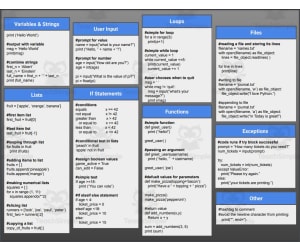
Python Cheat Sheet (Edit in Google Slides)
Science, Technology, Computer Science, Grade 5, 6, 7, 8, 9, 10, 11, 12, Presentations, Teacher Tools
The Python Cheat Sheet - A Comprehensive Guide The Python Cheat Sheet is a comprehensive one-page guide simplifying the intricacies of Python programming. Originally designed as a resource for science instructors from grades 5 to 12, this sheet encompasses all the vital aspects of the language in an easy-to-understand format. The standout feature of this tool is its integration with Google Slides , which allows it to be tailored according to individual classroom setup and teaching methods. Making Computer Science Easy In teaching computer science, educators often encounter challenges due to complex jargon and concepts. This tool successfully overcomes such hurdles by condensing essential programming information into an easily-referenced cheat sheet, thereby eliminating rote learning and encouraging practical understanding. Versatility in Implementation Strategies: Whole group instruction: Classroom projection via Google Slides or on shared screens ensures real-time tracking during live demonstrations/discussions about coding practices. Small group or individual sessions: Printed PDF versions are particularly suitable for reviewing details where students switch between theory and actual programming platforms without losing context. Independent study / homework assignments: About time ahead of quizzes /exams or while handling sizeable projects, quick references are beneficial. Aimed at Fostering Practical Knowledge Over Theoretical Learning: Rather than relying solely on theoretical explanations from textbooks, The Python Cheat Sheet concentrates on a fact-based learner-directed outcome making technology education almost intuitive!
Author Roombop
Tags Python Programming, Reference Tool, Teaching Resource, Google Slides Integration, Practical Knowledge
Enhancing My Presentation Activity
ELA, Writing, Science, Technology, Grade 3, 4, 5, Presentations, Teacher Tools
This activity can help your students to better develop their main ideas by adding audio recordings and visual displays to their presentations .
Author Have Fun Teaching
Tags Essays

Paper Towel Absorbency Test – Scientific Method Lesson
Science, Grade 6, 7, 8, 9, Experiments, Lesson Plans, Presentations, Activities
Paper Towel Absorbency Test - Scientific Method Lesson Included This engaging activity introduces students to the scientific method through an experiment involving a common household material - paper towels. Students will form a hypothesis about which paper towel will be the most absorbent. They will then collect data by placing different paper towel brands into a liquid to see the effect. Your students are provided with clear procedures that will guide them to record their results in a well-organized data table and graph. As a class, data can be compiled and percentages calculated to identify trends. Students learn important data analysis skills as they create graphs to visually represent the results. Educators will appreciate the post-experiment reflection questions that reinforce the purpose and process of the scientific method. This hands-on lab nurtures students' natural curiosity while teaching fundamental experimental design. With its real-world topic and tactile investigation, it motivates learners across various grades and learning styles. After completing the activity, students will better understand how to use observation, critical thinking, and representation of evidence to answer a testable question. Additionally, this resource includes my lesson on the Scientific Method. The lesson includes a detailed overview of what the scientific method is as well as how to implement it.
Author Teach With Fergy
Rating
Tags Scientific Method, Graphing, Test
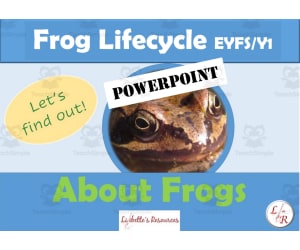
Life cycle of a Frog PowerPoint KS1
Science, Life Sciences, Animals, Preschool, Grade 1, Presentations, Teacher Tools
With this Life Cycle of a Frog PowerPoint KS1 resource, your students are going to be able to see how a frog grows! Through exploring our 17-slide, Frog Life-cycle PowerPoint which includes beautiful, original photos to capture the attention of your students, your students will be able to see the frog develop from the eggs, through tadpole, froglet to the adult frog. Clear explanations make it accessible for even very young children. Who is it for? This Life Cycle of a Frog PowerPoint KS1 was designed for any student, parent, or tutor who can find it helpful in the learning process of the lifecycle of frogs! Though it might be attractive for early elementary/EYFS/Y1 school children. How can it be used? This presentation may be used with the whole class, or with smaller groups to encourage discussion. This resource may be used in conjunction with Frogs Life-cycle Lesson Worksheets and Resources. The value of teaching the lifecycle of a frog Teaching children about the natural world is the natural start of the study of science. It is upon these early experiences that children's future science learning can build. It is therefore imperative that the child's learning be concrete - based as much as possible upon real-life observation, Therefore, if you can bring frogspawn into the classroom and watch it develop, then the children will not forget what they have learnt so easily and awe and wonder of the natural world will be developed. For other engaging science resources, with unique illustrations please visit my store here! Mushrooms https://teachsimple.com/product/mushroom-powerpoint-for-y1 Horse Chestnut Tree Life cycle - for any season : Lesson notes: https://teachsimple.com/product/horse-chestnut-life-cycle-lesson-resource-pack-plus-powerpoint , PowerPoint: https://teachsimple.com/product/horse-chestnut-tree-life-cycle-powerpoint-ages-5-6 Autumn Leaves: https://teachsimple.com/product/autumn-leaves-powerpoint-ages-3-to-8 Blackbirds: https://teachsimple.com/product/ks1-science-birds-blackbirds-powerpoint Squirrels: Worksheets: https://teachsimple.com/product/autumn-squirrel-worksheets-y1 PowerPoint: https://teachsimple.com/product/grey-squirrel-powerpoint-eyfsy1-uk Hedgehogs: https://teachsimple.com/product/hedgehog-powerpoint-for-ks1-science-animals-autumn Lice Cycle of an Apple: https://teachsimple.com/product/where-do-apples-come-from-science-plants
Author Lilibette's Resources
Tags Frog Lifecycle EYFS, Forg Lifecycle, Lifecycle Of A Frog Y1 Science, Frog Life-cycle EYFS, Frog Life-cycle Powerpoint