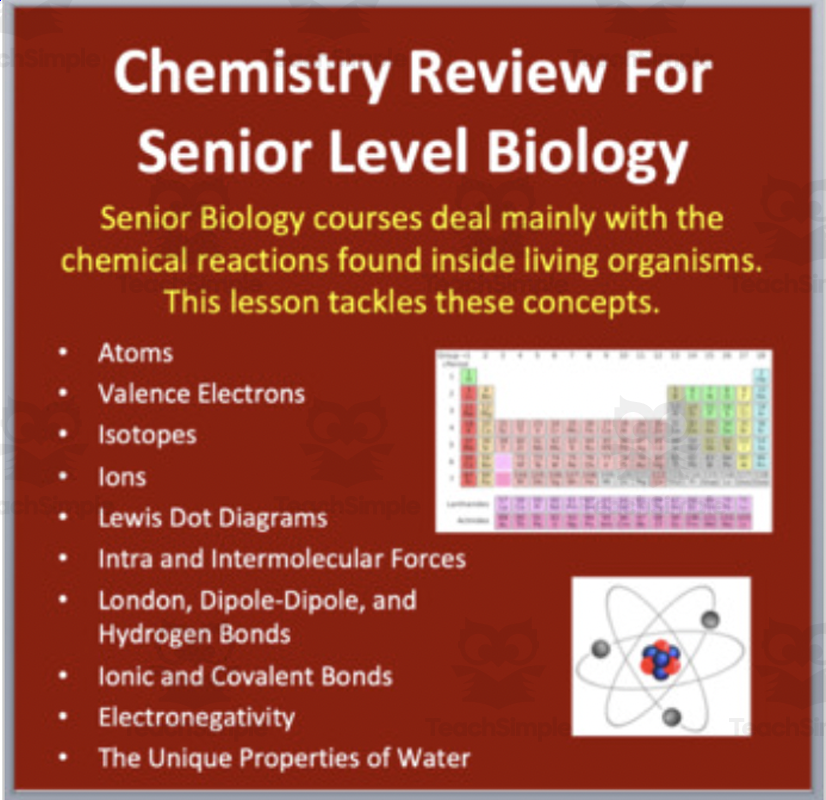
Chemistry Review for Senior Biology - Lesson Bundle
Reviews foundational chemistry concepts (atomic structure, bonding, intermolecular forces) that students need for a senior-level biology course.
Editable


510 resources
Explore sub-categories
7 sub-categories · 510 resources
Reviews foundational chemistry concepts (atomic structure, bonding, intermolecular forces) that students need for a senior-level biology course.

A 20-day set of daily bell-ringer/warm-up/exit-ticket questions covering an introductory biochemistry unit (biology basics, carbon chemistry, carbohydrates and lipids, proteins and nucleic acids, enzymes), designed as a routine-building daily review activity for high school chemistry.
 Free download
Interactive PowerPoint 'hangman' game ('Hang the Teacher') to practice grade 8 magnetic-field vocabulary.

A digital interactive notebook (Google Slides-based) teaching a chemistry unit spanning particle theory/classification of matter, atomic theory/history of the atom, atomic structure and notation, the periodic table, and chemical symbols/formulas/compounds, with a teacher answer copy.

A high-school biology lesson package covering aerobic cellular respiration from the Krebs (citric acid) cycle through the electron transport chain (ETC), including a review of glycolysis/pyruvate oxidation, the role of O2, the proton gradient and chemiosmosis, ATP synthase, and uncoupling of the ETC.

Provide high school chemistry teachers (grades 10-12) with 20+ days of bell-ringer/warm-up/exit-ticket questions covering a solutions and solubility unit, for use in a flipped or traditional classroom.
 Free download
Interactive PowerPoint memory-matching game to practice grade 7 chemical-reaction vocabulary.

A high-school biology lesson bundle teaching cellular respiration, glycolysis (the 10 steps), the net reaction of glycolysis, and pyruvate oxidation.
Provide daily short-form review activities (bell ringers/warm-ups/exit tickets) for an introductory chemistry unit covering matter, atomic theory, the periodic table, ions, and chemical formulas.

A Jeopardy-style review game covering classification of living things (vertebrates vs invertebrates, body systems, structures, and plants).

Senior high school biology lesson teaching homeostasis, negative/positive feedback control systems, and the body's regulation of physiological set points.
A micro-learning slide deck teaching how the solar system formed, combining a video lesson, an audio-supported reading passage, vocabulary, and a written summary activity.
Teaches elementary students about the savanna habitat and how savanna animals use behavioral, physical, and life-cycle adaptations to survive in a flat, arid, transitional-zone environment.

A no-prep, multimedia 'micro-learning' slide deck teaching students about African elephant biology, habitat, and behavior as part of an animal science unit.
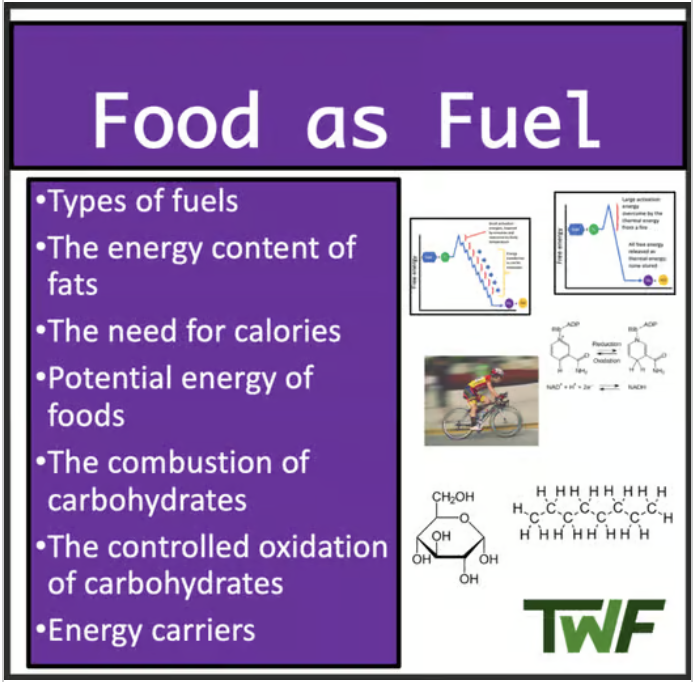
Senior high school biology lesson on food as an energy source: fuel types, caloric content of macronutrients, and the (controlled) oxidation/combustion of carbohydrates.
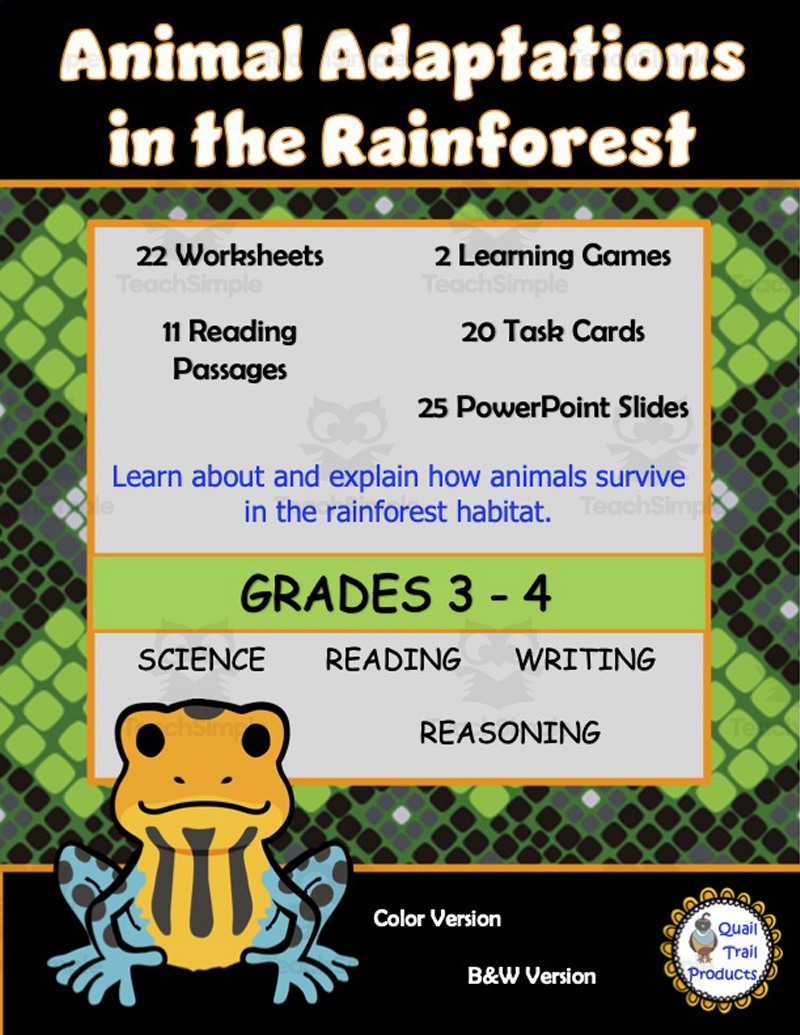
A four-part rainforest bundle opens with a slideshow covering what a habitat is, rainforest vocabulary (dewlap, echolocation, terrestrial, and similar terms), the four layers of rainforest trees, and the three types of adaptation (behavioral, physical, life cycle) illustrated through nine specific animals such as the toucan, sloth, and jaguar. A set of 20 numbered task cards then quizzes students on that same content through fill-in-the-blank, true/false, and riddle formats, each with a matching answer key, alongside a separate animal-picture card game with three small-group activities for practicing adaptation facts aloud. The largest component, an 82-page workbook, adds a K-W-L chart, vocabulary-matching and dictionary-guide-word worksheets, reading passages on eight rainforest animals plus three additional animals for a reasoning exercise, an opinion-writing assignment with a graphic organizer, and a word search and crossword puzzle. Reading comprehension, vocabulary, and opinion writing are woven throughout the science content, so the bundle functions as a combined ELA-and-science unit rather than a single-subject resource.
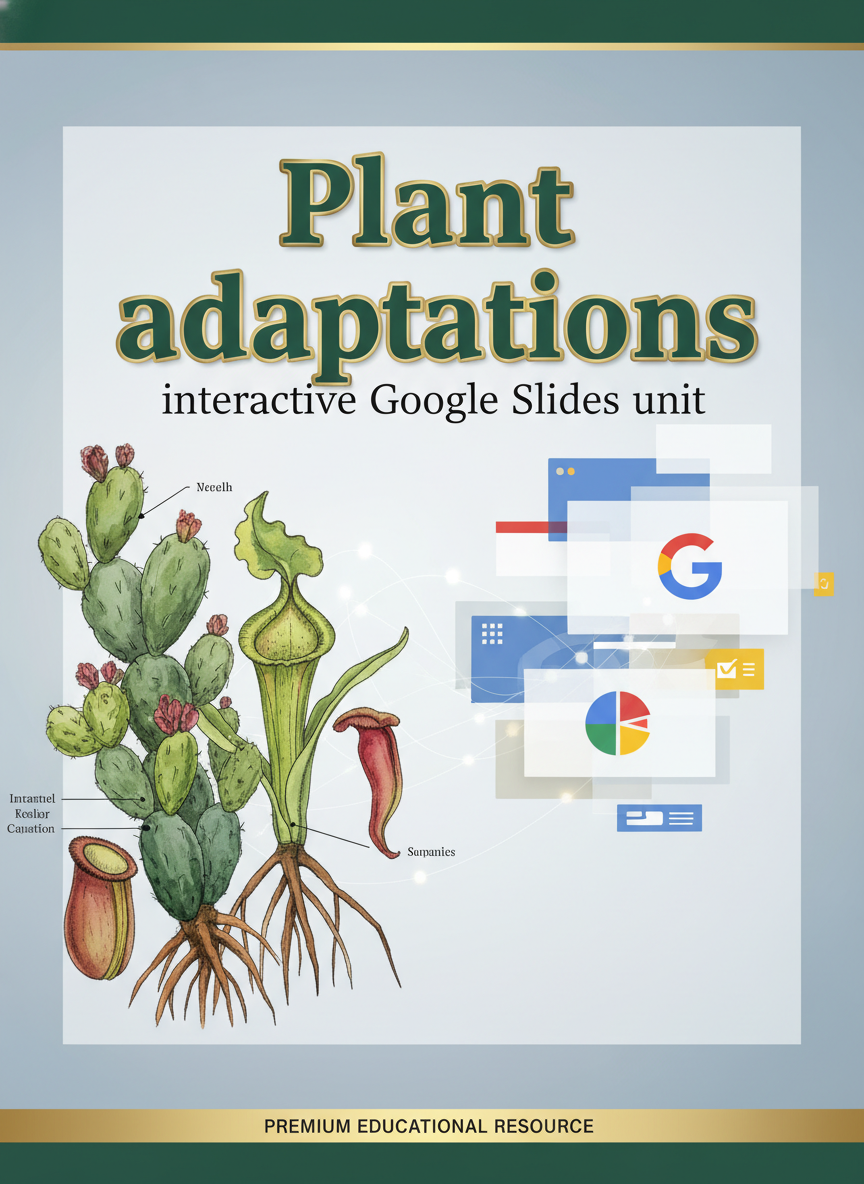
An interactive, NGSS-aligned (4-LS1-1) Google Slides unit teaching plant structural adaptations across biomes (deserts, rainforests, aquatic regions), designed for Google Classroom deployment with an accompanying teacher guide.
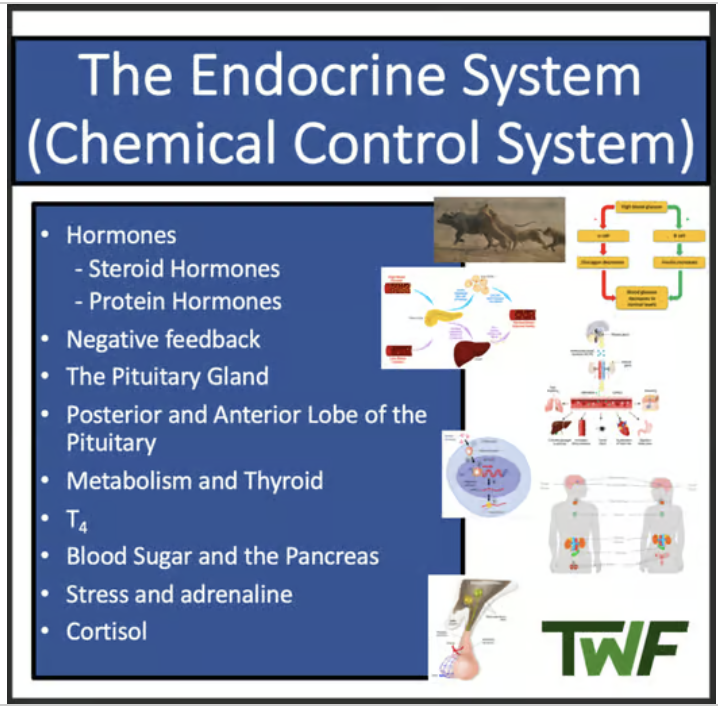
A senior high school biology lesson on the endocrine system, covering hormones, negative feedback, the pituitary gland, thyroid, pancreas/blood sugar regulation, and stress hormones.

Teach students about the cells of the nervous system - neuron structure, structural classification of neurons, and neuroglia (glial cell) types - as continuation of or standalone unit within a Nervous System course.
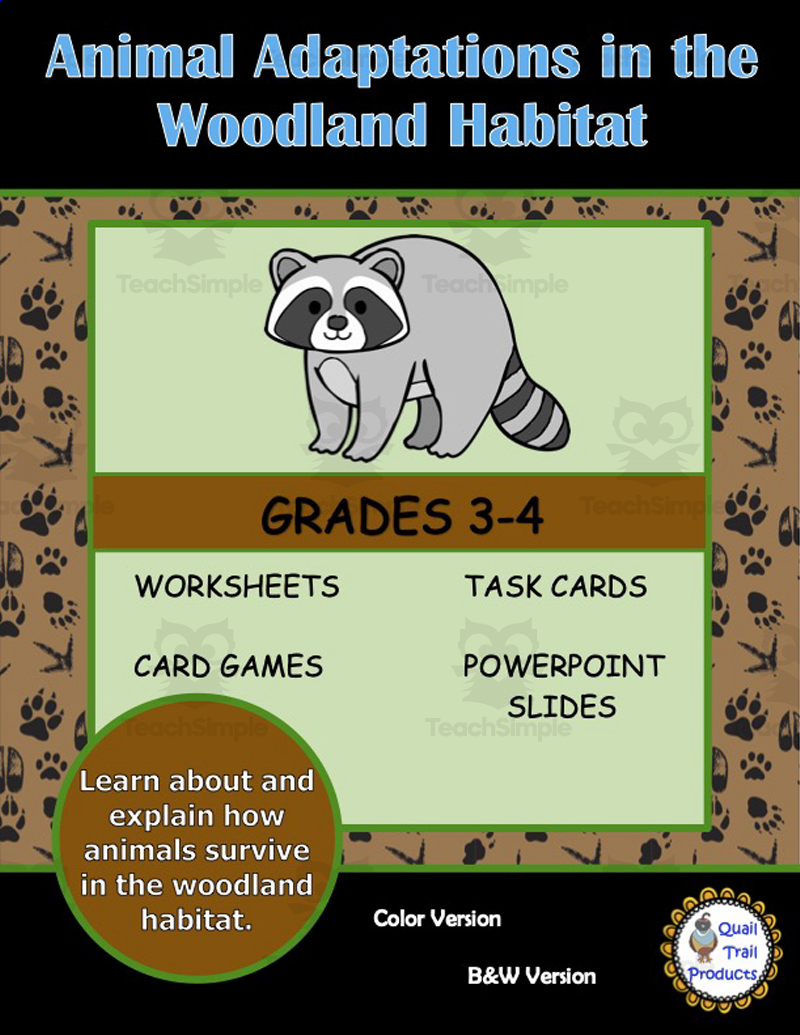
Teaches elementary students about the woodland habitat and how specific woodland animals (woodpecker, raccoon, white-tailed deer, black bear, skunk, great horned owl, porcupine, red fox, camel, snapping turtle, narwhal) use behavioral, physical, and life-cycle adaptations to survive.
 Free download
Interactive PowerPoint to teach and review grade 8 light-waves vocabulary through key-concept slides, flashcards, and a multiple-choice review.

An interactive micro-learning slide deck teaching students about seahorse biology (habitat, reproduction, and general facts) through a video, reading passage, vocabulary key words, and comprehension activities.

A video-supported science lesson teaching the four spheres of Earth (atmosphere, lithosphere, hydrosphere, biosphere) using guided fill-in-the-blank slides and a Bill Nye video worksheet.

Teach students to identify cumulus clouds and understand how they can develop into thunderstorm clouds, using a slide-deck 'micro-learning' format with video, reading, and vocabulary.